Blog

  • Cornell case puts New York’s progressive image at odds with its rape laws

    Cornell case puts New York’s progressive image at odds with its rape laws

    New York – Last month, a woman identified as Jane Doe filed a lawsuit against Cornell University, the fraternity Chi Phi and the seven fraternity members she accused of gang-raping her on the night of October 19, 2024.

    Her allegations have triggered a nationwide reckoning in the United States over the prevalence of sexual assault on college campuses.

    Recommended Stories

    list of 3 itemsend of list

    But the case has also reignited efforts to reform New York law.

    While the left-leaning state has long presented itself as a leader in women’s rights, advocates say sexual assault survivors still face pervasive legal barriers when they seek justice.

    Erica Vladimer, a lawyer and founding director of Harassment-Free New York, a survivor-led nonprofit, told Al Jazeera that much of the legislation currently in the spotlight is the culmination of years, if not decades, of work.

    “These are bills that we have been fighting for for years when sexual violence is not in the news,” Vladimer said.

    She drew a line between the #MeToo movement, which began in 2017 as an online campaign to denounce sexual misconduct, and the current wave of outrage following Doe’s allegations.

    “It speaks to the fact that the #MeToo movement is not dead. It is a movement, not a moment,” Vladimer said.

    Already, leaders in Albany, the state capital, have signalled they would take action following the Cornell case.

    On Wednesday, the New York Assembly announced it had formed a working group to examine the state’s sexual-assault laws and develop recommendations for the 2027 legislative session.

    Still, advocates say more concrete measures are needed to address the crisis.

    “I appreciate that this work is happening,” said Lindsey Boylan, a New York City Council candidate. “It doesn’t undo the fact that rape culture is pervasive in the United States and very much so alive and well in New York.”

    Boylan was the first woman to publicly accuse former New York Governor Andrew Cuomo of sexual harassment in another high-profile misconduct case, back in 2020. She is among those calling for greater reform.

    Here are some of the measures advocates are pushing state lawmakers to adopt or amend:

    ‘Voluntary intoxication’ statute

    The Cornell University case has brought renewed attention to New York’s “voluntary intoxication” statute, a legal loophole that can make it harder to prosecute sexual assault when a person has willingly consumed alcohol or drugs.

    New York Governor Kathy Hochul pledged on Friday to work with lawmakers to close the gap.

    “It should not matter whether they chose to use drugs or alcohol. Voluntary intoxication is not a license for sexual assault or gang rape. Period,” Hochul said.

    Under the current state law, a person who voluntarily drinks or takes drugs is not considered “mentally incapacitated” during an assault, even if they become too intoxicated to consent.

    That can make it harder for prosecutors to bring a sex-crime charge. The law primarily recognises incapacitation in the context of sexual assault when a person was involuntarily intoxicated, unconscious or otherwise “physically helpless”.

    That distinction has become central to the Cornell case. Doe has acknowledged that she consumed substances before the alleged rape, saying that she was pressured into drinking alcohol and taking the dissociative drug ketamine.

    The Tompkins County district attorney initially declined to bring charges, pointing to the law’s stance on “voluntary intoxication”. But the investigation has since been reopened, amid public pressure.

    New York is one of 19 states in the US that distinguish between “voluntary” and “involuntary” intoxication when it comes to determining consent in sexual violence cases.

    But the Cornell case has spurred a push to remove the distinction from the law books. Critics have argued that sexual assault is no less grievous if a victim is drunk or has chosen to take drugs.

    “I mean, to have New York, a supposedly progressive state, penalise people who are sexually abused for drinking is disgusting,” Boylan told Al Jazeera.

    Vladimer, for her part, explained that distinguishing between “voluntary” and “involuntary” intoxication as a means for pursuing sexual assault cases shifts the focus onto the actions of victims, rather than perpetrators.

    “We essentially have codified victim-blaming by saying if you become voluntarily intoxicated and then are sexually assaulted, you essentially cannot seek justice in our court system,” Vladimer told Al Jazeera.

    In June, the New York state Senate unanimously passed a bill to allow sexual assault charges regardless of whether a victim is intoxicated voluntarily or involuntarily.

    But the legislation has yet to be taken up in the state Assembly.

    Students look on at Cornell University’s campus in Ithaca, New York, US, October 1, 2026. REUTERS/Lauren Petracca
    Students look on at Cornell University’s campus in Ithaca, New York, on October 1 [Lauren Petracca/Reuters]

    The rape-shield gap

    New York’s rape-shield protections limit the use of evidence about a complainant’s sexual history and conduct in criminal proceedings. But those protections do not currently extend to civil cases.

    This distinction could matter in the Cornell case because Doe filed a civil lawsuit.

    Vladimer said questions about a survivor’s behaviour could come up in the discovery process of a civil case, as well as in court.

    “There is the potential of her having to face questions about things like her sexual history,” Vladimer said.

    Bridie Farrell, the director of victim rights advocacy and legislation at the law firm Weitz and Luxenberg, told Al Jazeera that she has seen major differences in how male and female survivors are questioned in civil cases where this practice is still permitted.

    In one case involving a brother and sister who were both sexually assaulted, Farrell said the man was not questioned about his sexual history while the woman was “grilled on it”.

    A bill sponsored by State Senator Liz Krueger would extend rape-shield protections to civil proceedings. The measure passed the Senate in June and is currently before the Assembly Judiciary Committee.

    A student walks through an archway at Myron Taylor Hall on the Cornell University campus in Ithaca, New York, US, October 1, 2026. REUTERS/Lauren Petracca
    A student walks through an archway at Myron Taylor Hall on the Cornell University campus in Ithaca, New York, on October 1 [Lauren Petracca/Reuters]

    Retaliatory defamation lawsuits

    Advocates are also pushing for legislation to prevent retaliatory defamation lawsuits.

    Boylan said she has spent more than $2m defending herself in legal proceedings connected to her accusations against Cuomo, who stepped down as New York governor in 2021.

    He has repeatedly denied any allegations of wrongdoing, despite a state attorney general’s report that concluded he “engaged in conduct constituting sexual harassment”.

    “Every step of the way, we have a system that penalises people for speaking up about their own harm,” Boylan said.

    Boylan and Charlotte Bennett, a former aide who also accused Cuomo of sexual harassment, are proponents of the Speak Your Truth Act, which would provide legal protections for people who publicly report sexual assault, harassment or discrimination.

    The bill, sponsored by Assembly member Jessica Gonzalez-Rojas, would make certain communications about sexual assault, harassment or discrimination privileged when they are made without malice.

    It would also allow survivors of sexual misconduct who successfully defend themselves against a defamation lawsuit to recover legal fees and costs. The bill remains in an Assembly committee.

    Cornell University and local officials in Ithaca, New York, have faced questions about how they handled the Jane Doe case
    Cornell University and local officials in Ithaca, New York, have faced questions about how they handled the Jane Doe case [Lauren Petracca/Reuters]

    A recent win, a long way to go

    For Bridie Farrell, the victims’ rights advocate, the fight for legal change is personal.

    Farrell was a 15-year-old competitive speed skater in 1997 when she said she was sexually abused by her 33-year-old teammate and mentor. She came forward with her story of abuse in 2013.

    By then, the statute of limitations in her case had expired. Farrell later became an advocate for changes to New York’s laws, helping to pass the Child Victims Act in 2019 that extended the time available for survivors of childhood sexual abuse to pursue criminal and civil claims.

    The law allowed Farrell to file her own case, which she did in 2020. She tells Al Jazeera that a trial has finally been scheduled for June 2027.

    “Before we passed the Child Victims Act in 2019, New York was one of the worst in the country,” Farrell said of the situation for sexual assault survivors seeking justice.

    Farrell considers the legal impediments to Doe’s case — like the “voluntary intoxication” statute — all too predictable. “I’m not surprised if we haven’t updated a law that is archaic,” she said.

    Still, lawmakers have signalled willingness to reform such laws. In announcing the state Assembly’s working group on sexual-assault laws, Speaker Carl Heastie pledged to “thoughtfully” consider how the state can strengthen its laws.

    “The allegations being reported out of Cornell University are truly horrifying,” Heastie said on Wednesday. “We want to do everything we can to ensure victims of sexual assault see justice served.”

    But survivors and sexual violence advocates say the Cornell case points to problems that go beyond any single law. They hope to see widespread systemic and societal change.

    “Changing legislation is incredibly important. But legislation in a lot of cases can only go [as far as] the paper that it’s written on,” Boylan said. “It would be amiss to orient this horrible, tragic, unacceptable, infuriating case in isolation without looking at the broader rape culture of our state and our country.”
  • DOJ Argues CNN & Other Outlets Can Be Banned From White House If Trump Determines They Didn’t Meet “Minimum Requirements Of Professionalism”

    DOJ Argues CNN & Other Outlets Can Be Banned From White House If Trump Determines They Didn’t Meet “Minimum Requirements Of Professionalism”

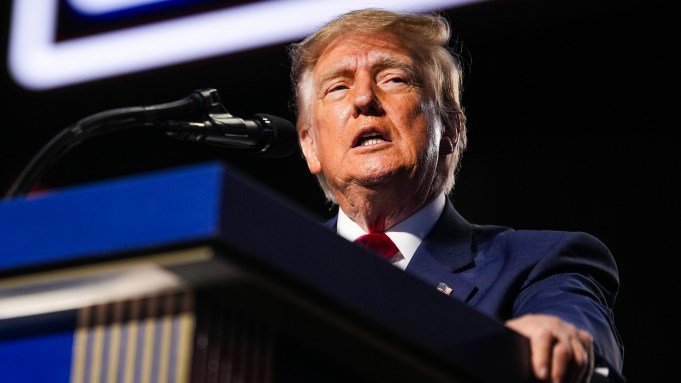
    The Justice Department argued that Donald Trump can legally ban CNN, MS NOW and Politico from the White House because he determined that they didn’t meet the “minimum requirements of professionalism.”

    Last month, a federal judge granted the three outlets a temporary restraining order that forced the White House to reinstate dozens of their reporters’ hard passes. The outlets are now asking the judge to extend that 14-day order for a longer term via a preliminary injunction, claiming that Trump’s ban is a violation of their First and Fifth amendment rights.

    U.S. District Judge Timothy Kelly, a Trump appointee, has said that he is bound by the precedent set in In a 1977 D.C. Circuit opinion, Sherrill vs. Knight, in which the judges ruled that “the protection afforded newsgathering under the First Amendment guarantee of freedom of the press requires that this access not be denied arbitrarily or for less than compelling reasons.”

    In a court filing on Friday, the DOJ claimed that the Sherrill case still would allow for the president to restrict the three outlets from accessing the White House grounds because the White House has a “compelling interest.”

    The DOJ lawyers claimed that the Sherrill decision does not “prevent the President from concluding that bona fide journalists would identify sources instead of relying on anonymous sources, commit to factual accuracy, and provide the White House an opportunity to comment, rather than ‘perform their duties in a way that … interfere[s] with the White House’s daily operations.’ …At a bare minimum, it is a significant violation of decorum to publish classified and sensitive national security information.”

    The news outlets’ legal team has rejected that assertion, writing in a filing earlier this week that Trump’s “statements also make clear he implemented the ban to coerce more favorable coverage from CNN, MS NOW, and Politico, and to deter other journalists and news organizations from newsgathering and reporting that the President might view as negative. And his administration has continued to retaliate against Plaintiffs even after the temporary restraining order, only underscoring that Defendants’ motive is to punish and chill journalism they dislike.”

    Even as access to the White House grounds has been reinstated, the White House has continued to restrict CNN from coverage of TV pool assignments, including travel with Trump on Air Force One.

    The outlets’ lawyers, led by Theodore Boutrous Jr., also noted that Trump and other White House officials “overlooked that the First Amendment protects reporting on matters affecting national security.”

    Kelly has set a hearing for Thursday on the news outlets’ motion for a preliminary injunction.

    In granting a TRO, Kelly concluded that the White House failed to provide due process to the news outlets.

    The DOJ has pointed to letters sent to the outlets as evidence that they were given due process. But those letters were sent on Sept. 22, four days after Trump’s ban was started.

    The judge also has noted that some of the objectionable stories cited by the DOJ do not have to do with national security. Kelly wrote in his order that “even the justifications provided to Plaintiffs after this case was filed are ambiguous about the true purpose of the revocations: while Defendants’ letters to Plaintiffs mention national security concerns, they purport to identify reporting that ‘threatened national security and/or spread falsehoods’ leaving open the possibility that all the stories fall into the later bucket, rather than the former.”

  • ‘SNL’ Cold Open Goes Full MAGA Midterms Desperation With Hegseth’s “Schlong Donkeys”, Trump’s Rambles & A Sad VP

    Just a month away from the volatile midterms and a president way down in the polls, there was once again a plethora of political material ripe for this week’s SNL cold open, and the NBC late-nighter went full MAGA, with some Mitch McConnell on the side.

    Played by Mickey Day, the wheelchair bound 84-year-old Kentucky senator offered a premature “Live from New York” before being cut off by RNC ad consultants desperate to turn things around for the GOP. To that, there was a “He tricked us” (in Spanish) Marco Rubio, portrayed by the always on point Marcello Hernández, and a 2028 J.D. Vance (Jeremy Culhane) that no one wanted to actually put in a spot.

    Then there was Colin Jost’s Pete Hegseth, putting the fun in whack job Defense Secretary once again.

    “What’s up, schlong donkeys?” the Saturday Night Live Weekend Update co-anchor began in what might have been one of the greatest campaign ads ever (we’re talking 1954 Daisy level) if it was real. “Now listen up, okay, because I need all you patriots at home to do the gayest thing ever and vote. Thanks to me, the military finally has its priorities and sexuality straight.”

    Tossing in some slam poetry, Jost’s Hegseth added: “In conclusion, vote, I guess. And remember, even if you’re stationed overseas, you can still vote by mail, which is the only by mail I’m cool with.”

    Of course, this being a MAGA parody and being SNL, the joke had to go further. Having said that, unlike many too-long cold opens, this semi-morbid midterm skit work at the extra length – entirely because POTUS came to cook, base loathing and all.

    “I’m President Trump and I approve this ramble,” started a typically and wonderfully unhinged James Austin Johnson.

    Drawing from the fiction that is so much of Trumpland’s facts, he added in the fake ad: “We’re getting mogged out there, but not for long because I have a solution. If the Republicans win, I’ll give everyone $5,000, and that is not a bribe because I have no intention of following through on that promise.’

    “So, just pretend I’m on the ballot, okay? You have to use something called imagination. Imagination makes a MAGA nation. Wow, that’s pretty good. I can already see that written on the back of an obese woman’s booty shorts in dirty, disgusting Myrtle Beach. What a hell all this country is! It’s full of awful people.”

    Perhaps, but not in tonight’s spot-on cold open.

    Delayed a tad again on the West Coast like last week’s season opener thanks to college football, tonight’s SNL is the second show of the 52nd season.

    Verity star Dakota Johnson is hosting SNL for the third time. Coming off a big box office start for the Collen Hoover thriller, Johnson is joined by Turnstile as musical guest, the Maryland rockers’ SNL debut. Next week will see one-time dumped cast member Shane Gillis back for his third time hosting. The October 10 show will see the much-acclaimed Rosalía returning for her third SNL appearance.

  • Leaked Christa Pike photo after botched execution could explain why she survived lethal injection

    Leaked Christa Pike photo after botched execution could explain why she survived lethal injection

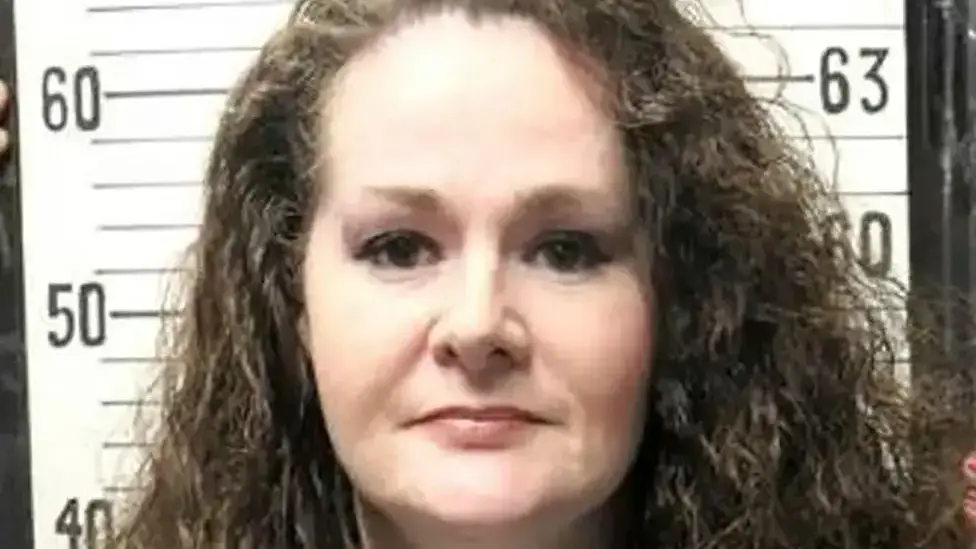
    Following Christa Pike’s controversial failed execution, a graphic photo has allegedly emerged, showing the damage the lethal injection had done to her body.

    Pike execution attempt has been in the news plenty of times in the week since she was taken to hospital for ‘live-saving’ measures on 30 September.

    But the details keep coming, which have revealed the extent of her some of her injuries after being injected with two shots of pentobarbital, in accordance with the state’s backup protocol if one injection fails.

    Pike, 50, was supposed to become the first woman put to death in Tennessee in two centuries after being sent to prison for the 1995 murder of Colleen Slemmer.

    Her execution via lethal injection was lined up and ready to go, as Pike said her her final words in the execution chamber.

    Christa Pike is still alive following her failed execution (Tennessee Department of Corrections)

    Christa Pike is still alive following her failed execution (Tennessee Department of Corrections)

    “I’m going to leave this world the way I spent most of my life, and that is with love,” she said in the room. “I’m at peace, I’m ready to be free. This is a happy day.”

    However, according to some who were there, Pike began to complain of pain in her arm, stating: “My arm feels like it’s about to burst open.”

    She then asked: “Does this happen like that?”

    Shockingly, it was described that despite being dosed with two loads of pentobarbital she was still alive and had been rushed to hospital, where she ‘remains critically ill‘.

    In the most recent health update from her legal time, they shared Pike ‘may not fully recover’.

    In the aftermath, the Tennessee Department of Correction said it had followed ‘every step’ of the standard protocol, while Tennessee’s prisons chief Frank Strada announced he was stepping down from the role.

    At the moment, the state has paused all executions as it launches an investigation into Pike’s situation – which has now been revealed further with the emergence of an apparent image of her injured arm.

    Radar Online claims to have an image that was allegedly leaked from inside the Tennessee Department of Correction by a source.

    According to the outlet, it shows Pike’s severely bruised arm caused by internal bleeding from the elbow downward.

    However, the Radar Online will not publish the image.

    They say the picture shows Pike’s alleged ‘nearly purple’ arm, but this is not verified.

    But the description of said photo adds further insight into the condition previously told by her lawyers as having been ‘swollen, burned, and blistered’.

    Pike has been on death row for three decades (YouTube/Unforbidden Truth Podcast)

    Pike has been on death row for three decades (YouTube/Unforbidden Truth Podcast)

    Her legal team claim seven needles entered Pike’s arms in an attempt to find a suitable vein.

    However, per the outlet, the apparent source claimed: “The needle blew her vein, causing the chemicals to go to the muscle.”

    They also claimed Pike had ‘stroke-like symptoms.’

    However, none of this has been confirmed by Pike’s legal team, nor the state.

    Just weeks in the run up to the scheduled execution date, Pikes representatives fought to stay her execution due to fears that a blood-clotting disorder and notably thin veins could present a problem in the execution chamber.

    At the time, they said it could expose her to unnecessary pain.

    LADbible reached out to the Tennessee Department of Correction for comment.

  • Man who claims he spent 18 days in heaven makes chilling confession about meeting Jesus

    Man who claims he spent 18 days in heaven makes chilling confession about meeting Jesus

    A man who nearly died after suffering a traumatic brain injury following a skateboarding accident revealed what he saw and heard when meeting ‘Jesus’.

    At 20 years old, Gabe Poirot fell off his skateboard while going around 30mph without a helmet to protect his head in 2019.

    One moment he was on his electric board, and the next moment, he said he was suddenly in Jesus’s throne room as he was placed in a coma for 18 days.

    “Like a hand right out of the glove. I found myself looking down at my own body, but it wasn’t me,” he said, per the Christian Broadcasting Network.

    Describing what he saw, he revealed in previous conversations that Christ was 5ft 11in to 6ft tall with ‘darker-toned skin…. close to Middle Eastern’, medium-length hair with a slight curl pattern and he was approximately 33 years old.

    Gabe Poirot said he met Jesus at 20 (Getty Stock Images)

    Gabe Poirot said he met Jesus at 20 (Getty Stock Images)

    Gabe’s friend, John Michael, who was riding with him that day told the outlet: “He was lying unconscious on the ground. Eyes were closed; we’re praying over him. Speaking over him like, ‘Gabe, you’re going to live. You’re not going to die. You’re going to live. You’re not going to die.’ Just, you know, over and over again.”

    Gabe revealed of this prayer: “I witnessed his prayers. And I also knew in the midst of a moment that is so intense, I had no fear. By the time the ambulance had gotten there, honestly, I was suctioned up by light to this tunnel of light, suctioned me up out of there.”

    After Gabe was in a ‘very, very critical’ state down on Earth, beyond that, he said he was being ‘suctioned up to an appointment with Him’.

    Gabe revealed: “It was like this city of pure glory, pure light, pure love. But then as the closer I got to the center of the city, He was – He was there waiting for me. Seeing Him changed everything.”

    Speaking to Fox News’ Saturday in America with Kayleigh McEnany just yesterday (4 October), Gabe said Jesus has been ‘misrepresented’, confessing that he’s not the man he has been depicted.

    Gabe claimed: “Now, with every single person I meet, I tell them of the love of Christ and that he did it all for them. And he died and rose for again. And I love how, you know, all these other testimonies they didn’t meet a female Jesus, they didn’t meet a soft or passive Jesus. Jesus is a man.

    “And especially in America, he’s been misrepresented. There are so many cultural things that present him as if he’s some tolerant guy. That’s not the Jesus I met, he’s a lion. But he’s not a lion angry against me, he’s a lion angry for me. He’s a mustang on my behalf. He did it all for me.”

    He continued: “Pure fire. He was 5’11” like six feet, yet tall as eternity. Like an ocean of love yet his eyes were burning white and red at the same time. Talk about testosterone, like a mustang, I’m telling you. He’s the lion of Juda and there’s a roar within his voice. “

    The claim that Jesus was both ‘angry’ and displayed ‘red’ eyes is a shocking change from how he usually looks in imagery throughout history. But that’s what Gabe said he saw of Christ.

    Gabe said in his CBN interview that he could see ‘the prayers of the saints, the sons and daughters of God’ from ‘heaven’s perspective’.

    He said of what he saw: “They were gathered up into this bowl, this golden bowl, every single one of them. And literally they are presented to the throne room of heaven, and all of heaven stands at attention because our prayers are the Father’s priority. God delights in our prayers. He both cries with us and rejoices with us at the same time. It’s… it was so beautiful of a picture.”

    Gabe remained in a coma for 18 days until Ginger, a family friend, came to the hospital and prayed over him.

    It was like that moment spoke to Gabe from beyond the veil.

    Gabe said of his last moments with Jesus: “Closer to the end of my time with Him, these prayers formed a bridge on the Earth. I literally saw these bridges that were being formed. And sure enough, the bridges gathered. And then Jesus united himself with them, and they got bigger. And bigger and bigger. And as everyone was on the Earth, I saw the prayers of those like Ginger. I saw her praying over my body. I saw my parents and my family and my friends, and I saw those prayers go right into the heart of Christ – it was those prayers that I was actually sent back on.”

    “When I woke up, I just felt so out of place,” admitted Gabe, revealing that he felt almost foreign in his body.

    Gabe explained that he was released from hospital within days, with his doctor calling his healing a ‘miracle’.

    However, Gabe attributes it to Jesus, stating: “We are here on the credit of His grace. He has such an amazing plan for all of our lives, and people don’t understand the amount of actually crazy situations the Lord has saved them from, and they have no idea.”

  • ‘We Have Identified You, Sir’: Near Intents Recovers $3.8 Million After 48-Hour Ultimatum

    ‘We Have Identified You, Sir’: Near Intents Recovers $3.8 Million After 48-Hour Ultimatum

    In brief

    • Near Intents recovered the full $3.8 million stolen in Thursday’s exploit, general manager Alex Shevchenko said Friday, and the team has ended its investigation.
    • The return came after Shevchenko publicly told the attacker “We have identified you, sir” and gave them 48 hours to return the funds.
    • An on-chain message that appears to come from the exploiter said “we were in the wrong” and urged others to use bug bounties.

    Near Intents got its money back.

    The cross-chain swap service said Friday that the roughly $3.8 million drained in an exploit on Thursday has been returned in full. The return came a day after the team publicly told the attacker it knew who they were.

    Myriad: Where does Ethereum go next? Click to make your prediction.
    Myriad: Where does Ethereum go next? Click to make your prediction.

    “The funds from the $3.8M NEAR Intents hack were sent back in full,” Alex Shevchenko, general manager of Near Intents, wrote on X. “We are stopping the investigation.”

    The turnaround was fast. On Thursday, Shevchenko posted Bitcoin, BNB/Ethereum and Solana addresses for returning the funds and addressed the attacker directly: “We have identified you, sir.”

    He framed the return as a last chance at responsible disclosure, the practice of reporting a vulnerability to developers instead of exploiting it, and warned that the window would close after 48 hours.

    An on-chain message attached to a transaction, which Shevchenko shared and which appears to come from the exploiter, struck a contrite tone. “We’ve returned all the funds, we were in the wrong,” it read. The message also thanked the Near team for being cordial during the process and urged others to use bug bounties.

    BitcoinBTC · USD

    $86,476+3.39%

    Sep 28Sep 30Oct 2Oct 3Oct 5

    $86.8k$85.5k$84.2k$83.0k

    24h HighHigh$86,949

    24h LowLow$85,098

    VolVol$1.2B

    Market projectionsOdds by Myriad

    →

    Near Intents had halted service Thursday after a bug in how its Omni deposit and withdrawal layer interacted with its main smart contract let an attacker siphon funds. The team had pledged to compensate users in full and reported the incident to law enforcement. Blockchain sleuth ZachXBT said the stolen funds were sent to KuCoin and bridged to Bitcoin.

    Near Intents lets users swap tokens across 35 blockchains by stating what they want and letting market makers compete to fill the order. It has processed more than $30 billion in swaps, according to data from the service.

    The exploit capped a turbulent week. Two days earlier, Near Intents blocked a $50 million swap attempt by the hacker behind the roughly $387.5 million Bitget breach, which Bitget and blockchain analytics firm Elliptic have pinned on North Korea. The hack also came days after Bitwise’s spot NEAR ETF began trading.

    “Please use bug bounties instead of disrupting the services,” Shevchenko wrote.

    Daily Debrief Newsletter

    Start every day with the top news stories right now, plus original features, a podcast, videos and more.

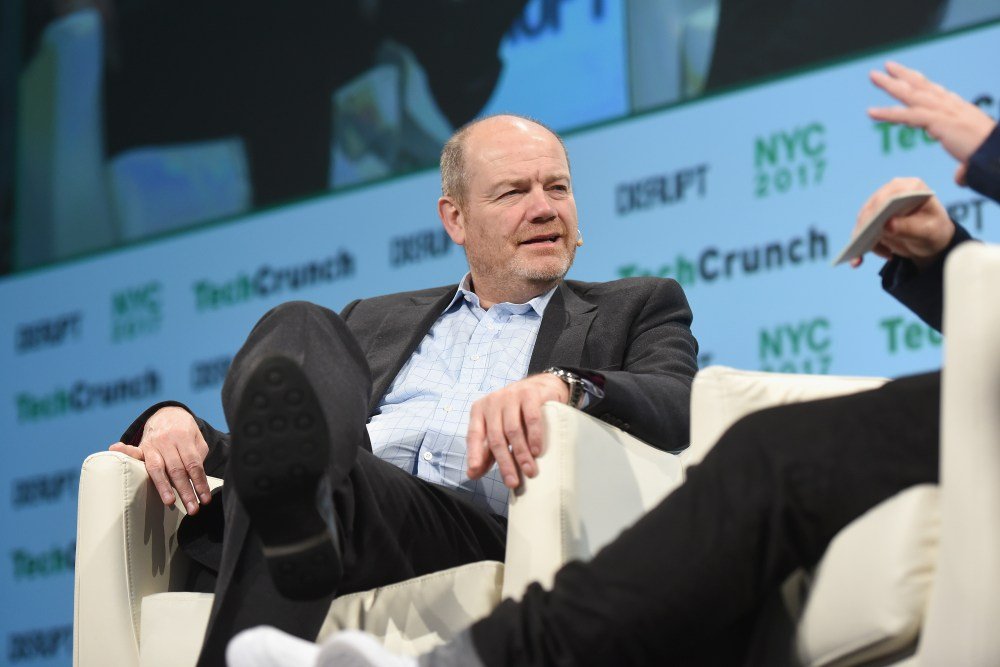
  • Mark Thompson to Remain at CNN Following Skydance’s Warner Buy

    Mark Thompson to Remain at CNN Following Skydance’s Warner Buy

    Mark Thompson said Monday that he would remain in charge of CNN following the purchase of the new giant’s parent, Warner Bros. Discovery, by Skydance, a move that may serve to reassure many of the outlet’s staffers.

    “I have real confidence that they both understand and will fully support the principle and practice of the kind of independent news that CNN has always stood for,” Thompson said of the company’s new owners., in a memo to staffers. “That’s why I will be leading CNN into this new chapter as it becomes one of Skydance’s suite of major media assets and global brands, and leading it as an independent Editor-in-Chief with the same responsibilities and prerogatives that I have now.”

    Thompson revealed last week he was in discussions with the company currently known as Paramount to stay in his role as chairman and CEO of the news company.

    The news could bring some relief to staffers at CNN, who have been worried about the fate of the news division under Paramount. Staffers have wondered about Paramount CEO David Ellison’s commitment to credible newsgathering given recent scrutiny of the executive he installed at CBS News, Bari Weiss. They are also concerned about the direction Paramount may see for CNN’s new streaming service. CNN’s progress with digital audiences has been slowed by a bevy of changes in the company’s corporate direction in recent years.

    “I know many of you have had trepidations about this moment. That’s understandable — indeed, as I’ve hinted before, I’ve had the odd moment or two myself!” Thompson said in the memo. “But I want to say that on the eve of the acquisition of CNN by Paramount Skydance, I find myself in a very positive frame of mind. I really do believe we’ll be working alongside a team who don’t just have real vision and real energy, but real values as well.”

    During his tenure, Thompson has focused on getting CNN content in front of younger viewers and digital audiences. CNN has been testing new formats with its “CNN All Access” subscription service, and has seen up-and-coming personnel like Abby Phillip and Harry Enten gain some traction. Warner Bros. Discovery projected in a filing with the U.S. Securities and Exchange Commission earlier this year that CNN will generate $600 million in profit in 2026 on $1.8 billion in revenue.

    CNN’s path forward remains foggy. The network remains a solid contributor of the overall profit at Warner, but it’s financial engines are less powerful than they once were. CNN in past years generated $1 billion in profit, and under the aegis of Warner Bros. Discovery, management and personnel moves made have left CNN scrambling to make up a longer-term downturn in ratings. Warner Bros. Discovery also slowed down CNN’s progress in streaming, scuttling a venue called CNN+ while rivals like NBC, CBS, ABC, MS NOW and Fox News plunged ahead with new broadband experiments.

    Thompson acknowledged that CNN’s path forward might not be the clearest. “The specifics of how CNN will plug into and operate in the new company have yet to be finalized – hardly surprising given that serious discussions could only begin after Paramount’s anti-trust settlement a few days ago. So I can’t answer every question today.”

  • Why possible pneumonic plague outbreak could look very different to Covid as fears grow

    Why possible pneumonic plague outbreak could look very different to Covid as fears grow

    After the trauma of the Coronavirus pandemic back in 2019, many fear the worst when they hear about a potential outbreak.

    Darya Shipilova, an employee at the Anti-Plague Research Institute in Shelekhov, died recently after she was exposed to plague bacteria, having broken a test tube in the lab where she worked.

    Although her cause of death has not yet been 100 per cent confirmed, the ‘live bacteria’ inside the test tube has got a lot of people concerned, especially considering the severe pneumonia of an ‘unknown origin’ which she was suffering from in hospital before she passed away at the end of September.

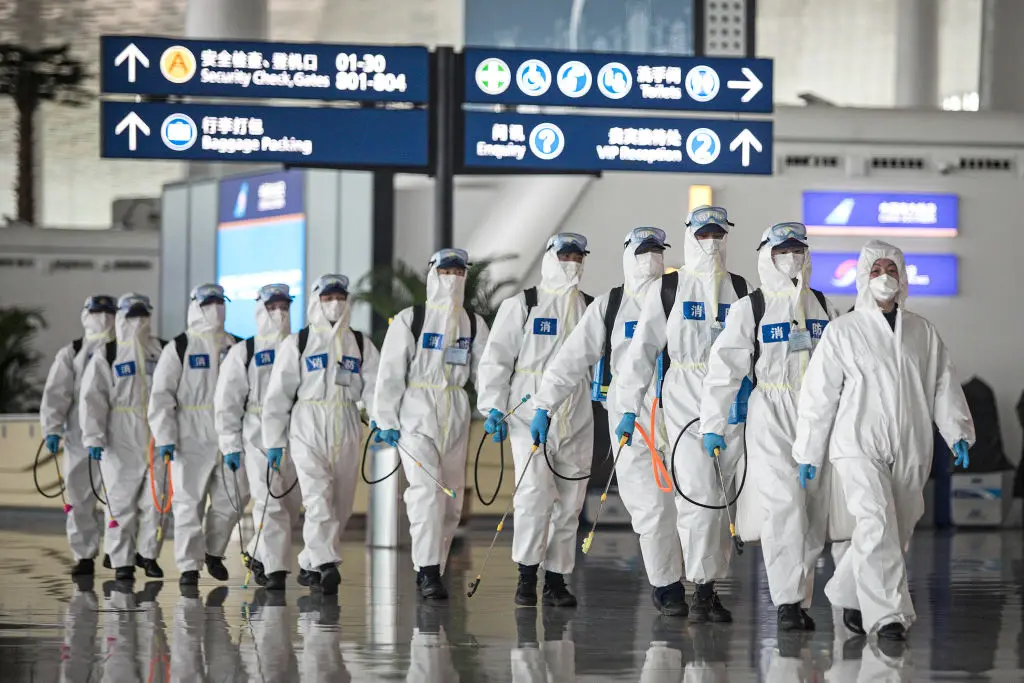
    The word quarantine is enough to strike fear into our hearts and we would be right to be worried if the outbreak was indeed ‘pneumonic plague‘, as several outlets are reporting this week.

    The US are said to be aware of the situation but considering the survival rate is near zero without treatment, it could cause devastation if it does turn into a full-blown pandemic, with emergency antibiotics often the only hope of preventing death.

    Daria Shipilova has died (Facebook)

    Daria Shipilova has died (Facebook)

    Dr Simon Clarke, associate professor in cellular microbiology in the School of Biological Sciences at the University of Reading, has allayed fears somewhat with his expert commentary, where he highlights exactly how this potential outbreak would be very different to what we all saw seven years ago.

    He said: “Reports from Russia have inevitably drawn comparisons with Covid-19, but it is important to remember that pneumonic plague is a very different disease. It is caused by bacteria, Yersinia pestis, famous for causing the Black Death, that remains with us today mostly in animals across parts of Asia, Africa and the Americas.

    “Pneumonic plague is particularly serious because it means the infection has reached the lungs and is nearly always fatal if not treated promptly. Unlike the bubonic plague which enters the body via infected flea bites, pneumonic plague can spread between people through respiratory droplets during close contact.

    “Unlike many viral respiratory diseases, plague is caused by bacteria and is generally treatable with antibiotics if identified quickly.”

    While both illnesses can be passed through respiratory droplets and close contact, Covid did not originate from bacterium and couldn’t be treated with antibiotics in the same way.

    Things might seem similar to Covid but if there is a plague outbreak, it would be treated in an entirely different way (Getty Images)

    Things might seem similar to Covid but if there is a plague outbreak, it would be treated in an entirely different way (Getty Images)

    Russia has also acted quickly by putting around 200 different people into quarantine after they came into close contact with Shipilova, but so far the public health service has only conceded that she died of ‘pneumonia of undetermined origin’.

    Despite the White House also describing it as an ‘outbreak’ in its official statement, Dr Clarke is less convinced and suggests that ‘an awful lot must have gone wrong for a lab worker to be infected by a broken test tube’.

    He added: “Having worked in high-containment laboratories, I know that handling dangerous pathogens involves multiple layers of protection, strict procedures, safety cabinets, airflow systems and careful procedures carried out by well-trained staff. Lab-acquired infections are rare events, and a broken tube would not automatically lead to exposure or infection. We also don’t tend to use test tubes very much.

    “Until more details emerge, it is difficult to assess whether this represents an isolated case, an occupational exposure, or evidence of wider transmission.

    “Transparency, rapid diagnosis and effective contact tracing would be the most important factors in managing an outbreak.”

  • ‘Bowie80’ to Celebrate David Bowie’s 80th Birthday With Events, Exhibits, Releases and More Throughout 2027

    ‘Bowie80’ to Celebrate David Bowie’s 80th Birthday With Events, Exhibits, Releases and More Throughout 2027

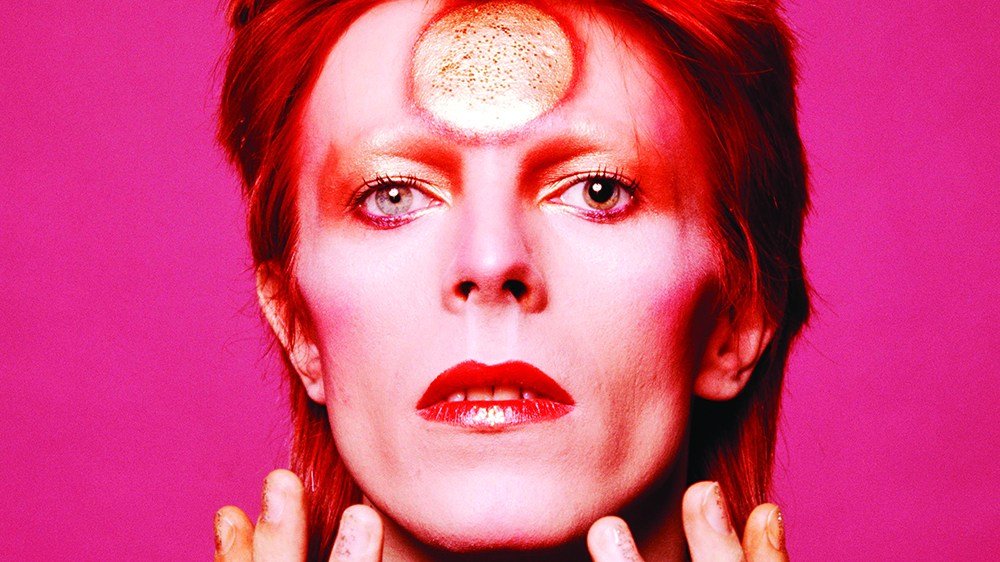
    The late, legendary musician David Bowie will have his 80th birthday celebrated with a series of events, exhibits, releases, collaborations and experiences beginning in November and spanning 2027, his estate announced on Monday. Details will be announced on the new website bowie80.davidbowie.com; initial projects are listed below.

    One of the most influential musicians of the rock era, Bowie was born David Jones in London on Jan. 8, 1947 (sharing a birthday with Elvis Presley, who was born 12 years earlier) and died of cancer on Jan. 10, 2016, just two days after his 69th birthday and the release of his remarkable final album, “Blackstar.” His estate has issued a series of excellent reissues, planned by Bowie himself, in the years since his death.

    *The Rock & Roll Hall of Fame in Cleveland is planning a Bowie80 celebration anchored by a dedicated retail pop-up running mid-November. The Rock Hall will also host fan activations throughout David’s birthday weekend, including Bowie-themed educational presentations, trivia, music, and photo ops, alongside an exhibition featuring the work of photographers, some of which has never been displayed or published. Exhibit and programming details will be announced in the coming months.

    *The estate has struck an exclusive partnership with Nordstrom, celebrating Bowie’s enduring influence on fashion through three immersive shops in their Seattle, New York, and Chicago flagships, featuring exclusive and limited-edition collections created specifically to launch the Bowie campaign. The shops will include clothing and accessories from designers and brands such as Undercover, Marc Jacobs, Paul Smith, AllSaints, and more.

    *Morrison Hotel Gallery will mark David Bowie’s 80th year with “Strange Fascination,” a major photography exhibition. The exhibition will open early February 2027 in New York City and West Hollywood, bringing together career-defining and previously unreleased photographs from the celebrated archives of Morrison Hotel Gallery and the David Bowie estate. The exhibition will be presented in six eras, identities and reinventions that helped define his influence on music, fashion, art and culture. Additional details will be announced in January.

    *BOWIE (breaking) GLASS is a new live symphonic concert production, developed by Schirmer Theatrical together with Østre Gasværk Teater, bringing David Bowie’s songs and voice into “a new musical and visual dialogue” with Philip Glass. Featuring Bowie’s original recordings alongside live vocalists, musicians and orchestra, this official concert experience will have its world premiere in Copenhagen in Spring 2027.

    *Perryscope Productions, longtime merchandising representatives for David Bowie, will be launching exclusive Bowie80 merchandise, effective immediately. Additionally, new and longtime David Bowie apparel and accessories licensees including Phix, Rockoff, Rowdy Sprout, Roots of Fight, Stoned Immaculate, Girl Skateboards and more will be rolling out fresh Bowie & Bowie80 themed products throughout the anniversary year.

    *The show “David Bowie: You’re Not Alone,” which opened at London’s Lightroom this year, will reach new audiences in 2027, with runs in Manchester and Brighton, as well as its first European venue, Port des Lumières in Hamburg. The show uses large screens and high-fidelity audio to explore the artist’s life and career.

    *The V&A’s “David Bowie: On Tour” will display artefacts from Bowie’s 90,000-item archive touring the U.K., starting in Dundee before moving on to Blackpool in 2027, before visiting further venues in 2028 and 2029.

    More projects will be released in the coming months.

  • ‘Uptober’ Starts Green as Bitcoin ETFs Draw $134 Million

    In brief

    • U.S. spot Bitcoin ETFs drew $102.7 million Thursday and $31.7 million Friday, opening October with $134.4 million in net inflows, per Decrypt’s tracker.
    • The inflows followed a $148.7 million outflow on Sept. 30, which ended a nine-session streak.
    • A soft jobs report cut October rate-hike odds, but Myriad traders still give a 93% chance Bitcoin won’t hit a new high this year.

    Bitcoin ETFs are living up to the “Uptober” meme, so far at least.

    U.S. spot Bitcoin ETFs drew $102.7 million on Thursday and another $31.7 million on Friday, according to Decrypt‘s Bitcoin ETF tracker. That’s $134.4 million in net inflows to start October.

    Myriad: How high will Bitcoin go? Click to make your prediction.
    Myriad: How high will Bitcoin go? Click to make your prediction.

    The green start followed a red finish. The funds shed $148.7 million on Sept. 30, snapping a nine-session inflow streak that began Sept. 17. Even so, September was their second-best month since October 2025, with $2.65 billion in net inflows, according to SoSoValue data.

    “Uptober” is crypto shorthand for October’s track record as one of Bitcoin’s strongest months. Over the past decade, the asset has averaged an 18% gain in October, Algoz’s Stephen Wundke told Decrypt. “Traders feel there is more upside currently than there is downside,” he said.

    Bitcoin ETF net flows. Image: Decrypt
    Bitcoin ETF net flows. Image: Decrypt

    Friday’s jobs report added fuel. The U.S. economy added just 29,000 jobs in September, and unemployment rose to 4.2%, according to the Bureau of Labor Statistics. After the release, CME FedWatch odds of an October rate hike fell to 14% from 70% earlier in the week. A weaker labor market eases pressure on the Fed to keep raising rates, which tends to favor risk assets like Bitcoin.

    Bitcoin briefly tested $87,173 on Friday, just shy of its September high of $87,354, before pulling back. It traded at around $85,000 on Sunday morning, up 0.5% over 24 hours, according to CoinGecko data.

    BitcoinBTC · USD

    $86,470+3.38%

    Sep 28Sep 30Oct 2Oct 3Oct 5

    $86.8k$85.5k$84.2k$83.0k

    24h HighHigh$86,949

    24h LowLow$85,098

    VolVol$1.2B

    Market projectionsOdds by Myriad

    →

    Cumulative net inflows since the funds launched stand at $58.1 billion, and total net assets sit at $101.1 billion, according to Decrypt‘s tracker.

    Not everyone is sold on a breakout. Traders on Myriad, a prediction market owned by Decrypt‘s parent company Dastan, put the odds at 93% that Bitcoin won’t set a new all-time high in 2026.

    Year-to-date ETF inflows also remain under $1 billion after heavy outflows earlier in the year. The next tests come soon: September’s CPI report lands Oct. 14, and the Fed meets Oct. 28.

    Daily Debrief Newsletter

    Start every day with the top news stories right now, plus original features, a podcast, videos and more.