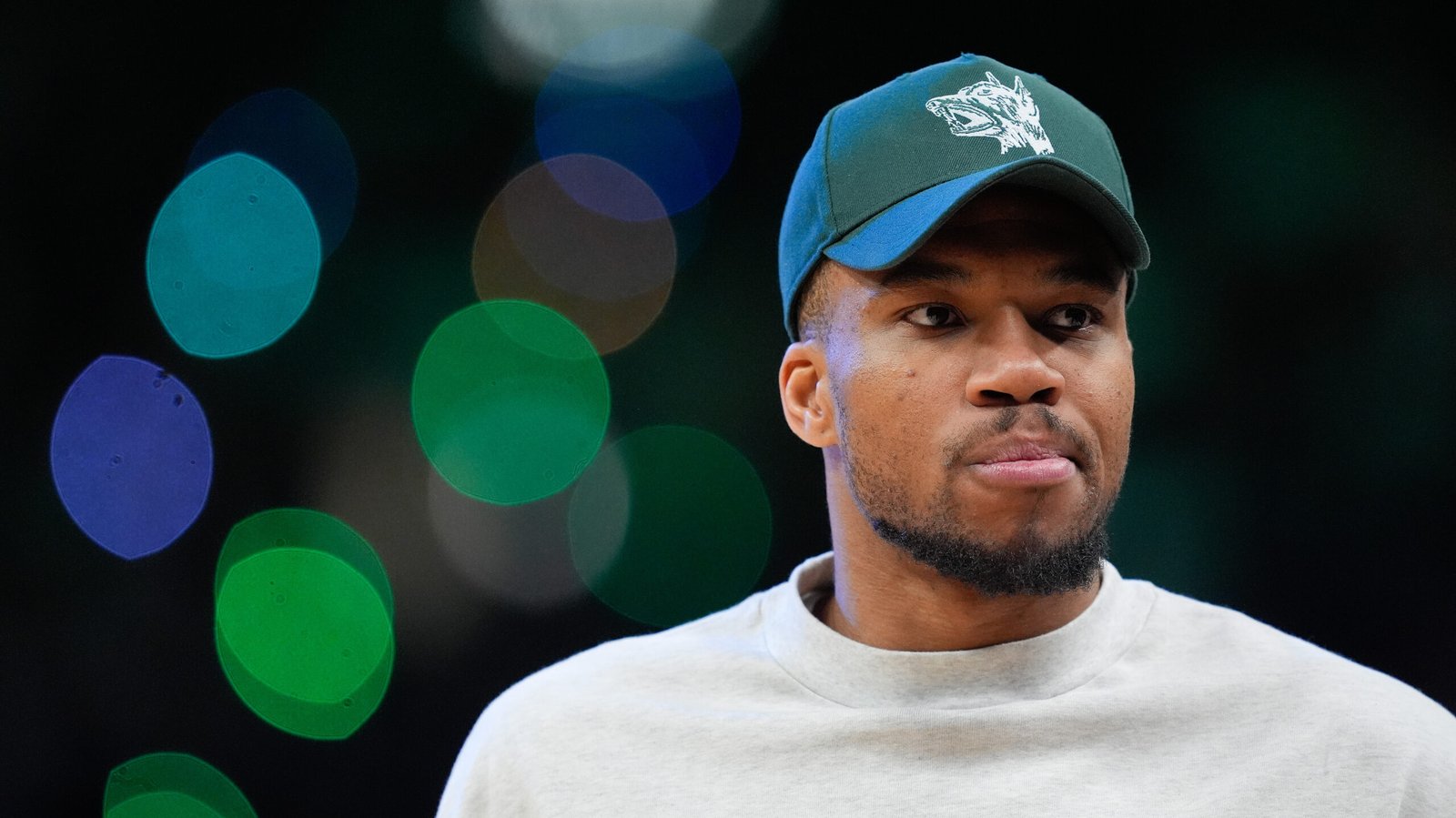
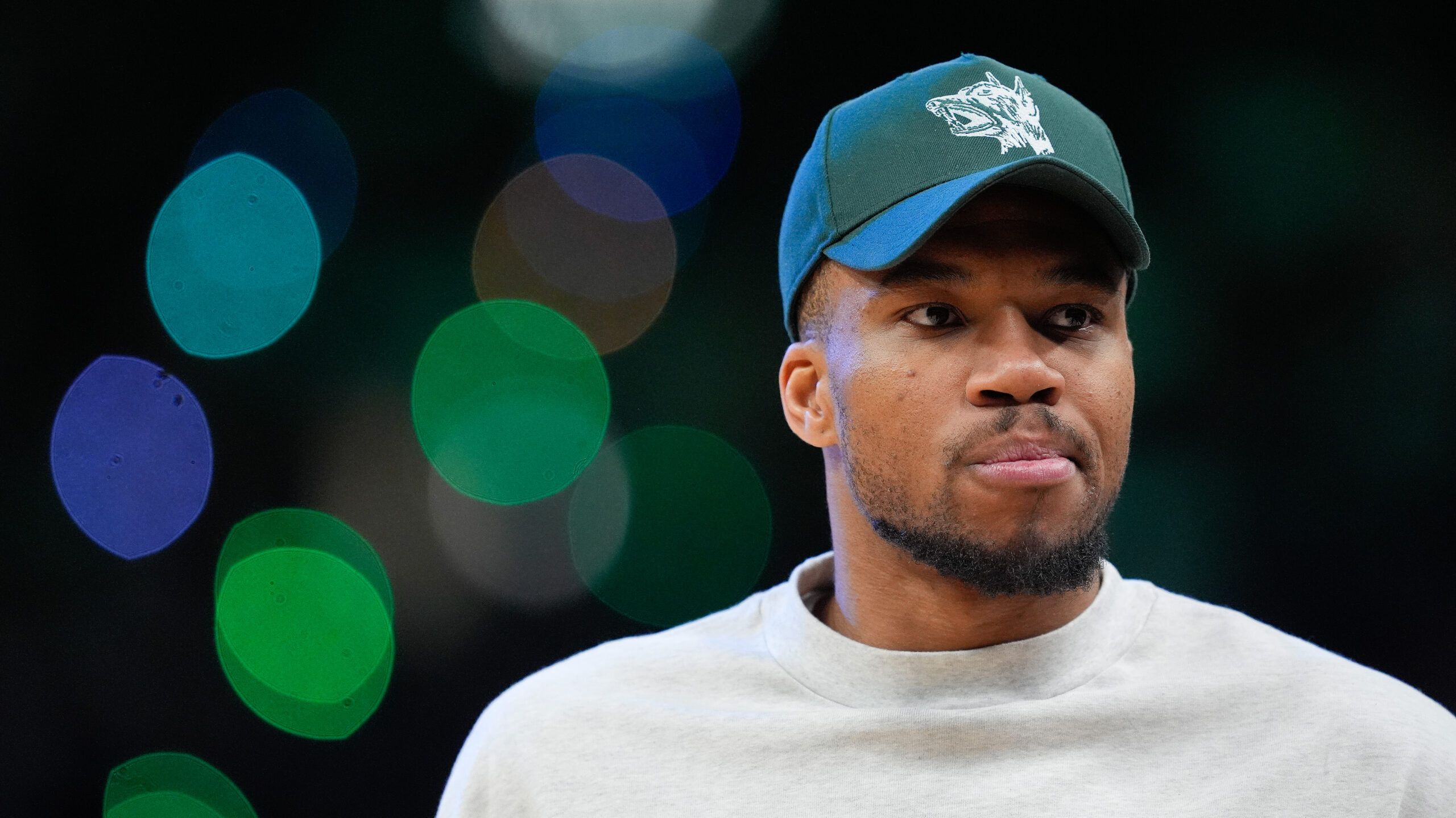
With Giannis Antetokounmpo added to the mix, the Heat could boast one of the best defensive frontcourts in the league.
Free agency ain’t what it used to be, with most star players signing extensions well before their contracts expire. But that doesn’t mean that NBA offseasons aren’t eventful.
This summer’s player movement has already kicked off with two major trades: the Miami Heat reportedly acquiring two-time Kia MVP Giannis Antetokounmpo and the Minnesota Timberwolves reportedly sending three-time All-Star Julius Randle to Brooklyn.
There are certainly more trades to come, and there will be some free agents changing teams. So consider this to be Part 1 of a player-movement notebook for the summer of 2026.
1. The Heat need shooting
To Miami: Giannis Antetokounmpo and Bobby Portis
To Milwaukee: Tyler Herro, Kasparas Jakučionis, Jaime Jaquez Jr., Kel’el Ware, No. 13 pick (Nate Ament), two future first-round picks, a pick swap and a future second-round pick
The Heat have acquired the only player in NBA history to have averaged at least 24 points, nine rebounds, five assists and one block per game over his career. Antetokounmpo is one of the best downhill attackers we’ve ever seen.
Antetokounmpo and Bam Adebayo will also be the best defensive frontcourt in the league. But the offensive fit isn’t great, with the two bigs having combined to shoot 39% from mid-range and 32% from 3-point range over the last three seasons.
The good news is that the Heat can stagger their two stars’ minutes, so that they have at least one on the floor at all times and the fit issue is minimized. But it would help if they had more shooters to surround them with.
There were 154 players (5.1 per team) who shot the league average (36.0%) or better on at least 100 3-point attempts this past season. The Heat had seven of them, but only one of those seven (Davion Mitchell) is currently under contract with Miami for next season. They just traded three of the seven – Herro, Jakučionis and Ware – to Milwaukee, getting another above-average 3-point shooter (Portis) in return.
If Andrew Wiggins exercises his player option, that would give the Heat three guys who shot the league average or better from 3-point range last season. Two other shooters – Norman Powell and Simone Fontecchio – are unrestricted free agents.
Even if they can retain both those players, the Heat may need more shooting to complement their new star. Over his 14-year career, 52% of Antetokounmpo’s assists have come on 3-pointers. That’s the third-highest rate among 468 players with at least 1,000 assists in the 30 years for which we have play-by-play data, and it was 69% this past season.
2. The Bucks have some youth
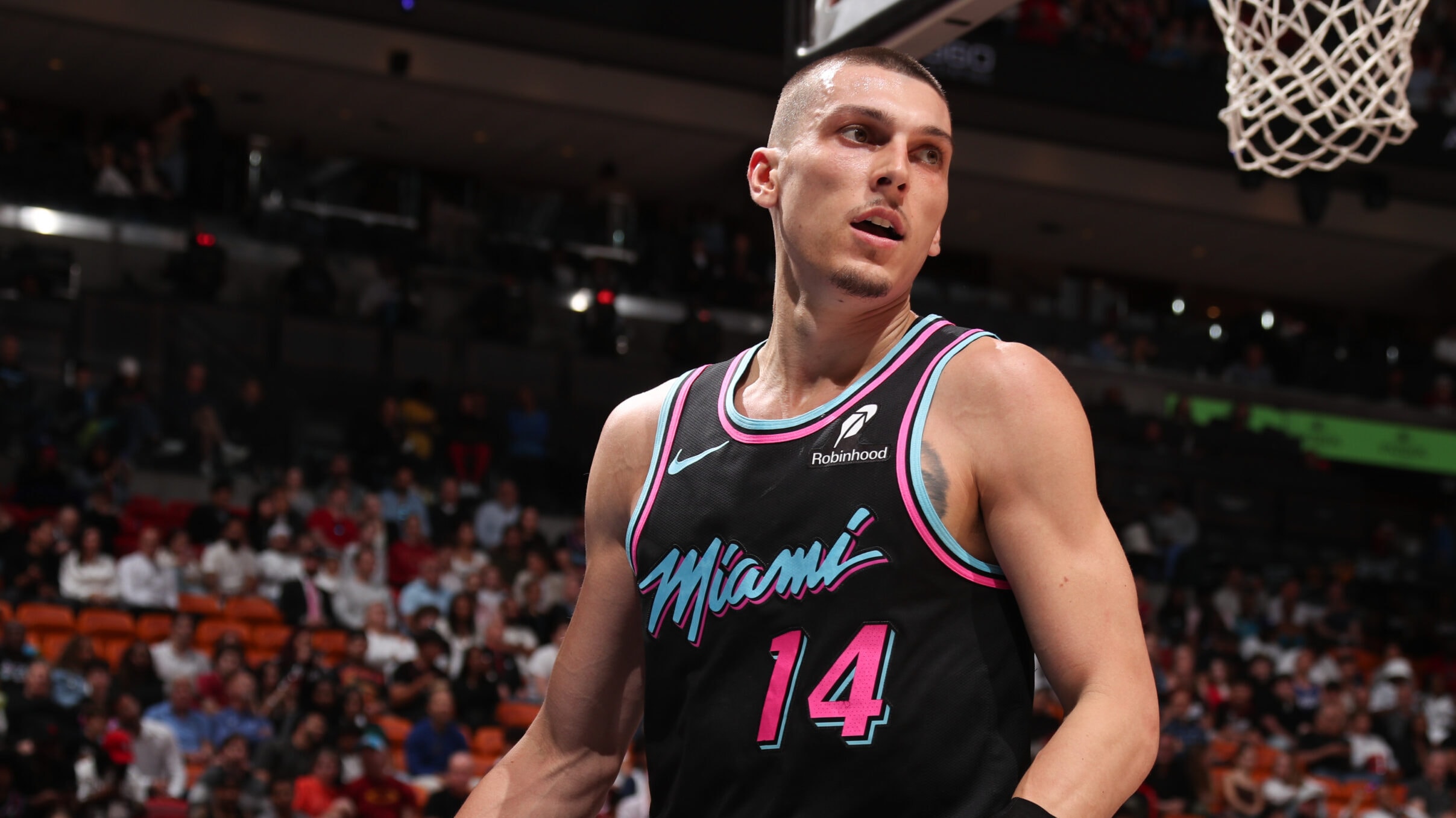
Tyler Herro is one of several key youngsters added to the Bucks’ fold.
One big issue with the Bucks’ fall-off this past season was that there was little hope regarding the development of young players on the roster. While every other team got more than 1,300 minutes from first or second-year players in 2025-26, the Bucks got … 318.
Fewest minutes from rookies or second-year players, 2025-26
| Team | Rookie | 2nd Year | Total | %MIN |
|---|---|---|---|---|
| Milwaukee | 318 | 0 | 318 | 2% |
| Los Angeles Lakers | 195 | 1,163 | 1,358 | 7% |
| Denver | 298 | 1,451 | 1,749 | 9% |
| Minnesota | 350 | 1,832 | 2,182 | 11% |
| New York | 634 | 1,555 | 2,189 | 11% |
%MIN = Percentage of total minutes coming from rookies and second-year players
Those 318 minutes came from undrafted rookies Cormac Ryan, Mark Sears (who was waived in January) and Alex Antetokounmpo, all of whom were on two-way contracts. So they didn’t have a single first or second-year player on their primary roster.
Now, a youth movement is in place. When the trade is completed, the Bucks will have rookies Brayden Burries and Nate Ament, Jakučionis (entering his second season), Ware (entering his third season) and fourth-year forward Jaquez.
3. The Wolves’ remaining bigs have been better together
To Brooklyn: Julius Randle, No. 28 pick (Joshua Jefferson)
To Chicago: Nic Claxton
To Minnesota: Mouhamadou Gueye, No. 33 pick (Isaiah Evans)
The frontline of Randle and Rudy Gobert was good, but not dominant. Over the former’s two seasons in Minnesota (and including the playoffs), the Wolves outscored their opponents by 4.4 points per 100 possessions in 3,147 total minutes with Randle and Gobert on the floor without Naz Reid.
The starting duo really struggled in this year’s playoffs, when the Wolves were outscored by 16.6 per 100 in 204 minutes with Randle and Gobert on the floor without Reid.
Overall, the Wolves’ best frontcourt duo over the last two years has been the one that remains: Reid and Gobert …
Wolves with two of three bigs on floor over last two seasons
| TOTAL | MIN | OffRtg | DefRtg | NetRtg | +/- |
|---|---|---|---|---|---|
| Randle & Gobert | 3,147 | 113.5 | 109.1 | +4.4 | +271 |
| Randle & Reid | 2,187 | 114.6 | +113.8 | +0.8 | 70 |
| Reid & Gobert | 2,029 | 109.3 | 102.6 | +6.7 | +280 |
Includes playoffs. Doesn’t include minutes with all three on floor together.
OffRtg = Points scored per 100 possessions
DefRtg = Points allowed per 100 possessions
NetRtg = Point differential per 100 possessions
That doesn’t mean that the Wolves are better without Randle, who helped them go 14-12 without Anthony Edwards over the last two seasons. With his departure, they’ll need more scoring from Jaden McDaniels and more minutes from Joan Beringer and Jaylen Clark (a restricted free agent).
4. Pistons move on from Stewart
To Detroit: 3 second-round picks
To Memphis: Isaiah Stewart
Stewart is one of the best interior defenders in the league. Last season, opponents shot just 106-for-242 (43.8%) at the rim when Stewart was there to protect it. That was the best rim-protection mark for any player who defended at least 200 shots at the basket in the 13 seasons for which we have tracking data, and Stewart also has the fifth-best mark.
Best rim protection, 200+ FGA, since 2013-14
| Player | Season | FGM | FGA | FG% |
|---|---|---|---|---|
| Isaiah Stewart | 2025-26 | 106 | 242 | 43.8% |
| Chet Holmgren | 2024-25 | 88 | 200 | 44% |
| Roy Hibbert | 2013-14 | 208 | 463 | 44.9% |
| Andrew Bogut | 2014-15 | 146 | 323 | 45.2% |
| Isaiah Stewart | 2024-25 | 148 | 322 | 46% |
FGM, FGA, FG% = Opponent field goal makes, attempts and percentage at the rim when player is there.
But the Pistons were willing to trade Stewart for just three second-round picks. Some possible reasons …
- The trade frees up cap space for the Pistons to pursue some perimeter offense (maybe the aforementioned Powell) in free agency.
- Despite the elite rim protection, the Pistons were much better with Stewart off the floor (plus-11.3 points per 100 possessions) than they were with him on the floor (plus-1.8 per 100) in the regular season. And they scored less than a point per possession in his 165 minutes on the floor in the playoffs.
- Over the Pistons’ 14 playoff games, Stewart played just four minutes alongside Jalen Duren. So his role became more limited at the most important time of year.
- Paul Reed (in limited minutes) has been a capable third-string center and should be able to take over Stewart’s backup role.
5. Lakers will keep winning free-throw battles
LeBron James’ future is unknown, but the Lakers got some important business done on Wednesday by agreeing to a new, four-year contract with Austin Reaves.
Reaves has been a big part of the Lakers’ success at the free-throw line, where they’ve outscored their opponents by 3.8 points per game over the last four seasons. They’ve led the league in free-throw differential in all four…
Lakers’ free-throw differential per game, last 4 seasons
| Season | Own | Opp. | Diff. | Rank |
|---|---|---|---|---|
| 2022-23 | 20.6 | 16.1 | 4.5 | 1 |
| 2023-24 | 18.9 | 14.3 | 4.6 | 1 |
| 2024-25 | 18.2 | 15.9 | 2.3 | 1 |
| 2025-26 | 20.4 | 16.8 | 3.6 | 1 |
Reaves has attempted 39.5 free throws per 100 shots from the field over those four years. That’s the 18th-highest mark among 162 players (10th among non-bigs) with at least 2,000 field goal attempts over that stretch. This past season, he ranked ninth in free-throw rate (48.7 attempts per 100 shots from the field) among the 182 players with at least 500 field goal attempts.
* * *
Leave a Reply