
Feeling particularly refreshed this morning? That’s because the clocks went back last night.
An archaic law introduced in 1916 to help the country’s war effort, Britain’s clocks jump forward every May – allowing for a luxurious, sun-dappled summer – and back every October, plunging the nation into six months of darkness and misery.
But let’s put the arguments for and against shifting our clocks around each year and instead focus on the less talked-about side effect of Daylight Saving Time: the impact on our health.
Does moving the clocks have a negative impact on our health?
While shifting the clocks doesn’t magically invent or delete an hour, it does mean our bodies lose or gain an hour of sleep – something which can have a surprising effect on our bodies.

It’s that time of year again (Getty Stock Images)
We’ve all heard the urban legend that heart attacks and car crashes increase when the clocks go forward, and it turns out there’s some truth behind the rumours.
According to sleep scientist Matthew Walker, various studies have revealed that heart attacks increase by an average of 24 percent when the clocks go forward in spring and decrease by 21 percent in the autumn when the reverse happens.
“That’s how fragile and vulnerable your body is,” Walker explained during an episode of The Joe Rogan Experience.
However, statistics do vary between studies, with Dr Chelsie Rohrscheib, Head Sleep Expert and Neuroscientist at Wesper, telling LADbible that large population-based studies have found roughly a 4–5 percent increase in heart attacks following the spring clock change.
Why does the clock moving forward and back impact your health?
Dr Rohrscheib added that sudden time changes can lead to a dramatic reduction in sleep quality, which activates the sympathetic nervous system.

Dr Chelsie Rohrscheib (LinkedIn)
She explained: “Medical scientists believe the individuals most likely to be affected are those with underlying health issues, including hypertension, heart rhythm disorders, and cardiovascular disease.
“Sudden time changes can dramatically reduce sleep time and sleep quality, acutely activating the sympathetic nervous system.
“This raises blood pressure, cortisol levels, and heart rate, making already vulnerable individuals more likely to experience a heart attack.”
Meanwhile, registered dietitian Ilana Schachter told LADbible there is evidence that chronic sleep deprivation is not only associated with cardiovascular disease but also increased risk of hypertension, obesity and type 2 diabetes.
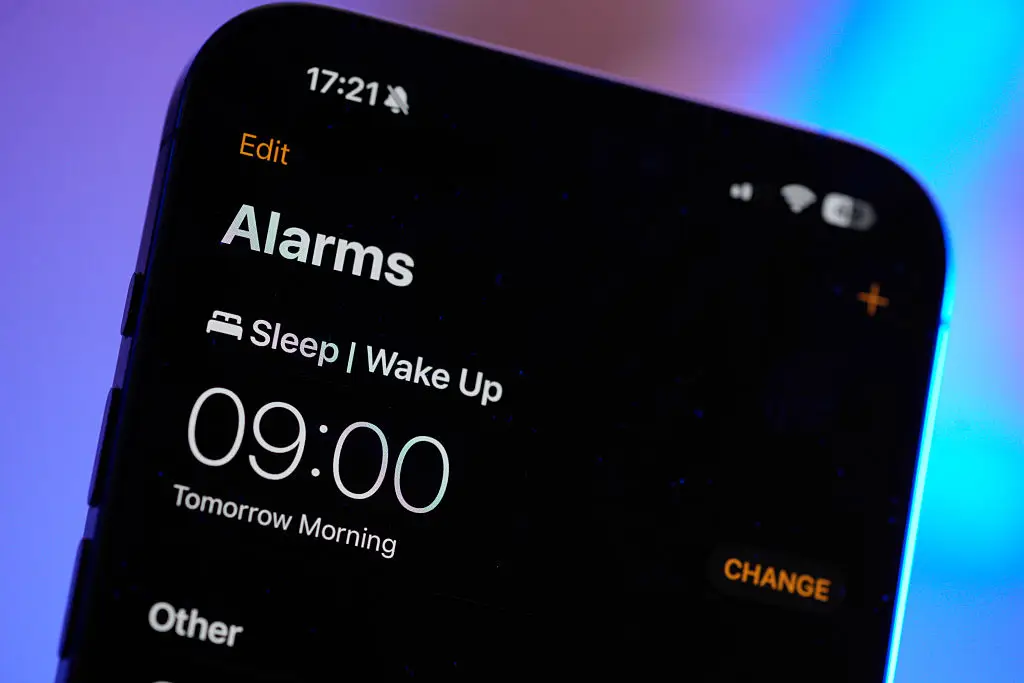
Fortunately the clocks on our phones move back automatically, which saves us from oversleeping (Jaap Arriens/NurPhoto via Getty Images)
“Sleep is essential for cardiovascular and metabolic health,” she explained.
“Insufficient sleep can affect blood pressure regulation, increase sympathetic nervous system activity, and disrupt glucose metabolism and appetite-regulating hormones.”
This is because it can also alter diet choices, as she added: “From a nutrition perspective, poor sleep can also influence food choices.
“Sleep deprivation may increase cravings for energy-dense foods and make it harder to regulate appetite, potentially contributing to metabolic risk over time.
“This highlights how sleep, nutrition, physical activity, and cardiovascular health are interconnected.”
Schachter said that many of the differences to the body are an ‘observed association’, meaning that the clocks moving back and forth isn’t a death sentence.
“The absolute risk for any individual is generally low,” she added. “Disruption to circadian rhythms, sleep duration, and other behavioural changes may all contribute.”
It’s worth remembering that sleep quality is important all year around and not just on the days where the clocks jump back and forward (Jaap Arriens/NurPhoto via Getty Images)
The importance of getting a good night’s sleep
Taking care of our sleep routine isn’t something that is restricted to days when the clocks are changing. Dr Rohrscheib noted that adults should aim for anywhere between seven and nine hours of quality sleep a night.
Meanwhile Schachter added that we should all be aiming for a ‘sufficient, restorative sleep’ each time our heads hit the pillow.

Lack of sleep can impact the human heart (Getty Stock)
“Overall, daylight saving time is a useful reminder that sleep is not simply downtime,” she explained. “It is an important component of cardiovascular and metabolic health, alongside nutrition, physical activity, and preventive medical care.
“Consistently obtaining adequate sleep is generally more beneficial than alternating between insufficient sleep during the week and trying to compensate with substantially longer sleep on weekends.
“Going to bed and waking up at approximately the same time each day helps support the body’s circadian rhythm.
“Morning exposure to natural light, regular physical activity, and a relaxing bedtime routine can also help improve sleep quality.”
Leave a Reply