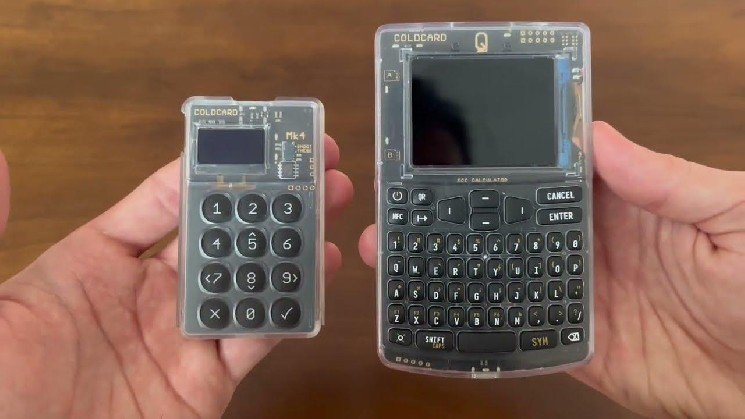
More than 1,000 bitcoin, worth about $70 million, was drained from 1,196 wallets in a 41-minute window on July 30, nearly double the amount reported when the theft first surfaced.
Galaxy Research mapped the full event on Friday, finding 1,082.65 BTC swept between 01:10 and 01:51 UTC across six blocks, with three intervening blocks containing nothing, which suggests the transactions were broadcast in batches rather than continuously.
The proceeds sit in four addresses and have not moved. Early reporting captured only one of those addresses, which is why the figure has grown.
The size of the attack is much smaller than some of the bigger attacks this year, but the mechanism is what makes this unusually — and why the attack is such a big deal.
Why the Coldcard wallet exploit is a bigger deal than most exploits
Most crypto theft involves getting to something. An exchange is breached, a contract is tricked, a key is phished off a laptop. The defence has always been distance, which is precisely what a hardware wallet sells. Keep the key on a device that never connects to the internet and, theoretically, there is nothing for an attacker to touch.
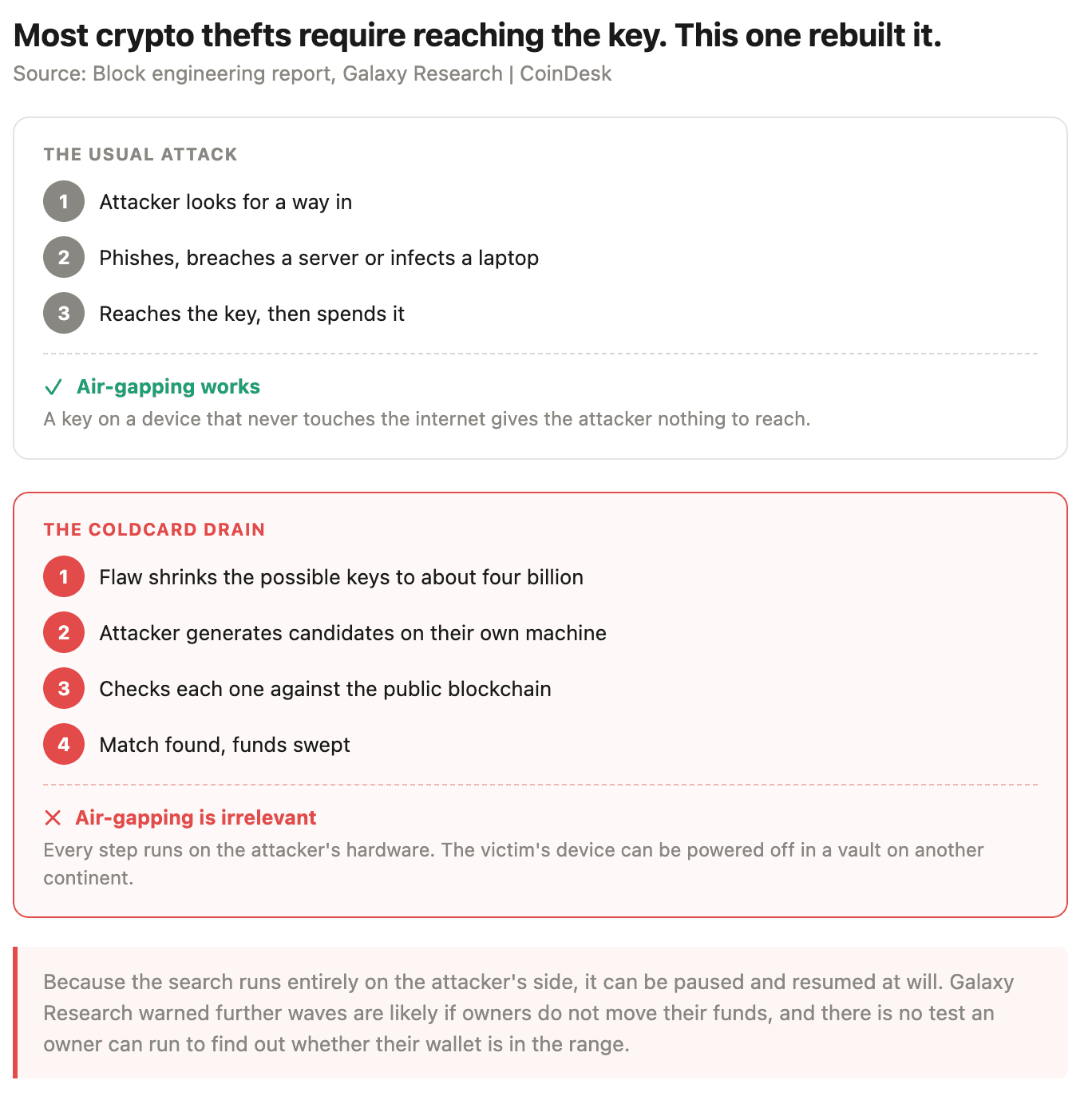
When a wallet is created, the device is supposed to pick a number so large and so unpredictable that guessing it is impossible.
Leave a Reply