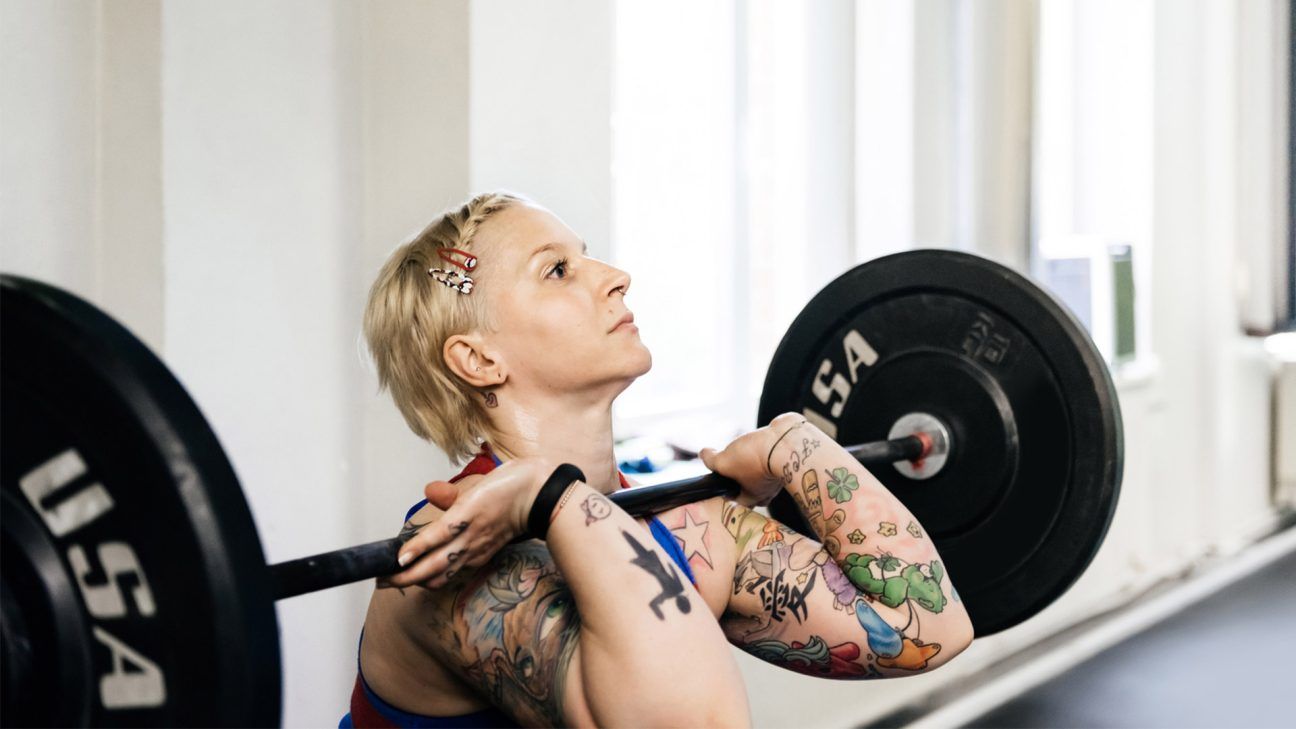
- A recent study found that people with strong back and chest muscles may have a lower risk of heart attack.
- Researchers used artificial intelligence (AI) to analyze heart scans of study participants.
- Muscle quality in these areas was also found to matter more than size for overall heart attack risk.
People with stronger back and chest muscles may have a lower risk of heart attack, according to a new study that used artificial intelligence (AI) to analyze heart scans.
The study, published in Radiology on June 30, suggests that people with greater muscle density in their chest and back were less likely to have a heart attack and also less likely to die within a decade of a heart scan.
“We think that [this] shows that the person has healthier muscles overall and is more likely to take part in exercise. This is evidence to support exercise being good for the heart,” Michelle Williams, PhD, Professor of Cardiovascular Imaging at the University of Edinburgh, and one of the study authors, told Healthline.
This adds to a growing body of evidence showing that strength training, also known as resistance training, can improve cardiovascular health.
In 2023, the
The AHA also noted that strength training alone or in combination with aerobic exercise can improve both traditional and nontraditional cardiovascular disease risk factors.
The study used AI to analyze routine CCTA scans from 1,722 individuals, with an average age of 57, who were experiencing chest pain.
The researchers used AI to examine the participants’ upper-body muscles, organs, bones, and fat. The analysis included muscle attenuation, which refers to the brightness or darkness of the muscles in the scan.
The AI took no more than 1 minute to assess a person’s muscle quality from a single scan. It would take a radiologist several hours to do the same thing.
A brighter image is associated with better muscle quality and density, indicating a lower fat proportion in muscle.
The study grouped participants together based on how their muscles appeared on the scans. The researchers then investigated the rates of heart attacks and early deaths using health records.
The researchers found that for every 10-point increase in a scan indicating better-quality muscle with less fat, a person had a 31% lower chance of having a heart attack. The individuals were also 39% less likely to die within 10 years of having the scan.
“Having good quality muscles means that they are being used and exercised. So having toned muscles is good for your heart. Being muscly alone didn’t make a difference. Quality, not quantity, was important,” said Williams.
These findings remained true even after taking into account other factors that can increase a person’s risk of a heart attack, including:
- age
- sex
- amount of calcium built up in the arteries
“While the findings are compelling, they represent an association, not proof of cause and effect,” said Cheng-Han Chen, MD, board certified interventional cardiologist and medical director of the Structural Heart Program at MemorialCare Saddleback Medical Center in Laguna Hills, CA. Chen wasn’t involved in the study.
“More research is needed to better understand the underlying mechanisms driving this relationship and how muscle health directly impacts cardiovascular outcomes.”
The results of the study suggest that, in the future, routine heart scans could be used to identify individuals with lower-quality upper-body muscle, who may be at greater risk of a heart attack.
“In the future, it may be possible [to] use information from a routine CT scan to identify patients who might benefit from targeted interventions, including exercise, lifestyle, or medications. More research into this will be required first,” said Williams.
Keeping your muscles healthy is an important part of your overall health.
Chen suggested that regular strength training and other load-bearing exercises can help maintain muscle quality, improve metabolic health, and support long-term well-being.
“These activities don’t have to be extreme. Even moderate, consistent effort can make a meaningful difference,” he said.
Chen told Healthline that he encourages his patients to stay physically active as part of maintaining their heart health.
Current guidelines recommend
“A balanced approach that includes both aerobic exercise — such as walking, cycling, or swimming — and strength training offers the greatest benefit for cardiovascular and overall health,” Chen said.
Leave a Reply