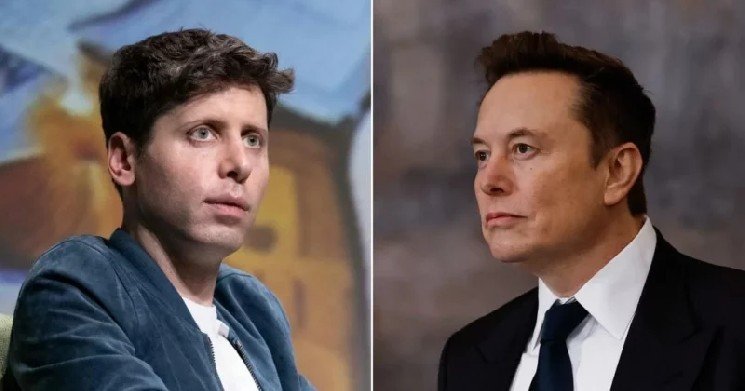
Two of the most powerful people in artificial intelligence are now sitting across from each other in a federal courtroom instead of a boardroom. Elon Musk and Sam Altman, who co-founded OpenAI with a stated mission to develop AI for the benefit of humanity, are locked in a jury trial that could reshape how the world thinks about nonprofit promises in the age of billion-dollar technology.
The trial, which began with jury selection on April 27, 2026, in the US District Court for the Northern District of California, centers on Musk’s allegation that OpenAI abandoned its founding principles. In English: Musk says he gave roughly $44 million to a charity, and that charity turned itself into a profit machine partnered with Microsoft.
What Musk is actually claiming
Musk filed the lawsuit on February 29, 2024, naming OpenAI, Altman, and others as defendants. His core argument is straightforward: OpenAI was created as a nonprofit with the explicit goal of pursuing artificial general intelligence, or AGI, for the public good. Instead, Musk alleges, the organization pivoted to a profit-seeking model that benefits insiders and corporate partners rather than humanity at large.
The approximately $44 million Musk donated to OpenAI forms the financial backbone of his case. He claims those charitable contributions were effectively misappropriated once the organization changed direction.
Not all of Musk’s original claims survived pretrial proceedings. Judge Yvonne Gonzalez Rogers dismissed several of them, but the fraud and unjust enrichment claims made it through. Those are the ones now in front of a jury.
Musk took the stand himself between April 28 and 30, 2026.
OpenAI’s defense and the competition angle
OpenAI’s legal team has pushed back with a simple but effective counter-narrative: there was never a binding contract that locked the organization into remaining a pure nonprofit forever. Without a contract, they argue, there’s no fraud.
OpenAI’s defense has also pointed squarely at Musk’s own AI venture, xAI, as evidence that his motivations aren’t exactly altruistic. The argument goes something like this: Musk isn’t suing because he’s heartbroken about humanity losing access to beneficial AI. He’s suing because OpenAI became a competitor to his own for-profit AI company.
The broader context
In 2015, Elon Musk and Sam Altman co-founded OpenAI as a nonprofit organization with a commitment to develop artificial intelligence for the greater good. Musk contributed around $44 million to support this mission but left the board in 2018, voicing concerns over the organization’s direction as it increasingly sought commercial partnerships, particularly with Microsoft.
The case touches on a question that extends well beyond these two men: can a nonprofit that was built on promises of public benefit simply restructure itself into a profit-driven entity once the technology it develops turns out to be extraordinarily valuable?
What this means for investors and the AI industry
If a jury finds that OpenAI committed fraud by departing from its nonprofit mission, it creates a precedent that could constrain how AI organizations structure themselves going forward. Companies and organizations that accepted donations or grants under specific mission statements could face legal exposure if they pivot to commercial models.
The outcome could also influence how Microsoft’s partnership with OpenAI is perceived by regulators and competitors. If the jury sides with Musk on the unjust enrichment claim, it could trigger a reevaluation of the deal structures that have allowed OpenAI to operate at its current scale while still technically maintaining nonprofit roots.
Leave a Reply