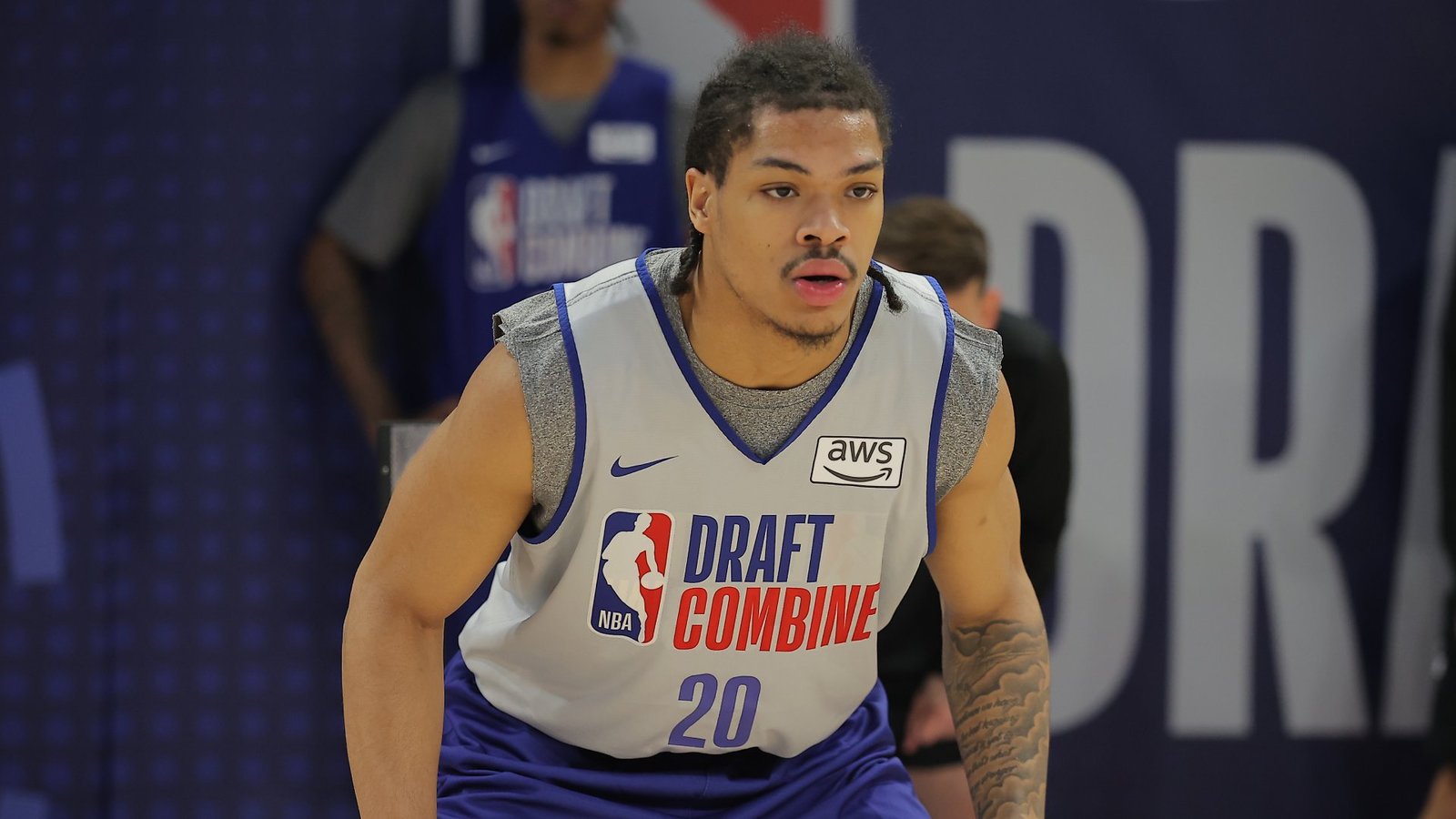
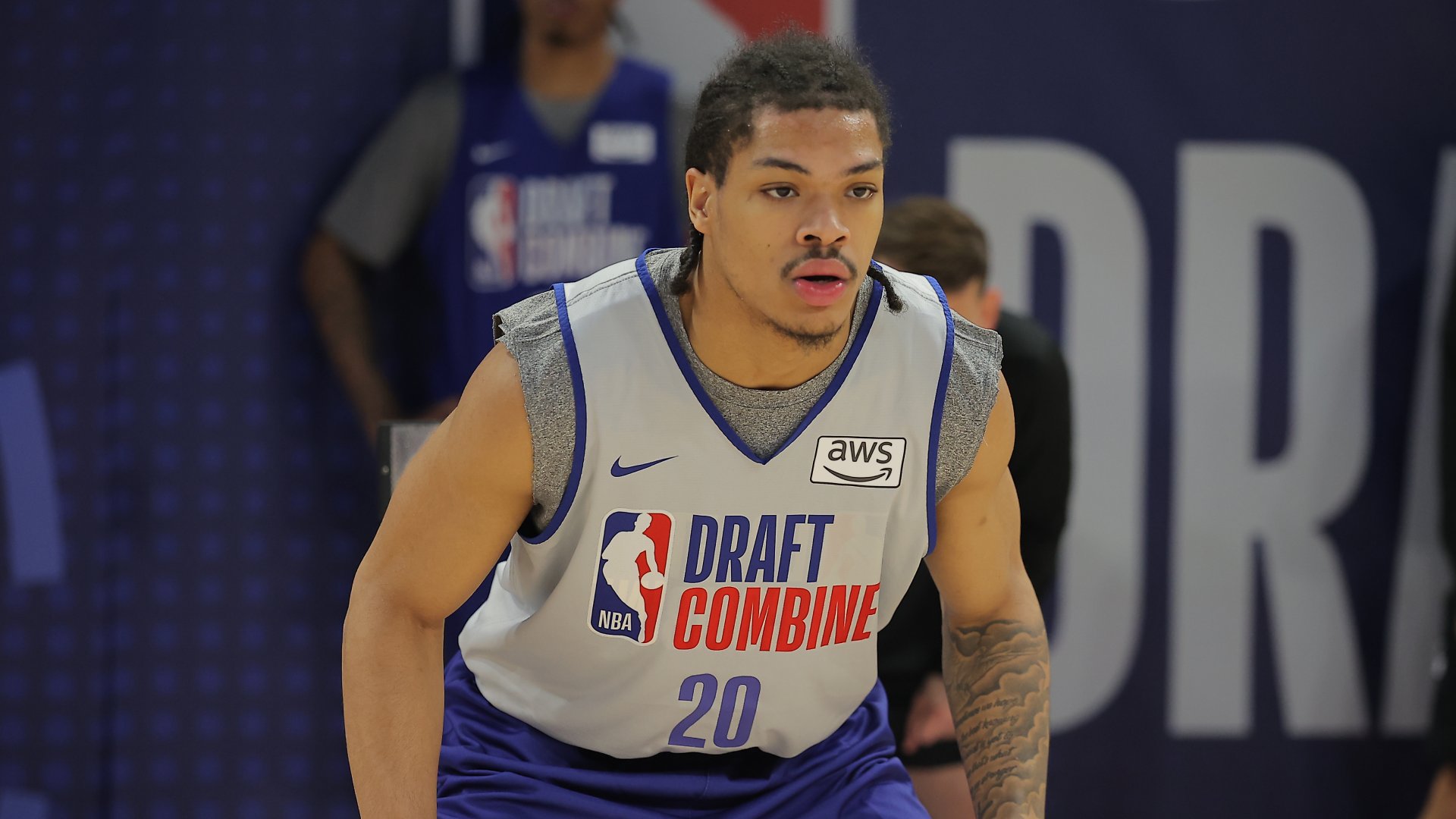
Former Arkansas star Darius Acuff Jr. is locked in on his opportunity to shine in the NBA.
• 2026 NBA Draft: Complete coverage | Draft Order: 1-60
Darius Acuff Jr. grew up in a family of basketball players. His dad played college ball at Eastern Kentucky, his mom played in high school and his uncle, Rashad Phillips, was the all-time leading scorer at the University of Detroit Mercy.
“Some people come from a family of doctors and you end up becoming a doctor … Darius came from an entire family of basketball players and it’s been a part of him since he was born,” Phillips told NBA.com.
Phillips and Acuff Sr. started training Acuff when he was seven years old. He loved basketball, like everyone else in his family, and would watch his older cousins play, wanting to be on the court with them.
“I’ve had a ball in my hands for as long as I can remember,” Acuff told NBA.com. “It’s always been a family thing. We’re all hoopers and love the game.”
It was clear to both Phillips and Acuff’s dad that he was a different kind of player at around age 10 with his work ethic and love for the game.
“I couldn’t get him out of the gym,” Phillips said. “I told his dad that these types of kids only come around once every 20 years and I just knew. They run different, they talk different and their energy is just different than other kids and that was Darius.”
Acuff quickly rose in the rankings once he hit high school. In one of the most talented high school classes in the last 10 years, Acuff was a top five player in the country and could score at will. In fact, only four players ranked ahead of him in high school: AJ Dybantsa, Darryn Peterson, Cameron Boozer and Nate Ament.
All four players are expected to be lottery picks in the 2026 NBA Draft. In his senior season at IMG Academy, Acuff had a two-game stretch where he posted 71 points and committed only two turnovers.
“The biggest thing for me is shot selection and getting to my spots, that was my focus,” Acuff said at the Nike Hoop Summit his senior year.
Acuff had over 20 high-major offers and committed to Arkansas the summer before his senior season. He chose coach John Calipari’s program over Kansas, Michigan and Kentucky. He was the No. 1 point guard in high school and was coming in with fellow five-star guard Meleek Thomas.
“Coming in, coach Cal just told me, ‘be you. Don’t change up and don’t try to be something you’re not,’” Acuff said. “I feel like coach Cal is the best coach to build your confidence as a guard. His track record and history speaks for itself, and he never really talked about all the great guards that came before me, he talked about my game and what I could bring to the team.”
Many speculated about how Acuff and Thomas would work in the backcourt alongside junior guard DJ Wagner. Coming in, Acuff was a ball-dominant lead guard who commanded a lot of offensive touches. Thomas was a high-volume shooter who also had the ball in his hands the majority of the time in the Overtime Elite league. It could have been a recipe for disaster, but the opposite occurred.
The three guards found harmony and acceptance in the offense as Acuff manipulated defenders and created for others. The most shocking part of Acuff’s development during his one year at Arkansas was his passing and playmaking, averaging 6.4 assists per game.
“A lot of people know Darius as a scorer, but the most underrated part of his game is his passing, for real,” Thomas said. “The helpside D had to respect his drive first and when that happened, he was always able to find an open teammate. We all started to trust him early on and everything just clicked for us as a group once conference play started.”
Historically, the SEC has been one of the toughest conferences in college hoops. This season was no different. It was anyone’s game each night and the Razorbacks hit a stretch in February in which they played Auburn at home and two days later faced a very fast Alabama team on the road. Acuff had 31 points in the home win over Auburn and met his match in Labaron Philon and Alabama on the road. The game went into double overtime and Acuff put on a scoring clinic, netting a season-high 49 points (16-for-27 from the field, 11-for-12 from the free throw line) in the 117-115 loss and was one point shy of a 50-point game.
Four months later, that loss during the season still bothers him.
“People don’t realize that I missed that free throw with five minutes left in the game, it’s not like I meant to miss that shot,” Acuff said. “The points don’t matter to me. We still lost that game. He [pointing to Thomas] fouled out so if he wouldn’t have fouled out we would’ve won that game. He had 24 points.”
Acuff consistently received praise from opposing coaches as he quickly became the best lead guard and floor general in college.
“I’ve never seen a point guard better than he is,” Texas head coach Sean Miller said after their loss to Arkansas in March. “In my time coaching 34 years, I’ve never seen a point guard better. He leads our league in scoring and assists and the best thing Arkansas does is they don’t turn the ball over. They don’t commit a lot of turnovers because he has the ball in his hands 80 percent of the time … He’s a generational player.”
Acuff led Arkansas to an SEC championship title, netting 91 points and 23 assists in three games. He was the SEC Player of the Year and averaged 23.5 points and 6.4 assists per game while shooting 44% on 3-pointers on 5.8 3-point attempts per game.
In the NCAA tournament, Acuff took over down the stretch in a tough matchup against High Point, finishing with 36 points and six assists. Arkansas ran out of gas in the Sweet 16 against Arizona but Acuff averaged just under 30 points and 5.5 assists on the biggest stage in college basketball with every NBA scout and executive watching.
“He’s an ultra competitor and would make baskets because he wasn’t afraid to miss late in games,” Calipari said of Acuff. “He has otherworldly confidence and is one of the best scorers in the country. He plays off his teammates and they help each other.”
Calipari also went on to say that NBA teams would “regret passing on Darius (Acuff) in the same way they passed on Shai (Gilgeous-Alexander) and Tyrese (Maxey)” in the draft. Gilgeous-Alexander, the reigning two-time Kia MVP, was the No. 11 pick in 2018 while Maxey, an All-NBA Third Team guard this season, went No. 21 in 2020.
There’s been a resurgence of appreciation for smaller lead guards after the 6-foot-2 Jalen Brunson led the New York Knicks to an NBA title this year. Brunson is an outlier in the league’s wave of undersized guards, and many believe he is one-of-one in serving as the driving force behind New York’s first NBA title in 53 years.
It’s reckless to compare Acuff, a player who hasn’t logged a single NBA minute, to Brunson. But there are some similarities between their games. Acuff can seamlessly create a shot from nothing and he finishes through contact well. He is a pure bucket-getter and there could be a team in this year’s draft hoping to get their version of Brunson in Acuff.
Acuff entered the NBA Draft Combine relaxed and confident. He measured well at 6-foot-2 without shoes and a 6-foot-6.5 wingspan. The biggest area of concern in Acuff’s game is his defense. At times during the season, he took possessions off to conserve energy for what he was being asked to do on offense, but his foot speed and numbers in agility testing showed he shouldn’t have any problems making those adjustments at the NBA level.
“He’s always been brought up to win his matchup,” Phillips said. “At Arkansas, his job was to win his matchup against the opposing team’s point guard and if you go back and look at it, he won all his matchups. When you are the engine of the team, you have to use your energy wisely and he had to use so much energy to keep the machine running on offense, sometimes he took some possessions off defensively. I don’t doubt he’ll have any issues adjusting defensively in the league. His work ethic and commitment to winning speaks for itself.”
Acuff has traveled and worked out for the Utah Jazz, Chicago Bulls, Brooklyn Nets and Sacramento Kings, while the Dallas Mavericks and Milwaukee Bucks came to see him work out. His draft range is anywhere from five to 10, with many believing he’s not falling back to pick No. 7 by the Kings. General Manager Scott Perry has a longstanding relationship with the Acuff family as he coached Acuff’s dad at Eastern Kentucky in the late 1990s.
“Whatever team drafts me is getting a dog on the court,” Acuff said. “I’m just going to keep doing what I’ve always been doing and work hard and prove people wrong.”
Leave a Reply