Category: Technology

  • iPhone Fold rumors: Everything we know right now, including the leaked design, upgrades, price and more

    iPhone Fold rumors: Everything we know right now, including the leaked design, upgrades, price and more

    Apple still hasn’t revealed a foldable iPhone, but the steady drip of leaks suggests the project is moving closer to reality. Over the past few months, analysts and supply-chain watchers have continued to fill in key details, with most reports still pointing to a launch sometime in the second half of 2026. While Apple hasn’t confirmed anything publicly, the overall picture is starting to look more consistent.

    As always, plans for unreleased Apple hardware can change at any time. Features may shift, timelines can slip and some prototypes may never ship. Even so, recent reporting gives us the clearest sense yet of how Apple’s first foldable could take shape and where it might fit in the broader iPhone lineup.

    Below, we’ve rounded up the most credible rumors so far, and we’ll keep this guide updated as new details emerge.

    When could the iPhone Fold launch?

    Rumors of a foldable iPhone date back as far as 2017, but more recent reporting suggests Apple has finally locked onto a realistic window. Most sources now point to fall 2026, likely alongside the iPhone 18 lineup, with some supply-chain hints suggesting mass production could begin in mid-2026 if development stays on track.

    Mark Gurman has gone back and forth on timing, initially suggesting Apple could launch “as early as 2026,” before later writing that the device would ship at the end of 2026 and sell primarily in 2027. Analyst Ming-Chi Kuo has also repeatedly cited the second half of 2026 as Apple’s target.

    Some reports still claim the project could slip into 2027 if Apple runs into manufacturing or durability issues, particularly around the hinge or display. Given Apple’s history of delaying products that it feels aren’t ready, that remains a real possibility.

    What will the iPhone Fold look like?

    Current consensus suggests Apple has settled on a book-style foldable design, similar to Samsung’s Galaxy Z Fold series, rather than a clamshell flip phone.

    When unfolded, the iPhone Fold is expected to resemble a small tablet like the iPad mini (8.3 inches). Based on the rumor mill, though, the iPhone Fold may be a touch smaller, with an internal display measuring around 7.7 to 7.8 inches. When closed, it should function like a conventional smartphone, with an outer display in the 5.5-inch range.

    CAD leaks and alleged case-maker molds suggest the device may be shorter and wider than a standard iPhone when folded, creating a squarer footprint that better matches the aspect ratio of the inner display. Several reports have also pointed to the iPhone Air as a potential preview of Apple’s foldable design work, with its unusually thin chassis widely interpreted as a look at what one half of a future foldable iPhone could resemble.

    If that theory holds, it could help explain the Fold’s rumored dimensions. Thickness is expected to land around 4.5 to 4.8mm when unfolded, according to analyst Ming-Chi Kuo, putting it in a similar range to the iPhone Air, and roughly 9 to 9.5mm when folded, depending on the final hinge design and internal layering.

    iPhone 17 Pro, iPhone Air

    iPhone 17 Pro, iPhone Air (Engadget)

    Display and the crease question

    The display is arguably the biggest challenge for any foldable phone, and it’s an area where Apple appears to have invested years of development.

    Multiple reports say Apple will rely on Samsung Display as its primary supplier. At CES 2026, Samsung showcased a new crease-less foldable OLED panel, which several sources — including Bloomberg — suggested could be the same technology Apple plans to use.

    According to these reports, the panel combines a flexible OLED with a laser-drilled metal support plate that disperses stress when folding. The goal is a display with a nearly invisible crease, something Apple reportedly considers essential before entering the foldable market.

    If Apple does use this panel, it would mark a notable improvement over current foldables, which still show visible creasing under certain lighting conditions.

    Cameras and biometrics

    Camera rumors suggest Apple is planning a four-camera setup. That may include:

    • Two rear cameras (main and ultra-wide, both rumored at 48MP)

    • One punch-hole camera on the outer display

    • One under-display camera on the inner screen

    Several sources claim Apple will avoid Face ID entirely on the iPhone Fold. Instead, it’s expected to rely on Touch ID built into the power button, similar to recent iPad models. This would allow Apple to keep both displays free of notches or Dynamic Island cutouts.

    Under-display camera technology has historically produced lower image quality, but a rumored 24MP sensor would be a significant step up compared to existing foldables, which typically use much lower-resolution sensors.

    iPhone Fold’s hinge and materials

    The hinge is another area where Apple may diverge from competitors. Multiple reports claim Apple will use Liquidmetal, which is a long-standing trade name for a metallic glass alloy the company has previously used in smaller components. While often referred to as “liquid metal” or “Liquid Metal” in reports, Liquidmetal is the branding Apple has historically associated with the material.

    Liquidmetal is said to be stronger and more resistant to deformation than titanium, while remaining relatively lightweight. If accurate, this could help improve long-term durability and reduce wear on the foldable display.

    Leaks from Jon Prosser also reference a metal plate beneath the display that works in tandem with the hinge to minimize creasing — a claim that aligns with reporting from Korean and Chinese supply-chain sources.

    Battery and other components

    Battery life is another potential differentiator. According to Ming-Chi Kuo and multiple Asian supply-chain reports, Apple is testing high-density battery cells in the 5,000 to 5,800mAh range.

    That would make it the largest battery ever used in an iPhone, and competitive with (or larger than) batteries in current Android foldables. The device is also expected to use a future A-series chip and Apple’s in-house modem, with some reports pointing specifically to a next-generation C2 modem as part of Apple’s broader push to reduce reliance on Qualcomm.

    Price

    None of this will come cheap, that’s for certain. Nearly every report agrees that the iPhone Fold will be Apple’s most expensive iPhone ever.

    Estimates currently place the price between $2,000 and $2,500 in the US. Bloomberg has said the price will be “at least $2,000,” while other analysts have narrowed the likely range to around $2,100 and $2,300. That positions the iPhone Fold well above the iPhone Pro Max and closer to Apple’s high-end Macs and iPads.

    Despite years of rumors, there’s still plenty that remains unclear. Apple hasn’t confirmed the name “iPhone Fold,” final dimensions, software features or how iOS would adapt to a folding form factor. Durability, repairability and long-term reliability are also open questions. For now, the safest assumption is that Apple is taking its time and that many of these details could still change before launch.

  • Reddit fined $19.6 million over age verification checks in the UK

    Reddit fined $19.6 million over age verification checks in the UK

    A common theme in online age verification laws is the tension between user privacy and preventing children from accessing harmful or inappropriate content. Now the UK is sending a not-so-subtle message to Reddit on the subject, to the tune of £14.5m ($19.6 million). The nation’s Information Commissioner’s Office (ICO) accused the company of using children’s data and potentially exposing them to inappropriate content.

    “Children under 13 had their personal information collected and used in ways they could not understand, consent to or control,” UK Information Commissioner John Edwards wrote in a statement. “That left them potentially exposed to content they should not have seen. This is unacceptable and has resulted in today’s fine.”

    In July 2025, Reddit began requiring age verification to access adult content in the UK, in compliance with the Online Safety Act. However, that’s only used to block under-18 users from sexually explicit, violent or other mature posts. The platform also prohibits users under 13 from accessing it altogether — and enforcement of that policy is lax. It merely requires users to declare, when signing up, that they’re over 13. The ICO (accurately) described the method as “easy to bypass.”

    In its defense, Reddit told the BBC that it “didn’t require users to share information about their identities, regardless of age, because we are deeply committed to their privacy and safety.” The company said it would appeal the decision. “The ICO’s insistence that we collect more private information on every UK user is counterintuitive and at odds with our strong belief in our users’ online privacy and safety,” the spokesperson added.

    “It’s concerning that a company the size of Reddit failed in its legal duty to protect the personal information of UK children,” Edwards said. “Companies operating online services likely to be accessed by children have a responsibility to protect those children by ensuring they’re not exposed to risks through the way their data is used. To do this, they need to be confident they know the age of their users and have appropriate, effective age assurance measures in place.”

    “Reddit failed to meet these expectations,” he added. “They must do better, and we are continuing to consider the age assurance controls now implemented by the platform.” The ICO also accused Reddit of failing to conduct a data protection impact assessment by January 2025.

    The Guardian notes that the £14.5m fine is the third-largest handed down by the ICO. It trails only a £20m fine for British Airways involving a data breach disclosure and an £18.4m penalty for Marriott Hotels for exposing over 300 million customer records in a hack.

  • YouTube’s Premium Lite tier gets background play and downloads

    YouTube’s Premium Lite tier gets background play and downloads

    YouTube is adding new features to its Premium Lite plan. The tier will offer background play and downloads for the mostly ad-free plan. The update comes a year after YouTube first launched the lower-cost plan.

    The Premium Lite tier is notable because for $8 per month you get most videos ad-free, emphasis on most. Currently, it still uses ads for YouTube music (along with random other videos), but the new update is bringing more Premium tier features without the $14 per month price tag.

    As a Lite user, you will be able to use background play on most videos. Notably, this announcement comes less than a month after Google cracked down on free workarounds to access background play on YouTube. “Background playback is a feature intended to be exclusive for YouTube Premium members. While some non-Premium users may have previously been able to access this through mobile web browsers in certain scenarios, we have updated the experience to ensure consistency across all our platforms,” Google told Android Authority. Now, it’s for Premium Lite users as well.

    YouTube Premium Lite users are also getting access to downloads. They can watch — here it comes again — most videos offline. These new features will roll out starting today and in the coming weeks to Premium Lite subscribers.

  • Google claims it’s building data centers that barely use any water

    Google claims it’s building data centers that barely use any water

    Google is building another data center in Texas and says this one will use “advanced air-cooling technology” to limit water consumption. Google is claiming that water use will be limited to “critical campus operations” like kitchens.

    These specifics follow the previously announced two-year $40 billion investment the company has pledged in the Lone Star State. The company is also touting some 7,800 megawatts of net energy generation and capacity it has contracted with utility providers to add to the Texas grid.

    The company’s resource-conscious commitments come as communities nationwide are pushing back on data center construction, amid concerns that they are raising electric bills, worsening global greenhouse gas emissions and often using gargantuan amounts of fresh water. But don’t worry, because OpenAI CEO Sam Altman says the water concerns are “fake” and that “it also takes a lot of energy to train a human.”

    A growing number of voices in tech, most notably Tesla CEO Elon Musk, have said that building data centers in space would address many of these concerns. But some experts believe the potential environmental downside could be devastating.

  • Blizzard finally revealed its long-rumored Overwatch mobile game

    Blizzard finally revealed its long-rumored Overwatch mobile game

    Blizzard is finally bringing Overwatch to mobile devices, but not exactly in the way you think. The company isn’t making a port of the mainline game. Rather, it just announced a spinoff called Overwatch Rush, which is being described as a “top-down hero shooter designed specifically for mobile set in the Overwatch universe.”

    There have been rumors about an Overwatch mobile game for what seems like a lifetime. Most people assumed this would appear as a straight port, but a brand-new game is also great. It’s not being developed by Team 4, the group that works on the mainline game, but is being made internally.

    Overwatch Rush features many of the heroes of Overwatch battling on familiar-looking maps, according to a gameplay video. The game offers 4v4 matches, though the characters are more cartoonish and stylized than the mainline game. This is likely to accommodate smaller screens and the top-down view.

    This is a mobile game, so the battles are described as “bite-sized” and the controls are touchscreen-based. Blizzard says it’s still in the early stages of development but that it’s going to offer “fast-paced, on-the-go play, with hero-centric combat and playstyle customization that suits both team and solo players.”

    Overwatch Rush will be playable soon, as part of a beta testing process. It’ll be free to play and available for both Android and iOS whenever the full game is ready to go.

    Blizzard says that a “new, separate, dedicated team” will be “focused exclusively” on Overwatch Rush. That’s industry code for “we aren’t draining resources from the main game to make the mobile spinoff.” Oddly, the company recently held a series of panels to discuss the future of its franchises and didn’t mention this mobile game.

    This isn’t the company’s first foray into mobile game development. It’s had a hand in stuff like Diablo Immortal and Warcraft Rumble.

  • Samsung Galaxy Unpacked 2026: The Galaxy S26 series, AI and other products we might see on February 25

    Samsung Galaxy Unpacked 2026: The Galaxy S26 series, AI and other products we might see on February 25

    Samsung’s 2025 was filled with new foldables, an ultra-thin new form factor and the launch of Google’s XR platform. After making some announcements at CES 2026, the company has announced its first Galaxy Unpacked of the year will take place on February 25, where it is expected to introduce the Galaxy S26 lineup. Official invites have been shared, but actual information on what devices are arriving then is still not completely confirmed. But as usual, we know a lot about what’s expected at Unpacked.

    Engadget will be covering Galaxy Unpacked live from San Francisco tomorrow, and we’ll most likely have hands-on coverage of Samsung’s new smartphones soon after they’re announced. While we wait for the full details, here’s everything we expect Samsung will introduce at the first Galaxy Unpacked event of 2026.

    When is Unpacked 2026 taking place?

    According to the official invite that Samsung shared on February 10, Unpacked will happen on February 25, 2026 in San Francisco. The keynote will start at 10AM PT (1PM ET) and be livestreamed on Samsung.com, as well as the company’s newsroom and YouTube channel. The announcement on February 10 also said this launch will mark “a new phase in the era of AI as intelligence becomes truly personal and adaptive.” It’s not a lot to go on, since we’ve heard a version of this from various companies over the last few years, but at least we won’t be shocked when we hear more about AI in just about two weeks.

    Galaxy S26, S26+ and S26 Ultra

    Samsung Galaxy S25 Ultra hands-on photo

    Samsung Galaxy S25 Ultra hands-on photo (Photo by Sam Rutherford/Engadget)

    Samsung’s restrained approach to updating its phones will likely continue with the Galaxy S26. Based on leaked images of the new lineup, the company is not expected to radically reinvent the look of the Galaxy S26, Galaxy S26+ or Galaxy S26 Ultra, and instead will stick with a similar design to what it used on the Galaxy S25. The phones will have a flat front screen and frame, with rounded corners and cameras housed in a vertical pill-shaped plateau on the back. Unlike Apple’s move from the iPhone 16 Pro to the iPhone 17 Pro, the biggest difference here will likely be internal components like the screens, chips and camera sensors Samsung uses.

    Qualcomm’s new Snapdragon 8 Elite Gen 5 chip is expected to be in all Samsung Galaxy S26 phones, though Korean news site Yonhap News reports Samsung’s relatively new Exynos 2600 chip could be used in some phones in the lineup depending on the region, a strategy Samsung has deployed in the past. Either way the new phones should be more performant than the previous generation, and in the case of the models with the Snapdragon 8 Elite Gen 5, particularly good at on-device AI processing.

    One notable difference between the Galaxy S26 and the Galaxy S25 could be the phone’s screen. The new phone will reportedly feature a 6.3-inch FHD+ display according to specs shared by leaker Ice Universe, which makes it ever so slightly larger than the 6.2-inch display used on the Galaxy S25. The S26 will also allegedly come with 12GB of RAM, either 256GB or 512GB of storage and a slightly larger 4,300mAh battery. Samsung isn’t changing the cameras on the entry-level phone, though: leaks suggest it’ll feature the same 50-megapixel main camera, 12-megapixel ultrawide, 10-megapixel 3x telephoto and 12-megapixel selfie camera as the previous generation. Changes appear to be even more minor on the Galaxy S26+. Other than the new Snapdragon chip, the phone will reportedly feature the same 6.7-inch FHD+ screen, 4,900mAh battery, 12GB of RAM and the same camera array used on the base Galaxy S26.

    The difference between the Galaxy S26 Ultra and Galaxy S25 Ultra is reportedly a bit clearer. According to Android Headlines, the new phone’s cameras will be slightly more raised, and stand out thanks to a new metallic finish. Samsung may also switch back to using an aluminum frame on the Galaxy S26 Ultra, after using titanium frames on both the Galaxy S24 and S25 Ultras. Most importantly, to make the phone actually support Qi2 rather than only technically work with the standard when a case is attached, rumors suggest Samsung will remove the S Pen digitizer layer in the phone and adopt a new method for accepting stylus input. It’s not clear what that new method will actually be, but it could let the Galaxy S26 Ultra more easily work with Qi2 accessories without losing its stylus.

    Android Headlines also recently shared what appear to be full image renders of the S26 series, and they generally line up with what has already been rumored, leaked and reported so far. If these pictures are accurate, they give us a clearer look at the camera bump and two color variants of the S26 Ultra.

    Fans of magnets may continue to be disappointed by Samsung if the latest rumors are accurate. Despite the launch of the Qi 2 wireless charging standard adding support for convenient magnetic alignment years ago, Samsung has yet to bring that feature to its phones. Though the S-series have the higher speed charging rates that the spec enables, Nieuwemobiel.nl is reporting that, due to images it received of cases with magnetic rings, the S26 series likely won’t have built-in magnets. Samsung has made these cases to add the magnetic capability to its S-series in the past, and the existence of the images of these accessories lends weight to the idea that the company will continue this approach.

    Galaxy Buds 4

    Galaxy Buds 3 Pro in case.

    Galaxy Buds 3 Pro in case. (Engadget)

    Samsung released the Galaxy Buds 3 and 3 Pro in 2024, with a major redesign that brought them much more in line with Apple’s AirPods. The Galaxy Buds 4 and Buds 4 Pro Samsung is rumored to be announcing soon won’t necessarily change that, though they will feature a more compact case and less angular stems, according to leaked images from the Samsung Tips app.

    Support for head gestures to accept and decline calls, a feature Apple includes on the AirPods Pro 3 and AirPods 4, is also rumored to work on both versions of the new Galaxy Buds. SamMobile reports the Galaxy Buds 4 and 4 Pro may also ship with a new Ultra Wideband chip that will make them easier to find with Google’s Find Hub network.

    Galaxy Z Trifold

    Yes, the TriFold has a crease, two in fact. But they still don't ruin the experience.

    Yes, the TriFold has a crease, two in fact. But they still don’t ruin the experience. (Sam Rutherford for Engadget)

    Samsung announced the Galaxy Z TriFold in late 2025 without firm details of when the new smartphone-that-folds-into-a-tablet would be available in North America. That info came on January 27, when the company announced the TriFold would be available in the US on January 30, for a whopping $2,900. Considering we’ve already seen the device in person at CES 2026 and people are most likely to have had a chance to look at, if not buy the foldable for themselves by the time Unpacked rolls around, we don’t expect Samsung to spend too much time dwelling on it, if at all.

    Galaxy S26 Edge

    At just 5.8mm thick, the Samsung Galaxy S25 Edge is one of the thinnest smartphones ever made.

    At just 5.8mm thick, the Samsung Galaxy S25 Edge is one of the thinnest smartphones ever made. (Sam Rutherford for Engadget)

    When the Galaxy S25 Edge was announced in 2025, it seemed possible that Samsung could replace its “Plus” smartphone with a unique form factor, just like Apple has opted to do with the iPhone Air. There have been conflicting reports on the matter, but it seems like Samsung will not be doing that with the Galaxy S26 Edge.

    Instead, the smartphone will reportedly remain another option, much like foldables are for customers not swayed by Samsung’s traditional smartphones. The Galaxy S26 Edge is rumored to feature a slightly different design than last year’s model, according to Android Headlines, with a large rectangular camera plateau that’s reminiscent of Google’s Pixel phones, and the raised oval Apple used on the iPhone Air. Beyond that, the phone is also expected to be ever so slightly thinner at 5.5mm than the 5.8mm Galaxy S25 Edge.

    Bixby and other AI features

    undefined

    Samsung already acts as a first place Google can show off new AI features for Android, but the company is reportedly exploring other AI partnerships, too. In June 2025, Bloomberg reported that Samsung was nearing a deal with Perplexity to integrate its AI-powered search engine across OneUI and its homegrown mobile browser. Perplexity already has a deal with Motorola on its Razr phones, so the only thing that would make a deal with Samsung unusual is the close relationship the company already has with Google.

    The company also accidentally announced a new version of its Bixby AI assistant, which will likely also be integrated with Perplexity and could serve as an alternative to Google Gemini. Both a new Bixby and a deeper integration with Perplexity seem like natural new software features to show off at Galaxy Unpacked.

    On February 17, Samsung teased some mobile AI photography features ahead of Unpacked. These expand the S-series’ existing image-editing tools by bringing the ability “to turn a photo from day to night in seconds, restore missing parts of objects in images, capture detailed photos in low light, and seamlessly merge multiple photos into a single, cohesive result.” A lot of these things are already possible in other photo-editing apps or even in the Google Photos app, but we’ll have to wait to see them in action on the S26 phones for more details on whether they’re different or more effective.

    The company continued to drip feed more teasers in the week leading up to Unpacked 2026, announcing just a few days later that it’s updated its Bixby assistant to be more conversational. Then, over the weekend, it shared that the S26 series will offer third-party AI agents within Galaxy AI, including Perplexity’s offering. It will allow for the devices to respond to the wake phrase “Hey Plex,” which is sure to be popular and not at all confusing to those who already use a similarly named media server and streaming app.

    Until we find out more at Unpacked 2026, it’s tricky to determine if and how effective these updates will be, so we’ll just have to be patient until we get the phones in our hands.

    Update, January 27 2026, 11:55AM ET: This story has been updated to reflect the latest news around the Galaxy Z TriFold’s price and availability in the US.

    Update, January 30 2026, 12:45PM ET: This story has been updated to include the latest leaks on the possible dates for Unpacked 2026.

    Update, February 02 2026, 11:30AM ET: This story has been updated to include the latest leaks with full image renders of the S26 trio of devices.

    Update, February 03 2026, 11:00AM ET: This story has been updated to include the latest leaks about the possible lack of magnetic support on the S26 series.

    Update, February 10 2026, 7:15PM ET: This story has been updated to include the official date of Galaxy Unpacked as Samsung announced it today. The intro was also edited to reflect that detail.

    Update, February 17 2026, 4:55PM ET: This story has been updated to add Samsung’s teaser about its upcoming mobile AI photography tools. The intro was also edited for timeliness.

    Update, February 24 2026, 10:45AM ET: This story has been updated to add Samsung’s recent updates about Bixby and Galaxy AI’s integration with Perplexity. The intro was also edited for timeliness.

  • Netflix, Disney+ and other major streaming services face stricter UK oversight

    Netflix, Disney+ and other major streaming services face stricter UK oversight

    Netflix, Disney+, Amazon’s Prime Video and other major video on-demand (VOD) streaming services are set to face stricter regulation in the UK. Platforms with a monthly average of more than 500,000 UK viewers will be deemed “Tier 1″ services that are subject to similar oversight as broadcasters like the BBC and ITV under the eye of media watchdog Ofcom.

    Streaming services run by public broadcasters like ITVX and Channel 4 will have to abide by the new rules as well. BBC services such as iPlayer are exempt for now as they’re regulated under the Broadcasting Code, which broadcasters have to adhere to. That said, the UK government plans to update the BBC Framework Agreement so that iPlayer is regulated in the same way as Netflix et al.

    The government said the new rules will reflect changes in how people are watching TV. It claimed that 85 percent of people use an on-demand service every month while 67 percent watch live TV. It added that two-thirds of UK households subscribe to at least one of Netflix, Prime Video and Disney.

    According to Variety, the rules will not apply to video-sharing platforms such as YouTube, since those are regulated under the Online Safety Act. However, individual channels on such platforms could be subject to the VOD standards code.

    Tier 1 platforms will have to adhere to regulations regarding accuracy and impartiality, while ensuring they shield audiences from “harmful or offensive” material. Ofcom will be able to accept viewer complaints over apparent breaches of such rules and carry out investigations. The watchdog will then be able to take action if it determines that there’s been a breach of the VOD standards code. That includes fines of up to £250,000 ($337,000) or five percent of “qualifying revenue” per breach.

    A public consultation will help shape the VOD standards code. The public and streaming services will have the chance to weigh in on what the rules should be. The standards code will then come into force a year after Ofcom publishes it. The government says “more than 20” platforms will be subject to the code as things stand.

    Separately, a VOD accessibility code will be established to bring streaming services further into line with broadcasters. Tier 1 streaming platforms will have to ensure that at least 80 percent of their total catalogues are subtitled, 10 percent have audio descriptions and five percent is signed. They’ll have four years to meet the requirements of the accessibility code.

    “With UK audiences increasingly favoring on-demand platforms over live TV, we want to ensure that no one is left behind, and that everyone can enjoy the huge range of content available on video-on-demand services,” Media Minister Ian Murray said in a statement. “Implementing a new Ofcom-regulated accessibility code for our largest video-on-demand services will give people with disabilities impacting their sight or hearing peace of mind that they’ll be able to stream all their favorite films and TV shows long into the future.”

    The UK government is implementing these rules for streaming services under the Media Act 2024. Currently, platforms including Prime Video, Disney+, Paramount+, Discovery+, Hayu and ITVX are subject to statutory rules that Ofcom enforces. However, the watchdog has no oversight of Netflix as things stand. That platform’s European base is in the Netherlands. As such, the Dutch media regulator oversees Netflix instead.

  • Ryan Coogler’s X-Files reboot gets the green light at Hulu

    Ryan Coogler’s X-Files reboot gets the green light at Hulu

    Good news for all Ryan Coogler fans: The Sinners director is bringing back a beloved TV show. Hulu has officially green lit a pilot of Coogler’s X-Files reboot, a project three years in the making, Deadline reports. Coogler has a five-year exclusive television deal with Disney, Hulu’s parent company.

    Coogler is directing and writing the pilot episode, with Jennifer Yale coming on as showrunner. She previously held the role on The Copenhagen Test. Actress Danielle Deadwyler, known for roles in Till and The Harder They Fall, has signed on as co-lead.

    The show will follow the original storyline of two FBI agents who bond as they work on cases around paranormal and unexplained phenomena. No confirmation has come over whether former stars Gillian Anderson and David Duchovny will have any role in the reboot.

    The news came on Sunday, the same day Coogler won the BAFTA for Best Original Screenplay for Sinners. Coogler made history this year with a record 16 Oscar nominations for Sinners, including Best Original Screenplay and Best Picture. Coogler also wrote and directed Creed, Black Panther and Black Panther: Wakanda Forever.

  • Meta may trade AI chips for shares in its latest AMD deal

    Meta may trade AI chips for shares in its latest AMD deal

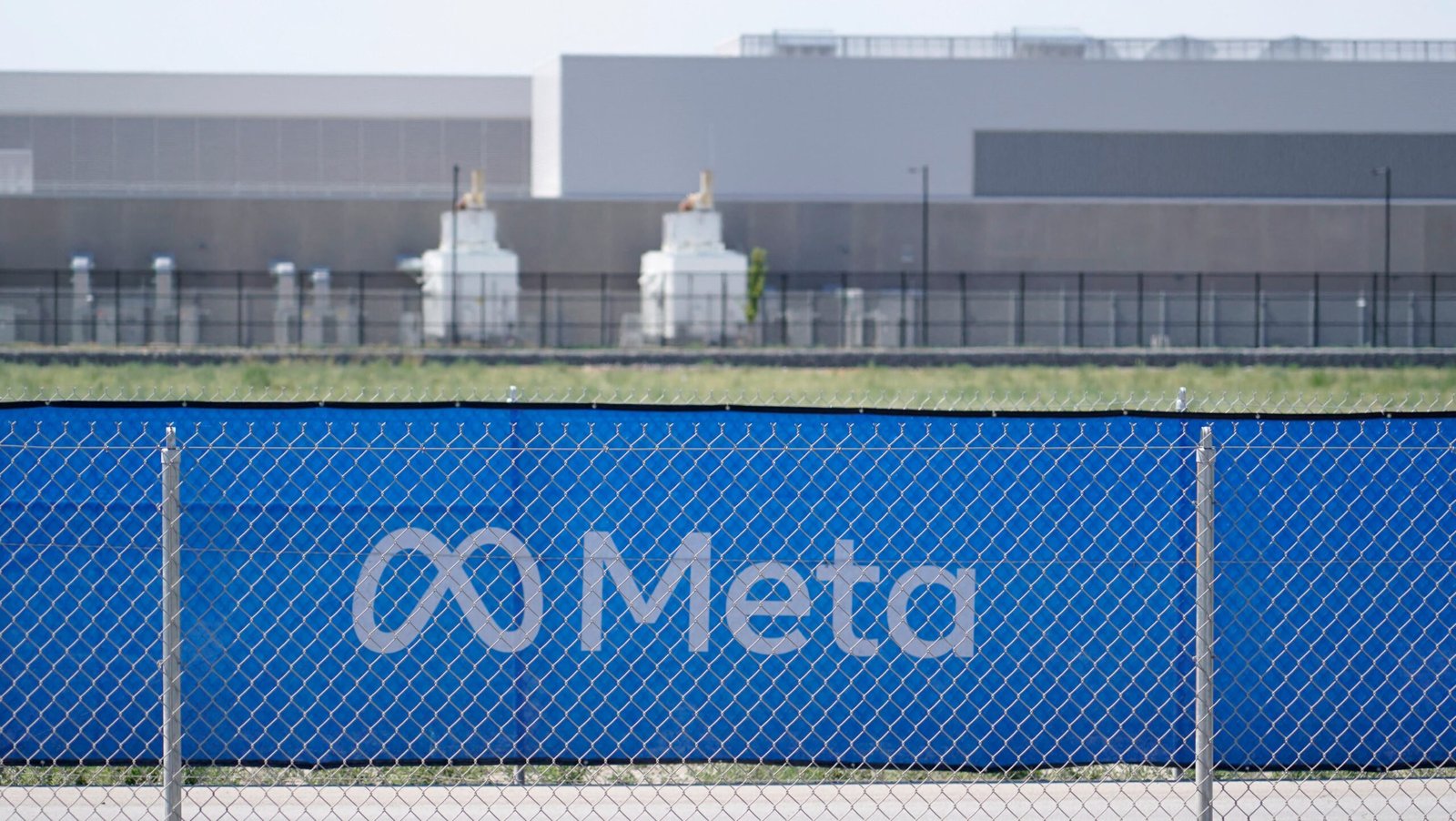
    Meta has struck a deal with AMD to buy up to six gigawatts worth of AI chips, both companies announced. The agreement is structured in a way that could see AMD issue Meta up to 160 million shares of its common stock provided GPU shipment milestones are achieved — meaning Meta could own up to 10 percent of AMD if the deal fully completes.

    Meta plans to purchase six gigawatts of AMD’s Instinct GPUs based on the MI450 architecture and optimized for Meta’s workloads, with the first gigawatt deployment set to begin in the second half of 2026. AMD and Meta will also expand on their EPYC CPU partnership, with Meta deploying “millions” of AMD EPYC CPUs and become a launch customer for its sixth-generation EPYC CPUs.

    The tranche of AMD common stock will vest with the first one gigawatt of shipments, with additional tranches vesting as Meta scales to 6 gigawatts. Vesting is tied to AMD hitting certain stock price thresholds and Meta achieving certain technical and commercial milestones. The deal is very similar to one that AMD structured with OpenAI last year, with AMD obtaining up to a 10 percent stake in AMD in exchange for six gigawatts of Instinct GPUs.

    Such deals are being likened to circular transactions that have created a tangle of interconnected dependencies between AI companies and chip manufacturers. Analysts have observed that such deals may magnify losses if demand for AI doesn’t match the sky-high market expectations.

    The agreement also shows that AI companies are keen to diversify away from NVIDIA, with AMD being a key alternative. “By diversifying our partnerships and technology stack, we’re building a more resilient and flexible infrastructure,” Meta wrote in its news release.

  • Samsung Galaxy Book 6 series will be available in the US starting on March 11

    Samsung Galaxy Book 6 series will be available in the US starting on March 11

    You can get any of the Samsung Galaxy Book 6 models in the US, starting on March 11. In fact, you can make a reservation right now through Samsung’s website and its experience stores. The company launched the Book 6 series of laptops, namely the basic Book 6, the Book 6 Pro and the Book 6 Ultra, at CES earlier this year. They’re powered by Intel’s new Core Ultra Series 3 processors, which were also announced at CES and which promise great graphics and battery life.

    All three models come in grey and with AI features, such as AI Select and Search that you can use to look for information using natural language. The basic Book 6 laptop will set you back at least $1,050, while the Book 6 Pro’s prices start at $1,600. The Book 6 Ultra will cost you at least $2,450. The Galaxy Book 6 Pro will be available in 14- and 16-inch versions and will come equipped with up to Core Ultra X7 processors and Intel Arc graphics. Meanwhile, you can equip the 16-inch Galaxy Book 6 Ultra with up to Core Ultra X9 processors. The most expensive Book 6 promises significant performance improvements, thanks to its new 5th-generation MPU, Intel Arc graphics and NVIDIA’s RTX 50 series GPUs.

    The Book 6 Ultra and the 16-inch Pro have slimmer profiles than their predecessors, though the former has a more traditional laptop shape and the latter looks more like the MacBook Air. It’s worth noting that Samsung redesigned the Ultra’s components across a larger surface area so that it can distribute heat more evenly. Both the Book 6 Pro and Ultra can last for up to 30 hours of video playback, since they feature Samsung’s longest-lasting batteries yet. Both models also come with AMOLED 2X (2,880 x 1,800) displays with refresh rates going up to 120Hz.