Back-to-school shopping season is coming to a close, and with the bummer of summer slipping away, the bright side is that there are plenty of sales and savings to be had out there. Major brands are already offering discounts on the tech that makes everyday life a little easier, from entertainment upgrades to productivity essentials.
I’ve rounded up some of the best Amazon deals right now, featuring picks from brands like Anker, Garmin, Samsung, and more. We’ll continue updating this list throughout the week with the best offers we can find, so you don’t have to spend hours searching for deals that are actually worth your time.
Monitor Deals
Samsung 32-inch Odyssey (G55C) Curved Gaming Monitor
32-inch QHD (2560×1440), 1000R curve, 165Hz refresh rate, 1ms (MPRT), AMD FreeSync, HDR10
$199.99
at Amazon
$329.99
Save $130.00
Get Deal
If you want an immersive setup that doubles as a massive multitasking hub, the Samsung Odyssey G55C is a total bargain. Its 32-inch QHD panel wraps around your field of vision with a deep 1000R curve, reducing eye fatigue when jumping between split-screen research windows and lecture notes. When classes wrap up, the 165-hertz refresh rate, AMD FreeSync, and 1ms response time ensure tear-free, buttery-smooth gaming. Get this expansive desk centerpiece with a huge $130 price cut.
But if you want to see more options, take a look at our expert’s list of the best gaming monitors for 2026.
Samsung 27-inch Odyssey G3 Series Gaming Monitor
180Hz refresh rate, 1ms MPRT, AMD FreeSync, eye saver mode, borderless design, ergonomic stand
$169.99
at Amazon
$229.99
Save $60.00
Get Deal
The 27-inch Odyssey G3 keeps your study desk and gaming setup running smoothly with an ultrafast 180-hertz refresh rate and 1ms response time. You can transition from long research papers to competitive gaming easily with its Eye Saver Mode and flicker-free tech to prevent eye strain during late nights. Its ergonomic stand swivels, tilts, and pivots to your exact comfort, while its borderless design makes dual-monitor setups completely seamless. Bring it home now for $169.99, which is a 26% off its actual price of $229.99, and enjoy both work and play.
If you need more options, check out PCMag expert Zackery Cuevas‘ list of the best budget gaming monitors for 2026.
More Deals on Gaming Monitors
*Deals are selected by our commerce team
Samsung 34-inch ViewFinity S6 Curved Monitor
34-inch Ultra WQHD (3440×1440) 1000R curve, HDR10, USB-C (90W PD), built-in KVM switch, lan port
$452.69
at Amazon
$589.99
Save $137.30
Get Deal
Designed to replace multi-monitor setups, the Samsung ViewFinity S6 offers an expansive 21:9, 1000R curved display that matches your natural field of view, reducing eye strain during long study sessions. A single USB-C cable transmits video, data, and 90 watts of power to your laptop, while an integrated LAN port provides wired Ethernet. With a built-in KVM switch allowing instant control over two connected devices using one keyboard and mouse, it’s the ultimate workspace upgrade, with a 23% discount.
You can also take a look at our PCMag expert’s list of the best curved monitors for 2026 to check out the competition.
MSI Pro 24-inch Monitor (MP243W E14)
23.8-inch Full HD IPS (1920×1080), 144Hz refresh rate, 1ms MPRT, adaptive-sync, built-in speakers
$89.99
at Amazon
$119.99
Save $30.00
Get Deal
The MSI Pro MP243W E14 combines a crisp Full HD IPS panel with an ultra-smooth 144-hertz refresh rate, making it an ideal crossover screen for essay writing and fast-paced gaming. You get TÜV Rheinland-certified Flicker Free technology and Less Blue Light protection to keep your eyes comfortable during late-night study marathons. Featuring a sleek, slim-bezel white chassis, integrated speakers, and VESA mount support, it’s an unbeatable budget monitor for under $90.
If you need more options, take a look at our PCMag expert’s list of the best computer monitors for 2026.
Acer 24-inch Monitor (KB272)
24-inch Full HD IPS screen, 120Hz refresh, 1ms response time, Adaptive-Sync, FreeSync compatible
$79.99
at Amazon
$109.99
Save $30.00
Get Deal
The Acer KB272 24-inch monitor gives students an expansive full HD screen ideal for opening research notes and essay drafts side by side. Its fast 120-hertz refresh rate and 1ms response time eliminate motion blur and ghosting during study breaks or casual gaming, while Adaptive-Sync support ensures tear-free visuals. Offering wide viewing angles and crisp 1080p detail, it’s a reliable desktop screen for any student study corner, and is currently available for $79.99.
More Deals on Computer Monitors
*Deals are selected by our commerce team
Laptop Deals
Microsoft 13.8-inch Surface Laptop (2024)
Snapdragon X Elite (12 Core), 16GB RAM, 512GB ssd, 13.8-inch PixelSense, Windows 11 Copilot+PC
$1,399.00
at Amazon
$1,699.99
Save $300.99
Get Deal
Engineered as a lightweight, high-performance Copilot+ PC, the 2024 Microsoft Surface laptop combines sleek portability with blazing AI-accelerated speed. It uses Qualcomm’s 12-core Snapdragon X Elite processor to give you faster productivity than comparable M3 ultra-portables, alongside an impressive battery life of up to 20 hours.
PCMag expert Matthew Buzzi said, “Its Snapdragon X Elite CPU soars, with Intel and AMD x86 chips and amped-up AI skills not far behind” in his in-depth review. This vibrant 13.8-inch HDR touchscreen laptop makes navigating study notes natural and intuitive, and can be a stellar student companion at almost 20% off.
Microsoft 13.8-inch Surface Laptop (2026)
Snapdragon X2 Elite (12 core), 16GB ram, 1TB ssd, 13.8-inch PixelSense, Windows 11 Copilot+PC
$1,599.99
at Amazon
$1,999.99
Save $400.00
Get Deal
The 2026 Microsoft Surface laptop steps up next-gen performance with Qualcomm’s Snapdragon X2 Elite chip, doubling base storage to a spacious 1TB SSD for extensive academic libraries. Its 13.8-inch PixelSense touchscreen display delivers rich contrast and vivid colors for creative workflows, while two multi-functional USB4 ports ensure rapid data transfers and desktop dock setups. Encased in a premium aluminum chassis, it delivers all-day 20-hour battery stamina for $400 off.
You can also check out our PCMag expert’s list of the best laptops for 2026 for more options.
More Deals on Laptops
*Deals are selected by our commerce team
Asus Vivobook 16-inch
16.0-inch WUXGA (1920×1200) 16:10 screen, Snapdragon X 8 Core SE (45 Tops NPU), 16GB ram, 512GB ssd
$591.21
at Amazon
$799.99
Save $208.78
Get Deal
Offering an expansive 16-inch 16:10 WUXGA display, the Asus Vivobook gives students extra screen space to view lecture slides and write essays side by side. It’s powered by an 8-core Snapdragon X SE processor with an integrated Hexagon NPU (delivering up to 45 TOPS of AI processing), to easily handle multi-tab research while maintaining multi-day battery efficiency. You get 16GB of fast memory and a 512GB PCIe 4.0 SSD, making it an unbeatable option for students at under $600.
Looking for more options that are easy on the pocket? Check out our PCMag expert’s list of the best budget-friendly laptops for 2026.
More Deals on Budget Laptops
*Deals are selected by our commerce team
Tablet Deals
Samsung Galaxy Tab S10 FE+ Android Tablet
13.1-inch expansive display, S Pen included, Circle to Search, Handwriting Assist, water-resistant
$514.99
at Amazon
$699.99
Save $185.00
Get Deal
The Galaxy Tab S10 FE+ provides an expansive 13.1-inch workspace that easily handles side-by-side study apps, research notes, and creative sketching. The included responsive S Pen delivers a natural pen-on-paper feel, while built-in tools like Handwriting Assist and Math Solver keep messy equations and lecture notes clean and legible.
It got an “Excellent” rating and our Editors’ Choice award from PCMag expert Iyaz Akhtar, who says, “With a big and bright screen, long battery life, and swift performance, the Tab S10 FE+ offers most of Samsung’s flagship Galaxy tablet experience for hundreds of dollars less” in his in-depth review. Featuring dependably durable water resistance, Super Fast Charging, and Circle to Search with Google, it’s a complete academic hub for over $180 off.
TCL Nxtpaper 14 Android Tablet
14.3-inch 2.4K paper-like screen, T-PEN stylus included, Helio G99, 256GB storage, 10,000mAh battery
$349.98
at Amazon
$469.99
Save $120.01
Get Deal
Featuring a massive 14.3-inch 2.4K NxtPaper 3.0 display, the TCL NxtPaper 14 acts as an all-in-one digital notebook, e-reader, and sheet music reader. Its anti-glare, eye-care screen reduces blue light during late-night study sessions, while the included T-Pen stylus makes handwritten note-taking seamless. Powered by a 10,000mAh battery with 33-watt fast charging and reverse charging for your phone, this 256GB tablet handles heavy academic workloads effortlessly. You can get it for 26% off, for $349.98.
But if you want to check out the competition, you can take a look at our PCMag expert’s list of the best Android tablets for 2026, and take your pick.
TCL Nxtpaper 11 Gen 2 Android Tablet
11-inch 2K paper-like eye-care display, T-PEN stylus, AI tools, 128GB storage, 8000mAh battery
$209.99
at Amazon
$289.99
Save $80.00
Get Deal
Designed for students who read, draw, and write all day, the TCL NxtPaper 11 Gen 2 features an upgraded anti-glare display that feels like real paper while eliminating eye strain. The included 4096-pressure-level stylus turns it into a digital notebook, while AI features convert speech to notes and instantly translate foreign texts. With an 8000mAh battery that supports reverse charging for your phone, it’s a versatile campus companion for $209.99. Put pen to paper on this deal.
TCL Tab A1 Plus Nxpaper Android Tablet
12.2-inch 2.4K 120Hz display, T-Pen 2 & Flip Case, Snapdragon 4 Gen 2, 256GB, 10,000mAh battery
$279.99
at Amazon
$399.99
Save $120.00
Get Deal
The TCL Tab A1 Plus Nxtpaper features a glare-free 12.2-inch 2.4K display with reduced blue light and flicker. Its dedicated Nxtpaper Key lets you instantly switch between Ink Paper, Color Paper, and Regular modes, while the included T-Pen 2 delivers 4,096 levels of pressure sensitivity for natural handwriting. Backed by a massive 10,000mAh battery and built-in AI productivity tools, it’s a complete academic workstation that you can get right now at $120 off.
Lenovo Idea Tab College Tablet
11-inch 2.5K 90Hz display, MediaTek Dimensity 6300, 4GB RAM, 128GB storage, tab pen & folio case
$199.00
at Amazon
$212.79
Save $13.79
Get Deal
Engineered specifically for student productivity, the Lenovo Idea Tab pairs a crisp 11-inch 2.5K 90-hertz display with an included Tab Pen and Folio Case. Circle to Search with Google lets you translate text or look up research without switching apps, while pre-loaded tools like Lenovo AI Note and MyScript Calculator simplify handwritten lecture notes. With up to 12 hours of battery life and quad Dolby Atmos speakers, it’s an unbeatable campus value at under $200.
Lenovo 11-inch Idea Tab College Tablet
11-inch 2.5K 90Hz display, Tab Pen & Folio Case, Dimensity 6300, 256GB storage, quad Dolby Atmos
$259.88
at Amazon
$274.13
Save $14.25
Get Deal
The Lenovo Idea Tab features a crisp 11-inch 2.5K 90Hz display paired with an included Tab Pen and Folio Case. Its Circle to Search with Google lets you translate or look up text instantly, while pre-loaded apps like Lenovo AI Note and MyScript Calculator streamline handwritten lecture notes. With 12 hours of video battery life and quad Dolby Atmos speakers, it transitions effortlessly from lectures to streaming breaks for a little over $250.
Amazon Fire HD 8 Android Tablet
8-inch HD display, hexa-core processor, 4GB RAM, 64GB storage, up to 13-hr battery, Alexa built-in
$89.99
at Amazon
$129.99
Save $40.00
Get Deal
The Amazon Fire HD 8 packs doubled memory (4GB RAM) and a snappy hexa-core processor into an ultraportable design that easily fits into any backpack pocket. With up to 13 hours of battery life, it keeps you covered for reading course materials, watching lecture streams, or checking emails all day long.
Our PCMag expert, Sarah Lord, noted that it “has enough power and battery life to watch videos and play games all day” in her in-depth review. Featuring built-in smart tools for web summaries and seamless hands-free Alexa assistance, it’s a stellar, budget-friendly companion under $90.
Amazon Fire HD 10 Android Tablet
10.1-inch 1080p Full HD, octa-core processor, 3GB RAM, 64GB storage, 13-hr battery
$144.99
at Amazon
$194.99
Save $50.00
Get Deal
If you need a reliable, big-screen slate for streaming lectures and reading assigned books without blowing your budget, the upgraded 64GB Fire HD 10 is built for the job. Its crisp 10.1-inch 1080p display brings sharp visuals to study guides and split-screen note-taking, while 64GB of onboard storage gives you plenty of room to download offline textbooks and media.
It got an “Excellent” rating and our Editors’ Choice award from our PCMag expert, who says, “The Fire HD 10 offers the best blend of performance, price, and size in the Fire lineup, making it the best cheap tablet for most people,” in her in-depth review. Backed by strengthened aluminosilicate glass and a 13-hour battery that lasts past your final class, it’s a solid campus value at $50 off.
More Deals on Android Tablets
*Deals are selected by our commerce team
Apple iPad 11-inch (A16 Chip)
A16 Bionic chip, 11-inch Liquid Retina display, 128GB, Wi-Fi 6, 12MP Center Stage camera, Touch ID
$399.00
at Amazon
$449.00
Save $50.00
Get Deal
Equipped with the fast A16 chip, the 11-inch iPad provides a smooth, responsive experience for studying, photo editing, and multitasking with iPadOS. Its vibrant Liquid Retina display features True Tone technology for comfortable reading under any lighting, while the 12-megapixel Center Stage front camera keeps you in focus during online group study sessions.
Our PCMag expert rated it “Excellent” and called it one of Apple’s best tablets in his 2025 review, and we all love it, too! With 128GB of base storage and all-day battery life, it’s a versatile campus companion under $400.
Apple iPad Pro 13-inch (M5)
Apple M5 chip, neural Accelerator, 13-inch Ultra Retina XDR display, 512GB storage, Wi-Fi 7, Face ID
$1,804.00
at Amazon
$1,899.00
Save $95.00
Get Deal
The 13-inch iPad Pro features Apple’s cutting-edge M5 processor with integrated Neural Accelerators for on-device AI and Apple Intelligence tasks. Its tandem OLED Ultra Retina XDR display delivers extreme brightness, ProMotion responsiveness, and P3 wide color accuracy for professional-grade design, editing, and note-taking.
Not only did our PCMag expert give it an “Excellent” rating, but it also won our Editors’ Choice award. As he said in his in-depth review, “Apple’s M5-powered iPad Pro offers unmatched performance and premium features, making it the tablet to beat for creative professionals”. With Wi-Fi 7 connectivity, a landscape 12-megapixel Center Stage camera, and 512GB of fast storage, it’s a premier workstation upgrade for over $90 off.
More Deals on Tablets
*Deals are selected by our commerce team
TP-Link Router Deals
TP-Link Archer BE550 Wi-Fi 7 Router
Tri-band Wi-Fi 7 up to 9.3 Gbps, full 2.5G WAN/LAN ports, HomeShield security, EasyMesh support
$199.99
at Amazon
$249.99
Save $50.00
Get Deal
Keep your dorm room or student apartment lag-free with TP-Link’s Archer BE550 Wi-Fi 7 router. With blazing tri-band speeds up to 9.3 Gbps, it effortlessly handles simultaneous 8K streaming, heavy online gaming, and large research downloads across dozens of devices. You get full 2.5G Ethernet ports, which future-proof your wired desktop or NAS setup, and built-in HomeShield security protects your devices against network threats. Get it now for $169.99, which is 20% off, and always stay connected.
If you need to see more options, check out our PCMag expert’s list of the best Wi-Fi routers for 2026.
TP-Link Archer BE770 Wi-Fi 7 Router
BE18000 tri-band, dual 10G WAN/LAN ports, 10 internal antennas, 3,600 sq. ft. coverage, 150 devices
$319.98
at Amazon
$399.99
Save $80.01
Get Deal
Built to power demanding connected households and student apartments, the TP-Link Archer BE770 provides blazing tri-band Wi-Fi 7 speeds up to 18 Gbps across 3,600 square feet. Its dual 10 Gbps WAN/LAN ports unlock multi-gigabit fiber connections and high-speed NAS setups, while Multi-Link Operation (MLO) allows devices to use multiple bands simultaneously for ultra-low latency streaming and AR/VR gaming. Backed by TP-Link HomeShield security, this heavy-duty networking hub is available now at 20% off. Don’t wait!
TP-Link Archer BE230 Wi-Fi 7 Router
BE3600 dual-band speeds, dual 2.5G ports, 2.0GHz quad-core CPU, EasyMesh support, HomeShield
$79.99
at Amazon
$119.99
Save $40.00
Get Deal
Upgrade your dorm or student apartment network with TP-Link’s Archer BE230, delivering cutting-edge Wi-Fi 7 performance. Dual 2.5Gbps multi-gig ports break the traditional speed barrier, ensuring smooth 4K streaming and low-latency gaming. Driven by a fast 2.0GHz quad-core processor and featuring EasyMesh support to eliminate signal dead zones, it keeps up to 60 devices connected smoothly for under $80 right now.
You can check out its in-depth review by PCMag expert John R. Delaney before deciding.
TP-Link AX6000 Wi-Fi 6 Router (Archer AX80)
AX6000 dual-band Wi-Fi 6 speeds, 2.5G Multi-Gig port, 8 high-gain antennas, HomeShield, OneMesh
$139.99
at Amazon
$199.99
Save $60.00
Get Deal
Keep your dorm room or student apartment network running smoothly with TP-Link’s Archer AX80 router. With Wi-Fi 6 speeds up to 6000Mbps across eight data streams, it effortlessly handles simultaneous 4K/8K video streaming and heavy research downloads. Its multi-gigabit port breaks the traditional speed limit for wired setups, while eight high-gain antennas with Beamforming ensure signal coverage throughout your living space. Get it now for $139.99, which is a 30% discount, and always stay connected.
TP-Link Roam 7 BE3600 Wi-Fi 7 Portable Router
Wi-Fi 7 dual-band up to 3.6 Gbps, 2.5G port, WireGuard VPN, supports 90 devices, USB-C powered
$89.98
at Amazon
$129.99
Save $40.01
Get Deal
Ideal for students studying in coffee shops, libraries, or dorms, the TP-Link Roam 7 transforms public Wi-Fi into a private, encrypted network. It supports ultra-fast Wi-Fi 7 speeds and up to 90 connected devices, backed by built-in WireGuard and OpenVPN security protocols. Pocket-sized and powered via standard USB-C or power banks, it guarantees your laptop and phone stay protected wherever you set up camp. It’s available now for $89.99, that’s 31% lower than its actual value of $129.99. Connect with this deal before it’s too late.
You can also check out our PCMag expert’s list of the best mobile hotspots for 2026, and see what else is out there.
More Deals on Routers
*Deals are selected by our commerce team
Bluetooth Headset Deals
Sennheiser Accentum ANC Bluetooth Headsets
Hybrid ANC, 5-band EQ, 50-hour battery, dual-mic beamforming, soft silicon headband
$99.95
at Amazon
$189.95
Save $90.00
Get Deal
Sennheiser’s Accentum wireless headphones let students tune out noisy study halls with hybrid active noise cancellation and customizable five-band EQ modes. Its massive 50-hour battery life keeps the music playing through multiple days of classes and study sessions on a single charge. Dual-mic beamforming ensures clear voice quality for online group projects, while the soft-touch headband provides all-day wearing comfort at nearly half off.
PCMag expert Tim Gideon rated them “Excellent” in his in-depth review, highlighting the balanced sound, plenty of sub-bass power, and high-frequency detail for half the price of category leaders from other brands. You can get it now for $99.95, which is a massive 47% discount on its actual price of $189.95. This deal sounds amazing!
Sennheiser Momentum 4 Headphones
Adaptive Noise Cancellation, 42mm audiophile transducer system, aptX Adaptive, up to 60-hr battery
$212.99
at Amazon
$299.99
Save $87.00
Get Deal
For students who refuse to compromise on sound quality, the Sennheiser Momentum 4 delivers true audiophile-inspired acoustics alongside class-leading battery life. The 42mm transducer system pumps out breathtaking dynamic range, while Adaptive Noise Cancellation effortlessly silences noisy dorm halls and busy coffee shops.
Our PCMag expert rated it ‘Excellent” and said that they “deliver a wonderful audio experience and high-quality active noise cancellation” in his in-depth review. With an astonishing 60-hour battery life on a single charge and intuitive touch controls with Smart Pause, you can go weeks between plug-ins for almost 30% off.
Bose QuietComfort Headphones
Quiet & Aware modes, adjustable EQ, up to 24-hr battery, Bluetooth multipoint, wired backup cable
$248.99
at Amazon
$359.00
Save $110.01
Get Deal
The Bose QuietComfort over-ear headphones combine legendary noise cancellation with plush ear cushions designed for fatigue-free all-day study sessions. You can easily toggle between Quiet and Aware modes to block out library distractions or stay alert in transit, while the Bose app provides custom EQ control over bass and treble.
Our PCMag expert rated them “Excellent,” praising the “excellent active noise cancellation and a refined audio signature in a comfortable fit” in his in-depth review. Offering up to 24 hours of continuous battery life, multipoint pairing, and an included wired audio cable, they are a steal at under $250.
Beats Solo 4 Bluetooth Headphones
Custom acoustic drivers, Spatial Audio, 50-hour battery, Fast Fuel charging, Lossless audio support
$129.95
at Amazon
$199.95
Save $70.00
Get Deal
Beats Solo 4 headphones deliver bold sound in an ultralight, comfortable design tailored for all-day wear around campus. With a massive 50 hours of battery life and Fast Fuel charging, giving up to 5 hours of playback from a quick 10-minute plug-in, you never have to worry about running out of power between lectures. They offer one-touch pairing for both iOS and Android, plus high-resolution, lossless audio via USB-C or a 3.5mm wired connection. You can get them now for $129.95, which is 35% lower than the $199.95 retail price.
For more options, check out our PCMag expert’s list of the best wireless headphones for 2026, and you will find something you like.
Sony WH-CH720N Wireless Headphones
Lightweight 192g build, V1 Processor Dual Noise Sensor, DSEE engine, 35-hr battery, multipoint
$98.00
at Amazon
$179.99
Save $81.99
Get Deal
Weighing just 192 grams, the Sony WH-CH720N is Sony’s lightest overhead wireless noise-canceling headphone, tailored specifically for all-day wearing comfort. Powered by the Integrated Processor V1 and Dual Noise Sensor technology, it effectively blocks out distracting ambient noise in busy libraries and study halls. With a 35-hour battery life, audio enhancement, and multipoint Bluetooth pairing, you can seamlessly jump between laptop lectures and smartphone calls. Grab it now for $98, which is 46% off the retail price.
You can also check out PCMag expert Eric Zeman’s list of the best noise-cancelling headphones for 2026 for more options.
JBL Live 780NC Headphones
True Adaptive Noise Cancelling 2.0, JBL Signature Sound, 80-hr battery, Personi-Fi 3.0, Multipoint
$189.95
at Amazon
$249.95
Save $60.00
Get Deal
Shut out crowded campus noise and dial into deep study mode with the JBL Live 780NC over-ear headphones. Powered by True Adaptive Noise Cancelling 2.0, they automatically adjust in real time to silence noisy roommates, while custom 40mm drivers pump out rich, spatial signature sound.
As PCMag expert Mark Knapp said in his in-depth review, “They offer a compelling mix of features, including strong audio, extensive battery life, and a comfortable fit.” With an astonishing battery life of up to 80 hours, along with multipoint Bluetooth switching between your laptop and phone, they easily power through weeks of classes for $60 off.
Skullcandy Crusher 540 Headphones
Patented Crusher Sensory Bass, adjustable slider, sweat-resistant design, 40hr battery, Rapid Charge
$119.99
at Amazon
$209.99
Save $90.00
Get Deal
The Skullcandy Crusher 540 takes immersion to another level. The dedicated bass drivers deliver physical vibrations you can dial up or down with the on-ear slider, turning hype-up playlists into a front-row concert experience. Featuring sweat-resistant, breathable ear cushions, a locked-in ergonomic fit, and 40 hours of playtime with Rapid Charge, they are an absolute steal at 43% off.
More Deals on Headphones
*Deals are selected by our commerce team
Earbuds Deal
Soundcore Space A40 ANC Earbuds
Adaptive ANC (blocks 98% noise), 50-hour total battery, Hi-Res LDAC audio, paper-light design
$54.99
at Amazon
$79.99
Save $25.00
Get Deal
The Soundcore Space A40 earbuds automatically detect background noise in cafeterias or transit hubs, tailoring noise cancellation levels to give you personal study space wherever you go. The custom double-layer diaphragm drivers give detailed sound with LDAC Hi-Res Audio support, while an ergonomic, ultralight build ensures fatigue-free wear. Plus, you get 10 hours of continuous playback per charge and 50 hours total with the case.
Our PCMag expert gave it an “Excellent” rating and awarded it an Editors’ Choice award. In his 2022 in-depth review, Tim said the Space A40 buds “deliver quality active noise cancellation and balanced, detailed audio for a modest price.” Grab them now for $54.99, which is 31% off the actual price of $79.99.
Soundcore Liberty 5 Noise Cancelling Earbuds
Adaptive ANC 3.0, Dolby Audio, LDAC Hi-Res sound, 6-mic AI calls, up to 48-hour total battery
$89.99
at Amazon
$129.99
Save $40.00
Get Deal
The Soundcore Liberty 5 earbuds feature upgraded Adaptive ANC 3.0 that adjusts every 0.3 seconds to target and eliminate ambient chatter in busy libraries or subways. As Soundcore’s first earbuds with Dolby Audio, they deliver immersive spatial sound alongside wool paper diaphragm drivers for rich bass and detailed treble.
Our PCMag expert Christian de Looper rated them “Excellent,” and they also won our Editors’ Choice award, thanks to their reasonable price and rich feature set, competitive active noise cancellation (ANC), crisp sound, excellent battery life, and a powerful app in a durable design, in his in-depth review. Offering up to 12 hours of playback on a single charge and a quick 10-minute fast charge for 5 hours of power, they deliver premium sound for under $90.
Google Pixel Buds 2a Earbuds
Tensor A1 chip, Silent Seal 1.5 Active Noise Cancellation, 11mm drivers, twist-to-adjust stabilizer
$119.77
at Amazon
$129.00
Save $9.23
Get Deal
Powered by Google’s Tensor A1 chip, the Pixel Buds 2a bring premium Silent Seal 1.5 Active Noise Cancellation to an accessible price point. The 11mm dynamic speaker drivers deliver punchy bass and detailed clarity, while Clear Calling algorithms filter out background wind and hallway noise during calls.
Not only did our PCMag expert rate them “Excellent,” but they also won our Editors’ Choice award. As he says in his in-depth review, “The Google Pixel Buds 2a wireless earphones add active noise cancellation, Google’s Gemini assistant, and work even more seamlessly with your Pixel phone, making them a natural and affordable choice for Pixel users.” Equipped with a twist-to-adjust stabilizer for a locked-in workout fit, they are an exceptional campus companion under $120.
Apple AirPods 4 Earbuds
Redesigned open-ear fit, H2 chip Voice Isolation, Personalized Spatial Audio, 30-hr battery, IP54
$99.00
at Amazon
$129.00
Save $30.00
Get Deal
Redesigned for exceptional all-day comfort, the Apple AirPods 4 are an essential campus companion for taking calls, listening to lectures, and streaming music. Their H2 chip uses Voice Isolation to keep your voice clear in crowded cafeterias, while hands-free Siri interactions let you nod or shake your head to respond. Featuring an IP54 sweat- and water-resistant rating and a compact USB-C case, they deliver top-tier convenience.
Our PCMag expert rated them “Excellent” in his in-depth review for offering exceptional audio performance in an open-ear design. Get them now for $99, that’s a rare 23% off on the actual price of $129, and treat your ears with the best.
Apple AirPods Pro 3
Up to 2x more ANC, H2 chip audio, heart rate tracking, Live Translation, 8-hr single charge battery
$199.99
at Amazon
$249.00
Save $49.01
Get Deal
The AirPods Pro 3 deliver ultimate quiet for busy campus routines, packing twice the active noise cancellation of previous models to block out library distractions. Powered by Apple Intelligence, their built-in Live Translation helps international students break down language barriers instantly, while a new PPG heart rate sensor tracks campus workouts across 50+ exercise types.
PCMag expert Eric Zeman gave them a rare “Exemplary” rating in his in-depth review and awarded them with our Editors’ Choice award for refining an already impressive formula, with a list of compelling features the competition simply can’t match. With a comfortable IP57-rated fit and up to 8 hours of ANC battery life per charge, they are an essential pick under $200.
More Deals on Earbuds
*Deals are selected by our commerce team
Bluetooth Speaker Deals
Beats Pill Bluetooth Speaker
Bespoke racetrack woofer, up to 24-hr battery, USB-C lossless audio & power bank, IP67 waterproof
$99.99
at Amazon
$149.95
Save $49.96
Get Deal
The Beats Pill delivers powerful, room-filling sound with a redesigned racetrack woofer that pumps out deep bass with minimal distortion. It provides up to 24 hours of battery life and doubles as a power bank to charge your smartphone via USB-C on long days across campus.
PCMag expert Tim Gideon gave the Beats Pill an “Excellent” rating in his in-depth review. He called it one of the best portable speakers that packs serious power without emptying your wallet. Featuring lossless wired audio support, one-touch pairing for Apple and Android, and an IP67 dust and water resistance rating, it’s a stylish add-on to your dorm for under $100.
Bose SoundLink Micro Bluetooth Speaker (2nd Gen)
12-hr battery, IP67 waterproof/dustproof, tear-resistant strap, Bose SimpleSync & Stereo pairing
$79.00
at Amazon
$129.00
Save $50.00
Get Deal
Small enough to fit in your palm, the second-generation Bose SoundLink Micro delivers surprisingly deep bass and crisp audio in a pocket-friendly build. It features double the battery life of its predecessor, offering up to 12 hours of playback, alongside an IP67 waterproof and dust-proof rating that resists accidental drops and downpours.
Recommended by Our Editors
No surprises that it got an “Excellent” rating from our PCMag expert in his in-depth review, and recommends it to people “who like the compact size and the durable build, especially for fans of Bose’s industrial design.” With a rugged, tear-resistant strap to clip onto any backpack, it’s a go-anywhere speaker for under $80.
Anker Soundcore 2 Bluetooth Speaker
12W stereo sound, BassUp technology, 24-hour battery (5,200mAh), IPX7 waterproof protection
$29.99
at Amazon
$44.99
Save $15.00
Get Deal
Weighing under a pound with an ultra-durable, grab-and-go form factor, the Anker Soundcore 2 is built for seamless portability. Its dual neodymium drivers and exclusive BassUp technology deliver 12 watts of punchy audio with zero distortion at high volumes, while an IPX7 waterproof rating safeguards against rain and spills. With an all-day 24-hour playtime on a single charge, it remains one of the best budget audio companions under $30.
You can also check out our PCMag expert’s list of the best budget Bluetooth speakers for 2026 to see more options.
JBL Xtreme 2 Bluetooth Speaker
Four active drivers & dual bass radiators, IPX7 waterproof, 15-hr battery, USB charge-out, strap
$149.95
at Amazon
$199.99
Save $50.04
Get Deal
If you need a speaker that is virtually indestructible and ready for any campus adventure, the JBL Xtreme 2 is built for the grind. Armed with four active drivers and dual external bass radiators, it pumps out booming stereo sound that easily covers outdoor quads and backyards. Its rugged IPX7-rated waterproof body can withstand full submersion, while the heavy-duty carrying strap features a built-in bottle opener for game days.
Our PCMag expert gave it an “Excellent” rating and our Editors’ Choice award, and said that, “The Xtreme 2 earns its title in various regards: it gets extremely loud, it pumps out a ton of bass, it’s relatively big, and it’s completely waterproof,” in his in-depth review. With 15 hours of playback and a built-in USB power bank to charge your phone, it’s a steal at under $150.
Sonos Era 300 Smart Speaker with Dolby Atmos
Spatial audio w Dolby Atmos, 6 custom drivers, Trueplay room tuning, Wi-Fi & Bluetooth, AirPlay 2
$379.00
at Amazon
$479.00
Save $100.00
Get Deal
Turn your dorm room into a high-end personal theater with the groundbreaking Sonos Era 300. With six optimally positioned drivers that fire sound forward, sideways, and upward, it wraps you in rich, multidimensional Dolby Atmos music that feels like a live concert. Plus, its Trueplay tuning automatically calibrates the EQ to match your room’s unique layout, and flexible connectivity lets you stream over Wi-Fi, Bluetooth, or USB-C line-in.
Our PCMag expert rated it “Excellent,” and presented it with our Editors’ Choice award as well. As he said in his in-depth review, “It delivers room-filling spatial audio on its own, or it can be easily integrated with other Sonos speakers for a truly theater-like experience.” Scoring this spatial audio centerpiece with a massive $100 discount makes it an easy recommendation.
Sonos Move 2 Bluetooth Speaker
stereo sound with dual tweeters, up to 24-hr battery, IP56 weather-resistant, Wi-Fi & Bluetooth
$399.00
at Amazon
$499.00
Save $100.00
Get Deal
The Sonos Move 2 bridges the gap between premium multi-room home audio and rugged grab-and-go power. Re-engineered with dual angled tweeters and a punchy woofer, it delivers wide, detailed stereo separation wherever you place it. Its IP56 weather-resistant design shrugs off spills, rain, and dust, while its upgraded 24-hour battery easily outlasts all-day campus hangs.
Our PCMag expert rated it “Excellent” and called it “the best Sonos speaker for listening to music outside” in his in-depth review. Simply drop it onto the included wireless charging base to keep the tunes flowing for $100 off.
More Deals on Bluetooth Speakers
*Deals are selected by our commerce team
Smartwatch Deals
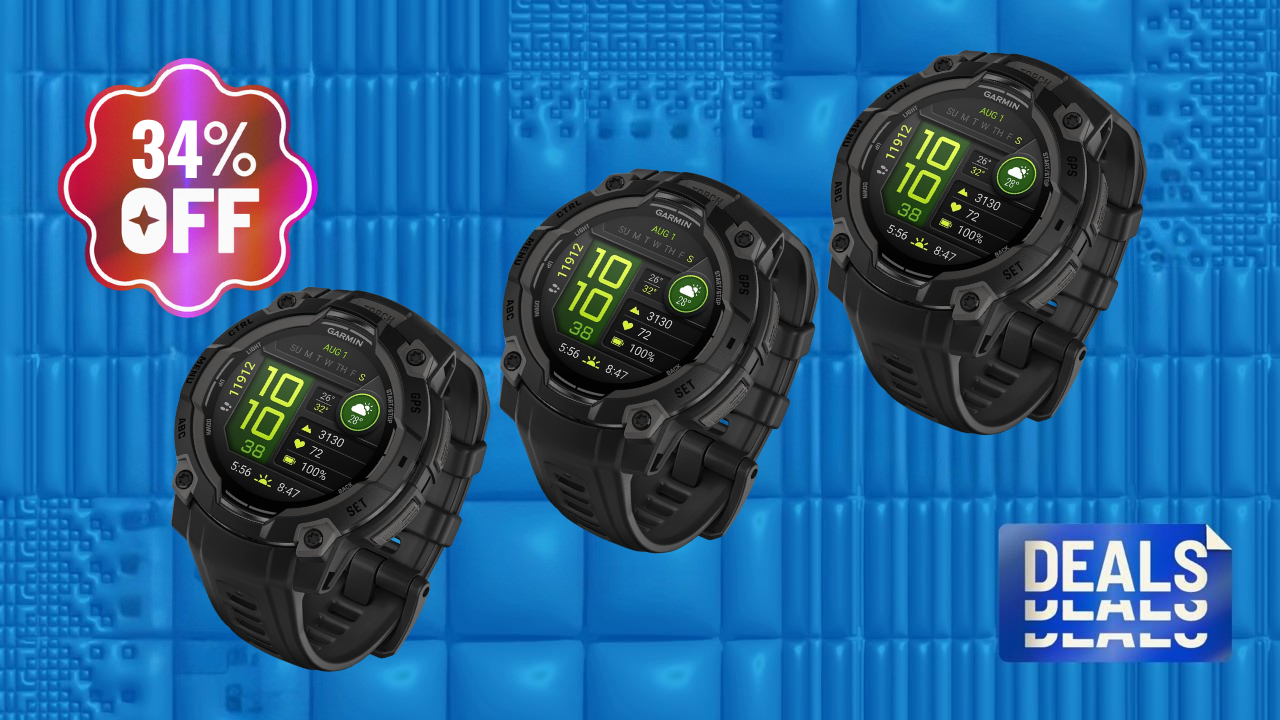
Garmin Vivoactive 5 Health and Fitness GPS Smartwatch
AMOLED display, GPS, health tracking, up to 11-day battery, fitness insights
$186.97
at Amazon
$299.99
Save $113.02
Get Deal
You know, students can always use more quality sleep. This smartwatch not only looks like a million bucks, but it tracks your runs with built-in GPS and keeps an eye on your heart rate, sleep, stress, and even body battery to tell you when to rest. You get up to 11 days of battery life, a large AMOLED screen, and calling from your wrist with a speaker and mic. It’s swim-proof to 50 meters and pairs smoothly with Android or iPhone.
Our expert, Andrew Gebhart, rated it “Excellent” for its gorgeous display, long battery life, and bountiful health insights in his 2024 review. It’s available now for $186.97, that’s 38% off its original $299.99 price tag. Get one, and make your health a priority.
Garmin Forerunner 55 GPS Smartwatch
Built-in GPS, PacePro pace guidance, daily suggested workout, wrist heart rate, up to 2-week battery
$129.00
at Amazon
$199.99
Save $70.99
Get Deal
The Garmin Forerunner 55 takes the guesswork out of campus fitness routines with built-in GPS that tracks speed, distance, and routes without needing your phone nearby. The tailored PacePro guidance and daily suggested workouts adapt to your training history and recovery time, while wellness metrics track respiration and intensity minutes. Boasting up to 14 days of battery life in smartwatch mode, you can wear it through lectures, workouts, and sleep without constant charging, by getting it for $135.99 right now.
You can also check out our PCMag expert’s list of the best smartwatches for 2026 for more options.
Apple Watch Series 11
Health tracking, Sleep Score, hypertension alerts, fall & crash detection, up to 24-hr battery, IP6X
$299.00
at Amazon
$399.00
Save $100.00
Get Deal
The thin and lightweight Apple Watch Series 11 serves as an all-day wellness companion for students balancing busy campus schedules. Advanced metrics provide a daily sleep score to measure sleep quality, while heart-monitoring features track ECG, heart rate, and potential signs of hypertension. With fall detection, Workout Buddy fitness features, and up to 24 hours of battery life with fast charging, it keeps you connected and healthy.
Our PCMag expert rated it “Outstanding” and also gave it our Editors’ Choice award in his in-depth review. As Andrew said, “The Apple Watch Series 11 improves on its predecessor with longer battery life, a stronger glass cover for improved scratch resistance, and optional 5G connectivity.” Get it now for $299, which is 25% off, and take a bite of this apple.
More Deals on Smartwatches
*Deals are selected by our commerce team
Fitness Tracker Deals
Fitbit Charge 6 Fitness Tracker
Built-in GPS, 40+ exercise modes, Google Maps, gym equipment heart rate pairing, 7-day battery
$129.99
at Amazon
$159.95
Save $29.96
Get Deal
The Fitbit Charge 6 is a feature-packed fitness band built for active campus routines, offering built-in GPS to accurately track outdoor runs and bike rides. Its real-time heart rate streaming lets you pair the band directly to gym equipment, while built-in Google Maps and Google Wallet offer seamless turn-by-turn navigation and contactless payments on the go.
PCMag expert Angela Moscaritolo gave it an “Outstanding” rating and our Editors’ Choice award in her in-depth review. She says, “With modest improvements over the last generation, the affordable Fitbit Charge 6 remains the best fitness tracker on the market.” Featuring over 40 exercise modes, YouTube Music controls, and sleep tracking, it’s a top-tier tracker at under $130.
Fitbit Versa 4 Fitness Smartwatch
Built-in GPS, daily readiness score, 40+ exercise modes, Bluetooth calls, Google Maps, 6 day battery
$169.11
at Amazon
$199.95
Save $30.84
Get Deal
Fitbit’s Versa 4 combines comprehensive health tracking with everyday smartwatch convenience for busy students. Its Daily Readiness Score helps you decide whether to push through an intense workout or take a recovery day, while on-wrist Bluetooth calls, text notifications, and Google Wallet keep you connected across campus.
Our PCMag expert rated it “Excellent,” calling it “an excellent fitness-focused smartwatch with welcome design improvements over the last generation,” in her in-depth review. Boasting a thin, comfortable design with over six days of battery life and fast charging, it keeps you connected with wrist notifications and health tracking for 15% off.
External SSD Deal
Lexar 4TB Armor 700 Portable SSD
2000MB/s speeds, USB 3.2 Gen 2×2, IP66 resistant, 3m drop protection, Apple ProRes support
$599.99
at Amazon
$834.99
Save $235.00
Get Deal
Designed for film, design, and computer science students handling massive workloads, the Lexar Armor 700 packs an impressive 4TB of storage into a rugged, pocket-sized drive. You get blazing-fast read and write speeds up to 2000MB/s, accelerate large file transfers, and IP66 dust and water resistance with 3-meter drop protection to keep data safe on the go. It even supports direct 4K 60FPS Apple ProRes video recording directly from an iPhone.
For more insight, check out its in-depth review by our PCMag expert, Tony Hoffman. It’s available now for $599.99, which is 28% off its retail price of $834.99. This deal won’t last long.
Sandisk 8TB Extreme Portable SSD
Up to 1050MB/s speeds, IP65 water & dust resistance, 3-meter drop protection, 256-bit AES encryption
$839.99
at Amazon
$1,624.99
Save $785.00
Get Deal
Ideal for video creators, data analysts, and engineering students handling massive project files, the 8TB SanDisk Extreme Portable SSD delivers impressive transfer speeds of up to 1,050MB/s. Its rugged silicone shell provides 3-meter drop protection and an IP65 dust- and water-resistance rating, making it tough enough for daily campus travel.
PCMag expert Gabe Carey called it “a rough-and-ready USB external drive with on-the-mark speed” in his in-depth review. Featuring 256-bit AES hardware encryption and a handy carabiner loop, this massive external drive is currently available at a massive 48% discount right now.
Samsung T9 2TB Portable SSD
Up to 2,000MB/s speeds, USB 3.2 Gen 2×2, rubberized 3m drop protection, Dynamic Thermal Guard
$415.89
at Amazon
$574.99
Save $159.10
Get Deal
Designed for students handling heavy multimedia, engineering, or computer science files, the Samsung T9 Portable SSD delivers blazing transfer speeds up to 2,000MB/s. Its rugged, rubberized shell withstands drops up to three meters, making it durable enough to toss into any chaotic backpack. Plus, its Advanced Dynamic Thermal Guard prevents performance throttling during lengthy backups, and direct USB-C support lets you record 4K ProRes video straight from compatible devices.
Our PCMag storage expert, Tony Hoffman, rated the Samsung T9 “Outstanding” and called it a go-to portable SSD for content creators in his in-depth review. Right now, you can get it for $415.89, which is 28% lower than its actual price of $574.99. This deal gives you a safe space for your data.
WD 5TB My Passport Portable HDD
5TB storage, slim durable casing, password protection with hardware encryption, backup software
$222.90
at Amazon
$284.99
Save $62.09
Get Deal
Never risk losing term papers, research data, or large media projects thanks to the WD 5TB My Passport portable hard drive. Featuring a slim, durable design that easily slides into any laptop bag pocket, it provides vast storage space protected by password-enabled hardware encryption. The included device management software offers built-in ransomware protection, giving you peace of mind throughout the academic year.
PCMag expert M. David Stone rated it ‘Excellent” and gave it our Editors’ Choice award. In his in-depth review, he said, “Its combination of solid performance, hardware encryption, and useful utilities makes the 5TB WD My Passport a strong contender for everyday backup.” And you can get it at 22% off for $222.90.
More Deals on External HDDs
*Deals are selected by our commerce team
Printer Deals
Canon Pixma TS6520 Inkjet Printer
Print, copy, scan, auto 2-sided printing, dual-band Wi-Fi, 1.42-inch OLED display, mobile app
$79.00
at Amazon
$140.99
Save $61.99
Get Deal
Compact enough to fit on any crowded dorm desk, the Canon Pixma TS6520 offers complete print, copy, and scan functionality. Its two-cartridge hybrid ink system delivers sharp text for term papers and vibrant colors for creative projects, while automatic two-sided printing saves time and paper. With dual-band Wi-Fi and an intuitive OLED screen, mobile printing from your phone or laptop is fast and hassle-free. You can get it now for under $80.
If you need more options, check out PCMag expert M. David Stone‘s list of the best printers for 2026.
HP Laserjet Pro 30001dw Black & White Wireless Printer
Up to 35 ppm print speed, auto 2-sided printing, self-healing Wi-Fi, HP Wolf Pro, mobile app
$199.00
at Amazon
$249.00
Save $50.00
Get Deal
Built for high-volume printing without the hassle of ink cartridges, the HP LaserJet Pro 30001dw delivers razor-sharp black-and-white documents at up to 35 pages per minute. Its automatic two-sided printing saves paper on long study guides, while intelligent self-healing Wi-Fi ensures your printer stays connected across all your laptops and mobile devices. Backed by HP Wolf Pro Security to safeguard your network data, it’s a heavy-duty monochrome printer for under $200.
You can also check out our PCMag expert’s list of the best laser printers for 2026 to see what else is out there.
More Deals on Printers
*Deals are selected by our commerce team
Keep the savings coming with more tech deals on Amazon today.