Did Trump share Easter post threatening Iran to open Strait of Hormuz or be ‘living in hell’?
April 6, 2026
Read More
April 6, 2026
Read More
CDC. “Measles Cases and Outbreaks.” Measles (Rubeola), 1 May 2024, www.cdc.gov/measles/data-research/. Accessed 9 May 2025.
—. “Measles Vaccination.” Measles (Rubeola), 17 Jan. 2025, www.cdc.gov/measles/vaccines/index.html?CDC_AA_refVal=https%3A%2F%2Fwww.cdc.gov%2Fvaccines%2Fvpd%2Fmmr%2Fpublic%2Findex.html. Accessed 9 May 2025.
Christensen, Laerke. “Trump Claimed Autism Rates Are Rising. Here Are the Facts.” Snopes, Snopes.com, 8 Mar. 2025, www.snopes.com/news/2025/03/09/trump-autism-rates-facts/. Accessed 9 May 2025.
Dubé, Ève, et al. “Vaccine Hesitancy, Acceptance, and Anti-Vaccination: Trends and Future Prospects for Public Health.” Annual Review of Public Health, vol. 42, no. 1, Apr. 2021, pp. 175–91, https://doi.org/10.1146/annurev-publhealth-090419-102240.
Gorvett, Zaria. “The Controversial Cells That Saved 10 Million Lives.” BBC, 4 Nov. 2020, www.bbc.com/future/article/20201103-the-controversial-cells-that-saved-10-million-lives. Accessed 9 May 2025.
Hayflick, L., and P. S. Moorhead. “THE SERIAL CULTIVATION of HUMAN DIPLOID CELL STRAINS.” Experimental Cell Research, vol. 25, no. 1, May 1961, pp. 6–7, cogforlife.org/Hayflick1961ExpCell.pdf. Accessed 9 May 2025.
“Human Cell Strains in Vaccine Development.” Cpp-Hov.netlify.app, historyofvaccines.org/vaccines-101/how-are-vaccines-made/human-cell-strains-vaccine-development. Accessed 9 May 2025.
‘Immunization’. U.S. Department of Health and Human Services, https://www.hhs.gov/immunization/basics/types/index.html.
Kasprak, Alex. “Did the Government Censor an Expert Witness Who Changed His View on Vaccines?” Snopes, Snopes.com, 21 Jan. 2019, www.snopes.com/news/2019/01/21/witness-view-vaccines-autism/. Accessed 9 May 2025.
—. “FACT CHECK: Would Breaking a Vaccine Vial Necessitate Evacuating a Building?” Snopes, Snopes.com, 15 May 2017, www.snopes.com/fact-check/vaccine-vial-evacuating-building/. Accessed 9 May 2025.
Krow-Lucal, Elisabeth. ‘Measles, Mumps, Rubella Vaccine (PRIORIX): Recommendations of the Advisory Committee on Immunization Practices — United States, 2022’. MMWR. Morbidity and Mortality Weekly Report, vol. 71, 2022. www.cdc.gov, https://doi.org/10.15585/mmwr.mm7146a1.
Leonard Hayflick (1928- ) | Embryo Project Encyclopedia. https://embryo.asu.edu/pages/leonard-hayflick-1928. Accessed 9 May 2025.
Mangtani, Punam, et al. “Safety Profile of Rubella Vaccine Administered to Pregnant Women: A Systematic Review of Pregnancy Related Adverse Events Following Immunisation, Including Congenital Rubella Syndrome and Congenital Rubella Infection in the Foetus or Infant.” Vaccine, vol. 38, no. 5, Jan. 2020, pp. 963–78, https://doi.org/10.1016/j.vaccine.2019.11.070. Accessed 9 May 2025.
Measles Rubella Vaccine – an Overview | ScienceDirect Topics. https://www.sciencedirect.com/topics/immunology-and-microbiology/measles-rubella-vaccine. Accessed 9 May 2025.
NewsNation. “RFK Jr.: Measles Cases in US Not as Bad as in Other Countries | CUOMO Town Hall: Trump’s First 100 D.” YouTube, 30 Apr. 2025, www.youtube.com/watch?v=w4i7kGh63jo. Accessed 9 May 2025.
Q&A – DNA, FETAL CELLS & VACCINES: WHAT YOU SHOULD KNOW. Children’s Hospital of Philadelphia Vaccine Education Center, Summer 2022, https://www.chop.edu/sites/default/files/vaccine-education-center-dna-fetal-cells-vaccines.pdf.
Serrano, Manuel. “Leonard Hayflick (1928-2024) – Obituary.” Npj Aging, vol. 10, no. 1, Springer Science and Business Media LLC, Oct. 2024, https://doi.org/10.1038/s41514-024-00174-0. Accessed 9 May 2025.
Shmerling, Robert H. “Measles Is Making a Comeback: Can We Stop It? – Harvard Health.” Harvard Health, 6 Mar. 2025, www.health.harvard.edu/blog/measles-is-making-a-comeback-can-we-stop-it-202503063091. Accessed 9 May 2025.
“Vaccine Ingredients: Fetal Cells.” Chop.edu, 2024, www.chop.edu/vaccine-education-center/vaccine-safety/vaccine-ingredients/fetal-tissues. Accessed 9 May 2025.
Vally, Hassan. ‘The MMR Vaccine Doesn’t Contain “Aborted Fetus Debris”, as RFK Jr Has Claimed. Here’s the Science’. The Conversation, 2 May 2025, http://theconversation.com/the-mmr-vaccine-doesnt-contain-aborted-fetus-debris-as-rfk-jr-has-claimed-heres-the-science-255718.
West, Michael D., et al. “Leonard Hayflick (1928–2024).” Nature Aging, Nature Portfolio, Sept. 2024, https://doi.org/10.1038/s43587-024-00720-1. Accessed 9 May 2025.. Archived: https://archive.is/adlw1.
WI-38 – CCL-75 | ATCC. https://www.atcc.org/products/ccl-75. Accessed 9 May 2025.
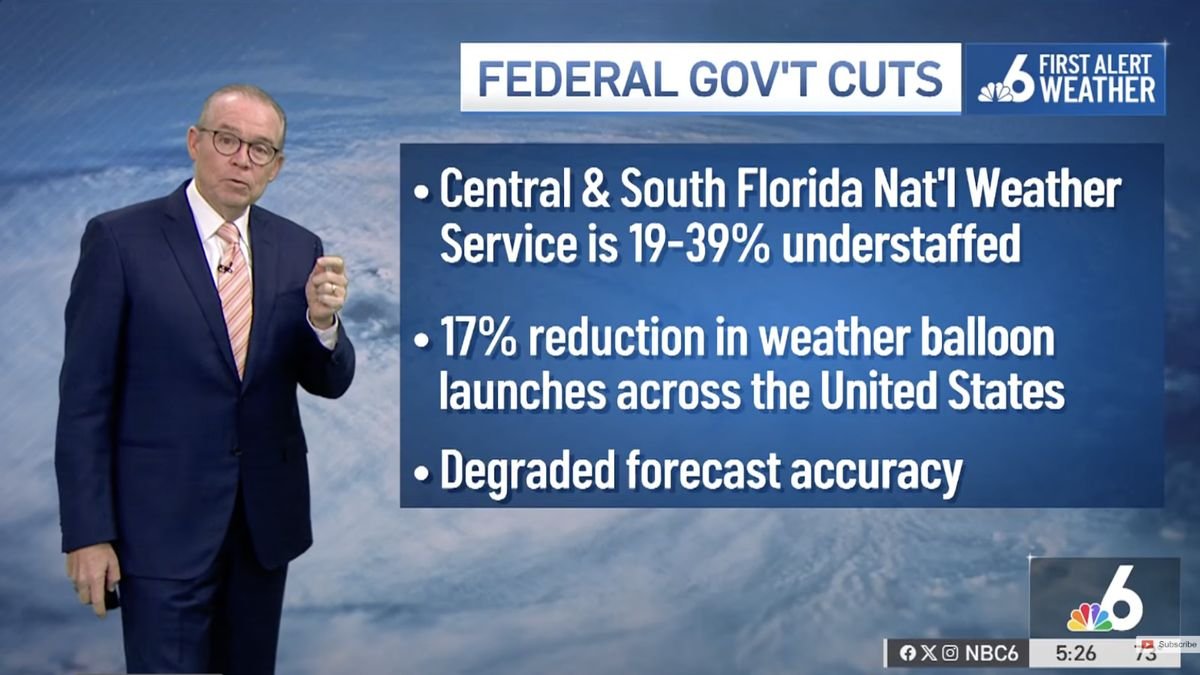
During a weather broadcast, meteorologist John Morales said of his ability to predict hurricanes in Florida, “I am not sure I can do that this year because of the cuts, the gutting, the sledgehammer attack on science in general.”
Morales said these words in June 2025, not in the summer of 2026, as some posts implied. Snopes reached out to him, asking if he felt the same way a year on, and awaits a response.
In August 2026, a rumor spread that Florida weatherman John Morales, of NBC 6 South Florida, had gone off-script during a weather broadcast saying he feared he could no longer accurately predict hurricanes due to government funding cuts enacted by the administration of U.S. President Donald Trump.
As Snopes readers emailed and searched the website seeking to confirm this was true, the claim spread on social media. One Facebook post showed an image of Morales and said he had “suddenly shifted gear” during a broadcast to tell the audience he was no longer certain he could predict the weather “this year” due to “the cuts, the gutting, the sledgehammer attack on science in general” (archived):
Morales did say these words, and as a result we’ve rated the quote correctly attributed. However, he did not say it in the summer of 2026, but in June 2025.
We reached out to Morales to ask if he still felt he could no longer confidently predict the path of hurricanes. We will update this report should he respond.
Snopes identified the video clip in which Morales said he feared he could no longer predict hurricanes due to government funding cuts. It was posted to the YouTube channel of NBC 6 South Florida, a local NBC affiliate, on June 3, 2025:
After re-airing a clip from 2019 in which he discussed Hurricane Dorian, a violent hurricane that had devastated the Bahamas and was moving up the
Lots of people in Florida were concerned the hurricane was heading here. And as you’ve grown accustomed to my presentations over my 34 years in South Florida newscasts, confidently I went on TV and I told you, it’s going to turn. You don’t need to worry. It is going to turn.
And I am here to tell you that I am not sure I can do that this year because of the cuts, the gutting, the sledgehammer attack on science in general.
And I could talk about that for a long, long time and how that is affecting the U.S. leadership in science over many years and how we’re losing that leadership. And this is a multigenerational impact on science in this country. All right.
But specifically, let’s talk about the federal government cuts to the National Weather Service and to NOAA. Did you know that Central and South Florida National Weather Service offices are currently basically 20 to 40% understaffed from Tampa to Key West, including the Miami office? Twenty to 40% understaffed.
Now, this type of staffing shortage is having impacts across the nation because there’s been a nearly 20% reduction in weather balloon releases, launches that carry those radio signs. And what we’re starting to see is that the quality of the forecasts is becoming degraded. There’s also a chance, because of some of these cuts, that NOAA hurricane Hunter aircraft will not be able to fly this year, and with less reconnaissance missions, we may be flying blind, and we may not exactly know how strong a hurricane is before it reaches the coastline, like happened a couple of years ago in Hurricane Otis in Acapulco, Mexico.
At the time, reputable news outlets such as The Independent and The New York Times reported on Morales’ broadcast.
For further reading, Snopes covered several claims related to Trump administration government funding cuts, including the rumor that such cuts caused a screwworm outbreak in the U.S.
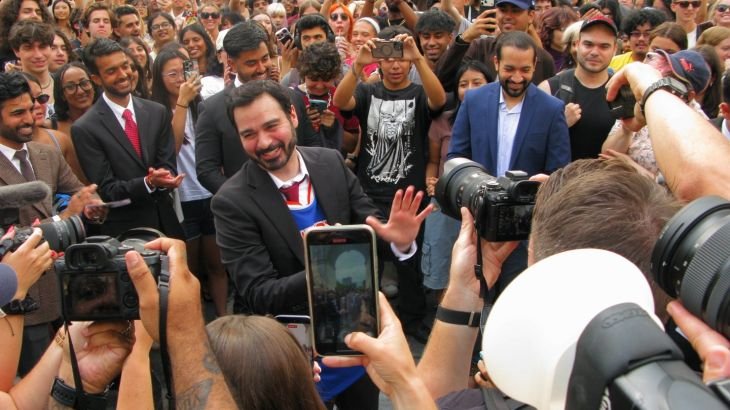
Hundreds turned out for a Zohran Mamdani lookalike contest in New York, where nine contestants competed for the crowd’s vote. Part-time actor and Mamdani impersonator Amadeo Fusca won the contest and took home a prize of $100.
Published On 31 Aug 2026
Opposition in Venezuela as interim leader insists the deal with Washington will help with the country’s recovery.
A new deal between Caracas and Washington would give US companies access to more than a fifth of Venezuela’s vast oil reserves.
But there’s opposition in Venezuela, as well as debate about whether the plan is legal.
What could the agreement mean?
Presenter: Tom McRae
Guests:
Jose Chalhoub – political risk and oil analyst
Cornelia Meyer – commodity specialist and CEO of Meyer Resources
Francisco Rodriguez – senior research fellow at the Center for Economic and Policy Research at the University of Denver, former head of the Economic and Financial Advisory of the Venezuelan National Assembly
Published On 31 Aug 2026
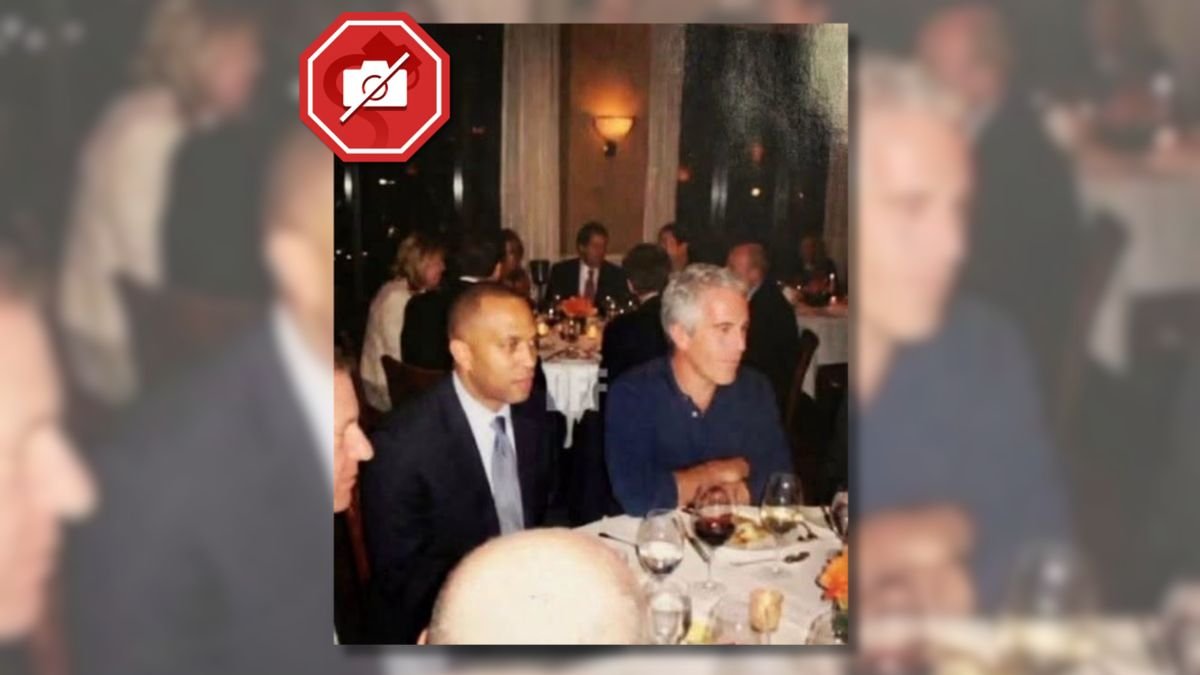
In August 2026, an image appeared online
According to some posts, the photograph was supposedly taken at an event in 2013. Snopes readers wrote in asking whether the image was real.

(David J Harris Jr. via Facebook)
We found that the photo not real, and was generated with artificial intelligence tools. The post was a good example of AI slop — low quality content produced using AI aiming to play the algorithm to go viral and make money.
August 2026
Performing a reverse image search on Google showed the earliest example of the image was dated Feb. 11 and originated from the X account @DumbFckFinder — a finding supported by the
That account describes its output as parody and satire. When Snopes first investigated the image, the account’s
We use AI to create memes, songs, stories, and visuals that call things exactly how they are — fast, loud, and impossible to ignore. If something looks dumb, sounds dumb, or feels off, we turn it into something shareable.
(The account’s bio has changed since then.)
A reverse image search revealed the image had been posted only to social media, and never by prominent news media outlets. Given the scale of the Epstein case, prominent news media outlets would have widely reported this rumor, if true.
Finally, we ran the image in the post through Google’s Gemini AI. Any image generated by Gemini contains a watermark called a SynthID. Gemini found that “most or all of this image was edited or generated with Google AI.”
To avoid errors, we recommend checking for other signs of AI on top of using SynthID screening tools since they can show false positives. In
For further reading, Snopes previously reported on another story from the same account of a fake photo with Epstein and Senate Minority Leader Chuck Schumer.
For background, here is why we alert readers to rumors created by sources that call their output humorous or satirical.
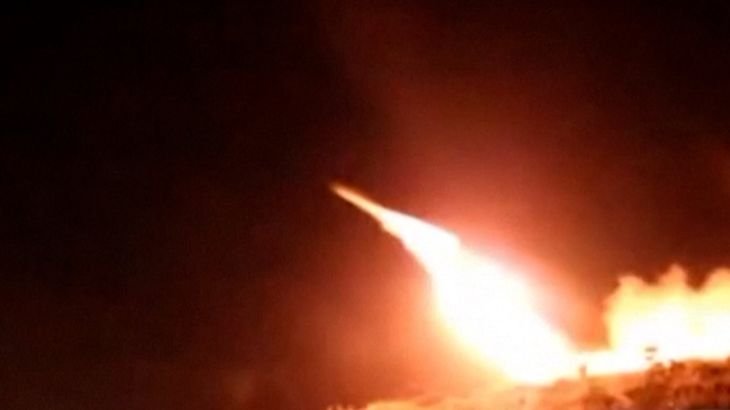
The US has launched its first strikes on Iran in a month, hitting sites on Larak Island. Iran hit back targeting bases hosting US forces in Jordan. As Al Jazeera’s Manuel Rapalo reports from Washington DC the US says those missiles were shot down.
Published On 31 Aug 2026
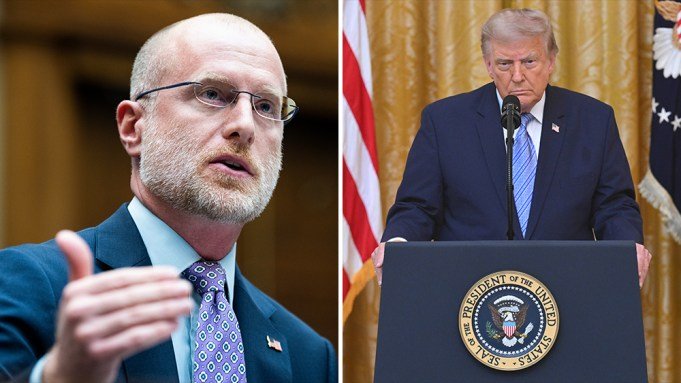
Donald Trump went off on NBC News‘ Meet the Press moderator Kristen Welker on Sunday, vowing to report her to the FCC for “rebuke or punishment,” even as the agency is defending itself in a lawsuit brought by ABC alleging regulatory retaliation.
The issue: A comment Welker made about the president’s endorsement record.
On Truth Social on Sunday, Trump posted, “Kristen Welker, the Unpopular ‘Hostess’ of the once great Meet the Press, now considered Meet the Fake Press, just stated that Donald Trump has ‘mixed results’ on his Endorsements of Candidates, when the recent WINS of Darline Graham and Mike Mazzei, stand at 100% for the U.S. Senate, and 98% for the U.S. House, recently and over the longterm. How can anyone be allowed to say this, working for freely given Public Airwaves? Results are attached. Because of this purposeful inaccuracy, she will be reported to the FCC for rebuke or punishment. Unfortunately, she is not the only one. The Radical Left News is going out of their way to harass, demean, and libel anything ‘TRUMP.’ Their new weapon is to say that my 99% SUCCESS Rate on Endorsements, 100% on Senatorial Endorsements (Many of whom were not even given a shot of winning until I Endorsed!), is either a mixed result, or not very good. In actuality, it is, without question, the strongest Endorsement in the History of Politics.”
Welker made the comment in an appearance on local Washington, D.C. affiliate WRC-TV on Sunday, not on Meet the Press itself, and said of Trump, “He’s going to loom large over these midterms. There’s no doubt about that. He, of course, has endorsed a slate of candidates in the primaries. He’s had some mixed results, but most recently, his pick of Senator Darline Graham, of course, the sister of the late Senator Lindsey Graham, was successful in her primary battle, so now she takes on Dr. Annie Andrews in South Carolina.”
If there is a complaint filed, NBC likely would have a simple defense: What Welker said happens to be true. She wasn’t saying that he has a dismal record of endorsements, or even that a majority of his candidates have lost, only that there have been “some mixed results.”
While Graham won the South Carolina primary last week, some other high profile figures who won endorsements from Trump have recently lost their races. They include Mike Lindell, who lost the GOP primary for Minnesota governor to Lisa Demuth, and Rep. Andy Ogles (R-TN), who lost in his reelection bid to primary challenger Charlie Hatcher. Earlier, Rep. Randy Feenstra lost the GOP primary for Iowa governor to Zach Lahn, and Burt Jones lost the Republican primary for Georgia governor to Rick Jackson.
ABC sued the FCC earlier this month on First Amendment grounds, alleging that some of its regulatory actions are retaliation by the Trump administration over its news reporting and other content. Among other things, the FCC under Chairman Brendan Carr has ordered the network’s eight owned stations to submit its broadcast licenses for early renewal. As part of the lawsuit, the network’s legal team cited Trump’s Truth Social and other threats to use to FCC to punish broadcasters.
The FCC said in response, “All broadcasters have a legal obligation to operate in the public interest—even Disney. The FCC has been examining claims that Disney engaged in illegal DEI discrimination for over a year.” A judge will hear arguments in October on the network’s request for a temporary restraining order to halt the FCC’s early license renewal order.
Trump added in his Truth Social post, “The Press is a Disgrace to our Nation, and I hope that Chairman Brendan Carr, and the fine people of his Commission, will take this Threat to our Country very seriously. Thank you for your attention to this very important matter of Fake Polls and Commentary!”
NBC News said in a comment, “Kristen is one of the best in the business and we stand by her.”
An FCC spokesperson did not immediately return a request for comment. Anna Gomez, the sole Democrat on the commission, said, “As I’ve said many times, the FCC has no authority to punish journalists this administration doesn’t like. These threats to press freedom are dangerous. They undermine the foundation of our democracy, and they have no place in it.”
Trump also lashed out at polling. He posted on Truth Social, “THE FAKE POLLS USED BY OUR CROOKED MEDIA ARE OUT OF CONTROL, AND SOMETHING MUST BE DONE ABOUT IT. FCC TO THE RESCUE! President DJT”
The FCC has a news distortion policy, but advises that its authority “is narrow.”
“The agency is prohibited by law from engaging in censorship or infringing on First Amendment rights of the press.” the FCC states on its website. Any investigation is supposed to focus on claims that a news report “was deliberately intended to mislead viewers or listeners.”
The agency says in its guidance, “The FCC does not investigate claims of collateral inaccuracy in news reports or differences of opinion over the truth or validity of aspects of a news program.”

March 6, 2026
Read More
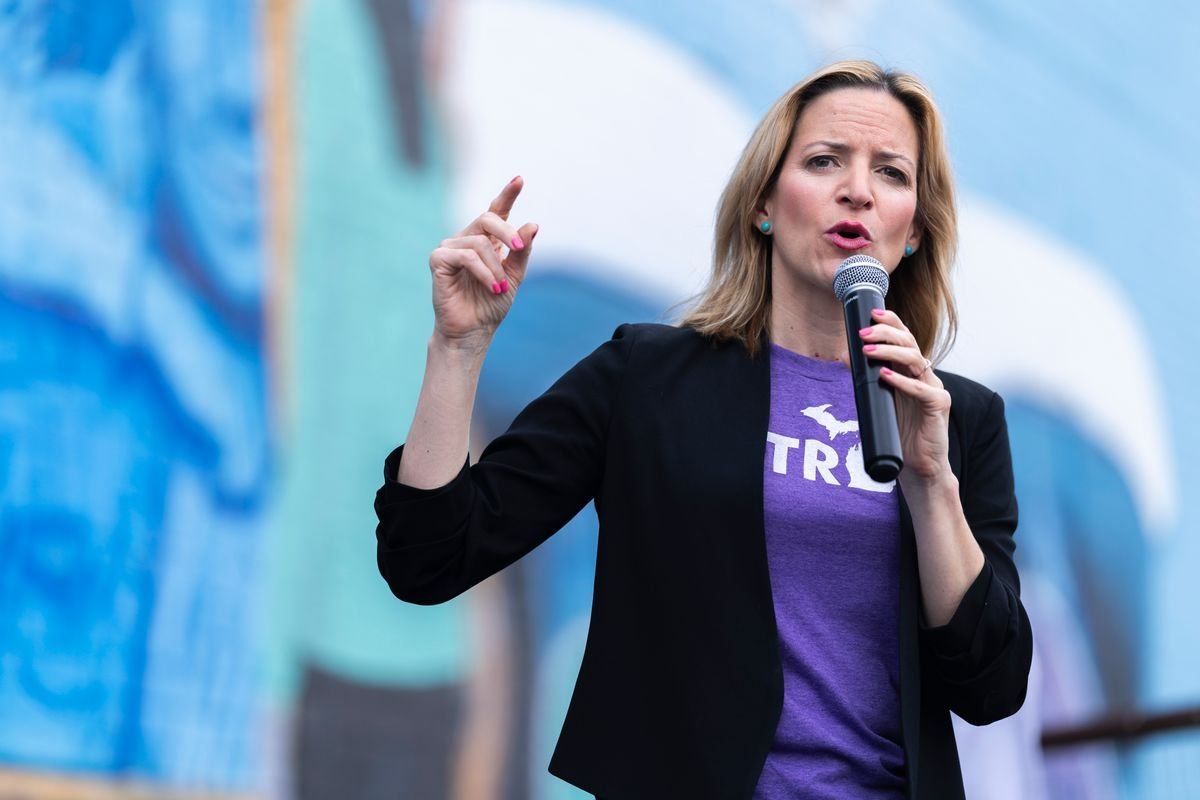
In August 2026, Republican and right-leaning social media accounts shared posts attempting to tie Michigan Secretary of State and gubernatorial candidate Jocelyn Benson, a Democrat, to the Ku Klux Klan.
These posts claimed Benson held a leadership role at the Southern Poverty Law Center — a prominent civil rights group known for tracking extremist groups — while it supposedly funneled money to the KKK.
“Secretary of State @JocelynBenson must explain to the people of Michigan her involvement with the Southern Poverty Law Center while it funded radical groups like the KKK and others that committed acts of racism against Americans,” said one X post from the official Michigan House Republicans account.
Similar posts circulated on Facebook. A conservative dark money group, America Next, ran an attack ad tying Benson to the KKK. Snopes readers searched the website for information about whether Benson was involved with the KKK or if she funneled money to it.
These claims are missing significant context. It is true that Benson once served on the Southern Poverty Law Center’s board. However, Snopes previously determined that there was no evidence the SPLC funneled money directly to extremist hate groups. The U.S. Department of Justice has alleged that the SPLC improperly funneled donor money to individual informants in extremist groups, including the KKK.
Benson is not named as a defendant in that case, nor is there any evidence she was involved in the SPLC’s now-defunct practice of paying informants.
We have not rated this claim as the Justice Department’s court case against the SPLC is ongoing as of this writing.
According to a May 2026 report from the The Detroit News, Benson
We reached out to Benson for additional information about her time at SPLC and await a response.
Conservative groups have long criticized the SPLC for allegedly targeting right-wing groups. In 2025, during President Donald Trump’s second term, the FBI severed ties with the SPLC, claiming it “long ago abandoned civil rights work and turned into a partisan smear machine.”
Legal experts have called the Justice Department’s case against the SPLC “not a valid indictment” and potentially a “targeted attack.”
Benson’s relationship with the SPLC started when she was a 19-year-old unpaid intern who worked as a researcher and undercover investigator. She posed as a freelance journalist to uncover and expose the plans of white supremacist leaders and groups, according to reports of
According to Detroit Legal News, Benson moved to Alabama after college to work at the SPLC full time, which reportedly inspired her to go to law school.
In 2014, Benson joined the SPLC’s board of directors in an unpaid role, where she remained until
“Jocelyn Benson has spent her career advancing the unfinished work of the civil rights movement and expanding economic opportunity, including helping dismantle white supremacist and neo-Nazi extremist networks,” Benson campaign spokesperson Alyssa Bradley reportedly said to Bridge Michigan, a nonpartisan news outlet.
In July, Michigan House Republicans said
If the emails included information about the informant program or the Justice Department’s indictments, Michigan Republicans certainly would have shared that in their news release. They didn’t.
The indictments allege the SPLC secretly paid informants within various extremist groups more than $3 million in total to supposedly defraud banks and donors from 2014 to 2023, overlapping with Benson’s time as a board director.
However, as of this writing, Benson’s name does not appear in any of the Justice Department’s SPLC indictments.
Contrary to a claim from John James, Benson’s Republican opponent for governor, the indictments also did not claim that the SPLC funneled millions to the KKK, specifically.
According to the indictments, more than $3,500 allegedly went to one KKK member, more than $70,000 went to a former KKK member and more than $160,000 was funneled to an informant who “then sent funds to various violent extremist group leaders including the former Grand Wizard of the Knights of the Ku Klux Klan.”
The SPLC has not contested the existence of the informant program, instead stating it had a “long history” of assisting law enforcement using its informants.
“The government is blatantly mischaracterizing our efforts to successfully fight hatred and violent extremism, something we have done for decades,” SPLC’s interim president and CEO, Bryan Fair, said in an April statement. “At one moment, they are appreciating our work in destroying the Klan and now, they are saying the SPLC funded and promoted the Klan.”
It’s true that Benson worked for the SPLC and it’s true that the Justice Department accused the prominent civil rights organization of defrauding donors by secretly paying informants in extremist groups, including the KKK.
However, it’s misleading to claim that Benson has connections to the KKK, particularly because the Justice Department did not name her in the indictments. Furthermore, contrary to the framing of this claim, the SPLC has a long, documented history of fighting white supremacist ideology and filing lawsuits against the Ku Klux Klan. Meanwhile, the Department of Justice has not proven its allegations against the SPLC in court.
That’s not to say the SPLC hasn’t received its fair share of criticism from both sides of the aisle — just that there’s far more evidence the SPLC is anti-KKK than pro-KKK.