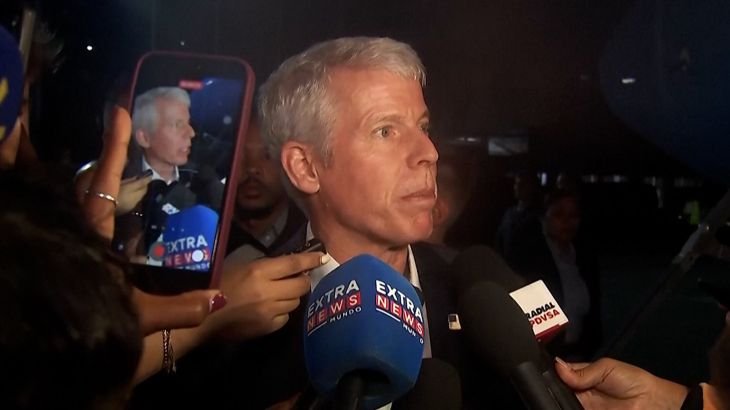
US Energy Secretary Chris Wright has arrived in La Guaira for the signing of a deal that will see the US seize effective control of a large portion of Venezuela’s oil reserves. While Wright praised the agreement, critics have likened it to deals imposed by colonial powers.
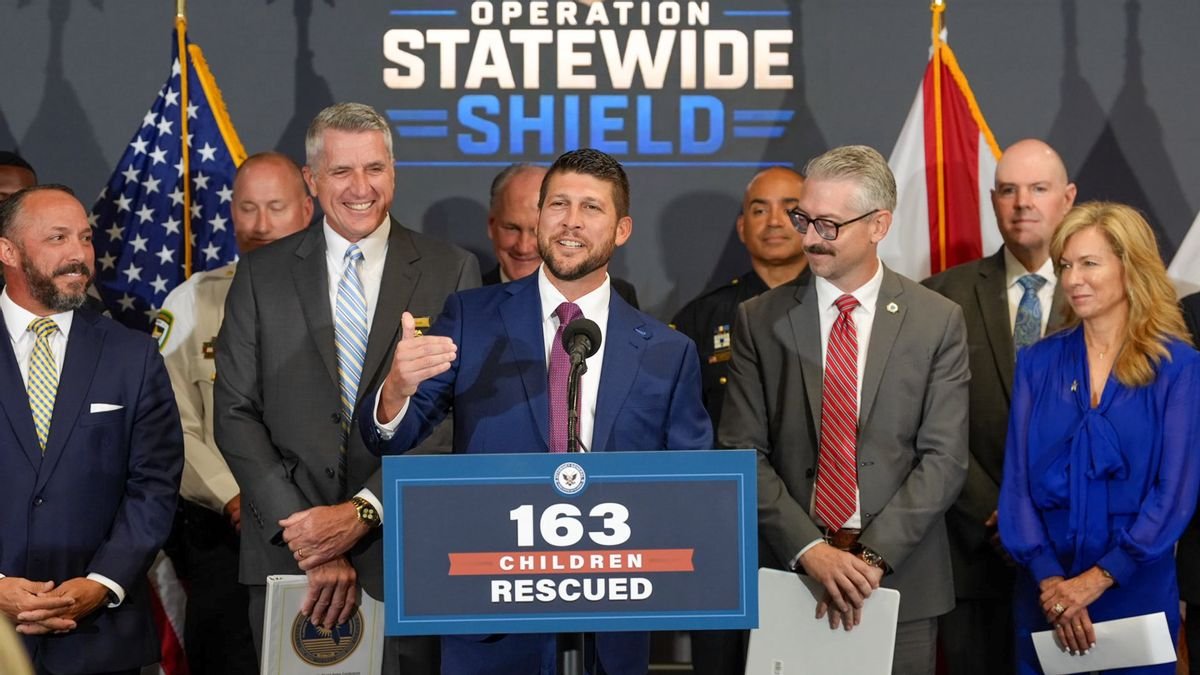
The claim that authorities in Florida rescued 163 missing children is still under investigation pending the release of more detailed information.
The offices of Florida Attorney General James Uthmeier and Florida Department of Law Enforcement Commissioner Mark Glass said on Aug. 25, 2026, their agencies had made “46 recoveries by the Tampa Bay region, 41 by Miami, 32 by Jacksonville, 21 by Orlando, 12 by Fort Myers, 8 by Pensacola, and 3 by Tallahassee.”
They said victims’ ages ranged from 2 months to 17 years. “Many recovered children had experienced various levels of abuse, neglect, exploitation, or exposure to other criminal activity, including human trafficking,” Uthmeier’s statement read.
Florida prosecutor Rita Peters said the mix of children included runaways, indicating the authorities had not just targeted a single trafficking ring. Uthmeier announced three arrests had been made and more would come.
Some posts about the operation claimed the children were recovered from underground cages. There was no evidence this was the case.
Snopes will update this report if additional information surfaces. We have reached out to the FDLE seeking, specifically, the exact number of children who were trafficked, the number of children who were abused and sexually abused, the number of children abducted by one parent over custody battles, the number of runaways and whether further arrests were made in the days since the announcement. We await responses to these questions.
In August 2026, a claim spread that 163 missing children had been recovered in a statewide law enforcement operation in Florida.
The rumor appeared onFacebookand X. One post on X said the rescued children were “in underground cages with duct tape over their mouths from a human trafficking ring in Florida” (archived):
Several Snopes readers emailed, seeking to confirm the veracity of the claim.
It is true that the state’s Attorney General James Uthmeier and Department of Law Enforcement Commissioner Mark Glass announced on Aug. 25, 2026, their agencies and others had cooperated in a statewide operation to rescue 163 missing children. They said three men had been arrested and more arrests were in the works. They said many of these children had been victims of abuse and trafficking, but did not specify how many. While we await more details, the claim will remain unrated.
Uthmeier’s office declined to comment further.
“Circumstances surrounding the recoveries in this operation include but are not limited to various levels of abuse, neglect, exploitation, or exposure to other types of criminal activity,” a spokesperson for FDLE said in an email. “There was no one singular trafficking organization identified as a main perpetrator, and most cases were unrelated to one another.”
We sent follow-up questions seeking, specifically, the exact number of children who were trafficked, the number of children who were abused and sexually abused, the number of children abducted by one parent over custody battles, the number of runaways and whether further arrests had been made in the days since the announcement.
We also asked why the task force would recover 163 children across the state in such a short period of time instead of tackling cases progressively, as children are reported missing. We will update this story should we receive a response.
On Aug. 25, Uthmeier and Glass spoke to reporters to announce the massive rescue operation:
“We are honored to announce that we have rescued 163 missing children in just a five-day operation,” Uthmeier said at the 5:21 mark. “This is incredible.”
Uthmeier added many of them had been abused, without specifying how many. “It won’t surprise you that many have suffered great abuses. Many appear to have been trafficked, neglected, exploited, and abused.”
“These children were a mix, as you’ve heard, of endangered, at-risk, and juvenile runaway cases,” Special Counsel to the Attorney General Rita Peters, who Uthmeier said was prosecuting the case, said during the news conference (at 20:15).
Peters then explained the distinction was less important than it seemed, as runaways often become exploited by adults who take advantage of their situation:
Victimization of a child rarely begins with an abduction. It begins with a child who has left home or or has been pushed out of one, who has no money and nowhere to sleep, and who often meets an adult offering food, shelter, and much needed attention. These children often leave because being on the street is better than being with their abusive parent or their guardians who sell them on a daily basis.
In the statement published on Uthmeier’s website, his office said the victims’ ages ranged from 2 months to 17 years. During the news conference, Uthmeier also said three men had been arrested on various counts, including, per his office’s statement, lewd and lascivious acts with a minor, lewd and lascivious battery on a victim 12 to 16 years old, and interference in a child custody case. In other words, there was no indication the operation targeted one specific child trafficking ring.
Authorities did not give any indication the children had been found in underground cages with their mouths duct-taped, as some social media posts claimed.
The attorney general’s statement said the operation took the Florida task force to “Alabama, California, Ohio, New York, North Carolina, Puerto Rico, and Tennessee. Outside of the US included Brazil, Canada, Colombia, Dominica, Finland, Ghana, Guatemala, Italy, Jamaica, Mexico, Spain, and Taiwan.” We inquired about the international aspect of this operation in our email to the FDLE.
The trial was to determine the fate of the Warner Bros empire, with the opposing sides presenting vastly different arguments. The government embraced the market as it has been, while the merging companies pointed to a future marked by disruption.
Studio veterans were anxious to get the deal done and cash out, while plenty more who stayed were wary of a culture clash with the new owners. Inside and outside of the company, suspicions abounded about the role of Donald Trump and his animus toward CNN driving the court challenge.
That was the picture eight years ago, when the government sued to block the $85 billion merger of AT&T and Time Warner. The six-week 2018 trial of U.S. vs. AT&T was a showdown billed as a momentous battle between the government and a corporate powerhouse. In 2026, as Paramount jousts with state attorneys general suing on antitrust grounds to stop the $110 billion acquisition of Warner Bros Discovery, the parallels are striking.
There are, at the same time, some substantial differences between the Justice Department’s AT&T-Time Warner litigation and the state attorney generals’ lawsuit against the Paramount-WBD deal. AT&T-Time Warner was a vertical transaction and Paramount-WBD is a horizontal one, for starters. A vertical deal, which hasn’t been blocked in the media business for decades, is more difficult to prove as anticompetitive than a horizontal one.
Both cases, though, highlight just how important one asset is in a fast-changing media environment: time.
AT&T and Time Warner won their case resoundingly in 2018, as the judge concluded the government had just not shown the transaction would substantially lessen competition. But the litigation cost the two companies precious time as rivals were building out their streaming platforms. In the end, AT&T cited its deal-related debt burden, at a time of soaring production costs, in opting to exit the entertainment business. (A similarly disastrous takeover of DirecTV cemented the decision, after both mergers cost AT&T shareholders tens of billions of dollars.) In April 2022, a bit less than four years after the Time Warner merger’s close, AT&T spun off the newly named WarnerMedia into a venture with Discovery.
Blair Levin, policy analyst at New Street Research, told Deadline via email that the time AT&T lost during the legal quagmire ultimately turned out to be a devastating blow. “While the Trump DOJ had a weak case against AT&T’s purchase (the real cause of which was not traditional Republican antitrust metrics but rather Trump’s anger at CNN), the government was able to delay the deal which was costly to AT&T and diminished the value of the asset,” he said. In the Paramount-WBD case, the states “have a stronger case thank the DOJ against AT&T as it is a horizontal, not a vertical case,” he added.
Levin also put a spotlight on the $7 million a day ticking fee for WBD shareholders that Paramount has to start paying next month and potentially billions more in other costs that could emerge as the parties inch towards the trial next spring. “The litigation is costly to Paramount both because of the ticking fee and the ability of the studios and other assets to engage in deal making while no one is certain who will be in charge when the deals go into production,” he notes.
One of the key figures from the AT&T-Time Warner trial is also a prominent player in the Paramount case: Makan Delrahim, the company’s chief legal officer. In 2018, he was the antitrust chief in the Justice Department, and he pushed back at the time on repeated claims of Trump administration influence.
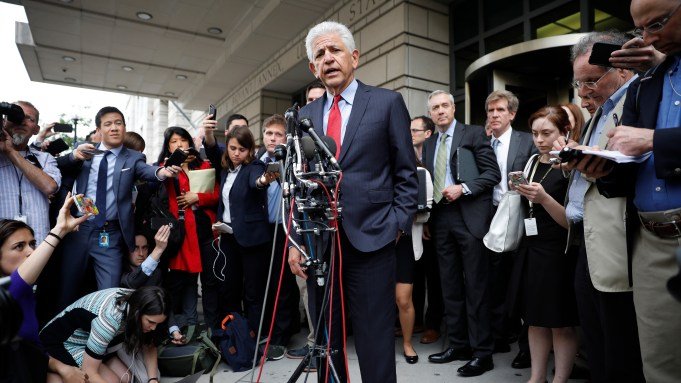
Another familiar face is AT&T’s lead attorney, Dan Petrocelli. He is now representing Warner Bros Discovery and is expected to play a supporting role in any trial.
The judge in the 2018 case, Richard Leon, was a colorful figure with a penchant for exclamation points, strict rules for gallery decorum (no crossed legs, as all spectators were warned to keep two feet on the floor). He also demonstrated an apparent affinity for Turner Classic Movies, as he more than once asked about its post-merger future. “If there ever were an antitrust case where the parties had a dramatically different assessment of the current state of the relevant market and a fundamentally different vision of its future development, this is the one,” he wrote in one early ruling. “Small wonder it had to go to trial!”
Here are some lessons from U.S. vs. AT&T, and why the case matters for Paramount-WBD:
Getty
Remember, It’s An Antitrust Trial
In his opinion, Judge Leon called the trial an “epic battle,” and it certainly seemed so at the time.
A Paramount-WBD trial may inspire visions of dramatic showdowns with CEOs on the stand, but journalists’ hopes of such moments quickly come crashing down in the reality of what is at hand: Antitrust trials are dominated by arguments about relevant markets, economic models and their inputs and dueling expert witnesses. They are almost always bench trials, decided by a single judge without the involvement of a jury. Yes, there can be moments where top executives are confronted with embarrassing emails, but most of the time they are wonkish and full of arcane details.
That said, Leon did inject some moments of drama, primarily in the way that he announced his decision. Rather than just drop it in the docket, he scheduled a date and time for the announcement, gathered all the parties and the press in the courtroom, and forbid anyone from leaving until he was finished reading portions of his opinion. The 100 or so people packed into the courtroom and dozens more waiting just outside reacted with a frenzy to the news that the deal would close, reshaping Hollywood a bit less than two decades after Time Warner’s ill-fated marriage with AOL.
The Future Factor
Leon concluded that the government had just failed to show that the AT&T-Time Warner merger would substantially lessen competition. And he devoted considerable portions of his opinion to taking down the government’s chief expert witness and his economic models – which perhaps stands as a warning to the state AGs as they prepare to make their case against Paramount.
The judge also acknowledged the fast-changing landscape, noting that in the face of declining video subscriptions and TV ad revenues and the rise of streaming and social media.In seeking to combine, AT&T and Time Warner “concluded that both companies could stop ‘chasing taillights’ and catch up with the competition,” he wrote.
One of Paramount’s big arguments nowadays for the WBD merger is that a bulked-up combined entity would create a more robust competitor to Netflix, Amazon and Disney, especially in the streaming world.
Among other things, Paramount argues that streaming and theatrical can’t be completely separated from theatrical, and that the merger will create a “virtuous cycle: more theatrical content will drive engagement on the combined streaming platform, a larger subscriber base will generate revenue to fund more theatrical content, and the merged firm will become a stronger competitor to the technology companies atop the streaming market.”
The states’ lawsuit doesn’t challenge the merger’s impact on the recently established market of streaming. Rather, it alleges competitive harm in three traditional markets: wide-release theatrical film distribution; anticipated big-budget blockbusters; and cable television channel licensing.
The cable market is where there is some overlap between the cases against AT&T and Paramount. Back in 2018, the government argued the combination of AT&T’s distribution and Time Warner’s content would give them more leverage, forcing rivals like Comcast and Charter to pay more in distribution fees for “must have” channels like CNN, TNT and HBO – or even withholding them altogether. In a nod to the future, the government also argued that the combined company would have the power to slow the transition to streaming.
The state AGs argue that Paramount will control more than 50 channels, including the most “in-demand” programming, like NCAA March Madness and Major League Baseball, giving it “enormous bargaining power” that will leave distributors with “little choice but to accept onerous terms.”
Paramount maintains that the channels are complementary of each another, not competitive, and argues that cord-cutting is reducing demand. “In this environment, every programmer’s bargaining position is diminishing because the underlying asset (pay television subscribers) on which affiliate fees are calculated is eroding annually,” the company’s legal team wrote in a filing earlier this summer.
“Much like in AT&T-Time Warner, defendants are likely to make sweeping arguments about how rapid changes in content business models create benefits across entertainment ecosystems,” said Diana Moss, vice president and director of competition policy at the Progressive Policy Institute. “If a judge gives credence to these arguments, as occurred in AT&T-Time Warner, the states might have a uphill battle defending the claim that the merger is anticompetitive, say, specifically in film markets. Even the unwinding of AT&T-Time Warner to revert to separate ownership and focus on content could be invoked to support the ‘efficiencies’ argument.”
Companies often point to efficiencies like streamlined operations and lower expenses in their defense of mergers. In his decision in AT&T, Leon took that into account.
Yet in the one ruling in the Paramount case so far, U.S. District Judge Araceli Martinez-Olguin splashed some cold water on Paramount’s invocation of the streaming landscape. She wrote in a footnote that she “cannot accept” the Paramount argument that the transaction will produce efficiencies in streaming. She wrote that courts “have expressly and repeatedly rejected the defense that a challenged merger will result in economic efficiencies ancillary to competition in the relevant market.”
The Other Major Merger
As the AT&T-Time Warner trial was playing out, the Justice Department was reviewing another massive merger: Disney’s $71.3 billion acquisition of most of 21st Century Fox, including its film and TV studio along with several cable networks and a large stake in Hulu.
Just weeks after the judge’s AT&T decision, the DOJ approved that deal. Unlike the Time Warner transaction, Disney-Fox was a horizontal merger that put one of the remaining legacy film studios, 20th Century Fox, under Disney control and effectively off the industry map. The state AGs call Disney-Fox a cautionary tale, noting that it resulted in the loss of 4,000 Fox employees, reducing production and film output.
Paramount dismisses the Disney-Fox merger impact as “irrelevant” in light of “a broader market trend that existing firms can, do, and likely would expand output in response to another competitor’s output reduction.” Paramount has pointed to the near doubling of its release count since the 2025 merger with Skydance, while also heralding its commitment for Paramount-WBD to distribute at least 30 theatrical films per year.
Paramount likely will challenge the state AGs’ market definitions as well as their claims that the combined market shares of the combined company in key markets – in this case around 30% – make it presumptively illegal. In this case, courts have considered other factors, such as low barriers to entry, Paramount contends. That’s why, when it comes to theatrical, Paramount’s legal team has emphasized the unexpected success of movies in the marketplace, including Focus Features’ Obsession.
They wrote that “the indisputable evidence shows that rival film production and distribution companies can and would expand their theatrical film slates if the merged firm were – contrary to its own economic incentives, to reduce output or try to increase prices for theatrical films. These low barriers to expansion would leave the merged firm with nothing to gain from reducing theatrical output or trying to increase prices to theaters.”
Martinez-Olguin, though, wrote in her opinion granting a temporary restraining order that Paramount still had not shown that the merger “would not substantially lessen competition.” That does not mean that she was convinced the merger was illegal — only that there were disputes over the facts of the market effects and that the lawsuit “at least demonstrates that serious questions going to the merits remain.”
CNN’s Role
From the moment the Justice Department sued to block the AT&T-Time Warner merger, there was suspicion that the motive was CNN, which critics said was being targeted for its unfavorable coverage of the Trump administration.
The DOJ denied this, but that didn’t stop AT&T from seeking a court order to compel the DOJ to produce information on potential White House influence. Judge Leon, though, refused to go down that route before the trial even started.
Donald Trump and anchor Kaitlan Collins spar at a CNN Town Hall in 2023
CNN
This time around, Paramount’s David Ellison has claimed that CNN is also behind the opposition, writing in a New York Times op-ed that the “issue is whether I can be trusted as a steward” of the network. Particularly among Democrats, there are concerns that Ellison will move the network to the right, and his repeated overtures to the GOP and Trump (dinners in his honor in Washington; trips to Mar-a-Lago; seats at UFC matches, which stream exclusively on Paramount+) have only increased suspicion. In contrast to AT&T-Time Warner, a merger proposed before he had even won a first term, Trump has been more overt this time in his desire for changes at CNN.
One idea floated by backers of the Paramount-WBD deal, among them TKO Group CEO Ari Emanuel: an independent committee set up to oversee the network to ensure the independence of its news operations. The setup has been implemented before. A special committee was set up in 2007 to oversee editorial integrity at the Wall Street Journal, as Rupert Murdoch’s News Corp was looking to acquire the news outlet from the Bancroft family trust. The committee to this day has to grant approval for the appointments of an editor-in-chief and editorial page editor.
Despite that precedent, California Attorney General Rob Bonta, who is leading the state AG lawsuit, signaled that such a condition would not be sufficient with Paramount-WBD. He denies that the plaintiffs’ complaint is rooted in concerns about CNN, and he insists that any settlement will require robust “structural” remedies, like the sale of assets to alleviate the impact on competition concerns.
Ticking Clock
When it comes to antitrust trials, the real drama can often be the ticking of the clock.
The fact that the AT&T-Time Warner merger was waylaid for 20 months due to the antitrust trial may not have been the only reason for its ultimate failure, but the protracted limbo state certainly didn’t help.
The delay hampered the launch of streaming flagship HBO Max. Like NBCUniversal and Disney, WarnerMedia had finally decided to enter the costly direct-to-consumer streaming market after a decade of ceding it to Netflix, Amazon and Hulu. In part due to the lawsuit, HBO Max was the only major new service to have to postpone its debut. It finally hit app stores in the spring of Covid-marred 2020, becoming the last in a multibillion-dollar burst of new entrants like Apple TV, Disney+ and Peacock coming to market over a seven-month span.
As mired as AT&T-Time Warner got in litigation, Leon’s decision that the trial should start in March 2018, just four months after the suit was filed, was a light-speed pace compared with the Paramount case. He was mindful of the June 21 expiration of the merger agreement, which carried a $500 million breakup fee.
Judge Martinez-Olguin, on the other hand, was not swayed by Paramount’s call for a trial on a similarly accelerated timeline, but her trial start date of March 2, with a shorter projected length of 12 days, still leaves some room to render an opinion before the June 4 merger expiration date.
The stakes, though, are much higher. Paramount would face a $7 billion breakup fee and has agreed to pay WBD shareholders a ticking fee of roughly $7 million for every day the deal is not closed after September 30.
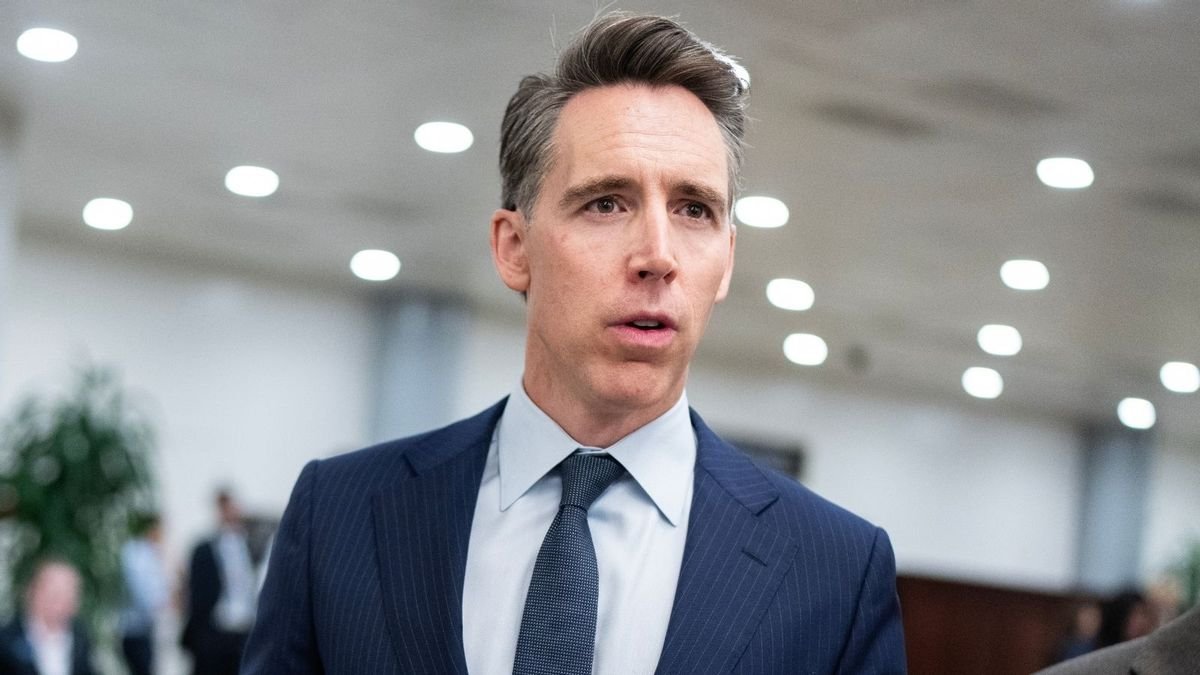
A chef claimed U.S. Sen. Josh Hawley, R-Mo., twice met with a male escort.
Rating:
What’s True
It’s true that a chef named Joe Gera posted the claim on X in late July and early August 2026. However …
What’s Undetermined
There was no evidence to suggest the senator met with a male escort. Gera has yet to provide evidence to support his story. In a legal notice sent to Gera and shared with Snopes, an attorney representing the senator called Gera’s accusations “false and defamatory,” adding Hawley “has never exchanged money for sex, nor has he ever paid anyone to remain silent about sex.” The notice demanded Gera retract or correct his prior statements and cease publishing anything similar in the future, warning of the potential of a defamation lawsuit.
In July and August 2026, people shared a rumor about a chef alleging U.S. Sen. Josh Hawley, R-Mo., twice met with a male escort. There was no evidence to support the story.
For example, on Aug. 18, a Facebook user posted (archived), “Chef accuses anti-LGBTQ+ GOP Sen. Josh Hawley of kissing a male escort.” The post’s meme reads, “Married, MAGA, and anti-gay Senator Josh Hawley facing accusations he was seen kissing a male escort before bribing them to remain silent.”
Believers of the gossip alleged hypocrisy by the Republican senator. Hawley, who has three children with his wife, has for years opposedlegislation and rulings strengthening the rights of LGBTQ+ people. During that time, some critics have lobbed unproven allegations of the senator and other Republicans secretly living as gay men.
In sum, a chef named Joe Gera, owner of the Pennsylvania-based caterer Keystone Cue, genuinely posted the allegations in severalX posts in late July and early August 2026. However, there was no evidence, such as photos or videos, to support his story.
When we contacted Gera for supplementary evidence to support his claims, he answered our questions in X direct messages but did not provide evidence supporting his story. As of now, we’ve rated this claim a mixture of true and undetermined information: It’s true a chef made such a claim, and that claim’s veracity is undetermined.
Hawley’s team said the allegations are not true. In a legal notice addressed to Gera that Hawley spokesperson Madeline Sieren, shared with Snopes, attorney David Thompson, a managing partner with the Washington-based Cooper & Kirk law firm representing the senator, called Gera’s accusations “false and defamatory,” adding that Hawley “has never exchanged money for sex, nor has he ever paid anyone to remain silent about sex.”
The notice demanded Gera retract or correct his prior statements and cease publishing anything similar in the future, and warned of the senator potentially filing a defamation lawsuit.
We asked Gera if he wished to respond publicly to the legal notice and will update this article if we receive an answer.
As we noted in an article examining unsubstantiated claims regarding the late Sen. Lindsey Graham’s sexuality, Snopes is not in the business of declaring a person’s gender or sexual identity. As of this writing, no credible, publicly available evidence supports the rumor that Hawley is gay.
In X posts and messages to Snopes, Gera alleged to Snopes without providing proof that Hawley twice met with the same male escort in 2022 at two properties owned by Gera’s former employer: the first time that February at a luxury hotel in Washington, D.C., and then at a Virginia mountain resort in April. He said his former employer did not wish to be named at this time for privacy reasons.
Gera said he learned of the alleged Washington hotel encounter from a busboy named Carlos who purportedly witnessed Hawley kissing a man, though he did not provide a last name for us to contact that person for independent corroboration. Gera also claimed to have viewed surveillance footage showing the alleged incident but did not provide proof.
In Gera’s Xposts, he quote-shared Hawley’s posts about congressional matters with his allegations about the male escort. Gera’s posts alleged that Hawley chased the busboy “into the elevator going back up into the kitchen” and paid him $100 “to keep his mouth shut.”
Fake image of Hawley with other man
As Gera’s allegations spread online, so did a fakepicture of Hawley supposedly preparingtokiss a man holding a voice recorder. It appears someone fabricated the image by prompting an artificial intelligence tool to alter an authentic photo of a reporter speaking with Hawley in 2019.
For further reading, we previously reported about another rumor involving Gera in which he made allegations about the vaccination status of Sen. Rand Paul, R-Ky. Gera said he cooked at an early 2022 event the senator attended that required unmasked attendees to provide a negative COVID-19 test.
Dozens of people are injured, and at least five dead, after US strikes hit a wedding ceremony north of the Iranian port city of Sirik. A child was among the victims. A warning some of the images may distress some viewers.
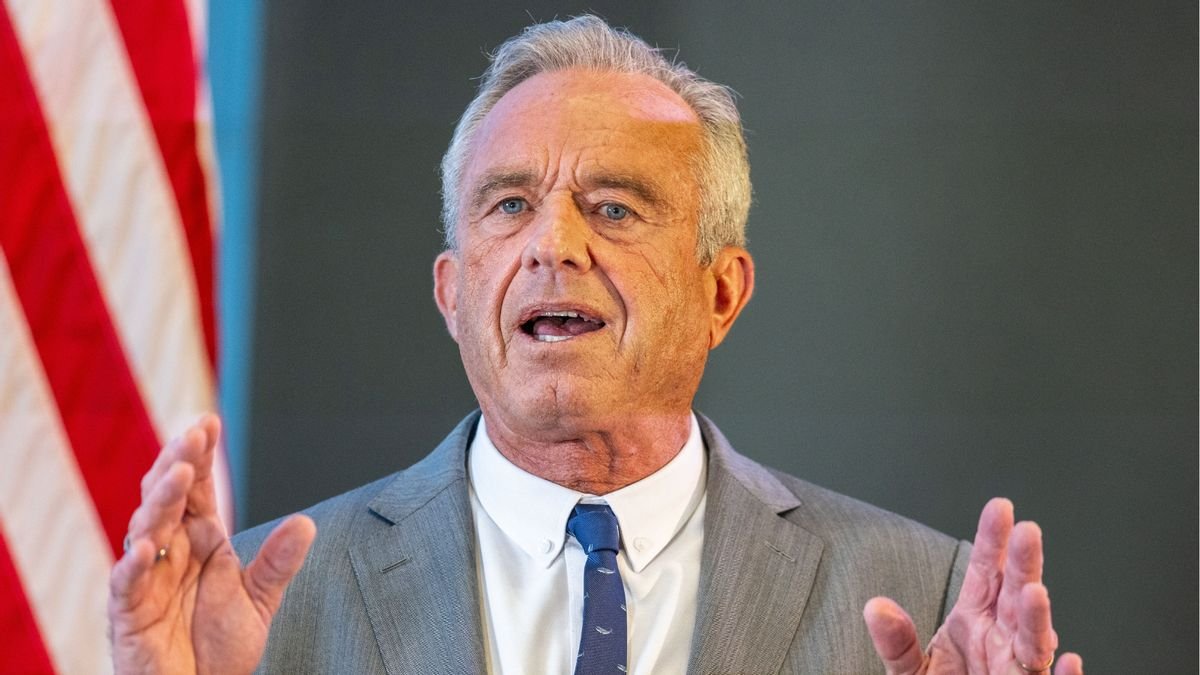
U.S. Secretary of Health and Human Services Robert F. Kennedy Jr. said people in hospice care weren’t dying fast enough and were costing taxpayers too much money.
Rating:
Context
Kennedy did not explicitly that hospice patients cost taxpayers too much money because they received treatment for too long. Instead, he was specifically referring to instances of suspected hospice fraud in California.
In late August 2026, a claim (archived) circulated online that U.S. Health and Human Services Secretary Robert F. Kennedy Jr. said people in hospice care weren’t dying fast enough and were costing taxpayers too much money.
For example, independent journalist Aaron Rupar shared a clip of Kennedy speaking on X and wrote, “RFK Jr complains that people in hospice aren’t dying quick enough and therefore cost too much money.”
Though Kennedy did speak about hospice care during an appearance on the Fox News program “Saturday in America” on Aug. 29, summaries such as Rupar’s on X did not accurately reflect his words.
Kennedy did not explicitly say that hospice patients cost taxpayers money because they received treatment for too long. Rather, he said hospices in California had fraudulently received federal funds, pointing to billing for patients over multiple years instead of the typical several months as one example.
In August 2026, The Associated Press reported on one incident of fraud where a California hospice billed Medicare for a healthy 71-year-old woman.
In a recording of the “Saturday in America” town hall featuring Kennedy, he said (at 52:52):
We closed down thousands of hospices in California, they didn’t have patients, they were just billing us. And the way we found them is because the patients would never die. And so, we could see, we’ve been paying for this guy for five years — usually, if you go to a hospice, it means you’ve got three months left to live — these people were never dying, they just had the patient numbers and we were being charged $6,000 a month and just paying, I think 8,000 of them, of these hospices. We’re talking about tens of billions of dollars stolen every year.
Given the above, we find claims that Kennedy said hospice patients weren’t dying fast enough and costing taxpayers money false. Instead, he was specifically referring to instances of suspected hospice fraud.
We contacted the Department of Health and Human Services to ask when it closed the 8,000 hospices Kennedy mentioned and how much money the department estimated hospice fraudsters had received and await a reply.
Medicare, the U.S. federal health insurance program for people 65 and older, covers hospice care for eligible patients. According to Medicare’s website, a patient is eligible if one or more doctors certify they are terminally ill, with a life expectancy of six months or less — not three, as Kennedy said. The insurance program covers hospice care for two initial 90-day periods and successive unlimited 60-day periods.
Vice President JD Vance’s anti-fraud task force, which President Donald Trump established in March 2026, has focused on hospice fraud through Medicare.
The Associated Press reported in August 2026 that fraudsters opened fake hospices and tricked real patients into enrolling, or stole people’s identities to bill Medicare for hospice services they did not receive.
In May 2026, the Centers for Medicare and Medicaid Services announced six-month moratoriums on Medicare enrollment for hospices and home health agencies. The centers said they had worked with Vance’s anti-fraud task force to suspend federal payments to 800 hospices and home health agencies suspected of fraud in Los Angeles. The suspected fraudulent companies received $1.4 billion in Medicare payments in 2025, according to the news release.
The release noted that hospice fraud was especially prevalent in Arizona, California, Georgia, Ohio, Nevada and Texas.
California’s Department of Justice described hospice fraud as “an epidemic” in the state. The department said it carried out its own investigations into hospice fraud within Medi-Cal, California’s state-level health insurance program and that it had secured 51 “hospice related convictions” since 2021.
For further reading, Snopes routinely investigates claims about Medicare.
Iran says a series of US strikes near the southern Iranian port city of Sirik has killed at least four people, including a child at a wedding party. Iran’s health ministry says 50 others were injured in the attacks.
The US launched new strikes on Iran’s southern coast with explosions reported in several locations near the Strait of Hormuz. Tehran fired back targeting US bases in Jordan, with Washington denying claims of US casualties, as Kimberly Halkett reports from the White House.
A civilian engineer working aboard a U.S. Navy vessel filed a civil lawsuit against the United States in 2023, alleging she had been raped on duty, and the court dismissed the suit in 2026, determining it fell under the jurisdiction of the U.S. Department of Labor as a worker’s compensation issue.
Rating:
Claims circulated in August 2026 that a civilian engineer named Elsie Dominguez was working aboard a U.S. Navy vessel in 2021 and allegedly raped on duty, for which she later sued the United States seeking unspecified monetary damages.
According to the claim, a judge dismissed the case, deeming it an issue related to worker’s compensation, which falls under the jurisdiction of the Department of Labor.
People on socialmedia platforms spread the report online, claiming that Dominguez’s lawsuit was dropped because the rape was deemed to have happened while in performance of her work duties and was reclassified a worker’s compensation issue.
It was true that a judge dismissed Dominguez’s case because he determined it fell under the Federal Employees’ Compensation Act and should therefore be handled by the U.S. Department of Labor, according to court documents.
The decision cited a prior Supreme Court ruling that determined “unequivocally that FECA is the exclusive remedy for civilian seamen on public vessels.”
On May 12, 2026, a joint letter from the plaintiff’s and defendant’s attorneys said that “the Office of Workers’ Compensation Programs issued an acceptance” of Dominguez’s claim on March 11, meaning the office had decided to classify the rape as a “work-related injury.”
Snopes reached out to the Department of Labor to ask for documentation of this decision and was instructed to make a Freedom of Information Act request.
According to the case docket, Judge Edward S. Kiel dismissed the case on Aug. 11, 2026.
Another joint letter from the attorneys, dated one day before the dismissal and embedded below, said “Ms. Dominguez firmly disagrees” with the decision that the assault should be classified as a work-related injury and that she believed it “does a significant disservice to service members like her” but opted not to appeal. As a result, the letter said, “this matter may be dismissed.”
For instance, one New York-based firm said it’s possible to sue for worker’s compensation when “sexual assault by a supervisor or co-worker when the employer knew about the risk (e.g., through a previous incident) but failed to protect you.”
History of the case
Dominguez graduated from the U.S. Merchant Marine Academy and “excelled professionally and rose through the civilian ranks within Military Sealift Command from 3rd Assistant Engineer to 1st Assistant Engineer, an accomplishment achieved by very few female mariners,” according to court documents.
The documents said Dominguez met her alleged attacker, the future captain of the USNS Carson City, upon her first assignment out of school in 2014, when he was ranked second mate.
She was assigned to the USNS Carson City in October 2021.
The alleged perpetrator purportedly initiated a sexual relationship with Dominguez after her transfer to his ship. Dominguez said in court documents that she felt like she could not refuse because he was her superior.
She called the experience “demeaning and upsetting” and “told the Captain that she did not enjoy the encounter and did not wish to have any kind of romantic or sexual interactions with him moving forward.”
The documents described Dominguez as fending off further advances until the situation escalated in December 2021, ultimately resulting in Dominguez’s complaint, which she filed on Nov. 11, 2023.
The plaintiff’s accounting of events stated she was ashore at a bar with colleagues, became intoxicated — possibly drugged — and later woke up in her quarters as she was allegedly being raped by the captain.
The civil complaint, embedded below, said Dominguez sought “justice for the sexual assault that she endured aboard the USNS Carson City” on Dec. 21, 2021, as well as “for the failure of the United States to care for her or protect her when she reported the attack the next morning using the proper reporting procedures.”
The lawsuit sought unspecified monetary damages for Dominguez’s experience:
As a direct and proximate result of the negligence of the United States, Ms. Dominguez suffered physical and emotional injury, pain and suffering, mental anguish, loss of capacity for the enjoyment of life, loss of future wages and earning capacity, damage to her professional prospects and reputation, and other harms and losses to be proven at trial. These losses and injuries are either permanent or continuing, and Ms. Dominguez will suffer these losses and injuries in the future.
The court documents Snopes reviewed on the national legal index PACER included a letter dated Feb. 8, 2024, from Adam Calendrillo, chief of procedures of the Office of Workers’ Compensation Programs, who determined “a substantial likelihood of FECA coverage for Ms. Dominguez’s alleged injuries.”
Calendrillo wrote, “Even though the alleged assault occurred sometime in the early morning hours while she was asleep, Ms. Dominguez was under the protection of the FECA 24 hours a day with respect to any injury incidental to her duties.”
On June 4, 2024, the defendant’s motion to stay was granted in part “pending plaintiff’s filing of a Federal Employees Compensation Act claim with the Department of Labor and related resolution.”
We’ve reached out to Dominguez’s attorneys for further comment on the ruling in the civil case and to ask about future plans regarding the complaint. We will update this story if we hear back.
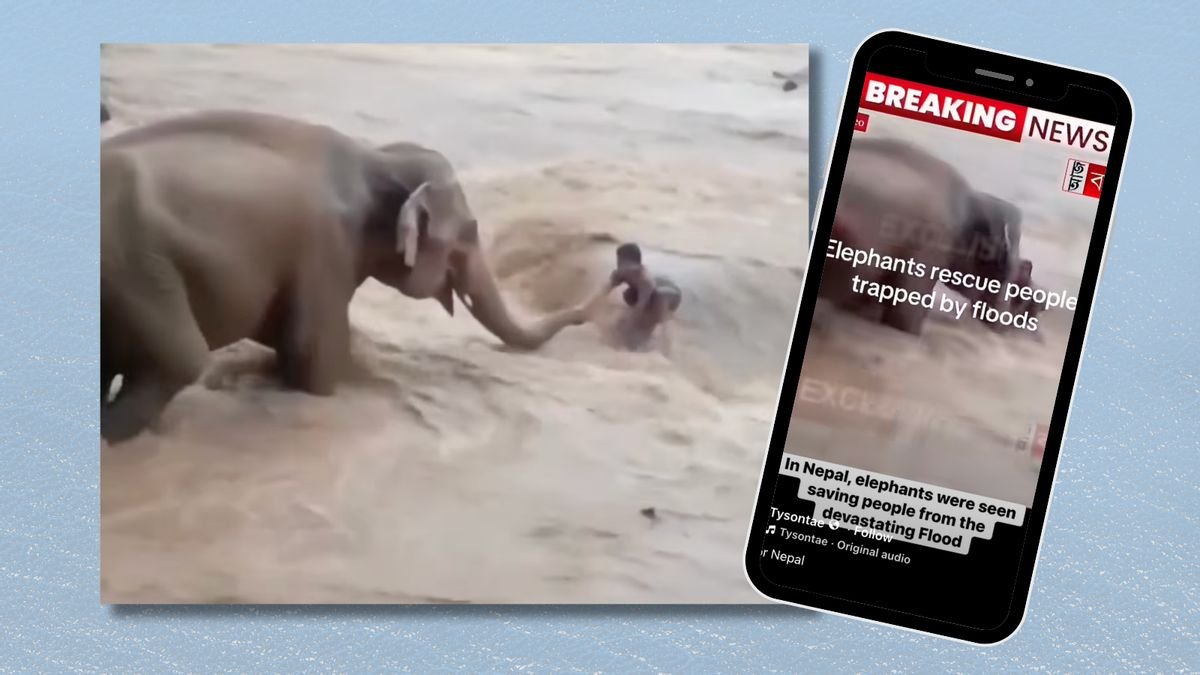
Footage depicting an elephant rescuing a man from floodwaters was taken during August 2026 flooding in Nepal.
Rating:
Context
Since we were unable to identify the video’s original source, we could not definitively confirm its authenticity. However, the clip predated the August 2026 flooding in Nepal and displayed visual inconsistencies that pointed to AI generation.
As Nepal suffered from catastrophic flooding that left more than 900 people dead and thousands of others missing in late August 2026, a video appearing to show an elephant wading into floodwaters to rescue a man and carrying him to shore circulated online.
“In Nepal Elephants were saving people,” one X post caption read (archived). “What an amazing world we live in.”
(X user @TonyGunk123.)
Severalfact-checking sites concluded that the video appeared to be authentic, but it predated the flooding in Nepal and was said to have been captured in India. While we were unable to identify the video’s original source for verification, we confirmed that the clip was shared before flooding in Nepal began on Aug. 26, 2026, and displayed visual inconsistencies that pointed to AI generation.
The earliest version of the video that we could find was posted to YouTube on Aug. 5, 2026 (archived).
The video contained multiple anomalies commonly found in AI-generated media. Our analysis of screenshots revealed a lack of detail, harsh or unnatural shadows, inconsistent skin color and texture, degraded quaity, object bleeding and misshapen extremities.
(Snopes Illustration.)
Although the Aug. 5 video featured a song as the audio, in otheriterations of the post, people spoke in the background and yelled as the man appeared to climb onto the elephant.
The text over one such video was in Hindi (archived), reading “Watch Nature’s Display/View” and “How the elephant saved a human” (translation via native speaker). However, the audio was in Thai — further evidence it was not captured during the August 2026 flooding in Nepal. One man can be heard saying “flood” while another woman says, “It’s an elephant” before asking, “What is it going to do?” (translation via native speaker).
Several commenters on Reddit and Facebook claimed the video depicted a real incident in which an elephant rescued her caretaker as a stunt at an elephant park in Thailand.
“The story originates from a genuine, widely celebrated 2016 video filmed at the Elephant Nature Park in Chiang Mai, Thailand,” one Facebook user wrote. “The clip captures a real moment where a young elephant named Kham Lha rushed into a fast-flowing river to ‘rescue’ her favorite human caretaker, Darrick, whom she believed was drowning.”
Although that story was authentic and KhamLa is a real elephant at Elephant Nature Park in Thailand, the widely shared video of the 2016 incident is not the same video that spread in August 2026.
Another article claimed the video was authentic and depicted a real 2017 incident in which elephants helped rescue hundreds of people from a flooded Nepali safari park. We found no proof the video was connected the the 2017 flooding. The image attached to the article was also AI-generated, as evidenced by the man’s disfigured fingers and the merging of his arm and shirt sleeve (archived).
Unlike the 2016 video of KhamLa swimming to her caretaker or the 2017 news reports regarding elephants helping to rescue people, no reputable news outlets reported on the August 2026 video or confirmed it was authentic.
In sum, the video appearing to show an elephant rescuing a man from floodwaters is not from the August 2026 Nepal floods. The clip also displayed visual inconsistencies that pointed to AI generation, such as unnatural lighting, texture movement and shapes.
For further reading, we confirmed that CCTV footage authentically showed floodwaters destroying the Gyirong Port, a Nepal-China border crossing.