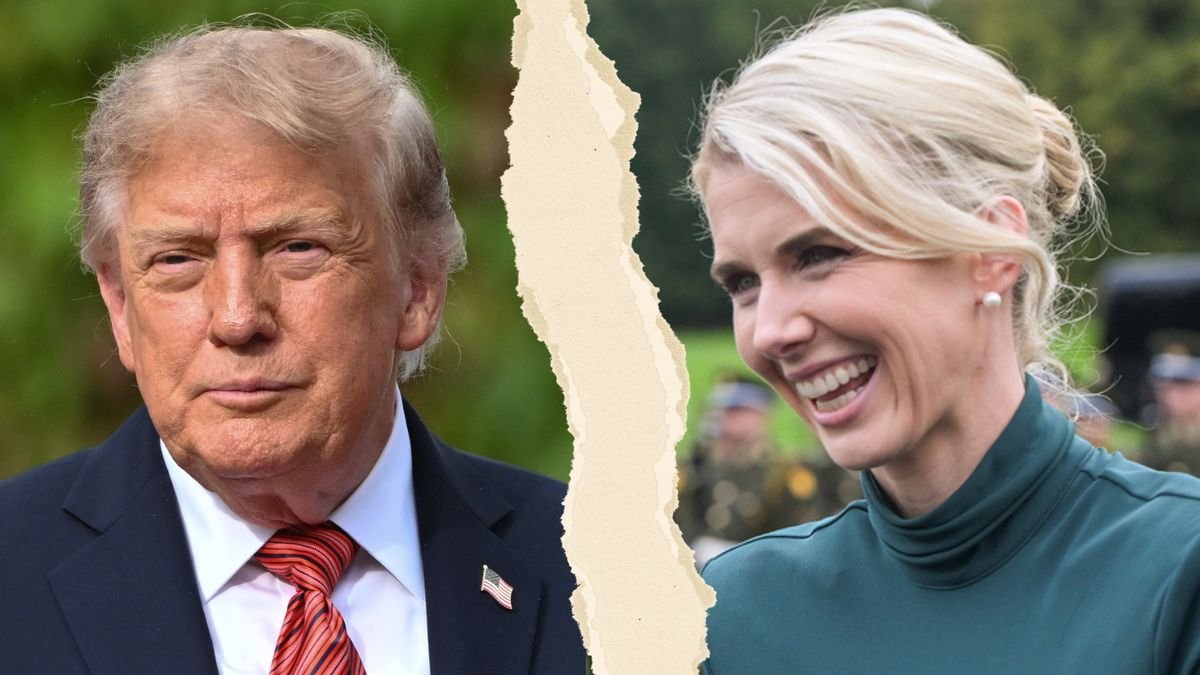
President Donald Trump has joined his wife Melania Trump in calling on the ABC TV network to take action against comedian Jimmy Kimmel for jokes targeting her as the debate over free speech, polarising rhetoric and political violence grows louder in the United States.
Melania Trump on Monday accused the host of Jimmy Kimmel Live! of deepening “the political sickness within America” with his comedy, two days after gunfire erupted outside the White House correspondents dinner, which Trump and her husband attended.
Recommended Stories
list of 3 itemsend of list
“People like Kimmel shouldn’t have the opportunity to enter our homes each evening to spread hate. A coward, Kimmel hides behind ABC because he knows the network will keep running cover to protect him,” the first lady wrote on X.
“Enough is enough. It is time for ABC to take a stand. How many times will ABC’s leadership enable Kimmel’s atrocious behavior at the expense of our community.”
For his part, President Trump called for sacking the comedian. “Jimmy Kimmel should be immediately fired by Disney and ABC,” Trump wrote in a social media post, mentioning ABC’s parent company.
It is highly unusual for the president and his wife to call on a TV network to deplatform a comedian. The First Amendment of the US Constitution bans the government from censoring speech.
The shooting late on Saturday happened when a gunman tried to enter the hall where the Trumps and top officials were in attendance. Afterwards, a video of Kimmel poking fun at Melania Trump sparked outrage from some members of the president’s Republican Party.
At an “alternative” White House correspondents dinner on his show on Thursday, Kimmel said: “Our first lady, Melania, is here. Look at Melania, so beautiful. Mrs Trump, you have a glow like an expectant widow.”
While the joke played on the perception that the first lady often appears unhappy in public, Trump’s supporters linked the line to the shooting.
President Trump described it as a “despicable call to violence”.
Kimmel also mocked the first lady’s documentary, Melania, which faltered at the box office and was not well-received by critics.
“I want to congratulate you, madam first lady, on your huge accomplishment – the world’s first motionless picture,” Kimmel said.
Last year, ABC suspended Kimmel after the Trump administration threatened to take action against the network over commentary by the comedian suggesting that the killer of right-wing activist Charlie Kirk may have been a Republican.
“We can do this the easy way or the hard way,” Brendan Carr, head of the Federal Communications Commission (FCC), said at that time.
“These companies can find ways to change conduct to take action on Kimmel or, you know, there’s going to be additional work for the FCC ahead,” he said.
After a backlash from free speech advocates, ABC reinstated Kimmel less than a week later.
The White House hit out at Kimmel on Monday, echoing the Trumps’ criticism.
“Just two days prior to the shooting, ABC’s late night host Jimmy Kimmel disgustingly called first lady Melania Trump, an expectant widow who, in their right minds, says a wife would be glowing over the potential murder of her beloved husband,” White House spokeswoman Karoline Leavitt told reporters.
Leavitt blamed what she called “deranged lies and smears against the president” for political violence targeting Trump.
For years, Republicans have decried any regulations on speech, particularly around the COVID-19 pandemic, and condemned “cancel culture”, efforts to deplatform or sack people over their political views.
But since returning to the White House in January last year, Trump has led an effort to punish criticism of Israel with a campaign of deportation against noncitizens – including legal permanent residents – who have been involved in Palestinian rights advocacy.
The shooting on Saturday was the third apparent assassination attempt against President Trump since 2024. It sparked calls to soften political language to address the motives behind political violence.
But Trump himself has a long history of harsh rhetoric. Last week, the president shared a post calling for the assassination of Iranian officials who are rejecting a deal with Washington.
US authorities said on Sunday that the gunman accused of trying to storm the dinner was targeting Trump and members of his administration.
Recommended Stories
list of 3 itemsend of list
The suspect — who was armed with a shotgun, a handgun, and multiple knives — rushed a US Secret Service checkpoint at the Washington Hilton hotel and managed to shoot a law enforcement officer, although the suspect himself was not struck by gunfire.
The incident is seen as a major breach of security by football fans around the globe, millions of whom will follow their teams at the World Cup tournament, which the US will cohost June 11-19 with Canada and Mexico.
Here’s what fans and experts are saying about the incident and how it could affect their safety at the World Cup:
Will the Trump shooting impact World Cup security?
With the US hosting the majority – 78 of 104 – fixtures, it is expected to see an influx of five to 10 million football fans from around the world, many of whom have expressed concerns for their teams’, as well as their own, safety following the targeting of Trump.
“Their [US] own security service allowed a single person with a shotgun into the most secure building in the world, and missed every shot at him. How are the players going to be safe?” a fan wrote in a social media post.
Others questioned how fans and other members of the public will be safe during the tournament if the country’s president has come under attack.
This is not the first time Trump has been involved in an attempted assassination; he was injured in a shooting at a campaign rally in Pennsylvania in July 2024, and in September 2025, a suspect was convicted of plotting to kill Trump while he was playing golf in Florida a year earlier.
However, security analyst Massimiliano Montanari believes the shooting in the US capital will have “no impact” on security preparations for the World Cup.
“It’s undeniable that this shooting creates additional concerns, but with or without this shooting, the US Secret Service is keeping the highest level of attention on the president,” Montanari told Al Jazeera.
“The world is in a moment of immense pressure; several international turmoils are happening at this time, and the shooting will not change the perception of fans coming to the US,” he added.
“The US has very strong security and counterterrorism experience; I’m sure all necessary measures are in place.”
FIFA did not respond to Al Jazeera’s request for comment on World Cup security in the aftermath of the shooting in Washington.
How will Trump’s presence affect security and fan experience at the World Cup?
Fans critical of the US and its lax gun laws, which lead to hundreds of mass shootings across the country each year, say the latest security breach highlights the country’s failure to control gun violence.
Comments on social media ranged from fans questioning the US as a host to calling for the matches in the country to be cancelled altogether due to security risks.
Mass shootings are a common occurrence in the US. In 2026, the country has seen more than 126 incidents which have resulted in more than 3,100 deaths and 5,300 injuries so far, according to Gun Violence Archive, a non-profit research group.
Some critics also wondered if Trump’s likely presence at World Cup games will endanger fans and negatively impact their experience at the tournament.
“I presume Donald Trump will attend the World Cup at some point as the President of the host nation,” Kate Wilton, a social media user, noted in a post on X. “If he’s an assassination risk, surely him attending is a security risk to all those attending?”
US President Trump shares a close relationship with FIFA President Gianni Infantino and was present at the World Cup draw on December 5, 2025.
Later that month, Trump’s attendance at the US Open men’s tennis final delayed the start of the match, as hordes of tennis fans struggled to get through security checkpoints.
[Al Jazeera]
What does ICE presence at World Cup mean for fans?
The White House shooting also invoked a broader conversation regarding national security in the US, which has seen immigration-related crackdowns across various states.
The Trump administration’s push for mass deportation, as well as its efforts to tighten legal immigration pathways, have spurred concerns about whether the World Cup’s international audience might be targeted by US immigration authorities.
In February, US Immigration and Customs Enforcement (ICE) acting Director Todd Lyons confirmed to a committee in the House of Representatives that his agency would be on the ground for World Cup events. When questioned about visitor concerns, he declined to commit to pausing ICE operations at the matches.
“Fans should be treated as guests and clients of the event, not as a potential threat or as criminals,” Montanari, who heads the International Centre for Sport Security (ICSS), said of the border patrol agents’ presence.
He emphasised that any security officials on the ground must be deployed as discreetly as possible.
“Major global sporting events like the World Cup must remain sporting events and not security events,” he explained, adding that the elements of safety, security and service must work cohesively.
Montanari emphasised that at the previous World Cup in Qatar, where he is currently based, fans were not discriminated against for their nationalities or backgrounds, something that upcoming iterations of the event must emulate.
“I think at any World Cup, the key success factor will be the level of international or regional cooperation; no country can deliver a safe major sporting event without that.
“Securing an event is not just about securing venues, but protecting the overall community, and this involves strong partnership with the government, the business community, and civil society — a holistic effort everyone has to put together.
Last week, the American Civil Liberties Union (ACLU) and Amnesty International, along with more than 120 civil society groups, issued a “travel advisory” for foreigners attending the 2026 FIFA World Cup in the US due to the “deteriorating human rights situation in the US and the absence of meaningful action and concrete guarantees from FIFA, host cities, or the US government”.
The US Senate has taken the first steps towards reopening the Department of Homeland Security (DHS) – which has been partially shut down since mid-February after Democrats demanded immigration-enforcement policy changes following fatal shootings of two protesters by federal agents. The Senate approved a budget framework that would fund immigration enforcement agencies, despite opposition from the Democrats.
Islamabad, Pakistan – Iranian Foreign Minister Abbas Araghchi has discussed with regional interlocutors a proposal aimed at reopening the Strait of Hormuz but deferring talks with the US on Tehran’s nuclear programme for later, during a 72-hour diplomatic sprint across three countries seemingly aimed at securing a broader buy-in for the plan.
Araghchi on Monday met with Russian President Vladimir Putin in St Petersburg, after visiting Islamabad twice in two days – the two trips sandwiching a meeting in Muscat, Oman. Sources close to these diplomatic efforts told Al Jazeera that senior intelligence officials from several countries were present at the Muscat talks.
Recommended Stories
list of 4 itemsend of list
Discussions in Muscat focused on the Strait of Hormuz, regional security guarantees, and the framework for a potential settlement, with nuclear-related issues set aside for a later stage.
Iran officially submitted its latest proposal to end the war with the US to Pakistan, which is transmitting messages between Tehran and Washington after direct talks on April 11 in Islamabad failed to deliver a breakthrough.
The White House has not confirmed the contents of the Iranian proposal, also reported by the Associated Press. Spokeswoman Olivia Wales said the US “will not negotiate through the press” and would “only make a deal that puts the American people first, never allowing Iran to have a nuclear weapon”.
But it is unclear whether US President Donald Trump will accept the Iranian proposal to push back nuclear negotiations. Speaking to Fox News on Sunday, Trump said Iran already knew what was required.
“They cannot have a nuclear weapon. Otherwise, there’s no reason to meet,” he said, adding that Tehran was welcome to reach out. “You know there is a telephone. We have nice, secure lines.”
The latest diplomatic efforts are unfolding against a ticking clock.
Under the 1973 War Powers Resolution, Trump faces a May 1 deadline to obtain congressional authorisation to continue military operations against Iran, now in their ninth week. A fourth bipartisan Senate bid to invoke the resolution was defeated 52-47 on April 15. Republican lawmakers have largely backed Trump so far, but several have said that support will not extend beyond the 60-day window without formal congressional approval.
Pakistan at the centre
During the first of his two visits to Islamabad, Araghchi on Monday met Pakistan’s Prime Minister Shehbaz Sharif, Deputy Prime Minister and Foreign Minister Ishaq Dar, and Army Chief Field Marshal Asim Munir.
He then travelled to Muscat, and returned to Pakistan on Sunday, meeting Munir again before departing for Moscow.
Araghchi said in a message on social media after his departure that Pakistan had “played an important role in mediating negotiations between Iran and the United States recently”, adding that “incorrect approaches and excessive demands of the United States” had prevented the previous round of talks from achieving its objectives despite “some progress”.
Senior Pakistani officials familiar with the discussions said Islamabad would continue its efforts as an honest facilitator.
Iranian state media, however, struck a firmer tone.
The Fars News Agency, close to Iran’s Islamic Revolutionary Guard Corps (IRGC), said Araghchi had relayed messages through Pakistan outlining Tehran’s red lines on nuclear issues and the Strait of Hormuz. These, it said, were “an initiative by Iran to clarify the regional situation”.
Aizaz Chaudhry, a former Pakistani foreign minister, said the conduct of the talks had been notable in itself.
“I have seen a commendable display of confidentiality. This is a disciplined and professional method to conduct these talks,” he told Al Jazeera.
A widening circle
Beyond visits to Pakistan, Oman and Russia, Araghchi held telephone calls with the foreign ministers of Qatar, Saudi Arabia, Egypt and France over the past three days.
Iranian Foreign Minister Abbas Araghchi meets with Omani Foreign Minister Badr Albusaidi in Muscat, Oman on April 12, 2025 [Handout/Iranian Ministry of Foreign Affairs via Reuters]
Qatar’s Prime Minister Sheikh Mohammed bin Abdulrahman bin Jassim Al Thani spoke directly with Araghchi, warning that sea lanes must not become “a bargaining chip or pressure tactic”.
Saudi Foreign Minister Prince Faisal bin Farhan Al Saud was briefed on “developments related to the ceasefire”. Egypt’s Foreign Minister Badr Abdelatty spoke with both his Qatari and Iranian counterparts. France’s Jean-Noel Barrot insisted that Europe had played a “constructive role” in the crisis.
After the meeting in Muscat, Oman’s Foreign Minister Badr Albusaidi called for “practical solutions to ensure lasting freedom of navigation”.
Dania Thafer, executive director of the Gulf International Forum, said the flurry of calls pointed to cautious engagement rather than strategic realignment.
“Although Iranian leadership did not physically visit Qatar or Saudi Arabia, there were phone calls, and that indicates a willingness to maintain contact without a full diplomatic embrace,” she told Al Jazeera.
Prior to the fragile ceasefire currently in place, Iran had fired a daily barrage of missiles and drones at Saudi Arabia, Qatar and other Gulf countries, angering them. Still, Qatar, Oman and Saudi Arabia have indicated a desire to pursue diplomacy over retaliation – if Iran commits to not attacking them again.
At the same time, the closure of the Strait of Hormuz has effectively choked a bulk of their energy exports.
“Among regional players, the most emphasised topic by far is the Strait of Hormuz and maritime security,” said Thafer.
Reza Afzal, an Iranian journalist and political analyst, said the Gulf states’ posture had shifted since 2015.
“Countries that had opposed the nuclear deal [JCPOA] at the time now understand that a guaranteed agreement with Iran served their interests, particularly after Iranian military actions during the war highlighted the costs of sustained hostility,” he told Al Jazeera.
Chaudhry, the former Pakistani diplomat, said the current conversations extended beyond any single issue.
“This is not just necessarily about nuclear issues, but mainly about how this war will eventually end and what happens after that, what security architecture we can expect. These are the conversations everybody is having,” he told Al Jazeera.
Russia’s quiet presence
Iran’s ambassador to Russia, Kazem Jalali, confirmed Araghchi’s Moscow visit would cover “the latest status of negotiations, the ceasefire and surrounding developments”.
Russian President Vladimir Putin, left, greets Ambassador of Iran to Russia Kazem Jalali, right, and Iranian Foreign Minister Abbas Araghchi, centre, prior to their talks at the Kremlin in Moscow, Russia, June 23, 2025 [Alexander Kazakov/Sputnik/Kremlin Pool Photo via AP Photo]
Iranian President Masoud Pezeshkian has spoken with Putin three times since the war began. Jalali described the trip in ideological terms, positioning Iran and Russia as standing in a “united front” against what he called “the world’s totalitarian forces”.
Taimur Khan, a research associate at the Institute of Strategic Studies Islamabad, said Russia brought three key assets, from Iran’s perspective: a long-standing strategic relationship with Tehran, a veto on the United Nations Security Council, and a technical role in the original nuclear deal.
“Moscow cannot guarantee US sanctions relief, nor can it substitute for direct US-Iran understandings. Its value is more as a diplomatic stabiliser, technical facilitator and geopolitical counterweight,” Khan told Al Jazeera.
Tehran-based analyst Javad Heiran-Nia said the Moscow visit also appeared to address more specific concerns alongside the broader diplomacy.
“The trip was likely linked to questions around Iran’s enriched uranium stockpiles and military cooperation between Tehran and Moscow,” the analyst said. Russia has offered to take over Iran’s enriched uranium.
The JCPOA lesson
Behind Araghchi’s outreach lies a structural lesson that analysts say Tehran has drawn from the collapse of the 2015 nuclear deal.
When Trump withdrew from the Joint Comprehensive Plan of Action (JCPOA) during his first term in 2018, Iran was left without regional backing and without a guarantor capable of holding Washington to its commitments.
Khan said Tehran had drawn lessons from that experience.
“European states, who were part of the JCPOA negotiations, also cannot be reliably depended upon in times of crisis,” he said. “FM Araghchi’s outreach appears to be part of a hedging strategy to build diplomatic insulation, reassure neighbours, and create a wider constituency against escalation.”
Jauhar Saleem, a former ambassador and president of the Institute of Regional Studies in Islamabad, said Iran’s calculation was also tactical.
“Ideally, Iran would not want a deal vulnerable to the US election cycle,” he told Al Jazeera.
Tehran, he said, appeared to be playing a longer game. “This strategy also fits well with Iran’s waiting game tactic in the face of what they perceive as US desperation for a quick exit.”
Heiran-Nia offered a contrasting historical perspective. Unlike during the original negotiations, he said, Gulf Arab states had supported diplomacy even before the 12-day war in 2025.
“Even at the time of the JCPOA’s conclusion, the Gulf Arabs, especially Saudi Arabia, had shown serious opposition,” he told Al Jazeera.
Mehran Kamrava, professor of government at Georgetown University in Qatar, said the current outreach should be seen as part of a longer trajectory of Iranian relationship-building with Gulf states in recent years.
The gaps
To be sure, Iran’s outreach only matters if the US agrees to a deal, analysts point out.
Trump cancelled a planned Islamabad visit by envoys Steve Witkoff and Jared Kushner on Saturday, saying Iran had “offered a lot, but not enough”.
He also said China could “help a lot more” on Iran. Trump is scheduled to meet President Xi Jinping in Beijing on May 14-15.
Thafer said a broader accommodation remained distant.
“What Iran is asking for goes well beyond a deal on the strait. It is asking for full regional realignment, and that is something the Gulf states are unwilling to offer, particularly after these attacks,” she told Al Jazeera.
Afzal, the journalist, said the domestic Iranian dimension on Hormuz was often underestimated. Public opinion inside Iran, he said, opposed any reopening of the strait without tangible concessions. “Tehran would continue to use the strait as leverage until Washington agreed to compromise,” he told Al Jazeera.
Several deadlines are now converging: the May 1 War Powers threshold, Trump’s China visit, and the approaching Hajj season.
With millions of pilgrims expected in Saudi Arabia in late May, Riyadh’s diplomatic and logistical bandwidth will be constrained, making any escalation during that period particularly costly for a Gulf state that is both a key interlocutor and the custodian of Islam’s holiest sites.
Senior Pakistani officials said that Islamabad remained ready to host another round of formal talks, but that substantive negotiations were likely to continue out of public view, with visible engagement reserved for when a deal is within reach.
“They [the Gulf countries] are in a tight corner and may have to walk a tightrope, both strategically and diplomatically,” Saleem told Al Jazeera.
The prime minister says the federal government will put up money alongside private investors to fund major projects.
Published On 27 Apr 202627 Apr 2026
Canadian Prime Minister Mark Carney says his government is developing a government-owned investment fund.
Carney said on Monday that the fund, a first for the country, will invest in major Canadian industrial projects in areas such as energy, infrastructure, mining, agriculture and technology. It will begin at 25 billion Canadian dollars (US$18bn).
Recommended Stories
list of 4 itemsend of list
The prime minister said the federal government will put up funds alongside private investors. The money will help finance major projects that Carney’s government is focused on building as Canada seeks to diversify away from the United States.
US President Donald Trump has threatened Canada’s economy and sovereignty with tariffs and claims that Canada could be “the 51st state” in the US.
Carney is a former central banker in England and Canada as well as chairman of the board of directors for Bloomberg.
“We take a lesson from other jurisdictions that had the foresight many decades ago to start sovereign wealth funds,” Carney said. “In some cases, they began with a domestic focus then outgrew the scale of the domestic focus.”
Sovereign wealth funds invest in assets, such as stocks, bonds and real estate. They are typically funded by a country’s budgetary surpluses, which Canada currently does not have. The announcement came a day before Carney’s government announces its spring economic update.
There are more than 90 sovereign wealth funds around the world. They manage more than $8 trillion in assets, according to the International Forum of Sovereign Wealth Funds, a London-based organisation made up of roughly 50 of these entities.
Trump ordered the creation of a US sovereign wealth fund last year. In the US, more than 20 sovereign wealth funds exist at the state level, according to an analysis from the Center for Global Development, a Washington, DC-based nonpartisan think tank.
Gunshots at a dinner for White House correspondents spark chaos, scrutiny, and fresh questions over Trump’s security and response.
Published On 27 Apr 202627 Apr 2026
Share
Gunshots shattered the White House Correspondents’ Association dinner, throwing Washington’s biggest night into chaos. We unpack how it happened, who the suspect is, how security responded, and what US President Donald Trump said afterward. We also examine the fallout and what it reveals about a White House under pressure. So what happens next?
In this episode:
Recommended Stories
list of 4 itemsend of list
Chris Sheridan (@ChrisSheridan34), senior White House producer, Al Jazeera English
Episode credits:
This episode was produced by David Enders, Sarí el-Khalili, and our guest host, Kevin Hirten. It was edited by Sarí el-Khalili. Alex Roldan is our sound designer. Sarí el-Khalili mixed this episode.
The Take production team is Marcos Bartolomé, Sonia Bhagat, Spencer Cline, Sarí el-Khalili, Tamara Khandaker, Chloe K. Li, Alexandra Locke, Catherine Nouhan, Alex Roldan, and Noor Wazwaz. Our host is Malika Bilal.
Our editorial intern is Tuleen Barakat. Our engagement producers are Adam Abou-Gad and Vienna Maglio. Andrew Greiner is lead of audience engagement. Our video editors are Hisham Abu Salah and Mohannad al-Melhem. Alexandra Locke is The Take’s executive producer.
The Treaty on the Non-Proliferation of Nuclear Weapons (NPT), the cornerstone of global efforts to prevent the spread of nuclear weapons, has opened its five-year review conference in New York under the shadow of a fragile ceasefire between the United States and Iran.
At the centre of the discussions will be Iran’s enriched uranium stockpile: how much remains, where it is located and what will ultimately happen to it.
Recommended Stories
list of 4 itemsend of list
On February 27, Omani Foreign Minister, Badr Albusaidi, who was mediating talks between Washington and Tehran, said Iran had agreed to “zero accumulation”, “zero stockpiling” and full verification of its existing stockpile by the International Atomic Energy Agency (IAEA).
Iran’s existing stockpile, the Omani minister said, would be downblended to natural uranium levels and converted into fuel.
The NPT, alongside the 2015 Iran nuclear deal, which Washington abandoned in 2018, was designed precisely to prevent such a scenario. One of the justifications that the US and Israel have used to wage war on Iran – that Tehran must not be allowed to continue with a nuclear programme – has drawn accusations of hypocrisy, given Israel is the only country in the Middle East with nuclear weapons. Israel has never officially acknowledged it has nuclear weapons and is not a signatory to the NPT.
To many experts, the NPT’s very survival as a credible mechanism to prevent the spread of nuclear weapons is now at stake.
The grand bargain is ‘fundamentally broken’
The NPT rests on a basic exchange: States without nuclear weapons agree not to acquire them while those that possess them commit to eventual disarmament.
In return, all signatories retain the right to peaceful nuclear technology under international supervision.
Opened for signature in 1968 with Ireland as the first signatory, the NPT entered into force in 1970. It is the most widely adhered-to arms control agreement with 191 member states.
Five countries are formally recognised as nuclear-weapon states: the US, Russia, China, the United Kingdom and France, all of which are permanent members of the United Nations Security Council. Every other signatory is legally bound not to develop or acquire nuclear arms.
The treaty is built on three pillars: nonproliferation, disarmament and the peaceful use of nuclear energy. It is monitored by the IAEA.
The third pillar has largely held. The second has not.
“The NPT’s grand bargain has fundamentally broken down because all nuclear-weapon states are modernising their arsenals at an alarming rate, especially China,” Sahar Khan, a Washington, DC-based independent analyst and nonresident fellow at the Institute for Global Affairs, told Al Jazeera.
Hossein Mousavian, who worked on Iran’s nuclear diplomacy team in negotiations with the European Union and the IAEA, argued that the treaty’s credibility has also been damaged by what many states see as inconsistent enforcement of its principles.
“The record of the nuclear Non-Proliferation Treaty has come under serious strain,” he said. “Nuclear-weapon states have fallen short of their disarmament commitments while continuing to modernise their arsenals, and some have developed strategic partnerships with nuclear-armed states outside the treaty.”
He added that attacks on nuclear facilities under IAEA safeguards have not been met with “clear and consistent responses” from either the UN Security Council or the IAEA, raising broader concerns among nonnuclear states about fairness and equal treatment under the treaty.
“The result is a growing perception that the NPT is shifting from a rules-based regime toward a more politicised instrument shaped by power dynamics rather than uniform application of its principles,” he said.
The 2000 NPT review conference was the last major moment of consensus before the 2003-2011 Iraq War, which undermined faith in the international arms control system and saw relations between nuclear and nonnuclear states deteriorate sharply, Rebecca Johnson, the director of the Acronym Institute for Disarmament Diplomacy, told Al Jazeera.
“The possession of nuclear weapons creates a sense of impunity,” she said, arguing that nuclear-armed states increasingly use their arsenals not simply as deterrents but also as geopolitical shields that embolden conventional military action.
She also argued that frustration with the NPT process helped drive support for the Treaty on the Prohibition of Nuclear Weapons, adopted in 2017, which offers an alternative path towards disarmament outside the control of the nuclear powers.
Who has signed the NPT and who hasn’t?
Four UN member states have never signed the treaty: India, Pakistan, Israel and South Sudan.
India and Pakistan tested nuclear weapons in 1998. Israel maintains a policy of deliberate opacity, neither confirming nor denying it possesses nuclear arms, although it is widely believed to have at least 90 warheads.
North Korea joined the treaty in 1985, was later found to be noncompliant with its safeguards obligations and withdrew in 2003.
It has since conducted multiple nuclear tests.
Analysts said this means the treaty’s architecture has an inherent structural imbalance. States that tested nuclear weapons before January 1, 1967, are permanently recognised as nuclear powers while all others must forgo nuclear weapons indefinitely.
Iran chose to remain within the framework. It joined the NPT in 1974 and, despite repeated crises, has never withdrawn from it. That status underpins Tehran’s claim to the same rights as any other signatory. Those include the right to uranium enrichment to levels justified for a civilian nuclear programme.
Israel’s position complicates that argument.
“The one thing that no one is talking about is how Israel is not a member of the NPT, yet has nuclear weapons, and has been able to bomb a signatory of the NPT that does not have nuclear weapons,” Khan told Al Jazeera. “This war has set a dangerous precedent – that if you have nuclear weapons, you can attack a state you believe has the intention to develop them.”
Iran and the NPT
After Iran joined the NPT, its nuclear programme drew limited scrutiny for decades.
That changed in 2002 when a dissident group revealed undeclared uranium-enrichment facilities at the Natanz Nuclear Facility and a heavy-water reactor in Arak.
“What got Iran into trouble”, Khan said, “was two things: developing secret underground nuclear facilities – as an NPT signatory, Iran is obligated to declare them and allow IAEA inspections – and President [Mahmoud] Ahmadinejad’s decision to restart uranium enrichment at an accelerated pace.” Ahmadinejad was Iran’s president from 2005 to 2013.
The 2015 Iran nuclear deal – called the Joint Comprehensive Plan of Action (JCPOA) and agreed between Iran and the five permanent UN Security Council members plus Germany – imposed the most extensive restrictions ever placed on a nonnuclear-weapon state.
Iran cut its enriched uranium stockpile by 98 percent to 300kg (660lb), capped enrichment at 3.67 percent, reduced its centrifuges by two-thirds and accepted one of the most intrusive inspection regimes implemented by the IAEA. In return, nuclear-related sanctions against it were lifted.
“The point of the JCPOA was not to stop Iran from enriching uranium, because as a signatory [of the NPT] it is allowed to, but to place the programme under constant monitoring and inspections,” Khan said. “By allowing Iran to enrich and develop its own centrifuges, the JCPOA provided a route for building trust.”
Former IAEA official Tariq Rauf told Al Jazeera that the NPT does not prohibit uranium enrichment, provided it is declared to the IAEA, placed under safeguards and used for peaceful purposes.
The IAEA repeatedly verified Iran’s compliance, a point acknowledged by US intelligence assessments at the time.
In May 2018, however, the US withdrew from the JCPOA. President Donald Trump, who described the deal as “defective at its core” ordered the withdrawal, a move that Mousavian said led to the current crisis.
Iran continued to observe the deal’s limits for about a year after the US withdrawal before progressively exceeding enrichment caps as efforts to preserve sanctions relief failed, Rauf said.
By early 2025, Iran was enriching uranium to 60 percent purity, the highest level reached by a nonnuclear-weapon state. Weapons-grade uranium is typically enriched to 90 percent.
At the centre of the current impasse is Washington’s demand for zero enrichment.
“There is nothing in the treaty that provides the basis for zero enrichment,” Khan said, adding that such a demand only “serves as a block to diplomacy”.
Iran argues that demanding that it give up all enrichment represents a double standard and a violation of its rights under the NPT: When other NPT signatories are allowed to enrich uranium for energy purposes, why not Tehran?
What will come of the conference?
The conference is being held as two major wars rage, including the Russia-Ukraine conflict. Rauf was pessimistic about its effectiveness, stating that nuclear issues are so riddled with “hypocrisy and double standards” that one would need an “axe to cut through”.
The last three times an agreement was reached at review conferences in 1995, 2000 and 2010, the nuclear states “had forgotten about it by Monday”, he said, adding: “If they agree to something, they will find weasel words to diminish the importance and the scope.”
Tensions between the United States and Iran have reached another critical juncture. While a fragile ceasefire is holding, efforts to translate the nearly three-week truce into a permanent agreement appear to have stalled.
Hopes of talks in the Pakistani capital, Islamabad, over the weekend dissipated after US President Donald Trump cancelled a visit by his envoys as both Iran and the US remain steadfast in their respective demands, especially over Tehran’s nuclear programme and control of the Strait of Hormuz.
Recommended Stories
list of 3 itemsend of list
Iranian Foreign Minister Abbas Araghchi on Monday blamed the US for the failure of the talks. “US approaches caused the previous round of negotiations, despite progress, to fail to reach its goals because of the excessive demands,” he said during a visit to Russia.
Yet experts said the impasse reflects a slowdown in negotiations rather than a collapse, citing plenty of examples in history that illustrate how diplomacy is rarely linear but is often marked by deadlocks, setbacks and backdoor engagement.
So where do the talks stand now, and what could come next?
What is the current status of talks?
Trump on Saturday told reporters in Florida that he scrapped a visit by his top diplomatic envoy, Steve Witkoff, and son-in-law Jared Kushner to Pakistan because the talks involved too much travel and expense to consider an inadequate offer from the Iranians.
The following day, Trump said Iran could telephone if it wanted to negotiate an end to the war that began on February 28 with the US-Israeli bombardment of Iran.
“If they want to talk, they can come to us, or they can call us. You know, there is a telephone. We have nice, secure lines,” Trump told the US TV news channel Fox News.
“They know what has to be in the agreement. It’s very simple: They cannot have a nuclear weapon. Otherwise, there’s no reason to meet.”
Iran had already signalled its hesitation about participating in talks with the US. Officials in Tehran have said direct talks are pointless at the moment, citing US actions, such as its naval blockade of the Strait of Hormuz, as violations of the ceasefire and obstacles to meaningful dialogue.
Iranian President Masoud Pezeshkian, in a conversation with Pakistani Prime Minister Shehbaz Sharif by phone on Saturday, said his country would not enter “imposed negotiations” under threats or blockade.
Since early March, Iran essentially has shut down the Strait of Hormuz, through which a fifth of the world’s oil and natural gas supplies had passed before the war. Meanwhile, Washington imposed a naval blockade on Iranian ports and ships days after the ceasefire began on April 8.
This has disrupted global oil supplies and contributed to rising prices. Countries around the world have been forced to seek alternative supplies and implement austerity measures to keep their economies afloat.
Despite the breakdown in direct engagement, diplomacy continues via indirect channels. Iran has sent “written messages” to the US through Pakistani mediators outlining its red lines, including positions on nuclear issues and the Strait of Hormuz, Iran’s Fars News Agency said.
At the same time, Araghchi has been engaged in an intense round of regional diplomacy, visiting Pakistan, Oman and Russia over the past three days.
“It is a good opportunity for us to consult with our Russian friends about the developments that have occurred in relation to the war during this period and what is happening now,” Araghchi said in a video interview posted by Iran’s IRNA news agency from St Petersburg.
Has US-Iran diplomacy failed?
While the gulf between Tehran’s and Washington’s positions remains wide – Iran refuses to give up its nuclear programme, including uranium enrichment, which it insists is for peaceful purposes only – the ceasefire between the longtime foes is still largely holding, indicating that neither side is eager to return to a full-blown war.
Emma Shortis, director of the Australia Institute’s International and Security Affairs Program, said despite the deadlock, there was “room for progress”. Meaningful diplomatic endeavours, she said, “take years to build”.
“There has certainly been signalling that there might be room to move, particularly on the issue of uranium enrichment,” she told Al Jazeera. However, she warned that this was all subject to “volatile leaders” who are liable to “change their minds at the very last minute”.
Trump also indicated over the weekend that cancelling talks does not necessarily mean a return to active fighting.
On Sunday, he referenced a new Iranian proposal that he described as “a much better plan”, and there has been signalling that some flexibility may exist.
Shortis said Trump was particularly under “enormous pressure” domestically because the war is “hugely” unpopular among Americans. “As the Strait of Hormuz remains effectively closed and affects gas prices in the US, the pressure will continue to build,” she said.
Echoing Shortis, academic Rob Geist Pinfold said diplomacy has not failed but for the time being is coming up against “intractable divides” between the two sides.
“The irony here is that neither side wants a return to war. No one wants another round of conflict,” Geist Pinfold, a lecturer at King’s College London, added.
On Iran’s side, he said, the calculation is shaped by the damage it has already sustained. “Iran has had many of its assets degraded. Its military feels the need to recover. It wants some breathing space.”
The US, meanwhile, is wary of being dragged back into a costly confrontation in the Gulf – in part because of Iran’s ability to exact a price on the region and the global economy.
“Iran’s deterrent strategy worked. Iran managed to cause enough chaos to affect the global economy and global finances by hitting the Gulf states,” he said. “The US was disincentivised from carrying on the war.”
The academic predicted that the current situation may solidify into a semipermanent ceasefire, one that is fragile but increasingly normalised.
“Neither side feels like the other one has the upper hand, but they both feel like, ironically, they have the upper hand, so the result is this standoff of neither peace nor war.”
That situation he said could endure for a long time. “This is a dynamic that can go on more or less indefinitely until one side manages to coerce the other into making a compromise,” he added.
How have previous negotiations concluded?
The 2015 Iran nuclear deal, formally known as the Joint Comprehensive Plan of Action (JCPOA), took roughly two years to negotiate successfully, including secret backchannel talks facilitated by Oman. Its eventual success came only after prolonged periods of deadlock and incremental progress. Trump abandoned the deal unilaterally in 2018 during his first term.
“All major negotiations to end wars have their own peculiarities,” Chris Doyle, director of the London-based Council for Arab-British Understanding, told Al Jazeera, citing the example of the 1973 Paris Peace Accords between the US and Vietnam.
“Here you see sides that were inimical to each other, trying to get a deal where the hostilities didn’t really end. There were huge differences as well,” he said. Negotiations leading to the accords began in 1968.
Nevertheless, while the US in effect was out of the war, there were immediate violations of the accords. Ultimately, South Vietnam fell to communist forces in 1975. “Plenty of antagonistic parties in a conflict have made deals, but it’s another thing to ensure that it lasts,” Doyle warned.
Other conflicts, including very recent and ongoing ones, have shown the same stop-start nature of diplomacy.
Early negotiations between Russia and Ukraine in 2022 initially raised hopes for a settlement but ultimately collapsed. However, diplomatic engagement did not end entirely. There were smaller agreements, including the exchange of prisoners, repatriation of children and allowing Ukrainian grain exports across the Black Sea.
German chancellor warns the US risks becoming bogged down in another quagmire similar to Iraq and Afghanistan.
Published On 27 Apr 202627 Apr 2026
German Chancellor Friedrich Merz says the United States is being “humiliated” in its war with Iran, warning that Washington lacks a clear path out of the conflict as Tehran gains the upper hand.
Speaking to students in the German town of Marsberg on Monday, Merz said the situation has exposed a deeper strategic problem for the US as he drew comparisons with past military debacles.
Recommended Stories
list of 3 itemsend of list
“The problem with conflicts like this is always you don’t just have to get in – you have to get out again. We saw that very painfully in Afghanistan for 20 years. We saw it in Iraq,” he said.
Merz said Iranian officials were “obviously negotiating very skilfully” and appeared “clearly stronger than one thought”, adding that “an entire nation is being humiliated by the Iranian leadership”, particularly by the Islamic Revolutionary Guard Corps.
Merz urged a rapid end to the war, warning that the fallout was already hitting Germany’s economy.
“It is, at the moment, a pretty tangled situation,” he said. “And it is costing us a great deal of money. This conflict, this war against Iran, has a direct impact on our economic output.”
The German leader said Berlin remains ready to deploy minesweepers to help secure shipping routes through the Strait of Hormuz, a vital artery for global petroleum supplies, but stressed that such steps depend on a cessation of hostilities.
Merz made the comments as concerns are growing across Europe over the wider impact of the conflict, including energy disruptions and economic instability.
Earlier, German Foreign Minister Johann Wadephul warned that nuclear threats continue to shape the security environment, even as Berlin reaffirmed its commitment to nonproliferation.
“As long as nuclear threats against us and our partners continue, we will need a credible deterrent,” he said before meetings at the United Nations on the Treaty on the Non-Proliferation of Nuclear Weapons.
France and Germany have recently moved to deepen cooperation on nuclear deterrence, reflecting mounting anxiety in Europe over both the Iran war and broader regional instability.
If the 23rd edition of the FIFA World Cup has become prohibitively expensive – with tickets fetching prices at more than $2m for the final – blame dynamic pricing, along with greed, says longtime gaming and sports executive Peter Moore.
“Dynamic pricing doesn’t belong in the World Cup and football,” Moore told Al Jazeera in a recent interview from his home in Santa Barbara, California.
Recommended Stories
list of 4 itemsend of list
“It works with music, but for the World Cup, there are hundreds of thousands of people booking trips in advance. They’re asking themselves, ‘Do we want to visit and pay $2,000 for a third-tier game, Saudi Arabia versus whomever?’ And FIFA taking a 30 percent cut of dynamic pricing is outrageous”.
The 71-year-old former chief executive of Liverpool FC from 2017-20 is calling out FIFA President, Gianni Infantino, in interviews and on social media.
“Gianni Infantino misread the situation and thought he could get away with it,” Moore said.
“Now, tickets are in the hands of bots and speculators, who don’t intend to go to games. They are harvesting tickets and hoping they can sell them in the next six to eight weeks, and I don’t see that happening.”
He added: “I just hope enough people are there to add to the atmosphere of the game”.
Certainly, there’s a gloomy feeling hanging over this World Cup – at some US venues, anyway; from high prices for tickets and transportation, to the luck of the draw on getting a visa (hopefully you haven’t visited Cuba lately).
When you arrive, there’s the spectre of Immigration and Customs Enforcement (ICE) agents targeting fans. Finally, you get through the turnstiles and you could be greeted by lots of empty seats.
How FIFA is rolling things out also raises questions about who the World Cup is for.
The demographic could be more corporate, less diverse socio-economically, with fewer authentic fans attending than in previous tournaments.
Under travel bans imposed by Trump in an executive order, fans from four participating countries – Ivory Coast, Haiti, Iran and Senegal – cannot enter the country unless they already have valid visas.
“It’s the world’s game, but who is this World Cup for if the world can’t get in?” Moore said.
“FIFA is taking advantage of the unique commercial opportunities in the US, dynamic pricing and the secondary market being legal here, to make money – Infantino has said [he expects FIFA revenues from the World Cup to exceed] $11bn. Why not make it more reasonable and accessible and make, maybe, $8bn?
“FIFA is a nonprofit, built to serve players and fans of the world. That’s its remit, not to be like a commercial organisation and maximise the opportunity to make as much money as possible.”
FIFA expects to gross $3bn on ticketing and hospitality sales alone.
Moore, right, with legendary Liverpool striker Ian Rush in 2019 [Eric Gaillard/Reuters]
Infantino has defended high ticket prices, saying that the tournament held every four years is FIFA’s only source of income and that it reinvests the revenue to develop football in all 211 member nations.
MLS commissioner Don Garber recently called FIFA’s dynamic pricing policy “a good idea”, adding that Infantino compared the World Cup to “dozens and dozens” of NFL Super Bowls, which feature some dynamic ticketing. And, Garber added, US fans are accustomed to paying high prices for “premium” events.
But the Super Bowl’s appeal is based on the contest being held once a year, not dozens of times. One way to devalue the Super Bowl would be to schedule several of them a year.
As for supporters from the other 47 countries taking part? They thought they were going to a World Cup, not a Super Bowl. And they are probably not used to dynamic pricing or legal profiting from ticket resales.
In the US, though, above-value ticket resale is legal, and FIFA being involved in reselling “changes everything,” Moore noted. “It means: tickets are no longer just for fans. They’re tradable assets.” Which brings in speculators, who conduct business “like traders, not supporters”.
Maybe it was inevitable that the spirit of the World Cup would be hijacked by savage capitalism. But it doesn’t seem everyone is ready for that, just yet. The World Cup is not only a sporting competition, but a universal gathering. Or so we thought. Perhaps it is just another “premium event”, like so many Taylor Swift concerts – but with worse dance moves.
Welcome then to the first soulless World Cup?
“It’s dystopian, and it’s an existential threat to the game,” Moore said, referring to both the ticketing situation and broader problems of the World Cup.
“Ultimately, is this going to be the first of every World Cup where FIFA maximises profit, rather than allow as many as possible to come and support their country?”
Moore said he is reluctant to attend the World Cup, though he could zip down the Pacific Coast Highway to SoFi Stadium in Inglewood.
“For me, I look every day, on StubHub, SeatGeek, TicketMaster,” Moore said. “I’m used to it with live music. We can stand outside Allegiant [Stadium, in Las Vegas] and watch our phones for when ticket prices go down, when touts need to unload tickets for the Rolling Stones, Paul McCartney, Shakira. But the international fan can’t do that for the World Cup, fly to America and book hotels, and hope prices will go down”.
If you are planning on being there, Moore advises checking the resale market close to game times.
“I’d just watch, and as the weeks go on, if tickets aren’t moving, the secondary market will come down,” Moore said.
“But to a reasonable price? I don’t know. It’s the regular fans that create the excitement at the World Cup, from Brazil, Colombia, Africa. How are they going to afford to travel and come to games when it’s $1,000, $2,000, $3,000 [per ticket]. Who’s got that kind of money?”
For the fans who do get through the turnstiles, maybe the power of football will overcome everything and they’ll experience what we think of as the eternal World Cup vibe. But a part of them might also feel like they just got fleeced by FIFA.
Football’s global governing body promises to increase the funding for the tournament to help cover participation costs.
Published On 27 Apr 202627 Apr 2026
FIFA says it is in discussions with national football associations to increase prize money for all 48 teams participating in the World Cup.
In response to requests by European teams to increase prize money and to assist with costs associated with their participation this summer in the World Cup, the world governing body is set to fulfil those wishes, it said on Sunday.
The proposal must be approved at Tuesday’s FIFA Council meeting, being held before the 76th FIFA Congress in Vancouver, Canada.
FIFA announced in December a record World Cup prize fund of $727m, with the winning team taking home $50m and each team receiving at least $10.5m. Since that December announcement, FIFA and national associations have engaged in talks and aim to resolve the issue.
UEFA, European football’s governing body, contacted FIFA after hearing from several of its member associations regarding the costs of participating in the World Cup, including travel, operations and taxes, particularly in the United States. Canada and Mexico are the other host countries.
FIFA said the prize money on offer is set to increase, with the world governing body projected to surpass $11bn in revenue in the current four-year cycle of 2023 to 2026.
“FIFA can confirm it is in discussions with associations around the world to increase available revenues,” a FIFA spokesperson told the Reuters news agency.
“This includes a proposed increase of financial contributions to all qualified teams for the FIFA World Cup 2026 and of development funding available to all 211 member associations.
“The FIFA World Cup 2026 will be groundbreaking in terms of its financial contribution to the global football community, and FIFA is proud to be in its strongest ever financial position to benefit the global game through its FIFA Forward programme.”
The biggest slice of FIFA’s initial funding package for the North American showpiece – $655m – was to be performance-based payments to the 48 participating nations.
Additionally, each qualified nation would be entitled to $1.5m to cover preparation costs.
FIFA’s 2025 annual report said 93 percent of its total budgeted revenue had already been contracted by the end of 2025, thanks to the success of the inaugural 32-team Club World Cup held in the US last year.