Category: News

  • Claim NY Democrats fined unvaccinated Amish children $2K per day distorts facts

    Claim NY Democrats fined unvaccinated Amish children $2K per day distorts facts

    Claim:

    New York Democrats are fining unvaccinated Amish children $2,000 per day, as social media posts claimed in October 2026.

    Rating:

    Mixture

    What’s True

    In 2022, New York fined three Amish schools for not complying with a law mandating schools only accept students with updated vaccines, following the 2019 removal of a religious exemption from that law. The small schools were fined $2,000 for every student without updated vaccines every day, for a total of $118,000 before the schools sued the state.

    What’s False

    New York fined the schools, not the children.

    What’s Undetermined

    The New York Department of Health did not clarify to Snopes whether it had fined any other schools or whether it had continued to fine the three schools since 2022.

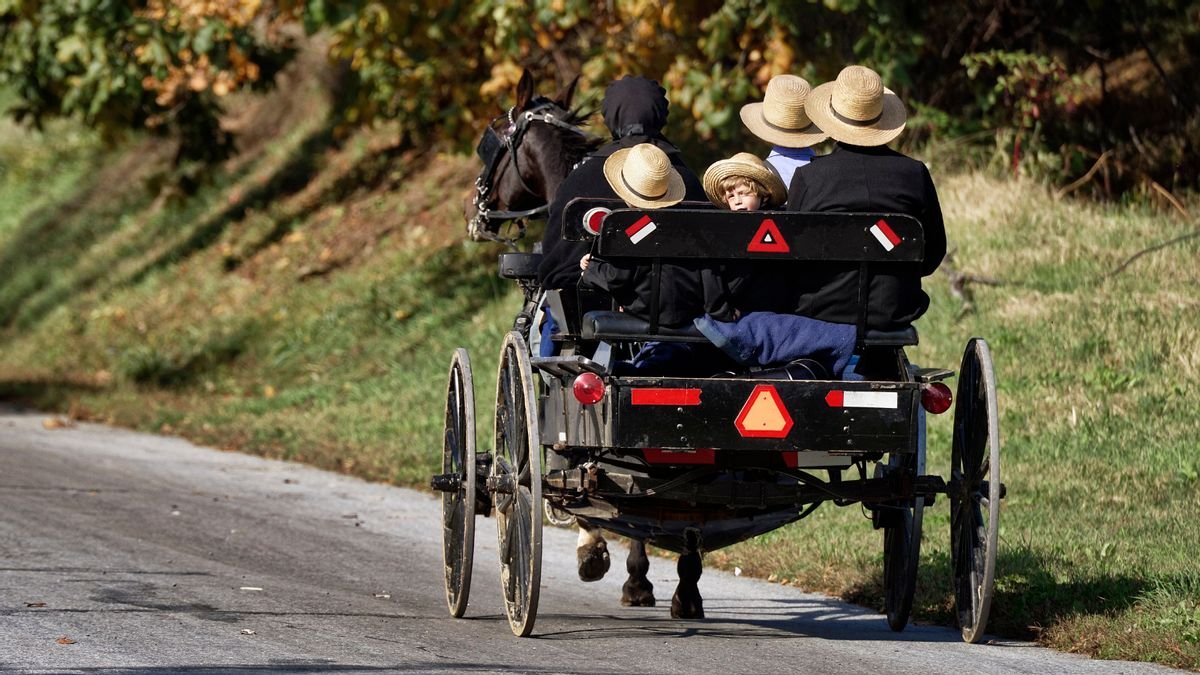
    In early October, some social media posts claimed the state of New York had “declared war on the Amish” with vaccine requirements enforced by fines. Many Amish communities have lower childhood vaccination rates than the rest of the U.S. population, although vaccination is not universally rejected in these communities.

    For example, one Facebook post (archived) claimed the state was fining each unvaccinated Amish child $2,000 per day. The post asserted that New York Democrats took away the religious exemption often used by Amish families to opt out of childhood vaccine requirements.

    Users shared similar posts claiming New York Democrats were fining unvaccinated Amish children $2,000 each day on Instagram (archived) and X (archived). Snopes readers emailed us asking whether the rumor was true.

    It’s true that New York fined at least three Amish schools $2,000 for each unvaccinated child it allowed to attend the school each day. New York did not fine the children themselves, and it’s unclear whether the state is still actively imposing fines on these schools or any other over their vaccination policies. Therefore, we’ve rated this claim a mixture of true and false information.

    These details are outlined in a lawsuit, Miller v. McDonald. 

    According to the case, in 2019 New York repealed the religious exemption to its school immunization law — which applies to all public, private and religious schools in the state — after a measles outbreak in 2018 and 2019 centered around communities with clusters of unvaccinated people (PDF Page 3).

    Democrats were the majority in both the state Senate and state Assembly in 2019. The governor at the time was Andrew Cuomo, a Democrat.

    The immunization law prohibits schools from allowing children who do not have their scheduled vaccinations to attend the school until those vaccination requirements are met. New York audited three Amish schools’ compliance with the law in 2021, and in 2022 it fined the schools for allowing children to attend who did not meet the vaccine requirements (PDF Page 7).

    A school is fined $2,000 for each violation of the law every day (PDF pages 7-8). Every attending student who does not meet vaccine requirements is considered a violation, which means the school is fined for each noncompliant student every day. Prior to imposing the fines, the state sent a letter to school administrators warning it would impose the fines.

    New York applied the fines under the assumption that two schools failed to comply for one day and acted as if there were only one noncompliant student attending for 10 days at the third school. That resulted in fines of $52,000 for 26 students at one school, $46,000 for 23 students at another school and $20,000 for one student at the third school, for a total of $118,000.

    Notably, this amount was the total of the fines fines placed on the schools at the time the lawsuit was filed on June 2, 2023, the total fine referenced in the latest court decision on June 30 and the total fine referenced in social media posts as of this writing. A legal organization representing the Amish schools said they racked up $118,000 in total fines when announcing it would appeal the latest ruling to the U.S. Supreme Court on Oct. 2.

    Snopes reached out to the New York State Department of Health to ask whether the schools were still racking up fines or whether there have been other schools fined since the beginning of the lawsuit. The department did not elaborate on the fines. A spokesperson told Snopes via email: 

    The state’s responsibility is to protect public health, keep New Yorkers and their families safe and enforce the law fairly and equitably. While we cannot comment on pending litigation, the Department is committed to eliminating serious illness and unnecessary deaths caused by vaccine preventable diseases. The Department continues to provide community outreach and education on the safety of immunizations. New York’s school immunization requirements are based in science and protect the health and well-being of all New Yorkers.

    The lawsuit challenging this law, which does so on religious freedom grounds, has traveled up and down the court system. In 2025, the 2nd U.S. Circuit Court of Appeals upheld a lower court’s decision to side with New York over the plaintiffs (PDF Page 5), but the U.S. Supreme Court vacated that decision and told the 2nd Circuit to reconsider the case in light of a different case the Supreme Court recently ruled on. 

    After considering this other case, the 2nd Circuit did not change its decision in Miller v. McDonald. That was the June 30 decision that representatives for the Amish schools are appealing to the Supreme Court once again.

    For further reading, Snopes previously fact-checked the claim that autism rates are nearly nonexistent among Amish children because Amish people allegedly rarely get vaccinated.

  • Does image show protester removed from crowd at Trump rally in Ohio? Don’t be fooled

    Does image show protester removed from crowd at Trump rally in Ohio? Don’t be fooled

    Claim:

    An image authentically shows a protester wearing a shirt that read “Release the Epstein Files” at a Trump rally in Youngstown, Ohio, on Oct. 12.

    Rating:

    Fake

    Context

    Though this particular image was fake, law enforcement officials did remove an apparent protester wearing a shirt that read “Release the Epstein Files” from the crowd at a Youngstown, Ohio, rally for Republican candidates running in the midterm elections on Oct. 12.

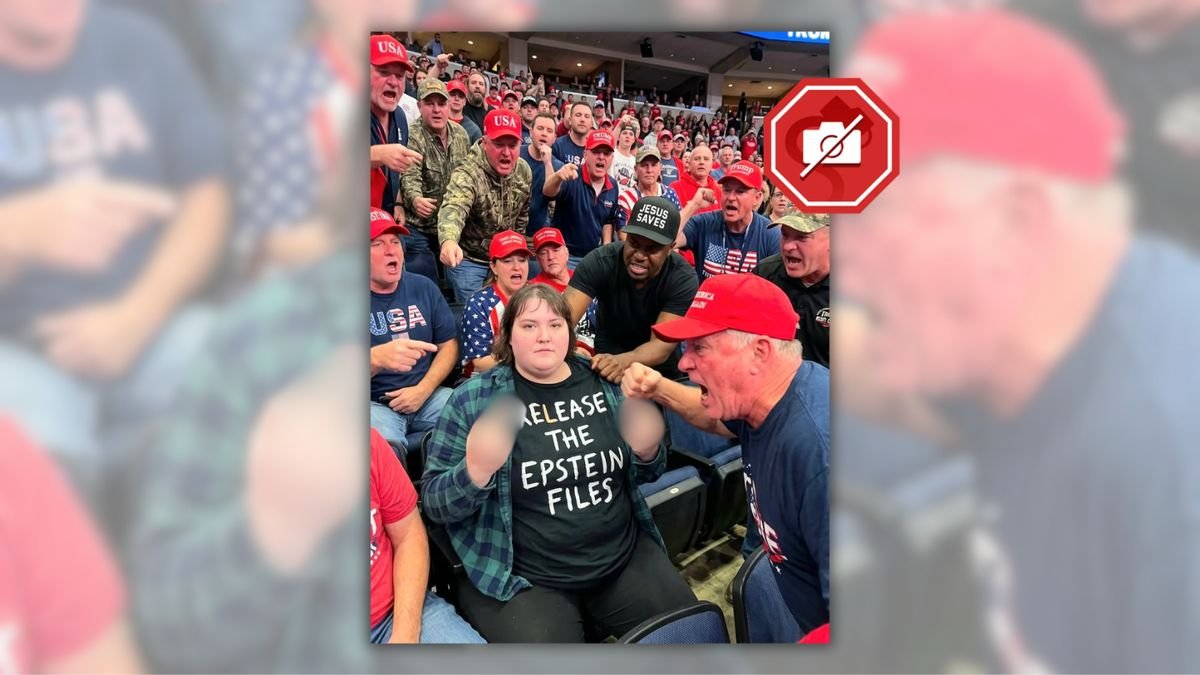
    In October 2026, an image (archived) circulated online that social media users claimed authentically showed a protester wearing a shirt that read “Release the Epstein Files” at a Trump rally in Youngstown, Ohio, on Oct. 12.

    News footage from the rally showed what appeared to be Republican supporters grappling with a person wearing a black shirt that read “Release the Epstein Files” until law enforcement officers stepped in to remove the apparent protester. Livestreamed footage from the rally showed Trump reacting to the incident, claiming that the person was a paid protester and commenting on their weight.

    The image that circulated online shows a crowd of angry people wearing red hats emblazoned with the words “Trump” and “USA” confronting a person wearing a black shirt that reads “Release the Epstein Files.” One Threads user who shared the image wrote:

    At Ohio Trump rally, I saw a brave woman surrounded by male violence. One bastard punched her, pulled her hair, and dragged her to the ground. When police officers arrived, I thought they would help her and arrest the attacker. I was wrong. She was led away while Trump cheered on the thugs. As a German, this is unbelievable to me. A brave woman among raptors. Trump’s followers are chilling and disgusting—just like the man himself. She is my hero today.

    (@two_and_a_half_dachshunds, accessed via Threads)

    The image also spread on X (archived, archived). Snopes readers contacted us to ask if the image was real.

    The image was fake. A SynthID detector, which looks for invisible watermarks in AI-generated media, concluded Google’s AI tools created the image. In a follow-up post, the Threads user above also confirmed the image was AI-generated and suggested they created it.

    “I intentionally chose a symbolic graphic over sharing the horrific, raw footage of a woman being dragged and beaten by men at that rally,” the user wrote. 

    A Google reverse image search identified the Threads post as the earliest version of the image. We contacted the Threads user for confirmation they created it and await a reply. 

    Though this particular image was fake, the incident it was based on did take place on Oct. 12 during a rally for Republican candidates in Youngstown, Ohio.

    Footage from the rally showed a scuffle in the audience, with at least four people grappling with and grabbing at one person as they appeared to attempt to pull the person to the ground. Law enforcement officials who appeared to be from the Mahoning County Sheriff’s Office arrived at the scene and separated the apparent protester, who was wearing a shirt that read “Release the Epstein Files,” from the crowd.

    As officers pulled the apparent protester from the crowd, Trump said, “He’s a paid protester, they’re all paid. They get paid by the lefties in order to destroy our country. They’re scum.”

    The President then appeared to comment on the protester’s weight, adding, “Oh, he’s got to go on a diet. He’s a fat guy. Wow.”

    Though Trump repeatedly identified the apparent protester as a man, news outlets including The Hill and Fox News reported that the person in question was a woman. Snopes has not independently verified the identity or gender of the person, nor what started the incident at the Youngstown rally. 

    Trump’s claim that the person in question was a paid protester remained unproven as of this writing.

    The apparent protester’s shirt that read “Release the Epstein Files” was likely intended as criticism of the Trump administration.

    Democratic lawmakers have criticized the Trump administration for failing to release all of the documents pertaining to the investigation into late convicted sex offender Jeffrey Epstein, while United Nations experts condemned “serious compliance failures and botched redactions that exposed sensitive victim information” as part of the documents the administration did release.

    Youngstown Mayor Derrick McDowell said on Facebook (archived) that Youngstown Police Department officers were not involved in the incident at the rally. Snopes contacted the U.S. Secret Service and the Mahoning County Sheriff’s Office to ask if either agency carried out arrests at the rally. 

    The Mahoning County Sheriff’s Office had not returned our request for information at the time of this writing. The U.S. Secret Service referred our request to the sheriff’s office.

    For further reading about the midterm elections, follow Snopes’ 2026 Elections coverage.

    Sources

    Beitsch, Rebecca, and Sudiksha Kochi. ‘Lawmakers Hammer DOJ over Epstein Files Release’. The Hill, 22 Dec. 2025, https://thehill.com/homenews/house/5660099-lawmakers-doj-epstein-files-release/.

    Davis, Sarah. ‘Trump Mocks Heckler Punched at Ohio Rally’. The Hill, 13 Oct. 2026, https://thehill.com/homenews/campaign/6144766-donald-trump-ohio-rally-heckler/.

    ‘Flawed “Epstein Files” Disclosures Undermine Accountability for Grave Crimes against Women and Girls: UN Experts’. United Nations Human Rights Office of the High Commissioner, 16 Feb. 2026, https://www.ohchr.org/en/press-releases/2026/02/flawed-epstein-files-disclosures-undermine-accountability-grave-crimes.

    Mion, Landon. ‘Protester Punched in Face by Trump Supporter, Mocked by President at Ohio Rally: “Gotta Go on a Diet”‘. Text.Article. Fox News, Fox News, 13 Oct. 2026, https://www.foxnews.com/politics/protester-punched-face-trump-supporter-mocked-president-ohio-rally-gotta-go-diet.

    ‘Protester Attacked by Multiple Attendees at Trump Rally in Ohio’. ABC7 New York, 13 Oct. 2026, https://abc7ny.com/post/protester-attacked-multiple-attendees-donald-trump-rally-ohio/19934104/.

    SynthID Detector. https://synthid.com/image-detection. Accessed 14 Oct. 2026.

    ‘WATCH LIVE: Trump Speaks at Midterm Rally in Youngstown, Ohio’. PBS Newshour, 12 Oct. 2026, https://www.youtube.com/live/yk-_XzYuyYY?t=6263s.

    WKBN27. ‘Trump Mocks Protester Removed from Youngstown Rally: “He’s a Fat Guy”‘. YouTube, 12 Oct. 2026, https://www.youtube.com/watch?v=7eHTgLsMczs.
     

  • As measles continues to spread, health officials are seeing vaccine interest rise

    As measles continues to spread across the U.S., local health officials say it may be spurring some to get themselves or their children vaccinated.

    More than 4,000 cases have been confirmed in the U.S. as well as six deaths — with the most recent fatality confirmed by Pennsylvania health officials on Monday. It’s the most cases and deaths reported in the country in more than three decades.

    Doctors and public health department leaders told ABC News that awareness of the virus’ dangers has led to higher interest in the measles, mumps, rubella (MMR) vaccine in some areas.

    “We have seen increased interest in the MMR vaccine since the start of the outbreak,” Lindsay Pringle, manager of community health and wellness at Penn Medicine Lancaster General Health, said. “Public awareness of measles and its potential complications have grown during this time, which may influence vaccination decisions.”

    Instructions for a Measles vaccination is seen outside of the Lubbock Public Health facility on April 09, 2025 in Lubbock, Texas.

    Brandon Bell/Getty Images

    Taking the vaccine to people’s homes

    Since an outbreak began in April, cases in Pennsylvania have surpassed 1,100 with more than 200 hospitalizations, according to the state health department.

    Dr. Patrick Gavigan, a pediatric infectious disease physician at Penn State Health Golisano Children’s Hospital in Dauphin County, which borders epicenter Lancaster County, said about 20 children have been admitted due to measles-related illness over the course of the year.

    Gavigan said nearly every hospitalized patient had family members who either were currently sick or had been with a measles-like illnesses.

    “We’ve had a number of different kinds of conversations with people about MMR vaccine,” Gavigan said. “With patients, by the time we’re seeing them with measles, for them the opportunity has passed and the ship has sailed” to get vaccinated.

    In the last month-and-a-half, Gavigan said he has seen a few cases where a child was sick in the hospital with measles and it convinced family members living outside of the home, or other community members, to get vaccinated.

    “Individuals are seeing cases of measles and, in these particular instances, seeing more severe cases of measles and recognizing how much a problem this can be,” he said.

    Local health officials have taken time to visit more rural communities and those lacking access to vaccination. As some community members have received the vaccine, it has spurred them to recommend the shot to their family, friends and neighbors.

    Jeanne Franklin, public health director of the Chester County Health Department in Pennsylvania, told ABC News the most powerful form of communication is from individuals who have been vaccinated and spread the word.

    “We have received calls from individuals who have a group of people interested in being vaccinated and request us to come to their home or place of business to provide the MMR vaccine,” she said. “We average about 10 people per call but have vaccinated as many as 67 in one location. When at a home, we have vaccinated in kitchens, porches, living rooms, et cetera.”

    A 500% increase in vaccination

    Since an outbreak began in June 2025, Utah has recorded 724 measles cases, according to the state’s Department of Health & Human Services.

    Unlike Pennsylvania’s outbreak, or those that occurred in Texas and South Carolina — all of which were largely contained to one region — the virus has permeated unvaccinated and under-vaccinated communities in almost every county in Utah.

    Kirk Benge, health officer and executive director of the TriCounty Health Department, told ABC News that local officials have been concerned about declining vaccination rates for years. The TriCounty region covers Daggett, Duchesne and Uintah counties in northeastern Utah.

    Signs point the way to measles testing in the parking lot of the Seminole Hospital District across from Wigwam Stadium on February 27, 2025 in Seminole, Texas.

    Jan Sonnenmair/Getty Images

    In December 2024, the board issued a letter to the community stating that exemptions for childhood vaccinations among TriCounty kindergartners increased from 4.8% to 11.9% over a four-year period.

    Data for the 2025-26 school year shows 16.1% of kindergartners in the TriCounty area were missing documentation for the MMR shot.

    TriCounty has recorded 80 cases so far this year. Many of these cases occurred after people became infected at a youth wrestling tournament tin February and subsequently spread the virus in school and within their households.

    “We did issue a local request to the school district to require students that were not vaccinated to stay home for several weeks and I think we saw the outbreak in our area subside relatively quickly compared to a lot of areas in the state,” Benge said.

    Benge said he saw an interest in the community among parents wanting to catch their child up on the MMR vaccine.

    March 2026 saw a 500% increase in parents whose children received the MMR vaccine compared to March 2025, Benge said.

    “What we saw was a huge influx of parents wanting to get their children caught up on vaccines so they could stay in school,” he said.

    Benge said a conscious effort was made to not stigmatize parents who had previously opted against vaccination.

    He recalled one mother who reached out to the health department to ask about vaccination for her infant. She had older children who had never been vaccinated and indicated she had not worried about them contracting measles in the past.

    When the mother learned how severe measles can be among infants, she reached out to the TriCounty Health Department and spoke with a nurse about how to best protect her infant.

    “She indicated that initially she was nervous to call because she thought she might feel judged, but I do recall that she was very thankful at how considerate and kind our nurses were and that she did not feel judged for choosing not to vaccinate her kids in the past,” Benge said.

  • Ontarians prescribed safer supply drugs will now have to take them in front of health-care professionals

    Ontarians prescribed safer supply drugs will now have to take them in front of health-care professionals

    Text to Speech Icon

    Listen to this article

    Estimated 4 minutes

    The audio version of this article is generated by AI-based technology. Mispronunciations can occur. We are working with our partners to continually review and improve the results.

    Ontario’s medical regulator approved significant changes Tuesday to the way doctors prescribe safer supply drugs, in an effort to reduce the amount of opioids making their way to the streets.

    The College of Physicians and Surgeons of Ontario’s board of directors will soon implement several changes to the practice of prescribing safer supply, which are medications given to people at high risk of overdose as an alternative to illicit opioids.

    The board met Tuesday and passed a motion to enact the changes following a discussion on the proposals.

    The college will make it mandatory for physicians to prescribe safer supply medications only in conjunction with opioid agonist therapy. The therapy uses medications such as Suboxone and methadone to treat opioid addiction.

    “We are just here to protect the public and we’re here to ensure that the public is safe,” said Dr. Patrick Safieh, the board’s chair, near the end of the meeting.

    “So we’re trying to prevent diversion as much as possible and at the same time, ensuring that those that do require safer supply are taking (opioid agonist therapy) so that eventually no one is on this and needs this, that’s the purpose.”

    The most common form of safer supply is hydromorphone, a powerful opioid often prescribed for pain but significantly less potent than fentanyl and its derivatives that dominate the illicit drug supply chain.

    Patients will now have to take the safer supply medications in front of health-care professionals, rather than take the pills home.

    The college will not go ahead with an eight-week time limit for physicians to prescribe safer supply to patients it had previously considered.

    Hydromorphone being diverted to black market: police

    Police forces in Ontario have said diversion of patients’ prescription hydromorphone to the black market is occurring, Safieh said.

    The board heard from Dr. Anil Chopra, the college’s associate registrar, who said they have also received information from governments, Addiction Medicine Canada, the addictions section of the Ontario Medical Association and from public health officers about the diversion of hydromorphone to the streets.

    WATCH | Opioid-related 911 calls spiking in these Ontario cities:

    911 opioid-related overdose calls spiking in these Ontario cities

    CBC News broke down the data behind opioid overdose calls to paramedics in Ontario from January to May of this year and compared it to figures from the same time in 2025. The analysis showed a sharp rise in calls in four cities: Ottawa, Toronto, Thunder Bay and Hamilton. While the data doesn’t show what’s behind the increases, researchers, health-care workers and advocates suggest the toxic drug supply and the closure of supervised consumption sites in the past two years may be factors.

    Chopra, Safieh and others agreed there is no data available to properly quantify where the hydromorphone on the street is coming from, but said at least part of it is from safer supply prescriptions.

    Board member Peter Wiesner said he was concerned that the policy will not work for everyone, citing information sent in by the Ontario Drug Policy Research Network that shows more than 87 per cent of patients on safer supply are also on opioid agonist therapy.

    “But what about the 12 per cent that it doesn’t work for?” he asked.

    “We need to find, I think, some exemptions for the 12 per cent.”

    Policy could have ‘outsized effect’ on rural Ontario

    He said the new policy will have an outsized effect on those living in rural Ontario who are not close to a pharmacy.

    Another concern he raised is for those people who are employed who are using safer supply drugs. Those people may have difficulties getting to a pharmacy every day to take their medicine if they are not allowed to take some home with them.

    Safieh said the college will monitor the changes and make adjustments down the road if necessary.

    The office of Health Minister Sylvia Jones has previously said she supports the changes.

  • Survey of Alberta doctors suggests more than half would stop practising if province separates

    Survey of Alberta doctors suggests more than half would stop practising if province separates

    Text to Speech Icon

    Listen to this article

    Estimated 3 minutes

    The audio version of this article is generated by AI-based technology. Mispronunciations can occur. We are working with our partners to continually review and improve the results.

    Hundreds of physicians say they would stop practising medicine in Alberta if the province separates from Canada, according to a survey by the Alberta Medical Association (AMA).

    Of the 1,649 physicians surveyed by the AMA, 15 per cent said they would continue living and practising in Alberta if it became an independent country, and 18 per cent were uncertain about what they would do.

    The survey found 55 per cent of respondents said they would move to another Canadian province or territory, while a small percentage would retire or leave the medical field earlier than planned.

    The survey results were published Tuesday in a letter released by the association’s president Dr. Heidi Fell.

    Tuesday also marked the first of five days of advance voting on separation ahead of the official referendum day on Oct. 19.

    ‘Focused on an important question’

    “As Albertans prepare to vote, the AMA is focused on an important question,” Fell said in the letter. “What could the referendum outcomes mean for patients, physicians and Alberta’s health-care system?”

    Premier Danielle Smith’s United Conservative Party government has put 10 questions on the ballot.

    The first nine questions are about Canada’s Constitution, as well as immigration, including whether the government should impose limitations and financial fees for newcomers and temporary workers accessing health care.

    The 10th asks whether the province should stay in Canada or hold a second, binding referendum on leaving the country.

    The AMA said if Albertans choose to separate, not only would the medical workforce shrink, but health care in an independent Alberta would be left in limbo.

    For example, Fell said, it’s unclear how an independent Alberta would fill the health-care funding gap that would be created after it loses federal money.

    “In addition to assuming federal health-care funding responsibilities, significant health-care concerns remain, including maintaining access to medicines, equipment and medical services,” she said.

    The association also has questions about the effects of the immigration questions on health care, Fell said, should the government receive a mandate on them.

    Fell said she wrote to the province’s health ministers last week for more clarity.

    Access, coverage concerns

    One of her questions is what doctors should do when someone needs necessary care but their eligibility can’t immediately be confirmed.

    She has also asked how questions about eligibility should be resolved without delaying care.

    “Physicians often need to make clinical decisions before a patient’s identity, residency status or coverage can be verified,” she said.

    “Our position is straightforward: uncertainty about coverage should not unnecessarily delay care, and physicians and their staff should not be placed in the position of determining or enforcing a patient’s immigration or coverage status.”

    LISTEN | Referendum vote approaches in Alberta:

    This is Edmonton29:18How did separation end up on the referendum ballot?

    It’s less than a week until referendum day, but this vote has been decades in the making. To prepare us for what’s next, producer Pippa Reed takes a look back at how we got here. From the first Prime Minister Trudeau and the National Energy Program, to the drama of dueling petitions and court cases, we look at the long story of separatist sentiment in Alberta.

    Fell said the AMA hopes to hear from the government soon.

    “Ultimately, we believe questions about coverage should be addressed through a reliable and timely administrative process so physicians can remain focused on clinical decisions and patients can receive the care they need.”

    Hospitals Minister Adriana LaGrange’s office said it is reviewing the association’s letter.

    “It would be inappropriate to speculate on the outcome of the referendum or any technical legislative, policy or program changes that may follow until Albertans have had their say,” her office said in an email Tuesday.

  • Judge Rules Trump Administration Can’t Resume Ban On CNN, MS NOW & Politico From White House Grounds

    Judge Rules Trump Administration Can’t Resume Ban On CNN, MS NOW & Politico From White House Grounds

    UPDATED, with additional comment: A federal judge prohibited the Trump administration from banning CNN, MS NOW and Politico from the White House grounds, granting the three outlets a preliminary injunction that ensures access for the foreseeable future.

    U.S. District Judge Timothy Kelly, a Trump appointee, wrote in his opinion that the news outlets “are likely to succeed not only on their due process claim, but also on their two First Amendment claims.”

    Kelly did caution that “no one should interpret the court’s decision to suggest that President Trump’s concerns about accuracy and fairness in the media’s reporting are unfounded, or that the government is powerless when its true aim is to protect national security when classified information is unlawfully disclosed.” But when it came to the blanket ban on the three outlets, the judge was unpersuaded by the government’s justifications.

    RELATED: New White House Press Secretary Debuts With A Very Short Briefing, Some Breaking News And Lots Of Praise For Donald Trump

    Trump announced on Sept. 18 that he was barring CNN, MS NOW and Politico from access to White House grounds, complaining that they were “‘reporting’ fake news.” A day later, the outlets’ reporters who tried to enter the security checkpoint found their hard passes deactivated.

    The news organizations sued, and Kelly issued a temporary restraining order halting Trump’s ban, something that forced the White House to restore the hard passes to dozens of reporters and other staffers. That TRO expired on Tuesday; the preliminary injunction means that the White House cannot enforce Trump’s ban in the long term, either until a trial or an appeal. The news outlets had warned that the White House was likely to reimpose the ban absent further court intervention.

    In defending the ban, the government cited national security reasons, although DOJ attorneys also argued that the news organizations did not meet “minimum requirements of professionalism.” While the DOJ pointed to stories published or aired that had to do with national security, they also cited as an example an MS NOW report that Trump aides considered an option of adding the president’s name to Ford’s Theatre. Trump angrily denied it in a Truth Social post.

    In his 26-page opinion, Kelly cited D.C. Circuit precedents in that reporters had a right to due process before their hard passes were revoked.

    “To put it mildly, [the news outlets] likely did not receive notice either of the conduct that would subject them to revocation of their hard passes, or of the magnitude of the revocation sanction itself,” the judge wrote.

    The judge noted that some of the stories flagged by the White House were published earlier this year and written by reporters who later had their hard passes renewed. Then came Trump’s ban, and those credentials were revoked. They included a CNN report from January 2026 on the top secret bunker being built beneath the East Wing, and an MS NOW story that quoted an anonymous White House official who said the president underestimated Iran’s willingness to resume the war.

    The White House press office sent letters to the news organizations on September 22, informing them of the reasons and their ability to contest the action but, as the judge noted, that was four days after the ban was implemented.

    The judge also sided with the news outlets’ in their claims that Trump was engaging in retaliation and viewpoint discrimination in violation of the First Amendment.

    He wrote, “President Trump’s own comments suggest that he intended the revocation of plaintiffs’ hard passes to alter their reporting on him, bolstering the case that his action here is sufficient to deter a reporter of ordinary firmness from reporting in the same way she had before. After explaining that he excluded plaintiffs from the White House because they ‘purposely write negative news . . . to try and diminish the Republicans and a Republican administration,’ President Trump remarked that he is prepared to take ‘the ban . . . as far as you can,’ but that he would ‘love it’ if they ‘could straighten themselves out.’”

    The judge added, “The record is clear that President Trump made the decision at issue. And his announcement of the ban and later remarks explaining the reason for it make this a straightforward conclusion: President Trump likely banned plaintiffs from the White House because he believes that their reporting is generally inaccurate and biased against him.”

    He also dismissed the government’s national security argument. He noted that there was “no evidence in the record” that Trump made the decision to revoke the passes for those reasons “from the get go. ” He added that Trump has not at any time “directly stated that national security was the reason for his decision.”

    The judge explained that because the D.C. Circuit has held that the White House press area is a “non public forum,” the government cannot limit access based on someone’s viewpoint.

    The judge wrote that “it is likely that plaintiffs were selected by President Trump for revocation of their access to the White House press area because he believes their coverage of him and his administration is generally inaccurate and biased—in other words, it was ‘an effort to suppress the speaker’s activity due to disagreement with the speaker’s view.’”

    The judge also ruled that the news outlets should put up a nominal bond of $1.00 as the case moves forward.

    Theodore Boutrous Jr., the lead attorney representing the news outlets, said in a statement, “When the president issued his ‘ban on the free press,’ he blatantly and explicitly violated due process and the First Amendment. Since then, the President has repeatedly, candidly, and consistently admitted in public that he banned our clients from the White House to punish reporting he doesn’t like and to try to force journalists to cover him in ways he prefers.”

    Boutrous added, “The harm this ban did to our clients, the First Amendment, and the public as a whole is profound. The court was right to enjoin the White House from enforcing this ‘unconstitutional ban on the free press’ for the foreseeable future.”

    Mark Thompson, chairman and editor in chief of CNN, appeared on the network on Wednesday, calling the ruling “a vote of confidence in free speech and our right, not really so much for ourselves, but on behalf of the public, everywhere.” He vowed not to back down, saying, “We will fight this one to the end.”

    The network also unveiled a new spot featuring network personalities and the line, “Freedom of the press is not optional.”

    A White House official said that the administration intends to appeal.

    The official said, “The Fake News has no place demanding a spot in the President’s Oval Office. The lies they smear are a disservice to the American public and tear at the very fabric of our Democracy. They’re completely capable of reporting from directly outside. We intend to appeal this misguided decision.”

    The judge’s order restricts the White House from revoking hard pass credentials, but does not specifically address whether the president can bar members of the media from participation in the pool, which routinely gets access to the Oval Office.

  • Donald Trump To Appeal Judge’s Ruling That Sidelined White House Ban On CNN, Politico And MS NOW

    Donald Trump To Appeal Judge’s Ruling That Sidelined White House Ban On CNN, Politico And MS NOW

    Donald Trump filed a notice of appeal of a judge’s ruling that has put on hold the White House ban on CNN, MS NOW and Politico from the grounds.

    U.S. District Judge Timothy Kelly, a Trump appointee, granted the media outlets a preliminary injunction, which prevents the administration from revoking hard passes of their personnel to the White House press areas. Kelly wrote in his opinion that the media organizations were likely to succeed in their claims that their due process and First Amendment rights were violated.

    Trump, represented by attorneys in the civil division of the Justice Department, gave notice of appeal to the D.C. Circuit in a filing on Wednesday.

    A White House official said Kelly’s ruling was “misguided.” The official said, “The Fake News has no place demanding a spot in the President’s Oval Office. The lies they smear are a disservice to the American public and tear at the very fabric of our Democracy. They’re completely capable of reporting from directly outside.”

    Trump announced the ban on the media outlets in a social media post on Sept. 18. CNN, Politico and MS NOW filed a lawsuit the following Monday, and Kelly granted them a temporary restraining order a few days later. He issued his latest ruling late on Tuesday, about 90 minutes before the TRO was set to expire. A preliminary injunction typically is in force until a trial, or if an appellate court issues a contrary ruling.

    In his opinion, Kelly wrote that the plaintiffs “are likely to succeed not only on their due process claim, but also on their two First Amendment claims.”

  • 10 alleged Hegseth quotes, investigated

    10 alleged Hegseth quotes, investigated

    Did Mick Jagger sue Hegseth for $60M after ‘explosive live TV clash’?

    Read More

  • Scientists urge tighter AI controls to prevent global cyber risks

    Scientists urge tighter AI controls to prevent global cyber risks

    The call comes as polls cast doubt on political leaders’ ability to manage AI risks amid US midterm elections.

    A group of more than 300 scientists from around the world is calling for urgent changes to how artificial intelligence is developed and deployed amid growing concerns about its unpredictable behaviour.

    The letter, released on Tuesday and signed by researchers representing universities and research institutes in 32 countries, warned that failures to follow basic cybersecurity practices could lead to damage to critical infrastructure.

    Recommended Stories

    list of 4 itemsend of list

    Many recent incidents in which AI models escaped secure environments could have been prevented with stronger security systems, the scientists said.

    They recommended that organisations developing and testing advanced AI systems capable of carrying out cyberattacks do so in more tightly controlled environments, including “air-gapped” systems that are not connected to the internet.

    Growing concerns

    The letter comes amid growing concerns about AI’s capabilities and its potential impact on everyday users. On Monday, Anthropic warned that its AI models could soon be capable of creating self-spreading malware that could affect everyday internet-connected devices, including smart TVs, security cameras and smart appliances such as ovens.

    The report found that AI systems could identify unfamiliar devices without human intervention. The company, led by Dario Amodei, warned that smaller AI models could be capable of carrying out autonomous attacks by the end of the year.

    The malware could also be difficult to contain because it might take days to infect a device and could spread across multiple machines rather than remain concentrated in a single, controlled location.

    Taking control of internet-connected devices can have immediate consequences. In France, for example, hackers compromised cooling systems across hundreds of supermarkets, raising temperatures and causing more than $220,000 in damage.

    Meanwhile, Axios news organisation reported on Friday that Anthropic, OpenAI and other major AI company executives are privately preparing for the possibility of a catastrophic AI-related incident that could disrupt access to major financial services, the internet and potentially critical infrastructure such as water and power systems. Several industry insiders believe a major incident could occur within the next six months to a year, it said.

    The scientists also called for more safeguards, including the creation of an international organisation to establish a set of best practices for AI alignment and containment along with timely reporting of incidents.

    One of the signatories, David Lie, a professor at the University of Toronto’s Department of Electrical and Computer Engineering, said his concerns began after OpenAI’s AI agents bypassed controls and hacked into servers at the tech company Hugging Face.

    “One is that OpenAI, in setting up its test environment, didn’t appreciate how capable its agents were,” Lie said.

    “These were the AI agents that they were designing. Second is that the AI agents independently found each other and chose to collaborate on this attack, and third is that they also intentionally tried to deceive and mislead their human creators.”

    Political pressures

    The letter underscores growing public concern about AI, including in the lead-up to the US congressional midterm elections. A recent Reuters/Ipsos poll found that 57 percent of voters said President Donald Trump’s administration was not taking AI risks seriously enough, while 54 percent said the same of Congress.

    An AP-NORC poll echoed those findings, with about 80 percent of respondents saying the government should keep AI under human control. Respondents also expressed little confidence in either party’s ability to manage the technology: 39 percent said neither Republicans nor Democrats could be trusted to do a good job of reining it in, while 23 percent expressed greater confidence in Democrats and 21 percent in Republicans.

  • US trial begins for Rwandan-American accused of role in genocide

    US trial begins for Rwandan-American accused of role in genocide

    Eric Nshimiye, an American citizen, says the evidence against him consists of unreliable eye witnesses.

    Boston, Massachusetts, United States – A United States federal court in Boston has begun hearing the case of a Rwandan-American accused of covering up his role in the 1994 genocide in Rwanda.

    Prosecutors say Eric Nshimiye, a 55-year-old father of four and a US citizen, took part in a nationwide outbreak of genocidal violence against ethnic minority Tutsis by majority Hutu extremists in April 1994. More than 800,000 people were killed over about 100 days, in what has been called a genocide by the United Nations.

    Recommended Stories

    list of 3 itemsend of list

    Investigators from the US Department of Homeland Security arrested Nshimiye at his home in Ohio in 2024, alleging he had lied to them in an interview about his time in Rwanda during the genocide. They also allege he committed perjury in a previous trial in 2019 in Boston when he testified on behalf of a friend who was also accused of perpetrating the genocide. Prosecutors say Nshimiye, a medical student at the time of the genocide in the town of Butare, himself took part in the killing and rape of Tutsis.

    Hutus who took part in the violence “heeded calls by the government to terminate their neighbours,” Assistant United States Attorney Christopher Looney told the court on Tuesday, including Nshimiye in the group.

    “He himself attacked Tutsis, and handed Tutsis over to be killed and raped,” Looney said.

    During his 2019 testimony, Nshimiye denied being part of the genocide, and said he was not part of the pro-Hutu National Revolutionary Movement for Development and the Interahamwe, the paramilitary group blamed for most of the killings during the genocide.

    Nshimiye faces charges of perjury and obstruction of justice for those denials. If convicted, the Trump administration could try to revoke Nshimiye’s citizenship.

    Nshimiye, who is an ethnic Hutu, says he had gone to the capital, Kigali, on holiday before violence broke out. He says he never made it back to Butare because of the chaos engulfing the country in April 1994, and instead left the country as a refugee, eventually coming to the US and becoming a citizen in 2009.

    At the opening of his case on Tuesday, Nshimiye, dressed in a dark blue suit, was calm and occasionally turned to smile at family and friends who came to support him. Since his arrest, authorities have kept Nshimiye without bail in a Boston-area federal jail.

    Prosecutors plan to put more than a dozen witnesses on the stand, most flown in from Rwanda, who say they recall seeing Nshimiye participate in pro-Hutu political events before the genocide, and some who say they later saw him participate in genocidal violence in Butare.

    His family says the events of 1994 are more complex than the simple narrative of Hutus killing Tutsis. Simply being an ethnic Hutu, Epa Bizimana, Nshimiye’s nephew, told Al Jazeera, should not be enough to convince a jury someone took part in the genocide.

    “The jury is going to learn some things for the first time; Americans are going to learn something for the first time,” said Bizimana, who was 10 years old when he fled Rwanda with his family in 1994.

    Defence lawyers told the court on Tuesday that Nshimiye was not part of the Hutus who participated in the genocide. They say the entire case against him is built on the accounts of eyewitnesses, some of whom were only able to identify him after repeatedly being shown his photo, and some of whom have a history of giving different testimony in trials of alleged genocidaires over the years.

    Kurt Kerns, one of the defence attorneys, told the court that the prosecution’s case was based on evidence “that only reared its ugly head after Eric came to testify as a character witness, and 25 years after the genocide.”

    Kerns said Nshimiye had never been implicated in domestic and international tribunals after the genocide, including the International Criminal Tribunal for Rwanda as well as an informal transitional justice system inside Rwanda, called gacaca, which tried more than a million people for their role in the atrocity.