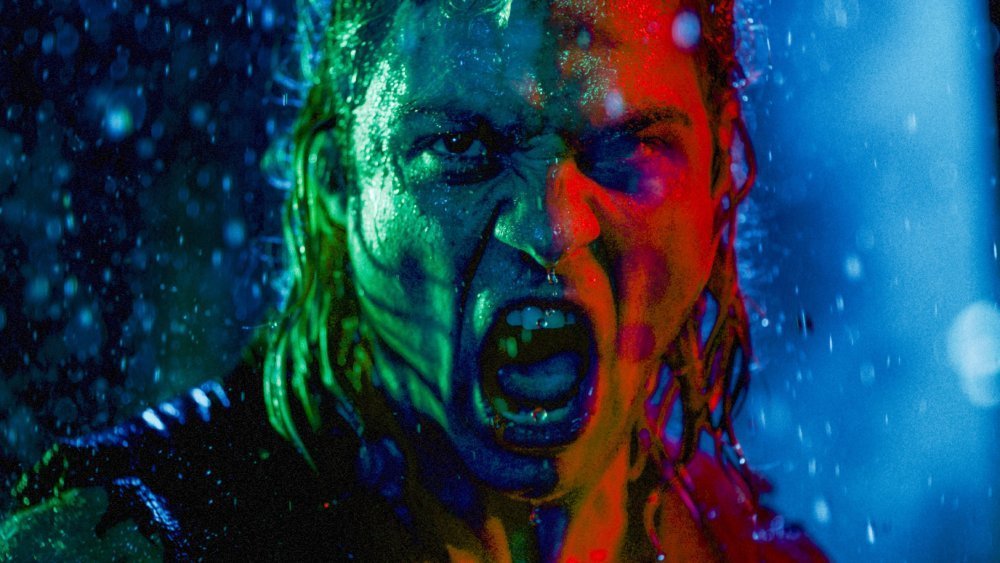
Alfie Williams, the British teenage actor who enjoyed a major breakout last year thanks to his lead role in “28 Years Later,” has landed U.S. representation.
Following what it described as a “highly competitive situation involving all major agencies,” Gersh has now signed the 15-year-old for representation in all areas.
Williams became one of the buzziest young names in 2025 following his highly acclaimed turn in “28 Years Later,” Danny Boyle’s long-awaited revival of his hit zombie franchise that landed almost a quarter-century after the genre-defining original “28 Days Later.” As the face of the film, he played Spike, a young boy battling it out against the infected in a post-apocalyptic Britain alongside co-stars Aaron Taylor-Johnson, Jodie Comer and Ralph Fiennes.
The youngster reprised his role with the quick-fire sequel “28 Years Later: The Bone Temple,” with Spike having joined Jack O’Connell’s murderous cult The Jimmys. The film — this time directed by Nia DaCosta — released in early 2026.
For his efforts in “28 Years Later” and “The Bone Temple,” Williams was named in Variety‘s list of Brits to Watch, presented at the Newport Beach Film Festival U.K. awards. He was also named in Forbes 30 under 30.
Williams will next be seen in starring opposite Meghann Fahy in the supernatural thriller “Banquet,” from “The Platform” franchise director Galder Gaztelu-Urrutia and a film he shot immediately after “The Bone Temple.”
Speaking to Variety earlier in the year, Williams said he’d like to move into a different genre, “make a sci-fi or a Western,” citing “Fallout” and “The Boys.”
Williams continues to be represented by Independent Talent Group in London.
The future of “60 Minutes” could well hinge on two people with deep ties to CBS News’ past.
Many staffers and producers at the beleaguered newsmagazine are left wondering whether Lesley Stahl and Bill Whitaker, two CBS News veterans who have been with the news division now controlled by Paramount Skydance since 1971 and 1984, respectively, will stay with the show in the wake of a series of stunning ousters of its top ranks over the past week. Their decisions could play a big role in whether the program will be entirely hallowed out or have some ties to the elements that have brought viewers in for years.
The decision is an emotional one, says one person familiar with the business of CBS News: “I think they feel like if they leave, there’s nothing left of ’60.’”
There is certainly less. On Tuesday night, Scott Pelley, one of the program’s most recognizable correspondents, was ousted by Nick Bilton, installed last week as the show’s new executive editor by Bari Weiss, the CBS News Editor in Chief who is intent on overhauling the series. Bilton was outraged that Pelley questioned his credentials at a Monday meeting of the show’s staff, and angry that the correspondent would not take his calls or meet him in advance of that event. Bilton and Weiss felt Pelley had created an unsustainable working environment.
“Your antipathy to the future of the show has come through loud and clear,” Bilton said in a letter sent to Pelley Tuesday evening and reviewed by Variety. “And I have heard you. I therefore write on behalf of CBS News to inform you that your employment with CBS is terminated effective immediately.”
“Despite our attempts to engage with Scott Pelley and to find a way back, unfortunately we weren’t able to do so, and so we had to part ways,” Weiss said during a CBS News editorial meeting on Wednesday. We did not want that to happen, but that’s the path that he chose.”
CBS News executives and Bilton had reached out to all the remaining correspondents last week, according to a person familiar with the matter, and engaged with many. Pelley was not one of them. CBS News declined to make executives available for comment Wednesday morning.
In a statement issued Tuesday night, Pelley said he felt new management at CBS News and its parent company had weakened the newsmagazine “apparently to curry favor with the Trump administration, adding that he felt “incompetence and unprofessionalism in the new management have wreaked havoc” with the workings of the show.
Pelley’s exit will only increase focus on the correspondents left behind, say two people familiar with the program. Stahl, who joined “60 Minutes” in 1991, has made the show an integral part of her life, according to these people, who believe the choice to depart would be a difficult one for her. When Stahl began working on the program, legends like Mike Wallace and Morely Safer were still actively involved. She is on a year-to-year contract with the program, according to a person familiar with the matter.
Whitaker had in the recent past expressed a desire to stay with the show as well. Despite his many years at CBS News, working largely on the west coast, he remains sort of the “new guy” at “60,” having joined in 2014. Not too long ago, he was considered as a candidate to replace Jane Pauley at “CBS Sunday Morning,” according to two people familiar with the matter, after executives became concerned they would not be able to come to terms on a new contract.
Stahl and Whitaker did not respond immediately to queries seeking comment Wednesday, and Jon Wertheim, a “60 Minutes” correspondent who joined the show in 2017, could not be reached for comment earlier this week about his thoughts on recent changes at the program. Some staffers have interpreted their recent silence as a sign they may remain.
Both Stahl and Whitaker are journalism elders. Whitaker is 74 years old and Stahl is a decade older. But both evidence a younger spirit in interviews, with Whitaker taking on multiple assignments that can range from features to investigative pieces. One of Stahl’s producers, meanwhile, once dubbed her “Grandma Badass” after a trek she made in 2021 to find mountain primates in Rwanda.
Many of the staffers at “60 Minutes” have worked on the program for years, even decades, and may also be reluctant to leave, says one of the people familiar with the workings of the series. These producers may also feel pressed to stay because they would be owed substantial severance or exit packages, rather than walking off when they might get less compensation.
There are also very few news vehicles that will give producers the same kind of role. “60 Minutes” doesn’t chase breaking news; it breaks its own, or it offers a take on the news cycle that no one else has. Or its operatives spend weeks getting a segment ready for air, and get to do more immersive reporting and exhaustive research that other news outlets would simply not allow, particularly in an era dominated by streaming and social media.
Even so, Stahl and Whitaker may never have more leverage than they do at this exact moment.
Bari Weiss addressed the elephant in the room during CBS News‘ daily editorial meeting Wednesday morning.
Late Tuesday night, CBS fired Scott Pelley, the veteran 60 Minutes correspondent and former CBS Evening News anchor, after he lashed into Weiss and new 60 executive producer Nick Bilton in a meeting with show staff Monday.
Weiss used the call to explain the decision, as first reported by Jeremy Barr.
“I know I speak for myself, and I hope I speak for everyone here when I say that I’m only interested in working in a newsroom that is built on trust and mutual respect. We cannot do our work without it,” Weiss said. “That foundation was broken on Monday, and despite our attempts to engage with Scott Pelley and to find a way back, unfortunately we weren’t able to do so, and so we had to part ways.”
“We did not want that to happen, but that’s the path that he chose,” she continued. “That unfortunate outcome does not discount from the amazing contributions and work that Scott Pelley has done for CBS and for 60 Minutes over the course of his career.”
The comments from Weiss are similar to ones she made in the daily meeting late last year, after she held a 60 Minutes story from Sharyn Alfonsi about the notorious CECOT prison.
“I want to say something about trust: our trust for each other and our trust with the public,” Weiss said at the time. “The only newsroom I’m interested in running is one in which we are able to have contentious disagreements about the thorniest editorial matters with respect, and, crucially, where we assume the best intent of our colleagues. Anything else is absolutely unacceptable.”
In Monday’s meeting, Pelley told Bilton that Weiss was “murdering 60 Minutes. She does not love this place, she was brought in to kill it and is doing exactly that,” and said that he had “slender” qualifications for the EP job.
“Yesterday, you hijacked my first meeting with staff to disparage me, my qualifications and my intentions with remarkable incivility and contempt,” Bilton told Pelley in his note Tuesday informing him of his termination. “I welcome a diversity of viewpoints and respectful debate among the team, but this was nothing of the sort.”
In a statement of his own late Tuesday, Pelley one again ripped into the leadership, criticizing their actions since taking over late last year.
“For my part, new management has instructed me to inject falsehoods and bias into a politically sensitive story,” he said. “I’ve been told to include assertions that are unverified. To date, in every case, I have managed to ignore these instructions or refuse them. Recently, politicians have been invited to choose correspondents for interviews on the broadcast. Giving politicians control over 60 Minutes interviews is not how this is done. Finally, incompetence and unprofessionalism in the new management have wreaked havoc.”
Bilton, a former New York Times and Vanity Fair tech reporter, was named EP of the show last week. He outlined some of the changes he hopes to bring in an interview with THR, including expanding the roster of correspondents and bringing the show to more digital platforms.
Thailand‘s Creative Economy Agency (CEA) is launching the Bangkok International Content Market 2026 (BICM2026), one of the country’s first dedicated international marketplaces for film, series, and animation, set to run July 20–22 at the Queen Sirikit National Convention Center in Bangkok.
The event is being developed jointly with the Department of International Trade Promotion under a broader umbrella initiative, Thailand Content Market 2026 (TCM2026). BICM2026 will focus specifically on B2B business negotiations, investment facilitation, and international co-productions, drawing more than 80 investors and streaming platforms from across the globe.
“Bangkok International Content Market 2026 marks a significant step in systematically elevating Thailand’s content marketplace to the international level,” said Chakrit Pichyangkul, CEA’s executive director. “Through this platform, CEA aims to transform Thai content and storytelling into sustainable economic value for the country.”
The three-day event will feature a content pitching competition across three tracks – Asian Project Pitching, Thai Project Pitching, and Thai Story Pitching – with prizes totaling at least $20,000. More than 55 selected film, series, and production-ready projects from Thailand, the Asia-Pacific region, and BICM partner networks will participate. An exhibitor floor with more than 500 booths will serve studios, creators, and creative businesses seeking to connect with investors and co-production partners.
The broader TCM2026 umbrella, organized by DITP, will span 12 creative industry sectors including games, animation, art toys, books, e-learning, and production services. That wider platform is targeting more than 300 international buyers, upward of 500 exhibitors, and more than 10,000 total participants.
CEA is framing the new market around Thailand’s content industry economics. Citing the country’s 2020 Input-Output Table, Chakrit noted that every THB1 invested in film and broadcasting generates an average return of THB1.8. “The content industry will become one of the country’s key drivers of future economic growth,” he said.
An industry forum component will offer panels and talks from Thai and international professionals on trends and emerging opportunities in the global content sector. CEA oversees the initiative under its mandate from the office of the Prime Minister and has previously developed the CEA Content Lab as part of its content industry push.
Maggie Gyllenhaal and Peter Sarsgaard will be among the guests at Slano Film Days, which runs June 16-20 in Slano, a small coastal town in Croatia. Other guests at the event include directors Paweł Pawlikowski, whose “Ida” won an Oscar, and Ruben Östlund, a two-time Palme d’Or winner.
Gyllenhaal and Sarsgaard will introduce audiences to “The Bride!,” which Gyllenhaal directed, and in which Sarsgaard appears.
“The Bride!,” an American Gothic romance inspired by the 1935 classic “Bride of Frankenstein,” written, directed and produced by Gyllenhaal, stars Jessie Buckley, winner of the Oscar for best leading actress at this year’s Academy Awards, alongside Christian Bale, Penélope Cruz, Annette Bening and Jake Gyllenhaal. The film follows “The Lost Daughter,” Gyllenhaal’s directorial debut, which was nominated for three Oscars. This year, Gyllenhaal will serve as president of the jury at the Venice Film Festival.
In Slano, Gyllenhaal will take part in an onstage conversation with cinematographer Michael Seresin (“Harry Potter and the Prisoner of Azkaban,” “Dawn of the Planet of the Apes”). Sarsgaard will be in conversation with Michel Franco, the director of “Memory,” in which Sarsgaard starred opposite Jessica Chastain, earning the Volpi Cup for best actor at the Venice Film Festival.
In Slano, Pawlikowski will screen “Fatherland,” which won the best director award at the Cannes Film Festival, while Östlund will talk about his new feature “The Entertainment System Is Down,” which is in post.
Slano Film Days was founded and is directed by Miro Purivatra, the former head of the Sarajevo Film Festival.
The Hollywood Reporter is on the set of Alice and Steve watching a master at work.
It’s June of last year, and on a warm day in southwest London, THR is a guest of the Disney+/Hulu show that would go on to sweep Canneseries and garner some serious buzz for writer Sophie Goodhart, whose credits include Rivals and Sex Education.
That portfolio is a great symbolizer of what’s to come in the six-episode “wrong-com” Alice and Steve, streaming this week on June 8, a year on from getting to hit the set and see Nicola Walker do exactly what she does best: have a bit of a meltdown.
The series follows BAFTA-nominated Walker, famed for roles in Spooks and the hit BBC drama The Split, as Alice. She’s been best friends with Steve (Jemaine Clement, best known for Flight of the Conchords and as the creator of What We Do in the Shadows) for decades, but her whole world is turned upside down when Steve announces that he’s began dating Alice’s 26-year-old daughter Izzy (Yali Topol Margalith).
In one particularly excruciating episode two scene, filmed on the day THR comes to set, Alice gives up on her attempts to appear calm about the situation and flips out on family board game night. Izzy’s Gen Z friends and Alice’s husband (Game of Thrones‘ Joel Fry) are forced to witness the toll that seeing her own daughter and lifelong pal hook up has taken. As aforementioned, it’s flawless work from Walker, who navigates each take with a combination of imaginative looseness and script-sharp precision.
“I have to apologize,” begins Walker to her co-star while sitting down with THR. “Halfway through the first day, I had to go, ‘I’ve been a fan of yours forever,’ and I’ve just been really, really shit the last two hours,” she says, referencing those board game takes — ones that required her to stay pretty emotionally fraught.
“No!” objects Clement. “I felt like the fan.” He turns to us. “Nicola’s probably not a method actor, but she’s a little bit method when we’re doing scenes.” Walker laughs: “I feel very angry today.”
The dreaded karaoke scene in ‘Alice and Steve’
Clerkenwell Films/Disney+
It’s a surprise that Walker, industry-acclaimed in the U.K., and Clement, a big comedy name here, have not yet crossed paths. All of a sudden, however, they are thrust onto a show that leans on the chemistry between two friends who have known each other for over 30 years. And their first scene together? A drunken karaoke bar that acts as a marker for that chemistry. “That was a hard day,” says Clement. “But we bonded over [it].”
Adds Walker: “I think they scheduled it really well, though. Right at the beginning of schedules, they always seem to put either having sex or getting on really well with someone — always, on any job you do, they always put those things first. And I think there is some method in their madness, actually, because by the end of that week, I did just feel like, ‘Oh yeah, Alice and Steve really know each other.’”
At this stage in their respective careers, they must receive a lot of scripts. Walker reflects on what attracted her to Goodhart’s writing. She remembers reading the first page, in which a middle-aged woman, seemingly in the process of a nervous breakdown, is walking up the stairs of a grand manor house carrying a blood-covered axe and stuffing wedding cake into her mouth. “I phoned my agent and went, ‘Please, please, I want to do this,’” she says. “It’s a very unusual tone. We keep talking about that. And when you get it, it feels amazing. So, I think what Sophie’s done is written something very, very, very funny, but then it can go really sad, and it’s sort of brutally honest at times.”
“It’s definitely intergenerational,” she continues about the broad audience appeal of Alice and Steve. “Which we don’t really have enough of. When people go, ‘What’s it about?’ and you say, ‘It’s about best friends, about mothers and daughters. It’s about betrayal and really hating someone you actually really love.” Clement chimes in: “They all picture it in their own minds with their own friends and parents’ friends. It’s a really easy one to describe.”
So what exactly is Steve thinking, getting involved with Izzy? “He isn’t thinking,” is the simple answer from Clement. “And then the rest of the time he’s thinking, ‘How can I fix this?’ [But] it’s too late. He’s trying to put the water back in the balloon.”
Just before Alice loses it over Trivial Pursuit, Steve, a celebrity hairdresser, is telling a half-ridiculous, half-touching story about one of his clients. Clement’s propensity for comedy is, of course, effortless — has it been a different muscle to stretch for Walker, as someone who has such a vast background in drama? “Not really, because I think that it’s all about good writing, and I think this is his good writing,” she says. “Our job is to put flesh on to a set of characters, [so] I didn’t really think of it like that.”
It’s ripe material indeed. Walker describes Alice as having “a can of hairspray under a lighter” burning every bridge around her, including her own marriage. “She ends up really isolating herself because she’s so convinced she’s right. She doesn’t allow for any gray in the spectrum of this situation.”
We’re privy to how this impacts all of the characters across the six half-hour episodes, including Izzy. Margalith tells THR: “She really looks up to her mum, and I think she considered her mum one of her best friends before this happened. It’s like when you’re a kid and you have something difficult that you want to tell your parents, and you think, ‘Yeah, they find that difficult, but not when it comes to me, surely — because she’s my mum.’ And then she does find it difficult. She still can’t be happy for me.”
Yali Topol Margalith, Jemaine Clement ‘Alice and Steve’
Courtesy of Disney+
“Because I do genuinely feel like I’m in love,” she continues about Izzy’s infatuation with Steve, “and I’m treated really well for the first time in my life after being hurt so badly again and again.” Clement says there is “a lot of understanding” between the two characters, despite his being twice her age: “They’ve both gone through a horrible breakup, and they feel mistreated.” Let the (board) games begin.
All six episodes of Alice and Steve will be available to stream on Monday, 8 June exclusively on Disney+ in the U.K. and Hulu in the U.S. It is created and written by Sophie Goodhart and directed by BAFTA winner Tom Kingsley. Petra Fried, Andy Baker, and Wim de Greed executive produce for Clerkenwell Films and the series is produced by Fran du Pille. The Hulu Original was commissioned by Lee Mason, vice president, scripted, Disney+ EMEA.
Suno, the most prominent AI music generation platform in the music industry, has raised $400 million at a $5.4 billion post-money valuation, the company announced on Wednesday.
Suno said Bond Capital, the venture capital firm whose portfolio includes OpenAI, Substack and Kalshi, led the round along with IVP, Forerunner, Union Square Ventures, Alkeon and Quiet, with Matrix, Lightspeed, Menlo Ventures, and Schroders Capital participating as well. Notably, Suno also said leading artists, songwriters and producers” also participated in the round, though the company didn’t disclose who.
The funding round comes just six months after Suno previously announced a $250 million funding round that had valued the company at $2.45 billion.
“We’ve seen Suno used by professional producers and songwriters, but also by millions of people making music for the first time – because music creation is no longer the domain of a niche few,” Suno CEO Mikey Shulman said in a blog post announcing the new funding round on Wednesday. “It is becoming one of the most human things we do, a way people communicate, remember, and connect. What started as a simple idea has grown far beyond what we imagined, and today, we’re excited to share an important milestone.”
Suno remains one of the most controversial companies in music, with its ability to generate entire songs in seconds with just a text prompt from a user. The major music companies sued in 2024 on allegations of massive copyright infringement from the world’s biggest’s artists and songwriters, though Warner Music Group had announced last November a settlement and new partnership with the company. UMG and Sony remain in active litigation.
Earlier this year in an interview with THR,Shulman said he’s seeing a market shift in how the business views AI, with professional creators embracing his platform along with more casual users.
“I don’t meet a lot of producers and songwriters who aren’t using Suno at least a little bit in their workflows,” Shulman said. “I think people are starting to be a little more comfortable being public and upfront about their use, and most importantly, I think a bit more optimistic about the future. It’s not everyone, but there’s definitely a market shift.”
Actual consumption of fully AI music still appears to be quite low. French music streaming service Deezer reported earlier this year that as much as 85 percent of AI music consumption on the platform is fraudulent, while Apple Music said less AI music made up less than 1 percent of weekly consumption on its service.
Still, earlier this year Suno said it had surpassed 2 million paying subscribers, and it’s currently the third most-popular app on Apple’s App Store’s music section.
In the blog post Wednesday, Shulman said its new model developed in partnership with WMG, its first industry-sanctioned model since the company’s founding in 2021 would be rolling out “in the coming months.”
“We believe there’s a huge opportunity to create new experiences for fans while helping artists reach audiences, build community, and unlock new creative and economic possibilities,” Shulman said.
Universal’s first theme park and resort in the U.K. — unveiled early last year and set to be one of the biggest theme parks globally — now has an official name, plus a financial commitment described by the British government as “one of the largest ever investments in the U.K. tourism sector.”
Universal United Kingdom Resort, a title formally unveiled Wednesday and slated to open in 2031, will be located just south of the English town of Bedford, on a 476-acre parcel of land purchased by Comcast in 2023. It was officially given the green light in December. Six months on and the overall spend has now been revealed.
According to the U.K. government, Comcast NBCUniversal has committed to invest more than £5 billion ($6.7 billion) during the expected five years the resort will take to construct, as well as a further £1 billion ($1.3 billion) investment over its first 10 years of operation.
Meanwhile, the government has announced it will support the project with an investment of £1.3 billion ($1.7 billion) on regional and local community infrastructure, with improved transport links for local residents and visitors from across the U.K. and abroad. This package is likely to be one of the most significant investments made in the U.K. during this parliament.
Understandably given the taxpayers money being spent, both the government and NBCUniversal have been touting the economic benefits of Universal United Kingdom Resort, which they says will create 28,000 jobs between construction and operation and generate some £50 billion ($67 billion) for the U.K. by 2055.
“This unparalleled investment is a huge vote of confidence in the U.K. and puts rocket boosters under our entertainment industry,” said Secretary of State for Culture, Media and Sport, Lisa Nandy.
“When it comes to creating world class experiences, the U.K. is second to none. We’re proud to be backing British industry, investing in local talent and partnering with powerhouses like Universal to create jobs, growth and opportunities across the UK.”
Construction on the entertainment complex is reportedly due to begin soon, with more than 100 people in the U.K. already employed to work on the project.
“This historic partnership is a special moment for our company as we bring our first Universal theme park and resort to Europe,” said Comcast chair Brian Roberts. “We have a long and proud history in the United Kingdom through Sky and NBCUniversal and look forward to creating a spectacular destination that supports the U.K. creative industries and brings joy to millions for generations to come.”
Added Mark Woodbury, chairman and CEO of Universal Destinations & Experiences, which is developing the resort.
“Today marks a significant milestone on our journey to bring Universal United Kingdom Resort, featuring immersive storytelling, thrilling attractions and unparalleled creativity and innovation to the UK. This new theme park and resort will create so many new opportunities for the people of Bedford and beyond and allow us to share our distinct experiences with guests from around the world.”
Ari Millen is the devilish titular character offering kids sweet delights with horrifying results in the trailer for Eli Roth’s Ice Cream Man, which dropped on Wednesday.
Axes, hacksaws, baseball bats are the weapons of choice for children having a meltdown in an idyllic town plunged into madness when the ice cream man from his truck doles out treats on a summer’s day. “That seems demonic. They’re not trying to kill us. They’re trying to turn us. We have to run!” one kid is heard saying in a voice over in the trailer as bloody mayhem ensues.
The film also stars Benjamin Byron Davis, Karen Cliche, Dylan Hawco, Sarah Abbott, Shiloh O’Reilly, Kiori Mirza Waldman, Charlie Zeltzer and Charlie Storey. Roth, as a horror auteur, is known for his Cabin Feverand Hostel franchises, and for Thanksgiving.
Besides directing and producing Ice Cream Man, Roth co-wrote the script with longtime collaborator Noah Belson. The film features an original score by Brandon Roberts, with additional music by Snoop Dogg. Cream Productions’ Kate Harrison (Thanksgiving) produces alongside Roth.
Ice Cream Man is also Roth’s first film under his The Horror Section banner launched in March 2025. Rap icon Nas is an executive producer through The Horror Section’s partnership with his Mass Appeal outfit led by CEO Peter Bittenbender.
Ice Cream Man is set to hits theaters on Aug. 7, 2026 with a planned rollout on over 2,000 screens across North America via Iconic Events Releasing.
Construction is set to soon start on Universal‘s U.K. theme park and resort, which will create 28,000 jobs and boost the British economy by nearly £50 billion ($67bn).
In details released to The Hollywood Reporter on Wednesday, ComcastNBCUniversal is confirmed to invest over £5 billion ($6.7bn) in the newly-named Universal United Kingdom Resort throughout its five-year construction, as well as an additional £1 billion ($1.3bn) in capital investment over its first 10 years when finally open — which is expected to be in 2031.
The U.K. government will invest another £1.3 billion in regional and local community infrastructure, the department for culture, media and sport (DCMS) has said, “to ensure the park can operate successfully.” This will include improved transport links for local residents and visitors from across the U.K. and abroad.
The deal between the British government and Comcast is one of the largest-ever investments in the U.K. tourism sector, boasting nearly 20,000 new jobs during construction and a further 8,000 jobs in operation.
It is also the brand’s first major destination in Europe. The “world-class” theme park and resort is expected to generate nearly £50 billion for the U.K. economy by 2055 through millions of annual visitors.
With enabling works on the site now in progress and construction soon to begin in Bedfordshire, just outside of London, the news released Wednesday marks a “significant milestone” in Universal advancing the project. Approximately 80 percent of employees at the theme park and resort are expected to come from Bedfordshire and the surrounding regions, they added.
To mark the milestone, Chancellor Rachel Reeves and Culture Secretary Lisa Nandy hosted Brian Roberts, chairman of the Comcast Corporation, and Mark Woodbury, chairman and CEO of Universal destinations & experiences, at 11 Downing Street to unveil the name and logo for the theme park and resort.
Reeves visited the site on Wednesday, where she met with Woodbury and other senior executives, as well as many of Universal’s new hires already based in Bedford.
“This historic partnership is a special moment for our company as we bring our first Universal theme park and resort to Europe,” said Roberts. “We have a long and proud history in the United Kingdom through Sky and NBCUniversal and look forward to creating a spectacular destination that supports the U.K. creative industries and brings joy to millions for generations to come.”
Nandy added that its put “rocket boosters under our entertainment industry.” She said: “This unparalleled investment is a huge vote of confidence in the U.K… When it comes to creating world-class experiences, the U.K. is second to none. We’re proud to be backing British industry, investing in local talent and partnering with powerhouses like Universal to create jobs, growth and opportunities.”
As part of its total £1.3 billioninvestment, the government will provide a grant of £400 million through the exceptional Regional Growth Fund and the DCMS will provide a grant of £438 million to invest in new community infrastructure to “maximise the benefits of the development and support growth across the region.” These grants will only be paid once Universal has completed the community infrastructure (in the case of the DCMS grant) and officially opened the theme park and resort.