Category: Entertainment

  • ‘Wasteman’ Review: David Jonsson and Tom Blyth Add Character to a Brawny but Familiar Prison Drama

    ‘Wasteman’ Review: David Jonsson and Tom Blyth Add Character to a Brawny but Familiar Prison Drama

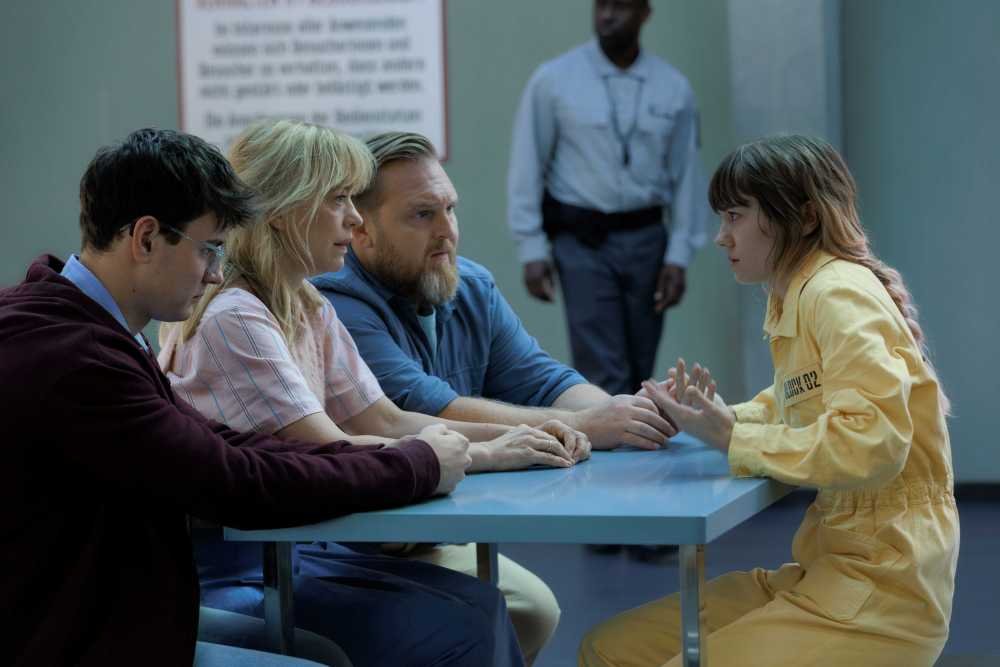
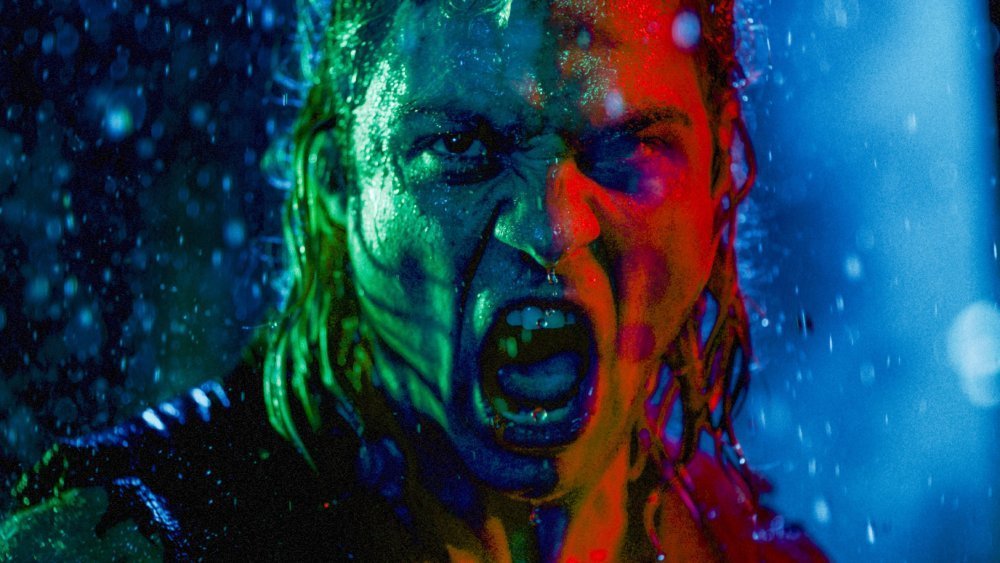
    British actor David Jonsson is only five films into his career, but you’d already know his gaze anywhere: Even in a film as spry and bright as the 2023 romcom “Rye Lane,” those crinkly, softly drooping eyes bring an air of old-soul melancholy to proceedings. But they’ve never borne quite as much sorrow as they do in “Wasteman,” a coolly brutal prison drama that follows a pretty rusty narrative template — hardened inmate on the brink of parole struggles to stay on the straight and narrow — but finds more interest in the dueling masculine energies of its two principal stars. If Jonsson, as the nearly-free man in question, is all guarded regret and head-down resilience, Tom Blyth is his lethal opposite number: As a near-feral cellmate from hell, he’s the disruptive force that gives an otherwise predictable film a spark of erratic danger.

    Though Jonsson and Blyth’s stealthily adversarial, hot-and-cold double act represents the chief selling point of “Wasteman” — which premiered at last year’s Toronto festival and hit screens in its native U.K. back in February — the film is most emphatically a calling card for first-time feature director Cal McMau, who picked up a surprise win for Best Debut Director at last year’s British Independent Film Awards (beating the more hotly tipped likes of Akinola Davies Jr. and Harry Lighton) en route to a nomination in the BAFTAs’ equivalent category. An artist turned commercials director, he handles proceedings here with equal parts grit and polish, smoothly integrating multiple shooting formats and implied points of view — with an emphasis on vertical cellphone footage that gives us a bristlingly immediate sense of life on the inside.

    Slightly less persuasive, however, is the script by Hunter Andrews and Eoin Doran, also taking their first feature credit. Trading in starkly opposed male archetypes but scantly developed characters, it builds some claustrophobic drama around inmates’ jostling for alpha status within these bleak, blue-washed walls, though it’s only glancingly attentive to the systemic failures governing this sordid battle royal, or more specific, unspoken social and racial conflicts presumably coursing through a pressure-cooker microcosm of modern British manhood. (Give or take the flavorful accents, the tone of the drama here is most reminiscent of that decades-old HBO TV provocation “Oz.”)

    Jonsson plays Taylor, a watchful, aged-beyond-his-years introvert who has spent 13 years behind bars on a manslaughter charge — missing almost the entire life of his teenage son Adam (Cole Martin), from whom the boy’s mother is determined to keep him estranged. He’s a quiet prisoner if not exactly a model one, with an opioid addiction he can’t kick, funded by his stoic work as a barber to his fellow inmates. When he’s informed that he’s soon to be up for parole — due less to his own good behavior than a need to free up prison space — he’s cautioned not to put a foot wrong; receding into himself is the safest course of action.

    It’s a bad time, then, to be paired with a new cellmate, particularly an unholy terror like Dee (Blyth), a grinning, nihilistic thug with a taste for living large — which, in prison confines, amounts to an in-cell air fryer and a shelf for his impressive sneaker collection — and a steady supply of drugs that soon makes him the most popular dealer on the wing, to the consternation of former big dogs Gaz (Corin Silva) and Paul (Alex Hassell). Generous with his stash and with access to his phone — which Taylor uses to communicate with Adam on social media — Dee ropes the addict into his trade, though their tentative friendship is soon subsumed into the prison’s overriding culture of violence.

    With his gangly, clammy physicality and strident delivery, Blyth is an electrifying hair-trigger antagonist, jump-starting each scene he’s in and even contributing some leering wit to an otherwise stern affair. “I don’t need to be careful,” he brags to the walking-on-eggshells Taylor: For Dee, being beyond redemption is a point of pride. The actor can’t, however, find much semblance of humanity in this flatly vicious figure, who ultimately serves to highlight the manifold vulnerabilities of our flawed but contrastingly soulful hero, played by Jonsson with a tight, walled-off reserve that seems liable to break at any given moment.

    That palpable desperation is compounded by the sheer airlessness of Phoebe Platman’s production design and Lorenzo Levrini’s prowling cinematography, which permits only the odd, stray shaft of natural light into this dank, metallic-hued world. The most explosive setpieces here are the pummelling prison riots, which Levrini charges into with handheld gusto, but the film feels rawest and realest in recurring interludes where the aspect ratio narrows and McMau views prison life (some of it battering, some of it banal) through the grainy lens of the inmates’ devices. A more unusual, subversive work might have stuck to this conceit throughout, but “Wasteman” finds some relief in formal convention.

  • Ben Stiller Reveals He Didn’t Love All the ‘Meet the Parents’ Sequels

    As fans anticipate the new addition of Ariana Grande to the Meet the Parents franchise, original star Ben Stiller has revealed that he didn’t love all the previous sequels.

    After 2000’s Meet the Parents became a box office hit, Stiller and Robert De Niro went on to reprise their roles as Greg Focker and Jack Byrnes, respectively, in three more installments: 2004’s Meet the Fockers, 2010’s Little Fockers and the upcoming Focker-In-Law.

    The new film, hitting theaters on Nov. 25, centers on Greg and Pam Focker’s (Teri Polo) son Henry (Skyler Gisondo), who causes family chaos when he decides to marry Olivia Jones (Grande), a strong-willed woman who appears to be his complete mismatch.

    The Arianators are clearly excited, with one asking on X, “Yall I did not watch the first 3 movies (and I don’t want to watch it either) but I want to watch the 4th one. Will I lose major plot?”

    And none other than Greg Foster himself, aka Stiller, replied: “No! But I stand by the first two.”

    Though the Zoolander star didn’t share details on why he isn’t a big fan of the third installment, another person followed up in a second post, “So what went wrong with Little Fockers? You worked on it.” Stiller added, “We always try. Fully.”

    Little Fockers definitely won’t be making it on Stiller’s list of all-time favorite films, but he does seem excited about the new sequel with Grande following his recent appearance at CinemaCon in Las Vegas.

    While on stage during Universal Pictures’ presentation, the Night at the Museum actor joked that the franchise’s team planned a “fully intentional 15-year break between movies three and four.” Stiller also teased De Niro at one point, noting that he’s now roughly the same age that the Oscar winner was in the 2000 film.

    “I guess you could say I’m the new De Niro of the franchise,” Stiller quipped, leading De Niro to come out and defend himself. “Don’t say that. It’s very disrespectful,” the Killers of the Flower Moon actor replied. “You made a very unflattering comparison that forced me to defend my honor.”

     Owen Wilson and Blythe Danner and Polo are also all reprising their roles in Focker-In-Law.

  • ‘Perfect Crown’ Scores Disney+’s Biggest K-Drama Debut to Date

    Perfect Crown is Disney‘s new streaming king in the Korean drama category. The smash-hit rom-com, which launched on Disney+ on April 10, has achieved the platform’s biggest-ever viewership for a Korean series within five days of launch.

    Disney+ announced the record on Thursday but declined to release specific viewership figures, saying only that Perfect Crown has become the No. 1 most-viewed Korean series premiere on the platform globally.

    The series — which also airs domestically on MBC in Korea’s coveted Friday-Saturday prime-time slot — is set in an alternate-reality version of modern South Korea where the country remains a constitutional monarchy. Pop-star-turned-actress IU stars as Seong Hui-ju, the sharp-elbowed heir to a major Korean conglomerate whose commoner status grates against her ambition. Byeon Woo-seok plays Grand Prince I-AN, the king’s second son, whose royal title comes with little else. When mounting pressures push the two into a marriage of convenience, the arrangement proves harder to keep strictly transactional than either of them planned.

    Byeon Woo-seok and IU star in ‘Perfect Crown.’

    Disney+

    The pairing has generated outsize anticipation. IU, one of the biggest stars in Korean entertainment, arrives fresh off her acclaimed turn in Netflix’s When Life Gives You Tangerines, the sweeping Jeju Island romance that won best drama at last year’s Baeksang Arts Awards. Byeon, meanwhile, became one of the country’s most bankable leading men virtually overnight after the 2024 tvN romance Lovely Runner turned him into a phenomenon. The two previously shared the screen about a decade ago in SBS’s Moon Lovers: Scarlet Heart Ryeo (2016), when Byeon was still a little-known supporting player.

    Perfect Crown is directed by Park Joon-hwa, known for a string of hits in the rom-com and fantasy genres, including What’s Wrong With Secretary Kim and the tvN mega-hit Alchemy of Souls. Yoo Ji-won wrote the series.

    Perfect Crown streams on Disney+ internationally and on Hulu in the U.S. The show entered Disney+’s Global Top 10 within days and has trended in more than 40 countries.

    Perfect Crown arrives at a moment when Disney+ is working rapidly to establish the kind of steady Korean content pipeline that Netflix has built over the past decade. The platform scored a major hit with the 2023 action-thriller Moving and has steadily expanded its K-drama slate with titles like A Shop for Killers, Gangnam B-Side and Light Shop. The company has several high-profile Korean projects in the pipeline, including a second season of A Shop for Killers; The Remarried Empress, starring Shin Min-a, Ju Ji-hoon and Lee Jong-suk; and The Koreans, a high-profile remake of FX’s The Americans starring Lee Byung-hun and Han Ji-min.

    New episodes of Perfect Crown are released every Friday and Saturday at 11:20 p.m., Korean standard time. The series runs through May 16.

  • ‘Proof’ Broadway Review: Ayo Edebiri and Don Cheadle Lead a Gripping but Oddly Paced Revival

    Grief is one of the most confounding aspects of the human experience. To live is to experience loss, and yet, we are never truly prepared. This type of agony is always a detriment to mental health, even more so when someone is already predisposed to instability. In the first Broadway revival of Pulitzer Prize-winning playwright David Auburn’s Tony Award-winning play, “Proof,” a young woman reels from her father’s death amid her own rapidly deteriorating mental health. Tormented by her own fears, doubted by her father’s peers, and infantilized by her older sister, Catherine (Ayo Edebiri in her Broadway debut) walks the line between self-confidence and deep distrust. The play has gripping themes and a thrilling cast. However, as the narrative presses forward, it becomes clear that Edebiri isn’t the best fit for the role.

    Directed by Thomas Kail, “Proof” opens on the Southside of Chicago sometime in the 1990s. Catherine (Edebiri) is seen nodding off on the back porch of her family home. Her father, Robert (a commanding Don Cheadle in his Broadway debut), comes out to greet her. It’s Catherine’s 25th birthday. The mathematical genius is eager to celebrate his youngest daughter with a bottle of champagne and some math banter. Unfortunately, Catherine would rather wallow in her own depression. A brilliant mathematician in her own right, Catherine reflects on Robert’s mental illness and how it has eroded her life. His condition has driven him away from the halls of the University of Chicago. For years, he has been sequestered in their house, ranting, raving and writing nonsensical math equations in hundreds of notebooks. Exhausted by her plight, Catherine also wonders if Robert’s schizophrenia is hereditary. After all, though the two are conversing on her birthday, the audience learns that Robert died a week prior.

    From there, amid a series of cleverly placed flashbacks, viewers learn more about Catherine and Robert’s father-daughter bond. The flashbacks reveal Robert’s descent into madness and the personal and professional sacrifices Catherine has made as a result. Things come to a head in the days leading up to the mathematician’s funeral. Hal (Jin Ha), one of Robert’s brightest students, begins looking through the professor’s notebooks. The young professor’s constant presence forces Catherine to confront her self-inflicted loneliness and her long-concealed mathematical mastery. When her Type A, but well-meaning older sister Claire (the ever-astounding Kara Young) arrives from New York to try to pull Catherine out of her despair, the things Catherine has long buried begin to surface. Edebiri and Young’s sisterly dynamic is one of the most authentic and witty aspects of the production.

    The play is set in a single location, a roomy back porch designed by Teresa L. Williams. The ingenious use of light, led by Amada Zieve, effortlessly guides the audience through the varied time and seasonal changes explored in “Proof.” The scenic design and lighting shifts, incorporated into the house itself, are paired with original music by Kris Bowers. Together, they aid in “Proof’s” ever-changing tone and atmosphere.

    As it did during its 2000 Broadway debut starring Mary-Louise Parker, and later in the 2005 film of the same name starring Gwyneth Paltrow, “Proof” continues to resonate. The play highlights the immense sacrifice of caregiving — a role often thrust upon women. It also explores sexism in academia and the terror of mental instability. Additionally, it depicts how familial legacy can shape people’s self-perception, capabilities and identities. Though dramatic at its core, this revival infuses a levity and sarcasm that alleviate much of its heaviness. While Edebiri is fantastic in the wittier sequences, her dramatic turns lack an effortless authenticity. Cheadle is sequestered mostly to the second act, which means Edebiri is forced to carry the majority of Act I alone. As a result, the production doesn’t feel as emotionally grounded as it should.

    “Proof” remains a scintillating play. Its questions about hereditary mental illness, the truth, and who can be labeled a genius — especially with a Black woman at the center — continue to resonate. Cheadle, Young, and Ha deliver effortless portrayals. They anchor the story in time and space with dynamic, heartfelt performances. Yet, because Edebiri simply doesn’t work as the lead, this revival doesn’t quite knock it out of the park.

  • Jill Biden Bids $35,000 For Chance to Win ‘Heated Rivalry’ Walk-On Role During LGBTQ Benefit Auction

    Jill Biden Bids $35,000 For Chance to Win ‘Heated Rivalry’ Walk-On Role During LGBTQ Benefit Auction

    Jill Biden is a “Heated Rivalry” fan.

    So much so that the former First Lady, just minutes ago during the live auction at the NYC LGBT Community Center’s Center Dinner, bid $35,000 to have a walk-on role in the queer hockey series’ second season along with a dinner with the cast, according to sources.

    However, she was outbid. The package ending up selling twice to two bidders at $125,000 each.

    “Heated Rivalry” creator Jacob Tierney and his producing partner Brendan Brady (who wasn’t able to make it to the gala) were honored at the event with the Cultural Impact Award. They were presented with the award by Rachel Reid, author of the queer hockey book series “Game Changers.”

    “Tierney and Brady have elevated and centered queer characters as fully realized leads whose desires, conflicts and tenderness are treated with dignity,” Center CEO Dr. Carla Smith said ahead of the event. “By championing our voices, they have brought queer joy and storytelling to the mainstream media and have created work that affirms and advances our community.” 

    Brooks Brothers CEO Ken Ohashi was also honored. Melanie C, aka Sporty Spice of the Spice Girls, performed.

    “Heated Rivalry” Season 2, which will be an adaptation of Reid’s book “The Long Game,” is expected to premiere on HBO Max in April 2027. Filming will start this summer with stars Connor Storrie and Hudson Williams returning.

    “I’m in a room all day writing,” Tierney told me at the GLAAD Media Awards in Los Angeles in early March, adding that he would stay “faithful” to the book.

    “I think I realized a little while ago that what I have to do is go back to where my head was at the first time I wrote, which was love these books and try to make the smartest thing I can make of it,” Tierney said.

    Along with Williams and Storrie, the “Heated Rivalry” cast includes François Arnaud, Robbie G.K., Christina Chang, Dylan Walsh, Nadine Bhabha, Sophie Nélisse and Ksenia Daniela Kharlamova.

  • How ‘Hacks’ Finally Killed Its Central Feud

    The funniest sequence in the latest episode of Hacks begins with a classic rug pull. Deborah Vance (Jean Smart), arriving fashionably — and characteristically — late to a meet-and-greet for her most obsessive fans, breezes into the room only to face a sea of dead-eyed weirdos who appear to have her in their crosshairs.

    The legendary comic, currently clawing her way back to the top, is in dire need of support as she attempts to land a career-defining solo gig at Madison Square Garden. But her fans, affectionately known as “The Little Debbies,” are livid over her recent absence. They’ve spent years watching from the sidelines while Deborah sparred with her Millennial writer, Ava (Hannah Einbinder). This season, Ava finally slides into the position the series has seemingly been grooming her for since the pilot — and in typical overachiever fashion, she’s arrived there ahead of schedule.

    The Little Debbies’ list of grievances for the Deborah they feel has “gone Hollywood” is as specific as it is absurd. The “Deborah’s Do’s and Don’ts” list hasn’t been updated in almost two years, leaving one man paralyzed with indecision (“Sometimes I just sit in the dark”). Deborah has apparently discontinued her branded car insurance plan, leaving another fan uninsured. Most dangerously, she’s pulled the Deborah Vance Red Light Mask from shelves — much to the chagrin of a woman who didn’t mind the skin damage (“I like the burns. It eventually turns tan”). Finally, there is the rumor gaining traction among the base: Deborah is, according to some, a lizard-person.

    In this exploration of fandom and fidelity, Hacks finally leans into the reality hinted at in the season premiere: the Deborah-Ava feud is officially over. While the series was defined by dark backstabbing and sharp insults regarding bodies, hairstyles, and generational divides, there is only so much mileage left in that odd-couple friction. The show has slowly but surely transformed these two into best friends. The giggles and hugs that close the episode feel like a genuine release of joy from both the writers and the actors, relishing a fresh dynamic. At last, they’re besties.

    Einbinder touched on this shift while speaking with The Hollywood Reporter ahead of the season five premiere.

    “There were some ‘Ava mafioso’ moves,” Einbinder said, referencing her character’s dark ultimatum in the season three finale, after discovering her boss slept with a studio executive. “When she was doing her blackmail… I was like, Jesus Christ. But from that point on, in seasons four and five, it’s really been about being steady and solid and working toward this goal again with Deborah.”

    Of course, with Hacks, “solid” is a relative term. The show has a penchant for curveballs born out of impossible situations, and things may currently feel a little too cozy between the former adversaries. For now, we’re treated to Deborah throwing Ava a surprisingly thoughtful 30th birthday party — mostly to prove, as Ava immediately clocks, that she actually has friends. It all builds to a triumphant ending: Deborah lands the MSG gig, though it’s scheduled for the loaded date of September 11th.

    It’s too early to predict exactly how Hacks will stick the landing, but the stakes are clear and the trajectory is set. The only remaining question is how many twists are left on the road to the Garden — and, of course, whether or not Deborah Vance actually has scales.

  • ‘American Pie’ Star Shannon Elizabeth Says She Joined OnlyFans After Hollywood “Controlled the Narrative” of Her Career

    ‘American Pie’ Star Shannon Elizabeth Says She Joined OnlyFans After Hollywood “Controlled the Narrative” of Her Career

    Shannon Elizabeth is taking back control of her story.

    The actress, who became a prominent sex symbol of the 1990s and 2000s with her roles in American Pie and Scary Movie, among others, recently told People that she’s launching an OnlyFans account to reclaim control of her narrative after working in Hollywood.

    “I’ve spent my entire career working in Hollywood, where other people controlled the narrative and the outcome of my career. This new chapter is about changing that, showing off a more sexy side no one has seen, and being closer to my fans,” Elizabeth said of her reasoning for joining the platform primarily known for adult content.

    She added, “I’m choosing OnlyFans because it allows me to connect directly with my audience, create on my own terms, and just be free. I really do think this is the future.”

    Though Elizabeth didn’t feel in control of her career when she was younger, she previously told Entertainment Tonight that she’s still grateful for all the doors that American Pie opened for her.

    However, starring in a raunchy franchise like that also came with misconceptions about who she was in real life. Elizabeth played Nadia, an attractive Eastern European exchange student whom Jim Levenstein (Jason Biggs) has a crush on, in the 1999 film.

    “For me, it was a role, it was playing a character,” she explained to ET. “But even in my real life, I’m just not the girl who likes to be naked, ever. … That was never me, but because that was kind of my coming out, everyone assumed I was that girl.”

    Elizabeth also reprised her role in 2001’s American Pie 2 and 2012’s American Reunion.

  • ‘The Price of the Sun’ Director on What He Did to Give Viewers the Impression of “Being in the Desert With Nomads” Affected by Our Energy Consumption

    ‘The Price of the Sun’ Director on What He Did to Give Viewers the Impression of “Being in the Desert With Nomads” Affected by Our Energy Consumption

    It’s complicated! The world’s largest solar power plant is being built in Morocco, with the aim of turning arid land into a “green energy source.” So far, so good, you say? But wait, there’s a catch! After all, barriers go up, and access to water becomes difficult. And members of the local Berber tribe, the indigenous Nomad population, are given no choice but to work for the power plant.

    In The Price of the Sun (Du soleil et du plomb), Belgian director Jérôme le Maire (Burning Out, Tea or Electricity) zooms in on the ambiguities and hidden costs of progress and “the resilience and adaptability of a community forced to reinvent itself in the shadow of the renewable energy revolution.” The film world premieres on Saturday, April 18 in the international feature film competition program of the 57th edition of the Visions du Réel documentary festival in Nyon, Switzerland.

    With cinematography from Olivier Boonjing and le Maire and editing by Matyas Veress, The Price of the Sun shows us how the nomads’ traditions exist in quiet conflict with the drive to supply renewable solar and wind energy to the world. “Ironically, the fight for resource control to connect the world may ultimately destroy a society that, by definition, shares resources and is obliged to be connected,” highlight the press notes for the doc. “Can there be enough sun and wind for everyone, or is the price too high?”

    Or as le Maire mentions in a director’s statement: “I strove to achieve precise and intimate observation of these nomads and the values they cultivate, up until the moment they are confronted with the arrival of an unavoidable event that will lead them toward an unexpected future.”

    ‘The Price of the Sun,’ courtesy of Jérôme le Maire

    Ahead of the world premiere of the film, le Maire shared with THR how The Price of the Sun came about, his focus on the potential cultural ambiguities of renewable energy, and what’s next for him.

    How long did you work on this film, and how did you get access to the Berber tribe and the power plant workers? There must have been so much trust!

    In short : The shoot consisted of 12 two-week stays spread across six years (January 2019 to September 2025), totaling approximately 168 shooting days. But location research began in 2017 with a year-long investigation around the Noor Ouarzazate power plant, followed by four two-week stays in 2018 – getting to know the Ait Merghrad community and exploring the region around the future Midelt plant site.  So the film was in production for approximately eight years, from initial scouting in 2017 through the final shoot in September 2025. 

    The secret to making this kind of film is to take your time. To take the time to introduce yourself. Who am I, and what am I doing in this region? What can I do for you? Before I say what I want to film, I listen to what these people have to say, where their words come from. And in doing so, I discover myself, too, gradually.

    The first time I went to this desert to scout locations, I was with my wife. She just adores these regions of southern Morocco. Another time, I was with my daughter. To gain someone’s trust, you have to offer an exchange. I’ll show you who I am, and you show me who you are.
     
    And then we talked about the power station. The tribe had its opinion. I had mine. We discussed at length what was unfolding before us. We were trying to make sense of it all. We were trying to understand one another. On one side, you have those who need energy, and on the other, those who will produce it, or enable its production.

    The nomads quickly realized that what interested me was less the power station itself than the ecosystem in which it was to be built. As a result, they became part of the story. It is rare for them that an “outsider,” someone who is not one of them, takes an interest in their lives. They were touched by my proposal to make a film about them, amidst the turmoil that was looming.

    I also built a relationship of trust with the plant’s management. Here, it is first and foremost an institution. I know how this sort of organization operates, and in such cases, you must first prove your credentials. You have to show who you know, what your credentials are. So, I show the films I’ve made and the success they’ve had. Then, I use the connections I have in high places. But in the end, it’s always the same: you find yourself face to face with a human being, and at that point, you have to be yourself and clearly show who you are. Face to face, I don’t put on an act. I connect with the person and speak to them very sincerely. In high society, people aren’t really used to that sort of frankness, so it works very well.

    For this film, I had the opportunity to meet Morocco’s Minister for Energy Transition, and we hit it off immediately. I introduced myself very simply, being completely myself. I didn’t really follow protocol; I focused on frankness and spontaneity. During the meeting, she and I came up with a plan where she would come to the site to meet the nomads I’d been telling her about in person. Unfortunately, it didn’t happen. It’s a shame, as they were looking forward to welcoming her. But the most important thing for me was to speak directly to the minister about these ordinary people. She knows they exist and that she’s welcome in their homes!

    ‘The Price of the Sun,’ courtesy of Jérôme le Maire

    How would you describe your approach to doc-making in general? Do you always look for an observational/vérité approach and why?

    All my films are made in the cinéma vérité style, which we also call “direct cinema” here. Personally, I really enjoy immersing myself in worlds that are very different from those I know. I act as if I were a resident of a remote mountain village, as in Tea or Electricity, or as a member of an operating theater team, as in Burning Out. I become part of the community, whether or not I appear as a character in the film. I chart the path myself, and I invite the audience to follow it. And I film in such a way that it creates this impression. The impression of being there yourself in the desert with the nomads.

    The audience loves this kind of documentary because a story is told to them and, just like in fiction films, they are allowed to navigate the narrative. They are free to form a bond with a particular character and to think whatever they like about what is happening. There is no voice-over to explain, inform or dictate a particular way of thinking. In cinéma vérité/cinéma du réel, viewers are fully immersed in a world; they experience emotions, and they interact internally with the characters and with what happens to them.

    This kind of cinematic experience can leave a deep impression on us. What matters to me, as a director, is to connect the audience intimately with people who are experiencing very different things thousands of miles away. To ensure that those who watch my film can, for a moment, put themselves in the other person’s shoes – and thus, perhaps, shift their perspective away from the dominant narrative.

    You show us all sorts of ambiguities, such as the benefits of building renewable energy plants, but also the downside of cultural imposition on a native tribe. How did you approach how to balance the good and the bad, and how did you think about taking sides or not?

    This has been a long journey for me, documenting how these energy projects have displaced nomadic people from their traditional lands, disrupted their way of life, and highlighted the broader implications of modern renewable energy development. The nomadic way of life emphasizes the importance of simplicity and respect for the environment. I want this film to question the philosophical dimension of this new “green energy,” described as “clean” and undeniably “sustainable.”

    I want to shine a spotlight on the vision and question the transaction [involved in it]. I hope audiences become more aware of the invisible people and businesses affected by their energy consumption, and that will urge them to reconsider their reliance on both electricity and technology.

    But what this film, in essence, shows is that clean energy does not exist. It is sold to us as such so that we consume ever more, without a twinge of conscience. Yet today, it has become absolutely vital to take energy-saving measures – both at an individual level and at a public level. We absolutely must consume less. It is the only lever that guarantees 100 percent positive effects for the planet and the common good.

    When you use artificial intelligence, when you charge your electric car or when you flick the light switch in your living room, there is someone at the other end of the power cable who will be affected by that consumption. It is not about guilt, but about awareness and responsibility!

    ‘The Price of the Sun,’ courtesy of Jérôme le Maire

    What was the hardest part of making this doc?

    Filming in the lead mines was difficult! These places are extremely dangerous, so filming there is a very delicate matter. We had to ensure there were no accidents. Yet accidents are common in these mines because the work is unsupervised. It involves just a few dozen poor people who have taken it upon themselves to work as miners. They have no equipment whatsoever. And whilst they know the place well, they have only a very limited understanding of the work involved. In fact, they can rely only on their courage and the solidarity between them. So that’s where I started.

    It’s this “set-up” that I had to fit into. The sound engineer didn’t feel comfortable going down with me. My daughter, who was the assistant director, didn’t want to go down either. So I went down alone, with the lads. These were intense moments because at that point, I was completely united with them. We helped each other; we each had a goal, but the path we were taking was the same.

    I’m very pleased with these scenes. You really feel that descent into the bowels of the earth. The imagery is flawless; the camera work was superb. What’s more, the story this part tells is truly incredible. As I filmed Aziz hammering away like a madman to extract lead from the rock, I thought of him – just a few months earlier, he was still a shepherd. I was really moved. I sincerely hope this film can help improve his situation!

    What are you working on next?

    I’m currently working on a very different project: I’d like to cross the High Atlas mountains in Morocco all alone, on foot, with a mule! So I’m preparing for this expedition, which is likely to take me several months. I need to recharge my batteries. To reflect on the meaning of life. To disconnect from this fast-paced, talkative world… and from this culture of overconsumption!

    I’m going to walk a thousand kilometers along this magnificent mountain range, dotted with little villages that seem to exist in another world, in another time. Perhaps I’ll take a camera with me and end up making a film…

  • ‘Beef’ Review: Prime Performances by Oscar Isaac and Carey Mulligan Make for a Juicy Season 2 of Netflix’s Smash

    ‘Beef’ Review: Prime Performances by Oscar Isaac and Carey Mulligan Make for a Juicy Season 2 of Netflix’s Smash

    The philosopher Biggie Smalls once pondered the nature of dangerously escalating rivalries.

    In a song of the same name, Biggie asked, “What’s beef?”

    Beef

    The Bottom Line

    A bold, well-acted, slightly over-extended follow-up.

    Airdate: Thursday, April 16 (Netflix)
    Cast: Oscar Isaac, Carey Mulligan, Charles Melton, Cailee Spaeny, Youn Yuh-jung
    Creator: Lee Sung Jin

    His answers included the straightforward “Beef is when you need two gats to go to sleep,” and the playful “Beef is when I see you, guaranteed to be in I-C-U.”

    Christopher Wallace passed away, likely a victim of a beef, long before the rise of the limited series, so Lee Sung Jin had the exploratory lane all to himself when he released the eight-episode bleak comedy Beef back in 2023. The series, about the unforeseen consequences erupting from a relatively minor instance of road rage, dominated the Emmys and eventually was picked up for a second season, transitioning from limited series to anthology and reframing Biggie’s question as: “What’s Beef?” Or, put a different way, what is the Beef brand? And could a second season, sans the extraordinary talents of Steven Yeun and Ali Wong, deliver a story and themes in keeping with that brand, without sullying what was so deviously tricky about the original series and its tone?

    The answer, for the most part, is “Yes.” The second season of Beef can’t reproduce the sneak-up-on-you brilliance of the first, but without many direct connections this eight-episode story feels very much of a piece.

    Once again, Jin has big ideas to play with and trenchant aspects of contemporary American culture to pick apart and, once again, he has assembled an exceptional cast in service of a story that begins tightly contained and spins wildly and intentionally out of control.

    It’s possible that Jin actually has too much on his mind this time around, layering the central conflict with generational, economic and cultural divides, alternatingly poking fun and staring in jaw-agape horror at the modern condition in ways that don’t always come together. But if the thing that keeps season two of Beef from equalling its predecessor is an excess of ambition, I have no beef with that.

    This time around, our featured characters — Beef doesn’t have traditional antagonists and protagonists, since its core concern is that niceties like situational ethics and morality are a fungible construct — are a pair of couples, separated in age by little over a decade but in status by a seemingly greater distance.

    Josh (Oscar Isaac) is the general manager at the Monte Vista Point Country Club near tony Montecito, north of Los Angeles. His job is to be accommodating to the club’s wealthy clientele, embodied by William Fichtner’s Troy, a wildly rich music industry mogul (or something to that effect). Josh is married to Lindsay (Carey Mulligan), an upper-crust Brit who has all the external status markers that Josh lacks, but perhaps not his obsequious gifts or ambition. They’ve been talking for years about starting an upscale bed-and-breakfast, without evident progress, one of several factors adding volatility to their marriage.

    At the other end of the volatility spectrum are newly engaged 20-somethings Austin (Charles Melton) and Ashley (Cailee Spaeny), two of Josh’s underlings at the club. Ashley is a beverage cart girl on the club’s golf course, while Austin works part-time as a trainer. Austin and Ashley don’t have much money, but they’re so deeply in love that they never fight.

    On the night of a fundraiser at the club, Josh forgets his wallet and Austin and Ashley are tasked with returning it, walking in at the end of a heated argument between Josh and Lindsay — a fight that reaches a violent climax that Ashley films on her phone. Ashley and Austin experience this blow-up out of context, and the video captures it with even less context. But the younger couple sees an opportunity for professional advancement, to score a win in a game they’re convinced is rigged against them.

    But in this clash of haves and have-nots, are Josh and Lindsay really among the privileged? Their position is made precarious by the arrival of Chairwoman Park (Youn Yuh-jung), Korean billionaire and the club’s new owner. Park puts new pressure on Josh in part because of the pressure she herself is feeling back in Seoul under circumstances related to her plastic surgeon husband (Song Kang-ho, wonderful if very underused).

    Soon, a cycle of blackmail, extortion and fraud ensues, borne of desperate grasping for power and a potentially fatal lack of empathy on all fronts. Meanwhile, the lines between exploiter and exploited, powerful and powerless, hero and villain blur in ways that are sometimes satirical, sometimes sad and occasionally thrilling.

    There’s a lot happening in the second season of Beef. Although the episode count has gone from 10 to eight, the length of episodes have expanded from under 40 minutes to as many as 54 minutes for the season two finale, which has a relatively epic scale but gets bogged down in at least three different monologues from characters telling viewers what the season was about.

    Though Beef isn’t exclusively a dark comedy, its comic beats thrive with a tighter pace and stricter focus. This best two episodes (directed by Jin and Kitao Sakurai) come midseason — a hilarious nightmare in a hospital emergency room and a differently hilarious nightmare of a search for a missing dachshund named Burberry — and they’re the two shortest episodes of the season, dedicated primarily to tracking just one of the couples on a single misadventure. One takes a scathing look at the absurdities of the American healthcare industry, while the other reinforces the season’s nature-out-of-balance themes. They’re both fast-moving and dazzlingly absurd.

    Those two standout episodes are also largely separated from the country club settling, which too often opens the door for slightly superficial jabs at the club’s vapid members. They’re a perfectly worthy target, but one that invites inevitable comparisons to The White Lotus (and allows for some very odd and very unexpected celebrity cameos that I won’t spoil here).

    It’s possible that Beef is actually parodying The White Lotus at times, especially with the younger couple, a high-school dropout and a former Arizona State football star — Gen Z strivers who know the buzzwords of capitalist critique (“It’s unfair. Globally. There’s gotta be a redistribution of the wealth,” Austin declares, apropos of nothing) without any substance to back it up. They simply see an opportunity to grab for the brass ring, ready to do whatever it takes to get what they believe they deserve, until they discover what “whatever it takes” means. Or maybe until they discover what Reddit tells them it means, because Beef is particularly harsh toward the online proxies for nourishing social relationships — uncaring cam girls, hollow DM flirtations and help forums that only make things worse.

    As was the case in the first season, Beef is a machine driven by unintended consequences, some violent, some scatological and all designed to crush the souls of characters who might not have souls to begin with.

    Even more than the first season, this round of Beef makes it difficult to root for anybody. I felt a real pendulum the first time around between Danny (Yeun) and Amy (Wong), each doing the wrong things for ostensibly justifiable reasons. Here, it’s a struggle between two flawed couples, easier to pity, if only because they don’t realize that there’s nothing the aristocracy wants more than for them to fight to the death rather than pay attention to who actually has the power.

    Performance-wise, I sided with the younger couple. I thought Riverdale veteran Melton’s May December performance was more tantalizing promise than talent confirmed, but there’s evidence of comic genius in how soulfully silly he makes Austin. Spaeny’s Ashley is half Lady Macbeth, half innocent child, fully oblivious to how her ambitions are changing her and changing a relationship that seems nourishing as long as it’s based on a shared appreciation of Hot Pockets. Going back to Priscilla, I admire how Spaeny uses the height disparity with her leading men as a source of both humor and sweetness.

    The show perhaps has sympathy for Ashley and Austin because they don’t know any better. Lindsay and Josh have been together long enough to realize their shared toxicity, but they’re giddy when their new rivals given them fresh targets for their simmering resentments. Mulligan delivers lacerating fragility, while Isaac turns Josh’s accommodating nature into a pathology, but both characters are littered with backstory details that Beef leaves hanging. It’s a plot point that these are both mixed-race couples that are rarely forced to confront their differences, but the show does better with Austin’s confrontation of his Korean roots than with Josh’s Cuban background.

    Youn, whose presence reminds me that I’m still mad about Apple’s treatment of Pachinko, projects kindness with a glint of scheming malevolence, and I really wish the series had given us more of Youn and Song together. Several other characters on the Korean side of the story, which grows in importance as the finale approaches, could have used a little more depth — including Seoyeon Jang’s overqualified translator Eunice and rapper BM’s Woosh, a tennis instructor with aspirations of his own.

    As was the case in the first season as well, the finale escalates to a place of thrilling zaniness, with a little less ultimate emotional gravitas this time around. The concluding punch isn’t as potent, but the show left me with so much to think about and so many details to be amused by that I hope Lee Sung Jin has the opportunity to show us what else Beef can be.

  • Oasis’ Comeback Outing Wins ‘Major Tour of the Year’ Prize at Pollstar Awards, as Kendrick Lamar/SZA, Benson Boone and the Weeknd Also Score Top Honors

    Oasis’ Comeback Outing Wins ‘Major Tour of the Year’ Prize at Pollstar Awards, as Kendrick Lamar/SZA, Benson Boone and the Weeknd Also Score Top Honors

    Oasis‘ 2025 reunion tour won the Major Tour of the Year award at the 2026 Pollstar Awards, held Wednesday night in Hollywood as the centerpiece event of the annual Pollstar Live! conference, hosted by the primary trade magazine focused on the live music business..

    Other top winners in genre-based categories included Metallica (for rock tour of the year), Kendrick Lamar/SZA (hip-hop tour of the year), the Weeknd (R&B tour of the year), Benson Boone (pop tour of the year), Bad Bunny (Latin tour of the year), Adam Sandler (comedy tour of the year), and Chris Stapleton and Lainey Wilson (who tied for country tour of the year).

    Olivia Dean continued her recent awards streak by winning in the category of support/special guest of the year, for her stint as opening act on Sabrina Carpenter’s “Short n’ Sweet Tour.” With a sold-out arena headlining tour commencing in May, it’s safe to say Dean will probably never be eligible for a repeat win in that category.

    Other artists who came out on top in the Pollstar voting included the Eagles, for residency of the year (at their recurring Sphere gig in Las Vegas), and Teddy Swims, as new headliner of the year.

    Many of the categories were set aside for venues or festivals. Austin City Limits and Ohana were named festivals of the year (in over 30,000 and under 30,000 attendance divisions, respectively). L.A. came out on top with the wins for nightclub of the year, the Troubadour, and outdoor venue of the year, the Hollywood Bowl. Las Vegas venues prevailed for arena of the year, which went to Sphere, and U.S. stadium of the year, a win for Allegiant Stadium. Nashville’s Pinnacle picked up the prize for new concert venue of the year.

    Among the awards going to individuals were the award for promoter of the year, which went to Live Nation’s Arthur Fogel, a bit of good news amid a tough day for that company, plus Barclay Center’s Laurie Jacoby as venue executive of the year, Red Light’s Coran Capshaw as personal manager of the year, Shore Fire’s Rebecca Shapiro as publicist of the year, CAA’s Allison McGregor as marketing executive of the year, and another CAA honoree, Darryl Eaton, as agent of the year. CAA scored an additional win as booking agency of the year.

    All of the awards are voted upon within the music industry except for one fan-voted honor that was added this year, in connection with a media sponsor — the first iHeartRadio Pollstar Fan Favorite Award for Live Performer of the Year, which went to country superstar Morgan Wallen.

    The 37th annual Pollstar Awards were hosted by iHeartRadio personality Valentine and held at the conference’s new location for 2026, the Loews Hollywood Hotel.

    A full list of winners follows:

    37th Annual Pollstar Awards Winners

    Major Tour of the Year:
    Oasis, “Oasis Live ’25 Tour”

    Rock Tour of the Year:
    Metallica, “M72 World Tour”

    Hip-Hop Tour of the Year:
    Kendrick Lamar/SZA, “Grand National Tour”

    R&B Tour of the Year:
    The Weeknd, “After Hours Til Dawn Stadium Tour”

    Pop Tour of the Year:
    Benson Boone, “American Heart World Tour”

    Country Tour of the Year:
    Chris Stapleton, “All-American Road Show” (TIE)
    Lainey Wilson, “Whirlwind World Tour” (TIE)

    Latin Tour of the Year:
    Bad Bunny, “Debí Tirar Más Fotos World Tour”

    Comedy Tour of the Year:
    Adam Sandler, “You’re My Best Friend Tour”

    Support/Special Guest of the Year:
    Olivia Dean, “Sabrina Carpenter: Short n’ Sweet Tour”

    Residency of the Year:
    Eagles, Sphere, Las Vegas, NV

    Family, Event or Non-Music Tour of the Year:
    Dancing With the Stars

    New Headliner of the Year:
    Teddy Swims

    Music Festival of The Year (Global; over 30K attendance):
    Austin City Limits Music Festival, Austin, TX

    Music Festival of The Year (Global; under 30K attendance):
    Ohana Festival, Dana Point, CA

    International Music Festival of The Year:
    Glastonbury Festival, Pilton, UK

    Nightclub of the Year:
    Troubadour, West Hollywood, CA

    Theatre of the Year:
    Radio City Music Hall, New York, NY

    Arena of the Year (U.S. Only):
    Sphere, Las Vegas, NV

    Arena of the Year (Outside the U.S.):
    The O2 – London, London, UK

    Red Rocks Award – Outdoor Concert Venue of the Year:
    Hollywood Bowl, Hollywood, CA

    Stadium of the Year (U.S. Only):
    Allegiant Stadium, Las Vegas, NV

    Stadium of the Year (Outside the U.S.):
    Wembley Stadium, London, UK

    Casino/Resort Venue of the Year:
    Mohegan Sun Arena, Uncasville, CT

    New Concert Venue of the Year:
    The Pinnacle, Nashville, TN

    Venue Executive of the Year:
    Laurie Jacoby, Barclays Center, Brooklyn, NY

    Talent Buyer of the Year:
    Del Williams, Danny Wimmer Presents

    Small Venue Talent Buyer of the Year (Under 10,000 Capacity):
    Joe Moallempour, Danny Wimmer Presents

    Bill Graham Award / Promoter of the Year:
    Arthur Fogel, Live Nation

    International Promoter of the Year:
    Erik Hoffman, Live Nation Canada

    Bobby Brooks Award – Agent of the Year:
    Darryl Eaton, Creative Artists Agency

    International Booking Agent of the Year:
    Emma Banks, Creative Artists Agency UK

    Booking Agency of the Year:
    Creative Artists Agency

    Independent Booking Agency of the Year (Global):
    Independent Artist Group (IAG)

    Rising Star Award:
    Gade Raftery, Live Nation

    Personal Manager of the Year:
    Coran Capshaw, Red Light Management

    Maxie Solters Award – Touring Publicist of the Year:
    Rebecca Shapiro, Shore Fire Media

    Marketing Executive of the Year:
    Allison McGregor, Creative Artists Agency

    Road Warrior of the Year:
    Chris Risner, Metallica

    Transportation Company of the Year:
    Upstaging

    Concert Visuals Company of the Year:
    4Wall Entertainment

    Concert Sound Company of the Year:
    L-Acoustics

    Tour Services Company of the Year:
    Master Tour