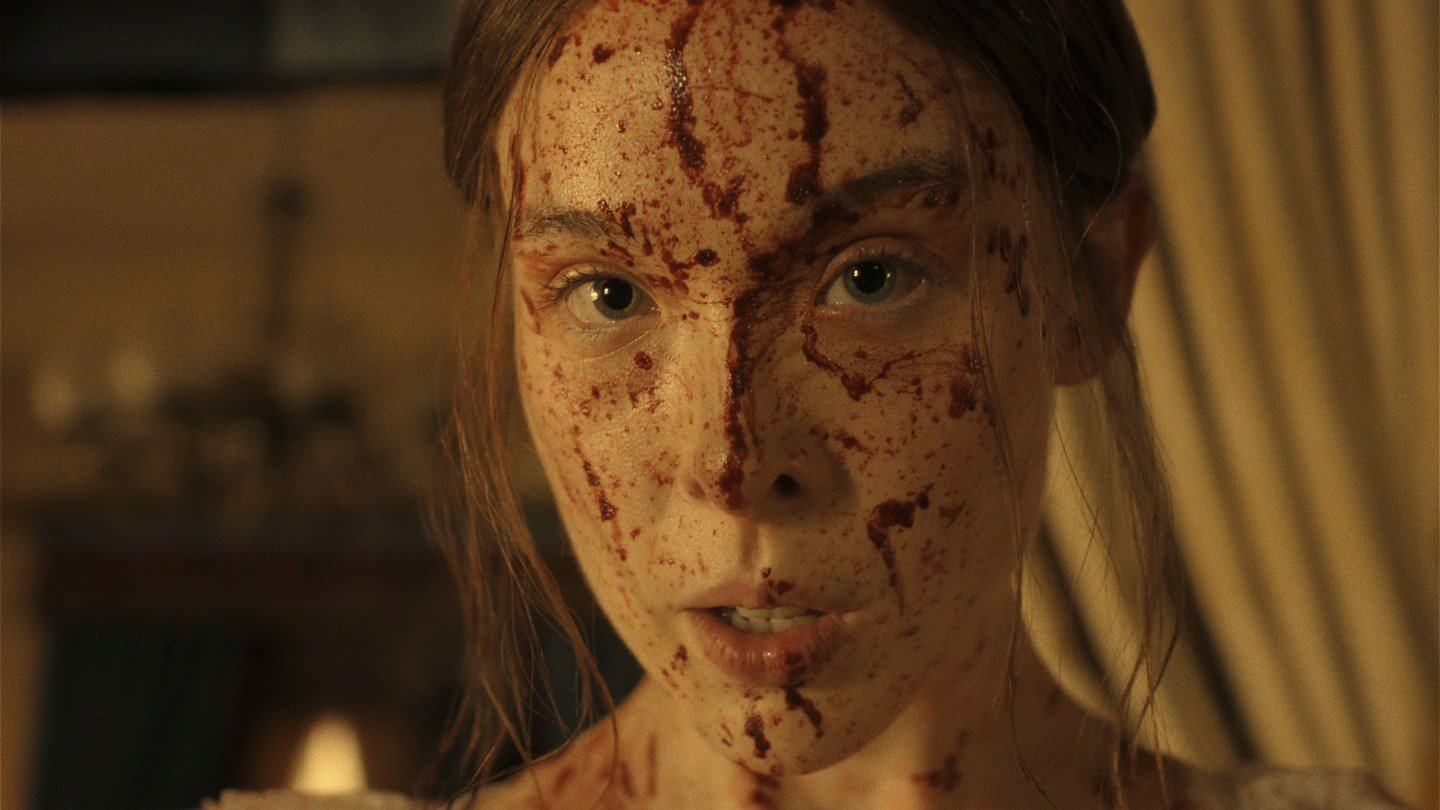
The streamer has released the first look photos (below) and premiere date for season four of its Emmy-winning anthology series, which stars Ella Beatty (Feud: Capote vs. The Swans, If I Had Legs I’d Kick You) as Lizzie Borden. All eight episodes premiere Sept. 17 on Netflix.
Beatty stars as the accused axe murderer who was tried and acquitted in the 1892 killings of her father and stepmother in Fall River, Massachusetts. The case has inspired several retellings over the years, including the 1975 TV movie The Legend of Lizzie Borden, Lifetime’s 2014 Lizzie Borden Took an Ax and 2018’s Lizzie starring Chloë Sevigny and Kristen Stewart.
Vicky Krieps stars as Bridget Sullivan, Rebecca Hall plays Abby Borden and Charlie Hunnam portrays Andrew Borden. Billie Lourd, Joey Pollari, Sarah Paulson and Jessica Barden round out the cast.
Here’s the official logline: “When the repressed daughter of a wealthy New England family and her rebellious maid find themselves trapped in a house built on humiliation and cruelty, they escape into a fantasy of sex, power and revenge. The gruesome unsolved murders that follow don’t just shock the world — they give birth to an icon who refuses to live imprisoned in a cage, choosing instead to forge her own legend: shocking, monstrous and gloriously free.”
Every season of Monster follows a different murderer. Season one starred Evan Peters as Jeffery Dahmer, earning him an Emmy for outstanding supporting actor in a limited or anthology series or movie. Season two followed Cooper Koch as Erik Menendez and Nicholas Alexander Chavez as Lyle Menendez, while season three starred Hunnam as Ed Gein.
As for taking on the role of Borden, Beatty told Tudum, “I am so excited for viewers to experience our exploration of Lizzie Borden’s story and the questions that her life animates to this day. It has been a dream come true to investigate this complicated person’s psychology and to examine an American crime that feels almost mythic in proportion. This season gives us our first female Monster and delves into female rage and repression which I’ve found to feel strikingly relevant, and I cannot wait to share it with the world.”
Ian Brennan (Monster anthology, Glee, Scream Queens) serves as creator, writer and executive producer. Max Winkler directs all eight episodes and co-directs episodes four and six with Sarah Adina Smith. Ryan Murphy, Winkler, Eric Kovtun, Scott Robertson, Louise Shore, Nissa Diederich, Todd Kubrak, Carl Franklin, Tanase Popa also executive produce.
Oliver Spenceman as Stephen and Charlie Hunnam as Andrew Borden.
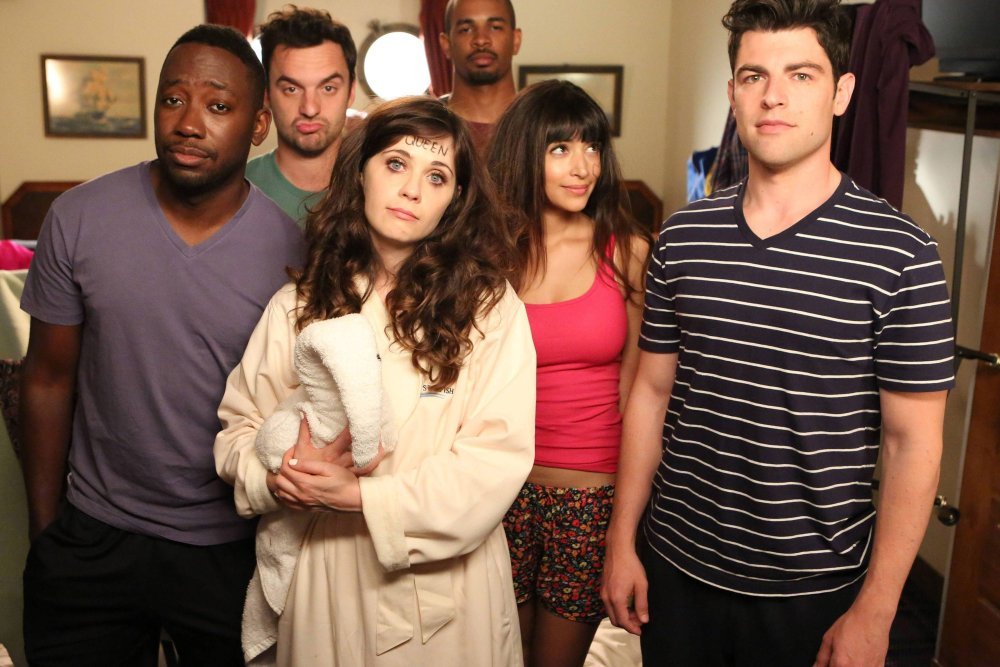
The stars of “New Girl” are set to reunite at the upcoming Chrysalis Butterfly Ball in Los Angeles.
The cast, including Zooey Deschanel, Max Greenfield, Jake Johnson, Lamorne Morris, Hannah Simone and Damon Wayans Jr., will receive the Rising Phoenix Award at the Oct. 10 gala.
The Rising Phoenix Award will recognize the series’ theme of starting over and people who make starting over possible.
The reunion news comes just days after Greenfield said that an official show reunion is in the works. “As far as I know, it’s happening,” the actor said during an appearance on “Today With Jenna & Sheinelle” on July 31. “I’ve seen scripts, they’re amazing.”
However, Greenfield now tells me, “I misread the email.
“Or should I say, I just read the subject, which read, ‘“New Girl” reunion.’”
This isn’t the first time he’s done this, Greenfield admits. “I’m still a work in progress,” he says. “I can only hope this little mix-up doesn’t dim the light we’re trying to shine on such an incredible organization.”
Greenfield returns as host of the Chrysalis event, which will also honor Banc of California chairman and CEO Jared Wolff with the Corporate Trailblazer Award.
“This year’s honorees reflect the resilience and second chances at the heart of Chrysalis’ work,” Chrysalis president and CEO Mark Loranger said in a statement Tuesday. “Jared, through his leadership at Banc of California, has invested in Los Angeles where our clients are doing the same and ‘New Girl’ built seven seasons around characters navigating through life changes and starting over. Every year, Chrysalis helps thousands of people achieve goals they may not have thought possible, and the Butterfly Ball allows us to celebrate their accomplishments while ensuring that even more people have access to the support they need.”
Chrysalis helps people find meaningful work and build futures they can be proud of, regardless of their past or present. Since 1984, Chrysalis has served more than 95,000 individuals at its six centers and locations throughout Southern California. In 2025, nearly 2,200 Chrysalis clients secured employment while participating in Chrysalis’ program, and nearly 1,600 worked a transitional job with the organization’s employment social enterprise.
The 2026 Honorary Co-Chairs are Betsy Beers, Rebecca Gayheart Dane, Max Greenfield, Hayward Kaiser & Susan Harris, Chris Hart, Cynthia & Bob Hart, Rick Hess, Josh Lieberman and Amelia Williamson. 2026 sponsors include The Chuck Lorre Family Foundation, TruAmerica, and US Bank.
Past Butterfly Ball honorees have included Betsy Beers, Common, Salma Hayek, Jennifer Hudson, Ice Cube, Donna Langley, Shawn Levy, LL Cool J, Seth MacFarlane, Ryan Murphy, Queen Latifah, Da’Vine Joy Randolph, Curtis Stone, Scott Stuber and Olivia Wilde.
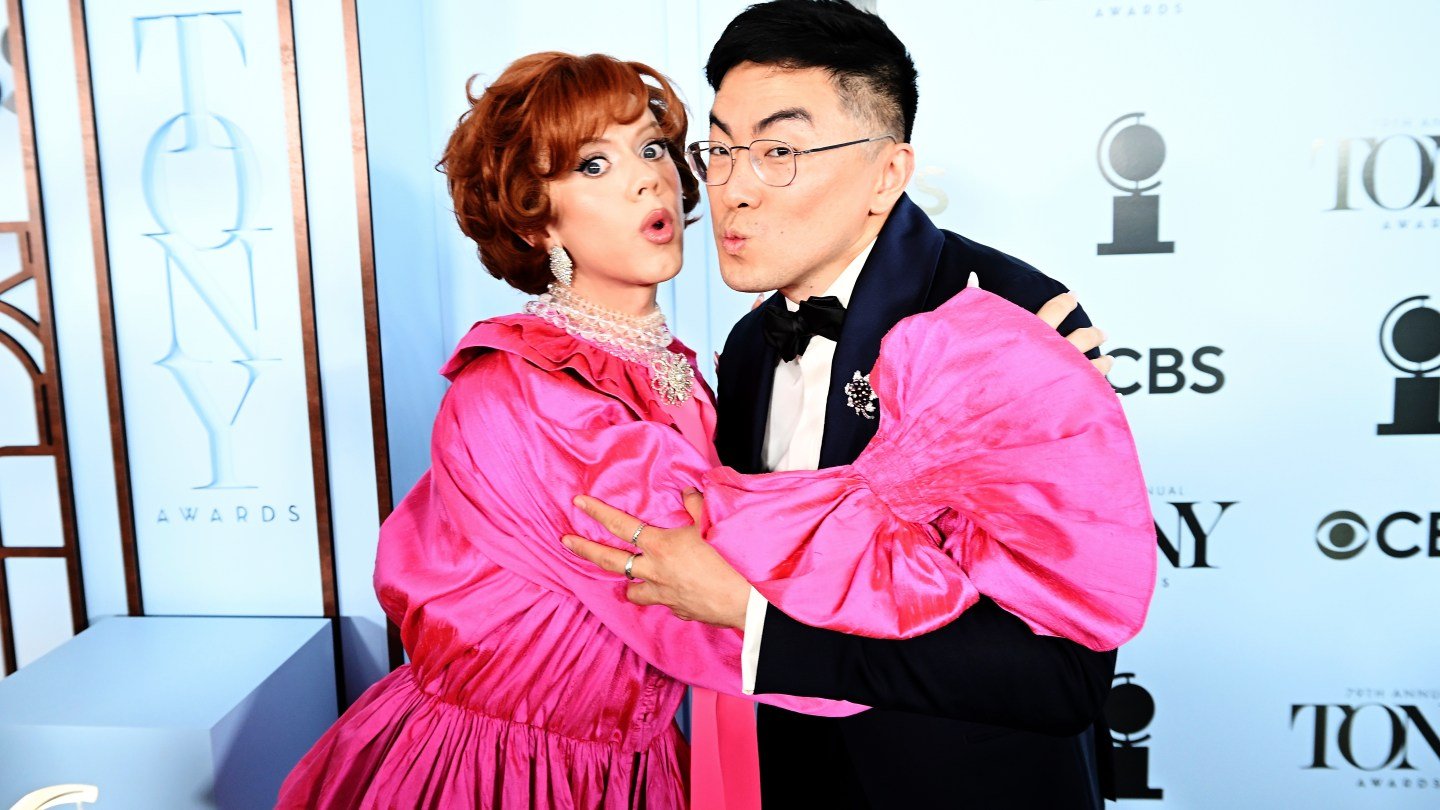
This marks the Saturday Night Live star’s Broadway debut, after appearing in films such as Wicked and Fire Island, and marks one of his biggest projects since Yang departed SNL in December 2026. He takes over from current Mary, Meg Stalter, for a run starting Sept. 15 and ending Dec. 6.
“My friendship with Cole has brought me many places over the years: late-night pizzerias, cross-borough social-distance walks, a tough production of Les Misérables sung in Dutch,” said Yang. “But being part of their deranged and profound masterpiece, Oh, Mary! is my favorite one by far. I will spend the rest of my life thanking them for the best Broadway debut a cis gay guy with limited singing ability could ask for.”
Yang will join continuing cast members Phillip James Brannon (‘Mary’s Husband’), Barrett Foa (‘Mary’s Teacher’), Bianca Leigh (‘Mary’s Chaperone’), and returning original cast member Tony Macht (‘Mary’s Teacher’s Assistant’). Yang is a coproducer on Titanique on Broadway, but this marks his stage acting debut.
The production, which opened at the historic Lyceum Theatre in July 2024, has put a new block of tickets on sale through July 2027.
Written by Cole Escola and directed by Sam Pinkleton, the play reimagines the former first lady as a wannabe cabaret singer with a predilection for drinking and disdain for her husband, the President of the United States. Since Escola originated the role, a number of big names have taken on Mary, including Maya Rudolph, Jinkx Monsoon, Tituss Burgess and Jane Krakowski. Understudy Hannah Solow will play the role of ‘Mary Todd Lincoln’ on Sept. 13, before Yang begins in the role.
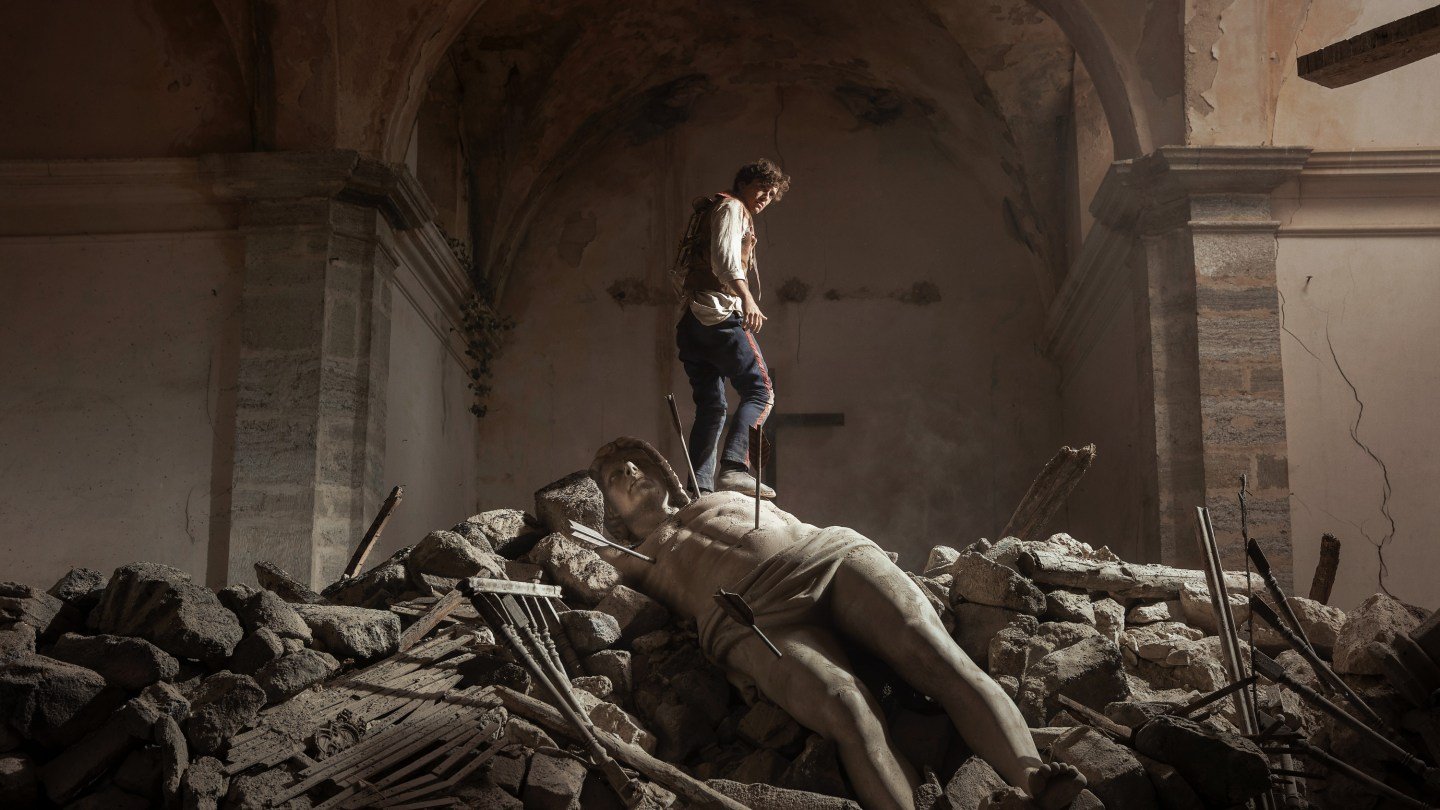
La Bola Negra, the sweeping Spanish-language epic that Netflix acquired out of the Cannes Film Festival for an awards season push, will be given a platform theatrical release in U.S. theaters starting on Oct. 16 and will subsequently begin streaming on Dec. 2, the company announced Tuesday.
That 47-day period of theatrical exclusivity before streaming will be the longest yet for any Netflix film, surpassing the 31-day period accorded to Noah Baumbach’s Marriage Story in 2019. (A new record is expected to be established in 2027, with Greta Gerwig’s Narnia: The Magician’s Nephew set to be released in theaters on Feb. 12 and then begin streaming on April 2, a 49-day period.)
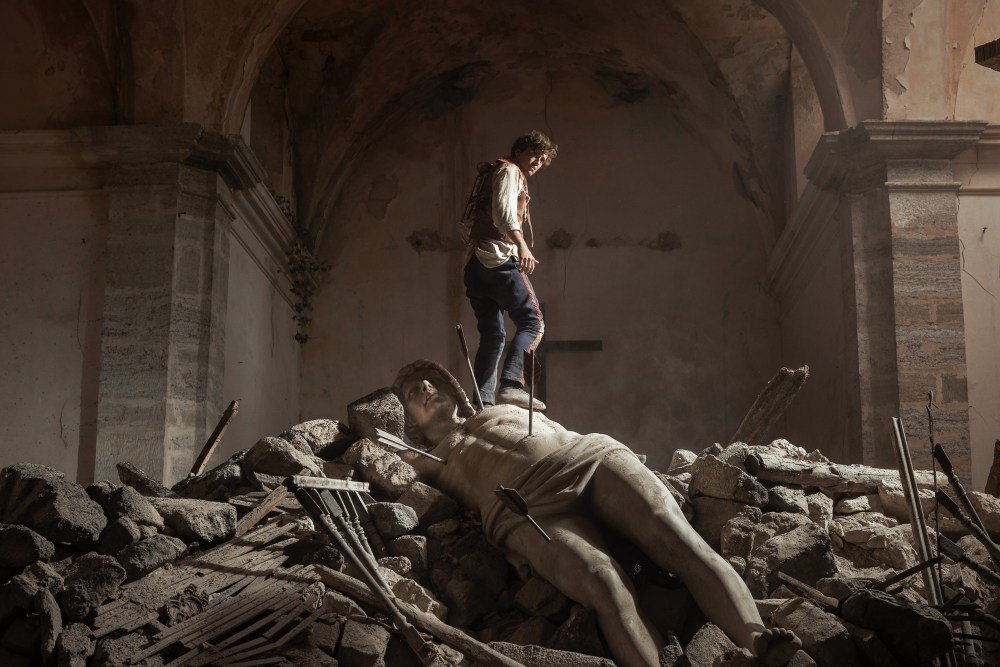
La Bola Negra, which recounts the story of three generations of queer men whose lives are connected through love and loss, was written (with Alberto Conejero), directed and produced by Los Javis, the Spanish duo Javier Calvo and Javier Ambrossi. It became the subject of a competitive bidding war following its May 21 world premiere in Cannes, where Los Javis were awarded the fest’s best director prize for the film in a tie with Paweł Pawlikowski for Fatherland.
The film stars Spanish music sensation Guitarricadelafuente, in his acting debut, alongside Elite star Miguel Bernardeau, Carlos González, Milo Quifes, Lola Duenas, Julio Torres and, in relatively small but memorable parts, two of Hollywood’s biggest names, Penélope Cruz and Glenn Close.
The film is set to have its Canadian premiere at September’s Toronto International Film Festival, where Cruz will be feted at the TIFF Tribute Awards on Sept. 13.
It’s a truth universally acknowledged that guests of the fictional luxury chain The White Lotus aren’t meant to live an uncomfortable life.
So who can blame the cast of Mike White’s hit satire for enjoying some downtime at another pricey vacation resort – Disneyland Paris?
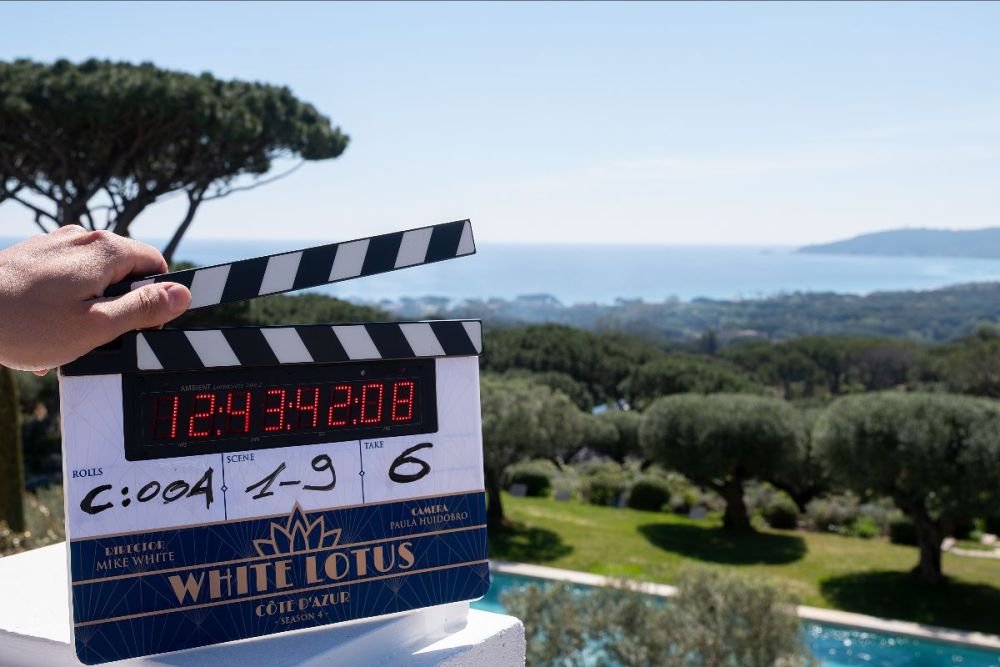
Season 4 cast members Laura Dern, AJ Michalka and Marissa Long were spotted at the Mouse House’s French outpost on Sunday, apparently on a break from filming the latest season, which is set in the south of France.
The trio were among a larger group taking photos with a Minnie Mouse mascot – who was decked out in a chic salmon dress with Breton stripe detail topped off with an Eiffel Tower-themed fascinator — by the park’s famed Sleeping Beauty castle. Fellow Season 4 cast members Ben Kingsley, Max Greenfield and Vincent Cassel did not appear to have joined the outing.
The show has been filming in Paris since the start of summer, and is shooting interiors at the posh Hôtel Lutetia and at theBry-sur-Marne studios on the outskirts of the French capital. Previous productions that have shot there include the Canal+ series “Marie-Antoinette,” as well as Pathé’s big budget period movies “The Count of Monte-Cristo” and “De Gaulle.” When they’re not filming, “The White Lotus” cast and crew have been living the lives of everyday tourists while staying at another five-star hotel that’s mostly under-the-radar and paparazzi-free, located on the right bank, near the Seine river.
Production is set to head back to the French Riviera for final shots, at the Martinez hotel, as well as in Monaco, where they previously filmed on a yacht and in Nice where they shot at the airport with scenes featuring Laura Dern – who took over from Helena Bonham Carter at the start of production and is rumored to be playing a fading star chasing a comeback — and Heather Graham. Dern has also been spotted at Roland-Garros, the French tennis open, on different occasions, with her daughter Jaya Harper, as well as Michalka.
Getty
Corbis via Getty Images
The highly anticipated new season of “The White Lotus” sees the popular HBO show decamping to Cannes, where it will follow two rival filmmaking teams as they compete for the festival’s top prize. And of course the mis en scène — comprised in Season 4 of a palatial hotel on the Croisette and a luxurious hilltop hideaway — are as central to the plot as the characters.
As Variety previously reported, Saint-Tropez’s Château de la Messardière will play the White Lotus du Cap while the Hôtel Martinez stands in for White Lotus Cannes. The show went into production in April and shot during the Cannes Film Festival earlier this year to capture some of the hustle and bustle of the iconic event. It also shot at the Palais des Festivals for what appeared to be pivotal scenes unfolding during a fictional closing night.
Getty
While it’s unlikely Disneyland Paris will feature in the series, given it’s owned by a rival studio, its staff could no doubt give the cast of “The White Lotus” an insight into what it’s like to work at a luxury resort. Its flagship five-star Disneyland Hotel, which sits above the entrance to the theme park, re-opened in 2024 after a three-year renovation with a renewed focus on luxury.
As well as a spa and styling studio it also boasts a pillow menu, offering guests seven types of neck support, while general manager Majbritt Iaconis previously served stints at the Ritz and the Mandarin Oriental. For guests, it’s a very comfortable life indeed.
Netflix is handing its Spanish-language Oscar hopeful “La Bola Negra” the longest theatrical runway in the streamer’s history.
The queer epic from Javier Calvo and Javier Ambrossi, the Spanish duo known as Los Javis, was originally slated to open in theaters Nov. 6 ahead of a Dec. 4 streaming bow. The film will now arrive in theaters Oct. 16 and land on Netflix Dec. 2, a 47-day exclusive window and the widest theatrical commitment the company has given one of its titles to date. The previous record-holder belonged to Noah Baumbach’s relationship drama “Marriage Story” which had a full 30-day window in 2019. Other notable wide releases included Martin Scorsese’s “The Irishman,” which Netflix gave a 27-day window the same year, and Alfonso Cuarón’s “Roma,” which played roughly three weeks in 2018 before streaming.
The move underscores how selectively, and how aggressively, Netflix has begun courting exhibitors on prestige plays. David Fincher’s still-untitled continuation of “Once Upon a Time in Hollywood,” written by Quentin Tarantino and starring Brad Pitt, opens Nov. 25 for an exclusive two-week global Imax engagement before streaming Dec. 23. Greta Gerwig’s “Narnia: The Magician’s Nephew” follows Feb. 12, 2027, the first Netflix release to receive a conventional theatrical rollout, with a 49-day window preceding its April 2 streaming debut.
Netflix landed U.S. rights to “La Bola Negra” at the Cannes Film Festival following a competitive bidding war, after the film premiered in competition to a standing ovation and went on to tie for the festival’s best director prize.
The streamer has since acquired Canadian rights as well. The film is set to screen in the Toronto International Film Festival’s Special Presentations section, where star Penélope Cruz, who won the best supporting actress Oscar for “Vicky Cristina Barcelona,” will receive a Special Tribute Award at the TIFF Tribute Awards.
Directed, co-written and produced by Calvo and Ambrossi, “La Bola Negra” (“The Black Ball”) spans 85 years of Spanish history, from the ’30s to the present day, and draws on an unfinished fragment by poet and playwright Federico García Lorca. The ensemble includes Spanish musician Guitarricadelafuente in his acting debut, “Elite” actor Miguel Bernardeau, Carlos González, Milo Quifes, Lola Dueñas, Julio Torres, Cruz and Glenn Close.
The film is one of the streamer’s awards priorities for the fall, which will also include the Fincher sequel, Danny Boyle’s Venice Film Festival opener “Ink,” Peter Berg’s war drama “The Mosquito Bowl” and Marie Kreutzer’s “Gentle Monster,” also a Cannes acquisition.
In his review, Variety film critic Guy Lodge wrote there is “enough confidently muscular filmmaking here” to make the directors’ next move worth watching, praising the film’s attempt to trace the connective tissue between generations of gay Spanish men.
The film is a Movistar Plus+ Original Film in collaboration with Suma Content Films, produced by Telefónica Audiovisual Digital and Los Esquiadores AIE, and co-produced by El Deseo and Le Pacte, with the participation of Atresmedia and CREA SGR.
Michif filmmaker Wayne Wapeemukwa isn’t afraid to use visceral visuals and sound to question the world we’ve built, training his spotlight on those pushed to society’s margins.
His debut feature, Luk’Luk’I, followed five residents of Vancouver’s poverty-stricken Downtown Eastside during the 2010 Winter Olympics, with a screenplay the Canadian writer-director developed alongside his actors. The film won best Canadian feature at the Toronto International Film Festival in 2017, and Wapeemukwa took home the Directors Guild of Canada’s DGC Discovery Award.
This week, he opens the international competition at the 79th edition of the Locarno Film Festival with his sophomore feature, Manhunt — a mesmerizing, unsettling journey into social and psychological terrain that’s likely to shake viewers to the core.
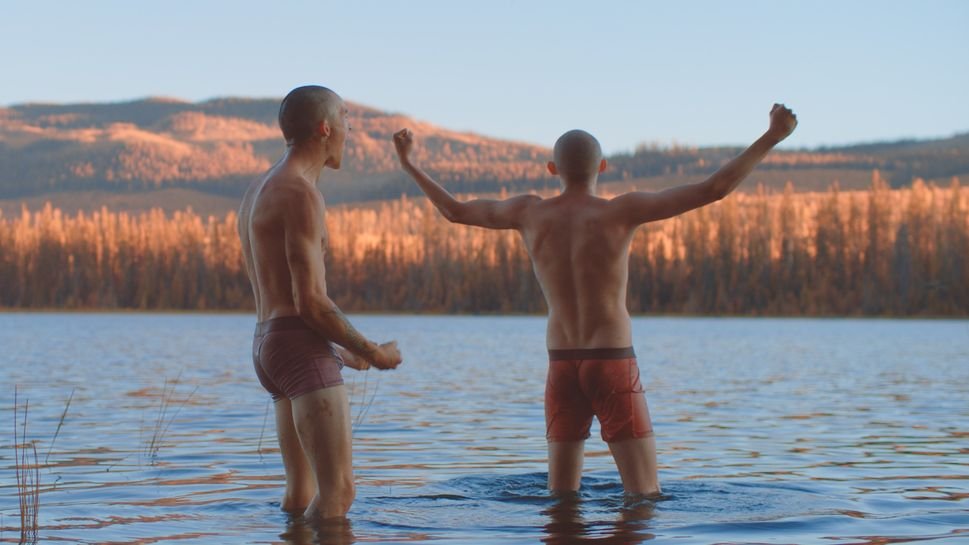
Inspired by real-life murders in Canada in 2019, the film follows two young men on a road trip through the country’s northern frontier, fleeing their dead-end lives. Rather than reconstruct the facts behind the killing spree, Manhunt asks harder questions — about disconnection, alienation, modern masculinity, far-right and digital fantasies, and colonial echoes — to probe where such violence actually comes from.
As the two men drive through empty towns and vast forests, their lives dissolve between digital fantasy and offline reality. The Locarno website teases what’s ahead: “Reframing true crime as a parable, Manhunt probes loneliness, masculinity and the colonial dream of beginning anew — until the search for meaning erupts into violence.” Or, as the press notes put it more bluntly: “Two boys discover they can’t outrun what they’ve become.”
Sorrow curdles into hatred; the longing for connection turns violent. In the end, the two men find not salvation, but the barren land inside themselves.
Manhunt, which Wapeemukwa wrote with Anna-Lena Theobald, stars Harris Lowe, Landon Tunold, Bianca Foscht and Dilara Foscht, with cinematography by Jonathan Glendon and editing by Coline Debray. Wapeemukwa produced alongside Nathan Drillot and Matt Drake. Vaka Street Casting — also behind the Canadian hit Blue Heron — handled casting. Cinetic Media acquired North American sales rights, while Aspect Ratio is handling international sales.
‘Manhunt’
Courtesy of Locarno Film Festival
Locarno artistic director Giona A. Nazzaro, in a recent interview with THR, praised Manhunt as a film that “questions the colonial myth of what is beyond the frontier and how this myth still affects people.”
Ahead of the film’s Locarno premiere, Wapeemukwa spoke with THR about his deep dive into human emptiness, darkness and fascism, how his Michif heritage shapes his thinking on disconnection from land, and his growing interest in genre work.
Manhunt is inspired by Northern British Columbia murders in July 2019. Why did you want to make a film about them and why in the specific way you chose, which is very different from traditional true crime narratives?
At the same time as the actual events that unfolded in 2019, I was road tripping through my indigenous homeland. My dad’s white, and my mom is Michif, and so I was going through places in Saskatchewan and Manitoba, while watching this unfold at the same time in cafes and bars and whatever. I guess I was meditating a lot at the time about themes similar to my first feature — about how our attention in society is diverted away from certain problems and towards other kinds of low-hanging fruit.
So, I was meditating on these events with these two young boys and why our society focuses so heavily on this sort of violence, which is terrible. I do not want to diminish the significance of this at all in any way, shape, or form, but it’s interesting to me that our attention, especially in Canada, so gravitates towards that spectacle versus the ongoing femicide of Indigenous women, for example.
Why do you think that is?
That’s a very complicated question. … If the question is why do we block out an understanding of that versus other narratives, why is our attention so misdirected, I think there are a lot of reasons for that. Fundamentally, it’s to do with the fact that our society in Canada persists because of that ignorance. If that ignorance was really confronted in what it really meant, Canada as a country, as an idea, would become intolerable.
The press notes for Manhunt mention that you feel that there is a lack of connection to land that is one of the drivers behind the two young men we follow in the movie. Isthat something you thought about as a Michif filmmaker or where does this idea come from?
In my research for this film, which took place over seven years, I was talking about it with elders in my community and getting their take. And one of the elders mentioned to me that when she thinks about these boys, she thinks about how they have no connection to land, and that doesn’t just mean some sort of blood and soil connection. Indigenous peoples generally understand connection to land in much broader normative terms, and what I understood her to be actually saying was: “These young men are disconnected from community.”
‘Manhunt’
Courtesy of Manhunt Productions
It’s about a communal way of relating with each other and relating to the environment and where we are from. In my subsequent empirical research about these boys that the 2019 story is animated around, I couldn’t see anything otherwise. They worked at Walmart; they were disconnected; there were lots of social pressures on them. Society disconnected them through poverty, etc. And as I researched other mass murderers and white supremacists, I found that this was actually a lot more common than I had first anticipated.
Do you think of Manhunt as a timely universal tale more than a specific Canadian story?
I consider it as a sort of parallax, as both. There’s a similarity with my first feature as well. It is a story that’s super localized and grounded, but at the same time is stretching at least for a global and especially an international audience. This is a reason why I feel so privileged to be invited to open the competition at Locarno. This was a film that I intended from the very beginning to reach beyond Canada.
Oftentimes, I find that Canadian cinema is provincialized and sequestered, but I wanted to do something beyond that, and, unfortunately, the topic of white supremacy is especially international.
Can you maybe share some more of your thoughts on that?
It really seems like the Nazis are back, and I do not say that enthusiastically in any way, shape, or form. And this film effectively became something about that. The film is its own fictional portrayal of the actual 2019 story, right? It became, for me, a film about fascism and also, because of my politics, anti-fascism. What we’re witnessing here in my movie is a homegrown form of Canadian National Socialism or Canadian Nazism. There’s a sort of boomerang effect in the way that [Afro-Martinican French poet, author and politician] Aimé Césaire was talking about, except the fascism has gone from Africa to Europe and now finally to the Americas. And we see these young men as sort of stand-ins for figures we see all around the world.
I grew up in Austria, where we learned about World War II and the Holocaust. But I guess education in history is not enough…
I’ll speak to Canada. I obviously can’t speak to your experience, although I do know a thing or two about how the Holocaust was taught in Germany because I read a lot of German Critical Theory. But the understanding that we have is one that’s ideological and educational. But really, the things that gave birth to fascism in the 20th century were systemic and economic, and those problems haven’t gone away. Therefore, we see the problem repeating itself again and in worse form.
I read that you had a personal experience with a friend who became a white supremacist or nationalist?
Yeah, it’s sad. I grew up on the West Coast in Canada, and my indigenous homelands are more in the interior. So I grew up with culture and with cousins and people who practice Métis culture, but we all grew up away from our homelands. So we grew up in a diasporic setting that was extremely white, extremely rural, and, at the time I did not know this, poor also. And I suppose there was just really big cultural amnesia and ignorance about these sorts of issues, growing up in an environment like that. Then learning otherwise and growing and developing myself gave me a better perspective on this topic.
‘Manhunt’
Courtesy of Locarno Film Festival
I witnessed a friend I grew up with in high school who, because of the poverty and social crisis related to drugs, turned to prejudice as an explanation. It reminds me a lot about — you have to forgive me, I’m a philosopher — Jean-Paul Sartre’s Anti-Semite and Jew. My friend didn’t really have a prejudice against people on the basis of their race, but it became something to do with drugs. We often look for scapegoats and people to blame when we’re not doing well ourselves. And that’s not to say there isn’t anyone to blame. I do think there are people to blame, specifically the sorts of people who are in charge of our society, not a racial group nor a gendered or sexual group. But fascism thrives on distracting us from the real culprits and directing our attention to those social categories.
I experienced the imagery and visuals in Manhunt as beautiful and also scary at times. You also include video game scenes as a virtual world. And I noticed that in the beginning and at the end, you show Indigenous people who don’t have a bigger role elsewhere in the film. I assume having them on the periphery was a conscious choice?
You’re absolutely correct. I decided to bookend the film with a sort of Indigenous prologue and epilogue. And yes, you noticed that in the entirety of the middle section of the film, there are no Indigenous people. What we have instead is evidence of their presence, such as empty tipis and, sadly, missing and murdered signs. So what we see in the middle is an absence. What I’m trying to think through here is an idea of Indigenous dispossession and Indigenous genocide through absence.
But in the very beginning and the very end of the film, of course, there is no lack. Our focus is on an Indigenous woman who is a Secwépemc, or Shuswap, medicine woman and her husband, who is a white guy, but I cast him as a Métis person by giving him some Indigenous jewelry. I feel okay with that because I’m Métis myself.
The idea of putting the Indigenous content at the beginning and the end of the film came to me from an Indigenous anthropologist. Her name is Audra Simpson, and she’s Kanien’kehá:ka, which is the Indigenous way of saying Mohawk. In her book Mohawk Interruptus, she describes the Mohawk Nation as nested between settler states in Canada and the United States in a sort of zero-sum relationship, where one begins where the other ends. And I wanted to convey that cinematically in my film by positioning Indigenous peoples at the beginning and the end of the project as bookends, as people who border and who are actually containing the settlers for once.
Writer-director Wayne Wapeemukwa on the set of ‘Manhunt.’
Courtesy of Emilia Voudouris
What do you want audiences to feel and take away from Manhunt?Or are you more of the persuasion that you have made your film, and now it’s up to audiences to decide what they make of it?
I definitely am in the branch of caring about how my audience feels, even though my films tend to be bleak and traumatizing, and this is intentional. So the question is: Why is it that I want to make people feel “bad”? It’s not that I want to punish people. I’m not a sadist. I actually, as far as I can, try to have the identical perspective that your fellow Austrian Michael Haneke does. Haneke is on a different, galactic level than me, but he is my North Star on this issue. So, for me, the question isn’t whether the audience feels good or bad, but their relationship to the violence on screen.
Because I want to make political cinema. I have political things to say. But I also know that despite my philosophical education, cinema is not a thesis-driven medium, and that the form of cinema at its best is feeling and emotion. So I need to have my audience work through emotions in order to process what’s happening on screen. So actually, my relationship to this subject is more psychoanalytical than it is philosophical.
A lot of the films that tackle this subject matter don’t talk to people that the film’s about in a way that’s legible to them. You were describing the sort of nihilism at the heart of these boys’ lives. Online, we call it being blackpilled. So this is a film that is trying to actually be at that level with people like this in order to show them that filmmakers can understand and talk to them, and that as a matter of fact, the problems that are animating these boys’ lives, their choices are reprehensible and awful, but the causes to their actions are objective, and they exist in our society and need to be talked about seriously. So that’s the wager that I want to take with this film.
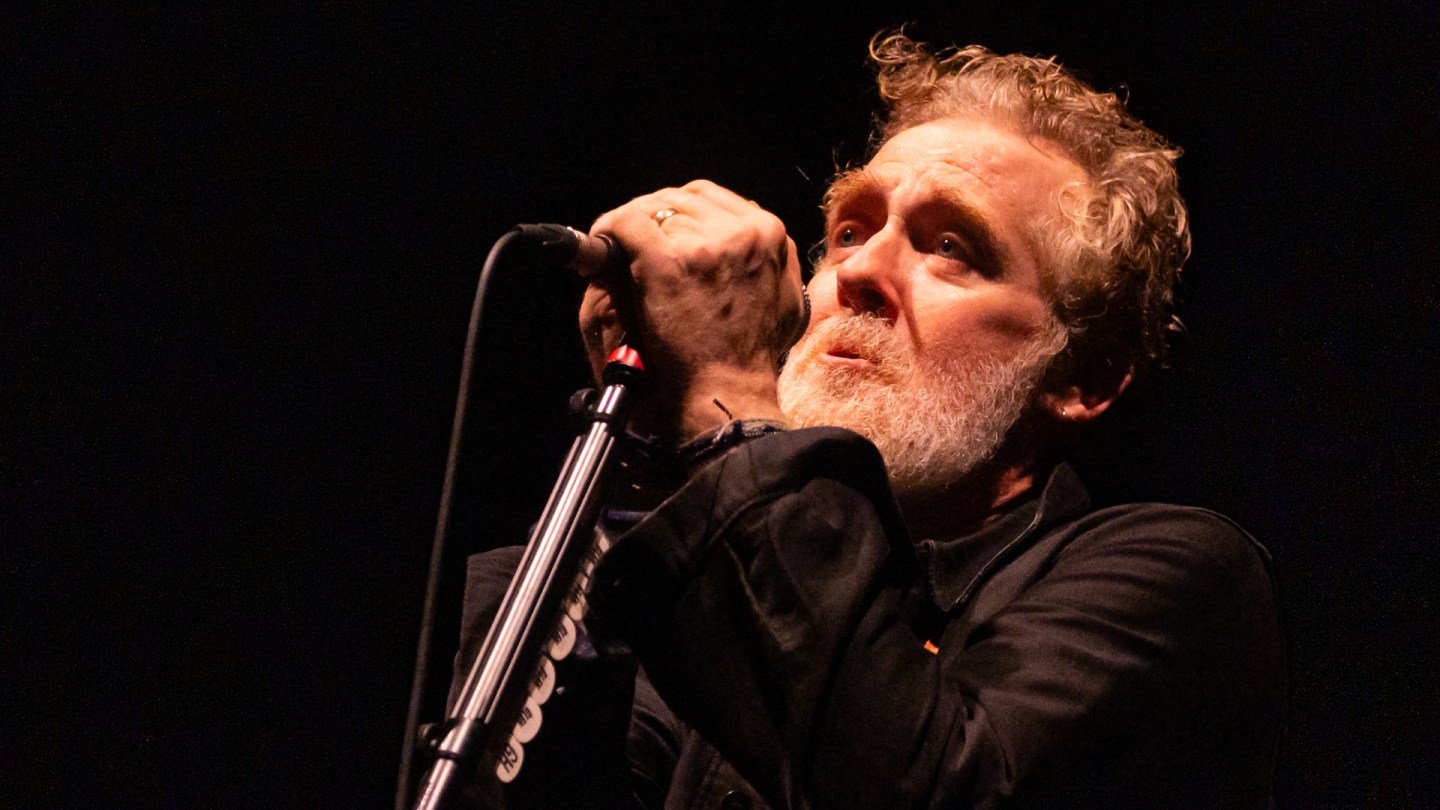
Hundreds of mourners, including high-profile politicians, actors and musicians, gathered in Dublin for the funeral of Glen Hansard, who died on July 29 in a motorcycle crash at the age of 56.
Access to St. Patrick’s Cathedral on Tuesday was limited given the size of the crowd who came to celebrate the Irishman’s life, but stars Bono, Steve Coogan, Chris O’Dowd, Declan O’Rourke, Imelda May, Hozier, BP Fallon, Mundy, Damien Dempsey and Jake Clemons were among those photographed entering the venue.
Hansard was best known as the frontman for the rock band the Frames, though he had successful solo albums with 2012’s Rhythm and Repose and 2015’s Didn’t He Ramble. He also wrote music for film, appearing in the BAFTA-winning The Commitments (1991) and Irish music drama Once (2007), in which he and co-star Markéta Irglová played a dramatized version of their real-life musical pairing, folk rock duo The Swell Season. It won them the Oscar for best original song the following year, for the track “Falling Slowly.”
Irglová performed at the funeral service alongside Eddie Vedder of Pearl Jam. Together, they sang Hansard’s The Song of Good Hope alongside Thomas Bartlett and the Frames.
Before that, Hansard’s wife, Maire, reflected on the loss and became visibly emotional. “I can find no adjective for the kind of support the family has been shown this past week,” she began. “The word is hidden somewhere in the look in people’s eyes and in the depth of their good deeds. None of this could have been done without you. Most of whom I’ve not even met yet. I owe my deepest gratitude to all our good friends who have spared no effort to guide me through this time.”
“As Glen’s wife, I want to thank him for the life we shared, searching for truth and beauty side by side, [which] we found in our son,” she continued, saying that their three-year-old is “too young to witness or understand” an event of such scale. “The bright spirit he inherited from his father is with us,” she added.
An array of performers and speakers took to the lectern inside the cathedral to pay tribute to Hansard, described by Irish poet Breandáin Ó Beaglaoich as “generous and truthful” and “a one-off person.” He said after reading a dedicated piece of work to Hansard: “I’ll be fond of you forever, Glen. You beautiful, beautiful man.”
One of Hansard’s younger brothers, Richard, led a particularly powerful speech, telling attendees that an evening with his sibling would be an “evening filled with songs, with stories, with tea, with chips and egg. Whatever happened, you knew that you were gonna be completely felt, heard, understood and filled with fresh excitement and possibly hope.”
“Glen made me feel that the world was a far more magical place than it seemed at the time to a young, shy boy from North Dublin. He sang songs. He was a storyteller. He would come in and turn the evening around, and it was easy to look up and be inspired. But also, he did the hard work. He wanted us to be better when we realized more than we realized that we could be. For his little brothers, he did those hard stuff. He instilled morals, a moral compass. He took responsibility and would say, ‘You’re not doing that. You’re not missing school. You’re not spray-painting walls. You’re not getting tattoos on your belly of a Finnish goth metal band you only listened to for two months,’” he said, prompting laughter from the room.
Hansard continued: “Glen said once that when you lose someone, you don’t really lose them. If you have the strength and the will, you will gain them back, and you inherit the best parts of them. We have inherited all the magical, colorful words, hugs, talks, madness, sadness, insightful, manic beauty that a brother, an uncle, a husband and a father could ever give. Thank you, Glen. Thank you, brother. Thank you, thank you, thank you, thank you, thank you.”
The star’s other brother, Gary, also stood up to thank attendees and well-wishers before performing a short song. Colm Mac Con Iomaire and Liam Ó Maonlaí sang, as did Ó Beaglaoich. “He was so well known on the big stages of Ireland and all over the world, [an] ordinary kind-hearted Ballymun man,” said Ó Beaglaoich. “A true Dub.”
The Hollywood Reporter reflected on Hansard’s legacy — and why he was a hero straight out of the movies — on Monday.
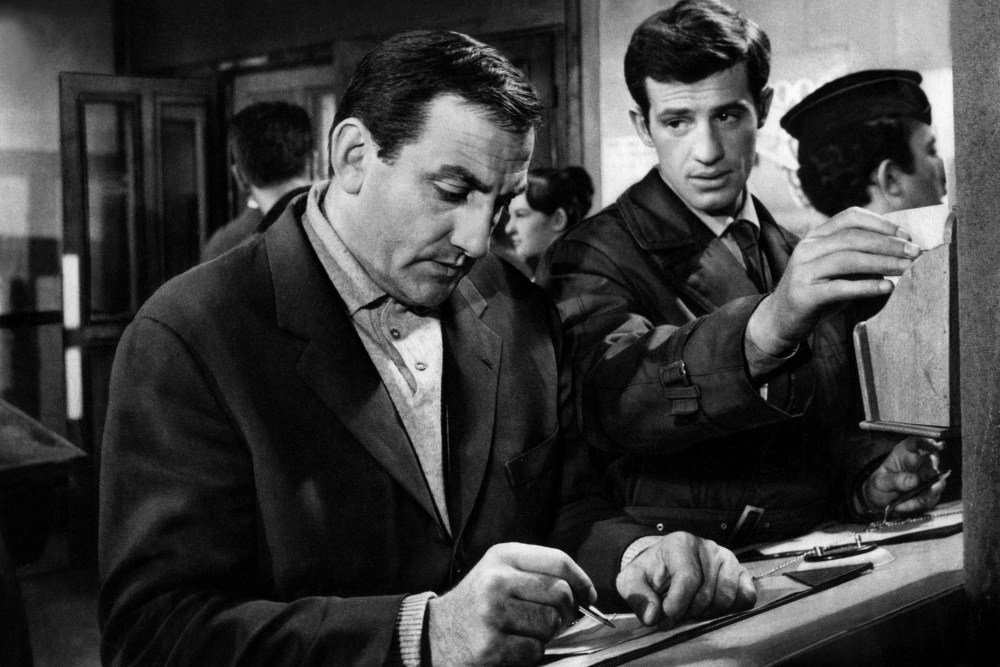
The San Sebastián Film Festival will dedicate a 20-feature retrospective to José Giovanni, the French director, screenwriter and novelist who became one of the defining figures of the country’s postwar crime cinema.
Running during the festival’s 74th edition, the program will span films released between 1960 and 2001, presenting almost all of Giovanni’s work as a director alongside eight titles he wrote for filmmakers including Jacques Becker, Jean-Pierre Melville, Claude Sautet, Jacques Deray, Robert Enrico and Henri Verneuil.
Born Joseph Antoine Roger Damiani in Paris in 1923, Giovanni helped shape the French crime genre known as polar, first through his novels and screenplays and later as a director with a raw, direct and highly physical style.
His turbulent and controversial life supplied much of the material for his fiction. Accused of murder and sentenced to death, Giovanni avoided the guillotine after his punishment was commuted to hard labor. His prison experience inspired his 1958 novel “Le Trou,” which Becker adapted as “The Hole” in 1960. Initially hired as a technical adviser, Giovanni ultimately co-wrote the screenplay for Becker’s final film.
Other novels from the period also became key works of French crime cinema. Sautet adapted “Classe tous risques” as “The Big Risk,” while Melville turned “Le Deuxième souffle” into “Second Wind,” starring Lino Ventura. Giovanni later wrote Verneuil’s “The Sicilian Clan,” which brought together Ventura, Alain Delon and Jean Gabin.
Courtesy of San Sebastián Film Festival
After collaborating with Deray and Enrico, Giovanni made his directing debut with “Law of Survival” in 1967. The war-inflected polar introduced three subjects that would recur throughout his work: the French Resistance, the Corsican milieu and betrayal.
Across 15 theatrical features, Giovanni focused on hired killers, Marseille gangsters, prisoners, marginalized thieves, wayward youths and ex-convicts struggling to re-enter society, often portraying characters governed by personal codes of loyalty and honor.
The program will include “Birds of Prey,” “Last Known Address,” “One Way Ticket,” “Hit Man,” “Two Men in Town,” “The Gypsy” and “Une robe noire pour un tueur,” as well as his final films, “My Friend the Traitor” and “My Father Saved My Life,” which drew more directly on the experiences and moral conflicts that shaped his life.
Organized by the festival and the Basque Film Archive, in collaboration with the Spanish Film Archive, the retrospective will be accompanied by a bilingual study written by Felipe Cabrerizo and edited by Quim Casas.
The 74th San Sebastián Film Festival will run Sept. 18-26.
After Cannes was dominated by international auteurs amid Hollywood’s retreat from the Croissette, the Toronto Film Festival will also foreground artist-driven films in its upcoming Wavelength section unveiled on Tuesday.
“When we look at the newspaper, and it’s filled with bad news and cruelty, a lot of these filmmakers are looking inwards. There’s a lot of introspection and personal investment in the films,” Andréa Picard, curator of Wavelengths, TIFF’s avant-garde film showcase, told The Hollywood Reporter. Auteurs moving onwards and inwards include Beatrice Gibson with her debut feature, At Night, shot in 16mm for BBC Films. The director plays a filmmaker struggling to make sense of the film she’s making as six women in Paris meet up and discuss the anxiety and psychic exhaustion of the iconic French city after dark.
At Night will have a North American premiere in Toronto after bowing in Locarno. There’s also inward-looking discovery with Biografía de Jorge Luis Borges (Life of Jorge Luis Borges), a five-and-a-half-hour documentary by Argentinian director Mariano Llinas headed to Toronto after a world premiere in Venice.
The film, while about the Argentine writer and poet Jorge Luis Borges and drawing on his papers, books he read and global cities he visited, also has director Llinas wrestling over how to capture a literary great known for endless reinvention. “It’s about the making of that film, and Mariano is in the film and he’s often called a Borgesian filmmaker himself, and so it’s almost a self-portrait as much as it’s a portrait of Borges,” Picard argues.
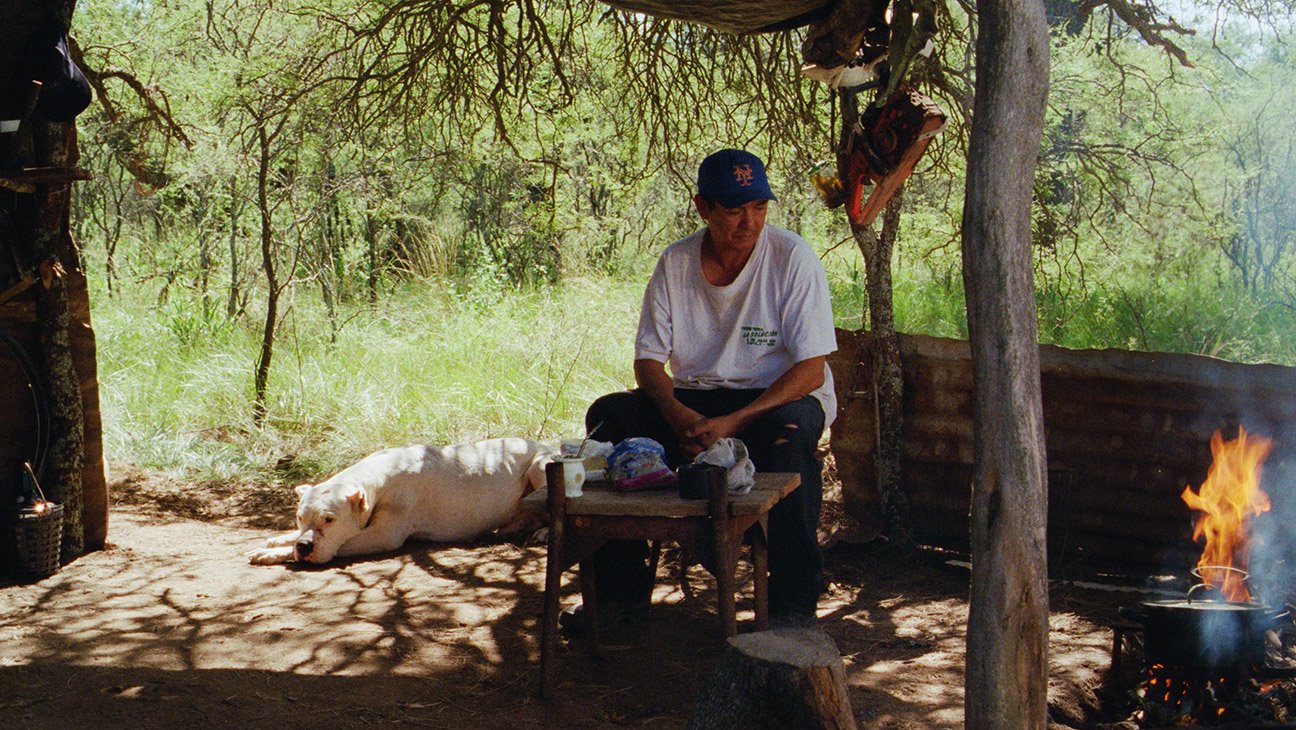
Fellow Argentine auteur Lisandro Alonso is bringing La Libertad Doble (Double Freedom) to Toronto for a North American showing after a Cannes world premiere. The movie shot in 35mm film revisits the main character and setting of the director’s minimalist first feature, Freedom, that 25 years earlier chronicled a few days in the life of a solitary woodcutter in the remote Pampas mountains. The loosely-inspired sequel has echoes of Argentina’s ongoing economic crisis today.
“The original film was very much isolated in the sort of very rural part of La Pampa in Argentina, and this one still is, but we feel these reverberations in very explicit ways – how the government austerity policies are impacting the lives of people even as far away from the metropole as this character in La Pampa,” Jesse Cumming, associate curator for the Wavelengths program, adds.
The TIFF section has also booked North American premieres for three Berlin titles: Sebastian Brameshuber’s London; Nicolas Pereda’s comedic film Lo demás es ruido (Everything Else is Noise), set around a musician friend’s TV interview in an apartment in Mexico City; and German auteur Angela Schanelec’s Meine Frau Weint (My Wife Cries), an austere romantic tragedy.
There’s also a North American bow for prolific Romanian auteur Radu Jude’s Cannes entry, Le Journal d’Une Femme de Chambre (The Diary of a Chambermaid), a French-language and highly political film that adapts the classic 19th-century book by Octave Mirbeau.
And TIFF has a Canadian premiere for William and David Greaves’ posthumous historical documentary Once Upon a Time in Harlem, which captures a 1972 gathering of surviving notables from the original Harlem Renaissance. Williams Greaves died in 2014, so the film was finished by son David and granddaughter Liani.
The Wavelengths section has two world premieres, one for Toronto-based artist and filmmaker Yuula Benivolski’s The Black Box is Orange, a first feature, and another for John Torres’ The Remotes, a film comprising behind-the-scenes footage of films shot in the Philippines and artfully combined to resemble a fictional story.
This year’s Wavelengths short and mid-lengths lineup includes Kamal Aljafari with Masao Adachi Takes a Passport Photo, a portrait of the legendary Japanese iconoclast; Maryam Tafakory’s Ghazal-e Sorkh, an essay film that recounts the 1976 boycott of the Shiraz Art Festival; and Zheng Lu Xinyuan’s nocturnal Fire Flies, where a filmmaker is led on a flashlight-illuminated stroll through the mountains.
There’s also world premieres for Parastoo Anoushahpour’s Peacocks Come with the Clouds; Rita Ferrando’s After Image, which traces the director’s family history of migration from Argentina to Canada; Mustafa Uzuner’s The Address Book, shot in 16mm; Ben Russell’s La Prospettiva (1653); Jiaqi Yu’s Moon Palace; and Simon Liu’s ghost tale Splits in Two.
The Toronto Film Festival is set to run from Sept. 10 to 20. Additional film lineup announcements will be made in the coming weeks.