When Jimmy Kimmel announced that Rosie O’Donnell would be filling in as a week-long guest host of “Jimmy Kimmel Live!” during his summer vacation, he teased it would be “a special treat” for Donald Trump, who’s harbored a 20-year-long vendetta against the comic for her mocking his bankruptcies on “The View” back in 2006.
O’Donnell told Variety she was “surprised” by the guest-hosting offer from Kimmel, given the pair’s “adversarial relationship” and the fact that she’d never even been asked on as a guest, but she was “thankful” and accepted nevertheless, owing in large part to her support of Kimmel during Trump’s relentless campaign to get his late-night show canceled over jokes he didn’t like.
“I support [Kimmel] in what he’s doing with the First Amendment, and our ability as entertainers and citizens to speak out against our government that’s enshrined in the Founding Fathers’ writings about our government, so I think he’s fantastic,” O’Donnell said. “And I wish that Stephen Colbert had the same kind of support when it happened to him, because he shouldn’t be gone either.”
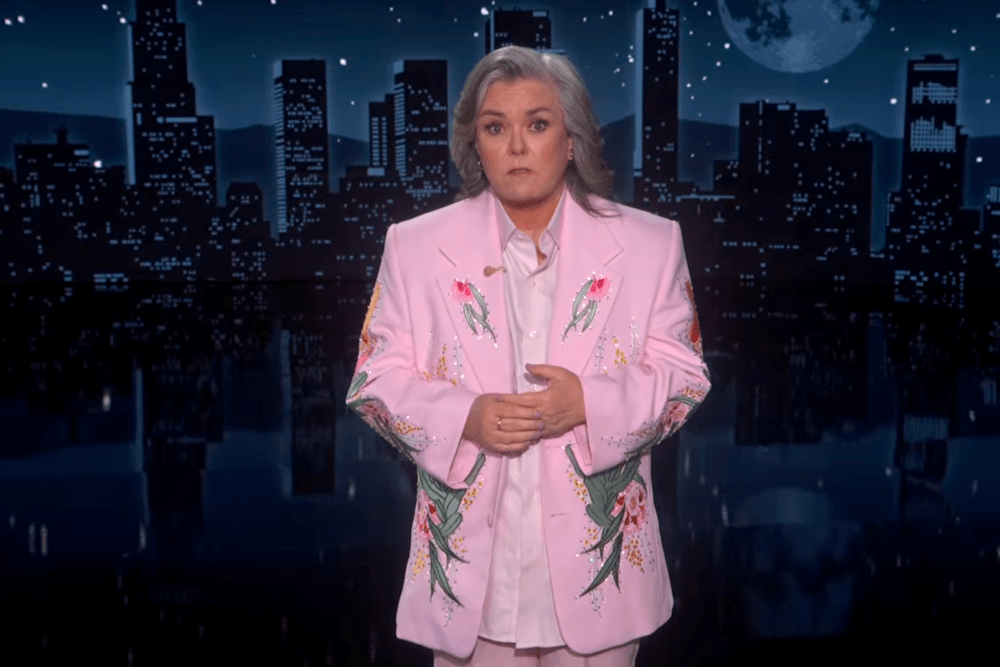
On Monday night, O’Donnell kicked off her “Jimmy Kimmel Live!” hosting duties by strutting out onstage in a bright pink suit adorned with flowers — to lengthy applause and chants of “RO-SIE! RO-SIE!” — before declaring, “If you thought the president hated ‘Jimmy Kimmel Live!’ when it was hosted by Jimmy Kimmel? Buckle up, people! Buckle up.”
The former host of “The Rosie O’Donnell Show” and “The View” continued taking shots at her thin-skinned nemesis during her monologue, joking, “I’ve been living in Ireland for the past two years because of ‘Mango Mussolini.’ I read that Project 2025 and said, ‘Gotta get myself out of here!’ and I decided to go to Ireland where people are driven to drink regardless of who’s running their country.”
At one point during her monologue, she turned to the camera and addressed Trump, saying, “Hi! I know you’re watching!”
O’Donnell, 64, seemed cool and collected at the helm of a late-night show after decades away from TV hosting, regaling the audience with jokes about her time living in Ireland, including the disarming kindness of strangers (compared to New York City), their enthusiastic drinking and trying to ask out her (straight) pharmacist, and getting along famously with her guests, including “Ted Lasso” star Hannah Waddingham, who announced herself as a huge Rosie fan (“I can’t believe I’m talking to Rosie O’Donnell… I’m losing my mind!” she exclaimed), and “Schmigadoon!’s” Ana Gasteyer.
Between guests, O’Donnell choked up while giving a moving tribute to the late Hayden Panettiere, who tragically passed away on Sunday at the age of 36. Panettiere had been a favorite guest of “The Rosie O’Donnell Show” as a child actress.
“I’m just heartbroken over the passing of Hayden Panettiere last night. She was on my show many times as a little girl, and I got to know her as a grown woman,” offered O’Donnell. “And she was so brave talking about mental health before people were really ready to hear about it, and very sad. My love to her family and friends, and she will be missed. Godspeed, Hayden.”
Overall, O’Donnell seemed to acquit herself well as a late-night host. Cue the angry Trump posts.
Hollywood likes child actors to be precocious, to convey an “old soul,” to give the impression of hidden depths that, if we’re being perfectly honest, you only occasionally see when you’re dealing with actual children.
But precocity isn’t the same as maturity, and when young actors grow up, it isn’t always easy to make that transition — to go from being a child who performs in ways that are recognizably adult to being an adult who performs in ways that are recognizably human.
From her earliest screen appearances, Hayden Panettiere excelled at precocity.
I’ve already had debates today, in the aftermath of Panettiere’s tragic death at the age of 36, about whether or not Panettiere stole Remember the Titans from Denzel Washington and a cast of up-and-coming stars. It’s a very real debate. Not many actors could even debatably steal movies from Denzel Washington, much less actors who weren’t even 10.
As Sheryl Yoast, football-obsessed daughter to Will Patton’s Bill Yoast, Panettiere plays what is a fairly common genre archetype: the adorable moppet raised by a sports-obsessed parent to talk about sports like a 50-something man at a barber shop. Almost all of her dialogue is written so that it would sound normal as part of a talk radio call-in show, but delightfully alien from a kid. Precocity! But in a movie in which almost every choice accentuates tear-jerking and other emotional manipulation, Panettiere’s performance is notable for how natural she makes a character who is presented as unnatural.
It’s easy to watch Remember the Titans and understand why Ryan Gosling became a star or recognize the attributes essential to the ongoing careers of Donald Faison, Ryan Hurst and Ethan Suplee. It’s just as easy to recognize Panettiere’s screen presence, beyond her ability to elicit amusement at her character’s wise-beyond-her-years obsession with the gridiron.
You can see the seeds, in that performance, of what made her so in-demand for projects like Ice Princess, Raising Helen and whichever Bring It On sequel she starred in. Television roles like her work on late-run Ally McBeal and even her guest appearances on Malcolm in the Middle pointed to a young actor who radiated energy, without necessarily promising that a mature actress would necessarily emerge.
Countless capable child stars have done precocity, and then never anything else — or have never gotten the opportunity to try anything else.
Part of why NBC’s Heroes worked as well as it did when it premiered in September 2006 is that the series treated Panettiere’s Claire not as a child, but as the person on whose shoulders the fate of the world rested. Some of the promotion of and reaction to Claire fetishized her youth and the cheerleader outfit and all of that, but that’s not what the show itself mostly did — and it certainly wasn’t what Panettiere played.
Yes, the central mission of the first season was for the other characters to save Claire. But the internal struggle of an ordinary young woman discovering an extraordinary ability to heal, to face a dangerous world with a reduced capacity for feeling pain, was a complex and heroic thing on its own. It was an adult performance that the series only occasionally knew what to do with; after that first season, Heroes never lived up to its full potential and Panettiere didn’t always have as much to play or to play well.
Being a young actor continuing to work as you grow comes with the risk that Hollywood won’t be prepared to let you age to that next level. But Panettiere’s second series lead role, in ABC’s Nashville, immediately pushed her out of “young” parts and into onscreen adulthood.
The show, which launched in 2012, immediately introduced Panettiere’s Juliette as a diva, a bad girl, an adversary for Connie Britton’s Rayna James. But in the story of a young woman who started fighting for autonomy after years as a juvenile cog in the music industry, Panettiere found something relatable. Juliette did plenty of bad things in the early seasons of Nashville (and beyond), but Panettiere rarely played those choices as merely motivated by a hunger for success or power. Raised professionally on soap operas, the actress presumably knew what a soap opera villain looks and feels like, but Juliette was, instead, first and foremost an industry survivor.
Nashville ended in 2018 and Panettiere wasn’t even 30. She’d been a child star and she’d been the anchor of two very different broadcast dramas — as a young adult and then an adult — showcasing very different sets of skills. She had achieved what seemed like the most difficult part of a professional evolution.
She never starred in another television series. Other than her return to the Scream franchise in 2023, none of her film work had much visibility. Rather, there were reports about bad relationships and postpartum depression and other struggles chronicled in her memoir, This Is Me: A Reckoning.
The career that felt hard-earned and hard-won from Remember the Titans through Nashville never got that next chapter, those next many chapters.
I can’t conclude this piece without acknowledging: In the past few years, younger millennials have grieved the loss of a number of actresses whose onscreen growth paralleled their own. Panettiere, Michelle Trachtenberg, Daveigh Chase and others aren’t unified by any one thing — their deaths weren’t the same, their lives in the industry weren’t the same and their support systems weren’t the same. But I still feel comfortable saying this, because it shouldn’t be controversial: Hollywood needs to do better.
Young people slip through the cracks in different ways in every walk of life and every part of the country, whether they have supportive parents, negligent parents or overly meddlesome parents. The challenges of life might be magnified for a movie star compared to a barista or grocery bagger or aspiring teacher, but demons are demons, exploiters are exploiters, heartbreak and addiction and depression don’t care how many people want to take your picture on a red carpet.
And I know that many or most of Panettiere’s struggles came well after her child stardom, and many were outside of any Hollywood purview.
But it’s incumbent on film and television studios, on record labels, on professional sports franchises to have better track records when it comes to protecting and nurturing young people. We’ve had too much evidence that, despite countless shameful documentaries and journalistic exposes, the industry treats kids as a renewable resource rather than a precious resource.
I don’t have solutions or individuals to shame or, honestly, anything to add other than this obvious sentiment, and sadness.
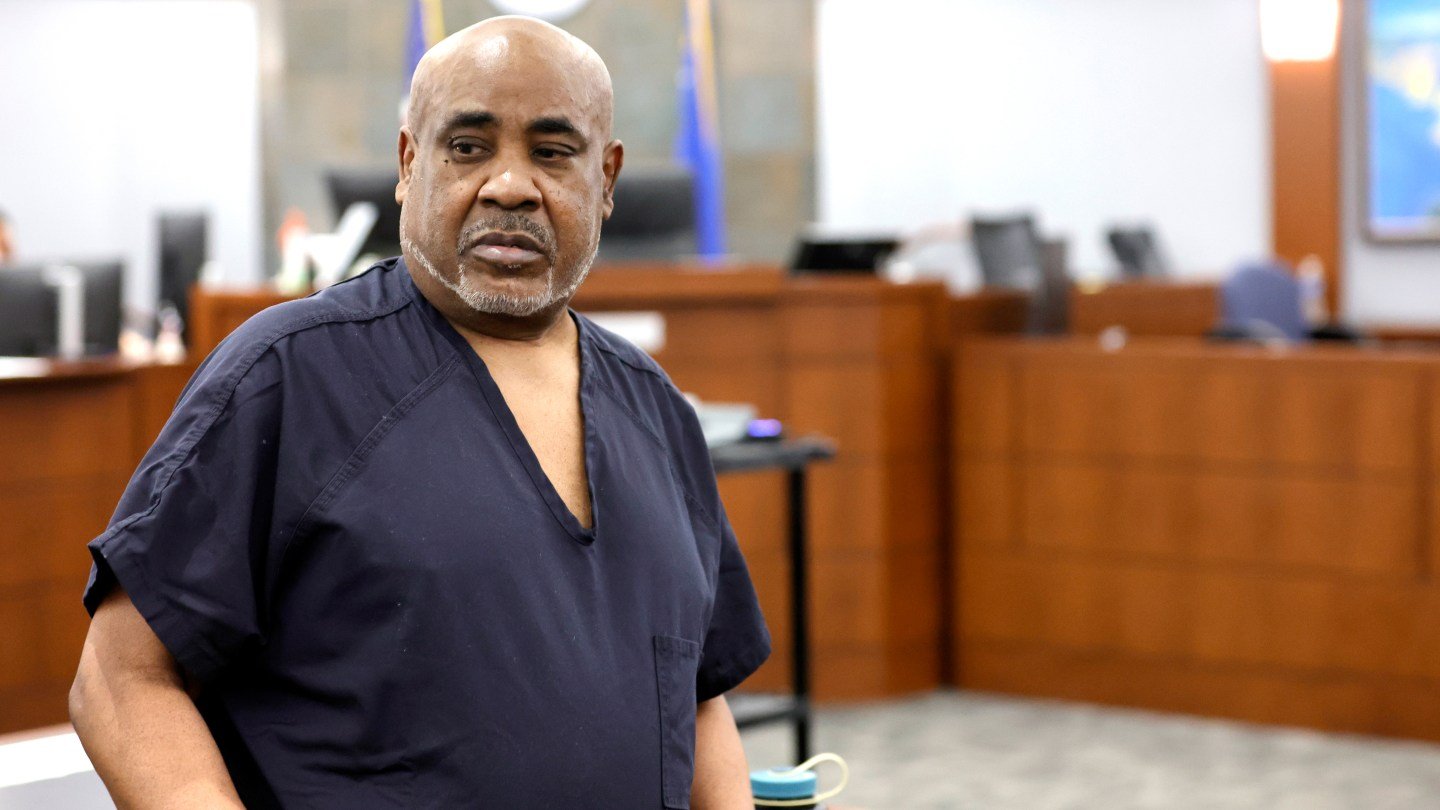
A trial on the murder of hip-hop icon Tupac Shakur finally began in Las Vegas on Monday, three decades removed from Shakur’s death in a Las Vegas drive-by shooting, with Duane “Keffe D” Davis accused of orchestrating the killing.
The prosecution and Davis’s defense gave their opening statements on Monday morning, with Chief Deputy District Attorney Binu Palal telling jurors that Davis arranged the murder in “an act of revenge,” as CBS News reported, after Shakur had attacked Davis’s nephew Orlando “Baby Lane” Anderson.
Davis, who was arrested and charged with murder in 2023, is the only person to have ever been arrested in the infamous case. He published a memoir in 2019, Compton Street Legend, in which he said he provided the gun used in the crime, which has become a key piece of evidence in the prosecution’s case.
“Let’s be clear, Duane Davis did not pull the trigger,” Palal said. “But he did plan the shooting in retaliation of the beating of his nephew. Remarkably, you will learn that from Duane Davis himself.”
Davis’s defense attorney Michael Sanft, however, encouraged the jury during his opening statement to treat the memoir as fiction, with the New York Times reporting that Sanft referred to the memoir as “bullshit,” further saying Davis “was never charged for any of what he said during that time period, and it’s because they knew he was full of crap.”
Several witnesses took the stand on Monday during the first day of the trial: Las Vegas police officer Garry Dale, who responded to the incident the night of the shooting; Ingrid Stokes, a woman in a nearby car when the shooting occurred; former homicide detective Brent Becker; and former LAPD police officer Fred Miller, one of the detectives who investigated the murder of Notorious B.I.G.
Shakur’s murder has long been one of the most notorious unsolved cases in modern pop culture. He was shot in Las Vegas in 1996, riding in the passenger seat while Suge Knight drove. He died six days after the shooting.
The case reflected how gang violence became intertwined with the fierce East Coast/West Coast Hip-Hop rivalry that developed in the ’90s. Shakur’s label Death Row was said to be affiliated with the Bloods, and Sean “Diddy” Combs’ Bad Boy Records with the crips. Davis was a leader of the South Side Compton Crips, and the defendant has previously said Combs had called for Shakur’s death. Combs, currently in prison, has consistently denied the claims.
As the Times noted, during Dale’s testimony, he recalled being at the scene just after Shakur was shot, with Shakur declining to say who shot him, telling him, “No, we’ll take care of it.”
During Becker’s testimony, as CNN reported, he recalled testimony from Knight, telling the court he was “timid” and that “I thought he lied to us. He just didn’t know anything.”
Miller was the final witness of the day, and day one concluded with the jury reviewing an extensive audio interview with Davis.
Among the performances for which Hayden Panettiere has been most fondly remembered in light of her death at age 36 are her memorable turns in the Scream franchise.
Panettiere, who died Sunday, got her start as a child actress in projects like Remember the Titans before starring on such series as Heroes and Nashville and in features like Ice Princess and I Love You, Beth Cooper. In 2011, she originated the role of Kirby Reed in Scream 4 before reprising the character for 2023’s Scream VIafter fans campaigned for her return.
“The world is losing a very talented actress and beautiful soul who has shared and been revealing about her struggles along the way,” Nancy Naylor, who worked as a casting director for Scream 4, tells The Hollywood Reporter. “One hopes that there’s a happy ending, but it doesn’t always turn out that way in real life.”
Hayden Panettiere (left) and Emma Roberts in Scream 4.
Courtesy of Everett Collection
Scream 4 marked not only Panettiere’s introduction to the beloved slasher series that filmmaker Wes Craven initiated with 1996’s original movie, but it also served as Naylor’s first and only project in the franchise. She worked with fellow casting directors Avy Kaufman and Rick Rosenthal on the sequel that saw the return of franchise mainstays Neve Campbell, Courteney Cox and David Arquette, along with the additions of series newcomers Emma Roberts, Mary McDonnell, Anthony Anderson and Alison Brie.
“Hayden had been known from Heroes and had been working as a child actress, and the industry was aware of her,” Naylor recalls. “When her name came up, she seemed like a really terrific contender for the role of Kirby and a great contrast to Emma Roberts. They were just visually and energetically very different, and we thought they would be great together.”
In Scream 4, Kirby (Panettiere) is a horror-obsessed Woodsboro high school student and the best friend to Jill, who is played by Roberts and is the cousin of Campbell’s character, Sidney. Naylor recalls Panettiere’s positive energy when she landed the part: “I remember thinking she felt very happy. She was very excited to be in the mix and to get the role.”
While reflecting on what made her stand out in the audition process, the casting director says, “It was her fierce warrior nature for the role. The character has this incredible scene where she’s on a phone call with Ghostface, and she has to save her friend and [rattle] off a giant list of genre films in a desperate hour. I knew that she would have the passion and the energy to make that scene so believable, so heartbreaking, so intense — and she absolutely delivered all of those qualities.”
Dimension Films released Scream 4 in theaters on April 15, 2011, and it would go on to collect $97 million globally. Between the tepid commercial response and Craven’s subsequent passing in 2015, the franchise didn’t return to theaters until 2022’s Scream. With the series generating renewed buzz at that time, fans took to social media to push for Panettiere to return, despite Kirby appearing to be left for dead in Scream 4. The character came back for 2023’s Scream VI, in which she was working as an FBI special agent.
“It made me happy that she had been so successful in Scream 4 and that fans were wanting to see more,” Naylor says. “I remember being a fan of Nashville and thinking she was just magnificent in that series, and it was so touching and such a different vibe from Scream. It showed me how incredibly versatile she was.”
A number of castmembers from the Scream series have paid tribute to Panettiere, with Roberts posting, “You are so loved, and you will be forever missed.” Additionally, Arquette called her “such a brave and brilliant soul.” During a conversation with Entertainment Tonight in May, Panettiere deemed the role “one of my favorite characters to ever play” and said of Kirby, “She was brave and fierce and edgy.”
Adds Naylor, “I was excited to see that Hayden’s journey continued in the franchise. She is really special and so lovely, and it’s just so tragic what’s happened.”
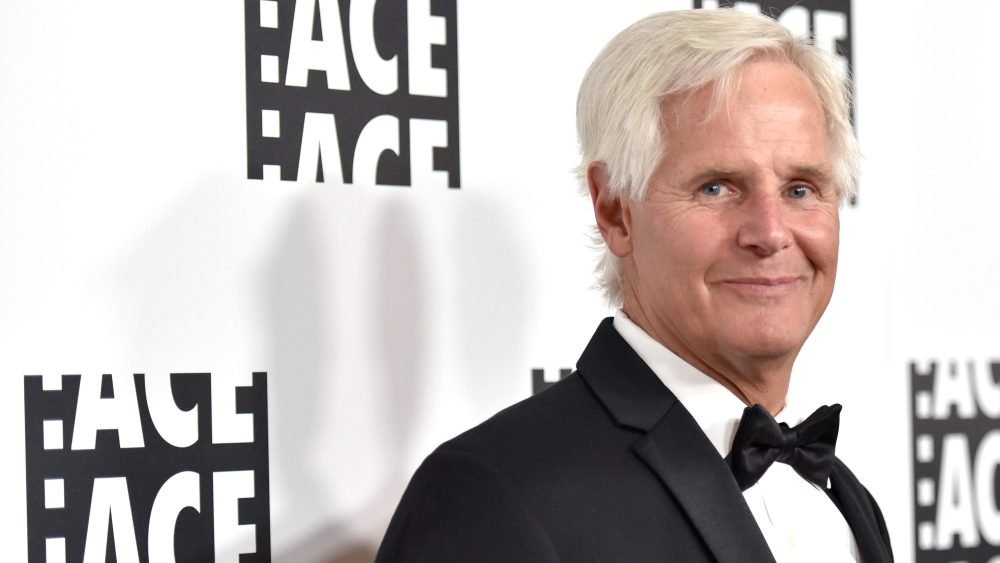
On today’s episode of “Daily Variety” podcast, “The X-Files” creator Chris Carter explains to Variety’s Michael Schneider how he got the chance to do a director’s cut of his 2008 “The X-Files: I Want to Believe” feature film. The new cut dubbed “The X-Files: I Want to Believe: Vrach Frankenshteyn” debuted Aug. 14 on Hulu and Disney+ outside the U.S.
Carter points out that his preferred cut is actually shorter than the original release, which ran 144 minutes, per IMDB.
“I always felt like people didn’t see the movie I intended to make,” Carter says, noting that 20th Century Studios executive Steve Asbell helped get the director’s cut project off the ground. “I asked him, ‘Have you ever thought about doing a director’s cut?’ And it was really just offhand. And he said, ‘Why? Would you like to do one?’ I said, ‘I’d love to do one.’ I can tell you, though, the reason for doing the director’s cut for me is not to put all the stuff that was taken out, but to put the right stuff in that was taken out.”
Carter discloses that for the original release in 2008, he was under a lot of pressure to ensure that the film would secure at PG-13 rating.
“When we showed them our first cut, the studio freaked out. They said, ‘This is torture porn. And you can’t do this for a PG-13 movie.’ So we cut it back and we satisfied them. And then we gave it to the motion picture folks, and they said, this isn’t a PG-13 movie. And we cut it back even further,” Carter says. “So the movie you’re seeing is, by and large, the movie that my partner in crime, [writer-producer] Frank Spotnitz, and I set out to make. And we always set out to make a very scary movie on a very limited budget, which is kind of the way we made ‘The X Files‘ TV series.”
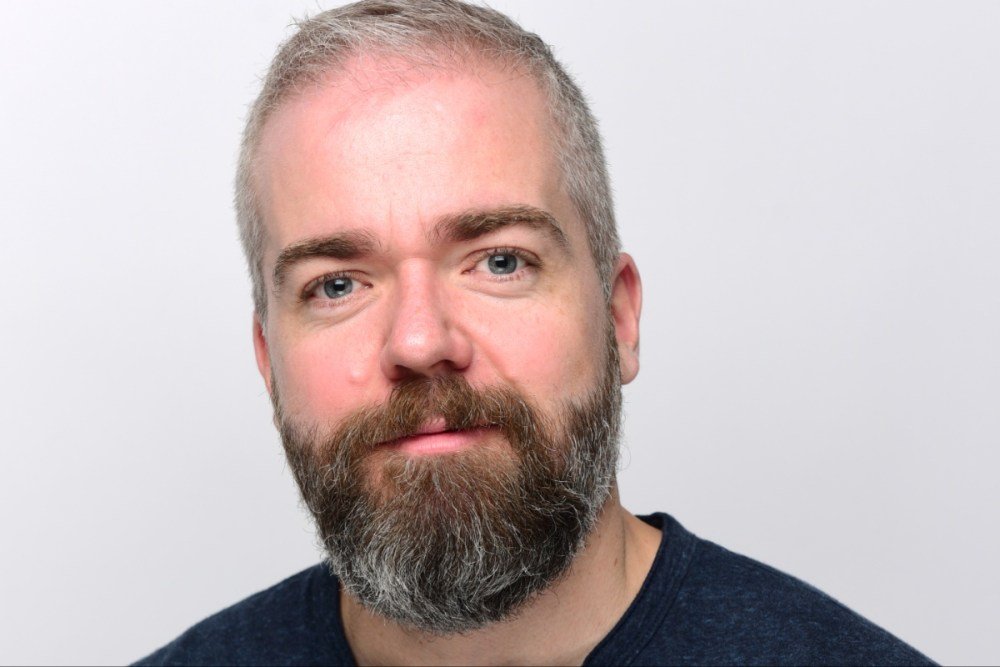
David F. Sandberg has been tapped to direct a new psychological horror movie, “Mommy’s Home,” for Lionsgate.
From screenwriter James Morosini, “Mommy’s Home” follows “a young dad whose family life becomes terrifyingly unhinged when his cryogenically preserved mom is unfrozen and sent to live with him,” according to an official logline.
Sandberg is probably best known for writing and directing his viral YouTube short turned horror feature “Lights Out.” He also helmed “Shazam!” and its 2023 sequel. His most directing credit was 2025’s “Until Dawn,” a big-screen adaptation of the popular horror video game for Sony.
Sandberg’s other upcoming projects include the sci-fi horror “Below” for Netflix and Atomic Monster as well as “A Little Slice of Hell” for Paramount.
Morosini usually works in front of the camera as an actor, recently starring in “It’s What’s Inside” for Netflix and Steve Pink’s sci-fi thriller “Terrestrial.” “Mommy’s Home” marks Morosini’s second feature credit as a screenwriter, after penning, directing and starring in the 2022 dark comedy “I Love My Dad.”
Producers for “Mommy’s Home” are Craig Flores, Dawn Olmstead and Anonymous Content. Sandberg and Lotta Losten also produce through their company Mångata. Executive producers include Nathan Kahane, Morosini, David Levine, Garrett Kemble and Ryan Schwartz. Scott O’Brien and Maria Ascanio are overseeing the project for Lionsgate. Dan Freedmannegotiated the deal on behalf of the studio.
Sandberg is represented by CAA, Gotham Group, and Jackoway Austen Tyerman Wertheimer Mandelbaum Morris Bernstein Trattner Auerbach Hynick Jaime LeVine Sample & Klein. Morosini is represented by CAA and Eric Brooks and Matt Rosen at GGSSC.
The InSneider was the first to report Sandberg’s involvement in “Mommy’s Home.”
Independent music publisher Round Hill is suing Suno and Anthropic on claims of mass copyright infringement, alleging that the two AI companies scraped hundreds of the publisher’s songs without permission to train their AI models.
Round Hill marks just the latest major lawsuit for both Suno and Anthropic, who’ve both been sued by the major record companies on similar claims. Suno, industry’s biggest AI music generation platform, also faces a suit from Universal Music Group and Sony Music Group (WMG also sued, though the company has since settled) related to its use of copyright to create new AI-generated recordings. Anthropic, meanwhile faces suits from Universal Music Publishing, Abcko, Concord and BMG over the companies’ songs’ lyrics being used to train its AI agent Claude.
Round Hill is a prominent music publisher whose copyrights include the Goo Goo Dolls’ “Iris,” Bonnie Tyler’s “Total Eclipse of the Heart,” the Kinks’ “Lola” and Dio’s “Holy Diver.” The company provided a list of 500 songs that the defendants had infringed upon. Round Hill said in the suits that the company plans to “amend to list potentially ten thousand or more of their musical compositions,” with those damages potentially exceeding $1 billion.
“While in other cases for copyright infringement, Defendant has waxed poetic about the necessity of progress and AI’s value to society, there is simply no reason — other than rote expediency — to have that progress come at the cost of copyrights holders,” prominent music attorney Richard Busch, representing Round Hill, wrote in the suits.
Round Hill further argued that the latter “‘expediency’ arguments completely falter” when taking into account Suno and Anthropic’s significant cash valuations they’ve earned while “exploiting illicit copies of copyrighted works, including the Round Hill Works.”
“There is simply nothing fair about a company using theft to build for purely commercial purposes a multi-billion dollar business while those from which they steal receive nothing,” Round Hill said.
Reps for Anthropic and Suno didn’t immediately respond to request for comment.
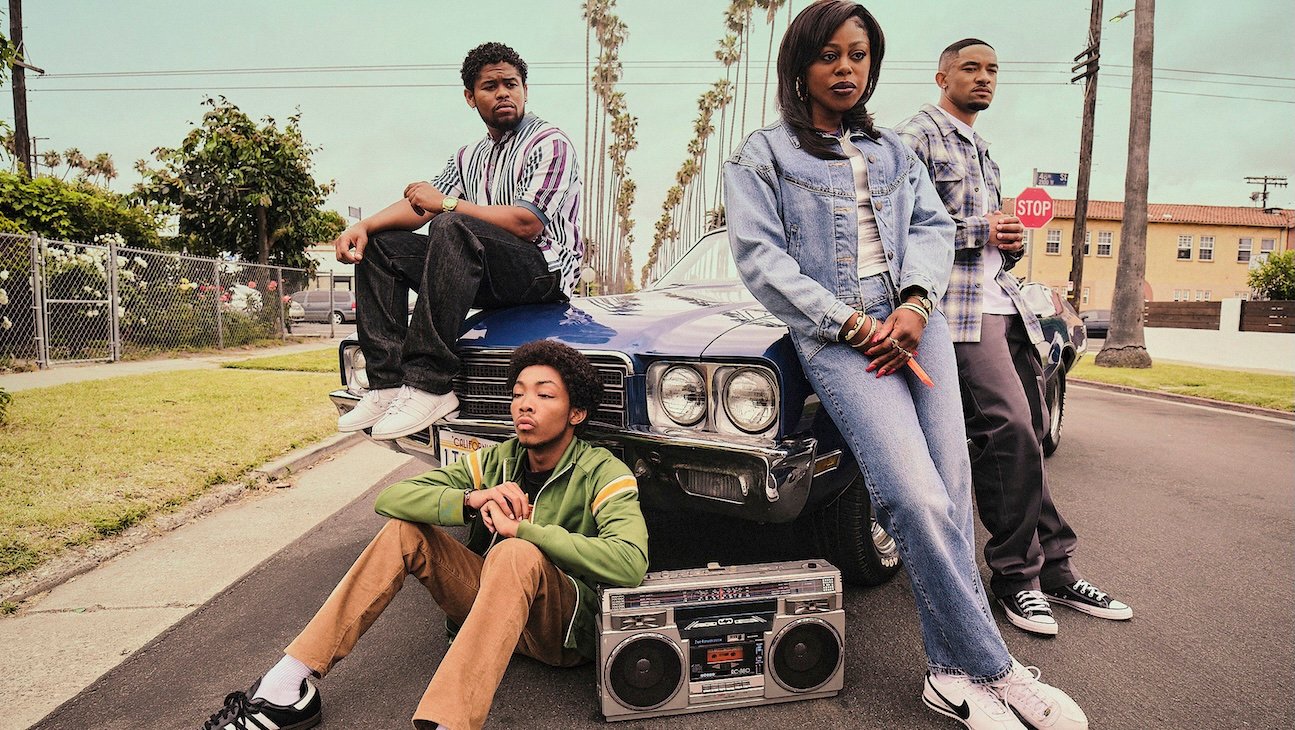
After getting clean, Gail Bean’s Snowfall character Wanda Bell has her sights set on the music business.
In the trailer for Snowfall spinoff, The Drop, set to premiere on Tuesday Sept. 8 on FX and Hulu, Wanda is shown proclaiming that West Coast rap “is the new gold rush; no cops, no murder”
She then goes to her cousin Lamar (Asante Blackk) and asks him to make a beat for her as the two of them try to attract volatile local rapper Artillery (Simmie “Buddy” Sims III).
And, via voiceover, as the tapes start piling up, she explains how what she witnessed with Leon and Franklin (Snowfall star Damson Idris) building their crack empire, gave her a “front-row seat to how they changed the game. We know our customers because they are our customers.”
As the trailer goes on, the tensions on the streets ratchet up as family members disapprove of Lamar getting involved with the rap game and Wanda’s threatened more than once.
And Leon suggests Wanda may be in over her head.
“I know these streets just like you,” she tells him.
“But you don’t know this gangsta business like me,” he replies.
Still she ends the preview on a high: “I’m unstoppable, baby!”
“The Drop: A Snowfall Saga follows Snowfall characters Wanda Bell (Gail Bean) and Leon Simmons (Isaiah John) as they fight to reinvent themselves in ’90s Los Angeles, where the fallout from the crack epidemic is fueling a new game: the rise of West Coast rap. Wanda starts the series driven by the clear belief that West Coast rap has the power to reshape American culture. She will work to put together a ragtag group of geniuses and lead them to the realization of all their dreams. To do it, she must navigate the dangerous overlap of music and street politics, pulling in those closest to her including her cousins Lamar Kinsey (Asante Blackk) and James Kinsey (Peyton Alex Smith), and pursuing volatile local rapper Artillery (Simmie “Buddy” Sims III), who is already in a tangle with law enforcement. Her internship with former D-boy-turned-label-owner Darryl ‘DG’ Grant (Brandon Mychal Smith) creates opportunities but also deepens tensions between Wanda and Leon, who has vowed to leave the streets for good and chase down his own atonement through his free legal clinic. As ambition, loyalty and survival collide, how much is everyone willing to risk in order to build something lasting in a world that threatens to pull them down?”
The cast also includes Mykelti Williamson, Nicki Micheaux, Isidora Goreshter, Eric Balfour, Richard Portnow, Zaire Adams, Demetrius Grosse and Quincy Chad, with Chad reprising his Snowfall role as Big Leon.
Malcolm Spellman (The Falcon and the Winter Soldier, Bel-Air) executive produces the series from FX Productions with Snowfall EPs Dave Andron, Thomas Schlamme, Julie DeJoie, Michael London, Trevor Engelson and Paul Garnes.
Speaking to The Hollywood Reporter for the Snowfall finale, Andron explained crafting the narrative so Leon and Wanda, then happily married, could move forward.
“One of our guiding lights for who was going to make it out was: The people who had taken stock of the things they’d done and tried to change their lives should get to make it out,” he said, naming Leon as one of those characters. “It felt like you wanted there to be, for those people, a chance to go live a life. They get a chance to go forward and try to right the wrongs of their past. That felt important as well. Because the reality is it’s not just hopeless for everybody. But that was the guiding light for who gets a happier ending.”
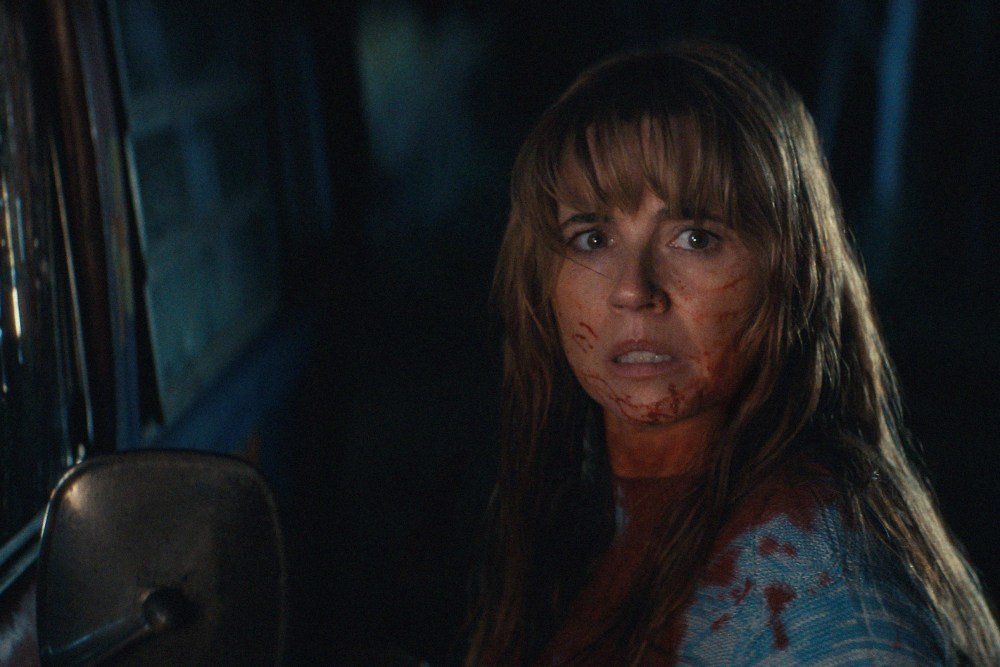
Cardellini stars in the Peacock series as the franchise antagonist Pamela Voorhees. The show, premiering Oct. 15 on the streamer, follows Voorhees’ life prior to the events of the first “Friday the 13th” film. It also stars William Catlett as Levon Brooks, though exact character details remain under wraps.
“I remember one of my most fun moviegoing experiences was I saw ‘Freddy vs. Jason’ on the Universal City Walk, which is a giant movie theater, at the height of its popularity, and people were screaming at the screen and throwing things,” she told me Sunday at the HBO Max Emmy Nominee Celebration event in Hollywood.
Does she predict the same for the new TV show? “This is a longer format so there’s a lot more you get to do in eight episodes,” Cardellini said. “It’s not necessarily like 90 minutes of pure horror. There’s a lot of story there. So maybe once in a while you’ll throw some things and scream.”
And possibly cover your eyes.
“It does get gory, yes, so much so that I wish sometimes they weren’t as practical as they were,” Cardellini said. “There’s a couple of gory moments on set that were very practical that were pretty gross. Blood everywhere at one point.”
Linda Cardellini teases the upcoming “Friday the 13th” prequel series, “Crystal Lake”:
“This is a longer format so there’s a lot more you get to do in eight episodes,” Cardellini said. “It’s not necessarily like 90 minutes of pure horror. There’s a lot of story there. So maybe… pic.twitter.com/NCB60HsEYq
Cardellini said most horror scripts she’s given are for characters who are running away from the killer. “Everything that I’ve ever read that was handed to me that was in that space was for the person who was being chased, not the person who was chasing everyone,” she said. “It was really fun this time to be on the other side of the knife.”
Pamela first appeared in the original “Friday the 13th” movie in 1980 as Jason’s mother. She exacts revenge on people who she believed were responsible for Jason’s drowning in 1957 at Camp Crystal Lake.
Cardellini attended the HBO Max Emmy event to celebrate her nomination for her work in “DTF St. Louis.”
It’s uncommon to meet an actor bold enough to call Ari Emanuel, the executive chairman of WME Group and one of the most powerful people in Hollywood, a “prick” on the record.
But it’s also uncommon to interview an actor as unfiltered as Steve Way.
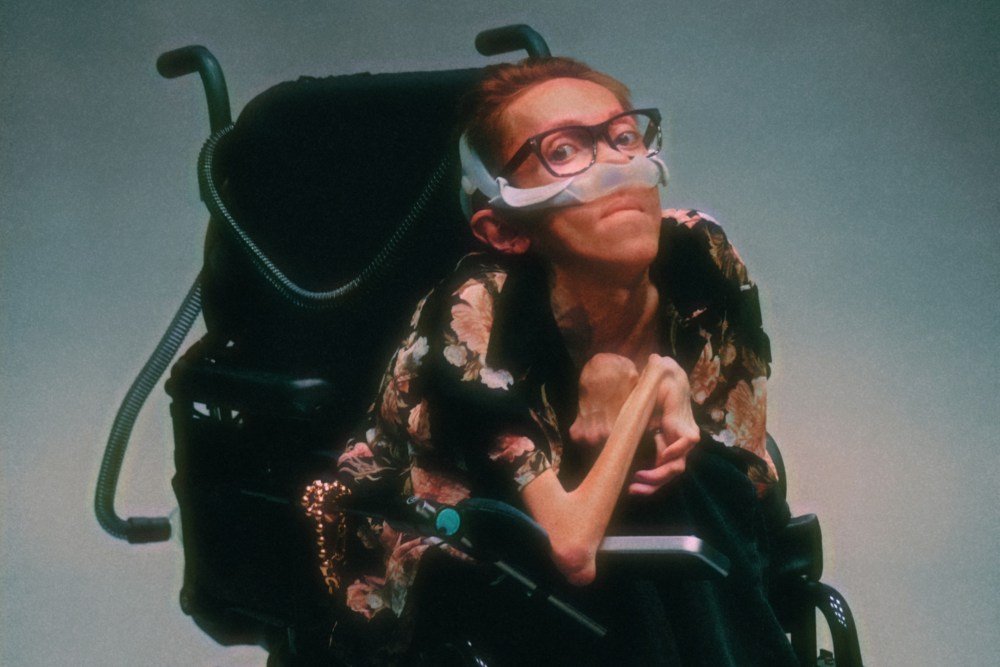
“I want an agency to whore me out,” he says. “Let’s make a ton of money together. Let’s change the world.” I joke that I’ll pass along his exact words to all the big companies. “Just get Ari on the phone,” he retorts. “Ari loves me. Except he won’t hire me.” That’s when Way mutters the p-word — under his breath for plausible deniability, but certainly still with the intention of being heard, smirking at the sound of my laughter. This is one of the last things he says to me before we wrap up our interview. A light blue Labubu that he’s clipped to his motorized wheelchair gives a wink as he rolls away.
It’s impossible to fault Way, 35, for his ire. That’s partially because it’s well delivered — he’s got 15 years of stand-up comedy under his belt — but mostly because he works in an industry that seems determined to shut out people like him. Best known for his recurring role in Ramy Youssef’s self-titled dramedy series, and now giving an impeccable supporting performance in Hulu’s “Furious,” Way has no agent or manager. “And we know why,” he says, referring to his chair, his ventilator and the muscular dystrophy diagnosis he received at age 4.
“I don’t have representation. And it’s frustrating, because I used to,” Way says. With his first agent, he got “nothing. Just nothing.” He signed with someone new, who later jumped to another agency and didn’t bring Way with him.
Left to right: Ramy Youssef, Steve Way and Bella Hadid in “Ramy” Season 3.
Courtesy of Hulu
Way spent years wondering whether he’d be able to book a project without the support of Youssef, a close friend since childhood. Then, with “Furious,” he received something actors spend their whole careers dreaming of: a role written expressly for him.
“Furious” is helmed by Elizabeth Meriwether, the writer-producer famed for creating “New Girl” and “The Dropout,” whom Way first met in 2025 when they appeared together on a WGA panel about on-screen depictions of caregiving. “I did the panel really high,” Way admits. He’d been on a stand-up tour as Youssef’s opener, and needed to relax after all the travel. “We’re going down the line talking about what we’re working on. Full resumes. And it got to me, and I was like, ‘I’m unemployed. If anyone wants to put me in their stuff, [I’ll join] gladly,’” Way recalls. Meriwether took his stoned comments to heart. “Two months later, I got an email from her people saying she wrote a part for me. That was it.”
Way stars in the series as the love interest of the serial killer played by Lola Petticrew. To everyone else, Catherine is a sociopath. But to Alden, she’s simply a kindhearted in-home health aide who perhaps has a few secrets. As she feeds and bathes him with a gentle touch and a warm gaze, he returns the favor by giving her the benefit of the doubt about her shady comings and goings. Wanting to make the most of the time he has left after learning from doctors that his health has seriously worsened, Alden later proposes to Catherine with his late mother’s engagement ring, then begins abetting her crimes.
There’s a profound sadness to the role, but “Furious” still makes plenty of room for the humor Way is known for. He applauds Meriwether for writing a disabled character who confronts his mortality but still has an identity beyond that, including a sense of humor. “When I read my first line — ‘You little slut!’ — I thought, ‘How does Liz know I would say that?” he says, smiling. “Right away, I knew that she would do the character justice.”
When Danny (Scoot McNairy), a cop, suggests that Catherine is using him, Alden is resolute. “I don’t fucking care,” he says. “You think love is only when people do everything that you want them to do. That’s fucked up.”
Way intimately understands that sentiment. “Everything is transactional. And as a disabled person, it’s very empowering to understand that. Caregiving is a two-way street. It has to be in order to work.” And the concept, in his eyes, isn’t exclusive to the relationship between disabled people and their aides. “Society has told a lot of lies about disabled people, mostly that we’re a burden. It’s not true. And to understand that is to accept that everyone, at some point in their life, receives care.”
“When you take the subway, you don’t do that alone. Someone’s driving,” Way continues. “When you get DoorDash, that’s a level of care. So when Alden says that to Scoot’s character, in a way, he’s trying to radicalize him. Like, ‘You don’t get it, man.’” Smiling, he offers a phrase borrowed from his friend Danny Kurtzman, a fellow actor-producer with muscular dystrophy. “’Disabled love is the best love.’ Because of how intimate it is. How close you have to be,” he says.
Lola Petticrew and Steve Way in “Furious.”
Courtesy of Disney
In Way’s opinion, “Alden and Catherine have the best relationship in the show: They had to get everything [uncomfortable] out of the way first and set up boundaries to make sure they could handle it. Like, ‘What’s your history with this person who’s keeping you alive? What do I do for them?’ It’s delicate, but there have to be boundaries, because it’s easy for any caregiver to get burnt out. That was really fun to figure out.”
“Furious” was everything Way would have hoped for in terms of disability accommodations, thanks to the help of an on-set accessibility coordinator. “She made sure I was OK and advocated for me when I was really in the zone. Not once did I ever feel unsafe or not taken care of. It allowed me to just focus on the character. I wanted to feel the love and trust, to find our routines. Like, how would she would shower me? But also something as delicate as: How do we sit across from each other? How do we face each other lying down in a bed?”
There were still moments when Way found himself pushing against his limits, physically. “There were some scenes that were uncomfortable — lying down for any extended period,” he says. But the discomfort was worth it to him. “I was locked in. Nothing else mattered; I just turned it off. The only thing that matters is the art that we’re operating here. That was my temporary. Yeah, the art. That’s it. The right thing for art, you know. That’s something that I realized no one can take away from me.
Before “Furious,” Way wasn’t sure if his three-season run on “Ramy” had been enough to prove his talents to the industry. “I was scared people wouldn’t take me seriously. One time could be a fluke,” he says. “But twice? I’m pretty good at this.”
Courtesy of Disney
There’s still a long road ahead. Twice, Way has worked with a studio to develop a series he would create and star in himself, but both Apple TV and NBCUniversal ultimately passed. “It’s about the inner workings of a facility for disabled people,” he says. “We want to have a full disabled cast and show what it’s like to live in one building with not enough caregivers, with an administration who has no idea what they’re doing, in a country that doesn’t treat us the best. I think a lot of people will relate to it, and they’ll see the absurdity in our day-to-day.”
Slyly, he adds, “Shoutout Netflix!” — the streamer he hopes will be his next suitor.
He’s gone through something similar with his stand-up comedy. He dreams of headlining his own tour. “It’s so hard to find accessible venues, but they’re out there. I gotta do my hour first, though,” he says. He’s already prepared — and taped — a full set he feels ready to show the world. He just hasn’t found a platform willing to help him turn it into a special. “Shoutout HBO!” he says.
It’s par for the course at this point. “I’m numb to the noes,” Way says. “Because the noes have never stopped. And that’s OK. That’s just life; it’s no one’s fault. But it’s tough, because I have these big opportunities, and I don’t trust them.” With “Furious,” he tells me, he didn’t fully believe he’d get to be on TV again until his first day on set. “So when I hear that someone is interested in my show, I’ll take a meeting, but I don’t expect anything.”
Still, he’s built more than he ever imagined for himself when he was younger. “I didn’t think I could have a career of any kind, because everyone told me I wouldn’t live long,” he says. “I almost died when I was 14, and I wasn’t supposed to live past 18. Then, when I was 25, my doctors told me I’m good. I was like, ‘Fuck! What now?’ I wasn’t good at anything besides telling jokes.”
So he keeps telling them. “The only thing that’s gonna stop me is my heart,” he says.
And he’s also starting to enjoy the effects of the opportunity Meriwether gave him in “Furious.” For the first time, Way has a publicist, which he says has been “wonderful.”
“It’s nice to respond to emails for once instead of initiating them, which is what I do every day,” Way says. Without a team behind him, the burden of seeking out the few roles available to disabled actors falls on him alone. “It’s tiring,” he says. “Espresso helps. Vodka helps. But I can’t run on that stuff forever.”