Category: Entertainment

  • ‘Blue Moon’ Star Ethan Hawke on His First Lead Actor Oscar Nom, Why the Film Is a ‘Decade-Long Dream’ and His Friendship With Director Richard Linklater

    Ethan Hawke has been making movies for decades. But it took a role his longtime collaborator Richard Linklater dreamed up — born out of years of shared theater trips and a mutual love of the stage — to finally earn him his first lead actor Academy Award nomination.

    “I don’t think anybody else really would’ve thought of me for this character,” Hawke said in Variety’sFor the Love of the Craft: The Nominees” video. “But because he knows me so well, he knew how passionately I would feel about it.”

    Hawke, nominated for best actor for his portrayal of lyricist Lorenz Hart in Linklater’s “Blue Moon,” said he first read the script more than 10 years ago. The two have long bonded over a shared love of theater. They first met when Linklater came to see Hawke in a play and the script felt like a natural extension of that relationship. The long gestation proved to be a gift. “I felt happy that I’ve been able to dream about it for 10 years,” he said. “I didn’t have to rush to be ready.”

    Over that time, Hawke immersed himself in Richard Rogers and Hart’s musical theater world, collecting biographies, seeking out Chet Baker and Bob Dylan covers of their songs and filling what he called his “imaginative tank” at his own pace.

    “Blue Moon” premiered at the Berlin Film Festival a year ago and has built a devoted following since, with Hawke returning to Berlin this week as the awards season reaches its peak. He credits good fortune as much as craft. “It’s so hard to penetrate the zeitgeist right now without a tremendous amount of money in advertising,” he said. “When that happens, you kind of feel this wash of gratitude of being really lucky.”

    On the subject of craft itself, Hawke was characteristically thoughtful, invoking his late friend Philip Seymour Hoffman. “You have to walk a razor’s edge of feeling like it’s the most important thing in the world,” he said, “and simultaneously treat it like it’s a game that is so much fun to play.” He also pointed to Uta Hagen’s “Respect for Acting” and Sidney Lumet’s “Making Movies” as touchstones, framing great performance less as inspiration than as disciplined, learnable trade.

    What will he take away from playing Hart? The eyes of his co-stars — Andrew Scott, Margaret Qualley and Robert Capelli Jr. — and, above all, Linklater’s steadying presence. “Rick’s unflagging friendship,” Hawke said. “That’s what I take away.”

  • BBC Greenlights Three New Dramas, Including Tudor-Set ‘1536,’ ‘Shy & Lola’ With Hayley Squires, Bel Powley

    The BBC has unveiled three new dramas coming to our screens in due course, including Shy & Lola with Hayley Squires and Bel Powley.

    Shy & Lola, a new six-part drama for BBC iPlayer and BBC One, is written by award-winning screenwriter and novelist Amanda Coe (Apple Tree Yard, The Trial of Christine Keeler) and produced by multi-BAFTA and Emmy award-winning Clerkenwell Films (Baby Reindeer, The Death of Bunny Munro, The End of the F***ing World), part of BBC Studios.

    The darkly comic story follows Shy and Lola, two very different women who are forced to become allies when a murder entangles them in the criminal underworld operating in Shy’s small coastal town in the North of England. Squires (The Night ManagerI, Daniel Blake) stars as Shy, a cleaner scraping by and dreaming of a new life in Portugal, with Powley (A Small Light, The Diary of a Teenage Girl) playing Lola, an ex-model-turned-grifter who arrives in town with trouble at her heels.

    Filming on the show, based on the French television drama Cheyenne and Lola, will begin this spring in and around the U.K. cities of Hull and Leeds.

    Also announced on Monday is D-Notice from writers and executive producers Adam Patterson and Declan Lawn. The six-part British political thriller is set in the world of investigative journalism. Patterson and Lawn are said to “have some experience of” the D-notice mechanism, which allows the government to advise journalists about national security. Now, they’ve come up with a drama that looks at how truth and power speak to one another. It is their third project for the BBC, following The Salisbury Poisonings and Blue Lights, and their first commission from production company Hot Sauce Pictures, backed by Sony Pictures Television.

    The BBC has also commissioned 1536, a new drama series for BBC iPlayer and BBC One, based on Ava Pickett’s play of the same name. The eight-part show written by Pickett from Drama Republic (Riot Women, One Day) is set in the heart of Tudor England against the backdrop of Anne Boleyn’s arrest and weaves royal scandal with rural struggle.

    1536 centers around Anna, Mariella, and Jane: three young women gossiping, arguing, and dreaming in an Essex village, desperately waiting for their lives to start. When the news reaches them that King Henry VIII has had his Queen, Anne Boleyn, arrested, the three of them never suspect that this act will change their lives forever.

    Pickett said: “1536 is something I am immensely proud of and I feel so lucky and privileged to have the chance to bring Anna, Jane and Mariella to a wider audience and to build out their lives even more. In a world where every decision made in the corridors of power ricochets through all of our lives, this story feels more relevant than ever. I’m so grateful to Lindsay Salt for being such a champion of it from the start.”

    Lindsay Salt, Director of BBC Drama, added: “From the moment we saw Ava’s play we knew that we had to have the TV version on the BBC. Visceral, funny, provocative, timely and full of courage, this is a piece of work like no other. Ava is an exceptional voice, so we feel very lucky to be working with her and the brilliant team at Drama Republic to bring three iconic female characters to the screen.”

    Executive producers are Jude Liknaitzky, Roanna Benn, Rebecca de Souza, Chloe Beeson and Pickett. The series was commissioned by Salt.

  • BBC Studios Chiefs on Mega-Mergers, Own M&A, Trump Tariffs, U.S. Streaming Growth, and the ‘Bluey’ Movie

    BBC Studios Chiefs on Mega-Mergers, Own M&A, Trump Tariffs, U.S. Streaming Growth, and the ‘Bluey’ Movie

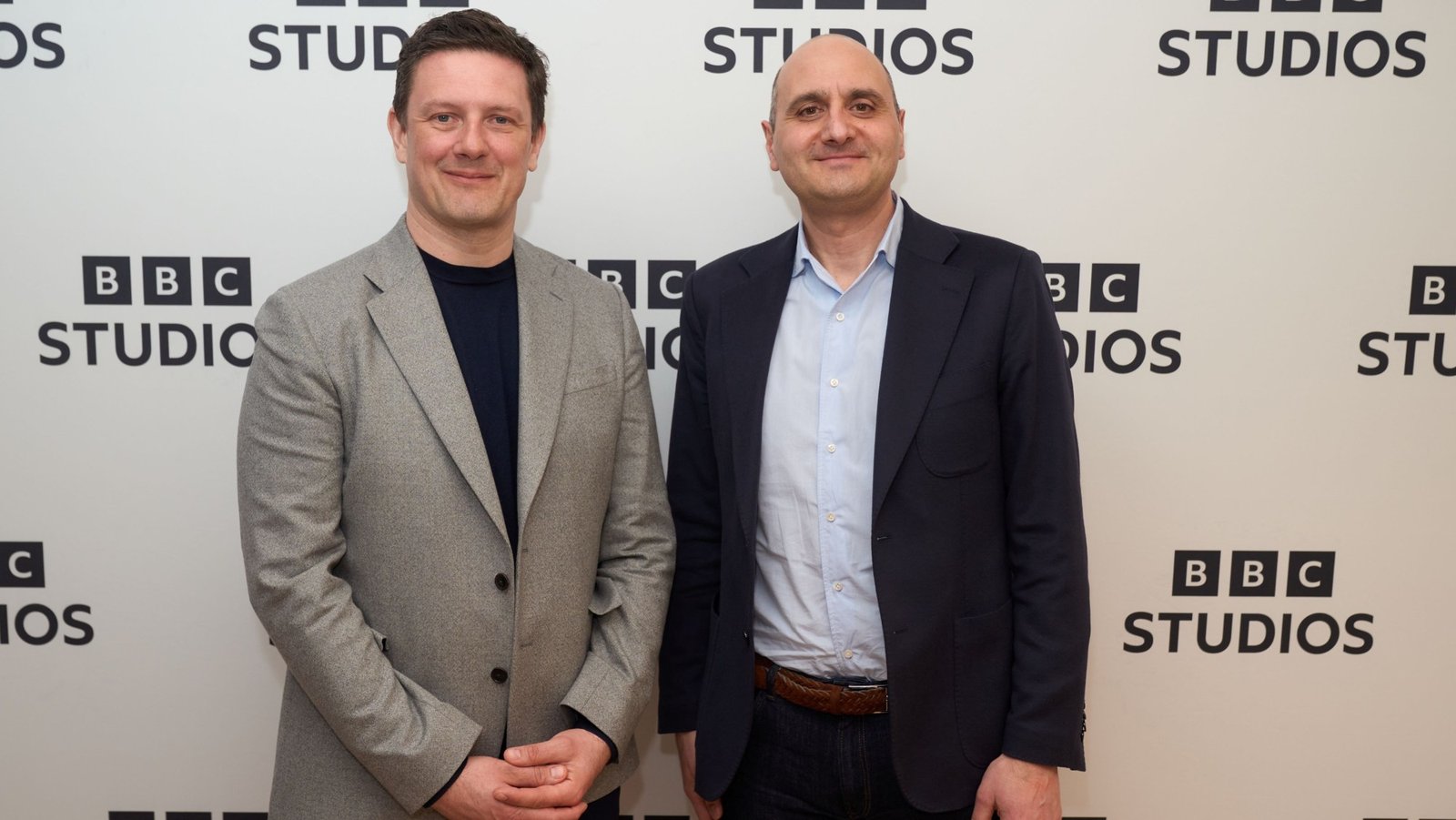
    BBC Studios CEO Tom Fussell and Zai Bennett, CEO and chief creative officer of BBC Studios Productions, discussed tariff talk by U.S. President Donald Trump, mega-consolidation, including the planned Netflix-Warner Bros. Discovery deal, the growth of the company’s U.S. streaming business, and the Bluey movie.

    They spoke to the press on the first day of the 50th annual BBC Studios Showcase in London. BBC Studios, the commercial arm of British broadcaster BBC, is known for such hit franchises as animated powerhouse Bluey, Netflix’s Baby Reindeer, legal drama The Split and its upcoming spin-off The Split Up, and such natural science hits as Walking With Dinosaurs, and it recently unveiled new shows to mark broadcaster and naturalist David Attenborough’s 100th birthday on May 8.

    “We have seen no impact” from Trump tariff talk, Fussell said when asked about any possible fallout, also lauding the continuing popularity of BBC News in the U.S. He didn’t discuss Trump’s lawsuit against BBC News, simply touting the resilience of the BBC brand and saying “we are not seeing any changes.”

    Asked about Netflix-WBD, he said “we are well diversified, and obviously, you can only control what you can control, so you focus on your priorities, and our priority is carrying the transformation and the growth in the areas we’ve got.” He emphasized though that “no doubt, … people have talked about challenging markets and the rest of it, and our view going forward is that the market growth is not going to be anything like what it had been in the [past] five years.”

    Continued Fussell: “And when you start seeing rumors upon rumors about takeovers and consolidation, that normally is testament to the fact there aren’t huge amounts of growth in the market, because everyone’s looking for … synergies. But we know what we’re doing. We know where we want to be investing in our global expansion of our studio.”

    In that context, he also highlighted that BBC Studios was “a growing business that’s transforming,” with revenue up 55.7 percent over the last four years.

    Following TV market challenges, Bennett on Monday suggested that “there are definitely green shoots of recovery,” sharing that “Paramount is back in the market, spending money,” among other things. But he reiterated that things are “definitely not” expected to return to the highs of the past five years but play out in a new normal range.

    Fussell suggested though that he felt the business would be “talking about striving again,” from scripted to unscripted and, vitally, kids programming.

    Mentioning the 2019 BBC Studios deal with what was then Discovery to take full control of UKTV’s entertainment channels, including Dave, Gold, and Drama, as well as a 2024 deal with ITV that gave the company full control of streamer BritBox International, Fussell also signaled that BBC Studios could also strike more acquisitions of its own. He said it would “carry on investing organically and maybe inorganically.”

    Bennett, who started his role in late 2024, similarly noted that BBC Studios Productions is seeing “solid organic growth and investment” and “looking for inorganic growth in some territories,” mentioning the rest of Europe, the Middle East and Africa as one possible region for deals.

    Fussell added that there “are opportunities for inorganic growth in streaming across the genres,” adding: “I think we have a right, as the home of British streaming, to grow that even further.” But he emphasized that “these opportunities take time,” concluding: “We are very judicious with how we spend that investment.”

    Fussell on Monday also touted the success of streaming services BritBox and BBC Select, which focuses on documentaries, in North America. “Last week was the fifth birthday of BBC Select, and BBC Select is now the third-largest factual SVOD in the States, and we’re really proud of that,” he said. He also touted the growth of BritBox and its launch of a premium tier.

    Among content trends, Bennett was asked about the growth of microdramas, saying that “we’re looking at that right now” and signaling the company could talk about this space more in the coming months. He added: “We’re certainly experimenting.”

    Questioned about audience and buyer appetite, he sees for escapist content versus programming dealing with the world’s cultural and political divisions, Bennett said BBC Studios Productions looks at market needs and is “leaning into specificity and Britishness” more than anything else.

    Current and old content favorites also drew reporter questions on Monday. Could motoring show Top Gear return to U.K. screens? Replied Bennett: “Never say never.”

    Of course, the upcoming Bluey: The Movie was also a talking point. Fussell shared that he just visited creator Joe Brumm in his studio in Brisbane, calling the experience “an absolute pleasure,” and saying that the work on the film was going well. But “I can’t say anything” more, he emphasized. And Bennett shared: “We’ve seen bits of it, and it looks amazing.”

  • ‘Yellowjackets’ Creators Ashley Lyle, Bart Nickerson Ink Overall Deal at Paramount TV Studios

    With Yellowjackets about to begin production on its final season, Paramount Television Studios is locking down the show’s creators for the future.

    Ashley Lyle and Bart Nickerson have signed an overall deal with Paramount TV Studios, extending their relationship with the company. The pair previously had an overall deal at Showtime, but with that brand now subsumed into Paramount+, Lyle and Nickerson’s home will move to Paramount’s studio side.

    “We are thrilled to expand our long-standing creative partnership with Ashley and Bart, who are singular, fearless, and groundbreaking storytellers,” said Matt Thunell, president of Paramount TV Studios. “We look forward to supporting them making many epic stories to come.”

    Lyle and Nickerson will continue as showrunners on Yellowjackets, which is set to begin filming on its fourth and final season soon. Under the deal, they’ll also develop and produce new scripted series for Paramount TV Studios. (Yellowjackets is produced by Lionsgate TV.)

    “We’re elated to continue our relationship with Paramount, a home that deeply and genuinely supports original, outside-the-box, narrative-driven storytelling,” Lyle and Nickerson said in a statement. “Reuniting with Matt Thunell, one of the very first executives we ever worked with, is especially meaningful to us, and we can’t wait to dig into developing our next passion projects while supporting a new generation of oddball creators through this partnership.”

    Yellowjackets has earned 10 Emmy nominations over its first three seasons, including best drama series nods in 2022 and 2023. Lyle and Nickerson have two nominations for writing as well, one shared with co-showrunner Jonathan Lisco.

    Lyle and Nickerson join a roster of creatives at Paramount TV Studios that also includes Stranger Things creators Matt and Ross Duffer, Issa Rae, Liz Tigelaar, Jon M. Chu and Jessica Biel and Michelle Purple’s Iron Ocean.

    Prior to creating Yellowjackets, Lyle and Nickerson worked as writers and producers on Netflix’s Narcos and Narcos: Mexico, AMC’s Dispatches From Elsewhere, and The Originals at The CW. They are repped by UTA, Untitled and The Nord Group.

  • Lily Collins to Play Audrey Hepburn in ‘Breakfast at Tiffany’s’ Making Of Story From Imagine

    Lily Collins to Play Audrey Hepburn in ‘Breakfast at Tiffany’s’ Making Of Story From Imagine

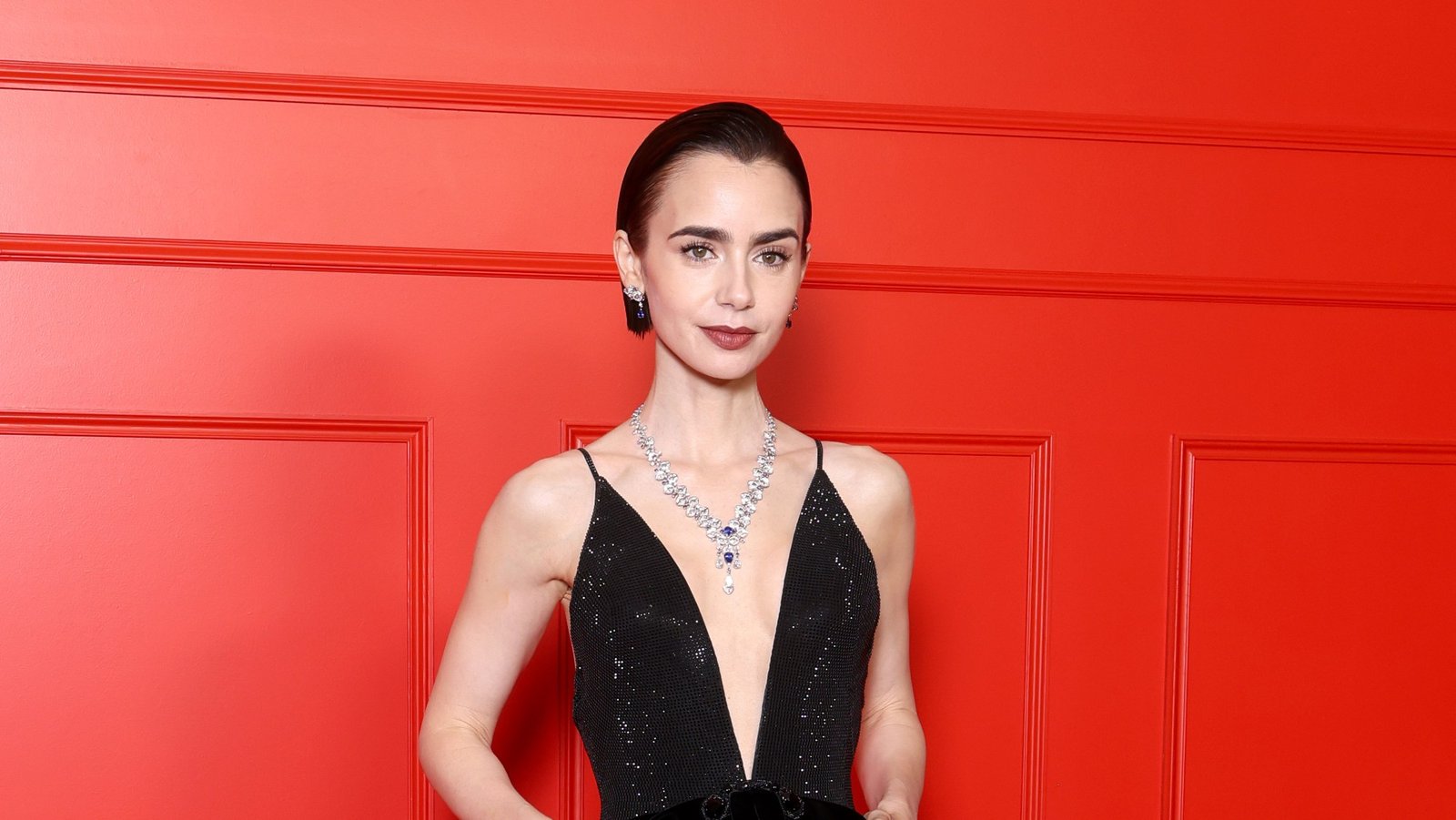
    Lily Collins is set to play Audrey Hepburn in a new movie project about the making of the seminal romantic comedy Breakfast at Tiffany’s.

    Alena Smith, the creator of the Apple series Dickinson, will write the screenplay based on Sam Wasson’s book Fifth Avenue, 5 A.M.: Audrey Hepburn, Breakfast at Tiffany’s and the Dawn of the Modern Woman.

    Wasson’s New York Times bestselling book’s cast of characters includes Breakfast at Tiffany’s writer Truman Capote, costumer Edith Head, director Blake Edwards and, of course, Hepburn, and tracks the movie through pre-production, on-set issues and a release that became a watershed moment in film, fashion and larger culture.

    Imagine Entertainment and Collins’ production company Case Study Films are behind the project, developing it with producer Scott LaStaiti (The Accountant 2, Ministry of Ungentlemanly Warfare).

    Brian Grazer, Jeb Brody and Justin Wilkes will produce for Imagine, alongside Collins, Charlie McDowell and Alex Orlovsky will produce for Case Study Films alongside LaStaiti. Imagine’s Marc Gilbar will serve as an executive producer with Sam Wasson and Brandon Millan for Felix Farmer Productions and Michael Shamberg. Joyce Choi is overseeing development for Imagine.

    Collins, repped by CAA, LBI Entertainment and Sloane Offer, is best known for her role in Netflix’s popular Emily in Paris series.

  • ‘Saturday Night Live’: Connor Storrie, Ryan Gosling, Harry Styles to Host After Winter Olympics Hiatus

    Saturday Night Live has set its first roster of hosts and musical guests for season 51.

    Coming off its 50th anniversary season, the NBC sketch comedy show will premiere its 51st edition on Oct. 4. Bad Bunny will host the season premiere, marking his second time as host, and Doja Cat will make her first SNL appearance as musical guest.

    Former castmember Amy Poehler is set to host on Oct. 11 — her third time hosting and second solo gig (she also hosted once with Tina Fey) — with musical guest Role Model. Sabrina Carpenter will take on both the host and musical guest roles on Oct. 18.

    After a week off, SNL is set to return Nov. 1 with Miles Teller hosting for the second time and Brandi Carlile making her third appearance as musical guest. Comedian Nikki Glaser will host the Nov. 8 edition with musical guest sombr (both making their debuts on the show). On Nov. 15, Glen Powell will make his hosting debut with musical guest Olivia Dean, also a first timer.

    Melissa McCarthy will return to SNL on Dec. 6, marking her sixth time as host, alongside Dijon as musical guest. The show will close out 2025 with two more shows: On Dec. 13, Josh O’Connor (Wake Up Dead Man: A Knives Out Mystery) will make his hosting debut, with Lily Allen as musical guest. Wicked: For Good star Ariana Grande will host for the third time on Dec. 20, with Cher — returning to SNL for the first time since 1987 — as musical guest.

    To kick off 2026, SNL will welcome three first-time hosts. Stranger Things star Finn Wolfhard will host the Jan. 17 show, where A$AP Rocky will be the musical guest. One Battle After Another star Teyana Taylor will host on Jan. 24 with musical guest Geese, and Alexander Skarsgard will serve as host on Jan. 31, joined by musical guest Cardi B.

    The Jan. 31 edition will also be a milestone for SNL — it’s the 1,000th regular episode in the show’s long history, which dates back to 1975.

    After a break for the Winter Olympics, Heated Rivalry star Connor Storrie will make his SNL debut as host on Feb. 28, with Mumford & Sons as musical guest. Ryan Gosling will host for the fourth time on March 7, with musical guest Gorillaz performing for the first time on the show. On March 14, Harry Styles will pull double duty as host and musical guest for the second time (he first did so in 2019).

    SNL went through its most significant cast shakeup in several years between seasons, with Heidi Gardner, Ego Nwodim, Michael Longfellow, Devon Walker and Emil Wakim departing. Five new featured players — Tommy Brennan, Jeremy Culhane, Ben Marshall, Kam Patterson and Veronika Slowikowska — are joining the cast. Returning castmembers are Michael Che, Mikey Day, Andrew Dismukes, Chloe Fineman, Marcello Hernandez, James Austin Johnson, Colin Jost, Ashley Padilla, Sarah Sherman, Kenan Thompson, Jane Wickline and Bowen Yang.

    Season 51’s hosts and musical guests are below; the list will be updated as more are announced.

    Oct. 4: Bad Bunny, Doja Cat
    Oct. 11: Amy Poehler, Role Model
    Oct. 18: Sabrina Carpenter (host and musical guest)
    Nov. 1: Miles Teller, Brandi Carlile
    Nov. 8: Nikki Glaser, sombr
    Nov. 15: Glen Powell, Olivia Dean
    Dec. 6: Melissa McCarthy, Dijon
    Dec. 13: Josh O’Connor, Lily Allen
    Dec. 20: Ariana Grande, Cher
    Jan. 17: Finn Wolfhard, A$AP Rocky
    Jan. 24: Teyana Taylor, Geese
    Jan. 31: Alexander Skarsgard, Cardi B
    Feb. 28: Connor Storrie, Mumford & Sons
    March 7: Ryan Gosling, Gorillaz
    March 14: Harry Styles (host and musical guest)

    This story was first published on Sept. 18, 2025.

  • The Fight Over AI in Hollywood Is a Battle Between Money and Activism

    The Fight Over AI in Hollywood Is a Battle Between Money and Activism

    AMC Theatres’ about-face on screening an AI-created animated short that had won a film festival award was one more eye-opener in a new year filled with them. The chain had been scheduled to run the short film Thanksgiving Day as part of its preshow ad bloc, the startup outfit Frame Forward AI Animated Film Fest says. But execs at AMC claimed they hadn’t been consulted by the firm that does the bookings, and now that they knew, they were shutting it down.

    AI is hardly a huge bogeyman to theater owners; in fact, the coming glut could even help them. But the Adam Aron-led company grasped a fundamental truth of doing business in Hollywood, circa 2026: Wade into AI waters at your peril.

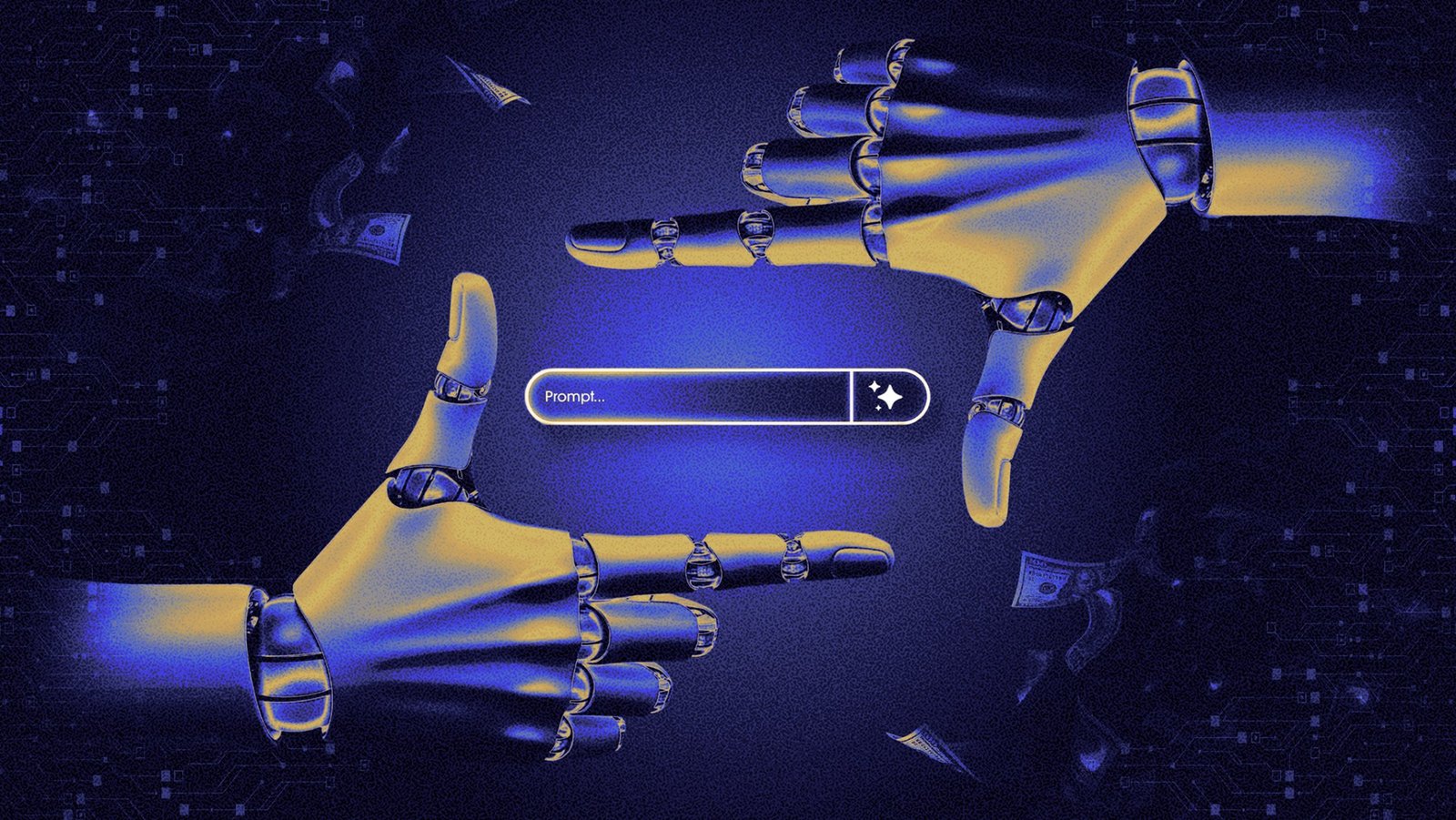
    The number of AI studios blanketing Hollywood, along with the VC dollars to power them, is increasing at an astonishing rate. Hollywood-focused video-generation platform Runway AI revealed a new cash raise of $315 million; Saudi Arabia led a $900 million funding round for Amit Jain’s startup Luma; all-purpose AI giant Anthropic raised $30 billion. And the battle to release new models is ratcheting up the way the U.S. and Soviet Union once piled on new nuclear weapons.

    Google, Runway and former TikTok majority owner ByteDance have all released new models in 2026, seeking to jump-start a market of creators using AI tools to vomit massive amounts of entertainment over the more limited, painstaking work of traditional shoots and studios.

    But Big Tech’s push to make retch happen may not be as simple as just dumping money on the sector. All of the tech and dollar energy for AI video is emerging as many of the pros responsible for the content landscape — from writers to directors to traditional ad execs — express concern about the jobs and creativity lost, providing a key impediment to the transformation.

    The push is happening even as AI’s biggest customer base expresses deep skepticism about what the movement is trying to ignite. A post-Super Bowl survey of 500 Gen Z and Gen Alpha consumers by youth-focused data firm Cafeteria found that “AI missed big time,” according to the company, as a slew of respondents reacted negatively to ads with AI messaging relative to more traditional products and non-slop content. “Any of the ai ads, like Meta and ChatGPT. I don’t like what they were promoting,” a 19-year-old from Orlando said.” “All the ai ads omg,” said a 17-year-old from Mount Airy, Maryland.

    “Gen Z/Alpha expressed strong negative feelings toward AI and AI-created ads,” the research firm concluded.

    Neutralizing that skepticism will be key for AI companies. Right now, the main audience for these moves seems to be Wall Street, as the so-called AI boom that has powered the economy and the stock market shows no sign of slowing down. But whether end users — the group said boom assumes and ultimately depends on — will embrace the fruits of the AI age has yet to be demonstrated. And whether that misalignment can be addressed remains the central narrative of Hollywood in 2026.

    A big flash point came with the release of Seedance 2.0, a video tool that leveled up what Sora 2.0 had done, as a Brad Pitt-Tom Cruise fight over a fictional Jeffrey Epstein plot spread faster around the social web than an Epstein island conspiracy theory. The model’s parent agreed to put up some guardrails after getting threatened by everyone from SAG-AFTRA to Netflix.

    “Seedance acts as a high-speed piracy engine … [and] Netflix will not stand by and watch ByteDance treat our valued IP as free, public domain clip art,” its lawyers wrote to ByteDance executives. The Motion Picture Association, which reps all the major studios, followed with a cease-and-desist letter calling infringement “a feature, not a bug” of the product and major talent agency CAA said Seadance has a “brazen disregard for creators’ rights.”

    But the feeling abides that something has fundamentally changed. Around town, writers and directors went about their work with a kind of grim acceptance, like a farmer shuffling to his plow even as the tornado clouds above grow darker.

    “I’m shook,” wrote Deadpool screenwriter Rhett Reese in a viral X post. And even though writers — whose currency is the very non-AI realm of imagination and humor — may be in a comparatively good position relative to set designers and other physical production professionals, the mood remained bleak just the same. 

    All of this is happening as the biggest Hollywood AI deal to date — a Disney+/OpenAI partnership that will encourage an inundation of the platform with user-generated Sora 2.0 content — hovers above.

    As the battle heats up, politicians have stepped in. Democratic senator and emerging anti-AI force Bernie Sanders just came to California to meet with tech executives and Silicon Valley Rep. Ro Khanna, telling reporters shortly before the trip that he hoped these AI moguls can address his fears.

    “We would be very, very mistaken not to have deep concerns about the transformative impact these technologies are going to have and the understanding that we are in no way prepared to deal with them,” Sanders noted. He said he planned to communicate this to executives. 

    Sanders said he recently met with AI godfather turned alarm-raiser Geoffrey Hinton, who has argued that a new kind of work- and humanity-threatening intelligence was rising quicker than he can handle it, and it helped shape Sanders’ thinking.

    Industry grassroots activity has continued apace. After helping launch the industry-wide Creators Coalition on AI to deal with the risks, Everything Everywhere All at Once director Daniel Kwan has continued to beat the drum, telling the audience at a Sundance panel, “There’s this feeling that this tech is inevitable.” It isn’t, he said. “Filmmakers, you are experts. You’re experts in storytelling,” and “we cannot allow the tech industry to set the terms for our industry.”

    Meanwhile, another creative with a history of pushing back, 2023 strikes guild adviser Justine Bateman, was planning her own offensive. The founder of Credo23, a seal-of-approval for creative work signifying a lack of AI use, is about to debut her second “No AI” film festival in Hollywood in March and has recruited a who’s who of major names to attend and speak, including 2025 Oscar juggernaut Sean Baker as well as Gus Van Sant and Matthew Weiner.

    Bateman says that she takes heart not just in the pushback from Hollywood but the audience via surveys like the Super Bowl one. “If Generative AI is being incorporated into entertainment, and the people who are supposed to view it don’t want it, then who is really your customer?” she asks.

    She remains vexed that the biggest Hollywood companies like Disney are making deals with AI firms that have trained their models on unauthorized data.

    “It’s like, ‘Hey, you’re stealing from us, so I’m going to invest in your burglary enterprise so you’ll stop stealing,’ ” she says. “It’s such an odd thing to do.” Given how pitched Hollywood’s AI wars are getting, odd may be the least of it.

    This story appeared in the Feb. 23 issue of The Hollywood Reporter magazine. Click here to subscribe

  • Harry Styles Set as ‘SNL’ Host and Musical Guest in March After New Album Release

    Harry Styles Set as ‘SNL’ Host and Musical Guest in March After New Album Release

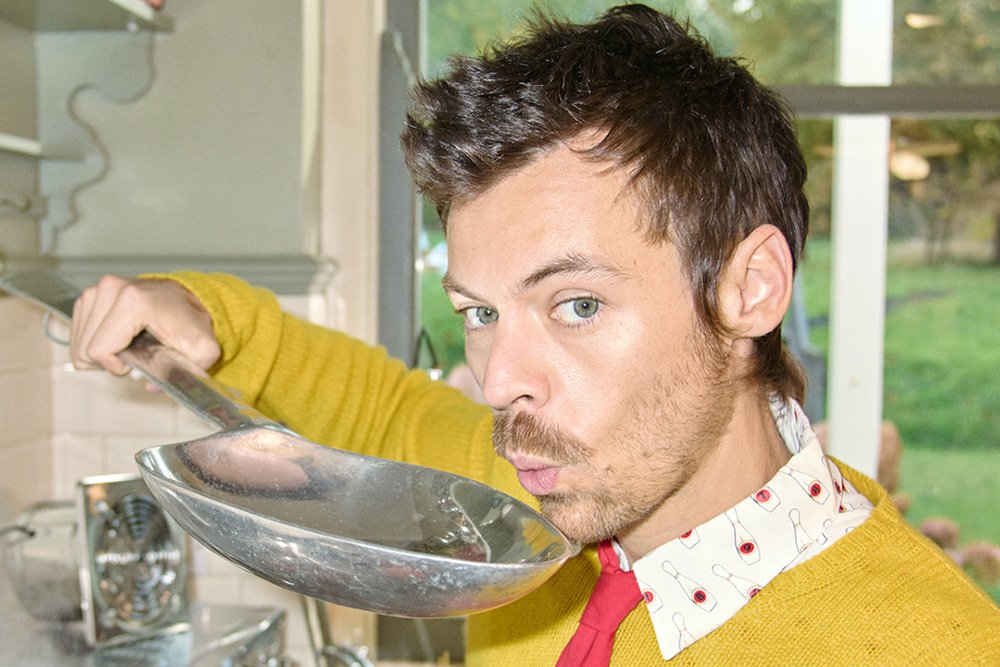
    Harry Styles will serve as host and musical guest of “Saturday Night Live” on March 14.

    It’s the second time the Grammy winning pop star will pull double duty on the NBC sketch comedy series. He last commanded Studio 8H in November 2019, and he previously performed as a musical guest three times with One Direction and once solo.

    This time, Styles will sing songs from his new album “Kiss All the Time. Disco, Occasionally.,” dropping March 6.

    After a few weeks off, “SNL” returns on Feb. 28 with host Connor Storrie (of “Heated Rivalry” fame) and musical guest Mumford & Sons. The week after, on March 7, Ryan Gosling will return to host “SNL” for the fourth time. Gorillaz is the musical guest.

    “Saturday Night Live” airs at 11:30 p.m. on NBC. It’s created by Lorne Michaels, who executive produces through his banner Broadway Video.

    The show launched its 51st season in October 2025 with Bad Bunny as its premiere host. The season was prefaced by a cast shake-up that saw the exit of series vets Ego Nwodim and Heidi Gardner, as well as relative newcomers Devon Walker, Emil Wakim and Michael Longfellow. John Higgins also departed “SNL,” while his Please Don’t Destroy castmate Ben Marshall was promoted to the main cast, and Martin Herlihy shifted to a writing role.

    Fresh faces Tommy Brennan, Jeremy Culhane, Kam Patterson and Veronika Slowikowska also joined the cast, and longtime star Bowen Yang departed midway through the season, capping off his eight-year run with an episode hosted by his “Wicked” co-star Ariana Grande.

  • ‘Yellowjackets’ Creators Ashley Lyle, Bart Nickerson Ink Paramount TV Studios Overall Deal

    ‘Yellowjackets’ Creators Ashley Lyle, Bart Nickerson Ink Paramount TV Studios Overall Deal

    Yellowjackets” co-creators Ashley Lyle and Bart Nickerson have signed an overall deal with Paramount Television Studios, Variety has learned.

    The news comes just ahead of the start of production on Season 4 of “Yellowjackets,” which was previously reported to be the show’s final outing. Lyle and Nickerson serve as executive producers and showrunners on the series in addition to co-creating it.

    “We are thrilled to expand our long-standing creative partnership with Ashley and Bart, who are singular, fearless, and groundbreaking storytellers,” said Matt Thunell, president of Paramount Television Studios. “We look forward to supporting them making many epic stories to come.”

    “Yellowjackets” originally debuted in 2021, with the third season airing between February and April 2025. The fourth season will premiere in 2026, with an exact release date to be revealed at a later time. The show has received numerous accolades, such 10 Emmy nominations to date, including consecutive nods for best drama and best actress in a drama (Melanie Lynskey).

    “We’re elated to continue our relationship with Paramount, a home that deeply and genuinely supports original, outside-the-box, narrative-driven storytelling,” said Lyle and Nickerson. “Reuniting with Matt Thunell, one of the very first executives we ever worked with, is especially meaningful to us, and we can’t wait to dig into developing our next passion projects while supporting a new generation of oddball creators through this partnership.”

    In addition to “Yellowjackets,” Lyle and Nickerson are known for their work on shows like “Dispatches From Elsewhere,” “Narcos,” “Narcos: Mexico,” and “The Originals.” They are repped by UTA, Untitled, and The Nord Group.

  • Entertainment Is a Software Industry Now and We Might as Well Get Good at It

    Entertainment Is a Software Industry Now and We Might as Well Get Good at It

    A few months ago, I sat in a room where a product manager from a prominent TV operating system explained how an algorithm had reorganized their entire home screen. No human had approved the change. A show that a studio had spent two years, and a $100 million making, was now buried three rows down, behind a row of AI-generated thumbnails tested against 12 variants in real time. The show didn’t fail. It just disappeared.

    Entertainment is a software industry now.

    The tension we feel isn’t about content volume, business models, or even consolidation. Those are simply symptoms of an industry getting eaten by software when it’s still running the old playbook.

    The cause: Every layer from production to distribution and monetization is now software. Cameras capture to hard drives. Editing happens in the cloud. Algorithms decide what viewers see, and ads are bought and sold in milliseconds by auction systems that do more daily transaction volume than a credit card company does in a year. Shows don’t compete on quality alone, but on code. A lot of this is good news: more stories from more voices, faster. But only if we acknowledge the shift and learn the new rules.

    New Rules of the Game

    Acting like a software industry means moving faster. It means building feedback loops that give the craft its best shot. Understanding audiences earlier. Testing assumptions before committing hundreds of millions of dollars. Learning what’s working while the project is still in motion, not after its release. The goal isn’t to create quick, cheap content; it’s about giving projects that creatives pour years into a real chance to land, commercially and culturally. Right now, we make huge creative bets in entertainment and hand over the outcome to algorithms that are not ours. That’s not protecting the craft. That’s gambling with it. The entertainment industry needs to invest in owning its future.

    AI is the clearest example. Used well, it’s the most powerful creative tool in a generation. Writers can test story structures. Producers can previsualize entire sequences before committing a dollar to production. And marketing teams can find the right audience before launch, not after. The studios and streamers that build these capabilities through internal investment and trusted partnerships will make better work. The ones that wait will rent these tools from the same technology companies already controlling their distribution and often bulldozing their IP.

    How Leverage Has Shifted

    In every corner of entertainment, from gaming to movies, intermediaries have inserted themselves between creators and their audiences. A handful of companies control the operating systems apps run on and unilaterally decide which apps get prominent placement, and their cut of the subscription money. They decide what data flows and to whom.

    Within streaming TV, another layer of software decides which shows get the home screen treatment and which disappear into the abyss of the infinite scroll. A streamer can invest hundreds of millions of dollars into content, build a beloved product, earn a loyal audience and still be at the mercy of whichever operating system owns the home screen.

    The streaming industry spent the last decade fighting for subscribers while operating systems quietly gained an advantage. It’s the same way tech played out: If you own the OS, you’ll capture the leverage. It happened on mobile, in search and on social. Now it’s happening in media.

    AI Raises the Stakes, Again

    Platforms now use AI to generate quick content. This is not meant to replace the shows that spark culture and conversation, but to create a new category of programming: replaceable entertainment. It’s content designed to be sufficient — good enough that most people won’t notice the difference, and cheap enough that it doesn’t matter if they do. If that layer of programming sits more prominently atop an OS or a social platform, with no visibility into how other work is surfaced or monetized beside it, what leverage do we have?

    Software and AI done right can mean more opportunities to grow and find new audiences and better tools to make great work. But that only happens if the systems are transparent. Right now, some of these systems are black boxes controlled by gatekeepers with conflicting incentives. The industry needs to come together around open tools for creation, distribution and monetization.

    The next 18 months will determine who controls the stack. The AI layer isn’t locked in yet. Neither are the platforms. There’s a window, but it won’t stay open for long.

    Here’s what we can do: 

    • Map your landlord. Know exactly which companies sit between you and your viewers. Calculate what percentage of your revenue they touch. Understand their incentives, which may not always align with your incentives.
    • Build leverage together. The open internet is not guaranteed. A healthier ecosystem is one where consumers have choices, streamers and creators can own their future, and no single gatekeeper controls all the pipes. This system won’t emerge on its own. It has to be built and defended together.
    • Demand the data. If a streaming app can’t tell you how your content was discovered, how many people saw it, and why they stopped watching, that’s not a partner. That’s a landlord who only talks to you on rent day.
    • Invest in how things are made, not just what you make. Build AI and software teams that serve the creative process. Use data to test assumptions before greenlighting projects, not just to write postmortems. Treat technology as a creative advantage, not a cost center. Enable the world’s best creatives to realize their vision faster.

    I’ve spent my career in both worlds: building products at some of the world’s largest platforms, as well as working with the studios and creators who make the media people love. I know the impact that technology can have on entertainment. I also know what happens when an industry waits for someone else to figure it out. With these learnings, we’re focused on providing creators and entertainment companies with access to a streaming ecosystem that includes the tools and systems required to keep making great content that audiences love. We’re not fighting the future of technology — we’re ensuring the people who make the work have a seat at the table when the rules get rewritten.

    If you run a studio, a streamer or a production company, this is your problem now. Not next year. Now. The window is open.

    Let’s move.