Category: Entertainment

  • Shelley Fabares, ‘Coach’ and ‘The Donna Reed Show’ Star, Dies at 82

    Shelley Fabares, ‘Coach’ and ‘The Donna Reed Show’ Star, Dies at 82

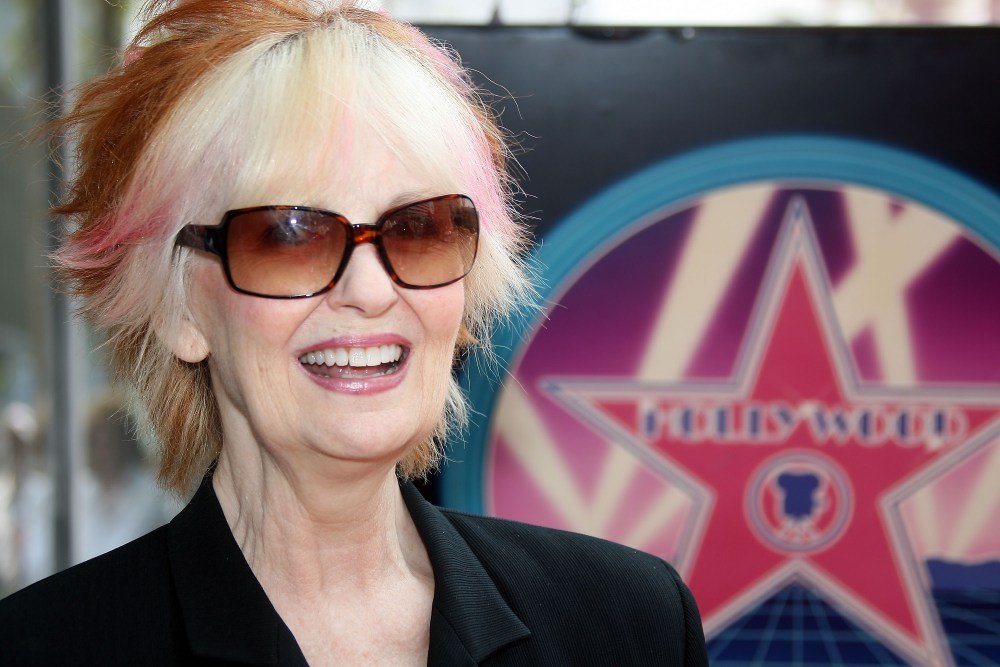
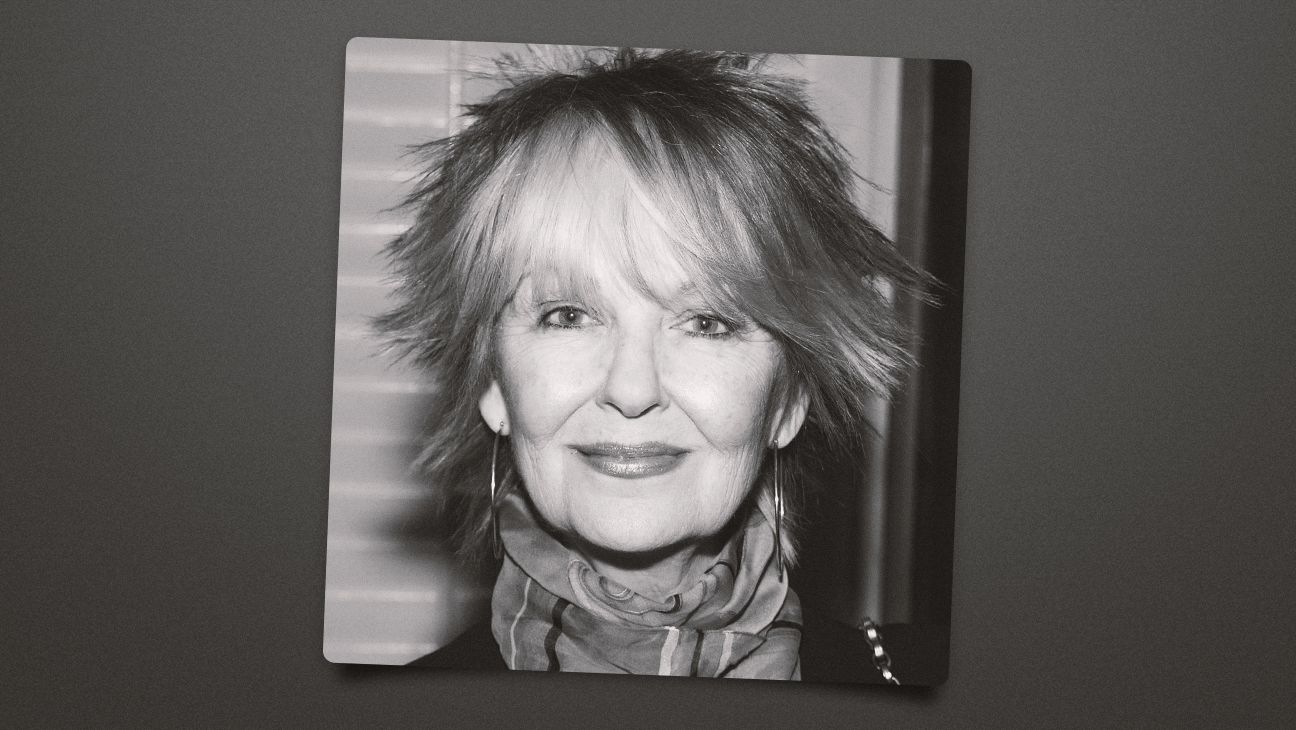
    Shelley Fabares, the star of the classic sitcoms “The Donna Reed Show” and “Coach,” died on Saturday in Los Angeles. She was 82.

    Fabares’ family said in a statement, “We will miss her deeply — not only as a celebrated performer, but as the loving and extraordinary person she was in our everyday lives. We are heartbroken by her loss, yet profoundly grateful for the years we shared with her and for the joy, compassion, and love she brought to so many. We ask that our family’s privacy be respected as we grieve. We take comfort in knowing that Shelley’s work and the memories she created with those who loved her will continue to live on.”

    Fabares starred as the Stone family daughter Mary in “The Donna Reed Show,” which ran on ABC for 275 episodes from 1958 to 1966. Fabares appeared in 192 episodes and left the series in 1965. On ABC’s “Coach,” which ranf or 199 episodes from 1989 to 1997, she played Christine Armstrong, a TV news anchor and the romantic interest of Craig T. Nelson’s college football coach Hayden Fox. She earned two Emmy nominations, in 1993 and 1994, for supporting comedy actress for her work on the series.

    Fabares also had a brief career as a singer during her time on “The Donna Reed Show,” notching a No.1 hit with her 1961 track “Johnny Angel.” She parlayed her TV fame into a series of teen-centric B-movie romps including opposite Fabian in 1964’s “Ride the Wild Surf,” and she co-starred with Elvis Presley in three films, 1965’s “Girl Happy,” 1966’s “Spinout!” and 1967’s “Clambake.”

    Some of Fabares’ other TV credits include “The Little People,” “Forever Fernwood,” “The Practice,” “Hello, Larry,” “Highcliffe Manor,” “Fantasy Island,” “One Day at a Time” and “The Love Boat.” She had a key role on one of the most lauded TV movies of the 1970s, ABC’s “Brian’s Song,” starring James Caan and Billy Dee Williams in the true story of the friendship between two NFL players as one of them faces terminal cancer. Fabares played Joy Piccolo, the wife of Caan’s Brian Piccolo.

    Fabares was born in Santa Monica, Calif in January 1944 and grew up around Hollywood. Her mother, Elsa, started her modeling career at a young age, which led to roles on TV. Fabares’ aunt, Nanette Fabray, was a well-known Broadway star and film supporting player who also transitioned to TV roles. Among Fabares’ early TV breaks was a two-episode stint on “The Loretta Young Show” in 1954. Her first major film credit came in a supporting role in the 1956 Rock Hudson drama “Never Say Goodbye,” for Universal International.

    Fabares was briefly married to influential music and movie producer Lou Adler in the mid-1960s. In 1984, Fabares married actor Mike Farrell, known for his long run on the CBS comedy “MASH.” In the 1980s and ’90s, Farrell and Fabares were active in numerous political and social causes, including protesting U.S. activities in Central America and supporting the anti-nuclear movement that took root in Southern California in the late 1970s.

    Like Farrell, Fabares was active behind the scenes on industry matters as a longtime SAG member. She was involved in guild leadership and helped to steer some of the early SAG Awards ceremonies. In 1998, Fabares was supportive of early efforts to combine the Screen Actors Guild with the industry’s other major performers union, the American Federation of Television and Radio Artists.

    After “Coach” ended its run, Fabares had few film and TV credits as she battled health problems. In 2000, she went through a very public health crisis in which she needed — and ultimately successfully received — a liver transplant. Her experience of waiting nearly two years for a donor liver to become available helped raise public awareness for the acute need for organ donations. Fabares was a longtime supporter of the Alzheimer’s Association, after her mother was diagnosed with the disease in the early 1990s.
  • ‘Boorman and the Devil’ Review: The Making of John Boorman’s 1977 Disaster ‘Exorcist II: The Heretic’ Becomes a Documentary So Unbelievable It’s Funny

    ‘Boorman and the Devil’ Review: The Making of John Boorman’s 1977 Disaster ‘Exorcist II: The Heretic’ Becomes a Documentary So Unbelievable It’s Funny

    “Boorman and the Devil” is a disaster movie that feels like a party. It’s a documentary about the making of one of the worst movies of its time, and maybe of all time — “Exorcist II: The Heretic,” the spectacularly misconceived and maladroit sequel to “The Exorcist.” It was a film so singular in its awfulness that when it came out in the summer of 1977, audiences laughed at it (they literally did), and the director, John Boorman, made a frantic attempt to recut it. (He lopped off the atrocious ending for a different atrocious ending.)

    Talented people can make terrible movies, and the era of “Exorcist II,” when directors still enjoyed the carte blanche that had come with the power of the New Hollywood, was littered with ambitious bombs, from Steven Spielberg’s “1941” to Peter Bogdanovich’s “At Long Last Love” to the granddaddy of them all, the stiff-necked but aimless three-and-a-half-hour Marxist art Western “Heaven’s Gate.” “Boorman and the Devil,” written and directed by David Kittredge, is a dishy and fascinating inside look at how one of the most legendary duds of the ’70s came to happen.

    Yet what lends the documentary its special, enjoyable flavor is that 50 years after “Exorcist II” was made, a number of the people connected with it, notably Boorman himself, still don’t fully grasp what the problem was. Boorman, seated in his wintry country home in County Wicklow, Ireland (he was 85 when the documentary was shot; he’s now 93), narrates the making of “Exorcist II” for us, and he still exudes a quality of shining belief in what he was doing. He made a movie so bad so that the audience felt no connection to it — but on some level of barely suppressed ego, he’s still blaming the audience for it. He thinks the film contains “some of the best work I’ve ever done.” He believes the problem is that the audience was expecting a different kind of movie. (Yes, a scary and not deathly boring one.)

    You might call Boorman’s fortitude admirable, but you could also call it delusional. And it lends “Boorman and the Devil” the quality of a true-life Christopher Guest film. For this is the unintentionally funny story of what happens when utterly unhinged and high-minded hubris becomes your guiding light. Boorman, and others associated with “Exorcist II,” know that they made an infamous disaster, yet the reason the film was a disaster still eludes them. The documentary is full of lines that, in context, have a double-edged drollery, as when the director Joe Dante says, “Many of the techniques that he uses, I’ve never seen repeated again!”

    Boorman thinks the problem with “Exorcist II” is that it failed to deliver the full-scale nasty horror blowout that the audience was expecting — and it’s true, that was a major problem. As Boorman acknowledges, this was all by design. After his success with “Deliverance” in 1972, Boorman had been offered the chance to direct “The Exorcist” (the original) but was repulsed by the book. “It seemed to me to be a book about torturing a child,” he says. “So I declined.” Three years later, when he was offered the sequel, Boorman said he wanted to make a movie that would be a mediation on the aftermath of “The Exorcist.” There’s no doubt that was his first mistake. No less a figure than Stanley Kubrick told him, “If you want to do a sequel to ‘The Exorcist,’ you just get more blood and gore.” This much was obvious.

    But the problem with “Exorcist II: The Heretic” wasn’t just that it failed to reconjure the primal terror and gruesome gross-out shock value of “The Exorcist.” It’s that the movie Boorman made instead was at once lifeless and preposterous. Boorman, who came up through the British new wave of the ’60s, had made several gripping thrillers that are recognized as classics — the tight, mean revenge noir “Point Blank” (1967) and then, of course, “Deliverance” (1972), the middle-class-friends-in-the-hillbilly-wilds thriller that established him as an A-list force in Hollywood. But Boorman, gifted as he was, had a flaky pretentious indulgent side; he was in thrall to third-rate “mythic” ideas. (He has remained so to this day.) Boorman passed on “The Exorcist” to make “Zardoz” (1974), a dystopian mess of spaced-out Jungian sci-fi, with Sean Connery running around in a Chippendale’s version of a bullet bandolier.

    It was this side of Boorman, the glittery-eyed “visionary” pedant, that enabled “Exorcist II.” The inspiration for the movie came from the French theologian Pierre Teilhard de Chardin, who believed that the human race was getting ready to come together into a kind of cosmic telepathic hive mind. “That piqued my interest,” says Boorman. “It was an opportunity to make a film about, really, metaphysics,” as well as “the next phase of human evolution.” “Exorcist II: The Heretic,” Boorman decided, would be a movie about synchronized hypnosis, with Linda Blair’s Regan trying to deal with the trauma of having had the devil inside her by sharing the experience with her therapist, Dr. Tuskin (Louise Fletcher), and with Father Philip Lamont (Richard Burton), the priest assigned by the Vatican to investigate what happened to Father Merrin.

    Here’s the thing about synchronized hypnosis. It’s one of those fruit-loop 1970s ideas — but more than that, it proved to be uniquely static as drama. “Exorcist II” turned out to be a movie about people sitting in a room staring at each other with wiry metal headbands on.

    The film’s folly extended to the one-note stentorian badness of Richard Burton’s performance, as he intoned such classy lines as “E-vil…is a spiritual being.” It extended to the ruinously expensive but still fakey-looking re-creation of Ethiopia on a soundstage, with piles of dirt being blown around by wind machines, enough arc lights to threaten to set the place on fire, and boulders that looked like they were made of Styrofoam. And it extended to the film’s weirdly abstract portrait of the devil, which would now be embodied by…locusts! Great teeming swarms of them, with an occasional locust seen in big buggy close-up, and shots of flying from a locust’s-eye view (the Steadicam had just been invented). It all looked like a cheesy disaster movie called “Attack of the Locusts” (in fact, a killer-bee movie called “The Swarm” came out a year later. Coincidence? Maybe not). James Earl Jones, as the African scientist Kokumo, donned a giant locust head like a Halloween costume and for some reason spit a whole tomato out of his mouth. Even the film’s name for the demon was ridiculous: Pazuzu. Every time you heard it, the more it sounded like baby talk.

    I saw “Exorcist II: The Heretic” the week it came out, and from the moment Linda Blair appeared, doing a smiley tap-dance for no good reason, through the orgy-of-destruction climax in what looked like a discotheque from hell, the film was staggering in its ineptitude. I left the theater shaking my head in disbelief. I had never seen it again until a year ago, and was unsurprised to discover that time had not been kind to it.

    Yet even as “Boorman and the Devil” gets you chortling at how the bad decisions piled up, the movie also sells the idea that Boorman was working on the high wire, and that “Exorcist II” was a folly with shades of greatness in it. Several notable critics are interviewed (they include Bilge Ebiri, Joseph McBride, and my friend Stephanie Zacharek), and they all testify to the idea that there’s some sort of loopy grandeur to what Boorman achieved. With all due respect, I think this is a complete fantasy, but it takes off from what Pauline Kael said about the movie at the time — that its imagery had a crazy spellbinding quality. Kael had hated “The Exorcist” (her despairing review of it is one of her greatest pieces — an example of how she could be a peerless critic even when you disagreed with her), and her kind comments about “Exorcist II” fit a pattern of hers where she would pan a film that became incredibly popular, then go on to embrace the far inferior sequel, almost as if it was her way of getting back in the loop. (She did this with “Exorcist II,” “Ghostbusters II,” and “Indiana Jones and the Temple of Doom.”)

    More to the point, in Kael’s comments on “Exorcist II,” you can hear the early stirrings of what would become Movie Disaster Rehabilitation Culture, which is now an industry among hipster cinephiles. Thus, the arid and didactic “Heaven’s Gate” has been elevated to the status of masterpiece. “Eyes Wide Shut,” which should have been about pedophilia (not aging swingers in masks), is now top-drawer Kubrick. And “Exorcist II” is a wacked but misunderstood grand folly. I passionately disagree with all three of those reassessments, and I think they’re all rooted in a certain impulse toward viewing movies in a postmodern way — as endlessly malleable texts rather than as stories that require an emotional logic and coherence that none of those films have. Wait long enough and even the worst movie, if it possesses the proper shoot-the-works ambition, can be “reframed.”

    “Boorman and the Devil” honors John Boorman’s ambition, but it also cuts him slack, notably when he’s saying things like, “In my experience, successful movies have one thing in common, and that’s luck.” What a load! What successful movies have in common — along with luck — is artists who know what they’re doing, and are rooted in the real world, and are working at the top of their game.

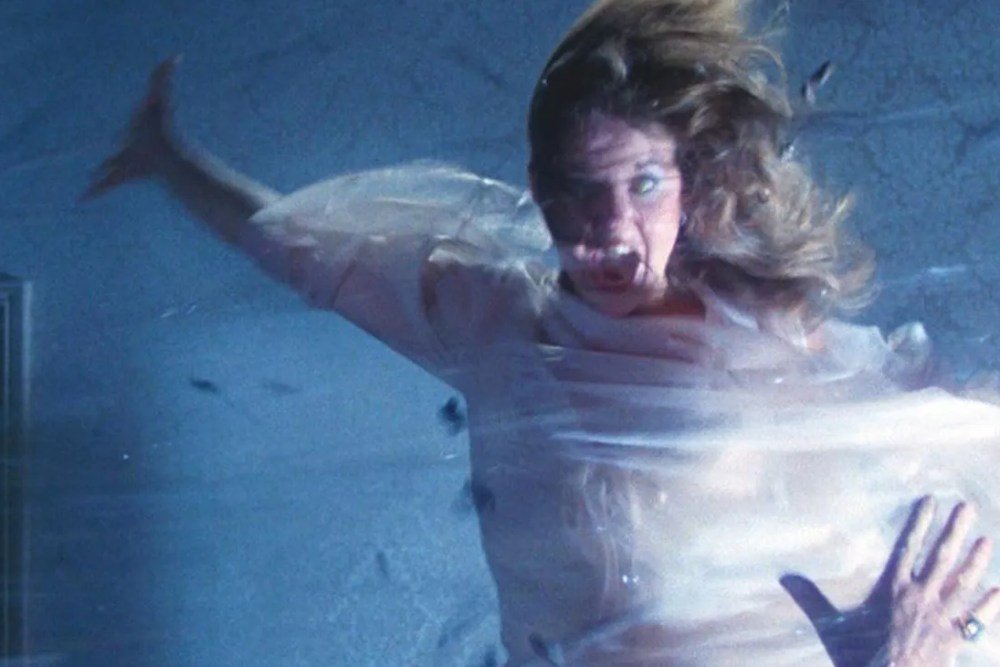
    That said, the making of “Exorcist II: The Heretic” was beset by a litany of bad decisions and bad luck, which piled up sky-high. Boorman got seriously ill with valley fever (from inhaling the imported dirt on set), and after he was hospitalized the production shut down for five weeks. The budget ballooned from $10 million to $15 million, making it the most expensive movie Warner Bros. had ever produced. Boorman and Rospo Pallenberg kept rewriting the script (because no one really knew what the movie was about), and Richard Burton was too dour and old and hungover. There was even an air of mishap surrounding the one sequence in the movie that’s truly effective — the dreamy moment where Regan balances on the edge of a rooftop with no railing. Boorman now acknowledges that the way they shot that scene (on the roof of the Warner Bros. building in New York), something could have gone very wrong.

    The story of the film’s first sneak preview, at a theater in Pasadena, with the Warner Bros. executives sitting nervously in the back of the theater, is a hilarious parable of the chickens coming home to roost. The audience sat there, dumbfounded at first, and then you started to hear the giggles; midway through, a man stood up and threatened the people who made the film, at which point they escaped. “Exorcist II” had been booked into 700 theaters for 12 weeks (a nearly unprecedented wide release at the time), but the attendance declined by 50 percent in the second weekend. The word had gotten out. All the recutting in the world couldn’t save it. “Boorman and the Devil,” in its amused way, does try to save “Exorcist II: The Heretic” by treating it as an insane work of artistic daring. But I’m sorry, that’s just a pile of Pazuzu.

  • Shelley Fabares, Star of ‘The Donna Reed Show’ and ‘Coach,’ Dies at 82

    Shelley Fabares, Star of ‘The Donna Reed Show’ and ‘Coach,’ Dies at 82

    Shelley Fabares, the wholesome daughter on The Donna Reed Show who went on to star opposite Elvis Presley in three movies and as Craig T. Nelson’s independent wife on Coach, has died. She was 82.

    Fabares died Saturday in Los Angeles after a brief illness, her family announced. Survivors include her husband, M*A*S*H actor Mike Farrell, whom she married in 1984.

    “To her family and friends, Shelley was a source of love, strength, laughter and comfort,” they said in a statement. “She was a devoted wife, cherished stepmother, daughter, sister, niece, aunt, family member and loyal friend whose warmth, generosity, humor and grace made an enduring difference in the lives of everyone who knew her. She had a remarkable ability to make people feel welcomed, valued and cared for.”

    On the original One Day at a Time, Fabares played against her prim, good-girl persona as Francine Webster, a nasty business rival of Bonnie Franklin‘s Ann Romano. (Her late aunt, Caesar’s Hour and The Band Wagon star Nannette Fabray, also appeared on the CBS sitcom, playing the mother of Franklin’s character.)

    Fabares also portrayed the wife of doomed Chicago Bears running back Brian Piccolo (James Caan) on the landmark 1971 ABC telefilm Brian’s Song.

    On The Donna Reed Show, which aired on ABC for eight seasons, from September 1958 through March 1966, Fabares played high schooler Mary Stone opposite Reed as her mom, homemaker Donna Stone; Carl Betz as her pediatrician dad, Dr. Alex Stone; and Paul Petersen as her younger brother, Jeff.

    When Mary left for college at the start of the sixth season, the Stones adopted a daughter, Trisha (Patty Petersen, real-life sister of Paul).

    Capitalizing on her national fame, Fabares — backed by Darlene Love and the Blossoms and Glen Campbell on guitar — recorded a version of “Johnny Angel,” which went to No. 1 on the Billboard Hot 100 in April 1962. She had debuted the song on a Donna Reed episode a couple months earlier.

    “I literally cannot sing. So there’s a lot of overdubbing,” she admitted in a 1983 interview. “The girls in the back — ‘Could you sing a little louder please?’ It was unusual. But [The Donna Reed Show] was very successful at that time, so [the song] had a built-in audience.”

    During “live” performances — in “the days when they would play the record and you would lip sync” — she recalled, “my worst experience was [when] I did a live local television show and, needless to say, the record stuck. I think I went into a coma.” 

    Fabares starred on the ABC comedy Coach for eight seasons while earning a pair of Emmy nominations for playing Christine Armstrong, a TV newscaster and the girlfriend and then wife of Nelson’s college football coach, Hayden Fox.

    “Clearly, Christine is a very successful woman and firmly entrenched in her career and loves her work. And she loves this man,” she said. “It’s a difficult problem in life to find your balance. We’re all going through the same things. I have a wonderful relationship with my husband, but I’m still a career woman.” 

    In 2015, NBC developed a Coach revival in which Nelson’s character returns to coaching and Fabares’ character is killed off, but the reboot did not emerge beyond the pilot stage.

    Michele Ann Marie Fabares was born in Santa Monica on Jan. 19, 1944. Her mother, Elsa, got her into modeling at age 3, and that led to TV appearances.

    By the time she was 9, Frank Sinatra was singing “Young at Heart” to her on an NBC special. She also appeared on a 1955 NBC adaptation of Our Town that starred Sinatra, Paul Newman and Eva Marie Saint and with Rock Hudson in Never Say Goodbye (1956).

    In 1958, she was on the ABC series Annette, which starred lifelong friend Annette Funicello. 

    Fabares said Reed “was not given credit for being the head of her own series, the guiding force behind the series,” she said in 1994. “She produced the series, had an enormous part in writing it and also had four children at home. Having been there, I knew the amazing strength of that woman.” 

    During a 2011 reunion of the show’s surviving castmembers, Fabares remembered when she was feeling nervous about having to dance during a scene. Reed tried to calm her down. “Shelley, there are three things I can’t do: I can’t swim, I can’t dance, and I can’t act.” But she had to do all three for a film scene. “Oh yeah, that movie I was talking about was It’s a Wonderful Life.”

    After several years as Mary Stone, Fabares concentrated on the big screen and appeared in the fun-in-the-sun movies Ride the Wild Surf (1964) with Fabian and Hold On! (1966) with Peter Noone of Herman’s Hermits.

    She then co-starred with Presley in Girl Happy (1965), Spinout (1966) — Betz played her dad in that one too — and Clambake (1967).

    “The first day of shooting [Girl Happy], I’m on the set. Something was happening, and I didn’t know what it was,” she said. “And I looked over, and it was Elvis. He was walking in. He wasn’t doing anything. He was just walking in. The presence that this man had … you couldn’t talk. Nobody did anything. You just sort of stopped. And I remember thinking, ‘Oh, my God. It’s Elvis Presley. I’m never going to be able to open my mouth around him.’ ” 

    In the late 1960s, during a time of protest and rebellion, her good-girl appeal fell out of sync with the cultural zeitgeist. It wasn’t until Brian’s Song that she regained her career momentum. 

    Buoyed by that role, Fabares rebounded to work on such popular series as The Brian Keith Show, The Practice with Danny Thomas and Highcliffe Manor. In the late ’70s and early ’80s, she starred on One Day at a Time, then showed a saucier dimension as the tart-tongued Eleanor Major on the syndicated soap opera spoof Forever Fernwood. 

    Fabares also had guest-starring roles on Mannix; Love, American Style; Daniel Boone; McCloud; Mork & Mindy; and Hello, Larry (as McLean Stevenson’s ex-wife).

    She had a liver transplant in October 2000 after spending nearly two years on the waiting list to receive one.

    In 1984, she married Farrell at Aunt Nanette’s Pacific Palisades home. The two had first met in 1970 when she was a guest star on Farrell’s series The Interns, but it was not until they reunited 12 years later during a CBS press tour that they started to date. (Earlier, Fabares had been married to record producer Lou Adler, while Farrell’s first wife was actress Judy Farrell, who played Nurse Abel on M*A*S*H.)

    Farrell, known to be a serious human rights activist, said his wife made him a bit more light-hearted. “People talk about how much more fun I am,” he said in 1991. “Shelley has allowed people to understand I’m not this unapproachable doomsayer.” 

    Added Fabares: “Nothing in Mike’s life is casual. He’s very serious. Mike grounds me, and I think I pull him out sometimes. It’s a nice mix.”

    Shelley Fabares and Mike Farrell.

    Courtesy Fabares/Farrell family

    Survivors also include her stepchildren, Erin and Michael.

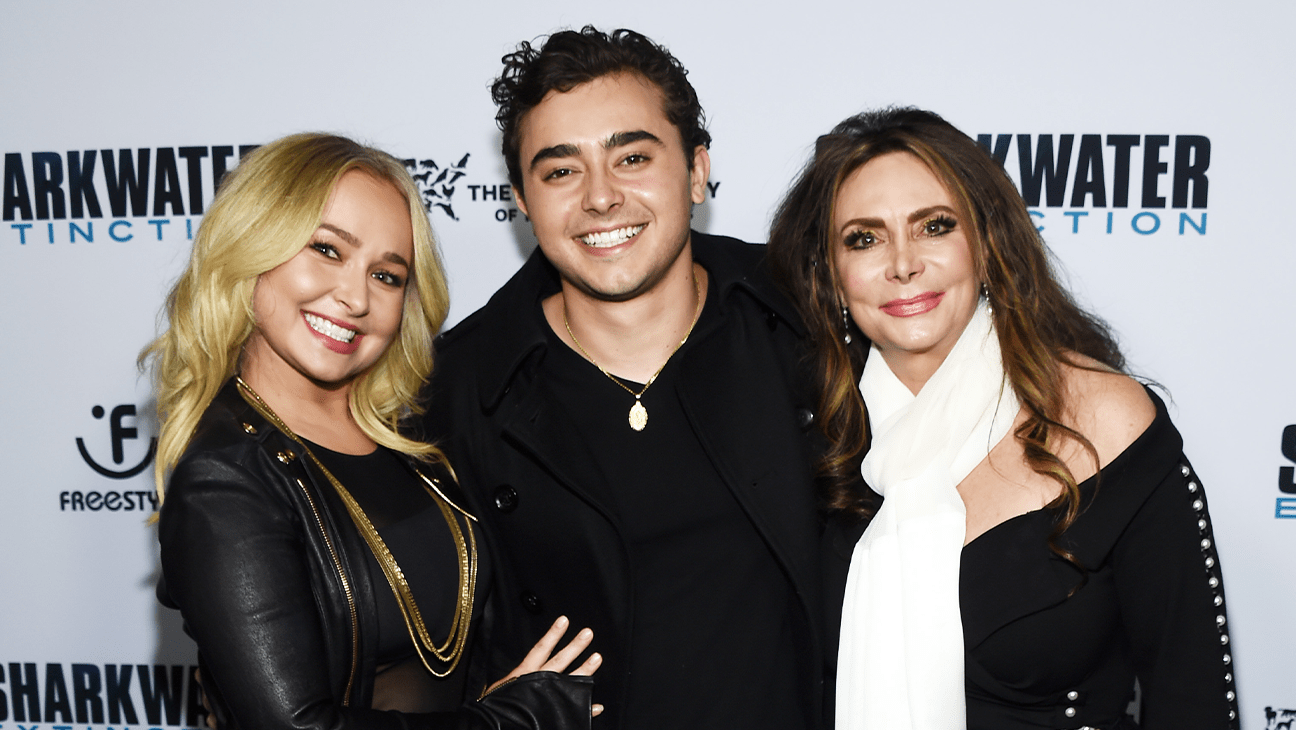
  • Hayden Panettiere’s Mom Blasts Gayle King After CBS Host Criticizes Her Reaction to Daughter’s Death

    Hayden Panettiere’s Mom Blasts Gayle King After CBS Host Criticizes Her Reaction to Daughter’s Death

    Lesley Vogel, Hayden Panettiere’s mom, is slamming Gayle King after the CBS Mornings host criticized her response to her daughter’s death.

    “I was very, very hurt and deeply disappointed in the lack of professionalism, the lack of compassion in slamming someone who’s lost two children, without even a modicum of consideration,” Vogel said during a recent interview with the Daily Mail regarding King’s comments.

    “No one reached out to me before,” she added. “It’s shameful. It’s unconscionable to me.”

    The Hollywood Reporter has reached out to CBS Mornings for comment, but did not hear back at the time of publication.

    Panettiere, an actress known for her roles in Heroes, Nashville and the Scream franchise, died last Sunday at age 36. Following her death, Vogel spoke to NBC News on Tuesday, where she criticized her daughter’s on-again-off-again boyfriend Brian Hickerson and felt her daughter “lost her way.”

    “This person in her life that we have been trying to get rid of for quite some time was with her at her death and that was Brian Hickerson,” she said at the time. “I think Hayden was an amazingly talented person in so many departments and I think young people who grow up in the entertainment industry — it is a struggle and it’s a very challenging industry and it’s not unusual for them to sadly find the wrong path.”

    Vogel added, “I think Hayden sadly lost her way and I wish it were different. I wish she had stayed true to herself because she had many incredible attributes.”

    The following day, during Wednesday’s CBS Mornings broadcast, King criticized Vogel for focusing too much on her daughter’s struggles amid her death. “You know, guys, you read this and all I can think is, ‘Thanks, mom, for nothing,’” the host said.

    “It makes me so sad of the opportunity that you have after your daughter’s death that that’s what you choose to leave us with,” King added.

    Panettiere had been open about her estranged relationship with her mother, who also served as her manager when she was growing up in the industry. In her memoir, This Is Me: A Reckoning, the actress detailed the pressure she felt from Vogel.

    During an interview with THR in May, Panettiere also opened up about the challenges of delving into her childhood and relationship with her mom when writing This Is Me. “Having to touch on everything about my relationship with my mother, that was one of the harder things to talk about,” Panettiere said. “While writing it, I realized even more so how much of a toll it took on me.”

    Page Six reported in May that Vogel had chosen the “no-contact route” with Panettiere after “20 years of trauma” and on the advice of professionals.

    Her son and Panettiere’s younger brother also died in February 2023 at the age of 28.

  • Katseye Earns First No. 1 on Albums Chart; Phoebe Bridgers Debuts at No. 2

    Katseye Earns First No. 1 on Albums Chart; Phoebe Bridgers Debuts at No. 2

    Katseye has scored their first No. 1 on the Billboard 200 as their latest project “Wild” debuts atop the list.

    “Wild,” the five-track offering led by the singles “Pinky Up” and “Hootie Frutti,” bows at the chart’s summit with 170,000 equivalent album units, marking their biggest week by that metric and by pure album sales with 145,000. Katseye‘s latest is the fourth No. 1 album by an all-woman group this decade after Twice’s “With You-th,” NewJeans’ “2nd EP ‘Get Up’” and Blackpink’s “Born Pink.” It also has the largest pure album sales week for an all-woman group in more than three years.

    Katseye previously reached a high of No. 4 on the Billboard 200 with 2025’s “Beautiful Chaos.” Their debut, “SIS (Soft Is Strong),” was released in 2024 and peaked at No. 98.

    Behind “Wild” sits Phoebe Bridgers‘ “Lost Weekend,” bowing at No. 2 with 118,000 equivalent album units earned. It marks her first solo project to reach the top 10 and becomes her best week ever by units. The singer-songwriter previously made the top 10 on the Billboard 200 with Boygenius, her trio with Lucy Dacus and Julien Baker, when their 2023 album “The Record” peaked at No. 4.

    Stray Kids’ “This & That,” which debuted at No. 1 last week, slides to No. 3, followed by Olivia Rodrigo’s “You Seem Pretty Sad for a Girl So in Love” at No. 4 and Ella Langley’s “Dandelion” at No. 5.

    Rounding out the rest of the top 10 are Morgan Wallen’s “I’m the Problem” (No. 6), Ariana Grande’s “Petal” (No. 8), Drake’s “Iceman” (No. 9) and Olivia Dean’s “The Art of Loving” (No. 10).

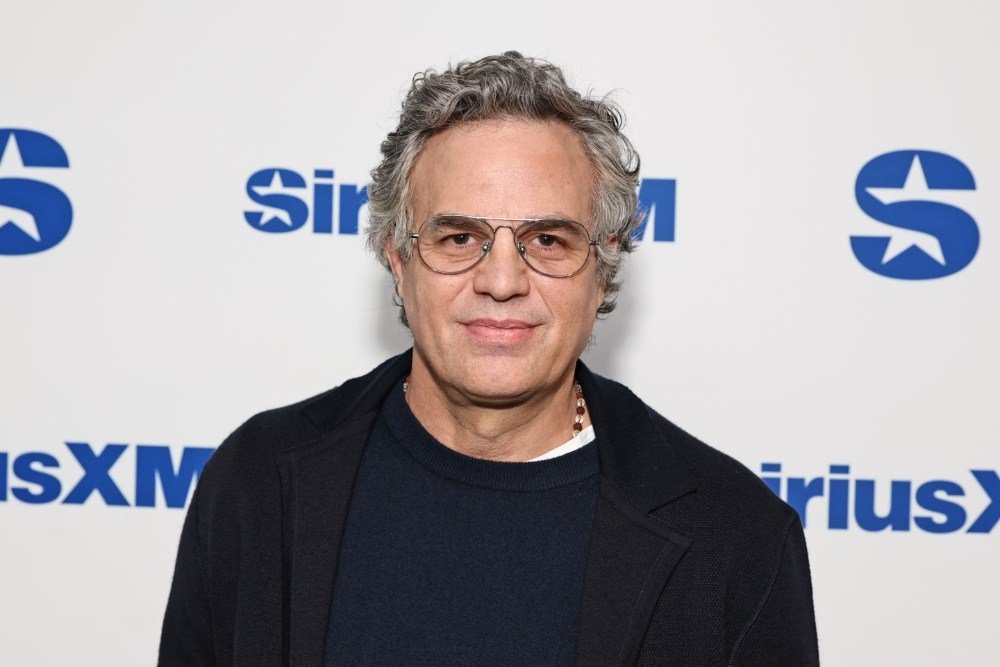
  • Mark Ruffalo Called Out Over ‘Extremist and Antisemitic Messaging’ by Simon Wiesenthal Center, Creative Communities For Peace

    Mark Ruffalo Called Out Over ‘Extremist and Antisemitic Messaging’ by Simon Wiesenthal Center, Creative Communities For Peace

    Two prominent Jewish advocacy groups have called out Mark Ruffalo for spreading “antisemitic tropes.”

    “Words matter, and so does the willingness to draw a line when legitimate debate gives way to antisemitic tropes,” said Jim Berk, CEO of the Simon Wiesenthal Center.

    “We commend Paramount for speaking clearly and refusing to allow prejudice to masquerade as political or corporate criticism. At a time when antisemitism is too often minimized, rationalized, or repackaged in more socially acceptable language, this kind of moral clarity matters.”

    Ari Engel, executive director of Creative Community for Peace, also said in a statement: “Mark Ruffalo’s rhetoric has increasingly crossed the line from criticism of Israel into extremist and antisemitic messaging.”

    Their intervention comes after Paramount issued a rare statement of condemnation against Ruffalo on Friday, in which the company said it is “troubled when antisemitic tropes are invoked in purported service of a business dispute.”

    That statement was in response to the actor’s Instagram re-posting of a year-old video clip featuring Jewish Paramount Skydance board member Safra Catz speaking on a panel. In text accompanying the clip he told his 20 million Instagram followers it showed Catz “revelling” in a “genocide” powered by tech company Oracle, understood to be a tacit reference to the Israel-Hamas conflict.

    Catz is the former CEO of Oracle, which was co-founded by Larry Ellison, father of Paramount Skydance CEO David Ellison.

    Paramount Skydance is in the process of acquiring Warner Bros. Discovery. Ruffalo has been one of the most vocal critics of the deal.

    In his latest social media screed, Ruffalo said Larry Ellison was funding his son’s acquisition of Warner and that he would own “most of” the company if the deal, which is currently mired in legal tangling with 12 state attorneys general, went through.

    Larry Ellison has reportedly committed up to $46.7 billion of the $111 billion deal, with a trio of Middle Eastern sovereign wealth funds, comprised of Saudi Arabia, Qatar and Abu Dhabi, also committing at least $24 billion.

    Ruffalo, who is believed to have earned millions from his role as Hulk in the Marvel films, also called Ellison Sr. a “classic Oligarch” who is “crushing workers and consolidating the wealth of the world for their own power and concentrated dominance” in his commentary. He also accused the Ellisons of “powering some of the most destructive and inhuman forces in the world.”

    After Paramount issued its statement condemning his post, the Marvel actor fired back on X, saying the accusation of antisemitism “is appalling and fundamentally dishonest.”

    However, at least two Jewish orgs appear to agree with Paramount’s assessment. “Invoking Israel in an issue where it is completely irrelevant is a textbook case of obsession and demonization,” Berk, the Simon Wiesenthal Center CEO, continued in his statement. “Paramount was right to call it out. More leaders and institutions should have the courage to call antisemitism what it is, regardless of who is spreading it.”

    Meanwhile CCFP’s Engel, noted: “Ruffalo now says accusations of antisemitism against him are ‘fundamentally dishonest.’ Intent does not erase impact. Repeatedly amplifying inflammatory falsehoods and rhetoric that mirrors historic antisemitic tropes helps normalize the violent anti-Jewish hatred we are seeing take hold once again around the world, regardless of how he chooses to describe his own motives.”

  • ‘Tucci in Italy’ Cinematographer Matt Ball on Making Italy Look Delicious

    ‘Tucci in Italy’ Cinematographer Matt Ball on Making Italy Look Delicious

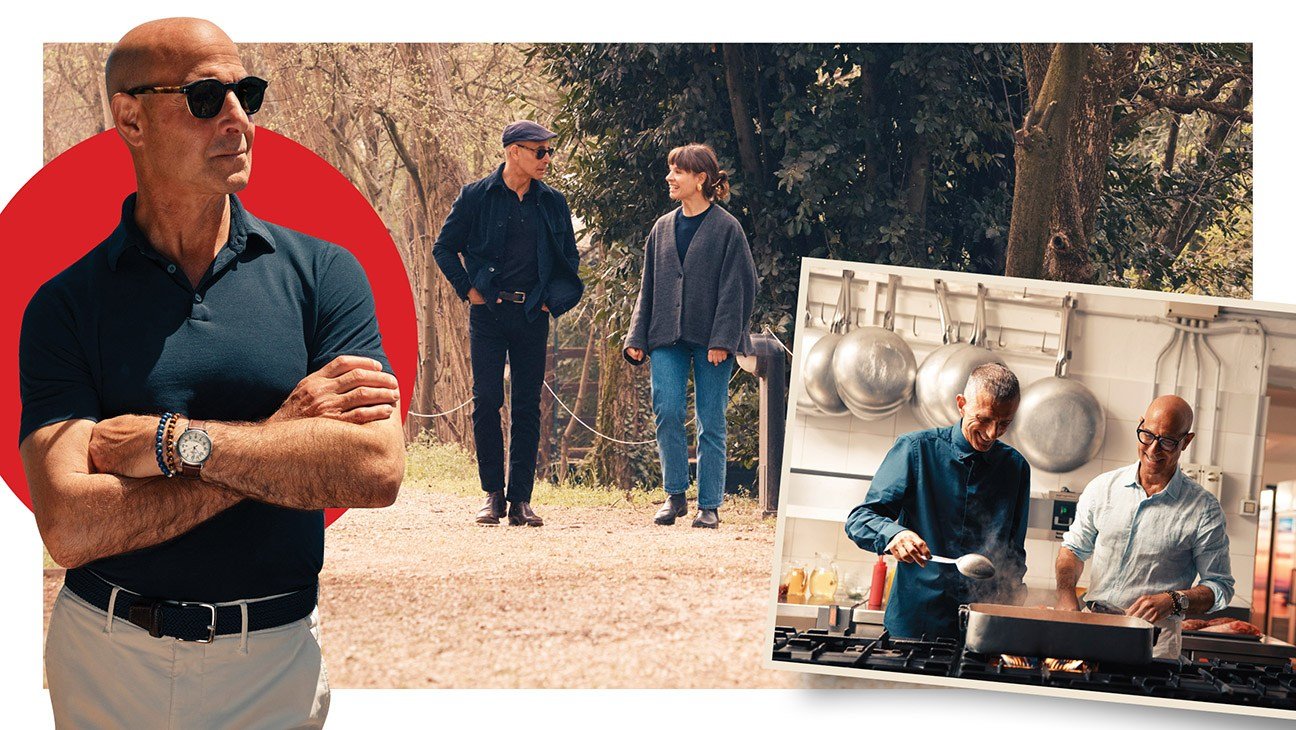
    Tucci in Italy is swarming with handsome images: a mouthwatering dollop of spaghetti and clams inspired by a Neapolitan chef’s 94-year-old mother, majestic Renaissance-era palaces and quaint villages where the show’s host, Stanley Tucci, enlists locals to expound on Italian culture. But director of photography Matt Ball isn’t always looking for polish — he wants candor.

    “It’s not necessarily a show about how beautiful everything looks,” Ball says. “The primary goal is to get authenticity. And then we shoot around it and try to make it look as nice as we can.”

    Ball’s cinematography led to one of the three Emmy nominations that Tucci in Italy received this year, alongside a sound mixing citation and outstanding hosted nonfiction series or special. He met Tucci as a camera operator on Stanley Tucci: Searching for Italy, which ran for two seasons on CNN. When National Geographic picked up the retitled version, Ball was brought on as DP. They’re currently in production on another spinoff, this time set in Great Britain.

    Before shooting, Tucci, producer Lottie Birmingham and their research team map out a roughly seven- to 10-day stint in each city being featured that season. They find cooks, farmers, food producers and culinary experts to show off the region’s cuisine and landscapes. Ball, who collaborated with two camera operators and two assistants on Tucci in Italy, then designed shots as unobtrusive as possible so the contributors could feel comfortable.

    “The work of making it look beautiful has been done for me already,” Ball says, downplaying his aptitude for capturing the vistas of Sicily, Tuscany or Sardinia so elegantly.

    If Searching for Italy prioritized major destinations such as Rome and Milan, Tucci in Italy sought out less touristy locales, like Ball’s personal favorite stop, Le Marche. There, at the seaside restaurant Da Emilia, Tucci tried a spaghetti and mussels dish the chef’s eponymous grandmother had taught her to make years earlier. The Devil Wears Prada actor dined with the chef at a long outdoor table overlooking the Adriatic Sea — an example of the charisma that Ball encountered everywhere he went.

    “It looked fantastic,” he says. “The light was coming off the water, and it was a beautiful day. It was really lovely.”

    Ball, for his part, gets to sample many of the dishes, too. Some of that intake depends on how much offal, for example, he’s willing to eat.

    Ball’s food-oriented résumé is accidental, though. It started with a gig as a camera operator on the long-running Barefoot Contessa, where he met his wife. He’s since shot Be My Guest With Ina Garten as well as shows with celebrity chefs Jamie Oliver and Lorraine Pascale. He says he’ll stay on with Tucci as long as Tucci wants to continue his savory travels.

    “Everywhere we go,” he says, “you’ll always hear somebody whisper, ‘That’s Stanley Tucci!’ ”

    This story first appeared in an August stand-alone issue of The Hollywood Reporter magazine. To receive the magazine, click here to subscribe.

  • There Are Scores of Great New Animated Shows. The Emmys Won’t Nominate Them.

    There Are Scores of Great New Animated Shows. The Emmys Won’t Nominate Them.

    One of the great creative innovations America has given the world in the past 30 years is TV animation.

    That sounds like hyperbole, but it’s true. The Simpsons changed how we look at the American family (and current events). Rick and Morty changed how we looked at comedy and the tragedy behind it. (“Wubba lubba dub dub.” Also, current events.) South Park changed how we looked at each other (and current events).

    The problem is that those shows all started doing that a very long time ago. Rick and Morty is nine seasons in. South Park is 28. The Simpsons is 37 damn seasons deep. There are children who weren’t born when the series debuted who now have children who themselves are old enough to think Bart has got this whole life thing figured out.

    All three of those shows are nominated for outstanding animated program this year. So is Bob’s Burgers, which just completed its 20th season. Now, a charitable view would hold that such shortlisting reflects the durability of these shows — how they manage to maintain their creative spark through so many changing winds.

    There is something to that — it’s not easy to do anything well for three decades, let alone maintain character freshness.

    But I fear the fact that animated characters don’t age — and that they’re basically money-minting machines for a few networks (especially Fox) — has led us to a pretty calcified place. No show should so regularly take a place on the Emmys stage. The Simpsons and Bob’s Burgers have been nominated every year since the Obama days. Nothing is that good for that long.

    What isn’t on the animated shortlist this year? Dark sci-fi like Owen Dennis’ Among Us on Paramount+. The acquired taste but still bold stylings of Raphael Bob-Waksberg’s time-jumping family series Long Story Short on Netflix. Joe Cappa’s Adult Swim single-dad delight Haha, You Clowns. These are all newish shows from the past year or two with great energy and original takes. But to look at the Emmys noms is to not even know they exist (and indeed, many viewers won’t without the exposure).

    A little breath of fresh air in the category comes via Smiling Friends, Adult Swim’s truly wacky take on a nonprofit and what it means to do good/be happy. And while I would hardly call anything in the George Lucas-verse fresh in 2026, Star Wars: Visions at least uses varied artists and styles in a way that feels original. But these shows seem token-y amid the Simpsons and South Park oak trees and probably won’t win anyway.

    What can the Emmys do to fix this? Fortunately, there are a few things.

    For starters, stop with just nominating a single episode. Unlike TV Academy convention elsewhere, the Emmys don’t award a show — they award an episode. That means that the kind of newer, zanier material that takes months to really settle into is completely disadvantaged — you’re not going to appreciate something weird and new if you just try to watch one episode. You’re just going to go back to something you know and like, such as The Simpsons or South Park.

    Of course, the irony is that The Simpsons and South Park were themselves once oddball and required a multi-episode commitment to appreciate. But now that they are appreciated, voters just keep rubber-stamping them. I mean, Rick and Morty hasn’t really been good in several years. But voters just keep checking the box without thinking there might be a new Rick and Morty waiting out there.

    The other irony is that many of the characters on these very shows would hate this kind of lazy legacy thinking and would balk at it. A category that is literally designed to celebrate subversiveness champions the sclerotic.

    Another fix: Stop with the international ghettoizing. My colleague David Canfield just covered this on the live-action side, but it applies on the animated side, too. Bluey is one of the best shows on television these past 10 years. And many people in America watch it. Find a way to make it eligible for the primetime Emmy.

    While we’re on the topic of Bluey, get rid of the “Eligibility in animation is for programming that targets an audience age 13 and above” rule. This is just not how people watch television anymore.

    And finally, open up the Phase II voting beyond just the animation branch to the whole TV Academy. Animation is one of two realms that has this limitation. And it’s having a bad effect. People in the animation branch work in the field, which means they tend to vote for the shows of folks they know or have worked with. So we get the 30-year veterans.

    I get why this exclusionary voting rule was first drafted: Animation is a specialized craft, and specialists should vote on their specialty. Also, there is a fear that the, ahem, unwashed masses who don’t work in animation won’t really know the shows because they’re too busy watching the live-action stuff. But if that was ever true, it’s not anymore. Everyone watches everything.

    All of these might seem like big changes, hard to implement, but they’re really not. They’re possible and would make a world of difference. And if you doubt it, there’s a group you can ask that will help. A group that looked at the world as it is and said, “Maybe there’s another, more daring way to view it.” They are, of course, called animators.

    This story first appeared in an August stand-alone issue of The Hollywood Reporter magazine. To receive the magazine, click here to subscribe.

  • Anna Paquin and Melissa Gilbert Call for Protection of Child Actors After Hayden Panettiere’s Death: “Where Is the Collective Outrage?”

    Anna Paquin and Melissa Gilbert Call for Protection of Child Actors After Hayden Panettiere’s Death: “Where Is the Collective Outrage?”

    Anna Paquin, Christy Carlson Romano and Melissa Gilbert are calling on Hollywood to protect child actors following the deaths of Hayden Panettiere, Michelle Trachtenberg and Daveigh Chase.

    Panettiere’s death at age 36 last Sunday prompted the three actresses, who were child stars themselves, to take their concerns public. Trachtenberg died at 39 in February 2025, while Chase died in July at age 35.

    “It’s not a coincidence that so many former, specifically pre-sexualized female, child ‘stars’ have profoundly sad lives and untimely ends. We were not as protected by the ‘systems’ that look great on paper, as we are supposed to be,” Paquin wrote on Instagram Friday. She rose to fame at 11 years old with her film debut in 1993’s The Piano, which earned her an Oscar for best supporting actress.

    “RIP HP, MT, DC and too many others. It’s a strange small club we belong to and you are worthy of support no matter how our industry makes us feel,” Paquin continued. “Literally DM me. I believe you and I will stand by your side. You aren’t alone. Let’s have each other’s backs. It might make public disclosure less terrifying.”

    The True Blood alum added in a separate post, “One more thing– As an adult I’ve had the pleasure of working on productions where the welfare and mental health of young performers was handled incredibly carefully. Especially around material that was intense. It is possible to holistically look after the kids on set and tell complex and sometimes upsetting stories. It just has to be the top priority of the production.”

    Earlier in the week, Elle published an essay by Romano — who appeared in 1996’s Everyone Says I Love You as a child before becoming a teen Disney star with her role in Even Stevens and voicing Kim Possible — where she compared child stardom to the degenerative brain disease chronic traumatic encephalopathy (CTE).

    “The former child actor exists in a category the world does not know how to hold. We are children when the public wants to feel protective of us, professionals when the industry wants to profit from us, and spoiled celebrities when we eventually show symptoms of having been both,” Romano wrote in part. “Early fame is like CTE. Not as a diagnosis. As a way of thinking about repeated impact. We now have language for youth sports: protocols, helmets, parents worried about concussions. But we have almost no language for what happens when stress, scrutiny, rejection, adult pressure, and the collapse of privacy become the architecture of a childhood.

    She added, “Young performers are still treated as exceptions. Lucky exceptions. Cute exceptions. Talented exceptions. Exceptions whose labor powers one of the most profitable storytelling machines in the world, while their mental needs are treated as inconvenient or irrelevant. Social work be damned.”

    Gilbert also shared a lengthy post on Substack Saturday, where she asked, “Why are these three sweet, wildly talented, vibrant, vital young women gone?” Gilbert landed her breakout role at just nine years old, playing Laura Ingalls Wilder on Little House on the Prairie from 1974 to 1983.

    “I did not know Hayden personally and only worked briefly with Mishy and Daveigh. It feels personal because I was them,” Gilbert wrote. “We are all members of the same tribe; Female Former Child Performers, and when one of us dies, it runs through all of us like an electrical current. When three of us die so close together, something is very, very wrong. We all know the stories of how the entertainment industry uses, abuses, exploits and then throws away it’s youngest, but for some reason, this trend is getting worse.”

    She later added, “Where is our Union in all of this? Where is the collective outrage? Where are the regulations? Where is the protection of privacy?”

    “It really seems like no one cares enough to enact real change. At least, not until the next death and everyone talks about how sad they are and how we must do something and then they forget and get on with their lives until it happens again and again and again,” Gilbert continued. “Yes, addiction is a real disease. Family dysfunction is real. PTSD is real. In actors, all those things are assets. They enable us to access emotion and share it with an audience. But when it comes through children, it should be treated tenderly, protectively, respectfully and in a way that is as limited as possible.”

    Gilbert’s post comes as her husband, Timothy Busfield, awaits trial in Albuquerque, New Mexico, after being accused of child sex abuse on the set of the former Fox/Warner Bros. Television series The Cleaning Lady. Gilbert has defended Busfield, who has denied the allegations.

    Panettiere started working in Hollywood at a young age, appearing in the soap opera One Life to Live at just four years old before starring in 2000’s Remember the Titans at 10, among other projects. As for Trachtenberg, she appeared in the Nickelodeon series The Adventures of Pete & Pete as a child, as well as 1996’s Harriet the Spy and 1999’s Inspector Gadget. Chase was known for voicing Lilo in 2002’s Lilo & Stitch when she was younger as well as starring in the 2002 horror film The Ring.

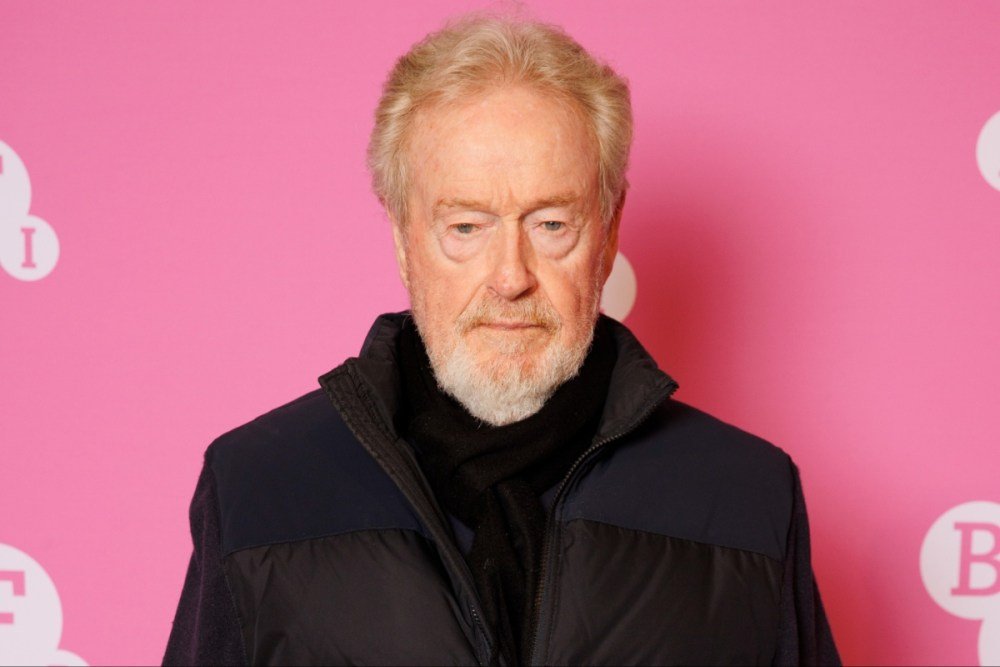
  • Ridley Scott Says ‘I’m Not a Filmmaker, I’m an Influencer’

    Ridley Scott Says ‘I’m Not a Filmmaker, I’m an Influencer’

    Ridley Scott recently told The Times of London that he sees himself not as a “filmmaker,” but as an “influencer.”

    “Every time, you are vulnerable,” Scott said when asked to identify a through line in his work. “Also, I never want to repeat myself and all my films have been on the money. I’ve been ahead of the game frequently and, if you’re ahead of the game, you’re an influencer. So I’m not a filmmaker, I’m an influencer.”

    Scott, a three-time Oscar-nominated director, has certainly flexed his influence throughout his years in Hollywood with immortal classics like “Blade Runner,” “Alien,” “Thelma & Louise,” and “Gladiator.” Earlier in the sit-down, he noted there are things he has yet to cross off his career checklist.

    “I’ve never done a Western,” he said. “I have cast Hugh Jackman for my ‘Treasure Island’ adaptation. I want to do a musical and, also, have a marvelous film about the African elephant.”

    Scott’s next film is “The Dog Stars” with Jacob Elordi, Margaret Qualley and Josh Brolin. He deemed his leading man Elordi “a big star” and said they “got on great.” He went on to imply that the reason he directed “The Dog Stars” was because he sensed tedious sameness in the type of stories coming out of Hollywood.

    “Look, everything now is about a murdered girl in the woods, or an FBI agent who is better than anyone else — or a superhero,” Scott said. “Fuck me! There have to be other stories to tell.”

    Scott will soon receive an honorary Oscar at November’s Governors Awards. Other recipients include Glenn Close and Disney’s first Black animator, Floyd Norman.