The 2026 Winter Olympics continued their ratings momentum through their final weekend.
The games averaged 23.5 million viewers across NBCUniversal and Versant platforms from Feb. 6-23, based on Nielsen ratings and Adobe Analytics streaming data — a huge improvement on the lightly watched 2022 Winter Olympics. The 2026 audience, which combines live afternoon telecasts on NBC and Peacock (and sometimes Versant’s USA Network and CNBC) and primetime replays, nearly doubled the average of the 2022 games (12 million). That average may grow a little as it includes preliminary Nielsen numbers for the final few days of the games.
The 2026 Winter Olympics are the most watched winter games since 2014, NBC says. The Olympics averaged more than 20 million viewers for all 15 full days of competition from from Feb. 7-20, and for the opening ceremony on Feb. 6.
The Milan-Cortina Olympics became the most streamed winter games ever less than a week into the competition, with Peacock racking up ever bigger numbers over the remainder of its coverage. The games ended with 16.7 billion minutes of streaming time, more than double the combined total for all previous Winter Olympics (which prior to 2022 came via NBC apps and websites).
“The success of the Milan Cortina Olympics, Super Bowl LX in Santa Clara and the 2026 NBA All-Star weekend in Los Angeles could not have happened without the enormous cooperation and support from across Comcast NBCUniversal — including Peacock, NBC Entertainment, NBC News, Telemundo, local owned-stations, NBC affiliates, our exceptional ad sales and distribution teams, and Xfinity. And, of course, our great partners at the IOC, USOPC, NFL and NBA,” NBC Sports president Rick Cordelia said in a statement.
The gold medal women’s hockey game between the U.S. and Canada on Feb. 21 drew 5.3 million viewers, a record for any women’s hockey contest in the United States. Ratings for the men’s final, also a U.S. overtime victory over Canada, will be available Tuesday.
Peacock had its best month ever in February, unsurprisingly. The streamer (and other NBCU digital platforms) averaged 3.3 million daily viewers for the “Milan Prime” (2-5 p.m. ET) and U.S. primetime main telecasts, which accounts for about 14 percent of the 23.5 million all-in average. The Super Bowl, Olympics and NBA programming also had a halo effect on Peacock’s entertainment offerings: The Burbs launched to strong viewing numbers on Super Bowl Sunday, and shows including The Traitors, Ponies and All Her Fault saw viewing lifts compared to the weeks prior to the Super Bowl and Olympics.
Spotify and Mindhouse have confirmed that the popular interview show, hosted by the beloved British broadcaster and documentary-maker, will launch Tues., Mar. 3.
Theroux is back opposite some of the most intriguing names in entertainment, film, sport and more, including tennis maverick Boris Becker, Twin Peaks‘ detective Kyle Maclachan, singer Lulu, comedian Stewart Lee, Icelandic singer-songwriter Laufey, and investigative journalist and author Patrick Radden Feefe. A bonus episode and more guests will be announced in due course.
“Someone once said to me that the key to a great conversation is genuine curiosity. ‘Could you repeat that?’ I replied. ‘I wasn’t listening,’” Theroux joked to The Hollywood Reporter. “But seriously — who could fail to be curious when faced with guests as fascinating, whose lives and work are as full of incident, insight, and artistry, as Boris Becker, Lulu, Stewart Lee, Laufey, Kyle MacLachlan, Patrick Radden Keefe, and Yorgos Lanthimos?”
“Each one, it strikes me now, comes from a different area of professional life, but all of them practise their art forms at the highest levels,” he continued. “It’s a real pleasure having these conversations, and being allowed the space to let them flow and go in surprising directions, and with no topics off the tables. Thanks for watching!”
Since its launch in 2023, The Louis Theroux Podcast has cemented Theroux as one of the U.K.’s most successful podcasters. Last year, it was the third most-listened-to podcast overall in the U.K., according to Spotify Wrapped data — climbing from sixth place in 2024.
Series six saw Florence Pugh dissecting the pros and cons of intimacy coordinators, Steve Coogan got candid on his most challenging role yet, and Malala Yousafzai discussed her university experience as a Nobel prize winner.
The podcast’s back-catalogue also boasts recordings with Little Simz, Ed Sheeran, Michael Cera, Nick Cave and Tracey Emin, alongside headline-making episodes with Jimmy Carr, Bella Ramsey and many more.
The Louis Theroux Podcast is a Spotify podcast from Mindhouse, available on all podcast platforms, with video episodes exclusively on Spotify. Series 7 launches Tues, Mar. 3, 2026.
BAFTA has officially apologized to Sinners stars and BAFTA nominees Michael B. Jordan and Delroy Lindo for the unintentional racial slur they endured while presenting at Sunday night’s awards ceremony. John Davidson, who has Tourette’s syndrome, yelled out the n-word along with other involuntary outbursts while attending as an executive producer in support of Kirk Jones’ BAFTA-nominated I Swear, a film inspired by Davidson’s own journey with the condition.
Awareness around Tourette’s shifted much of the public conversation away from BAFTA’s failure to edit the incident from the taped broadcast — the version most viewers saw — and its slow response in apologizing to Jordan and Lindo. It’s a blind spot that feels particularly glaring given the moment: The U.K. film industry’s struggles with racial insensitivity are at the center of Dreaming Whilst Black, now streaming its second season on Showtime on Paramount+.
The series stars co-creator Adjani Salmon as Kwabena, a Black British Jamaican filmmaker trying to make it in an industry that wasn’t built for him. In her review of the series’ first season in 2023 for THR, Angie Han noted that “the road to making it is a rocky one for any novice — and, as the title hints, even more so for Black artists trying to forge ahead in an industry still dominated by white people.”
Speaking with The Hollywood Reporter, Salmon traces the project back to 2016, when it began as a web series. “[It] was born from a frustration of trying to find a way into the industry,” he says. “At the time, web series content was kinda at its apex in the sense that Insecure came out around that time. It felt like the new wave.”
Taking cues from Issa Rae’s path to HBO and Aziz Ansari’s Master of None, Salmon and his collaborators built Dreaming Whilst Black around a character with a similarly dual focus: his career and his life. In the first season, Kwabena is stuck working as a recruitment officer and gig economy delivery driver while dreaming of making Jamaica Road, a film inspired by the Windrush Generation — including his own grandparents, who left Jamaica for the U.K. in search of greater opportunity. Alongside him are film school friend and producer Amy (Dani Moseley), cousin and surrogate brother Maurice (Demmy Ladipo), Maurice’s pregnant wife, Funmi (Rachel Adedeji), and Vanessa (Babirye Bukilwa), the more financially stable woman who becomes his girlfriend.
For the second season — which ran last year in the U.K. but began streaming the first of six episodes in the U.S. on Paramount+ on Friday, Kwabena lands a job working on a “color-blind” historical drama that feels like his big break. As the series progresses, he finds that, even from the inside, the industry does not welcome his voice.
The latter is a sentiment, some argue, that BAFTA echoed in its failure to acknowledge the harm Jordan and Lindo experienced in that moment. “If season one is about the Black glass ceiling,” says Salmon, “season two is about the glass cliff.”
To those unfamiliar with “the glass cliff,” Salmon explains it as a technical term referring to “structural inequality disguised as personal feeling.” The societal critiques in the series are inspired by Salmon falling down a “rabbit hole” of books about social injustice and inequality that include writers and scholars from the U.S., Kenya and Great Britain, like bell hooks, Kenyan Ngũgĩ wa Thiong’o and Stuart Hall.
In tackling the challenges Black filmmakers and others face for Dreaming Whilst Black, Salmon stresses that “we don’t want to re-traumatize [because] these are people’s lives. The things that we go through happen to people. So it’s really about getting the balance right of sharing our reality.”
That balance, he adds, comes from a place of love: “We try to dedicate the work to our community so that, even when we’re having these conversations that feel sad, they still feel heard.”
Despite the challenges, Salmon — himself a BAFTA winner who also received two nominations for Dreaming Whilst Black — sees genuine progress. “When I started in the industry, I didn’t really see many of us at all,” he says. “And now I’m seeing far more of us, maybe not as much as I would want, but it’s more than last time. But I would love for us to get to a place [of] normalization. Obviously Dreaming Whilst Black exists, [but] we heavily lean into the experience of being Black.”
What he hopes for next is something closer to normalization: Black British filmmakers achieving what producers like Will Packer have built in the U.S., or what British Nigerian filmmaker Rapman has done with Netflix’s Supacell.
“That is progress, more of that. Just people with powers who so happen to be Black,” he says. “Just more intentionality with our everydayness. That’s what I would love to see now.”
The first season of Dreaming Whilst Black is streaming on Showtime on Paramount+ with episodes of season two dropping every Friday until March 27.
In a way, Quentin Tarantino‘s viral criticism of Matthew Lillard was a good thing for the Five Nights at Freddy’s actor. It was only in the wake of the director’s harsh comments that Lillard was able to realize how appreciated he is by both his fans and others in the industry.
But first, he had to go through a bit of hell.
As a refresher, Tarantino said on The Bret Easton Ellis Podcast back in December that Lillard was on a list of actors he said he didn’t care for. Speaking initially about Paul Dano, Tarantino said, “I’m not saying he’s giving a terrible performance. I’m saying he’s giving a non-entity [performance]. I don’t care for him. I don’t care for Owen Wilson, I don’t care for Matthew Lillard.”
In a new interview with People, Lillard says, “It felt like I had died and was in heaven watching everyone send out their RIP tweets. I mean, it was really being a part of your own wake, sort of sitting there living through all the nice things people say after you die.”
“Everyone, from the people at the mall this weekend with my kids to George Clooney and James Gunn and Mike Flanagan, I mean, people have sort of been really generous with telling me how much they loved me and liked my work,” Lillard continued.
Gunn posted on social media, calling Lillard “one of my favorite guys (and actors).” Clooney said he would be honored to work with any of the actors Tarantino criticized. Flanagan — who has cast Lillard on multiple films — gave a full-throated defense of the actor, calling him “the goddamn greatest.”
Lillard added that Tarantino’s comments especially hurt because he would “love” to be in one of his films. “I think he’s a lovely filmmaker, and to just sort of get punched in the mouth just was kind of a bummer.”
Lillard initially responded to the comments at GalaxyCon Columbus, saying, “Eh, whatever. Who gives a shit. The point is that it hurts your feelings. It fucking sucks. And you wouldn’t say that to Tom Cruise. You wouldn’t say that to somebody who’s a top-line actor in Hollywood.”
Lillard next appears in Scream 7, reprising his role from the franchise’s first film.
When a dispute arose over orchestral music originally composed for “The Phantom Thread” appearing in the new Melania Trump documentary, “Melania,” aficionados of music, film and politics all stood to pay attention. The subject of licensing music rights is fascinating and thorny enough in its own right. Add to that a member of Radiohead, Jonny Greenwood, and one of today’s top film directors, Paul Thomas Anderson, seeming to have a beef with the nation’s First Couple, and naturally it made headlines.
Marc Beckman, a producer of “Melania” and Mrs. Trump’s advisor of more than two decades, took to Breitbart News to describe the idea that the music was not properly licensed as “ridiculous” and “a blatant lie.” Now, in a wide-ranging interview with Variety, he’s further delving into the issues involved with that and other music he licensed for the film, with a candid take on just how tricky things can get when you’re procuring music for a movie that is bound to be polarizing. His view, which may not be shared by many Trump detractors, is that the road to the inauguration portrayed in “Melania” is such a non-political, non-ideological story, it’s silly for anyone to object to having their songs or score included.
The conversation also moved on to other topics related to “Melania.” These include: the vast disparity of reactions between paying attendees and critics; expectations for how the doc will perform when it premieres on Prime Video, and whether that will provide a big payoff for Amazon MGM‘s investment; what form the forthcoming Melania Trump streaming docuseries will take this summer; the duration of the Amazon deal, and what other plans might be in store for his and Trump’s production company, Muse Films.
On the matter of Greenwood v. Trump, it turns out the sides really aren’t so far apart in their understanding of what happened, even if the Radiohead guitarist-turned-film composer is not that pleased with the result. Everyone seems to agree that “Melania” film properly licensed the “Phantom” orchestral cue from Focus Gramercy Film Music, which is owned by Universal. Greenwood’s real issue is with the film studio, maintaining that he has a clause in his contracts that mandates he at least be contacted when his music is going to be re-used… though he might have little recourse to stop it, even thus informed.
In any case, it opens a fascinating window into music licensing, with Beckman candidly sharing that he had some successes and some misses as he procured songs for the film — all of which he said were either chosen or at least approved by Melania Trump — landing music by Michael Jackson, Tears for Fears, Aretha Franklin and the Rolling Stones but losing out on Prince and GNR. And yes, he was particularly proud of the “Phantom Menace” music, for its impact and because he considers himself a Radiohead head. (As for whether that would lead him to entertain Greenwood’s request… well, read on.)
“I feel like I bleed that movie now,” Beckman says of his work on this passion project, “if you cut me open, between that and her book” (also titled “Melania,” released in 2024). “Regardless of all the nonsense back and forth in the media and the politics and all that, we wanted to create something that was unique as a story that has certainly never been told before… not just showing more of the life of a person who has been selective on what to share, but also to do it in what we think is a more rich visual and sonic experience than typical for a documentary.” (The following Q&A has been edited for length and clarity.)
After all the news about Greenwood and Anderson wanting the “Phantom Thread” music out of your movie, what’s your take on that now?
It’s funny — Radiohead is one of my all-time favorite bands. For them to have come out publicly and distanced themselves, I think that’s just part of the unfortunate time we’re living in. We went out and created a nice film that doesn’t get into any kind of political policy or anything like that. The music at that moment is so perfect, honestly, I was so thrilled to be able to use it. Obviously, my background is as a lawyer. We work with the best lawyers; this is Melania Trump. We spent top dollars for all that music, and we’re thrilled to have that song included in the film. If they’re trying to distance themselves from us, for political reasons, that’s just unfortunate. But, honestly, I’ll still remain a fan and listen to their music every single day.
Some composers do have it in their contracts that the rights owner has to alert them about further usage, and some don’t. Greenwood always has it in his contract, according to his camp. Which doesn’t mean he could stop it, once informed.
On that issue, I found that it was like 50/50 — like half the time, they needed to (inform the composer), half the time they didn’t.
We were told the Greenwood camp doesn’t mean to sound like they’re demanding that his music be taken out of the theatrical version. It’s more of a request that it be removed for streaming. And I think they know they may not have a legal basis to demand it be taken out… it’s more just a request. Could you see honoring that?
No, of course not. Please tell him he’s welcome to call me if he wishes to discuss. But that song is in the film forever, regardless of the infrastructure which delivers the content.
Can you remind us where the “Phantom Thread” music appeared in your film?
That edgy, kind of nailbiting music right at that moment is so perfect. It’s in that scene where Melania Trump walks in on the president and she helps him on his inaugural speech. He says “peacemaker,” and she says, “peacemaker and unifier,” and then that extends into him using her language at the inauguration. It was so good. They’re (Radiohead) so talented — incredible music. But I’m very proud of what we did with the music in the entire film. It wasn’t easy. People do get political, so it’s incredible that we’re able to get the Rolling Stones and Elvis and Michael Jackson and even the song that we created, “Melania’s Waltz” (by composer Tony Neiman). I think we really pulled it off as far as the music goes.
“Billie Jean” must have been a must-get — Melania cites it as a favorite song of hers, and sings along to it in the car. Did you have anything that was most challenging to license?
I’ll tell you on the record, if you want to know. There was music that we tried to get, but sadly, there were politics to it. For example, the guys from Guns N’ Roses split down the middle politically. There was a beautiful song we wanted to use, and one of the guys — I don’t want to name, it’s not fair —said, “You got it. Go.” And the other one was basically like, “There’s just no way.” We needed everybody’s approval to get it in the film. So Guns N’ Roses was definitely a disappointment for us; we all have a lot of respect for Guns N’ Roses. And then there was a song that we wanted to use from Grace Jones; obviously, also a tremendous amount of respect for her. She apparently couldn’t get over the political hurdle, notwithstanding the fact that the film is not a political film. So that was disappointing, too. It’s disappointing when people put politics so far ahead, and that happened a little bit with the film, for sure. [Reps for GNR did not respond to Variety’s request for comment.]
The president always has songs played at his rallies, and some artists are fine with saying their music is for anybody who wants to use it, and then others have obviously made objections known.
I’ll tell you something interesting, though. My music roots go deep into classic rock, jazz, blues. If you take some time to research the First Lady, she also loves classic rock, and was brought up a kid in the ‘80s on Pink Floyd and this type of music. she loves. And one thing we learned — like an Easter egg surprise for me in the music with regards to “Melania” — is that we found a lot of the classic rock artists that were true freedom fighters in the ‘60s, who we never thought would go for it, came out and said that they were huge Trump fans. And then we would get blocked by the company that might have the ownership rights of that artist’s music. So, at least on a personal level, it was kind of surprising to hear some of these artists say, “Oh, I actually really like him. You don’t have to come and show me the film or anything. I would be happy to do it.” But then, as you know, these guys are selling their catalogs, and the rights holders are like, “Not a chance.”
People might think that if it just comes down to rights holders who are looking to maximize the value of their investment, they might not have the same objections that an artist might.
There’s a reverse on this one too. I think Prince sold the rights to Primary Wave. And the Primary Wave guys were like, “Oh yeah, we’d be happy to go ahead and give you guys the rights to this Prince song,” But in that instance, it’s my understanding that the deal was such that the estate now needs to approve what Primary Wave does with it. Literally we were ready to go, and and this lawyer that manages the estate was like, “Prince would never want his song associated with Donald Trump.” And we’re like, “But it’s not a Donald Trump film! He comes into the movie once in a while, but this is all about Melania. It’s not political.” And that guy blocked it. It’s so ridiculous. [A rep for Prince’s estate did not respond to Variety’s request for comment.]
At some point, I would love to tell the full story. Some of the old artists that are my heroes said yes, and then we couldn’t get it done because of the rights holders. But it was shocking. Some of the artists you would never think would say yes jumped on it right away. I was like, “Wow, I love this person even more now.”
Are there any of those unexpected allies whose names you’d feel comfortable sharing?
I don’t want to, because I promise those people that I wouldn’t hurt them. You could put this on the record. Some of them are afraid that because their fan base is so liberal, progressive, that they would lose their fans. And there’s no reason for me to hurt anyone. I respect their work and that they’re also trying to earn money and take care of their families, so I’d prefer to leave it like this.
With the Rolling Stones, it’s a unique situation with the the ABKCO years versus the later years. And so when people heard “Gimme Shelter” at the beginning, they’re like, did the Stones sign off on this? But they don’t have to with that part of their catalog.
Mick Jagger was actually involved. He gave us his blessing, and we were thrilled about that one. We worked very close with them on that. That wasn’t something that we just pulled out. And that wasn’t a political thing. With the Stones, they were just like, “Oh, you’re making a nice movie.” They were like able to get over the hurdle: It’s not politics — it’s just some story about some woman that is going from being a civilian back into the White House, and this movie looks cool and Brett (Ratner) is doing a cool job and Melania Trump is focused, and let’s do it. We showed it to them and they were impressed. [Reps for the Stones said they couldn’t speak directly to Beckman’s account of the group’s approval, but reiterated that ABKCO owns the song.]
I hope the takeaway is that, with the music, we kept a good pace. When we wanted to be poignant, like in the Arlington Cemetery scene, it was incredible. The Marine sendoff… I don’t know if you caught the reference, but that piece of classical music was also used in “A Clockwork Orange.” If you go do a little research, it’s pretty cool that we use that song in particular at that moment. [The music is an excerpt from Rossini’s 1817 opera “The Thieving Magpie,” about a wrongfully accused maidservant. It was used during scenes of mayhem in Stanley Kubrick’s film, and plays in “Melania” during a scene of President Biden and his wife leaving the White House for the final time.]
I think it’s worth knowing that Melania Trump was involved and she selected every single song in the film. She came up with the creative idea (for the movie), but then also worked deep in the production. She was in the edit room regularly, and every single song in that film was selected and approved by Melania Trump. She was very hands-on with the music. When we had “Sunny” at the end [a cover of the 1966 Bobby Hebb pop standard, a European smash in 1976 for the Eurodisco group Boney M.], I thought that was a beautiful, uplifting finale. Melania thought, “This could be a great way to finish the film and keep people upbeat as they’re walking out.” And we’ve heard that people like that.
When we used Tears for Fears’ “Everybody Wants to Rule the World,” it was her idea to use it without the vocals. She wanted to use the song because it’s perfect, but at the same time, the vocals came out because she didn’t want the vocals competing with everything else in that moment. So she was so deeply involved in song selection and then also how the music was executed. She’s instinctively able to do that.
Some of the reviews noted a possible irony to the use of “Everybody Wants to Rule the World” — like, does that imply that Trump really does want to be king? —so it seemed like removing the vocals was one way to not have that issue come up so much.
No, that’s not it. We didn’t put it in there because they were going to D.C. in that scene. We put it in there because it just was a nice, catchy song to have there, and the vocals were removed only because we didn’t want the vocals competing with her voiceover. And that was her idea, a very good idea, actually. … But if the audience wants to take that message away that you’re giving, you know, we’ll play with that all day long. It’s kind of fun. Similar implication with the “Clockwork Orange” song. Kind of cool.
‘Melania’ producer Marc Beckman at the film’s White House screening
Courtesy Marc Beckman
Let’s talk about how “Melania” played out as a big-screen release. There could have been a choice made along the way to have it just premiere on Prime. Was theatrical always envisioned from day one?
It was always Melania Trump’s and my plan to launch exclusively in theaters. We wanted to do something that had this type of high-quality, rich cinematic experience. We realized that most of the world doesn’t go to theaters anymore, post-COVID. But we thought we could do something that was groundbreaking creatively, highly stylized, rich colors, interesting audio experience, and that was always our goal. Part of the reason why we selected Amazon MGM was because they understood what it was that the First Lady wanted to achieve creatively and gave us the ability to launch this really wide as far as theaters go, both domestically and internationally. Internationally, we’re in about 30 different countries.
Did it seem risky at all to go into theaters, knowing there’d be so much attention to box office? The press did go with the angle of how it had a surprisingly good turnout, after the first weekend, but you couldn’t have been certain it wouldn’t go the other way. And there are still stories about how theatrical gross won’t cover the budget.
Well, I’ve been working with the First Lady in this capacity for over two decades, almost 25 years — pre-Trump presidency, in-between and since. So we’re very sober about how the people that want to get political — the left — would attack, and the right would say it’s the best thing ever. That’s why we did everything we can to create a film that was loaded with integrity as it relates to telling a story that’s never been told before, creating a visual and sonic package that’s never been put together in this way for a documentary before. From a commercial perspective, when you talk about box office, first, we’re proud of the fact that it landed at the highest opening for a documentary in 14 years (excluding concert films), or maybe even more than that. We’re proud that the CinemaScore was an A, and that the Popcorn Meter [on Rotten Tomatoes] was 99% [now 98%]. It’s OK that a majority of the people who went to see it in the beginning were people that were fans of hers. That makes sense; it’s just like a majority of the people that would go to see a Spider-Man movie in the beginning would be fans of Spider-Man. We expected the fans to come out first, so it’s nice that they approve.
But as far as the commercial performance goes, and I think one of your colleagues wrote about this… I’ve been looking at what Variety‘s been doing, naturally, and I think this might not be isolated to your colleague who wrote about the commercial success of the film. People are not looking at it the way that both our camp is and Amazon MGM’s camp is, to be honest with you. Although Amazon paid us what has been reported as a record-breaking sum for a documentary, I actually think they got a very good deal. And I’ll tell you why. What’s not being recorded is the long tail here. This is a deal that has the film being launched worldwide for theatrical purposes, and then obviously eventually we go to streaming, and the film will be in streaming for many years. And then after that we’re also launching a docuseries, which you might have read about. The docuseries is going to tell a whole different story in a different way, and that will also go worldwide. So, you know, it’s predictable that the investment that Amazon MGM made pales in comparison [to the overall payoff] at the end of the day, given that, first, it’s a fun movie to see, but it’s also historically relevant, so people will probably keep going back to it. I’m sure that with the numbers at the end of the day — from the performance to the numbers that Amazon benefits from as it relates to getting new subscribers to Prime — it will be very successful for them.
So is it safe you say you think the theatrical release is, to some degree, a very attention-getting teaser that draws attention to the bigger viewership it’ll have on streaming?
Yeah, I completely agree with that. This movie has become a part of American culture very quickly. People are looking at it in the geopolitical space internationally. All of a sudden, the story about it in the context of Radiohead — the way you and I connected — it’s interesting. It really did become part of the cultural nomenclature. But I think at the end of the day, we really appreciate our relationship with Amazon MGM, and we’re gonna do everything we can on our side to continue to promote and support the success of the film, and then ultimately the docuseries as well, and we’ll make it stick and be a good experience for them. If you look at the Celine Dion numbers with regards to subscriptions on streaming [the 2024 doc “I Am Celine Dion” became Prime Video’s top documentary and was touted as bringing the service fresh subscribers], that was impressive. My goal is to really just be that, and I think we could, so we’ll see what happens.
Amazon has a limited license on the documentary. Can you say how long that will last, and where the film will live after that? Or will it always stay on Amazon?
I prefer to not provide specific details out of respect to all the parties involved, but we can tell you it’s a short-term license. Then, hopefully, the film will be performing and the docuseries will perform strong enough so that Amazon will come back to the table and negotiate an extension. I think at that point in time, if some of the other streamers that I spoke with early on in the negotiation are interested in building it out, we would certainly appreciate that and entertain that and go from there. But this deal that we put together with them, it’s a substantial deal, but it’s short-term. Our goal is to obviously monetize this film. That’s why we maintained ownership over it, and that was why we decided to develop this ourselves. Our goal is to have it become an evergreen commercial success for us.
When do you expect the docuseries you’re working on will arrive on Prime?
We’re still working out the date with Amazon as far as the launch goes. We’re pretty much almost done with it on the post-production side now. I think, conservatively predicting, mid-summer we’ll launch. We haven’t definitively picked a date yet, but it should be around then.
Do you feel like the docuseries will feel like a sequel to “Melania,” or be an entirely different animal?
If you take a look at what we did with Melania’s books, we had two books come out. One was the New York Times bestseller for like 13 weeks, I think, and we call it the trade book. That’s the black book, smaller version, with the white Melania logo on it. Then we launched the collectors’ edition, and one launched pretty much right kind of almost after the other, almost immediately, similar to what we’re talking about here with regards to the film and the docuseries. The collectors’ edition is better quality, coffee-table; it almost has this leather-like white texture on the outside with the black logos, including a lot of photos that Melania personally took that aren’t in the other book. And then the stories are told a little bit differently; both stand on their own. We had really good success with both books because people wanted the collectors’ edition and people wanted the trade edition.
And that’s how Melania has looked at this film. She doesn’t want to ever put people in a position where they aren’t fully satisfied with any product she puts out. For the docuseries, we are going to launch a piece that really stands on its own, in a very different style as it relates to the story that we’re telling. The story is different as well. Whereas the film was created really deliberately for theaters from the start, the docuseries doesn’t have that same type of approach.
There’s a lot that we weren’t able to fit in into the film; it’s only an hour and 44 minutes. The docuseries allows for us to go deeper into things surrounding her family, her business, her philanthropy; we can unpack a lot more. You can imagine that if we shot the film for 20 days, there’s a lot that we didn’t incorporate into the film. So we can use a lot of that footage that has never been seen before to tell the story in a way that hasn’t been told yet. … It’s not less as it relates to the overall aesthetic from a video and audio perspective, but the way we tell the story is very different. The docuseries feels more like you would expect a docuseries to feel.
We were very deliberate with regards to the film about not calling it a documentary because we wanted it to feel like a feature film. That’s why we brought Brett into it. But here, you’ll hear deeper interviews of the first lady talking about topics… In the film you might have noticed she never sat down and was answering questions or looking into the camera in a typical talking-head, warehouse-behind-her type of way. We don’t do that in the docuseries, either, but you get more of the in-depth type of question/answer analysis.
What in store for Melania’s production deal? Do you see that expanding past the docuseries?
Our exclusive focus right now is getting the docuseries to a place where it’s perfect. But we have a deal in place. As you know, the First Lady created Muse Films. And when I went out into the negotiation, what I learned across the board is that a lot of these big streamers said to me, “You know, we’ve been ignoring half of the American public for a long time.” You know, we’re not gonna take Muse Films and launch a show about Mitch McConnell and get all political. But I think conservative viewers would like to hear on topics — let’s say lifestyle topics: fashion, art, music, sports, entertainment, even technology — through the lens of a conservative personality. So I can tell you, for sure, we have some stories already that we’d like to leverage. I referenced the bestselling book, for example. Keep in mind, this film only covered 20 days of her life, so I have the ability now to find a partner that can cover her life story. The bestselling book stops for the most part after the first administration. We have all those years following that and beyond, so I think we could create some special content.
How many hours will the docuseries be?
It’s not going to be an extensive six- or seven-episodes type of thing. We’re probably looking at two episodes— maybe three episodes — and we’ll figure that out. We’re basing it on quality, more so than time.
There’s the extremely positive Rotten Tomatoes audience and CinemaScore grades. And then, of course, the disparity has been noted between the audience score on Rotten Tomatoes and the critics’ score [which now stands at 11%]. You must have anticipated that, but feel OK if the core audience felt you delivered.
We actually wanted to appeal to everyone. That’s why we advertised in places like CNN and MSNBC: We wanted people to know who the First Lady in the United States is. Again, this isn’t a political, policy-oriented message. It’s just a nice story about this woman and her family and philanthropy and business, historically for our country. So we actually really wanted it to go to everyone. But obviously the fans go first, right?
(With the critics), it’s fine. What really is a critic’s job today? It’s worse than bias. It’s like they’re voting, with political ideology first. There were some critiques I read that didn’t even talk about the film; they only spoke about President Trump. That’s just unfortunately where we are today in society. It would be better for us all if we can get back to being sensible. And this huge disparity that you’re talking about — I did read that it’s the biggest ever in history — is just a sign of the times.
Look, we had our third reunification of Ukrainian and Russian children with their families this week. And it’s the best work that we’ve ever done. It’s such an amazing thing to bring these people back to their families. And there were people in the media, including CNN for example, that criticized, saying, “Well, it’s not enough kids, not enough people.” Some things really don’t need to be ideologically based. It’s just a nice thing that these individuals are returned with their families, and it doesn’t have to be like a left versus a right thing. It could just be a great story. Everybody should know it, but it doesn’t get covered.
If you look at this Ukrainian-Russian war, nobody’s really made any tangible advances towards peace, except Melania Trump with these reunifications. Think about it. NATO puts more money into more weapons for Ukraine, and every time there’s more negotiation, you see people saying, “Oh, we’re making progress,” yet the war continues and people are still dying and being disfigured. The First Lady of the United States is actually rescuing people, saving their lives, bringing them back together with their families, and the critics will still bash her because they don’t like her husband’s politics. So it’s not surprising they would do this with the film.
I appreciate the fact that people are spending an hour and 44 minute of their lives, plus spending some money to go into the box office and see it. … A close family friend of mine said she went as part of a mother/daughter scenario, and her daughter, who’s college-aged, said, “Oh, this is so cool. Melania Trump is business-oriented, but she’s really into her family too.” And maybe that next generation of college-age kids could be inspired to go hard with family and go hard with business and their careers and do something a little bit more. So that’s what I hope for. You know, I’m not a filmmaker. I guess now I am a filmmaker, but I’m not from Hollywood. So I’m grateful that people are willing to give the movie the time of day and walk away with something positive.
By the third season of Netflix’s The Night Agent, Gabriel Basso is used to filming on location. The production has traveled from Washington D.C. to Vancouver, to New York and Bangkok; in the latest season, which dropped on the streaming platform Feb. 19, Basso and the crew went to Istanbul to film the first episode. “I was always on the move my entire life, so it’s been easy for me to bounce around, and I love history and experiencing different places and cultures, so that part is really cool to me,” says Basso. “Honestly, the most frustrating thing is the gym: losing a gym routine, having to build a new one. Hotel gyms are super depressing.”
Basso needs the gym in part because of his heavy stunt work on the series about a clandestine officer who uncovers a government conspiracy. The actor, 31, prides himself in his participation in The Night Agents fight scenes, and this season the production upped the ante with a car chase through the Turkish capital, an extreme underwater brawl and explosions aplenty. Here, he breaks down how it all went down.
Can you talk about how shooting in Istanbul, on location, influenced this season?
We shot at an actual soccer game [for the first episode]. We got their first two goals on camera. There’s a scene where Genesis walks by me and I’m supposed to blend in with the crowd, and right when she stood up to do so they scored and everyone was up out of their seats cheering. I was celebrating in the crowd, too. It was so sick. They’re known for being a really passionate fan base, so feeling that energy in the stadium was great.
Is that the sort of moment where you can really feel the Netflix budget at work?
Well, we honestly were sneaking shots. It’s because of how passionate they are — we were worried that if we had a big footprint, and they lost the game, they would blame it on us. So we did all handheld cameras, not really any lights, very low profile.
What felt the most different about season 3 versus the first two years?
The first season was very chaotic. No one really knew what the show was. We didn’t have proof of concept, really. Season two was our first time in New York and we had the pressure, obviously, from season one. This time we finally figured the show out. Even in season two, when Peter is finally allowed to be a night agent, he was still looking for permission to do what he was hired to do. Now, he’s hit his stride as a character.
How involved are you in the preproduction phase of the show?
I’m in the writer’s room process early on. They’ll pitch me the overarching idea for the season, and I’ll give them some ideas.
From left: Gabriel Basso as Peter Sutherland and Suraj Sharma as Jay Batra in The Night Agent.
Are you pitching story arcs, or things that are more set piece or stunt work-focused?
Anything that I think is cool. I pitched the reverse 180 during the car chase scene in Turkey. I went out under the guise of getting some wheel time in a parking lot, and I had Josiah my stunt double hold the camera on the back right pillar. I was like, this shot would be sick, me looking past the lens and then throwing this reverse 180. It went up the ladder and they said no a few times, but I continued to chip away at ’em.
When they say no to that, is it because of the liability issue of you doing that stunt?
Yeah. And I say this every time, but I think it should like what you talk about with the NFL — you’re getting paid millions of dollars to take these hits. It’s part of the risk. Of course, I’m not going to do something stupid, and I’m going to train and there should be some level of insurance and liability and everything. Even if something doesn’t work, it’s like OK, he died in pursuit of greatness.
What does your family think of this line of thinking?
I don’t ask. I’m sure they wouldn’t love getting a call that I’ve been permanently injured but to me, it’s how did it happen? If I’m speeding down the 101 or the 405 being an idiot, they would hate that. But if it was like, he tried to make film history by doing this — that would be sick.
Gabriel Basso as Peter Sutherland in The Night Agent.
Whose idea was the underwater stunt at the end of the season?
There was a lot of back and forth on that. We did a lot of underwater training and breathing work. Austin Brewer is the stunt guy’s name, we were in the tank for nine or 10 hours just sort of scrapping it out. It was kind of stressful. He had a jacket on, and we were in there for so long that it changed color.
Did they tell you about that stunt ahead of time, or did you read it when the script came in?
I think it was originally written that we would fight in the car while it was on land, and then I drove it into the water and swam out of it. We eventually moved the fight underwater after our fight choreographer came up with some really cool stuff and someone pitched the idea of fighting while the truck filled up with water.
How did you create the explosion that comes after you’re on the dock?
We had a bunch of water canons that went off after I crawled out.
Have you ever been scared in the moment?
No. I think if I was scared I wouldn’t do it. Having your adrenaline pumping isn’t the same as fear. The minute you doubt yourself — they call it target fixation in skydiving, where you’re looking at a tree or a telephone pole thinking “don’t hit that,” and you start drifting there because you’re looking at it. So if you start thinking about the bad scenarios then you’re setting yourself up.
Linda Seger, who served as a script consultant on films from Peter Jackson, Roland Emmerich and hundreds of others and authored 11 books about screenwriting, has died. She was 80.
Seger died Feb. 16 of breast cancer at her home in Cascade, Colorado, her husband of 42 years, Peter Le Var, told The Hollywood Reporter.
Seger began her script consulting business in 1981 based on a script analysis method she developed as part of her doctoral dissertation, “What Makes a Script Work?” Her first book on screenwriting, Making a Good Script Great: A Guide for Writing and Rewriting, was published in 1987.
Ron Howard was given the book by his father, actor Rance Howard, and he told Seger that he used it on every one of his films beginning with Apollo 13 (1995). Tony Bill (Oscar-winning producer on The Sting), William Kelley (Oscar-winning writer on Witness) and Barbara Corday (co-creator of Cagney & Lacey) are among those who have praised the book over the years.
Seger was a consultant on Jackson’s Dead Alive and Emmerich’s Universal Soldier, both released in 1992, and Ray Bradbury was a client, too.
She also was a script consultant on Pasttime (1990) and Picture Bride (1995), winners of Audience Awards at the Sundance Film Festival, and on such other films as Romero (1989), The Long Walk Home (1990), The Neverending Story II (1990), Luther (2003), Mr. Jones (1993) and Dating the Enemy (1996).
The younger of two daughters, Linda Sue Seger was born on Aug. 27, 1945, in Peshtigo, Wisconsin. Her father, Linus, was a pharmacist and her mother, Agnes, a homemaker and piano teacher.
She earned her undergraduate degree from Colorado College in 1967, followed by master’s degrees from the Pacific School of Religion and Northwestern and a doctorate from the Graduate Theological Union.
The prolific Seger consulted with writers, producers, directors and production companies on an estimated 2,500 scripts, 100 produced films and 35 produced TV projects, and she taught screenwriting on six continents and 33 countries, including Russia, Bulgaria and New Zealand.
She also led seminars for executives at ABC, CBS, NBC, Disney, Embassy Television, RAI (Italy) and ZDF (Germany) and for members of the AFI, the DGA and the WGA before her retirement in 2020.
Her other books on screenwriting included 1990’s Creating Unforgettable Characters; 1992’s The Art of Adaptation: Turning Fact and Fiction Into Film; 1994’s From Script to Screen: The Collaborative Art of Filmmaking; 1999’s Making a Good Writer Great; 2003’s Advanced Screenwriting: Raising Your Script to the Academy Award Level; 2008’s And the Best Screenplay Goes to … ; 2011’s Writing Subtext: What Lies Beneath; 2019’s The Collaborative Art of Filmmaking: From Script to Screen; and 2020’s You Talkin’ to Me?: How to Write Great Dialogue.
Seger also wrote the 1996 book When Women Call the Shots: The Developing Power and Influence of Women in Television and Film, featuring interviews with Sherry Lansing, Dawn Steel and Nora Ephron; eight books on spirituality, including 2016’s Jesus Rode a Donkey: Why Millions of Christians Are Democrats; and a 2025 memoir, Unpacking.
Her husband said her favorite film was Stanley Donen’s Seven Brides for Seven Brothers (1954).
Survivors include her half-brother, Fred. Donations in her memory can be made to a cancer charity.
Nicki Minaj raised eyebrows and ire among a portion of her fan base after her latest President Trump-related social media post — a signed Bible from the rapper’s newfound political hero — went wide online, the latest in a trend that may indicate the popular rapper’s voice may be seeing some artificial amplification online.
The multi-platinum-selling rapper-singer-songwriter, who has been vocal but not exactly outspoken on political topics over her nearly 20-year career, is known equally for her freestyling prowess as her penchant for eviscerating her enemies, in her songs, online, wherever. Recently, Minaj has become a political lightning rod amid an unabashed embrace of MAGA and Trump’s politics, which began to appear on her X page late last year. This rightward slide began in earnest after Minaj delivered a speech in November at the United Nations, advocating for an end to religious violence — freedom from persecution being one political matter on which she’d previously sounded off publicly.
This speech caught Trump’s attention, as she favorably name-checked his policies in her speech; given Trump’s history of jumping at opportunities to associate himself with the world of hip-hop, the friendship, or at least a public mutual appreciation, between the two Queens-raised celebrities was born. “I love Nicki Minaj,” Trump told guests at the White House Black History Month reception, calling her beautiful and complimenting her skin and nails. Over the weekend, the gifted Bible Minaj received from Trump brought fresh controversy — partly because Trump was now selling a Bible with his name on it for $1,000, but for Minaj fans, her remark that this was “one of the most meaningful gifts I’ve ever received in my entire life” indicated the red-pilled rapper had gone into MAGAland and was now past the point of no return.
Minaj’s Saturday post had significant reach on the X platform, with 14,000-plus comments and more than 117,000 users liking it as of Monday afternoon. Its reach is relevant this week, and likely under a higher level of scrutiny, after a report analyzing the impact of the rapper’s political tweets is the subject of a just-released study from Cyabra, an Israeli disinformation security company that detects fake social media accounts. Minaj’s rightward political turn has been highly publicized, but its outsized amplification on the X platform seems to have caught the eyes of the Cyabra team.
The study that the firm published this week, titled “Coordinated Inauthentic Amplification of Political Discourse on Nicki Minaj’s X Account,” looked at the rapper’s X account and who amplifies her political posts of late — the persecution of Christians in Nigeria; a new opposition to gender transition; criticism of Democratic politicians, particularly California Gov. Gavin Newsom; and her support for conservative political figures all entered her sphere of commentary.
Focusing on her politically related posts and assessing the authenticity of the accounts interacting with them, Cyabra’s study identifies a “materially elevated level of inauthentic activity” in her X account’s comments. Cyabras’s study shows that 33 percent of accounts that engaged with Minaj’s political posts were deemed fake, which is substantially higher than the baseline levels typically seen on social posts.
In its analysis of the campaign to amplify Minaj’s posts and her newfound far-right point of view, the firm indicated that the Minaj X campaign’s primary objective had less to do with her embrace of MAGA and more with boosting the rapper’s reputation.
“[The campaign was] focusing on reinforcing visible support for Nicki Minaj — particularly in posts that attracted criticism — in order to manufacture the appearance of broad public endorsement and a supportive fan base,” the report states.
Comments generated by fake profiles in support of Minaj were “predominantly brief, repetitive and low in semantic complexity.” Praising keywords and Minaj-positive hashtags were being used, rather than “original or substantive engagement,” the report found.
These sham X profiles operated in a coordinated manner, according to Cyabra, with synchronized posting, repeated keywords and messaging that was telling in how consistent it was across multiple X comment sections. The campaign generated significant impact by embedding fake accounts into real user conversations, resulting in 59,001 engagements and substantially increasing the visibility and reach of the amplified content.
As far as Cyabra is concerned, the Minaj boost campaign was a real success story.
“Overall, the findings show that the campaign was effective, using coordinated inauthentic engagement to materially influence perceived support and narrative visibility,” the firm concludes in its report.
The Hollywood Reporter has reached out to Minaj and Cyabra for comment but did not immediately hear back on Monday.
If the briefings in the Nancy Guthrie kidnapping case sometimes feel like reality TV, that’s because — in a way — they sort of are.
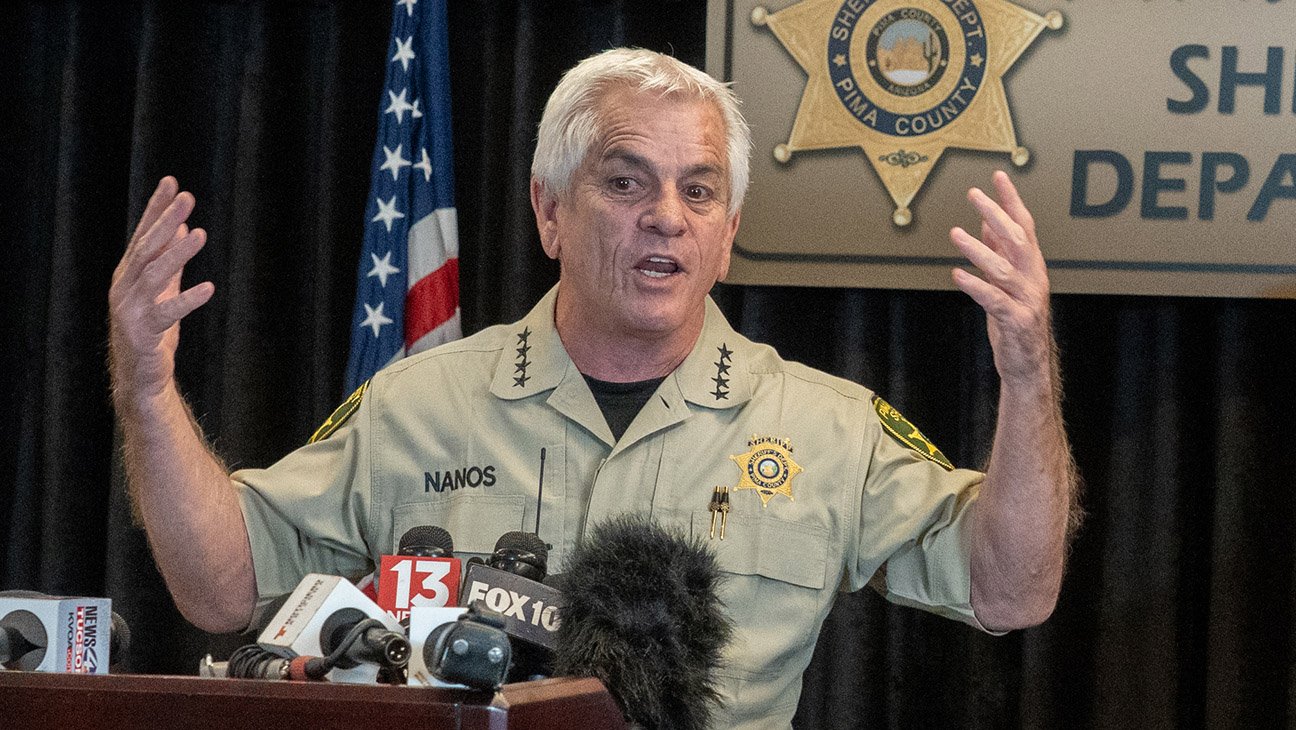
The man fielding questions at all those press conferences, Sheriff Chris Nanos, doesn’t just run the local police department that’s been investigating the disappearance of Savannah Guthrie’s mother — he’s the off-camera production partner for Desert Law, the A&E docuseries that follows Nanos’ deputies as they patrol more than 9,000 square miles of arid Arizona terrain. “Immersed in the pressure and danger of policing the desert night,” the show’s promo copy describes it, “the series captures a world where the spirit of the Old West still lingers and the fight for order never ends.”
Nanos himself doesn’t appear in the show — his choice, according to sources close to the series. But that could change next year — although those same sources say the possibility of the kidnapping becoming part of the plotline for season two has not yet been discussed. Still, over these past few weeks, since Nancy Guthrie’s disappearance, Nanos hasn’t exactly been shy when it comes to news cameras.
After initially holding joint press conferences with the FBI, he has recently shifted to a series of more personal, one-on-one interviews — a strategy that has occasionally led to awkward exchanges, particularly while conversing with conservative outlets.
“Let’s just say he did not put out the welcome mat,” Newsmax’s John Huddy tweeted after his Feb. 18 sit-down with Nanos, during which the sheriff, a Democrat, brushed off what he sees as politically motivated criticism. “This isn’t an election campaign — that’s three years down the road.” Nanos’ Feb. 17 appearance with NewsNation’s Brian Entin wasn’t any friendlier. On his YouTube recap, Entin described the pre-interview moment when Nanos set the tone: “You have questions for me,” Nanos told him, “and I have questions for you.”
Of course, the stakes remain deadly serious: An 84-year-old woman is still missing. But when a sheriff whose department headlines a reality show finds himself sparring with reporters on MAGA platforms, it definitely feels like an unscripted star may have just been born.
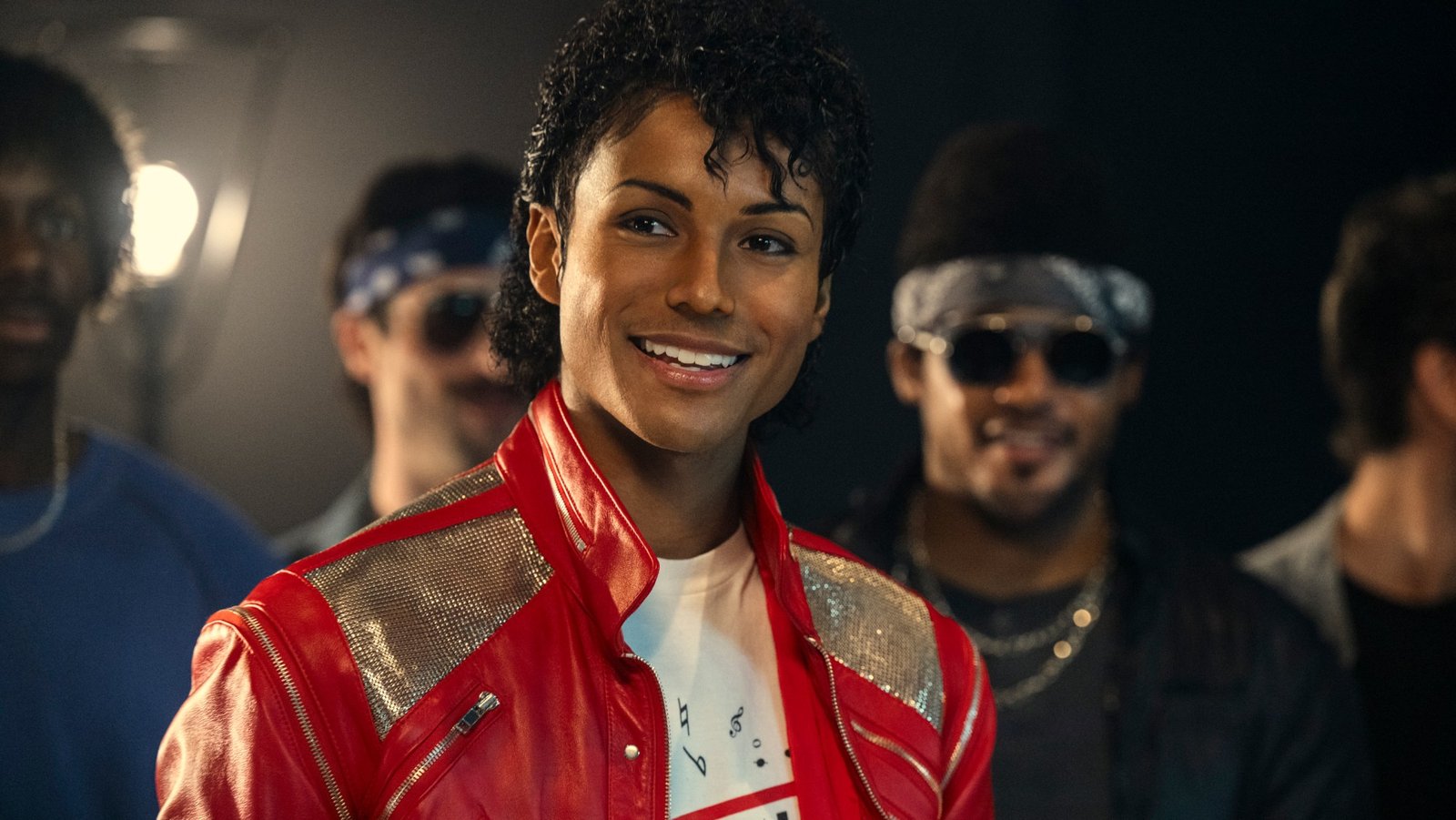
Michael is set to hit theaters and Imax on April 24 after its release was delayed several times, most recently having been dated for the fall of 2025. Marking his feature debut is Jackson’s nephew Jaafar Jackson in the lead role as the pop music icon. Lionsgate is distributing the movie domestically, while Universal handles the global launch.
“It’s a very spiritual journey, making a movie about someone like Michael,” Fuqua says in a video that Lionsgate released Monday. “Michael was a big influence on my career as a director, seeing how he refused to get put in a box as just a Black artist only.”
Fuqua’s movie debuted its latest trailer earlier this month. Michael co-stars Colman Domingo as the singer’s father, Joe Jackson, and Nia Long as his mother, Katherine. Rounding out the cast are Miles Teller, Laura Harrier, Kat Graham, Larenz Tate and Derek Luke. Graham King, John Branca and John McClain produce the film that has a script from John Logan.
“Michael’s whole life was giving to people this joy of his voice,” Fuqua continues in the video. “When I watched him on TV, he was always larger than life. For me as a filmmaker, it wasn’t a leap to see it in a cinematic way.”
The Training Day director adds, “I don’t think you can understand Michael Jackson as a human being unless you went back and go on a bit of a journey. He was struggling between his love for his family and his love for his music.”
Jaafar Jackson as Michael Jackson in the biopic Michael.
Kevin Mazur
The Hollywood Reporterpreviously reported that Michael, initially intended to span the star’s life and have a lengthy run time, had pivoted and would instead end with Jackson leaving his family’s group The Jacksons after the release of his first solo album, 1979’s Off the Wall. According to sources, a second film remains in development that would focus on the rest of Jackson’s career and path prior to his 2009 death.
Puck reported last year that Michael’s previously planned third act had to be retooled, due to it including a dramatization of an individual who accused Jackson of child sexual abuse. The accuser had a past settlement with the performer’s estate stipulating that he would never be dramatized.
“Why I wanted to make it is Michael,” Fuqua said during a San Diego Comic-Con panel in 2024. “Michael was a big part of my life growing up, a big influence on my career, an incredible artist — but he was a human being, and we’re exploring that.”