Category: Entertainment

  • Tom Pelphrey Takes on Task of Playing the Most Famous Man to Ever Live — Jesus Christ (Exclusive)

    Tom Pelphrey Takes on Task of Playing the Most Famous Man to Ever Live — Jesus Christ (Exclusive)

    The story of Jesus Christ has inspired countless adaptations for stages, pages, sermons and screens big and small. But since this is the year 2026, there’s a new version being readied for podcast audiences just in time for the Easter holiday.

    Faith Podcast Network will debut a four-part series, The Christ, billed as “an audio epic” and “the first ever full-scale audio dramatization of Jesus’ life across four immersive episodes using cinematic-quality sound, music and performances.” It will feature more than 100 different characters and some high-profile Hollywood names toplined by Task and Emmy-nominated Ozark star Tom Pelphrey as Jesus Christ, opposite David Oyelowo as Pontius Pilot, Paul Walter Hauser as John the Baptist, Courtney Hope as Mary, mother of Jesus, Patricia Heaton as the host and John Rhys-Davies as the narrator.

    The Christ comes from a creative team that includes writer and director Paul Cuschieri, co-director and producer Mark Ramsey and producer Jim Young. The Christ drops during Holy Week, with the first episode debuting on March 30. A new episode will be released each day through April 2, scheduled accordingly so that the entire series will be available by Good Friday on April 3. The official logline says The Christ will cover “the life, death and legacy of Jesus of Nazareth. Through betrayal, courage, suffering and hope, the series explores how one man’s story reshaped history — and redefined love, authority and sacrifice.”

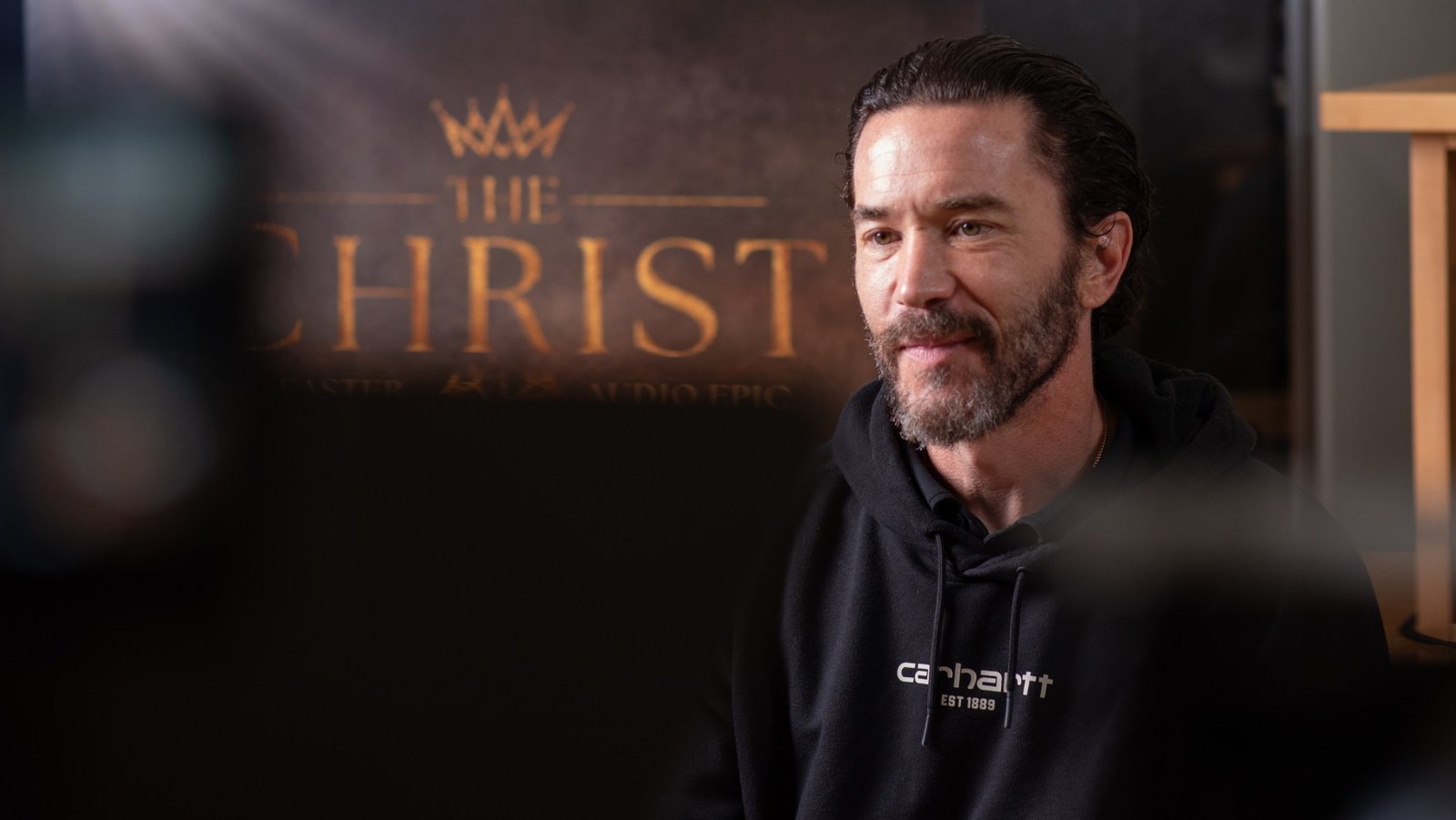
    Needless to say, it’s a tall task to step into the shoes of the most famous man who has ever lived. But Pelphrey seems to have arrived at the opportunity at just the right time in his life and career. Engaged to fellow Emmy nominee and beloved TV star Kaley Cuoco, he’s a new father who has only recently started to share more about his life off set. Long considered an actor’s actor, Pelphrey longed to stay in the space of being able to disappear into roles like his acting idol, Robert De Niro. As his profile changed, thanks to critically acclaimed turns in Ozark, Mank and Task, so did his perspective on how to engage with the public as a recognizable actor. He largely credits the shift in worldview to his sobriety, which he revealed on Instagram last October.

    “12 years sober today,” he posted on Oct. 1, 2025. “Sober by the grace of God. Deeply grateful for my sobriety and the life I get to live because of it.” He wrote more words about it, but the one mentioned above — God — is most necessary for the below conversation with The Hollywood Reporter as Pelphrey opens up on the intimidation of voicing Jesus in The Christ, how some early Shakespearean acting advice from Mark Rylance came in handy while recording his first podcast series and the beauty of being able to wait for “the next thing that just lights me up.”

    What was your reaction when your reps presented an opportunity to play Jesus in a new podcast?

    I was so excited. Faith is such a big part of my life, and it has been for a while now. This came to be out-of-the-blue, and I was so excited to be a part of it and tell this great story.

    Tell me more about your faith. How far back and how deep does it go?

    I was raised Catholic, and you can still see remnants of the ashes on my forehead from [Ash Wednesday services]. But my real relationship to faith started when I got sober, and that is actually what got me sober. When people talk about sobriety, you often hear the phrase “by the grace of God.” I fully believe that to be true in my case. My life went from chaos into order. Maybe a lot of people can relate to this, but I think of my faith like the story of the prodigal son. You’ve gone astray and get beat up out there. You’re sad, scared and don’t know what to do, so you think you should go home. But instead of getting yelled at, punished or kept at arm’s length, you are received with joy. That’s how it felt for me. To now have an opportunity to be a part of telling a story about Jesus, who I believed saved my life, and for that story to possibly help someone who has felt lost, stranded, sad or scared, is deeply meaningful to me.

    Pelphrey

    Courtesy of Faith Podcast Network

    That was beautiful, thank you for sharing. You get the job, then comes a challenge of finding the voice of Jesus, perhaps the most famous person who has ever lived. Obviously, he sounds a bit like Tom Pelphrey, that’s why they hired you, but how did you settle on what Jesus sounds like?

    I have to say that there’s a certain size to this that if I thought about it in a certain way, I would’ve been too scared to even attempt it. I’m new to voiceover work, and so regardless of the role, I was already a little intimidated. But I was also very nervous leading up to it. I felt that I shouldn’t try and do too much. And I thought that if I could add to this in any way, I should try and add what it is that I feel like I do best — try and find the most human interpretation of what Jesus is experiencing. That’s part of the power and the beauty of the story — fully God, fully man — and it was interesting to walk through the story by thinking of it more on the fully man side. For me personally, those are the moment in the story that have always touched me the most when Jesus felt and responded like a vulnerable human being.

    You mentioned being nervous. How did those nerves affect you?

    I knew I would be saying some of the most famous sayings in human history, and if that doesn’t intimidate you a little bit, God bless, but it intimidated me. This is a slightly different way to talk about it but when I was in college at Rutgers, we got to study at [London’s] Globe Theatre, and it was amazing. It was such an incredible juxtaposition of what we were learning with [Sanford] Meisner and the kitchen sink, and all of that. We learned to stand up tall, use your voice and project.

    Mark Rylance was still the artistic director there, and he came to talk to our class. At one point, he gave us an example of performance by doing the “to be, or not to be” speech five different ways in a row. He just ripped it, like, whoa. In my mind, what got blown open was how it was this very famous Shakespeare text that is so well known and can, at times, seem inaccessible because it’s so sacred and revered, [that it] became something else. Mark said, “Make everything personal.” He taught us to know what you’re saying and live in the truth of what’s happening. It blew my mind open. To come full circle, I was nervous because [the Christ project] was this very heightened and important role based on something that everybody knows and is familiar with and there’s a presumption that it needs to be said perfectly. I just knew that I would never say it perfectly. When we were about to start, it came time to surrender to the idea that it was never going to be perfect. But what I could offer to the best of my ability was that if I put myself into it, made it personal, said it how I felt it and how it made the most sense to me, we would accomplish the best version of that.

    Logistically, what was the recording process like?

    We recorded for four or five days. It was really nice because the recording process allowed us to be in the room with multiple actors at once, so that was a really nice way to play scenes. All of the actors are excellent voice actors, and they are so professional and can talk about the differences between this microphone and that microphone, all of this stuff that I didn’t know about. It was amazing to be in the room with them and be able to ask questions in between takes and learn a little bit of technique. I remember when a light bulb went off when I understood how the less volume you had, the more chance there would be for dexterity within the speech.

    You can cheat these things because there’s a microphone so close to you. You can literally just get right on top of the microphone and whisper if you want. It’s very powerful and becomes very dynamic. Being in the room with these other actors was so helpful for performance and to build a sense of momentum so that every word, every line wasn’t uttered in isolation in a vacuum. It allowed me to pick up technique, which I’m always trying to do with everybody I work with. What can I steal here? What can I learn here? How can I get better?

    Pelphrey and Courtney Hope during the recording process.

    Courtesy of Faith Podcast Network

    Was there something you stole that was most impactful or meaningful during the process?

    Understanding how much more you can play with dynamics in terms of sound, volume and proximity to the mic. I started on stage, and there’s a certain amount of volume and projection needed for that. When you start to work in film and TV, you understand that everything is going to come sit in your lap, and you can whisper and barely move your eyes and everything will be projected. I needed to make that jump in the booth as well. That was definitely something I felt like I walked out of there with on day five that I hadn’t walked in with on day one.

    What was the most challenging or most emotional scene?

    The obvious answer is the entire passage on the crucifixion. That was obviously a very intense thing to try and capture sitting on a chair in a booth. We tried to get as creative as we could to try and help that feel a little more impactful, even if that meant standing during some of those efforts, or even doing something as simple as breathing. I haven’t listened to it yet to see how it turned out.

    How are you with that part of your job, as in listening to or watching your performances?

    The nice thing is when there’s a lot of space between when you do it and when you might get to watch it. In general, I am not in love with myself and I don’t hate myself, so it’s OK. It’s really useful if you can try and watch it somewhat objectively. You can learn and see where you can get better the next time, which is always the goal. But what happens is when you first do something, you have so much information about it in your head. If I saw a scene on Task a month later, I still remember what we ate for lunch that day or that the scene required six hours of setups. You have so much information about it that you are not able to experience it for the first time or how the audience is experiencing it. But you are able to get that feeling the more time that has gone by. I’ve never once watched myself and didn’t think that there’s a lot of good things I could learn and do better the next time. But I don’t watch it and think, oh, I’m horrible, or anything like that. I feel like I’m getting better all the time, and that’s all I’ve ever wanted. I’m excited to listen to this.

    There were some challenges of being in an audio booth when you’re meant to embody something very physical, because how do you create that? There were specific things that you would never have to do in any other context. I never have to be on set and act like I’m struggling to lift something or I’m exhausted sitting on a chair. If I’m on set and they want me to do that, I can go pick the fucking thing up and start running up and down with it until I’m exhausted and having a hard time lifting it, and then they can film me doing that.

    Was the decompression time after work different for this type of project?

    Credit to the group of people I worked with — and this happens on a great set, too — but, honestly, every day I left in such a great mood. There are times when you work on things, and you can’t help but to feel like there’s an energy that comes and it lives in you. You can feel it. When you get to work in such a way and you’re accumulating that energy in the process of working, you release it and leave happy, even if what you worked on or released was very dark or intense or heavy. This doesn’t happen to me much anymore but when I was younger, I might leave feeling heavy. If you haven’t been able to live through or share that energy, that’s when you feel bad because you’ve cooked up something that is not yours and you weren’t able to get rid of it. It’s an energy thing.

    This was also lovely because David Oyelowo is one of my good friends. The day before I was going in, I looked at the call sheet and I said to [my wife Kaley Cuoco], “David’s going to be there!” It was my first day and would be the first thing I ever recorded, and thank God it was with David because it just calmed me down and put me in such a great mood. He’s incredible. What a sweet, sweet, good, gentle, beautiful man. Paul Walter Hauser is also a buddy. He didn’t get to be there in person but he Zoomed in and I was able to say hi. It was a great group of people.

    Oyelowo

    Courtesy of Faith Podcast Network

    I’m doing this interview because it’s Tom Pelphrey playing Jesus, alongside other well-known actors like David Oyelowo and Paul Walter Hauser. They could’ve cast famous actors from the faith space but since it is recognizable Hollywood names, this has the potential to travel to a wider audience. Did you think about how it might circulate in the world with your involvement, and was that a motivator at all?

    There are so many versions of me answering this. I love being an actor, and I will say that for a long time, I really struggled with sharing any part of myself publicly. I really tried to dance around it, partially because of how it made me nervous and partially because of all the insecurities around it. Also, I read an interview once a long time ago with a young Robert De Niro. He was one of my heroes as a young actor. He said that the more people knew about him, the harder it was for him to do his job. I must’ve read that at 17, and it burned into my brain because it’s undeniably true. As an actor like De Niro, which is the kind of actor I’ve always wanted to be, you want to disappear. You want to serve the character. But we don’t live in that world anymore. As much as Robert De Niro was able to do that back then, it’s not the world we live in now.

    Sharing about sobriety and faith are so personal to me, and it means so much to me. The other thing you notice is when people are sharing things, you could say a word to a thousand people, and a thousand people hear a different version of that word. In all humility, to share something that matters to you, you first have to come to an understanding and acceptance that you’re surrendering how it’s going to be heard or what it means to anyone listening. You have no control over it. That’s been an amazing process to go through.

    You’re quite new to sharing parts of your life, too.

    Yes. We were talking about sobriety and the first time I ever shared, on my own, about my sobriety was in the past year. There are a million reasons for that, and part of it was that with sobriety, with faith or getting to do a podcast like this, there came the possibility that at some point, an honest sharing of any of this in whatever humble way I can could potentially help someone or make them feel less alone. That outweighed my fear of being misunderstood. It’s an amazing thing. Once the seal was broken, it felt very freeing. I’m grateful that, like you said, on some level, my participation or David and Paul’s participation would lead you to want to do an article about this. It’s wild. Also, being a dad, you start to think about everything differently.

    That was beautiful, thank you. And I appreciate you sharing about your sobriety because as someone who has been a fan of your work, seeing you share about your sobriety last year led me to think of your work in a new way. I know how meaningful of an experience it is and how it changes your life. But where do you go from here? How do you follow up playing Jesus Christ?

    Well, I don’t imagine that I will ever have an experience quite like that again. But I will tell you that I will do the same thing that I always do. I wait patiently for the next thing that just lights me up. Honestly, right now, I’ve been waiting for a long time but there are some things coming that I’m really excited about. That in and of itself is such a blessing. You want to talk about life-changing, 12 years ago, I was just hoping for a way to pay my rent. I’m not able to wait forever now, but I can sit back a little bit and be a dad and I don’t need to work immediately to pay my bills. I can wait for things that really move me or speak to me. The longer I am in my sobriety, the deeper I am in my faith, the more I feel that there’s a real power in trying your best in all ways to be of service. I want to be like that as an actor, too. When I read something, if I feel like I can bring something special to it or help it come to life in a very unique way, then I go for it. I felt that way when I read Task because I felt like I could be of service to something bigger than me, and that’s where I want to live these days. I don’t feel that way all the time, so I wait until I do.

    What a perfect way to tend. But I do have one more quick question because looking at you, you’re giving a little bit of Jesus today with the longer hair and the beard. Have you thought about letting it grow so when the podcast drops, you sound like Jesus but look a little like him, too?

    As tempting as that might seem on some level, the last thing we need anybody thinking is I’m like Jesus in any way. I am a very poor, poor, pale imitation. But Jesus is somebody I’m trying to be more like. Like we say, it’s progress, not perfection.

    A look inside the recording of the podcast The Christ.

    Courtesy of Faith Podcast Network

    A look inside the recording process with the creative team, including director and producer Mark Ramsey, producer Jim Young and writer and director Paul Cuschieri.

    Courtesy of Faith Podcast Network

    Producer Tatiana Kelly is pictured during the recording process.

    Courtesy of Faith Podcast Network

    A look inside the recording process.

    Courtesy of Faith Podcast Network

    A look inside the recording process.

    Courtesy of Faith Podcast Network

  • J.K. Simmons, Abby Elliott, John Reynolds Enter ‘Purgatory’ Dramedy (Exclusive)

    J.K. Simmons, Abby Elliott, John Reynolds Enter ‘Purgatory’ Dramedy (Exclusive)

    J.K. Simmons, The Bear actor Abby Elliott and John Reynolds are toplining Purgatory, Lindsay Lanzillotta’s coming-of-age comedy/drama and feature directorial debut.

    The indie, which has just wrapped production in St. John’s, Newfoundland, also stars newcomers Ruby McGurrin, Lauren MacRae, Mary Walsh, Jack Innanen, Julianne Arrieta, Marcus Ngo and Gemma Rosaria Rae.

    A synopsis from the producers reads: “Set in the early 1980s, the film follows thirteen-year-old Beatrice Gravel (McGurrin), whose comfortable world—family, school, and church—fractures when her mother (Elliott) moves out to “self actualize,” leaving Beatrice and her sister (MacRae) with their devastated father (Reynolds). As Beatrice doubles down on a plan to ‘fix’ her family, she barrels through bullies, friendship blowups, a make-out party, and a kleptomaniac babysitter—forcing her to decide who she wants to be when she can’t get what she wants.”

    Simmons plays Beatrice’s confidante Father Malone, Innanen portrays her school’s vice principal and her mother’s new love interest, while Walsh portrays a teacher and Arrieta is the PTA president.

    Lanzillotta directed Purgatory from a screenplay by Christine Speer, and in a statement said of the film: “Beatrice Gravel is just so much fun. At my core, I’m still that teenage girl watching my parents’ divorce, and when I read Christine’s heartfelt and funny take on Beatrice’s experience, it felt brutally honest, real, and oddly comforting. I’ve always loved films that can entertain a wide audience while taking on hard subjects with heart and humor, and that’s what pulled me back to the ’80s to tell this story as a first-time director.”

    Purgatory is produced by Lanzillotta, Simone Kirlew, Aldo Lanzillotta, Deniz Gumustas, Mark O’Neill and Gus Murray. The executive producer credits are shared by Ryan Horton, Elliott, Tai Truesdall and William Patterson.

    McGurrin is represented by The Characters Talent Agency, while Elliott is represented by Paradigm Talent Agency and OPE Partners. Reynolds is represented by CAA and Entertainment 360, and Simmons is represented by the Gersh Agency.

  • China Lunar New Year Box Office Falls 39.5% to $835 Million as ‘Pegasus 3’ Drives Half the Market

    China Lunar New Year Box Office Falls 39.5% to $835 Million as ‘Pegasus 3’ Drives Half the Market

    Mainland China’s 2026 Lunar New Year box office reached RMB5.75 billion ($835.5 million) during the Feb. 15-23 holiday period, down 39.5% year-on-year, with total admissions of 120 million, a 35.8% decline, according to Maoyan Research Institute’s “Insight Report on 2026 Spring Festival Holiday Box Office Film Data.”

    The sharp drop follows last year’s phenomenon “Ne Zha 2,” which powered the 2025 Lunar New Year corridor to record levels and went on to earn $2.2 billion, creating an unusually high comparison base for 2026.

    Only one day during the eight-day holiday frame surpassed RMB1 billion ($145.3 million), with Feb. 17 – the first day of the Lunar New Year – generating more than RMB1.2 billion ($174.4 million). It marked the first time in six years that the holiday’s average daily gross did not exceed RMB1 billion. The report
    cites data from Maoyan Pro.

    Despite softer demand, supply expanded. Total screenings exceeded 4.35 million over the period, the highest level in recent years, with average daily screenings above 550,000 from day one to day seven of the Lunar New Year, up 15% year-on-year. Average ticket prices fell to their lowest level in recent years, with third- and fourth-tier cities recording declines of more than 6% compared with a year earlier.

    The market was heavily concentrated. Racing sequel “Pegasus 3” grossed RMB2.927 billion ($425.3 million) during the holiday frame, accounting for roughly half of total box office. The film logged 978,000 “want-to-see” marks ahead of release and delivered an opening-day gross of RM641 million ($93.1 million), both franchise highs.

    Zhang Yimou’s spy thriller “Scare Out” followed with RMB867 million ($126 million). Yuen Woo-ping’s comic-adapted wuxia title “Blades of the Guardians,” starring Jet Li, earned RMB806 million ($117.1 million), while family animation “Boonie Bears: The Hidden Protector” took RMB713 million ($103.6 million).

    “Blades of the Guardians” climbed from fourth place on opening day to second by day four, reflecting strong word of mouth.

    Total advance sales reached RMB562 million ($81.7 million), reflecting softer pre-holiday momentum compared with last year.

    Lower-tier markets again anchored the corridor. Third- and fourth-tier cities contributed 59% of total Lunar New Year box office, the highest share in six years. For most films, revenue from these markets exceeded 50%, while “Boonie Bears: The Hidden Protector” derived more than 65% of its gross from third- and fourth-tier cities. Four cinemas in fourth-tier cities ranked among the national top 10 by box office during the period.

    The report also noted a shift in audience structure, with a tilt toward older male moviegoers during the holiday, driven by “Pegasus 3” and “Blades of the Guardians,” while overall per-capita viewing frequency declined year-on-year.

    Maoyan Entertainment market analyst Lai Li said the period reflected the continued strength of leading IP alongside a word-of-mouth-driven rebound for high-quality titles, while consumption potential in lower-tier markets was further unlocked. Lai added that the market is expected to optimize content supply, explore a broader range of genres and themes and continue unlocking consumer demand, supporting the industry’s development toward greater efficiency and growth.

  • Sublime Signs With Atlantic Records, New Album and Tour Coming This Year (EXCLUSIVE)

    Sublime Signs With Atlantic Records, New Album and Tour Coming This Year (EXCLUSIVE)

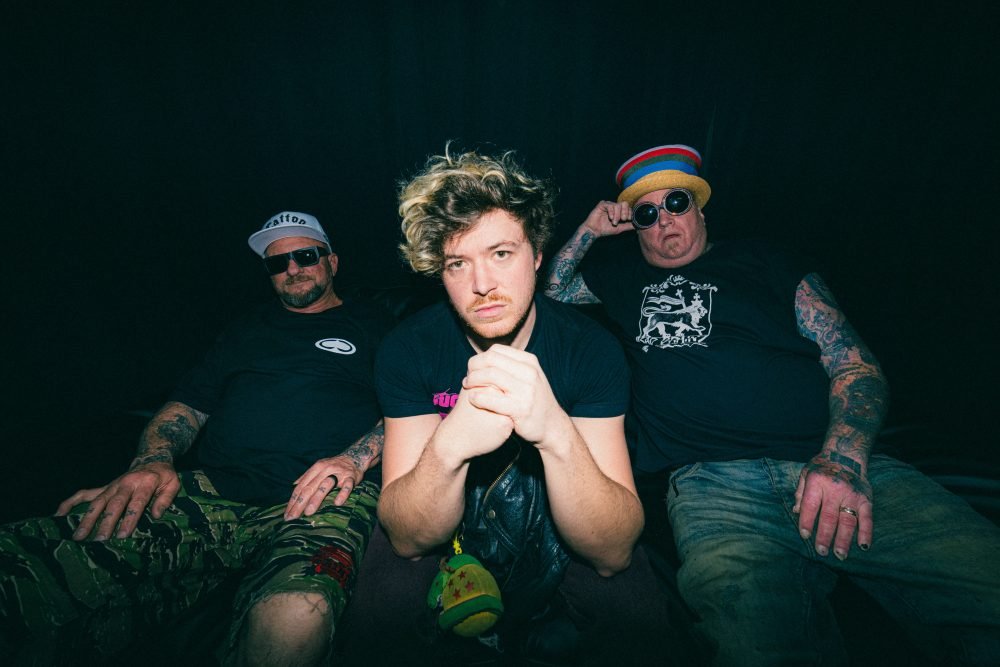
    Long-running Southern California band Sublime has inked a partnership with Atlantic Records, with the band’s first new full-length album with frontman Jakob Nowell, son of the band’s late original singer-guitarist Bradley Nowell, slated to arrive later this year. Nowell (pictured above, center) joins the founding rhythm section of drummer Bud Gaugh (left) and bassist Eric Wilson.

    The band is also celebrating the 30th anniversary of its smash 1996 self-titled album with two nights at Red Rocks Amphitheatre in Colorado (April 17-18), launching what the announcement describes as a year-long celebration honoring the album. That celebration will continue with the band’s own touring music festival, Sublime Me Gusta, debuting May 9 at Panther Island Pavilion in Fort Worth, Tx.

    The Atlantic deal follows a series of independent releases, including the hit singles “Feel Like That” (with Stick Figure) and “Ensenada,” via Sublime Recordings and Jakob Nowell’s new venture SVNBVRNT in partnership with Regime Music Group.

    According to the announcement, the new deal sees the band retaining ownership of its master recordings while expanding its reach through Atlantic. The three bandmembers enthused about the partnership in a series of statements included in the announcement:

    “Atlantic told us that if we signed with them they would pay for my experimental cosmetic surgery to have the body of a goat and the head of a goat. They seem like real straight shooters, and their office has bowls of Halloween candy dated March of last year, but it still tasted fine to me. We’re gonna change California music history or die trying.” Jakob Nowell, Sublime (dictated but not read)

    “You have no idea how many records I had growing up as a kid watching them spin around and around with the Atlantic Records label on them. Everything from AC/DC to Zeppelin, and so many others! I am beyond excited to announce this partnership with Atlantic Records and Sublime!! So Get Ready! Here comes some new stuff for your ears to hears!” Bud Gaugh, Sublime

    “So great to partner with Atlantic Records finally! I’m excited about our new album; it truly is an organic Sublime album…can’t wait for people to hear it.” —  Eric Wilson, Sublime

    Sublime was founded in 1988 in Long Beach, Calif. by Gaugh, Wilson and Nowell’s father Bradley. The band released its first album in 1992, “40oz. to Freedom,” and was poised for major success four years later with their self-titled third outing and major label debut. However, Nowell died of a heroin overdose on May 25, 1996, when he was just 28. The album was released two months later, and powered by singles like “What I Got,” “Santeria,” and “Wrong Way,” has racked up 18 million sales, according to the RIAA.

    In 2009, Gaugh and Wilson united with singer Rome Ramirez and released three albums as Sublime With Rome, but both original members ended up leaving the band, the former in 2011 and the latter in 2024, after the two joined forces with Jakob Nowell as a reunited Sublime and performed at that’s year’s Coachella festival. A brief period ensued in which both bands were on the road at the same time, but Sublime With Rome (featuring no members of the original group) played its farewell tour later in 2024.

  • Savannah Guthrie Increases Reward for Mom Nancy’s Return to $1 Million in New Video: ‘She May Already Be Gone’ but ‘We Still Believe in a Miracle’

    Savannah Guthrie Increases Reward for Mom Nancy’s Return to $1 Million in New Video: ‘She May Already Be Gone’ but ‘We Still Believe in a Miracle’

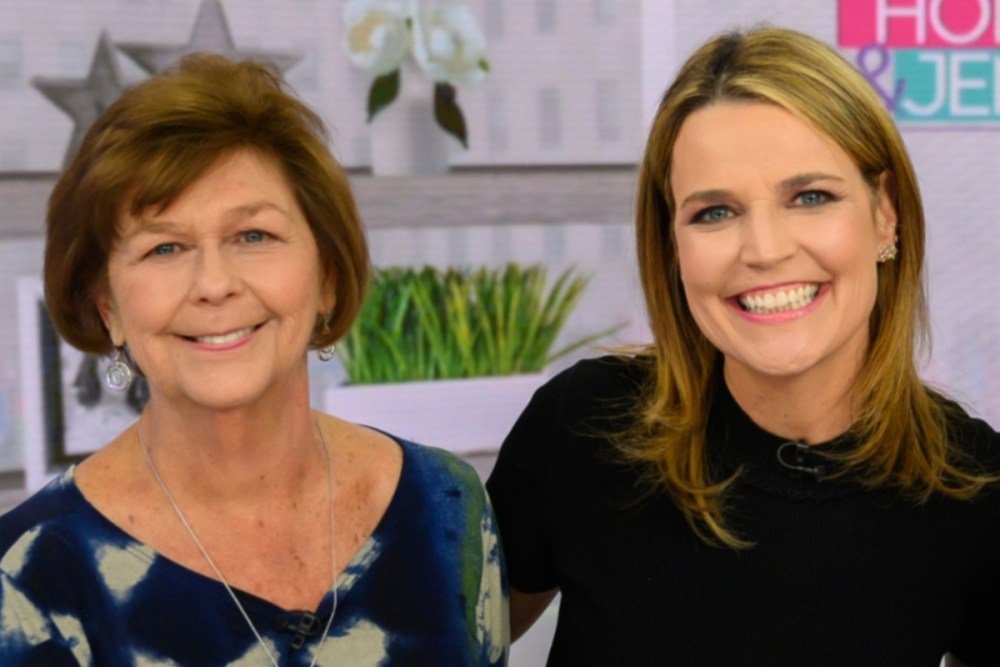
    Savannah Guthrie has posted a new video asking for her missing mom Nancy’s return, increasing the reward for her recovery to $1 million.

    Nancy went missing on Feb. 1, and the following day, the Pima County Sheriff’s Department declared her disappearance a crime after investigators found “concerning” evidence at her Arizona home. Little progress has been made in the investigation as the search entered its third week on Sunday. The FBI originally posted a $100,000 reward for anyone with information leading to her recovery, which was later increased to $200,000.

    On Feb. 12, the FBI released a description of their only publicly known suspect, who was caught on a front door camera trying to break into Nancy’s home. The Phoenix bureau of the FBI described the perpetrator as “a male, approximately 5’9” – 5’10” tall, with an average build. In the video, he is wearing a black, 25-liter ‘Ozark Trail Hiker Pack’ backpack.”

    Savannah has released several videos on Instagram since her mother’s disappearance, either bargaining with the abductor or asking her supporters for help. In a post on Feb. 15, Savannah Guthrie said she still believed her mother was alive and told the kidnapper that “it’s never too late to do the right thing.”

    “It’s been two weeks since our mom was taken, and I just wanted to come on and say that we still have hope and we still believe,” she said. “And I wanted to say to whoever has her or knows where she is, that it’s never too late, and you’re not lost or alone, and it is never too late to do the right thing. “We are here. We believe. And we believe in the essential goodness of every human being, and it’s never too late.”

  • Warner Bros. Discovery Says It’s Reviewing Sweetened Paramount Bid

    Warner Bros. Discovery Says It’s Reviewing Sweetened Paramount Bid

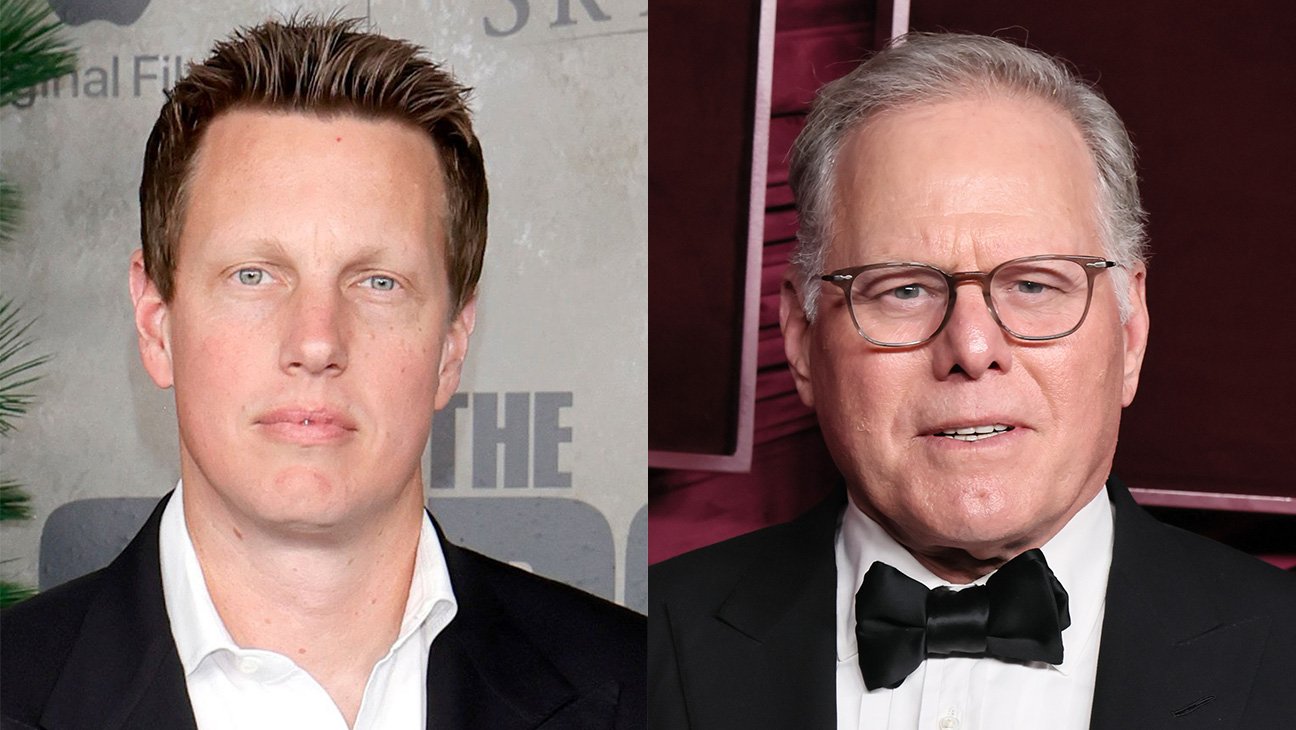
    Warner Bros. Discovery says that it is officially reviewing a sweetened bid for the company from David Ellison’s Paramount.

    The details of Paramount’s revised bid were not immediately known. The company had offered $30 per share, with a “ticker” that would raise the price for every quarter the deal had not closed past the end of this year. The company is still recommending that shareholders vote for the Netflix deal next month, as of now.

    “Following engagement with PSKY during the seven-day limited waiver period, we received a revised PSKY proposal to acquire WBD, which we are reviewing in consultation with our financial and legal advisors,” WBD’s board said in a statement Tuesday morning. “We will update our shareholders following the Board’s review. The Netflix merger agreement remains in effect, and the Board continues to recommend in favor of the Netflix transaction. WBD shareholders are advised not to take any action at this time with respect to the amended PSKY tender offer.”

    While previous bids from Paramount have been made public, this was the first “authorized” bid for the company since WBD inked its deal with Netflix, with the company opening a seven day negotiating window last week. It is not clear if Paramount will choose to disclose its latest bid before WBD makes its next move.

    The new bid from Paramount is likely to see WBD go back to Netflix to see if they will respond by “matching” Paramount’s bid, as they are permitted to do under the signed deal agreement. Of course, Netflix is only buying the Warner Bros. studio and HBO business, so a match wouldn’t necessarily be exactly the same deal.

    Streaming giant Netflix has sweetened its takeover bid for the studio and streaming operations of Warner Bros. Discovery (WBD) in a move to fend off an increased offer from David Ellison’s Paramount, which had put pressure on WBD to consider reopening sales talks.

    Members of the board of WBD had given Paramount a deadline of early this week for a revised best and final bid, while Paramount has also been pushing its hostile takeover bid directly with shareholders in its effort to derail the previously agreed $82.7 billion Netflix deal. That deal was first unveiled in December and amended into an all-cash bid in late January.

    On Feb. 10, Paramount had added sweeteners to its own bid for all of WBD, including with a promise to cover the $2.8 billion fee owed to Netflix if WBD pulled out of its deal with the streamer and to backstop a refinancing that would cut costs by $1.5 billion. Paramount also added a so-called “ticking fee” of $650 million in cash per quarter if the deal is not completed by the end of 2026. Said Ellison: “We are making meaningful enhancements – backing this offer with billions of dollars, providing shareholders with certainty in value, a clear regulatory path, and protection against market volatility.”

    Warner Bros. said in response that it would review the amended offer, but didn’t immediately modify its recommendation for shareholders to approve the Netflix deal. Some smaller shareholders have pressured WBD to engage with Paramount.

    The big transaction has been a drag on Netflix’s stock, with Guggenheim Securities analyst Michael Morris recently noting: “We expect the path to conclusion on the WBD bid will remain a primary sentiment driver and likely share appreciation limiter over the next three months.”  

    And Robert Fishman, analyst at MoffettNathanson, recently wrote: “Netflix’s stock price should have a harder time rebounding as long as the ongoing WBD potential bidding war continues.”

    With a vote on the Netflix deal set for March 20, the battle for WBD appears to be nearing its end for now … unless and until regulators get in the game themselves.

  • TelevisaUnivision Narrows Losses in Q4

    TelevisaUnivision Narrows Losses in Q4

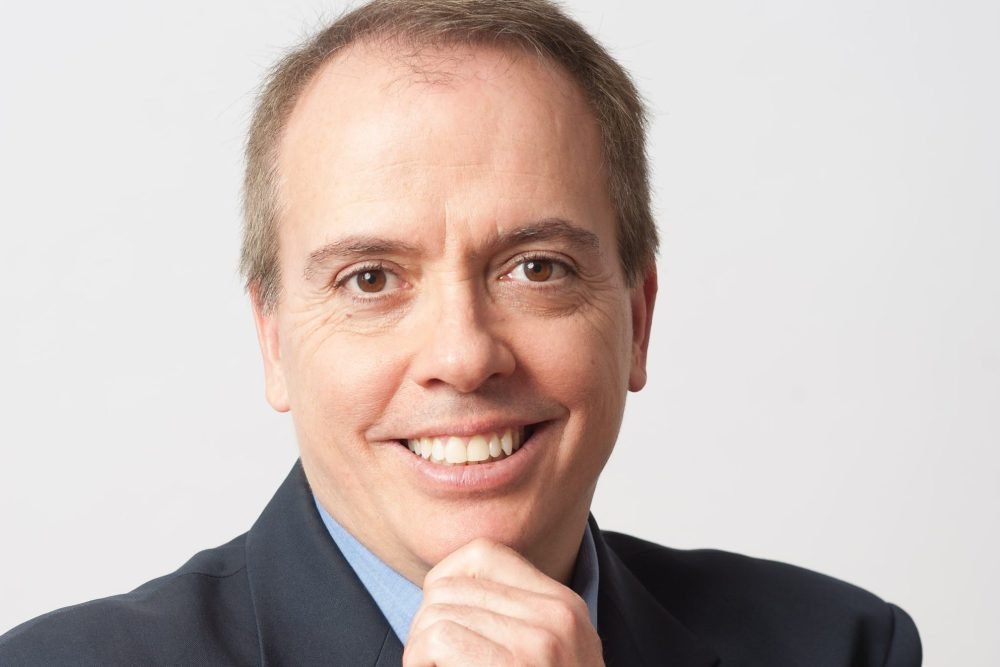
    Spanish-language media giant TelevisaUnivsion said it narrowed its losses in the fourth quarter as it generated profits from its ViX streaming service and grappled with sluggish ad trends in the United States.

    The owner of the Univision TV network reported a net loss of $234.7 million, compared with a loss of $809.7 million in the year earlier period. Revenue fell 2% to $1.32 billion.

    “We meaningfully transformed our business and delivered on the expectations that we set at the outset of the year,” said Daniel Alegre, CEO of TelevisaUnivision, in a prepared statement. “ViX delivered record revenue, achieved profitability in every quarter, and expanded operating margins throughout the year, evolving into a scalable growth engine that is now a strategically central component to our business model. In 2026, we are building on this momentum to deepen audience engagement, unlock greater value for our partners, and reinforce our leadership as the Voice of Hispanics.”

    TelevisaUnivision has been working to bolster its balance sheet after Alegre took its corporate reins of TelevisaUnivision from Wade Davis, the former Viacom CFO who orchestrated a buyout of Univision in 2020 before merging it with Mexico’s Grupo Televisa in 2022, ceded his CEO role to him. Alegre was president and chief operating officer of Activision Blizzard, which was acquired for $69 billion by Microsoft. Davis remains TelevisaUnivision’s vice-chairman.  Since Alegre joined in 2024, TelevisaUnivision has been working to streamline operations that had previously been siloed by geographic region. The company owns media assets in both the United States and Mexico

    Revenue in the U.S. revenue declined 7% to $777 million, or 3% excluding political advertising. Revenue from operations in Mexico rose 7% to $546 million. Advertising revenue was flat at $856 million. In the U.S., advertising revenue declined 11% to $423 million. In Mexico, advertising revenue grew 15% to $433 million.

    The company said revenue from subscriptions and licensing fell 4% to $446 million. Revenue in the U.S. fell 2% to $341 million, while revenue from Mexico operations declined 12% to $105 million.

  • Warner Bros. Discovery Confirms Paramount Sent Revised Bid, but Doesn’t Divulge New Terms

    Warner Bros. Discovery Confirms Paramount Sent Revised Bid, but Doesn’t Divulge New Terms

    Paramount Skydance has filed what is believed to be a sweetened bid for Warner Bros. Discovery, opening a new round of haggling in efforts to snare the company’s HBO Max streaming service and Warner Bros. studios to help fuel economics amid a frenetic battle to stay afloat in the entertainment sector as more consumers turn to streaming to watch their favorite movies, programs and sports.

    Warner said early Tuesday that it had received new terms from Paramount, even as it continues to move forward on a deal it has to sell its streaming and studio assets to Netflix, while spinning off its traditional TV assets into a new publicly traded entity.

    “Following engagement with PSKY during the seven-day limited waiver period, we received a revised PSKY proposal to acquire WBD, which we are reviewing in consultation with our financial and legal advisors,” the company said in a statement. ” We will update our shareholders following the Board’s review. The Netflix merger agreement remains in effect, and the Board continues to recommend in favor of the Netflix transaction. WBD shareholders are advised not to take any action at this time with respect to the amended PSKY tender offer.”

    The company did not divulge the financial details of Paramount’s latest bid.

    Despite the deal, Paramount has continued to agitate for more fulsome negotiations to buy Warner. Monday wrapped a busy seven-day period in which the WBD board sought Netflix’s blessing to engage in discussions with Paramount to “seek clarity” on its “best and final offer.” WBD asked Paramount Skydance “to clarify your proposal, which we understand will include a WBD per share price higher than $31” in a letter from Warner Bros. Discovery CEO David Zaslav and board chairman Samuel Di Piazza Jr. to Paramount’s board

    Netflix has four days to match Paramount’s new offer, or it could bail out of the bidding process. A source close to the situation noted that WBD is legally bound to recommend its signed agreement with Netflix, valued at nearly $83 billion. Paramount has fielded a $108 billion offer for the entirety of WBD, including its cable channels. Netflix is buying Warner Bros. and HBO Max.

    Netflix co-CEO Ted Sarandos, in a Feb. 20 interview with Variety, declined to say how the streamer would respond to a higher offer from Paramount. But he did say that Netflix has a “rich history” of being “willing to walk away and let someone else overpay for things.”

    Under Netflix’s agreement with WBD, the streamer would buy Warner Bros.’s studios and streaming businesses for $27.75 per share (in all cash, a change Netflix made last month from its previous cash-and-stock offer). WBD shareholders would retain equity in Discovery Global, the company’s proposed spin-off entity housing CNN, TBS and other linear networks as well as Discovery+.

    Ellison first approached WBD CEO Zaslav in September 2025, initially offering $19/share for Warner Bros. Discovery. That came just weeks after Ellison’s Skydance Media closed its acquisition of Paramount Global. Paramount’s interest in WBD prompted the board to initiate a formal M&A review process — and the board picked Netflix as the winning bidder. WBD’s board has previously rejected Paramount’s takeover offers nine times.

    Paramount’s takeover offer is backed by Larry Ellison (David’s tech-billionaire father) and RedBird Capital Partners. The company has secured debt financing from Bank of America, Citigroup and Apollo Global Management. Paramount’s bid also includes capital from the sovereign wealth funds of Saudi Arabia, Qatar and Abu Dhabi.

  • TelevisaUnivision Trims Fourth Quarter Loss Despite Lower Ad Revenue, Touts Rising Streaming Profit

    TelevisaUnivision Trims Fourth Quarter Loss Despite Lower Ad Revenue, Touts Rising Streaming Profit

    Spanish-language media giant TelevisaUnivision reported a 2 percent U.S. revenue fall to $1.3 billion in the fourth quarter of 2025 as an 11 percent U.S. advertising revenue drop to $423.2 million came alongside a 2 percent subscription and licensing revenue fall to $341 million.

    Total U.S. revenue fell 7 percent to $777.2 million in the three months to Dec. 31, 2025, or a 3 percent drop when factoring in political advertising. Mexico revenues rose 7 percent to $546 million, as advertising revenue grew 15 percent to $433 million in that market.

    Related Stories

    TelevisaUnivision narrowed its fourth-quarter net loss to $234.7 million, compared to a year-earlier net loss of $809.7 million when the media giant recorded a $900 million non-cash impairment loss due in part to a write-down of TV broadcast licenses.

    The latest financial quarter saw TelevisaUnivision record a $300 million non-cash impairment loss related to the writedown of trade names. The fourth-quarter financials also underlined how ViX streaming growth continues to offset legacy TV asset declines.

    “ViX delivered record revenue, achieved profitability in every quarter, and expanded operating margins throughout the year, evolving into a scalable growth engine that is now a strategically central component to our business model. In 2026, we are building on this momentum to deepen audience engagement, unlock greater value for our partners, and reinforce our leadership as the voice of Hispanics,” Daniel Alegre, CEO of TelevisaUnivision said in a statement ahead of a late morning analyst call to discuss his latest financial results.

    The company owns the Univision broadcast network, while also building up its ViX streaming platform to chase younger consumers. 

  • The Clock May Be Ticking on ‘60 Minutes’ as We Know It

    The Clock May Be Ticking on ‘60 Minutes’ as We Know It

    As Bari Weiss seeks to reimagine CBS News, staffers are preparing for the network’s flagship program 60 Minutes, arguably the most influential news program in all of TV, to be “revolutionized” along with it.

    When Weiss first joined CBS News last year, 60 Minutes was hardly seen as a focal point. The network’s evening newscast the CBS Evening News and morning show CBS Mornings have been stuck in third place behind NBC and ABC for years, and early indications were that those were top priorities.

    CBS’ Sunday newsmagazines, the lighter CBS News Sunday Morning, anchored by Jane Pauley, and the legendarily hard-hitting 60 Minutes led their respective time periods (60, in fact, has been the most-watched TV news program for years).

    But the last few months have seen a flurry of events that portend a very different 60 Minutes in the not-too-distant future. Meanwhile, network-wide layoff plans in the next several months will reshape CBS News as Weiss puts her imprint on new areas of focus and adds to the mix her own contributor hires.

    Earlier this month Anderson Cooper announced his plan to exit as a correspondent for the newsmagazine after nearly 20 years, and after weeks of negotiations to remain on the show, citing a desire to spend more time with his kids (while keeping his perch at CNN).

    “We’re grateful to him for dedicating so much of his life to this broadcast, and understand the importance of spending more time with family. 60 Minutes will be here if he ever wants to return,” CBS said at the time.

    On Sunday’s show, a segment anchored by Cooper about white South African refugees aired, after what had reportedly been an extended and unusual editing and vetting process.

    And Sharyn Alfonsi, the correspondent whose report “Inside CECOT” sparked something akin to an internal revolt at the program after Weiss ordered it be pulled ahead of its release pending further reporting, is set to see her contract expire in the next few months. CBS staff are bracing for her potential exit, and wondering what other correspondents could be next (one insider noted that Lesley Stahl is 84 and Bill Whitaker is 74, while Scott Pelley has expressed frustration with Weiss in staff meetings).

    “In my view, pulling it now — after every rigorous internal check has been met is not an editorial decision, it is a political one,” Alfonsi wrote at the time in a memo to her fellow correspondents, including Cooper.

    60 Minutes has always been something of an outlier among TV news programs. At a moment when shows are leaning into their talent (see Weiss’ effort to overhaul the Evening News around Tony Dokoupil), it has a large roster of correspondents rather than a singular face of the show. Instead, the format and high production values are the real star.

    And while most news shows are fighting for audience share, it benefits from CBS’ NFL lead-in for much of the year to secure its significant ratings (the show’s Feb. 15 episode drew 6 million viewers, marking the top non-Olympics series in broadcast in primetime). But the departure of a correspondent, or even multiple correspondents, is unlikely to change its ratings equation.

    CBS News leaders Tom Cibrowski and Bari Weiss.

    Photo credit: Michele Crowe/CBS

    And in a move that may seem immaterial to outside observers, 60 Minutes will in the coming weeks move from its historic base on West 57th across the street to the CBS Broadcast Center in Midtown Manhattan, joining the rest of the CBS News programming. CBS Sports and Inside Edition will be moving too (they are going to Paramount’s Broadway office) but moving 60 Minutes into the larger CBS News space is nonetheless a shift for the show.

    While office consolidations in media are a common occurrence (even at CBS), 57th St. served as a metaphorical and literal buffer on the influence that CBS had on the newsmagazine, which has long operated with a high degree of independence.

    Of course, that independence has already been slowly deteriorating over the last year.

    President Trump’s lawsuit against CBS over how 60 Minutes edited its interview with Vice President Kamala Harris angered staff at the news division, given how frivolous they viewed the accusations to be, and the decision by CBS (then owned by Shari Redstone) to settle.

    Amid that suit, the show’s longtime executive producer Bill Owens resigned, telling staff it was over issues of editorial independence, and that network executives were getting involved in stories that in a way that they had not done previously.

    “Over the past months, it has … become clear that I would not be allowed to run the show as I have always run it,” Owens wrote at the time. “To make independent decisions based on what was right for 60 Minutes, right for the audience. So, having defended this show — and what we stand for — from every angle, over time with everything I could, I am stepping aside so the show can move forward.”

    Tanya Simon

    Michele Crowe/CBS News via Getty Images

    A few months later, staffers at the show breathed a sigh of relief when Tanya Simon was named Owens’ successor. A 25-year veteran of the show (and daughter of the legendary correspondent Bob Simon), her pick reassured staff that despite the tumult of the settlement and the exit of Owens, the show would have some stability as it charted a path forward.

    And then Skydance acquired Paramount, and David Ellison brought in Weiss, promising to reinvent the news division at a moment when polarization was high, and trust in media was low.

    Simon, sources say, has been cognizant of the changed internal politics, but wants to maintain 60 Minutes‘ place and influence at CBS and in the TV business.

    Speaking at USC Annenberg’s Walter Cronkite Awards in December (notably before the Inside CECOT fiasco), Pelley was sanguine about the situation, even as he acknowledged that it was a “fraught time” for the show. “Our company is the new Paramount, and we were all very concerned at 60 Minutes about what that meant,” he said.

    Weiss, for her part, has not ben shy about her desire to overhaul CBS.

    Last month, Bari Weiss gathered the rank and file of CBS News in the network’s Broadcast Center on west 57th St. in New York, outlining her vision for the network, and 60 Minutes was on the agenda.

    “This building holds a deep history of radical innovation. CBS aired the first presidential debate back in 1960. It put out the first television newsmagazine, 60 Minutes, in 1968,” Weiss told staff. “We are proud of that history. We talk a lot about it. The real question now is how we can revolutionize it in our own time.”

    “We should devote vastly more of our attention — starting right now — to what’s coming,” she added. “That means investing in our extraordinary brands like 60 Minutes, 48 Hours, and Sunday Morning by building them out — creating podcasts, newsletters, live journalism events, and more.”

    Of course no one at 60 Minutes expects the changes to be limited to a podcast, or a live event extension of the show. If Weiss does find herself in a position to add multiple correspondents to the program, who she selects and the stories they pursue will surely send a message about her overarching vision for CBS, from its most popular show to every corner of the news division.