Category: Entertainment

  • Confused by ‘The Odyssey’? All the Timelines, Monsters and Greek Myths Explained

    Confused by ‘The Odyssey’? All the Timelines, Monsters and Greek Myths Explained

    “The Odyssey” is one hell of a journey.

    Once again, director Christopher Nolan enlists a cast of A-list actors and jumbles timelines to tell his ambitious version of Odysseus’ journey from Homer’s “The Odyssey.”

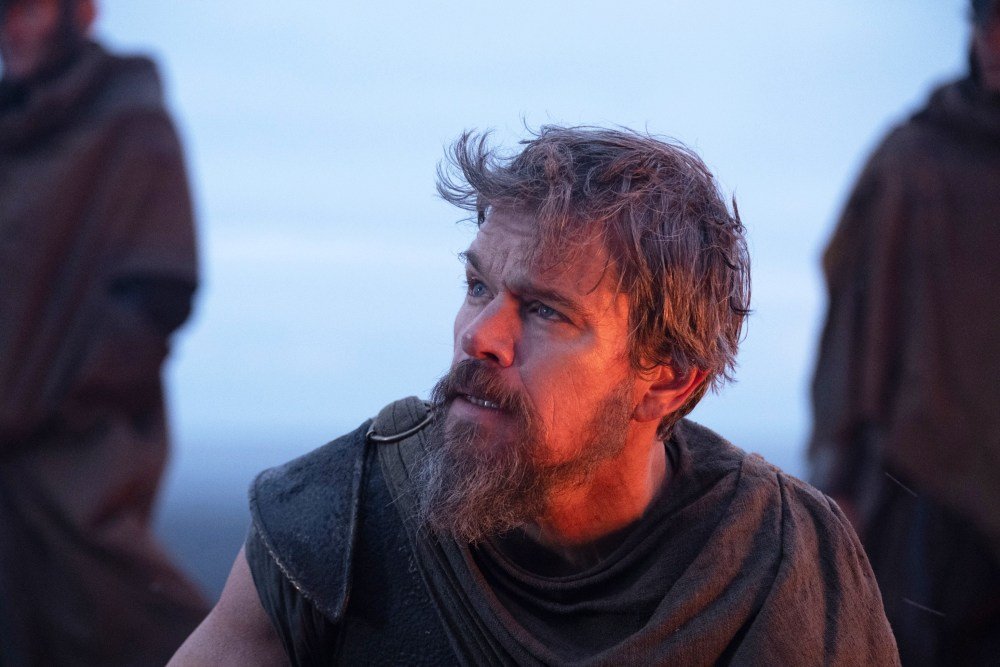
    Set after the conclusion of the 10-year Trojan War, the story follows the hero Odysseus (Matt Damon) as he returns to Ithaca, a journey that takes nearly as much time as the war. Borrowing from the Greek tradition of oral storytelling, Nolan’s nearly three-hour adaptation is told through the accounts of a bard (played by Travis Scott) who spins tales of the great warrior and Odysseus himself as he reflects on the events of his homecoming voyage.

    If understanding “The Odyssey” feels like a laborious journey in itself, here’s a breakdown of the timeline, monsters and myths behind Nolan’s epic adaptation. 

    The War

    In times of peace, Odysseus, king of Ithaca, and his wife Penelope (Anne Hathaway) had hosted parties in their palace for all — even beggars were welcome. Zeus’ law insisted upon showing hospitality to every guest because anybody could be a god in disguise. Odysseus also prided himself on being the only person able to string his sturdy bow. At these celebrations, he would invite men to try to wield the bow before easily stringing it himself and shooting an arrow through 12 axes as entertainment. 

    Before “The Odyssey” kicks off, conflict was brewing overseas. The queen of Sparta, Helen (Lupita Nyong’o), was the most beautiful woman in the world. Prince Paris of Troy took a liking to her, and Helen left Sparta for Troy. Her scorned husband, King Menelaus (Jon Bernthal), turned to his brother Agamemnon (Benny Safdie), the king of all ancient Greece, for help. Agamemnon was also married to Helen’s twin sister, Clytemnestra (also played by Nyong’o), but his loyalty was with his brother. Agamemnon raised an army, thus beginning the Trojan War. 

    Before joining the war, Odysseus told Penelope that she must remarry if their young son Telemachus (Tom Holland) came of age before his return from Troy. Odysseus then held a lottery to determine who would serve in Ithaca’s army. When Antinous (Robert Pattinson) tried to have Sinon (Elliot Page) take his place, Odysseus intervened. He selected Sinon to serve so Antinous could stay back and care for his family.

    The Greeks spent a grueling 10 years fighting at Troy. As the war dragged on, Odysseus got the idea to build a wooden horse to hide his soldiers, allowing them to sneak through the gates of the city. The rest of the army would sail away to not draw suspicion, and one man would stay behind to present the horse as a peace offering. That one man was Sinon, who was intentionally kept unaware of the plan so he could deliver a convincing performance. 

    Days later, Odysseus’ enemies discovered the Trojan Horse but believed Sinon to be a threat, so they killed him. Sinon claimed the horse was an offering to Athena (Zendaya) until his dying breath. The soldiers brought the Trojan Horse inside the gates. Odysseus and his men waited until nightfall to emerge. They rushed to open the gates, where Agamemnon and the rest of the Greek army were waiting, and together they took over the city of Troy, securing their victory. The war was finally over. 

    The Journey

    The three kings — Agamemnon, Menelaus and Odysseus — parted ways at Troy and began their return voyages.

    Helen unwillingly returned to Sparta with Menelaus. To prevent a similar war from happening again, Menelaus scarred her face, permanently marring her famous beauty. Agamemnon was thrilled to return home, where he believed he would be welcomed with open arms by Clytemnestra, despite publicly sacrificing their daughter for good fortune before the war. In Agamemnon’s absence, Clytemnestra plotted her revenge for the death of their daughter. Soon after his return, she murdered him. 

    Odysseus and his men were similarly experiencing poor luck. With the ruin of Troy also came the desecration of Zeus’ law, which proved dangerous to the returning Ithacans. They had angered the gods while in battle, especially the god of the sky. The winds unknowingly steered the Ithacans to the island of Polyphemus (Bill Irwin), the one-eyed cyclops. 

    While exploring the island for food, the men were trapped in Polyphemus’ cave with the cyclops’ herd of sheep. In a desperate attempt to escape, they stabbed Polyphemus in the eye, blinding him. However, the cyclops was a son of Poseidon, and this attack angered the sea god. With the wind and the sea now working against them, Odysseus and his men were next led to the Laestrygonian giants, who brutally attacked them, leaving them with only one ship and its crew. 

    Their next journey was to the island of Aeaea, where Circe (Samantha Morton) turned Odysseus’ men into pigs. The hero ultimately convinced the sorceress to return them to human form, but before they left, Circe told Odysseus his army must visit the underworld and speak to the prophet, Tiresias (James Remar), if they wish to return home. 

    The men sailed to the underworld, where they raised an army of the dead. One of the spirits was Sinon, who was upset with Odysseus for betraying him and not telling him the Trojan Horse plan. Sinon also told Odysseus the fallen Ithacan soldiers were unable to rest because they weren’t honored with proper Greek warrior funeral rites. Sinon instructed Odysseus to seek vengeance against Antinous in Sinon’s name and that he must also sail west to honor the lives lost. Agamemnon emerged next and cautioned Odysseus, sharing how he was murdered by his wife after being too confident in receiving a hero’s welcome. He advised Odysseus to return home in disguise and stealthily discover his true allies. Tiresias then told Odysseus how he can return home. First, he and his men must sail past the deadly sirens. Then, they must choose to sail either through the whirlpool Charybdis, which will kill every man on board, or past the sea monster Scylla, who will only kill six men. 

    In the end, Odysseus’ choice won’t matter, as Tiresias told him all of his men will die after they reach Apollo’s island and kill the sun god’s cattle. Odysseus was convinced he could cheat the prophecy and decided not to tell his men of their fate (nor their choice between Charybdis or Scylla). He did tell them the danger of the sirens, though, and instructed his men to put wax in their ears so they were not tempted by their fatal song. Odysseus insisted on hearing their song and was tied to the mast. Once they sailed past, he told his men of the song, which left him weeping, and that it revealed everything he could ever want but also why he could never have it. 

    Odysseus must then make his choice between Charybdis or Scylla. Confident he could defy the prophecy, he instructed his men to attempt the whirlpool crossing and emerge from the other side. His men, distrustful of what they believed to be bad guidance, steered toward Scylla. As foretold, six men died.

    Now realizing Odysseus did not reveal what Tiresias told him, the soldiers demanded he share everything he learned, mainly second-in-command Eurylochus (Himsesh Patel). Odysseus told him of the prophecy and begged his men to promise not to kill any cattle on Apollo’s island, which they neared. They agreed — for a short time.

    Soon after their arrival, the men realized they were trapped on the sun god’s island, as the wind wouldn’t allow them to sail away. They grew increasingly tired, hungry and frustrated with Odysseus for withholding information, even proposing to leave the king on the island. Their starvation reached new heights, and the men ultimately broke their promise to Odysseus and killed one of Apollo’s cattle. 

    The winds eased, allowing them to continue their voyage home. Odysseus’ men insisted they would rather drown than starve. Soon after, the combined anger of Zeus, Poseidon and Apollo created a storm that killed everyone except the king.

    Odysseus washed up on Calypso’s (Charlize Theron) island, where he ended up spending seven years. Calypso had been banished to live on the island of Ogygia after the Olympians defeated the Titans long ago. She fed him lotus flowers that made him forget about Penelope and Telemachus, sending his mind into a peaceful state. After Odysseus finally confronted his trauma and the real reason why he didn’t want to return home, Calypso helped guide him back to Ithaca.

    Calypso told Odysseus he must submit to the will of the gods, something he had been loath to do thus far. He built a raft to escape Ogygia, letting the ocean take him under and deposit him on land. Athena appeared to him and revealed that he was finally back in Ithaca.

    Home at Last

    Odysseus returned to Ithaca 20 years after his initial departure, disguised as a beggar. The first person he found was the blind swineherd Eumaeus (John Leguizamo), who had just been attacked. He then ran into Telemachus, who doesn’t recognize his father until they stumble across Argus, Odysseus’ old dog. After waiting for Odysseus to return, the dog wagged its tail and died. Odysseus instructed Telemachus to tell Penelope nothing of his return, but to convince her she must select a suitor.

    Zeus’ law still held weight in Ithaca, despite whispers of “the people from the sea” who plundered everything in their path getting closer to home. In Odysseus’ absence, Penelope held court to dozens of suitors eager to wed and control Ithaca. She fended off their advances, believing her husband would return home, and becomes angered when Telemachus says it is time to choose a spouse. 

    Odysseus, still under disguise, begged for food from the suitors at dinner that night. Antinous spit in his bowl, and two of the suitors beat him. Telemachus put a stop to it in honor of Zeus’ law. Penelope wanted to meet the mysterious beggar, not knowing he was Odysseus. Secluded behind a screen, Odysseus told Penelope stories as if he served alongside Odysseus, trying to convince her to let go and find a new suitor. One of Penelope’s longtime slaves recognized Odysseus’ scar on his leg, and he implored her to stay quiet. Odysseus finally named his trauma and why he did not want to go home — because he had broken Zeus’ law after taking Troy. 

    Meanwhile, Antinous lurked nearby with a knife, ready to kill Telemachus, but gets distracted by Penelope announcing she is ready to choose a suitor. The next day, the doors are sealed for Penelope’s challenge: The suitors must string Odysseus’ arrow and shoot an arrow straight through 12 axes, just as the king once did. Telemachus and Eumaeus locked the remaining weapons upstairs. The suitors embarrassed themselves one by one, until Antinous demanded Penelope simply choose the best of them. Odysseus then shed his disguise and completes the challenge easily.

    A fight broke out as the suitors tried to overthrow Odysseus, and Melanthius (Logan Marshall-Green) managed to break into the room upstairs to retrieve weapons. The king successfully fought a hundred men and emerged victorious, but not before killing Antinous in Sinon’s name. 

    Odysseus and Penelope reunited, and Telemachus was crowned the new king of Ithaca as Odysseus vowed to sail west to honor the men who died along the way. The west is symbolic of death in mythology, but also connected to the land of Elysium, the final resting place for Greek heroes.
  • Netflix Buys Danny Boyle’s Rupert Murdoch Movie and Venice Opener ‘Ink’

    Netflix Buys Danny Boyle’s Rupert Murdoch Movie and Venice Opener ‘Ink’

    Having just been announced as the Venice Film Festival curtain raiser, Danny Boyle‘s “Ink” has found a new nome.

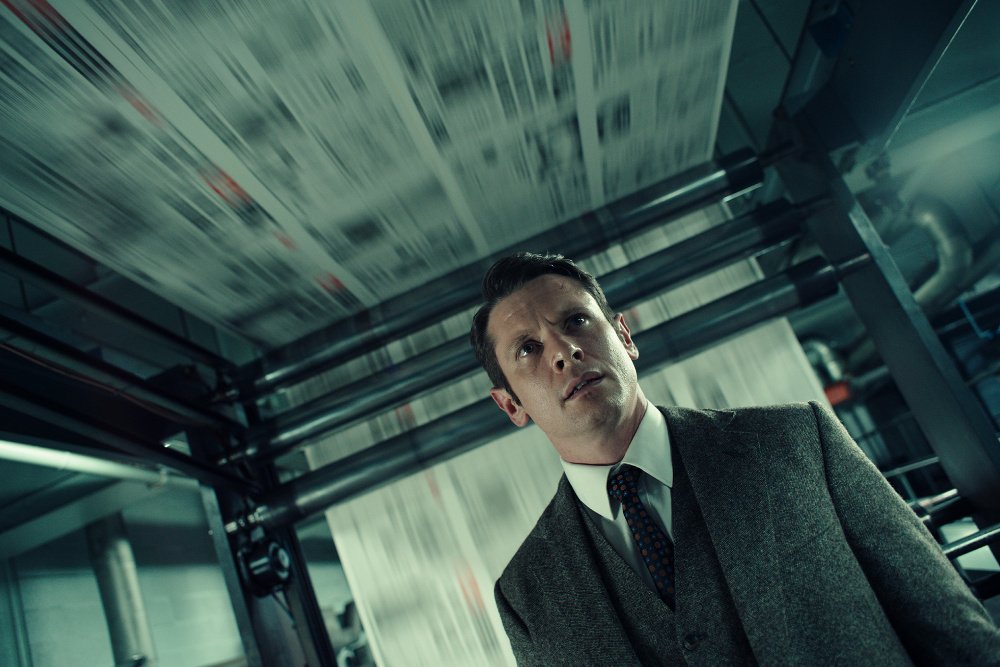
    Netflix has acquired the U.S. and Latin American rights to the film — about the early years of Rupert Murdoch’s media empire as he planted a flag in the U.K. and starring Jack O’Connell, Guy Pearce and Claire Foy. The film will world premiere in the Venice competition on Sep 2, opening the 83rd edition of the festival.

    Based on the Tony-nominated stage play by James Graham (“Dear England,” “Sherwood”), who wrote the screenplay, “Ink” was produced by Studiocanal, Media Res and House Productions, reuniting Academy Award winner Boyle with his “Slumdog Millionaire” exec producer Tessa Ross.

    Set in 1969, the film charts the story of how Murdoch and tabloid editor Larry Lamb launched “The Sun,” newspaper. O’Connell stars as “The Sun” editor Lamb with Pearce as Murdoch. Foy plays Jules Davies.

    “Long before Fox News, click bait, and Truth Social; decades before Twitter, Facebook, Google & Only Fans, these two men created a new tabloid which against all the odds became the biggest selling newspaper in the world,” said Boyle. “Cheeky, Irreverent, daring: The super soaraway Sun challenged the establishment and remade our world for the modern era.”

    As the official logline further details, “Ink” is as “an explosive cinematic rollercoaster about a group of visionaries and misfits who had an idea for a new kind of news — one that would give the people what they want and would change the face of the world we live in today.”

    Boyle produces with Ross (“Conclave,” “Zone of Interest”) and Michael Ellenberg (“The Morning Show,” “Pachinko”). Tracey Seaward (“The Two Popes,” “Philomena”) also produces. Anna Marsh, Ron Halpern, Joe Naftalin of Studiocanal are exec producers alongside Tonia Davis, Zoe Edwards, Graham and Sudie Smyth. Media Res optioned Graham’s play, which was directed by Rupert Goold.

    The Netflix deal was handled by WME Independent and StudioCanal.

    Studiocanal handled worldwide sales and will release the film theatrically in their territories of the UK, France, Germany, Italy, Poland, Benelux, Australia and NZ. With Netflix now on board, “Ink” has sold in all territories worldwide.

  • Netflix Paid $587 Million for Ben Affleck’s AI Startup InterPositive

    Netflix Paid $587 Million for Ben Affleck’s AI Startup InterPositive

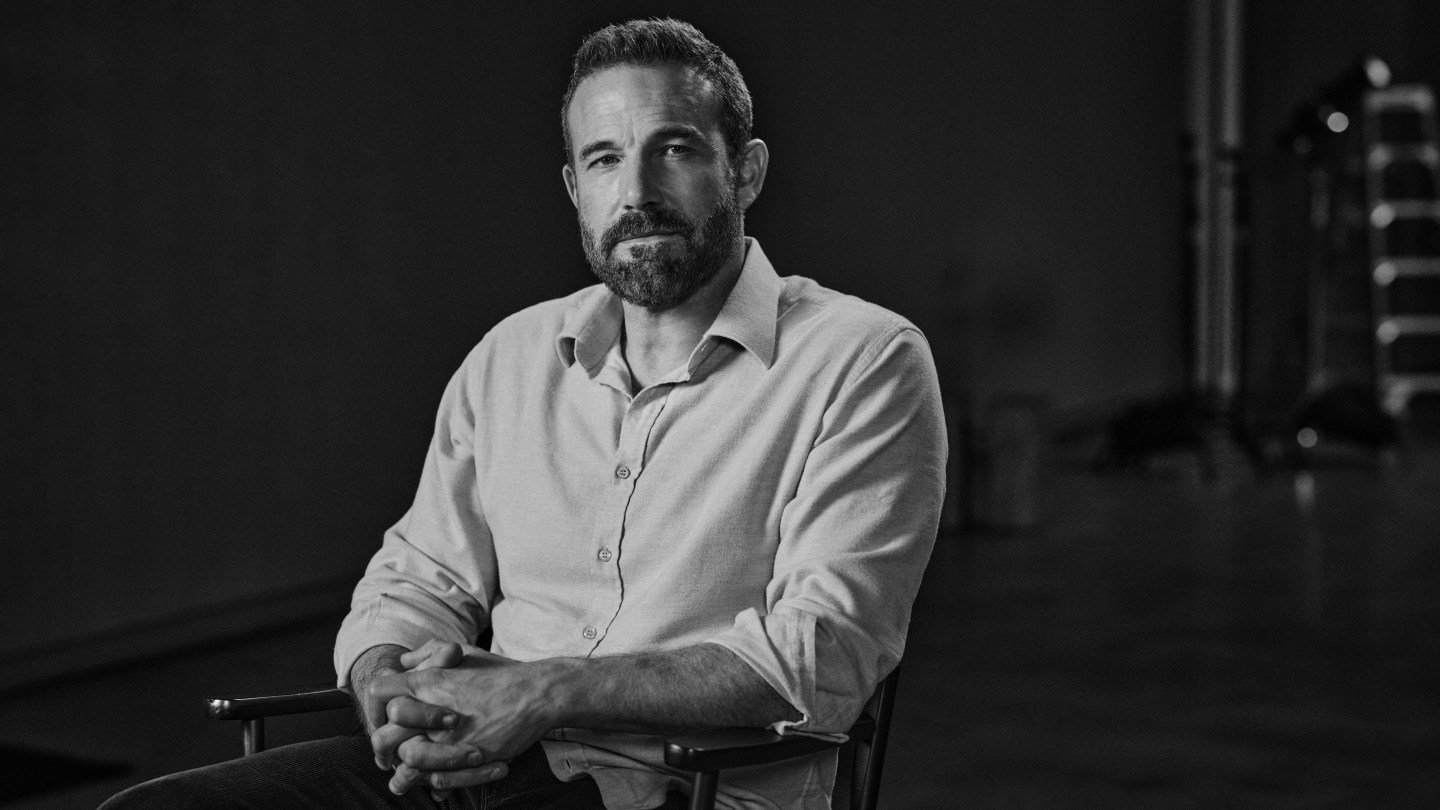
    Netflix paid $587 million in cash when it purchased Ben Affleck‘s AI startup InterPositive, the company disclosed in a federal filing.

    As part of the company’s Form 10-Q report with the Securities and Exchange Commission, Netflix confirmed that it completed an acquisition in March “for a total purchase price of approximately $587 million. The disclosure came months after a Bloomberg report indicated Netflix’s March acquisition could amount to up to $600 million for Affleck and InterPositive’s investors, even if the total price for the company was less than that amount.

    The remainder would be made up through “certain performance targets,” according to the Bloomberg report. Netflix did not respond to an immediate request for comment.

    Netflix purchased Affleck’s startup, which he founded in 2022 and operated in stealth mode, in a bid to develop AI tools that kept “filmmakers at the center of the process.” The purchase brought aboard InterPositive’s 16-person team of engineers, researchers and creatives, while Affleck joined Netflix as a senior adviser. The company’s tools allow filmmakers to build an AI model using production dailies to help enhance post-production work such as mixing, relighting shots and adding visual effects, forgoing typical visual generative efforts.

    “From the invention of the moving image to the transition to digital, from motion capture to virtual production, technology has evolved alongside the artists who use it,” Affleck said as part of the merger announcement. “Our shared commitment to continuing this legacy makes joining together a natural next step, in addition to Netflix’s decades of experience applying and scaling technology responsibly.”

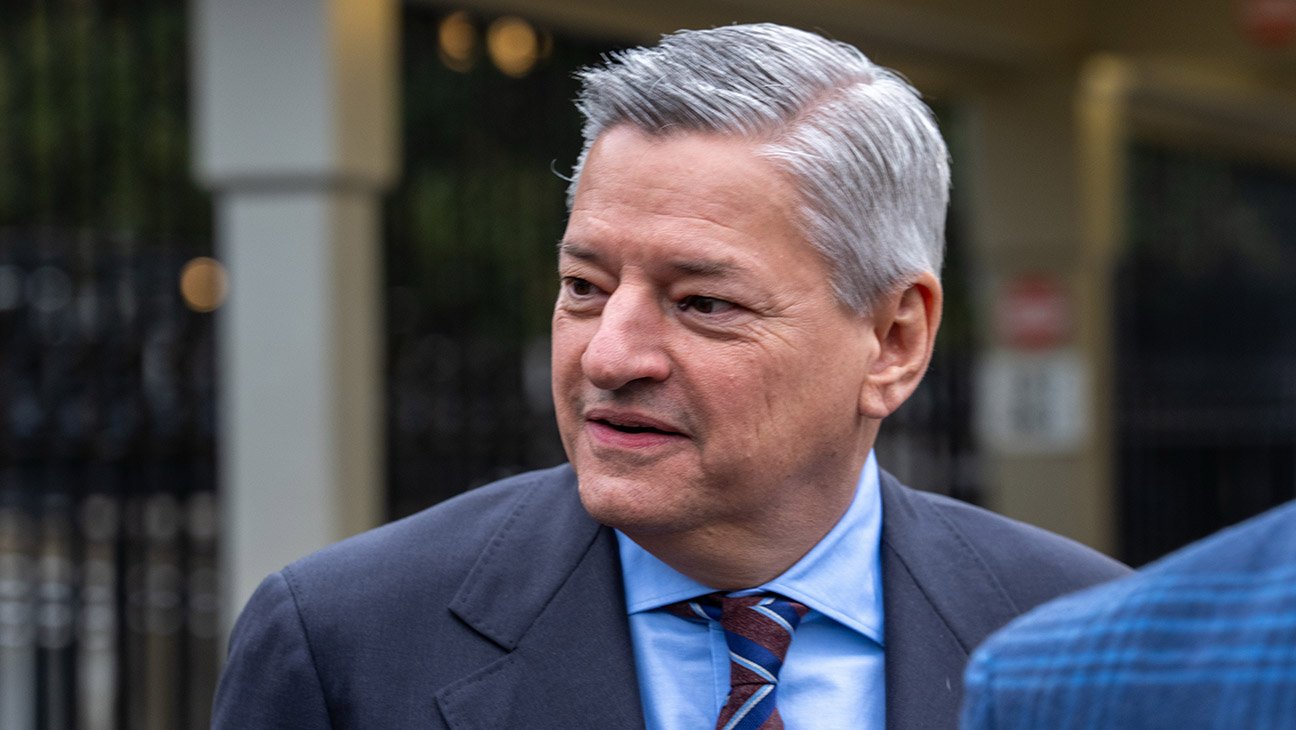
    Netflix co-CEO Ted Sarandos highlighted the company’s integration of generative AI tools and its work with InterPositive during its second-quarter earnings call on Thursday, where it revealed that roughly 300 of its titles have used some form of generative AI this year. Sarandos said that while the InterPositive deal was still in its “early days,” Netflix has seen its impact on productions alongside some of its other in-house tools.

    Still, even as he highlighted the use of AI in the docuseries “The American Experiment” to produce sequences “twice as fast and at half the cost of previous options,” he said the company wasn‘t eager to replace human-made work with generative technology.

    “We believe it takes great artists to make something great, and AI is not changing that,” Sarandos said. “Movies are being made by people who make movies. AI provides them with better tools to make them even better.”

  • The Best 4K TVs to Turn Your Home into a Mini Movie Theater in 2026

    The Best 4K TVs to Turn Your Home into a Mini Movie Theater in 2026

    If you purchase an independently reviewed product or service through a link on our website, Variety may receive an affiliate commission.

    Not all 4K TVs are made equally. There are plenty of 4K TVs that are colorful, large and sharp, but not all of them have the same features and settings or have the same picture and audio quality. With so many to pick, it may be tough to find the best one for your home and your pocketbook.

    Variety rounded up the best 4K TVs of various shapes and sizes for all sorts of users and situations. We picked from trusted TV manufacturers, like Sony, Samsung, Hisnese, LG and others for their reliability, premium picture quality and overall use.

    Sony

    RGB

    Sony 85-Inch BRAVIA 9 II ‘True RGB’ 4K TV

    Best Overall

    With prices starting at $3,599.99 at Best Buy, the Sony BRAVIA 9 II 4K TV has Sony’s latest “True RGB” display technology (red, green and blue light) for premium picture quality with more vivid and brighter colors, as well as darker and deeper black levels.

    And with sizes up to 85 inches, the 4K TV features accurate colors that comes alive. It’s great for watching action movies and live sports with more immersive picture quality as high-paced action shifts from moment-to-moment.

    Samsung

    Samsung Vision AI

    Samsung 77-Inch OLED S90H 4K Smart TV

    Best OLED

    The Samsung 77-Inch OLED S90H 4K Smart TV is one of the best OLED TVs to buy in 2026 — thanks to its large display that minimizes blooming and haloing around bright images, Dolby Atmos for premium audio quality and built-in smart home features for streaming movies and TV shows from Netflix, YouTube, Prime Video, Disney+ and other apps.

    The 4K TV supports HDR (High Dynamic Range) for 4K videos with accurate and vivid color contrast and deep black levels. It even has a high refresh rate of up to 165Hz for buttery smooth motion for fast action during live sports, gaming and movies.

    LG

    HDR10 Support

    LG 77-Inch LG OLED evo AI G6 4K Smart TV

    Best for Wide Viewing Angles

    The LG 77-Inch LG OLED evo AI G6 4K Smart TV is ideal if you have a large family because it offers very wide viewing angles. This means no matter where someone sits in the living room, everyone is going to have a great view of what’s on TV — thanks to its impressive OLED 4K Ultra HD display. The 4K TV offers brightness, as well as enhanced rich and vibrant colors and inky black levels.

    In addition, the 4K TV supports Dolby Vision, HDR10 and HLG 4K picture formats, while it comes with the webOS 26 with Google Gemini operating system out-of-the-box for video and music app streaming — including Netflix, Paramount+, Peacock, Prime Video, Spotify and much more.

    TCL

    144Hz

    TCL 75-Inch QM7L Series SQD-Mini-LED QLED Smart TV

    Best Value

    Priced at $1,498 on Amazon, the TCL 75-Inch QM7L Series SQD-Mini-LED QLED Smart TV is our pick for the best wallet-friendly 4K TV. It’s no slouch when it comes to offering stellar picture quality with thin bezels, HDR10+ and Dolby Vision 4K support, vibrant color reproduction and expanded brightness levels.

    This is a simple and clean smart TV with a very wide selection of apps, including Netflix, Hulu, Disney+, HBO Max, Prime Video and others, thanks to Google TV. If you’re on a tight budget, then the TCL QM7L is a great choice to get brilliant picture quality, impressive Bang & Olufsen audio quality and built-in streaming options at an affordable price.

    Hisense

    IMAX Enhanced

    Hisense 75-Inch U7 Mini-LED ULED 4K Smart TV

    Best for Versatility

    If you’re looking for a 4K TV that supports multiple picture and audio formats, then the Hisense 75-Inch U7 Mini-LED ULED 4K Smart TV is for you. For picture quality, it has Dolby Vision IQ, HDR10+ Adaptive, HDR10 and HLG support for high quality 4K images that are crisp and clear with bright colors and deep black levels with IMAX Enhanced performance, while this TV can support Dolby Atmos and DTS:X audio formats.

    It even has Google TV built-in for streaming videos and music, while the TV has a high refresh rate of up to 165Hz for smooth motion for gaming and live sports. The Hisense U7 is one of the most versatile 4K TVs for home theaters or basement “man-caves” with impressive picture quality and a wide selection of audio formats.

    Samsung

    Wireless One Connect

    Samsung 85-Inch ‘The Frame Pro’ LS03HW Neo QLED 4K Smart TV

    Best for Style

    Let’s face it, most 4K TVs look unattractive and very plain. If you hang one up, then it just looks like a black slab on your wall. However, not all 4K TVs are ugly. Enter the Samsung 85-Inch “The Frame Pro” LS03HW Neo QLED 4K Smart TV, a sleek and stylish TV that’s designed to look like a framed piece of artwork. It features a matte QLED 4K display with an antireflection layer that’s not glossy, while the TV comes with a special “Art Mode” to display pieces, like “Mona Lisa,” “Girl with a Pearl Earring,” “Irises” and others.

    Meanwhile, all of the cables, power supply, inputs and other components are encased in a separate Wireless One Connect control box that connects to the TV wirelessly. Now the Samsung Frame Pro TV can always look clean as the centerpiece of your living room.

    Samsung

    VRR Support

    Samsung 77-Inch OLED S95H 4K Smart TV

    Best for Gaming

    If gaming is most important for your home, then the Samsung 77-Inch OLED S95H 4K Smart TV is the one for you. For next-gen gaming for Xbox Series X/S, Sony PlayStation 5 and Nintendo Switch 2, all four of its built-in HDMI ports support Auto Low Latency Mode (ALLM) for virtually zero game controller lag, Dynamic Metadata (HDR 10+) for impressive 4K picture quality with incredible color contrast and Variable Refresh Rate (VRR) with up to 165Hz for smooth motion.

    Who needs a console at all? The Samsung S95H 4K TV also supports cloud gaming apps, like Xbox Game Pass Ultimate and NVIDIA GeForce Now.

  • Netflix Paid $587 Million for Ben Affleck’s AI Company

    Netflix Paid $587 Million for Ben Affleck’s AI Company

    When Netflix acquired Ben Affleck’s mysterious AI company InterPositive earlier this year, it took the industry by storm.

    What was the company? What tools did it create for filmmakers? How would Netflix use them, and use Affleck, who committed to work as a senior advisor to the company in the deal?

    And then there was the question of price. How much was the company worth to the streaming giant? Thanks to a new securities filing, we know the answer to that final question.

    Netflix disclosed in an SEC filing Friday that it paid $587 million for InterPositive, in cash. The disclosure was made in the company’s form 10-Q, writing that “in March 2026, the Company completed an acquisition which was accounted for as a business combination for a total purchase price of approximately $587 million, consisting of cash consideration.”

    While the filing does not name InterPositive, Netflix announced the deal on March 5. The sale price was also filed in the company’s Q1 10-Q, which was filed in May.

    InterPositive was formed in 2022 as the multi-hyphenate began to explore the AI space, with a particular emphasis on upending visual effects without impacting the creative part of filmmaking, from writing and directing to acting and production design.

    “I knew I had a responsibility to my peers and our industry, to protect the power of human creativity and the people behind it. In creating InterPositive, I sought to do just that,” Affleck wrote in a post at the time. “From the invention of the moving image to the transition to digital, from motion capture to virtual production, technology has evolved alongside the artists who use it. Our shared commitment to continuing this legacy makes joining together a natural next step, in addition to Netflix’s decades of experience applying and scaling technology responsibly.”

    The company captured a proprietary data set on a closed soundstage, eventually leading to the company’s first model, which Affleck wrote was “trained to understand visual logic and editorial consistency, while preserving cinematic rules under real-world production challenges such as missing shots, background replacements or incorrect lighting.”

    Netflix co-CEO Ted Sarandos said on the company’s earnings call this week that about 300 productions currently use AI in their process, mostly in post-production.

    “Gen AI is scaling quickly across the entire creative process, from concept to pre-vis through post and delivery,” Sarandos said. “We’re making higher quality output more quickly and efficiently than we could have using traditional methods. So gen AI workflows now have been used in roughly 300 of our titles with the largest concentration right to date is on post-production. But we’re leveraging gen AI for really complicated shots and sequences.”

    The Netflix co-chief cited as an example the Tom Hanks-backed doc The American Experiment, which had 17 minutes of what Sarandos called “AI-enhanced” footage. “It enabled us to expand the scope of the series in ways that just wouldn’t have been feasible before. Those 17 minutes,” he added, “They were produced twice as fast and at half the cost of previous options.”

  • Kane Parsons, Curry Barker and the Multi-Million Dollar Battle for Gen Z Eyeballs

    Kane Parsons, Curry Barker and the Multi-Million Dollar Battle for Gen Z Eyeballs

    The great Gen Z genre land grab is in full swing.

    Mere months after Obsession and Backrooms stormed the summer box office, Hollywood studios have been throwing millions at Internet-fluent horror filmmakers and online-native IP in a battle for the dollars, eyeballs and hearts (in that order) of Gen Z viewers.

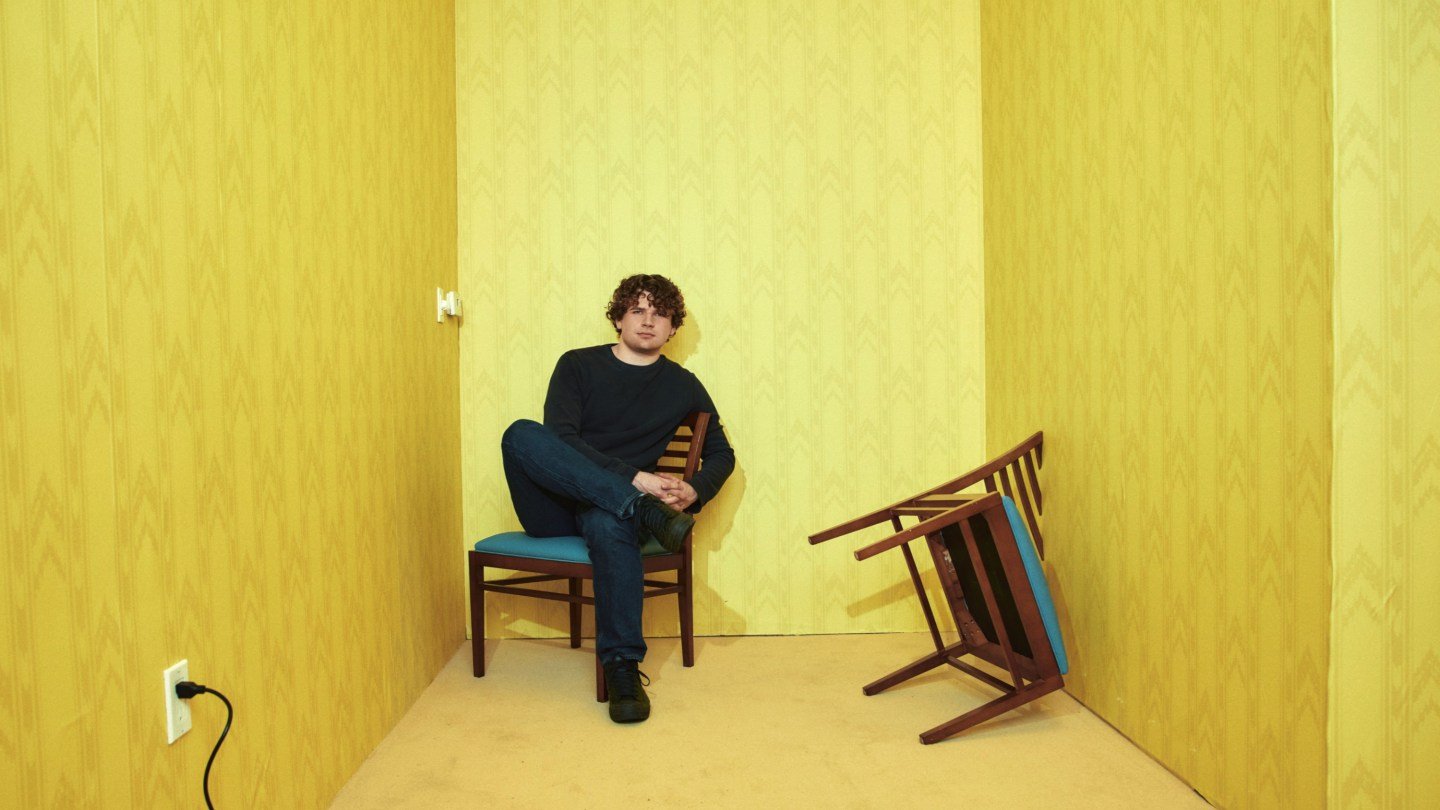
    The most urgent example today is Backrooms director Kane Parsons, whose $10 million film stands a A24’s top-grossing movie ever with $374 million globally. He is in the midst of a full-court press from multiple power players who want to secure the 21-year-old auteur’s future work.

    As first reported by Puck, sources confirmed to The Hollywood Reporter that in recent weeks, Warner Bros. bosses Mike De Luca and Pam Abdy flew to Parsons’ home in the Bay Area, where he lives with his mother, to court the filmmaker. On Thursday, he partook in a Zoom with HBO boss Casey Bloys and head of drama and HBO films Francesca Orsi, as the proposed deal with Warners would encompass film and TV.

    Universal chief Donna Langley has also met with Parsons, after successfully wooing Obsession filmmaker Curry Barker for his next movie. A24, meanwhile, very much does not want to lose him, and per Puck is courting him for a Backrooms sequel as well as another original project.

    It’s unclear why A24 hadn’t inked a deal with Parsons prior to the release of Backrooms, though it is known that Parsons fully owns the IP, which began life as a series of YouTube shorts.

    A24 has long been known for breaking new directing talent, like Robert Eggers (The Witch), Ari Aster (Hereditary) and Celine Song (Past Lives). And while some directors, like Aster and Song, have stayed loyal to the studio, other filmmakers like Eggers and Everything Everywhere All At Once filmmakers Daniel Kwan and Daniel Scheinert have signed deals with larger, more moneyed operations. Eggers’s home is now the Universal specialty label Focus, while the Daniels signed a pre-best picture, five-year deal with Universal.

    Splashy deals for online creators have intensified this year, but kicked off in earnest in at the 2023 Sundance Film Festival, when A24 beat out Universal and other studios with a seven-figure deal to land Talk to Me, the Australian horror movie from first-time feature filmmakers Danny and Michael Philippou. Sources have said other studios, including Uni and Warners, attempted to court the YouTubers-turned-horror filmmakers for their follow-up film, but A24 was ultimately able to land the directors’ next film, 2025’s Bring Her Back, and put a Talk to Me sequel into development. Of course, studios would still like to work with them to this day, with Warners said to be in particular high on the duo.

    Possibly in order to stave off filmmaker attrition, sources tell THR that in the past few years, A24 has asked that a first-look at a filmmaker’s second project be baked into the deal for their first. This appears not to have been the case with Parsons and Backrooms.

    The feeding frenzy for Parsons follows the similar hunt to land Obsession director Barker’s next original project. His Obsession follow-up Anything But Ghosts is already shot and is at Focus, with the studio landing that project after acquiring Obsession out of last year’s Toronto Film Festival. But, in the middle of Obsession’s epic, $400 million box office run, a rival studio offered Barker an astounding $10 million deal for his next original project, sight unseen. Ultimately, Barker stayed in the Universal family for his third film, with the project landing at Universal Film Group and Blumhouse Atomic Monster in what was described as a rich eight-figure deal.

    Parsons and Barker are not the only directors cashing in. There have been a myriad of creatives drafting off studios’ fervor for Gen Z-tinged horror talent.

    Earlier this month, Warner Bros won a five-studio bidding war with a multi-million-dollar deal for the underlying rights to Siren Head, a viral horror meme that is behind billions of views across TikTok, YouTube and Roblox. Weapons filmmaker Zach Cregger is attached to write and produce the project, along with Whalefall‘s Brian Duffield, who could direct. Amazon MGM ended up the victor in a massive bidding war for the film rights to the YouTube-released horror franchise The Mandela Catalogue from Alex Kister, who will direct for producers United Artists and Amblin.

    If these numbers seem wild, there’s a real long-term business reasoning behind them. In success, landing a creator early could mean hundreds of millions in profits (or even north of $1 billion) for a company over a person’s career. Think what Christopher Nolan’s decades at Warner Bros. have netted the company, or the absurd amount of money South Park creators Trey Stone and Matt Parker have generated for Paramount. Of course, few people will ever reach those heights, but these riches are in part driving the early bets studios are taking.

    —Tony Maglio contributed to this story.

  • Rachel Cusk’s New Novel May Be Dark Portrait of Natalie Portman

    Rachel Cusk’s New Novel May Be Dark Portrait of Natalie Portman

    Natalie Portman famously saw a twisted version of herself in mirrors as part of her Oscar-winning performance as a tortured ballerina in Black Swan.

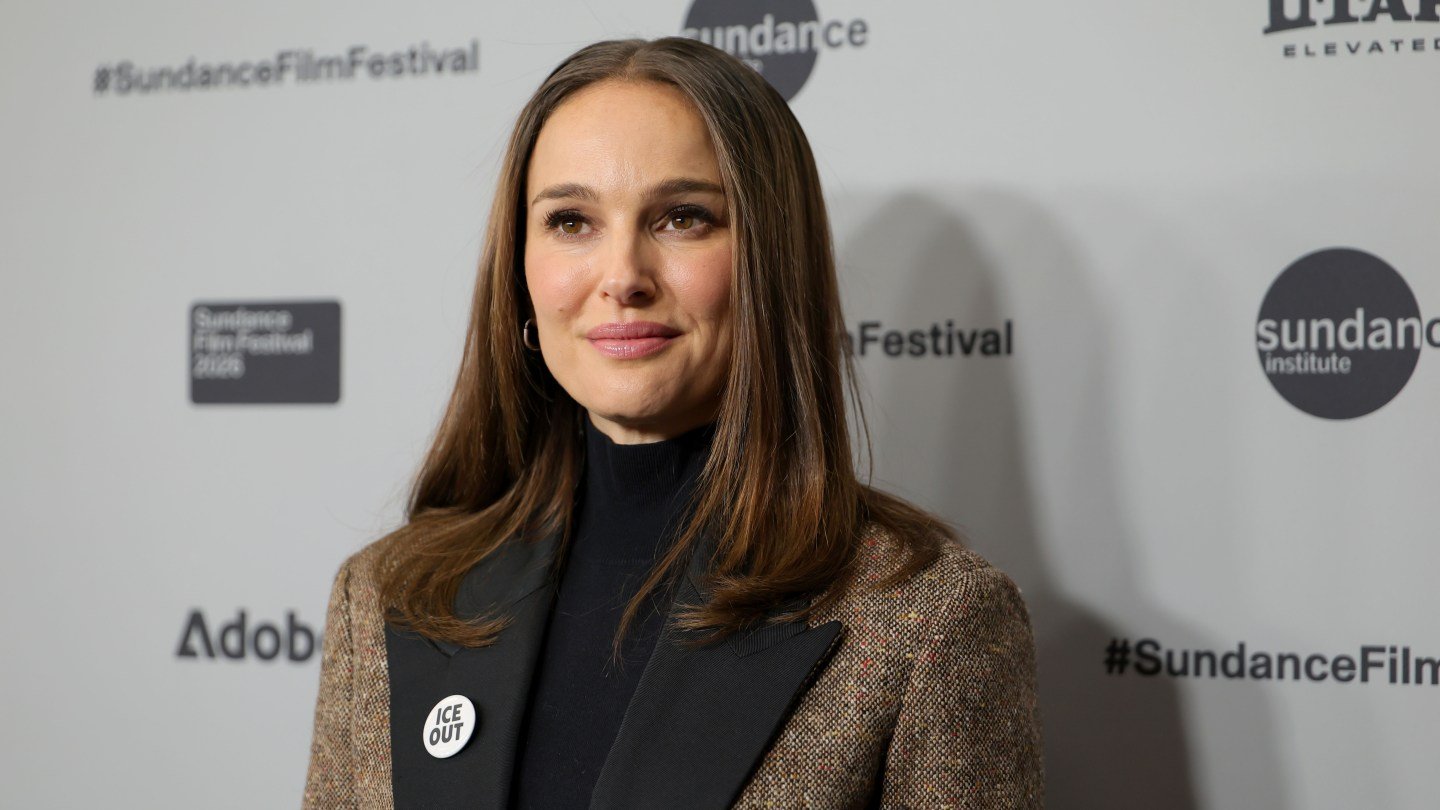
    She may experience the same queasy sensation if Unherd writer Valerie Stivers is to be believed, as she suggests in a July 17 column that Cusk’s upcoming novel, Life of M, is a thinly-veiled portrait of Portman.

    And Portman, despite apparently being friends with Cusk and a cheerleader for her novels, may not be flattered with what she sees in the literary mirror. “Chatter in New York literary circles says that Cusk’s upcoming novel, Life of M, is based on Cusk’s relationship with Portman,” Stivers reveals in her Unherd column, entitled A Novelist’s Dark Portrait of Natalie Portman — Rachel Cusk’s New Book Mines the Actress’s Life.

    The novel, set for an Aug. 25, 2026 release and available for pre-order, centers on a famous actress, M, and a writer tapped to chronicle her life amid the glamor of olive groves, beaches and from behind the tinted windows of limousines.

    “The movie star M is one of the most recognizable faces of our time. Her image is everywhere. It has been like that since she was a child. With such fame, her life has the appearance of freedom: people are instantly obliging, spaces are altered to accommodate her, time can be rearranged. M may live in the same places as real people. She may meet her friends or collect her children from school or walk her dogs as they do. But it seems the rules of reality have melted away,” a synopsis from Macmillan Publishers, which is releasing Cusk’s next novel in the U.S. market, states on its website.

    “Now, a writer has decided to pay close attention to M’s life in the hope of understanding who she really is. It is hard not to feel ugly next to M, hard not to feel insignificant. But what truths ― about the very experience of living ― might this proximity allow the writer to briefly capture?,” the synopsis continues.

    Stivers, who like Portman lives in Paris, after apparently getting a peek at a pre-publication copy, hints in her column “a Cusk book about you is never going to be flattering,” and that the Hollywood actress has concluded as much.

    “M’s key biographical information is very similar to Portman’s. The actress’ dissatisfaction and betrayal at the finished product, as recorded in the final pages of the book, is also said to be true to life,” Stivers writes.

    Portman is certainly a fan of Cusk’s novels. In a March 2021 Elle magazine column where Portman, herself a best-selling author, was asked to recommend other books, she cited Cusk. On which books surprised Portman, she answered: “That you can know much about a protagonist through the people around them: The Outline Trilogy (Outline, Transit, and Kudos) by Rachel Cusk.”

    The Hollywood Reporter reached out to representatives for Portman for comment.

  • Netflix Pushes Back at Season 2 Woes Narrative, Doesn’t Release Video Podcast Data

    Netflix Pushes Back at Season 2 Woes Narrative, Doesn’t Release Video Podcast Data

    Netflix co-CEO Ted Sarandos acknowledged that second seasons of the streamer’s shows tend to draw less well than debut seasons. But, he said, it’s not as bad as a recently prevalent narrative would make it seem.

    The streamer also touted some early results from the addition of video podcasts to the platform in its quarterly earnings report — but declined to divulge any specific numbers in a large-scale data release for the first half of the year.

    The season two problem narrative was sparked by a recent Bloomberg story detailing steep viewing declines for several shows in their second seasons, among them Beef, The Four Seasons and One Piece. Sarandos didn’t dispute those findings — which came from Netflix’s own publicly released weekly top 10 lists — but said that “in aggregate, we’re not seeing any material change in our second season viewing compared to season ones. Our second seasons are performing well within our bands of expectation.”

    Sarandos also said that viewing declines for the second season of a show are “very common” across the industry and offered this rationale for why it happens at Netflix: “It’s even moreso with us, because we launch our shows so big,” he said. “Our global reach, our discovery mechanism, releasing all at once — this enables us to find a very large audience early. Our shows tend to start really big, where most other places, their shows start pretty small and occasionally grow from there.”

    Sarandos added, “When we look across the entire portfolio … our season two fall-off has actually slightly improved this year relative to last year.”

    As for video podcasts, Netflix made a push into that area this year, adding shows from The Ringer, Jay Shetty, Pete Davidson, Brian Williams and New York’s Breakfast Club radio show, among others. Sarandos noted that the shows overindex with mobile users relative to long-form series and have driven up engagement a bit during daytime hours.

    So how are they doing, specifically? Well …

    A note at the end of Netflix’s data release said that all video podcasts (there are several dozen) are lumped into an “other shows” grouping that also includes any series that received fewer than 50,000 views (calculated as viewing hours divided by run time) in the first half of the year. That doesn’t necessarily mean that every podcast fell below that threshold, the company says. But since it’s a relatively new type of programming for the platform, Netflix opted not to break out the stats for any single show.

    The “other shows” category accounted for 757 million viewing hours from January to June — which sounds like a lot but is only about one percent of the 74.4 billion hours Netflix users spent watching all series in those six months.

  • Disney’s Next Big Product Line Sees Its Star Characters Collide With NFL Teams

    Disney’s Next Big Product Line Sees Its Star Characters Collide With NFL Teams

    The Walt Disney Co. is protective of its iconic characters and intellectual property. The National Football League is too. The league wants its teams showcased in the best light, and Disney wants its characters to shine.

    On Thursday afternoon, in New York’s Jacob Javits Center, the world of Disney collided with the world of the NFL, all in service of an unusual new consumer product line, one that mixes some of Disney’s characters with all 32 NFL teams.

    That’s how Darth Vader, flanked by a pair of Storm Troopers, found himself on stage at Fanatics Fest alongside NFL legend and Las Vegas Raiders owner Tom Brady, Raiders quarterback Fernando Mendoza and NFL Commissioner Roger Goodell, with Marvel chairman Kevin Feige looking on from the audience.

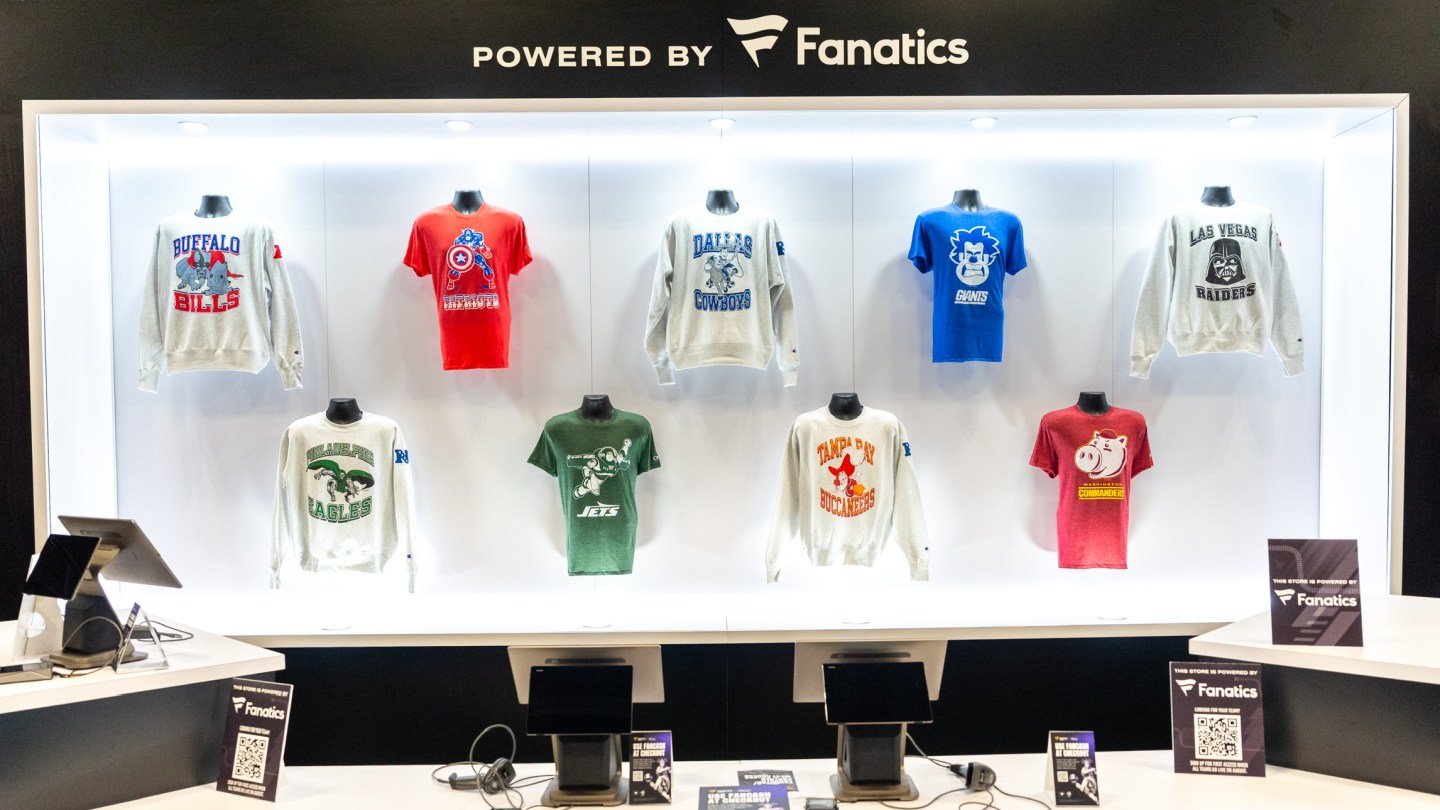
    Vader was the first pick in the “Disney Fan Draft,” held on the floor of the convention, which served as a launchpad for the “Disney | Champion NFL Collection,” which pairs Disney characters with an NFL team.

    Darth Vader, Fernando Mendoza, Tom Brady and Roger Goodell at the Disney Fan Draft at Fanatics Fest.

    Alex Weprin

    The apparel line launched at the Fest with eight teams (and characters), with all 32 launching in August.

    In addition to Vader and the Raiders, the collection includes the Buffalo Bills and Beast from Beauty and the Beast; the Dallas Cowboys and Toy Story’s Woody; the New England Patriots and Marvel’s Captain America; the New York Giants and Wreck-It Ralph; the New York Jets and Toy Story’s Buzz Lightyear; the Tampa Bay Buccaneers and Captain Hook; and the Washington Commanders and Toy Story’s Hamm.

    “The Disney | Champion NFL Collection reflects our continued commitment to creating consumer products and experiences that sit at the intersection of culture, fandom, and storytelling,” Paul Gitter, executive VP global brand commercialization for Disney Consumer Products, tells The Hollywood Reporter. “As we build toward ESPN’s ‘Year of the Super Bowl,’ we’re expanding how fans engage with Disney across sports through moments that drive relevance, connection and long-term brand affinity.”

    According to Bret Healey, director of graphic design at Disney Consumer Products, the Disney products team really did draft the characters for each team. While what happened on stage at Fanatics Fest was in service of the show, the Disney team put a lot of thought into each pairing.

    “We did the draft based on the team first: What’s the team’s personality? What are their colors? What’s their team name? What are their fans like? What’s their city like? What are their ‘like ‘if you know you know’ moments? So I took that all into consideration with my team, and we essentially drafted all 32 of the teams together,” Healey says.

    And while many of the characters are Disney “all-stars,” so to speak, he says that they were deliberate in their choices.

    “Whichever character worked best for that team, that’s the story we were going to tell, even if they are a tertiary character,” he says.

    Consumer products are one of the core parts of Disney’s corporate flywheel. The business generated revenue of $974 million in the company’s latest quarterly report, with operating income of $479 million, enormous margins that reflect Disney’s heavy focus on licensing through partners like Champion.

    With its latest effort, the company is banking that it can bring some NFL fans along for the ride too.

  • Netflix Unveils ‘Queenstown,’ Its First New Zealand Series

    Netflix Unveils ‘Queenstown,’ Its First New Zealand Series

    After more than 10 years of streaming content to the country, Netflix has kicked off production on its first original series ever commissioned in New Zealand. On Friday, the company unveiled Queenstown, an eight-episode drama set amid the luxury ski scene of the titular South Island resort town.

    Unfolding amid the moneyed gloss of the town’s ski-resort elite, the series follows a privileged family and the people who work for them as their lives collide over power, loyalty and desire — or, as Netflix put it, “a wealthy family at war with itself.” Production is underway on location in Queenstown itself.

    Queenstown was created and written by Chloe Stearns (Wolf Like Me, The Falling Girls, Evergreen), who executive produces. Glendyn Ivin (The Lost Flowers of Alice Hart, Penguin Bloom) serves as lead director and executive producer, with New Zealand filmmaker Roseanne Liang (Netflix’s Avatar: The Last Airbender) also directing.

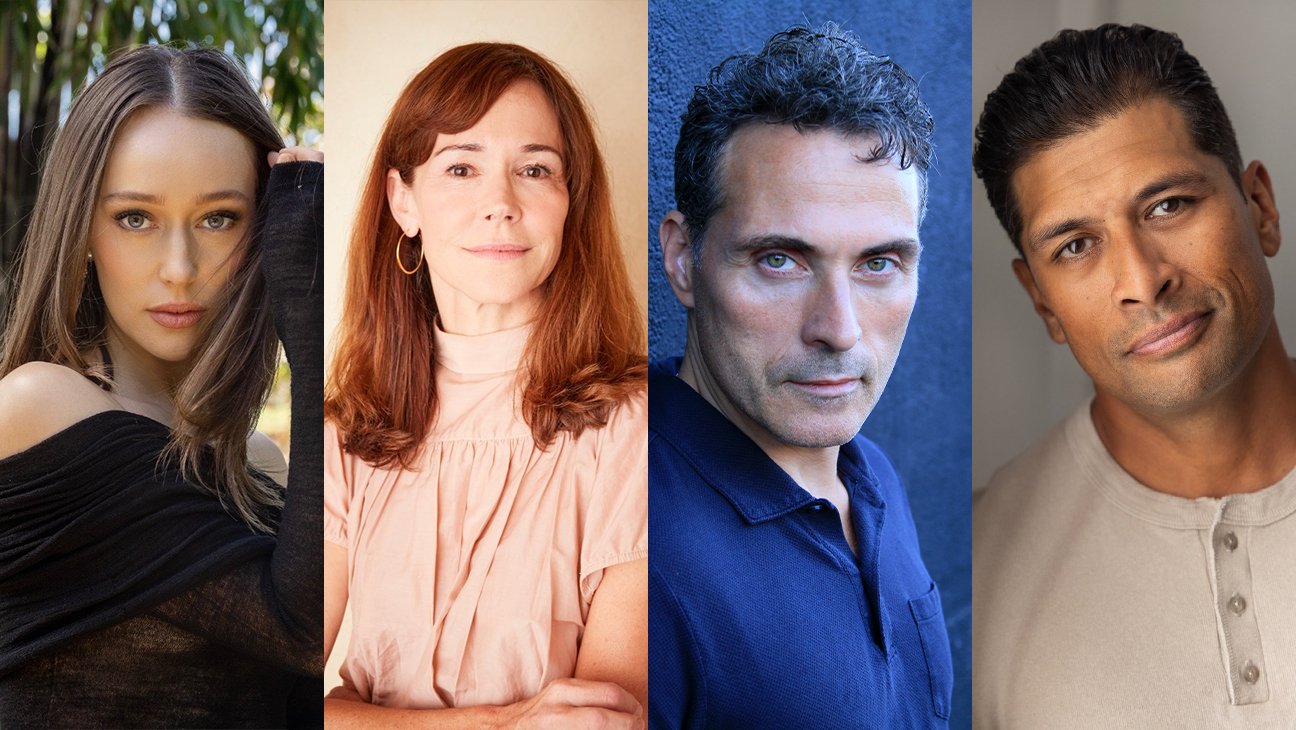
    Emmy nominee Rufus Sewell (The Diplomat, Scoop, The Father) leads the ensemble alongside Frances O’Connor (Wednesday, The Missing), Australian actress Alycia Debnam-Carey (Apple Cider Vinegar, The Lost Flowers of Alice Hart, Godzilla x Kong: Supernova) and New Zealand actor Te Kohe Tuhaka (Chief of War, The Convert, Kōkā).

    “Shooting our first locally-commissioned series here in New Zealand is a huge moment for us,” said Amanda Duthie, Netflix’s content director for Australia and New Zealand. “This is a bold, propulsive story of power, class and family set against the opulent world of a luxury ski town, and we can’t wait for our members to fall in love with this series the way we have.”

    Jodi Matterson (The Dry, The Lost Flowers of Alice Hart) — who launched her Silent Firework banner in 2024 after exiting Bruna Papandrea’s Made Up Stories — executive produces alongside Libbie Doherty (Bluey, Crazy Fun Park) of Runaway Unicorn, with Jeremy Platt and Erika North rounding out the exec producer team.

    Matterson and Doherty, in a joint statement, hailed Stearns as “an extraordinary new voice” — and predicted the series will become “audiences’ next obsession.”

    The commission marks a notable step for Netflix’s originals strategy Down Under, which has so far centered on Australia with hits including Heartbreak High, Boy Swallows Universe and Apple Cider Vinegar. New Zealand, by contrast, has long served the streamer primarily as a spectacular production location — Sweet Tooth and Jane Campion’s Oscar-winning The Power of the Dog both shot there — without ever hosting a homegrown series of its own. The Queenstown production is backed by the New Zealand Film Commission and the country’s Screen Production Rebate. A premiere date has yet to be announced.