Christopher Nolan’s “The Odyssey” and Italy have special ties that are generating rich returns.
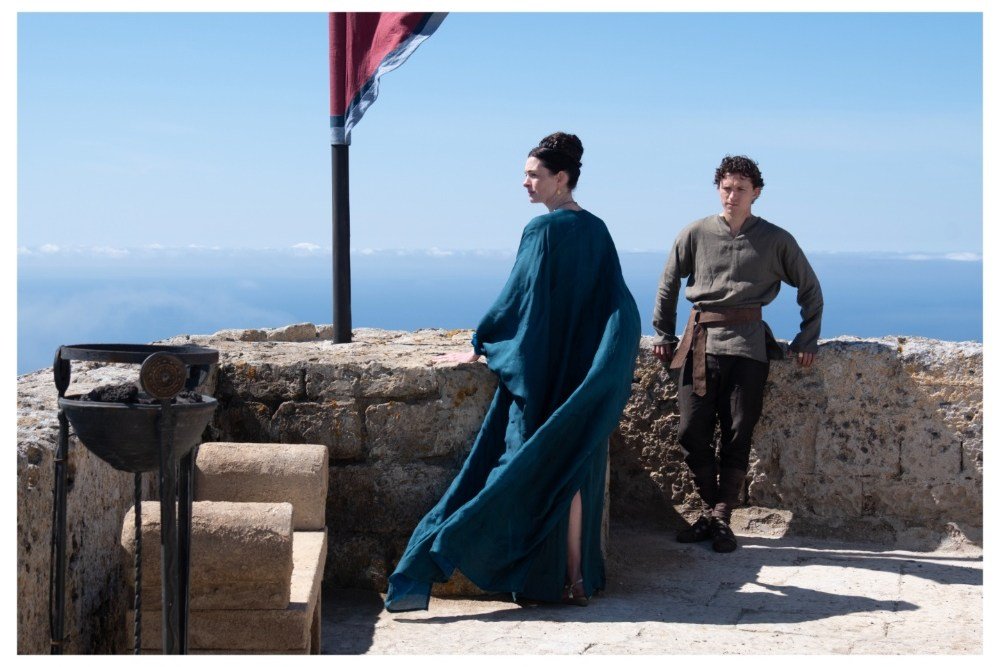
The Greek epic was partly shot on the island of Favignana off the west coast of Sicily — which stood in for Ithaca, home to Penelope, her son Telemachus and its legendary, long-lost king Odysseus. The largest of the three Egadi Islands, Favignana is where Nolan and set designer Ruth De Jong found Ithaca’s perfect palace: the 15th century Castello di Santa Caterina, perched atop Monte Santa Caterina, a tall, craggy hill with a stunning view of the countryside and the Mediterranean Sea.
“It was just the most epic landscape, where you could see the water everywhere you were and the ships [used for filming] could pull up,” De Jong says in the film’s press notes.
View of Castello di Santa Caterina from below Monte Santa Caterina.
LightRocket via Getty Images
It’s also where De Jong and her team built the secluded pig farm and humble hut inhabited by the loyal swineherd Eumaeus (played by John Leguizamo), where Odysseus first goes when he finally comes home, disguised as a beggar to plot against Penelope’s suitors. Nolan also shot in the coves and beaches surrounding Favignana’s coastline and in the nearby tiny islet of Preveto.
After “The Odyssey” trailer dropped in May — two months before the epic hit theaters — Favignana started being heavily promoted and targeted as a tourist destination, including in Airbnb ads offering accommodations well-positioned “to explore the locations that inspired the film’s atmosphere,” as one listing puts it.
A photo from an Airbnb listing in Favignana.
Courtesy Noesis
“I’m expecting a significant increase in international tourism, especially from the U.S.,” Sicilia Film Commission chief Nicola Tarantino tells Variety, noting that this also happened recently with HBO’s “The White Lotus” Season 2, shot in 2022 in the Sicilian resort town of Taormina.
But the “Nolan effect,” as it’s being dubbed by the Italian press, is expected to have a much greater impact.
While, according to estimates cited by newspaper La Repubblica, “White Lotus” has so far resulted in a €138 million ($158 million) tourism revenue windfall for Taormina, “The Odyssey” could generate more than twice that amount in Favignana. There, tourists inspired by the blockbuster are now expected to bring in a roughly $287 million haul over the next three years, according to initial estimates, and more than $500 million in the long run.
Incidentally, Dua Lipa and Callum Turner’s June wedding in Palermo, which went viral worldwide, generated an immediate economic return of $17 million for the Sicilian capital and an estimated roughly $300 million in total revenue stemming from visibility and valuation of the Palermo brand, according to tourism consultancy JFC.
According to scholars, Sicily was a location for Odysseus’ wanderings in the epic composed by Homer around 8th century BCE. And the fact that Nolan chose to shoot in “authentic locations that, in and of themselves, told the story, is hugely important,” Tarantino underlined.
The Sicily Film Commission chief added: “We are very proud that Sicily is a real protagonist of this film,” pointing out that “through Nolan’s vision, these locations are entering the imagination of millions of spectators around the world, giving new value to a unique landscape and cultural heritage.”
Speaking of cultural heritage, an unusually high portion of “The Odyssey” spectators are Italian.
Italy currently ranks as the fourth top grossing territory in the world for “The Odyssey,” having scored a $35.6 million intake in Italian cinemas to date, according to figures from NBCUniversal. That box office result is preceded only by France ($37.9 million), U.K./Ireland ($56 million) and U.S./Canada ($334 million).
“It’s an extraordinary film that is part of our life and our culture, even though we may not realize it. It’s been part of the canon that we grew up with,” Massimo Proietti, general manager, Italy, for Universal Pictures International, told the “Cineguru” podcast.
Now, “The Odyssey” is also turning into a driver for the Italian economy.
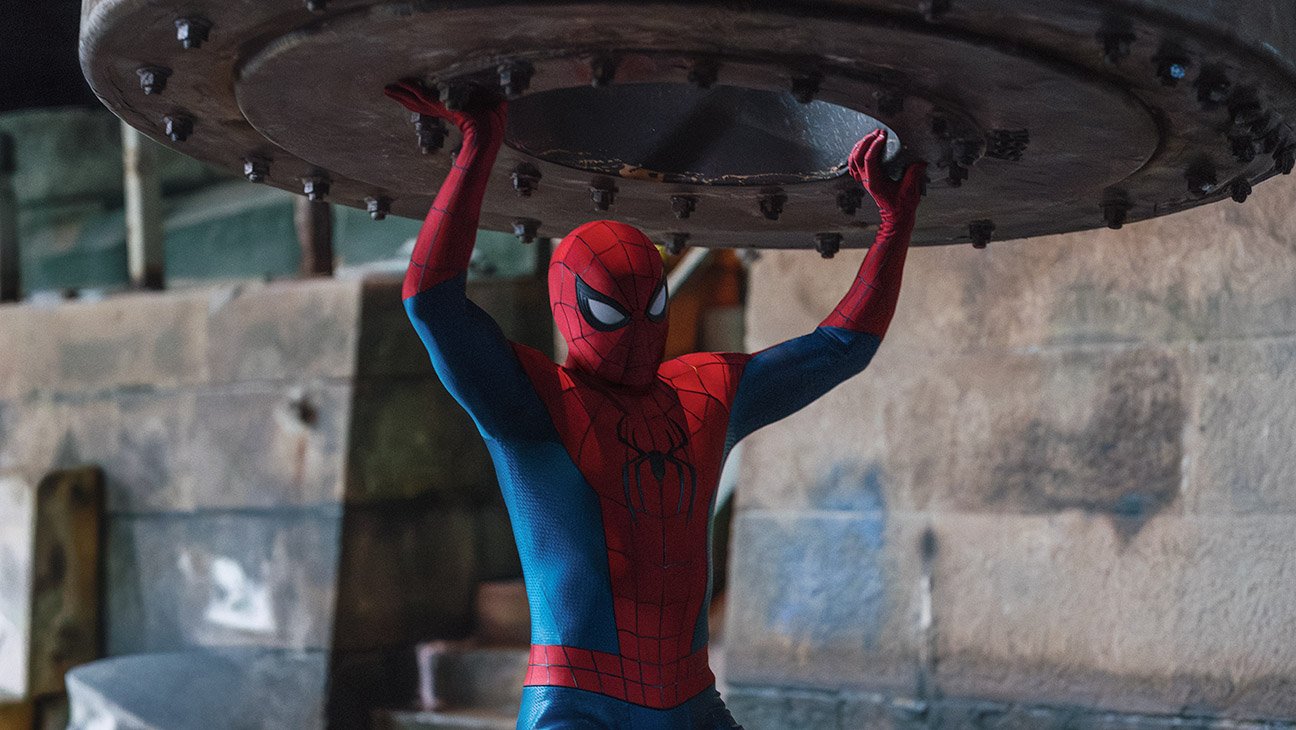
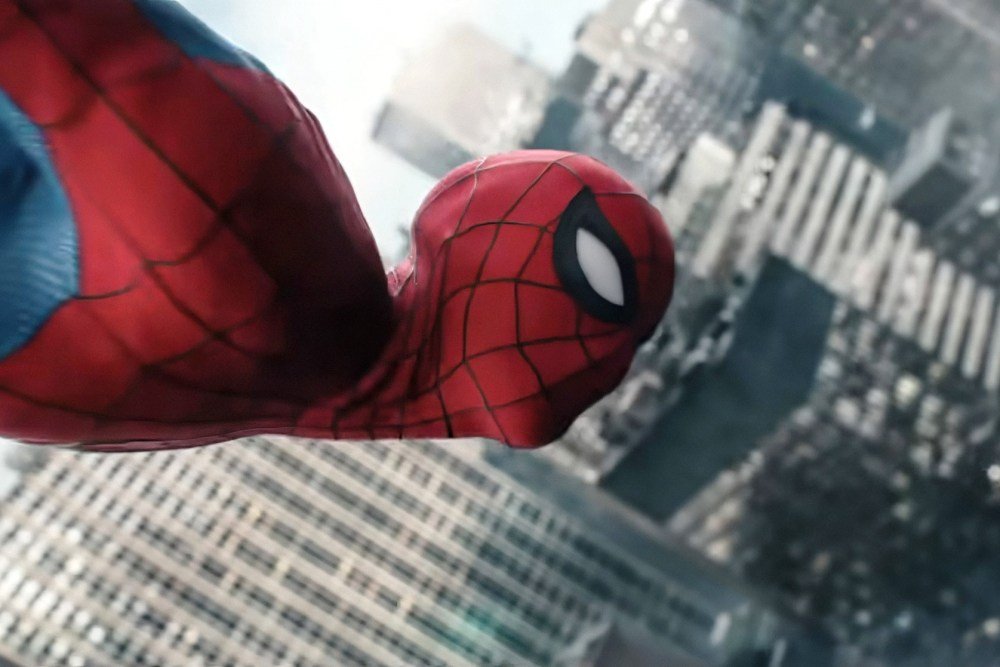
Marvel Studios‘ latest offering caught a staggering $72 million from Thursday previews on 4,300 North American screens. This sets the record for a previews sum, topping the $60 million that Avengers: Endgame took in 2019 before it scored the top marks for its opening weekend with $357.1 million domestically and an unbelievable $1.2 billion globally.
Needless to say, Thursday’s tally gives the web-slinger by far the year’s biggest previews total. Universal’s The Odyssey had previously led the way in 2026 previews with $17.6 million, followed by Toy Story 5 at $17.5 million and Michael with $12.6 million. Both Toy Story 5 and Michael have surpassed the billion-dollar mark globally, while The Odyssey is well on its way to hitting that milestone, having crossed $700 million earlier this week.
The last Spidey movie to hit the big screen was Spider-Man: No Way Home, which collected $50 million in Thursday previews when it opened in December 2021. Its opening weekend notched $260.1 million domestically and $587.2 million worldwide. At the time, No Way Home’s commercial success — culminating with its $1.9 billion global total for No. 8 all-time — appeared to be anomalous, given the surprise appearance of previous Peter Parkers in Tobey Maguire and Andrew Garfield, along with the lack of major theatrical competition coming out of COVID.
This blistering start for Spider-Man: Brand New Day suggests an opening weekend far beyond the $195 million domestic and $465 million global that the studio had been projecting. Even a domestic opening at $195 million would have put the film among the top 10 all-time debuts, and now the only question is how high it might climb on the chart. It carries a $225 million production budget.
Moviegoers have been impressed, as Brand New Day holds a 90 percent approval rating from reviewers on Rotten Tomatoes, along with a 98 percent audience score. In his review for The Hollywood Reporter, chief film critic David Rooney heralded “a never-better Tom Holland.”
Also opening in wide release this weekend is filmmaker Gregg Araki‘s I Want Your Sex, starring Olivia Wilde and Cooper Hoffman. Magnolia Pictures releases the comedic thriller in 700 North American theaters after acquiring the movie in a reported seven-figure deal following its Sundance premiere.
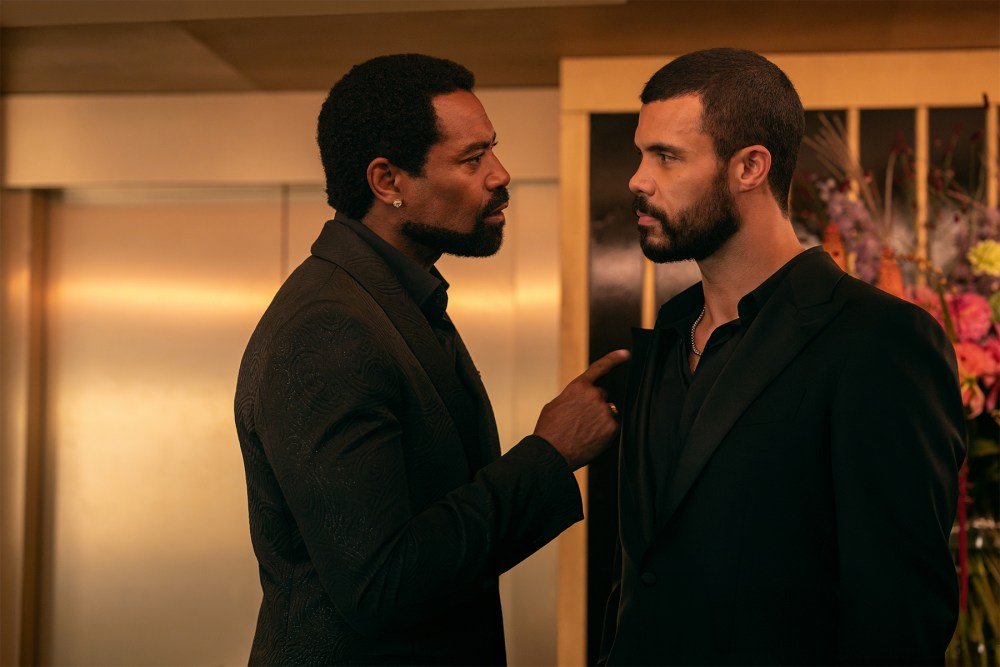
Created by Daniel Fajemisin-Duncan and Marlon Smith and executive produced by Curtis “50 Cent” Jackson, “Fightland,” is a stimulating crime drama that puts audiences directly in the boxing arena. Set in London, “Fightland” follows Maduka “Duke” Kilroy (Howard Charles), a disgraced former Heavyweight Champion who returns to his hometown seeking vengeance on the man who destroyed his life. Dynamic, bloody and engrossing, the show is an engaging account of revenge, fractured family dynamics and unbridled ego.
“Fightland” opens in Las Vegas, eight years ago. Duke is flying high in the final rounds of the match that will make him the heavyweight champion of the world. His brother Calvin (Jurell Carter) and best friend Jay (Tyler Conti) are his cornermen, helping him navigate the ring. Seated front row in the audience are Duke’s promoter Kingsley Marshall (a thrilling Nicholas Pinnock), owner of Marshall Promotions, and his children, Ezekiel “Zeke” Marshall (Charles Babalola) and Cebella “Cece” Marshall (Anita-Joy Uwajeh), who aid their father in his boxing and criminal enterprises. What begins as one of the greatest nights in Duke’s life ends in devastating, violent chaos, shattering everything he worked so hard to attain.
Nearly a decade later, viewers meet Duke again. Hardened and withdrawn, he is not the shining star he once was. Newly released from prison, he returns home to the U.K. determined to take Kingsley down. But when Duke touches down in London, Kingsley is nowhere to be found. Neither his children nor his wife, Joy (Deborah Ayorinde), know where he’s vanished to, or why. Kingsley’s absence doesn’t stop Duke from infiltrating the Marshalls’ business ventures, determined to dismantle everything they hold near and dear and force Kingsley to resurface.
The eight-episode season (critics received six episodes for review) moves swiftly, almost at a dizzying pace. Though “Fightland” is a totally different story, those familiar with Starz’s “Power” Universe will see similarities in the expansive narrative and characters woven in and around this world. Fajemisin-Duncan, Smith and Jackson have mastered the ability to keep audiences engaged. There are gun battles and knife fights (this is the U.K., after all), yet no character goes to waste. A character may initially appear inconsequential, but they often turn out to be integral to the overall plot. As a result, even though the show leans into the gimmicky aspects of the crime genre, stunning reveals and cliffhangers keep viewers drawn in across the episodes.
This is a revenge tale at its core. Yet, “Fightland” thrives because of its characters. Duke is in the driver’s seat, but the show pulses to a new level when the camera is trained on either Cebella or Kingsley. Cool and calculated to a fault, in direct contrast to her hot-headed brother Zeke, Uwajeh brings a mesmerizing, lethal ferocity to Cebella. And she is no one-dimensional figure. As the show continues, it becomes clear there is much more to this woman than her cut-throat decision-making. Pinnock’s Kingsley is also towering. He is absent for nearly half of the season, which creates a void. Still, when he is on screen, he exudes an ominous viciousness, elevating the series beyond the run-of-the-mill tale of a conniving kingpin.
“Fightland” as a whole is certainly entertaining, but Episode 6, “There Is a War Coming,” is a standout. Stuffed full of jaw-dropping revelations, thrilling twists and some sinister chess moves, the episode pulls every loose string from earlier moments in the series together. The result is a sensational tapestry of transgressions and secrets that Duke doesn’t see coming. Pinnock, in particular, is at his best here, showcasing a diabolical cruelty and terrifying manipulation, elevating the story and the show to a different level.
There is no shortage of crime dramas on television networks and streaming platforms. However, in offering viewers a distinct backdrop — Black Londoners with boxing at the core — “Fightland” proves family dynamics, criminality and retribution have endless depths to explore. Though the show isn’t exactly breaking new ground, it succeeds because it’s willing to put a new spin on the genre while offering a crop of new villains and anti-heroes their chance to shine.
“Fightland” debuts July 31 on Starz, with the remaining episodes airing weekly on Fridays.
Tom Holland’s latest Spidey movie has made a record-breaking $72 million in previews, including Wednesday early access screenings, the most of any movie in history. The previous record was held by “Avengers: Endgame,” which made $60 million in Thursday previews on its way to the biggest opening weekend of all time.
To compare the two historic superhero movies, “Avengers: Endgame” set the all-time opening weekend record with $357 million domestically and an eye-popping $1.2 billion globally. Sony and Marvel’s “Brand New Day” is aiming to make between $260 million and $280 million in its opening weekend, which would make it the second biggest launch of all time — behind “Endgame” and above “Spider-Man: No Way Home.” Some estimates even put the “Brand New Day” opening above $300 million, but Sony is playing it safe and offering a more conservative start of $190 million to $195 million.
Only nine movies have opened to more than $200 million, with “Avengers: Endgame” netting over $300 million. The other films are “Spider-Man: No Way Home,” “Avengers: Infinity War,” “Star Wars: The Force Awakens,” “Star Wars: The Last Jedi,” “Deadpool & Wolverine,” “Jurassic World,” “The Avengers” and “Black Panther.”
Internationally, “Spider-Man: Brand New Day” is estimated to add between $275 million to $300 million to its total, but it’s likely the tally will exceed expectations. Holland’s last adventure, which had the crossover star power of past Spidey actors Tobey Maguire and Andrew Garfield, opened to $327 million internationally and $587 million globally, going down as the third-best worldwide start in history.
“Brand New Day” picks up four years after “No Way Home” ended, with the entire world forgetting that Peter Parker is Spider-Man. Holland’s hero is alone, without his girlfriend MJ (Zendaya) or best friend Ned (Jacob Batalon), and faces a mysterious new villain played by Sadie Sink. After newly married couple Holland and Zendaya just appeared together in this month’s blockbuster “The Odyssey,” they’ll likely be breaking records again with “Brand New Day.”
The Toronto Film Festival’s upcoming TIFF: The Market event has added to its keynote speaker lineup, with Obsession director Curry Barker, Gary Oldman and Barbie producer Robbie Brenner set to deliver keynote addresses.
Barker and Obsession star Inde Navarrette will pull back the curtain on the breakout box office success of the Focus Features horror pic as part of the Dialogues section. Obsession also stars Michael Johnstonin a “The Monkey’s Paw”-style tale about a young man who wishes for his friend to fall in love with him — to disastrous consequences.
And the Visionaries program, presented by The Hollywood Reporter, will see Oldman discuss his career, including performing the role of Jackson Lamb in the Apple espionage drama Slow Horses to feature as part of TIFF’s Prime Time program during its 2026 edition. The Visionaries section will also feature Korean auteur Lee Chang-dong in conversation as he brings his latest film, Possible Love, to Toronto.
Rounding out the Dialogues latest additions is Christine Vachon and Pamela Koffler, founders of Killer Films, also in conversation in Toronto. Warner Bros. Motion Pictures Group co-chairs and co-CEOs Mike De Luca and Pam Abdy were earlier announced as the first keynote speakers as Toronto gets set to launch its first official content forum, TIFF: The Market, at its September event.
Additional speakers and program details for the Dialogues series and the Speakers’ Summit will be announced in the coming weeks. TIFF: The Market, a seven-day event to run Sept. 10-16, aims to become an official market in Toronto to go beyond film content to serve as a one-stop shop for buying and selling television, gaming and immersive formats.
The Toronto Film Festival is set to run Sept. 10 to 20.
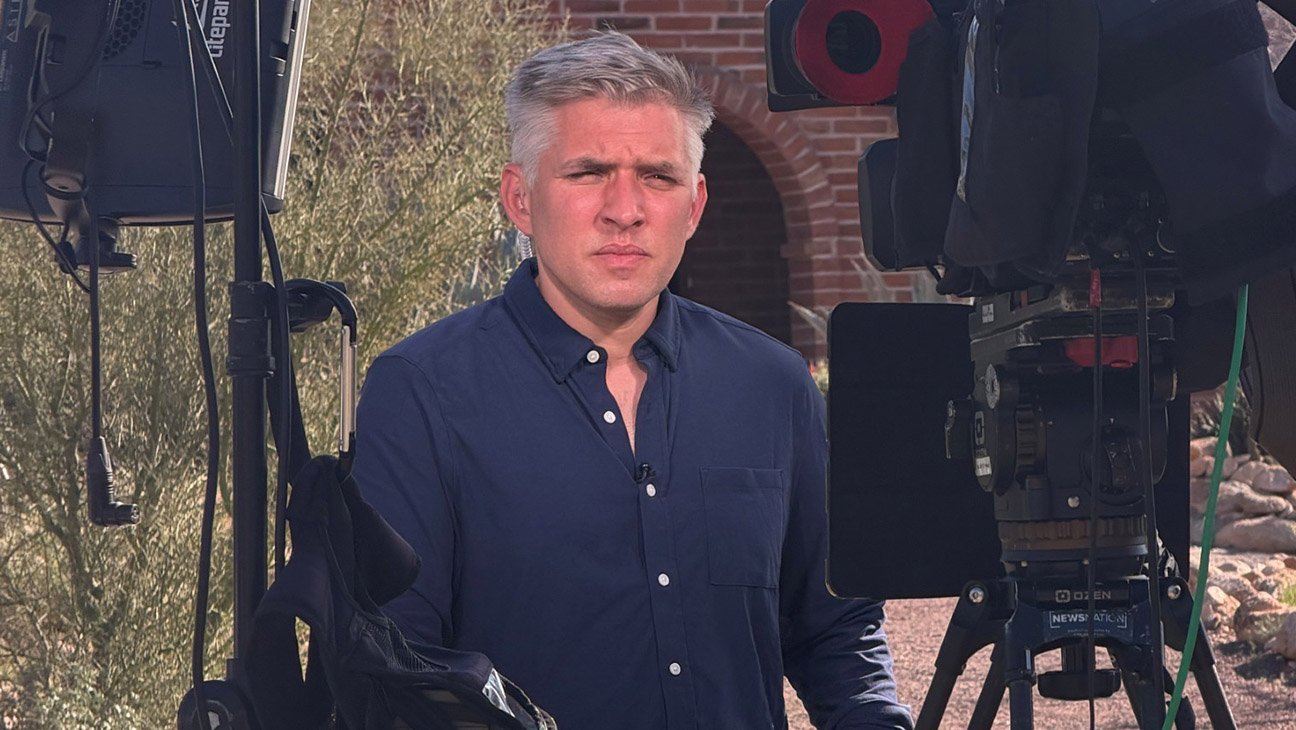
It is a bit morbid to say the Nancy Guthrie kidnapping investigation, which hits the six-month mark(!) on Saturday, has made the NewsNation senior national correspondent a star — but such is the genre Entin traffics in. Also, it’s true. Amid a flurry of in-and-out mainstream media and social media coverage, Entin’s good, old-fashioned (and consistent) shoe leather reporting has stood tall above the conspiracy theories so often amplified by amateur internet sleuths. This was not Entin’s first rodeo; in some ways, the 41-year-old (don’t let the silver hair fool you) has been preparing for it his whole life.
The son of a criminal defense attorney, Entin first rose to national prominence with the Gabby Petito case. His profile grew with the Idaho college murders. Entin’s strategy? Get to the scene and “camp out on the lawn” until someone throws you off. Entin was the right guy with the right job when news of Nancy’s abduction was first reported.
“I remember talking to colleagues and saying, like, ‘There’s something really strange about this,’” Entin told The Hollywood Reporter.
Entin is from Florida, so “Silver Alerts” are nothing new in his world. But this very quickly, very clearly, was not that.
“You’re so used to hearing about them,” he continued. “Someone with Alzheimer’s walks off or something. So that was my first reaction. But within a couple of hours, I remember [Pima County sheriff Chris Nanos spoke], and there was just something off about it. We flew [to Arizona] that day.”
Entin, his cameraman Maurice “Mo” Moran, and a field producer “basically have not left since,” he says. (Entin did take a break to bring his mom on an Alaskan cruise for her 70th birthday, where he says “all the older ladies” wanted to chat with him about the Guthrie case.)
“I kind of just latch onto these things, and when everybody else leaves, we’re always like the last ones,” Entin says.
Entin only packed “three or four” shirts for his initial stay — so it has been a lot of long desert days and laundry. He’s as shocked as you that the investigation has been ongoing for this long with not a single suspect named.
“When the [Nest] camera video came out — oh my God! I thought that was it. It was so clear. You could see his eyes. You could see the clothing so well. You could see his gait. There were all sorts of details about the clothing, of the backpack,” Entin said. “I remember I thought immediately, ‘OK, this is it. In the next 48 hours, everybody get ready, we’re gonna be rushing out the door to some kind of arrest or some kind of bust.’”
That was just nine days after Nancy’s disappearance. There have been almost no leads since.
Savannah Guthrie with mom Nancy Guthrie (left) on NBC’s ‘Today’ in 2019.
Nathan Congleton/NBCU Photo Bank/NBCUniversal via Getty Images via Getty Images
Part of Entin’s work has seen him interviewing “every retired FBI profiler [he] can think of.” Those conversations have informed Entin’s personal present-day theory.
“I think it’s possible that it’s not about money. That that was like a distraction,” he said. “It’s possible it’s a Savannah stalker-type — someone who wanted to get to Savannah Guthrie in an emotional way.”
Tragically, mission accomplished. Savannah Guthrie returned to the Today show in March, but she has not stopped putting out the occasional, law-enforcement-assisted calls for help. It is clear that everyone believes Nancy, who was 84 years old at the time of her abduction and in poor health, is dead. But the job — not Entin’s, not Nanos’, not FBI director Kash Patel’s — is not done.
Entin’s not going anywhere. Entin, his camera operator, and a field producer are hunkered down in a hotel near Nancy’s Tucson home. Really, they’re mostly hunkered in a shared rental car “just staking places out.” (The investigation has taken them are far as Mexico, but right now Entin is splitting time between Tucson and working a separate story in Phoenix.)
The NewsNation crew gets a chance to stretch their legs in a driveway of a Guthrie neighbor whom they’ve befriended — a new ordinance has banned parking on Guthrie’s street — and 30 minutes away at the sheriff’s office. (Entin has been working on getting a new one-on-one interview with Nanos, though the last one was not especially friendly.)
Though one can still walk down Nancy’s street and film (for a bit) in front of her home, that is about the extent of the accessibility. It was the YouTubers who blew it for everyone else.
“They would stream live and stay there constantly — like, literally almost around the clock,” Entin said. “That was just becoming annoying to the neighbors.”
You know what’s even worse than being a pest? Putting non-suspects, like Nancy’s son-in-law Tommaso Cioni, out there as the possible kidnapper, which some people did. (One of them was Ashleigh Banfield, an occasional NewsNation contributor who used to host 10 p.m. To be fair to her, Banfield at least couched all of her reporting on sources, albeit anonymous. There are far-less-responsible amateurs putting information out via social media.)
“It sounds crazy to even have this conversation because, for you and I, it’s like kind of just what we do. But in today’s world, it’s kind of a commodity, but verifying everything that we report… having multiple sources — having good, solid, strong sources,” Entin said. “If you ever do get something wrong, which luckily I haven’t in a while, but it happens, make sure you correct it right away and explain to people what happened and why you made the mistake. So yeah, we try to do that all the time.”
Though the first six months hasn’t gone great, Entin believes the cops and the feds will solve this thing within the next six.
“Any day now something could happen,” he said. “All it takes, and it sounds cheesy, and you always hear this, but all it takes is like that one person to call in something, or them to get some kind of DNA match, which they’re still working on behind the scenes. So I do— I think before the one-year mark, there’ll be some kind of significant progress. That’s just what my gut says.”
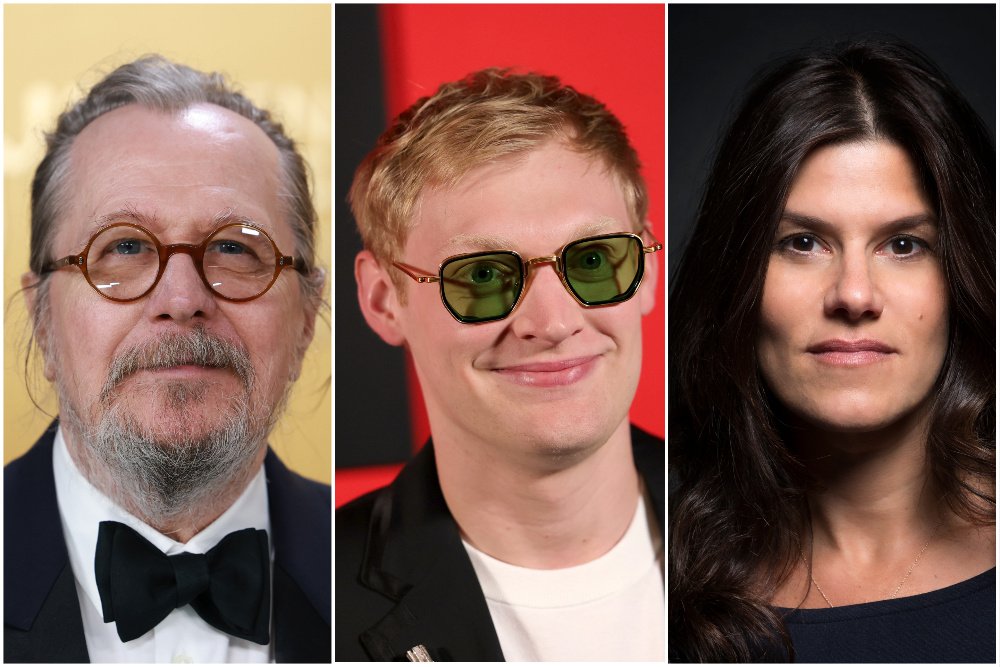
“Slow Horses” star Gary Oldman, “Obsession” director Curry Barker and “Barbie” producer Robbie Brenner are among the lineup of speakers at the Toronto Film Festival’s inaugural market, which runs Sept. 10-16.
Other speakers at the event, known as TIFF: The Market, include “Obsession” star Inde Navarrette, director Lee Chang-dong, and producers Christine Vachon and Pamela Koffler. They will join Pam Abdy and Mike De Luca, the Warner Bros. Motion Picture Group’s co-chairs and CEOs, who were already announced.
Charles Tremblay, head of TIFF: The Market, said, “The high caliber of speakers participating in our first market reflects the industry’s strong support for our vision and the intentional efforts we’re making to build on TIFF’s long-standing reputation as a welcoming space for creativity and commerce to co-exist.”
The speakers will appear as part of the Visionaries and Dialogues programs, as follows:
VISIONARIES PROGRAM Gary Oldman The festival said the talk would be “anchored in Oldman’s creative process” and would “celebrate an unparalleled career filled with varied and unforgettable characters,” including Jackson Lamb in the espionage drama “Slow Horses,” which is premiering its sixth season at the festival.
Robbie Brenner A moderated discussion that highlights the career of the two-time Oscar-nominated producer (“Barbie,” “Dallas Buyers Club”), and president and chief content officer of Mattel Studios, who brings “The Housewife” to this year’s festival.
Lee Chang-dong With his upcoming release, “Possible Love,” as a focal point, the conversation will highlight Lee Chang-dong’s work whose “naturalistic style as a novelist and playwright has influenced his filmmaking process and consistent desire to explore the human experience.” Lee Chang-dong will also be presented with the Ebert Director Tribute Award at this year’s festival.
DIALOGUES Curry Barker, Inde Navarrette This discussion will center around the making of Focus Features’ breakout hit “Obsession,” and its journey to becoming one of the biggest box office successes of the year, after making its debut at TIFF last year.
Christine Vachon, Pamela Koffler The founders of Killer Films will discuss the multi-faceted role of a producer and their approach to working with filmmakers.
SPECIAL EVENT The Town With Matthew Belloni Live @ TIFF Belloni’s popular podcast “The Town,” part of Spotify’s The Ringer podcast network, will be live at TIFF: The Market with special guest Matthew Greenfield, president of Fox Searchlight Pictures.
“Our Summit programming is designed to inspire creators, inform decision makers, and fuel healthy discussions around the ever-evolving screen industries,” said Geoff Macnaughton, VP, market programming and theatrical.
Additional speakers and programming will be announced in the coming weeks.
James Gray and Darren Aronofsky are among the big-name filmmakers getting honored at the 79th edition of the Locarno Film Festival this August. But the 2026 lineup of the Swiss festival also showcases all sorts of newer and emerging filmmakers from around the globe.
Their names may not be widely known yet, but buzz at a festival, such as Locarno, could, of course, open doors and bring support for more projects ahead. Some of these up-and-coming filmmakers, however, create cinematic experiences not under their legal names, but pseudonyms. Cases in point: Filmsaaz and Neozoon, whose works are featured in this year’s Pardi di Domani, or “Leopards of Tomorrow, program.”
The name of the program is a reference to Locarno’s Leopard awards and is designed to provide “a vital space for expressive experimentation and innovative forms of cinematic poetry,” the festival says. In fact, it calls the section “a cornerstone” of its mission “to foster dialogue between generations and traditions and to support the filmmakers who will define the future of cinematic expression.”
Whether or not you are already aware of Neozoon and Filmsaaz and their work, THR has compiled some key info about these filmmakers and asked them about their work as a small tease of what awaits you.
Filmsaaz world-premiered Wolfgang, the minimal-budget feature directorial debut of the Tehran-born audiovisual artist that is a gender-queered acid trip opera, earlier this year at the International Film Festival Rotterdam. In Locarno’s Pardi di Domani – Concorso Corti d’Autore lineup, they will debut a new 21-minute short film called Ãsheghetam.
‘Ãsheghetam’
Courtesy of Locarno Film Festival
The title is “a very intense way to say ‘I love you’,” Filmsaaz explains. “It literally means ‘I am your lover’.” Written, directed and edited by Filmsaaz, whose real name is Saleh Kashefi, the short feels particularly timely. “During a chaotic night at an underground Tehran rave disrupted by the morality police and the sudden outbreak of war, a queer youth chooses to retreat into a bubble of romantic illusion with their partner just to survive the brutal reality outside,” its synopsis reads.
“I started developing the film about a year ago, after the 12-day war between Iran and Israel happened,” Filmsaaz tells THR. “Even though very complex to make, the important thing for me was to finish and release it fast, as it is important for this film to be seen as soon as possible. So we were lucky that Locarno was kind enough to accept the film with a rough cut; the film just [got] finished about two weeks ago.”
Filmsaaz shares this thought on a possible regime change in Iran. “Of course, nothing is permanent, and even the most powerful governments and monarchies have collapsed in history – it’s only a matter of time.” And they add: “These days I feel quite hopeless and cynical in general about the world we live in. The film, in fact, is about giving up hope and dissociating from reality, which is the defense mechanism all of the Iranian youth have learned.”
So, where does the moniker Filmsaaz come from? Well, it mixes the Farsi words for “filmmaker” and “music.” And this new name was a conscious decision. “I wanted to let go of the conventional birth name, which represents a culture, a gender, a religion, a history, and represents a family,” the creative told THR earlier this year. “I wanted to give myself a name that was as simple as possible. I wanted to free myself from all those contexts and layers, and also to somehow redefine how filmmakers are represented.”
Filmsaaz, courtesy of Seraphine Sallin-Mason
After all, the likes of Bono and Prince prove you can make a name for yourself with just one name. “Why are we always known by our first name and last name?” explained Filmsaaz. “Musicians and other kinds of artists can have artistic names. They can have a persona.”
Filmsaaz has made all sorts of shorts in the past, and they have such colorful titles as The Three Letter Word (2017), Kim Kardashian in a Cat’s Eyes (2019), I Was Gonna Kill Myself but Instead I Made This Film (2020), Leaving Here and Her (2021), And How Miserable Is the Home of Evil (2023), A Man Passes by the Soaked Trees (2024) and Overture (2025).
Meanwhile, Locarno 2026‘s Pardi di Domani – Concorso Internazionale lineup includes Together, a 14-minute short that the festival website teases this way: “An exploration of human desires for land ownership and property through archival footage and social media. It contrasts togetherness with rising individualism, questioning whether possession stems from need or a Eurocentric, patriarchal narrative.”
The short comes from the “eco feminist art collective” Neozoon. The two main creatives behind it are Friederike Kersten and Michaela Metzger, who have also worked with other collaborators in the past. The Locarno website notes that Neozoon was founded in 2009 in Berlin and Paris. And it highlights: “Their work is based on the principle of collage and investigates sociological questions of the Anthropocene,” or our epoch in which human activity shapes the planet’s climate and ecosystems. The collective’s website is even more specific, saying the team “examines sociological questions dealing with speciesism in the capitalocene.”
Neozoon, aka Michaela Metzger (left) and Friederike Kersten (right), courtesy of Locarno Film Festival
You may know that “neozoon” is the word for a non-native or invasive species. And the collective’s street art, films and installations have used the concept of non-native species to explore how modern human society interacts with nature and animals. “In their video films, the de-and recontextualization of found footage and social media material is a recurring element,” especially the use of YouTube and TikTok footage, the Locarno website also explains.
And the Locarno site highlights some of their past works. Again, they have titles that will turn heads. Among them are Good Boy – Bad Boy (2011), Unboxing Eden (2013), Shake Shake Shake (2016), Little Lower Than the Angels (2019), Biting the Dust (2021) and Lake of Fire (2022).
If you get a sense that there is an activist vibe and a desire to challenge our thinking behind Neozoon’s work, that is surely by design. For example, Lake of Fire is described as “a film collage that addresses the fear of death and hell and how a dualistic way of seeing and living fuels the climate change-related ‘hell on earth’.”
The inspiration for Together came in the form of a 2021 book by an anthropologist and an archaeologist. “After reading [David] Graeber and [David] Wengrow’s The Dawn of Everything a few years ago, we started looking specifically for film and audio material about ‘the history of mankind,’ the Neozoon duo tells THR. “The same story came up again and again: people settling down, claiming ownership, fencing themselves off, becoming more and more individual, more and more alone – as if that were the great goal of humankind and as if there had never been another option. So we started asking what kind of story that actually is.”
‘Together’
Courtesy of Locarno Film Festival
Neozoon also has a clear take on how Eurocentric, patriarchal narratives play into this urge to own land and fulfill individuals’ desires. “All the material we found comes from the global North, produced by a small number of institutions,” the Neozoon members explain. “What those films narrate as human development is a story of acquisition: settling down, putting up fences, owning. They weren’t inventing it. They were illustrating the science of their time, and that science was done by the same people. European men excavated and European men interpreted, and the past they found looked like the world they already lived in: the hunter at the center, the woman at the fire.”
Things are starting to change, though. “Much of that is being rewritten now – the abilities of early humans, who actually hunted, the role of women completely – not because new evidence appeared, but because other people are doing the interpreting now,” highlights the Neozoon team.
So, does the collective consider itself political and/or activist? “Political, yes. Activist would be claiming more than a short film can do,” the duo tells THR. “What runs through all our films is the question of the exploitative treatment of non-human animals and of nature by (male) human beings. New research suggests that this world was once a different one, in which ecofeminist perspectives, for instance, were the standard rather than the exception. Part of that is observing and acknowledging other species on this planet.”
Such as ants, for example, which play a key role in Together. They are “masters of bridge-building in order to survive as a group,” Neozoon explains. “That seems to us more admirable than the story we have been telling ourselves about our own species.”
The global live music business is chugging along through its busy summer season as strong as ever, defying even what has long been its biggest challenge: ticket-price sensitivity.
Consumers consistently cite cost as the biggest barrier to attending concerts. But the percentage of respondents on Luminate‘s U.S. Music 360 survey who cite ticket prices as a deterrent has trended downward from 59% in the first quarter of 2024 to 53% in the same period two years later. The survey and Luminate’s latest special report, “Live Music 2026,” is the focus of this week’s episode of Variety podcast “Strictly Business.”
“The concert industry really hasn’t seen too much of, if any, decline in demand,” says Luminate analyst Rob Steiner, author of the report. “That is not as much of a concern in the live music business, despite ticket prices going up overall on average.”
Listen to the full podcast:
But the success of the concert business doesn’t come without some areas of struggle, as evidenced by the outbreak of so-called “blue dot fever” earlier this summer. Some well-known artists like Meghan Trainor and Zayn Malik were forced to cancel portions of their tours due to apparent underwhelming audience demand. On the other hand, superstar Bad Bunny is raking it in on the world tour that he launched on the heels of his electrifying Super Bowl Halftime Show appearance in February.
As Steiner sees it, while consumers are proving they are willing to pony up top dollar for live shows, they are also forced to make tough choices about who they can’t afford to see, which impacts performers who aren’t necessarily top-shelf draws.
“Unless you are like a Taylor Swift or a Coldplay or Beyonce, you’re gonna have a lot harder of a time, I think, to get people to your shows because they aren’t able to afford going to every single show they want to go to,” he said. “Unfortunately, that greatly impacts the middle tier of artists that are too big for clubs, but too small for stadiums.”
Steiner touches on a broad variety of issues impacting the concert business, including what separate Gen Z consumers from their older counterparts and the struggle of independent venues to keep up with attendance trends at bigger arenas and stadiums.
“Strictly Business” is Variety’s weekly podcast featuring conversations with industry leaders about the business of media and entertainment. (Please click here to subscribe to our free newsletter.) New episodes debut every Wednesday and can be downloaded at Apple Podcasts, Amazon Music, Spotify, Google Play, SoundCloud and more.
Full details of an under-the-radar and low-budget Irish feature starring Barry Keoghan have been revealed alongside a couple of first look images from the film.
“Lemonade,” written and directed by documentary filmmaker Kim Bartley in her narrative feature debut, was shot earlier this year in Dublin. Set amid Ireland’s care system, the film is described as a story about “first loves, second chances and the power of human connection.”
The film follows teenager Danny, who after making a mistake that could derail his future, unexpectedly reconnects with Josh, a social worker who once tried to help him but whose own mistakes drove them apart. When their paths cross again, Josh becomes both mentor and mirror, guiding Danny on his journey to manhood- through first love and loves lost. Along the way Danny discovers that family is not always the one you are born into, but the one that believes in you when no one else will.
Playing the lead role of Danny is rising Irish star Lewis Brophy, recently seen in acclaimed local feature and Berlinale prizewinner “Christy.” Keoghan, meanwhile, stars as Josh. The principal cast also includes Carla Tous, Eileen Walsh and Imelda May.
Barry Keoghan as Josh in “Lemonade”
Colm Hogan
Producers on “Lemonade” are Rachel Lysaght and Farah Abushwesha, while exec producers include Bartley, Geraldine East, Niamh Fagan, Desmond Byrne, Lorcan Kavanagh, Peg Cafferty, Deepak Sikka, Mark Foligno and Sire Ramos. Keoghan also exec produces for his new producton company Wolfcub, which at this year’s Cannes saw its debut feature “Butterfly Jam” (starring Keoghan) open the Directors’ Fortnight competition.
Speaking to Variety ahead of Cannes, Keoghan discussed “Lemonade,” describing it as having considerable parallels with his own upbringing as a foster child in Dublin. “There are moments in ‘Lemonade’ when I was like, this is too to-the-bone,” he said. “Honestly, it makes me emotional just chatting about it, but it’s beautiful.”
Behind the camera on the feature, Colm Hogan served as cinematographer, Paul Mullen as editor, Tamara Conboy as production designer and Louise Stanton as costume designer. John Brennan, Daniel Bodsworth, Rob Hughes and Mark Langlay-Smith oversaw sound, while the original score was written by Siôn Trefor, Ioana Șelaru and Galia Arad.
“Lemonade” is an Underground Films and Rocliffe Productions co-production, in association with Play House Studios and with the participation of Coimisiún na Meán. It was supported by Screen Ireland.