Category: Entertainment

  • Viva Baz Vegas! Baz Luhrmann on the Burning Love That Went Into ‘EPiC’: ‘We Are Giving Elvis the World Tour He Dreamed Of, Playing on the World’s Biggest Screens’

    Viva Baz Vegas! Baz Luhrmann on the Burning Love That Went Into ‘EPiC’: ‘We Are Giving Elvis the World Tour He Dreamed Of, Playing on the World’s Biggest Screens’

    Baz Luhrmann is about to dive back into his long-aborning Joan of Arc movie. But before he does, he had to return to the Elvis well, and the King’s new and returning subjects are glad he did. “EPiC: Elvis Presley in Concert” opened exclusively in Imax theaters this weekend before going wider to slightly smaller screens on Friday. there was little doubt the audience for Presley is still there, or at least for an Elvis seen through the eyes of one of contemporary cinema’s biggest name-brand directors.

    EPiC: Elvis Presley in Concert” may not make it to the $151 million domestic gross achieved by the director’s 2022 biopic “Elvis” in 2022, but weekend results were strong in the initial 325 Imax theaters that played it this weekend, with a $10,000-per-screen average, the highest of any film on the chart. So Luhrmann can already claim victory in his crusade to immerse contemporary audiences in what he considers to have actually been Presley’s peak period as a performer, when he first started playing Las Vegas at the very end of the ’60s and beginning of the ’70s. Critics as well as the Elvis flock have taken to it: Variety‘s review, by Owen Gleiberman out of its Toronto premiere, called it “one of the most exciting concert films you’ve ever seen.”

    Prior to his personally touring a series of international Imax unveilingss, Variety spoke with Luhrmann over Zoom at his compound in Australia, where he carefully maneuvered the camera to not reveal any “Jehanne d’Arc” spoilers plastered across nearby walls. But there’s nothing to spoil about his contention that, in his mind, Elvis Presley is America… at any size, but preferably at about 45 feet tall, enshrined in full motion in Hollywood Blvd.’s vaunted Chinese Theatre.

    First off, how are you?

    I am extraordinarily absorbed and busy, and it’s just been my nature since childhood. I’m just always making things and doing things. And I’m deeply absorbed in my big movie, “Jehanne d’Arc,” which is driving ahead. But now I take a moment for this completely different work, which is trying to get as many people — fans and new audiences — to see “EPiC” on the biggest screen possible. I have to pause and shout out John O. Redmond, my editor of at least 20 years, who’s the creative partner in this and drove it as much as I did. Our big focus is to make a theatrical cinematic experience, and to make it feel as much as possible like you’re actually in the audience and your experience of Elvis is kind of unfiltered. So part of that is me going out and encouraging people to not wait to stream it, to get out and be part of a theatrical experience. Bluntly, it’s a passion of mine.

    Putting it on Imax screens exclusively for one week before it goes wider is one way of getting that messaging across. And personal appearances you’re making at some Imax screenings.

    Absolutely, man. I’ve been actually in the Gold Coast, where I have my creative facility, then I go to Sydney, which is an outdoor experience with thousands of people, and then that night to the biggest Imax screen in the world, which ia Melbourne. Then I go directly out the back door of that to London, then to L.A. We are doing it at the TCL, the old Mann’s Chinese, in Imax, and I’m thrilled about L.A. because of the memory I have of coming out of COVID.

    Quick side story. After being locked down for two years and working in Australia on “Elvis,” the movie, I was finally able to leave and I came to the U.S., landed, and the first thing we said we would do — with masks on and all of that — was “Let’s go down to see a movie.” I walked into TCL and “Dune” was on, which I didn’t want to see on streaming, in thistheater I dearly love. I saw the opening night of “Titanic” there with Leonardo. So I walk up the stairs, thinking, “Oh God, what’s it gonna be like — will there be anyone here? Iit a good idea to go to the theater?” And as I go up the stairs, I can see the screen., and I just stood there and looked at the vast image and the sound, and I just went, “I’m home. I am home.” So the idea that something the whole team has toiled so passionately on is gonna be seen at the TCL, I think for me, that’ll be a historic moment in my journey.

    This includes footage that was shot for a couple of Elvis concert films in the early ‘70s. I liked those films, but I admit I haven’t seen either of them since I had them on laserdisc in the ‘90s… which is similar to a lot of people’s experience, except maybe minus the laserdisc part. So for those of us without a clear memory of those films, how much of them might be carrying over into what you have in your film, albeit with a big upgrade?

    Yeah, I can tell you. Look, I loved them too. I really did. But the quick narrative is: I’m making “Elvis,” and I hear from John that there might be these lost reels. He said, “Look, if you’re able to get the funds, maybe try and find these reels.” And Ernst Jorgenson, who is probably the premium expert on Elvis in the world, says to me, “Try and get the funds.” And I go, “OK, maybe we can use some of these extra reels,” as supplementary footage of the (Las Vegas) showroom, which I didn’t have in the film at that point. So we got the funds, we go looking, and to our surprise, we find 69 boxes. I didn’t go there, but it’s literally in the salt mines in Kansas City where the negatives of the whole MGM collection are kept so that they don’t rot. When the guys find it, they start sending pictures — boxes everywhere, some are mislabeled, some stuff missing, some not. Wow. So we bring it out and we print some of it. I go, “Look, this is too big a job right now. I’m gonna build the showroom (as a practical set). We’re not gonna use it.”

    But now we have 59 hours of not just “That’s the Way It Is,” but “Elvis on Tour,” and some 8mm. And most tellingly, we have this audio — about 50 minutes of it — of Elvis just talking about his life in a way in which you really never hear him talk. So all the way through making “Elvis,” we said, “We’ve got to do something.” And the Elvis fans got wind of it, and it was a bit like, “Release the video! Release the footage!” Like, “Release the files! — the Elvis Files.” And I contemplated: Do we just kind of do a reboot of “That’s the Way It Is” and “Elvis on Tour”? But then we also had this 8mm that was extraordinary, and we had this audio, and we also got things like the full Hampton Road concert (shot on 1972 at the Hampton Roads Coliseum in Virginia for “Elvis on Tour”). But we only had negatives and we didn’t have the sound.

    I was so lucky to work with Peter Jackson and his remarkable team at his studio, because you know how Peter had done refurbed the Beatles (for the “Get Back” docuseries). And Park Road have a particular gift for (upgrading) 35mm anamorphic. MGM shot in 35mm anamorphic for “That’s the Way It Is.” Then you had 16 and you had 8. I wanted to bring it all up to Imax quality, so that’s expensive. And then we spent two years trying to find the sound. The mag tape wasn’t there, so we had to find audio. Sometimes we had people in car parks in the middle of the night trading bootleg stuff. I mean, the bootleg industry for Elvis is gargantuan.But the concept becomes: Why don’t we do something that never really happens when it comes to either an Elvis doc or even a concert film, and just let Elvis tell his story — sing it and tell it to you — almost like in a dreamscape?

    ‘EPiC: Elvis Presley in Concert’

    Neon

    Now, John O. Redmond will be able tell you what’s in this exactly frame by frame. [For more of that, look to a separate interview with Redmond about making the film, coming up in Variety.] There are some bits that are in “That’s the Way It Is,” and there are some bits that look like they’re in “That’s the Way It Is,” but actually aren’t; it’s a different night, or a different angle. Then there is a significant percentage of the footage which is material that just simply has not been seen. Or maybe some seconds or some minutes have been bootlegged.

    I’ll give you an example. There’s an amazing bit I love where Elvis was just sitting with the guitar and he is doing “Little Sister,” and he segueways into “Get Back.” Now, there’s pirated black-and-white stuff out there, but through Park Road we were able to print it and bring it back into a colorscape. Or, when he sings “How Great Thou Art” in the gospel section, 16mm, that’s just never been released. Some of it you would’ve seen in very scratchy bootleg versions. But even if you’ve seen some of it in “That’s the Way It Is,” you’ve never seen it like this… In our movie you see Sammy Davis Jr. and Cary Grant backstage, and we’ve been able to dig back the sound. You’ve seen that footage occasionally, pirated, but we found the sound of what they actually say.

    And we had the original Elvis voice, we have the band, but sometimes I’m going from him singing on stage to him talking. Or we’ve done these DNAs where we’ve kind of made new Elvis songs. So it’s meant to be a dreamscape, and that distinguishes it from “That’s the Way It Is.” But what I do want to say is, even in Toronto (it premiered at the Toronto International Film Festival), people were geeking out about the quality. The image is three times the size of my building I’m in, if you’re in a big Imax. But what we really did was make it sound and feel like you’re actually there.

    For a lot of us who grew up after the main Elvis era, we go through a journey where we come to worship the Sun Sessions of the ‘60s, and things like the ’68 comeback special, but generally, Elvis later on represents something to us that is spoiled or gone to seed. And so there’s this dichotomy: Black Leather Elvis, cool. White Suit Elvis, not cool. And the average person almost has to put some effort into listening to the boxed sets RCA has put out over the years from the late ‘60s and early ‘70s to discover how much of value is there. There’s still this fallacy we have to get over that Las Vegas was just, in its entirety, not a great period.

    Yeah. A thousand percent. You’re dead right — the black leather, cool, but the white jumpsuit, because it’s associated with his extremely fast decline at such a young, young age… And with Las Vebgas… He does it once and twice, and then he does the 15 cities/15-day tour, great. Then does it again, and then does it again, and then does it again, and then does it again. He doesn’t quite know, like a bird hitting a glass window, why the hell he can’t go and do the world tour that he so desperately wants to do. And then as with all of those artists that are beyond music but are actually cultural icons, all of the corruptive things come, and the body becomes corrupted. So what we remember is the Halloween costume — the cheesy white jumpsuit that people wear at Halloween with the glasses, or the wedding chapel send-up guy or the impersonators.

    And what gets lost is that when he first did that show, everyone expected him to do a nostalgia show, but he was totally on the cutting edge. And the big sound, like taking “Bridge Over Troubled Water” and turning it into this giant gospel power ballad … I spoke to Clive Davis, and he said, “I was there opening night, and you know what? I still to this day have never seen a night like that,” talking about the opening night, the ‘69 show. The white suit doesn’t come till 1970, because that’s when they film it. But he said, “They had to stop him from doing cartwheels.” The energy on stage was just on another level.

    So what has been forgotten is that his absolute pinnacle, his true pinnacle, are those very early Vegas shows. The other thing I think is worth taking into account is that the critics were all flown in by Colonel Parker, and it was a time of the counterculture and the Beatles were breaking up. They came basically with an attitude of like, “This is gonna be a bit of a joke,” and they were utterly blown away by the artistry and the sheer stage power. One thing that I love in the film, for me, personally, is when he is covering the Beatles or doing a Bob Dylan song. Bob Dylan actually said, “The highlight of my career, that’s easy, Elvis recording one of my songs.”

    I mean, even the white jumpsuit, by the way: If you look at Mick Jagger and Freddie Mercury, the jumpsuit becomes this huge rock ‘n’ roll iconic thing. Mick wore it, Freddie wore it. But it comes from Elvis.

    Neon

    One thing not everyone will be aware of before seeing this is how great the TCB Band is, with some of the greatest players in the world, on their game.

    What do you think the privilege is like to be able to work with this stuff? I’ve produced a lot of music; I’ve been working with RCA for, like, 15 years;I’ve had a label with them. But to be able to isolate just Ronnie Tutt’s drumming… the Tuttster’s drumming… He’s surrounded by the best. And when you see Elvis rehearsing, he sings the top lines — like, he sings the orchestrations — and he’ll go, “No, no, no, let’s go up here.” It’s in his head. And I think what gets lost again in the whole white jumpsuit kind of Halloween costume smoke is what an awesome and profoundly gifted musician he was. He’d just pick up and sing anything. By the way, think of the voice. So, he’s starting as a high tenor in the ‘50s. But he’s so obsessed with Mario Lanza and opera singers, and he says in our film, “I listen to everything,” and he’s always working on his voice. By the end of it, he’s truly got operatic tone.

    You have some augmented or drastically remixed tracks in the film and on the soundtrack.

    Working with Jamieson Shaw, we started doing this on “Elvis” the movie, thinking, instead of just having score all the time — although we do have score in this —sometimes we go, “Well, why don’t we just make a new Elvis track?” … We have this small section of Elvis singing “Oh, Happy Day” with the Sweets [the Sweet Inspirations]. We started the movie with him singing that, but he always dreamed of singing with really giant Black gospel choirs, because as you know, he would go when he was a kid and see people like Mahalia Jackson. Elvis was always mixing white and Black gospel. So we have him singing with the Sweets, but then we also recorded choirs in churches in the South, so that we could realize slightly the dream, in this dreamscape, of Elvis singing “Happy Day” with a giant gospel choir. And a big shout-out to our lovely friends in the South who recorded that for us. It’s just going like, well, what if… wouldn’t it be amazing… we’re always asking the question, what would Elvis do?

    If you read reviews of the comeback special, some of the (critics) said, “Once again, Elvis is selling sex, but really can’t sing.” I mean, I work in opera. I’ve worked with the greatest singers in the world. And he’s almost like Orpheus, he’s so gifted. I’ve heard the raw vocals. He never recorded in studios with a drop mic; he always had a handheld. So when he’s on stage, the clarity and the evenness of the vocal, even with a pretty crap sound system, is so great. That’s because he’s basically mixing it himself, by mic technique. Which is a thing you just learn — when you bring it in and out, basically, you’re balancing yourself. I’ve heard raw tracks of all sorts of icons, and he has the greatest mic technique of any vocal artist that ever existed.

    Do you have a favorite performance of his that’s in the film?

    Well, I always avoid doing lists. But, I really lock in every single time when he does “Polk Salad Annie,” because it’s so random. When he goes into the onomatopoeia…I don’t wanna be the world’s biggest name dropper, but a famous, famous, iconic singer of a famous band who I dearly love as a friend said to me, “Oh, the thing about us is, we rehearse, but Elvis never rehearsed moves. It’s a bit like he’s in a spiritual state. He just kind of felt it.” And you see it in “Polk Salad,” him just feeling the music and doing the scat, and then the movement, and then what he does at the end — he’s not so much making it up as he’s going along as just feeling it and passing it on to the audience. And I think that’s why he’s so enigmatic on stage, is that not only does the audience not know what he’s gonna do, the band didn’t know what he was gonna do. Ronnie Tutt said, “We had to glue our eyes to him because we were like, what’s he gonna do next?” That’s why he’s so remarkable as a live performer, because he is literally like a live wire. For a person who’s so uncomfortable off-stage, he’s so comfortable on stage. It’s like you’re in his lounge room, hanging out.

    Speaking of iconic singers of famous bands. Bono has been very interested in Elvis all along, even writing a song on “The Unforgettable Fire” that is essentially his poem about Elvis. Here, you have Bono delivering another poem speaking at the end of the movie. How did that come about?

    If you saw the show the guys did in Vegas in the Sphere, there’s a lot of Elvis in that, you know? Bono is a real friend, and we’ve collaborated way back in “Moulin Rouge,” and he was such a help on this, just as a cheerleader. I was in the South of France where he lives, and he said, “Look, I’ve written a poem about Elvis,” and he read it to me. John O. and I were thinking, how do we end this? You can’t wrap it up with a comment. Is it another song? And John O. put the poem in, and it seemed to be a great way, with a film that is really, I think in itself, a poem, to end poetically. So I rang Bono, and he said, “Absolutely, I’m honored that you would use it.”

    Baz Luhrmann and Austin Butler at Baz Luhrmann’s “EPiC: Elvis Presley in Concert” Los Angeles Premiere held at the TCL Chinese Theatre on February 18, 2026 in Los Angeles, California.

    JC Olivera

    You’ve been on such a mission with Elvis, so you must feel gratified that, with the previous film, the world kind of came along with your vision. There has been a fear among some Elvis fans that his core audience will die off, and even the next generations, over time, so will people still be going to Graceland in 50 or 75 years? You forestalled that, to a degree, or at least gave him a major cultural turbo boost. Even though the feature film will probably always be the biggest thing you do for Elvis, it looks like this is going to be kind of a continuum through your life.

    Look, it wasn’t planned that way. I mean, I was affected by Elvis as a child, but I also went on to other artists as I grew up — Bowie and Michael Jackson and Elton John, for sure, who I love and work with. But Elvis was always there, more than just as a musician or even a pop icon. He was America in so many ways, through the ‘50s, ‘60s and ‘70s — the incredible rebellious energy, the kind of cool family part, but also then almost rising up like a god, and then the descent. And even in his most corrupted bodily state at the end of his life, he sings “Unchained Melody” with probably the best voice he’s ever had.

    I did not intend to become this enmeshed in the curation of Elvis. But to your question, the gratification for me — and it’s a little bit unexpected — was to give Elvis a fair voice. It’s not particularly my vision. Of course, any storytelling is somebody’s storytelling. But when I spent all that time in the South, I found Sam Bell —  very hard to find him, actually; an older gentleman of color who, when Elvis lived in one of the very few white houses in the Black community, told the story about how they grew up. And I really realized at that point the impact of Elvis… and you can’t extract him from the story of America. He’s that central to so many key things.

    I think about what’s going on in America right now. And if you want to know what Elvis might think — and I’m not gonna answer for him; he didn’t often use words — it’s in the song choices. I’m so happy we’ve got “Walk a Mile in My Shoes” or “In the Ghetto” in this show. And people did not want him to record those songs… Now we know through the data that not only have we picked up a truly surprising percentage of young audience that have discovered audience Elvis anew, but even little kids jump up and down in front of the television watching the “Elvis” movie. It’s Elvis’ energy. It moves through time and geography.

    More than gratified, I feel privileged to have been the curator to help it be guided away from what I consider to be an ossification — not malicious or on purpose, but an unfair unfair rusting, an untruthful summation, turning Elvis into a trope. It happens. And I wanted to take the trope, shake off the rust and help guide and reveal Elvis for the artist that he is, but also most importantly, the impact that he had on culture and on America as a whole. And the world. And the world — that’s the thing. We know why he didn’t have the world tour [as explored in the earlier “Elvis” film: Colonel Tom Parker had his sway]. And honestly, we are going to give Elvis the world tour he dreamed of. Because he’s gonna be playing on the biggest screens in the world. In Toronto, people actually came up to me and said, “I couldn’t work out whether I was in the audience or not. It felt like I was at the show.”

    Are you still thinking about doing a stage-musical adaptation of the Elvis story?

    Yeah, actually… I don’t know if it’s announced; I’ll get in trouble. But definitely… Let us put it this way: serious work is being done on the Elvis stage show, based on the movie.

    Good enough. And then to ask briefly about the Joan of Arc film’s progress…

    I’m so deep in it. The reason I’m shooting this corner of my atelier [on a Zoom call] is because the rest of it is just plastered with story structure and script. We have this extraordinarily gifted, gifted, gifted young actor (Isla Johnston) who’s quietly doing all it’s gonna take. Because it’s gonna take time. I always take time. But I am building medieval France! You know, there’s not a lot of medieval France hanging around ready to be photographed. So it’s not quick, but I’m deep in it. As soon as I finish the tour of Elvis, I’m back to “Jehanne d’Arc,” and that will be my next journey. And yet another character who has actually been kind of relegated to a bit of a trope and a little bit forgotten. I like to be involved in those iconic characters from the past who you sort of wish their power and their guidance and their light was around today. Who, in different ways, were the most surprising candidate to have so much of an effect on the world.

  • Tourette’s Debate Sparked at BAFTA Film Awards After Campaigner John Davidson Heard Cursing, Shouting Slurs at Presenters

    Tourette’s Debate Sparked at BAFTA Film Awards After Campaigner John Davidson Heard Cursing, Shouting Slurs at Presenters

    A debate has been sparked among BAFTA Film Awards attendees and online after a Tourette’s campaigner, John Davidson, was heard cursing throughout the show.

    Davidson is the inspiration behind the BAFTA-nominated I Swear. Robert Aramayo, who depicted the Scotsman in Kirk Jones’ widely acclaimed film, nabbed the BAFTA for best actor on Sunday night — over Leonardo DiCaprio, Timothee Chalamet, Ethan Hawke and Michael B. Jordan.

    The film follows a man’s struggle growing up with Tourette’s syndrome, a condition characterized by sudden, involuntary and repetitive movements or sounds. These are known as tics, and they often manifest as outbursts such as loud swearing, which occurred numerous times over the first 20 minutes of the BAFTA ceremony as Davidson shouted, “Boring!” while guests were taken through some of the housekeeping rules before the show began, and “Bullshit!” when people were asked not to curse.

    He also exclaimed, “Shut the fuck up,” while BAFTA chair Sara Putt made her introductory remarks and, later, prompted gasps when he said the n-word as Michael B. Jordan and Delroy Lindo presented the award for best visual effects to Avatar: Fire and Ash.

    In keeping with the celebratory tone of the evening, Cumming interrupted his hosting several times across the show to remind viewers: “You may have noticed some strong language in the background. This can be part of how Tourette’s syndrome shows up for some people as the film explores that experience,” he said, referencing I Swear. “Thanks for your understanding and helping create a respectful space for everyone.”

    After Davidson left the ceremony at London’s Royal Festival Hall around 25 minutes into the proceedings — which The Hollywood Reporter understands was of his own accord, and not the result of being asked to by BAFTA — Cumming said again: “Tourette’s Syndrome is a disability and the tics you’ve heard tonight are involuntary, which means the person who has Tourette’s Syndrome has no control over their language. We apologize if you are offended tonight.”

    Guests were also notified before the awards show began that they might occasionally hear Davidson’s tics. A floor manager welcomed him, saying: “John has Tourette’s Syndrome, so please be aware you might hear some involuntary noises or movements during the ceremony.”

    BAFTA referred THR to the BBC when asked for a statement about the incident, though the broadcaster, airing the show on a two-hour delay across the U.K., did not immediately respond.

    But the incident has prompted discussion among the film community in attendance at the BAFTA Film Awards, with many Brits maintaining that Tourette’s is a deeply misunderstood condition. Others, including those from across the pond, were seemingly less tolerant of Davidson’s outbursts.

    Aramayo, who also won the BAFTA Rising Star Award on Sunday, told the crowd while accepting the prize: “John Davidson is the most remarkable man I ever met. He’s so forthcoming with education and he believes there should be still so much more we need to learn about Tourette’s.”

    “For people living with Tourette’s, it’s us around them who help them define what their experience is,” Aramayo said. “So, to quote the film, they need support and understanding.”

    The discussion moved online, where some users commented that Tourette’s is “debilitating” and “really, really awful.”

  • Netflix Sets Korean Rom-Com ‘Messily Ever After’ Starring Kim Min-ha and Noh Sang-hyun

    Netflix Sets Korean Rom-Com ‘Messily Ever After’ Starring Kim Min-ha and Noh Sang-hyun

    Netflix on Monday revealed a buzzy addition to its already expansive Korean content slate: rom-com feature Messily Ever After, starring Kim Min-ha and Noh Sang-hyun.

    Production on the film is now underway in Seoul, with the project reuniting the two actors after their shared appearance in Apple TV+’s Pachinko, this time placing them at the center of a contemporary relationship comedy that tracks a couple over the ups and downs of a romantic-but-rocky decade together.

    The story follows Su-hyun (Kim) and Hyun-tae (Noh), college sweethearts whose long-term romance oscillates between devotion and exasperation as the years accumulate. Rather than dwelling in the early intoxication of love, the narrative leans into the more complicated terrain that follows: “Messily Ever After (working title) explores what it really means to stay together after the honeymoon phase has long ended — capturing the messy mix of loyalty, irritation, desire and doubt that comes with truly knowing someone,” Netflix’s official summary says.

    Kim plays a perfectionist museum curator whose professional composure falters when jealousy and emotional uncertainty intrude, while Noh portrays an installation artist fiercely committed to his creative identity and resistant to compromise.

    The film marks the feature directing debut of emerging filmmaker Seo Jung-min. Producers Bombaram Film — the Seoul-based banner behind the youth romance Love Untangled and the socially resonant hit Kim Ji-young, Born 1982 — are backing the project, which Netflix positions as part of its ongoing effort to elevate new voices in Korean cinema.

    The project adds to Netflix’s characteristically ambitious Korean slate for 2026. As previously announced, the streamer is rolling out a 33-title lineup spanning scripted series, feature films and unscripted formats, ranging from star-driven romantic comedies like Boyfriend on Demand (led by Blackpink’s Jisoo) to large-scale genre projects such as the superhero drama The Wonderfools starring Park Eun-bin and Cha Eun-woo, and prestige fare including Lee Chang-dong’s long-awaited latest feature Possible Love. The slate also leans heavily on returning franchises — with new seasons of hits like Singles Inferno, Culinary Class Wars and The Devil’s Plan — alongside big-name scripted projects such as Tantara, pairing Song Hye-kyo and Gong Yoo.

    A release date for Messily Ever After has not yet been announced.

  • ‘Night Agent’ Boss Shawn Ryan Explains Season 3 Deaths, Shares Who May Return and His Hopes for Netflix Show’s Future After Finale

    [This story contains major spoilers from the season three finale of The Night Agent.]

    Peter Sutherland (Gabriel Basso) may now be taking a leave of absence from being the titular Night Agent. But naturally, he will not be able to resist being away from the action for very long.

    In the third season of Netflix’s hit spy action thriller, after making a deal with the devil, intelligence broker Jacob Monroe (Louis Herthum), to thwart a terrorist attack on the UN at the end of season two, Peter found himself investigating a wider conspiracy involving the Financial Crimes Enforcement Network (FinCEN), a terrorist organization — and even the White House.

    While grappling with the guilt of his past choices, Peter hunts down Jay Batra (Suraj Sharma), a junior FinCEN analyst accused of murdering his supervisor and stealing classified intelligence. After tracking Batra down in Istanbul, Peter discovers that the analyst is actually a whistleblower who uncovered a massive financial conspiracy involving Suspicious Activity Reports. These documents revealed that American shell companies, managed by Monroe, were used to launder money for the LFS terrorist organization responsible for downing a civilian airliner. As Peter shifts into a more protective role, he teams up with financial journalist Isabel De Leon (Genesis Rodriguez) — who is later revealed to be Monroe’s estranged daughter, born from a tragic CIA operation in the 1990s.

    The conspiracy reaches the highest levels of government, specifically involving President Richard Hagan (Ward Horton) and First Lady Jenny Hagan (Jennifer Morrison). To secure her husband’s election, the future first lady struck a deal with Monroe to exchange laundered campaign funds for classified access to presidential daily briefs. When a White House butler involved in the scheme attempted to back out, he was killed in a confrontation orchestrated by Jenny to look like an assassination attempt. This web of corruption is finally exposed through Monroe’s secret hard drive, which was encrypted with a personal code known only to Isabel. Although the Hagans ultimately use a presidential pardon to escape legal consequences, their crimes are broadcast to the world by a corrupt banker, Freya Myers (Michaela Watkins).

    In the aftermath of the scandal, Peter chooses to temporarily step away from Night Action to find the personal balance he has lacked since the series began. But at the end of the finale, FBI Deputy Director Aiden Mosley (Albert Jones) informs Peter that a potential new partner has already been selected for his next mission, leaving the door open for Peter to stage a return sooner rather than later.

    In the wide-ranging chat below, creator and showrunner Shawn Ryan answers all of THR’s burning questions after the season three finale. He explains his controversial decision to not bring back Luciane Buchanan’s Rose Larkin, why he never saw Peter’s new connection with Isabel as anything more than platonic, how he decided which characters would live and which ones would die, and whether he thinks this show can survive without his male lead Basso: “There’s a lot of evolution for Peter that I’d want to explore before exploring the world without him.”

    ***

    When we spoke last year, you mentioned that Peter found season one “logistically difficult but morally easy.” For season two, you wanted to maintain those same logistical challenges while making things more “morally difficult.” What intrigued you most about how Peter is continuing to wrestle with the morality of being a Night Agent in season three?

    One of the things we discussed was the challenge of growing into leadership. The idea that he’s growing into the responsibility of that job; that he’s understanding the drawbacks and sacrifices that come with it. He’s still having difficulty balancing all the various aspects of his life, and that’s something in the writers room of season four that we’re currently working on and talking about. But as it relates to season three, he’s a little less naïve.

    If you look at Breaking Bad, very famously, they talked about [Walter White] going from science teacher to Scarface over the arc of that show. [With Night Agent] we talk about a guy who begins the show answering the phone in the basement who gains more and more responsibility and has to live with the consequences of his decisions more and more. Season three in our overall series arc is about him embracing being a Night Agent, embracing those responsibilities, and still understanding that it’s not 100 percent a fulfilling life. There are aspects he’d like to figure out, but those things are for future seasons.

    You also told me after season two that the last thing you would want to do is “manufacture crisis after crisis season after season” to keep Peter and Rose together. Peter talks about her in passing this season, but he almost has to shut off that part of his brain to avoid going down that road, because he knows that reaching out to her could put her in danger. Why did you decide against bringing Rose back this season? Was it purely a creative choice? Did it come down to scheduling?

    No, listen, it wasn’t scheduling. It wasn’t that we were unhappy with Luciane in any way. She was wonderful. As we told that story in season two, it felt like an ending in that moment. I still have hopes and intentions that Rose isn’t done on our show. But we started off in the writers room with the idea of, “How would a Peter/Rose-centric season three work?” [We were] hitting some roadblocks and not getting to where we wanted to be. We asked, “Well, how would a Peter-centric season three without Rose work?” And ultimately, that was the most creative, satisfying thing.

    Now, that leads to not my favorite [kinds of] conversations. I called up Luciane, and I explained [the situation]. She was really wonderful about it, and had a sense from how season two ended that this was a possibility. She has a very successful show on Apple [called Chief of War] that I know she’s really proud of. I was clear to her on the phone call: “Listen, we’re actually intending to bring Chelsea [the Secret Service Agent played by Fola Evans-Akingbola] back in season three after she wasn’t in season two, other than one cameo scene near the end. This is the kind of show where people can drop out and come back in, and I really want to hold open the possibility that Rose will return in the right situation, and I hope you, Luciane, will be open to it.” She seemed to be [interested]. She can speak for herself, but we never want The Night Agent to become formulaic. We never want it to become repetitive.

    One of the things I like so much about the show is that each new season is kind of a new world — has a lot of new characters, new storylines. With our flashbacks, you can always go back to moments with characters. So it was a creative decision I made that the studio and network supported, based on what we thought was creatively best for the show. We know there will be people who were very invested in Rose who will be disappointed. I understand that. I don’t blame them for feeling that way, but hopefully, when people see the season, they’ll understand what we did. I’m really proud of the third season, and I think the creative team did a fabulous job.

    Genesis Rodriguez in The Night Agent season three.

    Christopher Saunders/Netflix

    You introduced Genesis Rodriguez as Isabel de Leon, a financial journalist who, as viewers learn midway through the season, is the estranged daughter of Jacob Monroe. When did you come up with that twist in the writers room, and how did you think about building up to that twist when you were creating the character?

    I like to give a lot of credit to the writers room because so many of the great ideas on the show emanate from them and are presented to me. I will egotistically say for one second that what you’re talking about was my idea before the season began. (Laughs.) When I was thinking about season three and how we were going to wrap up the broker storyline, I thought about [Peter] meeting a woman who we didn’t know right away was [Monroe’s] daughter.

    I didn’t have all the specifics, and in fact, those things were developed in collaboration with all the writers, [like] the journalist angle. I wanted to explore the financial world. I came into the season with a thesis statement that we put in the mouth of Isabel at one point — that all the horrible things that happened in the world couldn’t really happen without the cooperation and work of these financial institutions that hid their money and facilitated their illegal activities.

    I was interested in humanizing Jacob Monroe. I think one of the things our show has done well over all three seasons is, we don’t have villains play pure villains. We see them as human beings. We understand their motivations; what drives them. And to give the writers room credit, they’re the ones who came up with and pitched me the idea of doing this extended flashback in episode seven in Mexico City, where we see the origin stories of the broker, how he came to meet Isabel’s mother, how the various levels of betrayal led him to his life now and to their estrangement.

    There were some viewers who cynically believed that Isabel was replacing Rose as Peter’s love interest, but Peter and Isabel never crossed that line. Did you ever consider making them more than just friends and allies?

    While the character of Rose isn’t in season three, the shadow of Rose hangs over a lot of season three. One of the things I fought for in the writers room was the idea that, as far as Peter was concerned, Rose wasn’t just disposable. It wasn’t just like, “Oh, well, we had a thing in those couple seasons, but now I’ll move on.” We wanted him to carry the weight of the sadness of that [relationship ending]. One of my favorite scenes in the season is in episode four, where he and Isabel are playing pool and asking each other questions, and he comes cleaner than he otherwise might [to someone else] about the weight of losing Rose and having to give her up.

    Everyone loves a little romance, and the Peter/Rose romance was very successful, but we never viewed Isabel as a “replacement” for Rose. I think that would cheapen what Rose meant to Peter. Not that he can’t ever find love or romance again, but I just felt it was emotionally true to have him still carrying the weight of that lost relationship. So I don’t know if it was ever pitched or discussed, but if it was, we never seriously considered a romance. The things that they were involved in were too serious. The whole reason why [Peter and Rose] weren’t together was that it was too dangerous in his job. And to have another woman who’s romantically involved in danger, at least in season three, didn’t feel right to us.

    Luciane Buchanan’s Rose Larkin with Basso in season two.

    Christopher Saunders/Netflix

    This season, compared to past seasons, doesn’t have as high of a dead body count, but there are still two pretty shocking deaths: Peter’s mentor-slash-handler Catherine (Amanda Warren) dying in an explosion staged by Monroe in episode two, and Peter’s partner Adam (David Lyons), who was previously Hagan’s commanding officer in the military, secretly shooting Monroe in the head in episode eight. Can you walk me through the thought process behind which characters you chose to kill off this season? Did you have any others that you considered killing off in the room?

    We always discuss killing off everyone! You never want the deaths to feel like wallpaper. You never want them to feel gratuitous. You think about ways that you can earn them. Early on, we talked about Peter growing into being a leader. One of the ways that can happen is when you lose your leader, and you have to step up.

    So it was out of those conversations that we talked about Catherine’s death — and all credit to Amanda Warren who played her so well. She didn’t have to come and do those two episodes. We had a contract [option] to either employ her for all of season three or not at all, so it had to be a negotiation for her to come back and just do the two [episodes]. She was truly lovely, and I explained to her what that death would mean for the show, what it would mean for Peter, and she really embraced it and was wonderful.

    The Jacob Monroe death was something that the room pitched to me that I think is a great twist for Adam, who starts off as an ally for Peter. He’s someone who grew up believing that, as he said, “Generals question so that we don’t have to,” and [Adam] starts finding himself in the gravitational pole of a corrupt presidential administration by which he begins to be corrupted. I liked that there was some reticence and hesitation from him about doing what he did [by killing Monroe] and almost a little instant regret, because there are a lot of good aspects of Adam.

    So both those deaths came out of [the idea that] you have a political thriller, it’s a dangerous world. There are some characters that aren’t going to survive. That’s just one of the signatures of this genre. You always want it to be surprising but inevitable, and I think the game that Jacob Monroe was playing inevitably led to his demise. I don’t think he was destined to die by cancer. I would say that you smartly put your finger on something — we did lean a little bit more into tension in season three. A little less violence, and a little more tension, was an intentional calibration for this particular season that we were interested in.

    Peter gets dangerously close to dying multiple times this season — most notably at the hands of his Night Action partner Adam, who is actually an old friend of the corrupt POTUS. Why do you think Adam ultimately lets Peter go after initially shooting him in the finale?

    Despite his actions in the last three episodes, I think Adam is ultimately a decent person, and what he was ordered to do, with increasingly less and less justification, reached the point where [he thought to himself] “Am I the person that’s going to sit here and shoot an unarmed man who is just trying to do the right thing?” That was the line that Adam couldn’t cross. He was led to believe erroneously that it was Peter who was off the rails, and then when he gets confirmation that Freya was helping the president and the first lady launder their money, [he realizes] that this isn’t about national security anymore. This is about protecting their own interests, not protecting the nation. That was the last straw for Adam.

    Again, I think our villains are multifaceted. They’re not just there to do the evil thing. I think Adam had a lot of points in the season — saving Peter at the end of episode four, working with Peter in episodes five and six — that revealed him to be someone that wanted to be on the forces of good. He thought for a while he was on the forces of good, even if he was asked to be doing tough and violent things. I think when confronted finally with that evidence, that was the line for him that said, “I can’t just shoot and kill this man, in this instance.”

    You gave almost all of the surviving characters some kind of coda, but what exactly happens to Adam after he lets Peter go? Where is he? Is he coming back next season?

    [Pauses.] The reason why I pause sometimes when I’m answering your questions is that I’m living in this world where I’m getting asked questions about season three, but I’ve been spending the last few months working on season four. I will tell you that the answers to your questions exist in season four, as it relates to Adam.

    Stephen Moyer in The Night Agent season three.

    Christopher Saunders/Netflix

    Peter and Isabel’s investigation into Monroe puts them on a direct collision course with a hit man (played by Stephen Moyer) with a young child, who he seems to have kidnapped on one of his other ops and has now raised on his own. Does this unnamed assassin have a name, or is he just called The Father?

    No, we always referred to him as The Father. He gave a fake name to Freya in that bar at the end. That’s not his name. The son tells Peter his name is Orion, but we know that’s a code name he was given. One of the things that I was thinking about, and the other writers were thinking about, is how often kids and parents don’t really use each other’s names in real life. (Laughs.) We just liked the mystery of that.

    That’s one of my favorite storylines that we’ve done in all three seasons of the show. I thought Stephen Moyer was so fantastic. Callum Vinson, who played the son, was the real discovery for us all. Credit to the casting department at Sony. He had been in Long Bright River, [another] show of [the studio, Sony Pictures Television], and they recommended that we take a look at him for this role, and he was so, so good. The two of them were so good together. I loved writing that. I loved working on that in the editing room — seeing the two of them work together, and then seeing that all come together in episode eight in the interrogation scenes between the father and Peter, and then seeing the son appear there later in the episode.

    The Father has a crisis of conscience as a hit man over the course of the season. And as soon as he sees Peter using “Orion” as a bargaining chip for his own survival in that episode, The Father realizes that he is not cut out for this lifestyle anymore. The last time we see The Father onscreen, he is impersonating a British man who flirts with an unsuspecting Freya, who now goes by Nina, at a restaurant on the boardwalk. Are we meant to interpret the fact that he pulled out a vial of clear liquid from his pocket as proof that he poisoned Freya and presumably killed her?

    Yeah, I think we’re meant to interpret that he poisoned her the same way that he poisoned [Isabel’s newspaper boss] Mike in episode two. She threatened his family. There’s one thing about going away, but there’s another about leaving that threat hanging over you and your son. So I think that was him closing the last loophole before walking off — literally — into the sunset on the boardwalk with his son.

    We’ve spoken quite a bit about what next season will look like, but The Night Agent hasn’t officially been renewed yet. Where exactly are you in terms of renewal talks with Netflix about season four?

    We’re not officially picked up yet, but we’ve been actively working on the writers room. So I just want to be super clear that there’s no news to report on that front. We are just focused on the creative, and when the time comes for Netflix to pick up, they’ll let you guys know.

    But what I will say is that [Netflix executives] really do care a lot about the viewer experience, and they understand that fans don’t always like it when there’s too much time between seasons. So I think one thing on their more successful shows is that they’ll allow the writing process to get going a little bit so that when they do pick up a show officially, we can get into production quicker. We can finish the episodes and we can release them to the public with a more regular cadence than we otherwise might be able to if we were waiting for an official pickup to happen before the writing process [begins].

    How many seasons of The Night Agent would you ideally want to make, and do you think this show could go on without Peter — or Gabriel — at the center of the action?

    I haven’t really considered that a lot. There’s a lot of evolution for Peter that I’d want to explore before exploring the world without him. What you’re talking about is partly creative, but it’s also partly business. I certainly have business partners in Sony and Netflix, so I’d be hesitant to go on the record about what those plans are. I do think, as you’re talking creatively about season four, it’s natural to talk about: Where do we think we’re going in the long-term? You hope you’re the kind of show that would be granted a clear and final season by Netflix so that you could wrap it up. We just saw Stranger Things get a chance to wrap up their storyline after a number of successful years. We saw The Crown get a chance to wrap things up. My hope would be that our show, with the success that we’ve had, would get a chance to do that.

    I imagine if and when the time comes, there’ll be a conversation that involves creative and financials. These shows always get more expensive the longer they go on, but because of the nature of the ever-revolving and changing worlds, I do think the show has the potential for longevity. That doesn’t mean it’s Law & Order: SVU 25 seasons and counting, but I think there are more stories to tell — and I hope we’ll get the chance to tell them.

    ***

    The first three seasons of The Night Agent are now streaming on Netflix.

  • BAFTAs Make the Oscars Race Messy, From Timothée Chalamet’s Shocking Loss to Sean Penn and Wunmi Mosaku Proving Supporting Races Are Anyone’s Game

    BAFTAs Make the Oscars Race Messy, From Timothée Chalamet’s Shocking Loss to Sean Penn and Wunmi Mosaku Proving Supporting Races Are Anyone’s Game

    Fractured, unpredictable and thrilling chaos are defining this awards season after a wild night at the 79th BAFTA Awards, with the race now barreling into the final stretch before Oscar voting opens Thursday, Feb. 26.

    Paul Thomas Anderson’s “One Battle After Another” was the night’s dominant force, winning six BAFTAs: best film, director, adapted screenplay, supporting actor (Sean Penn), cinematography and editing.

    For Oscar watchers, the technical trophies matter as much as the headline prizes. Winning for the artisans brings crucial momentum. “One Battle After Another” leaves BAFTA positioned as a below-the-line viability and still a clear best picture frontrunner. But if anyone hoped for a night of tidy answers, BAFTA offered the opposite with a loud reshuffle that may have clarified one thing and destabilized nearly everything else.

    Enter “Sinners” from Ryan Coogler. His film won three BAFTAs — original screenplay, supporting actress for Wunmi Mosaku and original score — with Coogler’s screenplay win carrying historic weight as the first Black winner in BAFTA’s original screenplay category. The moment land became a milestone, the campaign accelerated.

    The win also sharpens the Oscar math.

    Only one Black screenwriter has ever won for original screenplay at the Oscars (Jordan Peele for “Get Out,” 2017). Coogler’s BAFTA trophy strengthens his Oscar prospects against a crowded field. However, and just as important, “Sinners” showed more above-the-line vitality where it needed oxygen most, with Mosaku’s supporting actress win adding real heat to the campaign.

    So if you’re keeping score — “One Battle After Another” needed to prove below-the-line love (which it did), and “Sinners” needed to prove more above-the-line love (which it did). Obviously, “One Battle After Another” taking best film and director, after sweeping major critics awards and the DGA leaves many believing it’s over. But if you do your Oscar homework, you know that’s never the case. We have the PGA Awards and the Actor Awards (formerly SAG Awards) happening this upcoming week, all amid final Oscar voting. There’s room for more shifts to happen in the coming days.

    Courtesy Everett Collection

    Another significant upset came later in the BAFTA evening when Timothée Chalamet lost the leading actor award to Robert Aramayo for his performance in Kirk Jones’ Tourette’s drama “I Swear.” Aramayo also won the EE Rising Star Award, the only honor voted on by the public. Interestingly, Aramayo and “I Swear” have different kinds of momentum, which are forward-looking for next year’s Oscars. The film will be eligible for the 99th Oscars ceremony, with a U.S. release later this year from Sony Pictures Classics.

    Nonetheless, Chalamet arrived as the presumed frontrunner after major victories at CCAs and Globes for Josh Safdie’s sports dramedy. At this stage in the season, a loss like this cannot be read as a mere statistical blip. Rather, it can change the story voters tell themselves when they fill out their ballots. Whether it proves ultimately fatal to the campaign is unknowable. Still, it is absolutely relevant, particularly with final voting around the corner.

    But the damage didn’t stop there. “Marty Supreme” left with an especially brutal distinction, going 0 for 11, tying the record for most losses in a single night.

    The SAG Award may now serve as the decisive indicator. Variety has projected for weeks that Ethan Hawke could be the victor in the category for his work as Lorenz Hart in “Blue Moon.” Whoever claims that prize will likely emerge as your Oscar winner. And worth noting: no performer has ever won back-to-back SAG Awards in the same category. Chalamet, who took home the prize last year for “A Complete Unknown,” would make history if he reversed course and won.

    Jessie Buckley won leading actress for “Hamnet,” which also won for outstanding British film. The result was broadly anticipated, and the reason is simple, as Buckley’s campaign has looked like the closest thing to a straight line in a season full of detours.

    The real circus, though, is the supporting acting races. If BAFTA proved anything, it’s that both are wide open, and not in the polite, pundit-friendly way, but in the genuine chaotic manner. We’ve had three different winners — for both supporting acting races — at the Globes, CCA, and BAFTAs so far.

    The closest occurrence of something like this happening was in 2004. Globes went to Clive Owen and Natalie Portman for “Closer” (who both missed SAG noms). CCA went to the “Sideways” duo, Thomas Haden Church and Virginia Madsen, and SAG went to eventual Oscar winner Morgan Freeman from “Million Dollar Baby” and Cate Blanchett from “The Aviator.” That specific year, the BAFTA Awards were the final say on the season, with Owen and Blanchett taking their prizes. In the end, it was SAG that was ultimately correct with Freeman from the eventual best picture winner, and Blanchett from the presumed “runner-up.”

    Even though he’s a two-time Oscar winner for “Mystic River” (2003) and “Milk” (2008), Penn won his first-ever BAFTA for supporting actor for his villainous turn as Col. Lockjaw in “One Battle After Another,” adding his name to the already fractured leaderboard. Jacob Elordi holds the Critics Choice prize for “Frankenstein.” Stellan Skarsgård took the Golden Globe for “Sentimental Value.” Now Penn has a BAFTA. With the Actor Award still pending, this race is starting to resemble a five-sided coin flip. If Benicio del Toro takes the SAG prize, we’ll have four different winners at every televised show, which hasn’t happened since the COVID-era of 2020’s best actress race — which ended up favoring the BAFTA winner from the eventual best picture winner “Nomadland,” Frances McDormand. That leaves surprise Oscar nominee Delroy Lindo, who is still very much on the table for his work in “Sinners.” Interestingly, before 2020, another time four different winners won awards at the precursors was the 2000 season, where Frances McDormand won CCA for “Almost Famous,” before her co-star Kate Hudson took the Golden Globe, followed by SAG with Judi Dench for “Chocolat” and BAFTA for Julie Walters in “Billy Elliot.” The eventual Oscar winner was Marcia Gay Harden from “Pollock,” who, like Lindo, didn’t land any noms from any of the precursors. Could that be a sign of good things to come for Lindo?

    Skarsgård’s loss, in particular, lands with force. His turn as film director Gustav Borg in “Sentimental Value” (which won a single prize for non-English-language film) had the role and prestige that often come with supporting, even with a SAG snub under his belt. Regina King (“If Beale Street Could Talk,” 2018) is the last acting winner to do so without a win from either SAG or BAFTA (and she coincidentally didn’t have nominations at either).

    Supporting actress is no calmer. Teyana Taylor has the Golden Globe for “One Battle After Another.” Amy Madigan won Critics Choice for “Weapons” but wasn’t nominated at BAFTA. Mosaku now has a BAFTA for “Sinners.” None of it adds up to a safe consensus, and that uncertainty is the point. With SAG still to come and no obvious default choice, the industry’s own voting bloc may end up acting as the season’s final referee.

    Beyond the headline races, the craft categories offered their declarative statements. “Frankenstein” won costume design, makeup and hair, and production design, giving it a firm technical foothold as Oscar voters start locking in their preferences. “Sentimental Value” won film not in the English language, but “The Secret Agent” has Globes and CCA under its belt as well. “Mr. Nobody Against Putin” won documentary over the presumed favorite “The Perfect Neighbor.” In contrast, “Zootopia 2” won animated film, without the presence of “KPop Demon Hunters,” which wasn’t eligible to be nominated due to its release. However, EJAE still gave the film a presence just one day after it swept the Annie Awards, taking home 10 statuettes.

    Heading into the final weeks of awards season, the shape of the battlefield is clearer and messier at the same time. “One Battle After Another” looks like the best picture target everyone else has to hit. Buckley appears to be the closest thing to a near-lock in any acting race. Coogler has the wind at his back in original screenplay. And almost everything else remains in flux. The BAFTAs rarely make the Oscars simpler. This year, they’ve made them electric.

    Final Oscar voting will take place from Feb. 26 to March 5. The 98th Oscars will be held March 15 and will air on ABC, hosted by Conan O’Brien. This week’s updated Oscar predictions are below.

    ©Focus Features/Courtesy Everett Collection

    Best Picture: “Sinners” (Warner Bros.) — Zinzi Coogler, Sev Ohanian and Ryan Coogler

    Director: Paul Thomas Anderson, “One Battle After Another” (Warner Bros.)

    Actor: Ethan Hawke, “Blue Moon” (Sony Pictures Classics)

    Actress: Jessie Buckley, “Hamnet” (Focus Features)

    Supporting Actor: Delroy Lindo, “Sinners” (Warner Bros.)

    Supporting Actress: Wunmi Mosaku, “Sinners” (Warner Bros.)

    Original Screenplay: “Sinners” (Warner Bros.) — Ryan Coogler

    Adapted Screenplay: “One Battle After Another” (Warner Bros.) — Paul Thomas Anderson

    Casting: “Sinners” (Warner Bros.) — Francine Maisler

    Animated Feature: “KPop Demon Hunters” (Netflix) — Maggie Kang, Chris Appelhans and Michelle L.M. Wong

    Production Design: “Frankenstein” (Netflix) — Tamara Deverell; Shane Vieau

    Cinematography: “One Battle After Another” (Warner Bros.) — Michael Bauman

    Costume Design: “Frankenstein” (Netflix) — Kate Hawley

    Film Editing: “One Battle After Another” (Warner Bros.) — Andy Jurgensen

    Makeup and Hairstyling: “Frankenstein” (Netflix) — Mike Hill, Jordan Samuel and Cliona Furey

    Sound: “F1” (Apple Original Films/Warner Bros.) — Gareth John, Al Nelson, Gwendolyn Yates Whittle, Gary A. Rizzo and Juan Peralta

    Visual Effects: “Avatar: Fire and Ash” (20th Century Studios) — Joe Letteri, Richard Baneham, Eric Saindon and Daniel Barrett

    Original Score: “Sinners” (Warner Bros.) — Ludwig Göransson

    Original Song: “Golden” from “KPop Demon Hunters” (Netflix) — EJAE, Mark Sonnenblick, Joong Gyu Kwak, Yu Han Lee, Hee Dong Nam, Jeong Hoon Seon and Teddy Park

    Documentary Feature: “The Perfect Neighbor” (Netflix) — Geeta Gandbhir, Alisa Payne, Nikon Kwantu and Sam Bisbee

    International Feature: “Sentimental Value” from Norway (Neon) — dir. Joachim Trier

    Animated Short: “The Girl Who Cried Pearls” (National Film Board of Canada) — Chris Lavis and Maciek Szczerbowski

    Documentary Short: “All the Empty Rooms” (Netflix) — Joshua Seftel and Conall Jones

    Live Action Short: “Two People Exchanging Saliva” (Canal+/The New Yorker) — Alexandre Singh and Natalie Musteata


    Projected winner leaders (films): “Sinners” (6), “One Battle After Another” (4); “Frankenstein” (3); “KPop Demon Hunters” (2)

  • Ilker Çatak’s ‘Yellow Letters’ Wins Berlinale Golden Bear

    Ilker Çatak’s ‘Yellow Letters’ Wins Berlinale Golden Bear

    After drawing social media backlash for suggesting filmmakers should “stay out of politics,” German director Wim Wenders and his fellow jurors at the 76th Berlin Film Festival delivered a pointed rebuttal of sorts, awarding the festival’s top prizes to a number of overtly political films.

    Top prize, the Golden Bear for best film, went to Ilker Çatak’s Yellow Letters, a drama following Derya (Özgü Namal) and Aziz (Tansu Biçer), two Turkish theater artists who lose their jobs due to political persecution from Turkey’s authoritarian government. Though set in Ankara and Istanbul, Yellow Letters is shot entirely in Germany, with Çatak making no effort to disguise the fact, hinting that what has happened in Ankara can also happen in Berlin.

    Awarding the Golden Bear, Wenders called Yellow Letters, a drama of “the political language of totalitarianism as opposed to the empathetic language of cinema.”

    Çatak is the first German director to win the Golden Bear in Berlin since Fatih Akin. Akin, like Çatak a German-born director of Turkish immigrant parents, took the top prize for Head-On in 2004.

    The Silver Bear for best performance went to German star Sandra Hüller for her gender-bending turn in Rose, from Austrian director Markus Schleinzer, in which she plays a woman trying to pass as a man in 17th century rural Germany. The black-and-white feature was inspired by hundreds of comparable documented cases throughout history. It’s another stand-out role for Hüller, who was Oscar-nominated for her turn in Anatomy of a Fall, and is about to make the leap to Hollywood, starring alongside Tom Cruise in Alejandro G. Iñárritu’s hotly anticipated dramedy Digger, and together with Ryan Gosling in the sci-fi feature Project Hail Mary from Phil Lord and Christopher Miller.

    Hüller did a variation of the Adrien Brody/Halle Berry Oscar kiss, giving jury member Ewa Puszczyńska, her producer on Zone of Interest, a smooch on the lips before accepting her trophy.

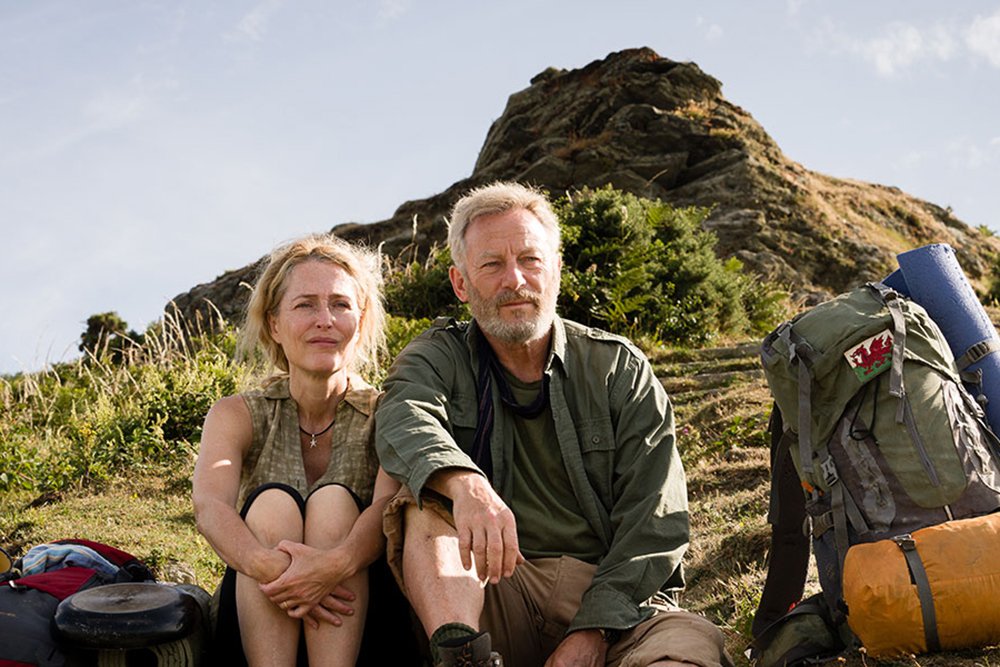
    The best supporting performance prize was awarded to British acting icons Anna Calder-Marshall and Tom Courtenay for playing an aging couple in Lance Hammer’s Queen at Sea. The drama, also featuring Juliette Binoche and Florence Hunt, sees Calder-Marshall playing a woman with severe dementia, with Courtenay playing her loving husband and caregiver. Queen at Sea also won the Silver Bear Jury Prize.

    The awards ceremony of the 76th Berlin International Film Festival got off to politically-changed start, as several filmmakers used the stage to denounce Israeli military actions in the Middle East and call to “free Palestine.”

    Opening the gala event, Berlinale director Tricia Tuttle acknowledged that this year’s edition had “felt raw and fractured,” saying grief and anger over global events belonged within the festival community and that debate was part of democracy. But as prizes were handed out, the political temperature rose. Lebanese filmmaker Marie-Rose Osta, accepting the Golden Bear for best short film for Someday a Child, condemned Israeli bombings and what she called a collapse of international law, while Abdallah Alkhatib, winning the Berlinale Documentary Award for Chronicles From a Siege, brought a Palestinian flag onstage and ended his speech with a call to “free Palestine.”

    Syrian director Ameer Fakher Eldin, head of the short film jury, urged artists to “insist on complexity” and resist reducing festival spaces to parliamentary floors, arguing that direct statements and politically engaged bodies of work could coexist. Wenders, largely silent since the initial controversy, addressed what he called an “artificial discrepancy” between critics and organizers before announcing the competition winners, saying most of those in the room applauded the artists speaking out.

    British filmmaker Grant Gee took best director honors for Everyone Digs Bill Evans, a fragmented bio-drama on the influential jazz pianist who was shattered by the tragic loss of his bassist in a car accident. Norwegian actor Anders Danielsen Lie (Sentimental Value) plays Bill Evans, with Laurie Metcalf and Bill Pullman as his parents.

    The Silver Bear for best screenplay went to Nina Roza from Quebecois director Geneviève Dulude-de Celles, the story of a Bulgarian immigrant who returns to his native land to search for an 8-year-old artistic prodigy.

    Anna Fitch’s formally experimental documentary Yo (Love Is a Rebellious Bird), in which the director uses puppets, collages and scale models to recount the life of her friend, the Swiss immigrant Yolanda “Yo” Shea, won the Silver Bear for extraordinary artistic achievement.

    The Grand Jury Prize went to Emin Alper’s Salvation, a drama that charts the escalation of violence in an isolated village community in the Turkish mountains following the return of an exiled clan.

    Alper used his speech to express solidarity with oppressed people everywhere. “The people of Palestine, you are not alone. The people of Iran suffering under tyranny, you are not alone, the people of Kurdistan [you] are not alone,” he said. “And my people, you are not alone.”

    But one of the most eloquent speeches on the issue of politics at this year’s Berlinale came from one of the producers of Yellow Letters. Calling out the arguments that had pitted “filmmaker against filmmaker, artist against creatives,” he reminded the crowd that “we are not enemies. We are allies. The real threat among us is not among us. It is the autocrats, the right-wing parties, the nihilists of our time. Let us not fight each other. Let’s fight them.”

    Tricia Tuttle ended the night on an optimistic note, saying that “hope and love” were the common themes through all the award speeches tonight. She welcomed the criticism of the festival, saying critics “just want us to be better,” adding that “all are welcome” in the Berlinale community.

    Full list of winner below.

    GOLDEN BEAR FOR BEST FILM
    Yellow Letters, dir. Ilker Çatak

    SILVER BEAR GRAND JURY PRIZE
    Salvation, dir. Emin Alper

    SILVER BEAR JURY PRIZE
    Queen at Sea, dir. Lance Hammer

    SILVER BEAR FOR BEST DIRECTOR
    Grant Gee, Everyone Digs Bill Evans

    SILVER BEAR FOR BEST LEADING PERFORMANCE
    Sandra Hüller, Rose

    SILVER BEAR FOR BEST SUPPORTING PERFORMANCE
    Anna Calder-Marshall and Tom Courtenay, Queen at Sea

    SILVER BEAR FOR BEST SCREENPLAY
    Nina Roza, dir. Geneviève Dulude-de Celles

    SILVER BEAR FOR OUTSTANDING ARTISTIC CONTRIBUTION
    Yo (Love Is a Rebellious Bird), dir. Anna Fitch

    PERSPECTIVES

    GFF FIRST FEATURE AWARD
    Chronicles From the Siege, dir. Abdallah Alkhatib

    Special Mention
    Forest High (Forêt Ivre), dir. Manon Coubia

    BERLINALE DOCUMENTARY AWARD

    If Pigeons Turned to Gold, dir. Pepa Lubojacki

    SHORTS

    Golden Bear Best Short Film
    Someday a Child, dir. Marie-Rose Osta

    Silver Bear Jury Prize (Short Film)
    A Woman’s Place Is Everywhere, dir. Fanny Texier

    CUPRA Filmmaker Award
    Jingkai Qu, dir. Kleptomania

  • Hilary Duff Breaks Silence on “Toxic Mom Group” Drama After Ashley Tisdale’s Essay: “This Is Not New for Me”

    Hilary Duff Breaks Silence on “Toxic Mom Group” Drama After Ashley Tisdale’s Essay: “This Is Not New for Me”

    Hilary Duff is sort of responding to Ashley’s Tisdale’s claims from her essay in The Cut, in which she explained that she had to leave her “toxic mom group.”

    In an interview with the Los Angeles Times, published on Friday, Duff was asked about the drama that stemmed from Tisdale’s essay last month and if it led her to pause reentering the pop world. The High School Musical actress’ essay described how she ended relationships in her mom group circle because she felt left out and that it was becoming toxic.

    Even though Tisdale didn’t name drop anyone, she and Duff have been photographed together as being a part of the same mom group. And after Tisdale’s essay was published, Duff’s husband and singer-songwriter, Matthew Koma, fired back by posting a photo to his Instagram Story of himself photoshopped onto Tisdale’s body with a fictional headline that reads: “When You’re The Most Self Obsessed Tone Deaf Person On Earth, Other Moms Tend To Shift Focus To Their Actual Toddlers.”

    “This is not new for me,” Duff told the Los Angeles Times regarding the drama. “I’ve had this since I was maybe 15 and starting to get followed around by paparazzi. Everything starts getting documented and everyone knows my life and all the players in it. So the stories that get news pickup — it’s not what happens to a normal person who maybe became an actor as an adult.”

    She continued to explain that attention is now escalated by spreading information on TikTok. “It’s hard because you’re like, ‘Wait, whoa, that person kind of got it right,’ and ‘Whoa that person doesn’t know what they’re talking about,’” Duff said. “I saw something that was like, ‘None of the moms at school actually like her and neither do the teachers,’ and I was like, ‘First of all… By the way, the women at school are lovely and I’m obsessed with all of them.”

    In Tisdale’s essay, she explains what led her to break up with her friend group. “I remember being left out of a couple of group hangs, and I knew about them because Instagram made sure it fed me every single photo and Instagram Story,” she wrote. “Another time, at one of the mom’s dinner parties, I realized where I sat with her — which was at the end of the table, far from the rest of the women. I was starting to feel frozen out of the group, noticing every way that they seemed to exclude me. At first, I tried not to take things personally. It’s not like people aren’t allowed to get together without me — and maybe there were perfectly good reasons that I hadn’t been invited. We were all busy, life was hectic.”

    She also said she didn’t know why she was being left out, but it made her feel like she was “in high school again” and “totally lost.” Tisdale reached out to members of the group and recalled that it “didn’t exactly go over well.

    “Some of the others tried to smooth things over. One sent flowers, then ignored me when I thanked her for them. Another tried to convince me that everyone assumed I’d been invited to gatherings and just hadn’t shown up,” she wrote before adding, “You deserve to go through motherhood with people who actually, you know, like you. And if you have to wonder if they do, here’s the hard-earned lesson I hope you’ll take to heart: It’s not the right group for you. Even if it looks like they’re having the best time on Instagram.”

  • Mark Ruffalo Questions James Cameron’s Disapproval of Netflix-Warner Bros. Deal, Support of Paramount

    Mark Ruffalo Questions James Cameron’s Disapproval of Netflix-Warner Bros. Deal, Support of Paramount

    Mark Ruffalo has shared his thoughts on James Cameron‘s letter in opposition to Netflix buying Warner Bros. Discovery, with the filmmaker instead sharing support for Paramount to acquire the company.

    “So… the next question to Mr Cameron should be this… ‘Are you also against the monopolization that a Paramount acquisition would create? Or is it just that of Netflix?’” the four-time Oscar-nominated actor wrote on Threads Saturday. “I think the answer would be very interesting for the film community to hear and one that should be asked immediately. Is Mike Lee against the Paramount sale as well? Is he as concerned about that as he is the Netflix sale?”

    Ruffalo concluded, “We all want to know .…Speaking on behalf of hundreds of thousands of film makers world wide.”

    In Cameron’s letter, which is dated Feb. 10 but began making headlines on Thursday and was sent to to Sen. Mike Lee (R-Utah), the Avatar director voiced concerns about the future of films being released in theaters if Netflix acquires Warner Bros.

    “The business model of Netflix is directly at odds with the theatrical film production and exhibition business, which employs hundreds of thousands of Americans,” Cameron wrote “It is therefore directly at odds with the business model of the Warner Brothers movie division, one of the few remaining major movie studios.”

    Netflix co-CEO Ted Sarandos swiftly fired back against Cameron’s claims on Friday. “I’m particularly surprised and disappointed that James chose to be part of the Paramount disinformation campaign that’s been going on for months about this deal,” he said in an interview on Fox Business Network’s The Claman Countdown.

    Sarandos also responded to Cameron’s claims that he plans to shift films to having a 17-day theatrical window. “I have never even uttered the words 17-day window. So I don’t know where it came from or why he would be part of that machine,” he added.

    “Movies go into the theaters for 45 days, a healthy, robust slate of films every year, that is going to continue,” Sarandos said. “This deal is contingent on that for us to — for it to work.”

    The Netflix co-CEO additionally sent Lee a letter in response to Cameron’s, where he wrote that the Titanic director “knowingly misrepresents our position and commitment to the theatrical release of Warner Bros. films.”

  • Ex-Sony CEO Calls ‘The Interview’ His Biggest Career Mistake, Says Obama Asked Him “What Were You Thinking?” After Cyber Hack

    Ex-Sony CEO Calls ‘The Interview’ His Biggest Career Mistake, Says Obama Asked Him “What Were You Thinking?” After Cyber Hack

    Michael Lynton, the former CEO of Sony Pictures Entertainment, is looking back on the 2014 film The Interview with deep regret.

    In a recent excerpt from Lynton’s upcoming memoir From Mistakes to Meaning: Owning Your Past So It Doesn’t Own You, published recently in the Wall Street Journal, he opens up about how greenlighting The Interview, a dark comedy starring Seth Rogen and James Franco about a plan to assassinate North Korean leader Kim Jong Un, was the “biggest mistake of my career,” because it led to the infamous Sony hack.

    Lynton was made aware on Nov. 17, 2014, by the head of IT reporting that 70 percent of Sony’s servers were irreparably damaged. Hackers released stolen emails that had confidential scripts and personal information. The FBI became involved with evidence suggesting that North Korea was most likely behind the attack to axe the release of the film.

    The movie was pulled from the U.S.’s major theater chains ahead of its Dec. 25 release after threats from hacker groups implied that moviegoers would be in danger at screenings, The Hollywood Reporter reported at the time.

    According to Lynton’s memoir, eight months after the FBI investigated the cyberattack, they knew that North Korea was behind it.

    The fallout resulted in the studio having its relationships ruined with prominent industry figures, including Will Smith, Adam Sandler and Angelina Jolie. Former President Barack Obama even called Lynton to tell him, “What were you thinking when you made killing the leader of a hostile foreign nation a plot point? Of course that was a mistake.”

    Lynton can now acknowledge that his biggest mistake was “my decision to greenlight a project on the fly.”

    He admits that his motivation for allowing the film to be made in the first place stemmed from his “desire to belong” and from his care for the “opinions of others.”

    “Just for a moment, I wanted to join the badass gang that made subversive movies,” Lynton wrote. “For a moment, I wanted to hang — as an equal — with the actors. I had grown tired of playing the responsible adult, of watching the party from the outside while I played Risk.”

    He added, “My middle-school self took over, and my adult self lost the courage to disappoint the other kids. The party got out of hand, and the company, its employees, my family and I all paid dearly.”

  • Trump Says Netflix Should Fire Board Member Susan Rice “Immediately, or Pay the Consequences”

    Trump Says Netflix Should Fire Board Member Susan Rice “Immediately, or Pay the Consequences”

    President Donald Trump publicly encouraged Netflix to fire board member Susan Rice — “or pay the consequences.”

    “Netflix should fire racist, Trump Deranged Susan Rice, IMMEDIATELY, or pay the consequences,” he wrote on Truth Social Saturday. “She’s got no talent or skills – Purely a political hack! HER POWER IS GONE, AND WILL NEVER BE BACK. How much is she being paid, and for what???”

    The president’s post was accompanied by a screenshot of an X post made by Laura Loomer responding to Rice’s Thursday appearance on the Stay Tuned with Preet podcast. In Loomer’s social post, she wrote, “Netflix Board Member Susan Rice says corporations who took a ‘knee to Trump’ will face an ‘accountability agenda’ from elected Democrats if they win the midterms in 2026 and the 2028 Presidential election.”

    In the former U.S. Ambassador to the United Nations’ interview with Preet Bharara, she said, “For those that decided that they would act in their perceived very narrow self interest, which I would underscore as very short-term self-interest, and take a knee to Trump, I think they are now starting to realize, ‘Wait a minute, this is not popular. Trump is not popular.’”

    Bharara continued, “There is likely to be a swing in the other direction, and they are going to be caught with more than their pants down. They are going to be held accountable by those who come in opposition to Trump and win at the ballot box.”

    The “accountability agenda” Loomer pulled from Rice’s interview was said as follows: “There will be an accountability agenda. You know, companies already are starting to hear they better preserve their documents. They better be ready for subpoenas. If they’ve done something wrong, they’ll be held accountable, and if they haven’t broken the law, good for them.”

    Loomer also slammed the potential Netflix-Warner Bros. merger in her post, writing, “If the Netflix-Warner Bros. merger is approved, positive messaging of the Democrats’ upcoming witch hunts against Trump from Barack Hussein Obama and his anti-White racist wife Michelle would likely be blasted across all streaming services as the Obamas’ Higher Ground Productions continues to grow within Netflix.”

    “The Netflix-Warner Bros. merger would result in a streaming monopoly, which the Obamas will have a significant stake in,” she continued, tagging both Trump and FCC chairman Brendan Carr in her post. “President Trump @POTUS must kill the Netflix-Warner Bros. merger now. @BrendanCarrFCC.”

    Amid Netflix and Paramount Skydance’s battle to acquire Warner Bros. Discovery, Trump said in early February that he “shouldn’t be involved” in the fight for the company.

    “I haven’t been involved,” Trump said. “I must say, I guess I’m considered to be a very strong president. I’ve been called by both sides. It’s the two sides, but I’ve decided I shouldn’t be involved. The Justice Department will handle it.”

    Currently serving as a Netflix board member, Rice formerly served as the U.S. National Security Advisor from 2013-2017 and the Domestic Policy Advisor from 2021-2023.