Category: Business

  • Fed rate hike odds hit 72% as Barr warns on inflation

    Fed rate hike odds hit 72% as Barr warns on inflation

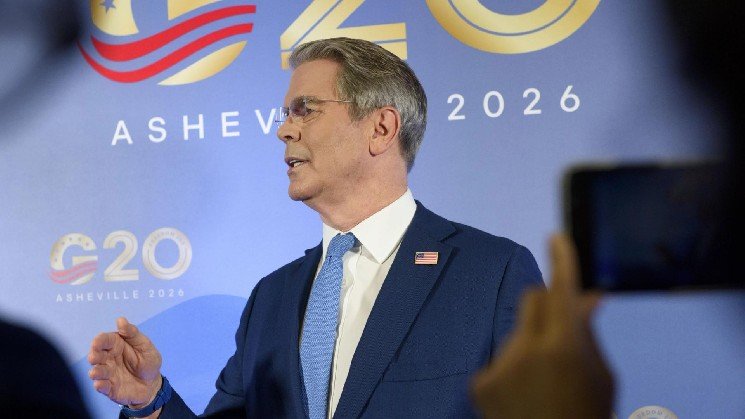
    Federal Reserve Governor Michael Barr has backed a decisive interest rate increase if inflation fails to ease, as Polymarket traders place the chance of a 2026 hike at 72%.

    Barr supports a Fed rate hike if inflation stays high

    The Federal Reserve said in Barr’s Sept. 1 prepared remarks that inflation remains too high after more than five years above the central bank’s goal, leaving policymakers to decide whether current rates are restrictive enough.

    Speaking at the Second Chance Lending Forum in Washington, Barr said the Fed has time to review the data before its Sept. 15–16 Federal Open Market Committee meeting. His position depends on whether upcoming reports provide clear evidence that price growth is returning toward the central bank’s 2% target.

    “If trends in the data give me some confidence that inflation is moderating on a path to 2 percent, then I think we can take a bit more time to assess our policy stance,” Barr said.

    If the data fail to provide that confidence, Barr said the central bank should respond without delay.

    “However, if inflation appears not to be moderating sufficiently, then I think we should act decisively to raise rates,” he added.

    Inflation fell from a peak of more than 7% in 2022 to slightly above 2% in 2024, according to Barr. Progress then stalled in 2025 as tariffs, the conflict in the Middle East and spending linked to the rapid expansion of artificial intelligence placed fresh pressure on prices.

    Barr also pointed to persistent inflation in core non-housing services, which cover services other than housing and exclude some of the categories most affected by short-lived price changes. With inflation remaining above target for an extended period, he warned that price pressure could spread across more parts of the economy.

    The latest Personal Consumption Expenditures data placed annual headline inflation at 3.7%, while core PCE inflation stood at 3.3%. The PCE price index is the Fed’s preferred inflation measure, making its path central to the rate debate.

    Fed officials have raised pressure before September

    Barr’s comments have added another voting member to the group of officials prepared to consider higher borrowing costs. As a member of the Federal Reserve Board, he holds a vote at every FOMC meeting.

    Fed Chair Kevin Warsh delivered a similar message during his Aug. 28 Jackson Hole address, saying policymakers needed to be confident that inflation was moving toward the 2% objective “clearly and at sufficient speed.”

    “We must be confident that underlying inflation is moving to our objective, clearly and at sufficient speed. Otherwise, we have work to do,” Warsh said.

    As previously covered by crypto.news, Warsh described the 2% PCE inflation goal as a “firm, fixed target.” He also said that 54% of the 199 goods and services in the PCE basket had recorded price increases above 3% during the previous 12 months.

    The Federal Open Market Committee held its target rate at 3.50%–3.75% during its July 28–29 meeting. Most members supported waiting for more information, but Minneapolis Fed President Neel Kashkari, Cleveland Fed President Beth Hammack, and Dallas Fed President Lorie Logan preferred an immediate quarter-point increase.

    Earlier in August, Kashkari said it was time to start moving rates up gradually as inflation remained above target and the U.S. economy continued to withstand current borrowing costs. The July policy split left the September decision dependent on inflation, employment, and developments affecting energy prices.

    Barr described the U.S. economy as solid, supported partly by investment in artificial intelligence. Consumer spending has remained resilient, while the labor market has stayed stable with relatively low unemployment, according to his remarks.

    Traders raise Fed rate hike bets to 72%

    Polymarket traders now assign a 72% probability to at least one Federal Reserve rate increase before the end of 2026, according to the prediction market figures cited in the supplied report. The probability stood at 68% following Warsh’s Jackson Hole speech and at 64% in early August.
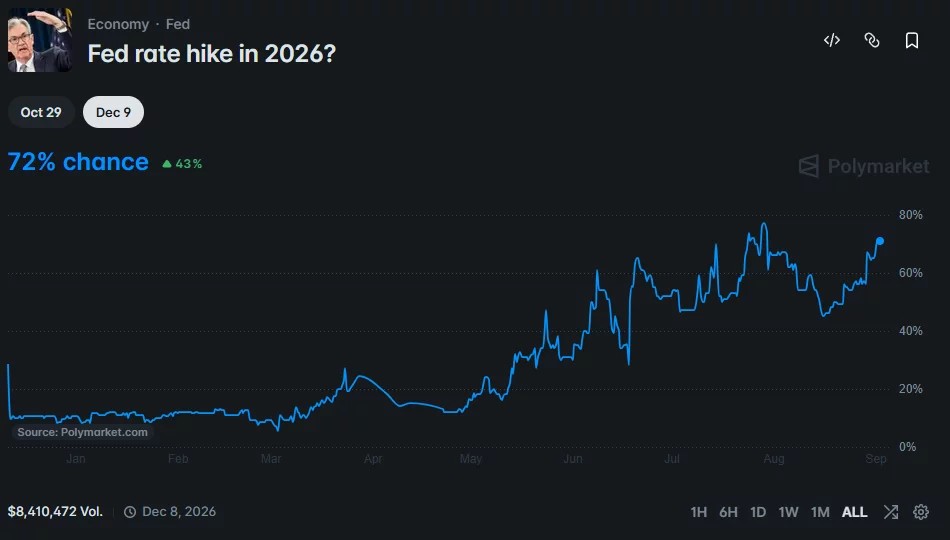
    Source: Polymarket

    A separate Polymarket contract places the chance of a 25-basis-point increase at the September meeting at approximately 57%. Prediction-market probabilities change as traders open and close positions, and they do not represent a commitment from the Fed.

    Market pricing has risen quickly in recent weeks. In early August, Polymarket traders assigned a 46% chance to a September quarter-point increase, while the probability of at least one hike during 2026 stood at 64%.

    CME-based estimates also put the probability of a September increase at about 57% following Warsh’s speech, according to an Aug. 31 Bitfinex report. The figure had stood at 39.9% on Aug. 21, while the two-year U.S. Treasury yield later climbed to around 4.31%.

    A rate increase would raise the Fed’s current target range to 3.75%–4.00% if officials approve a quarter-point move. Policymakers could also leave rates unchanged in September and consider an increase at one of the remaining meetings in October or December.

    For U.S. crypto investors, a higher policy rate could affect Treasury yields, the dollar, and demand for assets that do not produce fixed income. BTSE Chief Operating Officer Jeff Mei said in an Aug. 31 report that higher rates could reduce the liquidity available to Bitcoin and other cryptocurrencies.

    Bitcoin traded near $78,700 when the report was published after falling from above $81,000 to a low of $76,857 following Warsh’s address. U.S. spot Bitcoin exchange-traded funds still recorded $924.5 million in net inflows during the week, although investors withdrew $201.9 million on Aug. 28.

    Oil and U.S. data could shape the September decision

    Energy prices have created another inflation concern as fighting between the United States and Iran threatens oil shipments near the Strait of Hormuz. Brent crude moved above $90 on Aug. 31, while West Texas Intermediate also advanced as traders assessed the risk of supply disruptions.

    Bitcoin held close to $78,000 during the initial market response, even as oil rose and equity futures declined. The oil-driven market pressure followed U.S. strikes on Iranian rocket launchers and warnings from Iran that it would respond.

    Barr identified the Middle East conflict as one of the shocks that pushed inflation away from its previous path. Tariffs have also raised goods prices, while the AI construction boom has increased demand for equipment, electricity and other resources, according to his prepared remarks.

    Before deciding on rates, officials will receive several U.S. reports that could change market expectations. The August employment report is scheduled for Sept. 4, with investors set to examine payroll growth, unemployment, and wages.

    Consumer Price Index and Producer Price Index figures are also due before the Sept. 15–16 meeting. Barr said evidence that inflation is moving toward 2% would allow officials more time to assess policy, while insufficient progress would support decisive action to raise rates.
  • GMTrade Expands Solana Perp Market with 24/7 Commodity Trading

    GMTrade Expands Solana Perp Market with 24/7 Commodity Trading

    Solana-based decentralized exchange GMTrade has introduced 24/7 perpetual futures trading for commodities, including gold (XAG), silver (XAG), and West Texas Intermediate crude oil (WTI). The new products allow traders to gain price exposure to these assets without holding the physical commodities or tokenized versions, according to a report from Crypto Briefing.

    How the Commodity Perpetuals Work

    The perpetual futures are cash-settled and track the spot prices of the underlying commodities. Price data is sourced from Chainlink Data Streams, a decentralized oracle network that provides low-latency, high-frequency price feeds. This integration is designed to ensure accurate and reliable pricing for traders, even during periods of high volatility.

    Unlike traditional commodity futures, which have expiration dates, perpetual contracts do not expire. Instead, they use a funding rate mechanism to keep the contract price aligned with the underlying asset’s spot price. This model has become popular in crypto derivatives, and its extension to commodities marks a notable step for decentralized finance (DeFi).

    Why This Matters for DeFi Traders

    Commodity trading has traditionally been dominated by centralized exchanges and institutional players. By bringing these markets on-chain, GMTrade aims to democratize access, allowing retail users to trade gold, silver, and oil with the same ease as trading crypto assets. The 24/7 availability is a significant advantage over traditional markets, which close on weekends and holidays.

    This move also reflects a broader trend of DeFi platforms diversifying beyond crypto-native assets. The use of Chainlink Data Streams addresses one of the key challenges in DeFi—reliable price data—and could set a precedent for other platforms looking to expand into traditional asset classes.

    Implications for the Solana Ecosystem

    GMTrade’s expansion is a positive signal for Solana’s DeFi ecosystem, which has been working to attract more derivatives activity. Solana’s high throughput and low transaction fees make it well-suited for the fast-paced nature of perpetual trading. The addition of commodity perps could bring new users to the network and increase overall trading volume.

    Conclusion

    GMTrade’s launch of 24/7 commodity perpetual futures on Solana represents a meaningful development in the convergence of traditional and decentralized finance. By leveraging Chainlink’s reliable price feeds, the exchange is offering a new way for traders to access global commodity markets. As DeFi continues to evolve, products like these may help bridge the gap between crypto and traditional finance, providing more options for investors worldwide.

    FAQs

    Q1: What are perpetual futures?
    Perpetual futures are derivative contracts that allow traders to speculate on the price of an asset without an expiration date. They use a funding rate to keep the contract price close to the spot price of the underlying asset.

    Q2: How does GMTrade ensure accurate pricing for commodities?
    GMTrade uses Chainlink Data Streams, a decentralized oracle network that aggregates price data from multiple sources to provide reliable and tamper-resistant price feeds.

    Q3: Can traders take physical delivery of the commodities?
    No, these are cash-settled perpetual futures. Traders are exposed to the price movements of gold, silver, and oil, but do not own the physical assets or any tokenized representation of them.

    Related Reading

    • Solana sets new record with 5.2 billion non-vote transactions in August
    • Gold Dips to Two-Week Low as Geopolitical Tensions Reintroduce Uncertainty
    • Binance’s Stock-Linked Perpetual Futures Volume Surges 15-Fold to $445B in Six Months
    • Gold Faces Risk of Bigger Drop as Technicals Turn Bearish
    • Gold Price Outlook: Key Support Levels and Recovery Scenarios
  • How recovery of 61 BTC unlocked a potential $432M treasure hunt for early Bitcoin users

    How recovery of 61 BTC unlocked a potential $432M treasure hunt for early Bitcoin users

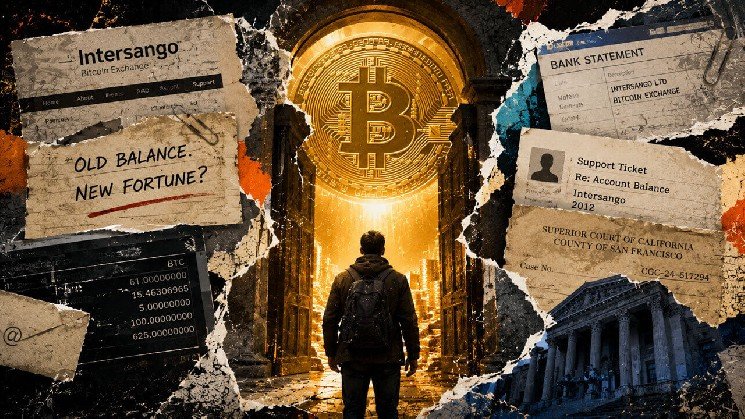
    CEL Solicitors says it has traced more than 5,500 $BTC that it believes belong to former users of Intersango, an early Bitcoin exchange that disappeared more than a decade ago.

    At Bitcoin’s current price near $78,824, those coins carry a value of roughly $433.5 million.

    One former UK customer has already recovered 61 $BTC from the exchange’s remains, giving other users a concrete example of an old balance turning into a successful ownership claim.

    The investor instructed CEL on Jan. 20, and the case settled on May 28, returning all 61 coins, now worth about $4.81 million.

    CEL says former Intersango users may have claims against the more than 5,500 $BTC it has traced, and each claimant needs evidence connecting an old account balance to the assets.

    That requirement places unusual value on records created during Bitcoin’s earliest years. Emails, bank statements, support tickets, and account records that once documented balances worth a few dollars can now support claims worth millions.

    Bitcoin turned forgotten balances into fortunes

    Intersango operated when Bitcoin still traded in the low double digits. In October 2012, the exchange planned to close its US-dollar market because trading activity had become too thin to justify keeping it open.

    The exchange offered 625 $BTC for $12.10 each, valuing the entire batch at roughly $7,563 at the time. Those same 625 $BTC are worth about $49.3 million at today’s price.

    One Bitcoin now represents almost $79,000, while a 10 $BTC balance would be worth about $788,000 and 100 $BTC would approach $7.9 million.

    CEL says Intersango began winding down during late 2012 as GBP and USD trading ended. The website had gone dark by early 2014, and Companies House records show Intersango Ltd ceased to exist on March 22, 2016.

    CEL says useful evidence can include the email address attached to an account, correspondence with Intersango and bank statements documenting transfers to the exchange.

    The firm also said obtaining bank records from almost 15 years earlier became a major hurdle in establishing ownership in the 61 $BTC case.

    California court records place those recovery efforts inside a wider dispute over customer Bitcoin connected to Intersango. A 2025 Court of Appeal opinion in Norman v. Strateman describes allegations that Patrick Strateman closed the exchange, retained Intersango assets, and refused to return customer Bitcoin.

    The litigation also involved a settlement intended to protect and return customer assets. The appellate ruling sent that settlement back for judicial review of its fairness, establishing a documented legal framework around unresolved Intersango property claims.

    A separate 2025 filing describes another alleged customer balance of 15.46306965 $BTC. The filing says Intersango’s customer ticketing system confirmed the balance before the platform disappeared, putting its current value near $1.22 million.

    The 61-$BTC recovery and the 15.46-$BTC court claim show that identifiable balances survived in records long enough to support ownership claims more than a decade later.

    The bull case depends on former users finding the evidence

    Higher Bitcoin prices give former customers stronger financial incentives to search old inboxes, request archived bank statements, and fund legal work around balances they may have written off years ago.

    At $100,000 per Bitcoin, the 61-$BTC recovery would be worth $6.1 million. The alleged 15.46-$BTC balance would reach about $1.55 million, and CEL’s traced 5,500-$BTC pool would reach $550 million.

    Even relatively small balances can justify extensive document searches once each Bitcoin carries a six-figure value. A customer who left 5 $BTC on Intersango would be pursuing $500,000 at that price.

    Modern blockchain tracing adds another layer to the recovery process because investigators can reconstruct asset movements across a public ledger that has preserved transactions since Intersango operated.

    Personal ownership still requires records connecting an individual to an exchange account and a specific balance.

    That puts users with surviving documentation in the strongest position to test claims against the traced assets. The 61-$BTC settlement provides a working example of how that process can reach a resolution even when the exchange disappeared more than a decade earlier.

    The bear case is an evidence problem

    Bitcoin could fall to $50,000 and still leave CEL’s traced pool worth about $275 million. The 61-$BTC recovery would be worth $3.05 million at that price, and the alleged 15.46-$BTC balance would remain worth roughly $773,000.

    Large balances would still justify expensive recovery work, while smaller claims could become less attractive once legal costs, record retrieval and cross-border proceedings consume a greater share of the potential payout.

    The bigger obstacle is the age of the records. Former users may have lost access to old email accounts, discarded bank statements or deleted exchange correspondence during years when their balances carried little economic value.

    Blockchain records can trace coins through wallets and transactions, while ownership claims require evidence tying those assets to a particular user. Customer interests may also intersect with shareholder disputes, procedural rulings and competing claims over assets connected to the former exchange.

    CEL’s 5,500-$BTC figure defines the potential scale of the property it says it has traced, while the amount that former users recover will depend on how much of that pool can be tied to provable balances.

    Thousands of Bitcoin may depend on whether early Intersango users still possess an email, support ticket, or bank statement created when Bitcoin traded for little more than $12.

  • Cronos validators erase transaction history to contain massive $75 million lending protocol exploit

    Cronos validators erase transaction history to contain massive $75 million lending protocol exploit

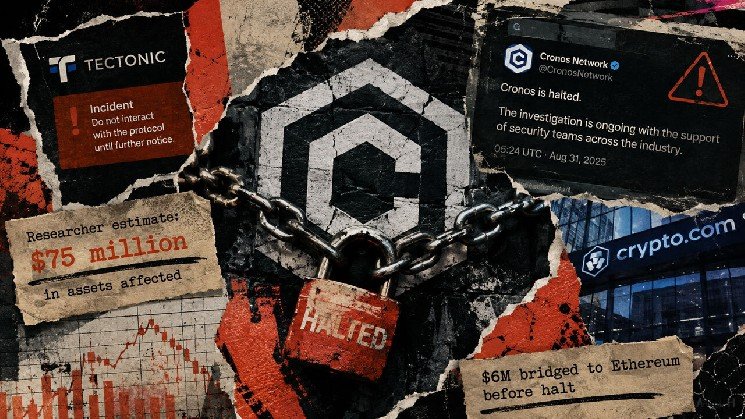
    Cronos has restarted and restored block production after validators restored the chain to its state before the Tectonic exploit, replacing an open-ended network halt with a monitored restart. In an Aug. 31 update, Cronos said the restarted chain was producing blocks from block 90,896,189, with a timestamp of 23:49:01 UTC on Aug. 30.

    The network said it was fully back online, but added that some protocols, RPC providers, explorers and bridges could take longer to recover. Cronos also said it was monitoring the chain for stability and would publish a full postmortem. Those details superseded a 05:24 UTC update on Aug. 31 that said the network remained halted while the investigation continued.

    Cronos had announced the halt on Aug. 30 after identifying an exploit at Tectonic, a decentralized lending protocol on the chain. The response made the wider blockchain, rather than only Tectonic, unavailable while validators and security teams assessed the incident.

    Tectonic separately acknowledged an incident and told users not to interact with the protocol until it confirmed that doing so was safe.

    How the Tectonic exploit unfolded

    Onchain researcher Weilin Li attributed the exploit to manipulation of TONIC, Tectonic’s thinly traded governance token. According to Li’s analysis, the attacker inflated TONIC’s price and used the token as collateral to borrow other assets from Tectonic.

    The protocol’s documentation lists a 20% collateral factor for TONIC in a parameter table dated May 2025. However, that historical table does not establish the configuration at the time of the incident.

    Li initially estimated that about $66 million was affected, then raised the figure to roughly $75 million after identifying another attacker-controlled address. He estimated that only about $6 million was bridged to Ethereum before Cronos halted, leaving most of the affected assets on the network. The figures and attack mechanism remain Li’s assessment rather than an official accounting.

    What the Cronos restart changes

    The restart relied on restoring the chain state to before the Tectonic exploit. Cronos said node operators could restart on version 1.7.8 using updated mainnet snapshots. The network did not say in the cited update how the rollback would affect all transactions submitted during the discarded period.

    The difference between Li’s total estimate and the reported bridge flow helps explain why the validator halt may have limited onward movement. However, Cronos and Tectonic have not published a confirmed loss, an official root-cause analysis or a complete account of how attacker-controlled assets will be handled.

    Crypto.com CEO Kris Marszalek said the company’s app and exchange were unaffected, were operating normally and had sent security staff to assist Cronos. That assurance applies to Crypto.com’s services, not to Tectonic depositors.

    The immediate uncertainty has shifted from when Cronos will restart to how quickly connected services recover and what the promised postmortem establishes. Those details will determine the final accounting and whether Tectonic users can resume normal activity.

  • Which Altcoins Are Linked to the Robinhood Chain, the Hottest Topic of Late?

    Which Altcoins Are Linked to the Robinhood Chain, the Hottest Topic of Late?

    Robinhood’s ecosystem, built around its own Layer-2 network, Robinhood Chain, is creating a new narrative in the cryptocurrency market. Recently, projects such as Lighter ($LIT), Morpho ($MORPHO), Uniswap ($UNI), LayerZero ($ZRO), Chainlink ($LINK), and Arbitrum ($ARB) have come to the attention of investors, and Robinhood’s official documents clarify the roles of these projects within the network.

    Robinhood Chain launched its mainnet on July 1, 2026. The blockchain, an Ethereum-compatible Layer-2 network, was developed directly using Arbitrum technology. Robinhood is positioning the network specifically for tokenized real-world assets (RWA), equity tokens, decentralized finance applications, and AI-based financial transactions. The network aims to offer 100-millisecond block times and leverage Ethereum’s security infrastructure.

    One of the cryptocurrencies most directly linked to Robinhood Chain is Arbitrum ($ARB). The network operates on Arbitrum’s Dedicated Blockchains infrastructure. Robinhood previously launched tokenized US shares on Arbitrum One, then migrated its operations to its own Robinhood Chain. The Arbitrum team also announced that Robinhood Chain has joined more than 30 private blockchains built using its technology.

    Another notable component of the ecosystem is Lighter ($LIT). Direct perpetual futures trading support via Lighter has been integrated into Robinhood Wallet. Users in select regions can trade perpetual contracts on Lighter without leaving Robinhood Wallet. Furthermore, Lighter has allocated 11 million $LIT tokens for the Robinhood community. Transactions made on Lighter through Robinhood Wallet earn higher points, which are planned to be converted into tokens from this $LIT pool.

    The connection on the Morpho ($MORPHO) side is not just a technical integration. Morpho provides the core lending infrastructure for Robinhood’s new Robinhood Earn product. The system, which aims to allow users to earn returns using $USDG stablecoins, uses Robinhood Chain as the consensus layer for transactions, while Morpho serves as the underlying lending market. According to Morpho’s official data, as of the end of August, the total amount of deposits on the protocol built on Robinhood Chain reached approximately $936.6 million, while active loans amounted to approximately $415 million.

    Uniswap ($UNI) has become one of Robinhood Chain’s core decentralized transaction infrastructures. Uniswap v2, v3, v4, and UniswapX were launched alongside the network’s mainnet, positioning Uniswap as Robinhood Chain’s primary public AMM (Automated Market Module). Users can trade tokens, provide liquidity, and interact with tokenized shares on Robinhood Chain via Uniswap.

    The Chainlink ($LINK) connection is critical to Robinhood’s tokenized traditional asset strategy. Robinhood Chain selected Chainlink as its official data and cross-chain oracle infrastructure. Chainlink’s Data Feeds, Data Streams, and CCIP products were deployed along with the network’s mainnet. The integration is used for price data of Robinhood Stock Tokens linked to companies like NVIDIA, Google, and Apple, as well as for cross-chain transactions.

    Another directly related project is LayerZero ($ZRO). While LayerZero was among the infrastructure providers during Robinhood Chain’s testnet phase, it has also become a significant part of the cross-chain transfer infrastructure on the mainnet. In Robinhood’s official documentation, LayerZero OFT and Stargate are listed among the options that enable fast token transfers between Robinhood Chain and other blockchains. Specifically, $USDG’s structure on Robinhood Chain utilizes LayerZero’s OFT standard.

    *This is not investment advice.

  • South Korea Arrests Four Over Crypto Payments to Syrian Terror Group

    South Korea Arrests Four Over Crypto Payments to Syrian Terror Group

    In brief

    • Gwangju police said Tuesday they had arrested four Uzbek nationals, one wanted on an Interpol Red Notice, over transfers to Katibat Tawhid wal Jihad.
    • The alleged ringleader sent 4,267 $USDT to the UN-designated group across seven transfers between August 2024 and April 2025.
    • He is also accused of receiving crypto from KTJ and using it to buy and ship $121,000 worth of vehicles to Syria.

    South Korean police have charged four Uzbek nationals with financing terrorism, in a case they say is the first to involve crypto flowing out of a designated terrorist group and back as physical goods.

    The Gwangju Metropolitan Police Agency’s security investigation division arrested the four in April under the Act on Prohibition Against the Financing of Terrorism, and disclosed the case on Tuesday, according to the Korea JoongAng Daily. The alleged ringleader has been indicted and detained and is on trial, while the other three are under investigation without detention. One of the four was wanted on an Interpol Red Notice.

    Between August 2024 and April 2025, police say the ringleader sent 4,267 $USDT across seven transfers to Katibat Tawhid wal Jihad.

    KTJ is a Syria-based group formed in 2014 largely from Central Asian fighters, and has been designated as a terrorist organization by both the United Nations and the United States.

    Crypto flows back and forth

    The group’s ringleader is accused of taking cryptocurrency from KTJ and spending it on 11 used cars and two excavators, worth a combined 170 million won ($121,000), which were then shipped to Syria. The other three suspects allegedly helped buy and export the vehicles.

    “Previous terrorism-related cases involved sending funds to terrorist groups, but this is the first case of receiving funds from a terrorist group and purchasing and supplying vehicles in return,” police said.

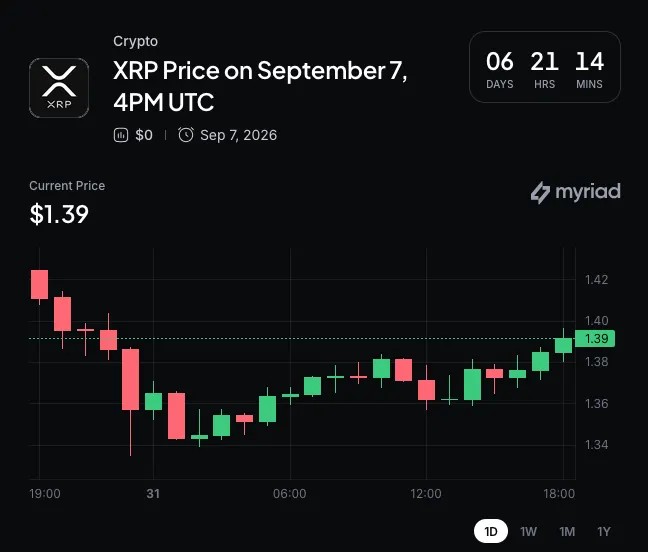
    Myriad: Where does XRP price go next? Click to make your prediction.

    Investigators say the ringleader rotated between three personal wallets, had payments for the cars deposited into an account in his spouse’s name, and presented someone else’s driver’s licence when officers detained him. He entered South Korea in 2017 on a student visa, graduated from a university in Daejeon, and had been living in the country as an overstayer since 2023.

    He denied the main charges at his first hearing in June, saying the money was sent to cover family living expenses and that he did not know who was buying the vehicles. He also said a younger sibling had joined KTJ only for self-protection, amid violence against Uzbeks in Syria.

    Police said the investigation led to the arrest of a second Interpol Red Notice suspect and is continuing.

  • Tron’s Justin Sun disputes Forbes wealth estimate as bride-price fight goes public

    Tron’s Justin Sun disputes Forbes wealth estimate as bride-price fight goes public

    Tron founder Justin Sun used X on September 1 to challenge how Bloomberg and Forbes value his crypto fortune.

    His response comes just days after his split from Chinese actress Jing Tian became a public fight over a bride price and a $50 million demand.

    How much is Justin Sun really worth?

    In a series of posts published on X today, Justin Sun, the founder of Tron, argued that his personal balance sheet is nobody’s business but also nothing to hide. How much he holds “has never been” the industry’s concern, he wrote, and he added that he would not use the figure to answer his critics.

    Sun then took aim at Bloomberg and Forbes, stating that they count his crypto holdings at only 20% to 30% of their value when tallying his net worth, because those assets are concentrated, volatile, and by the outlets’ standards, not “certain.”

    Sun said he understands that logic, but it is the outlet’s methodology, and not his problem.

    He wrote in a separate post that for 14 years, he has made the deliberate choice of keeping the bulk of his own assets in crypto. Forbes currently pegs the 36-year-old at $8.5 billion.

    Why is Justin Sun suing Jing Tian?

    Prior to the wealth posts, Sun published a lengthy account titled “My Girlfriend Jing Tian” on August 27. The post reportedly took him more than ten hours to write and was labeled “fictional.”

    In it, Sun said the couple had moved toward marriage. He said he transferred a 30 million yuan bride price, about $4.5 million, to Jing’s parents after proposing in January, and that the two had agreed to have a child through surrogacy. Sun alleged that shortly before Jing was due to undergo an egg retrieval, she demanded a further $50 million.

    At that stage, he turned to Anthropic’s Claude chatbot for advice and, acting on its recommendation, refused the money and ended the relationship. Sun is reportedly now suing the actress and her parents to recover the bride price.

    Which other drama is Justin Sun involved in?

    38-year-old Jing Tian, who is known for her roles in “From Vegas to Macau” and “Police Story 2013” and is followed by more than 26 million people on Weibo, rejected Sun’s account via the social media platform on August 28, insisting that she has not and will never sell her love.

    Jing added that she still believed in the law and would let time settle the matter.

    The episode blew up on Chinese social media and took over search results. Hashtags regarding the incident even trended on Weibo.

    Some users have mocked the fact that a chatbot played a role in ending a romance, while others have been criticizing Sun for airing medical, financial and personal details.

    In an interview with Sing Tao Headline, Sun also shared his doubt about the AI’s judgment, and like Jing, said he would leave the resolution to his lawyers and the courts.

    Meanwhile, Cryptopolitan has reported that World Liberty Financial, the Trump family’s DeFi project, filed a defamation countersuit against Sun in May, alleging that he was involved in a coordinated smear campaign and short-selling after he sued the company for freezing his tokens.

    Sun has called the WLFI suit a “meritless PR stunt,” but he also remains locked in a years-long fight with Hong Kong custodian First Digital Trust over TrueUSD reserves.

  • Firelight raises $8 million, expands beyond XRP as it aims to make DeFi less scary for fintechs

    Firelight raises $8 million, expands beyond XRP as it aims to make DeFi less scary for fintechs

    Firelight is also considering a broader universe of liquid assets that do not already generate substantial yield, CEO Anthony DeMartino told CoinDesk in an interview.

    “There’s a bunch of different assets that we’re considering,” DeMartino said. “Anything … that’s a solid asset, that has good liquidity to it, that doesn’t provide its own natural yield, will eventually be eligible to be posted as collateral.”

    Fintech money onchain

    Firelight is betting that the bigger opportunity lies beyond crypto-native traders as fintechs, neobanks and payments companies increasingly plug onchain yield products into their apps.

    The possibility of losing customer capital to an exploit can become a major obstacle when a product is ready to go live, DeMartino said. Firelight aims to provide a protection layer that makes that jump less daunting.

    “This isn’t built for degens,” he said. “This is built to bring the next wave of capital in. We want to be that protection layer to allow that adoption.”

    DeMartino said he expects more money currently sitting in bank accounts to migrate into fintech earn products powered by stablecoins, onchain vaults and wallets. Sentora itself has been working on bringing yield products to fintech applications, including payroll and remittance platforms, he said.

    The protection gap remains large. Roughly $80 billion is locked in DeFi, according to Firelight, while only a fraction of a percent is protected by onchain cover.

  • Bitcoin enters ‘Rektember’ as rate-hike risk combines with seasonality to threaten rally

    Bitcoin enters ‘Rektember’ as rate-hike risk combines with seasonality to threaten rally

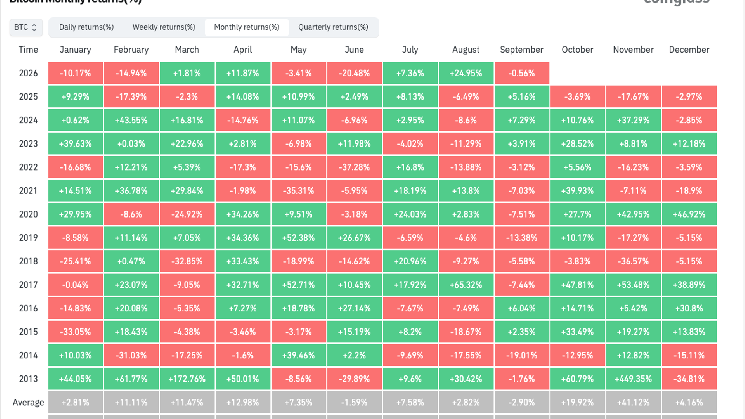
    Bitcoin has begun September slightly lower, falling 1% to below $78,000 as it enters what is commonly referred to as “Rektember.” Since 2013, September has been bitcoin’s worst-performing month on average, producing a loss of around 3% and only producing five positive monthly returns.

    However, the past three Septembers have all delivered gains, offering some encouragement to bitcoin bulls. After climbing 25% in August, BTC’s strongest month since November 2024, the market could be due for a period of consolidation, if not a correction.

    The macro backdrop also presents significant headwinds. Fed Chair Kevin Warsh’s hawkish Jackson Hole speech last Friday, which emphasized elevated inflation, has contributed to a global bond sell-off. Many sovereign yields have reached new cycle highs, with the U.S. 10-year Treasury yield rising to 4.784%.

    Markets are now pricing in a 66% probability of a 25-basis-point rate hike at the Fed’s Sept. 16 meeting, followed by another potential rate boost by the end of the year. That would take the federal funds target range to 4.00-4.25% by the close of 2026.

  • U.S. looks to influence Japan’s monetary policy. It couldn’t do that with bitcoin

    U.S. looks to influence Japan’s monetary policy. It couldn’t do that with bitcoin

    If Japan does increase rates and the yen rises quickly, cheap yen-funded bullish bets in stocks, bonds and even cryptocurrencies taken over the years can unwind. Foreigners who bought Japanese stocks on the back of a weak yen may sell. Japanese savers who sent money overseas as a hedge may bring it home. When those positions close, risk assets could be sold. Bitcoin suffered collateral damage in early August 2024, when a Bank of Japan rate increase drove the yen higher and spurred a wave of risk aversion.

    So while bitcoin’s long-term bull case looks as solid as ever, it still trades like a high-risk asset when traditional markets get squeezed by rate and currency shocks. Stay alert!

    Read more: For analysis of today’s activity in altcoins and derivatives, see Crypto Markets Today . For a comprehensive list of events this week, see CoinDesk’s “Crypto Week Ahead.”

    What’s trending

    • North Korean hackers are moving tens of millions on Hyperliquid as Trump pushes to onshore the crypto platform (CoinDesk): Blockchain data reviewed by CoinDesk appears to show wallets said to be tied to North Korea’s Lazarus Group sold more than $30 million in bitcoin on the platform in the last three weeks alone.
    • CME’s share of $XRP futures jumps as token rallies 40% in a week (CoinDesk): A growing share of $XRP futures trading is moving toward CME even as traders cut leveraged positions across crypto exchanges.
    • Global bond yields soar to multi-decade highs as Middle East turmoil reignites inflation fears (CNBC): Government bond yields jumped across major markets, with borrowing costs in Japan and the U.K. touching multi-decade highs, and U.S. Treasury yields surging.
    • Oil prices rise and stocks slide as Middle East violence flares, adding to uncertainty (AP): Oil prices jumped 2% and world shares fell Tuesday. Brent crude gained 2% to $92.35 per barrel. U.S. benchmark crude advanced 2.5% to $87.84 per barrel.