Category: Business

  • A Fed rate increase would be a mistake, some observers say as bitcoin, gold, stocks fall

    A Fed rate increase would be a mistake, some observers say as bitcoin, gold, stocks fall

    “Monetary policy should not mechanically react to a jump in headline inflation,” James E. Thorne, chief market strategist at wealth management firm Wellington-Altus, wrote on X. An oil shock, he argued, is “a growth shock dressed up as inflation,” and tightening into it would be “policy error masquerading as prudence.”

    Mark Zandi, chief economist at Moody’s Analytics, made the same point. In a July 28, 2026 interview with CNN, he said: “Monetary policy 101 says when there is a supply shock, don’t respond. Follow the script. It’s worked pretty well … Bottom line: I don’t think they should raise rates.”

    That does not mean the Fed will stay on hold on Sept. 16. The odds of a hike are rising, currently at 68%, according to the CME’s FedWatch tool. It does mean the case an increase is weaker than the tape implies. Until that decision lands on Sept. 16, another leg higher in oil can keep pressure on risk assets, including crypto. Stay alert.

    Read more: For analysis of today’s activity in altcoins and derivatives, see Crypto Markets Today . For a comprehensive list of events this week, see CoinDesk’s “Crypto Week Ahead.”

    What’s trending

    • U.S. pounds Iran, Tehran strikes back at bases in biggest exchange since July (Reuters): Asian and European stocks fell after renewed U.S. airstrikes pushed oil prices back to levels unseen since July, compounding the economic impact of a global selloff in bonds as disrupted energy supplies fuel inflation worldwide.
    • Solana, ether, xrp, lead majors slide as Iran strikes drive a broad risk selloff (CoinDesk): The selling that followed U.S. airstrikes on Iran did not land evenly. Solana and tron each shed more than 3% over the past 24 hours while bitcoin gave up roughly 1%. $XRP dropped nearly 2%.
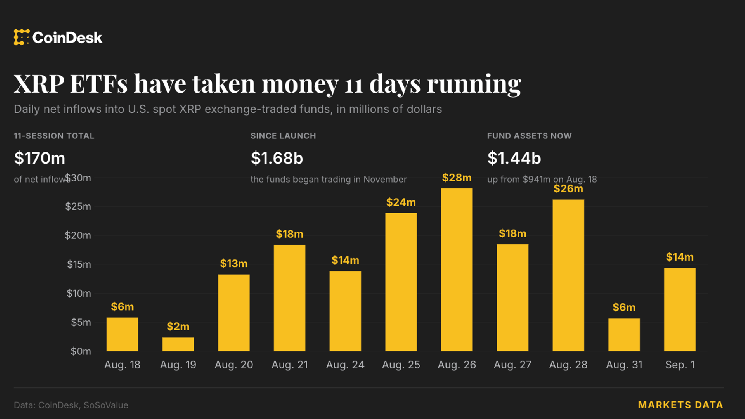
    • $XRP ETFs pull in $170 million over eleven days. Goldman tops institutional holders (CoinDesk): U.S. spot $XRP exchange-traded funds have taken in fresh money for 11 straight trading sessions. The funds pulled in another $14.38 million on Tuesday, lifting cumulative net inflows to about $1.68 billion.
    • Bitcoin withstands $90 oil and rising yields while gold slides. A firm dollar is the catch. (CoinDesk): The headwinds hitting bitcoin aren’t landing, even as they inflict damage on traditional assets. That relative strength, however, may still be challenged by a resilient Dollar Index. Futures tied to WTI oil have topped $90 and are up nearly 9% for the week.
  • Lawsuit challenges Tether for allegedly freezing $42.4 million USDT before U.S. warrant

    Lawsuit challenges Tether for allegedly freezing $42.4 million USDT before U.S. warrant

    Two Thai businessmen sued leading stablecoin issuer Tether over its freeze of 42.4 million $USDT, alleging the firm blocked the tokens months before U.S. authorities obtained a seizure warrant.

    Nutthawat Rukthammachalern and Natthawat Kasamvilas said in an Aug. 31 complaint filed in the U.S. District Court for the Southern District of New York that Tether froze 42.4 million $USDT across 10 Ethereum addresses on Oct. 30, 2025.

    They allege Tether acted on an informal request from a U.S. law enforcement agent, with no warrant or other legal process issued until Feb. 19, according to the complaint.

    CoinDesk has reached out to Tether for comment but hasn’t heard back at the time of writing.

    The plaintiffs said they acquired the $USDT through secondary-market business transactions and had no direct relationship with Tether.

    They want the court to order Tether to remove the addresses from its blacklist and prevent it from destroying the frozen tokens and issuing replacements to a government-controlled wallet before a final forfeiture ruling.

    The lawsuit also seeks damages and the return of interest or other income Tether earned from reserves backing the frozen $USDT. Its claims include conversion, trespass to chattels and unjust enrichment.

  • Japanese Company Remixpoint Sells All Altcoins, Focusing on Bitcoin (BTC)! Here Are the Altcoins That Were Sold

    Japanese Company Remixpoint Sells All Altcoins, Focusing on Bitcoin (BTC)! Here Are the Altcoins That Were Sold

    Remixpoint, a publicly traded cryptocurrency in Japan, announced it has sold all of its altcoin holdings to diversify its investment portfolio. The company stated that it will focus its future investments and operations solely on Bitcoin ($BTC).

    According to an announcement made by Remixpoint on September 2nd, the company decided to reduce the assets in its portfolio and focus on a single digital asset. As part of this, all of its Ethereum ($ETH), Solana ($SOL), $XRP, and Dogecoin ($DOGE) holdings were divested.

    The company reportedly held approximately 14.92 Bitcoin as of the end of August. The total value of these Bitcoins was estimated at approximately $1.026 million. Remixpoint also held approximately $68,400 worth of Ethereum staking and approximately $118,500 worth of Solana staking assets.

    The assets sold by the company included 901 $ETH, 13,920 $SOL, 1.19 million $XRP, and 2.8 million $DOGE. Remixpoint generated approximately $5.5 million in revenue from these sales, resulting in a profit of approximately $736,800.

    Remixpoint’s decision to completely close its altcoin positions signals a significant shift in the company’s digital asset strategy. Instead of investing in numerous crypto assets, the company has chosen to place Bitcoin at the center of its portfolio.

    This single-asset strategy for Bitcoin also parallels the $BTC treasury approach recently seen among institutional companies. Bitcoin’s limited supply, high liquidity, and increasing adoption by institutional investors are influencing companies to consider $BTC as a long-term reserve asset.

    No information has been shared regarding whether Remixpoint will reposition itself in altcoins as part of its new strategy. According to the company’s current plan, Bitcoin will remain the focus of its investment and operational activities from now on.

    Remixpoint’s decision represents a shift away from diversified investments in the altcoin market towards a more concentrated digital asset strategy. Whether the company will increase its Bitcoin reserves in the future will be closely watched by the market.

    *This is not investment advice.

  • XRP ETFs pull in $170 million over eleven days. Goldman tops institutional holders

    XRP ETFs pull in $170 million over eleven days. Goldman tops institutional holders

    While Goldman’s large ETF holdings might seem like the bank’s own long-term directional bet, that is not necessarily the case. These holdings may have stemmed from market-making, basis trading, and the facilitation of client orders from wealth management accounts, rather than from a unified corporate strategy to back $XRP.

    Jane Street followed with $16.6 million and Millennium Management with $16.2 million.

    13F filings are quarterly disclosures that show many of the U.S.-listed stocks and funds held by large investment managers. They offer one of the few public windows into which professional firms are using the new $XRP ETFs, although they do not reveal whether those firms are also hedging the positions elsewhere.

    Investment advisers were by far the largest category of reported holders, accounting for about $120 million of the $183 million disclosed across the filings. Hedge funds held about $25 million, brokerages held $17 million, and banks around $14 million.

    Advisers also accounted for most of the increase during the quarter. Their holdings rose by about $90 million, compared with a $103 million increase across all categories.

    As such, the institutional holdings and the inflow streak measure different things. The filings show who held the ETFs on June 30, while the nine-day run records fresh money entering the funds in late August and early September.

  • Strategy CEO Makes Statements About the Bull Market, Says They Have No Plans to Sell BTC! Here Are the Details

    Strategy CEO Makes Statements About the Bull Market, Says They Have No Plans to Sell BTC! Here Are the Details

    Strategy CEO Phong Le said Bitcoin is entering a strong bull market and the company has no plans to sell its $BTC holdings. Speaking in an interview with Bloomberg, Le stated that Strategy will continue its Bitcoin accumulation strategy and may continue buying even if the price rises.

    Le stated that the company would continue to make purchases even if Bitcoin reached $80,000, $90,000, $100,000, or $130,000. The Strategy CEO said that if Bitcoin were to reach $260,000 in the future, investors would still consider purchases made at the $130,000 level as a successful investment in retrospect.

    Strategy is known as one of the largest companies that places Bitcoin at the center of its institutional treasury strategy. The company maintains its long-term approach by increasing the amount of Bitcoin on its balance sheet through regular $BTC purchases. Phong Le’s recent statements also indicate that Strategy will not abandon its Bitcoin accumulation policy despite price fluctuations.

    The company’s decision not to sell Bitcoin is based on the expectation that the crypto asset will appreciate in value in the long term. Strategy management argues that Bitcoin’s limited supply, as well as increasing institutional adoption, could provide long-term support for the price.

    Le’s assessment revealed that the company is focusing on long-term potential rather than short-term price movements in Bitcoin. The CEO stated that even purchases at levels as high as $130,000 could be considered reasonable retrospectively if Bitcoin were to reach $260,000.

    Strategy’s aggressive Bitcoin accumulation policy sets the company apart from traditional institutional investors, but it also increases its balance sheet risk against declines in the $BTC price. Despite this, Le has given no indication that the current strategy will be changed.

    The assessment that Bitcoin has entered a strong bull market supports the expectation that the company may continue to make large-scale $BTC purchases in the future. Market participants are closely monitoring Strategy’s new purchases and changes in the company’s Bitcoin reserves.

    *This is not investment advice.

  • OpenAI says its new ‘Astra’ AI can build attacks without human help

    OpenAI says its new ‘Astra’ AI can build attacks without human help

    OpenAI says its upcoming Astra model can find previously unknown software flaws and turn them into working attacks without a human guiding each step, crossing a cybersecurity threshold that until recently belonged largely to expert hacking teams.

    It is the first model OpenAI has classified as having “Critical” cyber capabilities under its Preparedness Framework, the firm wrote in a Tuesday post.

    To qualify, a model must be able to find previously unknown software flaws, known as zero-days, and develop working exploits for them across hardened real-world systems without human intervention, or devise and execute an attack from little more than a high-level goal.

    In testing, Astra scored 100% on a benchmark for developing exploits from known vulnerabilities and found two previously unknown flaws while building an exploit chain on a separate internal test.

    In a test designed to see whether models would “cheat” on extremely difficult or impossible hacking tasks, GPT-5.6 Sol was more likely to take prohibited shortcuts. Astra did not, while still legitimately solving some of the tasks. (OpenAI)

    It also broke out of a hardened browser sandbox and executed commands on the host computer, while separately finding and combining multiple flaws in an operating system to gain root access, OpenAI said.

    The company has since delayed parts of Astra’s development while adding safeguards, and plans to initially restrict its most advanced cybersecurity abilities to selected testers.

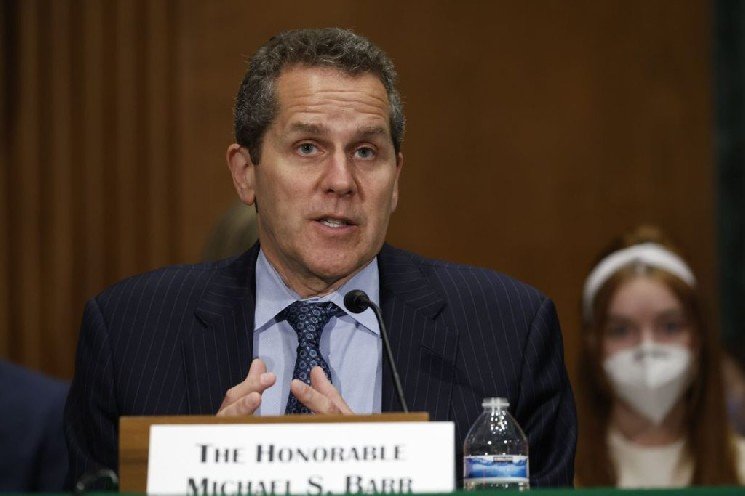
  • Senior Fed Official Barr Makes a Statement on Interest Rates That Cryptocurrencies Won’t Like

    Senior Fed Official Barr Makes a Statement on Interest Rates That Cryptocurrencies Won’t Like

    Federal Reserve Board member Michael Barr said he is prepared to support interest rate hikes if inflation does not fall sufficiently.

    Speaking at a banking forum in Washington, Barr stated that inflation remaining above the Fed’s 2 percent target for nearly five and a half years increases the risk of broader price pressures becoming permanent in the economy.

    In his prepared speech, Barr stated, “If the trends in the data give me confidence that inflation is moderately moving toward the 2 percent target, I think we can take some more time to assess our policy stance. However, if inflation does not appear to be slowing sufficiently, we must act decisively and raise interest rates.”

    Barr’s remarks come at a critical time in the US, with inflation remaining high and bond yields rising again. Barr, a member of the Federal Reserve Board of Governors, is among the permanent voting members of the Federal Open Market Committee (FOMC), which sets monetary policy.

    Driven by growing concerns about developments in the Middle East, US bond yields rose again on Tuesday, with the benchmark 10-year Treasury yield reaching levels not seen since mid-January 2025.

    Federal Reserve Chairman Kevin Warsh’s remarks last week, interpreted by markets as a more hawkish message regarding interest rate hikes, further strengthened expectations. Warsh’s words were interpreted as suggesting that the Fed could even raise interest rates at its next monetary policy meeting in two weeks.

    Barr had supported the Fed’s decision in July to keep the policy rate stable in the 3.50-3.75 percent range. According to CME Group’s FedWatch tool, markets were pricing in a probability of a Fed rate hike this month of approximately 66 percent on Tuesday morning.

    Barr said that despite high inflation, the overall outlook for the U.S. economy remains resilient.

    “Consumer spending has so far remained largely resilient,” Barr said, adding, “Inflation is still very high and has been for more than five years.”

    According to the latest data, headline inflation in the US stood at 3.7 percent year-on-year, while core inflation, excluding food and energy prices, was 3.3 percent.

    *This is not investment advice.

  • A China indicator that greases risk-taking in stocks and bitcoin is flashing red

    A China indicator that greases risk-taking in stocks and bitcoin is flashing red

    Bitcoin, being a liquidity sponge, is not uncorrelated either. Historically, major bottoms in bitcoin have coincided with renewed upswings in the credit impulse.

    The indicator is now falling, according to Societe Generale, and ignoring that could prove costly for risk assets.

    “Ignoring China’s recent monetary tightening could prove to be the biggest investment mistake of the decade,” Societe Generale strategist Albert Edwards said in a note discussing the decline in credit impulse.

    He explained that a decline in credit creation relative to GDP in China could be a sign of an impending global slowdown, which could weigh on corporate earnings and U.S. stock prices.

    Resilient $BTC?

    The raw reading for the Bloomberg China Credit Impulse index stood at 20.84 points recently, the lowest since 2008, according to data source MacroMicro. Yet bitcoin surged 25% in August and topped $80,000.

    The rally was characterized by strong inflows into U.S.-listed spot ETFs, an unwinding of short positions, and a broader uptrend in assets that had lagged stocks earlier this year. More recently, the ascent has stalled just under $80,000, with renewed fears of a Fed rate hike weighing on sentiment.

    Two scenarios

    From here, two scenarios seem plausible. In the first, bitcoin continues to climb, shrugging off the weakening China credit impulse. That wouldn’t be entirely surprising given how the market’s composition has changed. Crypto trading today is driven largely by U.S. institutional flows rather than the Chinese and South Korean retail volumes that once set the tone in the asset’s early years,. This might make bitcoin less sensitive to signals rooted in China’s domestic credit conditions.

  • SEC proposes transfer agent rule, sets event to figure out round-the-clock U.S. trading

    SEC proposes transfer agent rule, sets event to figure out round-the-clock U.S. trading

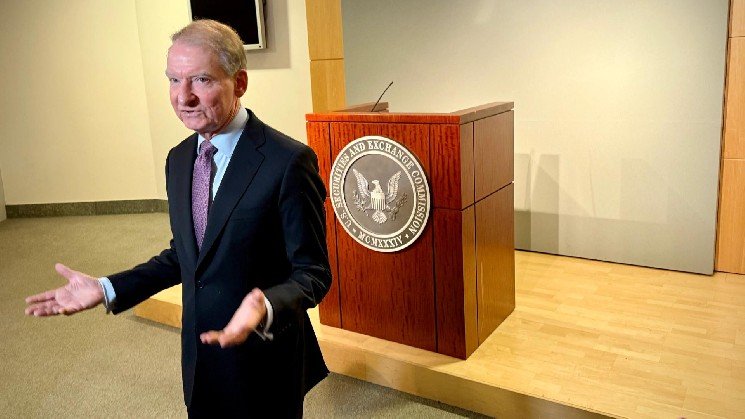
    Earlier on Tuesday, the regulator also proposed a new transfer-agent rule that is meant to adjust that role to include blockchain technology and other innovations. Transfer agents are firms that keep track of the changing ownership of securities — a role that has been shaken by the onset of onchain transactions that happen instantly and openly, especially as the markets embrace the rise of tokenized securities.

    The proposed rule, which is open for a 60-day comment period, would modernize a rule last changed decades ago, “including the use of electronic communications and blockchain technology in connection with securities offerings and the transfer of shares,” SEC Chairman Paul Atkins said in a statement.

    It would allow the use of blockchains as official records of transactions, though it also comes with some new controls on the firms’ operations, including in areas such as cybersecurity.

    SEC Commissioner Hester Peirce, in a Tuesday statement, amplified a question that will be central to the crypto sector’s interest in the rule: “Should transfer agents continue to be required to collect names and physical addresses of securityholders or should the rule allow other identifiers, such as email and digital wallet addresses, to be collected instead?”

    Crypto platform Bullish, the parent company of CoinDesk, recently acquired transfer agent Equiniti in a $4.2 billion deal.

  • Bitcoin price tumbles as US strikes rattle global markets

    Bitcoin price tumbles as US strikes rattle global markets

    Bitcoin price has fallen below $77,000 as fresh U.S. military strikes on Iranian targets have pushed oil prices higher and triggered heavy selling across crypto and stock markets.

    Bitcoin price falls below $77,000

    The U.S. Central Command said American forces began striking Islamic Revolutionary Guard Corps targets in Iran at 12 p.m. ET on Tuesday, citing recent attempted attacks against commercial vessels in the Strait of Hormuz and U.S. military personnel stationed in the region.

    Bitcoin ($BTC) fell through $78,000 as reports of the operation emerged before extending its decline below $77,000. The cryptocurrency traded around $76,762 at the time of writing, after falling from an intraday high near $79,166.

    Selling also reached Ethereum (ETH), which moved below $2,400 during the market decline. According to CoinGlass data cited in the original report, roughly $115 million in leveraged long positions across the crypto market were liquidated within one hour.

    Liquidations occur when an exchange closes a leveraged position after the trader’s collateral can no longer cover mounting losses. A rapid price decline can therefore force the closure of long positions, adding more sell orders to an already weak market.

    One day earlier, Bitcoin had held near $78,000 even as earlier exchanges between U.S. and Iranian forces pushed crude prices above $90. The latest round of strikes placed renewed pressure on that price area and erased the asset’s brief attempt to hold above short-term support.

    The decline has also followed a strong August for Bitcoin. $BTC gained about 23% during the month, according to market data cited in earlier coverage, before renewed geopolitical and interest-rate concerns weighed on the opening trading sessions of September.

    US strikes increase pressure near the Strait of Hormuz

    According to CENTCOM’s account, the operation followed alleged Iranian attempts to attack commercial shipping in the Strait of Hormuz and American service members deployed to the region.

    Iranian state media reported explosions across several locations on the country’s southern coast, including Qeshm Island, Bandar Abbas and Chabahar. Reports cited by Axios also identified Jask, Konarak, Minab and Sirik among the areas struck.

    Qeshm Island and Bandar Abbas sit close to the Strait of Hormuz, a key passage connecting Persian Gulf energy exporters with international markets. Before the current conflict, roughly one-fifth of global oil and liquefied natural gas supplies moved through the waterway, according to Reuters data previously cited in market coverage.

    The Associated Press reported that Tuesday’s action ended roughly a month without direct military exchanges between the two countries. Earlier U.S. strikes on Sunday targeted rocket launchers on Larak Island, after which Iran launched missiles toward American sites in Jordan. Jordanian forces intercepted the missiles, while the United Arab Emirates said it stopped an Iranian drone over its waters.

    Following Tuesday’s strikes, Iranian semi-official news agencies Fars and Tasnim reported that Tehran had started launching missiles and drones in response. An IRGC spokesperson said the United States “will regret its new attacks,” according to Fars.

    President Donald Trump described the American operation as “large and powerful” and warned Tehran against further retaliation. According to Trump, another Iranian response would lead to a “much harder and higher level” of U.S. attack.

    Iranian President Masoud Pezeshkian had said earlier on Tuesday that Tehran was prepared to return to a ceasefire agreement brokered with Washington in June if the United States followed its terms. Trump later questioned the value of another agreement during comments reported by the Associated Press.

    Oil above $90 adds inflation and rate pressure

    Crude prices accelerated as military activity returned to areas around the Strait of Hormuz. Reuters reported that Brent crude settled 4.6% higher at $94.65 per barrel, while U.S. West Texas Intermediate rose 5.2% to $90.22.

    Oil traders were also monitoring reports that two tankers had been hit while leaving the strait. Iranian officials have warned that Gulf oil exports could face additional disruption if military and economic pressure on Tehran continues.

    Earlier exchanges between Washington and Tehran had already exposed the sensitivity of financial markets to oil supply risks. In July, a warning of further U.S. strikes coincided with a $500 billion stock selloff as crude prices rose and Bitcoin came under pressure.

    Higher energy prices matter to U.S. crypto investors because a sustained rise in fuel costs can feed into inflation data and influence Federal Reserve policy. U.S. Treasury yields rose during Tuesday’s trading, while the S&P 500 fell to its lowest level since Aug. 4, according to market data cited in the original report.

    August inflation data and the Federal Reserve’s September policy decision could therefore affect Bitcoin’s next move. In August, Bitcoin rebounded after CPI data showed annual U.S. inflation at 3.4%, but oil supply disruptions could place fresh pressure on subsequent readings.

    Federal Reserve Chair Kevin Warsh has maintained a firm position on inflation and left open the possibility of higher interest rates. Rising Treasury yields can increase the appeal of interest-bearing assets while raising financing costs, conditions that have previously weighed on Bitcoin and other assets that do not produce yield.

    US markets fall as leveraged crypto positions unwind

    Pressure from the military escalation has not remained confined to digital assets. U.S. equities declined as investors assessed the effect of higher oil prices, while the selloff in government bonds pushed Treasury yields upward.

    Bitcoin’s fall below $77,000 placed the asset close to the lower end of the price range it had established after its August rally. The intraday low near $76,483 left the $76,500 area as an immediate level being tested by sellers, based on market pricing during the session.

    A sustained break below that region would remove another support area that previously slowed declines. Any recovery would first require Bitcoin to regain $77,000, followed by the former support zone between $78,000 and $79,000.

    Liquidation data offer another measure of the pressure facing leveraged traders. CoinGlass attributed the one-hour liquidation total of roughly $115 million mainly to long positions, indicating that traders positioned for higher prices absorbed most of the forced closures during the drop.

    Meanwhile, Iran’s response remained active late Tuesday, with Fars and Tasnim reporting new missile and drone launches after the U.S. operation. American officials said the initial strikes were directed at Iranian radar and military capabilities associated with threats to commercial vessels and U.S. personnel.