Category: Business

  • Major Ethereum Bull Tom Lee Hints at Another ETH Rally

    Major Ethereum Bull Tom Lee Hints at Another ETH Rally

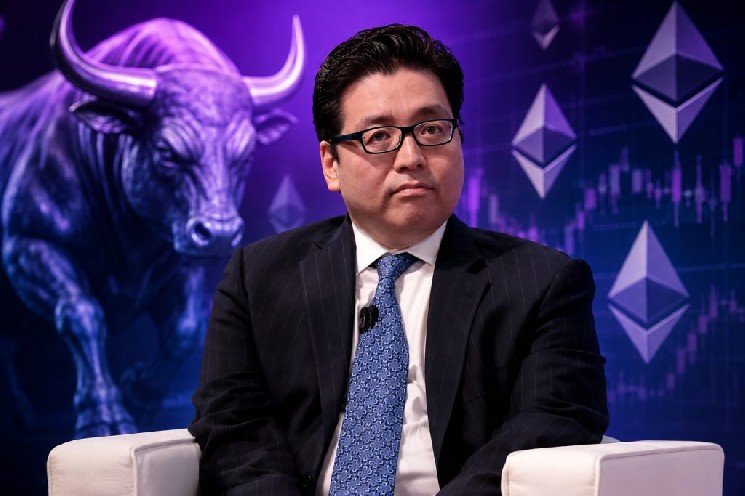
    BitMine Chairman Tom Lee stated that a significant breakout is approaching in Ethereum’s ($ETH) technical outlook, reiterating his bullish outlook for $ETH.

    According to the technical analysis highlighted by Lee, the Ethereum price is only about 3.5% away from breaking above the upper boundary of the Ichimoku Cloud on the daily chart. If $ETH surpasses this level, it will mark the first breakout above the Ichimoku Cloud since October 9, 2025.

    Ethereum is trading at around $1,906, with the upper boundary of the cloud, which technical analysts are monitoring as a significant resistance zone, also near the current price.

    Breaking above the upper band of the Ichimoku Cloud is considered a significant signal in technical analysis, indicating a weakening of the current trend or the potential start of a new uptrend. Therefore, a sustained breakout could pave the way for Ethereum to move towards higher price levels.

    Tom Lee Continues to Be Bullish on Ethereum

    Tom Lee maintains his previously expressed optimistic view on Ethereum. In his assessment in July, Lee stated that he expected the $ETH/BTC pair to strengthen in the second half of 2026.

    Lee’s long-term thesis for $ETH is based on the strengthening of $ETH’s position as a monetary asset, the growth in stablecoin adoption, and the increasing prevalence of tokenization of traditional assets on the blockchain.

    *This is not investment advice.

  • Wall Street Pushback Halts SEC’s Crypto Fundraising Framework, Sources Say

    Wall Street Pushback Halts SEC’s Crypto Fundraising Framework, Sources Say

    In brief

    • The SEC abruptly canceled a Friday open meeting that would have launched formal rulemaking on Regulation Crypto Assets, a new framework for crypto fundraising, just three days after announcing it.
    • Sources say Wall Street trade group SIFMA, which has lobbied against broad regulatory exemptions for crypto and tokenized-securities firms, raised the prospect of legal action over the SEC’s statutory authority, contributing to the agency standing down.
    • The policy conversation continues this week with a White House event Wednesday featuring Trump and top crypto executives, the CFTC’s inaugural Innovation Advisory Committee meeting Thursday, and ongoing Clarity Act negotiations ahead of a September 15 cloture vote.

    More drama in Washington’s ongoing crypto policy debate unfolded Friday when the Securities and Exchange Commission abruptly canceled a meeting that would have kicked off the formal rulemaking process for a new framework governing crypto fundraising in the United States, known as Regulation Crypto Assets.

    The meeting had been announced just three days earlier and was widely viewed as the securities regulator taking the initiative to lay the groundwork for clearer crypto rules while the industry’s marquee legislation, the Clarity Act, remains in limbo until lawmakers return from recess in mid-September.

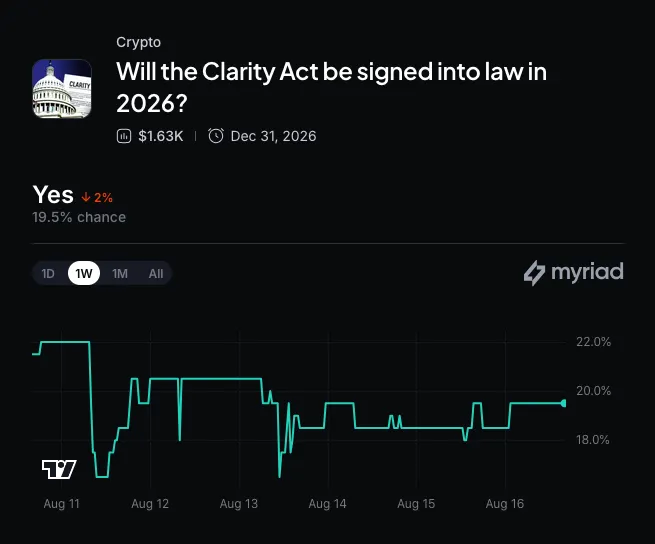
    Myriad: Will the Clarity Act be signed into law in 2026? Click to make your prediction.
    Myriad: Will the Clarity Act be signed into law in 2026? Click to make your prediction.

    An SEC spokesperson attributed the cancellation to an “unforeseen scheduling issue” but provided no further details.

    Talk to enough people in crypto policy circles with their ears to the ground, however, and you’ll hear additional details involving the Securities Industry and Financial Markets Association (SIFMA) and the White House.

    First, some backstory: Over the past year, SIFMA, which represents many of Wall Street’s leading broker-dealers, investment banks and asset managers, has repeatedly pushed back against broad regulatory relief for crypto and tokenized securities firms. In a June 2025 letter, the group urged the SEC not to make major changes to the rules governing tokenized securities and other parts of the securities markets through no-action letters or exemptions. Instead, it called for a public notice-and-comment process, warning that broad relief could create regulatory arbitrage, weaken investor protections and fracture market liquidity.

    The SEC’s Crypto Task Force has been working for months on an innovation exemption that could give crypto firms more flexibility to trade tokenized securities without being subject to all the same rules governing traditional Wall Street firms. Bloomberg reported that the agency was considering unveiling details last Friday, potentially alongside its proposed framework for crypto fundraising. Unlike the fundraising proposal, the innovation exemption would rely on the SEC’s existing exemptive authority rather than go through formal rulemaking.

    Multiple industry sources who spoke with Crypto In America say the White House asked the SEC to postpone Friday’s meeting over concerns that Reg Crypto Assets and, separately, the innovation exemption could complicate Clarity Act negotiations ahead of the Senate’s procedural vote in September. The bill addresses both crypto fundraising and tokenized securities.

    But there may be another layer to the story.

    According to two sources familiar with the matter, SIFMA discussed the possibility of legal action if it determined that the SEC had exceeded its statutory authority under federal securities laws, including through exemptions or no-action relief. The prospect of a legal challenge may have contributed to the White House’s decision to ask the SEC to stand down and cancel the meeting, the sources said.

    Asked about the discussions around a potential legal challenge, a SIFMA spokesperson declined to address them, saying: “SIFMA does not comment on specious or hypothetical theories. In this situation in particular, it would be premature to comment on something that currently doesn’t exist.”

    The White House and the SEC did not immediately respond to requests for comment on this reporting.

    It remains unclear whether the SEC will reschedule the meeting before the Senate returns next month.

    In the meantime, the White House and crypto’s top regulators are expected to keep the policy conversation going this week, with separate events on Wednesday and Thursday.

    SEC Chairman Paul Atkins and CFTC Chairman Michael Selig will attend a White House event Wednesday alongside executives from across crypto, prediction markets and traditional finance, where President Trump is expected to deliver remarks.

    Industry leaders expected to attend include Coinbase CEO Brian Armstrong, Ripple CEO Brad Garlinghouse, Gemini founders Tyler and Cameron Winklevoss, Kraken co-CEO Arjun Sethi, a16z crypto Managing Partner Chris Dixon, BitGo CEO Mike Belshe, Blockchain.com CEO Peter Smith, Polymarket CEO Shayne Coplan, Kalshi CEO Tarek Mansour, Chainlink CEO Sergey Nazarov, Intercontinental Exchange CEO Jeff Sprecher and Nasdaq CEO Adena Friedman, among others.

    On Thursday, Selig will host the inaugural meeting of the CFTC’s Innovation Advisory Committee, whose 43 members include several of the executives listed above. Futures Industry Association President and CEO Walt Lukken will chair the committee. The agenda includes crypto regulation, the growing roles of artificial intelligence and agentic finance, and, of course, prediction markets.

    Meanwhile, lawmakers and their staff are expected to continue negotiating the Clarity Act’s unresolved issues ahead of a cloture vote scheduled for the afternoon of September 15. DeFi and developer protections, provisions in the Senate Agriculture Committee’s portion of the bill, and ethics rules for government officials all remain outstanding.

    Negotiators will also have to contend with continued lobbying from the banking industry for changes to the bill’s stablecoin yield provisions. Despite that push, some of the country’s biggest bank CEOs still support seeing the broader legislation pass, including Goldman Sachs CEO David Solomon and Citi CEO Jane Fraser.

    “We have not given up on pushing to get some improvements made to the bill, but we would like to see a good bill go through,” Fraser told FOX Business in an interview last week. “I think it would be excellent for the system.”

    Crypto in America is a newsletter written by Eleanor Terrett. Follow the link to read in full and subscribe.

    Daily Debrief Newsletter

    Start every day with the top news stories right now, plus original features, a podcast, videos and more.

  • Nvidia commits up to $105 billion to support OpenAI Ohio AI campus

    Nvidia commits up to $105 billion to support OpenAI Ohio AI campus

    Nvidia has agreed to guarantee as much as $105 billion in lease payments tied to a major OpenAI data center project in Ohio being developed by SoftBank backed SB Energy, according to Reuters.

    The chipmaker will also invest $1.5 billion in SB Energy and secure up to 8 gigawatts of AI computing capacity at the site. SB Energy will build, own and operate the campus for OpenAI under a 20 year lease.

    The project will initially provide 4.25 gigawatts of capacity in Pike County, Ohio, with operations expected to begin in phases starting in 2028. Nvidia will exclusively supply the AI computing infrastructure and provide credit support for land, power and construction tied to the initial development.

    Nvidia also has an option to secure the remaining 3.75 gigawatts of capacity.

    SoftBank and SB Energy plan to build at least 10 gigawatts of new power generation and invest $4.2 billion in regional grid infrastructure through a partnership with AEP Ohio.

    OpenAI said the project is expected to create about 35,000 construction jobs through 2032 and roughly 2,500 permanent operating jobs.

    Nvidia CEO Jensen Huang said OpenAI’s spending on Nvidia chips is expected to represent about $600 billion of computing capacity through 2030.

    The investment follows a $1 billion commitment from OpenAI and SoftBank to SB Energy in January to expand data center and power infrastructure supporting the Stargate AI initiative.

    Last week, Nvidia also partnered with six major financial institutions on computing financing platforms targeting more than $500 billion in third party funding for AI infrastructure.

  • US Treasury proposes rules for stablecoin issuance and sales under GENIUS Act

    US Treasury proposes rules for stablecoin issuance and sales under GENIUS Act

    The US Treasury Department proposed new rules Monday detailing how stablecoin issuers and digital asset service providers would comply with key provisions of the $GENIUS Act.

    The Notice of Proposed Rulemaking focuses on Section 3 of the law, defining when a payment stablecoin is considered issued in the United States and when a platform is considered to offer or sell a stablecoin to someone in the country.

    The proposal is scheduled for publication in the Federal Register on Aug. 18, with comments accepted for 60 days.

    Under the proposal, a stablecoin would generally be considered issued in the US if the issuer is located in the country at the time of issuance or if the stablecoin is issued to someone located in the US.

    For individuals, Treasury would generally look at physical presence, while US incorporation or a principal place of business in the country would determine the location of companies.

    Foreign issuers could avoid being treated as issuing in the US if they reasonably believe recipients are outside the country, maintain controls designed to prevent issuance to people located in the US, and do not target US users through advertising or solicitation.

    The $GENIUS Act is expected to take effect on Jan. 18, 2027. From that point, companies generally will not be allowed to issue payment stablecoins in the US without authorization under the federal or state regulatory framework, subject to exceptions for qualifying foreign issuers.

    Beginning July 18, 2028, digital asset service providers would generally be prohibited from offering or selling stablecoins to people located in the US unless they were issued by a permitted payment stablecoin issuer or a qualifying foreign issuer.

    Foreign issuers would also need the technological capability to comply with lawful US orders and applicable reciprocal arrangements.

    Treasury’s proposal gives several examples of what could constitute offering or selling a stablecoin in the US, including directly soliciting US users, advertising that a stablecoin is available to them, responding to purchase inquiries from people in the country, and helping users bypass location restrictions such as IP address checks.

    Platforms could receive protection if they reasonably believe the customer is outside the US, maintain controls designed to prevent sales to people in the country, and avoid advertising or solicitation targeting US users.

    The proposal also exempts certain direct transfers between individuals and transactions involving self custody wallets from the Section 3 prohibitions.

    Treasury is also seeking industry feedback on how the framework should apply to activities including airdrops, stablecoin buybacks, wrapped tokens, blockchain bridges, market makers and transfers to exchanges or liquidity providers.

    The proposal is one part of a broader implementation of the $GENIUS Act. Treasury, FinCEN and OFAC previously proposed rules covering anti money laundering and sanctions compliance requirements for permitted stablecoin issuers in April.

    The $GENIUS Act was signed into law in July 2025 and requires payment stablecoins to maintain reserves backing their outstanding tokens on a one to one basis using eligible assets including cash, deposits and short term Treasury securities.

  • BitMart founder dismisses calls for audit as users report blocked funds, unpaid employees

    BitMart founder dismisses calls for audit as users report blocked funds, unpaid employees

    “We have collected full evidence of the content on X, all of which is fabricated rumors,” Lee said. “During daytime US time, we will file a police report and send a lawyer’s letter to X, demanding technical and data forensics.”

    Regarding unpaid staff, the founder of the Cayman Islands-based crypto exchange said, employee assets “are not prioritized over client assets, everyone is a client, and there are no privileges.”

    An X user known as BeardStaff said their assets had been inaccessible since the July 26 announcement, and that a dedicated VIP manager removed them from Telegram the day withdrawals stalled. “Where is my $10 million?” they posted.

    Another user cut straight to Lee’s hacked account claim.

    “No one asked you if the account was hacked or not,” wrote @chicha_liam. “Answer what people have been asking you since July 26. When will users be able to withdraw their funds?”

    Onchain investigator ZachXBT also pushed back. “If you actually have the liquidity, then simply return the funds to everyone instead of posting vague statements.”

    Roshan Dharia, CEO of distressed investment firm Echo Base, told CoinDesk via Telegram that his firm has offered BitMart a funded restructuring package including debtor-in-possession financing and equity at emergence, underwritten by Echo Base as a claimholder. He said BitMart has not responded.

  • Hackers Are Abusing a macOS Screen Sharing Flaw to Secretly Mine Monero

    Hackers Are Abusing a macOS Screen Sharing Flaw to Secretly Mine Monero

    In brief

    • The Netherlands’ NCSC warned of active exploitation of a macOS Screen Sharing vulnerability across systems with port 5900 exposed to the internet, where attackers gained root access and installed Monero mining programs.
    • The flaw stems from faulty state management during authentication, letting network attackers log in without valid credentials
    • The cryptojacking campaign—which quietly mines privacy coin Monero on victims’ hardware—joins a wave of similar schemes.

    Attackers have been exploiting a vulnerability in Apple’s macOS Screen Sharing feature to seize control of Macs and quietly install cryptocurrency miners, the Netherlands’ national cyber agency warned this week.

    In an updated advisory, the Dutch National Cyber Security Center, or NCSC, said it received reports of active exploitation across multiple systems that had port 5900, used by Screen Sharing, exposed to the internet.

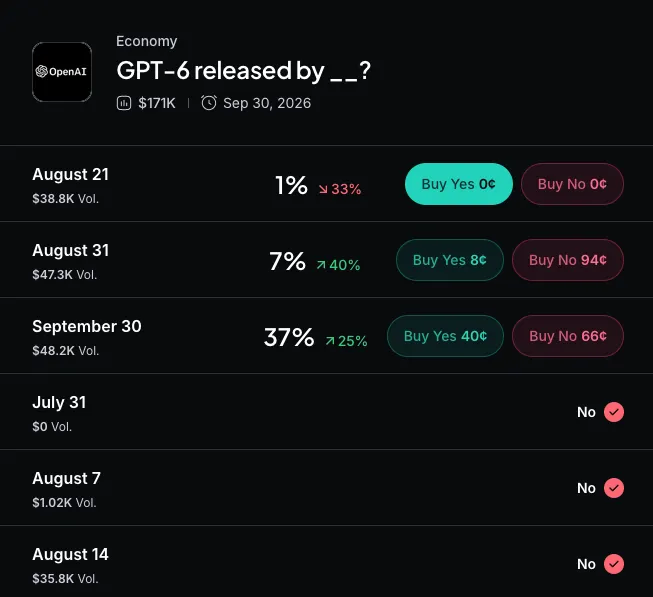
    Myriad: When will OpenAI release GPT-6? Click to make your prediction.
    Myriad: When will OpenAI release GPT-6? Click to make your prediction.

    In each case, the attackers gained root access, the highest level of control over a machine, and planted a Monero mining program to harness the victim’s hardware. Monero is a so-called privacy coin, a type of cryptocurrency that cannot be easily traced, unlike transparent networks such as Bitcoin or Ethereum. The agency flagged that public proof-of-concept code for the flaw is now circulating, lowering the bar for would-be attackers.

    The bug, tracked as CVE-2026-65400 and rated 7.1 out of 10 in severity, is an authentication flaw rooted in faulty state management during the login process. It let network-based attackers slip through without valid credentials, accepting authentication attempts that should have been rejected.

    Apple has since patched the issue, tightening its validation checks in macOS Sequoia 15.7.9, Sonoma 14.8.9 and Tahoe 26.6.1. Users who haven’t updated, particularly anyone with Screen Sharing reachable from the open internet, remain exposed.

    Monero has long been the coin of choice for so-called cryptojacking, in which hijacked machines mine crypto for an attacker who pockets the rewards while the victim absorbs the electricity costs and degraded performance. The token’s privacy features make the proceeds far harder to trace than Bitcoin.

    The campaign is the latest in a steady stream of schemes turning other people’s devices into crypto profit.

    Just this month, Bitdefender found pirated copies of “The Odyssey” laced with the wallet-draining Lumma Stealer. Decrypt has also reported on malware pushed through fake CAPTCHA pages routed via BNB Chain, the SparkKitty operation that hid wallet-stealing code in mobile apps, malicious “anime girl” wallpapers aimed at Steam gamers, and crypto-stealing code smuggled into a booby-trapped Python library.

    The NCSC suggests users apply Apple’s updates promptly and avoid leaving Screen Sharing accessible from the internet, which gave attackers their opening in the first place.

    Daily Debrief Newsletter

    Start every day with the top news stories right now, plus original features, a podcast, videos and more.

  • NEAR AI Adds Independent Verification

    NEAR AI Adds Independent Verification

    $NEAR AI Cloud has integrated Intel Trust Authority, adding independent verification to its confidential AI inference infrastructure. The service allows customers to receive an Intel-signed attestation token confirming that their workloads are running inside a genuine Intel TDX trusted execution environment.

    $NEAR AI Cloud uses Intel TDX to isolate AI workloads in confidential virtual machines. Their memory is encrypted and protected from the host operating system, hypervisor, and infrastructure operator. $NEAR AI already validates the hardware attestation and makes the underlying evidence available for inspection.

    The new integration adds a separate verification layer. Intel Trust Authority checks the cryptographic signatures and compares the trusted computing base with Intel’s reference values and policies. It then issues a signed JWT containing the verification result.

    $NEAR AI Cloud is a platform for private AI inference and agents. Intel develops hardware and security technologies for confidential computing and enterprise infrastructure. Intel Trust Authority provides independent attestation services for confidential computing environments.

    The verification token can be used by other systems to control access to protected workloads. For example, key management and security platforms can require a valid token before releasing sensitive data or encryption keys. This also gives enterprises third-party evidence that can be used in security and compliance processes.

    $NEAR AI Cloud already serves organizations including Brave, Venice AI, Abound, the Government of Bermuda, OpenMind and Corbits.

    Image: Magnific

  • Zebec Adds Rewards to Payroll Balances

    Zebec Adds Rewards to Payroll Balances

    Zebec Network, an onchain payroll and payments platform, has partnered with Solstice Finance, an institutional yield protocol on Solana, to introduce $USX across its payroll infrastructure. The integration will allow companies to earn rewards on payroll funds held before they are paid out.

    Companies usually add funds to their payroll balances before payday, leaving the money unused until payments are processed. With $USX, these prefunded balances can earn rewards through Solstice’s programme during this period. Employees will continue to receive their pay through Zebec without changing how they use the service.

    $USX can also be received directly through a Zebec debit card. Users can spend the balance in the real world or withdraw it to a wallet when needed, while one $USX is treated as one dollar for spending.

    Image: Magnific

  • Another Manipulation Alert in the Cryptocurrency Market! Analyst Points to 4 Altcoins! Here Are the Details

    Another Manipulation Alert in the Cryptocurrency Market! Analyst Points to 4 Altcoins! Here Are the Details

    As allegations of manipulation in the cryptocurrency market resurface, on-chain analyst EmberCN made some noteworthy statements.

    At this point, an important warning came from the analyst regarding the altcoins SIREN, $AKE, $XPIN, and BTR.

    EmberCN stated that it examined the wallet addresses associated with the altcoins in question and detected suspicious signs indicating that the same active market maker played a role in the price movements of the four tokens. According to the analyst, all of these tokens experienced sharp increases exceeding tenfold.

    $AKE, SIREN, $XPIN, and BTR are on the list!

    One of the tokens that EmberCN particularly highlighted was $AKE. According to the analyst, after experiencing a sharp drop of approximately 60% at the beginning of July and a large number of leveraged investors exiting the market, $AKE gained approximately 52 times its value in the following month.

    Noting that this rise is remarkable, the analyst suggests that this movement in $AKE is linked to a suspicious market maker.

    In this context, the analyst notes that there are linked addresses indicating that the suspicious market maker traded not only on $AKE but also on SIREN, $XPIN, and BTR.

    The analyst noted that these four altcoins have in common a history of experiencing controlled price increases exceeding tenfold.

    The analyst also noted that some of the addresses associated with $AKE had previously been used in SIREN transactions and most recently in the transfer of $XPIN to Binance Alpha.

    EmberCN concludes by stating that their findings regarding these altcoins are not definitive, but merely suspicions. The analyst notes that on-chain address relationships and price movements raise suspicions of manipulation.

    *This is not investment advice.

  • Blockstream launches swaps service after Boltz suspends operations

    Blockstream launches swaps service after Boltz suspends operations

    Blockstream has launched Blockstream Swaps in beta testing after noncustodial swap provider Boltz suspended its services following months of automated probing and several exploits.

    Blockstream said in an Aug. 10 announcement that the in-house service is already being tested with select participants, with development now being accelerated after Boltz stopped processing swaps on Aug. 3. The Bitcoin infrastructure company said the product was under development before the shutdown and is intended to add another option for users moving funds between Bitcoin, Lightning and Liquid.

    Boltz said its suspension followed a steady increase in automated, AI-assisted attempts to probe its infrastructure, along with several exploits that the team said were contained. The company kept its swap services offline because attackers were iterating faster than its developers could identify and patch weaknesses.

    “Attackers now iterate faster than a team our size can find and patch,” Boltz said in the statement quoted by Blockstream.

    The swap provider said customer funds were never at risk because its architecture is self-custodial. Refund mechanisms also remained available while normal swap operations were disabled.

    As crypto.news reported on Aug. 4, Boltz initially restricted swaps involving assets such as USDT, USDC, WBTC, TBTC and RBTC after identifying a bug in its Ethereum Virtual Machine integration on Aug. 1. Bitcoin, Lightning and Liquid swaps remained available at that stage before the company suspended all swap services two days later.

    Blockstream Swaps enters beta after Boltz shutdown

    Blockstream described its new service as an in-house swaps feature built for the Lightning and Liquid networks, with organizations now able to request access to the beta program.

    Development was already “well into” its testing process before the Boltz suspension, according to the company. Blockstream said the recent disruption reinforced its decision to speed up the rollout, while stressing that the product is not intended to displace existing providers.

    “We are not seeking to replace any providers,” Blockstream said. “We see Blockstream Swaps as a much-needed addition to improve redundancy and resilience to the ecosystem.”

    Boltz had previously worked with Blockstream and other Bitcoin applications that relied on its infrastructure to move assets between Bitcoin mainnet, Lightning and Liquid. Its Aug. 3 shutdown also affected services at Bull Bitcoin, Aqua and ZEUS that depended on the provider’s swap infrastructure, according to the earlier report.

    For Blockstream, adding its own implementation gives its ecosystem another swap provider without requiring users to hand custody of their bitcoin to an intermediary during the transaction.

    The company said Blockstream Swaps can support users holding $BTC on Bitcoin mainnet or LBTC on Liquid who need to interact with Lightning without managing Lightning channels directly.

    Atomic swaps let users move bitcoin between networks

    At the technical level, Blockstream said an atomic swap lets two parties exchange assets without relying on a trusted intermediary to hold both sides of the trade.

    The transaction is structured so that both transfers complete or neither one does. If the swap cannot be completed within its specified conditions, the funds remain recoverable by their original owners.

    Boltz uses a form built around hashed time-locked contracts, or HTLCs. Under the setup described by Blockstream, one party generates a secret and publishes its cryptographic hash, while payments on both sides of the swap are locked to the same condition.

    Revealing the secret to claim one payment allows the other side to use it to complete the corresponding transaction. Timelocks provide a refund route when the swap is not completed within the required period.

    Boltz later incorporated Taproot and MuSig2 into the construction, according to Blockstream, allowing cooperative transactions to settle through a normal key-path spend while keeping the script path available as a fallback.

    Different transaction directions also use separate swap types. A submarine swap moves $BTC or LBTC into Lightning, while a reverse submarine swap takes Lightning funds back to Bitcoin mainnet or Liquid. Chain swaps allow $BTC and LBTC to be exchanged without a custodial intermediary.

    Atomic swaps have formed part of Bitcoin development for years. An earlier Liquid Network launch report covered Blockstream’s 2018 rollout of the Bitcoin sidechain, which introduced L-$BTC as a bitcoin-pegged asset designed for faster transfers and other functions outside the main chain.

    Blockstream also developed LiquiDEX, a separate swap protocol for exchanging two assets issued on Liquid in a single transaction. According to the company, LiquiDEX does not require the same hashlock and timelock structure used in HTLC-based swaps.

    Instead, a maker signs an input using SIGHASH_SINGLE and SIGHASH_ANYONECANPAY, allowing a taker to add inputs and outputs without invalidating the maker’s signature. Blockstream said the protocol is already used by platforms including SideSwap and can support trustless over-the-counter trading and order books.

    Blockstream Swaps targets Lightning channel complexity

    Lightning users normally need access to channels with enough liquidity to send or receive payments. Running Lightning directly can require users or service providers to operate a node, open channels, commit capital and obtain inbound liquidity.

    Blockstream said its swap model is designed to handle that conversion when a payment is made, allowing a user to keep $BTC or LBTC and exchange it into the required Lightning payment as part of the transaction.

    Under one example given by the company, a user can pay a Lightning invoice using a balance already held on Bitcoin mainnet or Liquid without first opening and funding a Lightning channel.

    Incoming Lightning payments can also be converted into LBTC. Blockstream said its wallet setup allows an incoming Lightning transaction to settle as LBTC into a wallet secured with its Jade hardware device while Jade remains offline during receipt of the payment.

    Merchants can similarly accept a Lightning payment and settle the funds on their preferred supported network, according to the company.

    Blockstream’s own product lineup already spans the three networks involved in the swap service. Its current wallet supports on-chain Bitcoin, Lightning and Liquid, while the company also develops Core Lightning and operates the Liquid Network.

    Boltz, meanwhile, has not announced a date for restoring its swap services. Its Aug. 3 notice said the API would remain available for cooperative refunds, while unilateral refunds would continue to work without depending on Boltz infrastructure. Support services also remained available while the team assessed the attacks and its next steps.