Category: Business

  • ‘It’s disappointing’: U.S Treasury Secretary slams Democrats’ CLARITY Act holdout

    ‘It’s disappointing’: U.S Treasury Secretary slams Democrats’ CLARITY Act holdout

    U.S Treasury Secretary Scott Bessent has dismissed Senate Democrats for stalling the crypto market structure bill, the CLARITY Act.

    In a statement on Thursday, the 30th of July, Bessent noted that Democrats’ opposition was not surprising but “disappointing.”

    It’s disappointing — but not surprising — that Senate Democrats are choosing politics on the cusp of a major victory for American leadership. American Exceptionalism was once a bipartisan goal; if Clarity fails, I have serious doubts.

    The Senate Democrats, including pro-crypto ones such as Angela Alsobrooks and Ruben Gallego, withheld support for the bill, citing ethics, developer protections (BRCA) and illicit finance provisions.

    For Bessent, some of the raised concerns, like developer protections under the Blockchain Regulatory Certainty Act (BRCA), formalize some historical government policies.

    The BRCA does nothing other than codify longstanding Treasury Department policy: non-custodial builders and developers are not, and have never been, subject to registration obligations under the Bank Secrecy Act.

    Source: X

    Clarity Act: Republican support falters

    That said, Sen Thom Tillis (R-NC) and Ruben Gallego (D-AZ) reportedly reached an ethics deal. The draft included the role of state attorneys general (AGs).

    This is one of the key demands Democrats had pushed for, arguing that ethics cases and oversight can not be left to the Department of Justice (DoJ) alone.

    Whether this will be enough to win over Senate Democrats is unclear. But there is only 1 week before the August recess. Additionally, other bills like the ‘SAVE America’ Act are also being prioritized by President Donald Trump.

    At the same time, the CLARITY Act does not have unanimous support amongst Republicans. AMBCrypto had earlier estimated that only about 49 Senate Republicans would support the bill. Now, Josh Hawley (R-MO) is reportedly a holdout, according to pro-crypto Sen. Cynthia Lummis.

    She noted,

    Republican support is very high. But I don’t think it will be unanimous, as people like Josh Hawley are really resistant. I think we’ll have an overwhelming majority.

    In other words, Republicans will need over 11 Democratic votes to pass the bill on the Senate floor.

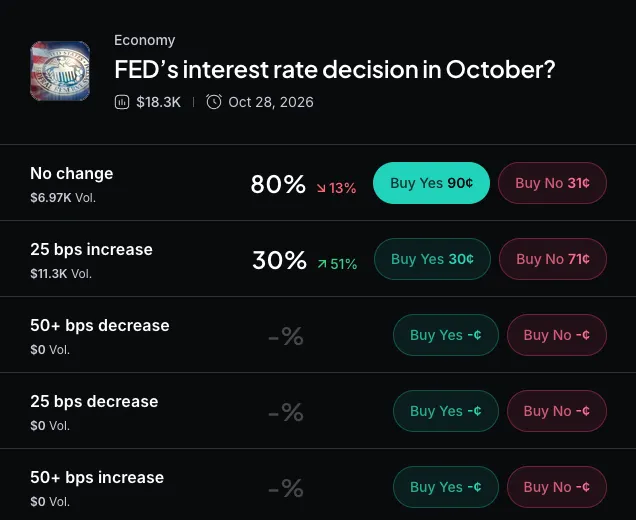
    That said, as of writing, early Friday, the market was very pessimistic about CLARITY Act passage this year. The odds dropped to another yearly low of 27%.

    Source: Polymarket

    Overall, there is movement to resolve the ethics provision stalemate. But White House priority and the incoming August recess have made the market doubt the bill’s potential progress next week.


    Final Summary

    • U.S Treasury Secretary Bessent was “disappointed” with Senate Democrats’ opposition to the CLARITY Act.
    • Chances of the bill’s passage dropped to a record yearly low of 27% amid a shrinking window
  • Galaxy Digital Says $70,000,000 Drained From Bitcoin Holders in Coldcard Wallet Exploit

    Galaxy Digital Says $70,000,000 Drained From Bitcoin Holders in Coldcard Wallet Exploit

    Researchers at Galaxy Digital say about $70 million has been stolen due to an exploit in the popular Bitcoin wallet Coldcard.

    The attack was enabled by a firmware bug that dramatically reduced the randomness of how the wallet creates its secret recovery phrase.

    According to Galaxy, the vast majority of the funds were stolen in less than an hour.

    “While new attacks are likely to occur if users do not migrate their funds out of affected Coldcard-generated addresses, the initial attack is identifiable onchain. Note that this analysis may not be complete, but it represents our best-efforts attempt at scoping the initial impact…

    The full event spans six blocks and 41 minutes. Three intervening blocks contain no sweep activity at all, suggesting the transactions were broadcast in batches rather than streamed…

    The loss profile is dominated by sub-1 $BTC addresses in count, but by 1-50 $BTC addresses in value. This is the shape of individual self-custody, not institutional or exchange holdings.”

    Coinkite, the company behind Coldcard, says it takes full accountability for the firmware bug and has apologized to affected users.

    The company has released emergency firmware updates for all affected models: version 4.2.0 or later for Mk3, 5.6.0 or later for Mk4 and Mk5, and 1.5.0Q or later for the Coldcard Q.

    These updates remove the vulnerable software fallback path and ensure new seeds use the intended hardware true random number generator.

    Critically, a firmware update alone does not secure existing seeds. Users must generate an entirely new recovery phrase on the fixed firmware and migrate their $BTC.

  • XRP adds 489K accounts in 2026 – Inside XRPL’s network surge

    XRP adds 489K accounts in 2026 – Inside XRPL’s network surge

    Ripple [$XRP] is slightly down by around a percent but still accounts for a sizeable daily trading volume. The altcoin’s daily volume is about $1.06 billion, slightly lower than the high volumes experienced in a bullish market.

    This significant volume results from high network activity growth. Despite that, the price of $XRP is lagging, down about 41% year-to-date (YTD).

    Network activity on $XRP Ledger explodes

    On-chain data showed immense network growth across multiple divides.

    For instance, the $XRP Ledger has added 489,739 new accounts in the first half of 2026. As a result, they have hit a new peak level of 8.403 million in July, up from 7.913 million.

    Additionally, exchange supply declined to a new 7-year low of 2.748 billion $XRP tokens. This indicates accumulation is in progress as coins are moving to self-custody, reducing circulating supply.

    Moreover, the cumulative spot ETF inflows hit $1.50 billion, accounting for about 1.48% of the market cap. The daily total net flow was $5.98 million, with a total traded value of $8.83 million.

    Source: RippleXity

    On top of that, Ripple Mint went live for institutional $RLUSD. In fact, $RLUSD’s market cap was growing on both the $XRP Ledger and the Ethereum [ETH] network.

    Recently, Ripple minted 15 million $RLUSD on Ethereum and then burned 10 million $RLUSD in their treasury. The circulating supply of $RLUSD on Ethereum has climbed above $712 million, behind the $XRP Ledger with $873 million.

    Can this help $XRP price stay above $1?

    Meanwhile, the price of the altcoin is around $1.07, a few cents above $1.

    Over the past three months, $XRP price is down 21.8% and 36.6% in six months. It is still down by more than 66% since last July.

    Source: CryptoRank

    This data confirms the trend is bearish, which risks the altcoin breaking below $1. $XRP is only 6.67% away from trading below $1. However, it was trading above the SuperTrend, which was also above this key support level.

    The RSI was at 43, below the neutral level, indicating there was mid-selling activity. However, the selling did not outweigh the buying activity as per the exchange supply balances.

    Source: $XRP/USDT on TradingView

    Technically, the altcoin is trapped between two dynamic levels at $1 and $1.16. The sideways market reinforces the decline in exchange balance.

    Therefore, the growing network activity may help the price hold above the lower support level at $1. If the price breaks down, the bearish market that has persisted for most of 2026 will continue.

    Final Summary

    • $XRP network activity explodes with 489.7K new accounts added, low exchange balance, and $RLUSD market cap growth.
    • $XRP price was trading above $1, with mid-selling hinting at a test of the demand zone, but can bulls hold it?
  • Google Yanks Google Earth AI Image Tool a Day After Launch Over Deepfake Fears

    Google Yanks Google Earth AI Image Tool a Day After Launch Over Deepfake Fears

    In brief

    • Google removed an AI image-generation feature from Google Earth on July 31, just a day after its July 30 launch, saying users were sharing generated imagery that appeared to violate its policies.
    • Journalists and open-source researchers showed the Nano Banana tool could easily fabricate events that never happened—a blast crater in Los Angeles, a flooded U.S. Capitol, Iran’s Kharg Island on fire—raising fears it could supercharge misinformation.
    • Google’s defense that images carry a SynthID watermark failed to reassure critics, and the company said it would only restore the feature after adding stronger guardrails, giving no timeline.

    Google has pulled a newly launched artificial intelligence feature from Google Earth barely a day after releasing it, following a swift backlash from journalists and open-source investigators who warned it could flood the internet with convincing fake satellite imagery.

    The company introduced the tool on July 30, letting users zoom to any location on Google Earth’s web version, click “create image,” and generate a scene from a text prompt using its Nano Banana model. By July 31, it was gone.

    In a statement posted to X, Google said people “uniquely trust Google Earth for a reliable view of the world,” and that while geospatial professionals had found useful applications, others were sharing generated images that appeared to violate its policies. It said it was rolling back the feature while building stronger guardrails.

    The alarm centered on how easily the tool fabricated events that never happened. Tech outlet 404 Media demonstrated it could produce a blast crater in Los Angeles and add protesters outside Google’s own Mountain View campus. NPR generated images of Iran’s Kharg Island ablaze and a flooded U.S. Capitol, both of which would be major news if real. Open-source researcher Henk van Ess told NPR he tried prompts including refugees at the Mexican border and a nuclear plant in Iran, and that none were refused.

    Satellite imagery has long served as a trusted anchor for verifying breaking news and atrocities, precisely because it has been difficult to fake. Bellingcat researcher Jake Godin cautioned that one-click generation would streamline the creation of fakes and accelerate their spread, adding that misinformation outruns any correction and that governments could now dismiss authentic images as fabricated.

    Google had initially downplayed the concerns, noting that every image carries its SynthID watermark, which flags it as AI-generated in tools like Gemini, and that it blocks creation on harmful topics. Critics called that insufficient, arguing few people stop to verify images before sharing them.

    Google said it would reinstate image generation in Google Earth only after implementing tighter protections, though it gave no timeline.

    Daily Debrief Newsletter

    Start every day with the top news stories right now, plus original features, a podcast, videos and more.

  • Uniswap launches Earn with Morpho lending vaults

    Uniswap launches Earn with Morpho lending vaults

    Uniswap has launched Earn, a self-custodial lending product that allows users to deposit $USDC, $USDT, and $ETH into Morpho vaults without leaving its app.

    Uniswap Earn supports $USDC, $USDT and $ETH

    Earn is available through the Uniswap Web App and Wallet, extending the platform beyond token swaps and liquidity provision into onchain lending.

    Users can select a supported asset, choose an amount and authorize the deposit with one signature. Deposits then earn interest paid by borrowers across lending markets selected by the underlying vault.

    $USDC, $USDT and $ETH are supported at launch, with all three vaults operating on Ethereum mainnet. Users can withdraw at any time because the product has no mandatory lockup or cooldown period, according to Uniswap’s launch announcement.

    Uniswap does not charge a separate fee for using Earn. However, depositors remain responsible for standard Ethereum transaction costs, which can make smaller positions less economical when network fees rise.

    Deposits appear alongside users’ other assets in the Uniswap portfolio interface. The dashboard displays the amount deposited, the current yield rate and total earnings, while recording deposits and withdrawals in the account’s activity history.

    Morpho and Gauntlet manage the lending infrastructure

    Morpho supplies the permissionless lending infrastructure behind Earn, while Gauntlet curates the vaults and determines how deposits are distributed across eligible markets.

    Vault curation can reduce the need for depositors to compare individual lending pools, collateral types, and utilization rates. Gauntlet can set exposure limits and rebalance capital as market conditions change, but depositors still carry the risks associated with those allocation decisions.

    Morpho currently reports about $11.79 billion in deposits and $4.15 billion in active loans across its network. The protocol previously said deposits increased from $5 billion at the beginning of 2025 to $13 billion by the end of that year’s third quarter.

    Active loans rose from $1.9 billion to $4.5 billion over the same period. Annualized interest paid to Morpho lenders reached $227 million in 2025, representing a 400% increase from 2024, according to Morpho’s annual review.

    Earn broadens Uniswap beyond token swaps

    Earn gives Uniswap another way to retain users between trades. Instead of transferring unused stablecoins or $ETH to a separate lending protocol, users can now access lending vaults through the same interface used for swaps and portfolio tracking.

    The integration places Uniswap in closer competition with established lending platforms such as Aave and Compound. Its main distribution advantage is an existing base of traders who can move from swapping to lending without navigating to another application.

    For US users, Earn is an onchain lending service rather than a bank savings account. Deposits do not carry FDIC insurance, and self-custody does not remove smart contract, collateral, liquidity, or stablecoin risks.

    Vault yields are also variable. Rates can fall when lender deposits grow faster than borrowing demand, meaning the displayed annual percentage yield is not guaranteed for the duration of a deposit.

    $UNI price shows limited reaction to Earn launch

    $UNI traded near $4.30 at the time of writing, declining approximately 2.8% over the previous 24 hours. The token remained up about 12% over seven days.

    Its market capitalization stood near $2.68 billion, while 24-hour trading volume reached roughly $376 million. The latest move does not establish a direct link between the Earn announcement and $UNI’s price performance.

    Adoption will depend on the yields offered by the Gauntlet-curated vaults, Ethereum transaction costs, and users’ willingness to accept lending-market risks. Uniswap has not announced that Earn revenue will flow directly to $UNI holders, making deposits and user retention the main metrics to watch initially.

  • MarsCat Partners with Cwallet to Expand Web3 Wallet Ecosystem

    MarsCat Partners with Cwallet to Expand Web3 Wallet Ecosystem

    MarsCat, a renowned Web3 network for blockchain connectivity, has partnered with Cwallet, an inclusive Web3 crypto wallet entity. The partnership attempts to delve into exclusive opportunities that enhance blockchain connectivity and offer a relatively consumer-friendly digital asset experience. As MarsCat mentioned in its official social media announcement, the development is set to bolster Web3 expansion across diverse blockchain ecosystems. Additionally, the development underscores a mutual commitment to advancing decentralized interactions via innovative technologies.

    Ecosystem Collaboration 🌐

    MarsCat 🤝 @CwalletOfficial@CwalletOfficial is building an all-in-one Web3 wallet experience, trusted by millions of users with support for multi-chain assets, swaps, payments, trading, and seamless Web3 interactions.

    Together, both ecosystems will… pic.twitter.com/OXq6iCHuja

    — MarsCat (@MarsCat_Global) July 31, 2026

    MarsCat and Cwallet Partnership Simplifies Web3 Experience and Adoption

    In partnership with Cwallet, MarsCat endeavors to streamline the wider Web3 experience, specifically for consumers driving blockchain adoption. Instead of introducing a single product rollout, the joint effort is establishing a framework for further such initiatives to integrate services as well as broaden functionality across networks. In this respect, Cwallet has developed a comprehensive Web3 wallet network to support numerous users worldwide. Additionally, the wallet delivers access to different multi-chain digital assets, letting users manage crypto across several blockchains from an inclusive interface.

    Apart from the fundamental asset management, Cwallet also enables token swaps, trading tools, crypto payments, and different Web3 functionalities for seamless blockchain and DeFi interactions. With this partnership, both entities focus on unique ways to develop a widely connected and seamless decentralized environment. The shared objective of both platforms is to minimize barriers that usually keep users away from entering the Web3 market. For this purpose, it makes blockchain services more convenient to navigate and access.

    As the market keeps evolving, consumer experience has turned into a crucial element in advancing mainstream adoption. Keeping this in view, this move underscores the rising trend where blockchain projects are collaborating to expand networks rather than working autonomously. Such strategic partnerships permit them to merge technical expertise, infrastructure, and user communities while pushing forward interoperable services.

    Advancing Blockchain Interoperability with User-Centric Innovation

    According to MarsCat, the partnership prioritizes ecosystem adoption and connectivity. If effectively implemented, this development could boost interactions between diverse blockchain apps while also complementing a relatively user-centric and integrated Web3 ecosystem. Overall, amid the growing adoption of the blockchain technology, such collaborations are becoming a very common strategy to deliver improved functionality while also establishing broadly accessible decentralized experiences.

  • US Treasury Sanctions Iranian Firms Taking Bitcoin for Hormuz Passage

    US Treasury Sanctions Iranian Firms Taking Bitcoin for Hormuz Passage

    In brief

    • OFAC sanctioned two Iranian firms behind a scheme requiring vessels to buy IRGC-approved “insurance” to transit the Strait of Hormuz.
    • One of them, Hormuz Safe, accepts Bitcoin and other digital assets to evade sanctions, Treasury said.
    • Blockchain analysts told Decrypt in April they saw no evidence crypto was being used at scale for Hormuz tolls.

    Iran is accepting Bitcoin from commercial shipping in exchange for passage through the Strait of Hormuz, according to the U.S. Treasury, whose Office of Foreign Assets Control sanctioned two firms behind the scheme on Wednesday. Vessels crossing the chokepoint, which carries a fifth of the world’s oil, are required to buy maritime “insurance” approved by the Islamic Revolutionary Guard Corps.

    The cover protects against risks Iran itself creates, Treasury said, chiefly the seizure of vessels. Persian Gulf Marine Insurance Company, set up by Iran’s insurance regulator, brokers the policies. They are approved by the IRGC-backed Persian Gulf Strait Authority, which Washington designated in May.

    The Bitcoin rail

    The second firm, HormuzSafe Marine Services Authority, was developed by Iran’s Ministry of Economy and markets itself as a provider of traffic control, security and emergency response as well as insurance. It accepts Bitcoin and other digital assets, which OFAC said is part of an effort to bypass Western sanctions. Babak Morteza Zanjani, an Iranian financier sanctioned earlier this year, promoted it to his social media followers.

    When the Financial Times reported in April that Iran would demand crypto tolls from shipping, starting at $1 a barrel, blockchain analysts were initially unconvinced.

    At the time, TRM Labs policy head Ari Redbord told Decrypt he was skeptical, saying there was no data showing crypto being used at scale for Hormuz transit. Others noted that the man quoted in the report, an industry union spokesman, did not speak for the regime. Treasury’s designation settles part of that, naming a firm built by a government ministry that takes Bitcoin.

    The shadow fleet

    Treasury Secretary Scott Bessent said the Iranian regime is “desperate for cash,” with its economy “in freefall” and inflation in triple digits, and that Washington would not let Iran “hold global commerce hostage.”

    The same action designated eight tankers and their operators over cargoes of Iranian crude and petroleum products, most of the companies registered in Hong Kong. More than 100 vessels tied to Iran’s shadow fleet have been sanctioned since January. Treasury said the insurance schemes were set up to replace revenue lost to Operation Epic Fury.

    On Myriad, a prediction market owned by Decrypt’s parent company Dastan, users place a 38% chance on the Iranian blockade ending by August 31.

    Daily Debrief Newsletter

    Start every day with the top news stories right now, plus original features, a podcast, videos and more.

  • Cryptocurrency Project Backed by 140 Companies Including Visa and BlackRock Launched! This Giant Altcoin Was Selected!

    Cryptocurrency Project Backed by 140 Companies Including Visa and BlackRock Launched! This Giant Altcoin Was Selected!

    Open USD (OUSD), a next-generation stablecoin project targeting institutional investors, is preparing to launch.

    OpenUSD (OUSD), a stablecoin aimed at institutional investors and backed by a consortium of over 140 companies including Visa, Mastercard, and BlackRock, will initially be launched on Ethereum.

    The news was announced by Ethereum Institutional, an independent non-profit organization focused on the adoption of Ethereum by institutional investors, in a statement from its official X account.

    “Visa, Mastercard, Stripe, BlackRock, BNY Mellon, and over 140 participating companies are bringing OUSD to Ethereum for the first time.”

    Corporate Payment Infrastructure Targeted!

    According to the statement, Open USD (OUSD) is positioned as a stablecoin designed to make it easier for companies to conduct digital dollar transactions.

    Open Standard, the company behind the project, aims to enable businesses to mint and redeem OUSD without fees or volume limits.

    One of the notable features of this stablecoin is its reserve revenue model. Open USD plans to share the returns from its reserves with partners participating in the ecosystem after deducting operational management fees. This structure stands out as a different revenue sharing approach compared to some existing large stablecoin models.

    Finally, the launch of OUSD on the Ethereum network is of great importance in further solidifying the platform’s leading position in the institutional finance space. This is because Ethereum stands out as a significant infrastructure for institutional use in stablecoins, real-world assets (RWA), and tokenization applications.

    *This is not investment advice.

  • US Treasury sanctions Iran’s Bitcoin-backed shipping insurance scheme

    US Treasury sanctions Iran’s Bitcoin-backed shipping insurance scheme

    The US Treasury’s Office of Foreign Assets Control (OFAC) announced a new round of sanctions targeting Iran’s maritime revenue network, including two firms accused of operating an IRGC-backed insurance scheme for ships transiting the Strait of Hormuz.

    Treasury said Persian Gulf Marine Insurance Company and HormuzSafe Marine Services Authority sold mandatory insurance policies covering risks such as vessel seizures while accepting payments in Bitcoin and other digital assets to circumvent sanctions.

    According to the Treasury, the insurance scheme was designed to generate revenue for the IRGC while giving Iran greater influence over commercial shipping through one of the world’s busiest waterways. The sanctions were imposed under Executive Order 13902 as part of the US campaign to increase economic pressure on Iran.

    In addition, OFAC sanctioned eight shipping companies and blocked eight oil tankers that allegedly transported millions of barrels of Iranian crude oil and petroleum products to destinations including China and the UAE. Treasury said it has now sanctioned more than 100 vessels associated with Iran’s shadow fleet in 2026.

    The latest measures freeze assets subject to U.S. jurisdiction and prohibit transactions involving designated entities. Treasury also warned that non-US persons may face penalties if they assist sanctioned parties or facilitate efforts to evade US sanctions.

  • Morning Minute: Coinbase Posts Surprise Loss as Crypto Trading Dries Up

    Morning Minute: Coinbase Posts Surprise Loss as Crypto Trading Dries Up

    Morning Minute is a daily newsletter written by Tyler Warner. The analysis and opinions expressed are his own and do not necessarily reflect those of Decrypt.

    GM!

    Today’s top news:

    • Crypto majors are red while stocks grind higher; BTC -2% at $63.7k
    • BTC ETFs see $233M in net inflows, 2nd biggest day since early May
    • Coinbase posts surprise loss in Q2 earnings; Strategy books $8.2B loss
    • NY AG files petition to shut down Kalshi, seeks $36B in damages
    • Coldcard exploit leads to $38M in Bitcoin losses

    📉 Coinbase Posts a Surprise Loss as Trading Dries Up

    Coinbase reported $1.22 billion in second-quarter revenue on Thursday, down 14% from the prior quarter and 19% from a year ago, along with a net loss of $359 million. COIN stock fell roughly 5% after hours.

    The miss was broad: revenue came in below the $1.29 billion Wall Street expected, and the loss of $1.36 per share was far worse than the roughly break-even result analysts had modeled. Total crypto spot trading volume fell more than 20% from the prior quarter as prices slid and volatility hit multi-year lows, dragging transaction revenue down 21% to $599 million.

    Subscription and services revenue also missed, despite being the less trading-dependent segment of the business. Coinbase blamed late-closing USDC commercial agreements and lower staking revenue from falling prices, but the shortfall undercut the idea that the diversified businesses are decoupled from the trading cycle.

    On the bright side, stablecoin revenue reached $292 million, with average USDC held on Coinbase products hitting a record $20 billion, more than 30% of all USDC in circulation. Prediction-market revenue more than doubled quarter over quarter, up 106%, and crossed a $100 million annualized run rate. Coinbase’s share of global crypto trading volume hit a record 10.3%, its third straight quarter of market-share gains, and the company said 88% of net revenue now comes from sources other than Bitcoin spot trading, up from 45% in 2020. It also held $8.6 billion in cash, extended a 14-quarter streak of positive adjusted EBITDA, and lowered its full-year expense outlook.

    Now that the results are in, it’s interesting to look at Robinhood and Coinbase side by side. Both reported crypto trading revenue shrinking and prediction markets surging, but Robinhood posted record profit while Coinbase posted an outright loss. Coinbase is clearly far more exposed to the trading cycle it’s trying to grow beyond, and it doesn’t yet boast 13 9-figure product lines. As for Q3, guidance is looking fairly soft. But that may not be accounting for Cobie taking over trading and the apps. Let’s see how fast he can get to work on turning the story around…

    🌎 Macro Crypto and Markets

    • Crypto majors are slightly red; BTC -2% at $63.7k; ETH -2% at $1,880; SOL -1% at $73.40; HYPE +3% at $54.90
    • Top alt movers include UNI (+5%), PUMP (+5%) and ADA (+3%)
    • Oil +1% at $85; Gold +1% at $4,115
    • Stock futures are green as tech stocks and memory go higher; DOW +0.5%, Nasdaq +1.2%
    • Strategy booked an $8.2 billion Q2 loss as Bitcoin fell below its $75,476 cost basis, far worse than the $2.15 billion Wall Street expected, though it added 11% to its stack and said its cash reserve covers two-plus years of dividends
    • Cathie Wood’s Ark Invest sold BitMine while adding to Coinbase and Circle, trimming about $4.4 million across BitMine, Robinhood, Block, and Bullish after their shares fell, while recently buying roughly $43.5 million of Coinbase and Circle
    • Treasury Secretary Scott Bessent urged the Senate to pass the CLARITY Act, accusing Democrats of stalling for political reasons and closing his appeal by quoting Satoshi Nakamoto: “If you don’t believe me or don’t get it, I don’t have time to try to convince you, sorry.”
    • The Bitcoin quantum threat inched closer as IBM claimed a “trusted quantum advantage,” a milestone that renews urgency around hardening Bitcoin’s cryptography
    • Elon Musk’s xAI sued Minnesota to block the US’s first AI nudification law, challenging it on free-speech grounds
    • Ondo Finance is weighing an acquisition worth up to $500 million, as the real-world-asset tokenization firm looks to expand through M&A

    Corporate Treasuries & ETFs

    Meme Coin Tracker

    • Meme leaders were mixed; DOGE -1%, SHIB even, PEPE -1%, PENGU +4%, TRUMP -2%, BONK -5%
    • Robinhood chain was led by FRONG (+600x) and IF (+74%)
    • Solana leaders included Moondogecoin (+300x) and KET (+60%); ANSEM +4% at $178M

    💰 Token, Airdrop & Protocol Tracker

    • The New York Attorney General filed a petition to shut down Kalshi in New York State over what it’s calling an illegal gambling operation and seeks at least $36B in damages
    • Pons went live on Uniswap’s Launches aggregator, touting more than 210,000 tokens launched in two weeks and over $283 million in volume through Uniswap pools, with a v2 coming on Uniswap v4 to bridge memecoins and RWAs on Robinhood Chain (PONS -12% to $28M)
    • A Coldcard key flaw drained $38 million in Bitcoin, with 594 BTC swept from about 500 wallets in 25 minutes after a build error left seeds far more guessable than intended; maker Coinkite believes an attacker used AI to find the bug in its open-source firmware, a review its own AI had missed weeks earlier

    🚚 What is happening in NFTs?

    • NFT leaders were red; Punks even at 32.3 ETH, BAYC -1% at 8.3 ETH, Pudgy -4% at 3.8 ETH; Hypurr’s even at 189 HYPE
    • No notable movers

    Daily Debrief Newsletter

    Start every day with the top news stories right now, plus original features, a podcast, videos and more.