Category: Business

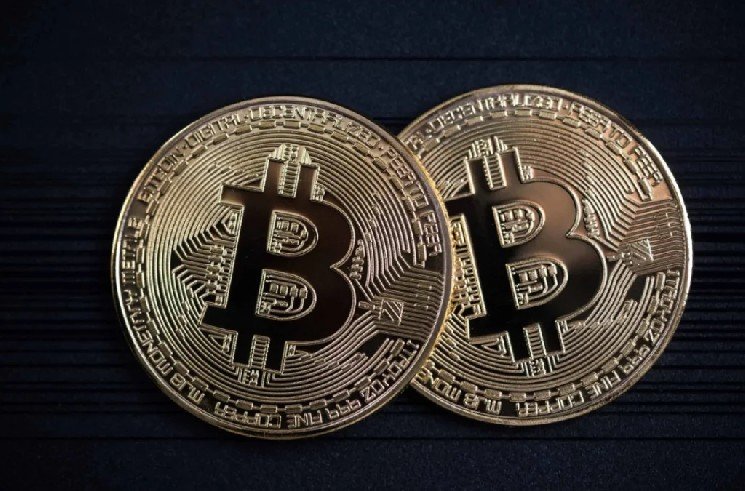
  • Another Giant Alliance Formed for Bitcoin: A New Move for the Great Threat Awaiting 6.4 Million BTC! Here Are the Details

    Another Giant Alliance Formed for Bitcoin: A New Move for the Great Threat Awaiting 6.4 Million BTC! Here Are the Details

    At this point, nine cryptocurrency companies formed the Quantum Alliance to develop common standards to address potential security risks posed by quantum computers in the future.

    According to CoinDesk, the initiative includes companies such as Quantus, American Fortress, Intmax, Keystone, Midnight Foundation (founded by Cardano founder Charles Hoskinson), Postquant Labs, Abelian, The Vault, and Hacken.

    It was also stated that the initiative aims to facilitate the transition of blockchain networks, particularly Bitcoin and Ethereum, to quantum-resistant systems.

    6.4 Million Bitcoin May Be at Risk!

    The alliance estimated that 6.4 million Bitcoin, or 30.2% of its total supply, could be vulnerable to future quantum computing attacks through exposed public keys. This amount reportedly includes approximately 1.1 million BTC believed to belong to Bitcoin creator Satoshi Nakamoto.

    According to the alliance, if quantum computers achieve sufficient processing power, attackers could extract private keys from public keys and use them to steal assets held in these wallets. However, it is emphasized that current quantum computers do not have the capacity to break Bitcoin’s cryptographic security today.

    However, experts have differing opinions on when such quantum attacks might become possible. Richard Carback, Chief Technology Officer of Post-Quantum Labs, suggested 2028 as a realistic timeline for quantum risk. Bryn Bennett, director of The Vault, argued that while the timing is difficult to predict, the industry should have a framework in place to move vulnerable assets if technological advancements occur faster than expected.

    *This is not investment advice.
  • Big Tech’s AI auditors will only see what they’re shown

    Big Tech’s AI auditors will only see what they’re shown

    In 2000, Enron paid accounting firm Arthur Andersen — once part of the so-called “Big Five” of international accounting firms, now the “Big Four” after Arthur Andersen’s implosion — $25 million to audit its books and another $27 million for tax and consulting work. Within two years, both firms had collapsed. Congress responded with the Sarbanes-Oxley Act, which took the choice of auditor away from management, stopped auditors from selling most other services to the companies they audit and set up a public board to inspect the auditors themselves.

    Andersen failed not due to a deficit in expertise, but in an incentive to look hard at a client paying it $52 million in a single year. Voluntary pledges in the AI industry don’t have a great record, either. In 2023, the leading AI companies made a set of voluntary commitments to the White House, including letting outside experts test their systems before release. When researchers at Stanford, Harvard and Brown went back and scored 16 companies against those commitments, the average came to 53%. On the promise to help outsiders find and report problems, eight of the 16 scored zero.

    Even when outside testing does happen, the developer sets the terms. METR, a nonprofit that tests AI models, wrote that its testing of OpenAI’s o3 model before release was “conducted over only three weeks,” with “limited access to information about the model” and no view of the model’s step-by-step reasoning.

  • Terrifying new images show Super El Nino developing into ‘strongest weather event for 1,000 years’

    Terrifying new images show Super El Nino developing into ‘strongest weather event for 1,000 years’

    A huge area of unusually warm water appears to be spreading across the Pacific Ocean, raising fears that this year’s Super El Niño could become the strongest in 1,000 years.

    El Niño refers to the unusually warm phase that occurs when surface waters in the Pacific Ocean heat up.

    It happens when normal, east-to-west trade winds weaken or reverse, causing warm water to pool along the Americas and disrupt global weather, often causing heavy rains in some regions and severe droughts in others.

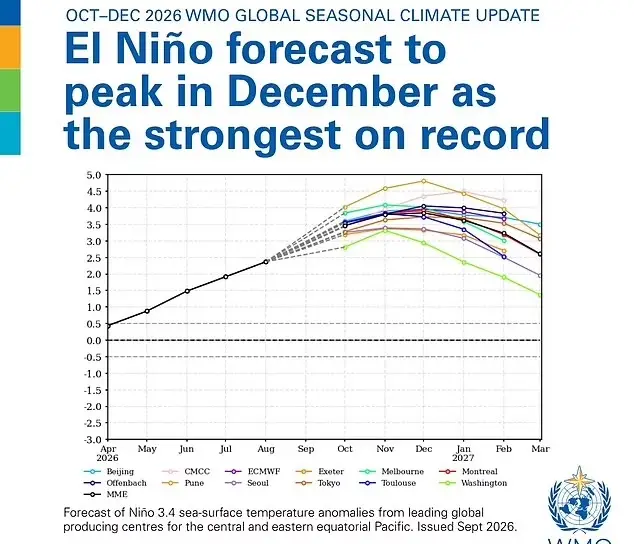
    While there have been only a handful of these cases since 1950, the World Meteorological Organization said this El Niño is likely to strengthen over the rest of 2026, driving more extreme weather around much of the globe.

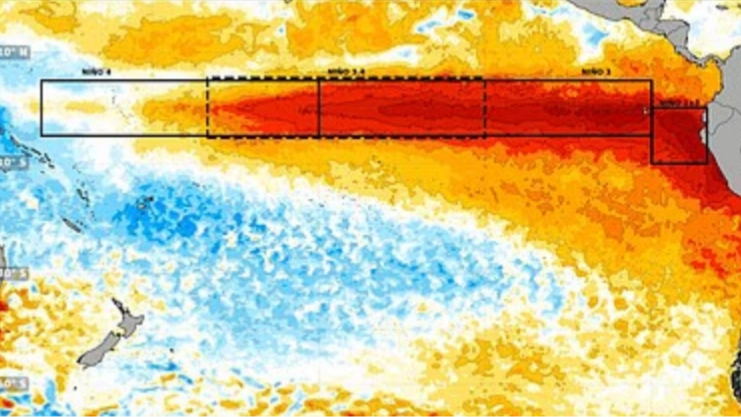
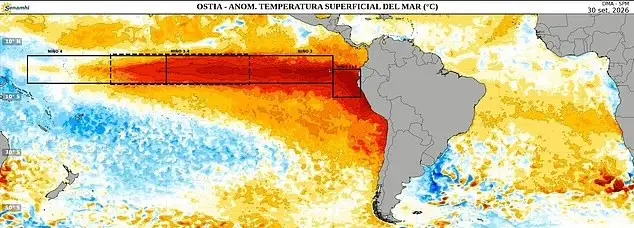
    Now, images released by Peru’s national weather service show how quickly the warm water has spread in just two weeks.

    (Senhami)

    (Senhami)

    From 30 September, a map showed a large area of warm water near the coasts of Ecuador and Peru.

    However, a new image from 14 October suggests that the heat is spreading further south towards Chile, meaning some parts of the ocean are now more than 3°C warmer than normal.

    “I think that this year’s El Niño event is likely to be the strongest in 1,000 years if the latest models of its peak prove accurate,” writes climate scientist Zeke Hausfather for The Climate Brink.

    For Brits wondering why it’s been unusually warm this month, Stephen Dixon, Met Office Spokesman, says it’s not all down to the El Niño.

    (WMO)

    (WMO)

    “October has started warmer than average for the time of year, but not in a historically significant way,” Dixon tells LADbible.

    “We’ve reached into the low 20s Celsius today while the average daily maximum temperature for this month is 13.1C.

    “That being said, the natural variability of the UK climate means that we can indeed see temperatures into the 20s, even in October.”

    He added: “The temperatures at the moment are largely down to a milder air mass over southern parts of the UK, helping to keep temperatures above average for the time of year.

    (ECMWF)

    (ECMWF)

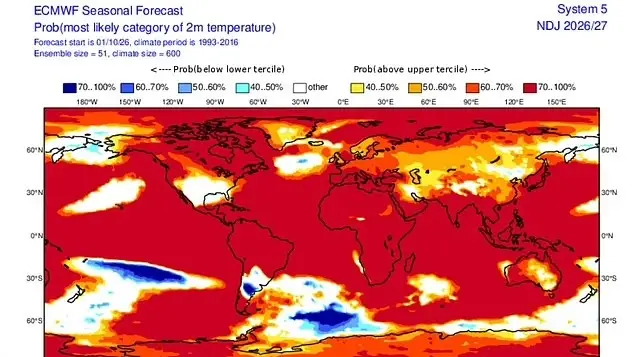
    “El Nino is one of a number of large-scale atmospheric drivers that influence weather patterns in the UK and Europe.

    “However, other atmospheric and oceanic factors will continue to play an important role in determining conditions over the coming months. It could lead to more wet and stormier conditions later in autumn and early winter, while it could also bring drier, cooler and more settled conditions later in the winter.

    “However, no single weather event in the UK can be attributed to El Nino alone and much will depend on its interaction with other climate drivers.”

  • Police officer sacked after failing to pay for 40p Sainsbury’s carrier bags

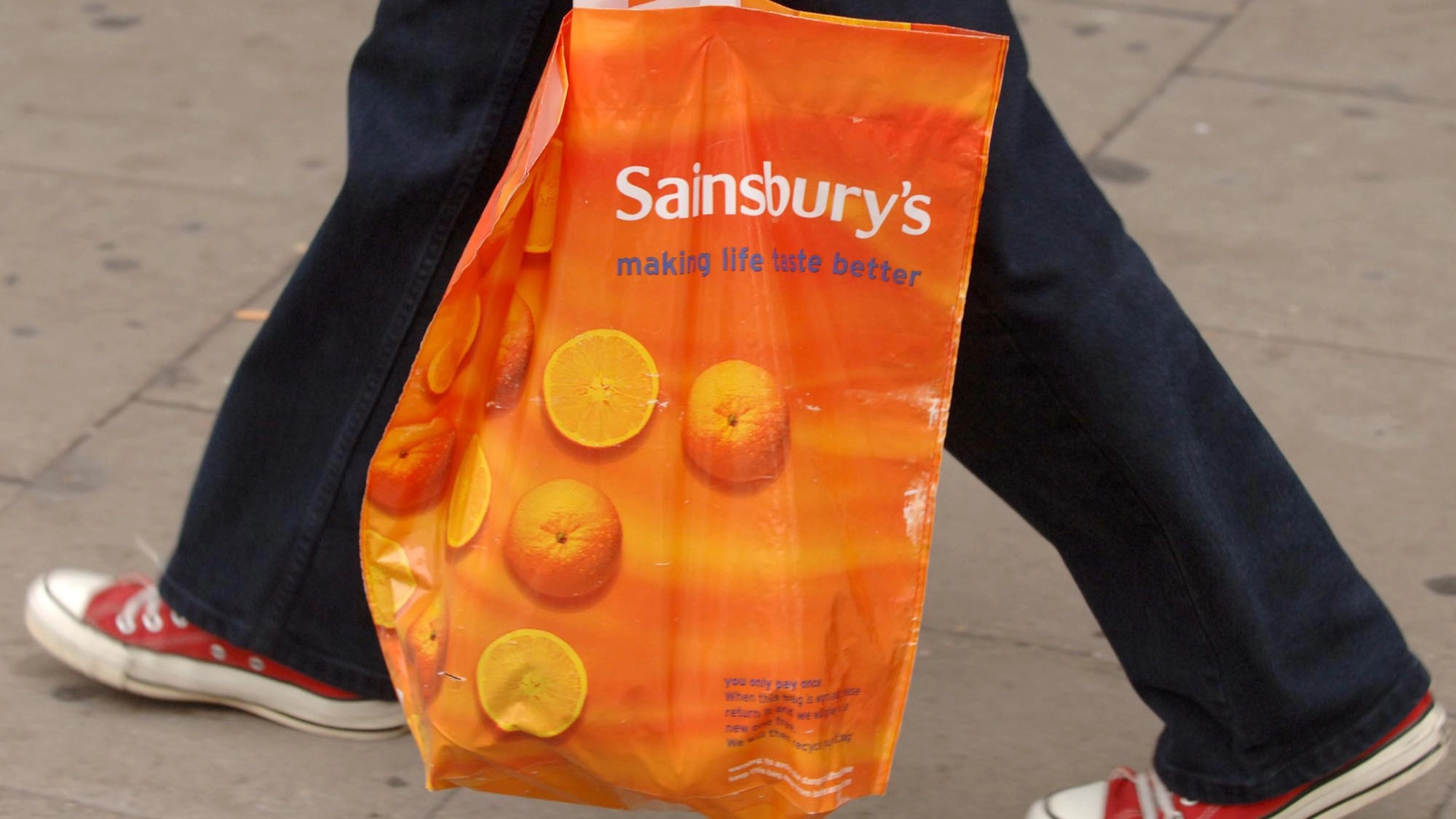
    Police officer sacked after failing to pay for 40p Sainsbury’s carrier bags

    Police officer sacked after failing to pay for 40p Sainsbury’s carrier bags

    Special constable Luke Hodgson was employed at a Sainsbury’s supermarket last year

    Featured Image Credit: Andy Shaw/Bloomberg via Getty Images

    Topics: UK News, Sainsbury’s

  • Boom or Bust, Bitcoin Wins the AI Trade, Bitwise CIO Says

    Boom or Bust, Bitcoin Wins the AI Trade, Bitwise CIO Says

    In brief

    • Bitwise CIO Matt Hougan argued in an investor note that Bitcoin benefits across nearly every macro scenario, framing it like the “Choose Your Own Adventure” books where different paths reach the same ending.
    • If AI delivers “superabundance,” value flows to scarce assets like Bitcoin; if the AI bubble bursts, he sees a near-certain government bailout and money-printing that Bitcoin “was built for.”
    • He hedged—citing Bitcoin’s 50% COVID drop and risks like a crackdown or quantum computing, but concluded macro “matters less than most people think.”

    No matter how the AI story ends, Bitwise’s chief investment officer argues, the trade leads to the same place: Bitcoin higher.

    In a note to investors published Wednesday, Matt Hougan laid out his case using the “Choose Your Own Adventure” books of his childhood, where wildly different choices often funneled readers to the same ending.

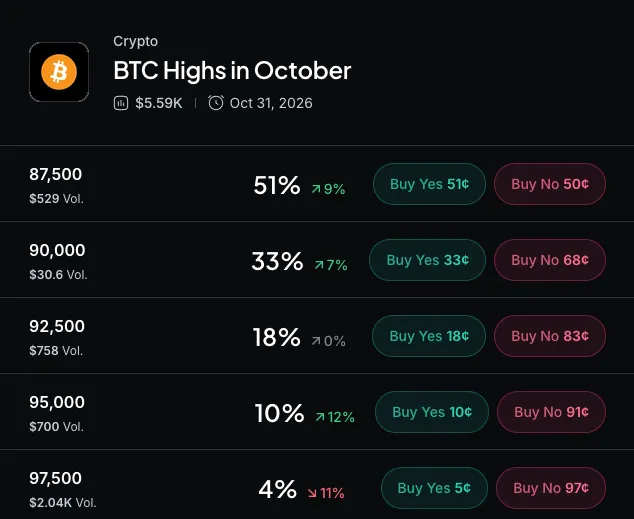
    Myriad: How high will Bitcoin go? Click to make your prediction.
    Myriad: How high will Bitcoin go? Click to make your prediction.

    He said the range of macro outcomes facing investors today is the widest he’s seen in his career, with pundits split between AI doubling GDP and AI causing human extinction. His answer was to walk down each path and see where it leads.

    If AI delivers “superabundance,” Hougan wrote, productivity explodes and intelligence-based work gets cheap, but that abundance becomes a tailwind for genuinely scarce assets, as value migrates to things that can’t be reproduced, like waterfront land, gold, and Bitcoin.

    If the AI bubble bursts instead, triggering a 2008-style recession, Bitcoin initially sells off with other risk assets, but Hougan argued a government bailout would follow, and given that the AI buildout is “the biggest infrastructure investment in the history of America,” the resulting money-printing would be enormous.

    “This is exactly the environment bitcoin was built for,” he wrote, putting the odds of a bailout at “nearly 100%.”

    BitcoinBTC · USD

    $82,352−0.83%

    Oct 9Oct 11Oct 13Oct 14Oct 16

    $84.2k$82.9k$81.5k$80.2k

    24h HighHigh$82,816

    24h LowLow$81,634

    VolVol$1.2B

    Market projectionsOdds by Myriad

    →

    The third path, a muddle-through of roughly 3% growth and 4% rates, simply lets Bitcoin keep doing what it’s been doing: drawing ETF flows, advisor adoption and corporate and sovereign balance-sheet allocations as government debt mounts. “Bitcoin wins by showing up,” he wrote.

    The memo lands amid exactly the kind of macro anxiety Hougan is addressing. BlackRock CEO Larry Fink warned this week that a halt to data center construction could tip the U.S. into recession, underscoring how tightly AI infrastructure and the broader economy have become intertwined.

    Hougan was careful to hedge. He stressed Bitcoin won’t rise in a straight line, noting it fell 50% in days during the 2020 COVID panic before rebounding roughly 20-fold, and acknowledged the thesis could break for non-macro reasons. Among them: a global government crackdown or the quantum-computing threat to older wallets, a rising risk even as researchers debate whether AI could break crypto’s encryption before quantum computers arrive.

    Still, his conclusion was unequivocal: for long-term investors, the big macro questions “matter less than most people think,” because nearly every path still ends with Bitcoin.

    Daily Debrief Newsletter

    Start every day with the top news stories right now, plus original features, a podcast, videos and more.

    Join 72,000+ readers

  • AEON Adds Bank Transfers in Chile

    AEON Adds Bank Transfers in Chile

    AEON, a payment settlement network for AI agents and digital assets, has added support for local bank transfers in Chilean pesos (CLP). The integration allows users to pay participating merchants through AEON Pay using crypto assets. The service converts crypto into fiat currency and transfers the funds directly to the merchant’s bank account.

    The expansion adds Chile to AEON’s payment network in Latin America, which already covers Brazil, Mexico, Argentina, Peru, and Bolivia, among other markets. AEON Pay is available through Telegram Mini Apps, crypto wallets, and exchange integrations, including Binance Wallet, Bitget Wallet, OKX Wallet, and Bybit. According to the company, its network supports more than 50 million merchants and over 10 000 global brands, including McDonald’s, Pizza Hut, and UNIQLO.

  • Japan’s megabank trio completes joint stablecoin payment test

    Japan’s megabank trio completes joint stablecoin payment test

    Using payments between Mitsubishi Corporation’s Japanese and overseas offices as a test case, the participants verified the stablecoin’s issuance, transfer and redemption processes and examined the associated regulatory and operational requirements.

    Under the proposed arrangement, the three banks jointly commission the issuance of the stablecoin, while Mitsubishi UFJ Trust and Banking Corporation acts as trustee. The stablecoin is structured as a specified trust beneficiary right under the Payment Services Act, with bank deposits serving as the underlying assets.

    The proposed design aims to support circulation among verified customers across the three banks’ networks, while allowing for large-scale distribution without a preset circulation limit.

    The three banks established the experiment’s framework and examined issuance and payment requirements, while the trust bank assessed trustee operations and user safeguards. TISI integrated the blockchain-based issuance system and wallet infrastructure.

    The experiment also evaluated how banks could coordinate when multiple institutions jointly commission issuance, including compliance with anti-money laundering and counter-terrorism financing requirements.

    As noted, participants examined system effectiveness, asset management, user protection and practical arrangements for issuing and redeeming the stablecoin. They said the trial confirmed the feasibility of the joint issuance model and the system’s safety and reliability, while providing operational insights for future implementation.

    The next stage will focus on resolving outstanding issues before commercial deployment, including governance, regulatory compliance, cybersecurity and system stability. The three banks are also pursuing related blockchain projects involving traditional asset trading, ownership transfers and trade settlement through TradeWaltz.

    The banks said they would continue working with regulators, financial institutions, businesses and technology providers to develop accessible digital payment services and support the adoption of on-chain deposits and other financial assets.

  • Bitcoin Bear Market Predicted in Contrary to Expectations! Analyst Points to $250,000, Gives a Date!

    Bitcoin Bear Market Predicted in Contrary to Expectations! Analyst Points to $250,000, Gives a Date!

    According to the analyst, the fact that macroeconomic cycles have nearly doubled in length suggests that Bitcoin’s traditional four-year cycle may also be extended.

    At this point, Hyland believes that Bitcoin is moving within a larger eight-year cycle and that the current bull run could last until 2028.

    Bitcoin Prediction: Peak Above $250,000!

    Hyland, who analyzed Bitcoin’s price movements and market indicators, stated that the current outlook bears similarities to market movements in 2016 and 2020. The analyst cited Bitcoin’s rise from $69,000 to $125,000 as one of the signs of this trend.

    At this point, the analyst states that the bottom, which he says occurred on July 1st, corresponds to the 44th month of the cycle. According to the analyst, if the cycle lasts approximately 96 months, the current uptrend could continue for another 52 months.

    Hyland predicts that Bitcoin could rise above $250,000 during this period, after which a sharp and prolonged bear market could begin.

    Warning of a Severe Bear Market After the Rise!

    The analyst likens the 2026-2028 period to the third year of the traditional four-year cycle model. During this time, he predicts Ethereum could perform more strongly than Bitcoin, while altcoins could experience sharp increases.

    Following this, the analyst warns that after Bitcoin reaches its peak, a multi-year bear market could begin, where it might experience a 70-80% or even greater drop in value, as seen in past cycles.

    *This is not investment advice.
  • Netflix, Prime Video and Disney+ viewers could pay BBC TV Licence under revolutionary proposal

    Netflix, Prime Video and Disney+ viewers could pay BBC TV Licence under revolutionary proposal

    The government is reportedly set to ‘press ahead’ on plans to make YouTube and Netflix viewers pay the BBC licence fee.

    Even if you don’t watch traditional telly, you might have to fork out around £180, the current cost of the standard licence fee, to consume content on streaming platforms.

    Currently, a valid TV licence is legally required in the UK to watch or record live TV on any channel, stream live content on online services, or use BBC iPlayer on any eligible device.

    Under the new plans, however, you’ll apparently need to pay the fee to watch streaming services like YouTube, Netflix, Amazon, and Disney+.

    A senior Whitehall source told The Independent that many people who consume content on tablets and phones aren’t paying the annual fee, and the plans have been put in place ‘because people are able to use them to avoid paying currently’.

    The government reportedly plans to extend the BBC licence fee to cover other online streaming services (Getty Stock Images)

    The government reportedly plans to extend the BBC licence fee to cover other online streaming services (Getty Stock Images)

    They added: “It’s not fair that people are essentially able to watch television content but avoid the licence fee.”

    Following a so-called ‘hold-up’ with the charter renewal talks, the source says ‘we have had a change of prime minister’ and that ‘we are able to press ahead with the plan to expand it to streaming platforms’.

    A White Paper on the BBC’s charter renewal is expected to be published before Christmas, which will set out how the corporation will be governed, regulated and funded from 2028 onwards.

    It comes after BBC director-general Matt Brittin said that the corporation was being ‘held back’ by its TV licence fee.

    “What we need to look at is the current model. You pay the licence fee if you watch live TV or you’re on iPlayer,” he said on Sunday with Laura Kuenssberg.

    “I’d like to see reform that allows us to be where audiences are.

    You may no longer be able to watch YouTube 'for free' (Getty Stock Images)

    You may no longer be able to watch YouTube ‘for free’ (Getty Stock Images)

    “I think BBC content should be on Netflix, on YouTube, on TikTok, on Spotify, and Instagram, and everywhere where audiences are.

    “Particularly news, actually, which I think is part of disinfecting misinformation. It’s our job to be everywhere.”

    In a statement shared with LADbible, a BBC spokesperson said: “We have consistently argued that the current funding model is outdated and needs reform.

    “We will continue to engage with Government to secure a new Charter that provides sustainable, sufficient and universal funding so the BBC can deliver for audiences for generations to come.”

    The Department for Culture, Media and Sport (DCMS) said in a statement: “The BBC must be funded by a model that is sustainable and fair to all those that are paying it.

    “Through charter review, we are looking at a range of options, including how the licence fee could be reformed, but no final decisions have been made.”

    The annual standard colour BBC TV licence fee over the past five years

    • 2022: £159.00 (frozen)

    • 2023: £159.00 (frozen)

    • 2024 (from 1 April): £169.50

    • 2025 (from 1 April): £174.50

    • 2026 (from 1 April): £180.00

  • Woman once dubbed the ‘goddess of love’ claims jealous friend tricked her into botched fillers

    Woman once dubbed the ‘goddess of love’ claims jealous friend tricked her into botched fillers

    An actor who suffered facial disfigurement after bad cosmetic procedures has warned others about the risks of cosmetic procedures.

    Lilia Guadalupe Mendiola, whose stage name is Lyn May, was known for her stunning good looks in the 1970s and 1980s.

    She began her career as an exotic dancer in cabaret, before breaking into Mexican cinema in movies such as Tívoli in 1974, Carnival Nights in 1978, and The Loving Ones in 1979.

    May also built up a reputation as one of the most highly regarded vedettes of her generation, with a vedette being a leading woman in a cabaret show who sings, dances, and acts for the audience.

    Her captivating beauty helped her in becoming a star, but things would go horribly wrong for May, who is now 75, after she decided to undergo a cosmetic procedure,

    In the 90s May was considering having some cosmetic procedures, and claimed that a ‘jealous’ friend persuaded her into this despite her beauty.

    Ultimately, this led to her getting unregulated fillers, with disastrous consequences.

    Lyn May believed she was receiving collagen injections (instagram/lyn_may_)

    Lyn May believed she was receiving collagen injections (instagram/lyn_may_)

    May was convinced by a scammer to have the u

    nregulated filler injections, being told that she was being injected with the proper medical fillers, according to OkChicas, believing this would give her a younger appearance.

    But while they had promised it would help to maintain her appearance, in reality May had been injected with a mixture of baby oil, cooking oil, and water.

    This didn’t affect her at first, and everything seemed alright, but as time passed she began to get hard lumps and abscesses in her face as the horrid mixture she had been injected with began to deteriorate.

    Eventually her face was completely changed from how it was when she was younger, leaving her with a life-changing disfigurement.

    Since then, May has also undergone further procedures in an attempt to mitigate the damage which was done to her.

    May still performs (instagram/lyn_may_)

    May still performs (instagram/lyn_may_)

    However, a surgeon was able to only remove a fraction of the mixture of oil that she was injected with, leaving her stuck with the change to her appearance.

    It has since been reported that she is working alongside a ‘legitimate doctor’ in the hope that they are able to help her to ‘reverse some of the effects of what happened to her’.

    Images of May have also gone viral on social media as many people shared their anger and disbelief that someone would trick her into such an appalling situation, The Sun reported.

    One person posted: “Omg it’s awful that her ‘friend’ did this to her. What a horrible thing to do to someone.”

    Another reflected on her friend, writing: “I hope her ‘friend’ is in jail. Who needs haters when you have friends?”

    Many agreed with this, with one person writing: “Omg it’s awful that her ‘friend’ did this to her. What a horrible thing to do to someone.”

    Others were left upset by just how much it had affected her, with one writing: “She was so beautiful wtf,” while another wrote: “She was pretty before all that, how sad.”