
Said to be a ‘massive, massive breakthrough’ in treating pancreatic cancer, a new once-a-day pill has been trialled.
And it’s suggested that it wiped out the disease in one in 12 patients when combined with chemotherapy. The lead medic on the clinical trial, Dr Wungki Park said the results represented the ‘closest to cure’.
Daraxonrasib has previously gone viral for having mega results, with it previously found to almost double survival time for those with aggressive and advanced pancreatic cancer when compared to chemotherapy alone.
Also causing fewer side effects, the daily pill works by locking onto the mutated KRAS gene, which is found in more than nine in 10 pancreatic tumours and continuously signals cancer cells to grow. And by shutting this off, the drug can prevent tumours from growing.
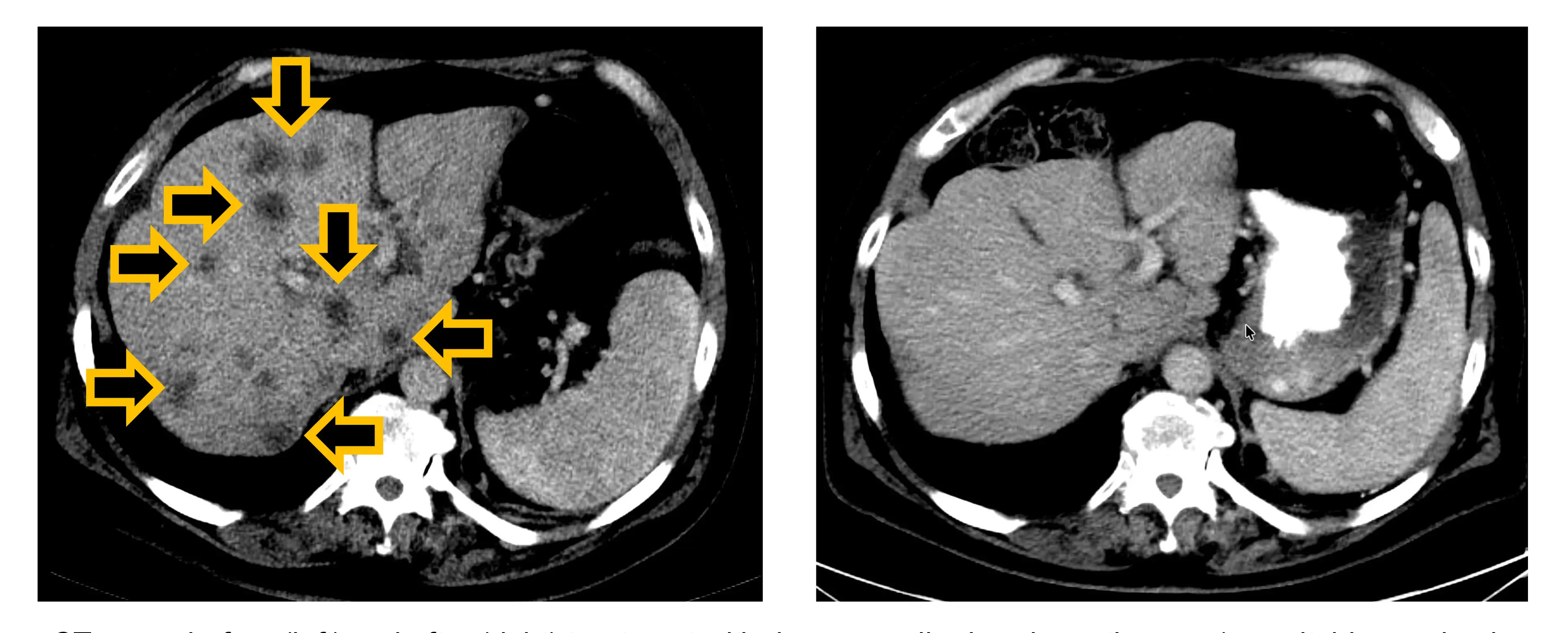
Scans before (left) and after treatment with Daraxonrasib plus chemotherapy showing multiple tumours that are no longer visible. (Memorial Sloan Kettering Cancer Centre of CT)
In the new ground-breaking study, tumours shrank or ‘disappeared’ in 60.7 percent of patients given daraxonrasib and chemotherapy.
Presented at the European Organisation for Research and Treatment of Cancer in Barcelona, it also included results that for around eight percent of patients (or one in 12), tumours became undetectable on CT scans.
A major result, tumours stopped growing in 90.2 percent of all 61 patients studied over a typical period of 18 month.
Compared to roughly 40-45 percent of patients given chemo alone, 76.6 percent of patients were still alive one year after treatment.
And it also took an average of 12.8 months for tumours to return or start growing again when the whole patient group was taken into account.
Dr Park, oncologist at Memorial Sloan Kettering Cancer Centre in New York, said the findings represent a ‘massive, massive breakthrough’ in treating pancreatic cancer.
“In about one in 12 patients, it (the cancer) completely disappeared,” he told the Press Association.
“And then with such a long follow-up, this is real. We’ve never seen such a thing.”
When asked if the one in 12 patients whose tumours couldn’t be detected were regarded as ‘cured’, Dr Park said: “This is the closest to cure.”
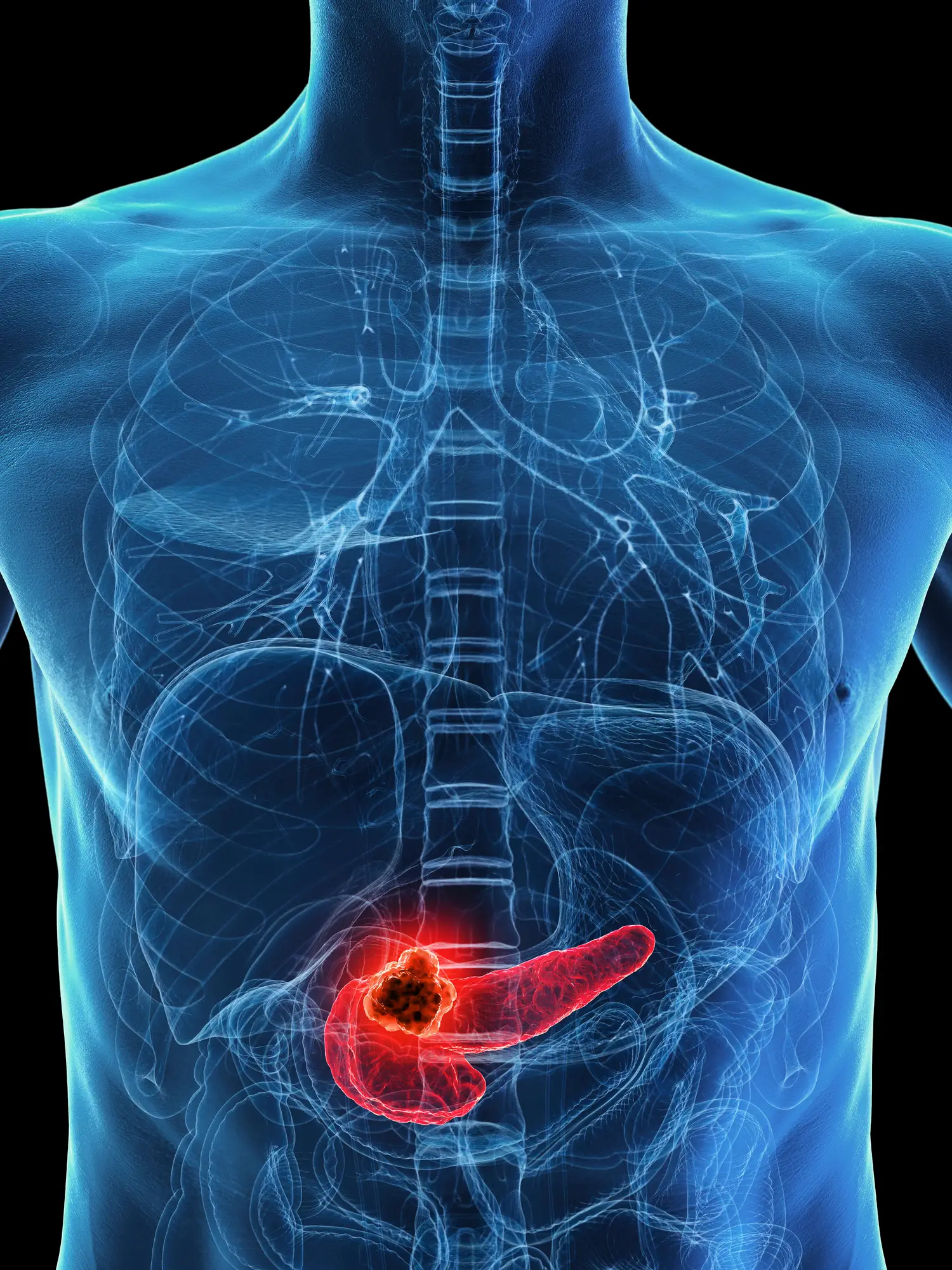
More than 11,000 people are diagnosed with pancreatic cancer each year in the UK. (Getty Stock)
“This is almost at the discovery level, we have never seen 8% complete response in metastatic pancreatic cancer, you don’t see that….” he continued.
“The median follow-up is 18 months. Just imagine, in an average of 18 months your disease just disappears on the CT scan … that’s closest to complete remission …. it’s incredible.”
The oncologist added that cancer does frequently develop resistance to drug treatment but they are ‘delaying that as much as possible’ through the new combined treatment.
The final phase-three study in the US has enough patients but it’s said some sites in Europe may have space for more.
Dr Madina Kara, head of research at Pancreatic Cancer UK, said: “Half of people with pancreatic cancer die within three months of diagnosis and their loved ones would give anything to spend more precious time with them.
“This is a small, initial study, however these encouraging results now show that daraxonrasib and chemotherapy can be effective when used in combination.”
She said the team was excited for the larger clinical trial, adding: “These findings are part of a growing body of evidence that offers real hope to people with advanced pancreatic cancer.”
And Cancer Research UK chief executive Michelle Mitchell said: “This is the biggest leap forward we’ve seen in decades for pancreatic cancer patients and could offer real hope to people facing one of the deadliest and most difficult-to-treat cancers.
“More trials are now needed before this treatment can be assessed for use on the NHS and despite this advance, pancreatic cancer survival is still very low.
“Further research is needed to look at how this drug could be used alongside other therapies to give patients the best chance of beating the disease.”
Leave a Reply