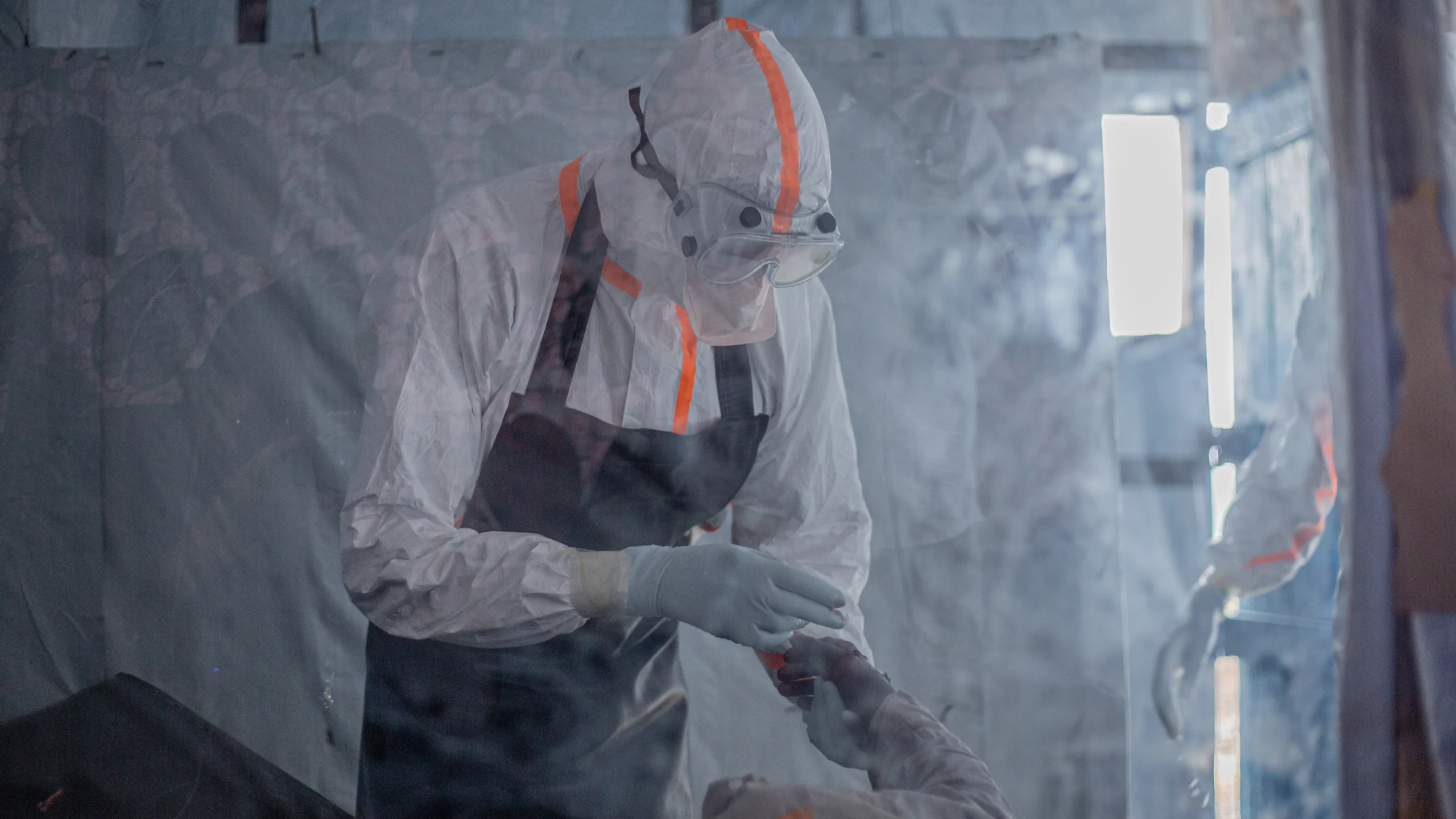
A UK hospital is awaiting the arrival of a British man who has tested positive for Ebola.
More than 5,000 people have died amid the current outbreak in the Democratic Republic of Congo (DRC), which experts have dubbed the second-largest and fastest-spreading on record.
The number of cases is only continuing to rise – and now, a Brit has been diagnosed with the deadly disease and is being flown back home to receive treatment.
The patient, who has been identified as a healthcare worker by the news agency Reuters, tested positive for Ebola after spending time in the DRC.
A spokesperson for the UK government confirmed the news on Wednesday (4 November) in a statement.
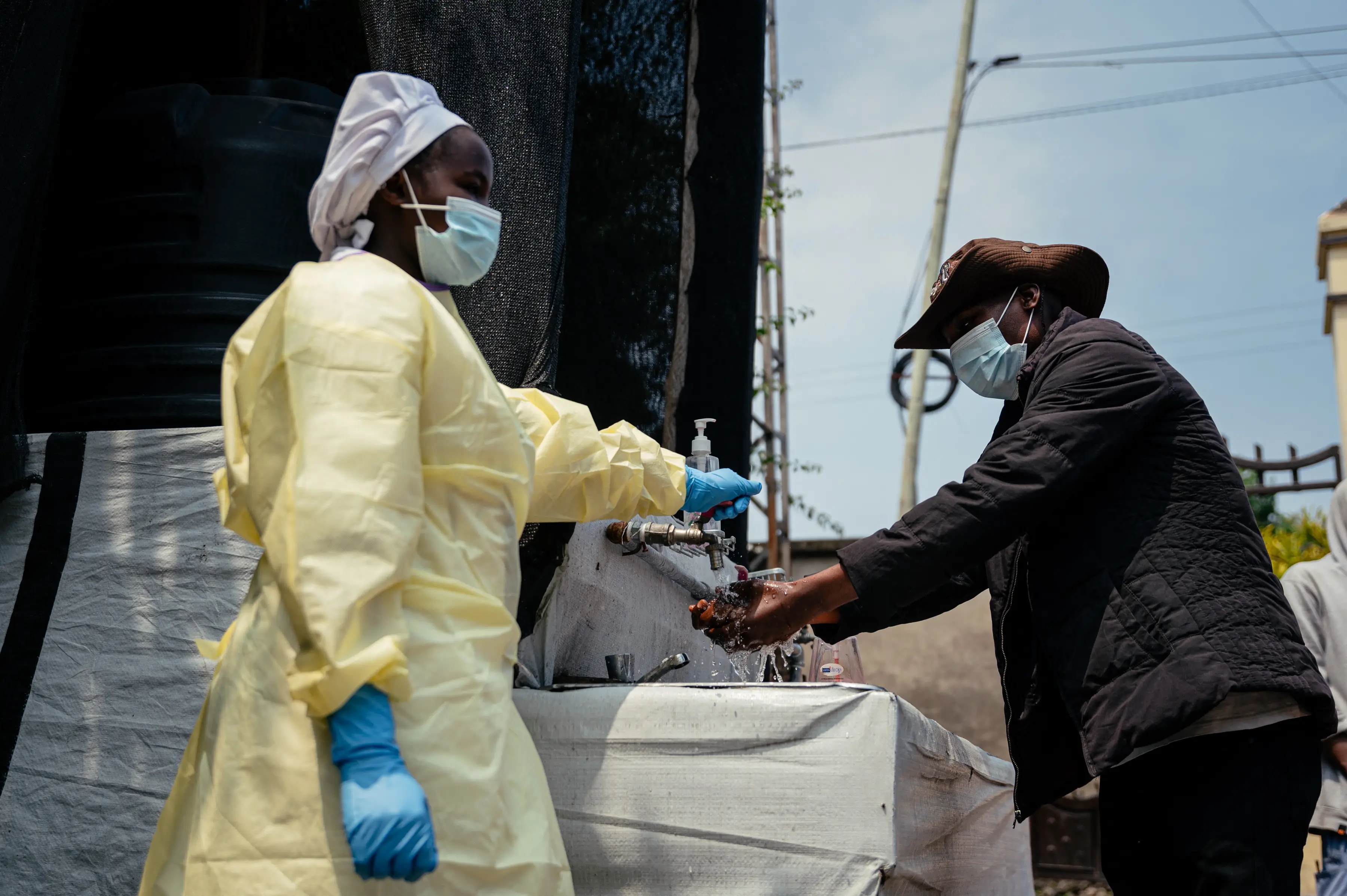
The Brit has been medically evacuated for treatment (Jospin Mwisha / AFP via Getty Images)
It said: “A British citizen currently in the DR Congo has tested positive for Ebola. The UK has well-established procedures for dealing with cases like this, and those processes have been activated.
“The risk to the UK public from Ebola remains low.”
The Brit is reportedly being medically evacuated from the DRC and according to Sky News, he was set to touch down on Wednesday or Thursday.
A specialist ambulance will then whisk him off to an infectious disease unit, although it is not clear which hospital will provide treatment.
The patient is believed to have been sent to the DRC by a humanitarian organisation to offer support amid the current outbreak, which has already killed thousands.
Brit’s case is ‘deeply concerning’, Dr Damien Tully says
Only four cases of Ebola have ever been confirmed in the UK, including three involving health workers who responded to the outbreak in West Africa between 2014 and 2015.
Dr Damien Tully, an associate professor at the Medical Research Council/Uganda Virus Research Institute and London School of Hygiene and Tropical Medicine Uganda Research Unit, dubbed the case ‘deeply concerning, but not entirely unexpected’.
“Healthcare workers are on the front line of these outbreaks, often treating severely ill patients under extremely challenging conditions,” he said. “Even with rigorous protective measures, accidental exposures can occur.
“This case is a stark reminder of the risks faced by those responding to the outbreak of Ebola disease caused by Bundibugyo virus in the DRC.
“However, it does not suggest that the virus has become more transmissible or that the threat to the UK has increased.”
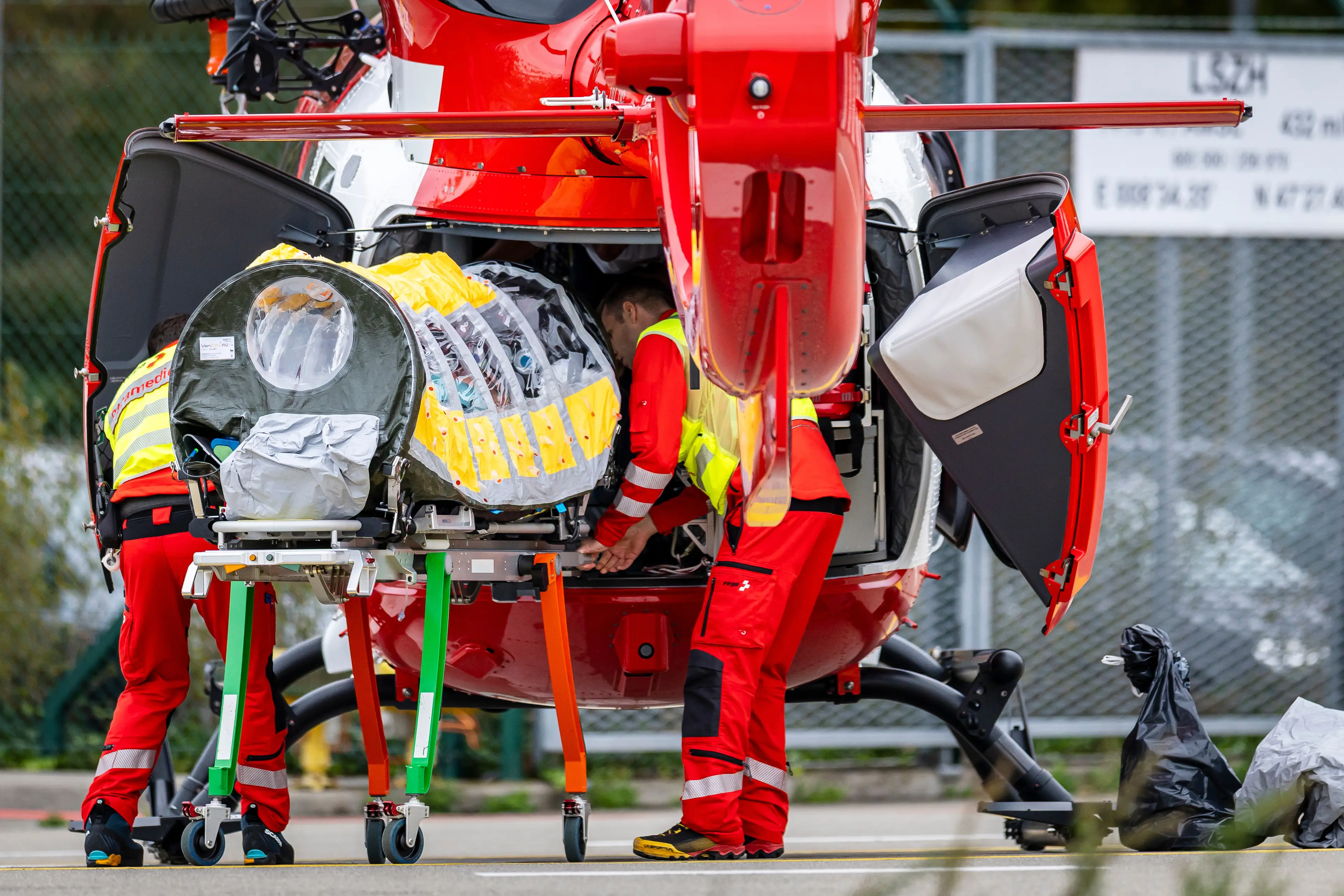
A patient pictured being transferred after a medical evacuation to Switzerland in October (Michael Buholzer/Keystone via AP)
Dr Tully described the risk to the public from this ‘planned medical evacuation’ as ‘extremely low’.
That’s because Ebola is ‘transmitted primarily through direct contact with infected bodily fluids, and people are not generally infectious until they develop symptoms’.
The World Health Organisation explains that Ebola is a ‘severe illness’ which is ‘often fatal’ for humans.
The disease is caused by a group of viruses which humans contract from wild animals. It spreads from person to person through contact with infected bodily fluids such as semen, saliva, blood, poo, pee and vomit.
In the UK, there are two dedicated high-level isolation units which are equipped to deal with the patient.
Where will the British patient go?
Dr Tully said the Royal Free Hospital in London and the Royal Victoria Infirmary in Newcastle have ‘specialist isolation systems and staffed by highly trained infectious disease teams’.
“Patients can be transported under carefully controlled conditions, with strict infection prevention measures, appropriate protective equipment and arrangements for identifying and monitoring anyone who may have been exposed,” he explained.
The outbreak in the DRC first began back in May this year and as it stands, there are 10,532 confirmed cases.
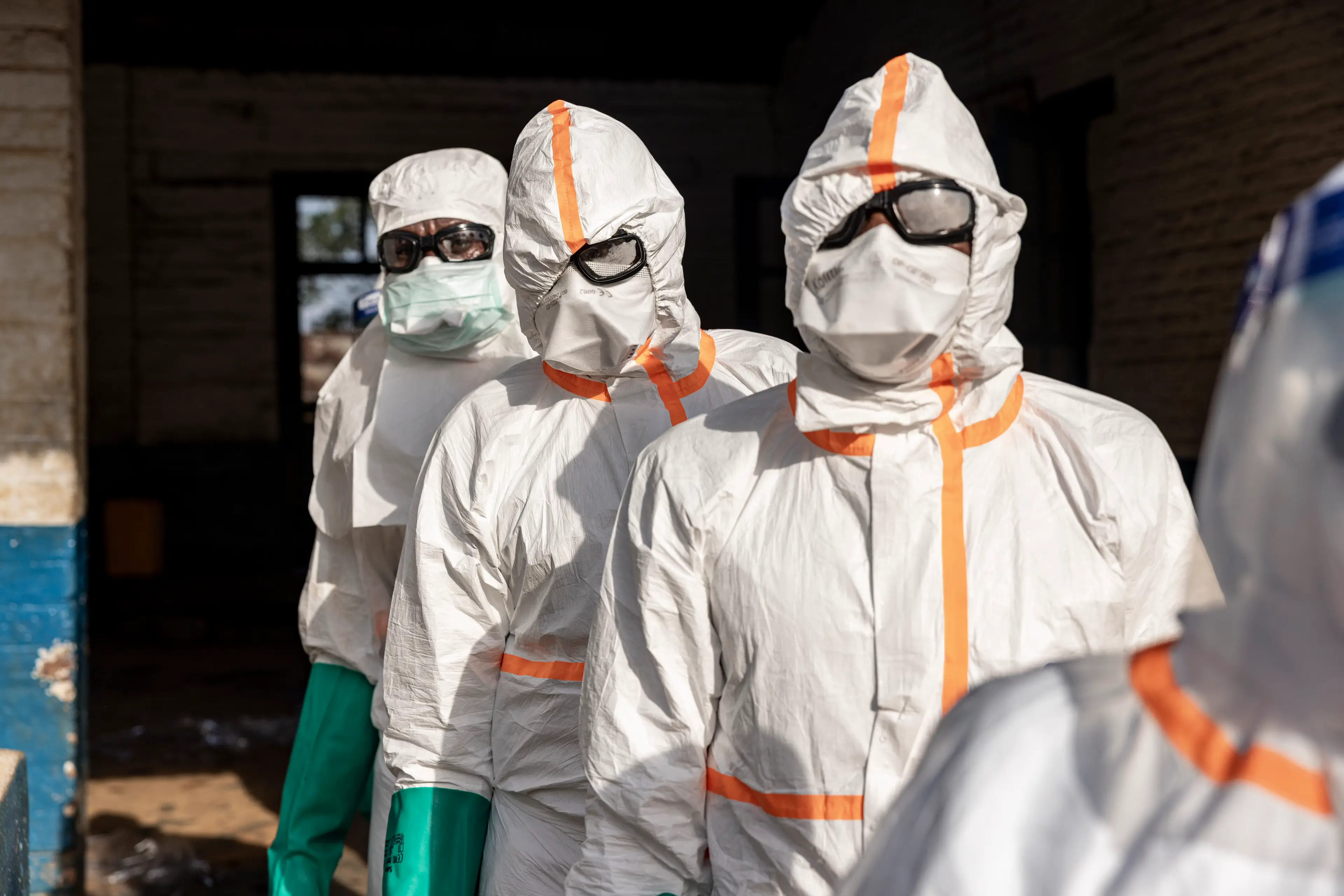
Thousands have already died in the DRC (Michel Lunanga/Getty Images)
According to the European Centre for Disease Prevention and Control, two patients were previously evacuated to Germany for ‘specialised care’, another went to the Netherlands and a fourth case was reported in France.
It adds: “All four cases involved people working in healthcare or humanitarian roles in affected areas of DRC. In July, a resident of the United Kingdom was also evacuated following potential exposure while treating Ebola patients in DRC. On 26 October, a case reported in Nigeria and a close contact of hers were medically evacuated to Switzerland.”
The Foreign, Commonwealth & Development Office (FCDO) currently advises against all travel to parts of the DRC.
Earlier this year, it was reported that the UKHSA urged GPs, hospitals and airports in the UK to ensure they have enough personal protective equipment (PPE) in case there was of an influx of Ebola patients.
Leave a Reply