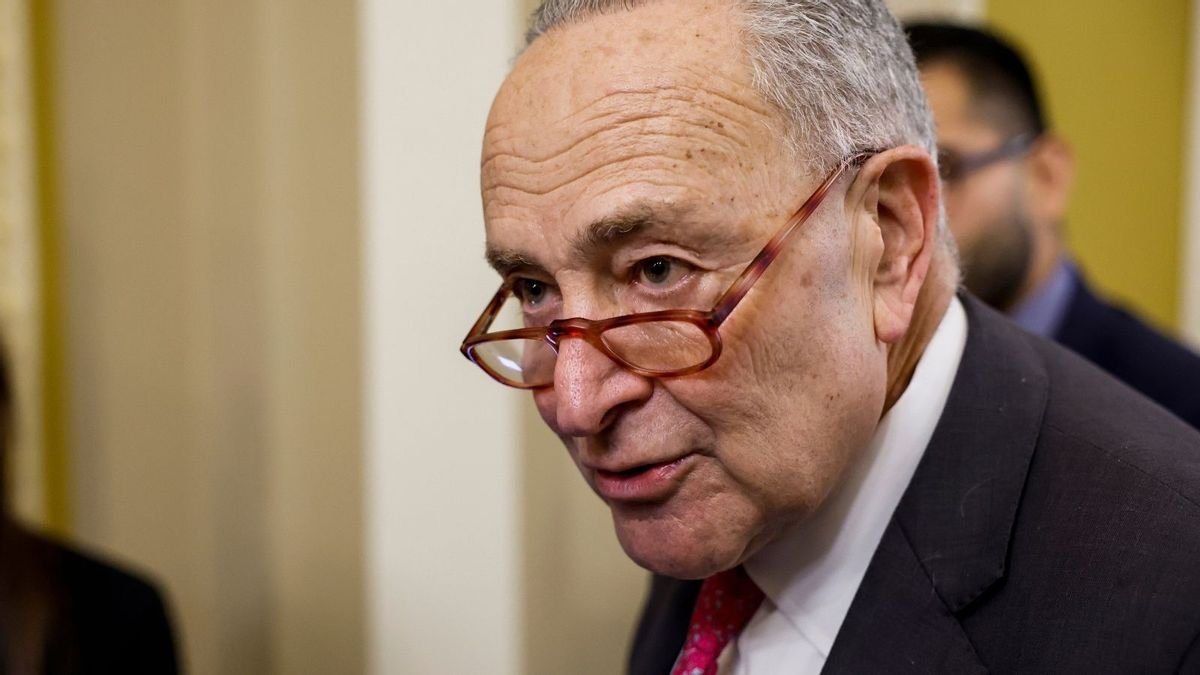
U.S. Senate Minority Leader Chuck Schumer, D-N.Y., said that “our ultimate goal” is to give citizenship to migrants who already crossed a border into the U.S.
Rating:
Context
Schumer truly said this days following the November 2022 midterm elections, specifically during a news conference about protecting Deferred Action for Childhood Arrivals legislation. This week, social media users sharing his remark as a quote or video failed to mention that he said it almost four years ago. For example, one popular user misleadingly posted the matter as “BREAKING” and that Schumer “just” said it.
Less than a month away from the midterm elections on Nov. 3, people shared a rumor claiming U.S. Senate Minority Leader Chuck Schumer, D-N.Y., said that “our ultimate goal” is to give citizenship to millions of migrants who already crossed a border into the U.S.
For example, on Tuesday, a popular X user posted (archived), “Sen. Chuck Schumer: ‘Our ultimate goal’ is to give every illegal alien citizenship.”
(@LeadingReport via X)
On the same day, another popular user on Facebook posted (archived) a photo of Schumer with the word “BREAKING!” and police car light emojis, with a text caption reading, “BREAKING: Sen. Chuck Schumer just that ‘Our ultimate goal’ is to give every illegal alien citizenship. We knew this was their strategy and why they wanted open borders! Remember this when you vote!”
The videos show Schumer talking behind microphones outside the Capitol in Washington, surrounded by people who at one point cheer him on. He speaks about protecting “Dreamers,” a reference to Deferred Action for Childhood Arrivals — a federal immigration policy allowing some immigrants who came to the U.S. as children to receive temporary protection from deportation and eligibility for a renewable work permit:
Now more than ever, we’re short of workers. We have a population that is not reproducing on its own with the same level that it used to. The only way we’re going to have a great future in America is if we welcome and embrace immigrants, the “Dreamers” and all of them, because our ultimate goal is to help the “Dreamers” but get a path to citizenship for all 11 million or however many undocumented there are here.
In sum, Schumer truly said this. He made the remark in November 2022 as part of an effort to urge the Senate to pass protections for “Dreamers” during a lame-duck session of Congress, prior to the start of a fresh session in the new year. Users omitted that month and year from their posts.
Snopes emailed Schumer’s office to ask if he still believed in what he said in the video, if he meant Democrats or “Dreamers” were the ones who had the “ultimate goal” he described and if he wished to share a statement responding to users reposting his comment. We will update this article if we receive further information.
More of Schumer’s remarks
Schumer spoke about “our ultimate goal” and “Dreamers” on Nov. 16, 2022. He began his thoughts as follows (bolded emphasis ours, notes section from users’ posts):
I believe in this so much. I believe in it in a personal basis because I know “Dreamers” who have been such great people here in America and who have just struggled every time they get a phone call, every time they walk down the street, they’re worried, will someone grab them and take them away. So that’s personal about them and what they have done. But I also believe in it as an overall, as an American who wants to see our country be stronger because immigrants make us stronger now more than ever.
Now more than ever, now more than ever, we’re short of workers. We have a population that is not reproducing on its own with the same level that it used to. The only way we’re gonna have a great future in America is if we welcome and embrace immigrants, the “Dreamers” and all of them because our ultimate goal is to help the “Dreamers” but get a path to citizenship for all 11 million or however many undocumented there are here, and we will be pursuing that in the next Senate, in the next Senate, the comprehensive immigration reform. Right now, our focus is on “Dreamers” and we retain the Senate.
Schumer later closed his comments, saying, “We will not stop fighting till we get a fix for DACA, a pathway to citizenship for Dreamers and a pathway to citizenship for all undocumented.” More of the event is available to watch on C-SPAN and YouTube.
For further reading, we previously reported the untrue claim that Schumer had said in 1996, “The No. 1 reason people come to the U.S. illegally is to defraud systems like Social Security and I want to stop it.”
Sources
Figueroa, Ariana. “U.S. Senate Democrats Make a Last-Ditch Push for a Pathway to Citizenship for Dreamers.” New Jersey Monitor, 16 Nov. 2022, https://newjerseymonitor.com/2022/11/16/u-s-senate-democrats-make-a-last-ditch-push-for-a-pathway-to-citizenship-for-dreamers/.
Lozano, Juan A. “Judge Rules New DACA Program Can Continue Temporarily.” The Associated Press, 14 Oct. 2022, https://apnews.com/article/us-supreme-court-united-states-immigration-deferred-action-for-childhood-arrivals-program-congress-6108ffa1d6e77c65e88438cdc1d6552e.
Montoya-Galvez, Camilo. “Last-Minute Push to Pass Bipartisan Immigration Deal Fails, Dooming yet Another Reform Effort.” CBS News, 15 Dec. 2022, https://www.cbsnews.com/news/immigration-sinema-tillis-bipartisan-deal-congress-reform/.
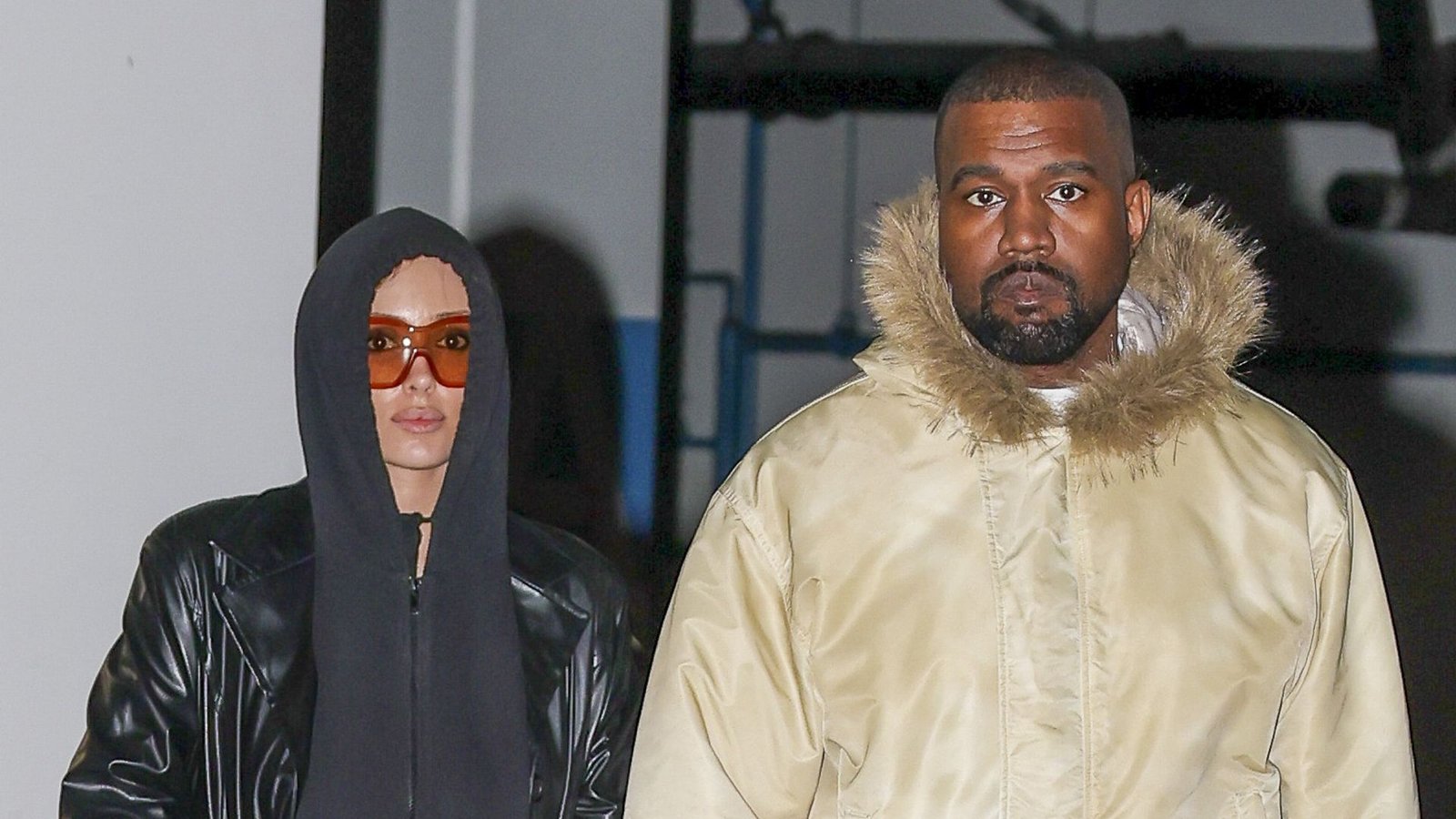
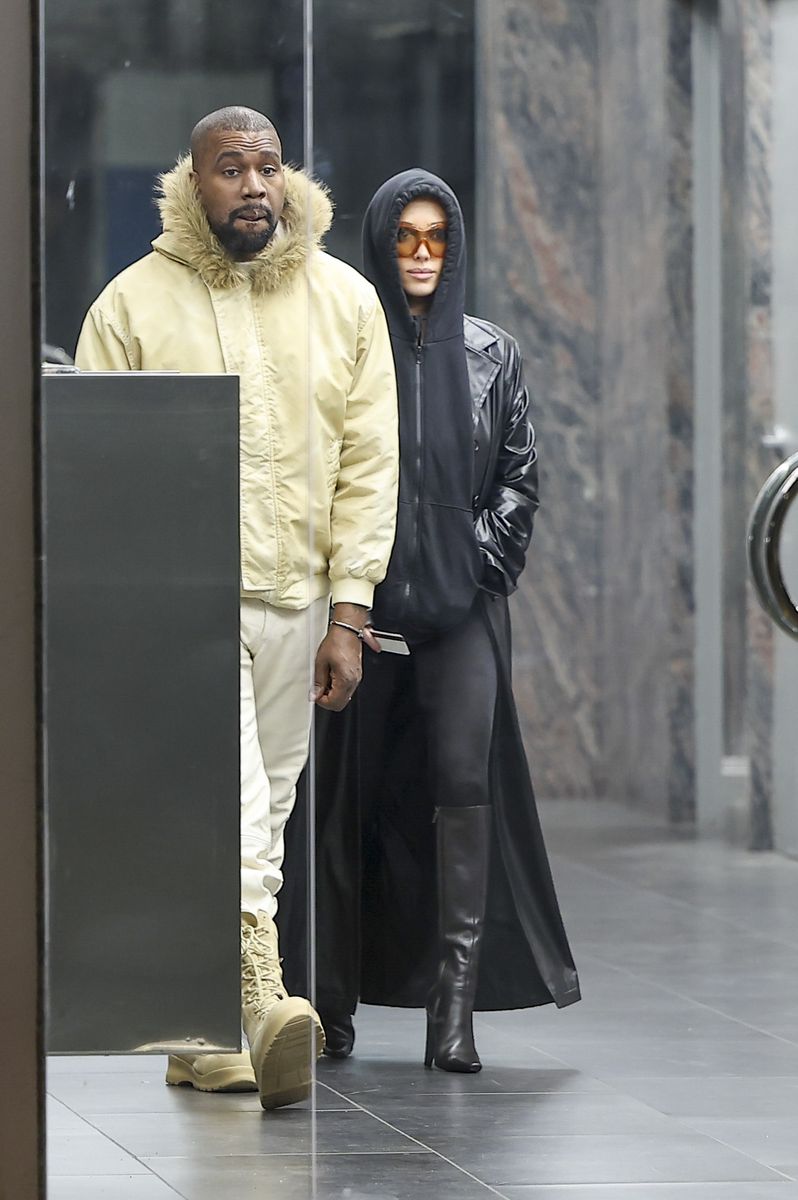
Ye, formerly known as Kanye West, and his wife Bianca Censori are used to wearing things that don’t quite fit the vibe, and this week was no different. In the middle of an LA heat wave, the couple decided that a nearly 100-degree day was the perfect time to break out their winter wardrobes.
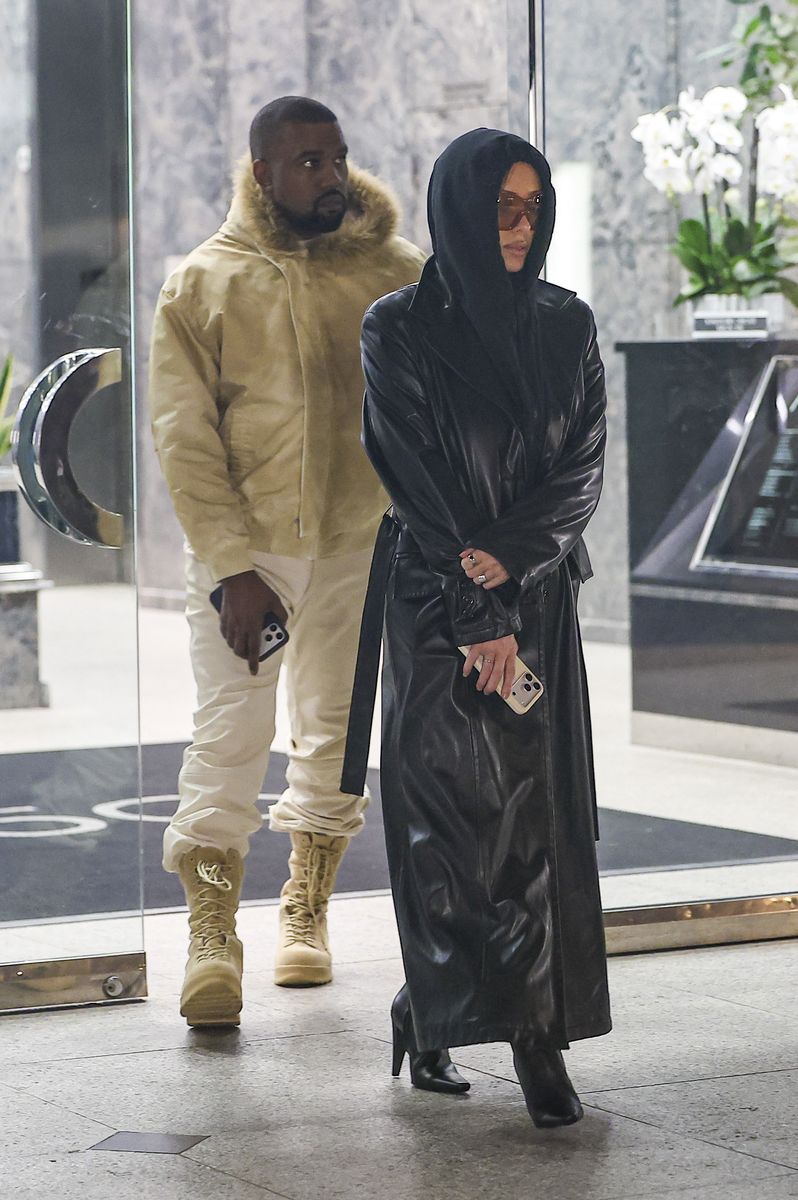
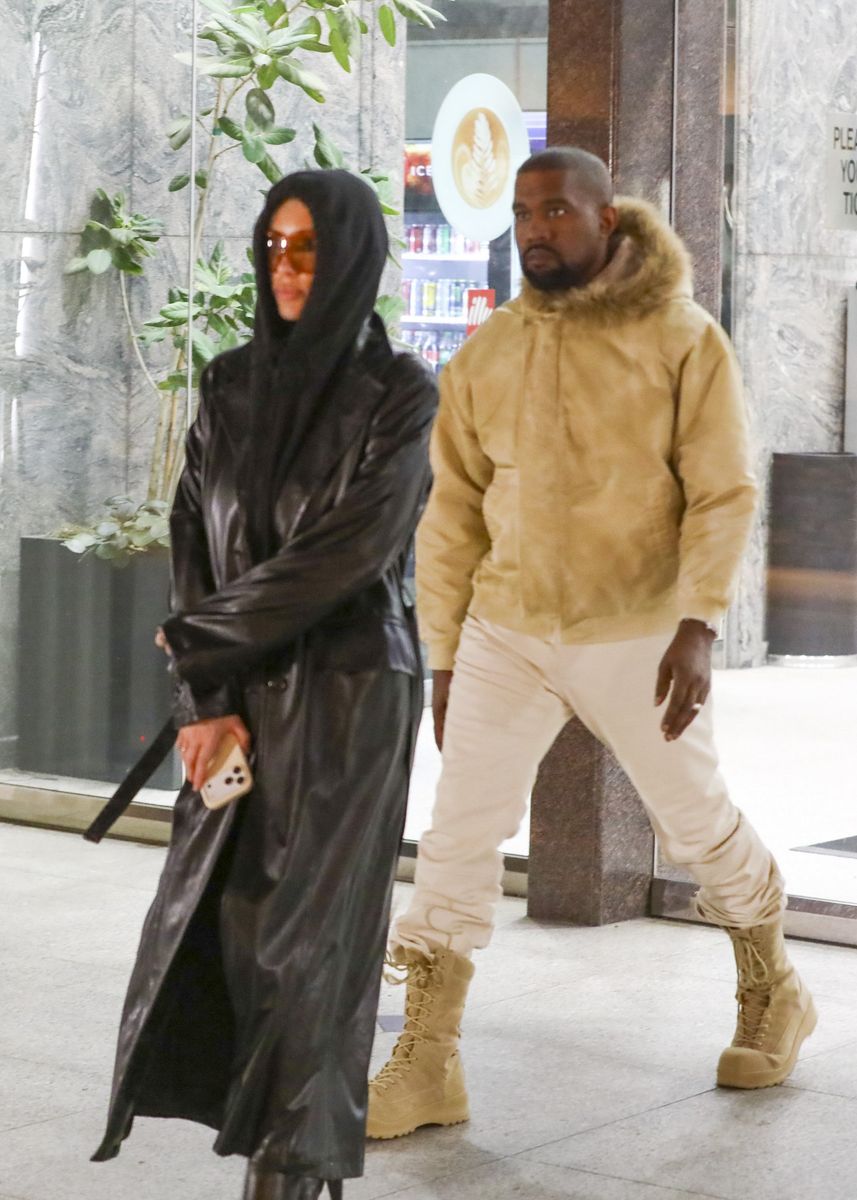
The couple stepped out together Sunday after a low-key movie date in Westwood, just one day after making a much more public appearance at ComplexCon. While the rest of Los Angeles was probably looking for the nearest air conditioner, Bianca was bundled up in a floor-length leather coat while Ye opted for a fur-trimmed jacket.
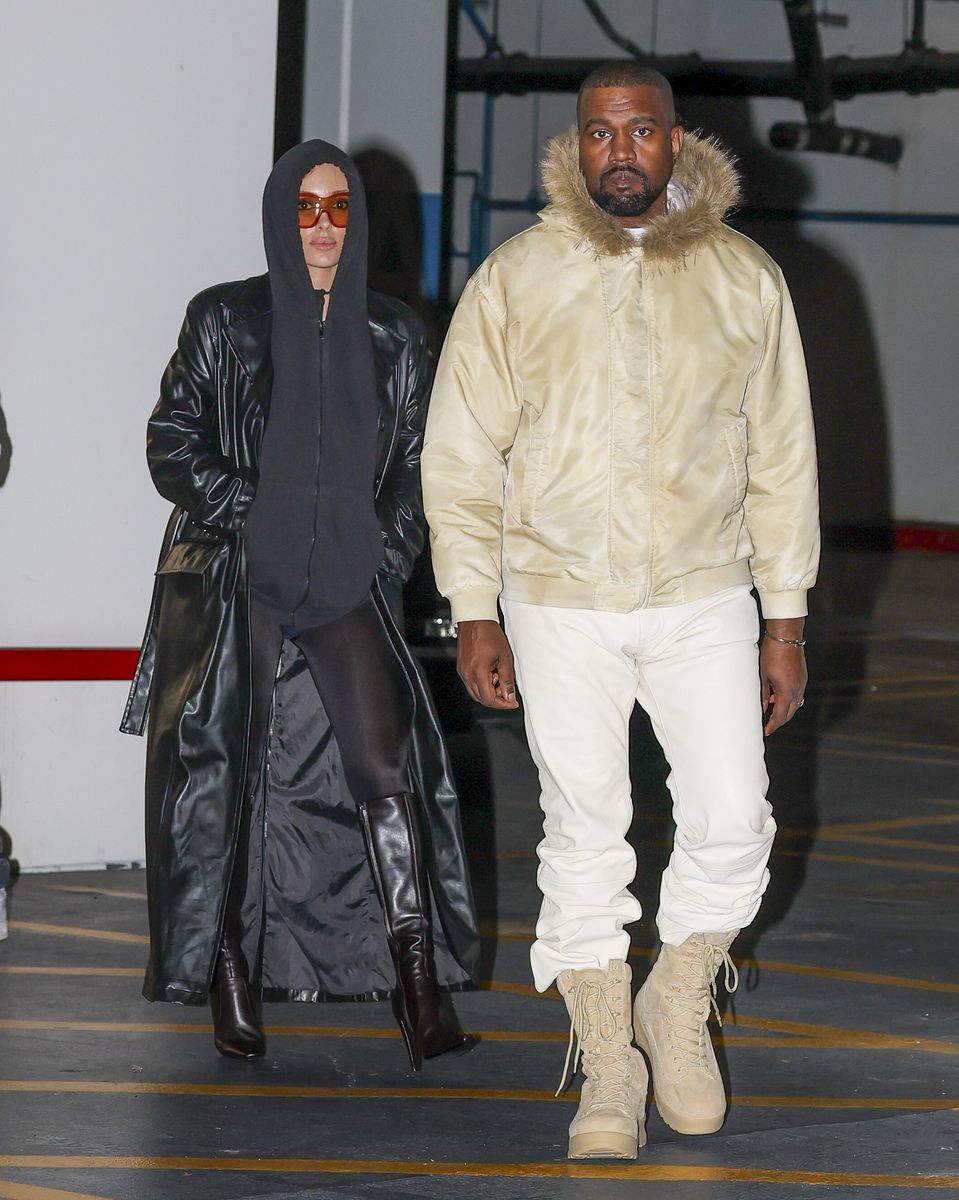
Censori went for an all-black look, wearing a shiny leather trench coat that fell all the way to the floor. The dramatic piece had structured shoulders, wide lapels, long sleeves, and a belted waist. Underneath, she wore a black hooded top with fitted black leggings.
They both looked like they were dressed for the snow, not the heatwave
She finished things off with dark brown knee-high stiletto boots and oversized amber-tinted rectangular sunglasses. The sunglasses may have been the most practical part of the outfit.
Ye went for his own version of heavy-duty outerwear, wearing a beige hooded bomber jacket complete with a fur-trimmed hood and ribbed cuffs and hem. He paired the jacket with off-white trousers and tan lace-up combat boots with thick soles.
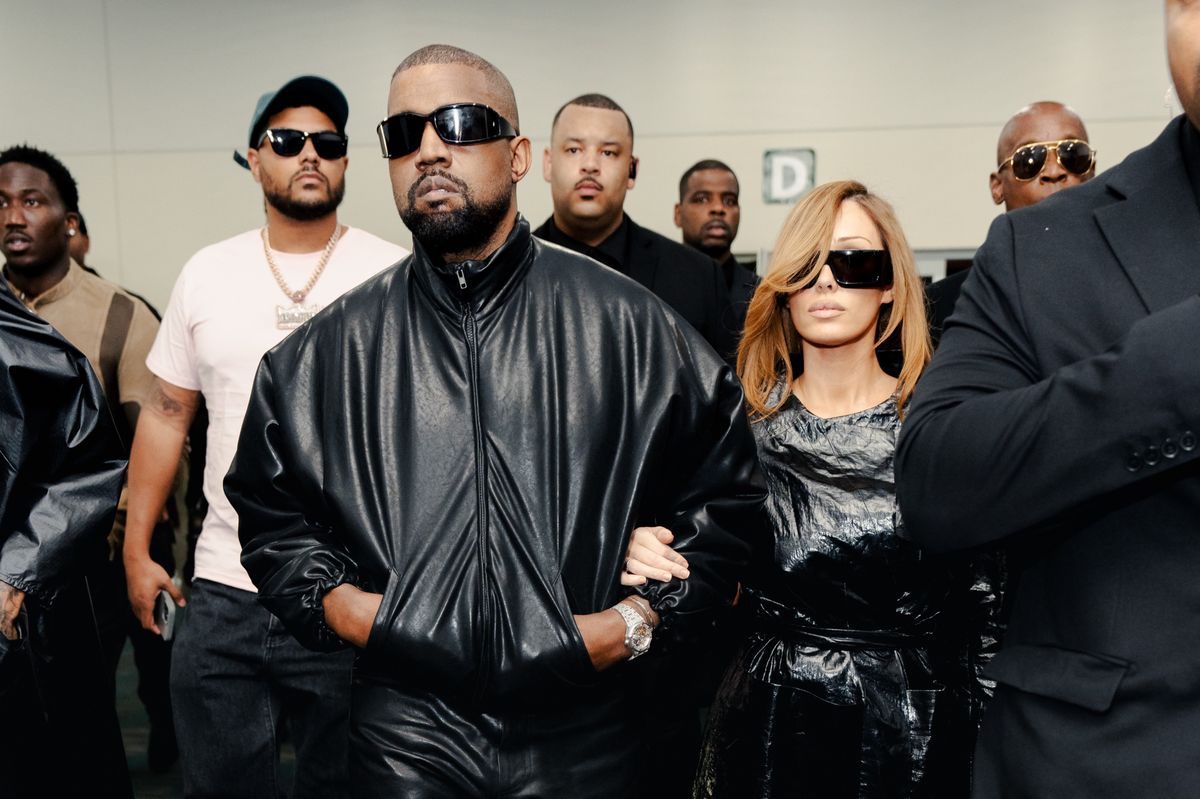
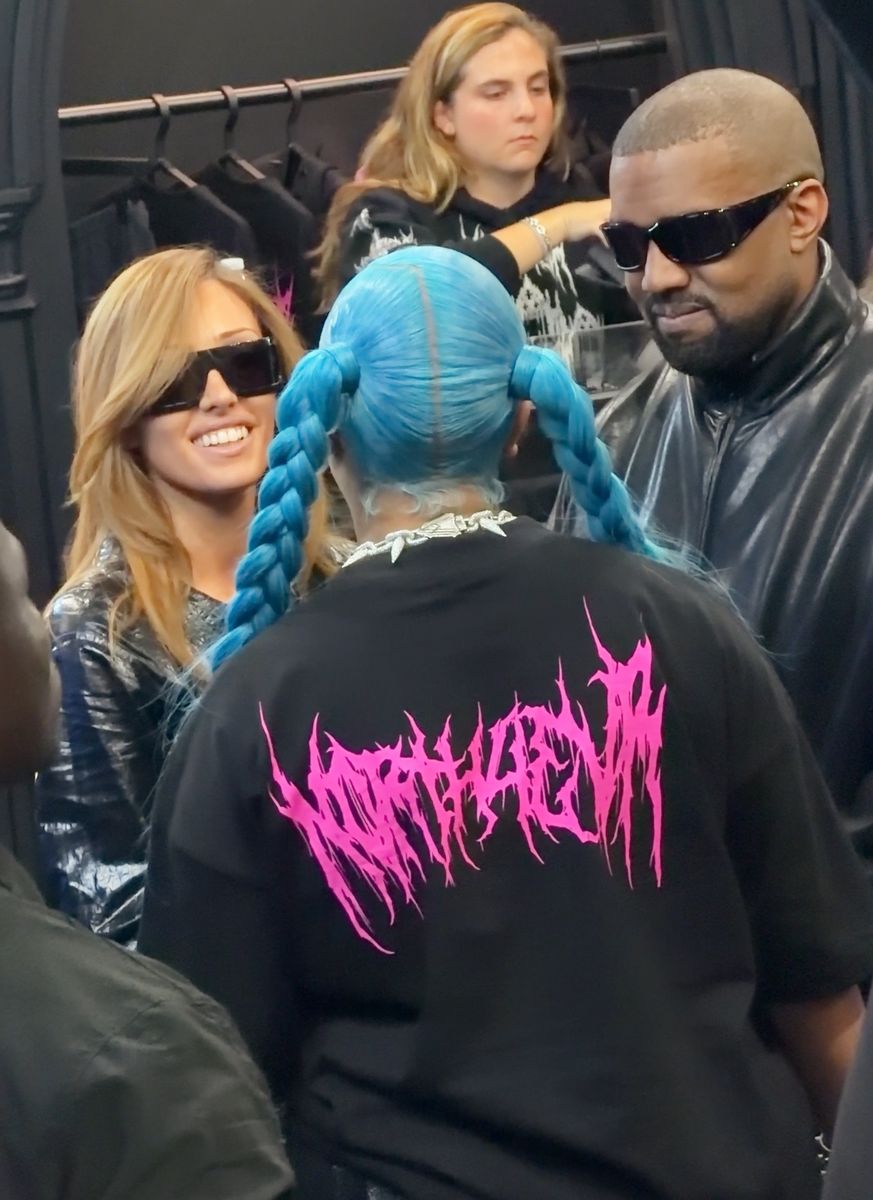
The outing came just one day after Ye and Censori were spotted together at ComplexCon in Los Angeles, where they were joined by Ye’s daughter, North West.
Ye, Bianca Censori, and North West had the convention center going wild when attendees found out they were there
Ye was also more than a spectator at ComplexCon. He later joined Playboi Carti during the rapper’s headlining set, performing three songs including “Can’t Tell Me Nothing,” “Carnival,” and “Off the Grid.”
Bianca has embraced her role in Ye’s family
As we saw at ComplexCon, while Censori tends to make headlines for her outfits, she has also quietly become part of his children’s lives.
Ye with Dream and Chicago in a mall in Los Angeles
Over the years, the architect has been photographed spending time with Ye’s four children, North, Saint, Chicago, and Psalm, including trips and family outings.
She has also been out with North on several occasions. In July, Censori and the 13-year-old were photographed shopping together with Ye in Los Angeles, with TMZ describing the outing as the pair getting some “quality time” together.
Censori and North have previously been seen holding hands, chatting and smiling together at Ye’s events, while Ye himself has publicly praised Censori as a stepmother. In a birthday message for his wife, he called her “the most amazing stepmom to our children.”
Censori has also defended Ye as a father. In her 2026 Vanity Fair interview, she pushed back on claims that he had gone months without seeing his children, calling him “a really awesome dad.”
She recalled one occasion when Ye left her photoshoot to spend time with the kids and described how he once turned an entire room into a giant play area for them.
Censori told Vanity Fair that she and Ye have discussed having children of their own, but that they would want to raise them somewhere other than Los Angeles because of the invasive media attention.
MS NOW has partnered with FiftyPlusOne for polling data, approval ratings, election modeling and analysis in advance of the midterms.
The deal starts on Thursday, and MS NOW will be FiftyPlusOne’s exclusive national partner.
G. Elliott Morris, head of analytics at FiftyPlusOne, previously was editorial director of data analytics at ABC News, including oversight of FiveThirtyEight. FiftyPlusOne’s data will be used across MS NOW’s platforms and Morris will write a regular column for ms.now. The MS NOW Membership will feature FiftyPlusOne data in its Live Q&A feature. MS NOW earlier announced a partnership with the Associated Press for election results.
FiftyPlusOne features daily polling averages on upcoming elections and issues and forecasts on various contests.
Kabir Khanna, director of elections and analytics at MS NOW, said in a statement that FiftyPlusOne’s “expertise will give out journalists and audiences a deeper understanding of the polling landscape before and after Election Day.” Morris said that FiftyPlusOne provides “rigorous, transparent aggregation of public opinion polls and other electoral data that’s honest about what the numbers can and can’t tell us.”
A federal judge said he will rule by Tuesday on Donald Trump‘s ban on CNN, MS NOW and Politico from White House grounds, while he pressed the government’s lawyers on the different justifications offered by the president and the DOJ.
U.S. District Judge Timothy J. Kelly, appointed to the bench by Trump in his first term, also extended a temporary restraining order through Tuesday, which restricts the White House from pulling the hard passes of nearly 80 journalists and other staffers from the three outlets.
Thursday’s hearing was over whether to grant a preliminary injunction, something that would block Trump’s ban for a longer term — at least until a trial or an appeal. The judge issued a two-week TRO on Sept. 24, six days after the president announced the ban. That forced the White House to return the press credentials to the reporters and allow them back on the grounds.
Theodore Boutrous Jr., representing the three outlets, told the judge that since then, the case “has gotten stronger for the plaintiffs thanks to Donald Trump.”
Boutrous pointed to an interview that Trump gave to Time, published on Sept. 28, in which he complained about the media publishing “bad story after bad story,” and never mentioned the government’s defense of the ban, centered on the outlets’ publication of national security information.
“That is pretextual, it is post hoc,” Boutrous told the judge.
In the courtroom, Boutrous and four other attorneys sat at the plaintiffs’ table, while there was just one attorney on the defense side, representing the White House. That was Michael Velchik, senior counsel in the DOJ’s civil division. Also present in the gallery were editors and reporters from the outlets, including CNN’s David Chalian and Jonathan Greenberger, Politico’s global editor in chief.
Velchik told the judge that the ban is justified because the outlets had engaged in “indefensible conduct.” He pointed to what he characterized as false quotes and anonymous sourcing, while holding that access to the White House grounds is a “privilege” under the president’s discretion. When it came to national security, he said, “If CNN published nuclear codes, the government is not helpless.”
Kelly, though, pressed Velchik on the different explanations offered by Trump and the DOJ, where “the decision maker seems to have said, ‘We are taking action because of X, Y,’ and the government is saying, ‘No, it’s Z.’”
“It just seems like the fact pattern is hard to find,” the judge said.
Velchik said that the government never said that the ban was solely about national security, citing another justification that the outlets failed to meet minimal journalistic standards of professionalism. Those two justifications, Velchik said, also overlap.
The DOJ attorney also argued that the three outlets forfeited their right to appeal the ban, because letters were sent out on Sept. 22, informing them of specific stories at issue, but they never filed an objection to the White House by a deadline at the end of that week.
Boutrous, though, noted that the letters were sent off days after the ban was already implemented and the media outlets filed suit. The letters were unsigned and merely started they came from the White House Press Office, he noted. He described it as a “sham process,” arguing that it was clear that by the time the letters went out, “The president already made up his mind.”
At one point, Boutrous suggested that the president likely “woke up on the wrong side of the bed” and then decided to issue the ban. He said that the White House was citing “amorphous” professional standards, warning of what would happen if reporters were blocked from the grounds because the president deems a story wrong.
“If a press pass is at risk because Donald Trump decides something is false, that is a very chilling” standard, Boutrous said.
The judge did seem receptive to the DOJ’s point that there is a government interest in protecting national security, but he made clear that he is bound by past D.C. Circuit precedent, including cases that favored journalistic access to the White House over attempts to restrict certain correspondents. In a case brought by Playboy correspondent Brian Karem, the D.C. Circuit ruled that the White House cannot rely on “unarticulated standards of professionalism” to justify the suspension of hard passes.
Like Kelly’s TRO, the Karem ruling centered on Fifth Amendment due process, but Boutrous urged the judge to also address their claims that the media outlets’ First Amendment rights were violated.
In the meantime, the White House has restricted CNN and Politico from access to various presidential events, including travel on Air Force One as the designated pool outlet. The three outlets have pointed to the continued restrictions as further evidence of viewpoint retaliation, but the legal question of whether blocking access to smaller spaces like the Oval Office and on presidential travel is the subject of a separate legal proceeding involving the Associated Press.
A video posted in October authentically depicts a man leading a group of Arkansas farmers in praying for “more Mexicans” to keep farms running.
Rating:
Context
The visuals in the footage have an authentic origin, but the audio has been edited to significantly change the meaning of the prayer.
On Oct. 4, a social media user posted a video purportedly depicting a man leading a group of Arkansas farmers in prayer, asking “baby Jesus” for “more Mexicans” to replace the “Mexicans we had deported” to save their farms.
The user posted the footage to Facebook (archived) and Instagram (archived). The audio seemingly shows the man leading the prayer saying:
Dear Baby Jesus, please help us. We’re losing our farms. We know we sent all the Mexicans away. Dear Lord, please send us some more Mexicans to replace the Mexicans we had deported. We’re going to lose our farms; please, Baby Jesus and all things holy. Amen.
In short, the visuals in the video have an authentic origin, but the audio has been edited to significantly change the meaning of the prayer. Therefore, we rate the audio as fake.
The authentic footage originates from a broadcast by KATV 7, a TV news station in Little Rock, Arkansas. The channel posted the segment to YouTube on Sept. 2, 2025 (archived), more than a year earlier than when the edited clip was circulating. It shows hundreds of Arkansas farmers in a school gymnasium seeking the federal government’s help regarding their financial struggles.
At about 2:24, the video cuts to a man leading the farmers in prayer. He can be heard saying:
Farmers, in my opinion, dear Lord, and it’s only my opinion, are closer to you than anyone else on this Earth because we deal with your Earth every day. Dear Lord, we’re hurting, dear Lord. We can’t help what’s happened to us.
According to KATV 7’s article about the event, also published on Sept. 2, 2025, the farmer then said, “We need help, dear Lord.”
Another piece of evidence that the “more Mexicans” iteration of the clip is edited is the quality of its audio. The prayer in the edited version is sharp, clear and lacking an echo. Inside a school gymnasium, the audio of the farmers praying should, in reality, feature an echo, like the man’s voice does in the original footage.
Both Facebook and Instagram identified the audio as original to Aaron Beltrán, the person who appeared to first post the edited clip on both platforms.
Snopes reached out to Beltrán to ask whether he originally edited and posted the manipulated video, if the voice is his own and if the content was meant to be satirical. We will update this story if we receive a reply.
For further reading, we addressed a claim that U.S. President Donald Trump said Iran “can take out” Los Angeles and San Diego.
Early voting in the U.S. midterm elections is underway. Voters are deciding which party will control Congress, as well as numerous state legislatures and governors’ offices. Snopes’ fact-checkers are flagging rumors surrounding the election, debunking false statements by candidates and suspicious voter fraud claims with nonpartisan research and expert sources. Join our effort to keep this election fact-focused by becoming a Snopes member.
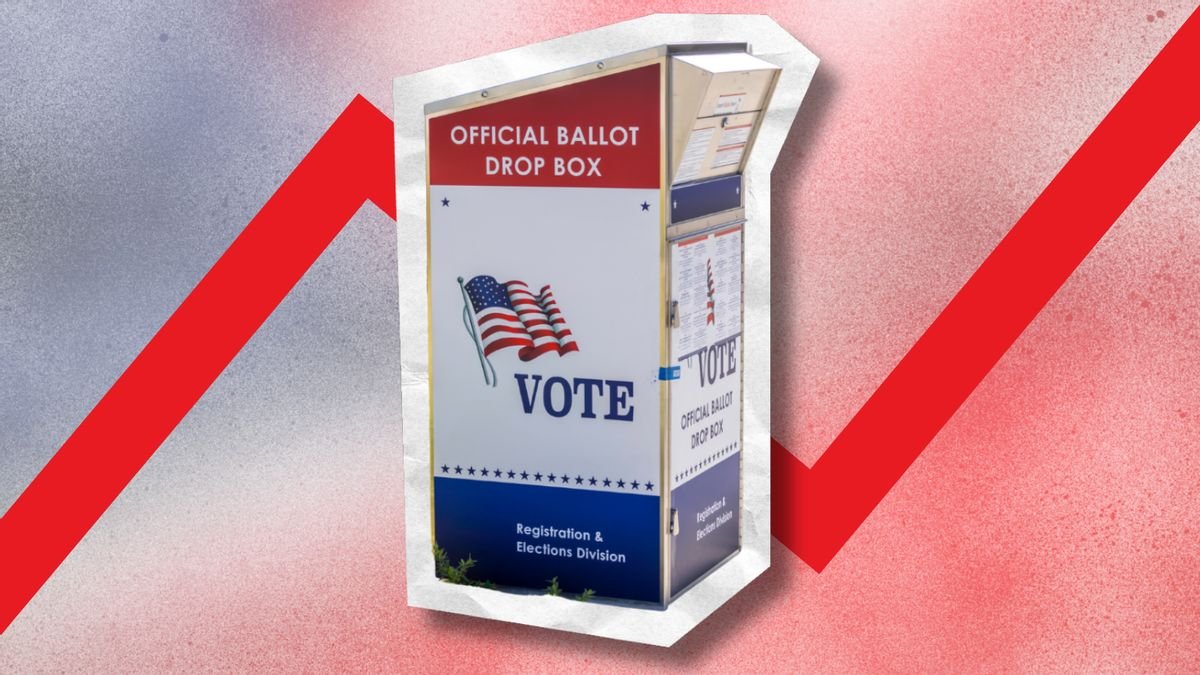
A persistent theory about “ballot drops,” meaning when a large number of votes suddenly changes the outcome of an election, has circulated online since at least 2020, when U.S. President Donald Trump appeared to blame late spikes in votes for Democrats for losses in states where Republicans had been leading.
Though Trump and other public figures have tried to frame “ballot drops” or vote spikes as election fraud, there are usually specific and legitimate reasons behind them.
According to the Election Integrity Partnership, vote spikes can happen for a number of legitimate reasons. These include: large areas that vote heavily Democratic or Republican reporting at once, delays in counting in high-population areas that vote heavily for one party, longer processing times for mail-in ballots or clerical errors.
Though it can appear that a lot of votes suddenly “enter” a count when a vote spike happens, it’s important to remember that those votes have been processed and counted by elections officials to verify they came from real, registered voters.
A large batch of votes being submitted to a count all at once reflects normal election procedures and is not in itself a sign of fraud, even if those votes lean heavily Democrat or Republican.
As the 2026 midterm elections near, misinformation from election cycles past lies poised to reappear online.
For example, Snopes has previouslyreported on so-called “ballot drops,” which is when a large number of votes suddenly changes the outcome of an election.
Though “ballot drops” generally have specific and legitimate explanations that we will cover below, prominent figures such as U.S. President Donald Trump have attempted to frame them as examples of election fraud.
During the vote count for the 2020 presidential election that former President Joe Biden won, Trump suggested (archived) on X that “ballot dumps” lost him several states where Republicans had been leading:
Last night I was leading, often solidly, in many key States, in almost all instances Democrat run & controlled. Then, one by one, they started to magically disappear as surprise ballot dumps were counted. VERY STRANGE, and the “pollsters” got it completely & historically wrong!
Two years later, after the 2022 midterm elections, PolitiFact reported that the businessman Mike Lindell, then a highly visible Trump supporter, spread a number of graphs he claimed showed election fraud in the form of “ballot drops” that helped Democrats overtake Republicans in a number of races.
Despite the persistence of the “ballot drop” election fraud theory, sudden spikes in votes during ongoing counts usually have specific, legitimate explanations. Though it can appear that a lot of votes suddenly “enter” a count when a vote spike happens, it’s important to remember that those votes have been processed and counted by elections officials to verify they came from real, registered voters.
The fact that a batch of votes is submitted to a count all at once reflects normal election procedures and is not in itself a sign of fraud, even if those votes lean heavily toward one party or the other.
Why do vote spikes happen?
In the 2020 presidential election and the 2022 midterm elections, clerical errors caused some vote spikes that officials later corrected. Other spikes were the result of election officials in an area that leaned heavily Democratic or Republican registering a large batch of counted votes all at once.
The timing of vote spikes sometimes has to do with what types of ballots are in a given batch. For example, according to a report by the MIT Election Data + Science Lab (Page 10), Democratic voters were historically more likely than Republican voters to use mail-in ballots, meaning vote spikes that benefit Democratic candidates can happen when election officials start to count and report those ballots.
The Election Integrity Partnership, a nonpartisan coalition that reported on topics it found “demonstrably harmful to the democratic process” during the 2020 and 2022 elections, wrote about “ballot drops” in 2022 after Lindell shared graphs he claimed showed the alleged fraud in action.
The group wrote that vote spikes were “commonplace” but that people often misinterpreted graphs showing the spikes. It gave four main reasons for vote spikes:
Vote counts are reported in batches and varying intervals.
There can be delays in counting and tabulating in-person votes.
Some states legally allow absentee and mail-in ballots to be counted prior to polls being closed, and thus those vote counts may be reported en masse.
Voting “spikes” can also be caused due to clerical errors and are not limited to any particular political party or individual.
This article will discuss these four reasons in turn.
The law and policy institute the Brennan Center for Justice and the legal organization Campaign Legal Center also wrote about the spread of the “ballot drop” theory after the 2020 presidential election. Both organizations pointed to similar legitimate explanations for vote spikes during a count.
Batch reports and count delays
Snopes previously investigated one instance where officials reporting a large batch of counted votes created a “vote spike” that favored a Democratic candidate. On Nov. 18, 2020, we reported that the claim (archived), also shared by Trump, that Biden received a fraudulent “ballot dump” to eventually win Wisconsin was false.
Rather than a fraudulent “ballot dump,” local media reported that Biden took the lead in Wisconsin when Milwaukee, the most-populous city in the state, reported its “overwhelmingly Democratic” 170,000 absentee votes around 3:30 a.m. Nov. 4.
Wisconsin is one of a few states in the U.S. where, by law, elections officials cannot begin to process mail-in ballots before Election Day, meaning they must verify and count mail-in ballots after polls open. Because counting mail-in ballots requires more verification than ballots filled out in person, this process can take longer, meaning those votes may be reported later in the count.
PolitiFact reported that a vote spike (archived) that appeared to favor Georgia’s Democratic candidate for Senate, Raphael Warnock, in the 2022 general election actually reflected Fulton County, which includes Atlanta, reporting a large batch of votes that skewed Democrat.
Robert Sinners, a spokesperson for Georgia Secretary of State Brad Raffensperger, reportedly told PolitiFact, “In Georgia, we call a 9 p.m. upload toward one candidate ‘the Atlanta metro has reported.’” Sinners’ statement suggested that if votes from the Atlanta metro area created a vote spike, that was merely due to the city’s large population.
Elections officials in Georgia can process but cannot count any votes before polls close, meaning counts from races in the state can take longer to complete.
PolitiFact reported in 2022 that some — mainly Democrat-voting — cities lagged behind their states in how quickly they finished their counts meaning that in some places, large batches of “blue” (Democratic) votes came in comparably late in the count, which could also cause a legitimate vote spike.
The outlet wrote:
Because large cities are almost uniformly Democratic these days and small-population rural counties are almost always Republican, it’s easy to cast blame for slow counting on partisan factors. But the reality is that a lot depends on simple math.
Along the same lines, as examples from Wisconsin and Georgia show, vote spikes can often be attributed to demographics and math rather than conspiracy.
Mail-in ballots
As seen in Snopes’ report on the election results in Wisconsin in 2020, large batches of mail-in votes can change an election result late in the count. However, the Election Integrity Partnership wrote that mail-in ballots can also appear to give candidates a head start.
For example, 33 states, Washington, D.C., and Puerto Rico allow elections officials to scan, meaning count, mail-in ballots before Election Day, though the results cannot be released before polls close. States that may have already counted some mail-in ballots will be able to release some results very quickly after the close of polls.
In states that allow early scanning of mail-in ballots, early election-night results could skew Democratic because these voters are more likely to have used mail-in voting. Though this might look like a vote spike, the difference between the candidates will likely narrow as counts come in from areas with more in-person or Republican voters. In this scenario, no candidate is “finding” or “losing” votes. Rather, the early results reflect how an individual state has decided to count its votes.
Clerical errors
If vote spikes aren’t caused by the ballots themselves, they also can be caused by human error.
For example, in the 2020 presidential election, a county clerk in Shiawassee County, Michigan, accidentally added a zero to Biden’s vote tally, reporting 153,710 votes for the Democrat instead of 15,371.
The clerk in question, Caroline Wilson, reportedly told Agence France-Presse that officials corrected the mistake shortly after, suggesting that existing systems to catch such incidents were working. Trump went on to win the county after officials corrected the vote tally.
Likewise, in 2022, Rob Farbman, the executive vice president of Edison Research, which provides polling data to media outlets, reportedly told AFP a roughly million-vote spike for incumbent Democratic Sen. Tammy Duckworth of Illinois happened because someone at Edison Research “added a 9 at the beginning of Duckworth’s number in Rock Island.”
The mistake happened after the race had been called for Duckworth, the AFP reported, and Edison Research fixed the mistake shortly after it occurred.
Neither of these mistakes materially affected the result of the races, and both suggested that elections officials and companies such as Edison have systems in place that work to catch and correct vote-tally errors introduced by humans.
The bottom line
If readers encounter “ballot drop” theories as votes roll in during these midterm elections, they should stop and consider whether any of the above reasons might provide a specific, legitimate explanation for an apparent vote spike.
It is also worth remembering that the results reported on election night are never the final, certified results. In most races, media outlets are able to mathematically eliminate one candidate using the information from the counts provided and “call” the race. These media estimates are not, however, final results.
Rather, elections officials will canvass and audit the counts from election night before certifying the result. This process allows officials another chance to review vote spikes and ensure that they happen for legitimate reasons.
Sources
BAUDOIN-LAARMAN, Louis. ‘Human Error in Michigan County Vote Tally Sparks Claims of Election Fraud’. AFP, 4 Nov. 2020, https://factcheck.afp.com/human-error-michigan-county-vote-tally-sparks-claims-election-fraud.
BRUMBACK, KATE. ‘Here We Go Again: What to Expect as Georgia Counts Votes’. Associated Press, 4 Jan. 2021, https://apnews.com/article/election-2020-johnny-isakson-georgia-general-elections-elections-eea3b662d4470c6f02ffd500d8aaaff8#:~:text=No%20ballots%2C%20including,to%20be%20processed.
Cercone, Jeff. Graphs Showing Vote Spikes Don’t Mean Elections Are Stolen. 11 Nov. 2022, https://politifact.com/article/2022/nov/11/why-vote-spikes-graphs-shared-mike-lindell-are-not/.
‘Common Questions and Answers About the 2020 Election Results’. Campaign Legal Center, https://campaignlegal.org/common-questions-and-answers-about-2020-election-results#:~:text=Was%20the%20Fact%20that%20Biden%20Overtook%20Trump%20in%20Key%20States%20in%20the%20Days%20following%20the%20Election%20the%20Result%20of%20a%C2%A0Nefarious%20Plot%3F%20Or%20When%20States%20Counted%20Ballots%3F.
Edlin, Ruby. ‘Five False Election Rumors to Watch For | Brennan Center for Justice’. Brennan Center For Justice, 5 Oct. 2026, https://www.brennancenter.org/our-work/analysis-opinion/five-false-election-rumors-watch.
Election Results, Canvass, and Certification | U.S. Election Assistance Commission. https://www.eac.gov/election-officials/election-results-canvass-and-certification#Certification:~:text=The%20election%20results%20reported%20on%20election%20night%20are%20never%20the%20final%2C%20certified%20results. Accessed 6 Oct. 2026.
‘How Real-Time Visualizations of Vote Count “Spikes” Can Lead to Unfounded Allegations of Election Fraud’. Election Integrity Partnership, https://www.eipartnership.net/blog/potentially-misleading-data-visualizations-lindell. Accessed 6 Oct. 2026.
Marley, Craig Gilbert and Patrick. ‘Biden Declared Winner in Wisconsin with 20,000 Vote Margin; Trump Campaign Vows Request for Recount’. Journal Sentinel, https://www.jsonline.com/story/news/politics/elections/2020/11/04/wisconsin-results-down-wire-again-milwaukee-ballot-count/6123344002/. Accessed 6 Oct. 2026.
Sherman, Amy, and Louis Jacobson. Ted Cruz’s Misleading Claim on Election Night Counts. 28 Oct. 2022, https://politifact.com/factchecks/2022/oct/28/ted-cruz/ted-cruzs-misleading-claim-that-only-democratic-ci/.
Stewart III, Charles. ‘HOW WE VOTED IN 2024 ‘. MIT Election Data and Science Lab, https://electionlab.mit.edu/sites/default/files/2025-07/HowWeVotedIn2024.pdf.
‘Table 16: When Absentee/Mail Ballot Processing and Counting Can Begin’. National Conference of State Legislatures, 15 Sept. 2026, https://www.ncsl.org/elections-and-campaigns/table-16-when-absentee-mail-ballot-processing-and-counting-can-begin#toggleContent-12088.
Amazon Prime Big Deal Days might have ended yesterday (October 7), but not many shoppers know about the ‘secret’ deals that are still live after the event.
A handful of discounts are currently on offer, and they’re not to be ignored. Fire Sticks, Ring Doorbells and Kindles are all sitting at their sale prices, giving anyone who missed Big Deal Days a second chance to grab a bargain without waiting for the next event.
Regular shoppers will know that Prime Day usually acts as a warm‑up for Black Friday, but these lingering offers are definitely worth snapping up now before they’re gone.
Especially since some of the biggest surprise discounts are half-price or more, including 50 percent off the newest Echo Dot Max (£59.99) and almost 70 percent off the Fire TV Stick HD (£19.99).
With that in mind, here are some of the best deals on devices that are still live after Prime Big Deal Days has finished.
But, if you’re wanting to upgrade your setup for less, then don’t wait long. These last-minute deals won’t be sticking around.
Amazon Fire TV Stick
This ridiculously good deal on the Amazon Fire TV Stick means you’ll be able to stream all of your favourite shows in one place.
The Fire Stick includes apps such as BBC iPlayer, Netflix, Prime Video, YouTube, Disney+, Apple TV, and HBO Max, NOW, Paramount+ and loads more.
With a voice controlled remote and streamlined design, you’ll be able to navigate menus with ease, getting you to your entertainment fast.
Now just £19.99 and reduced at 67 percent, this standout deal is definitely worth snapping up while it’s still live.
Amazon Echo Dot Max
The newest generation of the Echo Dot Max comes in at 50 percent off, even after Prime Big Deal Days has ended.
Upgrade your space with this cool bit of kit that allows you to listen to streaming services such as Amazon Music, Apple Music, Spotify and more.
It features smart home control and is compatible with a variety of Echo and Fire TV devices, bringing a rich symphony of sound to your home.
This deal won’t be around forever, so be sure to add it to your basket while you still can.
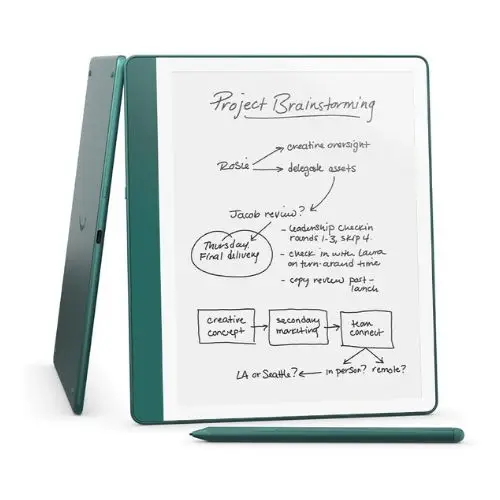
Amazon Kindle Scribe
Selling fast, the Amazon Kindle Scribe combines a notebook and a Kindle all in one and it’s proving to be a popular deal.
Now 35 percent off, the genius device works as an organisational tool for to-do lists, journaling and annotating texts.
As well as being the perfect work companion, it allows you to catch up on your reading, too.
Ring Battery Video Doorbell
This Ring Video Doorbell deal comes in at 50 percent off, allowing you a bit more peace of mind at home.
It records in clear 2K resolution with a 6x zoom, and the added night vision means you can still see what’s going on after dark.
With Live View and Two‑Way Talk, you can answer the door from your phone, and you’ll get alerts whenever motion or people are detected.
Amazon Kindle (2024)
If you’re looking for a distraction-free, digital reading experience, the Amazon Kindle gives you access to thousands of books to tick off your reading list.
With a battery life of up to six weeks and 16GB storage, it’s a great starting point if it’s your first Kindle.
It’s one of the most budget-friendly on the market, and even more so now that it’s still on offer at 37 percent off.
Amazon Fire TV Soundbar
The Amazon Fire TV Soundbar makes everyday viewing feel more immersive with full surround sound, clearer dialogue, and deeper bass.
It really adds to those home cinema moments when you’re curling up on the couch binge-watching your favourite shows.
Including easy Bluetooth pairing to allow you to connect your phone or tablet, it allows you to fill the room with your favourite music.
At 27 percent off, you’ll want to get this deal locked in if you’re looking to upgrade your space.
Blink Outdoor 4 Cameras with Video Doorbell
This bundle features four Blink outdoor cameras and a video doorbell for a whopping 70 percent off.
Its long-lasting battery life, 2K+ view and camera visibility in low lighting allow you to see who’s at your door at any time of day.
Two-way audio allows you to greet visitors, take deliveries and keep tabs on your home security for less.
If you’ve been looking for a video doorbell, you’ll want to make the most of this great discount at Amazon.
Amazon Fire TV Cube
Compatible with a wide range of Amazon Fire devices, the Fire TV Cube is designed to make your downtime feel effortless.
It acts as a central entertainment hub, allowing you to move smoothly between devices while enjoying access to your favourite apps.
With built‑in voice control and seamless navigation across your TV, soundbar and receivers, you’ll be able to take charge of your setup with ease.
It comes in at 45 percent off with this limited time deal.
When is Amazon’s next sale event?
Amazon’s next sale event is likely to be Black Friday, which takes place on the last Friday in November.
This year, it will land on Friday 27 November, 2026.
There will be loads of discounts to look forward to leading up to Christmas, so you’ll be able to get all of your shopping in without breaking the bank.
In the meantime, it’s worth making the most of these last-minute Big Deal Days discounts while they’re still on offer.
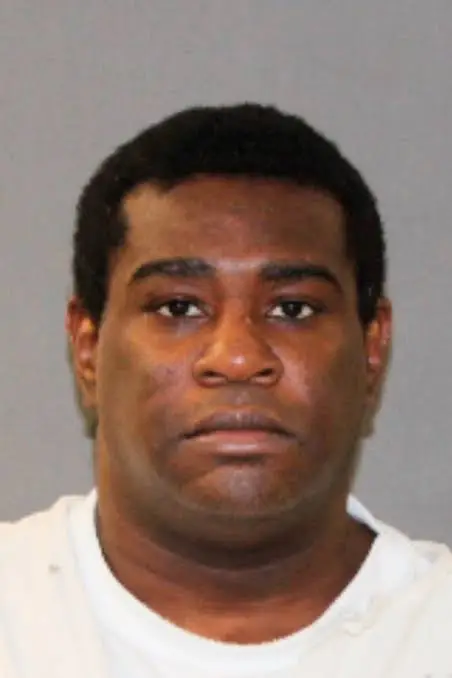
It took just 30 seconds for a US inmate to stop moving after being given the lethal injection, using the same drug given to Christa Pike last month.
Last night, the US state of Texas executed Jamaal Howard, a 46-year-old man who’d been given the death sentence for fatally shooting convenience store clerk Vickie Swartout in 2000.
According to a report from AP News, Howard was given a dose of pentobarbital, the medication given to Christa Pike twice during her botched execution on 30 September.
Reports from those in attendance at the Huntsville prison stated that Howard had taken a couple of breaths and gasped as the high dose of the sedative drug began taking effect.
He then began to make snoring sounds, which became quieter and quieter as time passed.
Jamaal Howard was executed yesterday (Texas Department of Criminal Justice)
It took just 30 seconds for Howard to stop moving. He was officially pronounced dead 19 minutes later at 8:03pm, local time.
Howard was the first person to be put to death after Pike’s failed execution, which has since led to the state of Tennessee halting further executions, pending an investigation.
According to The Tennesseean reporters who attended Pike’s attempted execution, the 50-year-old had complained of pain in her arm following the first dose of pentobarbital, telling officers: “The vein in my arm feels like it’s about to bust.”
LADbible
It was later revealed that it had taken over an hour and seven needles before prison officers could establish an IV line in her arm, while witnesses waiting behind the curtain could hear crying and whimpering.
Pike’s attorney Randy Spivy would later claim that one of the needles appeared to be bent after being removed.
The blinds were first opened at around 7:26pm, allowing reporters and witnesses a view of Pike strapped to a gurney and covered by a sheet.
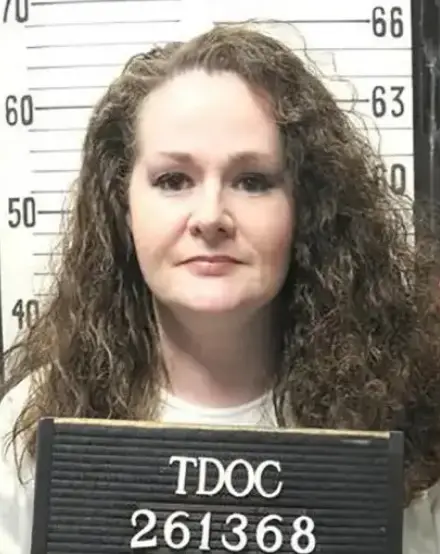
Christa Pike is the first person in history to survive two lethal injections (Tennessee Department of Corrections)
By 7:41pm, it was signalled to witnesses that a round of pentobarbital had been administered. However, those in attendance noted that Pike was still conscious, with one reporter remarking that she was still talking.
When it became apparent that Pike had survived the first dose of pentobarbital, a second one was administered. The curtains were closed again at 8:05pm, with people still able to hear the sound of Pike’s breathing, signalling that the drugs had again failed to take effect.
After nearly an hour of waiting, the chamber was cleared by officials and Pike was transferred to hospital.
It is not currently clear exactly how Pike was able to survive the execution, with some medical experts suggesting the IV line may have been incorrectly placed.
Rep. French Hill, who chairs the House Financial Services Committee, told Fox Business that the SEC and CFTC’s crypto rulemaking “fall[s] short” of what’s needed: a legislative solution.
He credited SEC Chair Paul Atkins and CFTC acting Chair Mike Selig for using exemptive relief to define digital assets, but argued agency rules are fragile compared with a durable statute.
His stance cuts against the post-collapse narrative of crypto leaning on regulators rather than Congress.
The regulators may be busy on crypto, but they can’t finish the job. That was the message from Rep. French Hill, who argued this week that the flurry of crypto rulemaking from the SEC and CFTC is no substitute for the market-structure law that stalled in the Senate.
Speaking in an interview with Fox Business on Wednesday, Hill, the Arkansas Republican who chairs the House Financial Services Committee, credited the two agencies for stepping into the vacuum.
Hill noted that SEC Chairman Paul Atkins and CFTC Chairman Mike Selig “have taken steps to use their regulatory power, their exemptive relief, to give definition to digital assets and digital commodities, so we can have a functional system here in the U.S. for this innovative form of finance.”
But he was blunt about the limits of that approach. “In my judgement, these regulatory policies fall short of what we have to do, which is have a legislative solution,” Hill said, pointing to his own authorship of FIT21 in the previous Congress and the Clarity Act in this one.
He said he still holds out hope the bill can pass during the lame-duck session, arguing, “We need that permanent law change to make sure America is number one in digital assets and blockchain technology.”
Hill’s comments cut against a narrative that has taken hold since the Clarity Act’s collapse. The bill would have set the rules of the road for the majority of cryptocurrency activity in the United States, and cleared up the jurisdictional lines between the CFTC and the SEC on digital assets.
BitcoinBTC · USD
$82,417−1.58%
Oct 1Oct 3Oct 5Oct 6Oct 8
$86.8k$85.3k$83.9k$82.4k
24h HighHigh$83,713
24h LowLow$82,318
VolVol$1.4B
Market projectionsOdds by Myriad
→
But the Senate failed to advance the bill in a 49-50 vote last month, prompting the SEC and CFTC to press ahead with their own initiatives and leading many in the industry to conclude that crypto had stopped waiting on Congress and learned to lean on the regulators instead.
Hill’s point is that such relief is inherently fragile. Exemptions and guidance can be challenged in court or unwound by a future administration, whereas a statute is durable.
The lame-duck window he’s banking on is narrow. Whether a bill that couldn’t clear the Senate weeks ago can be revived before year’s end remains an open question, but Hill, for now, isn’t ready to hand the job to the regulators.
Daily Debrief Newsletter
Start every day with the top news stories right now, plus original features, a podcast, videos and more.
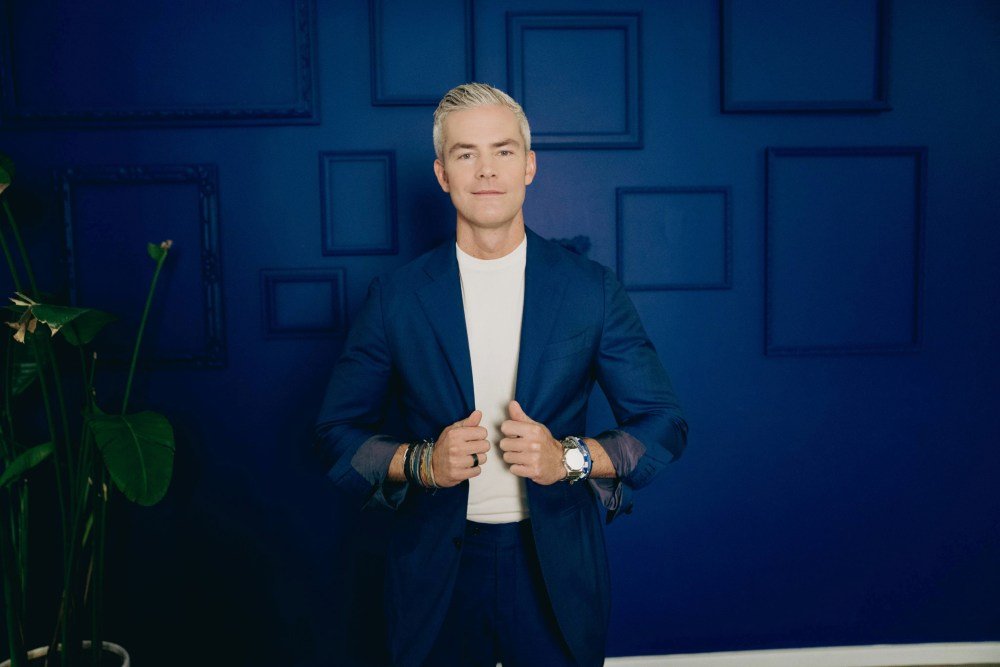
Ryan Serhant, the star realtor captured in Netflix’s “Owning Manhattan,” claims his company produces about 2,200 social posts a month. It’s a hefty amount for a man who oversees a sprawling real estate empire across 19 U.S. regions, an in-house production studio that employs roughly 100 people and millions of followers across YouTube, Instagram and TikTok.
Producing so much content, however, is a tough ask for someone trying to do their day job: managing a brokerage. Enter AI.
Serhant has partnered with HeyGen, a company that lets users create personalized AI avatars, to build a new social media presence featuring an AI persona modeled after his likeness. The avatar will appear across Instagram, TikTok and X under the handle @HeySerhant, an extension of his main presence that will share lessons learned from decades in real estate.
“I’ve accumulated years of lessons that I don’t always have time to turn into content,” he tells Variety. “I do my best, but I don’t always have time anymore. As I run the businesses and I still sell and we still do the TV shows, this gives us a way to make more of that accessible to the people that want to watch it.”
Serhant’s decision follows a wave of high-profile figures opting to license their images to AI companies, allowing for new forms of content featuring their likeness while potentially creating a new revenue stream for those who opt in. “The View” host Sunny Hostin licensed her image to the AI studio Fountain 0 to appear in movies based on her books, while Higgsfield paid a coterie of streaming and sports stars to use their likenesses in a recent AI-generated film.
The relationship with HeyGen came about “organically,” Serhant says, after witnessing the types of content the company was creating. His content arm — of the 100 people, roughly 30 are based with Serhant in New York — has tried to figure out ways to balance building content around the broker’s image as he’s traveling the country for showings.
“I get very, very interested in how we can add accelerant to what we do and how to scale the one asset that is really, really hard to scale, which is ourselves,” he says. “It’s an age-old problem: If you have a brand built around a face, if you have a brand built around a voice, how do you scale that?”
“With his HeyGen avatar, his audience can now hear from him every day without Ryan having to be on camera every day,” Andrew Mok, HeyGen’s chief marketing officer, said in a statement. “We believe in a future where everyone can scale their presence — sharing what they know and showing up wherever their audience is, without being limited by their own time.”
What the @HeySerhant account won’t produce is some of the personalized content Serhant is known for, including “day in the life of a CEO” videos and clips featuring his daughter Zena. “The connection to me and my brand and my life, and people along the ride on my journey — none of that changes,” he says. “This is in addition to, which is awesome and highly helpful.”
The account will produce at least one video a day for at least 12 months (though Serhant expects the arrangement to extend well beyond that), with Serhant and members of his team working on each one to make sure they accurately reflect his sentiments and image. Those videos will exclusively feature the avatar, though Serhant expects clips to pop up where his actual persona will engage with it.
“Ny wife always told me, ‘You just need to replicate yourself, you’re the only one who can understand what you say,” he jokes. “Well, look, guess what? Welcome to the future.”