Author: rb809rb

  • Lakers down Rockets in overtime for 3-0 series lead, Celtics beat Sixers

    Lakers down Rockets in overtime for 3-0 series lead, Celtics beat Sixers

    The Los Angeles Lakers, fuelled by 29 points from LeBron James, beat the Houston Rockets 112-108 in an overtime thriller to take a 3-0 stranglehold in their NBA playoff series.

    James, the 41-year-old superstar playing in his 19th postseason, came up with a steal and a game-tying three-pointer with 13.6 seconds left in regulation on Friday.

    Recommended Stories

    list of 4 itemsend of list

    He could not get a potential game-winner to drop at the buzzer, but added a steal and a block in a frantic overtime as the Lakers pushed the Rockets to the brink of elimination in the best-of-seven Western Conference series.

    No NBA team has come back from a 0-3 deficit to win a playoff series.

    “Just trying to seize the opportunity,” James, who added 13 rebounds, six assists and three steals, told broadcaster Prime. “My guys trust me to try to make plays and I’m blessed to be able to do it.”

    The Lakers will have a chance to close out the series in Houston on Sunday. It is not a position many expected them to be in with league-leading scorer Luka Doncic sidelined by a hamstring strain and key offensive contributor Austin Reaves out with an oblique injury.

    The young Rockets, with veteran star Kevin Durant sidelined by a sprained ankle, were led by Alperen Sengun’s 33 points and 16 rebounds.

    They rallied from an early 15-point deficit and led by six with fewer than 30 seconds left in regulation.

    But their mistakes caught up with them. A Houston turnover was followed by a foul on Marcus Smart as he attempted a three-pointer.

    Smart made all three free throws to cut the Lakers’ deficit to 101-98 and set the stage for James’s game-tying basket.

    Sengun missed a potential go-ahead basket before James was off-target from beyond the arc and they went to overtime, Smart scoring eight of his 21 points in the extra session as the Lakers pulled away.

    Celtics hold off 76ers

    Boston’s Jayson Tatum and Jaylen Brown scored 25 points apiece to lead the Celtics to a hard-fought 108-100 victory over the 76ers in Philadelphia and a 2-1 lead in their Eastern Conference series.

    The Sixers had grabbed game two in Boston to knot the series at one game apiece.

    In a game that neither team led by more than 10 points, the Celtics took a five-point lead into the fourth quarter.

    Tyrese Maxey’s three-pointer briefly put the Sixers up 85-84 with 8:42 remaining, and Philadelphia were within one when Tatum drilled a three-pointer that pushed Boston’s lead to 100-96 with 1:57 left to play.

    Payton Pritchard added another three-pointer with the shot-clock winding down before Tatum – who missed most of the season after suffering a torn Achilles tendon in last year’s playoffs – drained a dagger trey that sealed it for Boston.

    “We just were resilient,” Tatum told broadcaster Prime. “We stuck with it. It’s a game of runs – good team and just, you’ve got to answer.”

    Maxey scored 31 points to lead the Sixers. Paul George added 18 and rookie VJ Edgecombe added 10 points and 10 rebounds.

    Sixers star Joel Embiid, still recovering from an emergency appendectomy earlier this month, was ruled out shortly before the game.

    “He’s just not ready,” said Sixers coach Nick Nurse, whose team will try to even the series when they host game four on Sunday.

    PHILADELPHIA, PENNSYLVANIA - APRIL 24: Jayson Tatum #0 of the Boston Celtics dribbles the ball against Vj Edgecombe #77 of the Philadelphia 76ers in the third quarter during game three of the Eastern Conference first round playoffs at Xfinity Mobile Arena on April 24, 2026 in Philadelphia, Pennsylvania. The Celtics defeated the 76ers 108-100. NOTE TO USER: User expressly acknowledges and agrees that, by downloading and or using this photograph, User is consenting to the terms and conditions of the Getty Images License Agreement. Mitchell Leff/Getty Images/AFP (Photo by Mitchell Leff / GETTY IMAGES NORTH AMERICA / Getty Images via AFP)
    Tatum, right, dribbles the ball against Vj Edgecombe at Xfinity Mobile Arena in Philadelphia [Mitchell Leff/Getty Images via AFP]

    Spurs beat Trail Blazers without Wembanyama

    Stephon Castle had 33 points and the San Antonio Spurs overcame the absence of Victor Wembanyama to beat the Portland Trail Blazers 120-108 on Friday night for a 2-1 series lead.

    Dylan Harper added 27 points and 10 rebounds for the Spurs, who trailed by 15 points in the third quarter. Game 4 of the first-round series will be on Sunday at the Moda Center.

    Before the game, Spurs coach Mitch Johnson announced that Wembanyama would not play while he continues to recover from a concussion he sustained in Game 2 on Tuesday night.

    Jrue Holiday had 29 points for the Trail Blazers, who were making their first home playoff appearance since 2021, but could not ultimately take advantage of Wembanyama’s absence.

    Portland led 82-67 in the third quarter but the Spurs clawed back with a 21-5 run to take an 88-87 lead into the final period. Castle’s step-back jumper and a pair of free throws gave the Spurs a 105-95 lead midway through the fourth and the Trail Blazers collapsed.

    Wembanyama – the league’s first unanimous Defensive Player of the Year and one of three finalists for the Most Valuable Player award – went down in the second quarter of the Spurs’ 106-103 Game 2 loss in San Antonio.

    Johnson would not elaborate on Wembanyama’s condition, only to say he was progressing. He averaged 25 points, 11.5 rebounds, 3.1 assists and a league-best 3.1 blocks per game this season. His status for Sunday’s game was not known.

    Luke Kornet started against the Trail Blazers as Wembanyama watched from the bench, finishing with 14 points and 10 rebounds.

    Portland went on a 15-2 run in the first half to go up 50-43 and led 65-59 at the break after Jerami Grant’s 3-pointer.

    In the final moments of the half, Fox was handed an offensive foul when he charged towards the basket and elbowed Deni Avdija in the face. Johnson challenged the call and it was overturned to a defensive foul on Avdija, who had chipped a tooth but kept playing.

  • 3 things to watch in Pistons-Magic Game 3

    The Detroit Pistons defeat the Orlando Magic, 98-83, to even the series at 1-1.

    • Download the NBA App

    We’re still waiting for this series to live up to its billing: Two big, physical and talented teams more evenly matched than their 1 vs. 8 seeding would suggest. They wound up in this showdown because Detroit enjoyed a laudably consistent season, while Orlando had anything but.

    Through two games, there have been some similarities. Scoring has been tight and down – Detroit a combined 199, Orlando 195. Neither team has looked title-worthy from the 3-point line (27.6% accuracy by the Pistons, 27.3% by the Magic).

    But neither team is happy with the 1-1 deadlock heading into Game 3 at Orlando’s Kia Center (1 ET, Peacock/NBC). The Pistons consider the opener Sunday a sub-par performance in which rust from a week’s layoff hurt them against a rolling opponent.

    That opponent, meanwhile, looked terrific in Game 1 and competent enough for 24 minutes of a grimy Game 2. Then the bottom dropped out for the Magic in the second half, putting the foes on decidedly different paths for the next meeting.

    Here are three things to watch for in Game 3 on Saturday:


    1. Residue from 30-3?

    If there were such a thing as post-traumatic run syndrome, Orlando’s players, coaches and fans might actually be suffering from it. That’s how profound the Magic’s collapse was in the third quarter Wednesday.

    Imagine driving cross-country, only to get side-swiped by an 18-wheeler, spun into oncoming traffic, plunged into a ravine and coming to rest next to den of wolverines somewhere in Missouri. Odds are, that memory would stick with you for a while.

    Orlando’s version was the eight-minute stretch in Game 2 in which it got outscored 30-3, falling behind by 27 points and unable to threaten from there. The Pistons, responding to a confrontational harangue from coach J.B. Bickerstaff, played and sounded from there as if it was motivating enough to carry them to carry them to the conference finals.

    “He really got on us in the locker room,” said forward Tobias Harris. “There’s no more ‘My bads.’ They’re out there hustling, getting offensive boards on us and there’s too many of them. For us as a group, we know that’s not our standard, so he was on us. But we obviously felt it as a group, we needed to be better for each other.”

    The Magic consoled themselves by focusing on the split they got of the opening games at Little Caesars Arena and on the scenery shift to their building. But they might have had two, and they have to wonder if they’ve awakened the superior team.


    2. Slow Cunningham or suffer consequences

    Cade Cunningham joins Isiah Thomas as the only Pistons to record multiple playoff games with 25+ points and 10+ assists

    Detroit’s offensive engine is their point guard, looking through two performances like a future MVP finalist. It isn’t a matter of “how Cade Cunningham goes, so go the Pistons” but rather, can Cunningham get a lot out of his teammates while he’s providing a lot on his own?

    In Game 1, the fourth-year playmaker scored 39 points but couldn’t unlock enough of his teammates. That went better in Game 2, with all five Detroit starters scoring in double figures while Cunningham scored 27 to go along with 11 assists.

    Center Isaiah Stewart spoke afterward of the guard’s impact once he’s rolling:

    “For us, it uplifts us, makes us go with him. For the other team, it’s just a problem for them that they have to figure out. [The Pistons] changed their coverages and stuff, which helped free us up and allowed us to make plays.”

    It wasn’t that long ago, just a month, that he, they and we wondered if everyone would be cheated of this. That’s when Cunningham suffered a collapsed lung – not a familiar basketball injury – in an on-court collision at Washington. He missed 11 games, returning in time to qualify (with an appeal) under the 65-game rule for awards and honors, and to do a whole lot of what he’s currently doing.

    “I’m just grateful to be here, grateful to be back, feeling the way I feel right now, whenever my team needs me,” Cunningham said. “So all glory to God, for sure. I just want to continue to go and represent.”


    3. Rays of sunshine for the Magic?

    Orlando wasn’t exactly dominant at the Kia Center this season, winning seven more games there (26-16) than they did on the road. Its shooting numbers were slightly worse, too.

    But going home frequently has a broader benefit in the playoffs. The truism is that role players typically play better in more comfortable, less pressurized surroundings. And the Magic have a few – Anthony Black, Tristan da Silva, Jevon Carter if called upon – who could raise their games a notch.

    Maybe center Wendell Carter Jr. will get back on track. He arguably was Orlando’s best performer in Game 1 (17 points, seven rebounds, five assists, 8-9 FGs) but spent Game 2 in foul trouble, making just one of his six shots. He finished with three points and a minus-29. With Detroit’s bigs perking up, the Magic can’t afford for Carter to perk down.

    * * *

    Steve Aschburner has written about the NBA since 1980. You can e-mail him here, find his archive here and follow him on X.  

  • SpaceX’s $75 billion IPO could drain the liquidity that’s helping lift bitcoin and crypto

    SpaceX’s $75 billion IPO could drain the liquidity that’s helping lift bitcoin and crypto

    One of the biggest stock-market debuts in history is six weeks away, and crypto sits in the same liquidity pool it will draw interest from.

    SpaceX filed a confidential S-1 with the SEC earlier this month, targeting a $75 billion capital raise at a $1.75 trillion valuation.

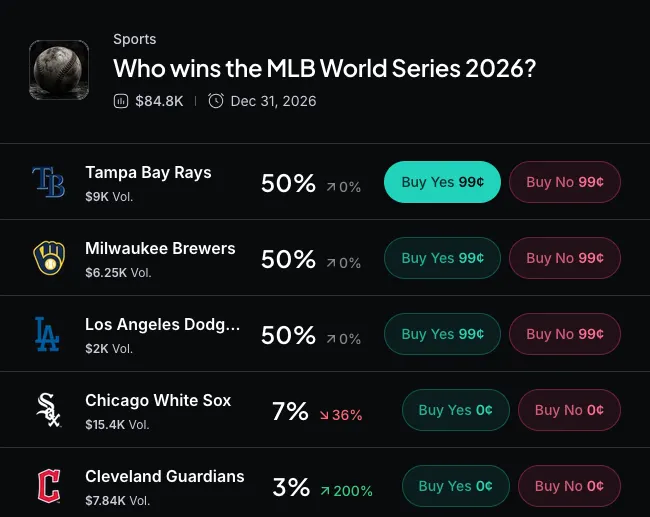
    If it prices anywhere near that level in its expected June listing, the offering will be more than 2.5 times larger than Saudi Aramco’s $29 billion 2019 record, making it the biggest stock-market debut in history. Polymarket traders assign a 65% probability of a June listing and a 53% probability that the first-day closing market cap exceeds $2 trillion.

    SpaceX isn’t alone. ChatGPT maker OpenAI is targeting a Q4 listing at a valuation near $1 trillion. Anthropic is reportedly planning an October debut that could raise more than $60 billion.

    If all three reach the public market on schedule, they would pull in more than $240 billion from June through year-end, a figure PitchBook estimates exceeds every venture-backed US IPO combined since 2000.

    “After the SpaceX IPO, I think you start to get very bearish equities. That’s the Solana $300 moment,” Alex Good, founder of crypto AI project Post Fiat, said on a recent CounterParty TV interview.

    “Right now we’re in this max bid moment, every investment bank is going to upgrade every AI stock because they’re going to get so much fees off of these IPOs.”

    Good’s framing captures the mechanical setup, where the three largest listings could be concentrated in a six-month window, preceded by coordinated sell-side optimism from the banks running the deals and followed by the rotation out.

    MSCI, the firm that builds many of the benchmark stock indexes institutional portfolios track, modeled a scenario in February that flagged megacap IPOs in 2026 could trigger index-driven flows measured in billions of dollars, sector-rotation effects across global benchmarks, and a compression of liquidity in everything outside the new names.

    Crypto sits inside the same risk-on liquidity pool that funds tech and AI equities.

    Bitcoin, ether, and the rest of the majors have traded with tightening correlation to Nasdaq and the S&P 500 over the past two cycles. When speculative capital leaves equities for an IPO allocation, some of what leaves is the same capital that would otherwise bid up higher-beta assets, including crypto.

    The historical parallel is a point of concern, however. Coinbase listed on April 14, 2021 at the peak of the last bitcoin cycle. Bitcoin hit its all-time high of roughly $64,800 the same day and began a 50% drawdown within six weeks.

    Traders who read Coinbase’s IPO as a signal that crypto was going mainstream spent the next six months watching mainstream capital rotate out. The lesson is that institutional milestones frequently mark tops rather than starting lines, because the capital that chases the milestone is the same capital that was previously holding up the asset.

    SpaceX is not a crypto company, but two features of the listing connect directly to crypto flows. First, the 30% retail allocation, roughly $22 billion of the $75 billion offering, is three times the typical retail share on a deal this size.

    Such a retail allocation nto SpaceX is money that’s not bidding on memecoins, altcoins, or bitcoin itself.

    Second, SpaceX itself holds 8,285 BTC worth roughly $600 million in Coinbase Prime custody, making its IPO the first public-market debut of a company with a material bitcoin position disclosed under the new fair-value accounting rules that took effect in late 2024.

    The testable signal going forward is whether crypto holds up through the roadshow window in May and June or begins to drift lower as allocators free up room for the SpaceX subscription.

    However, a bitcoin rally that extends through the roadshow suggests the spot-ETF bid has decoupled crypto from broader risk-on flows.

    Coinbase’s April 2021 peak was one company and $86 billion of market cap absorbed in a single day. SpaceX at $75 billion is not a scaled-up Coinbase. It is a different kind of event, priced into a market that has had five years to learn from the last one.

    Whether crypto treats the lesson as learned or learns it again will be visible in the tape starting roughly six weeks from now.

  • Ripple-linked XRP stalls near $1.44 as ‘triangle squeeze’ nears breakout

    Ripple-linked XRP stalls near $1.44 as ‘triangle squeeze’ nears breakout

    $XRP is stuck just below resistance, but the price action is starting to lean one way. Every push higher gets sold, but each pullback is getting shallower. That tells you sellers are still active, but they’re losing control bit by bit. When that balance shifts, the move that follows is usually quick and decisive.

    Price is grinding sideways at the top of the range, which is where markets typically resolve after absorbing supply. Add rising participation and steady positioning underneath, and this starts to look less like indecision and more like a setup waiting for a trigger.

    News Background

    • Spot $XRP ETFs saw fresh inflows, extending last week’s strong demand and pushing total institutional positioning above $2.6 billion. This keeps a steady bid under the market even as price stalls.

    • Exchange outflows hit one of the largest daily readings this year, with nearly 35 million $XRP leaving trading platforms. That typically reduces immediate sell pressure and supports tighter supply conditions.

    Price Action Summary

    $XRP moved around $1.43-$1.45 after a high-volume push earlier in the session.
    • The breakout attempt above $1.44 held briefly but failed to extend, leading to sideways consolidation.
    • Price is now compressing into a narrower range, holding support without reclaiming higher levels.

    Technical Analysis

    • The dominant structure is a multi-week symmetrical triangle, with lower highs and higher lows squeezing price toward a decision point.
    • Volume spiked during the initial breakout attempt, but faded into consolidation, suggesting absorption rather than conviction.
    • Buyers continue defending higher lows, which keeps downside limited for now.
    • The market is effectively coiling, with neither bulls nor bears in full control.

    What traders should watch

    • $1.50 is the key breakout level. Clearing it would shift momentum more decisively higher.
    • $1.39 remains the critical support. Losing it would break the structure and open downside.
    • The tighter the range gets, the more likely a sharp move follows. Direction will depend on which side breaks first.

  • Sui Price Falls Despite Major Milestones, All Eyes on Miami Event

    Sui Price Falls Despite Major Milestones, All Eyes on Miami Event

    The Sui price is facing significant downward pressure this week, even as the network delivers one of the most active periods of growth and innovation. From expanding real-world payments to pushing deeper into AI and decentralized finance, the ecosystem is moving quickly. But the Sui price response has remained silent so far.

    Despite the Sui price dip, the momentum around the network hasn’t slowed. A series of major integrations, including its upcoming Miami showcase, is keeping attention firmly. Now, traders and analysts believe that these developments will eventually lead to a price recovery.

    Sui Price Under Pressure Today

    Currently, the $SUI price is experiencing a negative trend despite major developments within the ecosystem. As of press time, $SUI is valued at $0.9508, up by a marginal 0.65% in a day. Over the past week, the cryptocurrency has fallen by nearly 5%, showing a notable downward trend.

    This decline aligns with the broader crypto market trend, where major coins like Bitcoin, Ethereum, and XRP are losing their momentum. This is mainly due to the ongoing global conditions, defined by escalating US-Iran tensions and rising oil prices.

    Amid these issues, investors are taking a cautious stance, moving their funds from risky assets like Sui to safe-haven assets. This is evident in the lack of sufficient activity in the market. Over the past 24-hours, the trading volume of Sui has plummeted by about 21%, reaching $232.21 million. This indicates that the traders remain inactive, waiting for strong catalysts for the Sui price’s potential journey.

    Sui Ecosystem Growth Accelerates Despite Price Dip

    The Sui network is expanding at a rapid pace despite the negative sentiment surrounding the token. Over the past week, the network has rolled out a series of major updates across payments, AI, DeFi, and trading. Revealing these major developments, the Sui network took to X earlier today. This signals strong underlying growth and increasing real-world utility.

    Integration with RedotPay

    One of the biggest developments came through Sui’s integration with RedotPay. This move allows users to spend $SUI crypto at over 130 million merchants worldwide. It marks a major milestone towards everyday adoption, positioning Sui as more than just a speculative asset.

    AI-Powered Prediction Market Tools by Beep

    A new advancement includes the use of AI-based prediction market tools developed by Beep. This provides a much better approach for users to engage in the prediction markets. It is one of the trends being witnessed, where there is an intersection between artificial intelligence and decentralised finance.

    AI-Based Trading Engine Launched by WaterX

    Continuing with the trend of AI and DeFi meeting in one application, WaterX is gearing up for the launch of an AI-native trading engine on Sui. The platform aims to automate and enhance trading decisions using AI. This potentially improves efficiency and attracts a new wave of users interested in intelligent trading systems.

    Astros Perpetual Markets

    In derivatives trading, Astros has introduced perpetual markets tied to major private companies like SpaceX, OpenAI, and Anthropic. This gives users indirect exposure to high-value firms that are typically inaccessible without traditional financial intermediaries.

    Turbos Finance Soars Past $10B

    Another major milestone is the massive growth of Turbos Finance. Turbos surpassed $10 billion in cumulative trading volume. This highlights its significance as a liquidity hub within the Sui ecosystem. This milestone reflects increased user activity and trust in the platform’s DeFi infrastructure.

    Major Global Events

    The Sui network has also strengthened its global presence through major events in Hong Kong. This includes Web3 Festival and Sui Connect. Building on this momentum, the platform is preparing for its upcoming Sui Live event in Miami on May 7. This event is expected to further highlight its ecosystem growth.

  • Grayscale, Bitmine stake nearly $500 million in Ethereum: On-chain data

    Grayscale, Bitmine stake nearly $500 million in Ethereum: On-chain data

    Grayscale Investments and Bitmine have collectively staked almost $500 million over the past 24 hours, according to on-chain data from Arkham Intelligence.

    Grayscale staked another 102,400 Ether worth about $237 million. The deposit was executed in 32 separate transactions from Grayscale’s Ethereum Trust wallet to Coinbase Prime.

    The leading digital asset fund manager activated staking for its Ethereum products, including Grayscale Ethereum Staking ETF (ETHE) and Grayscale Ethereum Staking Mini ETF ($ETH) on October 2025 and has since accumulated nearly $38 million in net staking rewards, per its data.

    Grayscale CEO Peter Mintzberg said the firm’s low-cost Ethereum fund ranked first among all US exchange-traded product providers during the first quarter of 2026, pulling in $337 million in inflows.

    As of April 24, combined assets under management for ETHE and $ETH have reached $4 billion.

    Approximately 39 million $ETH is currently locked in staking contracts across the network, according to beaconcha.in. Nearly a third of all Ethereum that exists is voluntarily taken off the market by holders earning yield on it. Every additional chunk that gets staked shrinks the pool of $ETH available for trading.

    Bitmine Immersion Technologies is now the largest corporate Ethereum staker and holder. The firm disclosed this week that its staked $ETH reached 3,3 million units, equivalent to 67% of total holdings.

    Lookonchain reported that Bitmine also staked 112,040 $ETH on Friday, lifting the total staked $ETH to 3,7 million, representing around 74% of its total holdings.

    Tom Lee(@fundstrat)’s #Bitmine staked another 112,040 $ETH($259.6M).

    In total, #Bitmine has staked 3,701,589 $ETH($8.58B), 74.38% of its total holdings.https://t.co/P684j5YQaG pic.twitter.com/sgn9wGZb1z

    — Lookonchain (@lookonchain) April 25, 2026

  • XRP Price Prediction 2026: Bitwise Says New All-Time Highs Possible in Next 12 to 18 Months

    XRP Price Prediction 2026: Bitwise Says New All-Time Highs Possible in Next 12 to 18 Months

    In a recent conversation with Paul Barron, Bitwise strategist Juan Leon has opened up about how institutions are no longer just testing crypto with tiny allocations; they’re starting to rethink it as a core part of portfolios.

    Leon makes it clear that $XRP’s recent stability doesn’t mean the opportunity is gone; it actually signals a shift toward a more mature phase. Earlier volatility, he explains, was largely tied to uncertainty.

    “A lot of the volatility… was driven by the uncertainty of the regulatory and legal status,” Leon says. With that now mostly resolved, price action has cooled, but the bigger picture remains bullish. “There’s still definitely a lot of growth ahead for the digital asset ecosystem.”

    Global Push Is Where the Real Story Lies

    Instead of hype, $XRP’s future now depends on execution. Leon highlights how the network is expanding globally—partnering with SBI in Japan, rolling out $RLUSD in Singapore, and exploring African markets. “Every quarter… they’re looking to expand… with banks and payment providers,” he said.

    He also points out that rising stablecoin market cap, growing transaction volumes, and increasing partnerships will fuel momentum.

    “As we see more partnerships and more of those revenues start flowing… all of that should drive the price.”

    Strong Tech + Regulation = Investor Confidence

    A big reason for growing institutional interest is the strength of the $XRP Ledger. Leon highlights its efficiency, with sub-5-second settlement and transactions that are over 60% cheaper than traditional systems like SWIFT.

    “It’s a very efficient settlement ledger,” he says.

    On top of that, $RLUSD adds a regulated layer to the ecosystem. It’s backed by short-term treasuries, held with custodians like BNY Mellon, and supported by independent attestations. It’s also expanding across Ethereum and Layer 2 networks like Optimism and Base.

    He further added that “There’s a lot of conviction from investors around it.”

    AUM Growth and Market Outlook

    Leon points out that digital asset ETFs currently hold around $160 billion in AUM, with Bitcoin dominating at $120 billion, Ethereum at $18 billion, and $XRP at roughly $2.5 billion, leaving significant room to grow.

    He says future upside depends on catalysts like the Clarity Act and improving macro conditions. With Bitcoin previously hitting $125K and now below $80K, a recovery could reignite the market.

    “If we resume the bull run… we could go to new all-time highs over the next 12 to 18 months,” he concluded.

  • CFTC Charges Polymarket Trader in First Event Contract Insider Trading Case

    CFTC insider trading charges against a U.S. Army service member escalate scrutiny of prediction markets. The case raises new legal and national security concerns around event contracts tied to government information.

    Key Takeaways:

    • First CFTC action targets insider trading in event contracts.
    • Insider trading charges show Army member used classified data to profit.
    • Polymarket bets allegedly used nonpublic military operation details.

    CFTC Charges Raise Stakes for Prediction Market Trading

    A U.S. Army service member is facing civil enforcement action tied to prediction market trading, marking a significant escalation in regulatory scrutiny of event contracts. The Commodity Futures Trading Commission (CFTC) said on April 23, 2026, it filed a complaint alleging insider trading tied to sensitive government operations, highlighting concerns about how nonpublic information intersects with emerging betting markets.

    The CFTC said the complaint was filed against Gannon Ken Van Dyke of North Carolina, accusing him of using classified information related to a U.S. operation involving Nicolás Maduro. The agency noted:

    “This case marks the first time the CFTC has charged insider trading involving event contracts, and the first time the CFTC has used the so-called ‘Eddie Murphy Rule’ to bring charges based on the misuse of government information.”

    CFTC Chairman Mike Selig wrote on X: “I’ve been crystal clear: anyone who engages in insider trading in any of our markets will face the full force of the law.” The CFTC is seeking restitution, disgorgement, civil penalties, trading bans, and a permanent injunction.

    The “Eddie Murphy Rule” refers to Section 4c(a)(4) of the Commodity Exchange Act, which bars members of the government, including service members, from using nonpublic government information in prediction markets and other markets within the CFTC’s jurisdiction. The CFTC said this case marks the first time it has used the rule to bring charges based on alleged misuse of government information.

    DOJ Charges Deepen National Security Fallout

    The CFTC claimed Van Dyke used nonpublic details tied to “Operation Absolute Resolve” to purchase more than 436,000 “Yes” shares on Polymarket in a contract tied to Maduro’s removal by Jan. 31, 2026. The filing states the trades generated more than $404,000 in profits. The DOJ separately alleged Van Dyke profited approximately $409,881 from related prediction market trading.

    The DOJ indictment, unsealed in Manhattan federal court, alleges Van Dyke used classified information from his role in “Operation Absolute Resolve” to place trades on Polymarket. Prosecutors said he accessed classified, nonpublic national defense information and placed bets before any public disclosure, positioning himself to profit from the anticipated outcome. Authorities also stressed the national security risks tied to the conduct, noting the defendant participated in operational planning and violated a duty of confidentiality tied to his role. Selig added:

    “The CFTC won’t tolerate insider trading in our markets, and our Division of Enforcement will continue to vigilantly police our markets for any illegal actions.”

    Federal prosecutors stated the conduct involved misuse of sensitive national defense information, aligning with parallel criminal charges filed in the Southern District of New York. Director of Enforcement David I. Miller warned: “The defendant abused that trust by misappropriating extremely sensitive information regarding U.S. military operations, and by doing so, placed the lives and security of our service members at risk.”

  • David Ellison Held Dinner Party “Honoring” Trump Where President Gave Hour-Long Remarks

    David Ellison Held Dinner Party “Honoring” Trump Where President Gave Hour-Long Remarks

    David Ellison held an event at the at the U.S. Institute of Peace on Thursday in honor of Donald Trump, where the president reportedly spoke to guests for nearly an hour.

    According to a Friday report by The Times, CBS News executives and journalists were in attendance, including Bari Weiss and Norah O’Donnell. The acting attorney general Todd Blanche was also present; the Justice Department, which Blanche oversees, still has to approve Paramount‘s $110 billion megadeal for Warner Bros. Discovery.

    Invitations for Thursday’s event, that were given out by Paramount and named Ellison as host, described the night as “honoring the Trump White House.”

    WBD shareholders approved Ellison’s impending Paramount merger on Tuesday, inching the deal closer to being completed.

    Trump gave remarks at the dinner for almost an hour, The Times reported, where Paramount’s chief legal officer Makan Delrahim; Secretary of State Marco Rubio; and White House Deputy Chief of Staff Stephen Miller were all also in attendance.

    Anonymous CBS News journalists told The Times they were “taken aback” by the dinner, and worried it could send a message of “coziness” between the newsroom and the Trump administration.

    The event came a few days before Saturday’s White House Correspondents Dinner, which Trump will attend. CBS News, which is backed by Paramount, is planning to bring Secretary Pete Hegseth to the dinner.

    Also on Saturday night, the Wall Street Journal will accept the Katharine Graham Award for Courage and Accountability, which “recognizes an individual or news gathering team for coverage of subjects and events of significant national or regional importance in line with the human and professional qualities exemplified by the late Katharine Graham.”

    The piece that was recognized was published on July 17, entitled “Jeffrey Epstein’s Friends Sent Him Bawdy Letters for a 50th Birthday Album. One Was From Donald Trump.” It is notably the report that led Trump to file a defamation lawsuit against Wall Street Journal owner News Corp., which detailed a 2003 letter from him to Jeffrey Epstein in which he wrote that they share a “wonderful secret.” 

    A Florida federal judge dismissed the suit in April. U.S. District Judge Darrin P. Gayles wrote in the order dismissing the lawsuit that Trump’s legal team failed to argue that the article was published by those named in the complaint with malicious intent.

  • ‘Deep Water’ Review: Renny Harlin’s Double-Dip Disaster Movie — Plane Crash + Shark Thriller —  Has His Signature Schlock Touch

    ‘Deep Water’ Review: Renny Harlin’s Double-Dip Disaster Movie — Plane Crash + Shark Thriller — Has His Signature Schlock Touch

    When a once-successful director finds himself stranded in a wilderness of misguided projects and indifferent audience response, he may try to reignite inspiration by going back to the ingredients of an iconic hit. If he can replicate the perfect storm of elements that made the earlier film work, maybe the new movie will put him back on top.

    This kind of thing happens often enough — examples range from William Friedkin shooting for a West Coast “French Connection” with “To Live and Die in L.A.” to John McTiernan making “Die Hard with a Vengeance.” But we’re in a far more degraded realm of return-to-glory-days syndrome when it’s Renny Harlin out to recapture the low-trash spark of “Deep Blue Sea,” his well-liked exploitation action thriller. Talk about a 1999 movie that wasn’t about the brave new movie future!

    It was about killer sharks (with enhanced intelligence!) eating people, and about a scientific experiment — something to do with curing Alzheimer’s — that was there to fill up the space between chompings. But “Deep Blue Sea,” whose big star was Thomas Jane, went down as a summer sleeper (it bit its way to $73 million domestic), and the nostalgic fondness that a lot of people have for it surely fed into why we’re now getting “Deep Water” (opening May 1), Harlin’s most lavishly scaled production in quite some time.

    In the 1970s, disaster films had titles that described exactly what they were. “The Towering Inferno” was about a towering inferno, “Earthquake” was about an earthquake, and then there were films like “Meteor” and “Avalanche” and “The Swarm” and “The Hindenburg” and “City on Fire.” In that spirit, “Deep Water,” which is very much a neo-’70s disaster film. should have been called “Airplane Crash into a Sea of Jaws.” As it stands, the word in the film’s generic title that echoes that earlier Harlin movie is more than a bit ironic, since “deep” is just the word to describe what Renny Harlin’s movies are not. They are shallow. They are dramatically flat. They do not have interesting characters even on a schlock B-movie level. As a director, he has a sixth sense for how to reduce actors to walking slabs of pulp.

    Yet there’s no denying that Renny Harlin, in his utilitarian action-hack way, has some chops. “Deep Water” starts out by introducing the main players on an intercontinental flight from Los Angeles to Shanghai. Aaron Eckhart, with his likable downcast valor, is the First Officer, a stalwart fellow who’s a bit of a ne’er-do-well (that’s why he’s never become a captain); he’s suffering from an oblique family trauma we can kind of suss out. Ben Kingsley is the captain, a jaded overseer on the verge of retirement who is introduced singing “Fly Me to the Moon” in a karaoke bar, where he somehow imagines that his crooning is going to have a seductive effect on the flight attendants seated at a table. (The truth is that he looks rather frighting in his sand-brown goatee.)

    We’re also introduced to the passengers, who are real Jane and Johnny one-notes, though we do take special notice of Dan (Angus Sampson), a long-haired slovenly bellicose chain smoker whose bulky red plastic suitcase the camera tracks onto the plane. For a while, we think it must have a bomb in it. It doesn’t, but it does contain something that randomly ignites, setting a fire in the cargo pod, which becomes an explosion, which ricochets into the cabin, at which point a hole gets blown in the side, one of the engines catches fire, and this thing is going down.

    It doesn’t take excessive skill to make a plane crash scary, but Harlin executes this one with stylish flamboyance, as bodies get sucked out of the plane and flying wine bottles turn into shrapnel. Our heroes want to try landing at an airport in Guam, but that plan goes out the window, as they barely manage to ground the plane in the middle of the ocean.

    There were 257 passengers aboard, all but about 30 of whom are now dead. The plane is in pieces, the main two chunks being the cockpit and the fuselage, both of which have been reduced to floating canisters with wires popping out of the sides. The plane’s pieces are now, in effect, life rafts (though there are some actual oversize yellow inflatable rafts aboard that will come into play). If the proper distress signal was set off (there’s some question about whether that happened), they should be rescued in a matter of hours. But until then…sharks!

    They are mako sharks, which to my movie-trained eyes don’t look all that different from the great white shark in “Jaws,” as they flop their giant razor-toothed mouths aboard the rafts. “Jaws” was scary because it was about anticipation and sudden fear and the power of suggestion. “Deep Water,” on the other hand, has little in the way of suggestion, which is why it’s more gory than scary. Harlin stages the shark attacks in an overt here-ya-go way, with the one consistent suspense issue being whether the shark will consume a victim whole or bite off his or her limb or simply leave them with a nasty gash (which happens quite often).

    Meanwhile, two bros (one American, one Chinese) start off as enemies but get over that, the scurrilous Dan continues to assert what a dick he is by smoking and snapping at everyone, and Eckhart’s character bonds with Cora (Molly Belle Wright), the now-orphaned young girl aboard, which triggers a reappraisal of his own domestic situation. Human drama! Not. (Or, at least, not very much.) Yet there’s a way in which it matters not, since even back in the ’70s the “human drama” of disaster films was just the frame on which to hang the sensationalist fantasy of death porn and survival. “Deep Water” isn’t terrible for what it is, but what it is is disaster product.