Author: rb809rb

  • Fantasy Hockey: It’s time to stop investing so heavily in goaltending

    The age of reliable goaltending in fantasy hockey is over. And perhaps the age of elite goaltending altogether is on its way out. When you think of elite goaltenders in the NHL right now, a handful of names come to mind. Connor Hellebuyck is the first, followed by Andrei Vasilevskiy, Ilya Sorokin, Igor Shesterkin and Sergei Bobrovsky. Others who deserve to be in the conversation include Jake Oettinger, Juuse Saros and perhaps John Gibson in a resurgent season. But some of those goalies are aging and close to retirement. Others are trapped in poor team environments, going through a rebuild. A few are just somewhere in the middle, experiencing a bout of bad play or puck luck.

    It happens in hockey. It’s a whacky game.

    Advertisement

    Variance. Volatility. These are words we throw out a lot when analyzing fantasy sports. There is always a range of outcomes going into a draft when figuring out which players to select. Some positions are going to be easier to sift through than others. Some are going to be tougher given the lack of options or quality at a particular position. At the end of the day, we’re never going to be 100% correct all the time, but we’d like to be right some of the time. That is becoming increasingly difficult at the goaltender position in fantasy hockey, so much so that it may be time to rethink the way we approach drafting the position moving forward.

    Think of how you would approach drafting in fantasy football. There’s an argument to be made for waiting on positions like QB and TE, strategies that are proven to be very effective. So why aren’t we adopting these philosophies for hockey? We still rank goalies among the top players and suggest they should go as high as the first round. If we look at tight end in football, this can work out with players like Trey McBride. It can also backfire with players like Brock Bowers; there are similar parallels when we look at both sports.

    But with goaltenders in hockey, there’s less of a pool, fewer roster spots and an insane amount of variance and volatility to take into account compared to football. It’s my belief that we need to stop investing so heavily in goaltenders at the top of drafts — shoot, even in the middle of the draft. And we’re going to get into why as you prep for the rest of the season with the NHL returning on Wednesday and the playoffs around the corner.

    First, however, I want to talk about one man and five syllables (No, I’m not talking about Der-ek Zoo-lan-der). I’m talking about Con-nor Hell-e-buyck. Winnipeg Jets goalie, and reigning Hart and Vezina Trophy winner, Connor Hellebuyck. Who is fresh off a gold medal for Team USA at the 2026 Winter Olympics in Italy.

    Advertisement

    Not even the best in the world is safe

    While watching the United States win the gold medal over Canada in the men’s hockey final at the Olympics on Sunday, I couldn’t help but think, “How is a player of this caliber experiencing such a poor season in the NHL?”

    Hellebuyck stood on his head in the final, making 41 saves to help the USA win gold for the first time in 46 years. But until he took off on that plane to head to Italy to compete, Hellebuyck was in the midst of one of the more disappointing regression seasons of all time for a goalie.

    One could simply point to Hellebuyck’s 2025-26 as a clear indicator that goaltending is too volatile to invest too heavily in for fantasy hockey. Last season, Hellebuyck led the NHL in wins (47), goals-against average (2.00), shutouts (8), goals saved above average (41.6), adjusted goals against average (2.13) and goalie point shares (14.5), en route to winning his third Vezina Trophy and first Hart Trophy as MVP. We’ve seen just nine goalies win the Hart in NHL history, dating back to 1923.

    Advertisement

    But this season, you’d think Hellebuyck was a completely different player up until we saw him put on a show at the Olympics. So what does this tell us? That a fantasy goalie is only as good as the sum of his parts. As we come out of the Olympic break, the Jets goalie has these marks: 13 wins, 2.79 GAA, .900 SV%, no shutouts and just 19 quality starts in 36 games.

    You could point to the Jets’ blue line, specifically Neal Pionk, Dylan Samberg and Colin Miller, all missing time. Plus, natural regression from aging forwards and the rigors of this season’s condensed schedule. The West has also seen a few teams emerge; the Mammoth, Ducks, Sharks, Predators and Kraken are all improved. But if you asked anyone before the season if they saw this type of regression coming from the Jets, who won the Presidents’ Trophy with 116 points last season, they’d probably tell you: “Not like this … not like this.”

    Hellebuyck entered the season as the consensus, no-doubt No. 1 goalie in fantasy. Even as play opens back up on Wednesday, Helly is considered a top-five fantasy goalie. But why? The Jets have 26 games left and it may be difficult for him to even break 20 wins this season, something that hasn’t happened since Hellebuyck was a rookie in 2015-16. Sure, he’s going to get plenty of starts but also could be gassed from winning gold. When the dust settles on 2025-26, I’ll be interested to see if Hellebuyck even finishes as a G2 in fantasy hockey.

    But if we’re looking ahead to next season, and Hellebuyck is still considered the top goalie choice, there’s no way I’m investing a first-round pick unless the Jets make vast improvements this offseason. Even then, it feels like he’ll be a massive risk coming off a season like this at age 33.

    Advertisement

    We’ve seen goalie stats league-wide get worse and worse since the NHL decided to change the size of pads to increase scoring. We saw a big jump in league-wide goals-against average from 2.59 in 2016-17 to 2.78 the following season. Average save percentage has steadily decreased from .913 in 2016-17 to .908 in 2020-21 and .900 last season. Right now, league-average SV% is at .896 as we head into the final stretch of the regular season. If that holds, it will be the lowest average SV% league-wide since 1993-94 (.895).

    This downward trend doesn’t appear to be a product of the lack of talent at the goalie position. It feels more like a lack of importance. And we can point to a few teams at the top of the Pacific Division to make this argument — the Vegas Golden Knights and Edmonton Oilers.

    The Knights have been without Adin Hill due to injury. Between Hill, Akira Schmid, Carter Hart and Carl Lindbom, you have 27 wins, a 3.04 GAA and .882 SV%. Schmid entered this season ranked 41st among goalies in Yahoo analyst Scott Pianowski’s rankings. That isn’t to say the ranking was wrong; it’s simply pointing out how difficult it is to predict what will happen at the position. Sure, if Hill is healthy, he’s likely among the top-12 goalies in fantasy. But again, this points back to the unpredictability at the position.

    Advertisement

    Similarly, the Oilers have operated with a four-headed monster featuring Stuart Skinner (since traded to PIT), Calvin Pickard, Connor Ingram and Tristan Jarry. Their collective numbers? That would be 28 wins, a 3.29 GAA and .883 SV%. Having superstars like Connor McDavid and Leon Draisaitl on your roster can really buoy the other positions. Plus, from a cap perspective, the Oilers have to get by on cheap goaltending.

    Can you find reliable streams among those two groups? Absolutely. And it shows that when injuries happen and play is inconsistent, teams are fine existing (and even sustaining) within these time-shares. It takes more work but it’s becoming tougher to simply plug in a goalie and hope for the best all season. You have to adjust.

    Schmid has been startable most of the season. Ingram and Jarry have had their moments and Skinner has really thrived in Pittsburgh. So, while it may be difficult, there are goalies we can pluck from these situations to help your fantasy team without spending high draft capital.

    Below is a list of every goalie taken within the first 100 picks based on ADP in Yahoo leagues before the season. Seven of the 17 goalies are ranked inside the top 12 at the position in Yahoo points leagues. The others? Well, you can see how they’re doing. It’s a mix of players who are underperforming, injured or are on teams that aren’t very good.

    Goalie

    Current Rank

    Connor Hellebuyck, WPG

    G17

    Andrei Vasilevskiy, TBL

    G1

    Jake Oettinger, DAL

    G12

    Igor Shesterkin, NYR (INJ)

    G11

    Mackenzie Blackwood, COL

    G26

    Sergei Bobrovsky, FLA

    G29

    Filip Gustavsson, MIN

    G8

    Darcy Kuemper, LAK

    G20

    Adin Hill, VGK (INJ)

    G71

    Anthony Stolarz, TOR (INJ)

    G58

    Ilya Sorokin, NYI

    G2

    Logan Thompson, WSH

    G4

    Dustin Wolf, CGY

    G14

    Jacob Markstrom, NJD

    G37

    Linus Ullmark, OTT (INJ)

    G34

    Jordan Binnington, STL

    G55

    Juuse Saros, NSH

    G10

    Outside of Vasilevskiy, goalies taken at the top of drafts have mostly underperformed. Oettinger has been outplayed by backup Casey DeSmith on a quality Stars team. Bobrovsky and the Panthers have had bad injury luck — to be expected, after three straight trips to the Cup Final. Shesterkin is hurt and the Rangers have admitted they need to rebuild.

    Advertisement

    Moving further down that list, we see some injuries and regression from Kuemper, then we land on a few bright spots with Sorokin and Thompson, though each was selected around the 5-6 rounds on average. Markstrom and Binnington are victims of the teams in front of them. Saros benefits from volume, tied for the league lead in games played at the position at the break with 44.

    Now, let’s take a look at goalies who rank among the top 24 in points leagues who were selected outside the top-100 picks on Yahoo:

    Goalie

    Current Rank

    Karel Vejmelka, UTA

    G3

    Jet Greaves, CBJ

    G5

    Jeremy Swayman, BOS

    G6

    Spencer Knight, CHI

    G7

    John Gibson, DET

    G9

    Lukas Dostal, ANA

    G13

    Scott Wedgewood, COL

    G15

    Jesper Wallstedt, MIN

    G19

    Dan Vladar, PHI

    G21

    Stuart Skinner, PIT

    G23

    What do a lot of these goalies have in common? They’re mostly from teams that have surprised this season. Vejmelka on the Mammoth, Gibson on the Red Wings, Dostal on the Ducks, Greaves on the Jackets, Swayman on the B’s, Knight for the ‘Hawks. Those teams have exceeded preseason expectations and their goalies are reaping the benefits. If you took a shot on one or more of those goalies late in your draft, you’re in good shape as the playoffs approach. And it’s not like it’s uncommon; clearly, we’re seeing it enough that we can take multiple shots on players like this at the backend of your draft.

    Advertisement

    Others, like Wedgewood and Wallstedt, are backups who are on good teams. The Avalanche were without Mackenzie Blackwood to start the season and Wedgewood stepped up and has helped fantasy managers immensely this season. With Blackwood healthy, Wedgewood may not see as many starts, but he’s an example of a player who can bridge the gap for you as you navigate the season.

    Gustavsson struggled out of the gate for the Wild and Wallstedt picked up the slack early in the season. But if you targeted both goalies in your draft rather than spending a high pick on one of the “elite” players, you got yourself a solid tandem.

    Even names like Brandon Bussi on the Hurricanes and Alex Lyon for Buffalo don’t pop up in those lists above but are carrying managers into the postseason.

    How to approach drafts next season

    So, after all of this, what should you be doing going into your 2026-27 draft? Well, we’re going to wait on goaltender and use our high draft capital on elite forwards and defensemen. It’s tougher to find sleepers at those positions, particularly on the blue line. We want to shore up those positions early on.

    Advertisement

    Think of it in terms of the quarterback position in fantasy football. We don’t generally target QBs until around the second or third round at best. This past season showed us that we can wait at QB and find plenty of value: Drake Maye, Matthew Stafford, Dak Prescott, Caleb Williams, Trevor Lawrence — the list goes on and on.

    [Join or create a Yahoo Fantasy Baseball league for the 2026 MLB season]

    So let’s carry this over into hockey, taking 3-4 shots late in your draft on players who fit some of the trends we mentioned above. Perhaps it’s a backup who could be in a split situation on a good team. Maybe it’s a goalie we know is going to get the majority of the starts on a team that should be improved based on the offseason. Use your resources, absorb as much analysis as possible, both fantasy and real-life. We know that we can find quality goaltending just as often after the first 100 picks as inside the top 100. Play the numbers and stay aggressive on the waiver wire and there’s no reason you can’t be successful.

    Goaltending is becoming less and less paramount in the regular season and it’s time for fantasy managers to follow suit, given the uncertainty and risk that comes with the position.

  • Samsung Galaxy Unpacked 2026: The Galaxy S26 series, AI and other products we might see on February 25

    Samsung Galaxy Unpacked 2026: The Galaxy S26 series, AI and other products we might see on February 25

    Samsung’s 2025 was filled with new foldables, an ultra-thin new form factor and the launch of Google’s XR platform. After making some announcements at CES 2026, the company has announced its first Galaxy Unpacked of the year will take place on February 25, where it is expected to introduce the Galaxy S26 lineup. Official invites have been shared, but actual information on what devices are arriving then is still not completely confirmed. But as usual, we know a lot about what’s expected at Unpacked.

    Engadget will be covering Galaxy Unpacked live from San Francisco tomorrow, and we’ll most likely have hands-on coverage of Samsung’s new smartphones soon after they’re announced. While we wait for the full details, here’s everything we expect Samsung will introduce at the first Galaxy Unpacked event of 2026.

    When is Unpacked 2026 taking place?

    According to the official invite that Samsung shared on February 10, Unpacked will happen on February 25, 2026 in San Francisco. The keynote will start at 10AM PT (1PM ET) and be livestreamed on Samsung.com, as well as the company’s newsroom and YouTube channel. The announcement on February 10 also said this launch will mark “a new phase in the era of AI as intelligence becomes truly personal and adaptive.” It’s not a lot to go on, since we’ve heard a version of this from various companies over the last few years, but at least we won’t be shocked when we hear more about AI in just about two weeks.

    Galaxy S26, S26+ and S26 Ultra

    Samsung Galaxy S25 Ultra hands-on photo

    Samsung Galaxy S25 Ultra hands-on photo (Photo by Sam Rutherford/Engadget)

    Samsung’s restrained approach to updating its phones will likely continue with the Galaxy S26. Based on leaked images of the new lineup, the company is not expected to radically reinvent the look of the Galaxy S26, Galaxy S26+ or Galaxy S26 Ultra, and instead will stick with a similar design to what it used on the Galaxy S25. The phones will have a flat front screen and frame, with rounded corners and cameras housed in a vertical pill-shaped plateau on the back. Unlike Apple’s move from the iPhone 16 Pro to the iPhone 17 Pro, the biggest difference here will likely be internal components like the screens, chips and camera sensors Samsung uses.

    Qualcomm’s new Snapdragon 8 Elite Gen 5 chip is expected to be in all Samsung Galaxy S26 phones, though Korean news site Yonhap News reports Samsung’s relatively new Exynos 2600 chip could be used in some phones in the lineup depending on the region, a strategy Samsung has deployed in the past. Either way the new phones should be more performant than the previous generation, and in the case of the models with the Snapdragon 8 Elite Gen 5, particularly good at on-device AI processing.

    One notable difference between the Galaxy S26 and the Galaxy S25 could be the phone’s screen. The new phone will reportedly feature a 6.3-inch FHD+ display according to specs shared by leaker Ice Universe, which makes it ever so slightly larger than the 6.2-inch display used on the Galaxy S25. The S26 will also allegedly come with 12GB of RAM, either 256GB or 512GB of storage and a slightly larger 4,300mAh battery. Samsung isn’t changing the cameras on the entry-level phone, though: leaks suggest it’ll feature the same 50-megapixel main camera, 12-megapixel ultrawide, 10-megapixel 3x telephoto and 12-megapixel selfie camera as the previous generation. Changes appear to be even more minor on the Galaxy S26+. Other than the new Snapdragon chip, the phone will reportedly feature the same 6.7-inch FHD+ screen, 4,900mAh battery, 12GB of RAM and the same camera array used on the base Galaxy S26.

    The difference between the Galaxy S26 Ultra and Galaxy S25 Ultra is reportedly a bit clearer. According to Android Headlines, the new phone’s cameras will be slightly more raised, and stand out thanks to a new metallic finish. Samsung may also switch back to using an aluminum frame on the Galaxy S26 Ultra, after using titanium frames on both the Galaxy S24 and S25 Ultras. Most importantly, to make the phone actually support Qi2 rather than only technically work with the standard when a case is attached, rumors suggest Samsung will remove the S Pen digitizer layer in the phone and adopt a new method for accepting stylus input. It’s not clear what that new method will actually be, but it could let the Galaxy S26 Ultra more easily work with Qi2 accessories without losing its stylus.

    Android Headlines also recently shared what appear to be full image renders of the S26 series, and they generally line up with what has already been rumored, leaked and reported so far. If these pictures are accurate, they give us a clearer look at the camera bump and two color variants of the S26 Ultra.

    Fans of magnets may continue to be disappointed by Samsung if the latest rumors are accurate. Despite the launch of the Qi 2 wireless charging standard adding support for convenient magnetic alignment years ago, Samsung has yet to bring that feature to its phones. Though the S-series have the higher speed charging rates that the spec enables, Nieuwemobiel.nl is reporting that, due to images it received of cases with magnetic rings, the S26 series likely won’t have built-in magnets. Samsung has made these cases to add the magnetic capability to its S-series in the past, and the existence of the images of these accessories lends weight to the idea that the company will continue this approach.

    Galaxy Buds 4

    Galaxy Buds 3 Pro in case.

    Galaxy Buds 3 Pro in case. (Engadget)

    Samsung released the Galaxy Buds 3 and 3 Pro in 2024, with a major redesign that brought them much more in line with Apple’s AirPods. The Galaxy Buds 4 and Buds 4 Pro Samsung is rumored to be announcing soon won’t necessarily change that, though they will feature a more compact case and less angular stems, according to leaked images from the Samsung Tips app.

    Support for head gestures to accept and decline calls, a feature Apple includes on the AirPods Pro 3 and AirPods 4, is also rumored to work on both versions of the new Galaxy Buds. SamMobile reports the Galaxy Buds 4 and 4 Pro may also ship with a new Ultra Wideband chip that will make them easier to find with Google’s Find Hub network.

    Galaxy Z Trifold

    Yes, the TriFold has a crease, two in fact. But they still don't ruin the experience.

    Yes, the TriFold has a crease, two in fact. But they still don’t ruin the experience. (Sam Rutherford for Engadget)

    Samsung announced the Galaxy Z TriFold in late 2025 without firm details of when the new smartphone-that-folds-into-a-tablet would be available in North America. That info came on January 27, when the company announced the TriFold would be available in the US on January 30, for a whopping $2,900. Considering we’ve already seen the device in person at CES 2026 and people are most likely to have had a chance to look at, if not buy the foldable for themselves by the time Unpacked rolls around, we don’t expect Samsung to spend too much time dwelling on it, if at all.

    Galaxy S26 Edge

    At just 5.8mm thick, the Samsung Galaxy S25 Edge is one of the thinnest smartphones ever made.

    At just 5.8mm thick, the Samsung Galaxy S25 Edge is one of the thinnest smartphones ever made. (Sam Rutherford for Engadget)

    When the Galaxy S25 Edge was announced in 2025, it seemed possible that Samsung could replace its “Plus” smartphone with a unique form factor, just like Apple has opted to do with the iPhone Air. There have been conflicting reports on the matter, but it seems like Samsung will not be doing that with the Galaxy S26 Edge.

    Instead, the smartphone will reportedly remain another option, much like foldables are for customers not swayed by Samsung’s traditional smartphones. The Galaxy S26 Edge is rumored to feature a slightly different design than last year’s model, according to Android Headlines, with a large rectangular camera plateau that’s reminiscent of Google’s Pixel phones, and the raised oval Apple used on the iPhone Air. Beyond that, the phone is also expected to be ever so slightly thinner at 5.5mm than the 5.8mm Galaxy S25 Edge.

    Bixby and other AI features

    undefined

    Samsung already acts as a first place Google can show off new AI features for Android, but the company is reportedly exploring other AI partnerships, too. In June 2025, Bloomberg reported that Samsung was nearing a deal with Perplexity to integrate its AI-powered search engine across OneUI and its homegrown mobile browser. Perplexity already has a deal with Motorola on its Razr phones, so the only thing that would make a deal with Samsung unusual is the close relationship the company already has with Google.

    The company also accidentally announced a new version of its Bixby AI assistant, which will likely also be integrated with Perplexity and could serve as an alternative to Google Gemini. Both a new Bixby and a deeper integration with Perplexity seem like natural new software features to show off at Galaxy Unpacked.

    On February 17, Samsung teased some mobile AI photography features ahead of Unpacked. These expand the S-series’ existing image-editing tools by bringing the ability “to turn a photo from day to night in seconds, restore missing parts of objects in images, capture detailed photos in low light, and seamlessly merge multiple photos into a single, cohesive result.” A lot of these things are already possible in other photo-editing apps or even in the Google Photos app, but we’ll have to wait to see them in action on the S26 phones for more details on whether they’re different or more effective.

    The company continued to drip feed more teasers in the week leading up to Unpacked 2026, announcing just a few days later that it’s updated its Bixby assistant to be more conversational. Then, over the weekend, it shared that the S26 series will offer third-party AI agents within Galaxy AI, including Perplexity’s offering. It will allow for the devices to respond to the wake phrase “Hey Plex,” which is sure to be popular and not at all confusing to those who already use a similarly named media server and streaming app.

    Until we find out more at Unpacked 2026, it’s tricky to determine if and how effective these updates will be, so we’ll just have to be patient until we get the phones in our hands.

    Update, January 27 2026, 11:55AM ET: This story has been updated to reflect the latest news around the Galaxy Z TriFold’s price and availability in the US.

    Update, January 30 2026, 12:45PM ET: This story has been updated to include the latest leaks on the possible dates for Unpacked 2026.

    Update, February 02 2026, 11:30AM ET: This story has been updated to include the latest leaks with full image renders of the S26 trio of devices.

    Update, February 03 2026, 11:00AM ET: This story has been updated to include the latest leaks about the possible lack of magnetic support on the S26 series.

    Update, February 10 2026, 7:15PM ET: This story has been updated to include the official date of Galaxy Unpacked as Samsung announced it today. The intro was also edited to reflect that detail.

    Update, February 17 2026, 4:55PM ET: This story has been updated to add Samsung’s teaser about its upcoming mobile AI photography tools. The intro was also edited for timeliness.

    Update, February 24 2026, 10:45AM ET: This story has been updated to add Samsung’s recent updates about Bixby and Galaxy AI’s integration with Perplexity. The intro was also edited for timeliness.

  • Netflix, Disney+ and other major streaming services face stricter UK oversight

    Netflix, Disney+ and other major streaming services face stricter UK oversight

    Netflix, Disney+, Amazon’s Prime Video and other major video on-demand (VOD) streaming services are set to face stricter regulation in the UK. Platforms with a monthly average of more than 500,000 UK viewers will be deemed “Tier 1″ services that are subject to similar oversight as broadcasters like the BBC and ITV under the eye of media watchdog Ofcom.

    Streaming services run by public broadcasters like ITVX and Channel 4 will have to abide by the new rules as well. BBC services such as iPlayer are exempt for now as they’re regulated under the Broadcasting Code, which broadcasters have to adhere to. That said, the UK government plans to update the BBC Framework Agreement so that iPlayer is regulated in the same way as Netflix et al.

    The government said the new rules will reflect changes in how people are watching TV. It claimed that 85 percent of people use an on-demand service every month while 67 percent watch live TV. It added that two-thirds of UK households subscribe to at least one of Netflix, Prime Video and Disney.

    According to Variety, the rules will not apply to video-sharing platforms such as YouTube, since those are regulated under the Online Safety Act. However, individual channels on such platforms could be subject to the VOD standards code.

    Tier 1 platforms will have to adhere to regulations regarding accuracy and impartiality, while ensuring they shield audiences from “harmful or offensive” material. Ofcom will be able to accept viewer complaints over apparent breaches of such rules and carry out investigations. The watchdog will then be able to take action if it determines that there’s been a breach of the VOD standards code. That includes fines of up to £250,000 ($337,000) or five percent of “qualifying revenue” per breach.

    A public consultation will help shape the VOD standards code. The public and streaming services will have the chance to weigh in on what the rules should be. The standards code will then come into force a year after Ofcom publishes it. The government says “more than 20” platforms will be subject to the code as things stand.

    Separately, a VOD accessibility code will be established to bring streaming services further into line with broadcasters. Tier 1 streaming platforms will have to ensure that at least 80 percent of their total catalogues are subtitled, 10 percent have audio descriptions and five percent is signed. They’ll have four years to meet the requirements of the accessibility code.

    “With UK audiences increasingly favoring on-demand platforms over live TV, we want to ensure that no one is left behind, and that everyone can enjoy the huge range of content available on video-on-demand services,” Media Minister Ian Murray said in a statement. “Implementing a new Ofcom-regulated accessibility code for our largest video-on-demand services will give people with disabilities impacting their sight or hearing peace of mind that they’ll be able to stream all their favorite films and TV shows long into the future.”

    The UK government is implementing these rules for streaming services under the Media Act 2024. Currently, platforms including Prime Video, Disney+, Paramount+, Discovery+, Hayu and ITVX are subject to statutory rules that Ofcom enforces. However, the watchdog has no oversight of Netflix as things stand. That platform’s European base is in the Netherlands. As such, the Dutch media regulator oversees Netflix instead.

  • Epstein Was a Cottage Industry for Top Hollywood Crisis Experts: “I Can Help You Turn Your Reputation Around”

    Epstein Was a Cottage Industry for Top Hollywood Crisis Experts: “I Can Help You Turn Your Reputation Around”

    Jeffrey Epstein has kept public relations professionals busy with crisis management work ever since Palm Beach police first arrested him on prostitution charges in 2006. The latest tranches of Justice Department documentation provide fresh insight into who they were, what they did and how much they were paid.

    These spin doctors are employed to win in the court of public opinion even as their typically high-profile, resource-rich clients often pursue legal cases in court or in arbitration. Frequently, they’re tapped by law firms, who shield their efforts behind the cloak of attorney-client privilege. These government disclosures offer a rare window into the how their work unfolds.

    Among the earliest communications advisors Epstein brought onboard appears to have been the New York PR guru Dan Klores, who handled damage control for Paris Hilton when her sex tape leaked and for fellow publicist Lizzie Grubman after she plowed into 16 people in her father’s Mercedes SUV in the Hamptons. Bank records indicate Epstein paid Klores’ firm $10,000 in January 2007, as the FBI pursued its probe into the financier. Klores’ services for Epstein were not detailed in the DOJ materials.

    Soon after, as media coverage of the case intensified, Epstein switched to Klores’ former boss Howard Rubenstein, a dean of the field who’d wrangled messaging for World Trade Center leaseholder Silverstein Properties after Sept. 11 and for Kathie Lee Gifford during her sweatshop saga. When New York magazine interviewed Epstein, its reporter met the mogul in Rubenstein’s office. To the New York Post, at the time also a Rubenstein client, the flack asserted that Epstein had “no business relationship” with Jean-Luc Brunel or Brunel’s MC2 Model Management. Documents have since shown that Epstein was a key financial backer of the late Brunel and MC2, now considered key conduits in his sex trafficking operation.

    Post-Rubenstein, Epstein reached out to the seasoned flack Ken Sunshine about representation. His CV has included troubleshooting for Michael Jackson, R. Kelly, Sean Combs, Harvey Weinstein and Epstein pal Bill Clinton. Nothing came of their talks.

    Epstein also worked with Merrie Spaeth, a White House Director of Media Relations during Ronald Reagan’s administration. She’s best known for advising the Swift Boat Veterans for Truth, the right-wing veterans group that attacked 2004 Democratic presidential candidate John Kerry’s Vietnam War record. According to Bloomberg’s review of a trove of e-mails which the outlet obtained from Epstein’s personal Yahoo e-mail account, Spaeth helped Epstein pen drafts of a public apology in 2008 which was never released. This was months before he pled guilty to a Florida state charge of procuring an underage prostitute. She also provided media coaching on how to respond to anticipated inquiries about his predations. When Bloomberg asked her about this, she said she “ultimately terminated the engagement because of my discomfort with it.”

    Immediately after Epstein completed his probation in August 2010, the publicist R. Couri Hay — whose experience was mostly with New York society figures, luxury brands and institutions like Lincoln Center — sent him a detailed strategy proposal to help resuscitate his image, outlining a cost of between $15,000 and $20,000 per month on a six- to 12-month retainer agreement. “You have a very colorful story but it’s not all black nor is it strictly black and white,” he wrote Epstein. “I can help you turn your reputation around.”

    Hay suggested securing positive press centered on Epstein’s financial support for scientific research. “At the appropriate times we could discuss possible photo opportunities with Pulitzer prize-winning scientists and other VIP’s that would demonstrate their respect and trust for you at targeted events,” he wrote. In addition, he proposed the endowment of a “Pulitzer Prize in Mathematics,” noting that he’d “have to check into the feasibility.” If not, he assured, “we can find an equally prestigious institution that would.”

    Questioned about this exchange in November 2025, Hay told The New York Times he’d never ended up working for Epstein and contends he didn’t understand how “heinous” the financier was. He described himself as “blinded a little bit by the glamorous facade that Jeffrey and Ghislaine [Maxwell, now imprisoned for child sex trafficking] put on in social circles in New York and in Palm Beach.”

    Epstein went on to engage Mike Sitrick, a legendary L.A.-based cleanup specialist who Fortune once compared to Harvey Keitel’s fixer character Winston Wolf in Pulp Fiction. Sitrick has mopped up for Michael Vick following his dogfighting scandal, Vince McMahon when former WWE personnel alleged sexual abuse and trafficking, and the Church of Scientology in response to investigative exposes.

    A key focus of Sitrick’s work for Epstein was handling the growing media interest in Prince Andrew’s association with the financier, especially after the Duchess of York called Epstein a pedophile. The royal has since been stripped of his title and on Feb. 19 was arrested this week by British police on corruption charges amid a public firestorm over his ties to the billionaire.

    Records uncovered in the files appear to indicate Epstein tried to stiff the PR czar, who was employed via the financier’s then-attorney Roy Black. In March 2011, he complained to Sitrick, “We accomplished very little this week,” despite acknowledging they’d “stopped four articles that I know about and tomorrows is very toned down.” Epstein’s takeaway was that his reputation “got pounded.”

    Soon after, Epstein stopped paying Sitrick’s fees, so Sitrick took him to court. “Despite the salaciousness of the coverage in both the U.K. and the U.S., Mr. Sitrick and his team were able to stop stories that would have aired on TV and in the mainstream media in the U.S.,” Sitrick’s legal team wrote to Epstein’s counsel that July, adding that Sitrick had worked “days, nights and weekends” to address “a tsunami of negative publicity.” In 2015, Sitrick won a default judgment for $155,000. “I have no idea why he didn’t pay the bill,” he tells The Hollywood Reporter. “No one ever expressed dissatisfaction with our work before or during the litigation.” (Sitrick notes he never met Epstein in person.)

    Meanwhile, from the time of Epstein’s release, Spaeth spent years checking in. “I just wanted to touch base and make sure you were feeling more secure,” she wrote him in 2011. “You know you can always call on us.” Four years later, she wrote Epstein’s assistant, “Just want him to know he has friends who are thinking of him.” Spaeth told the Dallas Morning News on Feb. 4, “I am embarrassed that I had any involvement whatsoever including our follow ups with him.”

    Another of Epstein’s optics consultants in the years leading up to his July 2019 re-arrest and death a month later in federal custody was power publicist Matthew Hiltzik. His firm represented Elizabeth Holmes as the Theranos scandal erupted, as well as Brad Pitt and Johnny Depp amid their litigious disputes with exes Angelina Jolie and Amber Heard.

    An invoice in the Justice Department tranche shows that Hiltzik Strategies charged Epstein $25,000 for the month of June 2017. Hiltzik, who appears to have been introduced via the writer Michael Wolff, produced a memo suggesting approaches to help recalibrate his client’s image. It included questioning the integrity of attorneys who’d brought claims against him and leveraging what Hiltzik termed “third party validators” to speak out on Epstein’s behalf. The listed potential proxies included a group of then-respected names — Larry Summers, Bill Gates, Noam Chomsky, Bill Richardson, Kathy Ruemmler — who’ve since been tarnished by their association with Epstein.

    That October, the day after The New York Times published its landmark exploration of Harvey Weinstein’s own sexual misconduct, which precipitated the #MeToo movement, Epstein wrote Hiltzik, “how do you rate harveys strategy? are you help=ng?” (The error-laden prose is due to a mix of the financier’s nonstandard typing and the DOJ’s formatting corruption.) The strategist, who had worked for Weinstein years earlier, quickly replied, “It is not wise,” adding, “And while I have spoke= to him, I did not formally engage And he didn’t list=n to wise advice from several reasonable people who tried to help.” Hours later, Epstein responded, “I truly wish him well.”

    In December 2018, a month after Miami Herald journalist Julie K. Brown began publishing her explosive investigations into the Epstein saga, the financier had his high-profile attorneys Ken Starr and Alan Dershowitz draft a newspaper op-ed to defend him. Epstein later looped Hiltzik into an email thread, requesting his thoughts — to which the scandal handler wrote back, “there should be a line in there somewhere which clearly confirms that JE understands and recognizes that he did something wrong.”

    Hiltzik tells THR that he never worked on managing the publication of any story about Epstein, and says he broke off ties with the financier after Epstein spurned his advice to take public accountability.

    Few figures aside from Epstein have cycled through so many crisis gurus in so short a time. But his death isn’t the end of his gainful contribution to the spin industry. With the DOJ’s latest document dumps, such consultants are freshly in-demand among the hundreds of powerful people named in them. (Exhibit A: Risa Heller, soon to be fictionalized by Lizzy Caplan in a Netflix drama about her crisis PR job, is now busy with the evolving fallout for media mogul and L.A. Olympics czar Casey Wasserman.) Occasionally they offer on-record statements, attributed to an unnamed spokesperson or representative. More often, they’re busy pushing off-record messaging behind the scenes, hoping to position their clients in the best possible light — given the circumstances.

  • ‘The Madison’ Trailer Reveals Plot of Michelle Pfeiffer and Kurt Russell Series From Taylor Sheridan

    The Madison has finally revealed what Taylor Sheridan plans to deliver with his new series starring Michelle Pfeiffer and Kurt Russell, which has also already filmed its second season.

    The six-episode, present day-set series was initially believed to be a part of the Yellowstone universe, however Paramount+ has since revealed that the series will stand on its own as a profound family story about grief and resilience that has been described as prolific hitmaker Sheridan’s most intimate work to date.

    The trailer released on Tuesday (below) introduces viewers to the Montana family the Clyburns, who are played by Pfeiffer, Russell and Beau Garrett. It’s clear from narration and how the trailer unfurls in flashbacks that matriarch Stacy Clyburn (Pfeiffer) must lead herself and her family through the stages of grief after suffering an immense loss.

    The series is getting a two-part release from Paramount+ — and has already filmed a second season, with a release date yet to be announced. Star Russell recently revealed to Entertainment Weekly that they filmed the second season so he could fit The Madison in with his filming schedule for his Apple series Monarch: Legacy of Monsters.

    The Madison premieres on Saturday, March 14th three episodes and he final three episodes release the following week on Saturday, March 21. 

    Elle Chapman, Patrick J. Adams, Amiah Miller, Alaina Pollack, Ben Schnetzer, Kevin Zegers, Rebecca Spence, Danielle Vasinova and Matthew Fox round out the cast.

    The Madison unfolds across two distinct worlds: the beautiful landscape of Montana  and the vibrant energy of Manhattan as it examines the ties that bind families together. 

    The series is produced by Paramount Television Studios, 101 Studios and Bosque Ranch Productions. Sheridan, David C. Glasser, John Linson, Art Linson, Ron Burkle, David Hutkin, Bob Yari, Christina Alexandra Voros, Michael Friedman, Michelle Pfeiffer, Kurt Russell and Keith Cox are executive producers. Voros directs all six episodes of the first season.

  • Robert Carradine, ‘Revenge of the Nerds’ Star Who Played ‘Lizzie McGuire’ Father, Dies at 71

    Robert Carradine, star of The Long Riders, Revenge of the Nerds and Lizzie McGuire, has died. He was 71.

    The Carradine family in a statement obtained on Tuesday by The Hollywood Reporter said: “It is with profound sadness that we must share that our beloved father, grandfather, uncle and brother Robert Carradine has passed away. In a world that can feel so dark, Bobby was always a beacon on light to everyone around him.”

    The family acknowledged “Bobby’s valiant struggle against his nearly two-decade battle with bipolar disorder. We hope his journey can shine a light and encourage addressing the stigma that attaches to mental illness. At this time we ask for the privacy to grieve this unfathomable loss. With gratitude for your understanding and compassion.”

    No date or cause of death for Robert Carradine was given by the family. Born on March 24, 1954, Robert Carradine was the youngest son of actor John Carradine and actress Sonia Sorel, a brother to actors David Carradine and Keith Carradine and Disney imagineer Christopher Carradine.

    He made his movie acting debut in 1972 alongside John Wayne in The Cowboys, having auditioned for the role after brother David insisted he “had everything to gain and nothing to lose.” Robert Carradine revisited the character in the TV series The Cowboys, which aired for only one season.

    That early role led to additional acting gigs, including in Hal Ashby’s Vietnam drama Coming Home, where he appeared opposite Jane Fonda and Jon Voight, and in Martin Scorsese’s Mean Streets.

    In 1980, Robert Carradine attended the Cannes Film Festival with two movies, Samuel Fuller’s The Big Red One, which also starred Mark Hamill and Lee Marvin, and Walter Hill’s The Long Riders, where he appeared alongside brothers David and Keith Carradine playing real-life outlaw brothers.

    During shooting on The Long Riders, David Carradine bought his movie horse, Z-Tan, who would live on brother Robert Carradine’s property in the Hollywood Hills. A key role for Robert Carradine came in 1984 with Revenge of the Nerds, in which he starred as head nerd Lewis Skolnick. He went on to reprise that classic college comedy role in three sequels.

    He also starred as the father in the Lizzie McGuire series. Hilary Duff, who played Robert Carradine’s onscreen daughter, in an Instagram post paid tribute to her co-star and longtime friend. “This one hurts. It’s really hard to face this reality about an old friend. There was so much warmth in the McGuire family and I always felt so cared for by my on-screen parents. I’ll be forever grateful for that. I’m deeply sad to learn Bobby was suffering. My heart aches for him, his family and everyone who loved him,” she wrote.

    Robert Carradine was also a musician alongside brothers Keith and David Carradine and they appeared at the Sheridan Opera House in Telluride, Colorado, and he accompanied his friend and childhood hero Peter Yarrow and folk legend Ramblin’ Jack Elliott onstage.

    Robert Carradine is survived by a daughter, actress Ever Carradine, who he had with Susan Snyder. He had two more children, Marika and Ian Carradine, with Edith Mari. Robert Carradine is also survived by his grandchildren, Chaplin and Jack.

  • David Begnaud Launches His Own Creator Business, but Keeps Connections to CBS News

    Most TV journalists who light out for digital territory leave an established outlet for a new frontier. Not David Begnaud.

    The longtime CBS News correspondent is keeping a contributor role with the Parmount Skydance unit even as he ramps up efforts to launch his own business, Do Good Crew, which is built around people sharing stories that inspire positive feelings and spur subscribers and listeners to act.

    “I’ve spent the last 25 years covering the worst stories. It was more massacres than I can remember, more mass shootings and knocking on doors of mothers whose kids had been killed at school than I can recall,” Begnaud explains. Covering the aftermath of disastrous hurricanes in Puerto Rico made him want to do something different. “I want to use the platform that I’ve been given to do something where when I call or when I knock on a door, I’m not greeted by someone in tears or someone looking to slam the door. I’m greeted by someone who wants to say, ‘I’d love to welcome you in.’”

    Do Good Crew will incorporate a weekly video and audio podcast, “The Person Who Believed in Me,” which features prominent figures telling stories about people who lent them support and ballast early in their lives. Among those are Oprah Winfrey Barry Diller, Nick Cannon, Charlie Puth, and Ava Duvernay. “The idea is big names are the guests, but the star of every episode is the everyday person who believed in our guests before the world,” Begnaud says.

    Begnaud will seek to build community with a newsletter that highlights some of the stories he has heard from readers and followers, and will branch out to live events and other elements.

    He will continue to appear on “CBS Mornings” with his Monday segment “Beg-Knows America,” which offers similar fare. “In the past, there was no one in the news division who was starting a company on the outside” Begnaud says.

    He’s correct. The creator economy hinges on media personnel who leave the familiar trappings of a newsroom and step out onto new terrain. In recent years, for example, ABC News parted ways with Dan B. Harris, a veteran, who wanted to expand work he had done on the value of meditation. His “10% Happier” business has gained traction since his exit in 2021.

    And yet, traditional media companies have in recent months started to warm to doing more work with creators. Fox Corp. last year acquired Red Seat Ventures, a company that helps manage the business operations of various journalism entrepreneurs, including Megyn Kelly and Tucker Carlson. Fox News Channel last year struck a licensing deal with the principals of the popular conservative podcast “Ruthless” that has them contributing to programming. MS NOW last week unveiled plans to run podcasts from Crooked Media, a producer of podcasts that tilt liberal, to its schedule.

    And the traditional companies are proving more amenable to helping anchors launch new ventures. At CNN. Anderson Cooper leads a podcast about grief, and MS NOW has made a podcast led by Nicolle Wallace a frequent part of its cable schedule.

    Begnaud says he’s definitely aware of the business demands of his new venture “This is not a nonprofit. This is a for-profit business,” he acknowledges. But he thinks he can be profitable and positive all at once. “I’m doing it because it’s what I want to see in the world,” he adds.

  • BAFTA Says a ‘Comprehensive Review Is Underway’ Over Film Awards N-Word Incident in Letter to Members: ‘Our Intention to Be Inclusive in No Way Diminishes the Impact’

    BAFTA Says a ‘Comprehensive Review Is Underway’ Over Film Awards N-Word Incident in Letter to Members: ‘Our Intention to Be Inclusive in No Way Diminishes the Impact’

    The British Academy has further addressed Sunday night’s N-word controversy at the Film Awards.

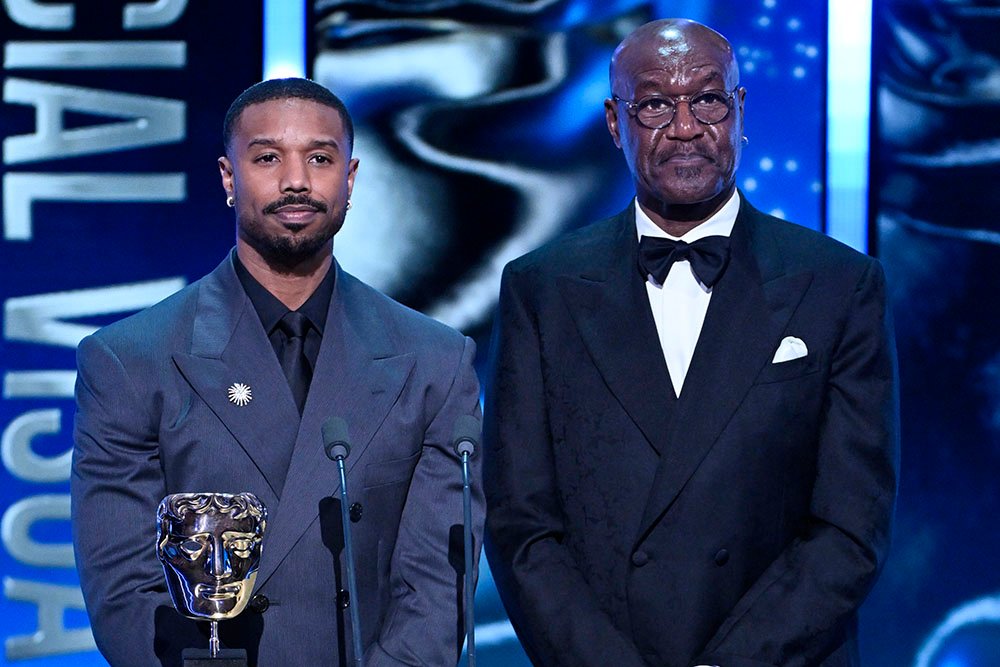
    In a letter to members sent Tuesday, BAFTA Chair Sara Putt and CEO Jane Millichip discussed the incident, in which Tourette’s syndrome activist John Davidson involuntarily shouted the N-word while Michael B. Jordan and Delroy Lindo were presenting on stage. In the letter, they said they wanted to “acknowledge the harm this has caused, address what happened and apologise to all.” They also said that a “comprehensive review” was now underway.

    The letters comes a day after BAFTA issued out a public statement in response to mounting anger over the situation, asserting that it took “full responsibility” for putting its “guests in a very difficult situation and we apologise to all.”

    The new review comes just six years after BAFTA underwent a major internal review aimed at addressing the lack of diversity in the film awards. The seven-month process resulted in more than 120 wide-ranging changes across its voting, membership and campaigning processes.

    See the full letter to members from Putt and Millichip below.

    We would like to address the situation that arose during the EE BAFTA Film Awards on Sunday night, in which highly offensive language that carries incomparable trauma and pain for so many was heard. We issued a statement last night, and we want members to hear from us directly, too. Please find our public statement here.

    We recognise this has impacted members in a multitude of ways – we want to acknowledge the harm this has caused, address what happened and apologise to all.

    One of our guests, John Davidson MBE has Tourette Syndrome and has devoted his life to educating and campaigning for better understanding of the condition. John is an executive producer of one of the nominated films, I Swear. The film highlights that Tourette Syndrome is a neurological disability that causes involuntary verbal tics, that the individual has no control over. Such tics are in no way a reflection of an individual’s beliefs and are not intentional.

    We take the duty of care to all our guests very seriously and prepared extensively in order for John to be able to be present in the room. We made those in attendance aware of the tics, announcing to the audience before the ceremony began, and throughout, that John was in the room and that they may hear involuntary strong and offensive language, noises or movements during the ceremony. We fully understand our intention to be inclusive in no way diminishes the impact of what happened.

    Early in the ceremony loud and involuntary tics, including one in the form of a profoundly offensive term, were heard by many people in the room. Michael B. Jordan and Delroy Lindo were on stage at the time, and we have apologised unreservedly to them, and to all those impacted. We have also thanked Michael and Delroy for their incredible dignity and professionalism – and regret they were put in this position in the first place.

    During the ceremony, John chose to leave the auditorium and watch the rest of the ceremony from a screen, and we have also thanked him for his dignity and consideration of others, on what should have been a night of celebration for him.

    We are in contact with the studios involved and conversations are ongoing.

    We want to assure all our members that a comprehensive review is underway. You may have also seen the BBC have issued their own apology for the broadcast.

    It was a very complex situation and we understand you will have many questions – please rest assured how seriously we are taking this. If you’d like to contact us, please email membership@bafta.org.

    We take full responsibility for putting our guests and members of the academy in a very difficult situation and we will learn from this.

    We will keep inclusion at the core of all we do, maintaining our belief in film and storytelling as a critical conduit for compassion and empathy – as firmly demonstrated by this year’s nominated and winning films.

  • Aimee Lou Wood to Star in ‘Jane Eyre’ Series From Working Title

    Aimee Lou Wood to Star in ‘Jane Eyre’ Series From Working Title

    Brontë fever has officially hit Hollywood.

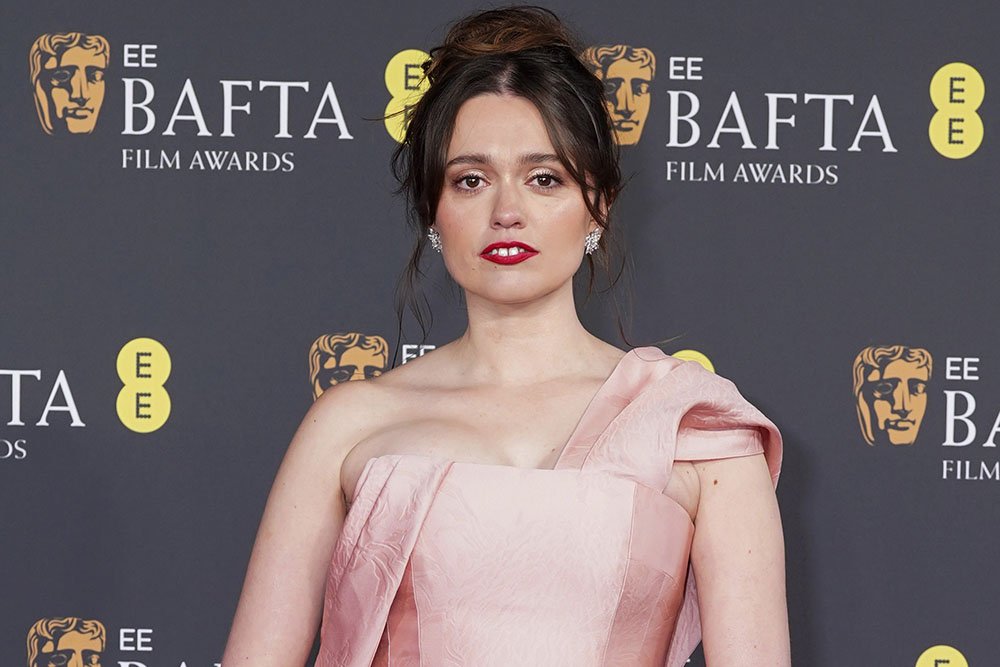
    Following the success of Emerald Fennell’s bodice-ripping take on Emily Brontë’s “Wuthering Heights,” Aimee Lou Wood is set to lead a series adaptation of Charlotte Brontë’s “Jane Eyre” from Working Title. “Succession” writer Miriam Battye is penning the script and a U.K. broadcaster is in advanced talks to board the project.

    The 1847 novel — which was considered revolutionary for its first-person narrative style and approach to class, sexuality and female independence — follows the titular heroine as she grows into adulthood and falls for the brooding Mr. Rochester. The last major TV adaptation of “Jane Eyre” was in 2006, starring Ruth Wilson, while Cary Joji Fukunaga last adapted it for the big screen in 2011 starring Mia Wasikowska and Michael Fassbender.

    English actress Wood broke out in the Netflix series “Sex Education” before starring in the last season of “The White Lotus” alongside Walton Goggins. That role earned her critical and commercial acclaim, resulting in nominations at the Emmys, Golden Globes and SAG’s Actor Awards.

    U.K. production powerhouse Working Title is currently working on a film adaptation of Jane Austen’s “Sense and Sensibility” starring Daisy Edgar-Jones. Its other credits are a rom-com hall of fame including “Love Actually,” the “Bridget Jones” films, “About Time,” 2005’s “Pride and Prejudice” starring Keira Knightley and 2020’s “Emma” with Anya Taylor-Joy. Working Title’s most recent TV production was Lena Dunham’s Netflix series “Too Much” starring Meg Stalter and Will Sharpe.

    Deadline Hollywood was the first to report Wood’s casting.

  • Donald Trump’s Latest Tariff Spat With Europe Prompts Legislative Impasse After Landmark U.S. Supreme Court Decision

    Donald Trump’s Latest Tariff Spat With Europe Prompts Legislative Impasse After Landmark U.S. Supreme Court Decision

    U.S. President Donald Trump’s latest spat with Europe over tariffs is prompting a legislative impasse regarding European exports to the U.S. On Monday, European Union lawmakers postponed a vote to ratify a long-gestating trade deal that had capped U.S. import tariffs at 15%. 

    Though the tariffs being discussed in the EU parliament apply only to physical goods and not film and TV, Trump recently reiterated his threat to slap hefty tariffs on films made overseas as part of the global trade war he has embarked on during his second term as president.

    Now, Trump’s legal authority to randomly impose tariffs is being concretely challenged by both the U.S. Supreme Court and the EU parliament.

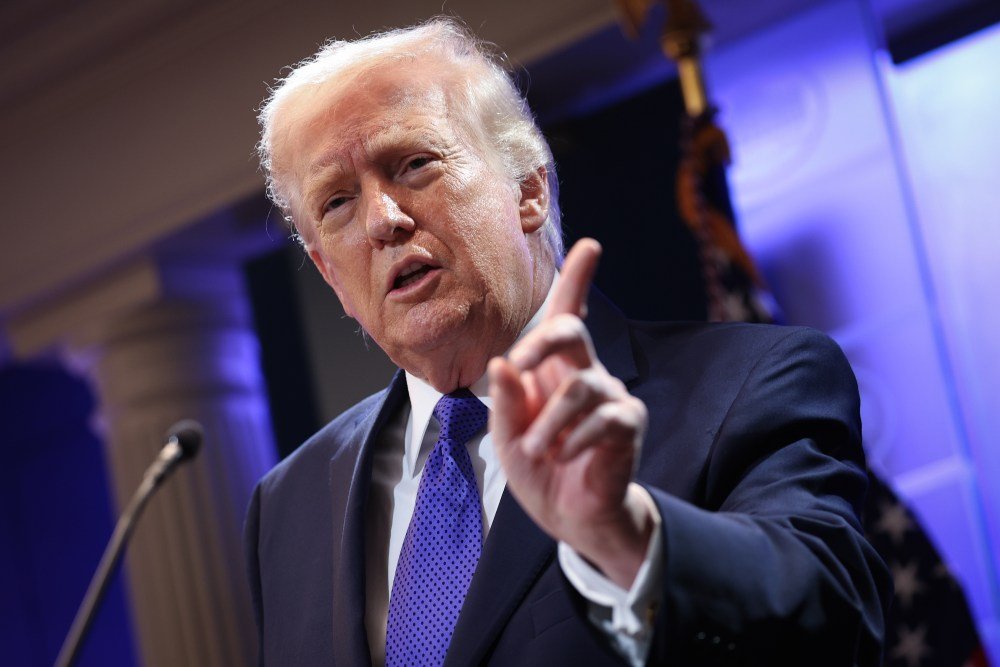
    Over the weekend, Trump announced new additional international import tariffs “over and above our normal tariffs already being charged” after the U.S. Supreme Court struck down his previously implemented global tariffs policy in a landmark decision on Friday. This, in turn, has caused Europe to warn that the agreed trade deal is on hold.

    Trump has twice threatened to impose a 100% tariff on films made abroad, without explaining how that would work or what legal authority would allow it.

    “I’m going to be putting tariffs on movies from outside of the country — if they’re made in Canada, if they’re made in all these places, because Los Angeles has lost the movie industry,” Trump told the New York Post in late January.

    “It’s just hot air again,” a producer told Variety in September after Trump took to social media with a fresh wave of threats to impose tariffs on films made outside the U.S.

    Hollywood unions have praised Trump’s attention to the issue of runaway production, but sought to redirect his interest to a more limited goal of extending and reauthorizing U.S. federal tax deductions that assist American producers to shoot more movies locally.