Natalia Solórzano Vásquez’s upcoming “Spells to Revive a Witch” has found new partners in Spain’s Testaferro and Uruguay’s Guay Films. The hybrid documentary, headed to the Costa Rica Media Market, is produced by Costa Rica’s Sputnik Films. Mariana Murillo’s label has previously produced Sofía Quirós Ubeda’s Cannes-selected “Land of Ashes,” and it’s currently in post-production with the filmmaker’s follow-up, “Madre Pájaro.”
“Spells to Revive a Witch” marks the first collaboration between Natalia Solórzano Vásquez and the burgeoning Sputnik Films banner. Her debut feature, “Avanzaré tan despacio,” premiered at IDFA in 2019 and her short films have found success at the Costa Rica International Film Festival. Her latest project is a “casting call to embody” Costa Rican fortune teller Soralla de Persia, who rose to fame in the 1960s. The hybrid documentary will become a “stage” where “different women invoke her spirit through memories, interpretations, and personal experiences.”
Speaking with Variety, Solórzano Vásquez says she discovered Soralla “almost by accident” while researching women who had “appeared in Costa Rican media.” “I had never heard of her before, which immediately struck me. She had once been one of the most recognizable women in the country, yet she had almost completely disappeared from our collective memory.”
“That absence became the starting point of the film,” she adds. “The more I searched for Soralla, the more I realized I was also searching for all the women whose lives slowly vanish because no one thought they were worth preserving.”
Courtesy of Natalia Solórzano Vásquez
The director says the fortune teller made her think about the women in her own family, who belonged “to the same generation but lived very different lives.” “She represents the possibility of reinventing yourself, but also the price women often pay for stepping outside the roles society has assigned to them.”
Murillo, who has known Solórzano Vásquez since university, says she has “always been fascinated by her ability to observe and make us observe everyday life with a unique combination of tenderness, humor, and critical insight.” “Soralla’s story gave us the perfect excuse to work together and explore a female character through a deeply performative lens, guided by a feminist perspective and a conviction we have shared from the very beginning: who we are today is nothing more than a reflection of who we once were.”
Asked about how she feels about making a film about memory in Latin America at a time when films broaching issues of both personal and collective memory in the region have found great international success, the director says memory “fascinates” her because “it is always incomplete.” “We tend to think of it as something that preserves the past, but it also transforms it.”
“This film doesn’t try to reconstruct Soralla exactly as she was,” she notes. “It asks what happens when almost everything has disappeared, and only fragments remain. Those fragments live inside other people, and every time they are remembered, they become something slightly different. I’m interested in that fragile space where memory, imagination and lived experience coexist.”
As for being a part of a strong generation of female filmmakers in Costa Rica — which has seen the rise of names such as Valentina Maurel and Sofia Quirós Ubeda — Solórzano Vásquez says she feels “very lucky” to belong to this noteworthy group. “Costa Rican cinema is still small, which means we know each other well and have grown alongside one another,” she adds. “There is an incredible diversity of voices, and many women are telling stories that simply hadn’t been told before. I think we’re less interested in representing an idea of Costa Rica than in questioning it, expanding it, and finding new cinematic languages to talk about who we are.”
The “Spells to Revive a Witch” project has been developed through the Rueda Program of the Spanish Film Academy, CIMA Impulsa and Ventana Sur’s Proyecta.
Progmat has completed the migration of its security-token platform from Corda 5 to a dedicated Avalanche Layer 1.
The company said every active project on the platform moved to the new network. Those projects represent more than ¥452 billion in underlying assets and issued securities. The migration makes the platform’s security tokens compatible with the Ethereum Virtual Machine, or EVM. Progmat describes itself as Japan’s leading security-token platform by domestic market share.
The company carried out the work under Project Keystone. Progmat redesigned the system so its business functions no longer depend on one blockchain. It added a mediator layer between applications and the ledger. The structure allows the platform to connect with other chains later while keeping its existing issuance, ownership and transfer processes. A dedicated Avalanche L1 can also use rules tailored to regulated financial products.
Progmat, Japan’s largest STO platform, is now live on @avax
“All ST projects (over 452 billion yen) are now EVM-compatible, achieving both financial institution-level requirements and the utilization of public chains.
Rights transfers are accelerated 3-5 times faster than… https://t.co/xeMVc8EM8e
— Justin Kim (@justinkim415) July 13, 2026
Rights transfers become faster
Progmat said the new setup processes rights transfers three to five times faster than the earlier system. Avalanche transactions reach finality in less than two seconds, according to the company.
“Rights transfers are accelerated three to five times faster,” Progmat said.
The speed figure comes from Progmat’s internal testing and has not been independently verified. Finality records a completed network transaction, but it does not cover every banking or administrative step around a trade.
The company also moved its smart contracts from Java-based Corda code to Solidity-based EVM contracts. Progmat said it kept current functions and service requirements during the switch. It also said the migration caused minimal disruption for issuers. Existing users did not need to rebuild their products. EVM support gives developers access to Ethereum-based tools, but it does not make regulated securities freely available to public wallets.
AvaCloud supports institutional controls
AvaCloud supplies the dedicated Avalanche network and operating services. Progmat said the setup meets SOC 1 and SOC 2 Type II assurance standards. Progmat and Ava Labs also created a response system for outages during nights and holidays.
The firms aim to meet the control and availability standards used by regulated financial companies. The network remains application-specific rather than operating as an unrestricted retail trading venue.
AvaCloud chief executive Nick Mussallem called the transfer of more than ¥452 billion in regulated securities a test for institutional infrastructure. However, that assessment came from a company involved in the migration.
Progmat has not released public transaction data showing how the new network performs during peak demand or across a large investor base. The company also has not announced new trading volumes tied directly to the change.
Progmat prepares for cross-chain settlement
The migration gives Progmat a base for planned links between security tokens, stablecoins and tokenized bank deposits. Datachain said in February that the partners plan cross-chain services for delivery-versus-payment and payment-versus-payment transactions.
These systems would exchange assets and payments across different networks in one coordinated process. Progmat said its revised design can support more than one chain when asset features or investor needs differ.
Elsrwhere, BlackRock’s BUIDL fund reached about $900 million on the network, while Avalanche’s distributed real-world assets stood near $2.10 billion.
As crypto.news reported, Progmat will support a Metaplanet and JPYC study into Bitcoin-backed digital credit. That project remains under review, with no issued product or fixed terms. Securitize also placed its listed shares on Avalanche and Solana in July.
Disney’s live-action reimagining “Moana” sailed straight to the top of the South Korean box office during the weekend of Jul. 10–12.
According to data from KOBIS, the tracking service operated by the Korean Film Council, the film generated $3 million from 403,931 admissions over the three-day frame, securing a 36.53% share of the weekend market. Since its wide rollout on July 8, the film has accumulated a cumulative gross of $3.7 million from 511,471 total admissions.
Local suspense thriller “The Eyes” held its ground in second place, pulling in $1.8 million from 257,816 admissions. Directed by Yeom Ji-ho and starring Shin Min-ah and Kim Nam-hee, the remake of the Spanish feature “Julia’s Eyes” has now pushed its cumulative haul to $8.7 million from 1,277,263 total viewers.
“Toy Story 5” moved to third place, collecting $1.7 million from 238,520 admissions, bringing its South Korea cume to $17.6 million from 2,580,319 total tickets since its mid-June premiere.
The faith-based animated musical “David” debuted in fourth place, capturing $390,901 from 57,675 admissions over the three-day window. Including previews, the film has brought its early local cume to $493,014 from 75,469 viewers.
Long-running action-horror powerhouse “Colony” took fifth place, generating $275,526 from 37,008 admissions over the weekend frame. Directed by Yeon Sang-ho and starring Jun Ji-hyun, Koo Kyo-hwan, and Ji Chang-wook, the viral hive-mind thriller has reached a cumulative haul of $41.4 million from 5,914,322 total admissions since launching on May 21.
“Marty Supreme” placed sixth on the chart, adding $110,163 to its ledger for a gross of $723,165, while 1990s retro music comedy “Wild Sing” took seventh place, pulling in $72,357 to take its total to $8.5 million.
The Japanese animated adventure “Doraemon the Movie: New Nobita and the Castle of the Undersea Devil” held the eighth position with $82,132 over the frame to land at a cume of $360,752.
Plus M Entertainment’s highly anticipated epic science fiction thriller “Hope” placed ninth, capturing $101,311 from 10,146 preview admissions ahead of its upcoming wide release. Directed by Na Hong-jin and boasting a star-studded international ensemble that includes Hwang Jung-min, Zo In-sung, Jung Ho-yeon, Michael Fassbender, and Alicia Vikander, the film chronicles a rural community facing an extraterrestrial threat, and has a preliminary total of $106,628.
Rounding out the bottom rung of the top 10 was “Backrooms,” which generated $65,575 over the three-day window to lift its lifetime cume to $8.5 million from 1,209,069 admissions.
The overall market collective gross for the weekend was $8.2 million, up from last week’s $7.3 million.
SBI Holdings, one of Japan’s leading financial groups, has drawn attention in recent months with its multi-billion dollar investments in cryptocurrencies. In just the last few weeks, the company was the sole investor in Gauntlet’s $125 million Series C funding round and also participated in EDX Markets’ $76 million Series C funding.
In addition to agreeing to acquire Japanese cryptocurrency exchange Bitbank for approximately $289 million, SBI also acquired a controlling stake in Singapore-based Coinhako earlier this year.
SBI also invested in Digital Asset’s $355 million funding round, Morpho’s $175 million token funding, and Circle’s $222 million token presale for its Arc blockchain. Last month, it launched JPYSC, Japan’s first yen stablecoin backed by a trust bank.
According to company officials, the common goal of these investments is to build an end-to-end “onchain finance” ecosystem. SBI aims to offer all financial services on the blockchain, from exchanges and asset tokenization to payment infrastructure and digital asset management. The company predicts that the token economy will soon become mainstream and that a large portion of financial transactions will take place on the blockchain in the future.
Experts believe that SBI is not only investing in crypto assets, but also acquiring the financial infrastructure of the future. Joseph Goh, Areta’s Asia Pacific President, states that SBI aims to be the first Asian financial group to integrate issuance, custody, trading, payments, and asset management under one roof.
One of the key reasons behind SBI’s aggressive strategy is Japan’s comprehensive reforms in cryptocurrency regulation. The new bill aims to classify crypto assets as financial instruments, pave the way for exchange-traded funds (ETFs), and reduce capital gains tax from 55% to 20%. Analysts believe that a clearer regulatory framework could encourage not only SBI but also other major financial institutions in Asia to accelerate their investments in digital assets.
Tom Lee, Chairman of Bitmine (BMNR), argued that Ethereum ($ETH) has bottomed out at its current price levels and is preparing for a strong recovery. Speaking at the WebX 2026 conference in Tokyo, Lee compared Ethereum’s current outlook to the recovery of the US stock market following the 1987 stock market crash.
According to Lee, there are striking similarities between Ethereum’s price chart and the movement of the S&P 500 index after 1987. The renowned investor noted that the S&P 500 entered a strong uptrend after a sharp decline, suggesting that Ethereum is similarly at a significant low point and has the potential to move upwards in the coming period.
Tom Lee stated that the recent weak performance of Ethereum’s price has worried many investors, but they are ignoring the long-term fundamental dynamics of the market. He specifically noted the growing institutional adoption, particularly from Wall Street, but argued that the increasing interest of traditional financial institutions in the Ethereum ecosystem has not yet been fully reflected in prices.
According to him, while the current low prices are influenced by investor psychology, institutional demand is considered to be a significant support factor for $ETH in the long term.
Lee also touched upon the major macroeconomic factors that could affect Ethereum and the overall cryptocurrency market in 2026. Key issues Lee highlighted as needing close monitoring included the Federal Reserve’s (Fed) monetary policy, the Clarity Act (expected to establish a regulatory framework for the crypto sector in the US), the impact of AI investments on capital flows, and the financial sector’s weaker performance compared to other sectors.
Market experts say Ethereum’s future performance will depend not only on technical indicators but also on institutional investor interest, regulatory developments, and global macroeconomic conditions. Nevertheless, Lee maintains that current levels present a significant opportunity for long-term investors.
UPDATED, with comment from AG: Oregon‘s attorney general has dropped a civil investigative demand for Paramount to turn over records related to its efforts to secure federal approval for its merger with Warner Bros. Discovery.
Oregon Attorney General Dan Rayfield also had asked a state circuit court judge to order Paramount to turn over the materials and to delay Paramount’s closing of its proposed acquisition of Warner Bros. Discovery by 60 days so the documents could be reviewed. A hearing has been scheduled for Monday in Multnomah County Circuit Court.
A Paramount spokesperson said, “We are pleased that the Oregon Attorney General has withdrawn its motion to delay this transaction. It was the right decision and avoids an unwarranted effort to delay a lawful, pro-competitive merger.
“Antitrust authorities around the world have carefully reviewed this transaction, clearing it or concluding that it does not violate any competition laws. That regulatory record underscores what the facts, the law and the economics make clear: this transaction will create a stronger challenger to dominant global streaming and technology platforms, expand consumer choice, increase investment in premium content and theatrical distribution, and create more opportunities for creators and workers. We look forward to completing the transaction and delivering those benefits.”
Jenny Hansson, communications director for Rayfield, said in a statement, “Paramount made it clear that they weren’t going to comply with the investigative demand, and that they think they’re above the law. We’re not going to let them waste Oregonians’ resources on these games. We’ve withdrawn the motion to consider our next steps.”
California Attorney General Rob Bonta and other state attorneys general are said to be considering a legal challenge to the transaction.
Rayfield sought Paramount records of lobbying of federal officials, as well as its role in a statement that the DOJ released in support of the transaction. The attorney general also sought documents “related to the formulation and execution of lobbying strategies aimed at obtaining regulatory approval of the proposed merger, which Respond as internally named ‘Project Warrior.’”
In a court filing, Paramount has objected to the document requests, arguing, among other things, that they impose “burdens and demands which are disproportionate” to the Oregon investigation and are “of such marginal relevance that the value of any materials sought is outweighed by the burden imposed on Paramount in having to provide such information.”
“Lobbying activities and related communications are wholly irrelevant to whether the proposed acquisition ‘violates Oregon’s antitrust laws,’” the company’s legal team wrote.
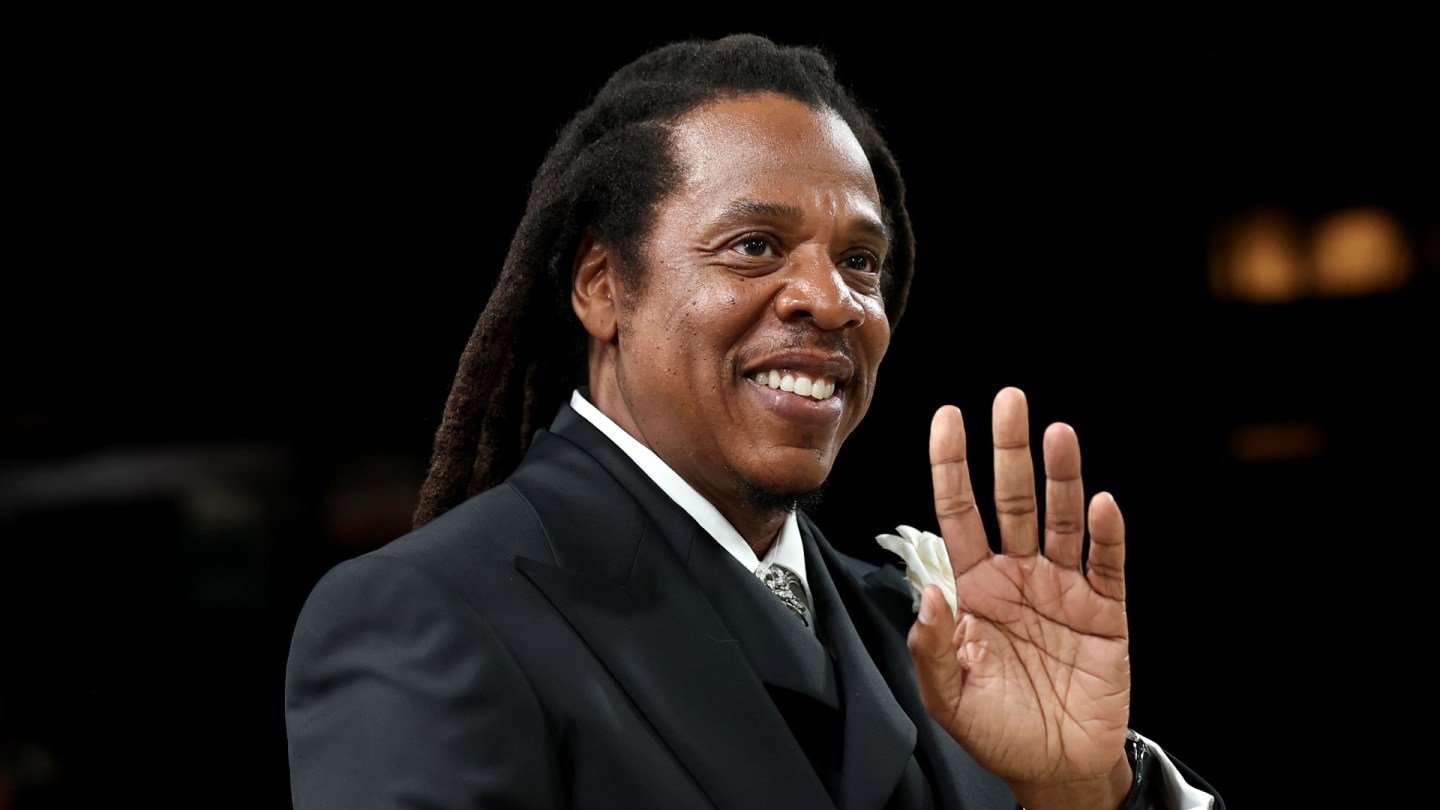
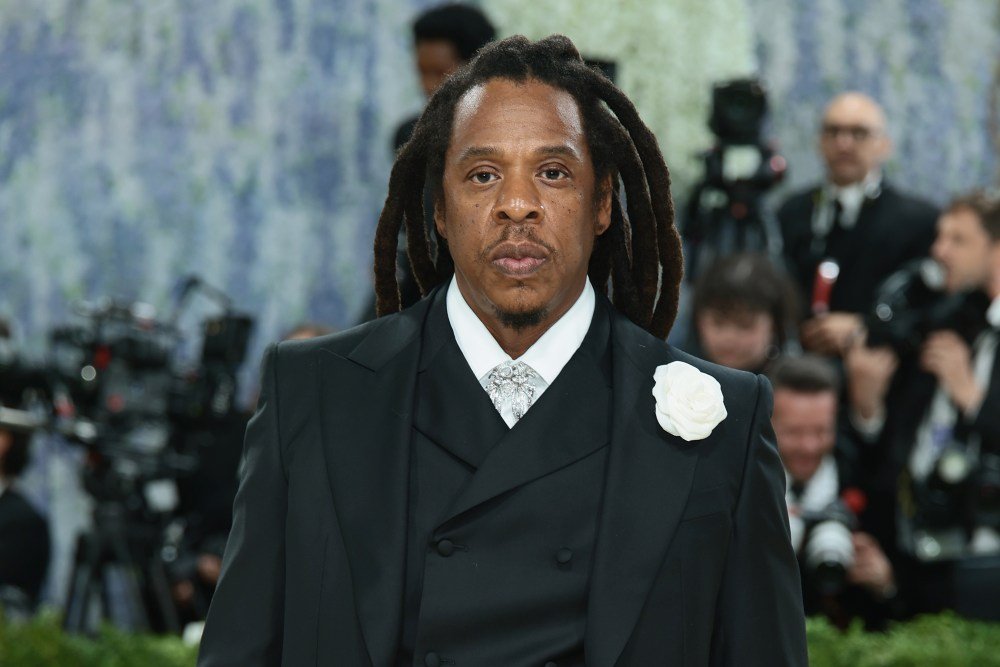
After fans waited more than three hours for the finale in Jay-Z‘s three-night stand at Yankee Stadium on Sunday, the rapper addressed the extensive delay early in the show, telling those in the crowd there were thousands of people outside and that the show was pushed back to back to avoid crowd safety issues.
“Let me explain the delay to you guys,” Jay said after finally kicking off the show after midnight eastern Monday. “It was like 10,000 people outside, and we closed all the doors, and somebody rushed the door. They closed the door for you guys’ safety and everyone’s safety outside. There’s 10,000 people outside; I don’t want to start the music and people get trampled. I’m really sorry for the inconvenience, but I had to make sure everyone was OK. I appreciate your patience.”
The delay marked a rocky start for what had been the most hotly-anticipated of Jay-Z’s historic three-night hometown stand at Yankee Stadium. Fans had been anxiously awaiting what the hip-hop icon had in store after already bringing out Beyoncé, Nas and Alicia Keys during night one and Eminem for night two.
Concerts have been a bit of a rarity for Jay-Z since wrapping his 4:44 Tour back in 2017. The Yankee Stadium shows are a full-circle moment for him, a celebration of the 30th anniversary of his seminal album Reasonable Doubt and the 25th anniversary of The Blueprint. This third night’s show, which he’s calling the Extra Innings Show, has already featured Teyana Taylor and Usher.
While the Yankee Stadium concerts have extra meaning taking place in his hometown, Jay will also be performing in London, Paris and Los Angeles in the months ahead. He’s also the subject of a Rick Rubin-directed docuseries set to hit HBO this fall.
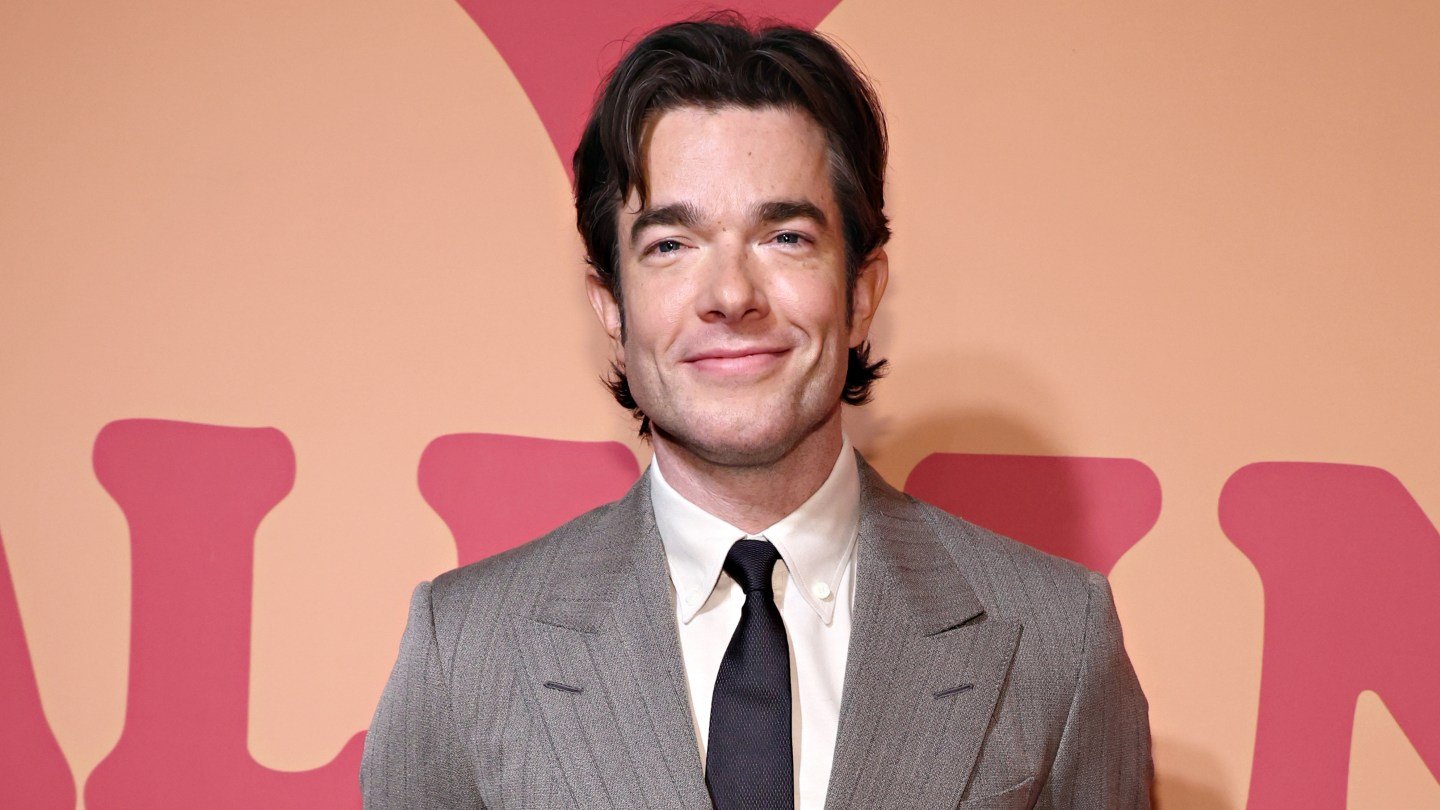
The comedian became the first comedian to ever perform at Wrigley Field, home of the Chicago Cubs, on Saturday night. And the hometown hero did it in front of a sold-out crowd by bringing some of his famous friends along for the monumental night.
“How did this happen?” asked a bearded David Letterman as he took center stage to wild cheers and applause. “What, are the Beatles here tonight, ladies and gentlemen? This makes that Taylor Swift wedding look like a student film.”
Letterman wasn’t the only surprise Mulaney had in his back pocket for the Mister Whatever tour stop. He invited Chicago blues legend Buddy Guy as an opener, and the 89-year-old played a short set while audience members took their seats. Guy is currently on tour himself with stops this month in Toronto, New York, Michigan, Kansas and Missouri.
Richard Kind, Mulaney’s longtime good friend and sidekick on the Netflix live variety talk show Everybody’s Live With John Mulaney, acted as the night’s emcee and appeared on stage with a “Mayor” sash. Kind welcomed Mulaney’s pal and former Saturday Night Live colleague Fred Armisen, who performed a comedy set that featured some musical numbers.
Then came Letterman who had the task of welcoming Mulaney to the stage. The two had spent some quality time together recently as Mulaney appeared as a guest at Letterman’s May show at Hollywood’s Montalban Theatre as part of the Netflix is a Joke Festival. Before that, Letterman had also appeared on Mulaney’s Everybody’s Live.
Mulaney delivered a well-received and lengthy set — he “blew the non-existent roof off Wrigley Field,” praisedSlash Film’s Ethan Anderton — that featured anecdotes about his life with wife Olivia Munn and their two children, Malcolm and Mei, and the beauty of their family.
For months ahead of the performance, Mulaney had been teasing the stop. “I’m very unabashedly excited about it,” he told Jimmy Kimmel during a stop on his late night talk show. He also joked to Jenna Bush Hager and guest host Matt Rogers during a Today show stop that “if the wind is right in Wrigleyville,” the sound from the show will carry to surrounding streets. And per a video shared on TikTok, he was right.
When it was all said and done, Mulaney seemed floored by the scene. “Every Chicago thing in me tells me to stop bowing, but I’m going to enjoy the moment,” he said as he closed the show. “Thank you very much for being with us tonight. Another round of applause please for Fred Armisen, Buddy Guy, Richard Kind and Ball State’s David Letterman. Words can’t describe how cool this is.”
Mulaney’s Mister Whatever tour rolls on through 2027. See below.
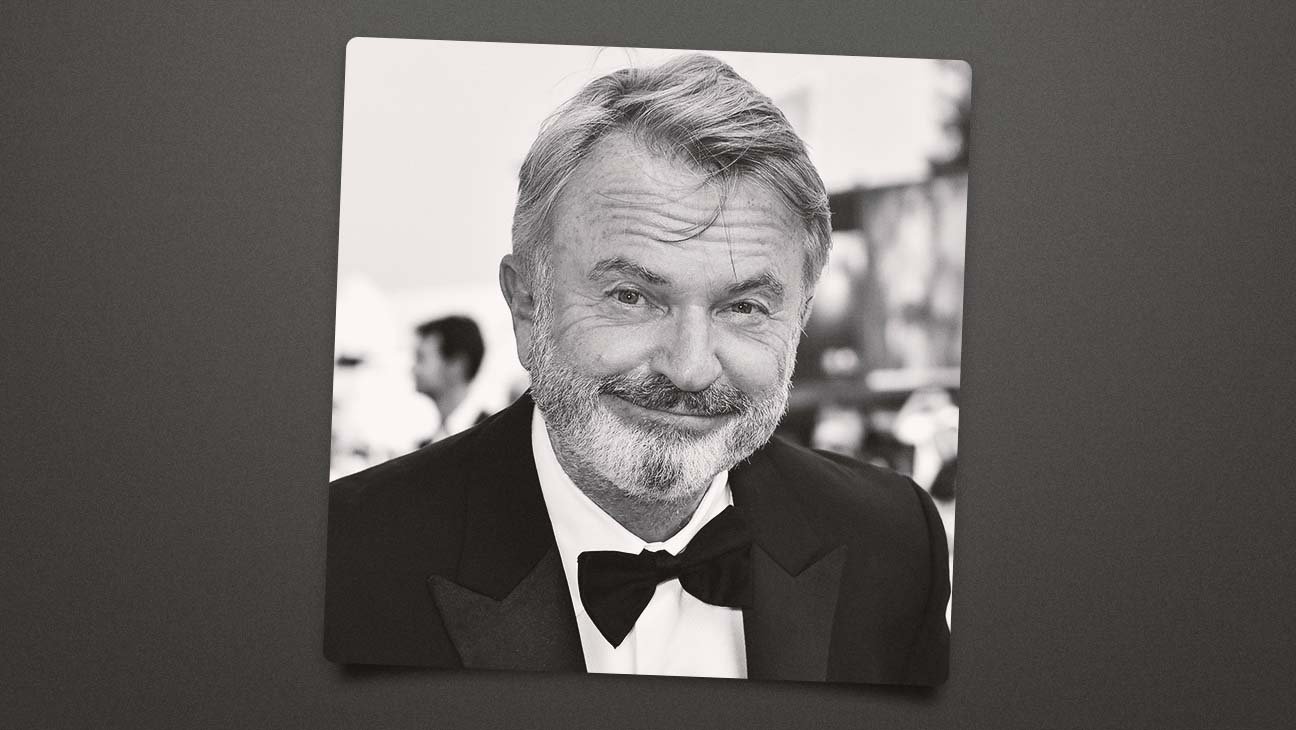
Sam Neill, the amiable and adventurous leading man who emerged from New Zealand to make his mark in such films as Jurassic Park, The Piano, Dead Calm, In the Mouth of Madness and so much more, has died. He was 78.
The news was shared in a post on Neill’s official Instagram account.
“It is with immense sadness that the whānau of Sam Neill share the news of his passing on Monday 13th July, in Sydney Australia,” the post read. “Sam was surrounded by family and passed with the dignity that has characterised his whole life. The loss was sudden and unexpected but blessed by the fact that Sam remained cancer free. They would like to express their deepest gratitude to the staff at St Vincent’s Private Hospital for their incredible care. More details will be shared later, but for now, on behalf of the family, we ask that you respect their privacy as they navigate this immeasurable loss.”
Neill revealed in March 2023 that he had been diagnosed with angioimmunoblastic T-cell lymphoma a year earlier.
“I’m not in any way frightened of dying. That doesn’t worry me. It’s never worried me from the beginning,” he told the TV news magazine Australian Story in October 2023. “But I would be annoyed, because there are things I still want to do.”
Early in his career, the boundary-breaking Neill starred in Sleeping Dogs (1977), one of the first New Zealand films to play internationally; in the Australian period drama My Brilliant Career (1979), opposite Judy Davis; and as Damien in the third Omen film, The Final Conflict (1981), filmed in the U.K.
Neill also played a Russian officer in John McTiernan’s The Hunt for Red October (1990); a captain of a doomed spaceship in Paul W.S. Anderson’s Event Horizon (1997); the father of Scarlett Johansson’s character in Robert Redford’s The Horse Whisperer (1998); and the patriarch of a family with a robot (Robin Williams) in Chris Columbus’ Bicentennial Man (1999).
On television, he portrayed a real-life spy on the 1983 ITV series Reilly: Ace of Spies; the King Arthur magician Merlin in Hallmark miniseries that aired in 1998 and 2006; Cardinal Thomas Wolsey on Showtime’s The Tudors in 2007; the corrupt police inspector Chester Campbell on the BBC’s Peaky Blinders in 2013-14; and a husband whose wife goes missing in Peacock’s Apples Never Fall in 2024.
After starring alongside Nicole Kidman and Billy Zane in the psychological thriller Dead Calm (1989), directed by Australian Phillip Noyce, Neill had quite the year in 1993 with his turns as the cynical paleontologist Alan Grant in Steven Spielberg‘s Jurassic Park and as the cold, cruel frontiersman Alisdair Stewart in The Piano, directed by New Zealander Jane Campion.
From left: Richard Attenborough, Laura Dern and Sam Neill in 1993’s ‘Jurassic Park’
MCA/Courtesy Everett Collection
And in John Carpenter’s In the Mouth of Madness (1994) — one of his many horror films — Neill played the insurance man John Trent, whose investigation leads him into an insane asylum.
The versatile Neill portrayed heroes and villains with equal aplomb, sparkled in art house and tentpoles alike and had a knack for exploring the shades of gray in his characters. “I’d like to think I’m able to suggest ambiguities and complexities in the people I play, because I think all of us have hidden aspects or contradictory qualities,” he once said.
Nigel John Dermot Neill was born on Sept. 14, 1947, on the kitchen table in the family home in Omagh, County Tyrone, Northern Ireland, where his father, Dermot, a third-generation New Zealander, was stationed with the Royal Irish Fusiliers as a member of the British Army. His mother, Priscilla, was English.
They moved in 1955 to New Zealand, where his family had a wine and spirits merchant business, and he attended boarding school at Medbury School and Christ’s College in Christchurch. He started calling himself Sam — he liked Westerns, and “Western people were called things like Sam,” he wrote in his 2023 memoir, Did I Ever Tell You This? — and had a stuttering problem.
He got interested in acting while attending the University of Canterbury, then earned a degree in English literature at Victoria University. After graduation, Neill toured for a year doing Shakespeare with the Players’ Drama Quartet and spent six years as a director of shorts and documentaries with the New Zealand National Film Unit.
“The informal agreement there was that you’d make one film for the post office or the railways or the banana company and you’d make one for yourself,” he said in a 2009 interview. “I wanted to make a film about skiing — I love skiing — but I had to dress it up and say that it would be really good for tourism.”
Neill also did a bit of acting, and after he was spotted playing a priest in the short film Ashes (1975), he was cast in the lead as a man on the run from a totalitarian government in Sleeping Dogs (1977), directed by Roger Donaldson. The thriller, the first color film made in New Zealand, helped kickstart the country’s “cinema of unease” movement.
He said he fell in love with Australia while he was portraying Davis’ complicated love interest in Gillian Armstrong’s My Brilliant Career (1979), which screened in competition in Cannes and made him realize that he could make a living doing what he loved to do. Around this time, he also recurred as Ben Dawson on the Nine Network period soap opera The Sullivans.
Sam Neill with Judy Davis in 1979’s ‘My Brilliant Career’
Analysis Films/Courtesy Everett Collection
Recommended by James Mason, Neill got to play Damien — the antichrist is now a grown-up U.S. ambassador — in The Final Conflict. Two years later, he was the dashing Russian adventurer turned British secret agent Sidney Reilly on Reilly: Ace of Spies, and he earned a Golden Globe nomination for that.
He would become a favorite in Sweden after starring as the villain Brian de Bois-Guilbert on a 1982 TV adaptation of Ivanhoe that airs on New Year’s Day every year in the country, then starred alongside Meryl Streep for Aussie director Fred Schepisi in Plenty (1985) and Evil Angels (1988), the latter about one of the most controversial legal cases in Australian history.
Neill auditioned for James Bond in The Living Daylights (1987) but said he really didn’t want the part, he explained in a 2021 interview.
“I felt so awkward all that day when we made that thing. It went on and on and on,” he said. “I’m so relieved they offered it to someone else. You really don’t want to be the Bond that no one likes. That’s a fate worse than death.” (Timothy Dalton would play 007 for the first time in that film.)
Neill described Dr. Grant in a 2001 interview as a man who has “tremendous ambivalence. He knows Jurassic Park is a horrible place to be and knows there’s nothing more dangerous than a dinosaur that is not behind bars. But because he lives and breathes dinosaurs, he finds them completely compelling.”
He would return as Grant in Joe Johnston’s Jurassic World III (2001) and Colin Trevorrow’s Jurassic World Dominion (2022).
He wrote in his memoir that The Piano, winner of the Palme d’Or and three Oscars, was a “lonely” job because Holly Hunter, who portrayed Ada, the wife his character abuses, “was of necessity remote” (not surprising since Alisdair cuts off her finger in the movie). “Happily,” he added, “Jane is a very caring director for her cast and was always there to hug me when I was at my lowest.”
Sam Neill as Alisdair Stewart in 1993’s ‘The Piano’
Miramax/Courtesy Everett Collection
Neill also did lots of work (2002’s Dirty Deeds, 2008’s Dean Spanley, TV’s Old School, etc.) alongside his “brother from another mother,” Aussie actor Bryan Brown.
His film résumé also included Possession (1981), Death in Brunswick (1990), Carpenter’s Memoirs of an Invisible Man (1992), Country Life (1994), Restoration (1995), Snow White: A Tale of Terror (1997), The Dish (2000), The Zookeeper (2001), Perfect Strangers (2003), Skin (2008), Daybreakers (2009), The Hunter (2011), Taika Waititi‘s Hunt for the Wilderpeople (2016) and, as a stage actor playing Odin, Thor Ragnarok (2017) and Thor: Love and Thunder (2022).
In 1983, Neill bought some acreage in central Otago in New Zealand — this was “always the land of my dreams; this was where we came for holidays when I was a kid,” he said in 2020 — and launched his Two Paddocks vineyard.
“I don’t expect people to take me seriously, but I’m determined that they respect my wine,” he told the London Times in 2014. “A few weeks ago it won a trophy and two gold medals in London. I call that the ‘up yours’ factor.”
He also was a comforting, entertaining presence during the pandemic, when he posted videos of him singing and playing the ukulele on Twitter.
Survivors include his children, Andrew, Tim and Elena, and six grandchildren.
After a long relationship with New Zealand actress Lisa Harrow (they met on TheFinal Conflict), he was married to Japanese makeup artist Noriko Watanabe (they met on Dead Calm) from 1989 until their 2017 divorce. More recently, he dated Laura Tingle, a political journalist for Australia’s ABC network.
In 2022, a writer for the Sydney Morning Telegraphnoted that Neill is the least “celebrity” celebrity there is.
“I do hope I’m not a celebrity because … I think it’s two different jobs,” he said. “You can be an actor — hopefully a very good actor — but it’s another job to be a celebrity, and that’s one you can sign up for or not. And I never signed up for that. I’ve avoided that like the plague.
“The winemaking thing is absolutely half my life and has been immensely rewarding, and it’s very different from everything else that I do. I’m sort of … half-farmer, half-thespian, if you like.”
Sam Neill overlooking his Two Paddocks vineyard in the central Otago region of New Zealand’s South Island in 2001.
Jay-Z’s third and most hotly anticipated concert at Yankee Stadium on Sunday night was plagued by a nearly four-hour delay due to fans rushing the venue’s gates, with Jay finally taking the stage four hours after the concert’s listed start time (and around three hours after the previous two nights).
“I appreciate your patience. We gonna have a good time. I got some shit for you, I promise you,” Jay said when he finally took the stage after midnight.
“There was like ten thousand people outside,” he explained, “and they closed all the doors ‘cuz [people] rushed the door, and i didn’t want to start music and have people get trampled. I’m really sorry for the inconvenience.”
According to a report on New York’s ABC7, citing an unidentified police source (and multiple social media posts), a large number of fans rushed at least two of the stadium’s gates and got past security without being screened. A full lockdown of the stadium ensued, with fans neither being allowed out of the venue nor inside for an extended period of time.
Reps for Jay-Z and Live Nation, the concert’s promoter, did not immediately respond to Variety’s requests for comment.
A video making the rounds online appeared to show A$AP Rocky, Charlamagne Tha God and Fabolous waiting to get in, with the caption “Wow even celebrities are stuck outside the last Jay Z yankee stadium show tonight 😭.”
Sunday’s setback made for an anticlimactic finale to the three-night stand. On the first night, Beyonce joined Jay onstage during the concert’s first song, singing Mary J. Blige’s part on “Can’t Knock the Hustle.” The concert, a celebration of the 30th anniversary of his debut album, “Reasonable Doubt,” also featured guest appearances from their daughter Blue Ivy Carter, as well as Nas and Alicia Keys.