Author: rb809rb

  • Don’t Scroll Past This Deal: Take 41% Off Logitech MX Vertical Mouse

    Don’t Scroll Past This Deal: Take 41% Off Logitech MX Vertical Mouse

    Since many of us work in front a computer, we should still take care of ourselves and keep comfortable, especially when sitting for hours on end. Not only would an ergonomic chair or functional keyboard help, but so would an ergonomic mouse. Those can help alleviate any pain in your wrist! Over at Amazon, the Logitech MX vertical mouse for 41% off, marked down to $71.24 from its original $119.99 listing. That’s $48.75 in savings!

    Logitech MX Vertical Mouse

    57-degree angle, 4000 DPI, 8 ounces


    $71.24
    at Amazon

    $119.99
    Save $48.75


    Get Deal

    As of July 16, the Logitech MX vertical mouse is 41% off, bringing the price down from $119.99 to $71.24. According to camelcamelcamel, this is the lowest price it’s been since last year, so now’s the best time to get this deal!

    The mouse sits at a 57-degree angle that reduces pressure on your wrist, allowing your thumb to sit properly. This helps decrease muscular activity by 10% compared to a standard mouse without any negative impact to performance. Its ergonomic shape is designed for the human hand and has a textured rubber surface that lets you grip the mouse comfortably but firmly. The mouse also fits various hand shapes and sizes so you won’t have to worry about whether it’s too big or small for you.

    The sensor also has 4000 DPI compared to a standard mouse’s 1000 DPI. This results in a more precise and accurate mouse, while also reducing hand movement and fatigue. You can also adjust DPI speed and accuracy in order to make your comfort level even more personalized.

    Contributor Mike Epstein awarded it a “Good” rating. In our Logitech MX Vertical Mouse review, he said, “Logitech’s wireless MX Vertical Ergonomic Mouse is incredibly comfortable, but that comfort could come at the price of reduced productivity for some users.”

    Recommended by Our Editors

    If you’re looking for alternatives, check out the Razer Pro Click V2 Vertical or the GoldTouch Semi-vertical.

    More Mice Deals

    *Deals are selected by our commerce team

    Check out our other mice coverage and Amazon deals.

    About Our Expert

  • ABC, NBC And CNN Won’t Carry Donald Trump’s Primetime Speech On Their Linear Networks Amid Reports He’ll Bring Up Stolen Election Claims

    ABC, NBC And CNN Won’t Carry Donald Trump’s Primetime Speech On Their Linear Networks Amid Reports He’ll Bring Up Stolen Election Claims

    UPDATED with CNN plans, 3:34 PM: ABC News and NBC News said Thursday afternoon that they will carry Donald Trump‘s primetime address tonight only on their respective streaming sites, ABC News Live and NBC News Now, and not their broadcast networks.

    CBS News has yet to reveal its coverage plans. The address is expected to begin at 9 p.m. ET/6 p.m. PT.

    Among cable networks, CNN said that it also will not carry the speech live but will run it on CNN.com and its All Access streaming platform.

    NBC News said it will air a special report on the network after the speech. ABC News will monitor the speech and will break in for a special report depending on developments.

    The broadcast networks do not always carry a presidential primetime speech upon White House request, as decisions were made to bypass Joe Biden and Barack Obama addresses as well.

    A CNN spokesperson said that the network “will cover the president’s speech as a news event, and monitor it for news developments, providing analysis and commentary from CNN experts who cover elections, intelligence and the FBI.”

    PREVIOUSLY, 10:06 AM: The broadcast networks have yet to announce whether they will preempt programming and carry President Donald Trump’s primetime address to the nation on Thursday evening, but it’s no surprise why the matter is still under discussion.

    All week, there has been the expectation that Trump plans to focus on intelligence claims about the 2020 presidential election, and use it as a rationale for passage of the SAVE America Act. The topic puts the networks on the spot — devoting the primetime airwaves to potentially unsubstantiated and unfounded claims that the 2020 election was “rigged,” even though courts rejected dozens of the Trump campaign election challenges that year before the race was certified.

    Trump announced his plans for the address Monday, and typically the networks would have some announcement by now.

    “Without free and fair elections, you don’t have a country,” Trump told reporters earlier this week when asked to preview his address.

    White House Press Secretary Karoline Leavitt told reporters Thursday that the speech will be about the integrity of elections, but she did not reveal the extent to which the president would delve into elections of the past.

    “It will shock you if you have an honest eye listening to the president tonight, and everything he is saying will be backed by facts and evidence that will be provided this evening,” she said. Responding to a CBS News correspondent, she said, “I hope CBS will take this speech,” underscoring the extent to which plans have not been finalized.

    The broadcast networks carried Trump’s primetime address April 1 about the war in Iran, but his July 4 speech on the National Mall, billed as a rally, did not get the same treatment.

    A speech about election security — with reports that Trump will cite intelligence of foreign interference — puts the onus on networks to aggressively fact check if the president returns to unfounded claims that the 2020 election was stolen. Those claims led to the January 6th attack on the Capitol, and Fox News eventually settled a lawsuit brought by voting company Dominion after its hosts and guests amplified allegations that the company was involved in rigging.

    Moreover, such a speech may very well get into the politics of the midterms. Democrats see Trump’s efforts to pass the SAVE America Act as a tactic to suppress voting; the act would require documents like a birth certificate or passport in order to register to vote. There also is the fear that he’ll use the failure to pass the legislation — a scenario that seems likely — to try to sow doubt about the integrity of the midterms.

    House Minority Leader Hakeem Jeffries told reporters on Thursday, “Something is really wrong with this guy. I think he actually needs to be checked out. Why does he continue to focus on a conspiracy theory related to a 2020 presidential election that every rational person in the United States of America knows he lost?”

    The three major cable networks — Fox News, CNN and MS NOW — also have not announced their plans, although it’s expected that they will have at least some coverage during the hour, as they will be in the midst of their typical primetime news programming.

  • Donald Trump Says ABC And NBC Should Lose Broadcast Licenses Because They Didn’t Carry His Primetime Address On Election Claims

    Donald Trump Says ABC And NBC Should Lose Broadcast Licenses Because They Didn’t Carry His Primetime Address On Election Claims

    Donald Trump lashed out at ABC and NBC, the two networks that chose not to carry his speech live on their broadcast platforms, as he delivered a 25-minute long speech full of claims that included China obtaining voter registration data and the “deep state” withholding that intelligence from him.

    Without evidence, Trump claimed that ABC and NBC and others in the media “want to continue this fraud for whatever reason. They want to keep it going. They want to protect the radical left. They can’t have a great country, and that’s true. You can’t have a great country without free and fair elections. Fraud like this should mean a revocation of their licenses. They use our public multi-billion dollar in value airwaves for absolutely no money. They pay nothing. All we want is honesty in our elections and honesty in reporting.”

    The networks had announced earlier in the day that they would not carry the speech, but would feature it live on their streaming channels.

    CBS News did air the speech — albeit not in its entirety. But anchor Tony Dokoupil preceded the address by telling viewers, “Honestly, much of what the president has said on this topic is false.” He then explained why they were doing a special report, noting, “This speech will be made. It will be news. And it is our job to cover the news.”

    Then he went to Major Garrett, who offered some context on what viewers could expect to hear. After CBS News cut away from the speech, Garrett noted that trump’s claim of non-citizens and dead people on the voter rolls was “unsubstantiated.”

    Garrett said, “Tony, you have to ask yourself, what does that rhetoric about? Is that rhetoric about setting the stage for federal intervention in the midterms? I mean, we’ve had primary elections all this year. We’re going to have more in August. Those primary elections have been conducted under this system that the president said is catastrophically vulnerable. Yet he and all Republicans and Democrats have accepted the election.”

    One of the most newsworthy claims — that China acquired 220 million voter records — was also addressed on the network by David Becker, of the Center for Election Innovation & Research. “It sounds bad when you hear about it, right? But the reality is, voter files in the United States are public.”

    Trump’s threat of NBC and ABC is nothing new. he’s done that before. But ABC already has been ordered to put the licenses of its eight owned and operated stations up for an early renewal by the FCC and its chairman, Brendan Carr. Such a rare move opens up the stations to challenges to its licenses as the FCC determines whether they have served the “public interest.”

    ABC is challenging the early license renewal, calling it an “extraordinary demonstration of power and coercion.” Carr has said that the early license renewal was tied to an investigation of the network’s diversity, equity and inclusion practices, but it was launched after Trump called on the network to fire Jimmy Kimmel.

    The FCC also is investigating NBC-parent Comcast over DEI, but Carr has not said whether he would call for additional early license renewals.

    Despite ABC and NBC not airing the speech, screen grabs were posted on social media showed that some Sinclair-owned stations did carry it as part of their National Desk. A spokesperson for the broadcast group did not immediately return a request for comment.

    In the aftermath of the speech, networks devoted some time to fact checking, while some commentators referred to the newly released intelligence with some skepticism.

    Sen. Mark Warner (D-VA), the top Democrat on the Senate Intelligence Committee, posted on X, “It’s pretty laughable to watch Trump try and pretend accessing the voter file is the same thing as election interference. Any statewide candidate will tell you that information is publicly available to purchase — it’s not some huge breach.”

    More to come.

  • Netflix Pushes Back at Season 2 Woes Narrative, Doesn’t Release Video Podcast Data

    Netflix Pushes Back at Season 2 Woes Narrative, Doesn’t Release Video Podcast Data

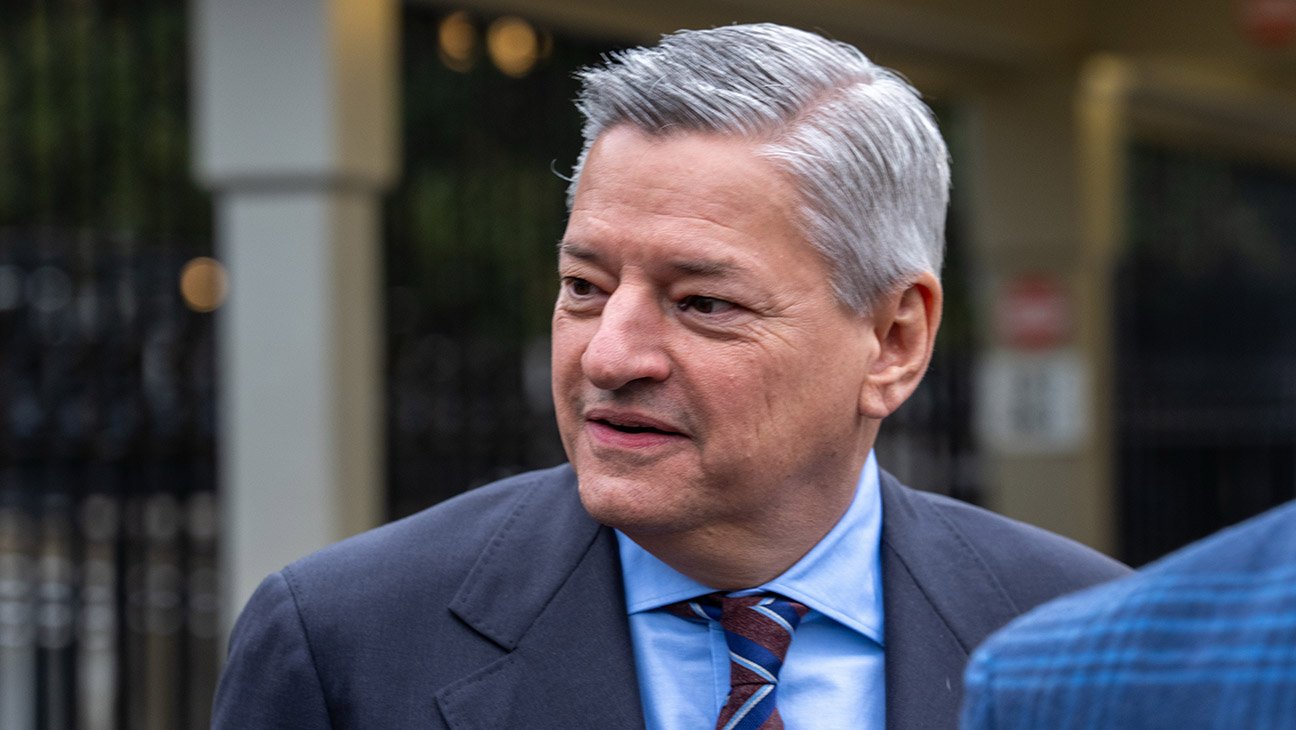
    Netflix co-CEO Ted Sarandos acknowledged that second seasons of the streamer’s shows tend to draw less well than debut seasons. But, he said, it’s not as bad as a recently prevalent narrative would make it seem.

    The streamer also touted some early results from the addition of video podcasts to the platform in its quarterly earnings report — but declined to divulge any specific numbers in a large-scale data release for the first half of the year.

    The season two problem narrative was sparked by a recent Bloomberg story detailing steep viewing declines for several shows in their second seasons, among them Beef, The Four Seasons and One Piece. Sarandos didn’t dispute those findings — which came from Netflix’s own publicly released weekly top 10 lists — but said that “in aggregate, we’re not seeing any material change in our second season viewing compared to season ones. Our second seasons are performing well within our bands of expectation.”

    Sarandos also said that viewing declines for the second season of a show are “very common” across the industry and offered this rationale for why it happens at Netflix: “It’s even moreso with us, because we launch our shows so big,” he said. “Our global reach, our discovery mechanism, releasing all at once — this enables us to find a very large audience early. Our shows tend to start really big, where most other places, their shows start pretty small and occasionally grow from there.”

    Sarandos added, “When we look across the entire portfolio … our season two fall-off has actually slightly improved this year relative to last year.”

    As for video podcasts, Netflix made a push into that area this year, adding shows from The Ringer, Jay Shetty, Pete Davidson, Brian Williams and New York’s Breakfast Club radio show, among others. Sarandos noted that the shows overindex with mobile users relative to long-form series and have driven up engagement a bit during daytime hours.

    So how are they doing, specifically? Well …

    A note at the end of Netflix’s data release said that all video podcasts (there are several dozen) are lumped into an “other shows” grouping that also includes any series that received fewer than 50,000 views (calculated as viewing hours divided by run time) in the first half of the year. That doesn’t necessarily mean that every podcast fell below that threshold, the company says. But since it’s a relatively new type of programming for the platform, Netflix opted not to break out the stats for any single show.

    The “other shows” category accounted for 757 million viewing hours from January to June — which sounds like a lot but is only about one percent of the 74.4 billion hours Netflix users spent watching all series in those six months.

  • Reading on a Budget: How to Find Free Ebooks and Send Them to Your Kindle

    Reading on a Budget: How to Find Free Ebooks and Send Them to Your Kindle

    If you’re using an ebook reader, there’s a good chance it’s an Amazon Kindle. They’re must-have devices for voracious readers, but they are closely tied to Amazon’s ecosystem. If you have a Fire tablet or a smartphone, you can download other e-reading apps to beef up your library, but with the Kindle hardware, you’re pretty much stuck to getting your content directly from Amazon—sort of. Using a bit of free software, you can take ebooks in a variety of formats and zap them over to your Kindle. Here’s how to do it and where to nab free ebooks.


    Where Do I Get Free Ebooks?

    amazon first reads

    (Credit: Amazon/PCMag)

    For Prime members, Amazon First Reads offers early access to editors’ picks. Each month, you can download one Kindle book for free; in July, Amazon is also offering a bonus short read. (Non-Prime members can snag a First Read book for $1.99.) Head to the First Reads website, and sign up to get a newsletter that will alert you to each month’s First Reads. If you subscribe to Kindle Unlimited, all the books will be added there once they’re released.

    Other Free E-Book Options

    • Amazon hosts periodic Stuff Your Kindle Days, where select ebooks are free for a 24-hour period (or more). Here’s a list for 2026 and a sampling of those coming up soon:

      • August 15-16, 2026: Fantasy and Sci-Fi Worlds hosted by Book Below, offering fantasy, science fiction, and paranormal books.

      • August 5–8, 2026: Stuff Your E-Reader hosted by Indie Author Collective, offering books in a variety of subgenres.

      • August 5-8, 2026: Buzzfest hosted by Indie Author Hive, offering books of all genres.

      • August 15-16, 2026: Fantasy and Sci-Fi Worlds hosted by Book Below, offering fantasy, science fiction, and paranormal books.

      • September 12, 2026: Queer Your Ereader hosted by Divination Hollow, offering books with LGBTQIA+ themes and characters.

    • To hook into public library catalogs and send ebooks to your Kindle, check out the Libby app from OverDrive. (Hoopla offers a similar service.)

    • If you want classics, Project Gutenberg has 75,000+ copyright-free ebooks. You can also trying searching for PDFs using the filetype:pdf search operator ([book title] filetype:pdf).

    • For historical and academic texts, check out archive.org.

    • ManyBooks.net has a mix of free and paid classics and self-published titles.

    • Free-Ebooks.net has a large collection of self-published ebooks and classics; provide your email address to get five free ebooks per month.

    • If you like science fiction, the publisher Baen also has a set of free ebooks.

    • BookBub has a free ebook section filled with romance novels and other casual reads.


    PCMag-Recommended Amazon Kindles


    Upload Via ‘Send to Kindle’

    Now that you have your free ebooks, how do you get them on your ebook reader? Amazon offers a Send to Kindle page where you can upload ebook files saved on your device. Click Select files from device and select the book you want on your Kindle.

    Upload Via 'Send to Kindle'

    (Credit: Amazon/PCMag)

    This tool supports PDF, DOC, DOCX, TXT, RTF, HTM, HTML, PNG, GIF, JPG, JPEG, BMP, and EPUB formats on ebooks up to 200MB in size. (Amazon no longer supports sending new Mobi files.) A status bar will appear, letting you keep tabs on the upload. When it’s ready, there will be a checkmark and an In library notice.

    Upload Via 'Send to Kindle' files uploaded note

    (Credit: Amazon/PCMag)

    Amazon also has an app for Windows and macOS that lets you do the same thing, as does a Chrome extension, though results are mixed on the latter. Keep in mind that Amazon has discontinued the ability to download ebooks to your computer.


    Send Ebooks to the Kindle From Your Phone

    If you have the Kindle app installed on your iPhone or Android device, you can add ebooks to your library with a few taps. In the example below, I downloaded an ebook from Project Gutenberg on my iPhone, which saved it to the Files app. I then long-pressed on the ebook, selected Share, and picked the Kindle app in the menu. It then appeared in my library in the Kindle app as well as on my Kindle Paperwhite. The process is similar on Android.

    Send E-Books to Your Kindle Using the ios app

    Sending an ebook to the Kindle on iOS (Credit: Amazon/PCMag)


    Find Your Kindle Email

    Amazon also lets you email ebooks to your Kindle account via a specially crafted email address. To find your Kindle’s email address, go to amazon.com/myk on the web (or Account & Lists > Content Library > Devices). Find the relevant Kindle device, click it, and select your ereader.

    Aamazon's Manage Your Content and Devices page

    (Credit: Amazon/PCMag)

    On the next page, you’ll find a Device Summary that lists your @kindle.com email address. (It’s set to a default address, but you can change it by clicking Edit.) 

    kindle email address screenshot

    (Credit: Amazon/PCMag)

    Back up top, click the Preferences tab and scroll down to Approved Personal Document E-mail List. The email attached to your Amazon account should be listed here. If that’s the email address you’ll be using to send ebooks to your Kindle, you’re all set. To use a different email, click Add a new e-mail address and enter the one you want to use.

    Recommended by Our Editors


    The Best eReader Deals This Week*

    *Deals are selected by our commerce team


    Send a PDF to Your Kindle

    Amazon can automatically convert PDFs into the Kindle format, but you get two formatting choices. If I want my Kindle to display every page in the PDF as if it were a graphic, I can just email the file to my Kindle’s address (without a subject line), upload it via Send to Kindle, or drag and drop the file onto my Kindle if it’s attached to my PC with a USB cable. It’ll appear on my Kindle like it would on a laptop, maintaining the formatting and graphics, though the font size may be too small to read.

    Your other option is to attach the PDF file to an email, and make the subject line “convert”—just that word. If I send it to my Kindle email address, the file will be converted into a Kindle version that will let me mark it up and change the formatting. The graphics will still be in there, though you’ll lose the layout of the original PDF.

    house tiktok bill side by side in PDF format and kindle converted

    An unaltered PDF (left) and converted PDF (right) on the Kindle (Credit: Amazon/PCMag)


    Where Do My Ebooks Show Up?

    Once you’ve emailed a book, go Home > From Your Library on your Kindle. It might take a few minutes, but it should update automatically and the ebook will appear—as long as you’re connected to Wi-Fi. Want to get rid of the ebook? Tap the three dots on the bottom right of your ebook in Your Library and select Remove download to remove it from your Kindle or Permanently Delete to remove it from your Amazon account.

    About Our Expert

  • Disney’s Next Big Product Line Sees Its Star Characters Collide With NFL Teams

    Disney’s Next Big Product Line Sees Its Star Characters Collide With NFL Teams

    The Walt Disney Co. is protective of its iconic characters and intellectual property. The National Football League is too. The league wants its teams showcased in the best light, and Disney wants its characters to shine.

    On Thursday afternoon, in New York’s Jacob Javits Center, the world of Disney collided with the world of the NFL, all in service of an unusual new consumer product line, one that mixes some of Disney’s characters with all 32 NFL teams.

    That’s how Darth Vader, flanked by a pair of Storm Troopers, found himself on stage at Fanatics Fest alongside NFL legend and Las Vegas Raiders owner Tom Brady, Raiders quarterback Fernando Mendoza and NFL Commissioner Roger Goodell, with Marvel chairman Kevin Feige looking on from the audience.

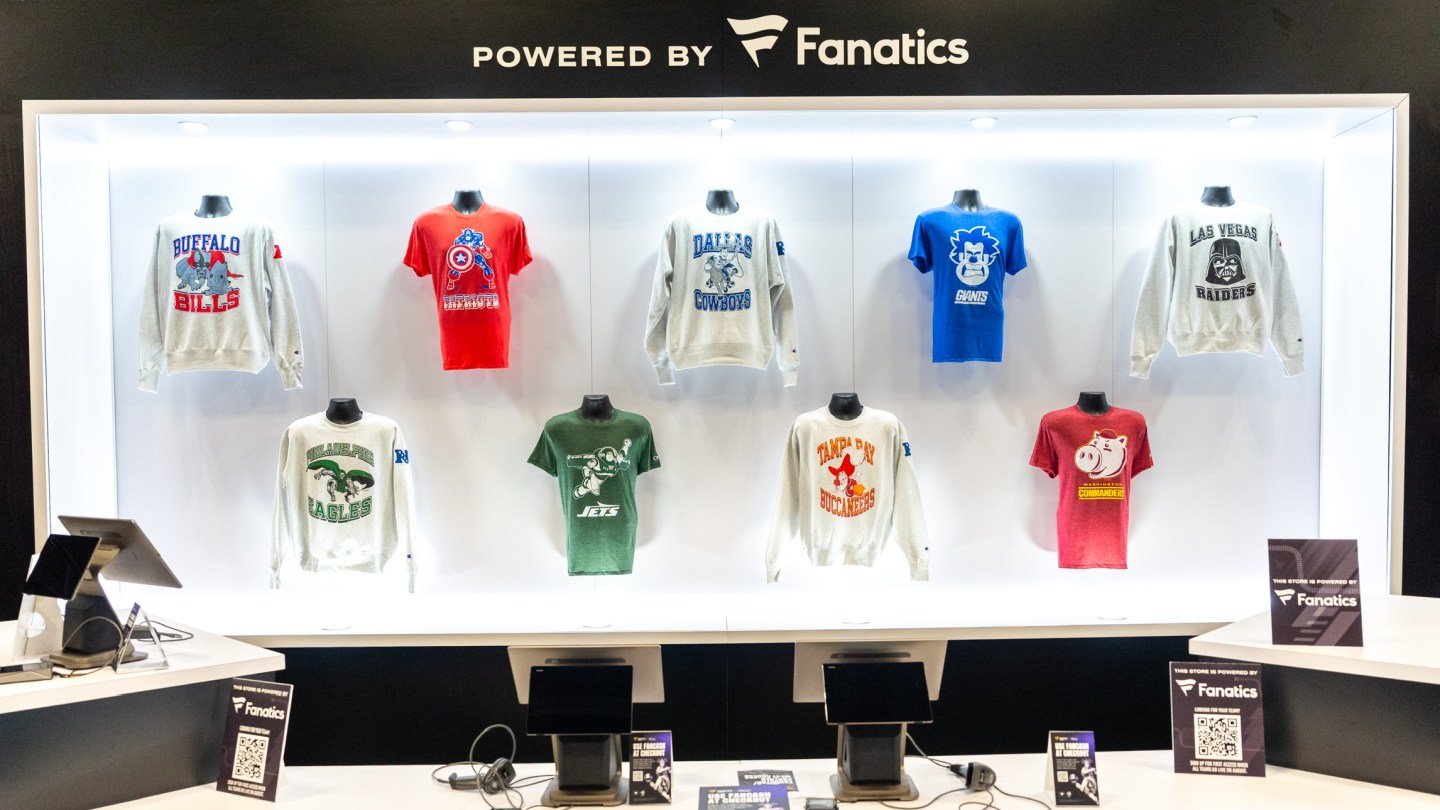
    Vader was the first pick in the “Disney Fan Draft,” held on the floor of the convention, which served as a launchpad for the “Disney | Champion NFL Collection,” which pairs Disney characters with an NFL team.

    Darth Vader, Fernando Mendoza, Tom Brady and Roger Goodell at the Disney Fan Draft at Fanatics Fest.

    Alex Weprin

    The apparel line launched at the Fest with eight teams (and characters), with all 32 launching in August.

    In addition to Vader and the Raiders, the collection includes the Buffalo Bills and Beast from Beauty and the Beast; the Dallas Cowboys and Toy Story’s Woody; the New England Patriots and Marvel’s Captain America; the New York Giants and Wreck-It Ralph; the New York Jets and Toy Story’s Buzz Lightyear; the Tampa Bay Buccaneers and Captain Hook; and the Washington Commanders and Toy Story’s Hamm.

    “The Disney | Champion NFL Collection reflects our continued commitment to creating consumer products and experiences that sit at the intersection of culture, fandom, and storytelling,” Paul Gitter, executive VP global brand commercialization for Disney Consumer Products, tells The Hollywood Reporter. “As we build toward ESPN’s ‘Year of the Super Bowl,’ we’re expanding how fans engage with Disney across sports through moments that drive relevance, connection and long-term brand affinity.”

    According to Bret Healey, director of graphic design at Disney Consumer Products, the Disney products team really did draft the characters for each team. While what happened on stage at Fanatics Fest was in service of the show, the Disney team put a lot of thought into each pairing.

    “We did the draft based on the team first: What’s the team’s personality? What are their colors? What’s their team name? What are their fans like? What’s their city like? What are their ‘like ‘if you know you know’ moments? So I took that all into consideration with my team, and we essentially drafted all 32 of the teams together,” Healey says.

    And while many of the characters are Disney “all-stars,” so to speak, he says that they were deliberate in their choices.

    “Whichever character worked best for that team, that’s the story we were going to tell, even if they are a tertiary character,” he says.

    Consumer products are one of the core parts of Disney’s corporate flywheel. The business generated revenue of $974 million in the company’s latest quarterly report, with operating income of $479 million, enormous margins that reflect Disney’s heavy focus on licensing through partners like Champion.

    With its latest effort, the company is banking that it can bring some NFL fans along for the ride too.

  • Netflix Unveils ‘Queenstown,’ Its First New Zealand Series

    Netflix Unveils ‘Queenstown,’ Its First New Zealand Series

    After more than 10 years of streaming content to the country, Netflix has kicked off production on its first original series ever commissioned in New Zealand. On Friday, the company unveiled Queenstown, an eight-episode drama set amid the luxury ski scene of the titular South Island resort town.

    Unfolding amid the moneyed gloss of the town’s ski-resort elite, the series follows a privileged family and the people who work for them as their lives collide over power, loyalty and desire — or, as Netflix put it, “a wealthy family at war with itself.” Production is underway on location in Queenstown itself.

    Queenstown was created and written by Chloe Stearns (Wolf Like Me, The Falling Girls, Evergreen), who executive produces. Glendyn Ivin (The Lost Flowers of Alice Hart, Penguin Bloom) serves as lead director and executive producer, with New Zealand filmmaker Roseanne Liang (Netflix’s Avatar: The Last Airbender) also directing.

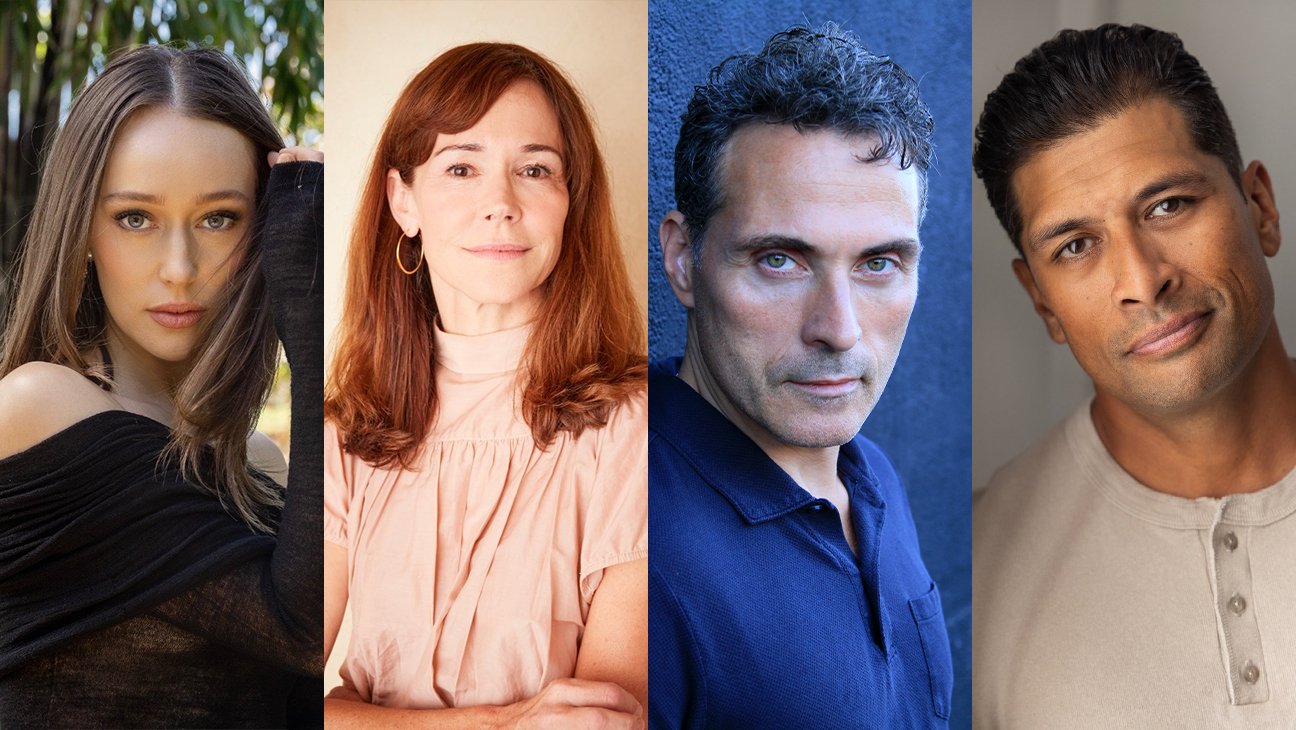
    Emmy nominee Rufus Sewell (The Diplomat, Scoop, The Father) leads the ensemble alongside Frances O’Connor (Wednesday, The Missing), Australian actress Alycia Debnam-Carey (Apple Cider Vinegar, The Lost Flowers of Alice Hart, Godzilla x Kong: Supernova) and New Zealand actor Te Kohe Tuhaka (Chief of War, The Convert, Kōkā).

    “Shooting our first locally-commissioned series here in New Zealand is a huge moment for us,” said Amanda Duthie, Netflix’s content director for Australia and New Zealand. “This is a bold, propulsive story of power, class and family set against the opulent world of a luxury ski town, and we can’t wait for our members to fall in love with this series the way we have.”

    Jodi Matterson (The Dry, The Lost Flowers of Alice Hart) — who launched her Silent Firework banner in 2024 after exiting Bruna Papandrea’s Made Up Stories — executive produces alongside Libbie Doherty (Bluey, Crazy Fun Park) of Runaway Unicorn, with Jeremy Platt and Erika North rounding out the exec producer team.

    Matterson and Doherty, in a joint statement, hailed Stearns as “an extraordinary new voice” — and predicted the series will become “audiences’ next obsession.”

    The commission marks a notable step for Netflix’s originals strategy Down Under, which has so far centered on Australia with hits including Heartbreak High, Boy Swallows Universe and Apple Cider Vinegar. New Zealand, by contrast, has long served the streamer primarily as a spectacular production location — Sweet Tooth and Jane Campion’s Oscar-winning The Power of the Dog both shot there — without ever hosting a homegrown series of its own. The Queenstown production is backed by the New Zealand Film Commission and the country’s Screen Production Rebate. A premiere date has yet to be announced.

  • Paramount+ Subscribers Fail to Block Warner Bros. Merger as States Will Try Again Friday

    Paramount+ Subscribers Fail to Block Warner Bros. Merger as States Will Try Again Friday

    A handful of Paramount+ subscribers failed to win an order blocking the merger with Warner Bros. Discovery on Thursday, but a coalition of states will give it another try on Friday.

    The plaintiffs sued in April, alleging that they had faced price hikes and risked losing viewing options as a result of the transaction. At a hearing on Thursday, Judge Araceli Martinez-Olguin denied their bid for a preliminary injunction.

    “It’s extraordinary preliminary relief, and plaintiffs failed to submit a single item of evidence in support of the motion,” the judge said. “Moreover, I have some serious doubts about plaintiffs’ standing to pursue these antitrust claims.”

    Paramount will face a harder test on Friday, as a coalition of 12 attorneys general are seeking a temporary restraining order to pause the merger. The states filed their suit on Monday, alleging that the $111 billion merger will harm competition in the theatrical and basic cable markets.

    Earlier on Thursday, Paramount filed its opposition, arguing that the states are unlikely to prevail on their case and should not be granted a restraining order.

    Jeffrey Kessler, Paramount’s lead lawyer, was in the courtroom in Oakland, Calif., on Thursday afternoon to oppose the subscribers’ lawsuit. He argued that the subscribers’ attorney, Joseph Alioto, has recently filed five similar actions seeking to block major mergers — four involving some of the same individual plaintiffs — and has lost every one.

    “It’s very clear in this circuit and elsewhere that to get a preliminary injunction, you have to make a clear showing with evidence,” Kessler argued. “And when there is no evidence, then you cannot get a preliminary injunction.”

    Paramount has filed a motion to dismiss the suit, which Martinez-Olguin took under submission. She asked Alioto how he would amend the suit if given the option. Alioto said he would seek to obtain the discovery that has been turned over to California and the other states attorneys general.

    “We’re a private group,” he said. “We’re not a government. We don’t have the tools of a government.”

    Alioto previously filed lawsuits on behalf of private parties who were trying to block the Microsoft-Activision merger, the Capitol One-Discover merger, the Nippon Steel-U.S. Steel merger, the Kroger-Albertsons merger, the United Airlines-Continental merger and the T-Mobile-Sprint merger.

    Responding to Kessler’s argument about the prior lawsuits, Alioto said, “That’s true — that these plaintiffs have filed other cases, and we’re proud that they did.”

    “They were sent to me by Senator Harry Reid because the Department of Justice would not challenge these mergers,” he said.

    The state attorneys general and Paramount previously agreed to link the private party suit to the states’ case, which means that Martinez-Olguin will handle the state matter as well.

    The Writers Guild of America also filed a federal antitrust suit against the merger on Tuesday, while the Freedom of the Press Foundation and the Public Integrity Project lodged a shareholder derivative suit seeking to block the merger in Delaware Chancery Court.

  • Leaks Reveal Suno Fed Thousands of Hours of Deezer, YouTube and Pond5 Data Into Its AI

    Leaks Reveal Suno Fed Thousands of Hours of Deezer, YouTube and Pond5 Data Into Its AI

    In brief

    • A hacker using the Shai-Hulud worm breached Suno in 2025 and leaked source code showing the platform scraped over 113,000 hours from YouTube Music, 62,000 from stock library Pond5, and 12,000 from Deezer, among other sources.
    • The same intrusion reached customer emails, phone numbers, and Stripe payment data for what the hacker describes as hundreds of thousands of users.
    • Suno’s own California compliance disclosure had already acknowledged that its training data may include music “subject to intellectual property protection”

    A hacker broke into AI music platform Suno and walked out with source code that documents, in precise detail, exactly where the company’s training data came from.

    The breach was first reported by 404 Media, which reviewed the leaked files. It confirms what the music industry had been saying in courts since 2024.

    The intruder claims to have used a piece of malware called the Shai-Hulud worm—named after the enormous sandworms in Frank Herbert’s Dune. Suno, one of the largest AI music generators online, lets users type a text description and receive a full song in seconds; building that capability required a substantial training dataset—a collection of audio files used to teach the model what different genres and styles sound like.

    The leaked material consists of scraping instructions and internal logs from 2023 and 2024, offering a rare look at how those pipelines are actually assembled.

    The dataset breakdown is specific. According to internal file comments reviewed by 404 Media, the training library included 113,879 hours of YouTube Music, 152,162 hours of tagged YouTube tracks, 62,117 hours from stock music library Pond5, 12,287 hours from Deezer, and 17,615 hours in a dataset labeled genius_hq, associated with material collected through Genius. The code also documented plans to download roughly 1 million hours of podcast audio via RSS feeds.

    One internal file tracking YouTube Music ingestion alone logged 2,013,545 music clips. That’s millions of recordings covering decades of audio—and the appetite wasn’t limited to music.

    The hacker claimed to have accessed records associated with hundreds of thousands of customers, including emails, phone numbers, and Stripe-related information. Suno disputes that sensitive personal information was compromised.

    The company says it identified the incident in November 2025 and called it “limited.” Suno determined the exposure primarily involved outdated source code no longer in use and concluded that individual customer notifications weren’t required under applicable privacy laws. Users are only finding that out now, through news coverage.

    Here’s the thing: Suno had already told anyone willing to read its own website that something like this was happening. Under California’s AB 2013 law—which requires AI companies to disclose their training practices—the company publicly acknowledged that its training data may include music “subject to intellectual property protection,” and listed the corpus at tens of millions of publicly available music audio files. What the hack adds is specificity: The legal filing was vague by design, and the leaked code is not.

    The scope of AI music training was already becoming clear before anyone breached anything. In June 2026, The Atlantic published four searchable databases documenting music used to train AI models—one containing 12 million tracks, another with 9 million, and two more with around 100,000 each. You could look up your favorite artist before a hacker handed anyone source code.

    The Recording Industry Association of America had alleged in a 2025 amendment to its original 2024 lawsuit against Suno that the company was ripping songs directly from YouTube—an accusation Suno contested under a fair use defense. The suit sought $150,000 per infringement incident. The hacked source code corroborates the RIAA’s central allegation.

    Udio, which was targeted in a parallel lawsuit filed by the same major-label coalition, settled with Warner Music in November 2025 and is now transitioning to a licensed platform. Suno’s case with Sony and UMG remains active in federal court; the company’s valuation sits at $5.4 billion with around 100 million users on the platform.

    Suno did not immediately respond to a request for comment by Decrypt.

    Daily Debrief Newsletter

    Start every day with the top news stories right now, plus original features, a podcast, videos and more.

  • Balaji seeks Malaysia deal, threatens exit after Network School probe

    Balaji seeks Malaysia deal, threatens exit after Network School probe

    Network School founder Balaji Srinivasan is seeking a memorandum of understanding with Malaysia after authorities probed his Forest City tech community over allegations it was hosting Israeli citizens using second passports.

    Malaysia’s Home Affairs Ministry said Tuesday it was investigating Srinivasan’s start-up community in Johor following claims it included Israelis in violation of immigration laws. Initial checks found all 266 foreigners held valid documents.

    Srinivasan said the agreement would give Network School legal certainty to continue investing in Malaysia. Without it, he said, the community could take its capital to countries that are more welcoming.

    “I’d like to have a document which says not just abstractly that tech is welcome … but rather that we’re personally welcome,” Srinivasan said in a video directed at Malaysian Prime Minister Anwar Ibrahim on Thursday.

    The episode highlights a tension faced by many crypto utopias, which aspire to build digital-native communities with their own institutions and economies, but still depend on conventional states for legal certainty.

    Balaji, the former chief technology officer of Coinbase, launched his Network School in August 2024 in Johor’s Forest City, which is located about an hour from Singapore. It is marketed as a physical community of tech builders, creators and founders.

    Srinivasan did not give the specifics of what a deal with Malaysia could include, but suggested it could be a memorandum of understanding or a modification of a special economic zone provision.

    “If not, then we will readily go somewhere else because I don’t want to be where we’re not welcome,” he said.

    Srinivasan also announced that he is putting any further investment in Malaysia, including a $122 million plan to expand its community, on hold until it gets “sufficient assurance” that such issues don’t recur.

    Instagram post led to immigration probe

    Claims that the Network School was harboring Israeli citizens have been traced back to a social media post on Friday from activist group “Malaysian Protest 4 Palestine,” which accused the school of becoming a “gathering place for Israeli entrepreneurs.”

    Israeli passport holders are forbidden from entering Malaysia, a Muslim-majority country, without written permission from the Malaysian Ministry of Home Affairs, as Malaysia does not recognize Israel and does not have any diplomatic relations with the country.