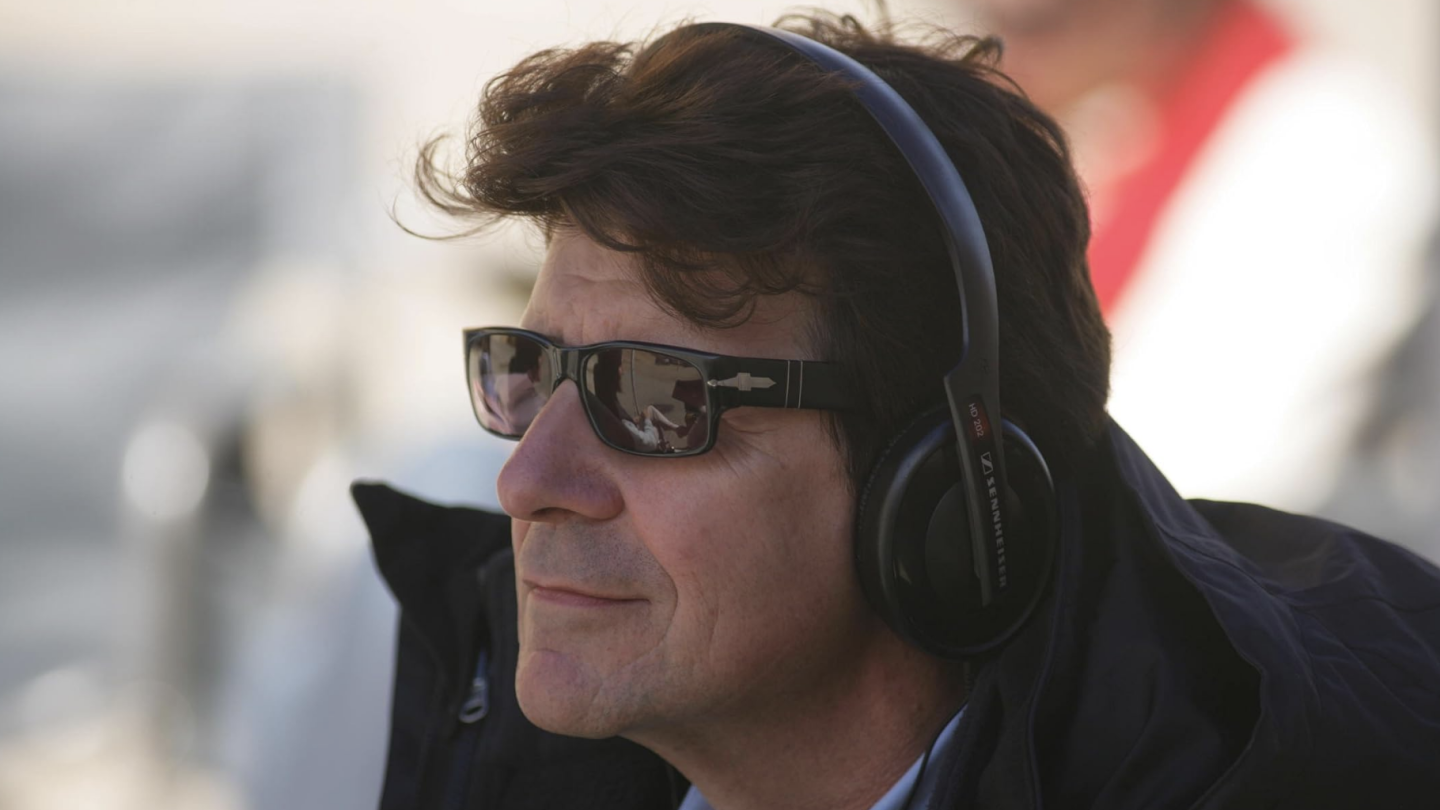
John Kirby, the longtime acting coach and son to Bruce Kirby, has died. He was 75.
Kirby died Wednesday three years after being diagnosed with ALS. His associate, Nathan Besbitt, confirmed his death on Instagram.
“I am here to officially, with a broken heart, announce the passing of our beloved John on the early morning hours of Wednesday, July 15, and it has been devastating for all of us, and we’re trying to just find a way to cope,” Besbitt said.
Kirby lent his talents as an acting coach to a number of projects across his career, and was a frequent collaborator with Jim Caviezel.
The two worked together on films including Frequency (2000); Pay It Forward (2000); Angel Eyes (2001); The Count of Monte Cristo (2002); High Crimes (2002); I Am David (2003); The Final Cut (2004); Bobby Jones: Stroke of Genius (2004); Unknown (2006); and Paul, Apostle of Christ (2018). Kirby also served as Caviezel’s acting coach for the 2009 miniseries The Prisoner.
His additional credits tied to coaching include 2003’s Peter Pan, The Chronicles of Narnia: The Lion, the Witch and the Wardrobe, Outlander, Hotel California, Scream 4, Stick It and Prom.
Kirby’s family was connected within the entertainment industry, with The Muppet Movie actor Bruce Kirby being his father. His brother, Bruno Kirby, also pursued acting, appearing in City Slickers, Good Morning, Vietnam and When Harry Met Sally…, among others.
The acting coach was diagnosed with ALS on June 7, 2023, after experiencing symptoms a year prior. He suffered a hard fall that resulted in a hip fracture on June 1 of the same year which led to his diagnosis.
A celebration of life will be held on Aug. 15 at the Hall of Liberty Forest Lawn Hollywood Hills, and is open to the public.
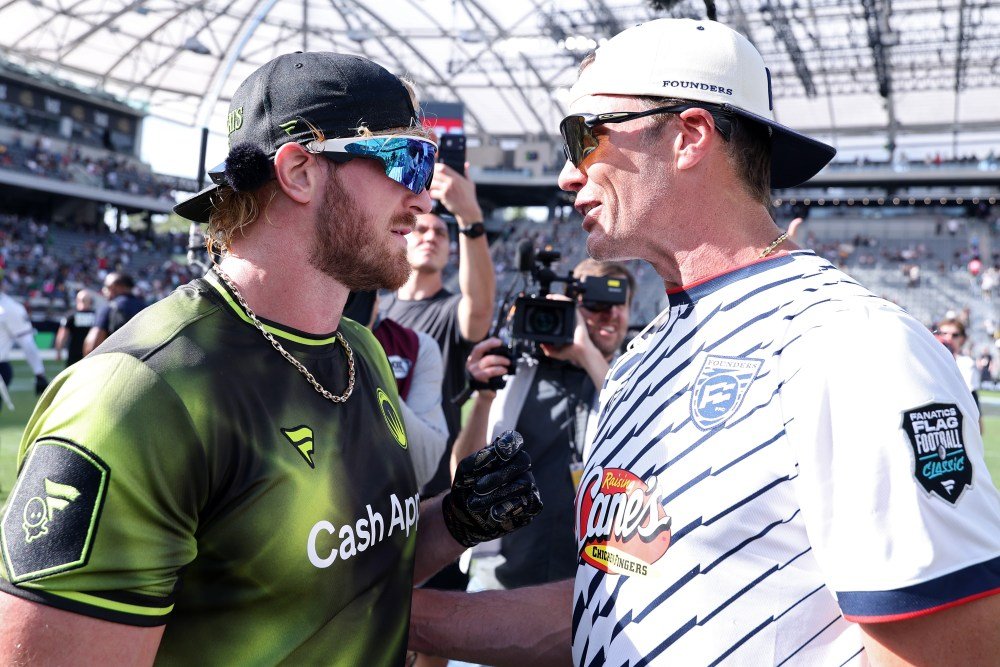
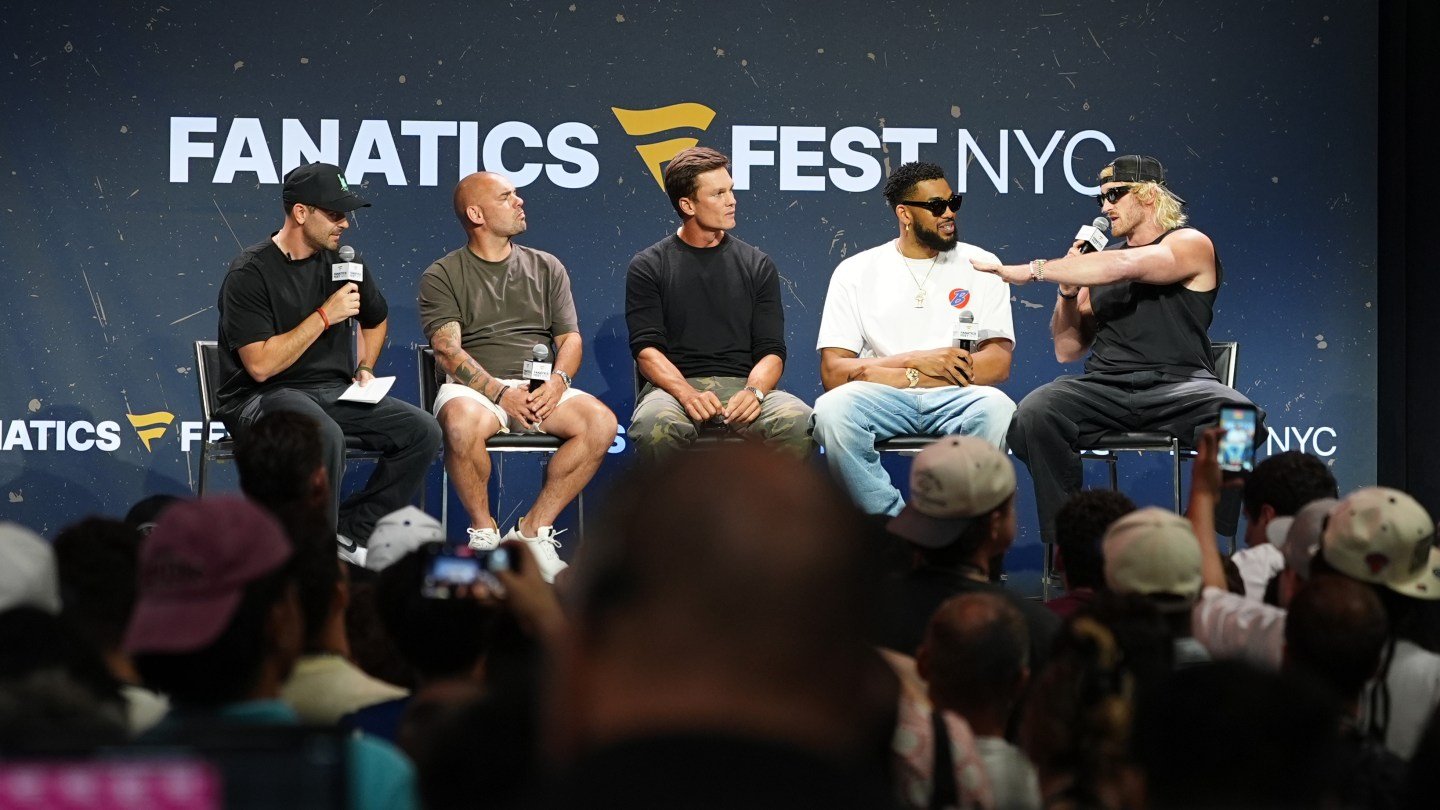
On Friday, the future NFL Hall of Famer and YouTuber-turned-WWE superstar shared the stage at Fanatics Fest in New York. But when their panel ended, the sports stars got into a heated exchange that ended with Brady slapping Paul in the face. New York Knicks star Karl-Anthony Towns and Chris Costa quickly stepped in to help break things up before things got out of hand.
Fanatics posted the clip on social media — with Brady, Paul, WWE and the NFL as collaborators on Instagram — and the footage went viral instantly, with more than 17.5 million views on Instagram and 6.9 million on X.
Brady and Paul’s feud began in February when Paul said his WWE career made him as athletic as NFL players, which Brady, a seven-time Super Bowl champ, did not appreciate. The pair continued trash-talking one another ahead of and during the Fanatics Flag Football Classic in March.
For the Fanatics Fest dustup, the audio of the sports stars’ heated conversation is largely inaudible, so Paul hopped online to offer his side of the story.
“This happened bc I was roasting Tom for beating him in flag football. And he tries to smack me?? Horrible example for the kids,” Paul wrote on X, reposting a clip of the incident. “Aura -100,” he added. “Blocked. With a torn tricep.”
Brady kept his explanation short and sweet, firing back with one word: “Dork.” He also replied to Paul directly, commenting, “I tried America… will try again next time I see this nerd.”
Many commenters wondered if the altercation was staged. Paul is a professional wrestler, after all, and, on Thursday, Brady expressed his interest in getting into the WWE.
“I need to get an invite. I’ve been waiting for [WWE president] Nick Khan to come up with some storyline for me to get in the mix,” Brady told WWE superstar Cody Rhodes during a live taping of the “What Do You Wanna Talk About?” podcast at Fantastics Fest. “I feel like I’m retired from football, and I have an opportunity to go out there and still showcase that I’m a little bit of an athlete. My boy [Rob Gronkowski’s] done it. I’ve seen, obviously, Logan Paul do it. I think I could get in there for at least one match, right?”
And if Brady were to enter the ring, he said he’d probably be a heel. “I’ve always been a bad guy,” he said, explaining that because he was usually on winning teams, the opposing fans loved to hate him. “When you go on the road and you’ve had some success in the NFL, they don’t like you. It’s an incredible feeling when you work that entire day to basically try to send the crowd home early.”
So, will Brady and Paul eventually work things out in the WWE ring? That remains to be seen, but Brady certainly got the first lick in.
Chris Costa, Wesley Sneijder, Tom Brady, Karl-Anthony Towns and Logan Paul onstage during the “This is Why We Collect” panel at Fanatics Fest NYC 2026.
The president of France’s National Gambling Authority instructed the country’s internet service providers to block access to Polymarket on July 16, according to a statement issued by the authority on Friday.
The order escalates France’s November 2024 action, when regulators barred financial transactions from French accounts to the site. Even that did not stop traffic. According to the ANJ, Polymarket drew 578,751 visits and 205,057 unique visitors from France in June, French media reported.
Advertising, by any means whatsoever, in favour of an unauthorised betting or gambling site is a criminal offence, with fines reaching €100,000 ($114,000).
– ANJ
France targets Polymarket at the network level
The move pushes French law enforcement from the transactional level to the network level. According to the order issued in November 2024, the French banks had to block any transactions to Polymarket, but people would still be able to access the website and see the odds. That reading pattern is what the ANJ now classifies as illegal advertising, per the regulator’s statement.
The novel legal theory here is that the mere display of market prices in real-time to French citizens constitutes solicitation for participation in an illegal gambling market. According to this theory, mere accessibility becomes the crime. The regulator said the site would remain blocked “for as long as authorities considered the platform noncompliant with the country’s gambling regulations.”
As of last month, Polymarket has generated over $1 billion in annualized revenue through activities predominantly based outside of the 33+ jurisdictions that have banned it.
One French whale case became a wider traffic problem
The France crackdown started with a single French trader who placed roughly $30 million in bets on the 2024 US presidential election. As Cryptopolitan earlier reported, the ANJ opened its formal investigation in November 2024, and Polymarket responded by implementing IP-based geo-blocking that displays a restricted-jurisdiction notice to French users. Bettors kept accessing the platform through VPNs.
France’s national weather agency Meteo-France filed a criminal complaint in April 2026 after one of its weather probes was hacked in an attempt to manipulate weather-related bets on Polymarket.
Similar concerns are running through parallel enforcement in the US, where a soldier was recently charged with using classified information about the January operation to capture former Venezuelan president Nicolás Maduro to place bets on prediction markets, allegedly netting more than $400,000.
The White House said Thursday it suspended a teleprompter operator over allegations of placing prediction market bets.
US regulators protect Kalshi as Europe blocks Polymarket
France’s escalation occurs three days after the CFTC used its emergency powers to trump a decision by a Michigan state court to void the executed trades of Kalshi. The two sets of regulatory approaches to prediction markets have officially diverged.
France, Spain, Netherlands, Belgium, Germany, Italy, Portugal, Switzerland, Brazil, Indonesia, Singapore, South Korea, and Japan have moved to block or restrict access, per Cryptopolitan’s June coverage of the FIFA World Cup crackdown.
The US Commodity Futures Trading Commission has moved the opposite direction, defending federally registered prediction platforms from state-level enforcement while writing new rules to expand event-contract trading.
Polymarket finds itself on that dividing line.
The legal jurisdiction of Polymarket is getting narrower, but at the same time, its profits are growing. It was this very contradiction that French regulators found to be unreasonable in the Friday ruling: the website was still making money and attracting French users without using French payment systems.
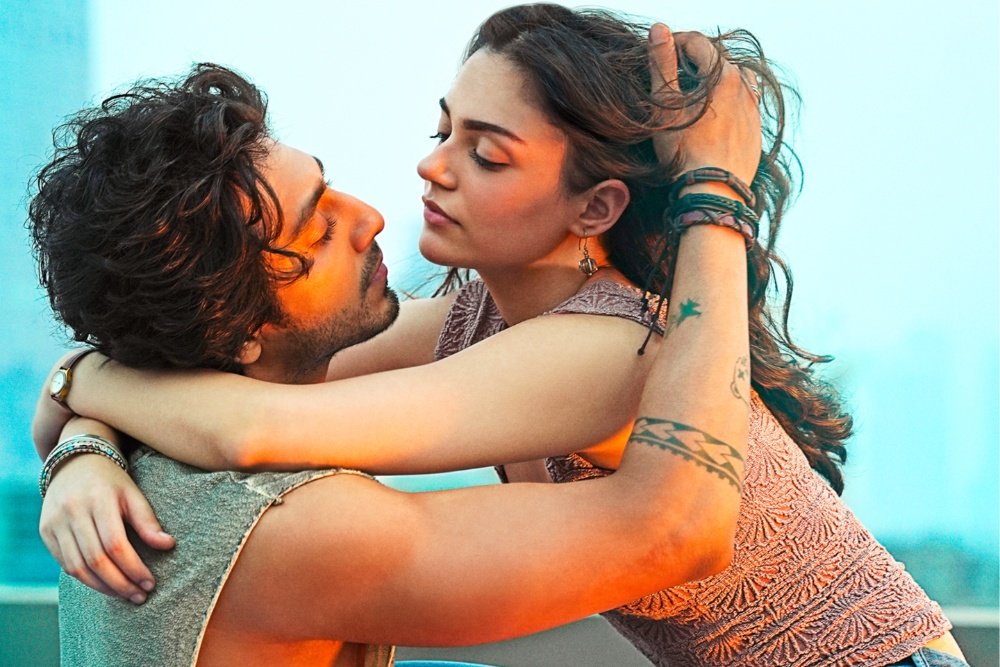
Bollywood stars Ahaan Panday and Aneet Padda visited London’s Wembley Stadium to celebrate the first anniversary of “Saiyaara,” unveiling a collector’s edition vinyl LP of the Yash Raj Films blockbuster – a package built to give fans and music enthusiasts a definitive way to revisit the film’s complete sonic journey.
“Saiyaara,” directed by Mohit Suri and produced by YRF CEO Akshaye Widhani, grossed over INR580 crore ($69 million) worldwide and is credited as the highest-grossing love story in Indian cinema history.
The choice of Wembley as the launch venue carries direct resonance with the film itself. In one of “Saiyaara’s” pivotal scenes, Panday’s character Krish Kapoor spots Padda’s Vaani Batra on the stadium’s giant screen, recognizing her by her eyes alone; the film’s finale concert sequence also unfolds at the same venue.
The release is a two-disc set. LP-1 compiles all nine tracks from the soundtrack, while LP-2 expands the listening experience with 25 recordings: 16 original background score compositions and nine of the film’s most prominent dialogue sequences. The collector’s package is rounded out by a “Saiyaara” diary containing notes from director Suri, producer Widhani, stars Panday and Padda, and music contributors including Tanishk Bagchi, Faheem Abdullah, Arslan Nizami, Irshad Kamil, The Rish, Vishal Mishra, Raj Shekhar, Sachet-Parampara, Mithoon and John Stewart Eduri. Also included are an ink pen reminiscent of Vaani’s notebook from the film and two character bookmarks depicting Krish and Vaani.
Widhani said: “‘Saiyaara’ was a deeply personal film for us because it marked our return to romance, a genre that has always defined YRF and inspired some of our most sweeping love stories. We wanted to deliver not just a film but also a music album that is timeless in this genre and I have to thank Mohit Suri for delivering this in spades. As we celebrate ‘Saiyaara’s’ first anniversary, we are delighted to mark the occasion with the launch of an exclusive collector’s edition Vinyl LP, giving fans and music lovers the ultimate ‘Saiyaara’ listening experience through its music, it’s sounds and its dialogues. We wanted to create something that they could own, revisit and treasure for years to come, a definitive keepsake that preserves the complete emotional journey of ‘Saiyaara’.”
Suri added: “Music is the soul of any love story – be it in life or in films. With ‘Saiyaara,’ I felt that even more. The depth in Krish and Vaani’s relationship, the everlasting feeling, the innocence, and the magic wouldn’t be the same without the songs. I am truly grateful and overwhelmed for the love people have shown the film because of its music. Vaani said ‘The mind forgets but the heart doesn’t, and great music stays in the heart…. forever.’ And it’s amazing that the music has stayed with you long after the film. The feeling is surreal, because the core of ‘Saiyaara’ was always the fact that a song has the power to take you back to a moment, bring back a memory… bring back love. That’s why this LP isn’t just a collection of tracks. It’s a chance for people to experience the film all over again – one emotion, one melody, and one memory at a time. We thought very carefully about every single aspect of this record to bring your ‘Saiyaara’ experience back to life! I really hope you love it.”
The “Saiyaara” collector’s edition vinyl LP will be available to buyers worldwide.
Pump.fun transferred another 81,712 $SOL, worth roughly $6.15 million, to crypto exchange Kraken on July 18, 2026, according to on-chain analyst EmberCN. On its own, the move is just another wallet transfer. But in the context of slowing memecoin activity and weakening Solana network revenue, it offers another glimpse into how one of crypto’s biggest success stories is changing.
Amidst the memecoin trend, Pump.fun emerged as one of the most popular apps on Solana, turning over millions in fees as users created and traded tokens. As trading opportunity slows down, however, the application continues to convert part of its revenue into cash through transfers to Kraken.
As estimated by EmberCN, Pump.fun has reportedly sold approximately 4.81 million $SOL tokens in the period between January 2024 and July 18, 2026. This translates to sales of around $812 million, with each token being sold at an average cost of $168.70. Together with this milestone, Pump.fun is now reputed to be among the top players in the field of long-term $SOL selling in the current walking stick.
What was sold, and how much has left
The latest transaction is part of an emerging pattern, not an isolated incident. According to its X account, Pump.fun launched in January 2024, charging a trading fee of 1% for the swap of tokens. This business strategy has proved to be highly successful in the heyday of the memecoin boom.
According to CoinMarketCap, Pump.fun has generated more than $1 billion in cumulative revenue since its launch, including approximately $664 million in 2025 alone. The platform also produced about $124.7 million in revenue during the first quarter of 2026, underscoring the success of its 1% fee-based business model despite a broader cooling of the memecoin market.
Why do the numbers look different?
When examined closely, the figure put out by EmberCN is much lower than that provided by DefiLlama. This difference is due to the fact that they measure different aspects.
EmberCN’s figure ($812 million as of July 18, 2026) is simply the estimated number of $SOL coins (around 4.81 million) that Pump.fun is believed to have sent to Kraken and supposedly sold.
DefiLlama’s figures (as of July 18, 2026) indicate a cumulative fee of around $1.86 billion, while cumulative revenue from the protocol stands at over $1.2 billion, representing all fees earned from Pump.fun‘s products.
In other terms, both sets of figures show different information. EmberCN sees the figures of actual sales of $SOL, while DefiLlama evaluates the total fee income and revenue of the protocol.
The drag on Solana
Pump.fun‘s slowdown is also becoming visible at the network level.
According to an article published on June 16, 2026, by The Block, the platform suffered 80% decline in activity over the past three months. Average revenue per day in June dropped to around $800,000 compared to approximately $4.8 million six months before. Furthermore, only 0.26% of the newly issued tokens managed to reach the market capitalization sufficient to reach other exchanges.
The downturn is about more than merely a reduced interest in memecoins. Traders have been switching to perpetual futures protocols such as Hyperliquid, leading to a reduced amount of on-chain activity that had once made Solana one of the most active networks in crypto. Whenever there is one application that leads to a significant portion of blockchain activity, a slowdown in its usage will also affect the economics of the blockchain.
A business past its peak
As per The Block, the price of PUMP has reduced by nearly 40% over past six months and DefiLlama has suggested that as of July 18, 2026, the token is priced at nearly $0.0016, considerably lesser than its peak value of $0.0088. The total market cap of the token is around $655 million.
The difference is quite striking when we consider how quickly the interest of investors in the project increased. According to CoinMarketCap, Pump.fun managed to raise $600 million in an ICO that was finished in just 12 minutes.
The overall concept of Pump.fun has come under fire as well. According to STORM Partners, Pump.fun is the center of the memecoin boom of 2024-2025, with estimates suggesting the platform is responsible for releasing approximately 11 million tokens by mid-2025. However, in the end, just under 1% of released tokens actually make it to exchanges, such as Raydium. During spikes of activity, this constant stream of new tokens translates to significant profits. However, now that the trading activity has eased up, the same model has become reliant on decreasing activity levels.
What to watch next
The question that follows is whether or not Pump.fun is going to continue selling $SOL at this rate even as protocol revenue slows down and whether Solana’s network activity starts picking up steady pace.
According to the wallet tracking by EmberCN, as far as July 18, 2026, Pump.fun still sends $SOL to Kraken from time to time. Such transfers will surely continue being an essential indicator, but they are just part of the total situation. It is DefiLlama’s revenue stats and Solana’s network fee metrics that will tell us better whether user activity stops slowing down and whether the memecoin boom that helped the blockchain achieve astonishing growth is still continuing to fade away.
Russia is preparing to tighten oversight of foreign stablecoins through a new cryptocurrency regulation bill that would limit who can purchase the assets. The government’s final draft introduces a separate legal framework for stablecoins, separating them from traditional cryptocurrencies and restricting access for most retail investors.
The proposal comes in addition to a separate initiative from the Central Bank of Russia to place all stablecoin transactions under state supervision.
Final Bill Separates Stablecoins From Cryptocurrencies
The current version of Bill No. 1194918-8, titled On Digital Currencies and Digital Rights, changes how stablecoins are classified under Russian law.
Earlier drafts treated stablecoins the same as cryptocurrencies, allowing qualified retail investors to purchase them after completing the required testing. The updated proposal, however, identifies stablecoins as a separate category since they are issued by identifiable entities and include redemption obligations to token holders.
According to the draft, a stablecoin holder has the right to request that the issuer redeem the token at its face value in cash. The legislation states that this characteristic sets apart stablecoins from decentralized cryptocurrencies, which generally have no issuer or contractual obligation to investors.
New Categories Introduced for Foreign Digital Assets
The new bill outlines two additional legal concepts for foreign digital financial products. The first category covers foreign digital instruments, defined as rights issued under foreign law through foreign information systems, including tokenized assets.
The second introduces non-deliverable foreign digital instruments that certify monetary claims and enable financial settlements without transferring the underlying asset.
Under the proposed framework, only professional or qualified investors would be allowed to purchase foreign digital instruments. Retail investors would instead be limited to products specifically approved and listed by the Bank of Russia.
Central Bank Proposes State Supervision of Stablecoin Transactions
The legislative changes follow separate proposals released by the Central Bank of Russia at the end of June outlining how stablecoins could operate under regulatory oversight.
The regulator proposed that all stablecoin transactions be conducted under state supervision through licensed exchanges or authorized cryptocurrency exchange offices. Under the proposal, operators of information systems would ease transactions involving Russian-issued digital tokens, while licensed crypto exchangers would handle transactions involving foreign stablecoins.
Central Bank Governor Elvira Nabiullina also stated that the regulator remains concerned about foreign stablecoins because their issuers have the ability to freeze assets held in users’ wallets.
Related: Russia Moves to Monitor Every Crypto Transaction Above 60,000 Rubles
Tom Brady and Logan Paul shared a stage at Fanatics Fest in New York on Friday, and when their panel ended, an alleged beef heated up and boiled over into an exchange that ended with a slap to the face.
Or did it?
A clip posted on Fanatics’ X account showed the moment Brady and Paul faced off near center stage while exchanging what appeared to be spicy words. Brady then removes his hand from the pocket of his camouflage cargo pants and moves to strike. At first glance, it appears Brady slapped Paul across the face, but closer inspection shows that Brady’s hand missed the target and only made contact with Paul’s shoulder. At that moment, New York Knicks star Karl-Anthony Towns jumped in to break up the “fight.” See the clip below.
“This happened [because] I was roasting Tom for beating him in flag football. And he tries to smack me??” Paul replied on X, referring to their dust-up during another Fanatics event, the 2026 Fanatics Flag Football Classic back in March. “Horrible example for the kids.” Brady weighed in, too, calling Paul a “dork” and replying directly to Paul’s X post by saying, “I tried America…will try again next time I see this nerd.”
This happened bc I was roasting Tom for beating him in flag football. And he tries to smack me ?? Horrible example for the kids
Needless to say, the original Fanatics clip went viral and within three hours had been viewed more than five million times. Maybe that was the point all along? After rising to fame as an influencer, YouTube content creator and entrepreneur, Paul took his act to the WWE. He’s been signed to the entertainment company since 2022, and has emerged as a big star in the ring though he’s been sidelined for two months due a torn tricep.
During an appearance on ESPN’s First Take, Paul discussed his current status by saying, “I’m an independent contractor with the WWE, and I respect the WWE. In fact, I’m so grateful for what they’ve done, and honestly, they’re grateful for me too because of what I’ve done for the business. And they are. They pay me handsomely — extremely handsomely, may I add.”
Maybe some of the money is heading Brady’s way? He dropped some not-so-veiled hints that a debut in the ring could be on the horizon. “I feel like, I’m retired from football, have the opportunity to go out there and showcase that I’m still a little bit of an athlete. My boy [Rob Gronkowski’s] done it, I’ve seen Logan Paul do it. I think I could get in there for at least one match, right?” Brady asked during an appearance at Fanatics Fest on Thursday, per Bleacher Report.
The legendary quarterback went so far as to say that he’d love to be a heel, aka villain or bad guy. “It’s such an easy choice,” Brady said. “I’m a bad guy. I’ve always been a bad guy. I mean, I feel like when our teams did really well, I would always go into these stadiums and I would feel that. … When you go on the road and you’ve had some success in the NFL, they don’t like you. It’s an incredible feeling when you work that entire day to basically try to send the crowd home early.”
There are some major WWE events on the calendar — including WWE Saturday Night’s Main Event XLV tomorrow at New York’s Madison Square Garden — so it’s possible Brady could be in some spandex very soon. But as far as the slap goes, even Grok wasn’t convinced.
It’s a playful (likely staged promo) moment from Fanatics Fest NYC. Tom Brady and Logan Paul were bantering about athleticism/WWE stuff on stage. Brady slapped him, KAT stepped in to de-escalate, and it stayed light/fun. Not WWE prep—just celebrity event vibes with their ongoing…
SPOILER ALERT:This interview contains spoilers for Episode 4 of “Life, Larry and the Pursuit of Unhappiness: An Almost History of America,” now streaming on HBO Max.
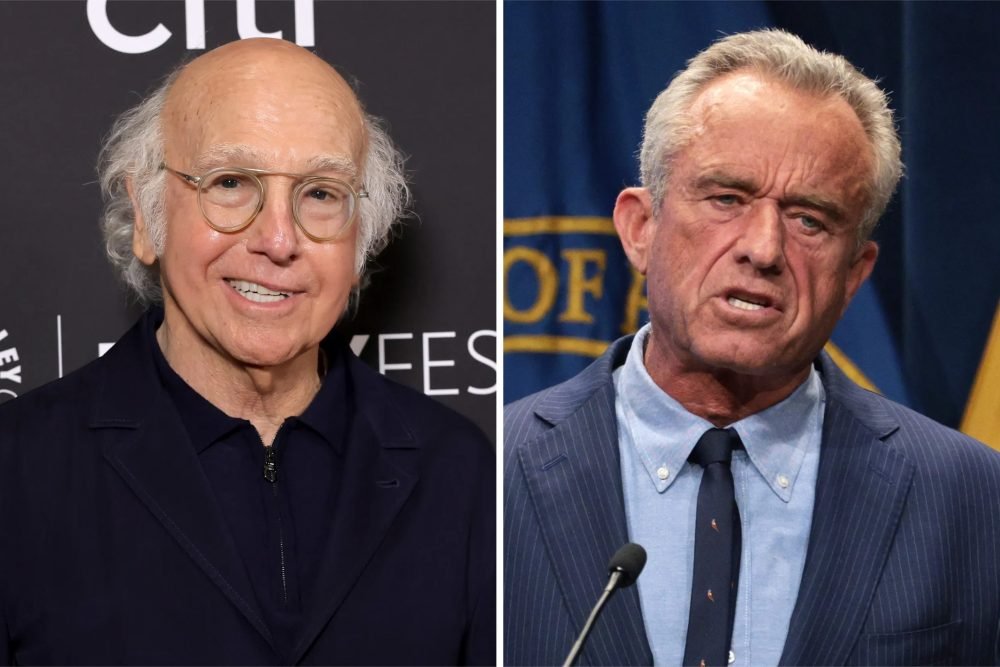
Larry David weaponizes history to mock his former pal Robert F. Kennedy Jr. in his HBO sketch comedy show “Life, Larry and the Pursuit of Unhappiness.”
In the latest episode of the Barack Obama-produced series, Larry dresses in drag to portray Dora Salk, the mother of virologist Jonas Salk, who is known for developing the first successful polio vaccine. As Jonas tries to get work done upstairs, he is repeatedly disturbed by his mother, who is obnoxiously kvelling about his scientific breakthroughs to a neighbor in the yard.
Eventually, another neighbor appears — a tan-skinned, craggy-voiced man named Bobby (sound familiar?) — who declares, “That vaccine’s gonna kill people. It’s gonna give them heart attacks!”
David, as Dora, doesn’t hold his tongue: “Drop dead, Bobby. You should die a dog’s death. You don’t know anything about science, you’re not a doctor.”
Bobby replies, “If I was in charge, I’d make sure that no kids took that vaccine. That goes for measles, too.”
And Dora fires back: “If you were in charge, God help us all! If some idiot, some moron, ever put you in charge, that would be a dark day for humanity.”
David’s thinly veiled attack against the U.S. health secretary has a rich backstory. Kennedy’s wife, Cheryl Hines, played David’s wife (and then ex) Cheryl on 12 seasons of “Curb Your Enthusiasm.” And it’s well known that David, who used to be close friends with Kennedy, introduced him to Hines. Despite political differences, they appeared to remain friends through the end of “Curb.” Kennedy, who was running for president as an independent at the time, even appeared on the red carpet for the show’s final season premiere in 2024.
But David’s relationship with the couple fizzled over the following months, as Kennedy endorsed Donald Trump and later joined his cabinet. (David has been a strong critic of Trump and has mocked him in both “Curb” and “Life, Larry and the Pursuit of Unhappiness.”) Hines said in an interview that she hadn’t spoken to David after the series finale of “Curb” because “I think he’s mad [that] Bobby’s in the administration.”
David and Kennedy in 2013
Ari Perilstein
Their rift is evident in the fact that every main cast member of “Curb” has appeared in “Life, Larry” (or at least showed up to the premiere) except for Hines. As to whether Hines was made aware of the sketch mocking her husband, “Life, Larry” co-creator and director Jeff Schaffer told Variety, “No idea.” And as for why Hines wasn’t asked to make a cameo, Schaffer quipped, “You know, it just didn’t work out that way.”
In terms of satirizing Kennedy in a sketch set in the 1950s, Schaffer said, “One of the things we attempted to do with the show was talk about things that are happening right now, but through a historical lens. Those who forget history are doomed to repeat it. We’re talking about vaccinations, and there’s incredible ignorance about vaccinations going on right now.”
To David and Schaffer, that ignorance has been amplified by Kennedy, a leading figure in the anti-vaccine movement who has questioned the safety of the COVID-19 vaccines. During his time in the administration, Kennedy has reduced the number of recommended childhood vaccines and overhauled the CDC’s vaccine advisory panel, because he has falsely linked them to autism.
By calling back to Salk’s groundbreaking advancements, Schaffer said, “It seemed like a great way to comment on the stupidity that’s going on right now.” The digs against RFK Jr. were simply “too good to pass up.”
The sketch ends as Neighbor Bobby goes on an extended tirade about how “fluoride causes gender confusion” and “the Spanish flu is a bioweapon … designed not to touch Ashkenazi Jews and Chinese people.” He says “I cut the head off a whale with a chainsaw,” and there’s even a direct reference to the dead bear he once transported in his car. Finally, he is taken away by two men in white suits, presumably to a psychiatric ward.
“Life, Larry and the Pursuit of Unhappiness” airs Fridays on HBO. The show places David in pivotal moments in history, from the signing of the Declaration of Independence to the trenches of World War I to the bus where Rosa Parks refused to give up her seat. So far, the comedy series has been unafraid to take jabs at current-day political figures. The second episode featured the late Rob Reiner playing George Washington in a sketch that skewered Trump as a “sociopath,” “lying asshole” and someone who is “friends with a pedophile.”
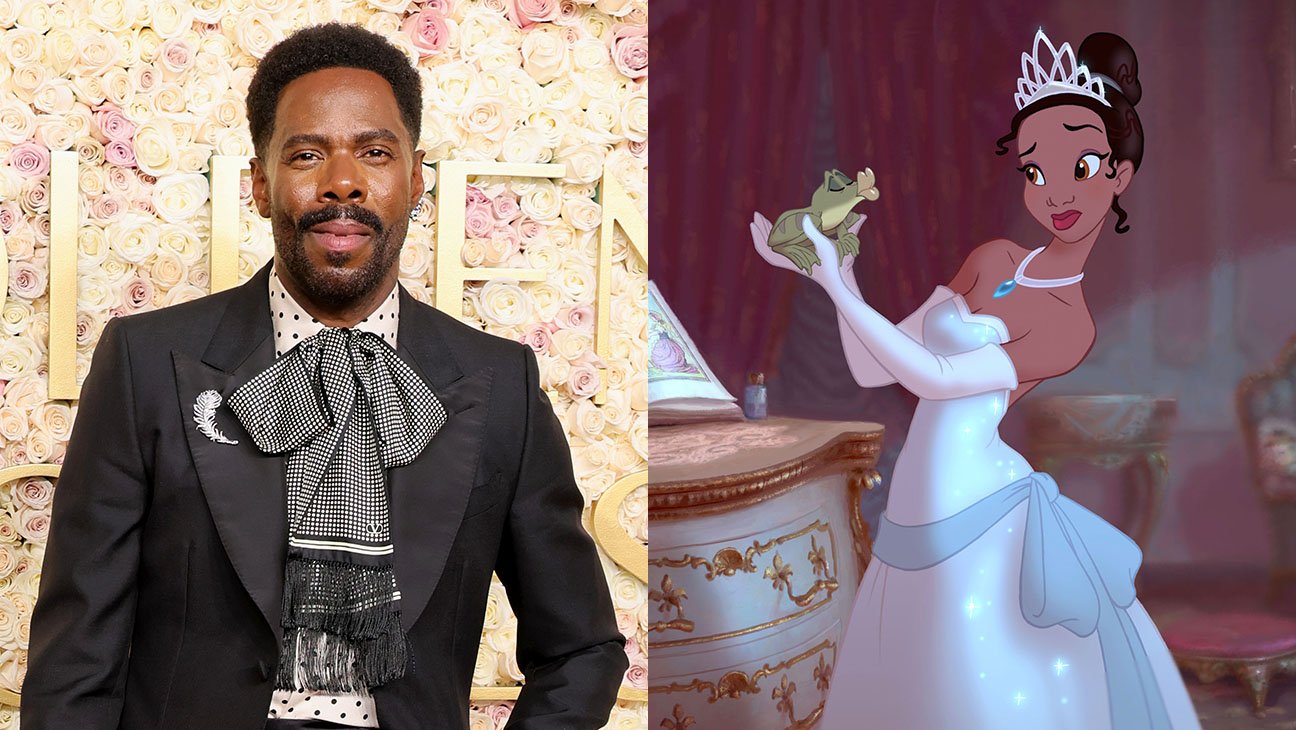
Domingo will co-write the take alongside Tony-nominated director Robert O’Hara. Deals have not closed for the pair. It is not described as a live-action remake of The Princess and the Frog, but rather a story inspired by the original film.
The Princess and the Frog released in 2009, centers on Princess Tiana, an aspiring restaurant owner who tries to help a frog prince turn back into a human, when she herself also turns into a frog and they end up falling in love.
The news of a new live-action Disney flick comes after Moana just hit theaters last Friday, and got off to a rocky start at the box office. Disney has seen ups-and-downs in terms of reception to its live-action remakes.
Just last year, Lilo & Stitch earned a record-breaking $183 million four-day opening weekend domestically before surpassing $1 billion; however, Snow White, which also released in 2025 had a $42.2 million opening and was not received with open arms.
This year, Domingo has starred in a number of projects, including Michael, Disclosure Day, The Four Seasons and Euphoria. He recently earned double acting Emmy nominations, tied to his stints in the latter two projects.
The actor discussed his sprawling career in a cover story with The Hollywood Reporter in May. “Maybe it’s because I’m sort of leaning into the third act of my career,” he said. “For a long time, as artists, we’re in our ‘planting seeds’ phase. I feel like I’m in an incredible harvest period.”
Deadline was first to report that Domingo is in talks to co-write the project.
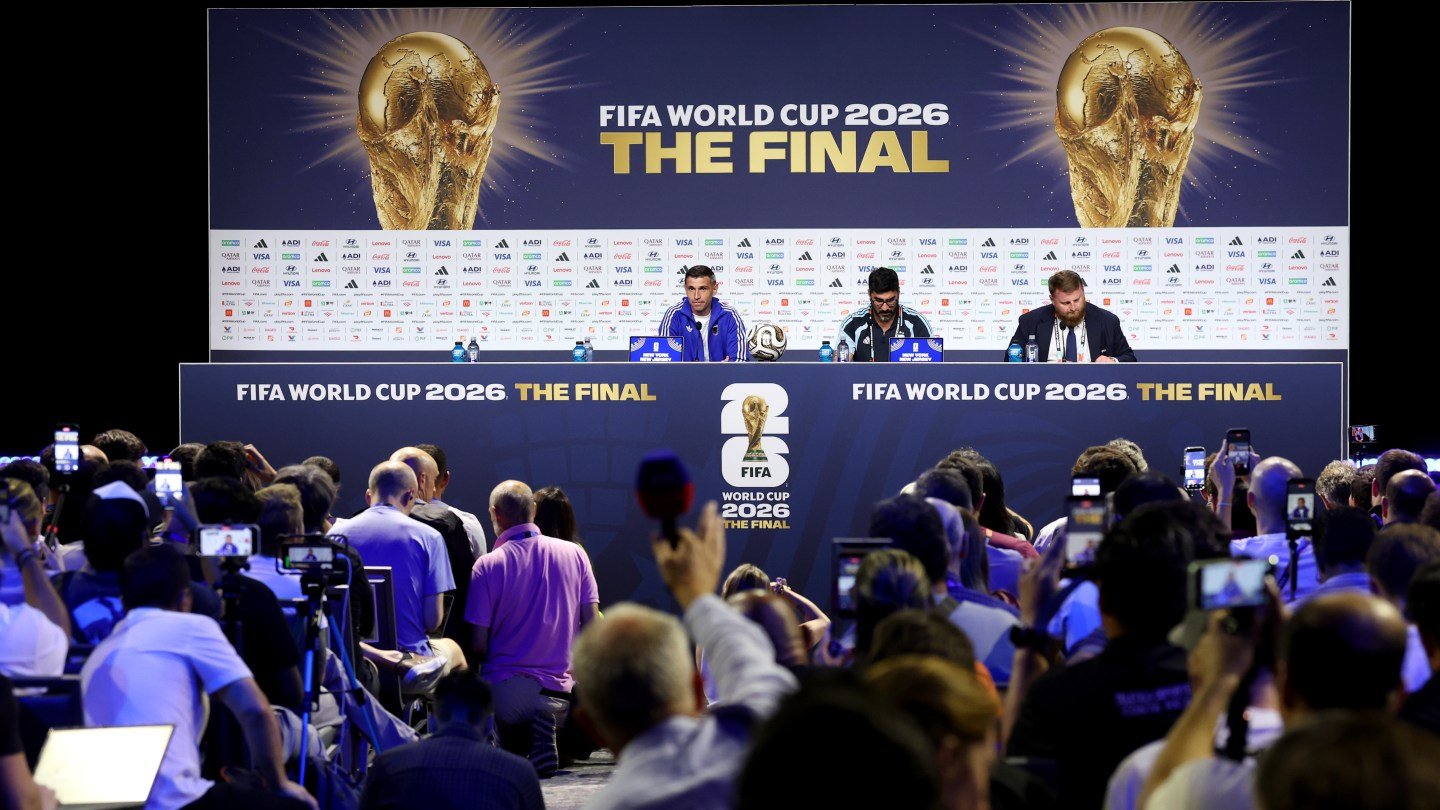
Sunday’s World Cup final is shaping up to be one of the biggest matches in history — and the most expensive if you want be in the stadium where it happens.
With less than 48 hours to go before Argentina takes on Spain inside MetLife Stadium in East Rutherford, New Jersey, ticket prices have risen to the $10,000 range for single tickets while hospitality packages (available through FIFA’s official hospitality provider On Location) are upwards of $30,000 to nearly $60,000 for specific lounges.
At last check today on FIFA’s official website, On Location had select hospitality tickets available for Pitchside Lounge at $57,500 for a single ticket, while lower-tier access was available inside the Trophy Lounge for $34,500. Champions Club, FIFA Pavilion and Supporters Club lounges were sold-out as of press time. On StubHub, the lowest price for an available ticket was $9,753 while the highest was $69,786.
That’s nothing compared to a deal Knightsbridge Circle closed for clients to attend the anticipated match. The global private membership-based concierge service — with locations in London, New York, Los Angeles, Miami, Dallas and Palm Beach, Florida — sold an unprecedented package for FIFA’s World Cup final for $4 million.
The package, which sold in early June days before the players even hit the pitch to kick off the first game of the 2026 tournament, includes six front-row seats on the halfway line as well as field access for the trophy presentation and award ceremony. Knightsbridge Circle confirmed the sale to The Hollywood Reporter, stating that the package marked “a level of access that has never before been offered at a FIFA World Cup final.”
Per Knightsbridge Circle founder Stuart McNeill, who founded the bespoke luxury travel, VIP access and lifestyle management firm for high net worth individuals in 2012, five percent of its members will be attending Sunday’s game. In addition to the six-ticket deal for the final, Knightsbridge Circle had an offering for two seats at the halfway line (plus pitch-side access and access to the trophy ceremony) for $1.5 million. Though after England and France lost in the semifinals, market interest dipped slightly and those tickets are now available for $750,000 for members.
Speaking of the market, Knightsbridge Circle reports that its membership had leaned toward last-minute bookings as they waited to see how teams progressed in the bracket. And those bookings go beyond stadium access: Knightsbridge also arranges private jet or helicopter landing spots, hospitality suites, security detail and more.
No word on whether or not those high net worth individuals will also be mingling with all the A-listers in the stadium, but it’s more likely than not with so many of them expected to be in attendance. The halftime show itself will be packed with stars as BTS, Madonna, Shakira, Burna Boy, Justin Bieber and Gustavo Dudamel and his orchestra will perform at the midway point, sharing the field for a quick sprint of just 11 minutes.
As the show’s executive producer, Guy Carrington of Done+Dusted, told THR earlier today, the spectacle has been in the works for quite some time with the help of Coldplay’s Chris Martin helping to steer the ship. “Obviously I’m not going to give anything away on the performance itself, but we’ve spent months and months preparing this, developing it and working with all of the artists,” Carrington said. “It’s a carefully curated performance that’s going to be spectacular.”
The FIFA World Cup final kicks off Sunday at 3 p.m. ET/12 p.m. PT.