If you purchase an independently reviewed product or service through a link on our website, Variety may receive an affiliate commission.
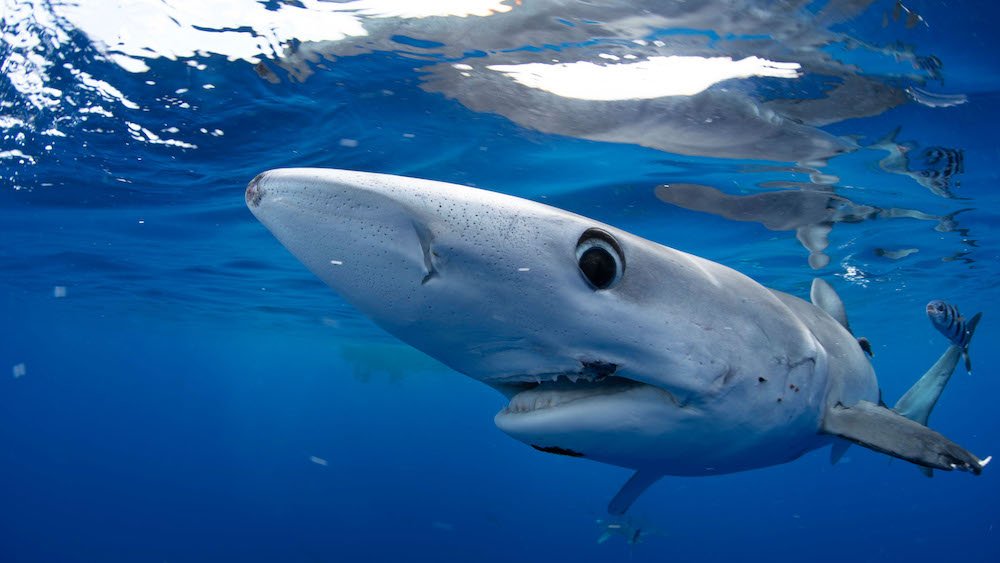
Shark Week has officially returned, bringing another frenzy of great whites, makos and other underwater predators to Discovery Channel.
The network’s annual programming event kicked off Sunday, July 26, and runs through Saturday, Aug. 1, with new specials airing nightly beginning at 8 p.m. ET. Cord-cutters can watch Shark Week live online through Sling TV, which carries Discovery Channel as part of its Sling Blue and Sling Orange + Blue packages.
Sling Blue includes more than 40 live channels and allows subscribers to stream on as many as three devices simultaneously. The service also comes with 50 hours of cloud DVR storage, making it possible to record Shark Week specials and watch them later.
Viewers who miss the live broadcasts can also add Discovery+ through Sling. Discovery+ is available in an ad-supported plan for $5.99 per month or an ad-free plan for $9.99 per month, with Shark Week programming available to watch on demand.
This year marks the 38th edition of Shark Week, with Discovery rolling out 20 new specials focused on shark behavior, attacks, conservation and ocean science. The lineup opened with “K-Pop Shark Heroes,” featuring comedian Ken Jeong and singer Rei Ami on a mission to challenge misconceptions about sharks across East Asia.
Other highlights include “Air Jaws: Red, White and Breach,” which investigates great white sharks breaching along the U.S. coastline, and “Invasion of the Mega Sharks,” following researchers as they search for a potentially record-breaking great white off Nova Scotia.
Later in the week, “Jurassic Sharks” uses CGI and real-world expeditions to examine prehistoric species, while “Jaws vs Orca” explores the growing evidence that killer whales are hunting great whites. “How to Train a Great White” tests whether the predators can learn and respond to cues, and “Ultimate Shark Dive” follows high diver Molly Carlson as she attempts a helicopter jump into a narrow shark cage.
The week concludes Aug. 1 with “Great White Highway,” about the increasing number of great whites traveling along the East Coast, followed by “Thresher Shark: Stun to Kill,” which examines how thresher sharks use their powerful tails to incapacitate prey.
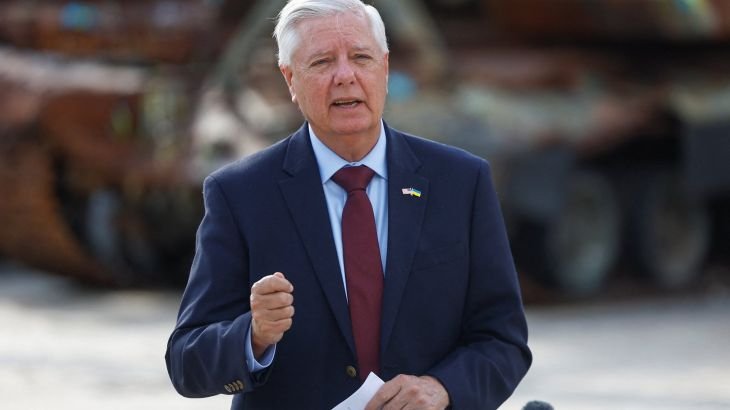
“Look what we’ve done here. I almost cried.” Unreleased documentary footage shows late US Senator Lindsey Graham celebrating the war on Iran, saying it was ‘the best thing’ he had ever done and revealing he had pushed for military action for years.
Senate Republicans are seeking Democratic support for the Clarity Act as lawmakers consider starting a floor process before the August recess.
Clarity Act faces a 60-vote Senate test
Crypto industry groups hope Thune will begin the floor process by filing cloture on a motion to proceed, according to a Crypto in America report.
A cloture filing would typically set up a vote two Senate session days later. At least 60 senators would need to support the motion before the chamber could begin debating whether to take up the bill.
If the Senate invokes cloture, lawmakers could spend as many as 30 hours debating the motion before voting on whether to proceed to the legislation itself. That process would not guarantee the Clarity Act’s passage but would move the bill closer to a full floor debate.
Republicans hold 53 Senate seats, leaving them dependent on Democratic votes even if nearly every GOP senator supports the measure. Senator Mitch McConnell is also expected to remain absent, while Republican Senators Josh Hawley and Rand Paul have not confirmed their positions.
Both senators voted against the GENIUS Act in 2025, adding uncertainty to the Republican vote count.
Democratic concerns threaten the floor push
Seven Democratic senators said the updated Clarity Act text released last week “fell short” of their expectations. Their concerns include political ethics, consumer protection, illicit finance, market integrity and the regulation of decentralized finance.
Senator Thom Tillis has been leading bipartisan negotiations over stronger ethics rules. The North Carolina Republican has called for provisions that go beyond the proposal agreed to by the White House and other GOP lawmakers.
The White House-backed language would restrict senior elected officials from issuing or sponsoring certain digital assets. However, some Democrats have questioned whether relying on the Department of Justice to enforce the restrictions would provide sufficient oversight.
Senators Catherine Cortez Masto and Mark Warner have also tied their potential support to stronger safeguards against crypto-related financial crime.
Without an agreement, Republicans are unlikely to secure the 60 votes required to move forward. The narrow GOP margin also means that any Republican defections would increase the number of Democratic votes needed.
Police endorsement removes one DeFi obstacle
The National Fraternal Order of Police endorsed the revised Clarity Act on Friday after lawmakers addressed its concerns about the Blockchain Regulatory Certainty Act.
The BRCA provisions would protect certain non-custodial software developers from having to register as money transmitters. Law enforcement groups had previously warned that broad protections could make it harder to prosecute crimes involving digital assets.
The police union now believes the revised language preserves investigators’ authority while providing legal protection for developers who do not control customer assets. Its endorsement could help ease concerns among Democrats focused on illicit finance and enforcement.
However, the support does not resolve broader disagreements over when a DeFi service should qualify as decentralized and when people controlling a protocol should face financial regulations.
SEC Commissioner Hester Peirce separately warned that moving a financial product onchain does not automatically place it outside federal securities law. She said actively managed crypto vaults could resemble investment funds when third parties decide how users’ assets are allocated.
“When you have a third party involved in deciding how different assets are being allocated and invested, that’s really a situation where you have to start asking: Do the securities laws apply?”
August recess leaves little time for a deal
Senators are scheduled to leave Washington on August 7, giving negotiators a limited window to settle the remaining disputes and start the floor process.
Thune said last week that he did not expect the Clarity Act to pass before the break. However, Senate leaders have reportedly discussed keeping lawmakers in Washington during the first few days of the recess if enough votes can be secured.
The bill would establish a federal market structure for digital assets and clarify the roles of the Securities and Exchange Commission and Commodity Futures Trading Commission. Failure to reach a bipartisan agreement before the recess could push further action into a more difficult election-year calendar.
US Crypto Regulations — Read the full US Regulation Hub for the latest on SEC enforcement, IRS crypto tax rules, and pending legislation.
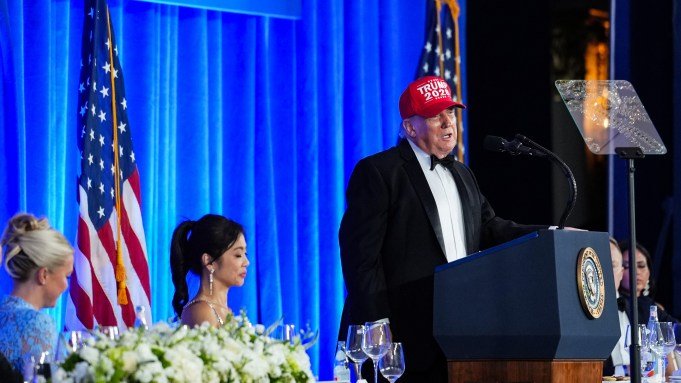
Inside the Waldorf Astoria on Friday evening, President Donald Trump took to the stage at the White House Correspondents’ Dinner and tried out some Don Rickles-like shtick, interspersed it with some of his greatest rally hits and fixated on some of his obsessions, including his plans for a White House ballroom.
What stood out during his one-hour-and-two minute remarks, though, was the silence in the crowd: many jokes didn’t land, he meandered into asides and veered into insider-ish attacks that likely went well over the heads of the TV audience. Much of what he said wasn’t humor, in contrast to the tightly scripted routines of his predecessors, but akin to a fever dream from someone who has spent a bit too much time watching right-wing TV.
At about 45 minutes in, guests were looking at their phones and fidgeting in their seats. I looked around and locked eyes with a man who gave a brief yawn. It was Howard Lutnick, the commerce secretary.
The length of Trump’s remarks were a reminder of one of Johnny Carson’s quips from the Oscars decades ago: “Welcome to two hours of sparkling entertainment spread over a four-hour show.” It should be noted that Trump’s weaving from topic to topic included a riff on the Academy Awards and how they have gotten too anti-Trump, but even that didn’t get much of a response.
The president did deliver some funny lines, including quips about Robert F. Kennedy Jr.: “I hope that everyone finally got to enjoy their entire, very delicious beef tenderloin, very special beef. And I want you all to know that Bobby Kennedy, who’s right here, personally ran over the cow in his car.”
Trump also revealed that he still counts how many front-page stories he gets in the New York Times, and gave some practical guidance for reporters who have his phone number and want to call him directly, and why he answers some of them. “I always find that when you don’t speak to the press, you always get a bad story. When you do speak to the press, you have a shot at a good story.”
Yet in a room full of journalists, Trump’s attacks on figures like CNN’s Kaitlan Collins were met with stone-faces from those who were well aware their reactions could be caught on C-SPAN cameras. His personal insults, ranging from Adam Schiff having a pencil neck to Chris Christie’s weight to Bruce Springsteen’s aged face, also were repeats of various Truth Social posts.
The event, in the Waldorf Astoria ballroom, was in a much smaller venue than the Washington Hilton, making it more intimate and putting many attendees face-to-face with Trump’s top advisers and members of his cabinet including Stephen Miller, Defense Secretary Pete Hegseth and Acting Attorney General Todd Blanche. With a much smaller crowd, and no pre-event receptions, the enhanced security generally moved briskly.
There were standout moments during other parts of the evening. This was the rescheduled dinner after April’s event was stopped by an apparent assassination attempt on the president, as a gunman breached security and the sounds of gunfire sent the thousands of attendees at the Washington Hilton to the floor. The WHCA paid tribute to the Secret Service officer, Victor Gonzales, who helped stop the gunman, as well as the Washington Hilton staff.
WHCA president Weijia Jiang, White House correspondent for CBS News, gave a very personal and heartfelt speech about her journey, having been born in China, raised in Appalachian coal country and, inspired by Connie Chung, landing in the “Oval Office to ask questions of the president of the United States.”
L-R: White House Press Secretary Karoline Leavitt, President Donald Trump and Weijia Jiang
Eric Lee/Getty Images
There was pressure on the WHCA to directly confront Trump for his attacks on the press. Jiang talked about the purpose of the First Amendment and the intent of the founders, while commenting more generally on the state of the situation rather than call out specific episodes. She said, “Criticism of the media can be unfair. It can also be legitimate. We get a lot right, but sometimes we get things wrong. We mistake proximity to power for understanding it, and at times we get trapped in our own bubbles. There is a difference, though, an existential difference, between criticizing the press and trying to undermine it.”
When it came to the defense of the press at a difficult moment, the approach of the WHCA appeared to be that of what is taught in J-school: Show, don’t tell. A video segment featured an AI-generated James Madison explaining the importance of the First Amendment, with clips of Trump’s predecessors, including Ronald Reagan to Barack Obama, acknowledging the essential role of the press corps. Comments from Dan Rather and Sam Donaldson reinforced how the adversarial nature of the relationship is nothing new.
The most direct face-to-face with Trump’s press attacks came when Wolf Blitzer presented an award to Wall Street Journal for its reporting on an alleged bawdy letter that Trump wrote to Jeffrey Epstein. As Blitzer noted that Trump sued the Journal for $20 billion, the president gave a smirk, to some laughter, then he shook hands with the reporters who received the prize. After it was over, he threw his hands up in the air, as if to say, whatever.
Toward the end of his winding remarks, Trump did say that he respected those in the room, but also that he planned to be back at the event next year.
Pres. Trump reacts to award to Wall Street Journal receiving @whca Katharine Graham Award for Courage and Accountability for investigative reporting detailing a birthday card and drawing sent to Jeffrey Epstein pic.twitter.com/AyFZjjx1Vj
What seemed to really wow the room came at the end, when mentalist Oz Pearlman performed a series of feats, made all the more notable when they involved UN Ambassador Mike Waltz and Blanche. The latter figure, awaiting Senate confirmation to take the DOJ post permanently, gamely played along as Pearlman asked him to lie about how much money he had in his wallet. Blanche said $130; Pearlman wrote down the correct figure, $85.
Later, Pearlman had Blanche sign one of his $20 bills.
“Hold it up and let everyone see the federal offense you have just committed,” Pearlman quipped. “He just clearly lost the Senate confirmation hearings on camera.” The interplay made sense a little later when Pearlman performed another feat, writing a figure on a whiteboard that matched the serial number to Blanche’s bill.
The moment was a bit incongruous to what is going on in D.C. and with Blanche himself, what with the DOJ recently issuing subpoenas to reporters from The New York Times, and then withdrawing them in the face of a judge’s criticisms. But for the WHCA dinner, a tradition that has traditionally mixed the serious with showbiz, Pearlman’s routine at least proved to be a bit of sparkling entertainment.
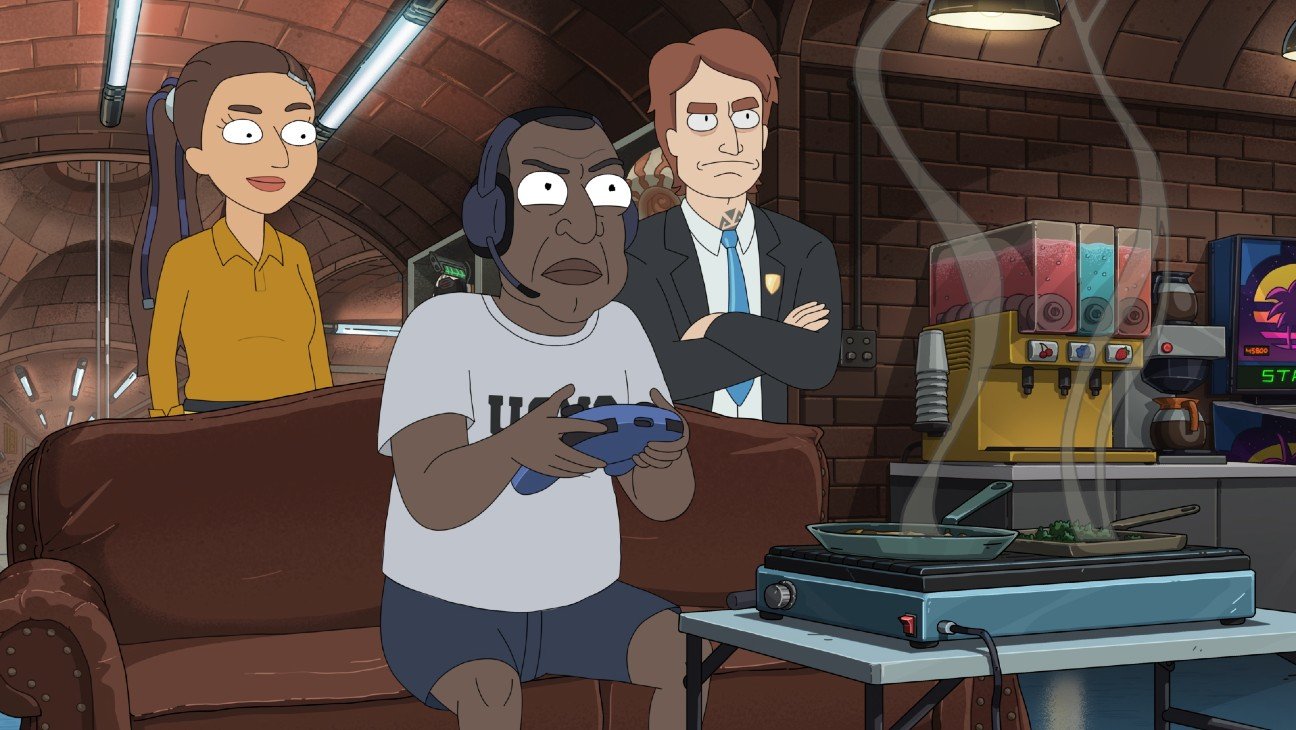
Veteran actor Keith David voices the titular commander in chief on President Curtis, the Rick and Morty spinoff that premiered Sunday on Adult Swim following the season nine finale for the flagship series. Stephanie Beatriz and Jim Rash round out the cast for the new project that centers on the leader of the free world and his quirky staff as they navigate an array of unusual crises.
David originated the role of President Andre Curtis during a season two episode of Rick and Morty back in 2015 and has continued to return periodically throughout the series. President Curtis co-creator James Siciliano recalls talk of a spinoff happening as a natural extension of the Rick and Morty team working on the Thanksgiving episode for season five, with Rick seeking a presidential turkey pardon.
“We started to see a more dialed-in world for Curtis there, with spider-FDR, the French assassin hidden in the Statue of Liberty — the National Treasure element of that stuff,” Siciliano, a longtime member of the Rick and Morty staff, tells The Hollywood Reporter. “We could see more of an X Files world that could be built out and wouldn’t necessarily be redundant with the Rick and Morty universe.”
President Curtis
Courtesy of Adult Swim
Siciliano and fellow President Curtis series creator Dan Harmon recall the writing team initially suggesting qualities that have cemented previous real-life U.S. presidents as particularly memorable. Harmon notes that he personally has been fascinated by Harry S. Truman, while other writers brought up Teddy Roosevelt — and, of course, Donald Trump and Barack Obama.
“The conversations about Obama and Trump were inevitable,” Harmon admits. “Curtis has a naïveté that you could overlap with Trump, who is like, ‘I’m an outsider, and I consider this job simple, and I don’t care about the bureaucracy of it.’ On the Obama side, it’s the charmer and the guy who gets organic joy in being liked — that whole rock star aspect of Obama. But mostly just more legendary aspects of presidents from the past, all Serpentor’d into a test tube baby that then becomes our version of maybe Martin Sheen in West Wing, where it’s our fantasy president, warts and all.”
For fans hoping to catch Rick and Morty popping up on President Curtis (mild spoilers ahead), rest assured that the adventure-seeking duo are indeed part of the pilot, although they will not appear again in the first season. Luckily, there is more President Curtis to come, as the show’s team announced Saturday at San Diego Comic-Con that the spinoff had scored an early renewal for a second season.
Rick and Morty
Everett
“If we didn’t do that, people would be waiting for it,” Siciliano says of writing Rick and Morty into the President Curtis pilot. “In the first season, that’s their only appearance, but that’s not to say that we have anything against them appearing in the future. We really wanted to have this show just be able to get its own identity and breathe a little bit, so that people felt like it was its own show.”
Harmon concurs: “If the show has a life of its own, then we can go Dick Wolf nuts with the crossovers and have Detective Munch all over SVU. But we look forward to earning that.”
The President Curtis launch arrives just weeks after Rick and Morty landed its third Emmy Award nomination for best animated series, having won in 2018 and 2020. This year marks the show’s first such nomination after a turbulent stretch in recent years that saw Justin Roiland (who co-created the series with Harmon) exit following felony domestic abuse charges that have since been dismissed. The titular voice roles were recast in light of Roiland’s firing, with Ian Cardoni replacing him as inventor Rick Sanchez, while Harry Belden took over as teen grandson Morty.
“It is an incredibly important nomination for us because the show has gone through transitions of such peril,” Harmon candidly shares. “To me, it feels like we are an athlete back on a field after a major injury, and so it is an honor to be nominated. It is all I need. I’m happy to go and watch Smiling Friends win or whatever the case, but I’m so grateful for that nomination.”
President Curtis
Courtesy of Adult Swim
President Curtis is not the only potential opportunity for expansion for the Rick and Morty world. THR recently reported that supervising director Jacob Hair was in talks to helm an animated feature version of the series for Warner Bros.
Although the possible film does not yet have a script, Harmon notes that it does have “a technically approved idea that we’re dreaming away on.” He was late to checking out Denis Villeneuve’s Dune films but reveals that they now might serve as inspiration: “I just watched the Dune movies because of messing around with the Rick and Morty movie script. I was like, ‘Oh, my God, I’m so late to Dune.’ It’s so rad.”
As for his hopes with the Rick and Morty film, Harmon adds, “It would be my goal, however self-destructive, to make it the greatest movie ever to exist. That might make it hard to write. It would probably be a sci-fi epic, transcending time and space, but not in a way that was unsatisfying. It would probably blend colors as varied in its palette as Lethal Weapon 2 and Dune 2: Toon, as well as Indiana Jones and everything. One could argue that it’s a concept that would be my undoing and the franchise’s as well, since me having permission to think about stuff is not the recipe for success that people would think. It’s more of a trailhead to hell, traditionally.”
Ready for a bit of Swiss bliss on the big screen? The 79th edition of Switzerland’s Locarno Film Festival is set to be a showcase of adventurous new cinema from around the globe, including homegrown productions from Swiss filmmakers and/or producers.
Various sections of the fest, running Aug. 5-16, will serve up homemade cinematic fare. In addition, the popular “Panorama Suisse” section will put the spotlight on “Swiss films that have enjoyed success at festivals, found an audience in cinemas, or are currently released in the country.” Plus, the Locarno Kids Screenings program also includes two titles with Swiss participation.
For those looking for some Swiss cinematic bliss and trying to avoid having Swiss cheese-sized holes in their Locarno schedules, THR is below highlighting a selection of Swiss treats screening at Locarno79.
The Chilean Director: Sergio Castro-San Martín Piazza Grande International sales: Fandango
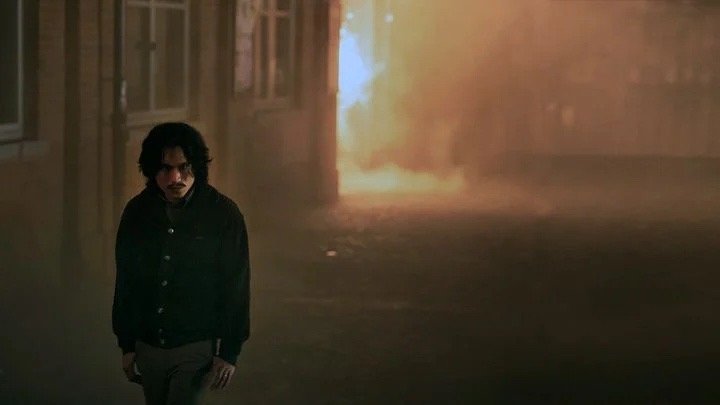
A political thriller telling the story of a fugitive is ready to explode onto Locarno’s screens. The big-screen epic The Chilean is a co-production between Italy, Chile and Switzerland that starts off in 1976 Chile.
Amid mining protests, Aldo, skilled in explosives, is forced into exile, leaving his wife and newborn child behind. He moves to Italy, where he must survive on menial jobs in Torino and where people simply call him Il Cileno, The Chilean. But everything changes when he meets Luciana, a doctor involved with anarchist groups. She offers him the chance to reunite with his family. But in exchange, he must return to his old trade – making bombs for revolutionary groups.
“Reconstructing an era means not only designing its atmosphere, but understanding the personalities that embody it,” the director says about The Chilean. “The exiled Aldo Marín leads us to one of the most pressing issues: immigration, omnipresent in the film.”
Happiness Is So Close! Director: François-Christophe Marzal Out of Competition International sales: Point Productions
Jean-Luc, an actor in his 80s, is set to play Don Quixote in a prestigious theater. It is the big role that he has been waiting for to bid farewell to the stage. But his health problems make rehearsals difficult, so the production team hires an understudy in case he is unable to perform. The result is paranoia. Says a synopsis: “Jean-Luc gradually sinks into an obsessive delusion, convinced that his understudy will take his place until he disappears completely.”
Jean-Luc Bideau, Gilles Privat and Aurore Clément star in the Swiss production, written by the director and Nicolas Frey, who also served as the editor.
Ahead of the Aug. 9 world premiere of Happiness Is So Close!, Bideau will receive a special honorary Leopard at Locarno.
Small Talk Director: Matteo Yberra Filmmakers of the Presence Competition International sales: Urban Sales
‘Small Talk,’ courtesy of Locarno Film Festival
How’s this tease for the hybrid feature that serves up a peek behind the curtain of an elite institution? “Hoping to launch a career in the luxury world, Charlie enrolls at Institut Villa Pierrefeu – the last finishing school still operating in Switzerland. Here, women from all over the world are prepared to move within the circles of the international elite.” Over the course of a summer, their daily life is all about lessons in elegance, protocol and the art of conversation.
Written by the director, the actress, along with Louis Rebetez, Hélène Bares, Milan Alfonsi,, the film features actress Hélène Bares.
Says the director: “By working with an actress within a real educational setting, the film explores the porous boundary between performance and social behavior, questioning how identity is shaped by learned codes and expectations.”
O Jacaré Director: Basil Da Cunha International competition International sales: Thera Production
‘O Jacaré,’ courtesy of Locarno Film Festival
Director Basil Da Cunha has dual Swiss and Portuguese citizenship, which explains this co-production and its elements that don’t sound quintessential Swiss: such as alligators and its setting, namely Reboleira, a suburb of Lisbon.
The haul from a robbery has mysteriously disappeared. Within the area sealed off by the police, rumors spread and speculation runs wild. Among the residents, a whole cast of colorful characters dream of getting their hands on the loot. But who will be first to find it?
For the filmmaker, who also wrote the script for the movie, the production marks a farewell of sorts. “For the past 15 years, I have been filming the Reboleira neighborhood, which is due to be demolished,” he explains. “O Jacaré is like a final dance before its disappearance: a vibrant, light-hearted film, infused with comedy and a sense of freedom.”
The AngelMaker Director: Marina Klauser Out of competition International sales: tellfilm
‘The Angel Maker,’ courtesy of Locarno Film Festival
This four-part documentary series from Switzerland, written and directed by Klauser, is not for the faint of heart, but it will appeal to fans of true-crime and cult stories and audiences beyond that.
After all, the series tells the story of “the Swiss religious community of Methernitha, which still exists today, its founder Paul Baumann — the inventor of a mysterious energy machine — and the young women who brought him down on charges of child abuse,” as a synopsis reads.
Klauser has previously written and directed short films and served as head writer of the writers’ room for the dramedy series How to Be Sad – The Right Way.
Frank & Louis Director: Petra Volpe Piazza Grande International sales: TrustNordisk
Kingsley Ben-Adir (left) and Rob Morgan in ‘Frank and Louis.’
Rob Baker Ashton/Courtesy Sundance
Last but not least, Locarno will showcase a well-established Swiss cinematic voice’s latest movie, but not in a world premiere, which happened at Sundance. But the film will still get a big square screening at the festival.
Swiss-Italian writer-director Petra Volpe followed up her box office and critical successLate Shift with Frank & Louis, her English-language debut, putting a spotlight on another often-overlooked care issue: the care needs of the aging incarcerated. Set within the walls of a U.S. prison, it Frank, portrayed by Kingsley Ben-Adir, who is serving a life sentence and takes on a caretaking role for aging inmates suffering from memory loss. Rob Morgan stars as one of those inmates, Louis.
“The theme of care and caretaking, what that means and how we all need it, is such an important societal issue,” Volpe told THR about her motivation for the film in a previous interview. “We take for granted that there are people who take care of us. It’s also a taboo, because nobody wants to think about being old and sick and needy. And especially in the context of prison, we never really think about it deeply.”
Pearl Studio’s animated fantasy feature “All Wishes Come True!” took over the top position at the mainland China box office during the July 24–26 weekend, generating RMB314.8 million ($46.3 million) in its second weekend of release.
Directed by Mu Zhengyang, the film now has a cumulative total of $112.5 million. The family-friendly mythological comedy centers on eight ordinary mortals who must combine their wit and courage to outsmart formidable deities, earning the legendary status of the Eight Immortals.
Shenzhen Film Studio’s sports comedy “Kung Fu Soccer” moved to second place in its third weekend, adding $33.9 million. Directed by Stephen Chow, the hit production has reached a cumulative box office total of $286.6 million. The film follows an amateur women’s team as they integrate high-flying martial arts into professional soccer to contend for a major championship.
Damai Entertainment’s sci-fi epic “The Decisive Moment” debuted in third position, bringing in $6.4 million over the weekend. Including early screenings since its July 25 launch, the film has taken $8.6 million to date. Directed by Zhang Disha from a script co-written with Hu Xiaoxi, and produced by industry veteran Huang Jianxin, the high-concept project previously served as the closing film of the Shanghai International Film Festival. Set across dual timelines, the narrative stars Huang Bo, Gao Ye, and Sun Yang as a trio of 2035 Chinese astronauts lost in space during a return mission, whose only lifeline is a mysterious encrypted signal linked back to a 1970 aerospace researcher played by Wu Lei.
Universal’s “Obsession” opened in fourth place, collecting $4.9 million in its weekend debut.
Enlight Pictures’ youth drama “A Part of Me” rounded out the top five, pulling in $2.7 million in its second week of release. Directed by Ma Yingxin and starring Zhang Ruonan and Jolin Jin, the contemporary feature has accumulated $21.6 million as it tracks the emotional journey of a friendship spanning two decades.
Mainland China’s overall weekend grosses reached $102.3 million, while the 2026 year-to-date revenue stands at $3.15 billion, down 33.6% from the same period in 2025.
The U.K. culture secretary Lisa Nandy — who has remained in her post amid a cabinet reshuffle with new Prime Minister Andy Burnham taking office — has previously said she was “minded to intervene” in the $111 billion mega-deal that, if successful, will undoubtedly change not just Hollywood, but the global film and TV industry.
Among a host of issues, the actors cite concerns over the livelihoods of British film and TV crews, independent film financing, and losing public service broadcaster Channel 5 to Hollywood ownership.
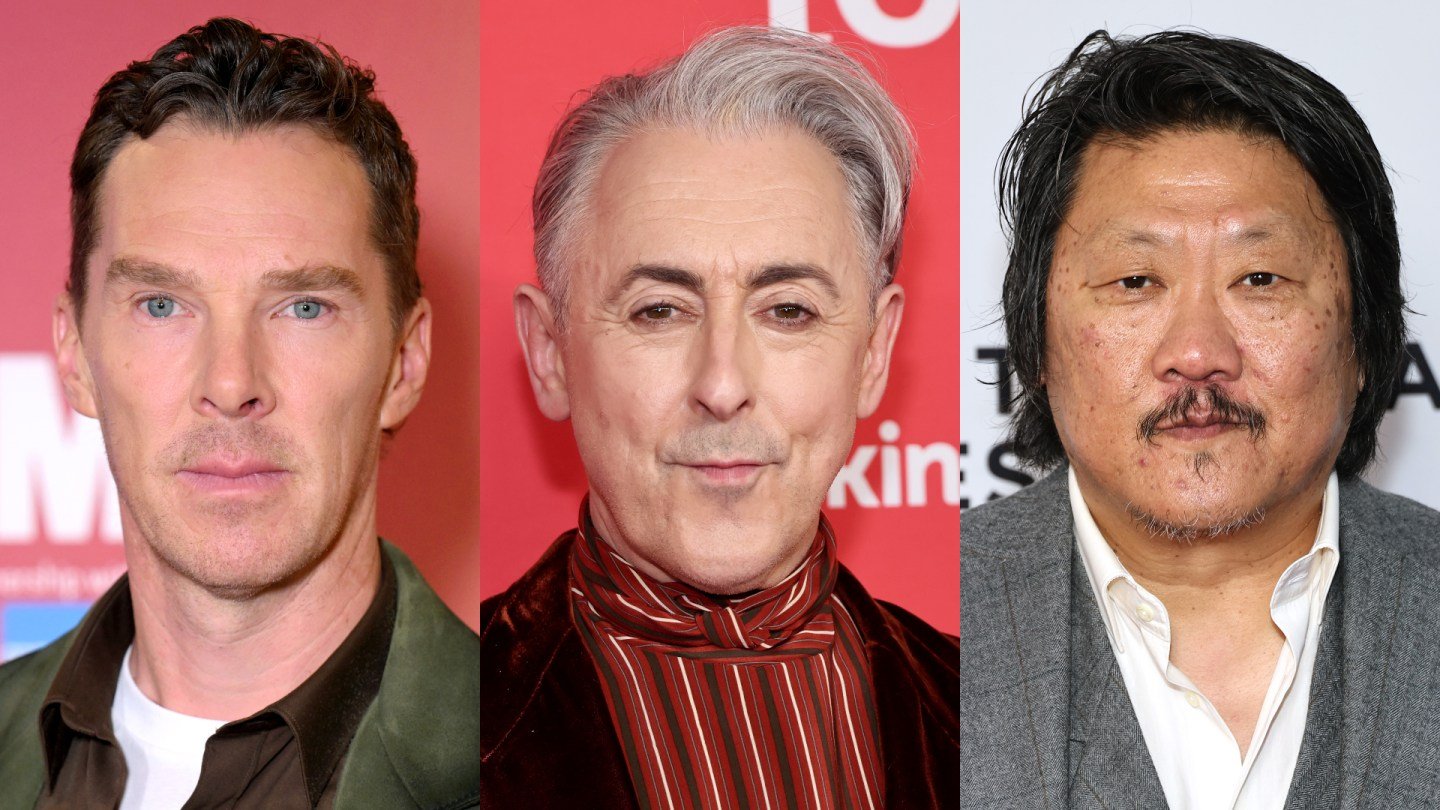
“As actors and public figures who have spent our careers in the arts in Britain — working with British crews, on British stages and sets — we have a responsibility to the public who support, enjoy and consume the art we make,” wrote the famed Marvel actors (Cumberbatch and Wong), as well as Cummng (The Traitors), on Monday in a piece titled “A TV and cinema calamity could be disastrous for what you watch and what you know. Act now to stop that.”
“The U.K. is being threatened by a media merger that would harm our workers, our culture and the public — but we can stop it.” They mention that they are encouraged by Nandy’s statements that she wants to investigate the threat to public interest, and acknowledge that she is not acting alone. This month, 12 U.S. states, led by California, sued in federal court to block the merger, warning that it would “raise prices, shrink the number of films made and degrade the quality of what audiences see,” said the men. And over the weekend, news broke that Larry Ellison’s Paramount agreed not to close the takeover until the court decides whether the deal violates antitrust laws.
“Their lawsuit confirms the danger; it cannot, however, do the U.K.’s work for it,” continue Cumberbatch, Cumming and Wong, who add that the EU has conditionally backed the merger and makes its own decisions. “The fight against this merger now runs on two fronts, and Nandy commands one of them. Should her department decide to intervene, it may prove one of the most important decisions any culture secretary has taken for U.K. film, television and media in a generation,” they explain.
“This is why. We have spent our lives working in this industry. We know what it looks like from the inside: the sound stages at Leavesden [studio], the crews who move from production to production, the editors and camera operators and costume designers whose names scroll past in the credits at the end of a film. These are our cherished friends and colleagues, who create the shows we all love, who produce the news that educates the public and film the sport events we enjoy together,” write the actors.
The men say that U.K. film and TV are not just “images on your screens; they are lives and livelihoods of thousands of workers and families, whose work supports local economies.” They cite buoying figures, such as the 180,000 jobs supported through the industry and the £6.8 billion production spend reported last year. “It is one of the things the U.K. still does better than almost anyone, and a cultural heritage we must protect,” they say.
They add that they have watched “with growing alarm” what consolidation does to the “breadth and depth of the work we produce,” before recognizing that independent film acquisitions at the leading independent film festival, Sundance, fell by half between 2019 and 2025. “Award-winning documentaries – films that won Oscars and topped festival juries – have struggled to find commercial distribution because they touched subjects the remaining handful of buyers found inconvenient. Every merger of this kind narrows the funnel through which stories can reach audiences.”
To service Warner Bros.’ estimated $84 billion in debt, executives have promised investors around $6bn in “synergies,” Cumberbatch, Cumming and Wong mention. “In plain English, that means redundancies, cancelled productions, fewer films commissioned and fewer risks taken,” they add.
“That is precisely what makes the Paramount-WBD merger so dangerous,” they write, adding that it has happened so many times before, such as Discovery’s merging with WarnerMedia in 2022, which led to the shelving of finished films and thousands of job losses, or Skydance’s merger with Paramount last year when around 2,000 people were laid off.
They admit they are extremely concerned about Paramount’s acquisition of Channel 5, one of the U.K.’s public service broadcasters, as well as CNN International. “The CNN and CBS news archives [are] among the world’s most important broadcast news collections, with more than 4.25m videos, images and media spanning nearly half a century of history. If one commercially interested owner controls access to both, they control the raw material of our historical memory… Fold those newsrooms into a single company, and one boardroom’s commercial anxieties — or political debts — determine what millions of people see and what they never learn existed.”
“And we know something about this particular proprietor’s intentions. Paramount’s chief executive reportedly told Donald Trump that he would make ‘sweeping changes’ to CNN if the deal went through,” they add.
“Actors are often told to stay out of legal arguments,” write Cumberbatch, Cumming and Wong. “We understand the instinct. But we have spent our lives on enough U.K. sets, worked alongside enough U.K. crews and watched enough brilliant work from the U.K. struggle to find a buyer to know that this is not someone else’s argument. It is ours.”
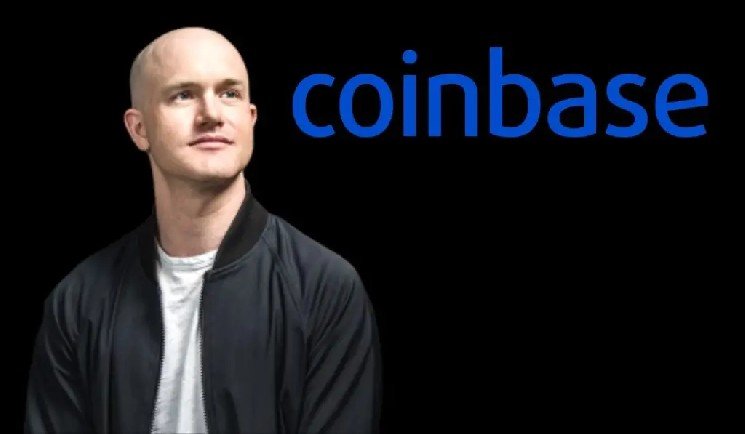
Coinbase CEO Brian Armstrong stated that the rapid development of artificial intelligence technologies will not diminish the importance of the cryptocurrency sector; on the contrary, digital assets will play a much more critical role in the new era.
Speaking on the social media platform X, Armstrong emphasized that artificial intelligence and cryptocurrencies are not competing technologies, but rather complementary infrastructures.
Armstrong stated that artificial intelligence has become one of the most important technological trends of our time, yet the value proposition of cryptocurrencies continues to strengthen. According to the Coinbase CEO, cryptocurrency technology is a kind of general-purpose infrastructure, like electricity or the internet, and will be one of the fundamental tools for AI systems to conduct financial transactions in the future.
Armstrong argued that the need for digital assets will increase, especially with the proliferation of autonomous AI agents, and stated that current financial systems are not fully adaptable to this new technology.
Armstrong stated that AI agents cannot open bank accounts or wait for international money transfers to be completed, therefore cryptocurrencies offer a significant advantage as a real-time and programmable payment system.
According to the Coinbase CEO, in the future, AI agents will not only make payments; they will also be able to independently perform numerous economic activities such as fund management, investment transactions, trading, financial advisory, and capital raising. In this scenario, blockchain technology and cryptocurrencies will form the fundamental infrastructure enabling AI systems to conduct secure and seamless financial transactions.
Recently, many technology companies have been working on scenarios where artificial intelligence and blockchain technology can be used together. In particular, the integration of decentralized finance (DeFi), smart contracts, and tokenization applications with AI-based systems is seen as one of the most important development areas in the sector.
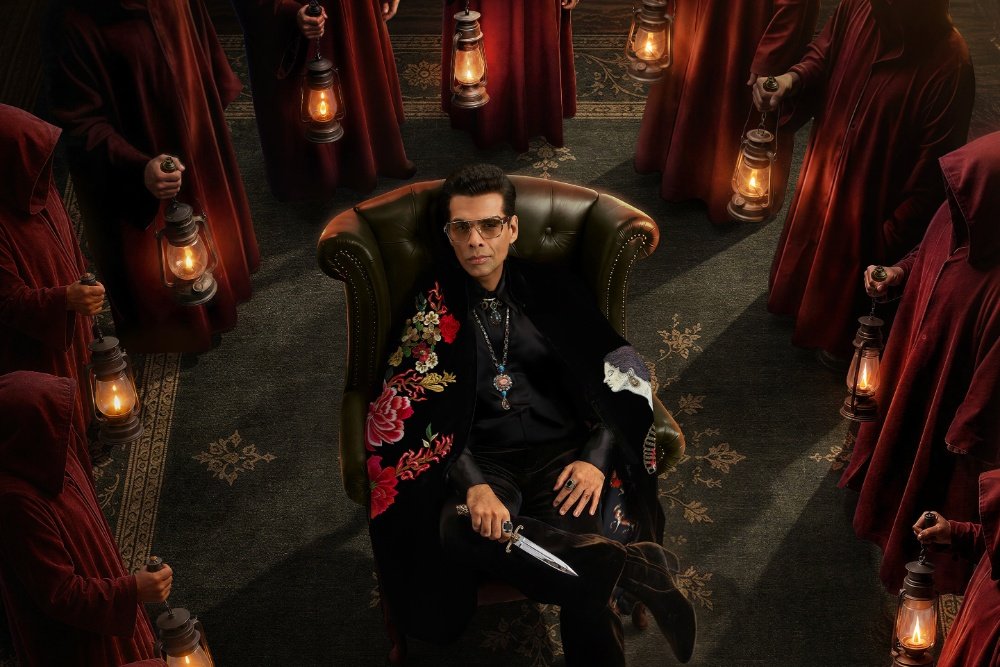
Prime Video will globally premiere Season 2 of “The Traitors,” its Indian adaptation of the hit international reality format in August, with new episodes streaming every Thursday.
Karan Johar returns to host the season, in which 21 celebrities from various fields will compete in a game built around trust, betrayal and deception. The series is produced by Dharmatic Entertainment, Dharma Productions’ digital content studio, in collaboration with All3Media International, which oversees the Indian version of the BAFTA and Emmy-winning format created by IDTV. “The Traitors” has now been adapted in more than 40 territories worldwide.
“The response to the first season of ‘The Traitors’ exceeded all expectations – it didn’t just entertain; it became a cultural moment,” said Nikhil Madhok, director and head of originals, Prime Video India. “‘The Traitors’ has become one of Prime Video India’s most defining reality franchises, transforming the genre with its unique blend of intelligent gameplay, psychological strategy, and riveting entertainment.”
Madhok added that the new season raises the stakes with sharper gameplay and a new line-up of players.
“The Indian adaptation of ‘The Traitors’ struck a powerful chord with viewers in its very first season, and we couldn’t be more delighted to see it return for another thrilling chapter,” added Sabrina Duguet, executive VP, APAC, All3Media International.
Dharmatic Entertainment, in a statement, said the first season “ignited a nationwide obsession” and that the new run aims to stay true to the show’s “raw, unpredictable, and psychologically gripping essence.”
Season 2 premieres Aug. 13.
Formed in 2018, Dharmatic Entertainment has produced more than 25 titles, including “Call Me Bae” and “Love Storiyaan.” “The Traitors” is among its upcoming slate alongside a global game show format also hosted by Johar.
All3Media International, which distributes programming to more than 1,000 broadcasters and platforms worldwide, has licensed “The Traitors” format to more than 30 territories for local versions, while episodes have aired via tape sales in more than 50 others. The distributor’s catalogue spans more than 35,000 hours of content, including scripted series such as “Liar” and “The Assassin,” alongside unscripted formats including “Race Across the World” and “Cash Cab.” All3Media recently completed a $8 billion merger with Banijay Entertainment.
Prime Video’s Indian slate also includes “Mirzapur,” “The Family Man,” “Panchayat,” “Paatal Lok” and “Rise & Fall,” among other Originals.