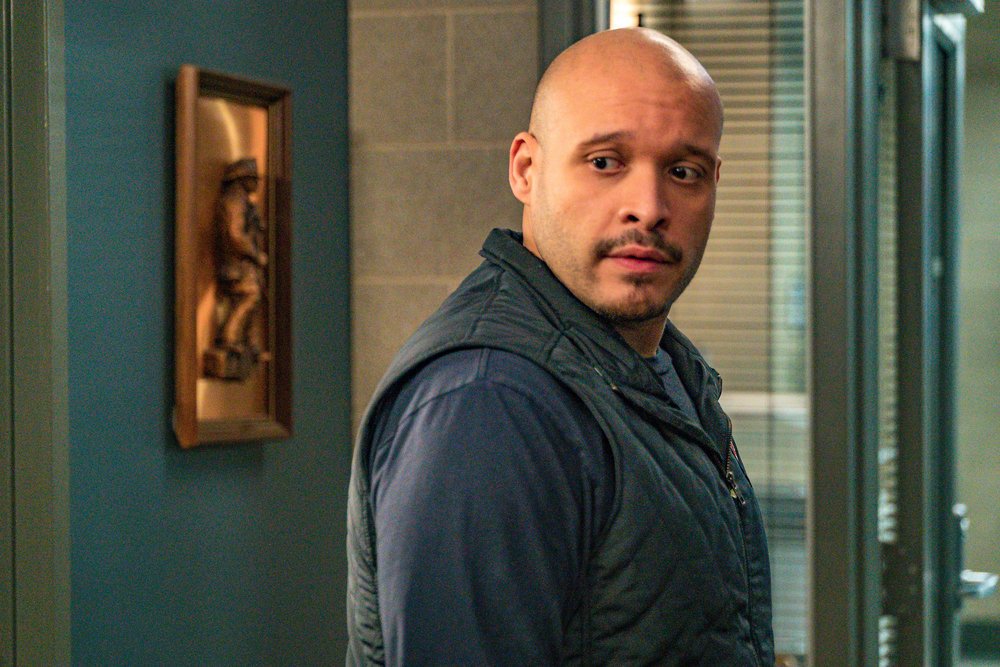
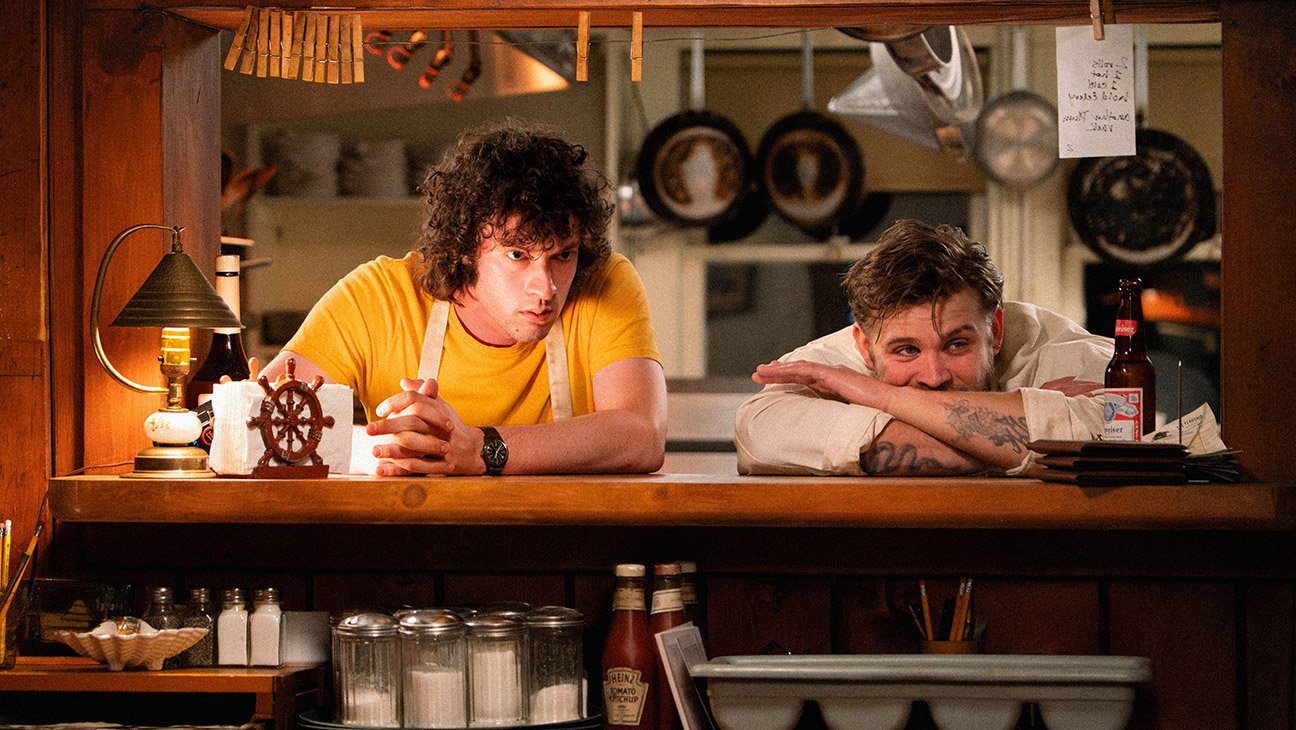
Saudi-owned Middle East broadcaster MBC has unveiled plans to air a high-end TV series titled “Embassy 87” shot in 2022 – that it had previously seemingly shelved – about Saudi diplomats who were held hostage in Iran.
MBC’s move to tease dropping “Embassy 87” on its Shahid streaming service is considered a direct effect of the US-Israeli war on Iran and its retaliatory strikes on the Gulf region that are causing a breakdown in Saudi-Iran diplomatic ties.
“Embassy 87” is directed by Britain’s Colin Teague (“Doctor Who”) who also helmed the hit Saudi series “Rashash” and the film “Ambulance” that was Imax’s first Arabic feature film release.
The show’s logline on Shahid’s website is: “1987. Tehran. A diplomat suddenly becomes a hostage in a political crisis. After a fatal Hajj incident, the Iranian Revolutionary Guard abducts a Saudi consul… and a larger plot unfolds. Inspired by a true story.”
“Not all wars are fought on the battlefield” says the show’s tagline.
In 1987 during the annual hajj pilgrimage to Islamic holy sites in Saudi Arabia, Iranians pilgrims clashed with Saudi riot police and some 400 people were killed. In retaliation for the Mecca violence, Iranian protesters attacked the Saudi embassy in Tehran in August 1987 and several Saudi diplomats were held hostage.
The “Embassy 87” series was shot in 2022 and is believed to have subsequently been shelved by MBC after Saudi Arabia re-established diplomatic relations with Iran in 2023.
Tensions between Saudi Arabia and Iran go back centuries since the Saudis follow Sunni Islam and the Iranians are Shias. The basic difference between these two branches of Islam lies in which one is considered the rightful heir to the Prophet Mohammed, who spent much of his life near Mecca.
MBC initially announced that the first episode of “The Embassy 87″ would be released today (Friday) but the show’s listing on the Shahid website now says “soon.”
The Integrity, the name of the Orion capsule carrying Artemis II astronauts on a trip around the moon, has left Earth’s orbit. NASA has announced that it has successfully completed a key burn of Orion’s main engine. That six-minute firing of the engine provided approximately 6,000 pounds of thrust, which gave the spacecraft the acceleration it needed to set it on its path to the moon. “Today, for the first time since Apollo 17 in 1972, humans have departed Earth orbit,” said Dr. Lori Glaze from NASA Headquarters in Washington. “Orion is operating with crew for the first time in space, and we are gathering critical data, and learning from each step.” Commander Reid Wiseman called seeing “the entire globe from pole to pole” after leaving Earth’s orbit a “spectacular moment.”
Artemis II launched on April 1 at 6:35PM Eastern time after a couple of delays caused by a hydrogen leak and then a helium issue. It’s the first crewed flight of the Artemis program and the first time humanity has ventured beyond Low Earth Orbit after the Apollo program shut down. Within a few hours after its launch, the astronauts reported an issue with their onboard toilet, which crew member Christina Koch eventually fixed. Commander Wiseman then reported to mission control that they were having problems with Microsoft Outlook on the Surface Pro device they were using. But they were ultimately manageable setbacks that wouldn’t prevent the crew from achieving the mission’s goal.
The mission is taking NASA astronauts Reid Wiseman, Victor Glover and Christina Koch, as well as Canadian Space Agency astronaut Jeremy Hansen, on a 10-day trip around the moon. On April 6, the spacecraft will pass by the far side of the moon that humans have never directly seen before, and the crew will take photographs, as well as provide their own observations of the lunar surface.
NASA’s Artemis II successfully launched on April 1, with its crew on a 10-day mission to circle the Moon. It’s the first crewed Artemis flight and a major step toward humanity returning to our little neighbor in the future. Since launch, the vehicle has separated from its launch system and been manually piloted, testing how the Orion capsule will dock with future lunar landers. There have been some snags, however: The onboard toilet went awry, and Microsoft Outlook has been acting screwy.
Jokes aside, there is something magnificent about seeing humanity taking to the stars once again. That, for all of our worst instincts, we can still come together to solve problems and explore beyond our own horizons.
— Dan Cooper
The other big stories (and deals) this morning
The company is long on promises, short on evidence.
Donut Lab
At CES 2026, a Finnish–Estonian startup claimed to have invented a world-changing solid state battery. Rather than explain how it did so, it engaged in a lengthy campaign teasing out data that didn’t quite support its explosive claims. We’ve dived deep to separate truth from hype and found there’s little of the former and far, far too much of the latter.
It’s pricier than other portable mixers, but for good reason.
James Trew for Engadget
As James Trew says, $300 is a lot for a portable mixer in this class, but Roland’s brand new Go:Mixer Studio justifies its price. Unlike its predecessor, the Pro-X, it gets a second XLR port, MIDI connectivity and a display offering visible VU meters. That you can also use it as a desktop interface adds another layer of icing on an already sweet cake.
WWDC 2026 isn’t until the summer, but we’re already collating enough rumors from the mill to bring you the inside skinny. Early reports suggest Apple is making this a Snow Leopard year, tidying up after itself inside its software rather than going hard on new features. Hopefully, that will see the gaudier excesses of Liquid Glass dialed down, a lot of trimmed cruft and stability improvements. Oh, and some guff about AI.
Who cares about sound quality when your speaker transforms!?
Sam Rutherford for Engadget
There are some things in life that would normally be a hard sell, a $1,400 boombox that could just about move around with poor sound quality being one of them. Dress it up as Soundwave from the original Transformers toy line / cartoon, however, and suddenly Sam Rutherford is racing for their wallet.
Nebula’s built quite the track record for making projectors you’re actually proud to show off. Its latest is the X1 Pro, which combines a beefy 4K projector with a 400-watt Dolby Atmos 7.1 speaker system. That’s a hell of a lot of tech in a single package and is clearly at home at the center of a backyard movie night under the stars. But is it worth the $5,000 asking price? For that, you’ll need to read Steve Dent’s review.
By Francisco Rodrigues (All times ET unless indicated otherwise)
Bitcoin is stuck in a tight range near $66,600 ahead of the Good Friday holiday, as geopolitical tensions and shifting macro expectations keep prices contained.
While the cryptocurrency saw a slight rise in the last 24 hour period it failed to break above $67,000. It’s struggling as U.S. President Donald Trump signaled a harsher stance on Iran, now threatening the country’s infrastructure.
Brent crude hit $120 per barrel on spot markets, levels not seen since 2008, over the ongoing crisis and its effects on the Strait of Hormuz, a key artery for global oil shipping that has effectively been shut down.
That surge in energy prices pushed up inflation expectations and undercut the case for rate cuts, a key support for bitcoin’s recent rally. Inflation in Europe has already risen to 2.5%, driven by energy costs.
The pressure has revealed a divide in market structure. Institutional inflows into bitcoin ETFs remain consistent, with $22 million in net inflows this week. But data from CryptoQuant show total apparent demand has flipped negative, with large holders distributing more than they accumulate.
Wallets holding 1,000 to 10,000 $BTC have shed nearly 188,000 $BTC since last year’s peak, the data shows. Nearly half of all bitcoin in circulation is, at current prices, trading at a loss.
Heading into the long weekend, liquidity is set to remain thin. That leaves bitcoin exposed to potentially higher volatility based on developments in the Middle East or macro-linked statements. Stay alert!
Read more: For analysis of today’s activity in altcoins and derivatives, see Crypto Markets Today
What to Watch
For a more comprehensive list of events this week, see CoinDesk’s “Crypto Week Ahead”.
Crypto
Macro
April 3, 8:30 a.m.: U.S. Nonfarm Payrolls for March est. 48K (Prev. -92K)
April 3, 8:30 a.m.: U.S. Unemployment Rate for March est. 4.5% (Prev. 4.4%)
April 3, 10:00 a.m.: U.S. ISM Services PMI for March (Prev. 56.1)
Earnings (Estimates based on FactSet data)
Token Events
For a more comprehensive list of events this week, see CoinDesk’s “Crypto Week Ahead”.
Governance votes & calls
SSV Network DAO is voting across two proposals to integrate ENS names for core protocol contracts to enhance security against phishing, and to establish a soft fee floor for public operators to ensure economic sustainability. Voting ends April 3.
Unlocks
Token Launches
Conferences
For a more comprehensive list of events this week, see CoinDesk’s “Crypto Week Ahead”.
Day 1 of 3: ETHGlobal Cannes 2026 (Cannes, France)
Market Movements
$BTC is down 0.35% from 4 p.m. ET Thursday at $66,785.73 (24hrs: +0.65%)
$ETH is unchanged at $2,058.20 (24hrs: +0.94%)
CoinDesk 20 is up 0.26% at 1,902.32 (24hrs: +0.80%)
Ether CESR Composite Staking Rate is up 1 bps at 2.77%
$BTC funding rate is at -0.0007% (-0.7731% annualized) on Binance
DXY is unchanged at 99.99
Gold futures are up 1.07% at $4,701.30
Silver futures are up 0.60% at $73.17
Nikkei 225 closed up 1.26% at 53,123.49
Hang Seng closed down 0.70% at 25,116.53
FTSE 100 is unchanged at 10,436.29
Euro Stoxx 50 is down 0.26% at 5,678.00
DJIA closed on Thursday down 0.13% at 46,504.67
S&P 500 closed up 0.11% at 6,582.69
Nasdaq Composite closed up 0.18% at 21,879.18
S&P/TSX Composite closed up 0.46% at 33,108.20
U.S. 10-Year Treasury rate is down 1 bps at 4.31%
E-mini S&P 500 futures are up 0.12% at 6,613.00
E-mini Nasdaq-100 futures are up 0.10% at 24,167.25
E-mini Dow Jones Industrial Average futures are up 0.10% at 46,678.00
Bitcoin Stats
$BTC Dominance: 58.54% (-0.24%)
Ether to bitcoin ratio: 0.030821 (0.23%)
Hashrate (seven-day moving average): 997 EH/s
Hashprice (spot): $30.68
Total Fees: 2.54 $BTC / $170,134
CME Futures Open Interest: 106,230 $BTC
$BTC priced in gold: 15.9 oz
$BTC vs gold market cap: 4.46%
Technical Analysis
The chart shows daily swings in tether’s dominance rate in candlestick format. The dominance rate represents the share of stablecoin tether in the total crypto market.
The dominance rate is rising again after a temporary pullback, or counter-trend correction. This breakout suggests that the broader uptrend in dominance has likely resumed.
This has bearish implications for the broader market, as dollar-pegged assets like Tether typically gain dominance during market-wide sell-offs.
Crypto Equities
Coinbase Global (COIN): closed on Thursday at $171.46 (–0.88%), unchanged in after-hours
Galaxy Digital (GLXY): closed at $17.64 (+1.55%), +0.28% at $17.69
MARA Holdings (MARA): closed at $8.71 (+8.33%), –1.03% at $8.62
Riot Platforms (RIOT): closed at $12.86 (+2.47%), unchanged at $12.86
Core Scientific (CORZ): closed at $16.23 (+6.08%), –0.62% at $16.13
CleanSpark (CLSK): closed at $8.79 (+1.97%), unchanged at $8.80
Exodus Movement (EXOD): closed at $6.10 (–8.68%), –0.80% at $6.05
CoinShares Bitcoin Miners ETF (WGMI): closed at $35.76 (+2.58%), –0.17% at $35.70
Circle Internet Group (CRCL): closed at $90.26 (–0.53%), +0.60% at $90.80
Bullish (BLSH): closed at $36.37 (+3.71%), –0.19% at $36.30
Crypto Treasury Companies
Strategy (MSTR): closed at $119.83 (–2.40%), +0.34% at $120.24
Strive Asset Management (ASST): closed at $9.75 (–4.04%), +0.10% at $9.76
SharpLink Gaming (SBET): closed at $6.19 (–4.18%), +0.32% at $6.21
Upexi (UPXI): closed at $0.98 (–1.32%), –2.12% at $0.95
Lite Strategy (LITS): closed at $1.12 (–0.88%), unchanged at $1.12
ETF Flows
Spot $BTC ETFs
Daily net flow: $9 million
Cumulative net flows: $55.93 billion
Total $BTC holdings ~ 1.28 million
Spot $ETH ETFs
Daily net flow: -$71.2 million
Cumulative net flows: $11.51 billion
Total $ETH holdings ~ 5.69 million
Source: Farside Investors
While You Were Sleeping
French ship crosses Strait of Hormuz in first Western European transit during Iran war (euronews): The news could encourage other carriers to resume operations if the corridor proves reliable in the coming days and it follows Iran’s deputy foreign minister Kazem Gharibabadi announcement of a deal with Oman to secure traffic through the Strait of Hormuz.
U.S. repatriates Chinese drug fugitive in a sign of stabilizing ties (The Wall Street Journal): This is the first case of its kind in recent years and is described as a rare move that points to cooperation ahead of the planned Trump-Xi summit next month.
Iran strikes Gulf energy sites as Trump warns of further attacks (Bloomberg): Iran targeted more sites in Arab Gulf states, including in Kuwait Friday morning, hours after Trump issued fresh threats against Iranian infrastructure to pressure Tehran to start peace negotiations.
Japan turns up FX heat as volatility rises, signals readiness to act (Reuters): The yen, trading near the psychologically key 160-per-dollar mark, lingered at levels that stoke concerns of market intervention, highlighting growing unease over the speed and scale of its decline.
Strategy, led by big bull Michael Saylor, did not make its long-standing weekly Bitcoin purchases this week.
The company paused its weekly Bitcoin ($BTC) purchases, which it announces every Monday, and did not make any new purchases this week.
The company maintained its total Bitcoin holdings at 762,099 $BTC.
Looking at the company’s purchase history, it appears they have been accumulating Bitcoin regularly throughout March. Strategy purchased 1,031 $BTC on March 23rd, 22,337 $BTC on March 16th, and 17,994 $BTC on March 9th, with their last purchases made at an average price of approximately $74,326.
Strategy has accumulated a total of 762,099 $BTC through 104 separate purchases, adding Bitcoin to its portfolio at an average cost of $75,694.
While Saylor has not made any statement regarding the lack of $BTC purchases this week, Strategy is expected to resume its purchases this week.
According to BitcoinTreasury.net, Strategy is expected to purchase approximately 4,535 Bitcoin next week.
According to the platform, the proceeds from Strategy’s issued preferred shares (STRC) are expected to be approximately $300 million, and this fund is expected to finance the purchase of 4,535 $BTC this week.
However, this figure is only an estimate, and whether Strategy will make the purchase, or how much it will purchase, will only be known with an official announcement.
As it is known, Strategy recently raised investor funds through Stretch and continues to buy Bitcoin with these funds.
The full lineup for the 28th edition of the Far East Film Festival (FEFF) has been revealed and as ever the speciality event will showcase the best and brightest of Asian cinema.
Taking place once again in the picaresque Italian city of Udine, FEFF 2026 will screen 76 films — 52 in competition and 24 out of competition — hailing from 12 countries.
FEFF will open on April 24 with Anthony Chen’s Singaporean family drama We Are All Strangers and close on May 2 with Phan Gia Nhật Linh’s Blood Moon Rite 8, a Vietnamese remake of cult Japanese zombie film One Cut of the Dead.
Cinema from Singapore and Vietnam will have something of a moment at FEFF 2026. As well as Chen’s opener, the other Singaporean films screening at the fest include Ah Girl by Geck Priscilla Ang and The Old Man and his Car by Michael Kam. The additional three Vietnamese films include Leon Le’s romance drama Ky Nam Inn, Ham Tran’s action thriller Hijacked and finally the Vietnam War movie Tunnels: Sun in the Dark from Bùi Thac Chuyên.
From Japan, Lee Sang-il’s globally praised Kokuho will screen at the festival a few days before its debut in Italian theaters. Lee will be in attendance for the FEFF screening of his film. Kokuho, a historical drama that centers around the traditional Japanese theater of kabuki, became something of cultural phenomenon and is Japan’s all-time highest grossing live-action film and was the country’s selection for the Academy Awards.
Other highlights from Japan include singer, actress and tarento Megumi returning to Italy for the world premiere of her female-led drama Fujiko. From South Korea, FEFF will screen Jang Hang-jun’s The King’s Warden and Cho Chul-young, Kim Jong-woo and Shin-Wan Kim’s The Seoul Guardians, the latter film becoming the first documentary to enter competition in Udine.
This year’s Golden Mulberry for Lifetime Achievement honorees are two Asian legends who are both enjoying career renaissance. Chinese actress Fan Bingbing will be in Udine to accept her Golden Mulberry award, a tribute to her long career that has taken in arthouse hits I Am Not Madame Bovary and Ever Since We Love as well as commercial films like The White Haired Witch of Lunar Kingdom, League of Gods and Lady of the Dynasty. Fan’s most recent film, the drama Mother Bhumi, screened in competition in Tokyo and received 8 Golden Horse nominations.
Also receiving a Golden Mulberry is Japanese legend Koji Yakusho. In career that has spanned over four decades, Yakusho has starred in all manner of genres and featured in many classics of Japanese cinema including The Blood of Wolves, The Woodsman and the Rain, The Eel, Perfect Days, Tampopo, Under The Open Sky, 13 Assassins and Cure. He most recently received universal praise and a Cannes best actor prize for his leading role in Wim Wenders’ acclaimed film Perfect Days.
US president has said that he will use tariffs to bring down costly pharmaceutical drugs, but the impact remains uncertain.
Published On 2 Apr 20262 Apr 2026
United States President Donald Trump has signed an executive order that could slap long-threatened tariffs of up to 100 percent on some patented drugs if pharmaceutical companies don’t reach deals with his administration in the coming months.
Under Thursday’s executive order, companies that have signed a “most favoured nation” pricing deal and are actively building facilities in the US will have a zero-percent tariff.
Recommended Stories
list of 3 itemsend of list
For those that don’t have a pricing deal but are building such projects in the US, a 20 percent tariff will apply, but it will increase to 100 percent in four years.
A senior administration official told reporters on a press call that companies still have months to negotiate before the 100 percent tariffs kick in. Bigger companies will have 120 days, and 180 days are offered for everyone else.
The official, speaking on condition of anonymity to preview the executive order before it was issued, did not identify any companies or drugs that were in jeopardy of getting hit with the increased tariffs.
But the source noted the administration had already reached 17 pricing deals with major drugmakers, 13 of which have signed.
In Thursday’s executive order, Trump wrote that he deemed the tariffs necessary “to address the threatened impairment of the national security posed by imports of pharmaceuticals and pharmaceutical ingredients”.
The order arrived on the first anniversary of Trump’s so-called Liberation Day, when the president unveiled sweeping new import taxes on nearly every country in the world, sending the stock market reeling. Those “Liberation Day” tariffs were among the duties the Supreme Court overturned in February.
Critics, pharmaceutical leaders and medical groups warned of the consequences the new tariffs could bring.
Stephen J Ubl, the CEO of the pharmaceutical company trade group PhRMA, said taxes “on cutting-edge medicines will increase costs and could jeopardize billions in US investments”.
He pointed to America’s already large footprint in biopharmaceutical manufacturing and noted medicines sourced from other countries “overwhelmingly come from reliable US allies”.
Trump has launched a barrage of new import taxes on US trading partners since the start of his second term and repeatedly pledged sky-high levies on foreign-made drugs.
But the administration has also used the threat of new levies to strike deals with major companies — like Pfizer, Eli Lilly and Bristol Myers Squibb — over the last year, with promises of lower prices for new drugs.
Beyond company-specific rates, a handful of countries have reached trade frameworks with the US to further cap tariffs on drugs sent to the US.
The European Union, Japan, Korea and Switzerland will see a 15 percent US tariff on patented pharmaceuticals, matching previously agreed rates for most goods.
Meanwhile, the United Kingdom will get 10 percent, which Thursday’s order noted would “then reduce to zero” under future trade agreements.
The UK previously said it secured a zero-percent tariff rate for all British medicines exported to the US for at least three years.
Viz Media has picked up North American and select international streaming rights to the anime adaptation of Rumiko Takahashi’s “Mao,” with the series launching April 4 on Hulu in the U.S. and on Disney+ across Canada, Australia, New Zealand and Latin America.
The series premieres the same day on NHK General TV in Japan, where Hulu Japan will also stream it from April 5. The show is slated for a continuous two-cour run without a midseason break.
The anime adaptation, produced by Sunrise and announced last July by Bandai Namco Filmworks, arrives as part of the broader celebration of publisher Shogakukan’s centenary. Takahashi launched “Mao” in Shogakukan’s Weekly Shōnen Sunday in May 2019, and the manga has reached 27 compiled volumes as of February 2026. Viz Media, which has held the English-language North American manga license since 2021, began releasing simultaneous English chapters alongside the Japanese publication in May 2023.
A dark supernatural fantasy spanning two eras, “Mao” follows Nanoka Kiba, a junior high student who is hurled back to Japan’s Taisho period after revisiting the shopping arcade where she survived a mysterious childhood accident eight years earlier. There she encounters Mao, a brooding onmyoji mystic who has spent nine centuries under a life-altering curse, and whose probing questions force Nanoka to see her own strange existence in an entirely new light. The two form an uneasy alliance as they take on the dark forces entangled with both their fates.
Takahashi is one of manga’s most decorated and commercially dominant figures, with “Urusei Yatsura,” “Ranma ½,” “Maison Ikkoku” and “Inuyasha” among her signature works. She has won the Shogakukan Manga Award twice – for “Urusei Yatsura” in 1981 and for “Inuyasha” in 2002 – and is an inductee of the Eisner Award Hall of Fame. Much of her canon has been adapted into anime, live-action series and film, and her body of work has come to be known collectively as the “Rumic World.”
Teruo Sato, who previously directed “Yashahime: Princess Half-Demon” Season 1, helms the new series, with series composition by Yuko Kakihara and character design and chief animation direction by Yoshihito Hishinuma, another “Yashahime” and “Inuyasha” veteran. Further key credits include art direction by Hiroshi Kato and Izumi Hoki, color design by Masumi Otsuka, CG direction by Tomohiro Fujie, photography direction by Akane Fushihara, editing by Kazuhiro Nii, sound direction by Hiromi Kikuta and music by Shu Kanematsu. The series is a production of the Mao Production Committee.
Boy band Kis-My-Ft2 perform the opening theme “Heartloud,” with True performing the ending theme “Juai” (Cursed Love).
Yuki Kaji voices the title character Mao, with Natsumi Kawaida as Nanoka Kiba. The supporting cast includes Hiro Shimono as Hyakka, Toshiyuki Toyonaga as Kamon, Momoka Terasawa as Otoya, Kazuyuki Okitsu as Shiranui, Motoko Kumai as Funa Uozumi, Yoko Hikasa as Tenko, Risa Shimizu as Sana, Reina Ueda as Yurako and Takashi Matsuyama as Byoki.
Viz Media’s rights cover TV, home video, electronic sell-through and video-on-demand across North America, Latin America and Australia/New Zealand.
Screenplay Films has greenlit a feature film adaptation of “Zona Merah,” the Indonesian horror series that drew strong audience response on its debut.
Production is set to run from April to May 2026, with the shoot kicking off April 7.
Sidharta Tata and Fajar Martha Santosa will co-direct the film, with Tata also returning as screenwriter. Santosa will oversee the overall development process, with the aim of bringing greater cohesion to the story as it moves from series to feature format.
Several cast members from the original series will reprise their roles, including Aghniny Haque, Andri Mashadi, Maria Theodore, Devano and Lukman Sardi. They will be joined by a slate of new additions – Luna Maya, Bryan Domani, Shindy Huang, Myesha Lin and Derby Romero – who play fresh characters entering the story’s zombie-survival universe.
The feature expands the world into darker, more unforgiving territory, with more intricate conflicts and deeper character work. Survival against the undead threat becomes a more desperate and relentless proposition than the series allowed.
Luna Maya takes on a dual role in the project, starring in the film while also serving as executive producer. “As an executive producer, I see ‘Zona Merah’ as having tremendous potential – not only creatively, but also in terms of its positioning within the industry. This is an important step in bringing a local IP to the next level, both in production scale and audience reach,” she said.
“‘Zona Merah’ already has a strong foundation in its world-building and storytelling from the series. With the film, we aim to elevate everything to the next level – emotionally, in terms of conflict scale, and in the overall visual experience. We want audiences to feel unsafe in their cinema seats – darker and more unsettling than anything we’ve created before,” added director Sidharta Tata.
$SHIB trades at $0.0000059 on April 3, holding near the lower half of a descending channel that has been intact since September 2025. The burn rate collapsed 90.21% in the last 24 hours, dropping to just 167,246 $SHIB after the elevated activity earlier in the week, and the SAR at $0.0000627 continues to cap every recovery attempt on the daily chart.
Seven Months Inside A Descending Channel
$SHIB Daily Price Action (Source: Coinbase)
The descending channel from the September peak near $0.000015 is still intact, with the upper boundary now near $0.0000075 and the lower boundary approaching $0.0000040 through April. $SHIB has been trading in the lower third of the channel since February, with the four EMAs declining overhead: the 20-day at $0.0000591, the 50-day at $0.0000610, the 100-day at $0.0000675, and the 200-day at $0.0000818.
Related: Cardano Price Prediction: ADA Tests $0.24 As Foundation Reports 45% Asset Drop
The SAR at $0.0000627 has been bearish since October without flipping. Every rally in the past six months has stalled before reaching it. A daily close above $0.0000627 would be the first SAR flip since October and the clearest signal that the channel’s grip is weakening. Until then, $0.0000591 at the 20-day EMA is the immediate hurdle, with the channel’s lower boundary near $0.0000400 as the downside floor through April.
Key Technical levels for $SHIB
20-day EMA resistance: $0.0000591
SAR resistance: $0.0000627
Channel upper boundary: $0.0000750
Channel lower boundary: $0.0000400
200-day EMA: $0.0000818
Burn Rate Collapses 90% After Earlier Spike
The 24h burn rate dropped 90.21% to 167,246 $SHIB on April 3, a steep reversal from the elevated burns earlier this week. With 41.08% of the initial one quadrillion supply permanently removed since launch, the long-term supply reduction story remains intact, but the day-to-day burn rate is too inconsistent to use as a reliable price catalyst.
When burns are elevated, retail attention follows. When they collapse as sharply as today, that secondary tailwind disappears just as quickly.
$SHIB Derivatives: Shorts Taking More Pain
$SHIB Derivatives Data (Source: Coinglass)
Volume fell 13.99% to $123.46M while OI rose 2.96% to $53.04M. Declining volume with rising OI means new positions are being added quietly rather than through active trading, which typically reflects conviction rather than speculation. The long/short ratio sits at 1.0379, leaning slightly long, with OKX accounts at 2.24.
Over 24 hours, shorts absorbed $25.77K in liquidations against just $19.88K for longs, a reversal from the pattern of recent sessions where bulls were taking more pain. That short liquidation bias, modest as it is, aligns with the morning’s 2.22% price move. OI at $51.84M remains far below the $500M peak from January, leaving room for leverage to build if a catalyst arrives.
$SHIB Price Prediction: What Needs To Happen
Upside: A daily close above the 20-day EMA at $0.0000591 would be the first meaningful EMA reclaim in weeks. From there the SAR at $0.0000627 is the level that decides April’s direction. Clear it and the channel midline near $0.0000750 opens as the month’s target. A burn rate recovery alongside the move would add retail momentum to a chart that needs a catalyst to break the channel.
Downside: Fail to hold above $0.0000580 and the descending channel structure pulls price back toward the lower boundary near $0.0000400 through April. The burn rate dropping 90% removes one of the few positive narratives $SHIB has had this week, and with the channel six months old and unbroken, the default path without a catalyst remains lower.