As the market sees fresh bullish optimism, the spot Solana [$SOL] ETF recorded its strongest period of investor demand since these products launched.
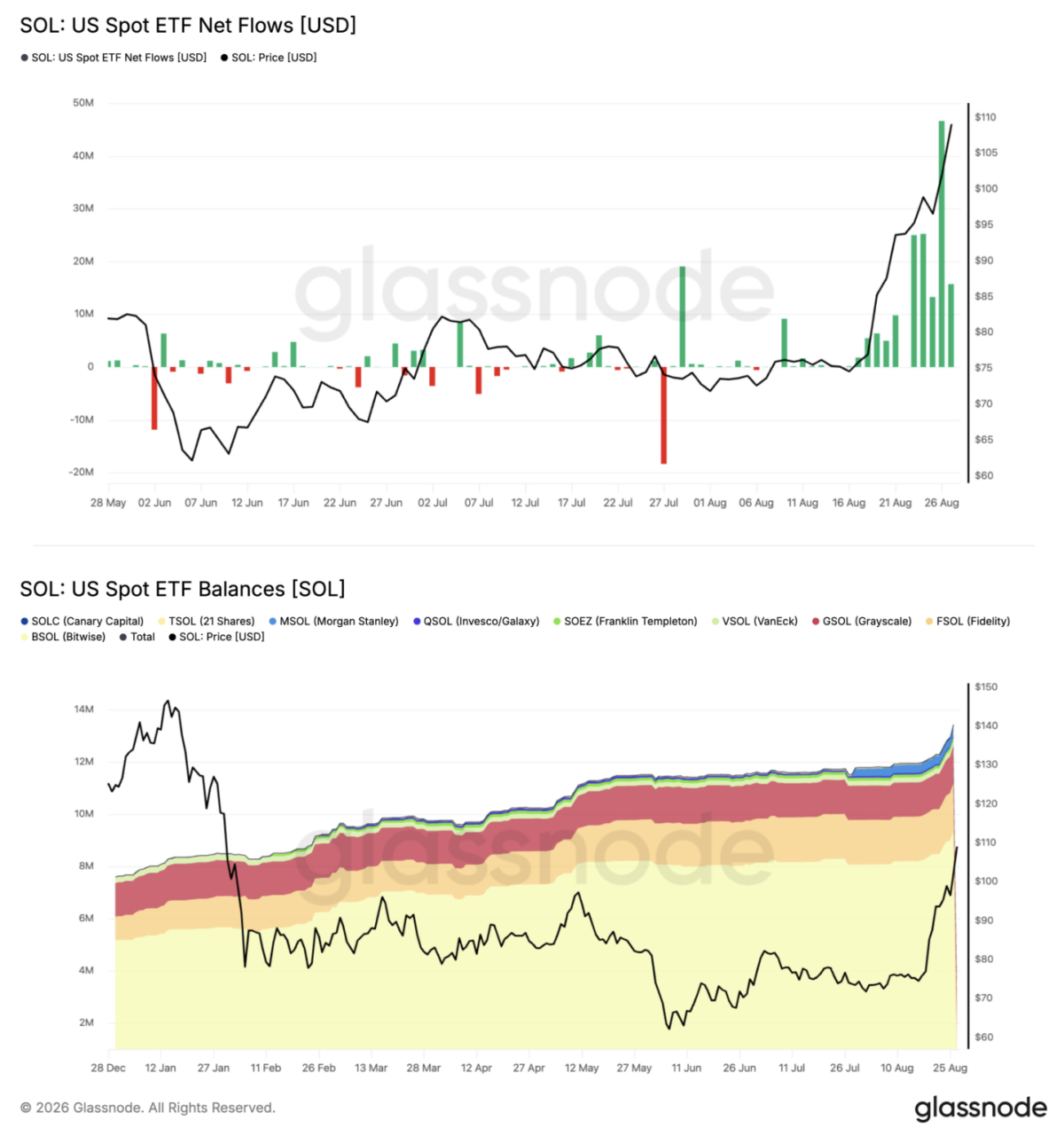
According to Glassnode, Solana spot ETFs recorded $138 million in net inflows over the course of 10 days. Of these, the most eye-catching day was the 25th of August when the Solana products collectively attracted around $47 million in a single day.
Solana ETF breaks record, but…
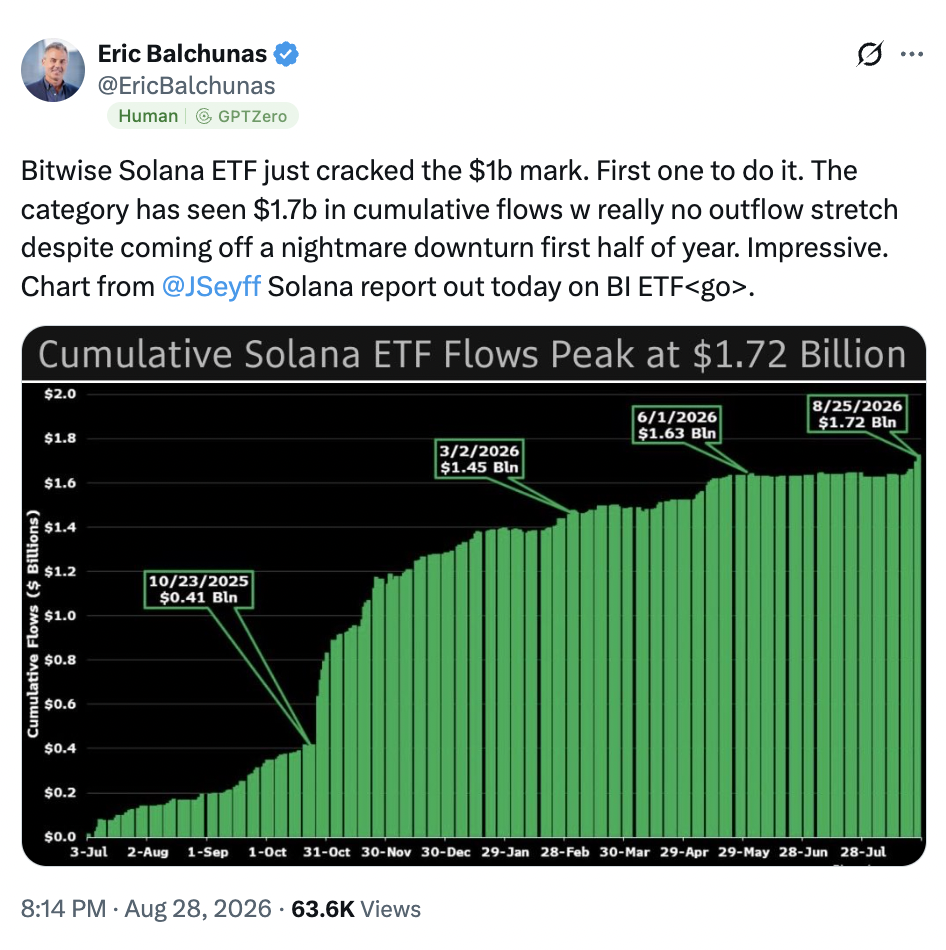
At the same time, the overall Solana ETFs accumulated roughly $1.7 billion in total inflows, according to Bloomberg ETF analyst Eric Balchunas.
Source: Eric Balchunas/X
Interestingly, the category avoided prolonged Net Outflows despite difficult market conditions during the first half of 2026.
Bitwise’s Solana Staking ETF, BSOL, emerged as the largest beneficiary. The fund crossed $1 billion in Assets Under Management [AUM], becoming the first Solana ETF to reach that milestone.
Source: Glassnode
Bitwise’s official fund data shows that BSOL held 9,332,360.79 $SOL, worth approximately $1.018 billion, as of the 26th of August. In fact, the fund was launched in October 2025, meaning it reached the $1 billion mark in roughly 10 months.
However, the ETF inflows should not be interpreted as a guaranteed bullish signal for $SOL’s price. This is because $SOL was trading at $104.05 at press time, after a drop of 3.1% in the past 24 hours but a hike of over 10% in the past week.
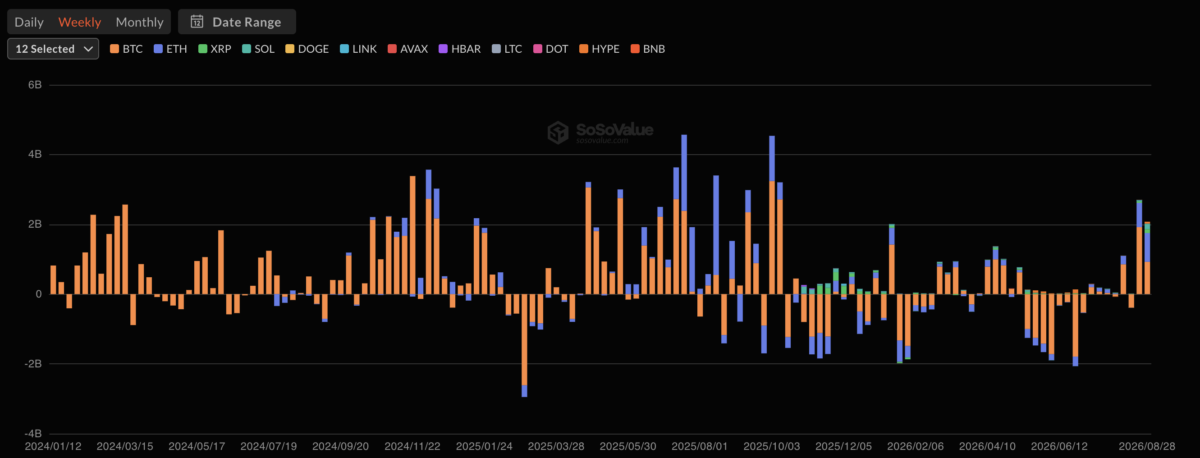
Meanwhile, Bitcoin ETFs, along with other altcoin ETFs, all exhibited an inflow streak during the same period.
Source: SoSoValue
Solana’s governance voting adds to the optimism
At the same time, Solana’s first round of on-chain governance voting has now concluded, with the community approving two proposals—SGP-0001, “The Solana Constitution,” and SGP-0002, “Double Disinflation.”
While rejecting SGP-0003, the “Resource and Inclusion Fee” proposal.
For its purpose, SGP-0002 doubles Solana’s annual disinflation rate from 15% to 30%, allowing $SOL to reach its 1.5% terminal inflation rate in about 2.8 years instead of 5.7 years.
Meanwhile, SGP-0003 failed with 53.90% support.
The latter proposed splitting transaction fees into a fixed inclusion fee and a resource fee, with the latter fully burned.
All in all, Solana approved faster disinflation but rejected the proposed new fee-and-burn structure. This comes on the heels of the Solana-based AVICI price crashing 37% after a reported $600K card withdrawal incident.
Final Summary
Solana ETF category has accumulated roughly $1.7 billion in cumulative flows.
Bitwise’s Solana Staking ETF, BSOL, alone crossed $1 billion in assets under management (AUM).
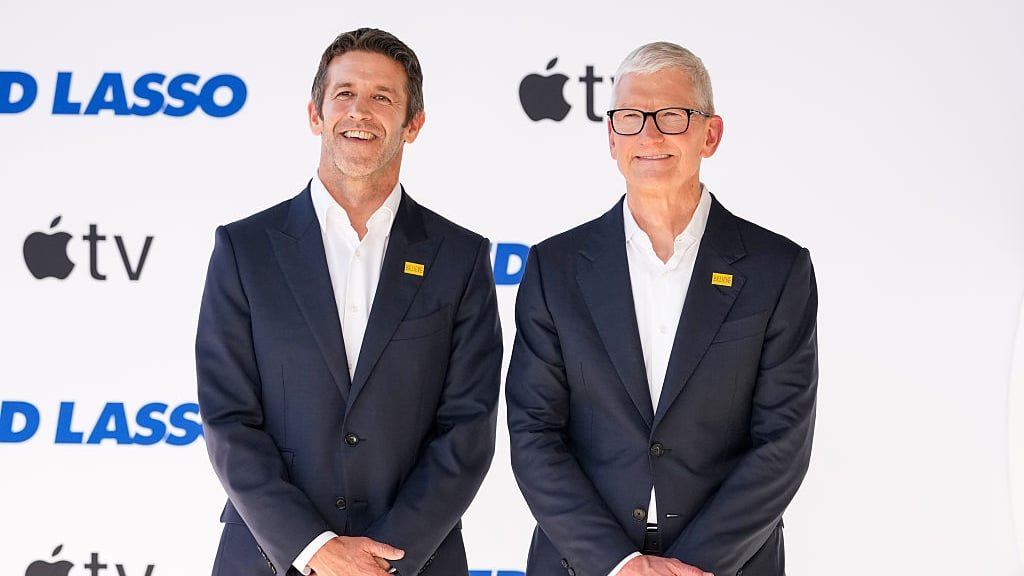
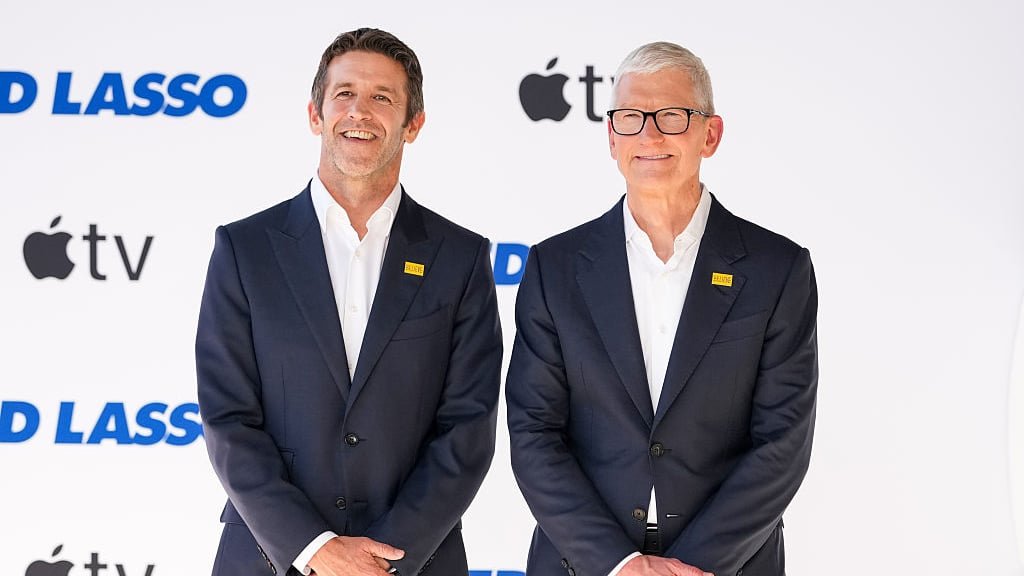
After stepping into the post in 2011, Tim Cook is officially stepping down as Apple’s CEO this week. Cook will be replaced by Apple veteran John Ternus on Sept. 1, who has served as the company’s SVP of hardware engineering since 2021 and oversees the design team.
Cook will remain at Apple in a new role, serving as executive chairman. The move was originally announced in April, following widespread speculation about his retirement. Ternus already had a high profile at the company, unveiling the MacBook Neo at its launch event in New York in March. In his goodbye letter, Cook called Ternus “a brilliant engineer and thinker,” adding that he is “obsessed with every detail.”
It’s unknown what Ternus’s reign could bring, but Apple commentators like Bloomberg’s Mark Gurman have said Ternus “knows a major design shake-up is needed” at Apple, in contrast to Cook’s “historically limited presence,” citing sources within the company. Gurman has also reported that Cook is still expected to retain several key responsibilities, including maintaining relations with the White House.
The change comes at a busy time for Apple. The company’s next big event is set for Sept. 9, which could see the debut of the iPhone 18 Pro lineup, Apple’s long-rumored foldable device, and a next-gen Apple Watch.
Recommended by Our Editors
Apple is still contending with issues like rising component costs due to the ongoing memory supply shortage, which has led to major price hikes across almost all of its products. The company still has an enviable position in the smartphone world. The iPhone 17 was the world’s best-selling smartphone in Q2 2026, commanding 6% of global sales, according to Counterpoint Research. The iPhone 17 Pro Max and the iPhone 17 Pro came in second and third, respectively.
About Our Expert
Experience
I’m a reporter covering weekend news. Before joining PCMag in 2024, I picked up bylines in BBC News, The Guardian, The Times of London, The Daily Beast, Vice, Slate, Fast Company, The Evening Standard, The i, TechRadar, and Decrypt Media.
I’ve been a PC gamer since you had to install games from multiple CD-ROMs by hand. As a reporter, I’m passionate about the intersection of tech and human lives. I’ve covered everything from crypto scandals to the art world, as well as conspiracy theories, UK politics, and Russia and foreign affairs.
Disney bought country singer Dolly Parton’s Dollywood theme park.
Rating:
A rumor (archived) that Disney bought Dolly Parton’s Dollywood theme park circulated online after the beloved star’s death in August 2026.
The Mouse Trap News Instagram account shared news of the alleged takeover, writing, “What do you think of Disney taking over Dollywood?!”
(@mousetrapnews, accessed via Instagram)
The story also appeared on Mouse Trap News’ Facebook (archived) and TikTok (archived) accounts. Commenters across the platforms appeared to question whether the rumor was true. Snopes readers also contacted us to investigate its legitimacy.
The rumor about Disney buying Dollywood is not real. Mouse Trap News is a satirical news outlet covering the Disney parks. Profile descriptions on Facebook, Instagram and TikTok described the accounts’ output as “100% Fake.”
The outlet also posted a written story on its website, which describes its content as “100% made-up parody and satire stories about Disney Parks.” Therefore, we find this claim was labeled satire.
Search engines such as DuckDuckGo, Google and Yahoo did not find any credible reporting to suggest Disney had bought Dollywood (archived, archived, archived). Because of both Disney and Parton’s worldwide fame, reputable sources would have reported on such a takeover, if true.
Mouse Trap News shared the rumor on or around Aug. 28, 2026, three days after Parton’s death.
The video that Mouse Trap News posted on its social media profiles used a combination of footage of Dollywood and Disney parks, as well as unrelated clips from two authentic videos. Some clips came from a video of Parton speaking about the “My Life of Many Colors Museum,” which was set to open in the fall of 2026. Other clips came from a video of Dollywood Parks & Resorts President Eugene Naughton speaking about how the park would honor Parton’s legacy after her death.
Remembering Parton as the park’s “dreamer-in-chief,” Naughton told viewers:
I know a lot of people are concerned that things are going to change without Dolly being present here and I want to assure you that it’s not. Just know that we’re all going to keep her alive here.
For further reading, Snopes has previously debunked stories from Mouse Trap News. For example, in June 2025, we alerted readers to another satirical story about Disney banning MAGA hats.
Google’s AI Overviews has been controversial since it began rolling out in May 2024, with some users complaining about being unable to easily remove the feature, and some of the world’s largest publishers pushing back against its potential impact on their revenues.
Google is now expanding the depth and detail of the AI Overviews it displays via Google Search. For select searches, some users report that the “Show More” button has been removed, with results jumping right into AI Mode and pushing the familiar blue links even further down the page.
According to users on social media, Google is displaying full AI responses, comparable to what they’d see if they enabled AI Mode. The pages also sometimes automatically load the “Ask anything” box, which allows users to enter additional prompts and questions on the subject.
Google confirmed the move in a statement to SEO Roundtable, which first spotted the change, but it stressed that the changes won’t apply to all search queries, only some.
“AI Overviews only dynamically expand for topics where our systems determine it to be most useful. If you’ve already started scrolling, the expansion stops to keep your place,” Robby Stein, Google VP of Product for AI Search, tweeted. “We’re always testing and tuning these experiences, so we’ll continue to refine based on user feedback,” he added.
At present, it seems there is no surefire way to trigger one of these automatically expanded AI Overviews, though users on X seem to note that some prompts fare better than others.
As noted by Barry Schwartz, one of the first X users to post about the change, the move is “not great for publishers.” They’ve spent years investing in SEO to get their content featured prominently in Google Search or on Google News, but now, features like AI Overviews are scraping their content to produce AI summaries that take up half the page. Yes, there are source links, and the direct links appear below the AI, but few people are clicking.
Recommended by Our Editors
In September, Penske Media (PMC), the company behind brands like Rolling Stone, Billboard, Variety, and The Hollywood Reporter, sued Google over the feature, alleging it was negatively impacting its affiliate revenue. In July, Google was also hit with an antitrust complaint in the European Union from the nonprofit Independent Publishers Alliance.
Though you can’t disable AI Overviews completely, there are ways to limit the amount you see when browsing.
Disclosure: Ziff Davis, PCMag’s parent company, filed a lawsuit against OpenAI in April 2025, alleging it infringed Ziff Davis copyrights in training and operating its AI systems.
About Our Expert
Experience
I’m a reporter covering weekend news. Before joining PCMag in 2024, I picked up bylines in BBC News, The Guardian, The Times of London, The Daily Beast, Vice, Slate, Fast Company, The Evening Standard, The i, TechRadar, and Decrypt Media.
I’ve been a PC gamer since you had to install games from multiple CD-ROMs by hand. As a reporter, I’m passionate about the intersection of tech and human lives. I’ve covered everything from crypto scandals to the art world, as well as conspiracy theories, UK politics, and Russia and foreign affairs.
One-day free trial; packages from $64.99 per month ($54.99 for first month)
ESPN is available to stream with a subscription to Fubo, which offers a one-day free trial for new subscribers. After the trial, plans start at $54.99 for the first month and $64.99 monthly thereafter.
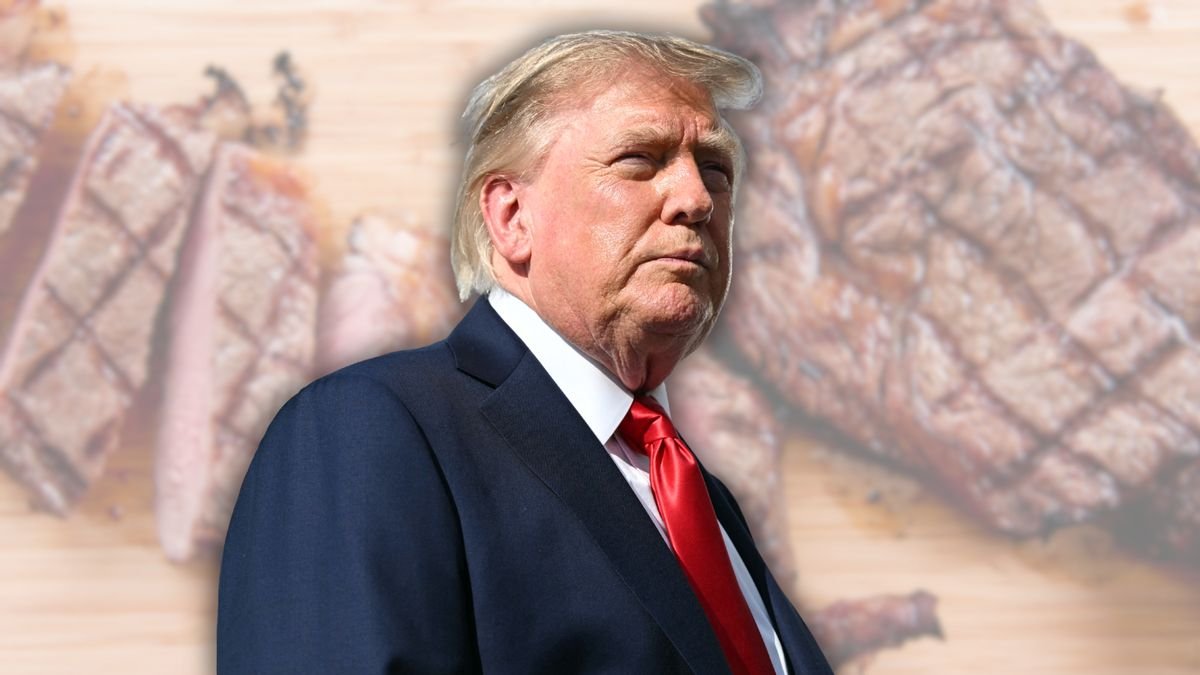
The U.S. Department of Agriculture recalled 30,000 pounds of Argentine beef that the administration of President Donald Trump had imported to bring down domestic beef prices.
Rating:
What’s True
The USDA recalled 29,628 pounds of raw beef products imported from Argentina on Aug. 7, 2026, because the Food Safety and Inspection Service had not reinspected it upon entry to the U.S.
What’s False
The recalled beef was not part of the Trump administration’s announced plan to import 300,000 metric tons of “product for ground beef.” An Aug. 26 presidential proclamation said imports under that plan would start on Sept. 1, 2026.
In August 2026, a claim (archived) circulated online that the U.S. Department of Agriculture recalled 30,000 pounds of Argentine beef that the Trump administration had imported to bring down domestic beef prices.
Around a week before claims circulated, on Aug. 21, 2026, U.S. President Donald Trump announced (archived) on Truth Social that his administration would allow the import of 300,000 metric tons of “product for ground beef” to lower domestic beef prices.
One Threads user who appeared to connect the recalled beef with the Trump administration’s import plan wrote:
This was predictable, but the Trump administration is now frantically recalling 30,000 lbs. of foreign beef they brought into the country. Here’s an idea — maybe we just buy from American ranchers for a while.
The claim was a mixture of true and false elements.
It was true that the USDA recalled approximately 29,628 pounds of raw beef products imported from Argentina on Aug. 7, 2026. The department said the imported product had not been reinspected when it entered the U.S., meaning the Food Safety and Inspection Service could not ensure it met U.S. safety standards.
However, the beef the USDA recalled was not part of the Trump administration’s plan to import 300,000 metric tons of “product for ground beef.” According to an Aug. 26 presidential proclamation, the Trump administration would start those planned beef imports on Sept. 1, 2026.
The recall
According to the USDA’s recall, a Florida-based company called Corte Argentino USA LLC had imported the Argentine beef products, which were produced between May 15, 2026, and May 20, 2026, and carried use-by or freeze-by dates between Sept. 15, 2026, and Sept. 20, 2026.
The USDA listed the following products for recall:
Various weight cardboard boxes containing “FrigorIfico Gorina SAIC” boneless beef “Top Sirloin Butt” (“Cuadril Sin Tapa”)
Various weight cardboard boxes containing “FrigorIfico Gorina SAIC” boneless beef “Knuckle” (“Bola de Lomo”)
The FSIS recalled the beef because it had not been “reinspected” upon entry to the United States. Imported meat must pass this inspection before it can be sold in the U.S.
The reinspection process allows the FSIS to check that products are “safe, wholesome, and accurately labeled” according to domestic standards.
Speculation swirls about Trump beef import plan
Trump signed a proclamation about the import plan on Aug. 26 that said the additional imports would take place in three 30-day windows, starting on Sept. 1. Neither the proclamation nor members of the Trump administration had confirmed where the imported beef would come from at the time of this writing.
On Aug. 25, Secretary of Agriculture Brooke Rollins, whose department would inspect the incoming beef under the new plan, told (video time code 07:19) reporters at the White House she was “not privy” to discuss where the imported beef came from.
Despite, or perhaps because of the lack of information about the plan, online speculation swirled that Trump would import Argentine beef that China had rejected because it found an antibiotic in a shipment of meat that was banned in both countries.
Snopes’ reporting found that China did suspend imports of beef from a single facility owned by the Argentine meatpacker ArreBeef after inspection found one shipment from the facility contained the antibiotic chloramphenicol.
The beef that the USDA recalled on Aug. 7, 2026, did not come from this supplier.
For further reading, Snopes previously investigated a rumor that the Trump administration’s imported beef would come from slaughtered wild horses.
Snopes reporter Emery Winter contributed to this report.
Annapurna Post. Annapurna Post Facebook Page. 26 Aug. 2026, https://www.facebook.com/reel/1552643429217959.
‘Google Maps’. Google Maps, https://www.google.com/maps/place//@28.2802568,85.37749,282m/data=!3m1!1e3!4m6!1m5!3m4!2zMjjCsDE2JzUxLjIiTiA4NcKwMjInNDAuNiJF!8m2!3d28.2808889!4d85.3779444?entry=ttu&g_ep=EgoyMDI2MDgyNC4wIKXMDSoASAFQAw%3D%3D. Accessed 27 Aug. 2026.
Gyirong Port Introduction| Location, Transportation, Accommodation, Attractions. https://www.tibetdiscovery.com/tibet-ports/gyirong-port/. Accessed 27 Aug. 2026.
Important Notice: Intermittent Control of Roads in the Gyirong Port Area! https://www.tibettourism.com/gyirong-port-intermittent-control.html. Accessed 27 Aug. 2026.
Lee, Liz, et al. ‘Hundreds Missing after Flood Hits Nepal-Tibet Border, 157 Bodies Recovered’. Reuters, https://www.reuters.com/business/environment/nepal-flash-flood-washes-away-villages-project-sites-near-tibet-border-2026-08-26/.
Shrestha, Niranjan, and SHRISTI KAFLE Leer en español. ‘Catastrophic Floods Kill over 390 in Nepal and Tibet, with More than 1,400 Missing’. AP News, 27 Aug. 2026, https://apnews.com/article/climate-change-nepal-tibet-glacier-collapse-floods-61b592d428e4631add31ce052d0daf1f.
‘Think It’s Hot Now? The next Five Years Will Smash Records, UN Says’. AP News, 28 May 2026, https://apnews.com/article/climate-change-warming-heat-wave-record-future-53d79525a06f09d9ace45a141dbebb01.
– YouTube. https://www.youtube.com/watch?v=BCanRmchkL0. Accessed 27 Aug. 2026.
中国新闻网. English: China Gyirong Port of Entry Building. 5 Aug. 2019, Video screenshot at timestamp 1:03 of YouTube: 西藏吉隆口岸 记录时代的变迁 – View/save archived versions on archive.org. Wikimedia Commons, https://commons.wikimedia.org/wiki/File:China_Gyirong_Port_of_Entry_building.png.
Visio 2024 is built for anyone who needs to translate complex information into clean, professional visuals. IT pros, engineers, project managers, and business analysts use it to create flowcharts, org charts, network diagrams, floor plans, and process maps. A lifetime license is currently on sale for just $39.97.
The software comes loaded with over 250,000 shapes and templates across dozens of diagram types, so starting a new project takes seconds.
One standout feature is data-linked diagramming. Pull in live data from Excel, SQL Server, or other databases, and your diagrams update automatically. It also integrates natively with Microsoft 365, making it easy to embed diagrams in Word docs, PowerPoint decks, and Teams chats.
This is a one-time purchase with no recurring fees. Note that the license is tied to a Microsoft account, not a device, and the redemption code must be used within seven days of purchase.
Prices subject to change. PCMag editors select and review products independently. If you buy through StackSocial affiliate links, we may earn commissions, which help support our testing.
About Our Expert
StackCommerce Team (Sponsored)
Experience
Products featured in these stories are selected by our partners at StackCommerce. If you buy something through links on our site, PCMag may earn an affiliate commission.
Country singer Dolly Parton’s Imagination Library donated books to children in Israel.
Rating:
Context
The organization PJ Library, which provides free books for Jewish children — including children in Israel – was inspired by Parton’s Imagination Library but did not have a formal relationship with it. The Imagination Library operated in the U.S., U.K., Canada, Ireland and Australia. Parton expressed support for PJ Library’s efforts in an 2023 interview.
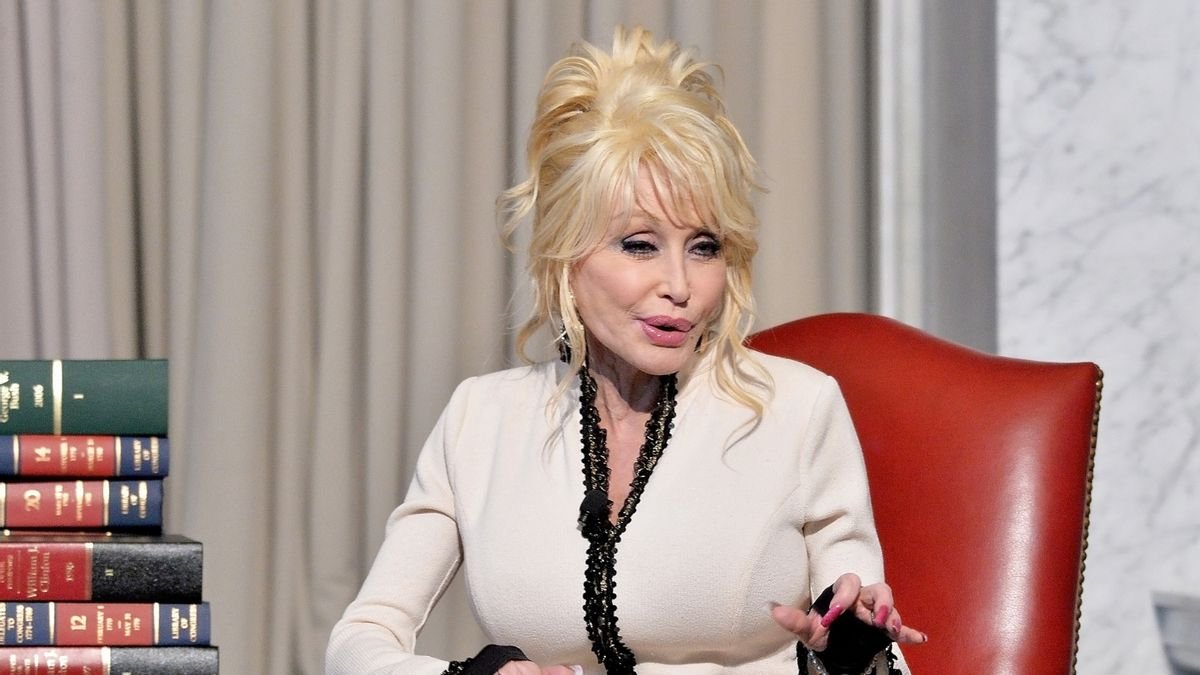
Amid news of singer Dolly Parton’s death at age 80 in August 2026, many people looked back at her charitable work through the Imagination Library, an organization she founded that has provided millions of free books to children in the U.S. and other countries.
An online debateensued on X about whether Parton had donated books to Israeli children, part of a broader discourse about her alleged views on the state of Israel. Some posts claimed Parton worked with PJ Library (archived), an organization that sends free books to Jewish children worldwide, including children in Israel.
One X user wrote: “People accusing Dolly of being evil because she MAYBE donated books to some Israeli children?”
(X user @K1TKATCLUBS)
There is no evidence the Imagination Library has ever operated in Israel. According to its website, the organization operates only in the U.S., U.K., Canada, Ireland and Australia. In 2022, the Library announced it would provide free books each month to 200 refugee children in London until they turn 5.
We reached out to the Library for a response to claims about its ties to Israel. Tracy Long, a director with the Dollywood Foundation, which funds Imagination Library, directed us to its website where it states its operations are limited to the U.S., U.K., Canada, Ireland and Australia.
PJ Library is a program run by The Harold Grinspoon Foundation, a Jewish philanthropic organization. It operates in Israel through a Hebrew-language counterpart, Sifriyat Pijama, and Arabic-language companion program, Maktabat al-Fanoos. While PJ Library was inspired by Imagination Library, the two organizations were not formal partners. Parton expressed support for PJ Library’s work in an interview, but according to a PJ Library spokesperson she did not support it financially.
As such, we rate this claim as false.
Snopes reached out to PJ Library and the Harold Grinspoon Foundation to ask about the rumor. Spokesperson Mark Gold told Snopes over email that Parton was never formally involved in the group’s work (emphasis ours):
No, there was never a formal partnership between PJ Library and the Imagination Library, nor did Ms. Parton donate books or funds to PJ Library or PJ Library initiatives in Israel. Mr. Grinspoon was inspired by the Imagination Library, but the PJ Library program was developed independently of the Imagination Library. PJ Library is funded by the Harold Grinspoon Foundation and other partners who contribute directly to the PJ Library program. Sifriyat Pijama in Israel is a program of Keren Grinspoon (the Harold Grinspoon Foundation in Israel) and is funded by that foundation. The ministry of education for the State of Israel is also a partner in Sifriyat Pijama as well as in the related program “Maktabot al Fanoos” that provides free books to Arabic speaking children in Israel.
PJ Library also acknowledged that it was inspired by the Imagination Library shortly after Parton died, when the library posted a picture of Parton with Grinspoon on Instagram:
PJ Library and the Harold Grinspoon Foundation team are sad to learn of the passing of musician, philanthropist, and American legend Dolly Parton. Dolly’s Imagination Library helped inspire Harold Grinspoon to found PJ Library in 2005.
When Harold had the privilege of chatting with Dolly in 2023, she shared the following with him: “I am honored to get to help inspire a love of reading in children. They truly are our future.”
Parton’s 2023 interview with PJ Library is archived here. She expressed support for the library’s work, saying:
PARTON: Well, I’m always honored when my Imagination Library inspires others, like Harold Grinspoon and PJ Library. That is so very special to me — especially because the Imagination Library comes from a very personal place for me …
PJ LIBRARY: We love keeping up with the Imagination Library and its many accomplishments! In 2023, you celebrated the incredible milestone of gifting 200 million books to children. PJ Library is also celebrating: Last year we sent our 50 millionth book, and this year is our 18th birthday. What is most important to you about continuing to do this work?
PARTON: First of all, congratulations, PJ Library! I’m thrilled to celebrate milestones with you! Of course, I am very, very proud of how far we’ve come with the Imagination Library. We were thrilled to celebrate our 100 millionth book in 2018, and here we are just five years later celebrating 200 million books worldwide. Isn’t that amazing?
Separately, the Grinspoon Foundation sponsors some of the Imagination Library’s activities in Massachusetts. Gold told Snopes over email:
The Harold Grinspoon Charitable Foundation is still the sponsoring organization for Imagination Library in Springfield and West Springfield Massachusetts. Approximately 675 children in this region receive a monthly mailing to their home of a book at no charge as a gift from the Harold Grinspoon Charitable Foundation as part of the Imagination Library program.
In sum, Parton expressed broad support for PJ Library’s work, but she did not specifically send books or funds to Israel through her Imagination Library. The Harold Grinspoon Foundation, which runs PJ Library, has separately sponsored branches of The Imagination Library in Massachusetts.
Parton often shied away from discussing her political views in public. Snopes has covered numerous rumors and false claims about Parton.
Sources
About Dolly Parton’s Imagination Library. https://imaginationlibrary.com/about-us/. Accessed 28 Aug. 2026.
About PJ Library | PJ Library. https://pjlibrary.org/about-pj-library. Accessed 28 Aug. 2026.
“Dolly Parton’s Imagination Library Gave the Gift of Books to Millions of Children.” NPR, 26 Aug. 2026. Obituaries. NPR, https://www.npr.org/2026/08/26/nx-s1-5944531/dolly-partons-imagination-library-gave-the-gift-of-books-to-millions-of-children.
“Harold Grinspoon Charitable Foundation | Local Impact.” Harold Grinspoon Charitable Foundation | Local Impact, https://hgcf.org/hgcf-programs/imagination-library/. Accessed 28 Aug. 2026.
Ibrahim, Nur. “15 False and Misleading Dolly Parton Rumors We’ve Debunked.” Snopes, 28 Aug. 2026, https://www.snopes.com//collections/dolly-parton-false-claims/. Accessed 28 Aug. 2026.
Ibrahim, Nur. “Yes, Dolly Parton Declined the Presidential Medal of Freedom 3 Times. Here’s Why.” Snopes, 13 Jan. 2025, https://www.snopes.com//fact-check/dolly-parton-presidential-medal/. Accessed 28 Aug. 2026.
“PJ Library’s Israel Hub.” PJ Library. https://pjlibrary.org/israel. Accessed 28 Aug. 2026.
“Q&A with Dolly Parton.” PJ Library, Dec. 2023, https://web.archive.org/web/20250110150533/https://pjlibrary.org/about/become-a-pj-partner/proof/articles/2023/december/q-a-with-dolly-parton. Accessed 28 Aug. 2026.
Shaffi, Sarah. “Dolly Parton’s Imagination Library to Give Books to Refugee Children.” The Guardian, 9 May 2022. Books. The Guardian, https://www.theguardian.com/books/2022/may/09/dolly-parton-imagination-library-books-refugee-children. Accessed 28 Aug. 2026.
After stepping into the post in 2011, Tim Cook is finally stepping down as Apple’s CEO.
Cook will be replaced by Apple veteran John Ternus on September 1, who has served as the company’s senior vice president of hardware engineering since 2021, overseeing the design team.
Cook will stay on at Apple in a new role, acting as Apple’s executive chairman. The move was originally announced back in April this year, following widespread speculation he was set to replace Cook. Ternus already had a high profile at the company, unveiling the MacBook Neo at its launch event in New York in March, for example.
In his resignation letter, Cook called Ternus “a brilliant engineer and thinker,” adding that he is “obsessed with every detail.”
It’s unknown what Ternus’s reign could bring, but Apple commentators like Bloomberg’s Mark Gurman have said Ternus “knows a major design shake-up is needed” at Apple, in contrast to Cook’s “historically limited presence,” citing sources within the company. Gurman has also reported that Cook is still expected to retain several key responsibilities, including maintaining relations with the White House.
Recommended by Our Editors
The change comes at a busy time for Apple. The upcoming iPhone 18 Pro launch event is pegged for 9 September, just under a week from now. This event could see the debut of Apple’s long-rumoured first foldable device, with a speculated premium price tag over $2,000, as well as a next gen Apple Watch.
Apple is still contending with issues like rising component costs due to the ongoing memory supply shortage, which has led to major price hikes across almost all of its products. The company still has an enviable position in the smartphone world. The iPhone 17 was the world’s best-selling smartphone in Q2 2026, commanding 6% of global sales according to statistics from Counterpoint Research. Meanwhile, the iPhone 17 Pro Max and theiPhone 17 Pro came in second and third.
About Our Expert
Experience
I’m a reporter covering weekend news. Before joining PCMag in 2024, I picked up bylines in BBC News, The Guardian, The Times of London, The Daily Beast, Vice, Slate, Fast Company, The Evening Standard, The i, TechRadar, and Decrypt Media.
I’ve been a PC gamer since you had to install games from multiple CD-ROMs by hand. As a reporter, I’m passionate about the intersection of tech and human lives. I’ve covered everything from crypto scandals to the art world, as well as conspiracy theories, UK politics, and Russia and foreign affairs.