Mr. Potato Head, Optimus Prime and Mr. Monopoly are uniting — in the world of AI.
AI audio startup ElevenLabs has partnered with Hasbro to bring a collection of the toy and game company’s suite of characters, including some from Transformers, the board games Monopoly and Clue, Mr. Potato Head and to its Iconic Marketplace, its collection of celebrity voices and likenesses that companies can license for commercial use. Some of the characters were available as of Wednesday, while others, including Mr. Monopoly and Optimus Prime, will be available soon.
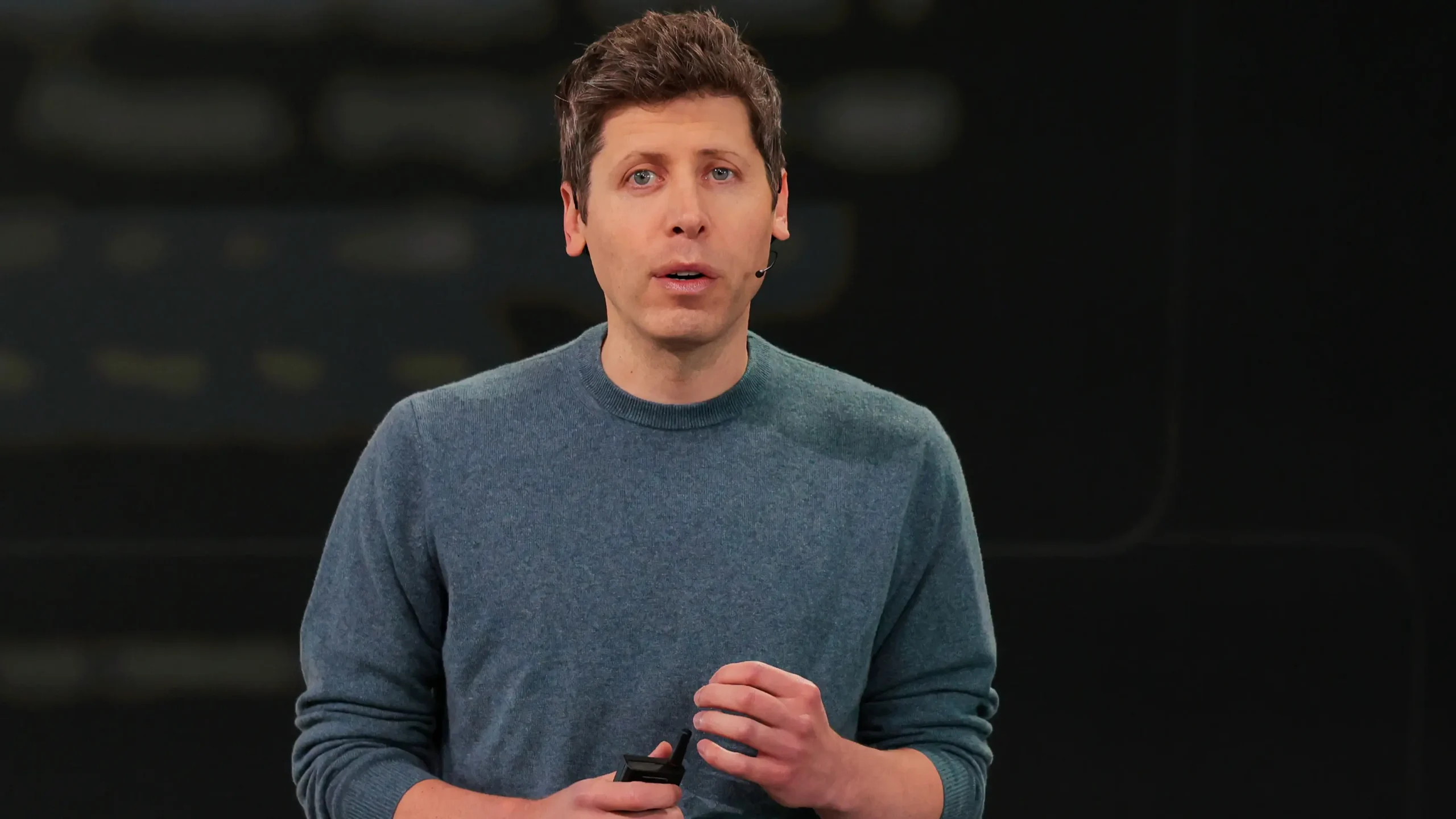
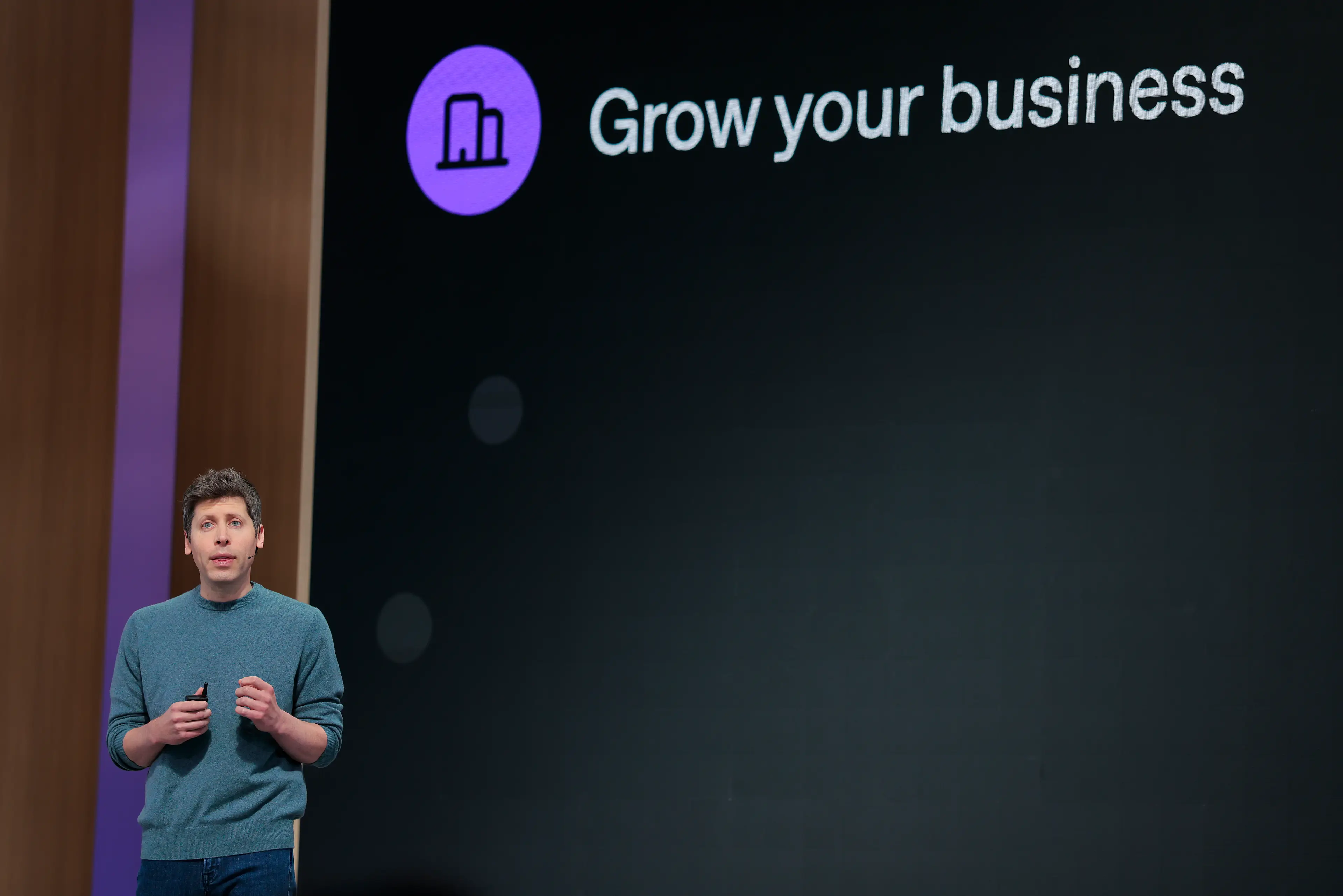
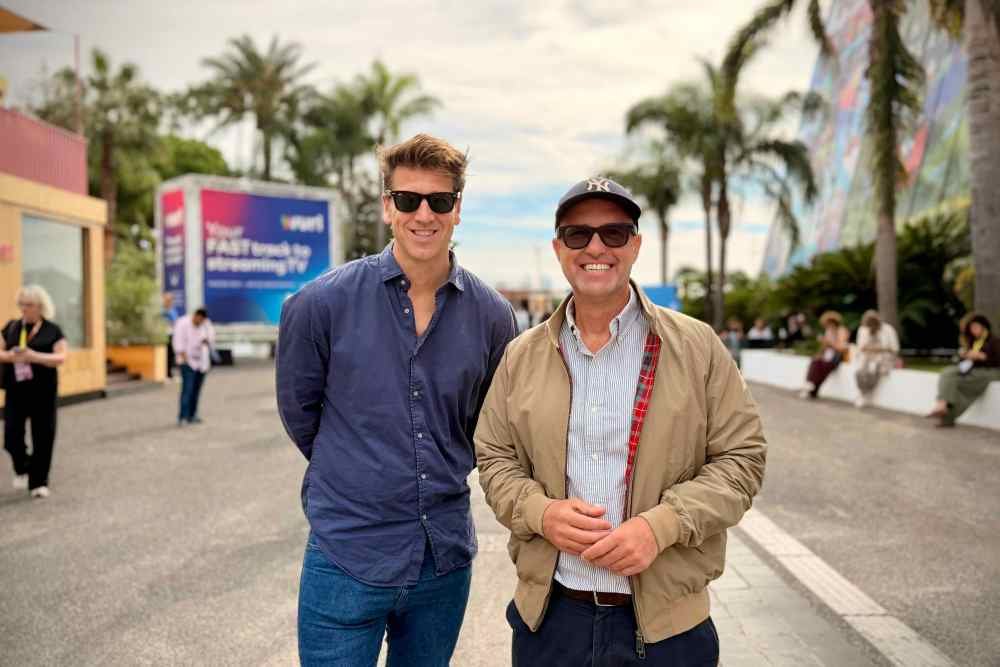
The move is a partnership between ElevenLabs and Hasbro’s AI Studio, which is overseen by CEO Bertie Thomson. Thomson and Dustin Blank, ElevenLabs’ head of partnerships, revealed the news at Axios’ AI+NY event in New York — alongside demos of the AI versions of Peppa Pig and “G.I. Joe” character Cobra Commander. (Peppa Pig is currently only available in demo mode.)
“We’ve approached this with very detailed and robust asset guardrails, so starting right from the whole direction of the character itself,” Thomson said, who called the licensing model “behavioral licensing.”
“You have so many brand-new atmospheres and opportunities where their characters can be dynamic and interactive,” Thomson added, suggesting AI-backed voices for the characters’ appearances at theme parks.
Many of the characters’ original voices, such as Peter Cullen’s portrayal of Optimus Prime or Frank Welker’s of Megatron, have remained, while voice actors were cast for characters without voices, such as those from Clue.
“This partnership is really the first of its kind, where businesses of all kinds can now come to ElevenLabs and they can request to license these iconic characters from Hasbro today,” Black said. “It really sets the stage for the future of licensing.”
The news reflects the continued interest by entertainment companies in finding new revenue streams for their intellectual property through AI, months after Disney’s sweeping licensing deal to license its characters for OpenAI’s Sora platform collapsed upon Sora’s closure.
The news comes a week after ElevenLabs added Marvel legend Stan Lee’s voice and likeness to its platform, with the Iron Man and Spider-Man co-creator joining the likes of Matthew McConaughey, Michael Caine, Judy Garland, David Hasselhoff and Albert Einstein. “This partnership is a way of continuing that. Fans have always told us that when they read his comics, they hear the words in Stan’s voice, and now, thanks to ElevenLabs, we can make that a reality,” Chaz Rainey, a lawyer and board member for Stan Lee Universe, said in a statement last week.
ElevenLabs raised $500 million in a Series D funding round earlier this year at an $11 billion valuation — five months after the company, which launched in 2022, offered employees a $100 million tender offer at a $6.6 billion valuation.
DTF St. Louis might have been in a categorical pickle if it weren’t a limited series. As anyone who’s watched the seven-part HBO series can attest, it can be both devastating and deliriously funny. That’s not easy to pull off. Unless, of course, you’re Linda Cardellini.
In some of the series’ more memorable moments, Cardellini is swimming in an oversized umpire’s uniform. It’s something her character, Carol, wears for the part time job she’s taken to make ends meet — providing physical comedy to a woman navigating a lost marriage and a troubled son in a manner that keeps things from ever getting too dark.
Cardellini’s eclectic career has been punctuated by quite a few tragicomic performances: Dead to Me’s Judy Hale, perhaps the most notable. But in DTF St. Louis, where she’s one point of a love triangle that also includes Jason Bateman and David Harbour, she treads an even finer line. This is something Cardellini quite enjoys. “I feel grateful that I’ve had a career for this long, for sure,” she says. “But the idea that I’ve been able to do this for many decades, and things are really fun right now? I’m especially grateful for that.”
During a recent conversation with The Hollywood Reporter, Cardellini spoke about her work on DTF (she trained with a real umpire!), the movie that most frequently comes up when she’s stopped by fans and why she’s got two horror projects lined up.
Looking back at the time between a first audition and getting an offer, what’s been the longest or most circuitous route to a role you’ve ever taken?
The longest are ones that I don’t get. When I first started, I think I went in for a television show almost 10 times — and then did not get it. That year broke my heart. The following year, I got Freaks and Geeks. So I think I learned early on that when you go in too many times, it’s not going to be you. And that’s OK. But you still get your heart broken.
And you were like, what, 20 years old when they had you come in 10 times?
Back in the day, it was just a big, long process, which I’m happy to be out of at this point in my career. Offer only as a huge perk of having a long career, but it doesn’t always happen.
Linda Cardellini in DTF St. Louis.
Photograph by Tina Rowden/HBO
I read somewhere that people thought you’d left the industry when, in reality, you were starring on six seasons of ER late in its run.
I had somebody say, “Where did you disappear to?” And I didn’t know that that had happened. (Laughs.) Meanwhile, I remember going to Europe and people coming up and saying, “Emergency room!” Sometimes, what the industry is talking about is not necessarily what people who come up to you on the street are talking about.
What were the indications that you got from the industry that you had no longer “disappeared?”
While I was on ER, I was also in Brokeback Mountain. So, by that point, if you believed that I had disappeared, I think I was back in your eyesight. I’ve been lucky to be able to support myself since I started. So I may have disappeared here and there, but I was probably still working somewhere on a set.
What did you think DTF St. Louis was going to look like when you were making it? Tonally, it’s one of the more unique shows I’ve seen in a while and I imagine there could have been many different versions of it depending on the edit.
I loved the script so much. I loved how it was written. I remember reading Carol and thinking, “I know who she is.” By episode three, she’s this one person. Then, when it gets to be four or five, you realize she’s different than you thought. The idea that she’s not as dishonest as you think she is was fascinating to me. Because what you’ve seen [up until then] is this manipulative, kind of greedy person. And that’s not exactly who she is. The men, you get to know them really easily. But her, not so much.
In your experience, is it often not like that? Somebody like Judy in Dead to Me, you know her. You know her heart. You don’t know what she’s done, necessarily, but you know her heart right away. Somebody like Carol, she’s impassive in a lot of ways. I thought that the show had a beautiful tone. The outcome of anything you never truly know, but I just thought that everybody involved was so incredibly talented.
This show could have strictly focused on male loneliness and mostly followed Jason and David’s characters, making you the wild card. What did Steve tell you about Carol when you were talking about coming on board? Well, Steve always contends he loves Carol. He loves her as a character. So, his care for her and us discussing her always made her feel vital to that triangle. Even though the men and their relationship is really the center focus, I think her being the third in there really helps with the mystery. It helps you see what is happening beyond just the two of them.
Most importantly: what did you learn about umpiring?
I learned it’s a good way to make cash. You get to be out in the sunshine. I learned how to do strike and the counter in my hand. I took a little class with a local umpire. It was great. I don’t know that I could really ump a game, but Carol wasn’t the best umpire either.
The show was billed as limited, but, by all accounts, was incredibly successful. Do you think there’s a world where it keeps going?
I think that would be wonderful because it would be fun to see what Steve would do with it. As far as the St. Louis crowd goes, we are limited for sure. It’d have to be DTF Omaha.
Some of your most prominent TV work — Freaks and Geeks, Dead to Me, DTF — really straddle the line between comedy and drama. That’s more common now, but it wasn’t at the top of your career. Has this throughline been by design or accident?
I never really thought about it like that. Thank you for noticing. (Laughs.) At the helm of those shows, they had people with very specific voices who had a very specific vision of what they were going to do. What they thought was funny. What they thought was dramatic. And I think that really is something that separates it. And those [people] also chose me. So there’s something, I guess, about me that sort of straddles that line.
Linda Cardellini in DTF St. Louis.
Photograph by Tina Rowden/HBO
You’ve been in a lot of cult hits and many mainstream successes. So, if you’re at the mall, what are people approaching you about the most? What comes up the most with interactions with strangers?
Scooby-Doo comes up a lot. A lot. It’s shocking to me because, when it came out, it wasn’t the same as it is now. Those kids have grown up. They watched it so many times when they were young and now they’re grownups. It means something to them that it did not for the grownups watching it during the time. That’s one that I have noticed, as years have gone on, I’ve gotten more and more and more. But it’s also Judy from Dead to Me and then Freaks and Geeks.
In recent years, you’ve really leaned into horror: La Llorona. You’re filming the new Bill Hader movie. You wrapped Crystal Lake, the Friday the 13th prequel series for Peacock. Were those roles not your thing earlier in your career?
Yeah, I didn’t really do that. I didn’t really do that. So now I’m doing it! Sometimes they’re just really great roles for women. With La Llorona, it’s just this story about this woman trying to protect her kids. And we shot it in L.A. and it took place in the seventies and all those things just seemed fun to me. With Crystal Lake, A24, Peacock and [creator] Brad Caleb Kane all came together and they just had this concept for making this story about Pam Voorhees. And if you watch the original movie, it really operates like a whodunit. Spoiler: at the end, you find out that it was Pam Voorhees.
A character who’s barely seen.
She’s only in the movie for the last little bit, but she leaves this impression on the entire franchise. There’s so many movies subsequent that you’d think Jason’s always been in that mask doing what he’s doing. But that wasn’t the case. I don’t think he gets the mask a few movies down. It just seemed like something that I had never done. I haven’t seen that many female slashers like that. To dive into who she might have been, I thought, well, that’s something I’ve never done. When I’m looking for things to do next, I ask myself what’s something I haven’t done yet. And that was one of them.
To your point, the original Friday the 13th is just about a pissed off mom who’s seeking vengeance.
Yeah, because they let her son drown! There’s fertile backstory there!
“Game of Thrones” star Emilia Clarke gave a moving speech while being honored at Variety‘s Power of Women London about surviving two brain hemorrhages in her 20s.
Clarke went in depth about surviving the hemorrhages in her cover story last week, but still maintained a sense of humor 15 years after the health scare.
“For a number of years, I felt that I had cheated death, and it was coming to get me,” she said. “I truly felt like I had done something wrong, and I shouldn’t be here. I also thought it ruined my ability to act — which some people might agree with!”
Clarke and her mother founded the charity SameYou in 2019, when she publicly revealed what she had been through, and their goal has been to help fellow survivors on brain bleeds. “When I finally shared my story in 2019, we were overwhelmed by the response,” she said at Power of Women London. “Mostly young people reached out to tell us their own stories. Today we have tens of thousands of survivors in our community saying essentially the same thing: the journey to healing feels like falling off the edge of a cliff without anyone there to catch you.”
The “Game of Thrones” star was honored alongside Emma Corrin, Hannah Waddingham, Suki Waterhouse and Cynthia Erivo. Read her full speech below and watch the video above:
Hello everyone, Thank you, Thea, for that wonderful introduction and thank you Variety for celebrating this incredible group of honorees. It is a privilege to be in a room full of people who are using their platforms to highlight such important causes near and dear to them. I am personally here to talk about a shocking health inequality that affects millions of people yet remains largely invisible. In Hollywood, that’s usually a superpower. In healthcare, it’s a problem. It’s also my story, and the reason I founded my charity, SameYou.
This is the fact: one in three people will suffer a brain injury at some point in their lives, and if you survive your brain trauma, you might expect to be cured and get back to life as normal. But you would be wrong.
We have a universal crisis when it comes to brain injury aftercare. The combined number of people currently living with the life-changing consequences of stroke and traumatic brain injury in the UK and the US is more than 15 million people alone. Yet our healthcare systems still don’t have a clear way out of this crisis or the ability to help those in need.
That is why, with my mother Jenny, we founded SameYou. Because finding the essential support you need to return to life is often a lottery—a social inequality that rarely gets airtime, let alone focus and funding. It’s one of the biggest gaps in health and social care systems, wherever you live.
I was 22 when I suffered my first brain haemorrhage. 24 when I had my second. I was also 22 when I filmed the first season of Game of Thrones, and 24 when I made my Broadway debut. Id like to blame my brain haemorrhage for the bad reviews but it happened after we closed, early…
Fifteen years after my first bleed, I have the hindsight to see how difficult that time truly was. I never had the chance to reflect on what my two brain traumas had done to me because I could walk, talk, be myself, remember my lines and was back on camera within weeks of both brain injuries.
I was fine, right?
I ignored what was going on with my hormones, or rather my lack of them, my extreme fatigue that no one else I knew in their 20s suffered? What about my anxiety? Surely that’s normal working in our image obsessed industry? Breaking a rib after filming a sex scene? Well, maybe that was his fault. But sometimes even blacking out after long night shoots? The pain all over my body? I didn’t even think I should find out why. I just put it down as stress and my non-stop work schedule, that I wasn’t too good at coping with. I thought I had been fixed. So did my doctors. None of us could see the pattern, so I blamed myself.
It never occurred to me that maybe the problem wasn’t me…that it was because brain injury is extraordinarily complex, and we’re still only beginning to understand the impact it can have long after you’ve supposedly recovered.
What usually happens when you’re rushed to hospital with a brain injury is that doctors do everything possible to save your life. They stop the bleeding, remove the clot, find the source, cut it out, stitch you up, and send you home. But what many people don’t realise is that whatever symptoms remain—physical, cognitive, emotional, linguistic—the consequence is unresolved trauma. And there are simply too few neuropsychologists and specialist rehabilitation services for that reality to change without a major shift in priorities.
When everyone around you thinks you look fine, they treat you as though you are. Eventually, you start believing you should be too. I often compare brain injury today to where cancer was a century ago: misunderstood, stigmatised and hidden from view.
When rehabilitation is available, it’s usually measured in weeks rather than years and focused on only the most visible symptoms. Brain injury recovery is still in its infancy, leading to lost potential, lost livelihoods and too many people falling through the cracks.
At SameYou, our mission is to help rethink recovery.
In 2011, I didn’t want anyone to know about my brain bleeds. I was ashamed and overwhelmed by a diagnosis I didn’t understand. We didn’t even tell HBO until we knew I wasn’t going to die which in TV terms, is usually when they kill you off anyway. After my second haemorrhage in 2014, I started to think that perhaps speaking publicly might help. But it still took years for me to grapple with my truth.
When I finally shared my story in 2019, we were overwhelmed by the response. Mostly young people reached out to tell us their own stories. Today we have tens of thousands of survivors in our community saying essentially the same thing: the journey to healing feels like falling off the edge of a cliff without anyone there to catch you.
I knew I had to do something. It started with wanting to buy a new sofa for the family room in my hospital’s ICU. Then it became supporting the nurses who held my hand, cleaned my body and talked to me while I tried to understand what was happening. Then I started imagining what recovery would have looked like if I hadn’t had my family. If I hadn’t been financially stable. If I hadn’t had a job that was willing to wait for me. Eventually, all of that became SameYou.
Recovery is every bit as important as survival.
People need guidance. They need answers. They need support—physically and mentally.
Because when you think about who you are—your personality, your intellect, your humour, your memories, your excellent taste—where do they live? Your mind.
And when that fails you, it can shake your trust in yourself. It can leave you frightened and convinced you’ll never be who you were again.
But we know that the recovery to yourself is possible. Hence the name: SameYou.
I’ve recently been on my own very belated recovery journey, fifteen years after my first brain bleed. Through the guidance and help of the extraordinary David Putrino at Mount Sinai in New York, I now have the energy and positivity I had in my twenties.
This was a journey, not a miracle cure.
One in three of us will suffer a brain injury in our lifetime. That’s an awful lot of people living with life-changing consequences.
So if it happens to you, or someone you love, they deserve a way forward.
Thank you for giving me this platform to tell my story. Thank you to the tens of thousands of SameYou survivors who continue to inspire us every day.
Shia LaBeouf pleaded guilty Wednesday to three counts of simple battery and was sentenced to probation for a Mardi Gras brawl in New Orleans.
He will be required to attend an alcohol treatment program, Laboeuf’s attorney, Sarah Chervinsky, told the AP.
The “Transformers” actor was arrested shortly after midnight on February 17 after being escorted out of a bar in the French Quarter. A video of the altercation showed LaBeouf shoving a person to the ground and hitting a person in the face. A New Orleans police report said the punch to the victim “caused his nose to possibly dislocate.”
Judge Juana Marine-Lombard gave LaBeouf a six month suspended sentence plus two years of probation. He was ordered to stay away form the three victims as well as the bar. LaBeouf had been ordered to attend drug and alcohol treatment after he was originally charged.
“Mr. LaBeouf came to court today wanting to take accountability for his part in what happened, and he has done so,” Chervinsky told the AP. “Now he’s looking forward to focusing on family, work, and new creative projects.”
A local entertainer identified as Jeffrey Klein, aka Jeffrey Damnit, said LaBeouf had pushed him at the bar earlier that night and shouted homophobic slurs.
However, LaBeouf’s attorney said it was “a minor Mardi Gras bar tussle” and said there was “no evidence it was about bias or prejudice.”
The actor was previously court-ordered to attend rehab following a 2017 arrest in Georgia for public intoxication and disorderly conduct during the filming of “Peanut Butter Falcon.” He then had a lawsuit filed against him by FKA Twigs alleging sexual battery, assault and infliction of emotional distress. The lawsuit was settled in July of last year.
Solana price has entered a high-risk zone after falling below a major support level that had held since February, exposing the token to further downside.
According to data from crypto.news, Solana ($SOL) price traded near $73 on June 4 after losing more than 12% over the past week. The token slipped below the long-standing $76.6 support zone, a level that had contained downside moves since February, while daily trading volumes accelerated as selling pressure intensified across the crypto market.
The decline arrived as derivatives traders unwound heavily leveraged bullish positions. Earlier this week, more than $3.8 million in $SOL long positions were liquidated within hours after a modest pullback triggered cascading margin calls across perpetual futures markets.
The forced selling coincided with a broader crypto market rout that erased roughly $1.8 billion in leveraged positions after Bitcoin fell below the $66,000 threshold.
At the same time, risk sentiment deteriorated across financial markets following renewed geopolitical tensions in the Middle East. Higher oil prices and growing concerns over prolonged regional instability pushed investors toward safer assets, adding pressure to cryptocurrencies and other risk-sensitive markets.
Meanwhile, attention has also shifted to institutional activity after Strategy disclosed a rare Bitcoin sale, breaking a four-year accumulation streak. The move rattled crypto markets and contributed to fresh concerns about liquidity conditions at a time when ETF flows have remained weak and central banks continue to maintain restrictive monetary policies.
Solana charts flash multiple bearish signals
Technical indicators have deteriorated sharply following the latest breakdown. Solana has now fallen below both its 50-day and 200-day simple moving averages, which sit near $83.4 and $85.9, respectively. The failure to reclaim those levels has left bears firmly in control of the short-term trend.
The daily chart also shows a completed double-top pattern that formed between March and May, with peaks near the $97 area and a neckline around $76.6. The recent breakdown below that neckline confirms the structure and opens the door to a measured move toward the low-$50 region if sellers maintain control.
Solana price has formed a bearish double bottom pattern on the daily chart — June 4 | Source: crypto.news
Momentum indicators continue to favor the downside. The MACD has crossed deeper into negative territory while histogram bars remain below the zero line, highlighting persistent bearish momentum. Although the 14-day RSI has dropped into oversold territory near 25, buyers have yet to establish a convincing rebound.
Commenting on the setup, crypto analyst Daan Crypto Trades noted that many altcoins are showing structures similar to Solana after losing multi-month trading ranges.
“Good setups would start unfolding upon retaking those local ranges which could then be played up to the range high or above.”
The analyst suggested bulls must first reclaim the broken support zone before a sustainable recovery can develop.
Many altcoin charts looking similar to $SOL.
4+ month ranges, breakdowns/sweeps of either the range low or 10/10 wick and now sitting down there.
Good setups would start unfolding upon retaking those local ranges which could then be played up to the range high or above.
Good… pic.twitter.com/rRLmJ4DJIE
— Daan Crypto Trades (@DaanCrypto) June 3, 2026
According to crypto analyst CryptoBullet, the latest breakdown has completed a large range structure that could expose $SOL to a move toward the $50-$55 region. The analyst described the token as “absolutely cooked” and warned traders to prepare for a larger downside extension if support fails to return.
Stablecoin growth offers a longer-term counterweight
Despite the weak price action, network activity remains resilient in one of Solana’s most important growth segments. Mastercard recently selected Solana as one of eight blockchain networks that will support regulated stablecoin settlement across its payments infrastructure.
The network processed roughly $832.7 billion in stablecoin transfer volume during the first quarter of 2026, according to ecosystem data compiled from Artemis and Token Terminal. Stablecoins accounted for approximately 76% of all activity on the chain during that period.
February alone generated about $650 billion in stablecoin volume, the highest monthly figure recorded by any blockchain that month. Solana also handles roughly 35% of global on-chain stablecoin transfers by transaction count, giving the network a significant foothold in one of crypto’s fastest-growing sectors.
For now, however, traders remain focused on technical damage and macro risks. A sustained recovery would likely require $SOL to reclaim the former $76.6 support level and push back above the 50-day moving average near $83. Until then, the path of least resistance remains tilted to the downside.
Tired of seeing unauthorized AI-generated versions of its characters proliferate on various platforms, Hasbro is launching its own AI studio called Sixth Wall, which will enable the toy giant’s stable of characters to be deployed by third parties across the new experiences that the technology allows for.
And of particular note to Hollywood: Hasbro is working with real voice actors, including the original voice actors for many of its most popular characters, to help it do so.
“Every IP owner looks at all of the millions of unauthorized versions of their characters on other tech platforms and frontier models, and it’s not a great experience for fans, and it’s not on brand for us,” says Sixth Wall CEO Roberta Thomson, in an interview with The Hollywood Reporter. “So you have a few choices as an IP owner: You could decide to enforce on everything, whack a mole, send a bunch of cease and desists. You could decide to enable the UGC directly with consumers … but the question we posed was, what if we just offered the authorized end-to-end blue check version of the character that a company could license from us? And then we can guarantee that they’re going to show up in a context that we already approve of and feel comfortable with, and show up in a way that is within the guardrails that we have set with the character.”
“Right now all of our IP is sitting in static media, trapped in a toy on a shelf, a movie, a video game, but as these characters come to life and interact and speak in real-time, you have to govern their behavior, which is a different set of technical and brand challenges, and it’s that expertise that we’ve developed,” she adds.
So the company has developed its own internal platform called CharacterOS (Thomson calls it a “golden record” for each piece of IP), that sets guardrails and personality traits for each character. Mr. Potato Head, for example, won’t be giving any tips on how to cook the best french fry. Cobra Commander is primarily focused on conquering planet earth, not giving power lunch recommendations, as The Hollywood Reporter tried to get out of him in a voice chat.
“CharacterOS is compelling because it unlocks a bigger creative canvas while addressing a real challenge in AI: the unauthorized use of content. It is built around a creator-first model that gives voice talent and creatives a meaningful seat at the table. It gives brands a trusted way to bring characters into new AI-enabled platforms without losing what makes them authentic,” said Chris Cocks, CEO of Hasbro. “And most exciting to me, it opens entirely new surfaces for play and storytelling, from making a store greeting feel magical to transforming a call waiting experience into a moment with a fan’s favorite character.”
The initial slate of characters will include Mr. Potato Head, Megatron from Transformers, Cobra Commander from GI Joe, and the cast of the Clue board game. Others will be added later on. There’s even Optimus Prime, voiced by Peter Cullen, who has been voicing the character since the 1980s. For characters without an established voice actor, the company approached professionals in the space and found some that were interested in participating.
In fact, Thomson says that using real voice actors is a”crucial” part of the company’s strategy in the space: The studio will not use the voices to create films or TV shows, only for AI-enabled interactive experiences.
“We could have decided to move forward with synthetic voices, and all of the models give a good approximation of those voices because they’re out there, but it didn’t feel like the right thing to do,” she says. “As we talked to the voice talent, we said very sincerely, this should be a new source of revenue for you. Because these experiences are enabled by the technology, they’re dynamic, interactive, and personalized. They’re not replacing something that you would currently go into the studio for, like a long-form movie voiceover. So, we’re not going to use the voices for those purposes, but for something that wouldn’t have existed before.”
Instead, she said, Sixth Wall will function “almost like the talent agents who are offering up these characters to licensees who might want to build fun experiences with them,” with the real voices a part of that package.
The company is also partnering with ElevenLabs to bring select Hasbro characters to its audio marketplace.
Sixth Wall has already held conversations with potential licensees, and Thomson says that the enthusiasm from those partners is real.
The company is currently focused on experiences and enterprise use-cases that cater to consumers 13 and older, with a particular focus on specific areas like: Interactive storytelling experiences; Conversational games and digital companions; Connected physical products and robotics; AI-powered brand ambassadors; Location-based entertainment experiences; and Dynamic customer engagement agents.
“Imagine like giant animatronic robot [say, perhaps, Optimus Prime?] walking around in a theme park and entertaining guests as they’re waiting in line. Suddenly, your one hour wait in line becomes a really fun and delightful and engaging experience,” she says. “Imagine you’re waiting on hold for a customer service agent playing a voice game of Trivial Pursuit. Suddenly, you wouldn’t mind your 10 minute wait. You might actually be like, ‘wait, I haven’t finished.’ At its most basic, there storytelling experiences with infinite branches, where, because these experiences are new and additive, they’re dynamic, they’re personalized. You can take a story in any direction.”
Sixth Wall is perhaps a model for a new path forward for IP owners, which are all grappling with the misuse of their characters in new places. Last year, Disney cut a deal with OpenAI to bring its characters to its Sora platform after seeing them misused there, though that deal ended up being short-lived. Perhaps licensing the traits and voices of those characters is the next logical step.
Writer-director Natalie Erika James’ latest film Saccharine feels as timely as it could be, even if the director didn’t necessarily intend for that to happen.
The psychological horror film tackles weight loss, diet culture, obsession and addiction. Watching the film, it would be fair to assume that James might’ve felt inspired by the recent return of the early aughts’ outlook on weight loss and the rise of GLP-1 medications, however, the filmmaker chalks it up to an unfortunately evergreen conversation.
“I always knew I wanted to create a film or write a story exploring this kind of subject matter, which had a lot to do with how I was brought up, but certainly in the early 2000s — there were those tabloids where bodies were being torn apart,” the filmmaker tells The Hollywood Reporter on a recent Zoom. “It felt like there was a time when we stepped away from that [diet culture], but in a way I feel like it’s just been lying dormant or cultures swinging in certain ways.”
Filmmaker Natalie Erika James.
Courtesy
In the film, actress Midori Francis plays Hana, a medical student who becomes terrorized by a sinister force after partaking in the latest dieting fad — eating human ashes. James says the film isn’t a direct reaction to the current moment, but that things have become even more “insidious” due to social media showing what only tabloids previously did.
Saccharine is far from the first film to use body horror to analyze the beauty standards in modern times — 2024’s Oscar-winning The Substance was a cultural moment in and of itself. James and Francis both understand the unique position that the genre has in telling stories like this, even if audiences might not expect the genre to be leading this conversation. “Horror is amazing at externalizing what’s internal and allowing you to play with quite extreme or surreal imagery to depict that,” notes the filmmaker.
Francis agrees. “That was my initial reaction to reading the script, that this is not the vehicle I would instinctively think to tackle this issue, and yet it works so well,” the actress says.
Francis as Hana in Saccharine.
Courtesy of IFC Films
The actress found herself holding onto the kernels of truth in the story, even when things seemed outlandish. “No matter how otherworldly or absurd things got, it was always rooted in the feelings of being in the grips of compulsion or obsession or body checking,” she says. “How it can sometimes feel, when you’re dealing with a mental battle or struggle or addiction, nobody sees what’s going on, but it’s so loud inside your own brain.”
“I loved how loud parts of the movie are to distract and contrast the internal pressure that goes on inside one’s head at times, even the dopamine sequences,” says Francis, whose film uses surreal imagery to depict the dopamine-fueled highs that can come along with binging.
Both James and Francis have witnessed memorable and unexpected reactions to the film. James notes that it’s easy to forget how “visceral” body horror can be. “Someone in our Sundance screening apparently passed out and then had to leave,” she says. “I didn’t expect that it would be to that extreme.”
Francis also noted how audiences reacted to her after seeing her character on screen. “I’ve been doing a lot of Q&As after, and it’s interesting to see people feel a little uneasy by my presence,” the actress says. “After the credits role, I think, ‘Are they scared of me?’”
The actress recalls a family member hoping for a happy ending, something that James admits Francis asked her about in the beginning.
Either way, the actress is clearly happy with the final story — she constantly praises James and admits she’s only interested in horror when there’s a point to it. “Eating disorders [and] addiction [are] all things very personal to me, personal to afflictions shared by my family. I knew that whoever wrote this script that there was an authenticity there, a real voice and it was bold,” she says.
Francis just might appreciate boldness the most. She adds, “Nat has that in spades.”
Francis as Hana in Saccharine.
Courtesy of IFC Films
James knew the film was always going to be challenging for some viewers. “It’s just confronting to even talk about it openly, or even depict binging on screen… It’s just a very intense thing and certainly requires trigger warnings,” the director says.
While the film does not have an actual trigger warning that appears onscreen, James has been transparent about its subject matter. She explains that Saccharine is not necessarily the film that those at their darkest point or struggling with these topics should be watching.
James also speaks to the feedback they’ve received of the choice to have menace in the film being a larger character. “I think you have to see it through Hana’s very distorted lens,” she says. “The growth of the ghost is her own projection of her fears and those fears are due to her childhood, but also internalizing pressures from the culture that she lives in, which is very fatphobic.”
The director explains that there’s a very real weight stigma that exists in society and that due to that it’s often suggested that being in a larger body is somehow a moral failing. “I hope that people just go beyond the surface reading of that and look at what journey Hana is actually on to unpack those beliefs within herself as well,” she says.
As for Francis, she believes that Hana is missing the point and is afraid of the wrong thing. “Hana [is] complicit in this societal belief that the worst thing in her life could be to be ending up in that larger body,” the actress says.
“Ultimately the worst thing is Hana,” she adds. “She, and all of the shame inside of her she doesn’t address, is the monster at the end of this movie.”
***
Saccharine is now playing in theaters and begins streaming on Shudder on July 24.
Fox is pouring some old wine into new bottles — hoping to make some extra cash by hopping on the microdrama craze.
In a first for Fox, the entertainment company is taking a full season of one of its primetime TV reality shows, “Farmer Wants a Wife,” and dicing it into short episodes averaging less than 2 minutes each. It’s then going to put those episodes on Holywater‘s My Drama app that specializes in microdramas.
The company said the microseries adaptation of “Farmer Wants a Wife” Season 3 will be a “fully reedited” vertical version the show: The season will be divided into 101 episodes, in what Fox calls a “mobile-first binge experiment.” On June 9, Fox will air the Season 4 finale of “Farmer Wants a Wife” and simultaneously launch the vertical version of S3 on Holywater’s My Drama app in the U.S. (and will promote the microdrama release in on-air promos during the finale).
In the My Drama app, a certain limited number of episodes of a series are typically free to watch. For more, you have to purchase additional episodes using the in-app “coins” currency.
According to Fox, a QR code will be featured on a lower third of the screen during the “Farmer Wants a Wife” Season 4 finale broadcast on June 9, and anyone who scans the code will receive enough My Drama coins to watch the entirety of the Season 3 episodes for free. If they don’t have the QR code, users will still be able to watch a significant portion of the “Farmer Wants a Wife” microdrama for free — about 80 episodes — but they will need to purchase coins to watch the full series.
Meanwhile, all episodes of “Farmer Wants a Wife” S3 are available for free (with ads) on Fox’s Tubi streaming service, as well as on Disney’s Hulu.
The launch of the microdrama-tized “Farmer Wants a Wife” represents a broader strategic push by Fox to expand My Drama’s U.S. footprint by incorporating premium unscripted series onto the platform.
“Vertical storytelling is becoming an important new entertainment medium,” Tony Vassiliadis, executive vice president of operations strategy at Fox Entertainment, told Variety. “Fox has a strong presence in linear television and streaming, but we also want to understand how audiences engage with stories in mobile-native environments.”
According to Vassiliadis, “Farmer Wants a Wife” “gave us a natural opportunity to explore that because it already has many of the elements that work well in vertical storytelling — romance, emotional stakes, relationships, suspense and compelling cliffhangers. More broadly, we’re interested in learning how great IP can evolve as audience habits evolve.”
For now, the “Farmer Wants a Wife” microdrama project is an experiment. But Vassiliadis said “we absolutely see opportunities beyond a single title. One of the reasons we’re excited about ‘Farmer Wants a Wife’ is that it represents our first move into unscripted vertical storytelling. Up to now, much of the category has been focused on scripted romance and microdramas, so this gives us an opportunity to explore how audiences respond to a different format.”
Fox says the microdrama version of “Farmer Wants a Wife” S3 doesn’t just reframe the existing footage of the show, produced by Eureka Productions. The project, developed by Fox Entertainment Studios, takes the original season (comprising 11 episodes) and reformats them into 101 short-form episodes totaling just under 2.5 hours of content.
According to Fox, the entire season was “comprehensively reedited to preserve the emotional arcs, romance and interpersonal drama that made the series successful in its original broadcast form.” It added that the show’s “romance and emotional storytelling naturally aligns with the relationship-driven themes and tropes that resonate with My Drama audiences — who largely flock to the app for romance.”
The third season of “Farmer Wants a Wife,” hosted by Kimberly Williams-Paisley (who also hosts S4), aired in 2025 and featured four farmers courting eight women each.
The manga industry has a big problem and it’s not lack of demand, but a lack of authorized supply.
“There is a global demand for manga worldwide, and there’s far more demands than any content that’s officially translated right now, and that’s a very big issue,” Shoko Ugaki, the CEO of manga translation company Orange, told Variety in an interview via translator last month.
Based on Orange’s survey, there are approximately 30,000 manga titles that have been translated into English and then there’s the pirated versions of that, “which is about five times more than officially translated manga,” per Ugaki.
Orange’s mission is to release licensed manga, with its most notable project to date being “The Gene of AI,” which was originally released in Japan in 2016 to critical acclaimed and received an anime adaptation that launched globally on Crunchyroll in 2023. But despite that success, the original “The Gene of AI” manga never had an official English release, until May 1, when Orange partnered with publisher Akita Shoten to release the edition through Orange’s emaqi platform.
“This is most of the manga the fans read, they’re reading the pirated version, so that is the bottleneck,” Ugaki said. “Officially translated manga is about several 1,000 titles, which is 20,000 books or comics right now. I own 30,000 comic books privately. So officially translated manga is less than what I own privately. A lot of pirated versions — five to 10 times more than officially translated versions — are translated by volunteers. So the manga fans, if you like manga more, then you read more pirated versions. The issue is that there is no returns for the creators of these mangas, that’s the bottleneck.”
Ugaki says there was a financial loss of “close to 6 trillion Japanese yen last year alone” due to manga piracy.
“There’s no appropriate compensation for creators of manga, and at the same time, all the publishers, they don’t receive income or revenue because of the piracy issues. Then they cannot allocate enough budget to create the next works or next line of work, so this influences the entire ecosystem of this manga industry.”
That’s where Orange aims to make real change with its digital cross-publisher manga app emaqi, scaling official translations of never-before-available titles in a creator-friendly way.
“If we can establish the system and produce more official translations, and then that will be beneficial for not only creators, but all the publishers that participate in our system, so that within that system we can create a more beneficial cycle for everyone to produce more and produce better works in the future,” Ugaki said. “I believe that we are going to have to put everything we have into this industry itself to raise more official translation and official services, so less people will use or depend on pirated versions.”
Ugaki attributes the growing appetite for official manga translations to the rising popularity of anime in the U.S., and adaptations like Netflix’s “One Piece.”
“I think anime started this manga appetite globally; however, I think that we’re still at the very early phase; that global populations or audiences are starting to notice or become aware of the sort of appeal that manga and anime has, so we have a lot more to offer,” Ugaki said. “However, we have so much to do in order to convey the appeal of manga compared to anime. We need to do more, so that global audiences will be more aware of appeal and attractiveness of manga. In Japan, it’s common sense, where everyone knows that all these anime came from manga, or the manga was the original, and then that made into anime. But this kind of flow is not really understood overseas, so that is another aspect that we need to work on.”
Joe Weisenthal, one of the hosts of Bloomberg’s Odd Lots program, suggested in a press release that the current period could be “the harshest crypto winter in history.”
According to Weisenthal, the cryptocurrency market is facing many negative trends simultaneously, unlike in past cycles.
Weisenthal noted that investors can no longer argue as strongly as before that “it’s too early,” stating that the significant institutional adoption and substantial maturity of the regulatory environment have reduced potential future catalysts. He also argued that the AI sector is attracting both investor interest and energy resources, creating additional pressure, particularly for Bitcoin mining.
Related NewsWhere Will the Bitcoin Drop End? What Is the Bottom?
Weisenthal, who also drew attention to the risks that quantum computers could pose to Bitcoin’s long-term security, said that digital asset companies that previously accumulated Bitcoin aggressively, such as Michael Saylor’s company Strategy, are now starting to become sellers rather than buyers. Strategy’s recent sale of 32 Bitcoins after a four-year hiatus was cited as an example of this view.