The United Airlines app now offers a potential power-up for passengers dealing with an interrupted itinerary: the option to get an earlier flight than the departure they were rebooked on after a delay or cancellation. This new feature, announced Tuesday, lets customers add themselves to standby lists for up to three flights leaving earlier than a rebooked reservation.
The airline will then send a text advising them when a seat opens up on one of those earlier options, allowing passengers to decide whether the time saved is worth a possible trade-off, such as losing a window seat or extra legroom, or if they should stick with Plan B.
That is the sort of flexibility that you could traditionally only get by bringing your case to an airline representative with time to work the problem for you. Otherwise, you’re stuck with whatever flight was immediately available after your scheduled flight got scratched. (Literally as I type this, my brother is looking at a five-hour delay in Philadelphia as a result of a rebooking after an unexplained flight cancellation.)
United’s announcement notes such recent additions to the app as support for Apple Wallet’s digital ID option, sharing tracking info from an AirTag in a lost checked bag, estimates for wait times for TSA screening at its US hub airports, and tips for connections that include estimated walking times and notifications if the airline is holding a departure to let people with delayed arriving flights make that connection.
Recommended by Our Editors
Should none of your standby attempts for earlier flights pan out, United’s app offers one way to while away the time that Tuesday’s release doesn’t highlight: the simple Boeing 787 flight-simulator game that it added four years ago.
About Our Expert
Experience
Rob Pegoraro writes about interesting problems and possibilities in computers, gadgets, apps, services, telecom, and other things that beep or blink. He’s covered such developments as the evolution of the cell phone from 1G to 5G, the fall and rise of Apple, Google’s growth from obscure Yahoo rival to verb status, and the transformation of social media from CompuServe forums to Facebook’s billions of users. Pegoraro has met most of the founders of the internet and once received a single-word email reply from Steve Jobs.
If you purchase an independently reviewed product or service through a link on our website, The Hollywood Reporter may receive an affiliate commission.
Derek Jeter and Michael Strahan serve as executive producers on 9/11: United We Stand – 25 Years Later, a new documentary blending archival footage and personal interviews with entertainers, athletes, journalists and first responders. Pete Davidson, whose firefighter father Scott Davidson perished in the attacks, is among the participants, as is Jon Stewart, Matthew Broderick and Billy Crystal.
Alternatively, the two-hour documentary will be available to stream the following day (Sept. 2) on Disney+ and Hulu, which don’t have free trials of their own but are included in any of DirecTV’s Signature packages which offer the aforementioned five-day free trial.
At a Glance: How to Watch9/11: United We Stand – 25 Years Later
Where to Watch 9/11: United We Stand – 25 Years Later: Channel, Air Date, Time
The two-hour doc air on Tuesday, Sept. 1, 2026 at 9 p.m. PT/ET on ABC.
Where to Stream 9/11: United We Stand – 25 Years LaterOnline
The day after airing on ABC, the special will drop on Disney+/Hulu, and while these streaming services don’t offer free trials directly, fans can get free access through any of DirecTV’s Signature packages, which include the Disney+ and Hulu bundle and offer a five-day free trial.
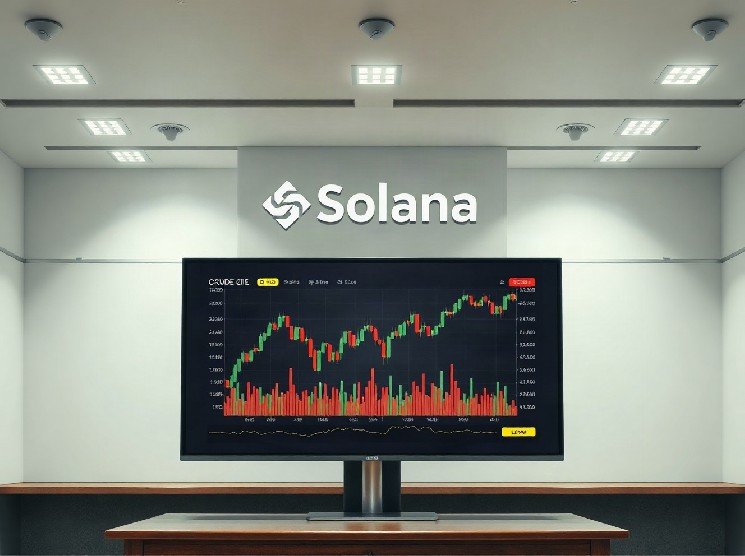
Solana-based decentralized exchange GMTrade has introduced 24/7 perpetual futures trading for commodities, including gold (XAG), silver (XAG), and West Texas Intermediate crude oil (WTI). The new products allow traders to gain price exposure to these assets without holding the physical commodities or tokenized versions, according to a report from Crypto Briefing.
How the Commodity Perpetuals Work
The perpetual futures are cash-settled and track the spot prices of the underlying commodities. Price data is sourced from Chainlink Data Streams, a decentralized oracle network that provides low-latency, high-frequency price feeds. This integration is designed to ensure accurate and reliable pricing for traders, even during periods of high volatility.
Unlike traditional commodity futures, which have expiration dates, perpetual contracts do not expire. Instead, they use a funding rate mechanism to keep the contract price aligned with the underlying asset’s spot price. This model has become popular in crypto derivatives, and its extension to commodities marks a notable step for decentralized finance (DeFi).
Why This Matters for DeFi Traders
Commodity trading has traditionally been dominated by centralized exchanges and institutional players. By bringing these markets on-chain, GMTrade aims to democratize access, allowing retail users to trade gold, silver, and oil with the same ease as trading crypto assets. The 24/7 availability is a significant advantage over traditional markets, which close on weekends and holidays.
This move also reflects a broader trend of DeFi platforms diversifying beyond crypto-native assets. The use of Chainlink Data Streams addresses one of the key challenges in DeFi—reliable price data—and could set a precedent for other platforms looking to expand into traditional asset classes.
Implications for the Solana Ecosystem
GMTrade’s expansion is a positive signal for Solana’s DeFi ecosystem, which has been working to attract more derivatives activity. Solana’s high throughput and low transaction fees make it well-suited for the fast-paced nature of perpetual trading. The addition of commodity perps could bring new users to the network and increase overall trading volume.
Conclusion
GMTrade’s launch of 24/7 commodity perpetual futures on Solana represents a meaningful development in the convergence of traditional and decentralized finance. By leveraging Chainlink’s reliable price feeds, the exchange is offering a new way for traders to access global commodity markets. As DeFi continues to evolve, products like these may help bridge the gap between crypto and traditional finance, providing more options for investors worldwide.
FAQs
Q1: What are perpetual futures? Perpetual futures are derivative contracts that allow traders to speculate on the price of an asset without an expiration date. They use a funding rate to keep the contract price close to the spot price of the underlying asset.
Q2: How does GMTrade ensure accurate pricing for commodities? GMTrade uses Chainlink Data Streams, a decentralized oracle network that aggregates price data from multiple sources to provide reliable and tamper-resistant price feeds.
Q3: Can traders take physical delivery of the commodities? No, these are cash-settled perpetual futures. Traders are exposed to the price movements of gold, silver, and oil, but do not own the physical assets or any tokenized representation of them.
Related Reading
Solana sets new record with 5.2 billion non-vote transactions in August
Gold Dips to Two-Week Low as Geopolitical Tensions Reintroduce Uncertainty
Binance’s Stock-Linked Perpetual Futures Volume Surges 15-Fold to $445B in Six Months
Gold Faces Risk of Bigger Drop as Technicals Turn Bearish
Gold Price Outlook: Key Support Levels and Recovery Scenarios
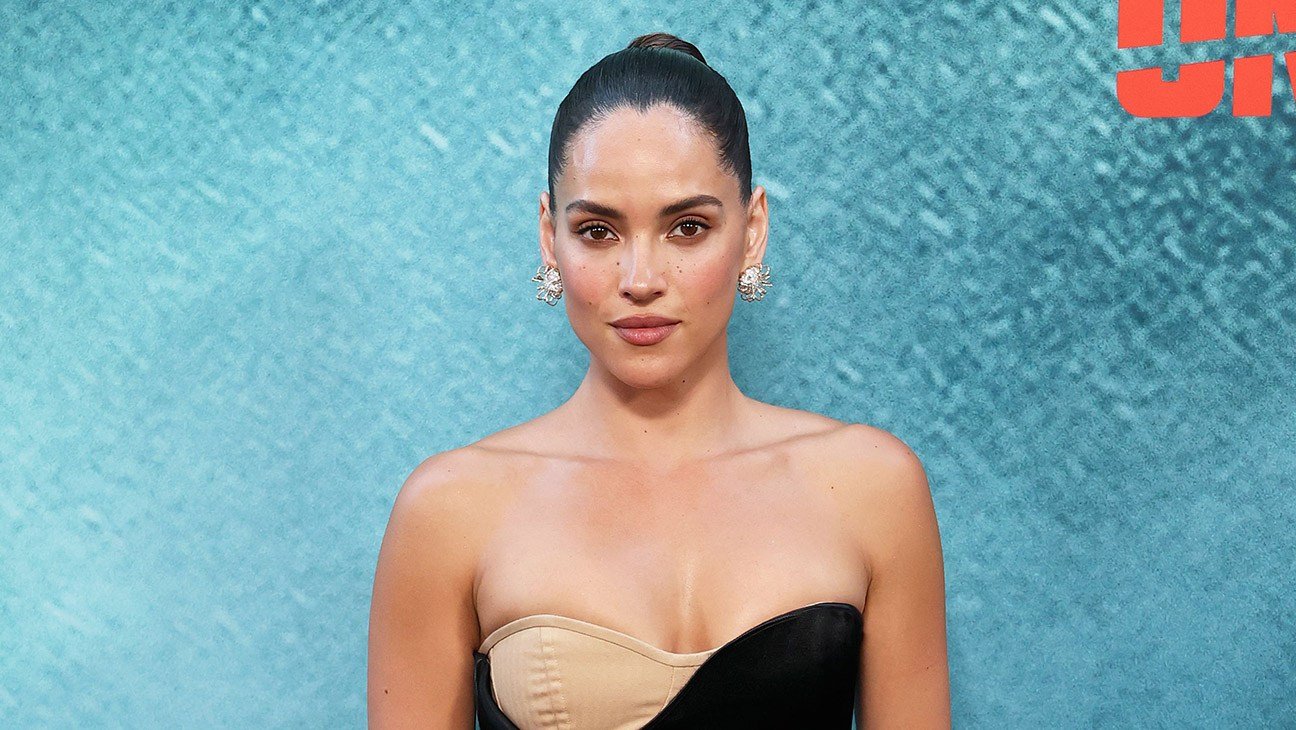
Adria Arjona’s career is all gas and no brakes — except for when she was driving her truck near the set of Onslaught.
The in-demand actor is currently juggling a bevy of projects, including the aforementioned gonzo horror-thriller from Adam Wingard, a top-secret role in James Gunn’s Superman (2025) follow-up, Man of Tomorrow, and Michael B. Jordan’s The Thomas Crown Affair. Arjona also has several indie films in various stages of production, and her female lead role in Ed Brubaker’s Criminal series, based on his own Marvel/Image comic book, is finally nearing release.
When Arjona first met with Wingard to discuss Onslaught and her character, Celeste, a traumatized former Army sniper, she arrived in a 1979 Ford F-150. She suspects the truck may have helped her clinch the role, as Wingard had already envisioned Celeste driving something similar. After landing the part, Arjona even tried to get her real-life truck into the movie, but its bright orange paint job created some lighting challenges.
Arjona still drove her pickup to the New Mexico set, and there were days when the transportation department had to come to her rescue.
“I would get stuck in the middle of the highway. It’s a shitty truck. I bought it on cars.com. I shouldn’t have. It was so cheap, and now half of my bank account has gone toward trying to fix this truck,” Arjona tells The Hollywood Reporter in support of Onslaught’s Sept. 4 theatrical release.. “It finally runs, but when I was filming this movie, it didn’t. So the transport department had to come pick me up in the middle of a highway a couple times so I wouldn’t be late to set.”
Celeste’s PTSD has driven her into isolation at a remote trailer park, far from her seven-year-old daughter, Daisy (Blake Kennedy). But when a work emergency forces Daisy’s father and Celeste’s ex-husband (Jacob Scipio) to drop her off unexpectedly, their reunion coincides with a nearby military experiment going catastrophically awry. Suddenly, Celeste must protect her daughter from three super soldiers who are programmed to kill anyone in their path.
When trouble first arrives at the Windy Oasis mobile home community, Celeste goes to retrieve one of her assorted weapons. This leads to the moment in the trailer when she spins a handgun’s cylinder in front of her cabinet or rack of guns.
“That shot [of her spinning the gun cylinder in front of her arsenal] was one of the hardest shots I’ve had to do. I had to nail it in maybe three takes because we were running out of time,” Arjona recalls. “On the first take, the entire armory fell on top of me. It was a trailer packed with so many people. If somebody moves, everything moves. Adam probably still has the footage. We were like, ‘Fuck! Shit! Put it back.’ We then had time for one last shot, and [prop master/armorer] Brett [Andrews] was like, ‘Breathe, focus, you got it.’ And that’s the take that’s in the trailer.”
Next summer, Arjona will appear as a mystery character in Gunn’s Man of Tomorrow. Consequently, many fans are wondering who she’s playing, forcing her to choose her words very carefully throughout Onslaught’s promotional campaign. In any event, Arjona felt right at home on set, particularly given her history with DC Studios co-heads James Gunn and Peter Safran, who produced her first film, The Belko Experiment (2016), a decade ago.
“Man, it was so cool. It’s just so easy to step back onto a set with people that you feel familiar with because there’s already trust. That’s how I felt coming [onto the Man of Tomorrow set] and stepping into this role,” Arjona shares. “James Gunn and Peter Safran were right there, and I had all the trust. I have all the support. I was like, I’m good because they’ve got me.”
As for Andor, the Emmy-winning series left Arjona’s Bix Caleen in a position where further adventures could be explored involving her and her child (Cassian Jr.? Cassie?) with Cassian Andor (Diego Luna). Arjona isn’t ruling out the possibility, but she’s also hesitant to do anything without series creator Tony Gilroy.
“Listen, I am the most loyal Gilroy there is. If Tony Gilroy is in, I’m right there with him,” Arjona says. “I respect so much what he’s created, and I love him so dearly that I don’t want to put my fingerprints on it. It might be too soon. I don’t want to say never, but I love the way he ended that show. I respect it, so I want to keep it like that for now.”
Prior to Andor season two, Arjona collaborated with Richard Linklater and Glen Powell on the romantic crime comedy, Hit Man, and she was heavily, yet unofficially, involved in the scripting process. For example, she not only wrote the film’s most memorable line of, “Who the fuck is Gary!?” but she also typed it into Linklater’s computer per his insistence. Riding high on that experience, Arjona received a much different response when she tried to pitch Gilroy some Bix material for Andor’s second go-round.
“I did call Tony with a bunch of ideas, and he was like, ‘No, no, no. Not this movie, baby.’ And I was like, ‘Damnit. Okay,’” Arjona says. “I was feeling very confident in my writing, but not with Tony Gilroy.”
Below, during a conversation with THR, Arjona also reveals the Onslaught character detail she brainstormed with her partner Jason Momoa.
***
Onslaught came your way as you were shooting Criminal and about to go shoot Splitsville a couple years ago. Considering Celeste is no walk in the park, what was your mindset at the time?
Right before I went to go meet [director] Adam Wingard, I was like, “I don’t know if I can do this one. This is going to be tough.” Celeste is such a multi-layered character, and I was tired. I was a tired girl. Going from a heist show like Criminal and a comedy like Splitsville to this world, I was like, “Oh man.”
But within 30 minutes of meeting Adam, I was like, I’m in. I want to do it. It has to be mine. I’m obsessed with this dude. I’m obsessed with this script. He pitched me the opening 25 minutes of the film, and I was like, “That sounds bonkers. It sounds like the coolest movie ever.” He already had a lot of the ‘80s-inspired soundtrack as well, and it just feels like a John Carpenter movie.
I love passionate directors who take swings, and I was like, “I want to support you. I want to go into the trenches with you. Let’s go.” So there was no turning back after that, and I’m so happy I did it. I’m so honored.
Adria Arjona as Celeste in Onslaught.
Richard Foreman/A24
Onslaught is an indirect sequel to You’re Next and The Guest. It completes a spiritual trilogy. Did Adam ask you to watch those films for a tonal reference? Or did he want you to dig more into the ‘80s?
Adam has no ego whatsoever, so he would never tell me to watch his own movies. He’d be like, “Just stick to the script. Let’s focus on this one.” But he did make me watch some ‘80s movies: Aliens and Terminator.
Funnily enough, our main thing was music. We shared a lot of it. He had some songs that are all in German, and some choices for the opening sequence are just wild because it makes you question tonally where he’s going with the movie. It can be really funny at times, and then suddenly, there’s heavy action. It’ll be really gory, and you’ll be scared shitless, before it swings right back into comedy. So the songs he shared helped me understand where we were living, tonally.
Celeste’s relationship with her adorable seven-year-old daughter (Blake Kennedy’s Daisy) is rather interesting. Daisy behaves more like a grown-up than Celeste does. She’s highly organized with her rolling suitcase. She also does the dishes, waters the plants and has proper manners. It’s Celeste who behaves more like the messy kid, and she tries to teach her daughter to follow suit. How did you and Adam land on that reversal?
It was a conversation Adam and I had at the beginning. We were both so tired of seeing the perfect mom, and we both wanted to deconstruct that a little bit. It meant finding a way for Celeste to have a little bit more tough love. She’s like, “Dude, don’t waste your time on manners. There’s so much shit going on in the world. What are we doing?” She’s a vet; she doesn’t have time for that. Every time she feels something, she just pushes it down. But her ex is teaching their daughter to express her feelings and meditate. That’s not Celeste, and it doesn’t mean she’s a bad mother. But because we made those choices at the beginning, Onslaught really becomes a mother’s redemption story.
Did you come up with a backstory for what happened between Daisy’s father and Celeste? Did her PTSD just make it impossible for her to lead a domestic life with them?
Yeah, she lost a couple friends [during battle], and it traumatized her. To everybody else, Celeste is this weird conspiracy theorist who lives in this trailer park. She isolates herself because everybody thinks that she’s crazy, and at the end of the day, she was right.
Adria Arjona as Celeste in Onslaught
Richard Foreman/A24
As you mentioned, Celeste is shell-shocked from her time as an Army sniper. Her PTSD affects her ability to pull the trigger sometimes, and so she grounds herself by digging her ring into her forearm. What did you make of that trauma response or release valve?
That was my idea.
I figured it was.
Really?
I was the first journalist you told about the stick-and-poke tattoo you received on the set of Andor season two …
That’s true.
So I likely connected one form of skin trauma to another.
(Laughs.) Her tremor was in the script, and I was like, There has to be a release. There has to be something that counteracts it. What is it? I was actually discussing it with my partner [Jason Momoa], and we both came up with this idea. I then told Adam: “Yo, what do you think if we have this scab on her forearm? You can tell she’s been doing this for a long time.” And then, to be funny, I was like, “Can the ring be her old engagement ring and can it be empty?” That would mean she pawned the diamond and bought a rifle or a bunch of beer or something. So that’s how she inflicts pain on herself, and it’s the only feeling she’s comfortable experiencing.
I watched a lot of interviews of vets and soldiers who’ve gone on deployment, and [pain] is sort of their comfort. It’s where they feel at ease. That stayed with me, and it really traumatized me. I was like, Man, that’s horrible. We need to showcase that pain is a big character. So I told Adam all of that, and he looked at me and said, “You’re insane. Let’s try it.” And within two hours, he had a prosthetic made for us to try out.
I read something that suggested Celeste’s truck is actually your truck. Is that true?
Funnily enough, I drive a [1979] Ford F-150, and to be fair, I think that’s why Adam gave me the role. I drove it to our first meeting, and he was like, “Is that your truck? That’s what Celeste drives.” And I was like, “Oh, I’m like Celeste.” So that might be one of the reasons why he cast me.
I then brought my bright orange truck to New Mexico where we filmed, and no one wants to see a bright orange truck in a movie. Our cinematographer [Oren Soffer] was like, “That’s going to be hard to pull off.” So it ended up not being my truck in the movie, but I did have my truck on set.
It became a whole thing with transport because I would get stuck in the middle of the highway. It’s a shitty truck. I bought it on cars.com. I shouldn’t have. It was so cheap, and now half of my bank account has gone toward trying to fix this truck. It finally runs, but when I was filming this movie, it didn’t. So the transport department had to come pick me up in the middle of a highway a couple times so I wouldn’t be late to set.
Adria Arjona as Celeste in Onslaught
Richard Foreman/A24
We’re introduced to Celeste’s arsenal of weapons at the start of the movie, and Chekhov’s gun makes us think she’s going to wield them all at some point, especially the one her ex referenced. But then the movie puts her on her back foot the whole time and challenges her to defend her and her daughter in other ways.
Yeah, once you see her arsenal, you’re like, Oh, she’s going to save the day. But I love the fact that Reggie [VelJohnson] and Eric’s [Wareheim] characters have a chance to redeem themselves as neighbors in the process. Celeste kicks some ass, for sure, but she has help as well. That was the whole point of her not getting to use her arsenal, which I think was really smart.
That shot [of her spinning the gun cylinder in front of her arsenal] was one of the hardest shots I’ve had to do. I had to nail it in maybe three takes because we were running out of time. And Brett Andrews, our armorer and prop master, is the reason I look cool in this movie. He came into my trailer [to teach me that move], and I practiced it nonstop the whole day. We knew we didn’t have that much time for that shot, and it’s so close-up that any tiny little mistake was going to show.
On the first take, the entire armory fell on top of me. It was a trailer packed with so many people. If somebody moves, everything moves. Adam probably still has the footage, but the whole thing just fell on top of me. We were like, “Fuck! Shit! Put it back.” We then had time for one last shot, and Brett was like, “Breathe, focus, you got it.” And that’s the take that’s in the trailer.
So this is the part of the interview where the publicists in the gallery start biting their nails …
(Laughs.)
To play it safe, how was your reunion with James Gunn on the set of Man of Tomorrow? [Gunn wrote and produced her first movie, The Belko Experiment.]
Man, it was so cool. I haven’t had the opportunity to do sequels to a lot of things. Andor was the first time that I did a second season of something, and it felt so safe. So I understand why people [in franchises] are like, “Oh my God, we’ve been together for ten years.” It’s just so easy to step back onto a set with people that you feel familiar with because there’s already trust. You’re not trying to gain anything on that first day.
So that’s how I felt coming [onto the Man of Tomorrow set] and stepping into this role. James Gunn and [co-DC Studios head] Peter Safran were right there, and I had all the trust. I have all the support. I was like, I’m good because they’ve got me. I’ve only felt that once before on the second season of Andor, and it’s a great feeling because the first days on set are always scary.
Now that you’re one of the most employed actors in town, have you pitched a Bix and Cassian Jr./Cassie show to Lucasfilm yet?
Listen, I am the most loyal Gilroy there is. If Tony Gilroy is in, I’m right there with him. I respect so much what he’s created, and I love him so dearly that I don’t want to put my fingerprints on it. It might be too soon. I don’t want to say never, but I love the way he ended that show. I respect it, so I want to keep it like that for now.
Bix Caleen (Adria Arjona) in Tony Gilroy’s Andor Season Two.
Courtesy of Lucasfilm
Earlier this year, Tony and I had a long conversation in which he welcomed my one quibble with season two. I wanted to see Bix go on a proper mission with Cassian (Diego Luna). When he went undercover on Ghorman as a fashion designer named Varian Skye, she could’ve served as his muse or model. To see them both wearing high fashion for a change, I just can’t get that image out of my head. Anyway, were you frustrated at all that Bix’s missions were mostly off screen?
No, because Tony challenged me in a different way. He instead gave me periods of time in Bix’s life to jump into that were very complex and complicated. I knew that I was able to play an action piece, but those emotional beats were really strong for Bix and really challenging for me. So I wasn’t necessarily frustrated because I respect Tony’s writing. I was like, Hmm. Okay, cool. There’s a reason and a rhythm to the way that he writes.
I never want to get in Gilroy’s way, even though I [pitched him some ideas] after writing the Hit Man script with Richard Linklater and Glen Powell. All three of us collaborated together. So I did call Tony with a bunch of ideas, and he was like, “No, no, no. Not this movie, baby.” And I was like, “Damnit. Okay.”
Yeah, you literally wrote Hit Man’s show-stopping “Who the fuck is Gary!?” line, so it sounds like you were feeling yourself after that.
(Laughs.) Yes, I was feeling very confident in my writing, but not with Tony Gilroy.
*** Onslaught opens September 4 in movie theaters nationwide.
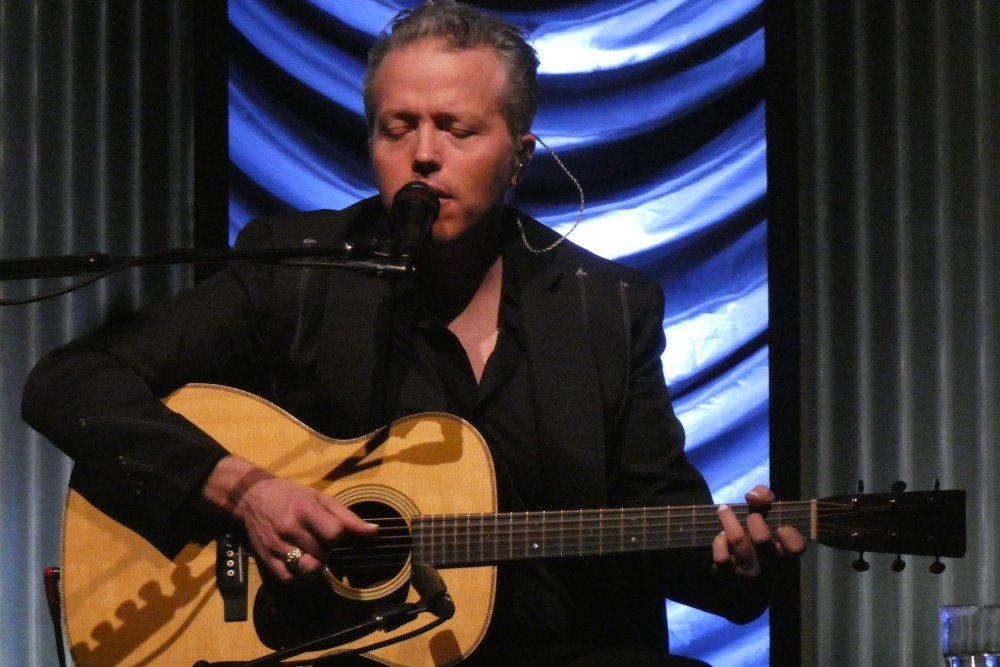
Grammy-winning Americana crooner Jason Isbell is one of several new litigants in a new federal lawsuit against the AI music generator Suno, arguing the company has allowed users to produce tracks based on musicians’ identities with its models without their consent.
The lawsuit — filed Monday in the U.S. District Court in Massachusetts by a group that includes Isbell, Cracker and Camper Van Beethoven frontman David Lowery, Texas blues musician Guy Forsyth and Florida-based saxophonist Eduardo Calle — compared Suno to the Borg, the “Star Trek” villains known for their “resistance is futile” method of absorbing their victims into their hive mind by restructuring their minds to become a similar, if changed versions of themselves. That is what Suno does when users type an artist’s name into its models to try and produce sonic variants of their work, attorney Alan D. Rose wrote in the complaint for the plaintiffs.
“It encoded musicians’ identities into its AI model to create its commercial product without consent, and now exploits those identities by publicly using musicians’ names to Suno’s considerable commercial benefit,” Rose wrote, claiming the company encouraged its marketing partners to tout that ability while minimizing the company’s alleged choice.
The plaintiffs are seeking class-action status for the lawsuit, statutory and punitive damages and for Suno to be prevented from capturing and monetizing artists’ identities. “A musician’s identity is their property, but Suno took it without consent,” Rose wrote. “This lawsuit is how these musicians resist the premise that resistance is futile.”
Suno declined to comment. The company’s CEO Mikey Shulman wrote in a blog post last month that Suno did not retain artist names in its metadata and that its models did not allow users to prompt for specific artists or songs.
But the plaintiffs claimed that Suno retained “voiceprints” of artists, and users could bypass Suno’s guardrails and access those “prints” by specific prompts that skirt using the artist’s name by asking for tracks invoking their “tone and phrasing,” by using real names instead of stage names (as in the case of the rapper Common) or by adding spaces between the letters of their names, among other methods.
The case differs from other litigation efforts against Suno for focusing not on the issues of copyright, which have spurred several lawsuits against the company and thus settlements providing certain catalogues for Suno’s use, and instead on the element of identity, which the plaintiffs claimed is usually retained by a musician regardless of a settlement deal or whether an artist opts into allowing Suno to train off their work.
“Many musicians sell their rights to specific recordings,” the complaint read. “However, the identity right belongs to the performer regardless of who owns any copyright in an underlying recording unless the identity right is separately licensed, typically for merchandise under an artist’s control. This lawsuit seeks to recover the value of those misappropriated identities and to stop their ongoing commercial exploitation.”
Other lawsuits against Suno include ongoing cases by the independent music publisher Round Hill Music and the major labels Universal Music Group and Sony Music Entertainment. Warner Music Group settled its case against Suno last year, and Suno is developing a model in partnership with the label.
CEL Solicitors says it has traced more than 5,500 $BTC that it believes belong to former users of Intersango, an early Bitcoin exchange that disappeared more than a decade ago.
At Bitcoin’s current price near $78,824, those coins carry a value of roughly $433.5 million.
One former UK customer has already recovered 61 $BTC from the exchange’s remains, giving other users a concrete example of an old balance turning into a successful ownership claim.
The investor instructed CEL on Jan. 20, and the case settled on May 28, returning all 61 coins, now worth about $4.81 million.
CEL says former Intersango users may have claims against the more than 5,500 $BTC it has traced, and each claimant needs evidence connecting an old account balance to the assets.
That requirement places unusual value on records created during Bitcoin’s earliest years. Emails, bank statements, support tickets, and account records that once documented balances worth a few dollars can now support claims worth millions.
Bitcoin turned forgotten balances into fortunes
Intersango operated when Bitcoin still traded in the low double digits. In October 2012, the exchange planned to close its US-dollar market because trading activity had become too thin to justify keeping it open.
The exchange offered 625 $BTC for $12.10 each, valuing the entire batch at roughly $7,563 at the time. Those same 625 $BTC are worth about $49.3 million at today’s price.
One Bitcoin now represents almost $79,000, while a 10 $BTC balance would be worth about $788,000 and 100 $BTC would approach $7.9 million.
CEL says Intersango began winding down during late 2012 as GBP and USD trading ended. The website had gone dark by early 2014, and Companies House records show Intersango Ltd ceased to exist on March 22, 2016.
CEL says useful evidence can include the email address attached to an account, correspondence with Intersango and bank statements documenting transfers to the exchange.
The firm also said obtaining bank records from almost 15 years earlier became a major hurdle in establishing ownership in the 61 $BTC case.
California court records place those recovery efforts inside a wider dispute over customer Bitcoin connected to Intersango. A 2025 Court of Appeal opinion in Norman v. Strateman describes allegations that Patrick Strateman closed the exchange, retained Intersango assets, and refused to return customer Bitcoin.
The litigation also involved a settlement intended to protect and return customer assets. The appellate ruling sent that settlement back for judicial review of its fairness, establishing a documented legal framework around unresolved Intersango property claims.
A separate 2025 filing describes another alleged customer balance of 15.46306965 $BTC. The filing says Intersango’s customer ticketing system confirmed the balance before the platform disappeared, putting its current value near $1.22 million.
The 61-$BTC recovery and the 15.46-$BTC court claim show that identifiable balances survived in records long enough to support ownership claims more than a decade later.
The bull case depends on former users finding the evidence
Higher Bitcoin prices give former customers stronger financial incentives to search old inboxes, request archived bank statements, and fund legal work around balances they may have written off years ago.
At $100,000 per Bitcoin, the 61-$BTC recovery would be worth $6.1 million. The alleged 15.46-$BTC balance would reach about $1.55 million, and CEL’s traced 5,500-$BTC pool would reach $550 million.
Even relatively small balances can justify extensive document searches once each Bitcoin carries a six-figure value. A customer who left 5 $BTC on Intersango would be pursuing $500,000 at that price.
Modern blockchain tracing adds another layer to the recovery process because investigators can reconstruct asset movements across a public ledger that has preserved transactions since Intersango operated.
Personal ownership still requires records connecting an individual to an exchange account and a specific balance.
That puts users with surviving documentation in the strongest position to test claims against the traced assets. The 61-$BTC settlement provides a working example of how that process can reach a resolution even when the exchange disappeared more than a decade earlier.
The bear case is an evidence problem
Bitcoin could fall to $50,000 and still leave CEL’s traced pool worth about $275 million. The 61-$BTC recovery would be worth $3.05 million at that price, and the alleged 15.46-$BTC balance would remain worth roughly $773,000.
Large balances would still justify expensive recovery work, while smaller claims could become less attractive once legal costs, record retrieval and cross-border proceedings consume a greater share of the potential payout.
The bigger obstacle is the age of the records. Former users may have lost access to old email accounts, discarded bank statements or deleted exchange correspondence during years when their balances carried little economic value.
Blockchain records can trace coins through wallets and transactions, while ownership claims require evidence tying those assets to a particular user. Customer interests may also intersect with shareholder disputes, procedural rulings and competing claims over assets connected to the former exchange.
CEL’s 5,500-$BTC figure defines the potential scale of the property it says it has traced, while the amount that former users recover will depend on how much of that pool can be tied to provable balances.
Thousands of Bitcoin may depend on whether early Intersango users still possess an email, support ticket, or bank statement created when Bitcoin traded for little more than $12.
As Donald Trump now rallies for a federal film and TV tax incentive, Canada’s actor union is urging the feds in Ottawa to bolster its own country’s domestic production sector.
“It’s now more important than ever, that Canada keeps its focus on producing more Canadian stories here at home,” ACTRA national president Eleanor Noble said a statement on Tuesday. “Canada must support its own industry, and we must carve out our own place in the world.”
And ACTRA Toronto, the performer union’s biggest branch, urged Ontario, led by Premier Doug Ford, to raise the value of its provincial tax credit for foreign and local producers to stay competitive. “Canadian and international productions are a life blood for our members. If Ontario wants to remain a world-class production centre, we need a balanced plan to attract international investment, grow Canadian production and protect performers,” stated Kate Ziegler, president of ACTRA Toronto.
Calls for Ontario’s film tax credit for foreign and local producers to be raised in value started in early 2025 when British Columbia raised its own tax incentive for major studios and streamers shooting locally and New Jersey introduced among the most generous tax credit programs among U.S. states.
The ACTRA leadership comments followed Trump on Monday expressing support for the idea of a federal tax credit in a lengthy Truth Social post. Advocates have called a federal tax credit a crucial step for the U.S. to compete with film incentives offered by Canada and other rival locales like the U.K. and Australia, among others.
ACTRA, while recognizing existing legislation has yet to be passed, pointed to Trump’s intervention continuing an ongoing debate on ways to bring U.S. production back across the Canadian-U.S. border, and how Canada should respond. The Canadian actors union recognizes its membership secures wide employment on American film and TV production north of the border, as do local crews, creatives and support businesses.
But ACTRA cautioned American production in Canada cannot be the foundation of the country’s media and entertainment sectors to ensure longterm sustainability.
“If Canada does not strengthen its domestic industry with Canadian stories, made by Canadian storytellers, we risk one of two outcomes: American productions electing to stay in the U.S. as a result of their own tax-incentives, hollowing out our production ecosystem; or they stay, leaving Canada increasingly dependent on a single foreign client for the health of our industry. A refrain which is playing out across Canada amid our ongoing trade dispute,” the performers union said in a statement.
Trump’s call for a federal film tax credit also follows his fight with Canada over tariffs escalating into a full-blown trade war, with implications for how homegrown film and TV production is financed and produced.
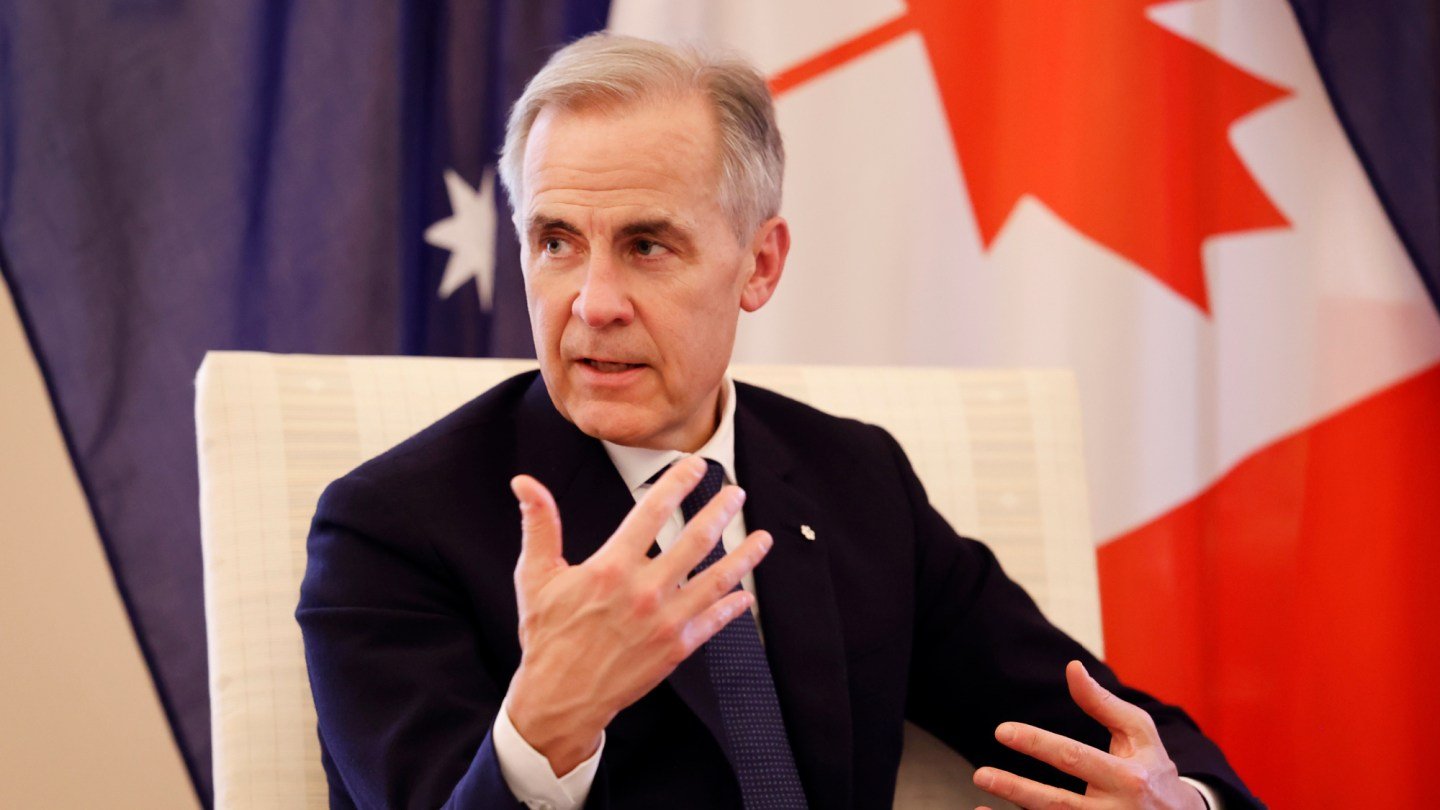
That cross-border trade war shows little signs of being resolved anytime soon after Canadian Prime Minister Mark Carney in late August said trade talks were abandoned in part after the U.S. negotiators objected to digital-content rules around the French language that can lead to higher operating costs for U.S. companies looking to get content into French-speaking Quebec. Carney said the disagreement over French language rules for American companies amounted to an attack on Canada’s culture and identity.
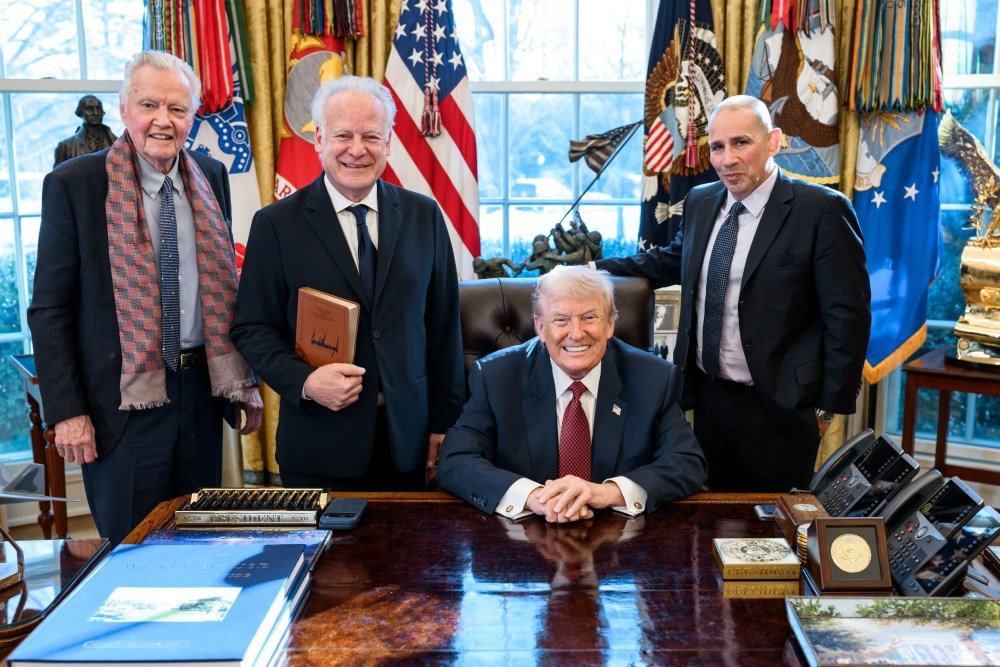
At Monday’s meeting at the White House with Trump, actor Jon Voight — who is Trump’s “special ambassador” to Hollywood — was joined by SP Media Group chairman and CEO Steven Paul and president Scott Karol. The meeting marked the latest step in an initiative that began when President Trump asked Voight, Paul and Karol to assess the challenges facing the U.S. entertainment industry and recommend measures to restore domestic production.
During the Aug. 31 meeting, Voight, Paul and Karol told the president that the industry had reached a critical point, with thousands of workers already losing jobs as producers are increasingly turning to Canada, the U.K., Australia and other markets offering competitive incentives.
Indeed, Paul cited his upcoming film about Nixon’s early years — which he said would need to be produced overseas without a viable U.S. tax incentive.
“President Trump’s public support is a major step forward for American film and television production,” Paul said in a statement. “This is about rebuilding an industry that creates high-paying jobs across the country and ensuring that American stories are made by American workers here at home. We look forward to working with leaders in both parties to turn this momentum into legislation.”
Karol told Trump that a federal incentive could revitalize the industry, return vital economic activity to the U.S. and support local communities nationwide, citing a forthcoming economic impact report prepared by the Motion Picture Association and the coalition.
“The president’s call for immediate, bipartisan action reflects the urgency facing American production,” Karol said. “A competitive federal incentive can help put crews back to work, keep investment in U.S. communities and create lasting economic benefits across the country.”
Voight, for his part, read an “impassioned letter” urging the president to respond to the industry’s growing workforce and production crisis, according to the group.
The group helped form a broad coalition supporting the initiative, following extensive discussions with entertainment unions, guilds, studio and streaming executives, producers, writers, directors, actors, talent agencies, state film commissioners and other industry leaders. The coalition includes the Motion Picture Association (MPA), SAG-AFTRA, Teamsters, the Writers Guild of America East and West, the Directors Guild of America, the Independent Film & Television Alliance, Producers United, IATSE, the Coalition of American Producers, Film USA and the Producers Guild of America.
As part of the effort, Voight, Paul and Karol also met with MPA Chairman and CEO Charlie Rivkin and SVPs of federal government affairs Josh Rogin and Hap Rigby.
The MPA has been working with Voight to push for a 20% tax credit for U.S.-based productions.
The group first presented its recommendations to President Trump at Mar-a-Lago, identifying a federal film and television production incentive as its leading priority. After Trump initially raised the prospect of tariffs on films made outside of the U.S. as a possible solution, Voight, Paul and Karol continued working with the coalition, White House advisers and members of Congress to focus the proposal on a federal incentive. A subsequent White House meeting in May further advanced the approach as the group detailed production slowdowns across the country, including in Georgia.
Following Monday’s meeting, Trump posted on Truth Social: “Congress should approve, immediately, a Federal Production Incentive to create Entertainment Jobs in America,” calling on Republicans and Democrats to work together and immediately craft legislation.
In a follow-up post Tuesday, Trump wrote: “Great bipartisan response and support in Congress for the Motion Picture, Television, and Entertainment Revitalization Act. We will bring this once great industry BACK TO AMERICA. Thank you for your attention to this matter!”
Paul is an independent film producer and chairman and CEO of SP Media Group, based on the Paramount Pictures lot in Hollywood. SPMG maintains a co-financing agreement with Paramount Pictures to co-produce feature films and has financed and produced over 30 motion pictures in the past five years.
Pictured above (l. to r.): Jon Voight, Steven Paul, Donald Trump and Scott Karol in the Oval Office in May 2026
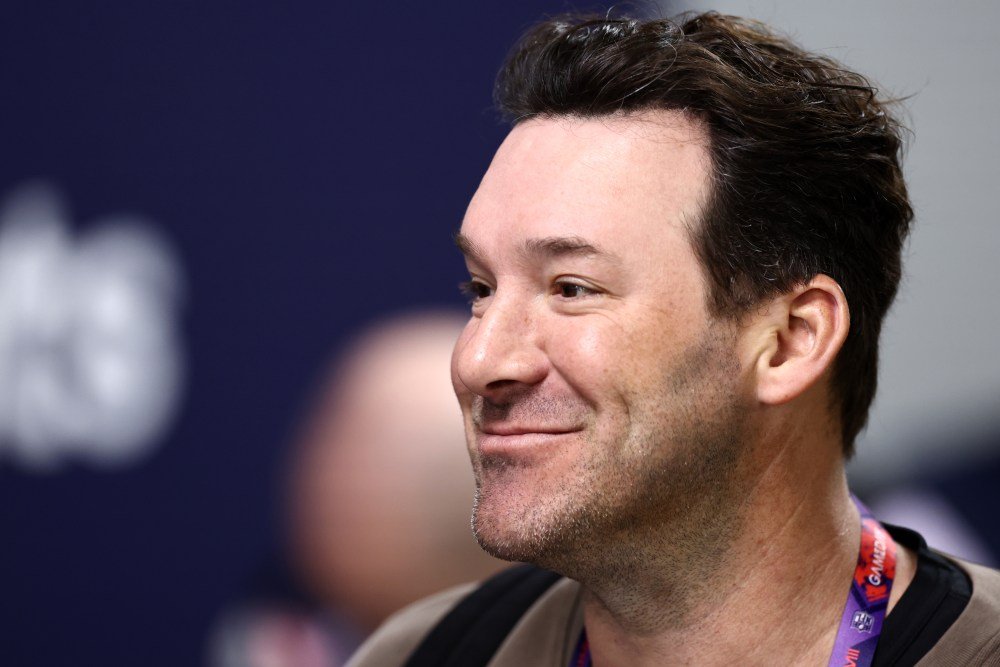
Tony Romo has analyzed plays for CBS Sports since 2017. Now he’s considering a new one, in which he hopes the network allows him to return following a run-in with the law.
Romo on Tuesday said he pleaded no contest to a charge of operating while intoxicated stemming from an incident that took place in Milwaukee in July, and expressed hope in a statement that he’d be able to resume his NFL duties for the Paramount Skydance broadcast network. CBS Sports placed the former Dallas Cowboys quarterback on leave after he was arrested following a traffic stop made on Interstate 43 in Wisconsin.
CBS has not commented on the situation since sports chief David Berson said last month that the company had no timeline for Romo’s return, and wanted to put its focus on promoting its NFL slate. CBS Sports has tapped JJ Watt to pick up duties alongside regulars Jim Nantz and Tracy Wolfson when the network’s first Sunday football telecast takes place September 13.
“The past month has been difficult, but it has also been personally significant,” Romo said via a statement released on social media “It has required me to confront and own my mistakes fully — to the Lord, to myself, to my family and now to the public.”
He cited multiple back surgeries that spurred his retirement from the NFL as a factor in the incident, noting they “left me with constant, debilitating pain” which “led to a dependence on pain medication, and my efforts to get off those medications led to an over-reliance on alcohol.”
“None of this is an excuse,” Romo said. “These are my failures and I take responsibility for them.”
Romo, whose deal with CBS was valued in 2020 at about $17 million per year, has been an instrumental part of the company’s roster of sports talent, and the company’s decision to put him on leave could have consequences beyond who will call the opening game in CBS’ next season of telecasting professional football in the afternoon. The NFL has already held preliminary talks with CBS parent Paramount Skydance, according to two people familiar with the matter, about certain terms of a new rights deal. The change of control of the company, which is backed by the Ellison family, who bought Paramount from longtime owner Shari Redstone, triggered the league’s ability to discuss terms.
CBS, like Fox, NBCUniversal, Disney and Amazon, is in the middle of an 11-year pact with the NFL that will keep games tied to those companies through 2033. The challenge? The league has an option that allows it to renegotiate terms with most of the companies after 2029, and with Disney after 2030.
Romo only had experience on the field when he joined CBS Sports in 2017 as the lead game analyst on the network’s popular “NFL on CBS.” Behind the scenes, however, Romo worked with CBS football producer Jim Rikhoff to find his footing in the studio. “We rehearsed different games, old games, took the audio off, did a lot of trial and error, until we found his voice,” Rikhoff told Variety in 2019. “He’s experienced and talks about the games in ways that most people understand,” he said. “It really feels authentic. I try to stay out of his way and give him as much leeway as I can.”
Romo’s acumen for predicting game play drew notice almost immediately, and lent new polish to a broadcast that has been around since the days of Brent Musburger and Pat Summerall.
Romo said he has enlisted doctors to help him “make the necessary changes” for his well-being. “As I turn my attention to my health, my family, and, in time, my return to CBS, I kindly ask for privacy during this period,” Romo added. Given the importance of NFL games to the business of CBS and the popularity of the game among American audiences, it’s not clear he’ll get it.