If you purchase an independently reviewed product or service through a link on our website, The Hollywood Reporter may receive an affiliate commission.
Two social media sensations have joined forces on a limited-edition launch that blends a soft aesthetic with an even softer feel.
On Tuesday, Oct. 14 at 8 a.m. PT/ 11 a.m. ET, Lola Blankets and LoveShackFancy are dropping their first-ever co-designed faux fur throws, pairing the former’s unmatched plush fabric with the latter’s unmistakable feminine motifs. The result is the Lola Original covered in two collaboration-exclusive colorways: Rosy Bows and Petal Pink. Each is available in four sizes: Baby ($125), Medium ($275), Large ($325) and XL ($425).
As for the two designs, Rosy Bows features LoveShackFancy’s signature bow motif, while Petal Pink is double-dyed for a frosted, dimensional effect. Each blanket comes with an exclusive branded tote bag, making it an easy (and highly sought-after) holiday gifting option.
For those not yet familiar, Lola Blankets’ signature throw has taken the internet — and Hollywood — by storm, and, to be honest, it really is that good. Selena Gomez, Simone Biles, Oprah Winfrey and Tate McRae are just a handful of the viral brand’s famous fans — Gomez was pictured writing her vows wrapped in the Lola Original, while Oprah’s Favorite Things 2025 list featured the newer Lola Weighted blanket.
Beyond its loyal celebrity following, Lola is known for its limited-edition creator, sports and brand partnerships, from California-cool apparel label Aviator Nation to the New York Yankees. Similarly, LoveShackFancy is no stranger to buzzy brand collabs — Havaianas, Pottery Barn, Stanley and the Dallas Cowboys Cheerleaders are just a few of its past partners.
Back to the current crossover, the Lola Blankets x LoveShackFancy styles will be available on both LolaBlankets.com and LoveShackFancy.com starting Oct. 14 at 8 a.m. PT/ 11 a.m. ET, and given each of the brands involved and the limited quantity made, product is expected to move fast.
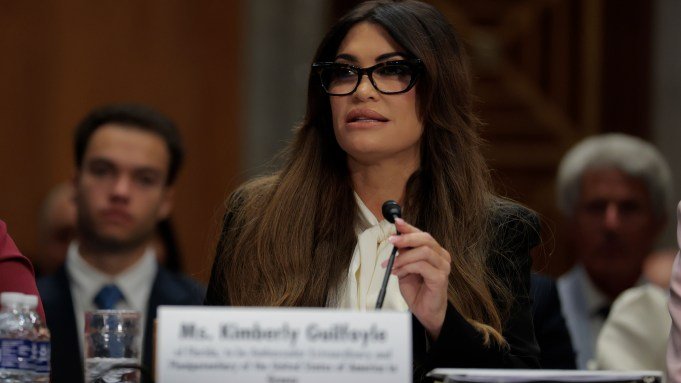
Kimberly Guilfoyle, the former Fox News host who became a high-profile figure in Donald Trump‘s orbit, resigned as U.S. ambassador to Greece following a bombshell Wall Street Journal report over alleged ethical misconduct.
Guilfoyle confirmed her exit in a post on X, shortly after the new White House press secretary, Katie Zacharia, told reporters that the administration had asked her to resign.
“While my time as Ambassador may be coming to an end, my commitment to President Trump, the America First movement, and the country I love will never end,” Guilfoyle wrote.
She also called the ethics allegations “false,” and wrote that she intended to “vigorously defend my name, my reputation, and my integrity. I have dedicated my professional life to fighting for justice, standing up for what is right, and defending the values that make America exceptional. I will not allow false accusations to define my decades of public service.”
The Journal reported last week on the contents of message exchanges between Guilfoyle and Eric Deters, a Trump donor. Deters provided text messages to the media, including one where she asked him to wire $100,000 directly to American Express to pay off a bill. Deters was seeking Guilfoyle’s help in accessing administration officials.
Trump told reporters that Guilfoyle “went to Greece. She was doing a good job, but we didn’t like what we were reading.”
Guilfoyle is the former fiance of Donald Trump Jr., but the engagement ended before Trump started his second term.
“She wasn’t a member of my family. She, I guess, dated my son a long time ago,” the president told reporters.
In 2020, Guilfoyle led the fundraising push to draw in bundlers to the Trump campaign, and even had a speaking slot at the Republican National Convention that year. She had previously had a well-established TV career, serving as co-host of Fox News’ The Five. She also is the former wife of California Governor Gavin Newsom.
The White House’s demand for her resignation dominated the headlines coming out of the first press briefing held by Trump’s new press secretary, Katie Zacharia. Appearing before reporters for the first time in the crowded briefing room, Zacharia spoke and answered questions for 14 minutes before ending the session. She told reporters that Trump would answer questions later, which he did as he set out on a three-day campaign swing.
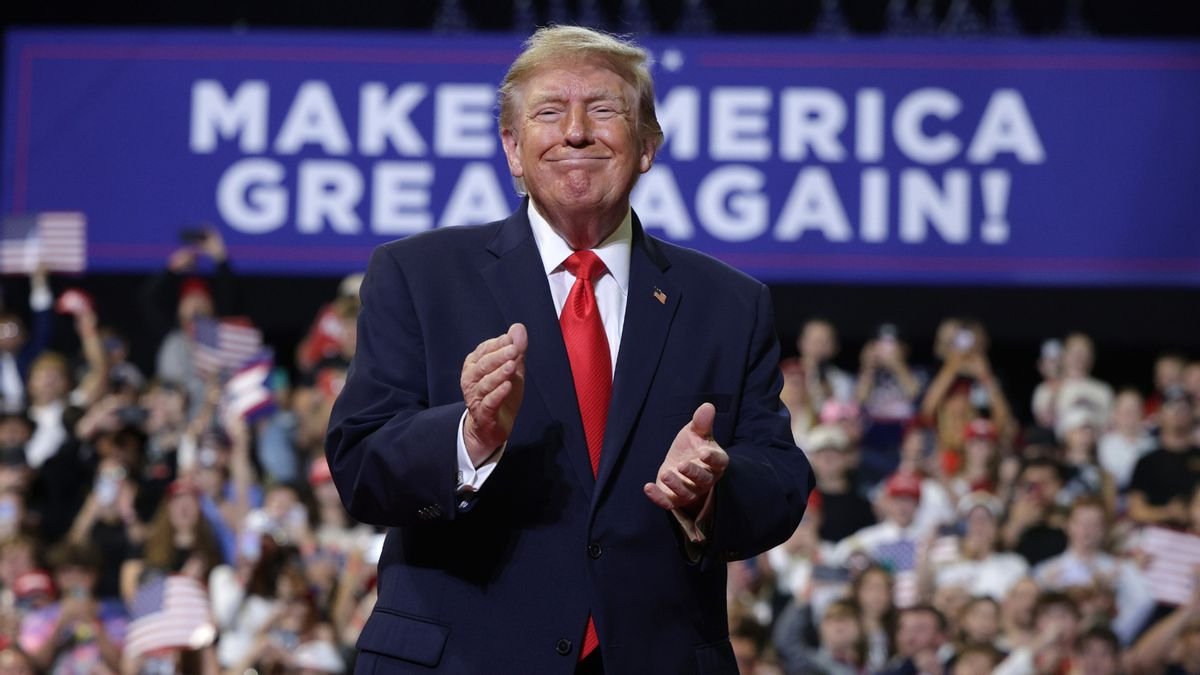
U.S. President Donald Trump said, “I will be the last Republican president” at a 2026 rally.
Rating:
Context
Trump made the remark as part of a longer speech at a Republican rally in Youngstown, Ohio, on Oct. 12. However, some posts omitted context clarifying that Trump was referring to a hypothetical scenario where Democrats control Congress and the White House, suggesting their policies would result in him being the last Republican president.
Ahead of the 2026 midterm elections, a rumor circulated that U.S. President Trump said he would be “the last Republican president.”
Peopleon X and Reddit shared the alleged quote, with some including a video clip. In the clip, Trump appeared to make the comment during a political rally.
The quote was correctly attributed to Trump.
However, some posts sharing the quote and accompanying video clip omitted context clarifying Trump’s meaning. He was referring to a hypothetical scenario where Democrats control both houses of Congress and the White House, suggesting their policies would result in him being “the last Republican president.”
The president made the comment during a speech at a rally in Youngstown, Ohio, on Oct. 12. At the rally, Trump endorsed incumbent Republican Sen. Jon Husted and the Republican candidate for governor, Vivek Ramaswamy, who are on the ballot for Ohio’s midterm elections.
Trump’s full speech can be viewed on C-SPAN. At the 1:02:00 mark, prior to the statement in question, Trump says, “We achieved more in two years than any other presidency in the history of our country, but now the radical-left Dumocrats want to burn it all down” — using a term he favors for the Democratic Party.
The president continued to criticize his opponents’ alleged voting record, saying, “Every single Dumocrat in Congress voted against our record tax cuts. They voted against no tax on tips. They voted against no tax on overtime, and they voted against no tax on Social Security for our great seniors.”
These comments, and others he made later, make it clear that Trump was theorizing he’d be the “last Republican president” if Democrats won key races in the midterm elections and subsequently took control of the White House.
The rest of his statement from the moment in question is as follows (emphasis ours):
They voted against voter ID, and they voted against proof of citizenship when you vote, so why did they do that? Because they want to cheat, OK? I saw a guy interviewed a week ago, a congressman, a Democrat. They said, why don’t you want to have somebody show their voter identification or proof of citizenship? “Uh, well, uh. Uh, it’s racist. That’s right. That’s right. It’s racist.” They come up with more s***, I mean it’s …
[applause]
“It’s racist. It’s racist.” They’re crazy. They voted against securing our border, and they want to have the border open. You know, if they get in, they’re going to open the border, and you’re going to have two more states: Washington, D.C., where Republicans get 3% of the vote, and Puerto Rico, where Republicans get 4%. So we’ll have four more senators. They want to have 23 people on the Supreme Court. They want to end the Senate, so you guys will be out of a job. What are you doing running? You’ll be out of a job based on them. They want to end the Senate.
They want to basically destroy our country and that’s what they want to do and if they get in, they will do that. They’ll be able to do that. You know, if they get in and you have a bad presidential election in the next because we have some very good people, but if you had a bad presidential or one of these lunatics got in, you will— Look at me right now. And you will say he’s going to be the last Republican president in the history of our country. I will be. I will be. I will be the last Republican president because they will add about 12 more electoral votes. They’ll add four more senators. They’ll add 10 more congresspeople, approximately. They’re going to rig the Supreme Court through … just a lot of people.
The GOP YouTube channel posted a livestream of the entire rally, including the other speakers. In that version, Trump’s statement begins at the 2:53:55 mark and matches the content of the C-SPAN clip.
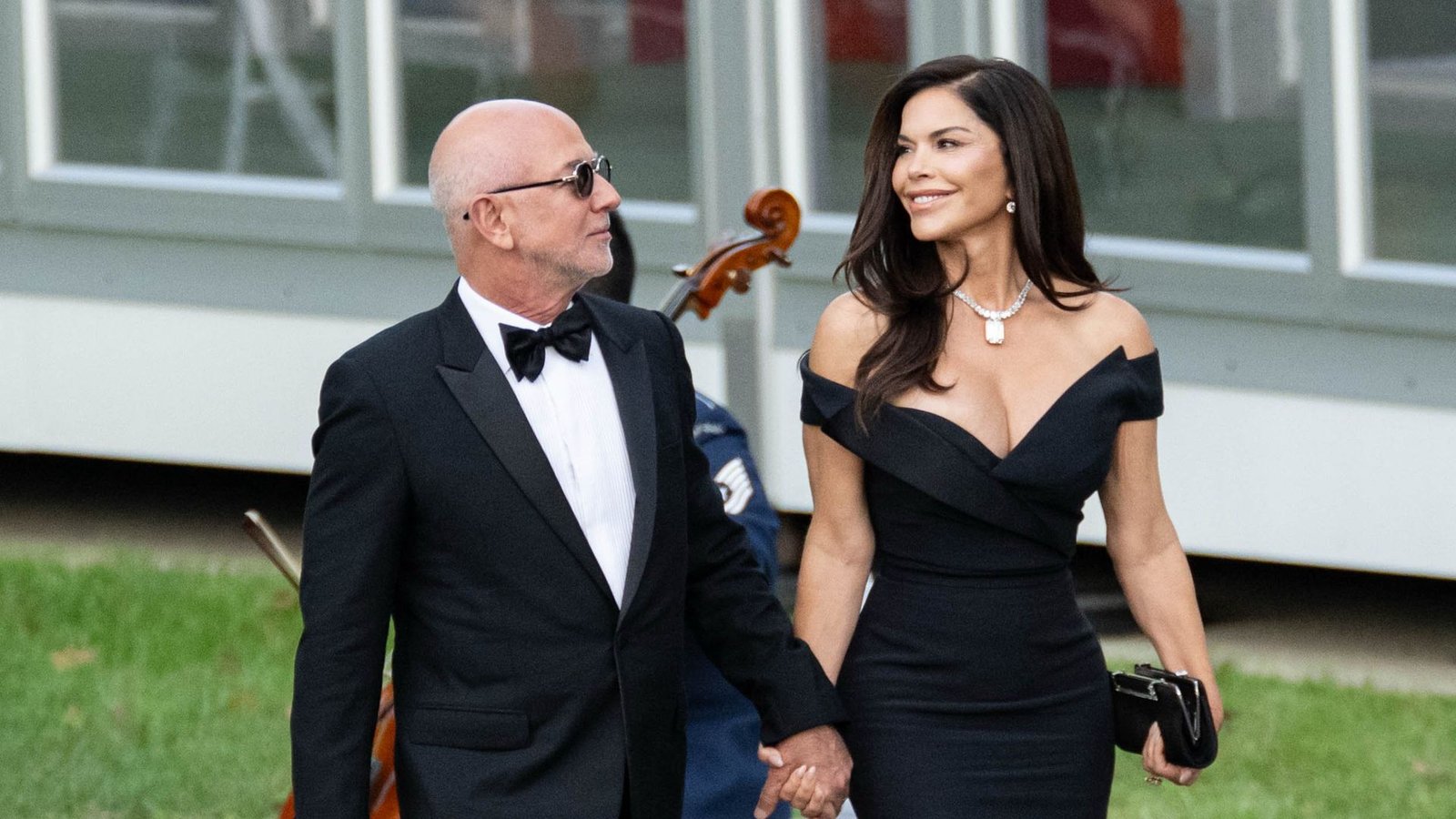
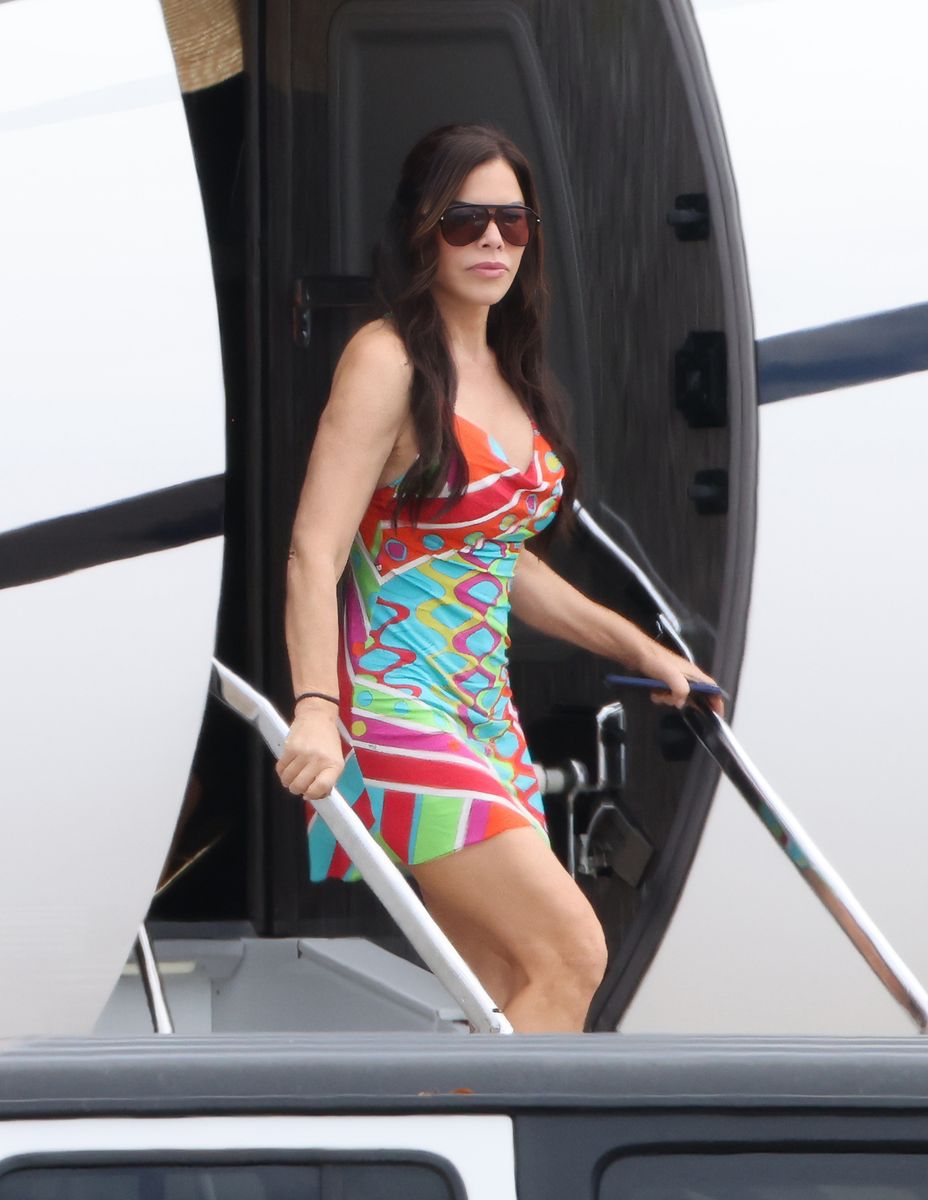
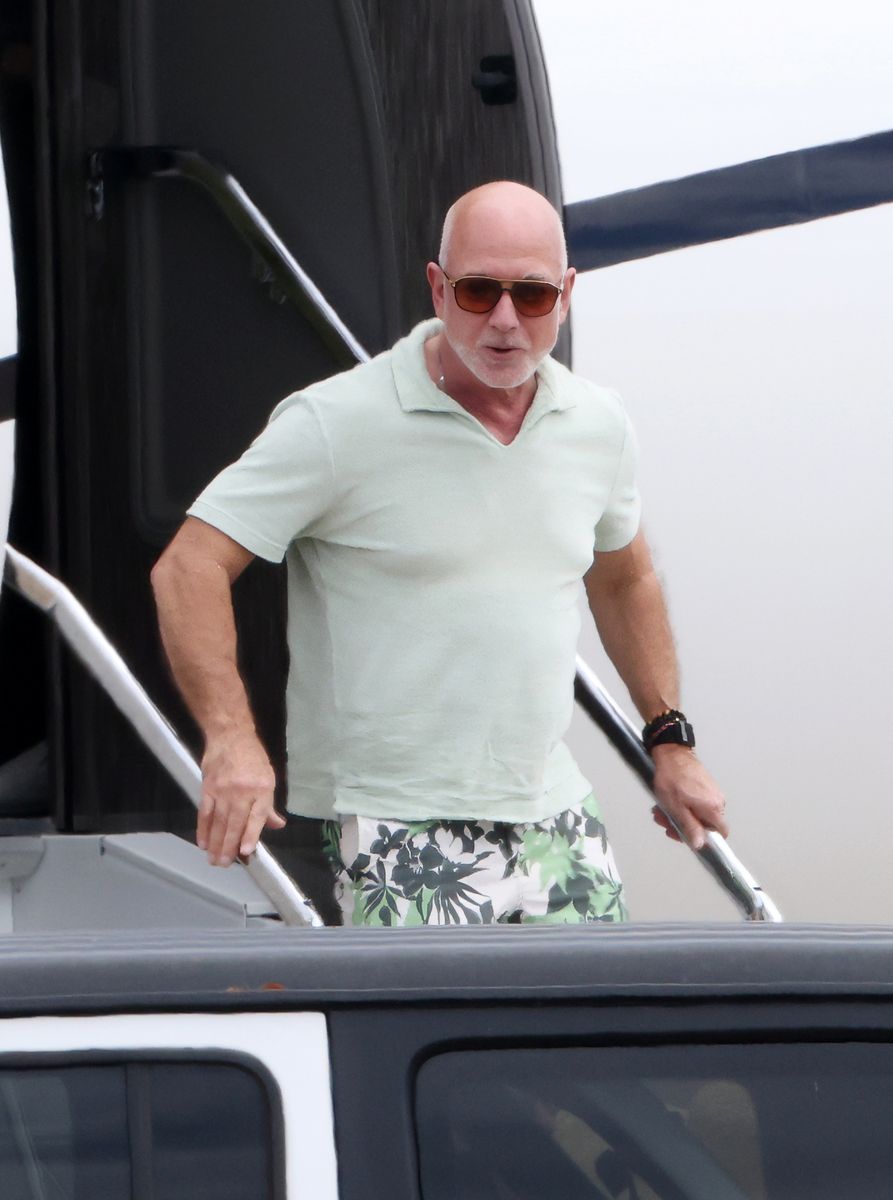
Jeff Bezos and Lauren Sánchez Bezos arrived in Lanai via private jet to attend the wedding celebrations of Jennifer Meyer and Geoff Ogunlesi.
For the island celebration, the couple embraced a classic black palette, with Lauren choosing a strapless dress and Jeff wearing a tuxedo with a bow tie.
The pairing offered an elegant approach to dressing together for a special occasion.
Lauren Sánchez Bezos wore a colorful mini dress with a psychedelic print paired with oversized sunglasses, while Jeff Bezos wore a pale green polo shirt with tropical-print shorts and sunglasses.
Lauren’s signature strapless style:
A strapless neckline has long been part of Lauren’s fashion repertoire. Her own wedding preparations described the silhouette as a favorite for her red carpet appearances, making her Hawaii choice a familiar expression of her personal style.
auren Sánchez Bezos and Jeff Bezos brought coordinated evening style to Hawaii as they celebrated Jennifer Meyer and Geoff Ogunlesi’s wedding.
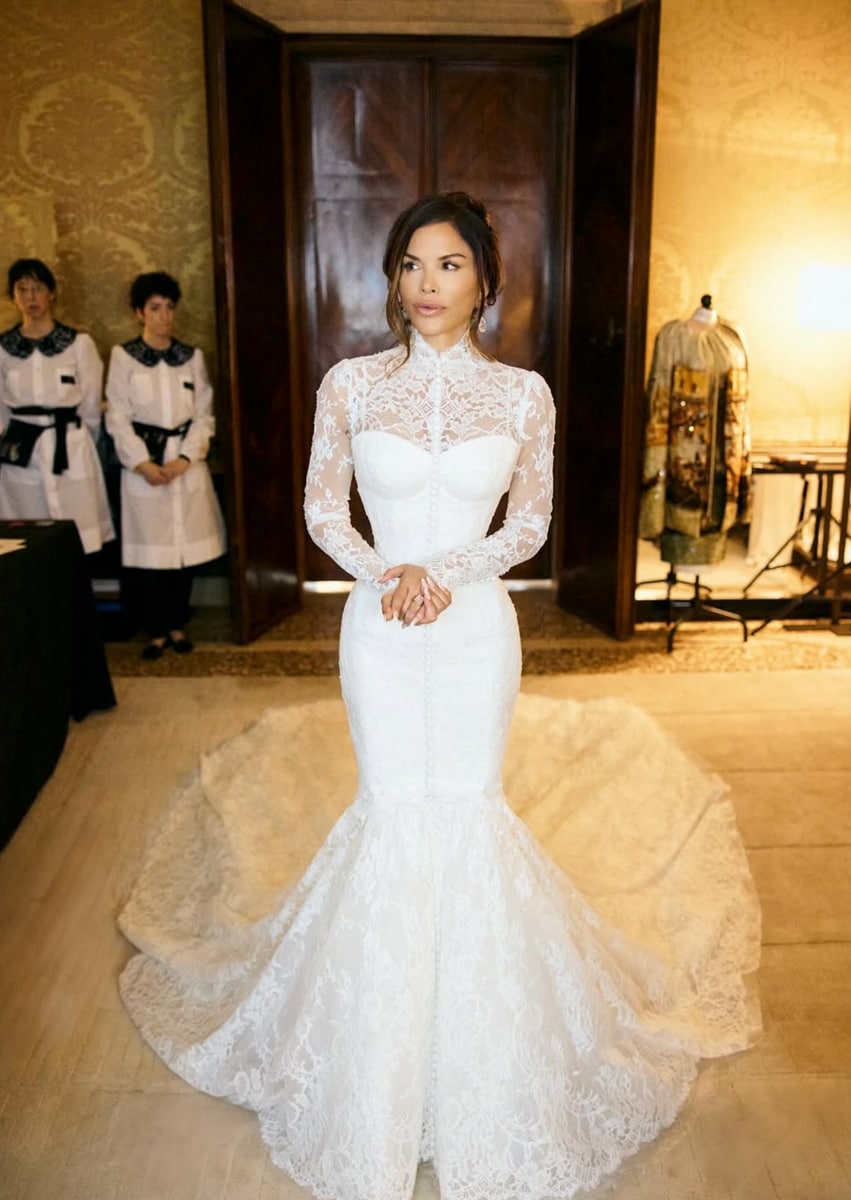
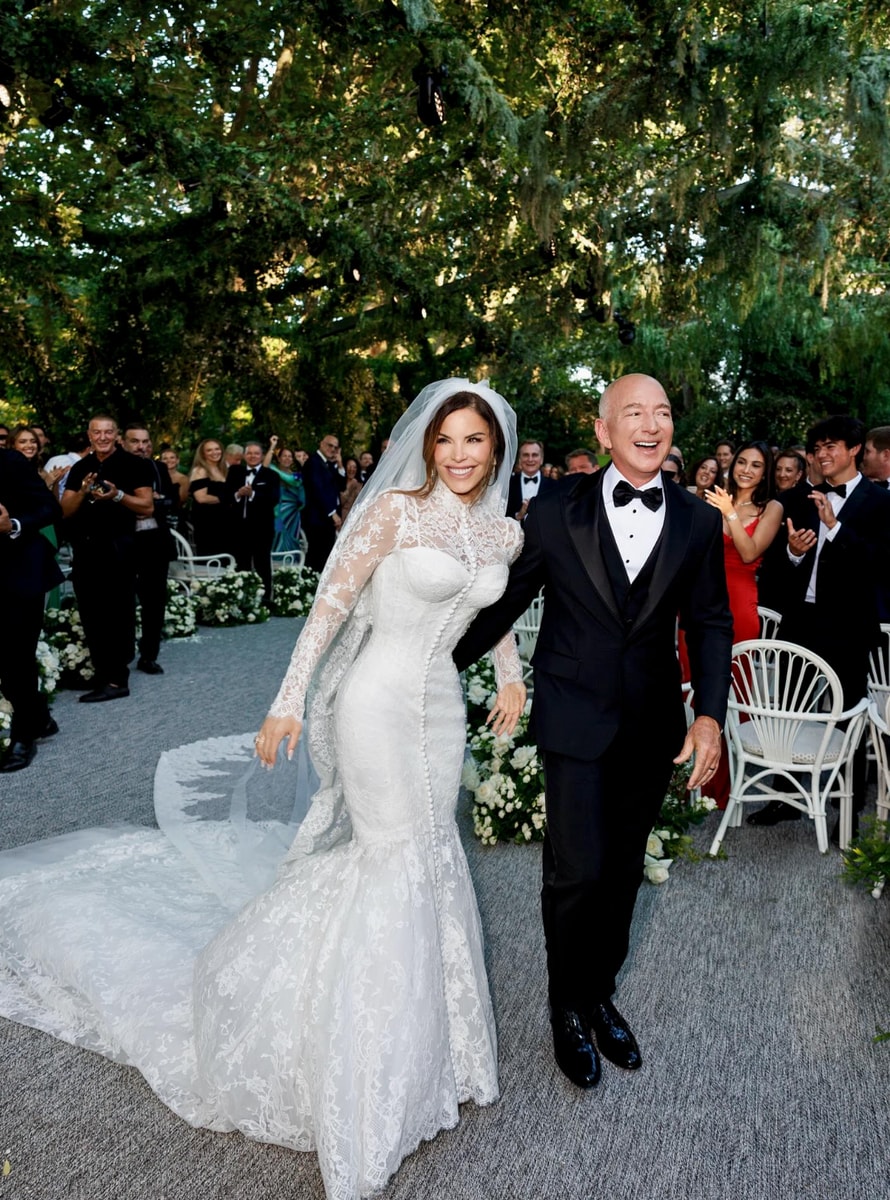
Her bridal gown took a different direction. For her June 2025 wedding to Bezos in Venice, she wore a Dolce & Gabbana design inspired by Sophia Loren’s high-necked lace dress in the 1958 film ‘Houseboat.’ Her latest wedding guest look returned to the open neckline she often favors for formal occasions.
Lauren Sánchez Bezos wore a custom Dolce & Gabbana lace gown inspired by Sophia Loren for her wedding to Jeff Bezos in Venice.
A Hollywood gathering in Hawaii:
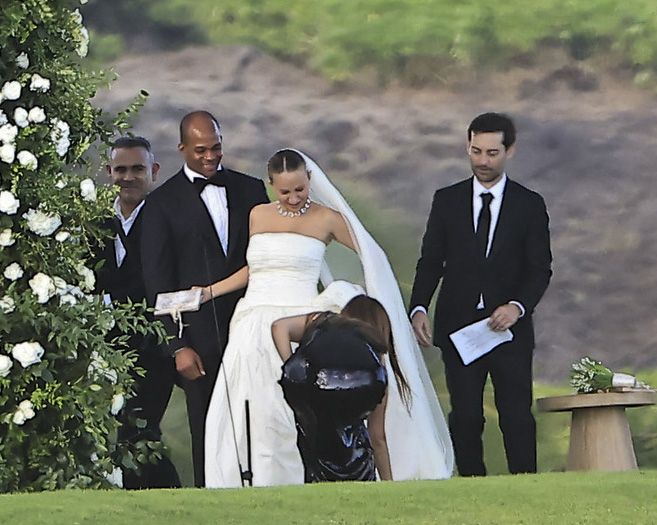
Meyer, a jewelry designer, and Ogunlesi, a music executive, exchanged vows on October 10 at the Four Seasons Resort Lanai.
Their guest list included Leonardo DiCaprio and Vittoria Ceretti, Courteney Cox, Kate Hudson and Danny Fujikawa, and Rachel Zoe, bringing a sizable Hollywood contingent to the island celebration.
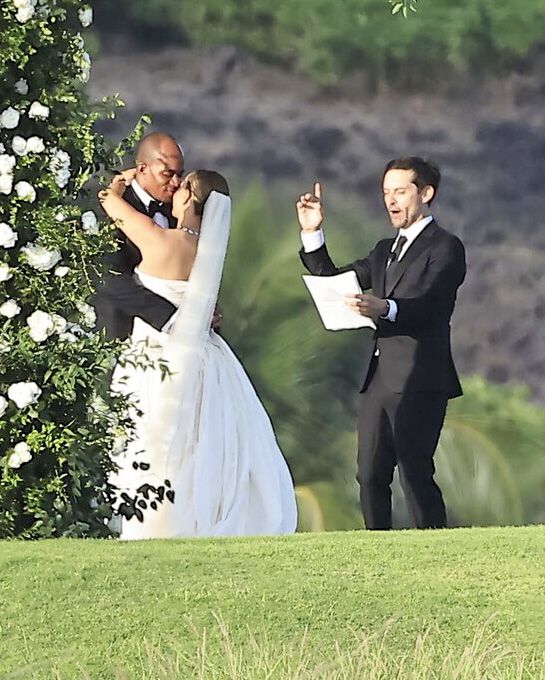
Jennifer Meyer’s former husband, Tobey Maguire, officiated her wedding to Geoff Ogunlesi in Hawaii.
One of the ceremony’s most memorable details was the person leading it. Meyer’s former husband, Tobey Maguire. The actor officiated as the couple began their married life, with all three of Meyer’s children in attendance.
The moment reflected the close family relationship Meyer has described publicly. In a previous interview with People, she explained that Maguire and Ogunlesi get along and that their blended family spends holidays, birthdays, and trips together. His role at the wedding gave that bond a particularly meaningful place in the celebration.
Jennifer Meyer and Geoff Ogunlesi married in Hawaii on October 10, 2026, surrounded by family and celebrity friends.
Lauren and Jeff’s first anniversary in paradise:
Before their latest Hawaii outing, Lauren and Jeff marked their first wedding anniversary on June 27 with a tropical getaway. The couple spent the occasion aboard his superyacht, Koru, near Fiji’s Yasawa Islands, where they had been vacationing with family.
Lauren Sánchez Bezos and Jeff Bezos celebrated their first wedding anniversary in June with a getaway near Fiji’s Yasawa Islands.
The ocean setting offered a more intimate backdrop for the milestone following their star-studded Venetian wedding a year earlier. Lauren also celebrated their first year of marriage with a heartfelt Instagram tribute.
Sharing a photograph of a sunset over the ocean, she wrote, “Home is wherever I’m with you. 6.27.25.” Friends joined in the anniversary wishes, including Khloé Kardashian and singer Jewel, who left congratulatory messages beneath the post.
Lauren Sánchez Bezos’s wedding wardrobe reflects her love of romantic details and statement designs.
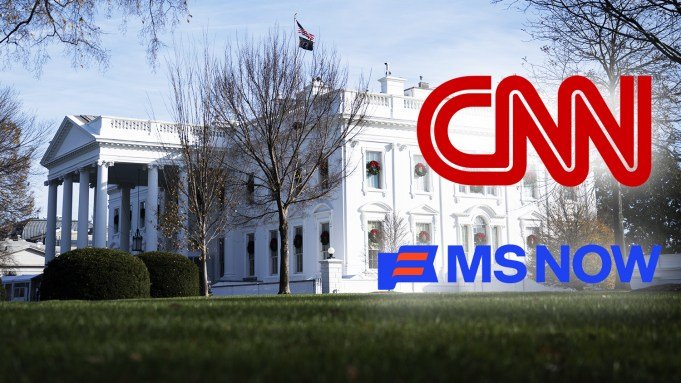
UPDATED, with additional comment: A federal judge prohibited the Trump administration from banning CNN, MS NOW and Politico from the White House grounds, granting the three outlets a preliminary injunction that ensures access for the foreseeable future.
U.S. District Judge Timothy Kelly, a Trump appointee, wrote in his opinion that the news outlets “are likely to succeed not only on their due process claim, but also on their two First Amendment claims.”
Kelly did caution that “no one should interpret the court’s decision to suggest that President Trump’s concerns about accuracy and fairness in the media’s reporting are unfounded, or that the government is powerless when its true aim is to protect national security when classified information is unlawfully disclosed.” But when it came to the blanket ban on the three outlets, the judge was unpersuaded by the government’s justifications.
Trump announced on Sept. 18 that he was barring CNN, MS NOW and Politico from access to White House grounds, complaining that they were “‘reporting’ fake news.”. A day later, their reporters who tried to enter the security checkpoint found their hard passes deactivated.
The news outlets sued, and Kelly issued a temporary restraining order halting Trump’s restriction on the outlets, something that forced the White House to restore the hard passes to dozens of reporters and other staffers. That TRO expired on Tuesday; the preliminary injunction means that the White House cannot enforce Trump’s ban in the long term, either until a trial or an appeal. The news outlets warned that the White House was likely to reimpose the ban absent further court intervention.
In defending the ban, the government cited national security reasons, although DOJ attorneys also argued that the news organizations did not meet “minimum requirements of professionalism.” While the DOJ pointed to stories published or aired that had to do with national security, they also cited as an example an MS NOW report that Trump aides considered an option of adding the president’s name to Ford’s Theatre. Trump later denied it.
In his 26-page opinion, Kelly cited D.C. Circuit precedents in that reporters had a right to due process before their hard pass is revoked.
“To put it mildly, [the news outlets] likely did not receive notice either of the conduct that would subject them to revocation of their hard passes, or of the magnitude of the revocation sanction itself,” the judge wrote.
The judge noted that some of the stories flagged by the White House were published earlier this year and written by reporters who later had their hard passes renewed. Then came Trump’s ban, and they were revoked. They included a CNN report from January 2026 on the top secret bunker being built beneath the East Wing, and an MS NOW story that quoted an anonymous White House official who said the president underestimated Iran’s willingness to resume the war.
The White House press office sent letters to the news organizations on September 22, informing them of the reasons and their ability to contest the action, but that was four days after the ban was implemented.
The judge also sided with the news outlets’ in their claims that Trump was engaging in retaliation and viewpoint discrimination in violation of the First Amendment.
“President Trump’s own comments suggest that he intended the revocation of Plaintiffs’ hard passes to alter their reporting on him, bolstering the case that his action here is sufficient to deter a reporter of ordinary firmness from reporting in the same way she had before. After explaining that he excluded Plaintiffs from the White House because they ‘purposely write negative news . . . to try and diminish the Republicans and a Republican administration,’ President Trump remarked that he is prepared to take ‘the ban . . . as far as you can,’ but that he would “love it” if they “could straighten themselves out.”
The judge added, “The record is clear that President Trump made the decision at issue. And his announcement of the ban and later remarks explaining the reason for it make this a straightforward conclusion: President Trump likely banned Plaintiffs from the White House because he believes that their reporting is generally inaccurate and biased against him.”
He also dismissed the government’s national security argument. He noted that there was “no evidence in the record” that he made the decision to revoke the passes for those reasons “from the get go, nor at any time has he directly stated that national security was the reason for his decision.”
The judge explained that because the D.C. Circuit has held that the White House press area is a “non public forum,” the government cannot limit access based on someone’s viewpoint.
The judge wrote that “it is likely that Plaintiffs were selected by President Trump for revocation of their access to the White House press area because he believes their coverage of him and his administration is generally inaccurate and biased—in other words, it was ‘an effort to suppress the speaker’s activity due to disagreement with the speaker’s view.’”
The judge also ruled that the news outlets should put up a nominal bond of $1.00 as the case moves forward.
Theodore Boutrous Jr., the lead attorney representing the news outlets, said in a statement, “When the president issued his ‘ban on the free press,’ he blatantly and explicitly violated due process and the First Amendment. Since then, the President has repeatedly, candidly, and consistently admitted in public that he banned our clients from the White House to punish reporting he doesn’t like and to try to force journalists to cover him in ways he prefers.”
Boutrous added, “The harm this ban did to our clients, the First Amendment, and the public as a whole is profound. The court was right to enjoin the White House from enforcing this ‘unconstitutional ban on the free press’ for the foreseeable future.”
The White House did not immediately respond to a request for comment.
The claim that Ukrainian strikes on Russian bot farms caused right-wing or MAGA social media activity to decrease is unproven.
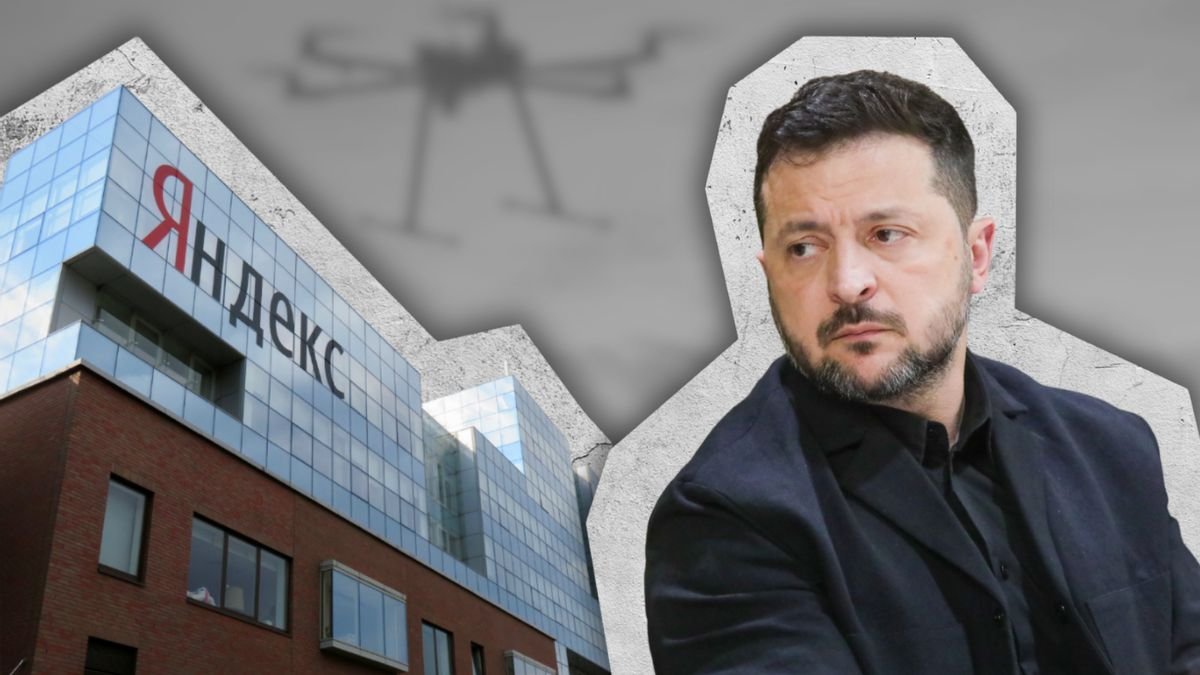
On Oct. 12, after the Russian technology giant Yandex reported that drone strikes damaged its servers in Sasovo, Kaluga and Vladimir, Ukrainian President Volodymyr Zelenskyy said he had seen “less hate, less division, and fewer provocations because there were fewer bots” online after the strikes.
However, Snopes found no credible evidence that Ukrainian strikes on Yandex servers starting on Oct. 8 took Russian propaganda bots offline. Social media posts that attributed changes in online activity on certain topics such as MAGA, the far-right German political party Alternative für Deutschland or various health-related topics failed to directly connect those changes to Russian bots.
Zelenskyy’s office reportedly told the BBC on Oct. 13 that he was “talking about the atmosphere on social media” rather than a fall in bot activity when he made the remarks about the effect of Ukrainian strikes.
Darren Linvill, an expert on the effects of foreign information manipulation and interference, told Snopes that Ukraine’s strikes had likely mainly affected legitimate, automated Yandex traffic rather than propaganda operations, which Russia often runs from overseas.
In early October, a claim (archived) circulated that Ukrainian strikes on Russian bot farms caused right-wing or MAGA social media activity to decrease.
Yandex, a Russian technology giant that provides search engine, email and cloud services and facilitates payments, ride hailing and food deliveries, confirmed on Telegram and to local media that drone strikes damaged its servers in Sasovo, Kaluga (archived) and Vladimir from Oct. 7 to 11. Work to restore services affected by the strikes continued on Oct. 13.
Ukrainian President Volodymyr Zelenskyy said on Oct. 12 that Ukraine had struck “Yandex data centers” and that “a lot of people” had seen fewer Russian bots on social media platforms as a result.
The Facebook page Occupy Democrats, which spread the claim about the consequences of Ukrainian strikes against Russian bots, wrote:
Zelenskyy might just have saved our democracy. The genius is brilliantly bombing Russian data centers linked to FAKE NEWS pro-MAGA bot farms in Moscow. Without them, Putin’s midterm influence will accidentally fall from a 30th floor window.
MAGA, an acronym for Make America Great Again, is a political movement supportive of U.S. President Donald Trump. The U.S. has previously accused Russia of using “bot farms” to create false social media accounts that spread disinformation in the U.S.
On Oct. 11, Tomáš Zdechovský, a member of the European Parliament, shared data (archived) he claimed showed a drastic decrease in online activity around Germany’s far-right Alternative für Deutschland political party in the days following the strikes. Other social media users claimed searches for various health-related topics (archived) and the number of social media accounts advocating for Alberta to seek independence from Canada (archived) also fell after Ukraine’s strikes.
Whether Ukrainian strikes on Yandex servers had indeed taken Russian bots that spread propaganda or misinformation offline was unproven at the time of this writing. As we will lay out below, social media users claiming a direct connection between Ukraine’s strikes and falling web traffic generated by Russian propaganda bots tended to identify correlation rather than causation.
Darren Linvill, who studies the tactics, strategies, and impacts of foreign information manipulations and interference at Clemson University, told Snopes via email on Oct. 13 that the Russian propaganda campaigns he studies do not use physical infrastructure within Russia for their efforts, meaning they would be unaffected by Ukraine’s strikes. Linvill, along with U.S. and international media, also said that a lot of the traffic that was affected by the strikes was likely legitimate, automated traffic, such as web crawlers that index Yandex’s search engine.
Data from the global internet infrastructure company Cloudflare shared by someaccounts (archived, archived) as proof of Russian “bot traffic” decreasing after Ukraine’s strikes showed graphs accounting for all automated traffic, not propaganda bot accounts specifically. Linvill described measuring a drop only in Russian propaganda bot accounts as “exceedingly difficult.”
Lacking credible proof that Ukrainian strikes on Yandex servers starting on Oct. 8 took Russian propaganda bots offline, we leave this claim unrated.
On Oct. 13, Zelenskyy’s office appeared to redefine his statement from the previous day that there was “less hate, less division, and fewer provocations because there were fewer bots” online after Ukraine’s strikes. The office reportedly told the BBC that Zelenskyy was “talking about the atmosphere on social media” rather than a fall in bot activity.
Snopes has contacted Zelenskyy’s office to verify this statement to the BBC.
Parsing the ‘evidence’ of falling Russian bot activity
Some social mediausers shared data from the global internet infrastructure company Cloudflare that they suggested showed that Russian bot traffic “dropped to nearly zero” after Ukraine’s strikes.
The data in question, called “Bot vs. Human Traffic,” tracked HTTP requests, which are messages that a client (this could be a browser or a mobile app) sends to a server. Cloudflare assesses HTTP requests a given client sends and scores them according to whether it thinks a human or a bot sent the request.
Cloudflare’s data showed that HTTP requests from Yandex bots dropped on Oct. 8 and again on Oct. 10, dipping to 0.3% of maximum levels. Bot requests had been at 88.2% of maximum levels the week before. Cloudflare’s data also showed that almost all (99.6%) of the HTTP requests sent by Yandex clients were automated, which Cloudflare described as being from bots.
It is important to note that “bot” in Cloudflare’s terminology is not just propaganda bots but any requests that the company classifies as automated. The technology publication Mashable and Euronews reported that Yandex’s automated traffic likely included web crawlers, which are tools that search engines use to keep their database of websites up to date. Mashable reported that damage to a Yandex’s data centers or servers would bring traffic such as web crawlers to a halt.
Linvill also credited the fall in “bot” traffic from Yandex to legitimate, automated traffic such as web crawlers not operating from damaged servers. He wrote that Cloudflare’s data did not suggest there was “a particular reason to believe the strikes would have a significant impact on social bot activity from Russia.”
Other claims about a decrease in Russian bot traffic failed to directly connect Russian bots to any perceived changes in online activity. For example, Zdechovský’s post presented a graph with no source that did not specify what it measured. Another post that claimed a decrease in Google searches for various health-related topics compared data across only two weekends, which was unlikely to be enough to establish and analyze a trend.
An account that claimed accounts calling for Alberta to seek independence from Canada “fell off the face of the earth” after Ukraine’s strikes provided no supporting evidence for the claim that linked it to Russian propaganda bots.
We contacted Zdechovský to ask for the source of his graph and await a reply.
Russian propaganda campaigns hard to track
According to Linvill, actually documenting a fall in Russian propaganda bot activity would not be straightforward. He wrote:
It would be exceedingly difficult to measure. You would first have to figure out what it was, exactly, you were measuring? There is no one path to influence and no one way malign propaganda is conducted. These efforts are run on global systems across a multitude of platforms and emanating from multiple actors even within the same country. They make it hard on purpose.
Linvill added that the Russian campaigns he followed did not use bots they ran themselves, instead paying for services run from outside Russia. He wrote: “It has clearly become important for Russia to outsource these services than to run them in house. It’s likely cheaper and easier, but also more secure and decentralized.”
In sum, readers should be cautious of blanket claims that Ukraine’s strikes on Yandex’s servers heavily affected Russia’s propaganda operation. While that may be the case, there was no credible evidence at the time of this writing directly linking strikes on servers to a fall in Russian propaganda activity online. Linvall suggested that Russian propaganda campaigns could come from overseas, meaning domestic strikes would not be effective against them, a point that Mashable’s reporting also made.
‘Faculty and Staff Profile’. Faculty and Staff Profile, https://www.clemson.edu/cbshs/about/profiles/darrenl. Accessed 13 Oct. 2026.
Irvine-Brown, Richard, et al. ‘Is Zelensky Right to Say Data Centre Strikes Have Taken down Russian Bots?’ BBC News, 13 Oct. 2026, https://www.bbc.co.uk/news/articles/c9y7l0pm8jkko.
‘ Justice Department Leads Efforts Among Federal, International, and Private Sector Partners to Disrupt Covert Russian Government-Operated Social Media Bot Farm’. U.S. Department of Justice, 9 July 2024, https://www.justice.gov/archives/opa/pr/justice-department-leads-efforts-among-federal-international-and-private-sector-partners.
The Sun. ‘LIVE: Ukraine’s Zelensky and Polish PM Tusk Open Warsaw Security Forum’. YouTube, 12 Oct. 2026, https://www.youtube.com/live/yqumX75NJNI?t=2392s.
Townsend, Chance. ‘Did Ukraine’s Drone Strikes on Yandex Data Centers Silence Russian Bots?’ Mashable, 12 Oct. 2026, https://mashable.com/tech/ukraine-strikes-yandex-data-center-bot-traffic-decline.
‘Ukrainian Strikes on Data Centres and Russian Bot Activity in Freefall’. Euronews, 12 Oct. 2026, https://www.euronews.com/2026/10/12/did-ukrainian-strikes-on-yandex-data-centres-cause-russian-bot-activity-to-plummet.
‘What Is a Web Crawler? | How Web Spiders Work’. Cloudflare, https://www.cloudflare.com/learning/bots/what-is-a-web-crawler/.
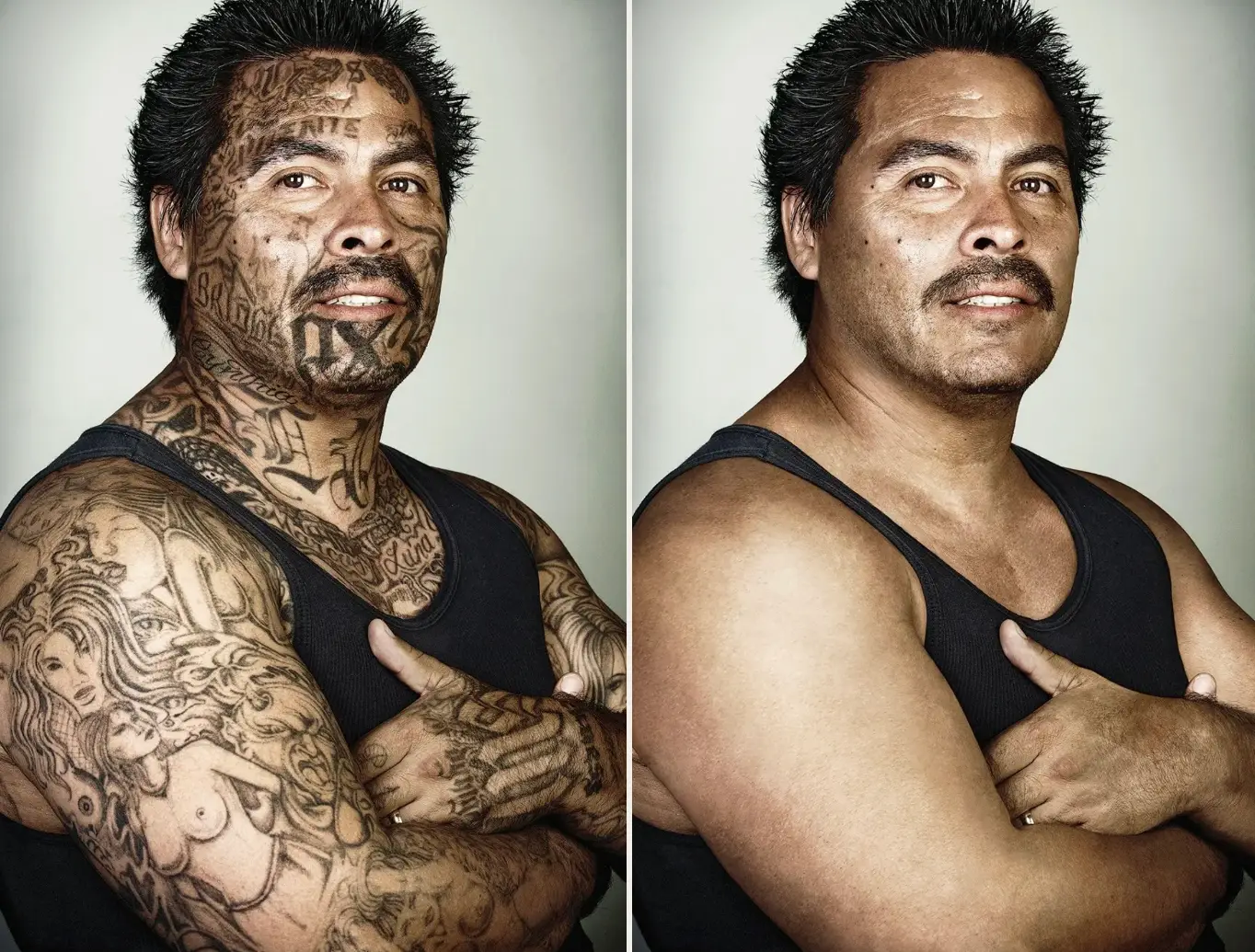
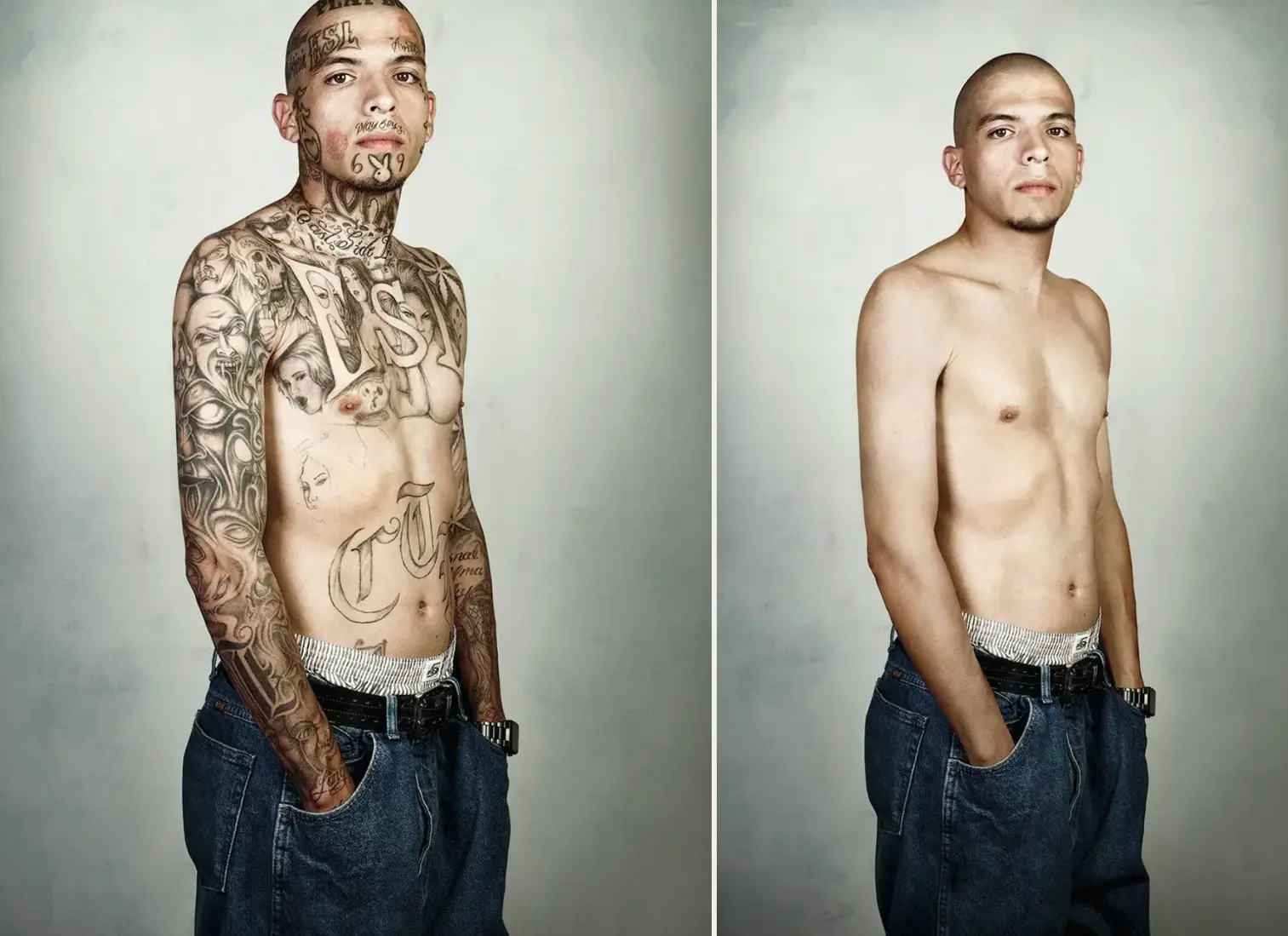
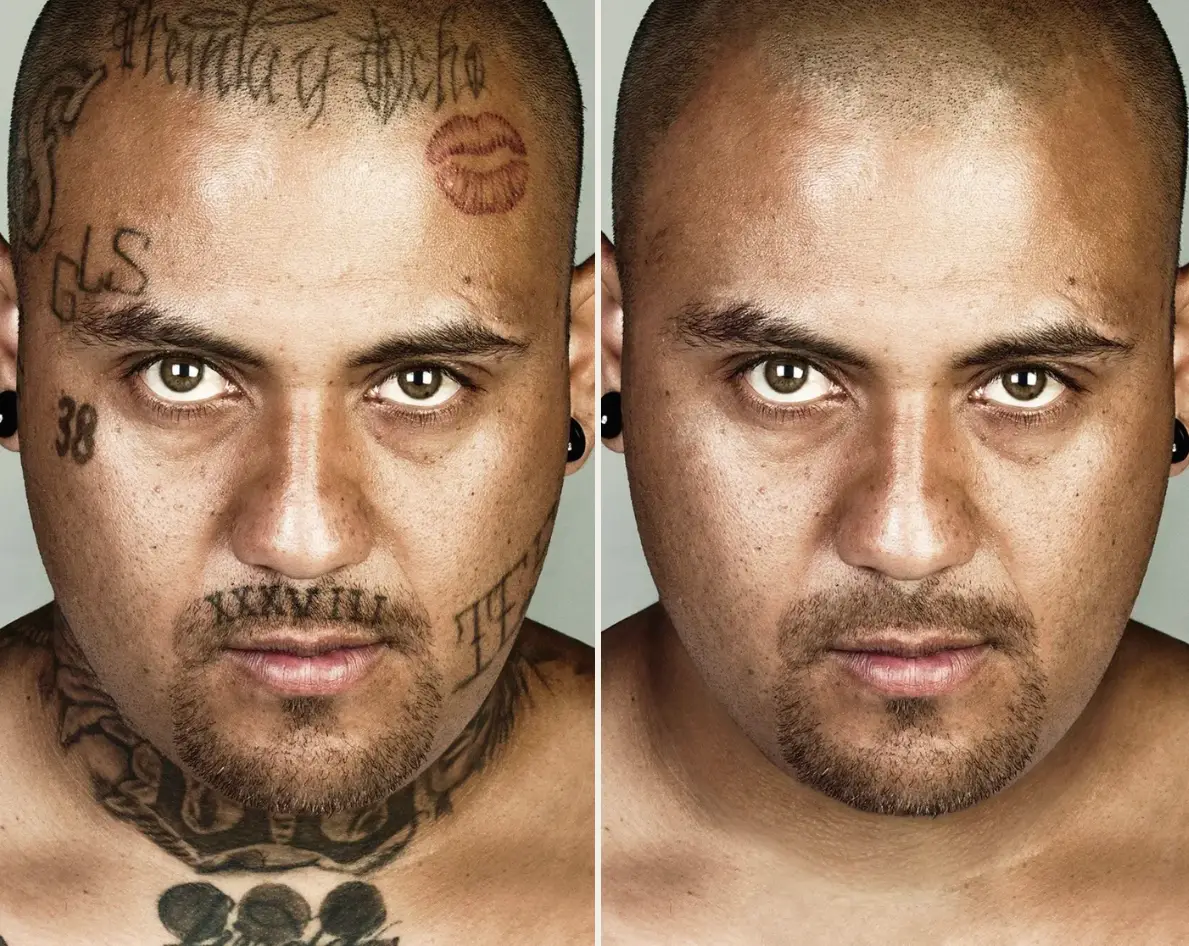
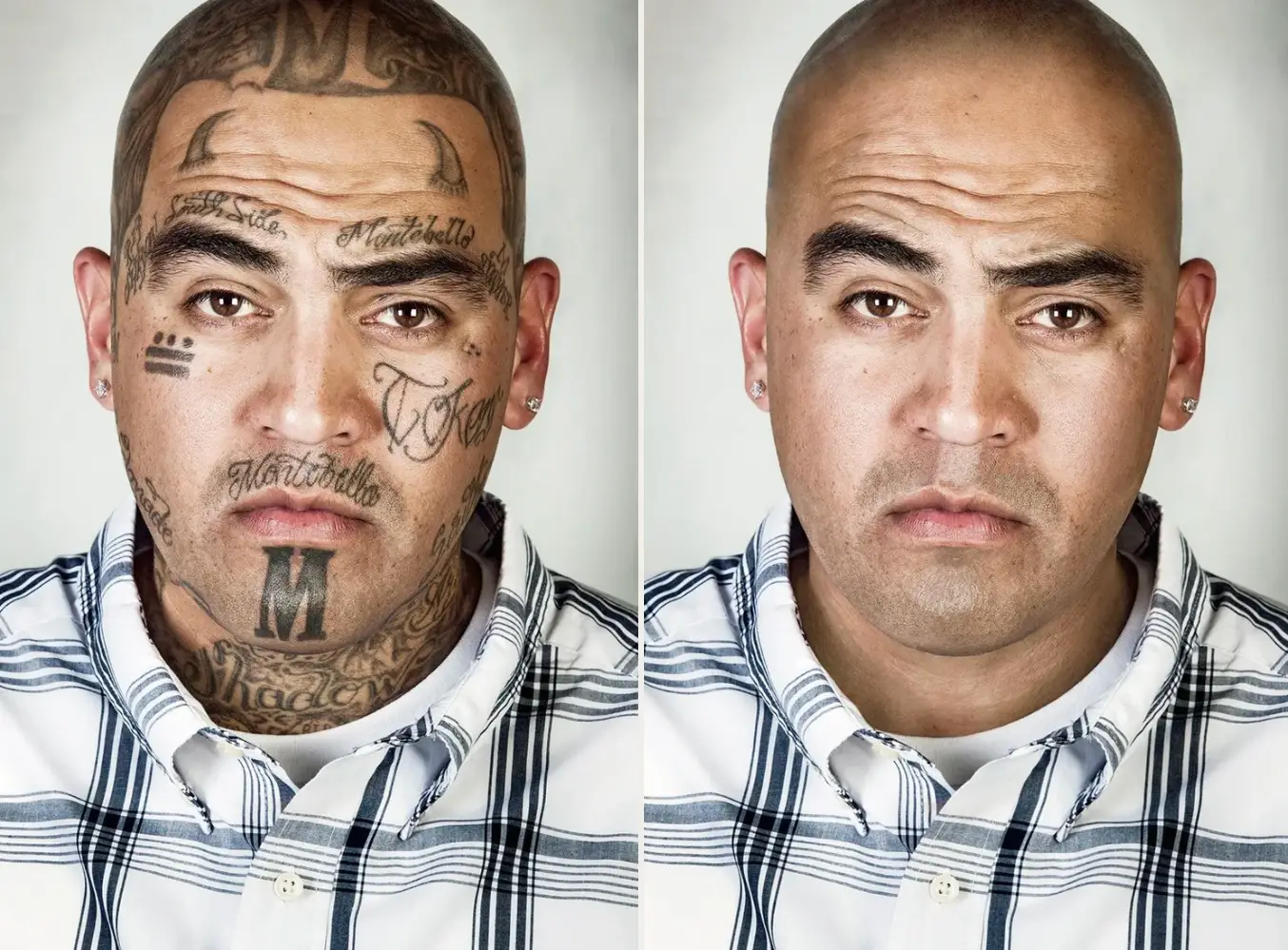
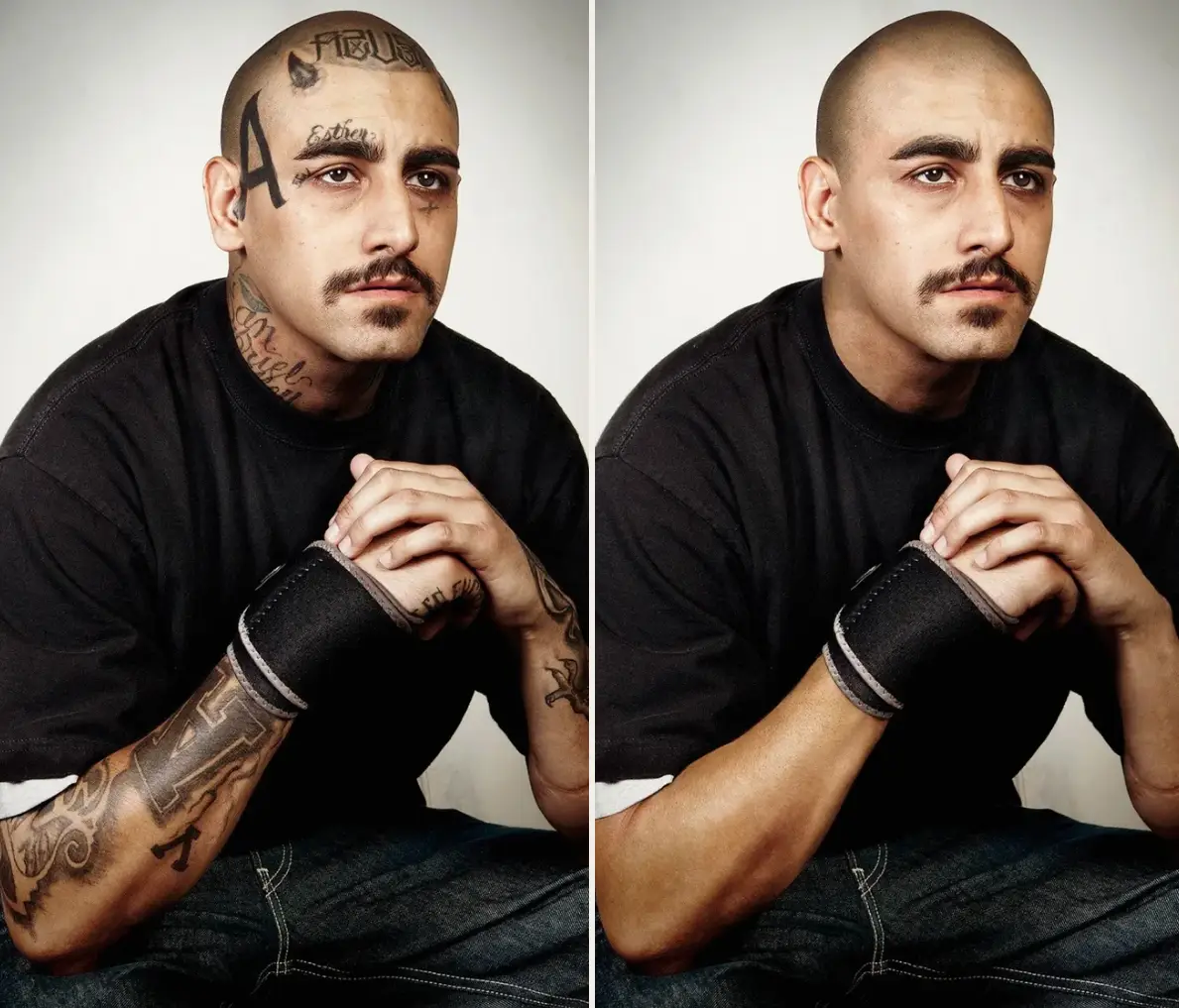
A photographer who takes photos of people digitally removes their tattoos and gives them a picture of what they’d look like without the ink.
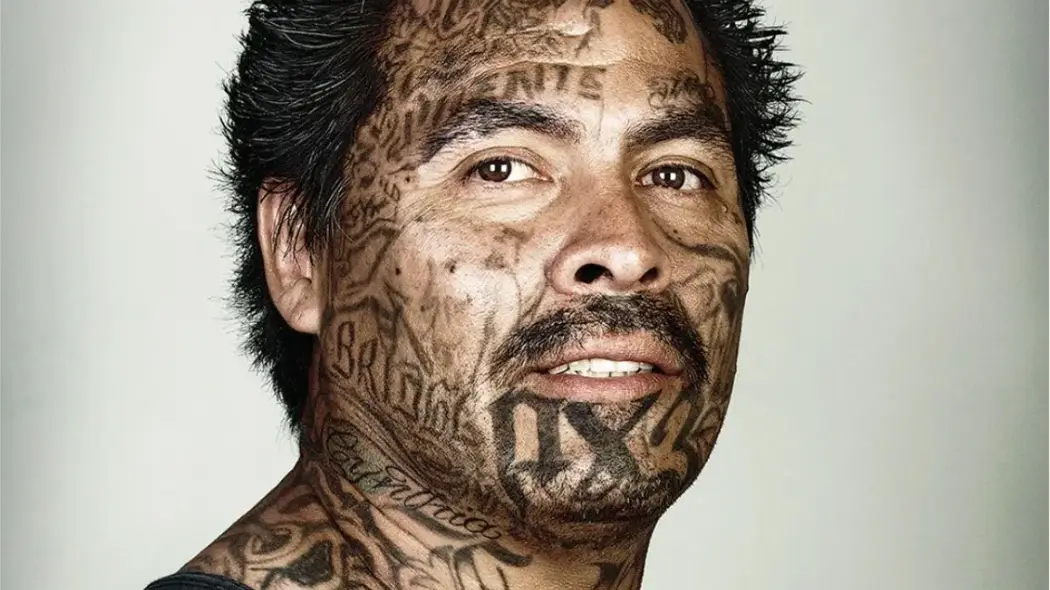
Steven Burton is the artist behind the Skin Deep Project, where he photographed former gang members and showed them the difference between their appearance with the tattoos and without.
The photographer said that the subjects of his photography were ‘rebuilding their lives beyond the identities written on their skin’ and that’s what he captured.
“The project explores how quickly we make assumptions based on appearance, by showing people with and without their tattoos, so viewers see the person first, then reconsider their perception,” Burton told LADbible about the Skin Deep Project.
“It became quite personal – many tattoos mark pivotal life moments.”
This is a photo of Marcos Luna with and without his tattoos (Skin Deep Steven Burton)
When they were shown their photos many of the men said it was ’emotional’ to see the difference and marvelled at how much their appearance was transformed from not having the tattoos.
Marcos Luna said the tattoos reminded him of ‘the homies‘, but also ‘a lot of death, sadness, hate, destructive, sick, just out of control’ memories back.
He was grateful to see the difference though, telling the photographer ‘the person you see in this picture is a human being, just like you’.
When Dennis Zamoran saw his own pictures he was shocked and said ‘that is what I could have looked like’, saying it was ‘crazy’ and he felt like he’d messed up his ‘whole life’.
Dennis said he felt ‘bad’ looking at the pictures because they reminded him of what he’d done, with the picture of him covered in tattoos reminding him of time he’d spent in prison.
Dennis Zamoran said he didn’t ‘want to return to who I used to be’ (Skin Deep Steven Burton)
He added that he was looking forward to showing his mum the one of him with his tattoos removed.
Francisco Flores remembered that ‘the first tattoos began when I was little’ when there was ‘nothing else to do’, saying he got addicted to getting tattoos and had the rest when he was in prison.
Francisco Flores said he couldn’t remember ‘the last time I saw myself this way’ (Skin Deep Steven Burton)
“It was more like a shout for help when I didn’t want to accept that I needed it,” he said.
“I was like ‘somebody look what I’m doing, I’m destroying myself, somebody come help me out’. Then it was just like I got addicted to them and it’s just like one after another after another and they just start piling up.
“Next thing I know I have no more space.”
Former gang members being photographed said it ‘feels completely different’ to see themselves without the tattoos (Skin Deep Steven Burton)
A succession of former gang members photographed by Steven and shown how they’d look without any tattoos were amazed at the results.
David Pina said he looked ‘younger’ and couldn’t help but say ‘damn, that’s me’ when he saw the difference between the two pictures.
He remarked on how much more he looked like his brother and his dad, and wished that his mum had been able to see the photo of what he would look like in his 30s without tattoos before she died.
“I am going to show these pictures to my mom because she hates my tattoos. She hates them. She can hardly look at me,” David Williams said. (Skin Deep Steven Burton)
David Williams said looking at his other self made him think ‘that’s the guy I should have been’.
He wanted to change because he had a son of his own and felt like he should become a better man because of it, though he said he would still ‘die for my hood’ because of what they’d given him in his life.
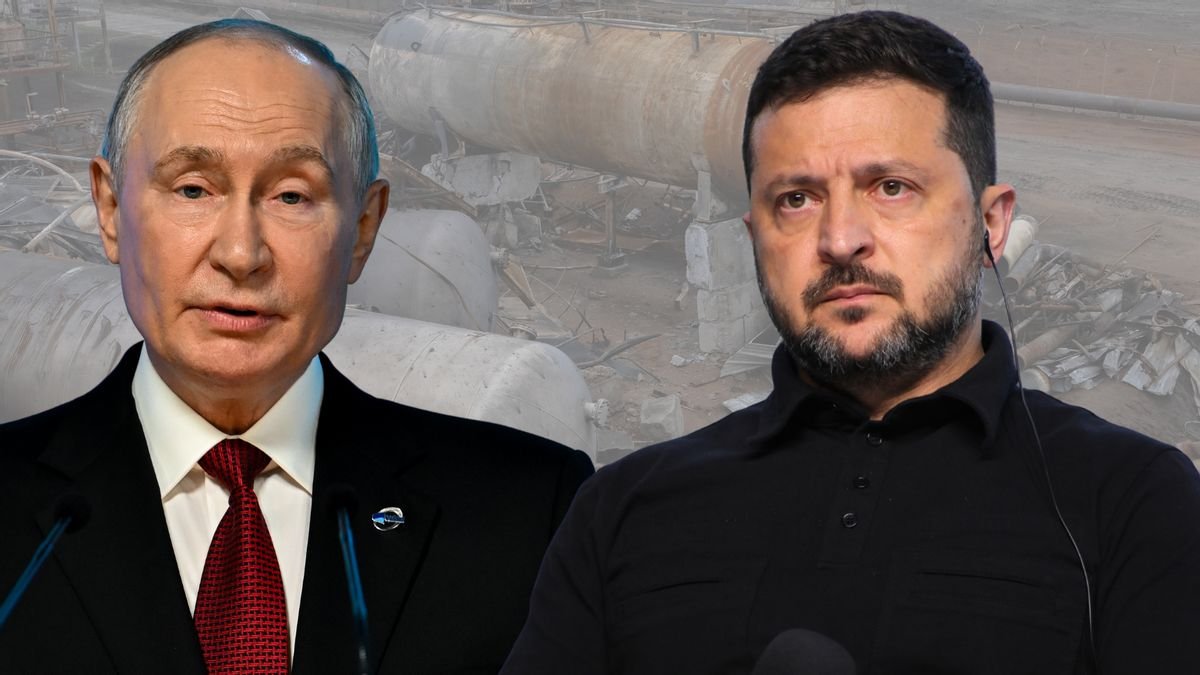
U.S. President Donald Trump’s claim that Russia and Ukraine agreed to a ceasefire he announced on Oct. 11 is unproven. Ukraine said it had no knowledge of such an agreement, and Russia didn’t comment.
The claim stemmed from a post on Truth Social in which Trump wrote: “Effective immediately, there is an ENERGY CEASEFIRE in the War between Russia and Ukraine. Both parties have agreed. Do not break it!” Later, in response to questions about Ukraine and Russia agreeing to it, Trump said, “They agreed because I said they agreed.”
Ukrainian President Volodomyr Zelenskyy told Axios the ceasefire was “news” to him but he would support it if Russia agreed to follow it. Russia didn’t comment either way, saying “contacts are ongoing.” However, Ukraine accused Russia of attacking its energy facilities on the very same day.
Snopes will update this report if additional information surfaces. Snopes has reached out to the Russian Foreign Ministry and will update this post accordingly.
On Oct. 11 U.S. President Donald Trump posted on Truth Social that Ukraine and Russia had “agreed” to an “energy ceasefire” in their war. Such an agreement would means neither country would attack the other’s energy sites.
The ceasefire appeared to be news to Ukraine and Russia, however, with Trump unable to provide any evidence that the two countries had actually reached such an agreement.
Numerous posts claimed Trump had not actually managed to get the countries to agree. When a reporter pointed out to Trump that both sides said they had not agreed, Trump replied: “Well, they agreed. You know why? Because I said, ‘You agree.’ That’s why.”
It wasn’t clear whether Russia had or hadn’t agreed to a ceasefire before Trump’s announcement, but news reports stated that Russia violated the ceasefire shortly after. Ukrainian President Volodymyr Zelenskyy said he didn’t know about the supposed ceasefire agreement beforehand but would support it only if Russia agreed to follow it.
“Even after yesterday’s messages from [Trump] … Putin attacked our gas infrastructure,” Zelenskyy told Fox News. “When we speak about energy ceasefire, it means only one thing: that they don’t attack our energy infrastructure and we don’t respond on their energy infrastructure.”
Snopes reached out to the Russian Foreign Ministry to seek comment on Trump’s announcement and a response to Ukraine’s accusations that Russia violated the ceasefire. We will update this story as we get more information. Kremlin spokesperson Dmitry Peskov told the media on Oct. 12 that “contacts are ongoing.”
Kremlin Relishes in U.S.-Russia Diesel Deal and Trump’s Criticism of Zelenskyy. The Associated Press, 12 Oct. 2026, https://www.pbs.org/newshour/amp/world/kremlin-relishes-in-u-s-russia-diesel-deal-and-trumps-criticism-of-zelenskyy. Accessed 13 Oct. 2026.
Kullab, Samya. “Zelenskyy Says Russia Strikes Energy Facilities despite Trump Claim of an Energy Ceasefire.” The Associated Press, 12 Oct. 2026, https://apnews.com/article/russia-ukraine-energy-strikes-trump-ceasefire-6fdef6ff4d033b379c74e1d62183d078. Accessed 13 Oct. 2026.
Lee, Jessica. “Ukraine War 2-Year Anniversary: Looking Back on Viral Misinformation.” Snopes, 24 Feb. 2024, https://www.snopes.com//collections/ukraine-russia-war-anniversary/. Accessed 13 Oct. 2026.
“President Trump Gaggles with Press Upon Departure from the White House, Oct. 12, 2026 .” YouTube, The White House, 12 Oct. 2026, https://www.youtube.com/watch?v=HEWlaWY9Qcs. Accessed 13 Oct. 2026.
Ravid, Barak. “Trump Claims Russia and Ukraine Agree to Energy Ceasefire.” Axios, 11 Oct. 2026, https://www.axios.com/2026/10/11/trump-russia-ukraine-energy-ceasefire-zelensky. Accessed 13 Oct. 2026.
Siddiqui, Usaid. “‘Energy Ceasefire’: What’s behind Trump’s Love-Hate Ties to Russian Oil?” Al Jazeera, https://www.aljazeera.com/news/2026/10/12/energy-ceasefire-whats-behind-trumps-love-hate-ties-to-russian-oil. Accessed 13 Oct. 2026.
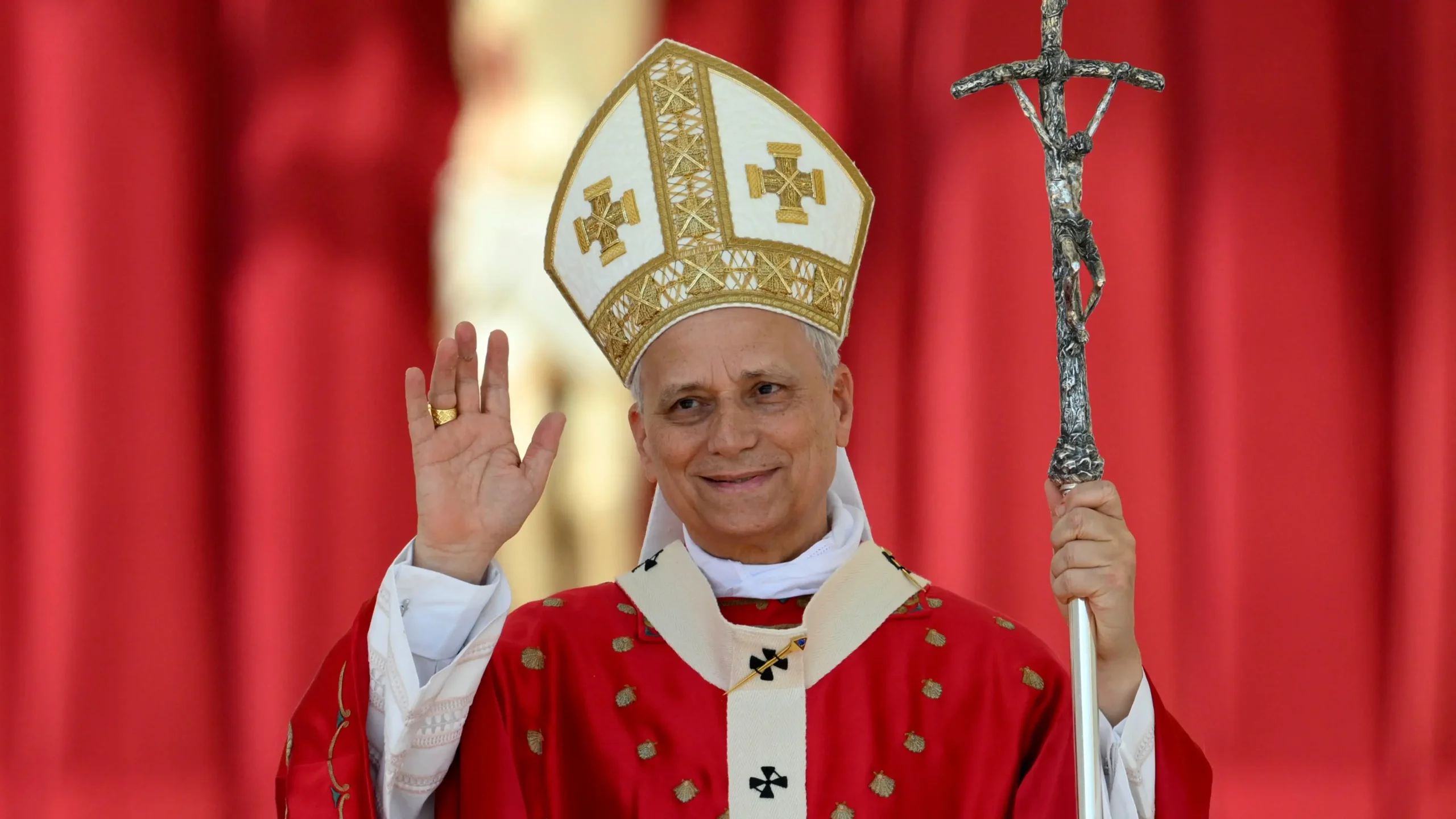
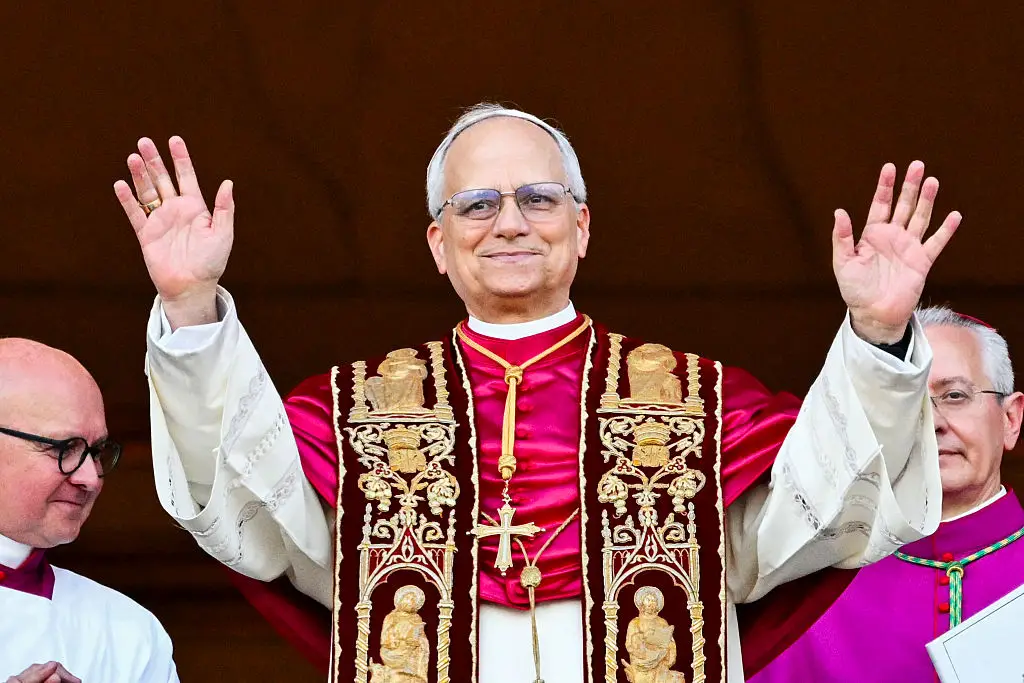
PopeLeo XIV has had surgery to remove a cancer, the Vatican has said, as experts explain what will happen next for the pontiff.
The Pope went to Agostino Gemelli University Policlinic in Rome on Tuesday to have tissue removed from his lung after it was found to be pulmonary adenocarcinoma, which doctors said was detected at ‘a very early stage’.
This is the most common form of lung cancer, and makes up around 40 percent of all cases.
Pope Leo had the growth removed, as well as a section from the lower lobe of his right lung as an additional precaution in the procedure, the Vatican has said.
Dr Juanita Mora is the national medical spokesperson for the American Lung Association, and shared that catching such a condition early means that the Pope should have a good prognosis.
“The fact that Pope Leo had a localised case of adenocarcinoma with an early-stage detection works in his favor,” she told CNN, “especially after surgical removal.”
Pulmonary adenocarcinoma is a type of non-small cell lung cancer, and often spreads and grows slower than other forms of lung cancer.
Pope Leo had the tumour removed from his lung (ALBERTO PIZZOLI/AFP via Getty Images)
Dr Mora explained that the procedure will make it more difficult for Pope Leo to breathe for some time, but his lungs will start to adapt.
“Initially, it will be a little harder for him to breathe until the left lung starts to compensate for it,” she said.
There are also other factors which are working in the Pope’s favour, she said, including that he does not smoke and that aside from this he is a healthy 71-year-old, and exercises regularly, including playing tennis.
Nonetheless, she added that there are still more steps that doctors will take as Pope Leo moves into the post-surgery step. This will include respiratory therapy to help build his lung function back up.
It also makes him particularly vulnerable to respiratory infections, Mora said, but many people are able to live full lives.
“So obviously, a lot of people live and can fully do everything in terms of function and capacity, even with a lobectomy,” she said.
Leo may need to cancel an upcoming trip depending on his health (Simone Risoluti – Vatican Media via Vatican Pool/Getty Images)
Mora explained that patients usually remain in hospital for a few days after surgery so doctors can keep an eye on their vitals, before moving to recovery at home once doctors are satisfied that their oxygen levels are stable.
“We’re hoping, though, that it’s just an isolated cancer where he’s one and done, in which now we see a survival rate of 80% to 98% when it comes to surgical removal,” Mora said. “But now we will have to wait for these tests.”
Pope Leo has a trip to South America scheduled next month, and whether he is able to go will depend on the test results, in which doctors will look at samples taken from the lymph nodes around his lung.
This will also determine whether he needs additional surgery or a course of chemotherapy, which may be necessary if the tests indicate that there are cancerous cells inside of the lymph nodes.
Vaping for just a few days can cause lasting lung damage, new research has revealed.
According to a new study published in the scientific journal JCI Insight, tooting on a vape for just a brief amount of time has been linked to injuries in the ‘deepest and most delicate regions of the lung’.
The study also found that prolonged exposure could also contribute to chronic lung disease, caused by sustained cellular injury and disruption of normal repair.
“Some effects persisted after exposure ended and altered the immune response to a subsequent viral infection,” Dr Irina Petrache, senior study author and researcher at National Jewish Health, said.
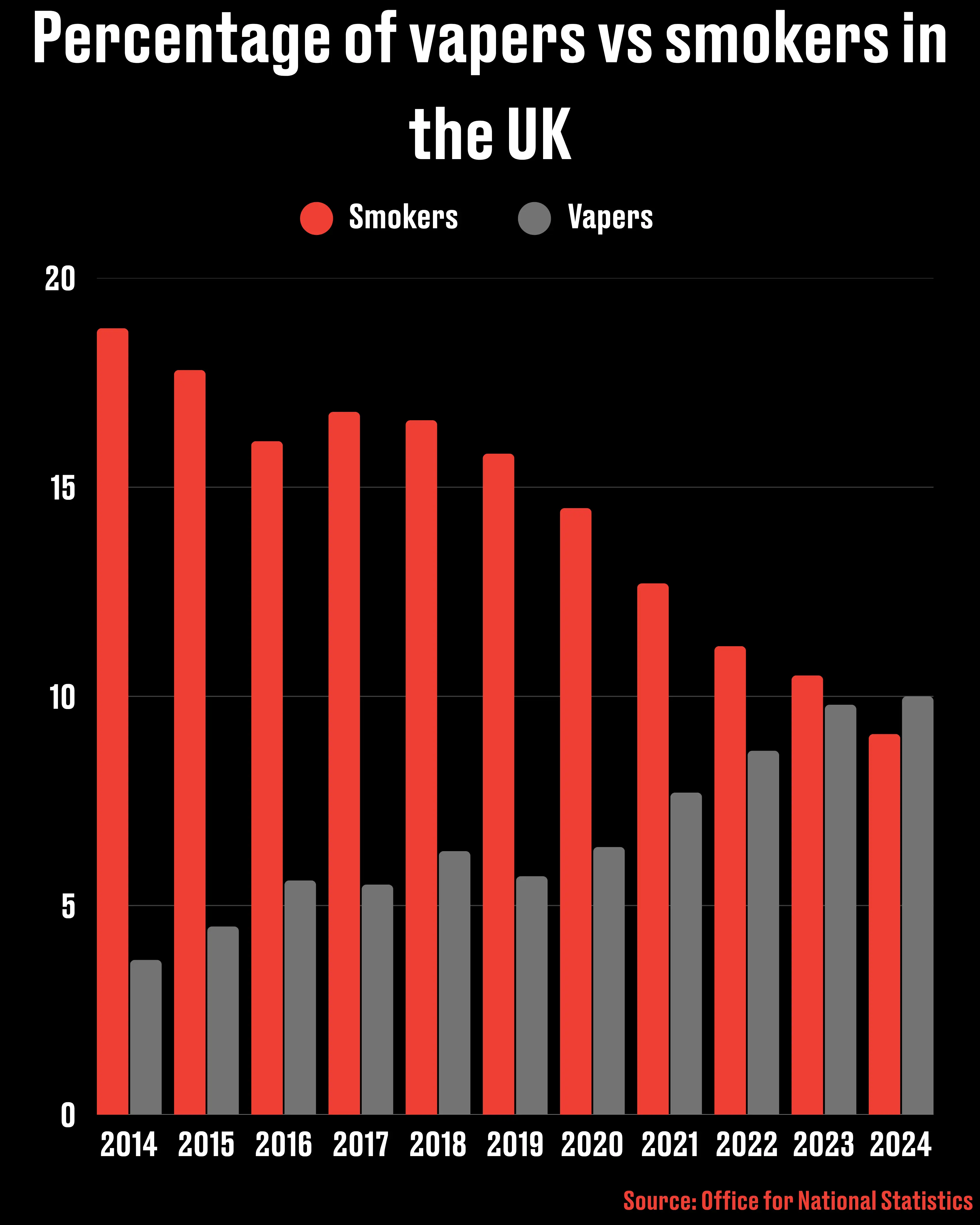
Usage of vapes and e-cigarettes has exploded in the past decade as younger people picked up the habit as an alternative to smoking. According to one ONS survey, vaping has now overtaken smoking in popularity, with 5.4 million adults using vapes while 4.9 million prefer a traditional cigarette.
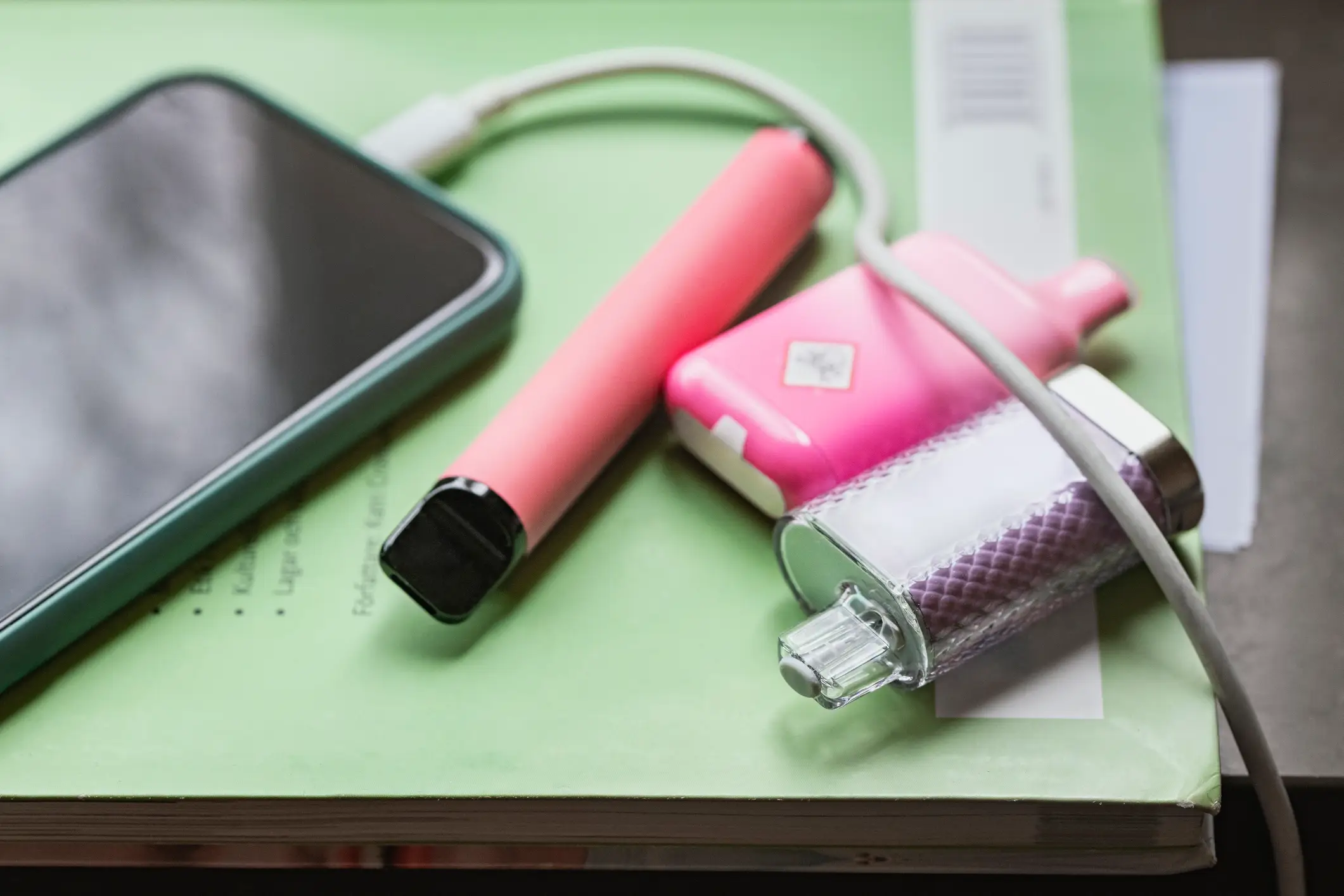
(Getty Stock Images)
However, the research is yet to fully catch up with the trend, meaning that many people are inhaling a substance without a clear idea of the long-term impact it has on their bodies.
According to the latest guidelines from the NHS, vaping is considered a safer alternative for people who already smoke cigarettes.
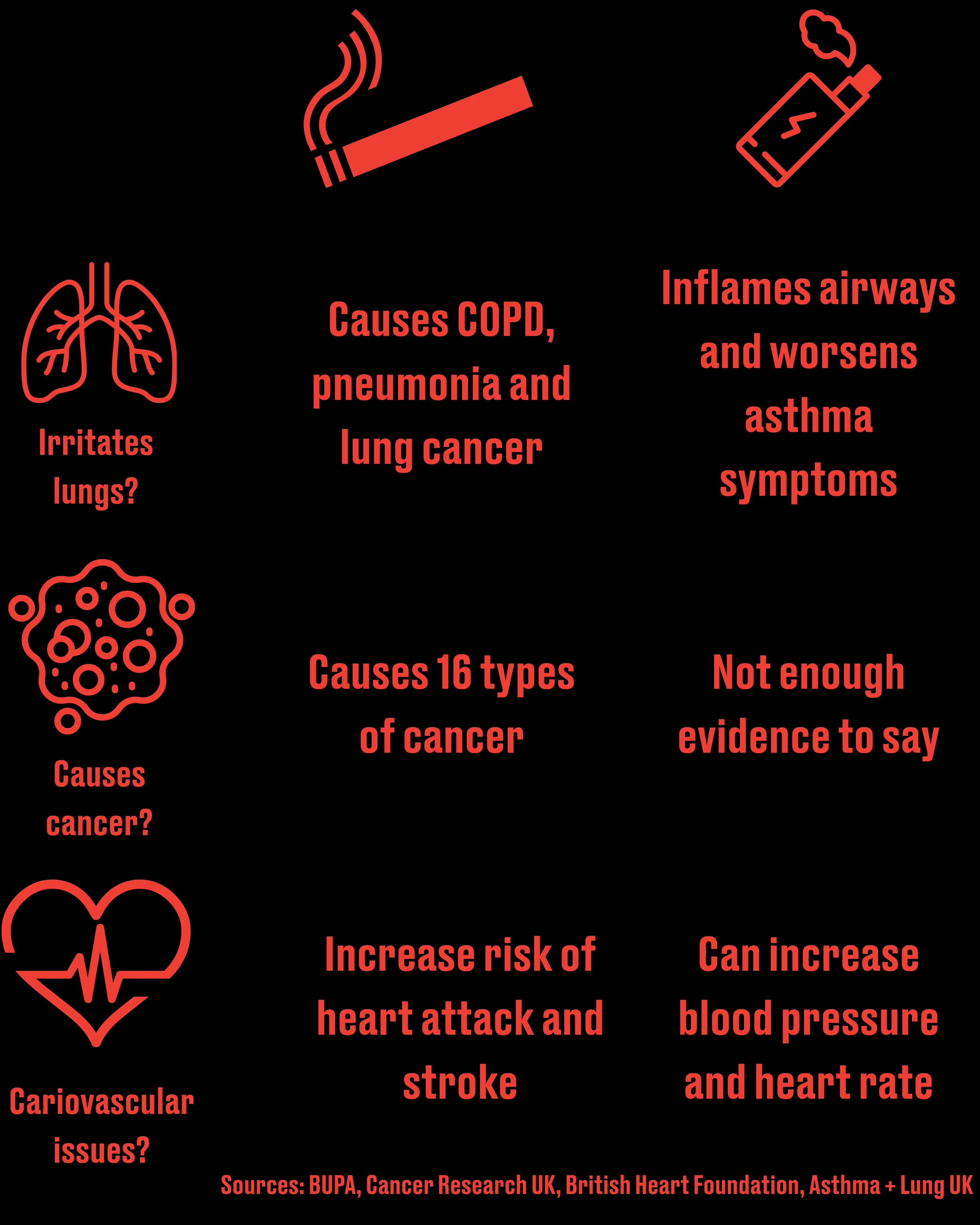
This is because vapes have removed the toxic chemicals found in cigarettes – such as tar, carbon monoxide and arsenic – which have been linked to several health conditions, such as lung cancer, stroke and heart disease.
Vaping has steadily overtaken smoking in popularity (LADbible)
However, this does not mean that vaping is completely safe, with healthcare guidance stating that people who’ve never smoked or vaped should not pick it up.
In the study conducted by National Jewish Health, researchers focused on how tissues in the distal lung – the deep, delicate region where oxygen passes into the bloodstream – reacted when exposed to either e-cigarette vapour alone or a combination of e-cigarette vapour and a respiratory virus (either influenza A virus or SARS-CoV-2).
The findings showed that within 24 hours, e-cigarette vapour damaged the protective barrier of the distal lung, triggered cellular stress, impaired cells’ internal process for clearing damaged components, slowed cell growth and repair, and increased cell death.
Signs of lung stress persisted 10 days after just a five-day exposure period ended, the study noted.
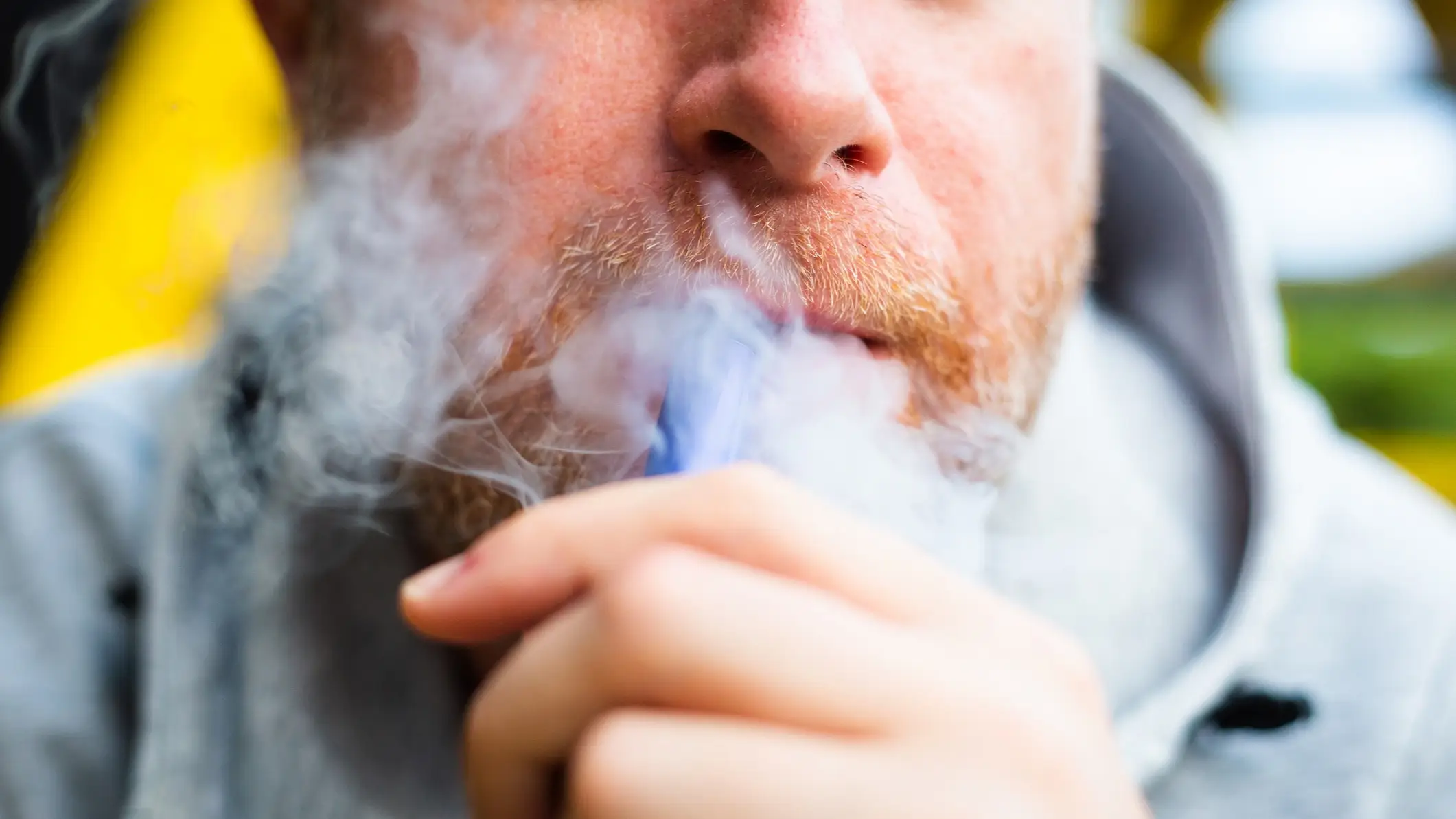
Smoking and vaping have different health impacts (LADbible)
Researchers also observed lasting changes in barrier function, tissue remodelling, and Th1 immunity – a branch of the immune system critical to fighting viral infections.
Previous vaping exposure also increased the quantity of SARS-CoV-2 – the virus responsible for Covid-19 and suppressed several antiviral genes following infection.
“The findings, which will need to be confirmed in future studies in people, point to biological mechanisms that may help explain why vaping has been linked to lung injury and greater susceptibility to respiratory infections,” Petrache added.