It’s officially the last New Music Friday of the summer, and artists did not play when it came to dropping fresh bangers. From A-list names and collaborations to highly anticipated albums, get your playlist ready and let’s have some musical fun.
Maluma & Shakira – AGUA
Shakira and Maluma reunite on “Agua,” their first major collaboration since 2018’s “Clandestino.” It marks their first merengue together, and they did not miss. The Colombian superstars turn up the heat and show off their chemistry and sexual energy in the spicy music video. Shakira looks incredible, per usual, as she flaunts her amazing body and signature dance moves.
CA7RIEL, Paco Amoroso, PinkPantheress, Fred again..–Sexy Magic
CA7RIEL, Paco Amoroso, PinkPantheress, and Fred again come together for “Sexy Magic,” which is featured on the long-awaited Grand Theft Auto VI soundtrack. CA7RIEL and Paco Amoroso are on fire, scoring 7 nominations at the Latin GRAMMYS, the second most after producer Edgar Barrera.
Piso 21, Micro TDH & Gangsta – Segunda Cita
Piso 21, Micro TDH & Gangsta will have you feeling flirty and ready for date night with “Segunda Cita.” It’s a powerhouse collaboration with all the artists seamlessly blending their sounds. It includes a sweet moment with Micro TDH celebrating their first collab with Piso 21, “Te VI’s” initiation into the billions club on Spotify.
Michelle Maciel – espresso martini
Mexican singer-songwriter Michelle Macielbegins a new chapter with her album La Gloria, a 13-track project that explores love, personal growth, and experimentation while blending corridos, reggaetón, and boleros. The album’s focus track, “Dolencias,” featuring Ana Gloria, brings the two artists together for a fun, dance floor-ready collaboration that highlights Maciel’s ability to move between genres.
Zulia – Birkin
Following the release of his album Ya No Me Importa Si Nadie Me Escucha, Venezuelan rising star Zulia drops “Birkin.” The singer has one of the most unique voices in music, with bold, sensual lyrics, and a smooth sound.
You may also like
Continue reading
Guaynaa- SE PARECE AL PAI
Puerto Rican singer Guaynaa gets into his salsa swag with “SE PARECE AL PAI.” The catchy track has incredible instrumentals, an infectious melody, and lyrics inspired by his own life as a father. It stars his wife, Lele Pons, and their daughter, Eloísa.
Rodrigo y Gabriela – Somos Como Tú
GRAMMY-winning Mexican guitar duo Rodrigo y Gabriela release their new album OurHome. They step into new territory with “Somos Como Tú,” their first-ever song featuring lyrics and vocals. The track explores migration, displacement, and the connections that unite people across cultures, marking a new chapter for the duo as they continue to expand beyond their signature acoustic sound.
Feid, Bad Gyal – DE DIOR XL
After postponing its release, Feid drops his new EP, EL GREEN PRINT: La Saga (Disc 2) – EL CLUB DE LAS 19 FLORES, the next chapter of his Green Print era. It includes collaborations with Vicente García, El Americano 4KT and Pirlo, Divino and Baby Ranks, Icon, Yandel, and Spanish star Bad Gyal.
Elvis Crespo, beele – PA´BAILAR
The one and only Elvis Crespo adds another collaboration with the new generation, this time with Beele. The genre-blending track has merengue, urban, and pop sounds with exciting instrumentals that will have you ready to move your hips.
MILEY – Let’s Get Married
Miley’s highly anticipated album Bass Persuades is here, and it’s beautiful. It’s the first album since dropping Cyrus and shows off the multifaceted sides of the singer. “Let’s Get Married” is a gorgeous track dedicated to her fiancé, Maxx Morando, and comes with an intimate music video starring the couple.
Polygon is preparing a permissionless contract that would let anyone permanently burn 100 million $POL, or about 83% of a base-fee collector that Polygon Foundation CEO Sandeep Nailwal said holds 121 million tokens.
Nailwal said the contracts are on testnet and would move to mainnet after the final Security Council signatures. The first call would destroy 100 million $POL at once, followed by quarterly burns that anyone in the community could trigger, he said.
Polygon’s documentation says the base fee is a network-determined charge that is burned. Nailwal said each base fee adds $POL to the collector. At the stated figures, the first burn would leave about 21 million $POL in the collector before additional fees accrue.
Burn Would Remove Less Than 1% of Supply
The 100 million-token burn equals 1% of $POL‘s initial 10 billion-token supply. Blockscout listed total supply at about 10.716 billion $POL, making the planned burn roughly 0.93% of the total.
The burn would not impose a hard cap on $POL. Polygon’s token documentation says $POL has ongoing emissions, with an effective annual rate of 2% beginning after June 2025. The planned one-time reduction is therefore less than half that annual rate when both are measured as a share of supply; whether supply contracts over time depends on subsequent fee burns relative to new issuance.
Nailwal said $POL had been deflationary since January 2026. He also claimed Polygon had generated $24.5 million in 2026 revenue, compared with $8.41 million for Arbitrum and $5.6 million for Near. He wrote that the comparison came from “my analyst at ChatGPT,” and the post did not identify a dataset or methodology.
The next step is mainnet deployment after the remaining Security Council approvals. As of Nailwal’s post, the first 100 million $POL had not yet been burned.
The Bank of Japan announced a policy-rate increase to about 1.25% on Sept. 18, yet the visible Bitcoin and currency response showed limited signs of a disorderly yen-carry unwind.
The BOJ voted 7-2 to lift its target for the uncollateralized overnight call rate by 25 basis points, from about 1% to about 1.25%. The new target and related facility rates take effect Sept. 24, so the decision changed the policy path before it changed the official operating rates.
That separates a scheduled funding-cost change from the market’s reaction to the announcement. Positions can adjust before implementation, and the BOJ’s next signal could matter as much as Sept. 24 because the bank tied further increases to its economic and inflation outlook instead of a fixed timetable.
That distinction matters for yen-funded trades. Investors can borrow yen to buy higher-returning assets elsewhere. A higher Japanese rate reduces the trade’s interest-rate advantage. If the yen appreciates, overseas borrowers must buy a more expensive currency to repay yen-denominated debt, increasing repayment costs in their home currency. Both forces can pressure leveraged risk positions, including crypto exposure.
The available evidence leaves the amount of Bitcoin exposure financed in yen unquantified. Coinbase Institutional’s review of the 2024 carry episode identified several simultaneous catalysts, including weak US economic data and pressure on technology stocks. Yen funding is one transmission channel among several that can shape crypto moves.
Bitcoin’s first response stayed orderly
At the BOJ’s 02:54 UTC release time, Coinbase one-minute data put Bitcoin’s closing price at $76,961. At 03:30 UTC, the one-minute close was $77,383. Bitcoin rose across those 36 minutes and continued throughout the day to reach as high as $81,000 intraday.
The currency move also ran against the simplest carry-unwind pattern. Reuters reported that the dollar climbed to a two-week high of 157.84 yen during BOJ Gov. Kazuo Ueda’s press conference, leaving the Japanese currency 1.2% weaker on the day. A visible synchronized unwind would more likely pair rapid yen appreciation with falling risk assets.
The initial reaction points to limited immediate unwind pressure in the observed markets. Longer-term risk remains open as the new rate takes effect and the BOJ considers its next steps.
The BOJ said financial conditions would remain accommodative, while retaining a conditional path toward additional rate increases if its economic and inflation outlook is realized. Sept. 24 starts implementation of the new setting. More diagnostic warnings would be sharp yen appreciation alongside falling crypto and equities, or a fresh signal that the BOJ will tighten again sooner than markets expect.
A video authentically shows a 104-year-old woman named Mabel Rose Thompson chiding U.S. President Donald Trump.
Rating:
In September 2026, Snopes readers searched this website for information about a video allegedly showing a 104-year-old woman named Mabel Rose Thompson chiding U.S. President Donald Trump.
A search located a Threads post (archived) from Sept. 15 displaying the clip with the onscreen caption, “At 104, I’ve Seen 18 Presidents. Trump Was the Most Unforgettable.” That Threads post featured the TikTok watermark for a user who previously posted (archived) the video and garnered more than 2 million views.
The video begins with the elderly woman saying she’s seen 18 presidents during her lifetime — a number that would mean, given her age, that Warren G. Harding would have been her first president:
Mabel Rose Thompson here. I’m 104 years old. I’ve seen 18 presidents sit in that office. And I’m going to tell you something that will make half of you furious and the other half want to buy me a drink.
Donald Trump was the worst man I have ever watched lead this country. Not because of taxes, not because of tariffs, not because of any policy you want to argue about at Thanksgiving. Because of character, because of what he did to the American heart. Because in 104 years, I have never seen a president who worked harder to make good people hate each other.
Now before you start typing, let me establish my credentials. I was born in 1922. I was 9 years old when Herbert Hoover was still in office. And I remember my father cursing his name at our kitchen table because the man couldn’t stop the hunger. I was 20 when Franklin Roosevelt died. My mother wept at the radio. I was 41 when they shot Kennedy in Dallas. I was folding laundry when the news came on. I dropped a towel and didn’t pick it up for an hour. I was 53 when Nixon got on that helicopter, waving that ridiculous double peace sign, flying away in shame.
I have voted in every single presidential election since 1944. I have lived under Democrats and Republicans and men so boring you forgot they were there. I have watched them all. And I am telling you plain, none of them, not Nixon, not Johnson, not anyone, none of them damaged the soul of this country the way that man did.
Further searches for the “At 104, I’ve Seen 18 Presidents” caption, as well as a reverse image search, yielded what appeared to be the original video (archived) posted on the Real Talk With Time YouTube channel (archived). That clip displayed the same title, “At 104, I’ve Seen 18 Presidents … Trump Was the Worst.” It also displayed YouTube’s user-enabled label for artificial-intelligence content — a descriptor creators can select when they upload a video.
In sum, the video is fake and was generated using AI. “Mabel Rose Thompson” is a fake name. An AI tool generated the elderly woman, the room in which she supposedly sat and all of the visible objects in it.
Snopes emailed the YouTube channel’s owner to ask what tools were used to make the videos, what inspired the clips and whether the channel’s content is created simply to make money. The channel’s only members-only video (watchable with a free trial that becomes a $9.99 recurring payment in the second month) showed a thumbnail image of a purported 112-year-old woman promising to tell how she avoided the diseases that killed her friends. We’ll update this article if we receive further information.
Detecting signs of AI
Beyond the YouTube video’s AI label, the elderly woman’s waxy-looking skin (another common tell in AI-generated images) confirms its artificiality.
Readers can spot another of the more common signs of AI content by examining the area behind the old woman. The bookshelf is filled with books, none of which appear to have legible letters and numerals on their spines. According to Northwestern University’s Kellogg Insight blog, illegible text is often an indicator of AI-generated images and videos.
A scan of one of the video’s still frames by the Pangram AI-detection tool displayed a “Fully AI” result: “We believe that this image is fully AI-generated.” A separate Pangram scan of the video’s spoken text displayed concluded: “100% of this text is AI” and “We believe that this entire text is AI.”
Snopes doesn’t depend solely on AI detection tools, which vary in reliability, and instead considers the tools’ results as one of several data points toward judging an image’s authenticity. For Pangram, we bear in mind the platform’s strong performance in third-party and internal evaluations, as well as criticisms of the tool.
For further reading, we previously debunked an AI-generated image supposedly showing quadruplet sisters posing with a cake on their 90th birthday.
In late summer 2026, new laws went into effect requiring any individual under 5 feet, 2 inches to use a booster seat when driving or riding in cars, regardless of age.
Rating:
In late summer 2026, social media posts claimed that new laws had gone into effect requiring all car drivers and passengers below a certain height to use a booster seat, regardless of their age.
The details changed from post to post (archived), and varied from state to state, but the most common version of the rumor suggested the law applies to anyone under 5 feet, 2 inches in height.
(Facebook)
Snopes readers contacted us looking for more information about the variety of claims.
In short, all the similar rumors are false. No such laws have been passed or are set to come into effect anywhere in the United States.
Searches on DuckDuckGo, Google and Yahoo uncovered no news reports or evidence about the supposed changes. Reputable local news media outlets would have covered such a story if any of them were true.
It was not possible to definitively determine the origin of the claims. They appeared to be part of a series of AI-generated images promoting new, fictitious state laws. AI-generated fake laws have become a relatively common “template” of rumor that circulates on social media. Snopes has debunked several examples over the past year.
However, the posts spreading the booster seat claim include a second type of image — also AI-generated — of an adult woman sitting in a car seat. Investigating those alleged photos revealed numerous signs they were AI-generated.
For example, one image (shown below) includes a strange white artifact in the center of the harness-style buckle (which should be gray, given the color of the woman’s top) and the metallic section of her cup doesn’t correctly fit into the rest of the flask on the left side. The woman’s hair on her shoulders also looks unnatural — it almost looks more like a net than hair, with individual strands zigzagging erratically. (This effect is even more clear zoomed in).
(Facebook user Kelsey Biggs)
In addition, Facebook, the platform where most examples of the claim were posted, had labeled the above image and several others as AI-generated content. Running the images throughothergenerative AIdetection tools supported this. (Let us note: these tools are fallible, and we recommend using them only as supporting evidence).
Investigating the laws around child-safe car seats and booster seats in each U.S. state and territory led to several sites that contain lists of all car seat, booster seat and seatbelt laws, as of this writing. The laws all specifically mention children, and many designate their requirements based on a combination of age, height and weight. When limitations based on height and weight are included, they tend to be set at for children under 80 pounds and shorter than 4 feet, 9 inches, several inches below the limits suggested by the fictitious laws. None of the authentic laws mention adults under 5 feet, 2 inches being mandated to ride or drive in booster seats.
Sources
Ahne, Andi AhneAndi. “Viral Car Seat Claim Targeting Short Adults Hits North Dakota.” Hot 97-5, 11 Sept. 2026, https://hot975fm.com/viral-car-seat-law-myth-explained/.
Christensen, Laerke. “Did US States Ban ‘aimless Driving’ via ‘House Bill 626’? Hit the Brakes before Sharing Claim.” Snopes, 16 May 2026, https://www.snopes.com//fact-check/aimless-driving-house-bill-626/.
Izzo, Jack. “Did Several US States Ban Line Dancing via ‘House Bill 417’? Here’s the Truth.” Snopes, 19 May 2026, https://www.snopes.com//fact-check/line-dancing-ban/.
Rosiles, Mateo. “Viral Texas Booster Seat Law for Adults Is Fake. Here’s the Real Law.” USA TODAY, https://www.usatoday.com/story/news/state/texas/2026/08/03/texas-dps-debunks-viral-claim-about-booster-seats-for-short-drivers/91149653007/. Accessed 16 Sept. 2026.
Fatih Akin is no stranger to the festival circuit, having wowed Berlin with his Golden Bear-winning Head-On in 2004 and nabbing best screenplay in Cannes for The Edge of Heaven in 2007.
The German-Turkish filmmaker, also a Golden Globe winner for 2017’s In the Fade, has sent a couple of movies to San Sebastian over the years. “I don’t remember which films it was,” he tells The Hollywood Reporter on Zoom. “But I always wanted to go.”
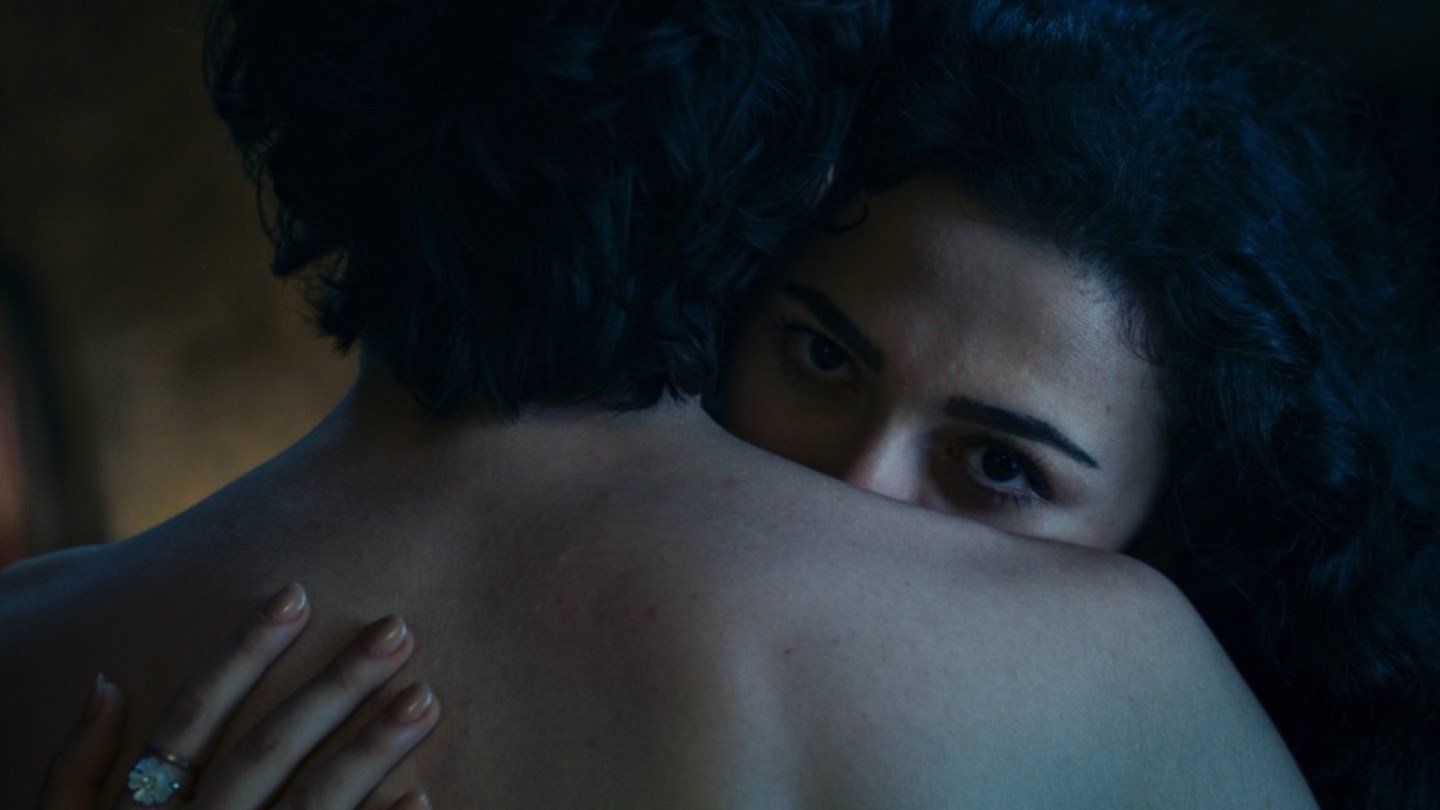
Akin is getting his chance and then some with this year’s haunting opener Ghost Song, following two students who meet in a Berlin nightclub and immediately fall head over heels in love. Farasha (Mariam Dawoud) and Faris (Eren M. Güvercin) are struck by a deep-rooted connection that they can’t wait to untangle, but the cord is abruptly cut short when Farasha is killed. For the next 40 nights, she visits Faris in his dreams, where their mutual infatuation slowly drives him to the brink of insanity.
The Warner Bros. film, co-written with Ruth Toma and set for release in Germany Nov. 5, is actually inspired by Akin’s own discovery of anime and manga, and bolstered by his desire to make Ghost Song for a younger audience. “I’m not a boomer, but I’m Generation X, and Gen Z is very different,” he says. “They work with very different tools and worlds, and you have this influence [that] is not coming from Hollywood. You have this influence coming from Asia, from Japan, China, Korea.”
The black-and-white feature is both tender and harrowing, the anime influence palpable in the beautifully illustrated title cards marking the remaining nights Farasha and Faris have together. The story also deftly draws on spirituality rooted in the Islamic tradition — a nod to Akin’s religious upbringing. “It’s my form of dealing with that,” he tells THR, “or using it as storytelling.”
Below, ahead of its glitzy red carpet premiere on Friday as Spain’s most prestigious film festival officially gets underway, Akin unpacks the making of Ghost Song. He talks about its depiction of teen suicides — “everybody knows somebody in the generation of my kids who [took their own life] or who tried to” — as well as his decision to keep the film in black-and-white, its similarity to Demi Moore and Patrick Swayze’s Ghost, and why he’s vowed to never relive this particular process again: “This is the very last time I do it this way.”
When did this journey start, and why this story?
It all started about 10 years ago. It was basically an idea [from] my son. He had this idea of me doing a film for kids, and it was a story about two friends, and one is a ghost — two boys and they’re best friends. I liked the idea of doing something for children, which was very different than what I did before. And I gave it to this writer, Ruth Toma, who I had worked with before. And she wrote the screenplay for this children’s movie. But then I turned to doing In the Fade and other stuff. We never stopped developing the screenplay in the meantime. And what happened was, with the growing up of my children, the age of the characters had changed. That happened [naturally], and so the focus shifted as well and it became a romantic [film]. My kids really taught me or showed me the world of anime. I was very much in manga and graphic novels before… But I was wondering, can I combine it with my take on cinema?
So there’s an anime influence on this film?
Very much. Anime films often have this romantic touch. They are in this fantasy world, you know? Like parallel universes, rebirth, dying and coming back — this is very popular in the anime world. But also social matters. A Silent Voice is a film about mobbing and suicide in the teenage world or in the young adult world, and so anime is a tool or a window for a younger generation than I am. I’m not a boomer, but I’m Generation X, and Gen Z is very different. They work with very different tools and worlds, and you have this influence [that] is not coming from Hollywood. You have this influence coming from Asia, from Japan, China, Korea. I was very much influenced by Western cinema, by American cinema.
Filmmaker Fatih Akin at the 2025 Cannes Film Festival.
Courtesy of Getty
Are there any particular directors from that region that you’re a fan of?
Hayao Miyazaki, the guy who won the Academy Award with Spirited Away. All his work is pretty influential, and of course, the guys who made Suzume, Your Name and Belle, these are incredible pieces of work, in a very visual way. I had the opportunity to do [that] with this film: combine it with that world [and make] a spiritual film. When you think about spiritual films, you end up with Kundun or The Last Temptation of Christ stuff, but I see more the desire and need of doing such a film for a director. Spirituality, the supernatural… I’m interested in this stuff in a private way, but how can you make a film about it that’s still for a wider audience? Ghost Song gave me the opportunity to do that — to do a spiritual film, but to do it as much [for]… I don’t know. Pop culture.
It’s interesting that this started as a children’s film because it really is quite morbid.
It’s not a children’s film anymore. It started as a children’s film, but then it became […] [for] young adults. And what we found out when we worked on this is that suicide is the highest reason for dying between 15 to 25-year-olds in the whole world. I didn’t know that, and it was scary. Suicide is a theme which has always popped up in my work.
I don’t know why these things pop up in my work, but it’s here [in Ghost Song] again. And everybody knows somebody in the generation of my kids who [took their own life] or who tried to. COVID was a very depressing period for this generation. So I observe that, in a way. I deal with that. I think the film is for everybody in a way — not too young — but sometimes I can understand that people of 60 years, if they don’t have kids or if their kids are grown up, that they cannot connect with such a film. But a younger audience can. And I’m 53 now. I’m thinking about getting old, and to do such a film and to connect with a younger audience… It keeps me young. (Laughs.)
This film tackles so much: suicide, mental health, young love. I want to ask about the mythology of this film, if that’s the right word. The lore, and Farasha haunting Faris for 40 nights. Is that rooted in a certain tradition?
Yes, the Islamic tradition. But we discovered that Orthodox Christianity has that too. […] I have this Islamic background. I grew up in an Islamic family, a very faithful, religious family. It’s my form of dealing with that, or using it as storytelling.
It was beautiful. I don’t know if I saw the final version of the film — I saw a black and white version?
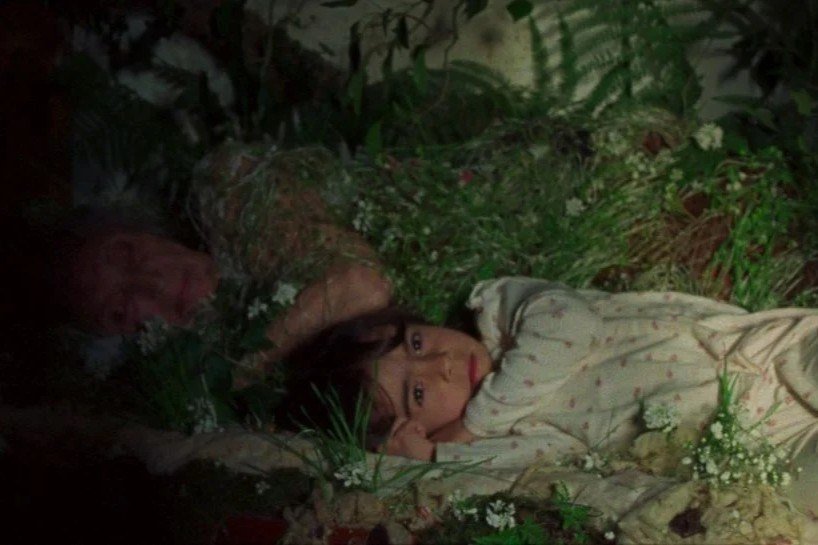
That is the final version. I have two versions. That happened because the anime world was influencing this film, so when you do a film, you have reference films. The only reference films I had for this one, which I gave to my DP, were the anime films. Your Name, A Silent Voice, maybe Ghost, the Patrick Swayze film. (Laughs.) But nothing else on a visual level comes to mind. So this was the influence, and the colors and the color grading was very important. For the first time, I really, really, really worked with strong colors. It starts with the costume and goes through the set design and the lighting, but very much the grading as well. And the grading is a process in filmmaking that comes at the end, after the film is edited and done.
[But] with the fast rush and to not get distracted by it or not lose the faith in the visuality of the material, what did I do? I switched off the colors in the editing process. And what happened is we got used to it. The whole film was a long journey and very difficult to edit. I was in the editing room [for] almost six months. What do you do when you edit six months in black and white? You get used to it, and that’s like a relationship. You fall in love with it. So [we were] like, “Okay, let’s keep it in black and white.” It’s beautiful in black and white, and it’s existential in black and white. And this film is about existentialism, and it’s manga, and manga and anime are in black and white because the colors are too expensive to print. It became this art form. It’s so strong and so unique.
So which one will you screen in San Sebastian?
The black and white. I’m asking that they also show a color version of the film. I’m not sure if I have convinced the festival committee yet. But we have the opening in black and white, and I hope that I can get a second screening in color because you have to see both versions of the film to have the complete picture.
This is also very much an immigrant story. And we see glimpses of Farasha’s journey to Europe. I wanted to ask whether that’s rooted in anything personal for you?
I am always looking for heroines and heroes who are not that common in Western cinema, but [are] part of the Western world when you go out on the street. I’ve always done that since my very first film. I don’t know if it’s just personal. It’s something I observe on the street in daily life. Syrian migration in Germany since 2015 has become very visible in Germany, and these people somehow adapted to so much and so fast, as well. I mean, they’re in the medical sector and the care sector. They’re in all sectors, and they changed this country. The Turks have been here since the ’60s of the last century, but the Syrians came 10 years ago. It was an opportunity to put that in the story as well. To give more texture.
I don’t have these typical rock-and-roll kids [as] heroes. Faith is important for [Farasha] in a way. Maybe her faith, her religion, makes her otherworldly. You have to believe in that… If you deal with life and death and past life, you automatically end up in a spiritual film, and so it was a way or an opportunity to use my personal biography in this spirituality of the film.
How do you hope the audience reacts after watching Ghost Song?
I’ve seen some reactions [already]. Some reactions really shocked me — some people, they’re very much emotionally shaken by the film. I had never seen that before, or in other works I did. Usually, it’s not so much a young audience who’s like that. It’s more like 30 and up, you know? For them, this is a roller coaster, and I always try to give the audience a physical experience as well. I think if a film reaches a physical level — laughing, crying, whatever it is… If this two-dimensional medium can create that, can create goosebumps, but on the other hand, console. […] I hope this film could be a friend for a lot of young people. It deals with life and death, but in a life-positive way. It’s a tragic love story — we don’t have that too much these days in the cinema, especially a lot in German cinema.
It’s catharsis. It’s a troubled world. Everybody has a lot of issues all over the world, and you get sidetracked from that escapism. If a film can give you catharsis, it can be very helpful.
It’s my first time at San Sebastian [Film Festival]. I think in the past, I sent films there and they passed [on them]. I don’t remember which films it was. But I always wanted to go to San Sebastian. It has that great name and good food and [it’s a] sophisticated festival in a way. I was very, very curious always about that because I have a lot of friends in Spain, and I think I have an audience in Spain, so I have a good relationship [with] that country. To get to that festival with this film and opening it, it means a lot to me.
It’s also good to know that there aren’t just the usual suspects to present a film. I mean, Cannes is great, and it did a lot for me. And so did Venice and Berlin. But there are other parts of the world, other festivals in the world. It’s not just that I want to support them, but they also support you. I feel very humble and and very honored that they picked up the film for opening. You know, in [the World Cup], I wanted Spain to win. (Laughs.)
How were you able to get Ghost Song funded?
We got government funding. But our biggest supporter, and I’m very thankful that I have them, was Warner Brothers. [Around] half of the budget is coming from Warner Brothers., I’m not sure. My producers know it better. (Laughs.) It was very difficult to finance this film. Very, very, very difficult. On the one hand, films have become more and more and more expensive, especially in Germany. That’s why a lot of German filmmakers move somewhere else to do their films. The cost, everything gets so high here. And you never get the full budget for any film.
Here, and also for [my] last two films, [including Cannes-premierer] Amrum, we went into the risk. We said, “Okay, we are not [at] full budget,” but we still greenlit the film. This is becoming more and more dangerous. This is the very last time I do it this way. Life is too short. It’s heart attacks and cortisol and sleepless nights! It’s not like when I started doing films. I was this young filmmaker in another time, in another country. You had some kids, you had some employees and a company and you’d do a film and fulfill that. It doesn’t work like that anymore.
As someone who has been working with Warner Bros.recently, and with a lot of European creatives speaking about the proposed Paramount takeover, can I ask: do you have an opinion?
Nobody knows. As a rule in filmmaking, nobody knows shit. And I don’t know about tomorrow. […] I don’t have an opinion about that. I can just say I work with the team in Germany and the U.K., and they’re very supportive. I have to say, a brilliant, professional, great team, and a lot of fun to work with.
This interview has been shortened and edited for clarity.The 2026 San Sebastian International Film Festival runs Sep. 18-26.
Photograph a receipt, and Argo Books Accounting Software Premium can extract the vendor, date, total, and individual line items automatically. It’s now on sale for $59.99 for lifetime access (MSRP $399).
For small businesses that have outgrown manual spreadsheets, that’s a straightforward way to cut down on bookkeeping data entry.
Existing records can come along, too. Argo Books imports CSV, Excel, PDF, and downloaded bank statement files, automatically organizing the information and learning your preferences as you use it. Importantly, you don’t need to provide your bank login.
The software also handles income and expense tracking, invoicing and online payments, customer and supplier records, inventory, purchase orders, returns, rental management, and Canadian payroll, including T4S. Predictive analytics provide revenue and cash flow forecasts, while reports and an analytics dashboard help you review business performance.
Prices subject to change. PCMag editors select and review products independently. If you buy through StackSocial affiliate links, we may earn commissions, which help support our testing.
About Our Expert
StackCommerce Team (Sponsored)
Experience
Products featured in these stories are selected by our partners at StackCommerce. If you buy something through links on our site, PCMag may earn an affiliate commission.
MGA Entertainment has debuted a new music video and single tied to a new line of dolls dubbed Mirror Mi.
MIrror Mi features six fashion dolls, each of which embodies “a signature emotion and brought to life through a distinct personality, point of view and style.” The dolls feature fashionable clothing, long rooted hair and collective accessories, among other features, that represent their particular emotion. They are: Blaze Maxx (electric), Amora Valentina (love), Luna Skye (dreamy), kiko Kittyama (crazy), Shai Meadows (sheepish) and Suki Goldpetal (fragile).
The cinematic music video “takes those personalities and emotions beyond the dollhouse and into an elite performing arts academy, where the characters (live-action) pursue their creative passions while navigating friendship, self-expression and change, ultimately discovering the power within every emotion,” the company said, adding that the launch “reflects MGA’s broader vision for Mirror Mi: using dolls as the first point of connection, then deepening character development and emotional relatability through music and storytelling.”
The video was produced in partnership with London Alley Entertainment and directed by Grammy-nominated filmmaker Colin Tilley.
MGA said that additional projects in the works for the Mirror Mi line include stop-motion films and an animated short-form series launching later in 2026.
“With Mirror Mi, we set out to create a world as layered and expressive as the fans it was created for,” said Josh Hackbarth, chief marketing officer at MGA Entertainment. “The dolls are the first point of connection, but music and storytelling allow us to reveal so much more about who these characters are and the emotions that shape them. Every look, lyric and storyline uncovers another side of their personalities, giving fans another opportunity to connect and see themselves reflected in these characters.”
The Mirror Mi dolls
Mirror Mi dolls are currently available at retailers. The product line will expand with four-inch Mini Mis that can be customized, posed and displayed.
“We didn’t begin Mirror Mi with a trend, a color palette or a silhouette. We began with emotion and feelings,” said Paula Garcia, chief design officer at MGA Entertainment. “That idea guided every creative decision, from the sculpt, expression and articulation to the hair, fashion and accessories, allowing each character’s personality and the emotion she embodies to shine through. To us, great character design does more than create something beautiful; it is about creating an immediate and meaningful connection. Every detail is intentional and every element has purpose, revealing something about each character’s identity, perspective and unique way of expressing herself. Mirror Mi represents our vision for the future of doll design: emotionally resonant, creatively fearless and unmistakably original. Watching these characters evolve from an initial idea into fully realized dolls and now seeing the world we imagined expand beyond the product and come alive through music and cinematic storytelling has been truly breathtaking.”
Barcelona’s soccer players packed out Spain’s FIFA World Cup winning team. Now Catalonia, the northeast region of Spain counting on Barcelona as its capital, accounts for a very significant chunk of the Spanish films playing this year’s San Sebastián Festival, one of its principal draws. Some 150 Catalan companies, no less, will be in San Sebastián.
The bullish Catalan presence can be put down to an exciting new generation of Catalan directors and producers exploding on the scene over the last decade, since Carla Simón’s “Summer 1993.”
Key, also is Catalonia’s drive into pan-regional co-production, as many movies tap funding from around Spain. Also at play is a step-up in ambition among Catalan films at large and far larger mobility on the part of talent. So “Saints,” one of the big new Catalan films, is directed by Basque but Barcelona-based Mikel Gurrea, and one of the standout films by a Catalan director at San Sebastián, Carla Simón’s short feature “Flamenco,” is produced by Madrid’s Mamma Team.
“5 More Minutes” (Javier Ruiz Caldera, Movistar Plus, El Terrat, Ikiru Films, Spain)
‘Five More Minutes’
Courtesy of San Sebastián Film Festival
An on-the-rocks couple is caught in a time loop at a rural getaway. Part sometimes excruciating dark comedy, part sci-fi mindwarp and part suspense thriller whose grip bids fair to surprise at San Sebastián. Written and starring Berto Romero, one of Spain’s top stand-ups, playing opposite Belen Cuesta (The Endless Trench”) and an ineffable Javier Camara (“Talk to Her”). Spanish pay TV/SVOD colossus Movistar Plus, El Terrat, a Mediapro Studio company, and Ikiru Films, produce a typical genre cocktail for Romero, much directed with virtuosity by Javier Ruiz Caldera as a series of millimetrically calculated five-minute sequence shots. Filmax handles world sales. JH
“Saints,” (“Sants,” Mikel Gurrea, Lastor Media, Nocturna Pictures, Deloris Films, Kino Produzioni, Spain, Italy)
Courtesy of M-Appeal
Played by Victoria Luengo, who starred opposite Javier Bardem in “The Beloved,” Lali cares for her dying mother Glòria, as she falls in with a gang who steals statues of saints, giving much of the proceeds to the needy and forsaken. Gurrea’ second feature, a step-up in style, shot with a continuous visual pulse, varying in tone from scene to scene. Produced by Barcelona’s Nocturna Pictures, Deloris Films and Lastor Media and Kino Produzioni, the latter two both behind Berlin Golden Bear winner “Alcarràs,” another exploration of an alternative economy. JH
Special Screenings
“Pray for Us,” (“Ruega for nosotras,” Daniel Monzón, Arcadia Motion Pictures, Ikiru Films, Spain)
The latest from the still underrated Monzón, director of the breakout blockbuster “Cell 211” and the memorable “The Laws of the Frontier,” a five-time Goya winner that played out of competition at 2021’s San Sebastián. Set in 1974, after a night on the tiles, Ana, 19, is dispatched by her wealthy family to Spain’s Women’s Protection Board, a Francoist state-backed institution confining young women in the guise of moral “reform.” Arcadia Motion Pictures, behind the Oscar-nominated “Robot Dreams” and Sorogoyen’s “The Beasts,” produces. Picked up by Film Factory Entertainment for international, Elastica for Spanish distribution. JH
Horizontes Latinos
“Ashes,” (Diego Luna, La Corriente del Golfo, Animal de Luz Films, Inicia Films, Perro Azul)
Lauded actor Diego Luna (“Y tu mamá también,” “Andor”) steps behind the camera to helm the adaptation of Brenda Navarro’s critically acclaimed feminist novel “Eating Ashes.” The film stars Anna Diaz (“La Cocina”) and Adriana Paz, who shared the Cannes best actress award with Zoe Saldaña, Selena Gomez and Karla Sofía Gascón for “Emilia Pérez.” The heartfelt drama trails Lucila, a young woman who leaves Mexico with her young brother to reunite with their distant mother in Madrid. Luna also produces via his La Corriente del Golfo label, founded alongside Gael García Bernal. Luxbox handles sales. RSR
Paraguay’s submission to the Oscars, the eight-country co-production “Narciso” began its lauded festival journey at the Berlinale, where it won the Fipresci Award at the Panorama section. Martinessi’s sophomore feature is set in 1959, where the charismatic titular performer returns to Buenos Aires at the height of a strict military regime. When the popular young man is found dead after a show, the culprit becomes even harder to find within this regime built on silence and fear. Luxbox handles world sales. RSR
Zabaltegi – Tabakalera
“Far From the Trees,” (Meritxell Colell, Allegra Films, EXIT Media, Animalita Cine, Spain)
A Locarno 2026 Fipresci Prize winner. Adela, a sound artist recording endangered languages travels to the Peruvian highlands in a film which weaves present and past – collective and personal memory and archive footage of the Catalan diaspora after the Spanish Civil War – speaking about family, forced exile, roots, memory and hybrid identity. “A richly contemplative journey of physical and mental meanderings, beautifully combining 4K digital with Super 16,” says Variety. “Ambitious in scope yet intimate in focus,” Far From the Trees” “could well become an arthouse sleeper,” it adds. JH
“Flamenco Sketches,” (“Jaleos,” Isaki Lacuesta, Lastor Media, Goroka Contents, with La Termita Films, Spain)
Courtesy of San Sebastián Film Festival
Sharing with Francis Ford Coppola the rare honour of two San Sebastián Golden Shells, Isaki Lacuesta returns to the festival fresh from co-directing HBO Max’s acclaimed series “Ravalear.” “Flamenco Sketches” is a restless ride through cinema, machines, Nazism, Civil War, and avant-garde art. The film shows how flamenco has often swallowed disruption whole only to morph itself anew. “Always dying, never dead.” one of the many contributing voices in the doc tells us. CM
The latest by the Silver Bear winner of “The Empire” premiered at Directors’ Fortnight in Cannes and tells the tale of two gangs of kids who compete in the dangerous game of cliff jumping in the French Riviera. Dumont worked with a cast of non-professional actors, adopting a documentary-like approach to the film, shot against the cliffs and open waters of the Mediterranean. The lauded director won two Grand Prix awards at Cannes for “Humanity” and “Flanders.” Luxbox handles world sales. RSR
Made in Spain
“Alive” (“Viva” Aina Clotet, Ikiru Films, Funicular Films, La Terraza Films)
In the intimate “Viva,” which earned its director-star Clotet the Louis Roederer Foundation Rising Star Award, follows 40-something Nora as she finds a new lease of life following cancer treatment. The heartfelt drama explores relationships, as well as the dilemmas brought in by climate change, with a standout performance by the established Clotet, whose 2024 series “This is Not Sweden” racked up several awards and found great success with audiences. The director produces under her Funicular Films label, alongside veteran Edmon Roch of Ikiru Films. Loco Films handles sales, while Caramel Films distributes in Spain. RSR
“The Good Daughter,” (Astra Pictures, Avalon, Krater, Spain, Belgium)
The sophomore feature of Julia de Paz Solvas, also a co-writer on Alauda Ruiz de Azúa’s “Querer,” plumbing gender violence from the untutored perspective of Carmela, the daughter of a direct victim. A trenchant portrait of self pitying, violent male narcissism and an uplifting take on teen female friendship which swept the Tallinn Black Nights Festival in November, sweeping its Grand Prix, actress (Kiara Arancibia) and Audience Awards. JH
“Sixteen Moments of My Life” (Albert Serra, Idéale Audience, Andergraun Films, Weltfilm, Spain, France, Germany)
The latest by irreverent Catalan maverick Albert Serra (“Pacifiction,” “Afternoons of Solitude”) premiered at Locarno. It documents a one-off performance by legendary German film actress and singer Ingrid Caven – known for her collaborations with then-husband Rainer Werner Fassbinder – at the Théâtre des Bouffes du Nord in Paris. Neither a biopic nor a concert movie, “Sixteen Moments of My Life” puts forward a fascinating portrayal of creatives on creatives. Serra’s Andergraun Films label produces and handles sales. RSR
Bowing at least year’s Toronto, a home-run from Isabel Coixet, Adapting a short story collection by Italy’s Michela Murgia, who died of cancer at 51. Alba Rohrwacher “dazzles in a humane, heartfelt drama” as the “luminous center of a charmingly bittersweet and life-affirming movie,” Variety wrote. “In other hands, this would cue a standard disease-of-the-week weepie, but Coixet keeps the tone lightly wistful and wise,” it added. JH