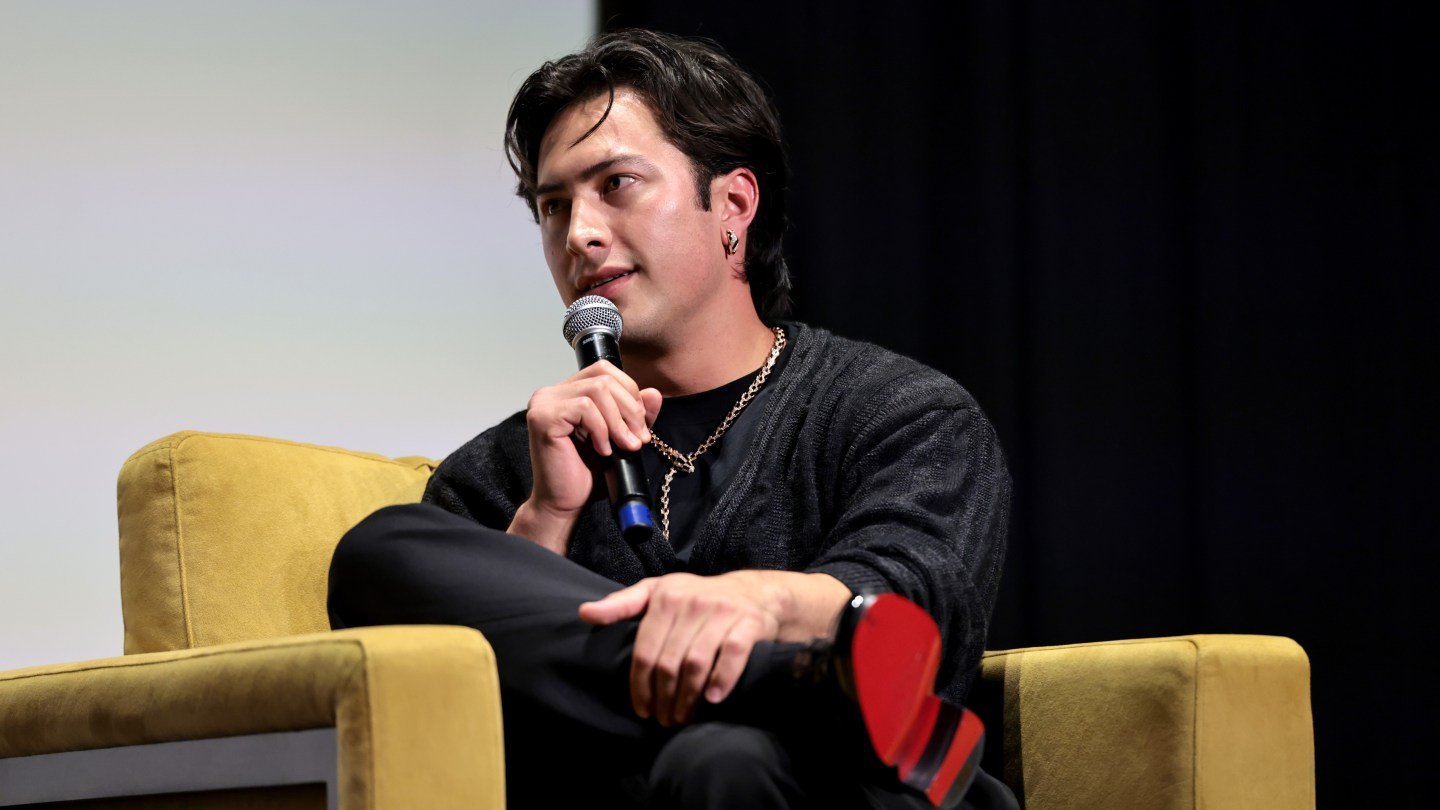
“We’re going to be kissing each other, brother. I’m going to be doing my fucking Russian accent to you,” he said, mimicking Storrie. Williams said it was hard for them to wrap their heads around going back and were concerned they wouldn’t be able to get right back into it. Williams pointed out that it was the first time he’d ever returned to a character on a big scale.
Williams said much of their memory around the first season wasn’t just shooting but seeing the episodes, fans reactions and everything that’s happened in the last 10 months. But ultimately the pair decided to be “overconfident” and knew they knew their characters in and out. “We’re going to show up and it’s just going to be Ilya and Shane right back,” he said.
Storrie ended up working on the first day, without Williams, and came back to tell his co-star about the experience. “He was like, ‘It was sort of weird. They were all so good that I was like, am I good? Am I in it? Am I doing the thing? Am I doing an impression of Ilya?’” Williams recalled Storrie saying.
Williams told the crowd he was extremely confident that wouldn’t happen to him. “Then I showed up. I was doing the scene and there was some extras, who were clearly fans, and they’re just so perky. I was like, ‘Oh God. Oh God, am I doing a Shane impression?’” he questioned.
Thankfully, Williams and Storrie were able to find their footing quickly. Williams pointed to the show’s creator Jacob Tierney continuing to the make the set feel just as small and intimate as he did when they were filming season one. It helped the the crew is still the same as the previous season.
Williams also teased a bit of season two, which will mainly be based on Rachel Reid‘s Heated Rivalry follow-up novel, The Long Game. “It’s a sad book,” he said. “If season one/book one is the yearning season, book two is external adversity and [relationship] communication problems that feel very real and human.”
The actor added, “To be able to play those as Shane, [it’s] going to be frustrating and annoying to leave set [when] things are left unsaid, but hopefully it’ll make for really good TV.”
“Ninjago Legends: Duskfall” is premiering in Korea this weekend ahead of a worldwide release on Lego’s YouTube channel.
The anime-style shorts feature some of “Ninjago’s” most beloved characters as they encounter new challenges and new battles while bringing back some familiar voices from the original show as well as “Ninjago Dragons Rising.”
The series of three interconnected shorts, each three-minutes long, premiered Friday at a “Ninjago Legends” Duskfall” fan event at the Park Mall Yongsan in Seoul. The shorts will be released on the Lego Group’s YouTube channel on Saturday, Sept. 19.
The three shorts are titled “The End Begins,” directed by David Cazeaux and Charles Lefebvre, “Terminus,” directed again by Cazeaux and Lefebvre, and “Epilogue,” directed by Cazeaux, Lefebvre and Hugo Cierzniak.
Andrew Francis reprises his role as Cole alongside Kelly Metzger as Nya and Vincent Tong as Kai. Also returning to the franchise are Brian Drummond as Diviner and Runt, Adrian Petriw as Scott and Sabrina Pitre (the voice of Sora in “Dragons Rising”) as a reporter.
In a trailer for the shorts series, it opens with a female voice saying “Kai, if you make it out of this, promise me you’ll walk away.” It then cuts to plenty of action before Kai, in his red ninja outfit, says: “Save the Elementals, I’m coming.”
The female voice then says: “We’re not fighting demons or monsters anymore, they call us warriors. Protectors. Ninja.”
Created to mark the fifteenth anniversary of the “Ninjago” franchise, the shorts offer fans who’ve grown up the show an opportunity to watch the characters in a new way, with many hoping the anime-style shorts will be expanded into a full series. Ninja, watch this space.
World-premiering in San Sebastián main competition, Javier Ruiz Caldera’s time-warping drama ‘5 More Minutes’ (‘5 Minutos Más’) suggests one way an on-the rocks relationship may come closer together again: by plunging them into the makings of a global apocalypse.
Writer-star Berto Romero (“The Other Side”) and Belen Cuesta (“The Endless Trench”) play a couple who are trying to repair their frayed marriage, retreating to an idyllic vacation home in Spain’s exquisite Girona countryside. There they are handed the keys by Carlos, a property manager, played by the ever-popular Javier Cámara (“Talk to Her”) in a rare, less simpático role. Not long after he hands over the keys, time jumps back five minutes.
Actor-writer Berto Romero and Belen Cuesta in ‘5 More Minutes’
QUIM VIVES
As time continues to jump back for them, again and again, they grow increasingly paranoid. Catalonia has always looked to France for inspiration. This is a film which melds the great French and Catalan tradition of questioning the civilized manners of the bourgeoisie, rcast in a thouroughly modern genre blender, part excriciating comedy, part min-bending sci-fi, and part a shockingly violent thriller, driven by the logic of nightmares.
A potential breakout, “5 More Minutes” is produced by Movistar Plus, El Terrat, part of The Mediapro Studio, and Ikiru Films. Filmax handles domestic distribution in Spain and internatonal sales.
Ruiz Caldera and Romero both spoke to Variety in the run-up to San Sebastian’s world premiere.
What was it about this project that compelled you to take it on, particularly after your previous film?
Ruiz Caldera: I always want my next film to differ from the previous one and present a new challenge. Berto Romero’s script offered that, combining the genres I love most: fantasy, thriller and irresistible humor. I immediately wanted to make it.
The choice of music framing the film is striking. What informed the decision to open and close with Roy Orbison’s “In Dreams,” and what did you hope that musical motif would evoke?
Ruiz Caldera: Finding the right song was difficult. We wanted something hypnotic and mysterious that signaled this wasn’t simply a comedy. Then “In Dreams” clicked. Many will remember it from David Lynch’s “Blue Velvet,” and I hope that association adds an intriguing layer.
The performances feel remarkably spontaneous despite the film’s highly choreographed structure. How much latitude did you allow the actors to improvise, particularly Belén Cuesta, whose role is especially dialogue-heavy?
Ruiz Caldera: We rehearsed extensively and improvised during preparation, but the actual takes were highly choreographed. The film consists of five-minute takes, so everything had to be timed precisely. Making it look spontaneous was the goal, and Javier Cámara, Belén Cuesta and Berto Romero made that possible.
The film navigates an unusually delicate tonal terrain between black comedy, suspense and the fantastic. How did you calibrate those elements without allowing one to undermine the others?
Ruiz Caldera: Humor helps release tension before catching the audience off guard again. Given the characters’ extreme situation, black humor also feels natural—a way of protecting themselves from anxiety and fear.
The setting in Girona plays a significant atmospheric role. What drew you to this particular location, and how did its familiarity and natural beauty inform the film’s darker impulses?
Ruiz Caldera: It was shot in a beautiful valley in Girona, Catalonia, at a friend’s house I’ve known since childhood. It’s a paradise – an ideal setting for a nightmare.
The decision to construct the film around precisely five-minute takes presents a formidable formal and technical challenge. What motivated this constraint, and how did you coordinate the cinematography, production design, costume, sound, visual effects and production teams to sustain identical conditions across every sequence?
Every sequence shot had to last exactly five minutes, no more or less. We wanted audiences to genuinely feel the weight of those five minutes without relying on editing. After months of testing, every sequence was filmed at exactly 6:35 p.m., with identical light. Close coordination between cinematography, art, costume, sound, visual effects and production made the technical feat possible.
How has the involvement of Movistar Plus, a producer with El Terrat and Ikiru, helped to empower “5 More Minutes” in production terms. And how should it help its distribution potential in Spain?
Romero: I have worked with Movistar Plus on several productions over the years and have built a strong relationship of trust with their creative and production teams. The same is true of El Terrat, with whom I have worked in film and television for more than two decades. Together with Ikiru Films, they have supported the project from the beginning and given us complete creative freedom.
For distribution in Spain, having Filmax on board gives us great confidence. Their experience, knowledge of the market, and ability to connect films with audiences are a major advantage. Together with the support of Movistar Plus, El Terrat and Ikiru Films, we have a strong foundation to give ‘5 More Minutes’ visibility and reach a broad audience.
“5 More Minutes” blends sci-fi, survival thriller and excruciating (in the best sense) comedy. What attracts you to genre mixes?
I have always been drawn to stories that blend genres. Life itself is a good example: it can move from comedy to horror, thriller or drama in a matter of seconds. To me, that feels natural.
I like to follow the story I want to tell and let the genres emerge organically. I come from stand-up comedy and television, where I have worked for 30 years, so my way of seeing the world is naturally influenced by humor. At the same time, I have always loved genre stories, especially horror, thrillers, science fiction and fantasy.
I think my writing is a mix of everything I enjoy, filtered through my own view of life. With ‘5 More Minutes,’ I never set out to make a comedy. But in the end, humor, much like life in ‘Jurassic Park,’ found a way.
A considerable number of top Spanish directors – Rodrigo Sorogoyen, Alberto Rodríguez – use genre. Is there something about Spain or Spanish cinema which explain this predilection in auteurs?
I don’t feel qualified to speak for other writers or define a characteristic of Spanish cinema. For me, it is simply a personal preference as a storyteller. I find it fascinating to use genre conventions, subvert them and take audiences somewhere they don’t expect. I think this fascination with genre is more international than uniquely Spanish, though that may just be my own bias. In my case, it is a purely instinctive and irrational impulse when I write.
It’s officially the last New Music Friday of the summer, and artists did not play when it came to dropping fresh bangers. From A-list names and collaborations to highly anticipated albums, get your playlist ready and let’s have some musical fun.
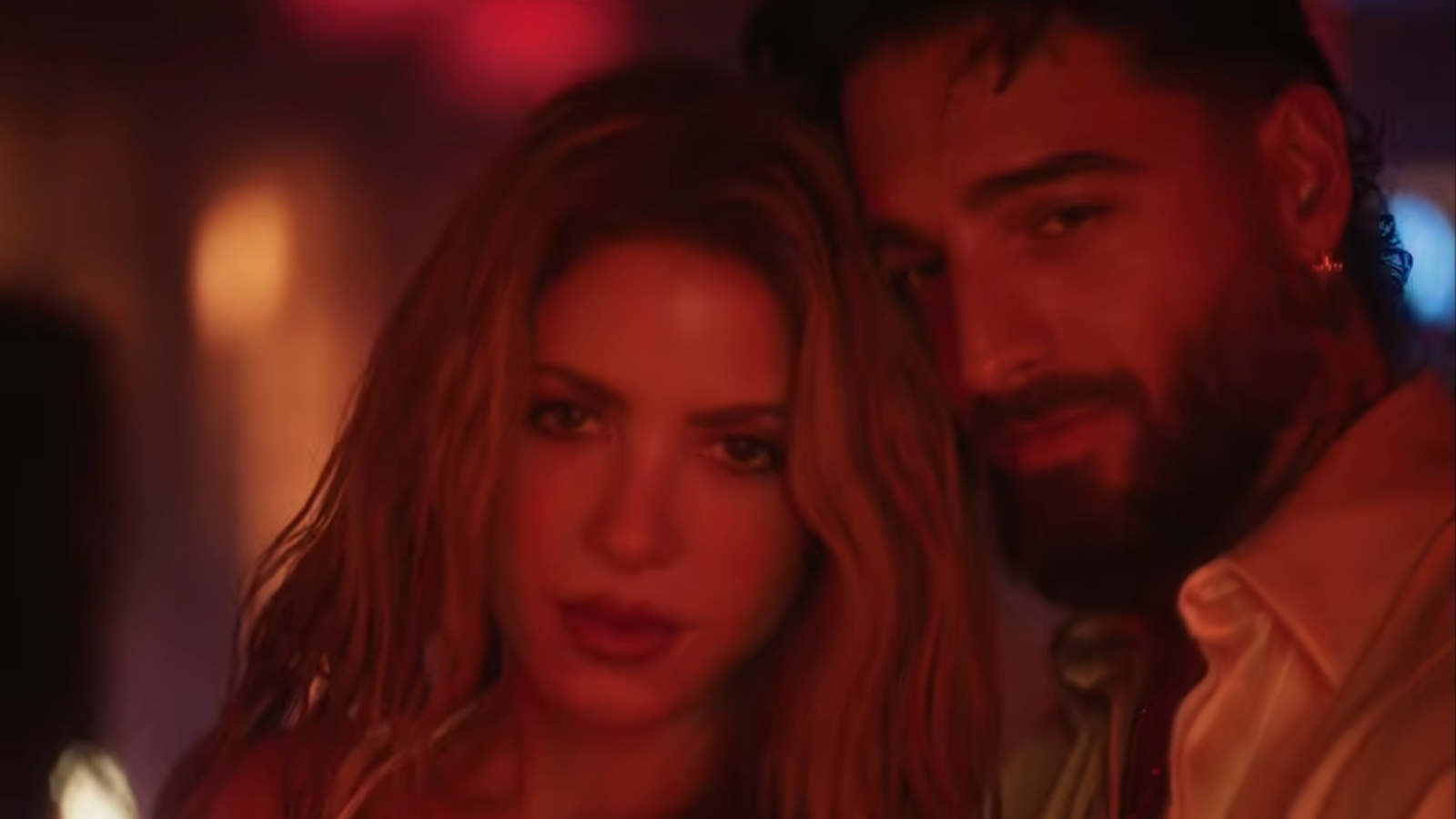
Maluma & Shakira – AGUA
Shakira and Maluma reunite on “Agua,” their first major collaboration since 2018’s “Clandestino.” It marks their first merengue together, and they did not miss. The Colombian superstars turn up the heat and show off their chemistry and sexual energy in the spicy music video. Shakira looks incredible, per usual, as she flaunts her amazing body and signature dance moves.
CA7RIEL, Paco Amoroso, PinkPantheress, Fred again..–Sexy Magic
CA7RIEL, Paco Amoroso, PinkPantheress, and Fred again come together for “Sexy Magic,” which is featured on the long-awaited Grand Theft Auto VI soundtrack. CA7RIEL and Paco Amoroso are on fire, scoring 7 nominations at the Latin GRAMMYS, the second most after producer Edgar Barrera.
Piso 21, Micro TDH & Gangsta – Segunda Cita
Piso 21, Micro TDH & Gangsta will have you feeling flirty and ready for date night with “Segunda Cita.” It’s a powerhouse collaboration with all the artists seamlessly blending their sounds. It includes a sweet moment with Micro TDH celebrating their first collab with Piso 21, “Te VI’s” initiation into the billions club on Spotify.
Michelle Maciel – espresso martini
Mexican singer-songwriter Michelle Macielbegins a new chapter with her album La Gloria, a 13-track project that explores love, personal growth, and experimentation while blending corridos, reggaetón, and boleros. The album’s focus track, “Dolencias,” featuring Ana Gloria, brings the two artists together for a fun, dance floor-ready collaboration that highlights Maciel’s ability to move between genres.
Zulia – Birkin
Following the release of his album Ya No Me Importa Si Nadie Me Escucha, Venezuelan rising star Zulia drops “Birkin.” The singer has one of the most unique voices in music, with bold, sensual lyrics, and a smooth sound.
You may also like
Continue reading
Guaynaa- SE PARECE AL PAI
Puerto Rican singer Guaynaa gets into his salsa swag with “SE PARECE AL PAI.” The catchy track has incredible instrumentals, an infectious melody, and lyrics inspired by his own life as a father. It stars his wife, Lele Pons, and their daughter, Eloísa.
Rodrigo y Gabriela – Somos Como Tú
GRAMMY-winning Mexican guitar duo Rodrigo y Gabriela release their new album OurHome. They step into new territory with “Somos Como Tú,” their first-ever song featuring lyrics and vocals. The track explores migration, displacement, and the connections that unite people across cultures, marking a new chapter for the duo as they continue to expand beyond their signature acoustic sound.
Feid, Bad Gyal – DE DIOR XL
After postponing its release, Feid drops his new EP, EL GREEN PRINT: La Saga (Disc 2) – EL CLUB DE LAS 19 FLORES, the next chapter of his Green Print era. It includes collaborations with Vicente García, El Americano 4KT and Pirlo, Divino and Baby Ranks, Icon, Yandel, and Spanish star Bad Gyal.
Elvis Crespo, beele – PA´BAILAR
The one and only Elvis Crespo adds another collaboration with the new generation, this time with Beele. The genre-blending track has merengue, urban, and pop sounds with exciting instrumentals that will have you ready to move your hips.
MILEY – Let’s Get Married
Miley’s highly anticipated album Bass Persuades is here, and it’s beautiful. It’s the first album since dropping Cyrus and shows off the multifaceted sides of the singer. “Let’s Get Married” is a gorgeous track dedicated to her fiancé, Maxx Morando, and comes with an intimate music video starring the couple.
It’s officially the last New Music Friday of the summer, and artists did not play when it came to dropping fresh bangers. From A-list names and collaborations to highly anticipated albums, get your playlist ready and let’s have some musical fun.
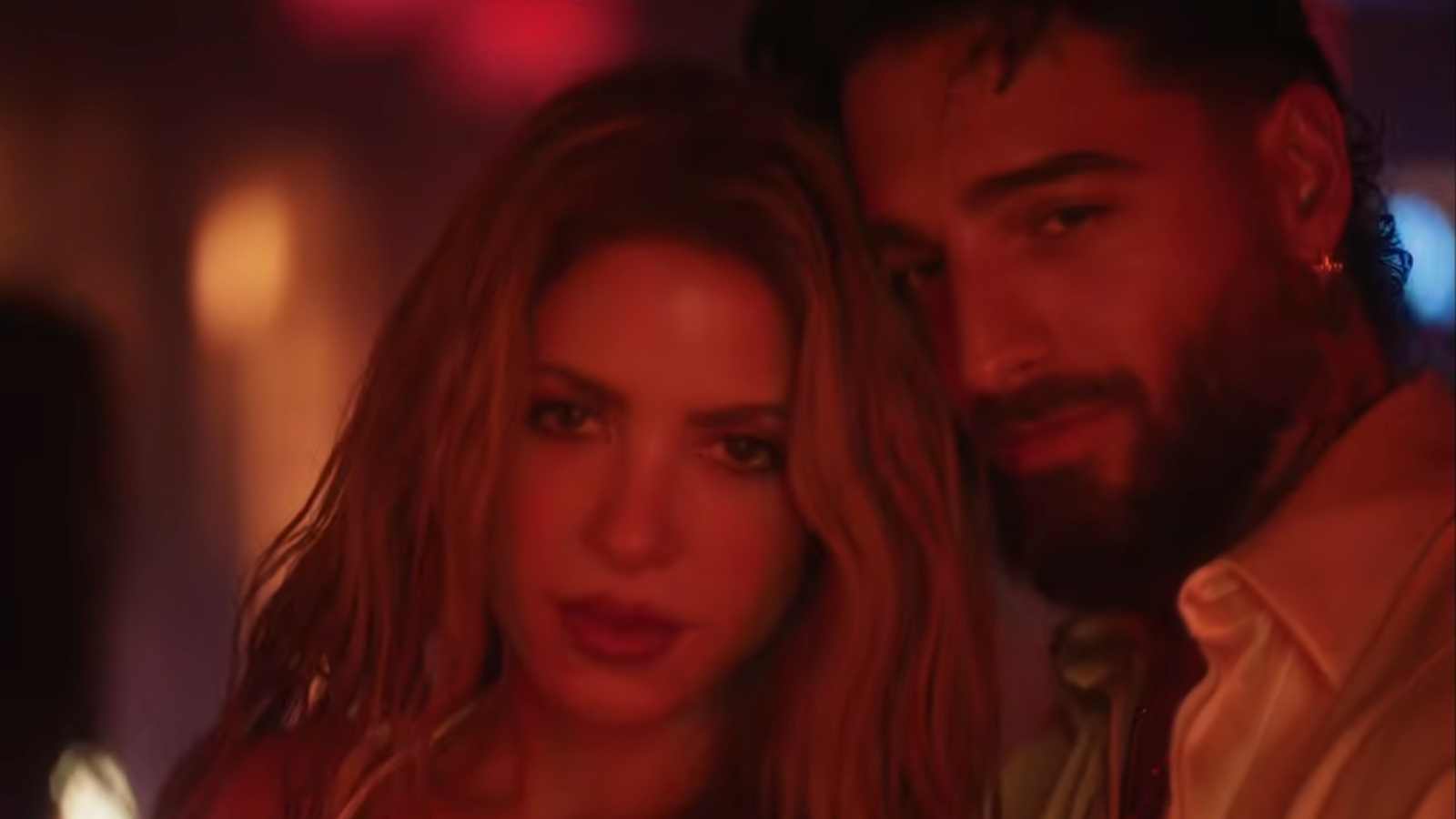
Maluma & Shakira – AGUA
Shakira and Maluma reunite on “Agua,” their first major collaboration since 2018’s “Clandestino.” It marks their first merengue together, and they did not miss. The Colombian superstars turn up the heat and show off their chemistry and sexual energy in the spicy music video. Shakira looks incredible, per usual, as she flaunts her amazing body and signature dance moves.
CA7RIEL, Paco Amoroso, PinkPantheress, Fred again..–Sexy Magic
CA7RIEL, Paco Amoroso, PinkPantheress, and Fred again come together for “Sexy Magic,” which is featured on the long-awaited Grand Theft Auto VI soundtrack. CA7RIEL and Paco Amoroso are on fire, scoring 7 nominations at the Latin GRAMMYS, the second most after producer Edgar Barrera.
Piso 21, Micro TDH & Gangsta – Segunda Cita
Piso 21, Micro TDH & Gangsta will have you feeling flirty and ready for date night with “Segunda Cita.” It’s a powerhouse collaboration with all the artists seamlessly blending their sounds. It includes a sweet moment with Micro TDH celebrating their first collab with Piso 21, “Te VI’s” initiation into the billions club on Spotify.
Michelle Maciel – espresso martini
Mexican singer-songwriter Michelle Macielbegins a new chapter with her album La Gloria, a 13-track project that explores love, personal growth, and experimentation while blending corridos, reggaetón, and boleros. The album’s focus track, “Dolencias,” featuring Ana Gloria, brings the two artists together for a fun, dance floor-ready collaboration that highlights Maciel’s ability to move between genres.
Zulia – Birkin
Following the release of his album Ya No Me Importa Si Nadie Me Escucha, Venezuelan rising star Zulia drops “Birkin.” The singer has one of the most unique voices in music, with bold, sensual lyrics, and a smooth sound.
You may also like
Continue reading
Guaynaa- SE PARECE AL PAI
Puerto Rican singer Guaynaa gets into his salsa swag with “SE PARECE AL PAI.” The catchy track has incredible instrumentals, an infectious melody, and lyrics inspired by his own life as a father. It stars his wife, Lele Pons, and their daughter, Eloísa.
Rodrigo y Gabriela – Somos Como Tú
GRAMMY-winning Mexican guitar duo Rodrigo y Gabriela release their new album OurHome. They step into new territory with “Somos Como Tú,” their first-ever song featuring lyrics and vocals. The track explores migration, displacement, and the connections that unite people across cultures, marking a new chapter for the duo as they continue to expand beyond their signature acoustic sound.
Feid, Bad Gyal – DE DIOR XL
After postponing its release, Feid drops his new EP, EL GREEN PRINT: La Saga (Disc 2) – EL CLUB DE LAS 19 FLORES, the next chapter of his Green Print era. It includes collaborations with Vicente García, El Americano 4KT and Pirlo, Divino and Baby Ranks, Icon, Yandel, and Spanish star Bad Gyal.
Elvis Crespo, beele – PA´BAILAR
The one and only Elvis Crespo adds another collaboration with the new generation, this time with Beele. The genre-blending track has merengue, urban, and pop sounds with exciting instrumentals that will have you ready to move your hips.
MILEY – Let’s Get Married
Miley’s highly anticipated album Bass Persuades is here, and it’s beautiful. It’s the first album since dropping Cyrus and shows off the multifaceted sides of the singer. “Let’s Get Married” is a gorgeous track dedicated to her fiancé, Maxx Morando, and comes with an intimate music video starring the couple.
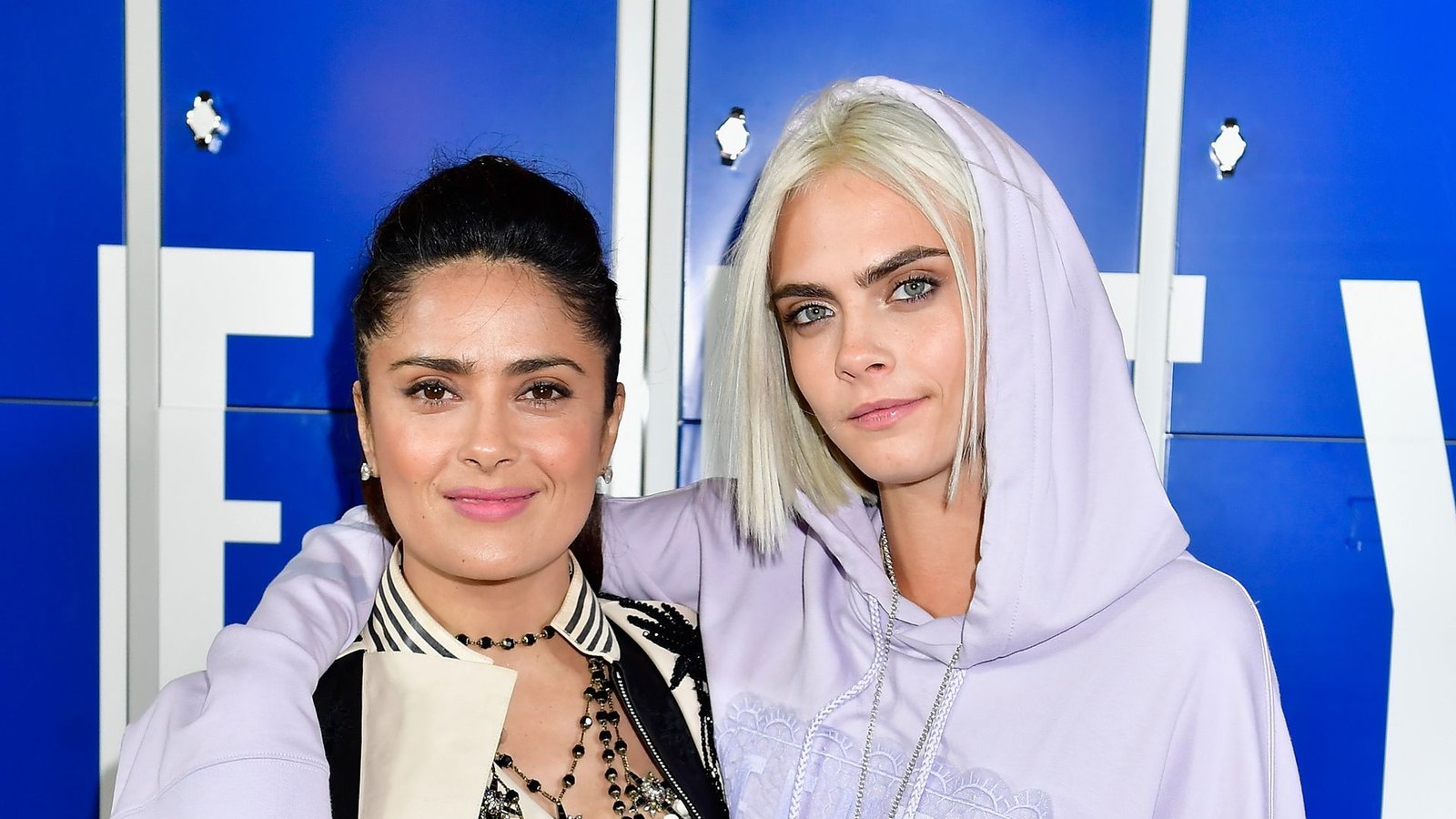
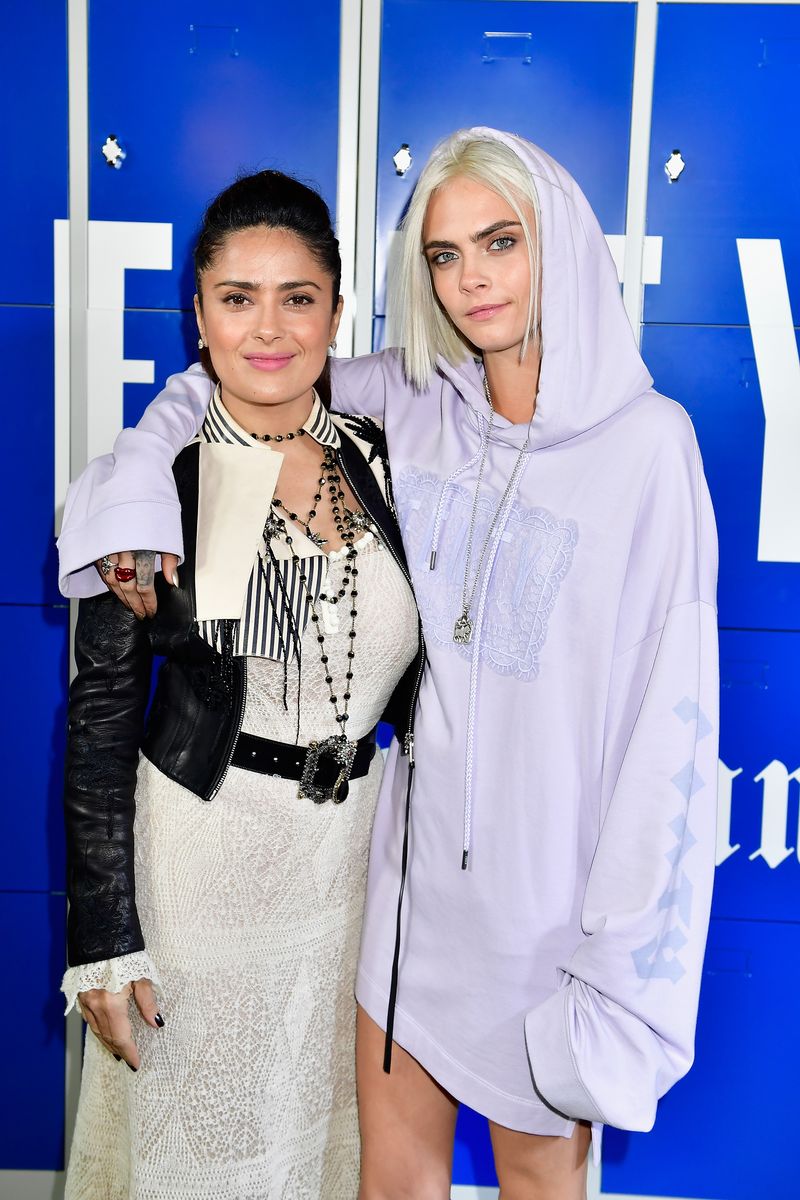
Salma Hayek is exploring a new side of her artistry. The Mexican icon, producer, and actress will be directing her first movie, “Arena,” which will star Cara Delevingne and Academy Award nominee Yura Borisov.
Salma Hayek attends the 2026 Kering Foundation Caring For Women Dinner on September 10, 2026 in New York City
Variety was the first to break the news, with Hayek sharing some plot details and revealing that the film had been independently financed. Aside from directing the film, she also co-wrote it.
“’Arena’ is a forbidden love story and an intimate journey into exploring someone else while finding the ability to experience intense pleasure in the simple things we take for granted,” Hayek said. She also revealed that the film has a connection to Mexico, with it being shot there.
“The sensorial experience of connectivity with land and nature is enhanced through the spectacular locations of Quintana Roo and Veracruz. These regions are already incredibly cinematic, but finding undiscovered beauties to shoot in this land was a true moment of pride and triumph. I am so excited to show the world these hidden jewels that have never been seen before,” she said.
The producers of the film include Hayek herself and her friend, Angelina Jolie, who’s a seasoned filmmaker.
While “Arena” marks Hayek’s feature debut, she has some experience behind the camera. She previously directed “The Maldonado Miracle,” a TV movie that earned her a Daytime Emmy.
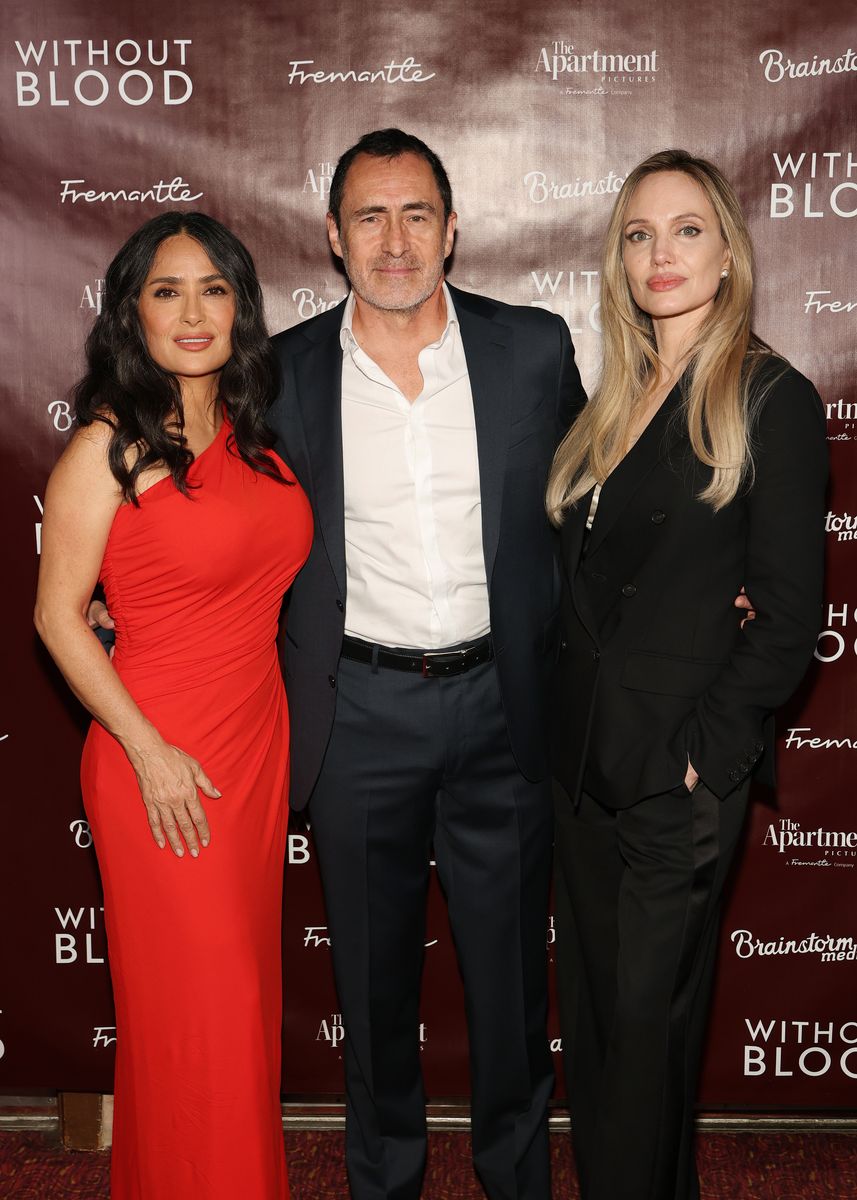
Salma Hayek reunited with Demián Bichir and Angelina Jolie at a special New York screening of Without Blood, the drama directed by Jolie and starring Hayek and Bichir.
In an interview published in The Cut featuring a conversation between Jolie and Hayek, the two talked about “Arena.”
“You should talk about directing,” said Jolie. “I saw you on the set of Arena, leading and deciding and taking responsibility for it. You embraced it so fully.”
Later in the conversation, Jolie noted Hayek’s ambition. “It’s hard to direct yourself. You would take on something as challenging as that the first time you direct. And write it yourself. But that’s your way. It had to be your vision. You’re good with a challenge. You like a big mountain to climb,” she said with a laugh.
A crypto presale is easier to understand when a project shows what it is building before the token begins open trading.
MemeToro is trying to do that through a public MIT-licensed code release containing 1,373 lines of Solidity across 17 files. The release describes a fair-launch escrow system designed to lock rules, block insider allocations, and guide launch funds toward refunds or liquidity.
That gives this MemeToro crypto presale review a clear focus. $MT is in Stage 7 at $0.00430, with more than $137K raised, but the long-term case depends on more than the presale total.
It depends on whether the project turns its public code into a working $BNB Chain launchpad with a useful AI agent. The code gives buyers something real to examine. It does not remove the normal risks of an early-stage crypto investment.
Inside MemeToro’s AI Memecoin Launchpad and $MT Utility
MemeToro is building a $BNB Chain platform for memecoin creation, discovery, trading, and related tools. Its planned AI agent is designed to help people set up a token launch with clearer funding and distribution rules. Instead of relying only on a creator’s promise, the project wants the core launch settings to be written into smart contracts.
$MT is planned as the utility token for this ecosystem. Users may eventually use it for access, transactions, launch funding, staking, rewards, and platform activity. The roadmap also mentions memecoin trading, prediction markets, and a news portal.
The token’s future value would therefore depend on real use, not only speculation. A useful launchpad could create a reason for creators and traders to interact with $MT. That is the bullish case.
However, buyers should separate current facts from plans. The presale and public code are available now. The full AI launchpad, trading tools, and other utilities still need to be completed. Strong execution is what could turn the $MT utility story into lasting demand after launch.
What the 1,373-Line Code Release Is Designed to Do
The public release includes the FairLaunchEscrow contract, interfaces, tests, and documentation. Its stated purpose is to create a launch flow where important rules are set at the beginning.
The code is designed so creators cannot later add a hidden insider allocation or redirect funds through an owner-controlled route.
The proposed protections include:
launch settings locked at creation
contributor and liquidity allocations totaling 100%
no owner, admin, or upgrade path in the stated design
funds routed only to refunds or planned liquidity
public functions for claims, refunds, and finalization
The test suite checks cases involving caps, deadlines, claims, refunds, and invalid inputs. That is a meaningful sign of development work, especially in a market where many memecoin projects offer little technical detail.
Still, public code is not the same as a finished product or a security guarantee. MemeToro must still connect the contracts to real launch activity, deploy on testnet, build the liquidity flow, and complete independent security review.
Buyers should treat the release as a research tool, not a guarantee.
Can Public Code Help $MT After Launch?
Public code can help a project build trust because users, developers, and reviewers can inspect the rules.
In meme markets, that matters. Many buyers worry about insider wallets, changing allocations, and unclear liquidity promises. A visible smart contract design gives the market a way to check whether the stated rules match the actual code.
For $MT, the strongest post-launch path would be simple. The AI agent helps creators prepare launches. The fair-launch contract enforces the key rules. New projects attract traders. Platform activity creates utility for $MT through access, funding, and transactions.
That is a powerful model if it works. It gives $MT a role in a broader ecosystem instead of leaving it dependent on one marketing cycle.
The risk is equally clear. If the memecoin launchpad is delayed, the AI agent does not perform as expected, or users choose other platforms, utility may not grow. The code is a promising foundation, but adoption and delivery will decide whether it supports $MT after launch.
Four Steps to $MT Buying
MemeToro kept the buying process fast and secure, so anyone can get through it without hassle:
Reach the Portal: Click through from the main site to the verified presale page.
Link a Wallet: Connect your wallet and set it to $BNB Chain.
Pick a Payment Method: Pay with $BNB, ETH, stablecoins, or a card. Your choice.
Confirm and Receive: Approve the transaction and $MT lands in your wallet.
Buying early isn’t just about a lower price. Early holders get first access to staking rewards, trading tools, and new features as they launch.
FAQs
Is the MemeToro code open source?
Yes. The project has published its development release under an MIT license, allowing the public to inspect the stated fair-launch design.
What is $MT used for?
$MT is planned for access, platform activity, funding, transactions, staking, rewards, and other MemeToro ecosystem uses.
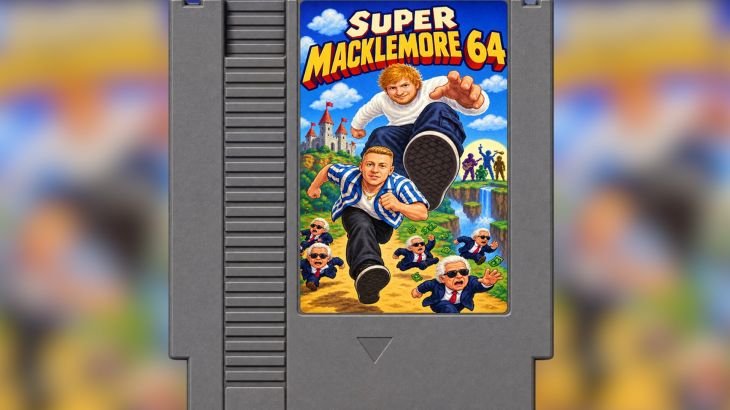
In Super Macklemore 64, players are chased by a giant Ed Sheeran, dodge tiny billionaire Robert Krafts and summon musicians to chant “Free Palestine”. Creator Jonathan Mann says it highlights the “absurdity” of Macklemore being dropped from Sheeran’s concerts and Israel’s genocide in Gaza.
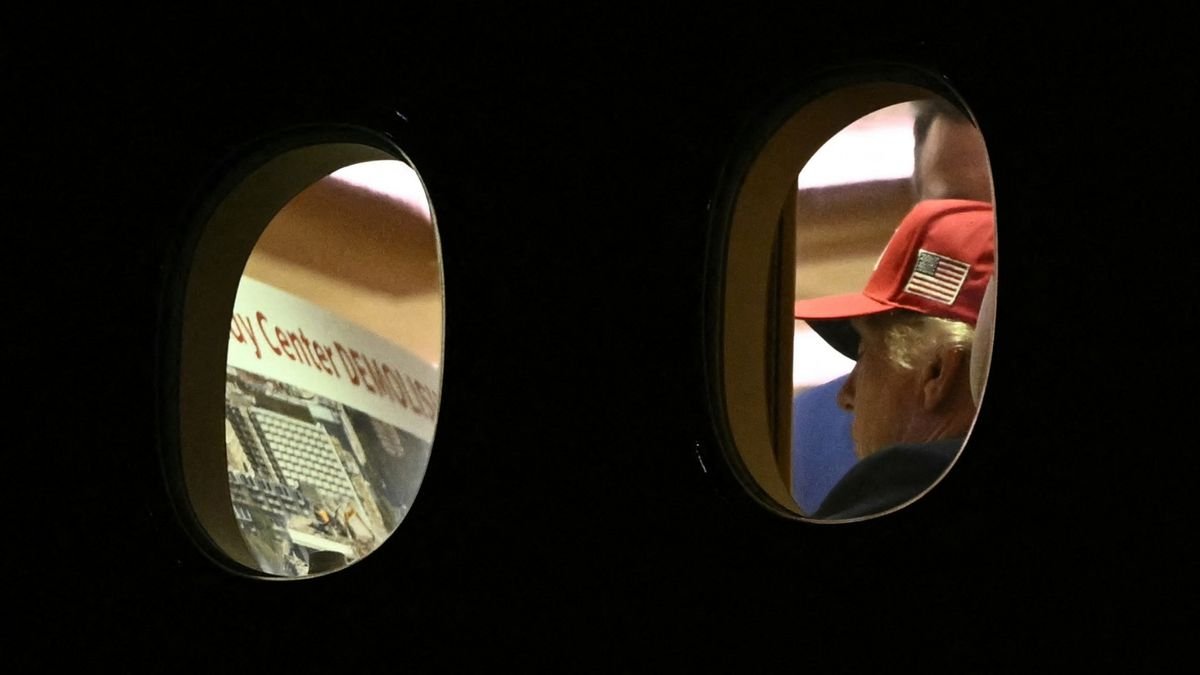
Images authentically showed U.S. President Donald Trump viewing a large printout about the demolition of the John F. Kennedy Center for the Performing Arts.
Rating:
Context
It’s unclear whether the Trump administration would follow through on any plans to demolish the Kennedy Center. Snopes reached out to the White House for comment and awaits a reply.
In September 2026, after the John F. Kennedy Center for the Performing Arts announced it would close its doors due to financial difficulties and the need for renovations, an image circulated online that social media users claimed (archived) showed U.S. President Donald Trump viewing a large, illustrated printout about the demolition of the Washington, D.C. landmark.
For example, the Instagram page Occupy Democrats posted images of Trump and the printout, writing, “BREAKING: A sharp-eyed photographer unearths Trump’s plan to DESTROY the Kennedy Center – catching him staring at a placard that says ‘Kennedy Center Demolished’ through the window of his plane!”
Several social media posts correctly credited images of Trump looking at the printout to the Agence France-Presse photographer Brendan Smialowski. One photo, published by Getty Images on Sept. 16, showed Trump viewing a printout with lettering at the top that read “dy Center DEMOLISH.” Another image showed the start of the printout read “Kennedy.” Getty Images and AFP are both reputable photo repositories and trusted sources.
As such, we rate claims that Trump viewed a printout about the demolition of the Kennedy Center true.
We contacted the White House Press Office to ask what the printout showed and whether Trump planned to demolish the Kennedy Center and await a reply.
Photos circulated amid tensions surrounding Kennedy Center name
Getty Images wrote that Smialowski took the photos of Trump looking at the “Kennedy Center” printout through a plane window after the president landed at Joint Base Andrews, Maryland, on Sept. 16.
Earlier the same day, C-SPAN aired video footage of Trump telling reporters in North Carolina that his administration should be recognized for its work fixing and subsidizing the Kennedy Center, which he claimed had lost “hundreds of millions of dollars” before he stepped in to help.
The president added (time code 06:01): “I think that the Trump administration should certainly have recognition because frankly if we don’t do that it’s going to close, it’ll end up being ripped down.” He was likely referring to fundraising for the center’s renovation work.
The day before, on Sept. 15, a federal judge ordered that the Kennedy Center Board of Trustees, which Trump heads, could not “install memorials for President Trump or anyone or anything else at the Kennedy Center without Congress’s blessing.” Judge Christopher R. Cooper wrote the order as part of a lawsuit brought by U.S. Rep. Joyce Beatty, an Ohio Democrat, who sued Trump in Dec. 2025 to stop the renaming of the Kennedy Center after Trump.
That same day, Trump announced on Truth Social that the Kennedy Center’s board had voted to close the building to carry out “Renovation and Reconstruction” work. However, he wrote, that work would not be carried out unless and until courts allowed “the Board’s approved name.”
The board voted in December 2025 to rename the Kennedy Center to the “Donald J. Trump and John F. Kennedy Memorial Center for the Performing Arts” or “Trump Kennedy Center.” Cooper blocked this change in May 2026 and ordered the center to remove Trump’s name from public view. The center appeared to comply with this order in June 2026, erecting scaffolding to cover Trump’s name on the building facade.
Court ordered 30-day notice period for demolition work
It was unclear at the time of this writing whether the “Kennedy Center DEMOLISH” printout Trump viewed on Sept. 16 was related to his remarks about the center being “ripped down” without “recognition” for his administration, or to what degree it represented the administration’s plans for the center.
According to court documents filed in a separate lawsuit against the Kennedy Center Board of Trustees that sought to stop “demolition, new construction, major reconstruction, major renovation, or major aesthetic transformation” of the Kennedy Center without congressional approval, lawyers for the board said the Center’s position in August 2026 was that “the building will not be demolished and that no new structure will be constructed.”
Lawyers for the Kennedy Center’s Board of Trustees pledged to tell plaintiffs and the court in that case if the center’s position changed.
Following the publication of Smialowski’s images, Cooper ordered defendants in the Beatty case, which included Trump and the Kennedy Center Board of Trustees, to give “more than 30 days notice” if the center changed its position that the building would not be demolished or have a new structure added.
Neither Trump nor the Kennedy Center Board of Trustees, who were defendants in both lawsuits, had given such notice of by the time of this writing.
For further reading, Snopes previously investigated whether a forklift repeatedly hit the Kennedy Center pillars on Sept. 16, 2026, and whether the Trump administration cut down the center’s weeping willows.
‘Board of Trustees’. The Kennedy Center, https://www.kennedy-center.org/about-us/leadership/trustees/.
‘Complaint – #1 in DC PRESERVATION LEAGUE v. BOARD OF TRUSTEES OF THE JOHN F. KENNEDY CENTER FOR THE PERFORMING ARTS (D.D.C., 1:26-Cv-00981) – CourtListener.Com’. CourtListener, https://www.courtlistener.com/docket/72528661/1/dc-preservation-league-v-board-of-trustees-of-the-john-f-kennedy-center/. Accessed 18 Sept. 2026.
‘Meet and Confer Statement – #62 in DC PRESERVATION LEAGUE v. BOARD OF TRUSTEES OF THE JOHN F. KENNEDY CENTER FOR THE PERFORMING ARTS (D.D.C., 1:26-Cv-00981) – CourtListener.Com’. CourtListener, https://www.courtlistener.com/docket/72528661/62/dc-preservation-league-v-board-of-trustees-of-the-john-f-kennedy-center/. Accessed 18 Sept. 2026.
‘Order on Motion for Injunction – #77 in BEATTY v. TRUMP (D.D.C., 1:25-Cv-04480) – CourtListener.Com’. CourtListener, https://www.courtlistener.com/docket/72069932/77/beatty-v-trump/. Accessed 18 Sept. 2026.
‘Order on Motion for Partial Summary Judgment – #49 in BEATTY v. TRUMP (D.D.C., 1:25-Cv-04480) – CourtListener.Com’. CourtListener, https://www.courtlistener.com/docket/72069932/49/beatty-v-trump/. Accessed 18 Sept. 2026.
‘President Donald Trump Is Seen Aboard Air Force One Checking a…’ Getty Images, 17 Sept. 2026, https://www.gettyimages.co.uk/detail/news-photo/president-donald-trump-is-seen-aboard-air-force-one-news-photo/2295121247.
‘President Trump Speaks to Reporters Before Rally in North Carolina’. C-SPAN, 16 Sept. 2026, https://www.c-span.org/program/white-house-event/president-trump-speaks-to-reporters-before-rally-in-north-carolina/685306.
Semones, Evan. ‘Kennedy Center Closes amid Financial Crisis and Trump Name Dispute’. Al Jazeera, https://www.aljazeera.com/news/2026/9/15/kennedy-center-closes-amid-financial-crisis-and-trump-name-dispute. Accessed 18 Sept. 2026.
‘US President Donald Trump Is Seen Aboard Air Force One Checking a…’ Getty Images, 17 Sept. 2026, https://www.gettyimages.co.uk/detail/news-photo/president-donald-trump-is-seen-aboard-air-force-one-news-photo/2295088970.