Djibouti’s foreign minister has told the United Nations General Assembly that the country cannot handle the arrival of thousands of refugees fleeing renewed fighting across the Red Sea in Yemen without international support.
Published On 27 Sep 2026

Djibouti’s foreign minister has told the United Nations General Assembly that the country cannot handle the arrival of thousands of refugees fleeing renewed fighting across the Red Sea in Yemen without international support.
Published On 27 Sep 2026
The cold open of the new season of Saturday Night Live featured Ramy Youssef as New York Mayor Zohran Mamdani, getting another visit from President Donald Trump (James Austin Johnson).
It was a riff on their latest meeting earlier this week, an unlikely lovefest between the left-wing mayor and the right-wing commander in chief.
On SNL, though, it was Trump who couldn’t seem to get enough of Mamdani who, in contrast to the president, has enjoyed high approval ratings.
The skit presented Trump as susceptible to even the slightest hint of attention from Mamdani, who in reality has skillfully managed the relationship with moments that have flattered the president.
RELATED: ‘SNL’ Season 52 Premiere Delayed In Many Areas Due To College Football
“Mr. President, you are here again,” Youssef’s Mamdani told Trump.
“I missed my day one, Zohran Mamdani,” Johnson’s Trump said. “For some reason I can’t really figure out, I really, really like you.”
The mayor responded, “That’s very kind, but wouldn’t you rather be in D.C.? We’re in the middle of El Nino.”
“Oh, El Nino. We don’t like big storms, especially when they are in Spanish.”
The skit opened with Mamdani monitoring the storms on the East Coast, before he gets an unexpected visit from Trump.
“Somehow when I am with you I’m just firing on all cylinders,” Trump told him. “Maybe it is because we’re both from Queens.”
“Isn’t it funny to think I could have grown up in one of your apartment buildings in Queens?” Mamdani then asked.
“Not with that last name,” Trump said.
RELATED: How ‘SNL’ Introduced Season 52’s New Cast Members Saidah Belo-Osagie & Grace Reiter
The skit also featured the first appearance of Trump aide Natalie Harp (Ashley Padilla), who makes an unexpected appearance at the Trump-Mamdani lovefest. “I came here in case you needed anything,” she said, before singing a Beyoncé verse, Baby boy, you’ve been on my mind.
“Isn’t she great? She’s like the girl from Obsession but blonde,” Trump then said to Mamdani.
Before she left, she told Mamdani, “If you hurt him, I will end you.”
The Trump-Mamdani relationship has complicated the president’s midterm message, that Democrats have fallen prey to the extremes, whether that be socialism or communism. Mamdani is one of the most prominent democratic socialists following his election last November.
Mamdani told Trump that he was “still riding high on that Knicks championship.”
Trump responded, “I went to one game, ruined the vibe, and then dipped.”
The skit ended with Trump telling Mamdani of D.C., “Don’t make me go back there.”
“Please let me stay here with you,” Trump pleads with the mayor.
“Okay, only if you give us $21 billion for a housing project in Queens,” Mamdani said.
“Are you out of your mind?” Trump said.
“What if I follow you back on Instagram?” Mamdani asked.
“It’s a done deal,” Trump said.
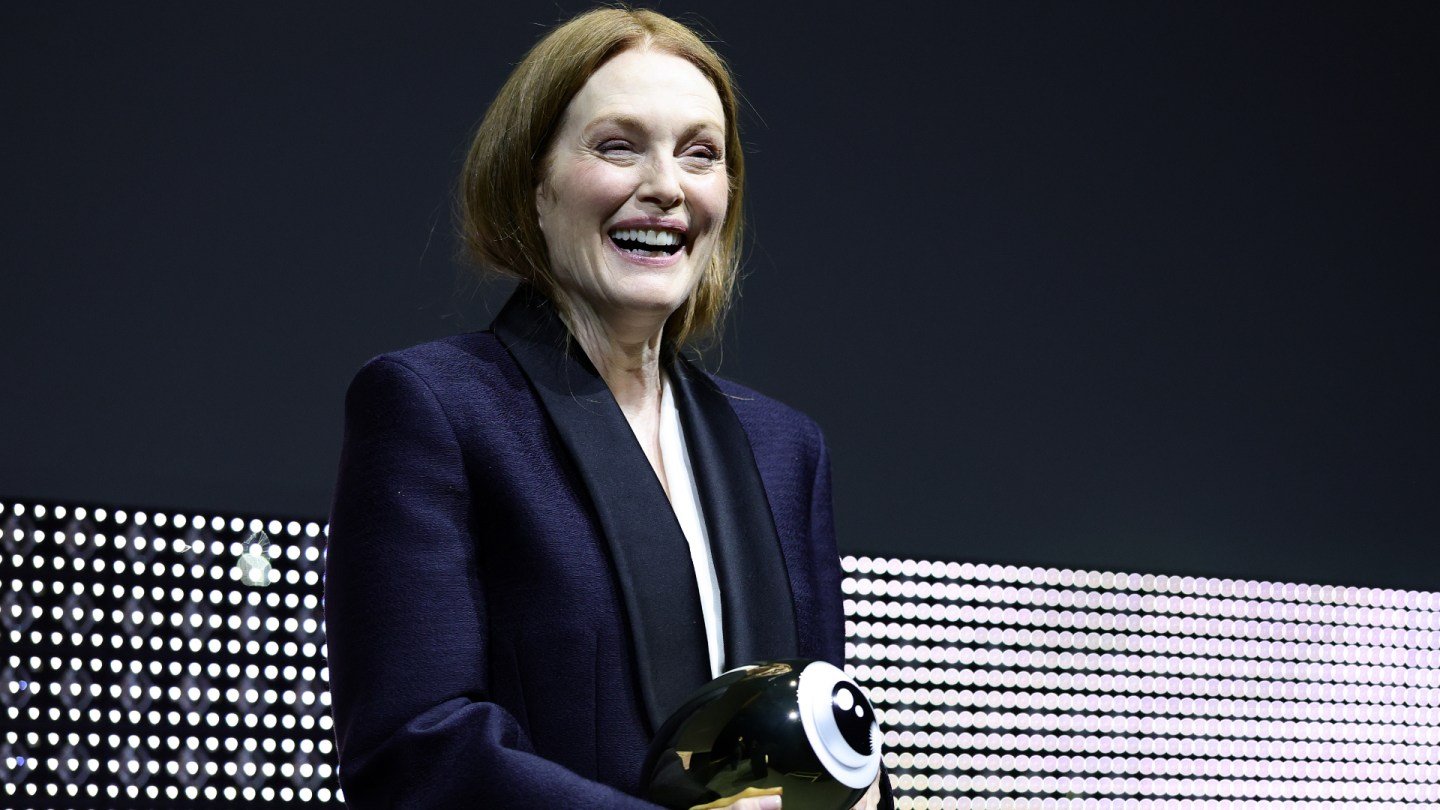
What can’t Julianne Moore do?
The U.S. actress accepted Zurich Film Festival‘s lifetime achievement honor, the Golden Icon Award, in perfect German on Friday night.
She was joined at the ceremony by Jesse Eisenberg, who directs her in his latest feature The Debut, a musical-comedy co-starring Paul Giamatti, which is screening at the 22nd edition in Switzerland this week.
Moore called upon her own childhood growing up in Europe while making her acceptance speech. “Thank you for this wonderful honor,” said a translated version of her words. “I know that I am in Switzerland right now, but as a teenager, I lived in Germany. And my teacher there told me that I could become an actress. Had I not moved to Europe with my parents, I would not have had this wonderful life. And I wouldn’t be here with you tonight to speak my bad German to you.”
On the carpet ahead of the presentation, the Oscar-winning actress beamed and said she was feeling “pretty good” about the prospect of receiving the prestigious Golden Icon. “And it’s really wonderful to be here with Jesse Eisenberg, who’s such a tremendous talent and has been an unbelievably wonderful creative partner,” she added. “He’s such a genius, so I’m just happy to be sharing this experience with him, and to be here with our movie. Every day was phenomenal. It really was. There’s actually a shot of me that Jesse said was so, so funny because I was making so many dumb faces. But I said, ‘That was just my dumb face!’ I was enjoying it so much.”
Eisenberg’s third directorial feature follows Mona Friedman (Moore), who is cast in a bit part at a small community theater and transforms from a shy, unassuming housewife into a zealous method actor willing to do anything to protect the artistic integrity of her marginal role — even if it means waging war against the show’s domineering director (Giamatti).
The filmmaker-actor-writer told reporters on the Zurich carpet on Friday: “Mona is me. When I was seven years old in New Jersey in 1990, I was a sad little kid, and then I joined a community theater and I found a home.” On the brilliance of Moore, who starred in Eisenberg’s directorial debut When You Finish Saving the World (2022), he said: “When I started writing it, it was only her, and if she did not want to do it, the movie would have not been made. There’s no one else on the planet, alive or dead or yet to be born, who could play [the role] as good as she [does].”
Among Moore’s best-known performances are Still Alice, for which she won the Academy Award, as well as The Hours and The Kids Are All Right. Recent credits include Apple TV’s Echo Valley, Pedro Almodóvar’s The Room Next Door and Netflix limited series Sirens. Next year, she will return to the stage to star in the title role of the Off-Broadway play Faydra.
Also on Friday night in Zurich, In Bruges and The Banshees of Inisherin filmmaker Martin McDonagh was given the fest’s A Tribute To… Award. The honor was in celebration of his most recent film, Wild Horse Nine, which is currently making its way around the festival circuit and already generating Oscar buzz, particularly for lead actor John Malkovich.
Set shortly before the 1973 military coup in Chile, Wild Horse Nine stars Malkovich and Sam Rockwell as Chris and Lee, longtime CIA partners stationed in Santiago who are dispatched to Easter Island by their bureau chief, MJ (Buscemi) to assist in the U.S.’s covert campaign to undermine the democratically elected Chilean government. Against the surreal backdrop of the island’s monumental Moai statues, the pair begin reckoning with their murky shared past.
“I love coming to Zurich, and it’s a tremendous honor,” said the British-Irish creative on the carpet ahead of his ceremony. “I’m excited. I know it’s a great, very cine-literate audience, so I hope they’ll like [Wild Horse Nine] as much as the other ones.”
He said about travelling to Easter Island: “I visited maybe 15 years ago, and was just struck by the beauty of the place, [and] also the mystery of the Moai heads, and I thought it could be almost a character in a film, and it’s turned out to be that way. I’d worked with Sam Rockwell obviously a bunch of times before, so that’s always a joy. But John Malkovich was new to me, and he’s just perfect for the part. He’s funny and he’s dangerous. And Steve Buscemi and Parker Posey were fantastic too.”
These aren’t the only awards Zurich is dishing out. Tom Hiddleston received the Golden Eye on Thursday night as the fest opened with his Everest drama, Tenzing, and John Turturro will also be given the same honor for his starring role in this year’s The Only Living Pickpocket in New York.
The 22nd Zurich Film Festival runs Sept. 24-Oct. 4.

Investors can already buy tokens carrying the names and price movements of U.S. stocks. There’s a caveat, owning one doesn’t necessarily make you a shareholder. Bullish, Equiniti, Alpaca, Apex Fintech Solutions and Drivewealth formed the Issuer Sponsored Token Coalition on Sept. 24 to change that.
Instead of another crypto wrapper tracking a stock’s price, the group wants tokens tied to a company’s official shareholder register, meaning the onchain record would represent actual ownership rights rather than simply mirror what a share is worth.
Drivewealth CEO Naureen Hassan put the distinction plainly: “Much of what’s marketed today as ‘tokenized equity’ isn’t equity at all. Investors think they own the share, and they don’t.” That difference gets right to the heart of Wall Street’s tokenization experiment. Putting a stock price onchain is one thing. Putting the stock itself there, complete with the legal machinery attached to ownership, is another.
Traditional tokenized-stock models often start with a broker holding real shares in custody and minting tokens against them 1:1. The token can provide economic exposure to the stock and, depending on the setup, pass along dividends. But the token holder isn’t necessarily listed on the company’s official shareholder register. That can leave voting rights, proxies and corporate actions sitting in a gray area.
Issuer-sponsored tokenization takes a different route. The public company and its transfer agent are directly involved, tying the token to the official ownership record so voting, dividends, stock splits and other shareholder rights can travel with it. The timing isn’t happenstance.
On Sept. 17, the SEC opened a five-year Innovation Exemption allowing certain Tokenized Securities Venues to operate permissioned automated market makers and liquidity pools for tokenized National Market System stocks. There’s a big condition. Basically, qualifying tokens must provide the same rights and privileges as traditional shares. Tokens that merely track a stock’s price don’t qualify.
The coalition brings together much of the machinery needed to make that distinction work in practice. Equiniti, which the crypto exchange firm Bullish agreed to acquire in May, serves nearly 3,000 issuer clients and more than 20 million shareholders. Transfer agents maintain the official shareholder books, making Equiniti an important bridge between an issuer’s records and whatever eventually lives onchain.
Alpaca already sits on the other side of the equation. Reporting through mid-2026 put the broker at roughly 94% of tokenized U.S. stocks and ETFs, backed by more than $1.5 billion in underlying shares held in custody. Apex provides clearing and broker-dealer infrastructure, while Drivewealth supplies U.S. stock access to investing platforms around the world.
The group plans to tackle technical standards, settlement, custody and interoperability between traditional market infrastructure and blockchains. Members will also meet public-company issuers at the New York Stock Exchange on Oct. 27. No new tokenized stock launched with the coalition.
That’s the curious part. Before Wall Street can put real shares onchain, it first has to make sure a token saying you own one actually means you do.
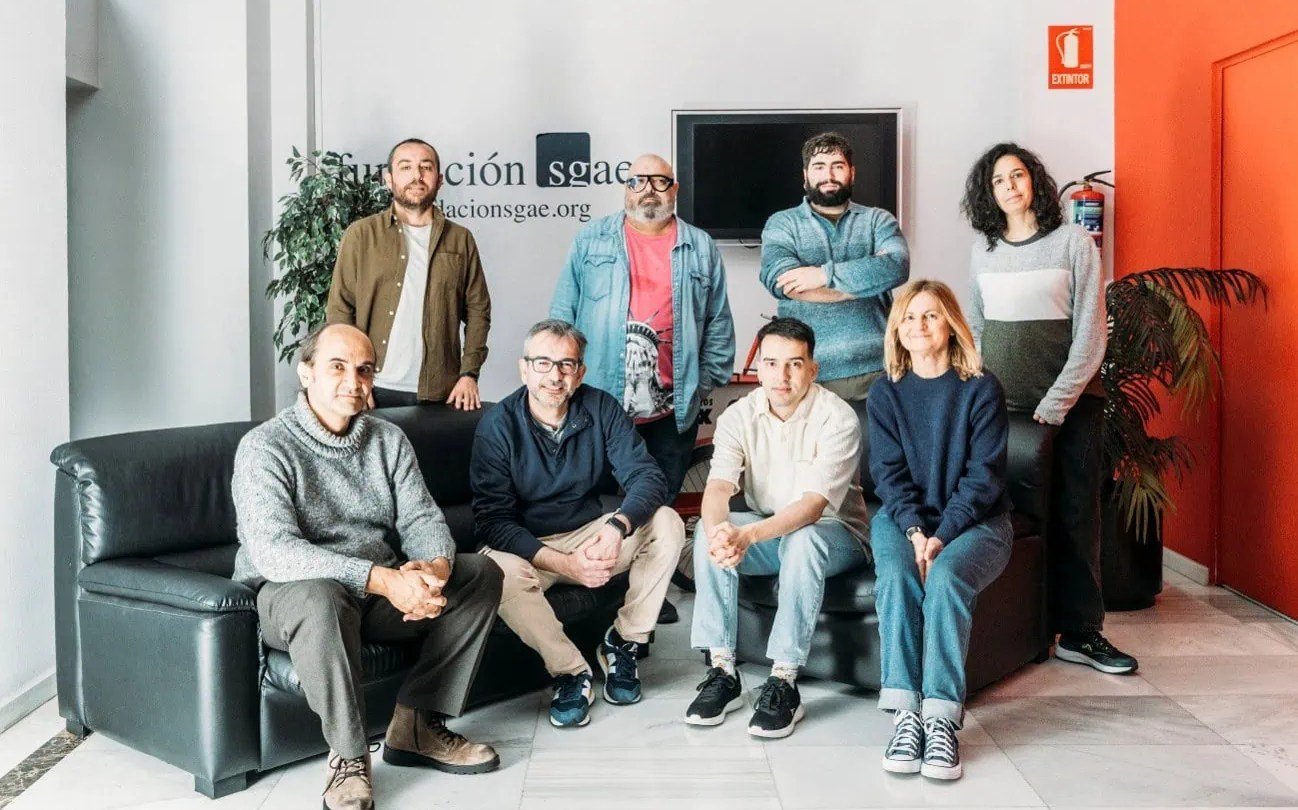
Iberseries & Platino Industria’s sixth edition takes place in Madrid this week, and its jam-packed schedule includes the Thursday, Oct. 1 presentation of six series projects developed by seven screenwriters as part of a collaboration with Fundación SGAE, Spain’s primary collective management organization for intellectual property rights.
The series will be in focus during one of the pitching events that will showcase the projects to producers, buyers, investors and other audiovisual industry professionals. The event is designed as “an opportunity to foster the production, financing and international reach of new fiction projects, while reinforcing one of the objectives of Iberseries & Platino Industria: to facilitate connections between creative talent and the different players in the Ibero-American audiovisual industry,” the event organizers highlight.
Below, THR takes a closer look at the six series projects being pitched in Madrid.
La librera by Virginia Burgos (Seville) and Juan Sánchez (Madrid)
Synopsis: In the early 1990s, a woman opens the first LGBT bookstore in our country. Over several decades, the business becomes a refuge and a political backroom for an entire community. But the day comes when the neighborhood she helped build turns its back on her, leaving her no choice but to ask herself: “What do you do when nobody needs you anymore?”
Takeaways: An LGBT community force and pioneer faces the blues. Do you get the feeling that people will want to find out more about this woman and what is changing for her?
Avión by Miguel Cavadas (Vigo)
Synopsis: Avión is the village that embodies the utopia of Galician emigration: leaving poor and returning rich. In winter, it is yet another example of rural precarity and aging. In summer, it becomes a festival of money, ranchera music and Mexican flags. Its population quadruples, returning to celebrate, enjoy themselves and show off the transatlantic feat. A microcosm that is neither here nor there, but the coexistence of two worlds that have little or nothing to do with one another: community and individualism, past and present, Galicia’s lowest pensions and Mexico’s greatest fortunes. What happens when those two worlds collide?
Takeaways: Don’t expect a theme song like “Sur le Pont d’Avión (Avignon)” for this one – the show sounds much darker and more like a social clash drama that moves you to take a closer look at Galicia.
El capricho by Alberto Grondona
Synopsis: El capricho is a satirical historical comedy about three women vying for power at the 18th-century Spanish court: Queen María Luisa of Parma, the charismatic Duchess of Alba and the enlightened Duchess of Osuna. Their battles for influence, image and desire, in a Spain on the brink of collapse, are observed and narrated with fierce irony by Francisco de Goya, an uneasy witness who turns palace intrigue into a surprisingly contemporary mirror.
Takeaways: A female-led comedic Game of Thrones with Spanish fire and twists will surely turn heads – even if it may remind viewers of the end times.
Teléfonos fijos by Ángel Mirou
Synopsis: In the modest Recalde neighborhood of Bilbao, landline phones ring in the early hours, waking those who still have them installed in their homes. When they pick up, residents hear the voices of relatives, friends or acquaintances. The callers have only one thing in common: they are dead. Whether the calls are proof that something exists after death or an elaborate fraud based on cutting-edge technology, the lives of those involved will never be the same again.
Takeaways: I hear dead people. But in the age of tech scams and AI, can we trust my ears – or your eyes, for that matter!?
La edad menor by Roberto Osa
Synopsis: In a dystopian Madrid where children become the legal guardians of their parents, María confronts the system when her mother is admitted to La edad menor, an irreversible process of infantilization. While her brother is torn between his sister and power, a devastating secret will reveal that neither resistance nor sacrifice is enough to stop oblivion.
Takeaways: Power to the kids! You may look at politicians in your country and think this could actually work. But let’s be honest: there’s something that sounds worrisome, even sinister, about this synopsis. We’ll have to see what’s actually going on here.
Trueque by Pedro Pablo Picazo
Synopsis: Three families who are very close friends struggle daily with the teenagers at home. Each family has solutions for the others’ children. What if they swap them? What could possibly go wrong?
Takeaways: Forget Honey, I Shrunk the Kids! Here comes Honey, I Swapped the Kids.

A year after announcing AI actress Tilly Norwood at Zurich Film Festival’s Summit, Particle 6 founder and Norwood creator Eline van der Velden returned to the Swiss event to look back at the backlash her creation has faced since. Asked if she could have ever predicted the furore around Norwood, van der Velden said not in her “wildest dreams.”
“But I had programmed her to become the most famous AI actress, so I don’t know how she did it, but she did, which is slightly scary,” she added.
“It’s such an odd conundrum, the sort of negativity and then the positivity at the same time,” she continued. “At Particle 6, we’ve grown eight-fold. We have four departments; we’re big in AI advertising, film and TV, we’re doing a lot of co-productions and original commissions. We do a lot of AI consultancy, bringing AI workflows into other studios and production companies.”
Over the course of the last year, said the exec, “a lot of people have realized that AI is coming, and that was the point of Tilly.” “I built her as a physicist actress; I felt like I needed to bridge the gap in communication between the tech and the entertainment industry.”
“As opposed to writing a boring white paper about what was happening with AI, I thought: Let’s create something to show people that will engage them and make them sit up and take action so that the creative industry can stay ahead as opposed to being completely and utterly taken over by the tech industry,” noted van der Velden.
After a few minutes trying to sort out a tech blip with the “traditional technology,” e.g., a problem with the HDMI cable, van der Velden introduced Norwood herself on stage, opening her creation to moderator and audience questions. Asked who she would like to work with, Norwood said Tom Holland and Olivia Colman, “but only if it were their digital twins joining me in an AI production.”
Norwood also spoke on the backlash, calling it “quite an introduction.” “My name kind of went everywhere. It’s funny. Nobody hated me particularly; they just sort of hated the future.”
When asked if she had met U.S. agents for representation, Norwood displayed the ironclad media training of an A-list Hollywood star. “Well, I’m certainly in a unique position there. I mean… The industry is still figuring out what to do with AI, so it’s not quite like having a traditional agent in Hollywood just yet. I mostly work on AI films, so it’s a bit of a different lane.”
Van der Velden also spoke about possibly getting Norwood an agent, saying the studio soon realized that they “don’t really need” an agent for the actress. “I think she’s big enough as it is. We get loads of offers in, we’ve said no to anything where she would be in a traditional film, because that’s not what she’s made for. We don’t need it at the moment, so if that makes people happy, that’s fine by me.”
“But also what saddens me about that is that it means that the traditional industry can’t participate in this new tech and that means they fall behind,” she added. “Is it a positive? Is it a negative?”
After watching Norwood’s now infamous malfunction while speaking with Piers Morgan on live TV, when the AI actress randomly began speaking Cantonese, van der Velden said: “Look, I think it’s all not to be taken too seriously. We built Tilly to be a funny interface that gets people alert to where the tech is at. The point is: China’s a big partner. Do we need regulation? What are the guardrails? Those are the conversations I want people to have coming here.”
Van der Velden also spoke about Particle 6’s latest project, “Storm Dogs.” Yesterday, the studio announced that “Stuart Little” and “The Lion King” filmmaker Rob Minkoff joined the AI film as an executive producer. Minkoff will work with CEO van der Velden and the studio’s team over the coming months to develop the story, characters and screenplay ahead of production.
“Storm Dogs,” an original idea from van der Velden, is a family adventure comedy-drama set in an English village during a devastating storm. The film will combine live-action performances with photorealistic animated characters. Human roles will be filmed conventionally, while the dogs and toddler will be created through an approach that brings together live-action performance, traditional filmmaking techniques, and emerging AI tools. The project is currently in early development, with production targeted for 2027. Distribution has not yet been announced.
The exec said that Minkoff was one of the first people to reach out to her following Norwood’s announcement.
“Yeah, so what was amazing about this backlash last year is actually it meant that a lot of talent reached out to us very secretly,” she said. “We were signing tons and tons of NDAs. Everyone was scared to take the hit, and I totally understand. Fortunately, we were in a position where we’d already taken the hit, so it didn’t matter anymore.”
Of “Storm Dogs,” she said, what is “great” about it is that they can now “animate mouths in a way that we’ve never been able before and give us expression to the animals that’s never been possible before. It is really enhancing the storytelling. And so that’s how I see it. It needs to aid the storytelling and the creative work that we’re making if we’re going to use AI.”
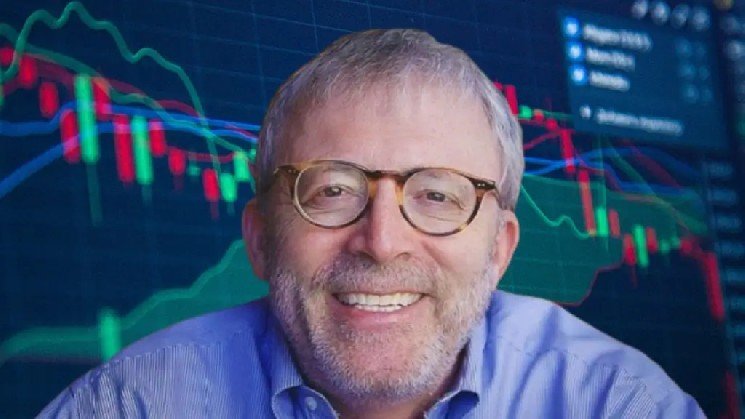
Senior trader Peter Brandt stated that he maintains his long-standing skepticism towards $XRP, adding that developments within the Ripple ecosystem and collaborations with banks have not changed his view.
Brandt argued that a fundamental distinction should be made between Bitcoin and $XRP. The experienced trader characterized Bitcoin primarily as a “store of value,” while viewing $XRP as a crypto asset focused on transactions and usage.
Brandt stated that while Bitcoin is a speculative tool today, it also possesses store-of-value properties, but he used a rather harsh expression regarding $XRP. The experienced trader, distinguishing Bitcoin from use-oriented assets like $XRP, directly referred to $XRP as a “dumb coin.”
During the interview, the interviewer reminded Brandt of Ripple’s collaborations with banks worldwide and the company’s recent progress, asking if his views on $XRP had changed. Brandt, however, maintained his skepticism towards $XRP.
Brandt first drew attention to $XRP’s supply, arguing that there were question marks regarding the total supply and whether it would expand in the future. However, he acknowledged that $XRP could be used cheaply and effectively in transactions.
However, according to Brandt, the fact that $XRP is a useful trading instrument doesn’t automatically mean the token should become more valuable. Brandt cited the US dollar as an example, saying that while the dollar can also be used very effectively in transactions, people don’t expect it to appreciate in value simply because of that.
The experienced trader stated that this is also his main argument regarding $XRP, saying, “Just because something can be used in transactions doesn’t automatically mean it has to be more valuable.” According to Brandt, the real question mark for $XRP is at what point its use for transactions will translate into real economic value for the token.
Brandt also argued that cryptocurrencies should be categorized according to their use cases. He stated that transaction-focused assets like $XRP and store-of-value assets like Bitcoin should not be evaluated using the same valuation logic, and placed networks like Ethereum, on which applications can be built, in a separate category.
However, Brandt spoke more positively about Ethereum and Solana compared to $XRP. Describing Ethereum as a “good asset,” the trader said he believes both Ethereum and Solana have the potential to reach higher levels. He also stated that he prefers Bitcoin to hold the majority of his cryptocurrency portfolio.
*This is not investment advice.
The memecoin LAPTOP, linked to Hunter Biden, is back in the spotlight following a sharp drop in value after its launch, this time amid allegations that the project team earned millions of dollars. Hunter Biden, son of former US President Joe Biden, denied the claims that the team made tens of millions of dollars from LAPTOP sales, stating that no tokens have been sold from the project wallet to date.
According to the data, LAPTOP’s market value has fallen below $25 million, representing a loss of approximately 99.9% compared to its launch levels. The report also suggested that the project team may have earned an “eight-figure” profit, at least $10 million, from the token.
Hunter Biden reacted to the calculation in question. Biden stated that he had previously said the situation that arose after the token launch was “appalling” and that the relevant accounts were being reviewed.
Biden also maintained that the wallet belonging to the LAPTOP team had not sold any tokens to date. Questioning the claim that the project team had cashed out tens of millions of dollars, Biden demanded that the person who made this calculation reveal the wallet address allegedly used for these sales.
The LAPTOP team had previously denied claims that the sharp drop in the token’s value after its launch was due to selling by the team or insiders. They argued that the low liquidity in the initial phase and the use of automated trading “sniper bots” amplified price movements, and that the 30% token share allocated to the founders was locked for six months and would be gradually unlocked over a period of more than two years.
*This is not investment advice.
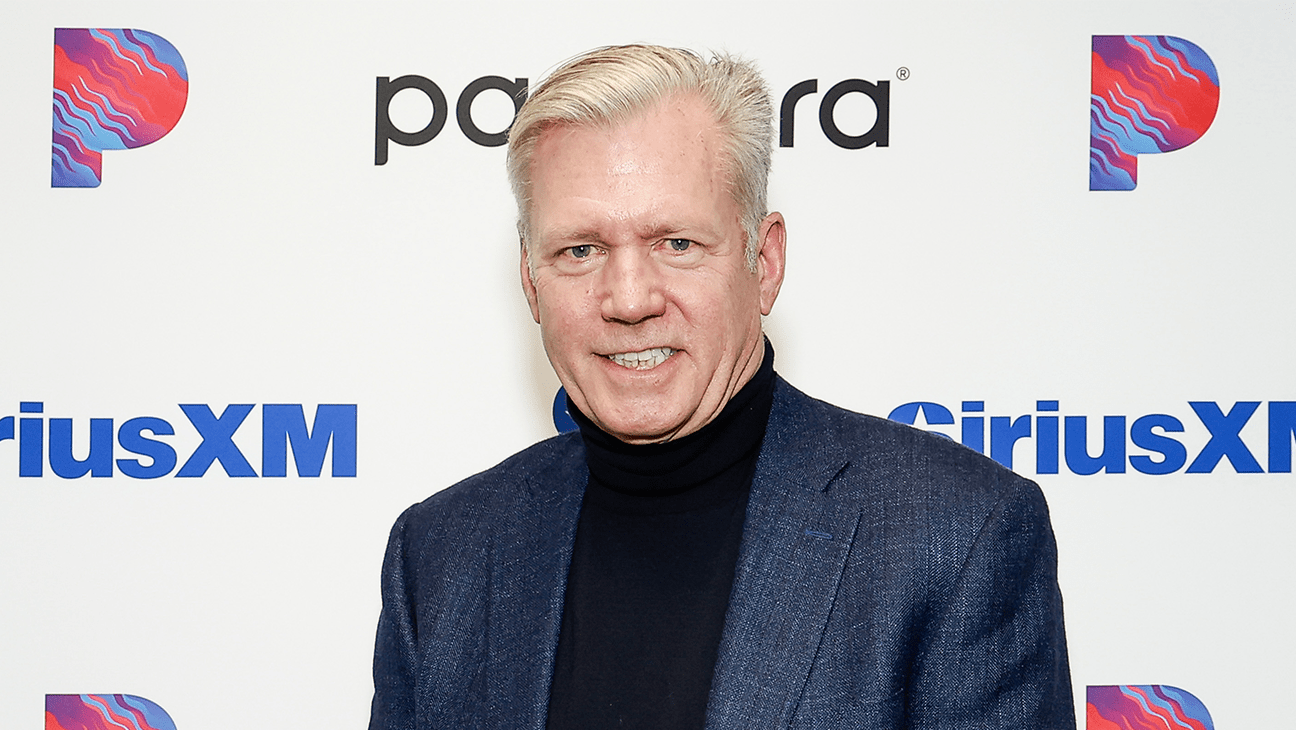
Former To Catch a Predator host Chris Hansen was interviewed on his podcast Friday to give his unfiltered reaction to A24‘s unauthorized, dramatized film about parts of his life, Primetime, which he called overly dramatic, detached from reality, and a “fever dream” — while giving Robert Pattinson‘s performance a “D” grade.
Primetime, which opens Friday in the U.S., is set in 2006 and follows Pattinson’s fictionalized version of Hansen as the popular To Catch a Predator segment on NBC’s Dateline grows into its own primetime block on the network. On the show, Hansen blurred journalistic lines by working with law enforcement and the watchdog group Perverted Justice to intercept adult men as they arrived, unbeknownst to them, at a sting house to meet a minor they’d met online for sex. The men were typically arrested as a result. The series drew mixed reactions, with concerns about potential entrapment-law violations at the forefront of the criticism.
In a brief segment produced for his video podcast, Have a Seat with Chris Hansen, the former NBC News journalist is seen exiting a Times Square AMC after viewing the film for the first time at a Thursday night screening — his first look at the indie drama since its theatrical release. He’s then asked for his first reaction to the Lance Oppenheim-directed film.
“It’s hard for me to — obviously, I’m not a judge, because the character is based on me,” he said. “I think because the character is so detached from reality, from anything I’ve ever experienced then or now doing the investigations — I’m not sure what the point of it was.”
The rest of the podcast episode has Hansen discussing the film, its director and Pattinson’s portrayal of him with Fox News’ Jesse Watters. Hansen railed against the movie throughout.
Oppenheim has said he conceived Primetime after receiving a personalized Cameo video from the To Catch a Predator host. Hansen said on his podcast that he spoke to a mutual friend before seeing the film, and that Oppenheim told the friend it was “something to the effect of, ‘a love letter to Chris Hansen, and it gets a little weird in the storytelling.’”
Hansen also flagged inaccuracies in the fictionalized version of his life — including scenes involving Jeff Zucker and Stone Phillips that he insists never happened — and said absolutely nothing in the film was close to reality. He assured viewers he’s not the ratings-obsessed figure the script conjures. His biggest gripe, he said, is that the film portrays him as an aloof parent, which he says is far from how he relates to his kids. As for Pattinson’s take on Hansen circa 2006, Hansen had few kind words.
“He’s got work to do. I’m kind of the only guy that counts for this, right?” he said.
Days before seeing the movie, Hansen spoke with The Hollywood Reporter‘s Seth Abramovich about what he knew of the film. A24 hadn’t reached out to him or the production to explain the premise or ask for his input, he said.
“Based upon what I’ve seen in the trailer and my understanding of what’s been written about the film, they wanted to create something much darker and way more dramatic,” he said. “I think it’s an insult to the thousands of men and women who work hard every day to protect children from predators. They’ve turned something that is very positive, very challenging and not without risk into what is essentially a horror film.”
On Friday, after viewing Primetime, he doubled down with a direct swipe at Oppenheim.
“You have to question the motives of not coming forward and talking to me or anybody I’ve worked closely with over the years,” he said. “They didn’t want to hear that Chris Hansen is a good guy. They didn’t want to hear that this work is important. This director had a dark image of what he wanted to do. He wanted to create a horror-like film with interesting photography, and didn’t want to hear anything else.”
Hansen continues identifying and capturing potential child predators on Takedown with Chris Hansen. Earlier on Friday, Hansen’s TruBlu streaming network dropped the trailer for I’m Chris Hansen, a documentary centered around the host.

If you purchase an independently reviewed product or service through a link on our website, The Hollywood Reporter may receive an affiliate commission.
No more playing it safe with purses. Sure, neutral leathers and suedes will always have their place, but this summer into fall is all about the statement bag — a signature piece that doesn’t just make the outfit; it is the outfit.
Exhibit A: Coach‘s latest campaign, titled “Live Your Story,” starring actress Elle Fanning alongside musicians PinkPantheress, SOYEON, Lilas and Shan Yichun. In addition to the campaign’s four Fanning-led short films — each soundtracked by one of the artists — Coach unveiled five special-edition Tabbys, all of which are inspired by the talents’ personal styles. The result? Playful embellishments, unique patchwork and even cherry red shearling trim.

coming soon
Crafted from shearling and natural grain nappa leather.
But these five limited-release bags aren’t the only items trending for fall. Coach’s inventory is chock-full of fringe detailing, contrasting textures, bold prints and beading. From mini bags and structured silhouettes to carryalls and slouchy shoulder bags, Coach’s staple styles are met with unexpected accents and finished in vibrant colorways.
Some of the most fun finds — especially when it comes to fringe — are part of the Coach (Re)Loved collection, an assortment of pre-loved bags falling into one of four categories: Coach Custom (gently used bags, reimagined by Coach’s craftspeople for one-of-a-kind results), Coach Vintage (beautifully restored classic pieces), Coach Restored (gently worn bags, restored to their original condition) and Coach Remade (bags remade from deconstructed, pre-owned purses).
one of one
One-of-a-kind, with its own unique set of charms.
Below, 10 more standouts — organized by category — to freshen up any fall wardrobe, whether basic or bold.
Fringe? For Fall? Groundbreaking.
Also available in black leather.
coach custom
Another one-of-a-kind fringe bag.
Part of a limited-edition collection combining American artisanal techniques with Coach’s heritage of craftsmanship.
Limited release; only one left in stock.
Made in collaboration with textile artist Luke Haynes.
(That we still think go with everything.)
Multiple colors available, including magenta and poppy.
Crafted from shiny, smooth leather.
Styles inspired by the early aughts.
Crafted in a mix of luxe leathers and Coach’s signature jacquard.
A slouchier version of the above.
Keep the sparkle of summer as the weather starts to cool.
Finished with natural grain nappa leather straps and lining.
Blush pink variation also available.
Related: Elizabeth Taylor’s Legacy Endures as Estate Taps Brilliant Earth for Official Jewelry Collection