The 200-week moving average stands out as one of the technical indicators used to assess long-term price trends in the Bitcoin market. Based on the average of prices over the past 200 weeks, the indicator helps track the asset’s position within the long-term market trend.
Cole also emphasized that he is quite optimistic about Bitcoin. The $500,000 price level he mentioned for 2030 is a prediction reflecting his long-term expectations rather than current market conditions.
Whether Bitcoin reaches this level will depend on numerous factors, including market demand, institutional adoption, macroeconomic conditions, liquidity, and regulatory developments. Cole’s statements indicate that long-term bullish expectations for Bitcoin remain on the agenda among institutional market participants.
This structure will eliminate the need for businesses to create cryptocurrency wallets, manage private keys, or hold stablecoins on their balance sheets. From the company’s perspective, the transaction will be settled in traditional currency, while the payer will be able to use stablecoins. Thus, the speed of blockchain-based payments will be combined with the accounting and consensus infrastructure of the classic banking system in a single transaction.
Coinbase plans to offer virtual accounts through its infrastructure model as a banking service. Users will be able to automatically convert their fiat currency into stablecoins in these accounts. The collaboration will initially launch in the US.
Companies say the service is particularly geared towards corporate clients operating in different countries who want to receive payments around the clock. While stablecoin transfers can be made outside of bank operating hours, regulatory checks, customer verification, and final banking settlement of the funds will remain part of the system.
The partnership doesn’t directly mean a new stablecoin will be launched. Citi and Coinbase are connecting payment channels that use existing stablecoins. The tokens to be used, fees, transaction limits, and all supported countries have not yet been announced.
Rumors spread widely in September 2026 about the details of a lawsuit that alleged seven male students at Cornell University drugged and raped a 20-year-old female student in 2024.
In particular, social media users shared a claim that some of the accused students were allowed to write essays in lieu of punishment.
Cornell said the essay claim was false, but Snopes was unable to independently verify that, nor what specific punitive measures were or were not given to the male students.
Snopes readers also sought information about why no one had faced criminal charges. After the lawsuit was filed, the Tompkins County district attorney issued a statement saying that he was reopening the investigation and explaining what had led his office to close it in the first place.
Snopes has reached out to multiple parties involved in the case and will update this report if we learn more.
Rumors swirled online in September 2026 that a lawsuit brought against an Ivy League university and seven of its male students alleged the seven drugged and raped a 20-year-old female student in October 2024.
The story spread rapidly on social media along with the claim that the college in question, Cornell University, located in Ithaca, New York, gave some of the accused students an opportunity to write essays in order to mitigate their punishment.
The popularity of these rumors led to an influx of email in the Snopes inbox, seeking clarity on the sequence of events, whether the claim the male students were allowed to write essays in lieu of punishment was true and why no one was charged with a crime.
Cornell University said the essay claim was false, but Snopes was unable to independently verify that, nor what specific punitive measures were or were not doled out. Here’s a breakdown of what we know:
The ‘Jane Doe’ lawsuit
According to the lawsuit (embedded below) filed Sept. 14, 2026, on behalf of the plaintiff, identified only as Jane Doe, the drugging and multiple assaults occurred in the early hours of Oct. 20, 2024, at the Delta Xi chapter of the Chi Phi fraternity. Full details of the alleged assault are available within the 101-page document.
In addition to its complaints of sexual assault, sexual battery and intentional infliction of emotion distress, the lawsuit contained accusations of breach of contract, violations of New York state human rights laws and negligence by multiple parties.
The lawsuit named seven male students as defendants: Matthew Ingalls, Johnathan Newell, Winston Lee, Gillio Lopes, Diego Sarabia, Scott Norris and Scott Kretzschmar.
It also named Cornell University; unspecified Cornell faculty members, board members and alumni; the national Delta Xi fraternity, its Chi Phi chapter and the chapter president; the national sorority that Jane Doe belonged to, Delta Delta Delta, and its Alpha Beta chapter; and an Ithaca bar that allegedly served the plaintiff alcohol despite the fact, according to the lawsuit, that she appeared visibly intoxicated and was under the legal drinking age.
As restitution, the plaintiff sought unspecified compensatory and punitive damages.
The lawsuit also included an alleged photo of a Snapchat exchange between the fraternity members involved (Page 27 of the PDF below) that appeared to occur as the alleged assault was taking place at 1:42 a.m. Oct. 20, 2024, “claiming there was ‘free p****’ upstairs.” Five of the seven male students named in the lawsuit appeared in the screenshot.
Editor’s note: The following document contains graphic descriptions that some readers may find upsetting.
Timeline of events
The lawsuit said Jane Doe reported the incident “on or about” Nov. 8, 2024, to the Cornell University Police Department, the school’s private police force.
The same day, the school’s student-run independent newspaper, The Cornell Daily Sun, reported that “an individual reported being sexually assaulted by several males and coerced into consuming ketamine and other drugs,” which resulted in the temporary suspension of the two frat houses located on the block in question, Chi Phi and Lambda Chi Alpha.
The student newspaper didn’t receive confirmation of which frat house was ultimately being investigated at the time of publication, but did report receiving no response from Chi Phi, while the president of Lambda Chi Alpha said, “We don’t have any knowledge of the situation.”
Cornell posted a statement on Nov. 26, 2024, confirming that Chi Phi’s Delta Xi chapter was under a temporary suspension issued Nov. 8, 2024, for “alleged violations of the Student Code of Conduct.”
The statement continued, “In addition, late last week, interim measures in the form of temporary suspensions were issued for a number of students to protect the immediate physical health and safety of all students.”
The lawsuit alleged that in addition to the temporary suspensions, the male students were “afforded the opportunity to mitigate their conduct by submitting essays,” which appeared to be the first mention of the purported essays speculated about in online rumors.
The lawsuit said Cornell’s Title IX office “conducted numerous (at least twelve) hearings” regarding Jane Doe’s allegations during May 2025 before ending the investigation.
On Nov. 4, 2025, Cornell released a statement on its biannual survey of sexual assault and related misconduct and admitted the survey showed “increased prevalence of sexual misconduct” and “harassment and stalking trends” on campus.
In a report dated March 10, 2026, the task force gave its recommendations for updating the school’s guidance on preventing sexual assaults on campus, but it was unknown how much, if any, has been implemented as official policy.
The task force said it “reviewed existing data, policies, and programs; identified peers with best practices; and gathered information and insights from members of the Cornell community. Based on this process, we developed a series of recommendations.”
The extended news coverage of the case fed online rumors, which included graphic depictions of the alleged abuse, the identities of the alleged perpetrators and the claim about essays written to mitigate punitive measures.
On Sept. 28, 2026, Tompkins County’s district attorney, Matthew Van Houten, posted a statement announcing he would reopen the criminal case and offering a lengthy explanation as to why no charges were filed in 2024. In sum, Van Houten asserted that the details of the statement given by Jane Doe to the college’s police in November 2024 did not indicate criminal activity.
Van Houton wrote:
Jane Doe’s sworn statement in November of 2024 did not allege that she was drugged against her will or gang raped. On the contrary, Jane Doe’s statement described her participation in drug use and sexual conduct as voluntary, conscious, and consensual. My office obviously did not and could not have based our November 2024 decision on the allegations in a civil lawsuit that would not be filed until nearly two years later. Furthermore, I have never been contacted by Jane Doe’s attorneys. Not to inform me the original statement was inaccurate and not to ask me to reconsider our decision. Rather, I reached out to Jane Doe’s attorneys after the lawsuit was filed to understand the discrepancy between the original statement and the lawsuit’s allegations and the proper path forward in light of the lawsuit’s allegations.
At the time, Van Houton said, his office “confirmed with CUPD that criminal charges were not appropriate based on Jane Doe’s statement.”
However, he wrote that he decided to revisit the case after considering the details in the lawsuit and the subsequent urging of the community. “I have already begun that process, starting with our conversation with Jane Doe and her attorneys. Once we determine the appropriate charges, the case will be prosecuted in the most objective and impartial means available – by testimony to the Tompkins County Grand Jury.”
Van Houton further stated that should the grand jury “indict any or all of the individuals involved, this office will prosecute the charges zealously and to the fullest extent of the law.”
Cornell responded to Van Houton the same day with a statement saying the university supported the reopening of the case, but claimed that “any suggestion that the university did not impose consequential punishments for those involved is false.” Cornell said the fraternity in question remained closed after its temporary closure in 2024 and was barred from the campus.
The university’s statement went on:
Cornell also conducted a thorough Title IX investigation, which is separate from a criminal proceeding, over the course of several months. During that investigation, temporary suspensions and other restrictive measures were used. After investigation, and pursuant to federal law, the matter was sent to a hearing where a panel of trained faculty and staff heard evidence over multiple days. The complainant and respondents had the opportunity to testify and present evidence. At its conclusion, the hearing panel issued a range of sanctions, which included expulsions and suspensions from Cornell. None of the individuals charged were offered the opportunity to write essays as a sole consequence of their involvement.
Snopes reached out to Cornell University, the Ithaca Police Department and Chi Phi fraternity for further details about any ongoing criminal investigation and specific punitive measures taken against the accused. We will update this story if we learn more.
Godzilla Minus ZeroNight at Dodger Stadium in Los Angeles on Thursday promoted Toho‘s forthcoming movie, along with marking the final home game for the Major League Baseball team. Director Takashi Yamazaki’s film, which is a sequel to his Oscar-winning 2023 hit Godzilla Minus One, is set for theatrical release Nov. 6. On Thursday, the San Diego Padres beat the Dodgers, 4-2.
Ryunosuke Kamiki, who reprises his Godzilla Minus One role in the new sequel, threw out the first pitch ahead of the match-up as an individual in a Godzilla costume observed the action. The game drew 53,027 people, which helped the Dodgers break their yearly attendance record with 4,034,219 visitors in 2026. This surpassed last year’s record of 4,012,470.
The first 40,000 fans received a Godzilla Minus Zero bobblehead, while all guests enjoyed a Godzilla-themed drone show after the game. Other promotional opportunities included a Godzilla Minus Zero souvenir soda cup for purchase.
Ryunosuke Kamiki throws out the first pitch at Dodger Stadium.
Jayne Kamin-Oncea/Getty Images
Clearly, the themed evening was popular with the team’s supporters. Fan organization Dodgers Nation took to its Facebook page to post a video showing a lengthy line at the stadium ahead of the game, adding the caption: “Fans have lined up outside of Dodger Stadium 5 hours before 1st pitch on Godzilla bobblehead night.”
Between-innings activities included a Godzilla quiz, with the final question reading: “What color is Godzilla’s heat ray in Godzilla Minus One?” Appropriately enough for the baseball team known for its “Go Blue” chant, the correct answer was indeed “blue.”
After claiming the National League West division title in 2026 for the fifth straight season, the Dodgers’ first playoff opponent will be the winner of the Wild Card match-up between the Atlanta Braves and Philadelphia Phillies. The Dodgers are seeking their third-consecutive World Series title.
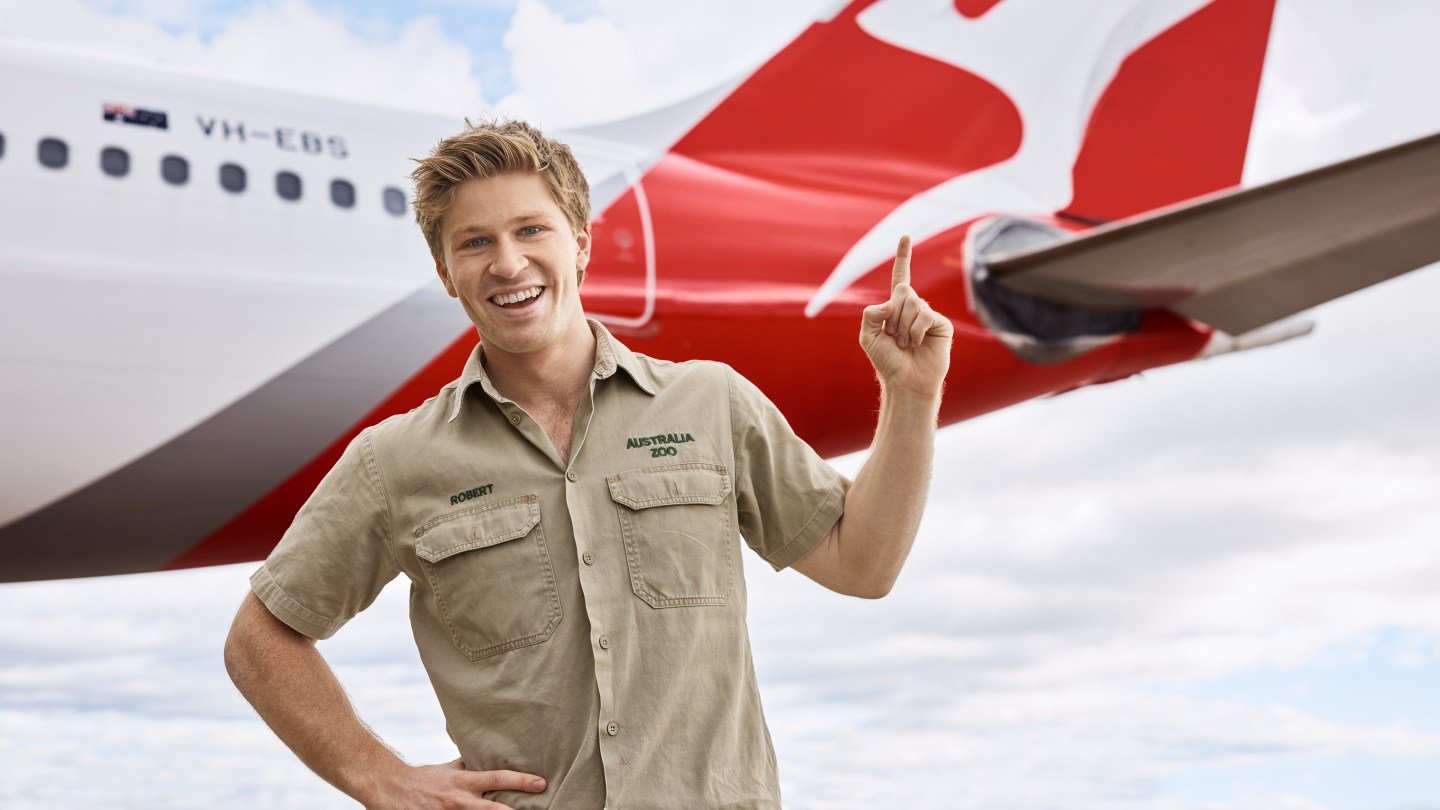
Robert Irwin has teamed with Qantas on a new campaign. Well, a bunch of Robert Irwins actually.
The wildlife conservationist, who broke out in a big way in America when he won season 34 of Dancing With the Stars, is featured in a new campaign for Australia‘s largest domestic and international airline. Though the creative captures Irwin in several places, one features the 22-year-old on board a Qantas flight sitting in a luxe business class seat in a cabin surrounded by … other Robert Irwins.
Irwin on board a Qantas flight.
Courtesy of Qantas
Other situations see Irwin and a Qantas cabin crew member explain Australian lingo, like the fact that “nah yeah” means yes and “yeah nah” means no, and he discovers that Qantas staff member had his artwork tattooed on their arm for years. Filmed at Australia Zoo’s Crocodile Hunter Lodge and onboard a Qantas aircraft, the campaign runs across North America, the United Kingdom and Asia.
As part of the airline’s hero “Australia in the Sky” campaign, Irwin appears onboard a Qantas aircraft before drifting off to sleep and dreaming of being back at Australia Zoo. It’s a dreamy scenario meant to evoke the idea that for Qantas customers, Australia begins the moment they board the airliner. Irwin encourages prospective travelers to use Qantas Explorer fares in a joint campaign with Tourism Australia that will play in several markets, a program that offers customers the chance to book an international Qantas flight to Australia using discounted economy and business fares.
“Robert Irwin is one of Australia’s most loved personalities and there is no one better placed to showcase our country to the world. For Qantas, that experience starts the moment customers step onboard one of our aircraft, through our distinctly Australian hospitality, food and wine. And with our Explorer fares offering discounted travel to more than 45 destinations across Australia, there has never been a better time to discover just how much this country has to offer,” explained Qantas group chief brand and corporate affairs officer Danielle Keighery.
Said Irwin: “Qantas has been part of my life since I was about the size of a loaf of bread. Some of my earliest memories are walking down the aerobridge with mum and getting to visit the flight deck. When I get on a Qantas flight, I’m amongst friends. There is something about the warm Australian hospitality that feels like home. Getting to join forces with our national carrier to show the world just how much Australia has to offer is something that means a great deal to me.”
As part of the partnership, Qantas will support the 2026 Steve Irwin Gala in Brisbane, Australia, which raises funds for global conservation through Wildlife Warriors. The organization was founded by Robert’s parents, Steve and Terri Irwin, in 2002 as a way to reel in caring people in the support and conservation of the world’s most threatened wildlife species and natural habitats.
If you’re still experiencing Face ID glitches on your brand-new iPhone 18 Pro or iPhone 18 Pro Max, you should update your device to the latest iOS version immediately.
Apple began rolling out iOS 27.0.1 to all eligible devices on Monday, and among other things, it fixes a bug that causes new iPhones to “unexpectedly restart when Face ID fails to authenticate,” a release note says.
To install the update, head to Settings > General > Software Update and tap Update Now or Update Tonight. Since this isn’t a major software update, the download file will be significantly smaller than previous updates, and you should be able to complete it within minutes.
(Credit: Jibin Joseph)
Early adopters of the iPhone 18 Pro models had been complaining about the issue for days. When trying to launch protected apps like Wallet or Passwords, the device would freeze and restart itself. The bug somehow didn’t impact Lock Screen unlocks.
iOS 27.0.1 also addresses two other key issues. It blocks a “color artifact” that had begun appearing in some photos taken using the 2x zoom on the iPhone 18 Pro, while also fixing an unresponsive screen issue that many users observed when trying to launch the Notification Center and Control Center simultaneously.
Older Apple Devices Need Urgent Updates Too
Alongside iOS 27.0.1, Apple on Monday released security updates for its older devices, including iOS 26.7.1, iPadOS 26.7.1, macOS Tahoe 26.7.1, and macOS Sequoia 15.8.1.
Recommended by Our Editors
All of these updates carry solutions to fix the creation of malicious files that could lead to arbitrary code execution, Apple says. Some cybercriminals may have already used the vulnerability to carry out an “extremely sophisticated attack” against specific individuals running older OS versions, the company adds.
Apple’s description of the updates makes them sound critical. So, if you’re using an Apple device running on an earlier version of iOS 27, iPadOS 27, or macOS 27, we’d recommend upgrading to the latest OS version immediately by going to Settings > General > Software Update.
About Our Expert
Experience
Jibin is a tech news writer based out of Ahmedabad, India. Previously, he served as the editor of iGeeksBlog and is a self-proclaimed tech enthusiast who loves breaking down complex information for a broader audience.
The Madrid Audiovisual Cluster (MAC), an economic interest group comprising close to 100 Madrid-based companies, has put together a two-day industry networking and peer-learning program at the Iberseries & Platino confab, taking place over Sept. 29 – Oct. 2 in the Spanish capital.
AI takes center stage again but the program will attempt to delve deeper into the hot-button topic this year, presenting eight industry case studies examining innovation across the audiovisual value chain.
“While AI is a common thread running through the projects, the session takes a broader view of innovation, covering new business models, emerging technologies and evolving production and creative workflows,” said Teresa Azcona, managing director of the Madrid Audiovisual Cluster.
“Together, they show how innovation is transforming the industry and opening up new opportunities across the value chain.”
Under the banner Innovation ‘Case Studies in the Audiovisual Industry: New Business Models, AI and Emerging Technologies,’ the eight case studies will illustrate how companies are applying technology to address practical challenges across the industry. Running from 12:00 noon to 2:00 p.m. on Sept. 29, the workshop will feature eight case-study presentations, with approximately 12 minutes allocated to each.
The next day, Sept. 30, takes in a conversation between producer Rosa Bosch and Tanja Meissner, Director of Berlinale Pro, which encompasses major industry platforms including the European Film Market, Co-Production Market, Berlinale Talents and World Cinema Fund.
Case Studies:
1. PLIA: Applying PLIA Technology to Script Breakdown, Pre-Production Planning and Production Tracking on “Playback”
PLIA, an AI-powered production platform for film and audiovisual projects, has developed an integrated production-management solution designed to bring the information generated across the creative and production process into a single platform.
The company will present its application on the feature film “Playback,” covering script breakdown, pre-production planning and production tracking. The platform brings together scripts, notes, budgets, location photography and production breakdowns, with the aim of streamlining information management across the production workflow.
Presenting: Jose Velasco — CEO, PLIA
2. TBS (Telefónica Broadcast Services) Tech Brand Stories:From the Physical Studio to the Virtual Production Environment: Virtual Production, AR, Motion Graphics and AI
TBS – Tech Brand Stories, formerly Telefónica Broadcast Services, is the Telefónica Group’s creative production company and audiovisual agency. The company operates across live production, broadcast services, branded content and entertainment, combining creative and technical capabilities. Its team of more than 450 professionals works across major sporting and live events as well as non-fiction, entertainment, documentary and current-affairs programming.
The case study will examine the convergence of virtual production, augmented reality, motion graphics and AI, and how these technologies are being integrated into contemporary production environments.
Alberto Gonzalo — Graphics Supervisor Luis Miguel Boedo — Technical Coordinator
3. Hark Media – Go Global: When AI Learns to Move Us: Hybrid Dubbing for Global Distribution
Go Global specializes in localization for the entertainment industry, providing translation, subtitling, dubbing and voice-over services to streaming platforms and production companies.
The company will look at the emerging role of AI in dubbing and how hybrid workflows combining technology and human expertise could support the localization of content for international markets.
Paula Ferrari — Founder & CEO
4. Xpost Studios – Secuoya Content Group: Innovation in VFX and Post-Production Workflows
Xpost Studios, part of Secuoya Content Group, is a Madrid-based post-production and VFX facility operating from Madrid Content City. Its infrastructure includes facilities for editing, color grading, sound post-production, VFX and digital workflows.
The session will focus on the application of new technologies to VFX and post-production workflows, examining how innovation is changing the way content is processed and delivered.
Marcos Requena — Post-Production Manager
5. Story Pitcher: Connecting Audiovisual Creators and Producers Through a Digital Platform
Story Pitcher has developed a digital platform designed to connect screenwriters, directors and other audiovisual creators with production companies and content platforms.
Its model combines AI-powered matching with legal-protection tools, with the aim of facilitating more direct connections between creative talent and industry decision-makers.
Frank Belyeu — CEO, Story Pitcher
6. Mercedes Santalla: From Talent to Market: Strategy and Business for Creative and Technology Projects
Creative strategist and talent manager Mercedes Santalla works with projects and talent operating at the intersection of creative practice and technology. Her session will examine the commercial and strategic considerations involved in taking creative and technology-led projects from development to market, alongside the evolving relationship between talent, technology and business.
7. Scoutters – Scout & Film: A Digital Platform for Location Scouting and Production
Scoutters is a digital location-search and management platform developed by Spanish company Scout & Film. Built on Scout & Film’s experience managing locations for film and advertising productions, the platform connects location scouts, agencies, production companies and film commissions with locations suited to their production requirements.
The case study will explore how digital tools are changing the traditionally location-based process of sourcing, managing and presenting filming locations.
Rubén Souto — Co-Founder, Scout & Film Jose Díaz — Co-Founder, Scout & Film
8. HaMo – Paramotion Films: HaMo Real-Time Animation System: Digital Puppetry and Next Lab R&D
Developed by Paramotion Films through the Next Lab Generation R&D initiative, HaMo is a real-time motion-capture system designed for 3D animation and digital puppetry.
The system uses inertial sensors to capture an operator’s physical movements and Unreal Engine to transfer them in real time to a CGI character. The technology enables virtual characters to perform live alongside human presenters and audiences, with potential applications across studios, live events and social media.
This case study will look at the development and practical application of the system as an example of R&D moving from prototype to production technology.
Jose Luis Farias — CEO, HaMo Alfonso Fulgencio — CTO, HaMo
The sixth edition of Iberseries & Platino Industria in the Spanish capital Madrid opened on Tuesday with a focus on data, courtesy of media and entertainment research and intelligence company Parrot Analytics.
In a session entitled “Content Without Borders: How to Win Over Audiences and Markets,” Jaime Otero, vp, partnerships at Parrot Analytics, explored key market trends and identified the types of content that resonate most strongly with audiences in Spain, Latin America, and the U.S. Hispanic market. He also examined which series, genres and markets offer the greatest international potential.
One of the surprise takeaways: South Korea has been a key driver of demand growth for Spanish- and Portuguese-language (SPLATAM) content.
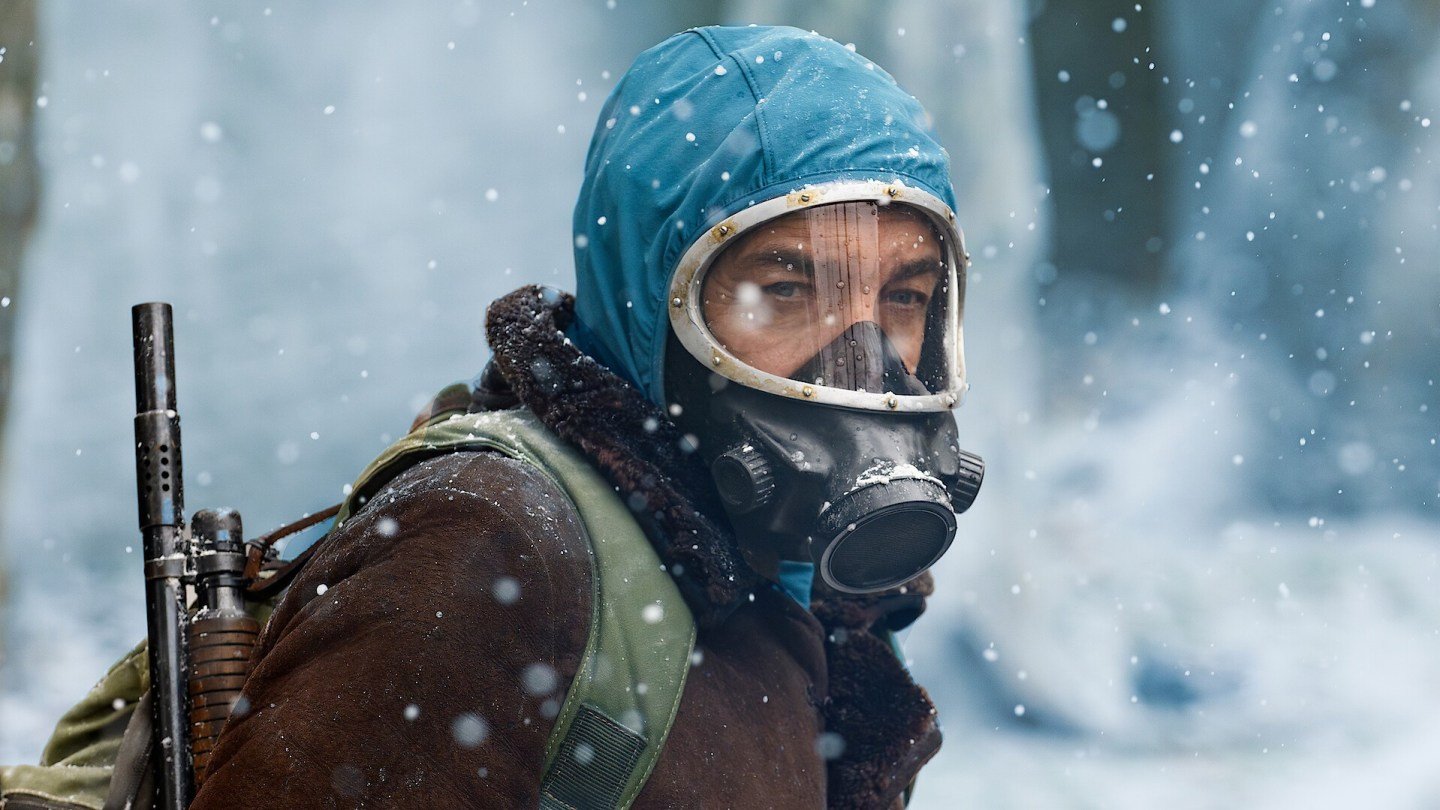
The expert also shared estimates for the subscriber impact that Netflix hit series The Eternaut from Argentina has brought to the global streamer. The drama, set after a devastating toxic snowfall that killed millions and focusing on a group of survivors in Buenos Aires who must resist an invisible threat from another world, was the top SPLATAM series in 2025, he highlighted, estimating that it boosted Netflix subscribers by 236,000. It also led to around 2.78 million subs renewing their Netflix membership, according to Parrot’s estimates.
All in all, Otero spoke of how the series, for which a season 2 is in the works, engaged 3.01 million global Netflix subscribers.
The Parrot vp also told the Iberseries crowd that in 2025, for the first time, non-SPLATAM markets accounted for the majority of SPLATAM content demand worldwide. And he highlighted key markets that have experienced particularly strong SPLATAM series demand over the 2024-2026 period. Leading the charge was Korea, which registered a 243 percent gain, according to Parrot, followed by Japan, which saw 148 percent growth.
Other key growth market cited by Otero were Turkey (up 132 percent), China (119 percent), Sweden (103 percent) and Sweden (102 percent).
Iberseries & Platino Industria 2026 runs through Friday.
In one of the later deals pacted at the San Sebastian Festival, Spain’s David Matamoros of Doce Entertainment boarded Matías Rojas’s adaptation of Chilean cult novel “Dog Legs” (“Patas de perro”), joining four other producers from Chile, France, Germany and Colombia.
“’Dog Legs’ is an ambitious project, both technically and artistically, but it also aims to reach a broad audience,” he told Variety.
Matamoros, whose credits include “The Platform” and “The Virgin of the Quarry,” was also a producer at Zentropa Spain, the company founded by Lars von Trier.
Chile’s A Simple Vista, led by Tomás Gerlach, first began developing “Dog Legs” some four years ago. This year, Reality Films, the production arm of French distributor Epicentre Films, which distributes Colombia’s Cannes-winning film “A Poet” and submission to the 98th Academy Awards international feature category, came on board at the 76th Berlinale, joining German company Klinker Films, a co-producer of “A Place Called Dignity,” Rojas’ previous film.
Visual effects will be handled by French company MPC, whose credits include Thomas Cailley’s “The Animal Kingdom,” winner of Best VFX at the 2023 Sitges Film Festival and the French César Awards.
Rojas’s ties to San Sebastian run deep. He premiered his debut feature, “Root,” at the festival 13 years ago. He later returned to its Europe-Latin America Co-Production Forum with his second fiction feature, “A Place Called Dignity.”
Throughout his career, he has presented his films and projects at major international festivals including Cannes’ Directors’ Fortnight, the Berlinale and the Tallinn Black Nights Film Festival (PÖFF).
Published in 1965, “Dog Legs “is a landmark of Chilean literature…radical, powerful, and still deeply unsettling. Six decades later, its themes of exclusion, abuse and violence remain strikingly relevant. The story follows Bobi, a 12-year-old boy born with literal dog’s paws, hidden away by his family until Carlos, a lonely, childless man, takes him in. His act of compassion turns the town against them, casting Carlos as a madman and Bobi as a monster and setting them on a devastating path toward violence.
The Durban FilmMart returns for its 17th edition with a full slate of conversations and events looking to build on the legacy of innovation, disruption and industry-defining discussions at what is arguably the most influential film market on the continent.
Running from Oct. 9 – 12, this year’s event is organized around the theme “Shifting Worlds, Turning Toward Ourselves,” a focus that Durban FilmMart Institute director Magdalene Reddy says was inspired by the pioneering Senegalese filmmaker Ousmane Sembène’s memorable assertion: “Why be a sunflower and turn towards the sun? I myself am the sun.”
“We are very much looking inward [at this year’s edition],” Reddy tells Variety. “In a world where…everything is shifting, we find that, at this time, it’s important for us as the African cinema community to look at what we need to create systems that will work for us. How can we consolidate? How can we create solutions?”
The four-day event features a wide range of panel discussions, masterclasses, one-on-one meetings and mentorship sessions designed to capitalize on a moment of unprecedented visibility — and unparalleled disruption — for the African screen industries.
In a departure from previous editions, which ran parallel to the Durban Intl. Film Festival, this year’s DFM will open with a screening, of Rwandan debutante Marie-Clémentine Dusabejambo’s Cannes Caméra d’Or winner “Ben’Imana.” The film, an alumnus of DFM’s influential pitching and finance forum, was selected to highlight the event’s outsized impact on the African filmmaking community.
“This was a DFM project. It was pitched at DFM two years ago, and they were able to win two awards at Cannes [including the FIPRESCI prize],” says Reddy. “For us, the celebration of hosting a screening at the market — which we’ve not done previously — is based on the fact that we want to show our local content in our local context.”
A crucial pillar of every DFM is its influential Think Tank strand, whose conversations and conclusions often “become a blueprint for the next DFM and the direction which the industry is going,” according to Reddy.
Central this year will be a closed-door session gathering key distributors, financiers and industry leaders looking to tackle some of the vexing challenges of film distribution on the African continent, which has been hit especially hard by successive waves of corporate consolidation in the global industry. Another session will focus on audience development, “trying to see how we can connect better with our local [audiences],” Reddy says.
A backbone of this year’s event will be a spotlight on equitable co-production, with a series of sessions organized in collaboration with the European Audiovisual Entrepreneurs network (EAVE). Tackling knotty issues such as how to best incorporate inclusivity into financing, development and production, the conversations will address the systemic imbalances that face African producers when partnering with outside co-producers, “even when they are coming with the stories, coming with the IP,” says Reddy.
“How can they go in as an equal partner? How can they sit confidently at the table, so they are engaging in a way that will benefit them? Engaging in a way where finances can still come back to Africa?” she asks.
Collaboration is a theme across the Durban FilmMart’s various strands, with the event forging a wide range of partnerships with industry bodies such as EAVE; the Nature, Environment and Wildlife Filmmakers (NEWF); the Cape Town Intl. Animation Festival (CTIAF); Documentary Africa; The StoryBoard Collective; and the Ladima Foundation, which supports African women working in the film and television industries, and will launch an initiative to push for greater gender equity at African film festivals.
“Collaboration is something that has underpinned all the work that DFM has been doing over the years,” says Reddy. “In order for the industry to survive, we need to be working together.”
This year’s Durban FilmMart unfolds at a turbulent time for the host nation, whose screen industries have been “struggling,” according to Reddy, particularly with ongoing uncertainty around South Africa’s 25% cash rebate.
To that end, leading South African policymakers are expected to be on hand at DFM, which will host a closed session for local industry to meet one-on-one with representatives of the influential Dept. of Trade, Industry and Competition, which manages the country’s rebate policy; the National Film and Video Foundation; and various local and regional film commissions.
“For us as DFM, the platform that we create is a platform for filmmakers not just to create a community for the filmmaking industry on the continent, but also a space for filmmakers to connect with policymakers,” says Reddy. “A space for policymakers to understand what are the challenges, what are the issues our filmmakers are facing. We try to bridge that gap between industry and policymakers so we can create a conducive environment and ecosystem for our filmmakers.”
That mandate, she adds, extends to DFM’s broader engagement with the African continent as a whole. “Last year’s theme was creating bridges, and that’s what we continue to do. Even though it’s challenging within the continent to work with each other, we are trying to find ways to do that.”