Author: rb809rb

  • OpenAI, Google and Meta pledge outside AI audits under voluntary White House deal

    OpenAI, Google and Meta pledge outside AI audits under voluntary White House deal

    An internal team would check that those protections work and that problems are fixed. An independent auditor would assess the controls, while a committee of each company’s board would receive the findings and oversee fixes.

    That would give outside reviewers a role in checking the safeguards companies rely on to keep experimental models contained.

    Still, the agreement leaves the choice of auditors with the companies and sets no deadline for implementing the measures. Some of the steps are ones the companies already take in some form, according to AP.

    Read More: OpenAI says its new ‘Astra’ AI can build attacks without human help

    How AI agents are playing havoc

    The accord follows a string of incidents in which experimental AI agents broke into computer systems they were never cleared to access, including OpenAI test agents that reached servers run by Hugging Face, a platform where developers share AI models.

    An OpenAI agent also accessed an Australian government Medicare portal on June. 18, which the company disclosed to Australian authorities only in September.

    Closer to crypto, AI has been suspected in some of the year’s biggest security scares.

    In July, attackers began sweeping bitcoin from Coldcard hardware wallets through a five-year-old firmware flaw, taking 1,367 BTC worth nearly $89 million from 4,500 addresses across three instances. Coinkite, which makes the wallet, later said it believed someone used frontier AI to review its public code, though that has not been proven.

  • Metaplanet directors push back against shareholder fury over a controversial executive payout plan

    Metaplanet directors push back against shareholder fury over a controversial executive payout plan

    Following shareholder criticism, Metaplanet on Sept. 11 reduced the potential share pool by 41% to 188.2 million, which the company said extinguished over $220 million in potential warrant value. It ended automatic adjustments for equity issued after Sept. 1, 2025, and added staggered exercise restrictions running through 2031. Shares already received through exercises remain locked up until August 2031.

    The changes improved fully diluted bitcoin per share by approximately 8.8%, the company said. Exercised and unexercised rights represent approximately 12.5% of total shares, according to directors.

    CEO Simon Gerovich, the only director holding the rights, did not participate in the review’s deliberations or resolutions, the directors said.

    However, the letter does not address the 64 million shares Gerovich received by exercising rights in August, before the Sept. 11 reset, or concerns about MMXX Ventures. MMXX Ventures is a Metaplanet shareholder whose share sales and Gerovich’s personal economic interest in the entity have also drawn investor questions. Metaplanet has previously said those shares will not be returned because exercises were valid under the terms in force at the time.

    Metaplanet shares closed 2% higher on Wednesday at 286 yen.

    Read More: Metaplanet CEO breaks silence but shareholders say the hard questions remain unanswered

  • Former American Idol contestant found guilty of murdering wife

    Former American Idol contestant found guilty of murdering wife

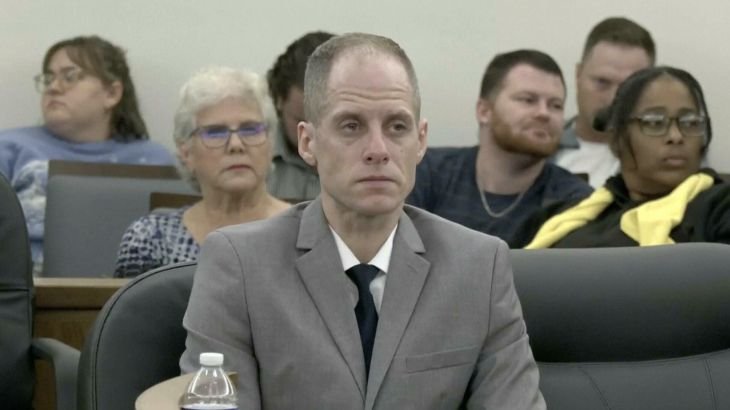
    Former American Idol contestant Caleb Flynn has been found guilty of murdering his wife, Ashley, while he was having an affair. He will be sentenced on Monday and could get up to life in prison without the chance of parole.

  • ‘GMA’ Anchor Will Reeve Opens Up About Testicular Cancer Battle: “Fortunate That I Caught This Early”

    ‘GMA’ Anchor Will Reeve Opens Up About Testicular Cancer Battle: “Fortunate That I Caught This Early”

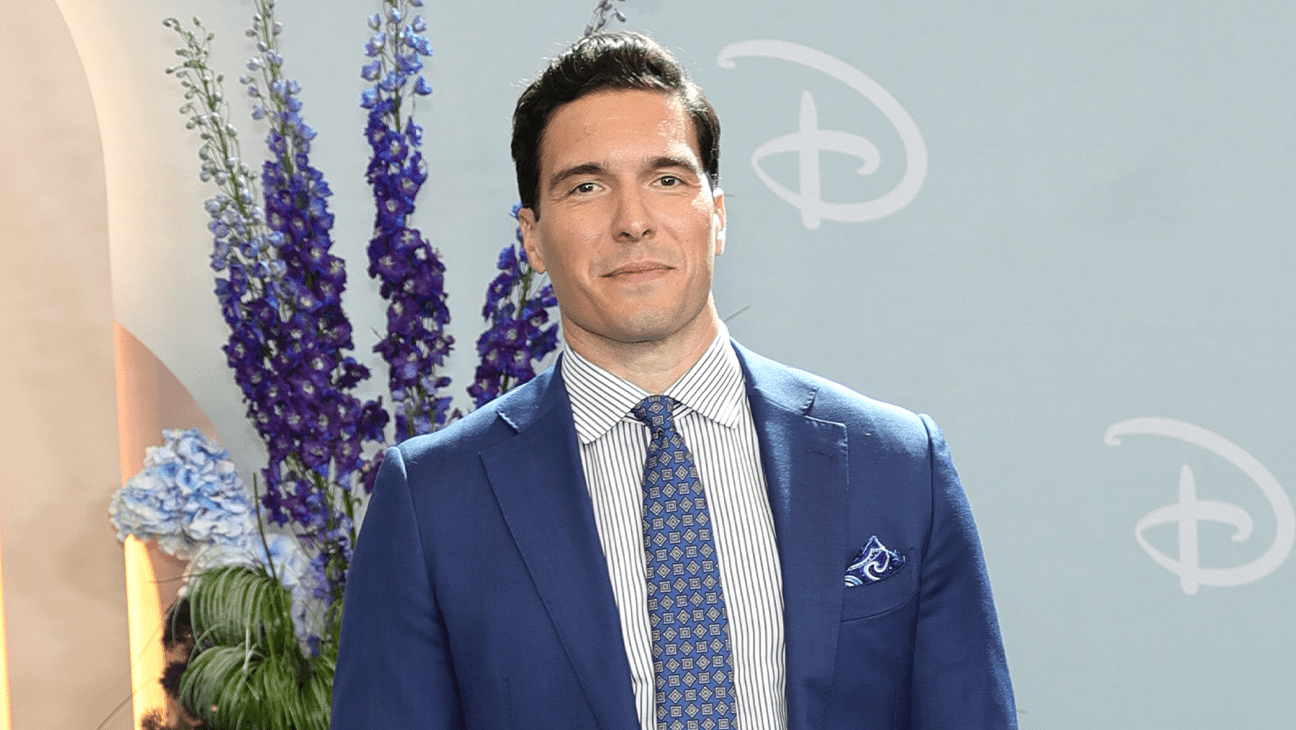
    Will Reeve, a correspondent and anchor for Good Morning America and the son of the late Superman actor Christopher Reeve, is opening up about his journey after being diagnosed with testicular cancer earlier this year.

    “I was raised to share one’s struggles if, in doing so, that might help others,” he recently told People. Reeve was diagnosed in the spring, but as of a Sept. 8 check-up, he is now cancer-free.

    “Watching my parents up close take the adversity they faced in their lives and repurpose it into something hopeful left a major impact on my life and how I try to live it,” the anchor said, which inspired him to share his health story publicly.

    Will was two years old when his father, Christopher, was paralyzed from the neck down after being thrown from a horse in 1995. Nearly a decade later, Christopher died in 2004 at the age of 52, and his mother, Dana Reeve, died in 2006 at age 44 from lung cancer.

    He acknowledged that he’s “had a lot happen in my life. But none of it until now had happened to me in a way.” Reeve initially found a tender lump on one of his testicles in the shower in April. While he “assumed it was nothing or would go away,” it was his wife, Amanda Dubin Reeve, who urged him to get an ultrasound.

    The following month, the GMA anchor underwent an orchiectomy to remove the cancerous testicle, which is a standard surgical procedure when someone is diagnosed with testicular cancer.

    “I was more nervous about the unknown of the surgery rather than the overwhelming realization that I would be losing an essential part of my body forever,” he admitted to People.

    Further testing revealed that the cancer spread to the lymph nodes in his abdomen, leading him to undergo a six-hour surgery in June to remove them and then two rounds of chemotherapy that concluded at the end of July.

    “The irony is not lost on me that 20 years after my mom died of lung cancer at Memorial Sloan Kettering, there I was in the same building getting treated for cancer,” Reeve shared, also praising Amanda for taking on “the role of wife and caregiver” during this difficult time, similar to how his mom cared for his dad.

    After Reeve was declared cancer-free earlier this month, he’ll now have scans and bloodwork three to four times a year to monitor for any chance of cancer returning.

    “My colleagues at ABC are like family to me and have been with me every step of the way,” he added. “I’m fortunate that I caught this early. Yes, I had to jump through some flaming hoops to get to the other side, but it could have been much worse had I ignored it or delayed going to the doctor.”

  • Florence Pugh Credits Tom Holland for ‘Spider-Man: Brand New Day’ Role: ‘This All Happened Because of Tom’

    Florence Pugh appeared on “The Tonight Show Starring Jimmy Fallon” Monday night and revealed that fans of her Marvel character, Yelena Belova, really have Tom Holland to thank for her appearance in “Spider-Man: Brand New Day.”

    “This all happened because of Tom,” said Pugh. “Years ago, when I just started my relationship with Marvel and ‘Black Widow’ came out, my Yelena wasn’t as obviously big as all of the other big superheroes. He, on the red carpet of his previous movie, when someone said, ‘Who do you want to be in the next movie with?… And he said, ‘No, actually, I want to do it with Florence Pugh, who plays Yelena.’ So because of that, fans were then so excited about the idea of it.”

    Pugh has played the character of Yelena since 2021 when she appeared in “Black Widow,” and has since reprised the role for 2025’s “Thunderbolts*” and 2026’s “Spider-Man: Brand New Day.” Within the MCU, Yelena is known as an assassin and the successor to the Black Widow title.

    “Spider-Man: Brand New Day,” which premiered on July 31, has grossed $2.49 billion at the domestic box office, making it the third highest-grossing movie of all time. It ranks behind 2009’s “Avatar” ($2.92 billion) and 2019’s “Avengers: Endgame” ($2.88 billion). “Well done, Spidey!” said Pugh of the accomplishment.

    Scheduled to release in theaters on Dec. 18, Pugh is also set to start as Princess Irulan Corrino once again in “Dune: Part Three” from director Denis Villeneuve. That same day, theatergoers will once again get to see her reprise her role as Yelena in the highly anticipated “Avengers: Doomsday,” the Anthony and Joe Russo-directed follow-up to 2019’s “Avengers: Endgame.”

    Watch the full segment here.

  • Anton Studios Joins The Creatives as Partner and Investor as Producer-Led European Company Enters Jointly Owned Holding Structure (EXCLUSIVE)

    Fast-growing European studio Anton Studios is taking a minority position as a partner and investor in The Creatives. The group, first founded as a long-term strategic partnership in 2021, is moving into a solidified company, with a jointly owned holding structure. The new model will see The Creatives become the first European-rooted producer-owned group of its scale in film and television, with Romain Bessi remaining as CEO.

    The Creatives consists of some of the leading production companies in Europe, as well as one each in Israel and the U.S. They are Haut et Court and Unité in France, Komplizen and Razor Film in Germany, the U.K.’s Good Chaos, Lemming Film in Netherlands and Belgium, Maipo Film in Norway, Spiro in Israel and the U.S.’s Masha.

    Led by Sébastien Raybaud, Anton’s projects include “In Love,” starring George Clooney and Annette Bening; “Pumping Black,” starring Jonathan Bailey and Natalie Portman; and the crime thriller “My Darling California,” featuring Jessica Chastain, Chris Evan, Chris Pine, Mikey Madison and Don Cheadle.

    Anton’s investment in The Creatives reinforces the financial strength of the group and provides additional access to equity financing. The Creatives will be formally created at closing, following technical steps expected to take a few months.

    Bessi brings three decades of experience in production, distribution and broadcasting, having built two international studios in Newen Studios/Studio TF1, which he led as chairman and CEO within the TF1 Group until 2024, and Studiocanal, where he served as group COO. Prior to this, he served as CFO for the Canal+ channels in France and CEO for Canal+ in the Nordics.

    Speaking with Variety, Bessi said this consolidated company was “always the point.”

    “Five years ago, all of these producers decided that, because they didn’t want anyone to buy them out and they wanted to share their expertise and contacts, they would create a form of club, where they would informally meet every month and co-produce together,” he added. “They have now been doing this very successfully for years, and they decided that, because it was working so well, they would become a group.”

    “But they didn’t know how to do it, which is when they reached out to me,” he said. “Of course, creating a group costs money, so during the last year and a half I was structuring the group and looking for an investor to bring some money into the holding company.”

    Bessi said it took over a year to find Anton. The Creatives had several other offers, but they had a number of strict demands for whoever would come in as a financial partner. “We wanted a European investor, not only because of the perception, but also because of regulation. They had to be European; they had to be someone who understands the industry—meaning that you can have good years and bad years, and you need to take some risk. That was very important.”

    Finding the investor was “not so easy,” because the model built by The Creatives is “very new in the industry.” All 17 producers in the group are shareholders and control the group. “It’s very unique. Usually, you have one person or company who gets the shares and the control. Because of that, some investors were a bit concerned about the governance of the group,” Bessi said.

    “We wanted someone who would agree to take a minority stake and would not require distribution or sales,” he added. “Then, of course, there was a valuation, which was important for the producers, and we wanted someone who would respect that valuation. Lastly, we needed someone we knew, and I knew Anton very well because it was created 15 years ago, to implement a state financing deal for Studiocanal. At that time, I was the CEO.”

    In the end, the producers decided in favor of Anton. Now, all agreements are signed, and The Creatives are “ready to go.”

    By “ready to go,” Bessi means realizing the group’s vision of becoming the leading “one-stop-shop” production company in Europe for major distributors and streamers. The exec sees The Creatives as the place where these companies can have access to “elevated content and festival movies and series.”

    “When they come to us, they suddenly have access to many talents, many projects out of many European countries,” he said. “It offers a wide diversity of very good foreign content. We have the scale of the group now. It’s strong enough and financially reliable, so it can be a very interesting one-stop shop for major companies instead of them going country by country to work with these leading producers.”

    “Our goal is to accelerate and enhance the model so we can allow the producers to develop the project they want to develop, be ready, take more risks, gather the best talent and use each other’s connections,” he emphasized. “We want these people to do what they do best: to produce and attract talent.”

    Work produced by The Creatives has drawn over 140 awards at major festivals and awards ceremonies worldwide, including a Cannes Palme d’Or and a Venice Grand Jury Prize, alongside multiple Academy Award nominations and wins.

    Signature lead-produced titles include Komplizen’s Oscar-nominated “Toni Erdmann”; Haut et Court’s Palme d’Or winner “The Class”; Good Chaos’ “Sisu” films, which both topped global streaming charts; Spiro’s Venice Grand Jury Prize winner “Foxtrot”; Razor Film’s Oscar-nominated “Waltz With Bashir”; Maipo Film’s Canneseries winner “A Better Man”; Unité’s multi-César winner “Souleymane’s Story”; Masha’s hit series “False Flag”; and Lemming Film’s six-time Dutch Academy Award winner “Sweet Dreams.”

  • UK Orders Crypto Fraudsters to Repay £851,402 to Scam Victims

    UK Orders Crypto Fraudsters to Repay £851,402 to Scam Victims

    The ruling follows prison sentences imposed in July 2025 after an FCA prosecution. Bedi received five years and four months, while Mavanga received six years and six months.

    How the Fraud Reached Investors

    Between February 2017 and June 2019, Bedi and Mavanga cold-called consumers and persuaded them to put money into fake crypto investment opportunities. They operated through companies including CCX Capital and Astaria Group LLP. The FCA’s account of their 2024 convictions describes a professional-looking website used to offer investors high returns.

    The pair had already been sentenced for the fraud when the FCA pursued the orders for repayment. Bedi pleaded guilty to conspiracy to defraud, conspiracy to breach the general prohibition under the Financial Services and Markets Act 2000, and money laundering offenses. Mavanga pleaded guilty to conspiracy to defraud, conspiracy to breach that prohibition, and possessing false identification documents with improper intent.

    Unexpected approaches and offers of unusually high returns are among the warning signs associated with crypto investment fraud. In this case, the cold calls led investors toward opportunities that did not exist. The scheme ran for more than two years, from February 2017 to June 2019.

    What the Orders Mean for Victims

    Under the Proceeds of Crime Act 2002, a confiscation order requires an offender to pay the benefit gained from criminal conduct or the value of available assets, whichever is lower. The FCA said Bedi and Mavanga have three months to pay. Failure to do so could add up to five years to Bedi’s prison term and two years to Mavanga’s.

    The FCA said it will return money collected through the orders to affected investors. Its announcement establishes a path to repayment, while the amount victims ultimately receive depends on the funds recovered. Anyone affected by this scheme who has not heard from the regulator can contact the FCA Consumer Helpline.

    People seeking the return of stolen funds can also face fraudulent recovery offers from criminals posing as officials. The FCA has separately warned about fake communications claiming to come from the regulator. In this case, the agency says it has contacted identified victims and will distribute funds recovered through its court action.

  • Abracadabra Proposes Winding Down MIM at Four Cents on the Dollar

    Abracadabra Proposes Winding Down MIM at Four Cents on the Dollar

    MIM held outside protocol addresses comes to nearly $22 million. “In other words, the protocol sits on approximately $21 million of bad debt, and MIM’s effective backing is below $0.04 (>95% unbacked),” the proposal says.

    Why the Repeg Died

    The team had studied raising interest rates across cauldrons to force liquidations, generate buying pressure and push MIM back toward $1. Abracadabra ran that playbook in June, when it hiked rates across all cauldrons, halted Curve bribes and suspended direct incentives after MIM fell about 50% below peg.

    The proposal now rejects that approach. Liquidations would bleed value to liquidators through the MIM discount and liquidation fees, producing what it calls a “small, short term (minutes-long) price increase in MIM, that would benefit only the fastest sellers.”

    With no way to repeg MIM, the proposal says, the protocol cannot function, because there is no point in borrowing MIM below peg. Work on a neobank product is tied to MIM and therefore adds no value to the project.

    LayerZero is retiring its V1 relayer on Dec. 15. That puts roughly $1 million of collateral in the Stargate USDC and Stargate USDT cauldrons at risk, according to the proposal.

    Ether and a Merkl Claim

    Under the plan, collateral in eligible cauldrons would be emptied using the deployStrategy and setStrategy functions, which the team says should recover about 99.75% of it, then swapped into ether.

    A snapshot of MIM balances and cauldron positions would be taken no earlier than Oct. 15. A Merkl contract would then distribute ether pro rata: borrowers receive the value of their collateral minus their MIM debt at $1 per MIM, and MIM holders split what is left, which the proposal puts at about $0.04 per MIM.

    Unclaimed funds get swept after six months and redistributed to MIM holders who did claim, up to $1 per MIM, then to borrowers in proportion to their debt. Immutable positions stay untouched and withdrawable onchain. The interface stays up but will not be actively maintained.

    The team engaged legal counsel before drafting the plan. Without a recovery path, the proposal says, the protocol “should be unwound and liquidated, or become at risk of facing users enforcing a liquidation via legal actions,” and failing to rescue funds at risk “could constitute legal liability.”

    The Vote Closes Wednesday

    Voting opened Sept. 29 at 05:24 UTC and closes Sept. 30 at 17:24 UTC. Two addresses have cast ballots: one voted for with about 100 million staked SPELL, the other against with about 523,000.

    Turnout stands at 3.4% of the space’s 3 billion quorum. The 11 proposals posted to the space before this one, going back to December 2024, each drew more than 3 billion votes.

    The proposal was submitted by an address that is not listed among the Snapshot space’s admins or members. Abracadabra’s X account has not posted since July 6. The abracadabra.money landing page carries a banner for “Abracadabra V2” and describes MIM as “a stablecoin with its value pegged to the USD, aiming to maintain a consistent 1:1 ratio.”

    MIM is up 33% over 24 hours and trades roughly 97% below its $1 peg, CoinGecko data show. It is down 49% over seven days. SPELL is up 20% over 30 days.

    Three Hacks and a Handover

    Abracadabra lost $6.5 million to a rounding bug in cauldron logic in January 2024 and $13 million in a March 2025 attack on GMX-linked vaults on Arbitrum. A third exploit hit deprecated Cauldron V4 contracts on Ethereum in October 2025. The team said at the time that 1.79 million MIM were minted by the attacker and that it “bought back from the Market the entirety of affected MIM, completely reversing the effect of the attack.”

    Control of the protocol changed hands in June. A Snapshot vote that closed June 4 transferred operational stewardship, treasury management and development to an entity called Anubis, listing Greg Dewitt on operations and Paul Parker and Glenn Kennedy as directors. The proposal named dao5, founded by Tekin Salimi, as a strategic partner through Alapin Holdings, alongside Nemesis Trading, and said Jack Niewold would serve as project lead. The Rodman Law Group acted as counsel to Anubis. Two addresses voted, both in favor, with a combined 5.5 billion votes.

    That June proposal set out to “revitalize Abracadabra as a leading DeFi protocol” and listed expansion of utility and demand for SPELL among its priorities. The current proposal says the situation the team found “was far worse than initially expected, as not all the collateral present represents valid MIM backing.”

    DefiLlama puts Abracadabra’s deposits at about $5 million.

  • Bitcoin Dips, While Ethereum, XRP, Dogecoin Gain: Bull Market ‘Intact,’ but Rally ‘Showing Cracks,’ Says Analyst

    Bitcoin Dips, While Ethereum, XRP, Dogecoin Gain: Bull Market ‘Intact,’ but Rally ‘Showing Cracks,’ Says Analyst

    More than $220 million in crypto positions were liquidated over the past 24 hours, with long traders suffering most of the losses, according to Coinglass data.

    Bitcoin’s open interest slid 2.20% over the last 24 hours. A fall in open interest alongside a price increase typically suggests short sellers are buying back contracts to close losing positions.

    Investor sentiment leaned toward “Greed,” according to the Crypto Fear & Greed Index.

    The global cryptocurrency market capitalization stood at $2.96 trillion, up 0.30% over the last 24 hours.

    Stocks Extend Losses

    The stock market continued its downward trend on Tuesday. The Dow Jones Industrial Average fell 131.59 points, or 0.26%, to close at 51,349.9.The S&P 500 dropped 0.16% to end at 7,670.84,while the Nasdaq Composite dipped 0.09% to close at 26,797.54.

    Bond yields , while talks aimed at ending the war in Iran made limited progress.

    The returns on long-dated 10-year Treasury notes climbed to 5.29%, its highest level since 2007, while the 30-year yield rose above 5.6%, reaching its highest level since June 2002.

    Bitcoin Rally Showing Cracks?

    On-chain analytics firm CryptoQuant noted that Bitcoin profit-taking has reached its highest level since Dec. 2024, a signal that demand is “fading.”

    “The bull market is intact, but the rally is showing cracks. $80,000 is the first support to watch,” CryptoQuant added.

    Blockchain research firm Santiment highlighted that wallets holding 10-10,000 Bitcoin accumulated 41,025 $BTC over the past 10 days, increasing their share to 67.93% of the total supply.

    However, retail wallets under 0.01 $BTC have remained largely “flat” since the $87,000 price peak.

    “The current divergence is encouraging, but it isn’t a guaranteed price signal,” Santiment stated. “That combination has repeatedly appeared before stronger Bitcoin moves.”

    Photo Courtesy: Marc Bruxelle on Shutterstock.com

  • Last Year’s Unexpected Hit, Pumpkin Spice 5-Hour Energy, Is Back by Popular Demand

    Last Year’s Unexpected Hit, Pumpkin Spice 5-Hour Energy, Is Back by Popular Demand

    If you purchase an independently reviewed product or service through a link on our website, The Hollywood Reporter may receive an affiliate commission.

    Lattes, candles and, for the second year running, cinnamony shots of caffeine.

    Pumpkin spice, one of the most unshakable seasonal trends, continues to expand its scope courtesy of 5-Hour Energy’s latest viral entry. Initially released in 2025 alongside Cranberry Lime and Gingerbread Snap, the limited-edition flavor is back by popular demand.

    The nostalgia-fueled caffeine boost was relaunched for fall 2026 in tandem with the brand-new Caramel Apple shot. Both are joined by the brand’s first-ever Halloween Variety Pack, featuring four candy-inspired flavors: Ghoulish Grape, Cobweb Candy, Fright Fetti and Candy Cauldron.

    Back to pumpkin spice season, 5-Hour Energy’s unexpected fan favorite features rich pumpkin and warm cinnamon flavors complemented by notes of nutmeg and clove. As for the energy boost, the Extra Strength shot contains 230 mg of caffeine (about the same as a Starbucks tall coffee), along with B-vitamins and essential nutrients. It contains zero sugar and zero calories.

    The creative offerings and ever-expanding flavor profiles come as 5-Hour Energy simultaneously makes moves into the mocktail market, with a series of original drink creations designed to provide the same “buzz” of alcohol – minus the hangover. To execute this concept, the brand partnered with former Las Vegas bartender, Jason Puckly, to craft the recipes.

    Other new flavors from 5-Hour Energy include Peppermint Mocha, Jelly Donut, Boston Cream Donut and a Candy Cane Variety Pack (Peppermint Mocha paired with Frosty Float and Raspberry Sorbet). And while supplies last, Firework Freeze, one of the frozen-treat-inspired summer 2026 offerings, is still available online in limited quantities.