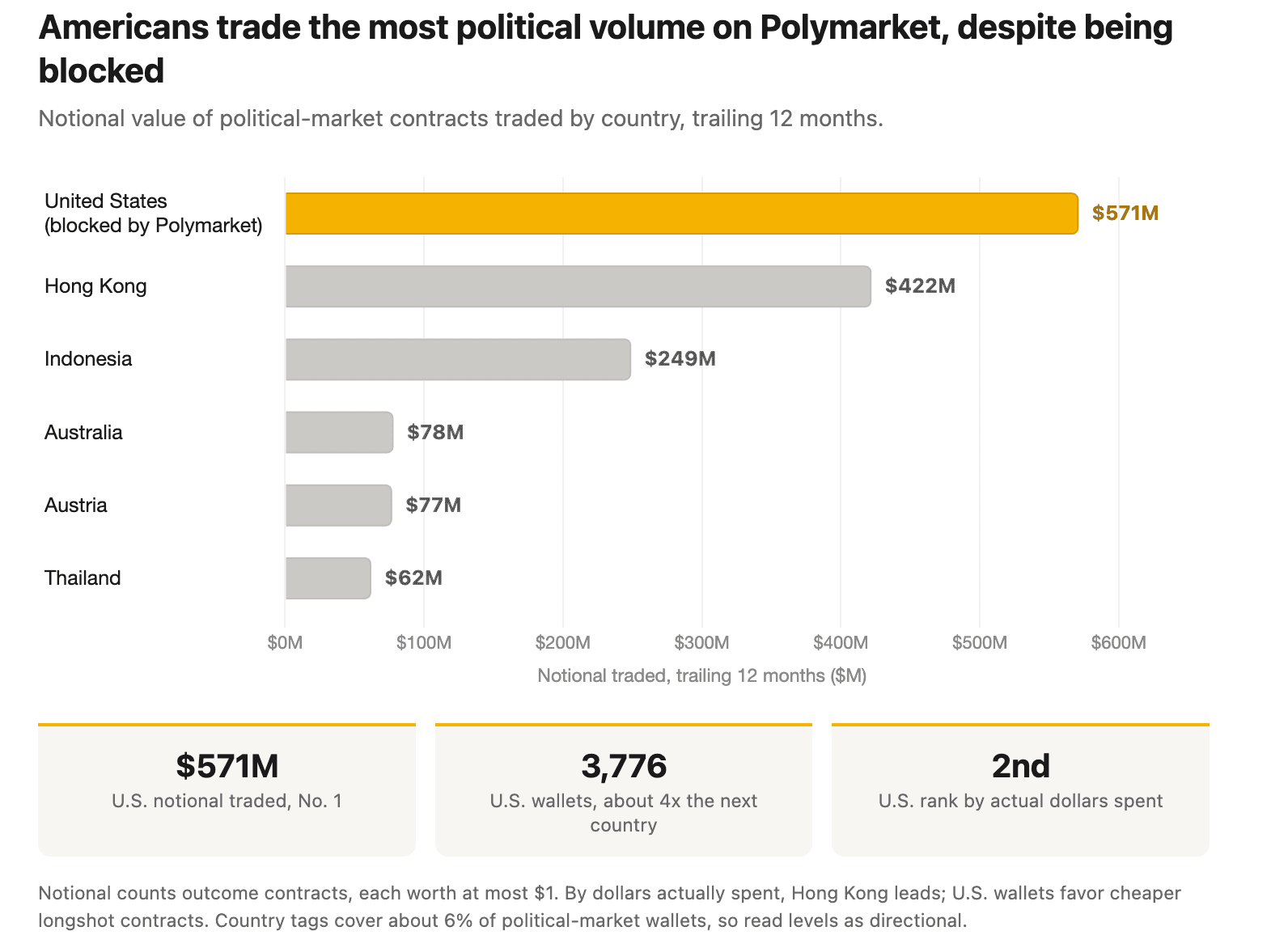
As such, Allium can tie only about 6% of Polymarket’s political-market wallets to a country – so the firm says the figures should be read as directional rather than exact.
Polymarket did not immediately respond to request for comments ahead of U.S. market hours.
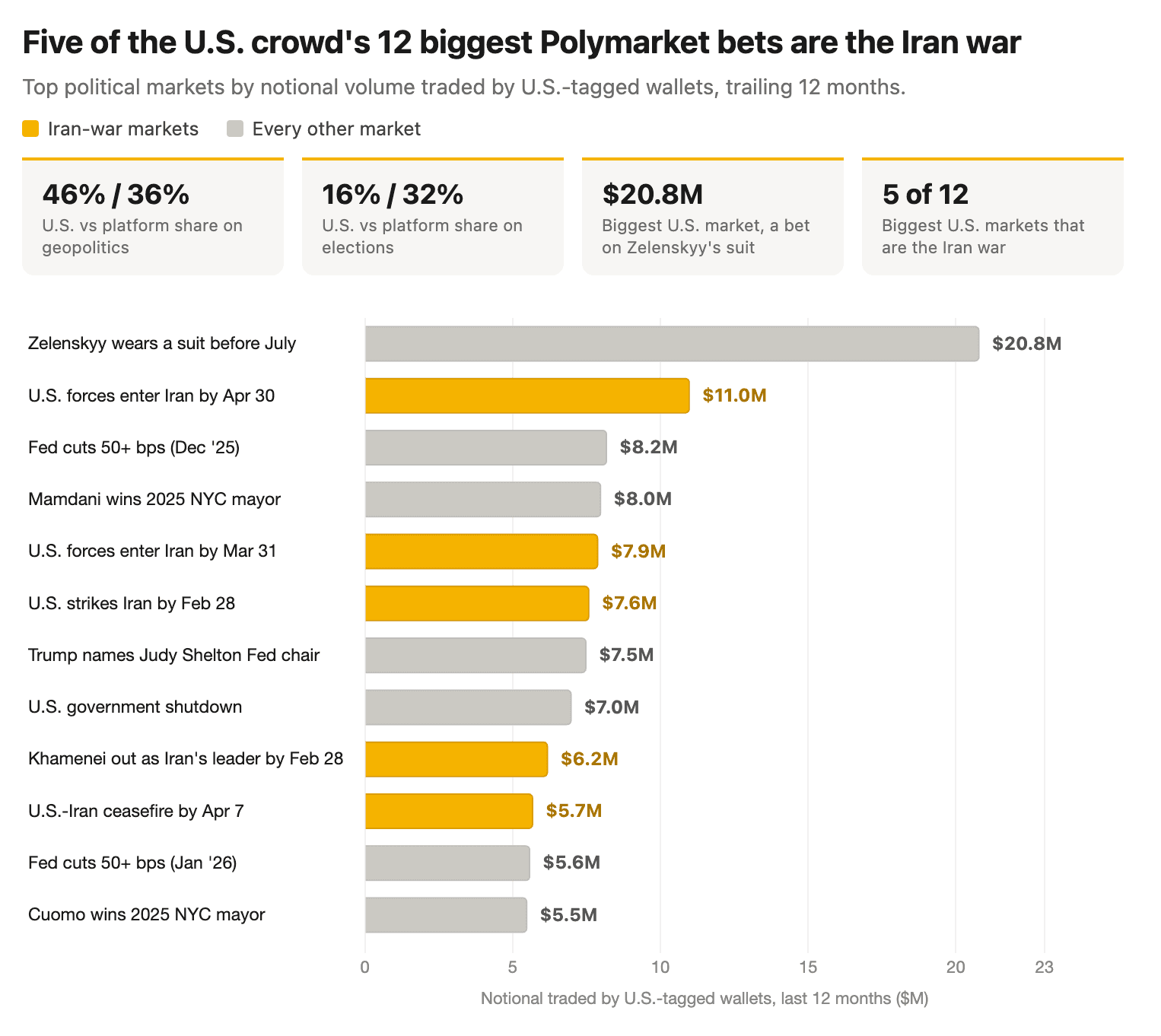
Meanwhile, a further interesting bit is what Americans bet on. Geopolitics made up 46% of U.S. notional against 36% for the platform as a whole, while elections drew 16% from U.S. wallets against 32% platform-wide, meaning the American crowd trades foreign wars at nearly three times the rate it trades the elections everyone else favors.
Of U.S. cohort’s twelve biggest markets, five were bets on the Iran war. Its single largest, at $20.8 million, was a novelty market on whether Ukrainian President Volodymyr Zelenskyy would wear a suit.
Those are largely the markets regulated U.S. venues do not carry. Kalshi and Polymarket’s compliant U.S. arm stick mostly to economic data, rate decisions and elections, so the demand flows to the offshore version that lists regime change and ceasefires.
The pattern regulators might fear is the one the data does not show.
On markets that have resolved, U.S. wallets backed the winner 81.9% of the time against 80.3% for everyone else, effectively no edge, and returns if held were nearly identical.
Leave a Reply