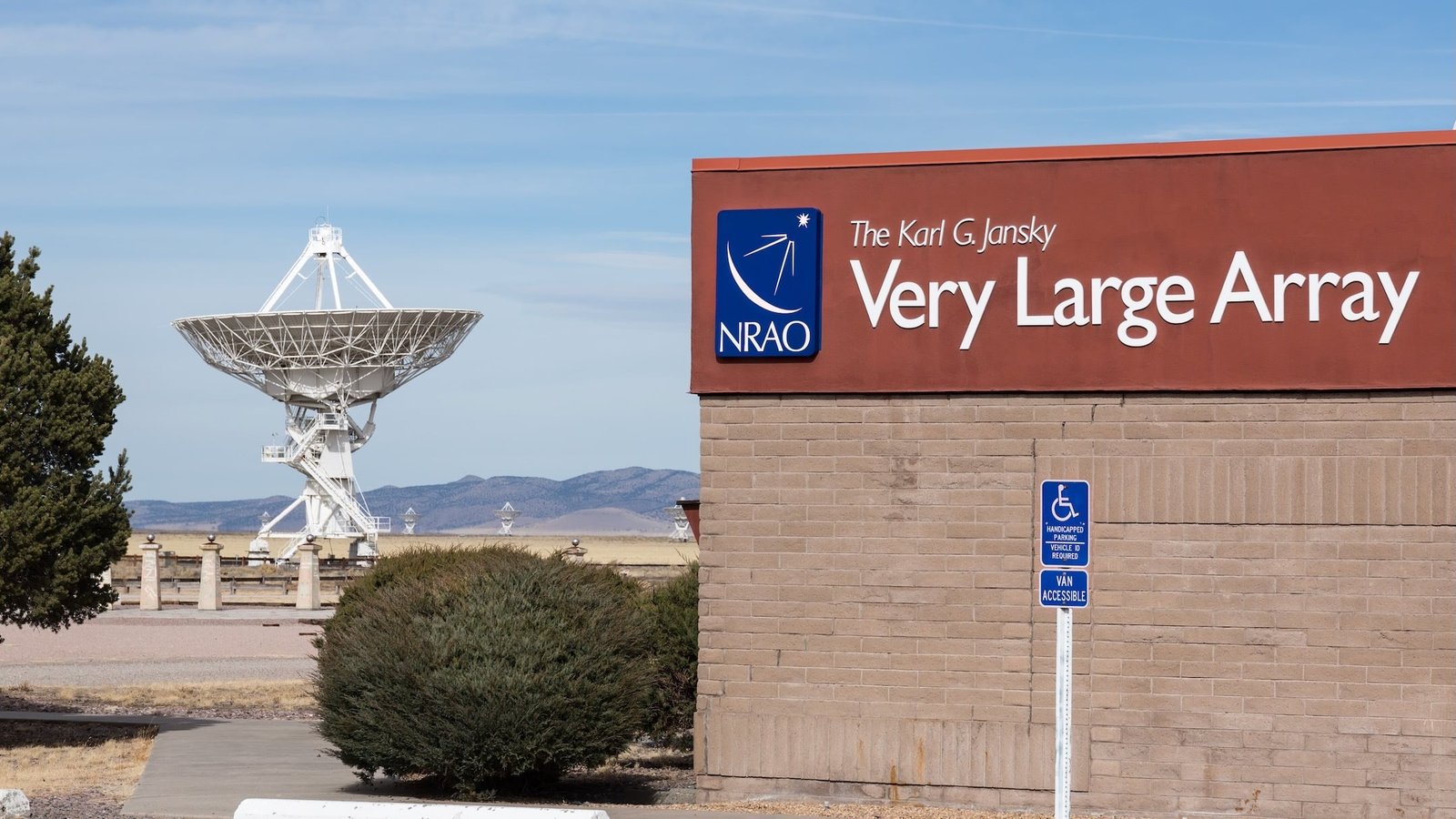
SpaceX’s proposal to upgrade Starlink with a “Gen 3” satellite constellation designed for multi-gigabit speeds is facing opposition from a federally-funded radio astronomy center over concerns about interference.
The opposition comes from the US National Science Foundation’s National Radio Astronomy Observatory (NRAO), which operates some major radio telescopes in the US. According to the NRAO, SpaceX’s regulatory application for the Gen 3 system needs to be “withdrawn owing to the defects” with some of the radio frequencies the company wants to use.
The opposition is a bit surprising considering SpaceX has been working with NRAO to avoid potential Starlink interference. The radio telescopes feature sensitive receivers to observe deep space and capture faint radio signals from distant objects. The US even enforces a “radio quiet zone” around the NRAO telescopes, which is why Starlink isn’t available around two prominent locations in New Mexico and West Virginia.

(Starlink.com)
Despite the cooperation, NRAO sent a filing to the Federal Communications Commission that suggests the Gen 3 Starlink proposal is incompatible with the organization’s radio telescopes. The problem is SpaceX wants to harness a slice of radio waves in the 148.5 to 151.5 GHz, 200 to 209 GHz, and 250 to 252 GHz bands. “These frequency bands are in widespread use globally by the radio astronomy service,” the NRAO’s 5-page filing says.
The filing doesn’t elaborate on the potential impact. But you can find radio astronomy research papers about using the affected bands to observe protostars, protoplanetary disks and comets.

(NRAO)
NRAO’s filing also suggests the spectrum use will clash with radio astronomy at “above 120GHz,” especially when the proposed Starlink satellites will constantly be passing over the sky. SpaceX’s Gen 3 constellation is designed to span 100,000 satellites, making it far larger than the current Starlink constellation, at around 10,000 satellites. To offer the better speeds and capacity, the company notes the Gen 3 system “will pioneer greenfield W- and D-band frequencies” between a large slice of radio wave in the 92 and 275 GHz.
So far, SpaceX and NRAO haven’t responded to a request for comment about the issue. But in SpaceX’s own filing with the FCC back in July, the company said the 148.5 to 151.5 GHz and 200 to 209 GHz “are lightly used.”
“SpaceX has and will continue to meet with relevant radio astronomy stakeholders to ensure that there is no harmful interference to their operations in these bands,” the filing also said, later adding: “SpaceX looks forward to continuing the conversations with relevant radio astronomy stakeholders to ensure that it does not cause harmful interference to the important and critical radio astronomy operations.”
Recommended by Our Editors
In addition to the NRAO, NASA has also raised some questions and concerns about the Gen 3 constellation, pointing to how the satellites plan to orbit as low as 323 kilometers from the planet. The same satellites would operate below NASA missions, meaning they might “pass through NASA mission altitudes during orbital insertion, phasing, or deorbit.”
“Increased congestion in LEO (low-Earth orbit) presents concerns regarding the ability to execute future exploration missions, including cislunar Artemis missions,” the agency told the FCC in a filing earlier this month. “NASA requests analysis showing that SpaceX’s constellation operations will not reduce launch availability for future exploration missions due to increased LCOLA (Launch Collision Avoidance Analysis) violations or close approaches on orbit.”
However, NASA didn’t oppose SpaceX’s Gen 3 application. “NASA understands the importance of American superiority in space, fostering continued commercial innovation,” the agency said. “The SpaceX Gen3 constellation requires commensurate transparency, technical rigor, and coordination to ensure long-term safety and sustainability of the space environment.”
About Our Expert

Michael Kan
Principal Reporter
Experience
I’ve been a journalist for over 15 years. I got my start as a schools and cities reporter in Kansas City and joined PCMag in 2017, where I cover satellite internet services, cybersecurity, PC hardware, and more. I’m currently based in San Francisco, but previously spent over five years in China, covering the country’s technology sector.
Since 2020, I’ve covered the launch and explosive growth of SpaceX’s Starlink satellite internet service, writing 600+ stories on availability and feature launches, but also the regulatory battles over the expansion of satellite constellations, fights with rival providers like AST SpaceMobile and Amazon, and the effort to expand into satellite-based mobile service. I’ve combed through FCC filings for the latest news and driven to remote corners of California to test Starlink’s cellular service.
I also cover cyber threats, from ransomware gangs to the emergence of AI-based malware. In 2024 and 2025, the FTC forced Avast to pay consumers $16.5 million for secretly harvesting and selling their personal information to third-party clients, as revealed in my joint investigation with Motherboard.
I also cover the PC graphics card market. Pandemic-era shortages led me to camp out in front of a Best Buy to get an RTX 3000. I’m now following how the AI-driven memory shortage is impacting the entire consumer electronics market. I’m always eager to learn more, so please jump in the comments with feedback and send me tips.
Leave a Reply